


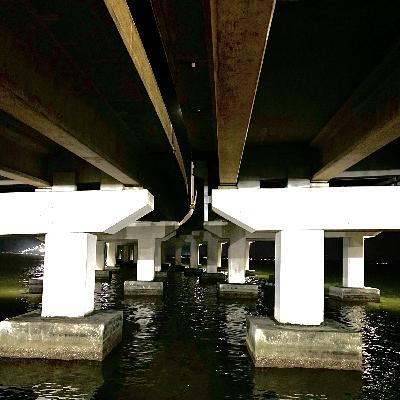
The Biloxi Bay Bridge in Biloxi, MS
Description
The Biloxi Bay Bridge sits at Point Cadet, on the west end of the Biloxi peninsula. It connects Biloxi to Ocean Springs across the bay. The bridge is a landmark location on the Gulf Coast, and it not only stands as a cultural symbol, but also as an important element of the local psyche in the face of tragedy.
First, Point Cadet, where the bridge is located, is the westernmost part of the Biloxi peninsula. The Point was sparsely populated until the late 19th century, according to discover.biloxi.ms.us. The website also claims that there is evidence that pre colonial and colonial Native Americans once occupied the area. It was during the late 19th century that Biloxi’s fishing and seafood industry developed. It is also interesting to note that this area is where ethnic minorities such as Polish, Croatians, Acadian French, and Vietnamese, first settled to work in the seafood industry.
Eventually, the bridge itself was first built in 1962 as a 4-lane bridge. According to oceanspringsarchives.net, the bridge suffered damages during hurricane Camille in 1969. However, it wasn’t until hurricane Katrina in 2005 when important parts of bridge and highway 90 were completely destroyed. Katrina was devastating and even more so by destroying this symbol of development that kept social and economic ties between Biloxi and Ocean Springs. As architectmagazine.com points out, rebuilding the bridge was vital to signal the recovery of the area. The bridge reopened on November 1 2007, just after 20 months of work. As additional information, the bridge currently spans 1.6 miles and 6 traffic lanes.
We can say that the Biloxi Bay Bridge is a symbol of development, and it signals recovery and hope after the devastating aftermath of hurricane Katrina in 2005. The Biloxi Bay Bridge isn’t only a physical bridge, but also an economic and cultural one that connects tight-knit coastal communities.





 United States
