


What about the mom?
Description
I’m half way into Abolish the Family by Sophia Lewis and have been digesting a few pages per day. Here’s an excerpt from it on page 2:
I will hazard a definition of love: to love a person is to struggle for their autonomy as well as for their immersion of care, insofar such abundance is possible in a world choked by capital. If this is true, then restricting the number of mothers (of whatever gender) to whom a child has access, on the basis that I am the ‘real’ mother, is not necessarily a form of love worthy of the name. Perchance, when you were very young (assuming you grew up in a nuclear household), you quietly noticed the oppressiveness of the function assigned to whoever was the mother in your home. You sensed her loneliness. You felt a twinge of solidarity. In my experience, children often ‘get’ this better than most: when you love someone, it simply makes no sense to endorse a social technology that isolates them…
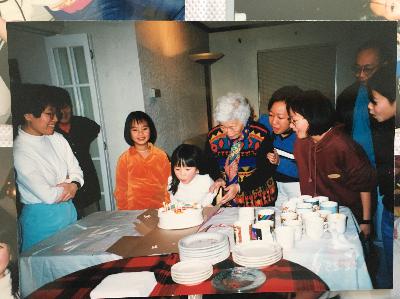
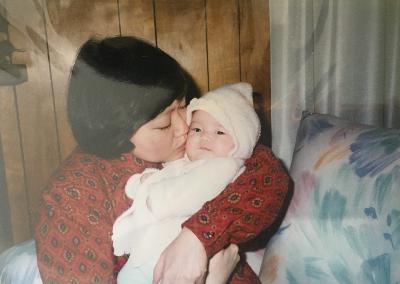
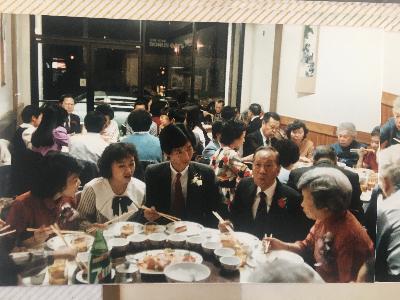
Damn. That hit me. I remember watching my mother raising two young children in her 30’s and drowning - at least from my point of view (because who knows how it aligns with her reality). From her stories, she was a bubbly and socially loved girl growing up in Hong Kong. She was popular at her schools, top student, and got many scholarships. It led to working in law when she immigrated to the states. Got married. Had kids in her 30’s, which was late in that context. Boom. In the kitchen with a 1 year old and 4 year old. Then, for the next 20 years, everything had to take in consideration of the kids. She stayed at home and homeschooled my sister and me from my 1st grade all the way through high school (my sister and I did independent studies with public schools).
I felt her loss of self. Motherhood didn’t make up for it.
It was traumatic for me to witness her and to experience the consequences of her loss.
She had friends and a religious community - thank goodness - but it didn’t fill the hole of her existential loneliness. It was exhausting and she was outside of her capacity every day. Any little thing could tip her over. Her body was a vibrating ball of anxiety and inflammation. (Sounds like me right now.) I did not have a nervous system to find comfort in growing up.
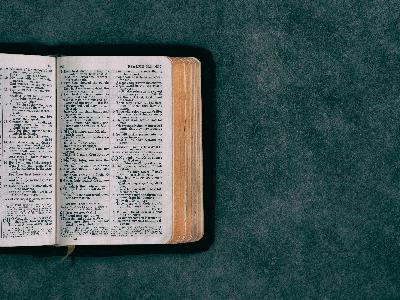
And again I’m angry about the christian church! In so many ways, the community was shallow shallow shallow. I saw my friend’s mother’s in the same position as my mom. Actually, witnessing and hearing about the other families made me realize I had it better than most. At least my dad didn’t also yell at me. And they weren’t as strict as other parents. The trauma of the parents passed down to the children seemed like a cultural norm. I remember my parents talking to other parents about how rebellious the kids are and then using the Bible to justify punishment.
From Abolish the Family:
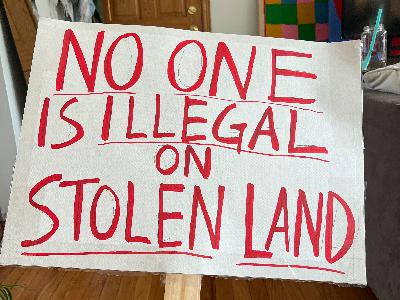
In the nineteenth century, the US and Canadian federal governments’ Indian policies typically demanded marriage as a way of dissolving tribal models of collective ownership that went along with gender-nonbinarism, non-monogamy, and/or matrilocal open marriage: they instituted private property and then concentrated it in the hands of ‘heads of household,’ that is, husbands. It is in this sense that we can say that family abolition—as a project of resistance to and flight from bourgeois society and a defense against colonization—was a horizon raised via the practices of stolen, captive, colonially displaced, and/or formerly enslaved people who defied the institutions and modes of citizenship the US attempted to acculturate them to, namely: private property, secularized Christian monogamy, and the marriage-based private nuclear household.
I remember so vividly being told my dad is the head of the household, and my mom is his support. But EVERYONE knew my mom ran the family and made the decisions. She had to cosplay good wife while being utterly trapped to tending to all the household chores, her kids’ education, driving us back and forth, planning every detail, and cooking. My dad did dishes and helped out for sure, but he embodied the passive man that just needs to get out of the way of the dramatic wife. That’s just another font for a patriarchal man.
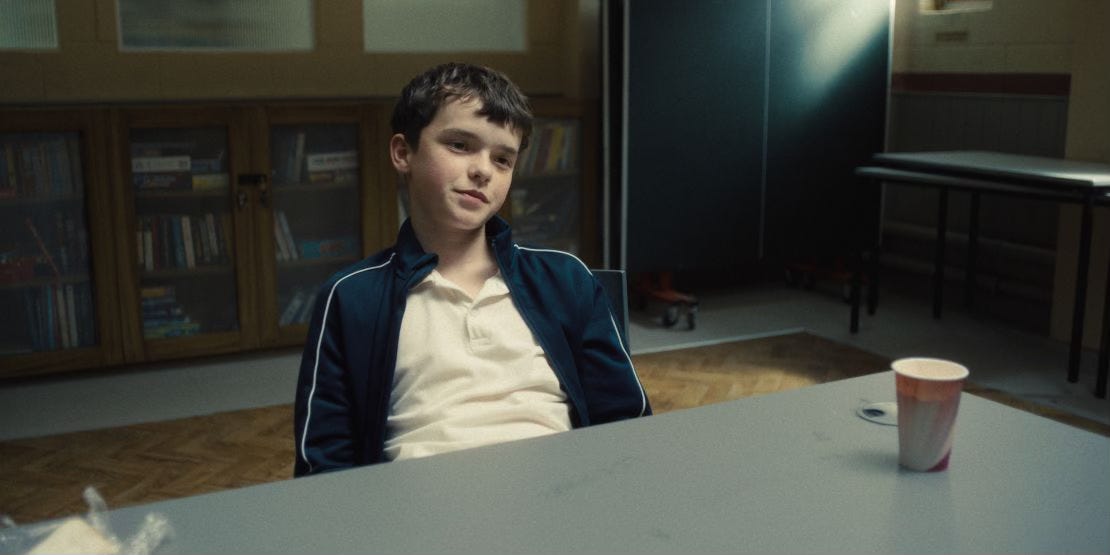
Skip this part if you haven’t seen Adolescence on netflix!
I just watched Adolescence, and wow. How it was shot, scripted, and performed was incredible. White people reallyyy get the opportunities of showing themselves as very nuanced and layered. If it was about a Black or brown family, there’s no way that it would have been afforded this kind of complexity. I kept on thinking about the constant heartbreak of Black families seeing their children either killed by pigs or locked up.
This series was written and directed by men. It’s ironic, because the film seems to be exploring misogyny while indulging in misogyny. By the end, we still don’t know anything about the mom, sister, or any femmes in the story. The whole series begged the audience to sympathize and humanize the boy and the men, which was very easy to. When we know their story, their fears, their trauma, it opens up so many more possibilities to empathize.
Who gets that opportunity in this world? We all know.
In the last episode, you could feel the loneliness of the nuclear family. The neighbors weren’t actually caring to them…they were just nosy. The school teachers were just little cop assistants and didn’t give a f**k about the students or their privacy. The worker at that english home depot just wanted to indicate that he was invested in the investigation like it was a hobby (also I totally think that he was an incel). That isn’t community!
Zooming in to the mom, the beginning scene of the last episode. The dad was in a rage about his van being vandalized with spray paint, and so he fills up a bucket with water and soap. As he is chaotically lifting the bucket out of the sink, water spills everywhere - all over the sink and floor, and he tells his wife that he is sorry and will clean it up later. After he comes back in from unsuccessfully scrubbing off the paint, the mom is mopping up the water and the dad pours the bucket of water in the sink making a mess at the sink.
The whole episode, you could feel the mom trying to keep it together for the family. She is externally calm and is desperately trying to show up for her husband and daughter in a loving way. After the dad’s rage against those teens outside the home depot, she is almost laughing in her attempt to cope. All whilst, her baby - her son - is locked up for killing a girl. Her baby - her son - will never be downstairs eating chocolate ice cream.
(Note to self: write about all the reasons why I’m glad I don’t have kids and why I don’t want kids. 87th reason - they could hurt and murder people. I’m out!)
What does Liberatory Imagination spark in me today?
I learned about Alexandra Kollontai, a Soviet family abolitionist, and she wrote this in her 1920 pamphlet “Communism and the Family”:
Communist society takes care of every child and guarantees both him and his mother material and moral support. Society will feed, bringup and educate the child. At the same time, those parents who desire to participate in the education of their children will by no means be prevented from doing so. Communist society will take upon itself all the duties involved…but the joys of parenthood will not be taken away from those who are capable of appreciating them. Such are the plans of communist society and they can hardly be interpreted as the forcible destruction of the family and the forcible separation of child from mother.
THAT is liberatory imagination that is founded on theory and principle.
I want to imagine new and create structures of care. I need to grieve what has been and what is. Children are so beautiful and pure. I want to contribute to a society where they are actually protected and cherished. My heart is heavy from the brutal murder of children, mothers, fathers, aunties, uncles, grandparents, teachers, and community members in Gaza. It is unfathomable. Praying praying praying for Palestine. No food, aid, or water has entered Palestine in more than 21 days.
F**k Israel and f**k the US. F**k the empire!
How to support me (thank you in advance):
Currently, I’m in between jobs and would appreciate any support you can afford.
* Subscribe for free (all my posts will be available to t
he public), but set up a monthly or annual recurring payment with me directly on venmo - @tiffanywongart. Attatch the note “Recurring substack subscription.”
* Buy me a cup of coffee. Every bit counts! You can venmo me at @tiffanywongart with note “coffee from substack!”
* My next read is Revolutionary Mothering edited by Alexis Pauline Gumbs, China Martens, and Mai’a Williams. Send me funds to purchase this book or send me the book directly - I would love to add this to my liberatory library.
Get full access to LIBERATORY IMAGINATION at tiffanywongart.substack.com/subscribe











 United States
