


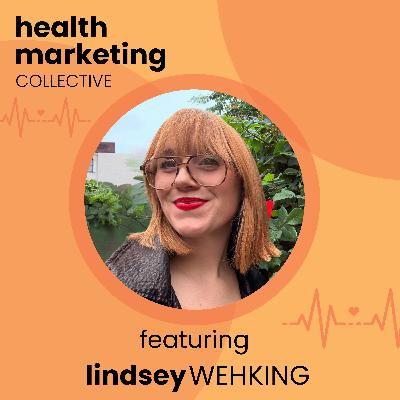
Why Emotional Realism Wins in Marketing
Update: 2025-09-17
Description
Welcome to the Health Marketing Collective, where strong leadership meets marketing excellence.
In today’s episode, Sara Payne is unpacking the real power—and challenge—of emotional storytelling in health marketing. Joined by Lindsey Wehking, Chief Investigative Strategy Officer at Nonfiction Research, their conversation dives deep into why most healthcare brands only scratch the surface when it comes to understanding their audience, and what it really takes to access the raw, honest emotional truths that resonate and drive behavioral change.
Lindsey brings a wealth of experience leading immersive research projects that have inspired everything from new products to major media coverage and even new company divisions. Her team is known for uncovering lived realities in places most research never ventures: hospital bedsides, prisons, and subcultures across America. Together, Sarah and Lindsey challenge today’s marketers to move past the clichés and limitations of “safe” storytelling and to courageously commit to connecting at a more vulnerable, human level.
This episode explores both the philosophy and practical techniques of immersive research and emotional realism. Sarah and Lindsey discuss how brands can navigate workplace culture barriers, use ethnographic methods to build intimacy, and shift from universal-but-bland messages to powerful, specific truths that genuinely reflect their audience’s lives. They share moving real-world examples—from fathers navigating shame and engagement, to women coping with sensation loss after mastectomy—and examine how these insights translate into marketing that drives impact.
Thank you for being part of the Health Marketing Collective, where strong leadership meets marketing excellence. The future of healthcare depends on it.
Key Takeaways:
For listeners eager to see emotional realism in action, a link to Axogen’s research will be available soon!
In the meantime, take Lindsey’s advice: Get curious, grant yourself permission, and start having real conversations that go far beyond the surface. Whether you commission immersive research or champion new storytelling within your own team, remember that the most powerful marketing starts with the courage to get real.
Thank you for listening to the Health Marketing Collective. Be sure to subscribe and join us again as we explore the strategies and stories that are shaping the future of healthcare marketing.
[embed]https://youtu.be/9nH195ZBDew?si=OjAbFnaJFg6I3V2H[/embed]
About Lindsey Wehkin
Lindsey Wehking is the Chief Investigative Strategy Officer at Nonfiction Research. Nonfiction explores the hidden parts of American life through immersive research. Their researchers have sat beside patients in hospitals, inmates in prison, and have interviewed Atlanta rappers while rollerblading. Nonfiction’s findings have been featured by ABC News, Axios, MSNBC, Fox News, and FastCompany.
In today’s episode, Sara Payne is unpacking the real power—and challenge—of emotional storytelling in health marketing. Joined by Lindsey Wehking, Chief Investigative Strategy Officer at Nonfiction Research, their conversation dives deep into why most healthcare brands only scratch the surface when it comes to understanding their audience, and what it really takes to access the raw, honest emotional truths that resonate and drive behavioral change.
Lindsey brings a wealth of experience leading immersive research projects that have inspired everything from new products to major media coverage and even new company divisions. Her team is known for uncovering lived realities in places most research never ventures: hospital bedsides, prisons, and subcultures across America. Together, Sarah and Lindsey challenge today’s marketers to move past the clichés and limitations of “safe” storytelling and to courageously commit to connecting at a more vulnerable, human level.
This episode explores both the philosophy and practical techniques of immersive research and emotional realism. Sarah and Lindsey discuss how brands can navigate workplace culture barriers, use ethnographic methods to build intimacy, and shift from universal-but-bland messages to powerful, specific truths that genuinely reflect their audience’s lives. They share moving real-world examples—from fathers navigating shame and engagement, to women coping with sensation loss after mastectomy—and examine how these insights translate into marketing that drives impact.
Thank you for being part of the Health Marketing Collective, where strong leadership meets marketing excellence. The future of healthcare depends on it.
Key Takeaways:
- Emotional Storytelling Demands Courage and Commitment: True emotional storytelling requires brands to move beyond lip service and commit to revealing the messy, uncomfortable truths that define real human experience. Lindsey stresses that while many marketers talk about going deep, few are willing to break from professional norms and workplace safety to actually do so. Emotional realism doesn’t mean being dark or depressing—but it does mean daring to ask, witness, and reflect the truths that make audiences feel truly seen.
- Immersive Research Uncovers Diary-Level Insights: Traditional market research often falls short because it relies on contrived environments—focus groups, phone interviews, scripted questions—where people rarely reveal their authentic selves. Nonfiction’s immersive research, by contrast, seeks out “diary-level” insights by engaging with people directly in their environments, observing real experiences, and listening for confessions and contradictions. This approach provides unmatched depth, surfacing the complex emotions and idiosyncrasies that make people human.
- Specificity Drives Universal Resonance: A common marketing pitfall is trying to appeal to everyone with generic, “universal” messages. Lindsey argues that the opposite is true: It’s only through deeply specific, nuanced stories that audiences can find themselves and connect on a meaningful level. Great advertising, like great literature, makes the universal accessible by starting with the particular—making even uncommon stories relatable.
- Mixing Quantitative and Qualitative for Maximum Impact: While immersive qualitative research delivers powerful, intimate insights, quantitative data is essential for validating those experiences at scale. Lindsey shares how Nonfiction’s research for Axogen on post-mastectomy sensation loss combined real-world qualitative insights with large-scale quantitative surveys—resulting in compelling, statistically grounded storytelling that changed the conversation and enabled new marketing approaches.
- Emotional Realism in Action: From Fathers to Motherhood: The episode highlights multiple brand examples where emotional realism transforms campaigns. From research that revealed shame, not ignorance, kept fathers from engaging with their children, to candid ads by brands like Frida and Nike that moved beyond clichés to confront real, often unspoken experiences faced by women—these stories demonstrate that audiences crave, and reward, brands that are brave enough to reflect their true struggles and victories.
For listeners eager to see emotional realism in action, a link to Axogen’s research will be available soon!
In the meantime, take Lindsey’s advice: Get curious, grant yourself permission, and start having real conversations that go far beyond the surface. Whether you commission immersive research or champion new storytelling within your own team, remember that the most powerful marketing starts with the courage to get real.
Thank you for listening to the Health Marketing Collective. Be sure to subscribe and join us again as we explore the strategies and stories that are shaping the future of healthcare marketing.
[embed]https://youtu.be/9nH195ZBDew?si=OjAbFnaJFg6I3V2H[/embed]
About Lindsey Wehkin
Lindsey Wehking is the Chief Investigative Strategy Officer at Nonfiction Research. Nonfiction explores the hidden parts of American life through immersive research. Their researchers have sat beside patients in hospitals, inmates in prison, and have interviewed Atlanta rappers while rollerblading. Nonfiction’s findings have been featured by ABC News, Axios, MSNBC, Fox News, and FastCompany.

Comments

In Channel

Download from Google Play

Download from App Store
 United States
00:00
00:00
1.0x

