


 Claim Ownership
ProductLed Podcast
Subscribed: 92Played: 3,448
Subscribe

© 2023 ProductLed Inc
Description
The ProductLed Podcast is a weekly interview series with both product-led growth leaders and practitioners who have real knowledge to share on what it takes to use their product to grow a business.
294 Episodes
Reverse

AI and PLG are two of the most transformative forces in SaaS today and when combined, they can multiply growth faster than any traditional go-to-market model.
In this episode, Wes Bush sits down with Aakash Gupta, one of the leading voices in product and growth (and the creator of the largest newsletter in the space with 200,000+ subscribers), to explore how AI is revolutionizing every layer of product-led growth - from activation and onboarding to pricing and expansion.
They break down exactly how top SaaS companies are using AI to reduce time-to-value by 10x, build smarter pricing models, and even automate their internal processes using agents like Claude, NotebookLM, and Relay.
Whether you’re a founder, product manager, or growth operator, this episode is packed with real use cases, tools, and frameworks that will help you stay ahead of the curve in the AI + PLG era.
Key Highlights
02:15 – Top LLMs for product and growth teams
05:07 – Why every PLG practitioner should create a “copilot” inside Claude
07:29 – How AI projects can act as your chief of staff or people ops assistant
11:46 – Building AI executive assistants that replace (or supercharge) your EA
14:26 – Why marketers need to rethink their jobs in the age of AI automation
26:47 – The 10x practitioner mindset: how to become exponentially more effective
27:35 – AI-driven activation: how to reduce time-to-value by 90%
28:56 – Using AI evals and profiling questions to personalize onboarding
31:22 – Rethinking SaaS pricing for AI products
36:01 – How to design sustainable AI free tiers and reverse trials
41:08 – AI-assisted expansion and PQLs
Resources
🚀 Follow Aakash on LinkedIn - https://www.linkedin.com/in/aagupta/
📘 Get the ProductLed Playbook for free
🧠 Sign up for the ProductLed Newsletter
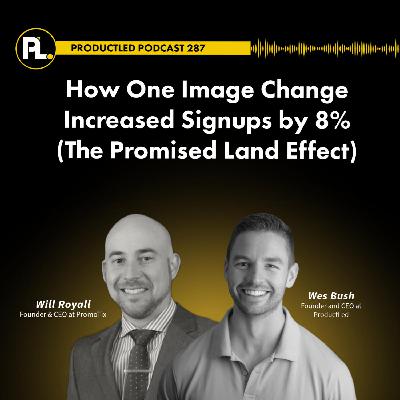
Most signup pages try to convince users with emotional imagery and persuasive copy. But what if the secret to higher conversions is actually showing people less—not more?
In this episode clip, Will Royal, founder and CEO of Promo Tix, reveals how one counterintuitive design change led to an 8% increase in signups. He shares the psychology behind "The Promised Land Effect" and explains why a blurred screenshot of your dashboard can outperform your best marketing copy.
This is just one tactic from the full conversation where Will shares three low-effort, high-impact strategies that helped grow Promo Tix to $25,000 in monthly recurring revenue.
Key Highlights:
01:19: What is the Promised Land Effect - showing a blurred dashboard beats emotional imagery02:17: Testing 29,000 users led to an 8% conversion increase with just an image swap02:53: Why conversion math matters (4% to 6% = 50% more revenue, not just 2%)03:42: The psychology behind it - creating a curiosity gap that makes users feel "almost there"06:27: Bonus win: Changing "Next" to "Finished" added another 1-2% conversion07:17: Why micro-copy and small details often get overlooked but drive results
Resources
🎙️ Full Episode: Episode 266 - 3 Low-Effort, High-Impact Tactics That Took PromoTix to $25K MRR
📖 Read The Product-Led Playbook for free!
🧠 Sign up for the ProductLed Newsletter

Most businesses guard their intellectual property like it's Fort Knox. They lock their frameworks behind paywalls, gate their methodologies, and keep their best insights for paying clients only.
We're doing the exact opposite - and it's actually better for business.
In this episode, Wes reveals why ProductLed invested $150,000 to create The Product-Led Playbook and then decided to give it away completely free. He breaks down the counterintuitive business strategy behind democratizing product-led growth knowledge and why sharing your best IP actually attracts better clients.
Key Highlights:
01:04: Why all ProductLed books are free (and always have been)02:09: Turning down publishers 02:50: The $150,000 investment and 16 iterations it took03:10: Why guarding knowledge is actually stupid for business03:53: Democratizing PLG - it's a skill anyone can learn04:39: How free content attracts doers who've already made hundreds of thousands05:28: Using free books to align entire teams on PLG strategy06:37: Why sharing makes onboarding company-wide adoption effortless06:56: The long-term mission - making ProductLed the de facto SaaS scaling system07:40: Why product-led companies can out-give anyone in their market08:29: What's inside - the same frameworks clients pay $30K+/month for08:51: The three core outcomes you'll unlock with the system09:19: Testimonials from Nathan Barry, Esben (Userflow), and G (Empire)
Resources:
📖 Free ProductLed Playbook - https://productled.com/playbook?utm_source=podcast
🎯 Free Gameplan Session - productLed.com
📚 Other Free Books
Product-Led Growth - https://productled.com/book/product-led-growth?utm_source=podcast
Product-Led Onboarding - https://productled.com/book/onboarding?utm_source=podcast
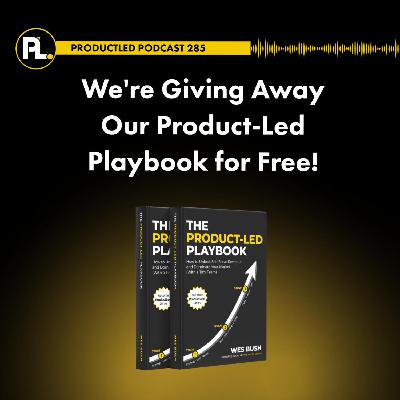
In this special republished episode of the ProductLed Podcast, Wes Bush and Laura Kluz discuss The Product-Led Playbook—and announce that we're giving away the entire book for FREE on October 7, 2025. This playbook is the no-BS guide to actually implementing PLG, based on analysis of 324+ companies, and explores why some product-led companies see millions in ARR while others crash and burn.
The book is structured around nine components, which guide companies from building a solid foundation to scaling for exponential growth. The first stage includes crafting a winning strategy, identifying the ideal user, and creating an intentional product model. The second stage involves establishing a frictionless onboarding process and developing powerful pricing strategies. The final stage focuses on actionable data, growth processes, and team development.
The playbook offers a step-by-step approach to operationalizing PLG and is full of templates and canvases designed for team collaboration. Intended primarily for B2B software founders and early-stage go-to-market teams, this playbook provides a structured method for effectively implementing PLG—and it's yours for free next week.
Sign up at productled.com/newsletter to get the free playbook on October 7th.
Key Moments:
02:01 – Why the playbook was created: analyzing 324+ companies to find what separates winners from losers.
04:52 – The surprising discovery: founders were more successful with PLG than senior product executives.
06:19 – The 9 components of the ProductLed System and why strategic order matters.
11:37 – How to use the playbook (hint: it's not a one-time read).
13:34 – Who this book is for and who should be involved.
14:54 – The 3 main outcomes: Effortless Revenue, Lean Scale, and Durable Growth.
17:46 – What didn't make it into the book (and why less is more).
20:37 – How to get the free audiobook starting next week.
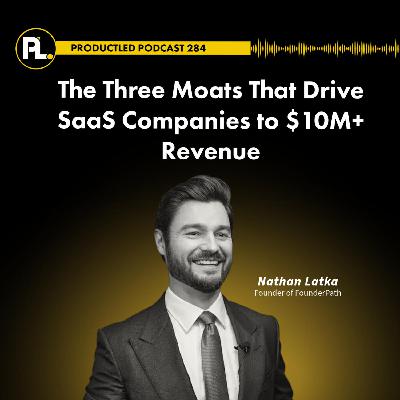
Most SaaS founders struggle to break through the noise in an increasingly commoditized market. With everyone using the same cold email tools and personalization tactics, how do you actually stand out and scale to eight figures?
In this presentation from Founder's Summit (December 2024), Nathan Latka—who's deployed $180 million across 519 SaaS deals—reveals the three proven moats that separate $10M+ companies from the rest. These aren't theoretical frameworks; they're real playbooks with actual revenue data from companies that have cracked the code.
Key Highlights:
02:57: The three moats that work best for the future06:14: Build social proof monuments 11:22: How Odoo undercuts Shopify 17:04: Turn free users into marketing armies16:01: The winning strategy
Resources:
💰 FounderPath
📊 getlatka.com
🧠 Sign up for the ProductLed Newsletter
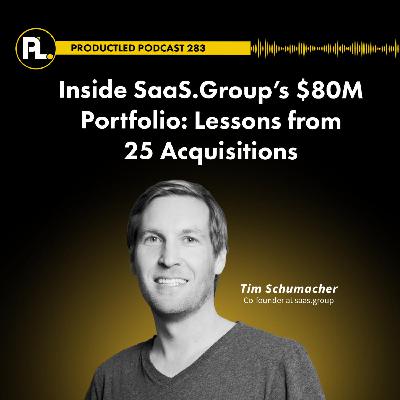
Most SaaS founders dream of selling their company, but few understand what makes an acquisition target attractive to buyers. What if you could learn from someone who's actually on the buying side?
In this episode, Tim from SaaS.Group breaks down how they've built an $80M ARR portfolio by acquiring 25 small SaaS companies - and reveals exactly what they look for, how they evaluate deals, and what happens post-acquisition. This is a masterclass in both building businesses buyers want and understanding the acquisition landscape.
Key Highlights:
03:44: Why they focus on 1-10M ARR companies versus larger deals05:01: The organic evolution toward product-led companies06:18: 100% ownership strategy - why they don't do minority stakes11:00: The $100M revenue milestone and why it's just another number16:05: First year struggles - why acquisition was meant to leapfrog early-stage pain22:10: The 6-7 core acquisition criteria that determine green lights28:00: The Rule of 40 framework for balancing growth and profitability33:17: Post-acquisition playbook - from pricing to AI positioning44:27: Biannual performance reviews and radical transparency culture49:17: Brand manager hiring - internal promotions vs technical generalists52:25: SaaS Academy and leadership development programs56:23: The three moats being built to become unstoppable58:26: Why $1B in 3 years would actually hurt the business
Stop building in isolation and start understanding what buyers actually want.
Whether you're planning an exit or just want to build a more valuable business, this conversation reveals the acquisition playbook from someone who's deployed $80M+ in capital.
Resources:
📧 Contact Tim - tim@saas.group
💼 SaaS.Group - Acquiring profitable SaaS companies
📚 Book Recommendations - Humanocracy, Traction
🌱 Side Project - Ecosia.org (green search engine)
In this episode of the ProductLed Podcast, we’re diving into the 3X Framework—a simple yet powerful process to consistently pull the right growth levers week after week. You’ll learn how to expose your biggest bottlenecks, explore high-impact solutions, and exploit the winners to drive predictable growth.
Key highlights:
00:09 – Why most founders struggle to pull the right growth levers
01:40 – The 3X Framework: Expose, Explore, Exploit
03:00 – How to avoid the “squeaky wheel syndrome”
06:06 – Case study: CloudSpot’s signup conversion challenge
12:24 – Turning solutions into quick wins, experiments, and long-term bets
Resources:
🚀 Try the Growth Co-Pilot for free
📔 Learn more about the ProductLed Roadmap at productled.com/roadmap
🧠 Sign up for the ProductLed Newsletter
In this episode of the ProductLed Podcast, we’re re-sharing a part of the audiobook for The ProductLed Playbook—this time diving into the Predictable Growth Process, a proven system for turning strategy into results with disciplined execution and alignment.
Key highlights:
00:36 – Why execution beats innovation every time
02:00 – The Predictable Growth Process framework
02:29 – Quarterly, Monthly, and Weekly meeting rhythms that drive results
12:10 – Setting top focus and projects for maximum impact
21:59 – Why speed is the ultimate competitive advantage
Resources:
📖 Book your free ProductLed Growth Session here.
📔 Buy the ProductLed Playbook here.
🧠 Sign up for the ProductLed Newsletter
In this episode of the ProductLed Podcast, we’re re-sharing a part of the audiobook for The ProductLed Playbook—a proven roadmap for installing the ProductLed system and transforming your business from scattered to streamlined.
Key highlights:
01:34 – Why 97% of buyers want to try before they buy02:18 – Stage One: Building an unshakable foundation03:50 – Stage Two: Unlocking self-serve customers05:40 – Stage Three: Igniting exponential expansion07:29 – Why you must continually update PLG components08:22 – Quick-start action plan for implementing the system10:07 – Free Product-Led Growth Session offer
Resources:
📖 Book your free ProductLed Growth Session here.
📔 Buy the ProductLed Playbook here.

Your funnel metrics are probably wrong. Not slightly off, but completely wrong. You're using Google Analytics for everything, your visitor counts include people logging into existing accounts, and you have no idea what your real conversion rates look like.
In this segment from our data workshop, Claudiu from Inner Trends walks through the technical infrastructure needed to track each stage of your go-to-market funnel correctly - from accurate visitor counts to defining trackable events for your first strike moment.
Key Highlights:
01:32: Why most teams don't own activation (and who should)
04:47: The 3 stages of visitor tracking - from Google Analytics to first-party data
08:09: Why your product database beats all third-party tools for signup tracking
09:14: The minimum requirements rule for setup completion
12:37: How to technically define your first strike event
17:46 Benchmarks every SaaS company should track
Stop guessing at your data setup.
Use this technical framework to build accurate tracking that actually reveals where your funnel breaks down.
Resources:
📔 Get a copy of the Reverse Funnel Planner – ProductLed Reverse Funnel Planner
🤝 Partner with a ProductLed Implementer to scale your GTM to 8 figures and beyond.
📩 Be the first to know about free webinars! Subscribe to the ProductLed Newsletter.
After 9 years of working with SaaS companies on product-led growth, we've tried everything - consulting, services, cohorts, bestselling books. We've seen what works, what doesn't, and what most companies get wrong.
The breakthrough came when we realized something: companies don't need more advice. They need someone to actually do the work with them.
In this episode, Wes pulls back the curtain on exactly how ProductLed works as your PLG partner, revealing the proven system that's powered over $1 billion in self-serve revenue and why most companies fail at product-led growth.
Key Highlights:
01:11: Why ProductLed exists and what we actually do01:52: The $1M+ revenue guarantee (and what it takes to qualify)03:00: The winning formula: System + Implementation + Results04:25: The full-stack PLG system breakdown07:33: Why you shouldn’t waste time on random LinkedIn experiments09:09: The embedded operator approach vs. hiring specialists14:48: The 3-stage ProductLed System (Start, Build, Scale)17:20: Your hands-on implementer: Cross-functional VP of Growth19:23: The 90-day results guarantee (unheard of in consulting)20:00: What a typical engagement looks like (the full laundry list)27:00: Why DIY PLG takes 2-3x longer and costs more long-term
Your product has the potential to sell itself. This is how you unlock it.
Resources:
✨ Book your free Product-Led Growth Session
📖 Explore case studies from Boomi and Enzuzo
📑 Get an overview of our approach - ProductLed: Your PLG Partner
Most product-led businesses are tracking too many metrics and missing the ones that actually matter. They're drowning in data from 35+ different sources while their biggest growth bottlenecks go unnoticed.
In this episode, Wes breaks down the exact metrics that matter for product-led growth and reveals the Reverse Funnel Scorecard - a simple tool that pinpoints your #1 bottleneck so you can focus your team's efforts where they'll have the biggest impact.
Key Highlights:
01:54: The "vacation bottle" test - What 10 metrics would you track?03:43: The 3 categories of metrics every PLG business needs04:29: The 6 go-to-market metrics that actually matter05:19: What makes a "first strike" vs just clicking around your product06:21: Why tracking key usage indicators prevents churn10:23: The Reverse Funnel Scorecard walkthrough11:01: Why most founders confuse strategy problems with execution problems14:16: Live example walkthrough20:02: Why you should maximize upgrades in week 1
Stop guessing what's broken in your funnel.
Use this data-driven approach to identify your biggest growth bottleneck and create focused projects that actually move the needle.
Resources:
ProductLed Scorecard - 07 Data_ProductLed Scorecard.pdf
Reverse Funnel Planner - ProductLed Reverse Funnel Planner
Project Summary Template - Project Summary - Template
Partner with a ProductLed Implementer to scale your GTM to 8 figures and beyond.
Sign up for our weekly newsletter to receive more actionable advice and learn about the best PLG playbooks from fast-growing SaaS companies: ProductLed Newsletter
In this episode, Wes Bush interviews Gaurav, founder and CEO of Jeeva AI, about how they pivoted from a failed startup to building a $5M ARR AI sales platform in just 8 months.
Gaurav reveals their unconventional approach to being "different not better," and how they recently launched a PLG motion that generated 10,000+ users and $100K ARR in their first week.
Key Takeaways:
[00:01:32] Gaurav’s origin story
[00:05:26] Building "the cursor for sales"
[00:15:05] The launch strategy: Getting 320 form fills and 27 customers
[00:25:05] The feature trap: Focusing too much on new features instead of funnel optimization
[00:30:01] The Ogilvy principle that shaped their positioning strategy
[00:37:01] Breaking down their Product Hunt launch that generated 900+ upvotes
[00:42:12] The two-team approach during transitions
[00:51:15] Why product, customers, and hiring/firing are the only three things that matter
[00:54:09] How consistent posting (2x daily) grew from 500 to 23,000 followers
[01:01:17] The mindset shift to maintaining high energy
Resources:
🤖 Jeeva AI
💼 Connect with Gaurav Bhattacharya on LinkedIn
📧 Contact Gaurav at his email gaurav@jeeva.ai
Most SaaS founders track too many metrics and still have no clue where their biggest growth bottleneck actually is. They're drowning in data but starving for insights.
In this episode, Wes reveals the concept of building a "reverse funnel" - a simple framework that not only identifies exactly where users are dropping off, but shows you precisely which lever to pull to hit your revenue goals.
Key Highlights:
01:39: How to structure your revenue goals (MRR, ARPU, units sold)02:40: The problem with tracking too many metrics without context03:43: How to identify bottlenecks in your quarterly planning04:26: The power of increasing ARPU vs. acquiring more customers06:30: Why founders consistently miss their revenue goals
Resources:
🧠 Sign up for the ProductLed Newsletter
📔 Get the ProductLed Reverse Funnel Planner
💼 Connect with Wes Bush on LinkedIn

In this episode, Wes Bush interviews Philippe-Antoine Lehoux, co-founder of Missive, about how they built a $7.5M ARR email collaboration platform with a lean team of just 15 people over 9 years.
Philippe reveals their unconventional approach to growth, why they ignored startup playbooks for years, and how focusing on the "first five pages" of product fundamentals helped them compete against well-funded competitors like Front.
Key Takeaways:
[00:02:25] The biggest challenge: scaling the founders, not just the product
[00:05:45] Why they ignored startup playbooks for years
[00:06:59] How Front became their biggest growth channel by creating the market category
[00:12:06] The differentiation strategy: Email-centric vs customer service-centric approach
[00:15:49] Philosophy of fixing "paper cuts"
[00:24:47] The depression after hitting $100K/month
[00:34:03] Current channel breakdown
[00:39:41] The lean team structure
[00:46:31] The 3-4 year grind from $300K to $1.2M ARR
[00:50:51] Positioning as the alternative to every funded competitor early
[00:56:17] What he'd do differently
Resources:
📧 Missive
💼 Connect with Philippe-Antoine Lehoux on LinkedIn and X
🧠 Sign up for the ProductLed Newsletter

Most founders think they're "doing PLG” simply by launching a free trial. They add a signup form, make pricing transparent, and let people try the product for free. Then they wonder why it's not working.
But you've only scratched the surface.
In this episode, Wes reveals why most PLG attempts fail using a perfect analogy - the "We repair what your husband fixed” marketing campaign. Just like that leaky faucet that got worse after a DIY attempt, most founders unknowingly break their growth engine by doing surface-level PLG without building the foundation underneath.
Key Highlights:
01:14: Why founders need professional PLG help02:37: The surface-level PLG trap 03:43: The fastest path to value problem06:08: Strategy misalignment and unknown ideal users07:03: Random free models that deliver no outcome08:03: Missing the right data to track user success09:25: No organizational buy-in for the PLG transition11:03: Why you can't bolt PLG onto a sales-led business12:15: The $1M ARR guarantee (and July bonus offer)
Stop building your house from the roof down. Use this framework to build the real foundation that makes PLG actually work.
Resources:
🧠 Sign up for the ProductLed Newsletter
🎓 Enroll in the ProductLed MBA
🏗️ Learn more about ProductLed Implementation

Only 3% of B2B buyers actually want to talk to sales before trying your product. So why are most SaaS companies still structuring their entire go-to-market around that tiny minority?
Because they don't know how to execute it without destroying their current revenue.
It's time to flip the script.
In this episode, Wes breaks down the complete 7-part framework for transforming your business from sales-led to product-led, plus reveals why 85% of PLG transformations fail and how to avoid those fatal mistakes.
Key Highlights:
01:03: The PLG spectrum - It's not all-or-nothing03:58: The compelling business case for PLG11:28: Why 85% of PLG transformations fail (and how to avoid it)14:15: 6 readiness questions before starting your transformation20:46: Building a CFO-approved business case with real ROI calculations27:29: The complete ProductLed System breakdown29:16: 4 proven strategies to get started without disrupting sales32:04: Boomi case study - How a $4B company made the switch
Stop leaving money on the table with outdated sales processes.
Use this battle-tested roadmap to unlock millions in hidden revenue while building a more efficient, scalable business that grows without you.
Resources:
📊 ProductLed ROI Calculator
🧠 Sign up for the ProductLed Newsletter
📘 Get the ProductLed Playbook
Creating effective SaaS pricing can be challenging. You need to balance customer value with business goals while making it easy for prospects to choose the right plan.
In this episode, Wes reveals the exact 4-step Value Ladder Framework that top SaaS companies use to nail their pricing strategy - plus shows you how to build a complete pricing page in under 15 minutes using AI.
Key Highlights:
01:03: The Value Ladder Framework overview02:06: Identifying your value metric 03:17: Finding your ideal price point04:30: Live demo - Using the ProductLed Pricing Page GPT10:00: How to determine pricing based on competitor research12:08: Designing the final pricing page with AI tools
Stop guessing at your pricing.
Use this scientific framework to build pricing pages that actually convert prospects into paying customers.
Resources:
🤖 ProductLed Pricing Page GPT
🖱️ Mouseflow.com (example company used in demo)
🧠 Sign up for the ProductLed Newsletter

In this episode, Wes Bush interviews Ricardo, founder of BetterPic, about how he acquired and scaled an AI headshot company from $1.5K to $270K MRR in just 18 months - all while working part-time. Ricardo reveals his acquisition strategy, focus on fundamentals, and the three key moats that make BetterPic hard to compete with in the crowded AI photo generation market.
Key Takeaways:
[00:01:17] The unconventional $1 acquisition story
[00:05:55] The product was "complete shit" initially - 10% refund rate vs 2% today
[00:11:17] Why they invested in SEO and marketing automation early on
[00:14:15] Building the foundations: marketing automation flows for 20-30 users that scale to thousands
[00:16:30] Scaling AOV from $15 to $47 and how it unlocked new channels
[00:21:25] How 9% conversion rates attracted top affiliates (vs industry standard 1-2%)
[00:24:44] The 3 moats: 24/7 support, SEO dominance, and lowest COGS in the industry
[00:27:16] Building a 50/50 marketing-tech team (unusual for most tech companies)
[00:32:12] Channel breakdown: 80K from affiliates, 80K from Google Ads, plus SEO and Reddit
[00:39:17] Current metrics: 7,000 monthly clients, 20 team members, 3-minute support response time
[00:42:07] What he'd do differently: go all-in sooner instead of staying part-time
Learn more about Ricardo:
Connect with Stijn on LinkedIn

After analyzing dozens of software company acquisitions and scaling teams at Microsoft, Stijn Hendrikse has identified the specific patterns that separate companies achieving explosive growth from those that plateau at $5-10M ARR.
In this conversation, Wes Bush sits down with Stijn, who breaks down the T2D3 framework (Triple, Triple, Double, Double, Double) - not as a theoretical model, but as a practical roadmap he's seen work across his PE portfolio and enterprise scaling experience. This isn't about growth hacking tactics. But it's about understanding that each stage of rapid scaling requires completely different strategic muscles.
The discussion reveals why most founders fail at T2D3 by trying to solve the right problems at the wrong time, how to navigate the brutal transition from startup agility to enterprise execution, and the counterintuitive reality that people - not product or market - become your primary growth constraint after $20M ARR.
Key Highlights:
01:27: The T2D3 framework decoded
13:56: Why chasing new customers kills growth
17:51: The muscle-building phase that breaks most companies
24:40: The people scaling crisis
47:19: The founder bottleneck
Learn more about Stijn's work:
T2D3 Book
Kalungi - B2B SaaS Marketing Agency
Connect with Stijn on LinkedIn

Comments

Download from Google Play

Download from App Store
 United States