


 Claim Ownership
No Vacancy Live!
Subscribed: 144Played: 12,637
Subscribe

© copyright Rouse Media 2025
Description
No Vacancy is home to the hospitality industry's top podcasts. We speak to the CEOs, influencers and leaders to go behind the scenes of the hotel and travel business.
1667 Episodes
Reverse
We're taking a look at the big issues of the week with an emphasis on helping hoteliers become GMs, how to handle those horrible, terrible customer and an update on what's happening on Capitol Hill and with local and state governments.
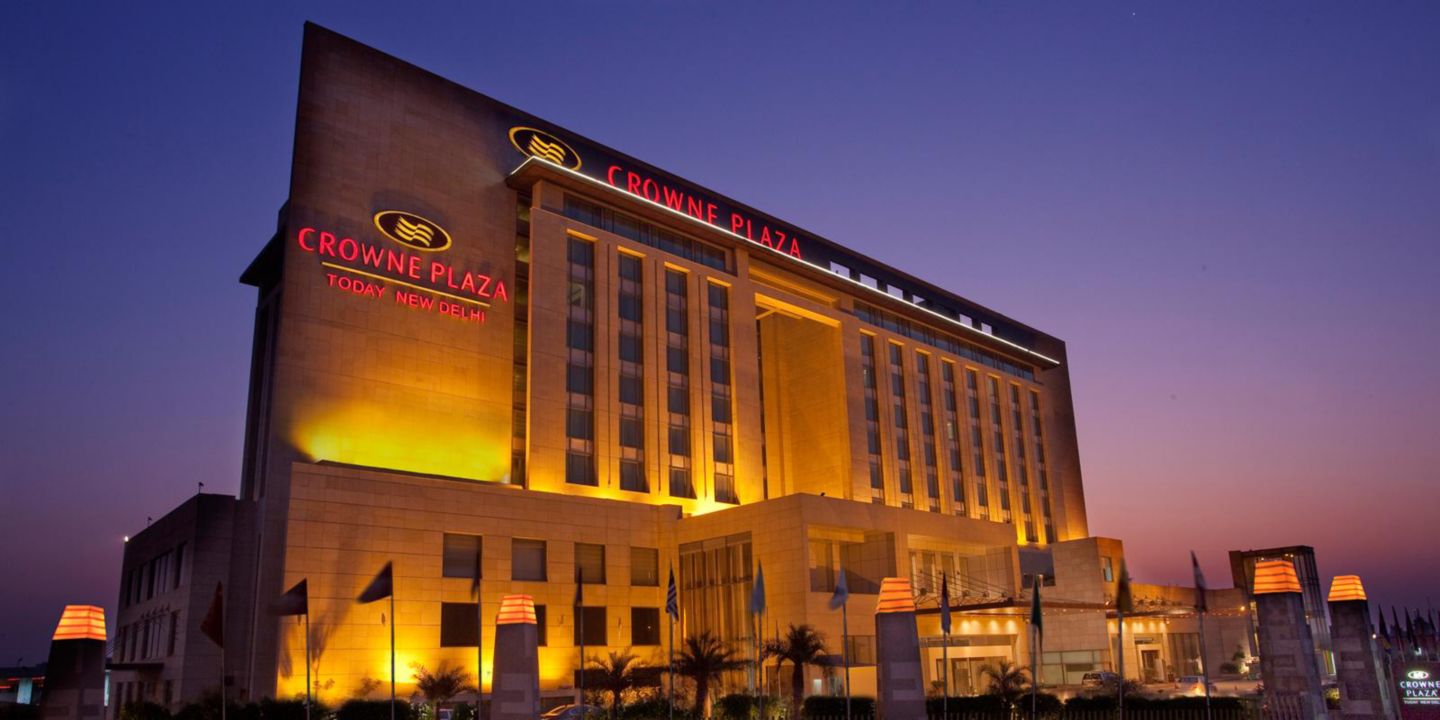
Another show, another wholesale brand reinvention. This time it's the $200 million recreation of Crowne Plaza. The concept: bringing humanity to business travel. Monte Jump, Director, F&B and Service with IHG's Crowne Plaza, shares how this new unscripted approach to service, and reinventing amenities, will connect with guests. First, Glenn and Bruce Ford, SVP, Lodging Econometrics, chat it up in an undisclosed hotel location in Florida. Trouble ensues. Subscribe to our weekly newsletter. Text 'hotel' to 66866. Visit the brand new www.novacancynews.com Send us your thoughts and comments to Glenn@rouse.media, or via Twitter and Instagram @TravelingGlenn. Visit our sponsor: Duetto Visit our sponsor: CLIC: California Lodging Investment Conference Subscribe on iTunes: No Vacancy with Glenn Haussman Subscribe on Android: https://play.google.com/music/listen#/ps/Ifu34iwhrh7fishlnhiuyv7xlsm Send your comments and questions to Glenn@rouse.media. Support the show: https://www.patreon.com/novacancy Follow Glenn @TravelingGlenn Find Bruce Ford on Twitter @BFinNH, and learn more at www.lodgingeconometrics.com Learn more at http://novacancy.libsyn.com Produced by Jeff Polly: http://www.endpointmultimedia.com/
We got something cool for episode 1001! Props to Katie Cline at the Skift Suite Success: Masters of Hospitality podcast for this one. I joined an end-of-year roundtable with some of the most thoughtful voices in hashtag#hospitality media to reflect on what actually mattered in 2025 and what could reshape 2026. Huge thanks to everyone who brought real perspective (and disagreement) to the table: 🎙️: Katie Cline — Suite Success 🎙️: Josiah Mackenzie — Hospitality Daily 🎙️: Zach Busekrus — Behind the Stays 🎙️: David Millili & 🎙️Steve Carran — The Modern Hotelier On hashtag#NoVacancyNews, I focused on two things that kept showing up in every conversation this year — and won't go away in 2026: • the confusion and overconfidence around AI, and • the growing economic bifurcation between ultra-luxury and everyone else. I also shared why I think profitability pressure, critical thinking, and realistic expectations will define the next cycle — and why hospitality needs to stop parroting talking points and start asking harder questions. A big thanks to Actabl — Actabl gives you the power to profit. Visit Actabl.com. What this roundtable covers: 🧠: Where hashtag#AI helps — and where the industry oversells it 💰: Why protecting profit mattered more than top-line growth in 2025 🏨: The growing gap between ultra-luxury and the rest of the market 🤝: Why loyalty programs face an identity crisis 🎤: Why conferences, panels, and media need real voices — not scripts 🔮: What each of us sees coming in 2026 (and what worries us) Question for you: Which 2025 trend do you think hoteliers misunderstood the most heading into 2026?
Hotel food & beverage doesn't fail because of trends — it fails when concept, design, and execution never fully line up. On #NoVacancyNews, I'm joined by Ami Alexander, Managing Partner at Barrel Aged Management, to talk about how #hotel #restaurants actually get built, refreshed, and kept relevant over time. Ami's background spans luxury hotels, global restaurant groups, and lifestyle brands, including time with Hakkasan, Sydell Group, Montage, and Pendry. That perspective shapes how she thinks about storytelling, training, and why hotels can't afford to treat F&B as an afterthought. What stood out to me is how often restaurants get compromised long before they open — furniture chosen too early, kitchens designed without the menu in mind, or concepts forced to fit an already built box. We cover: 🍽️: Why the concept needs to come first, not the floor plan 🎨: How design, furniture, music, and menu all tell the same story 👥: Training teams when experience is scarce but expectations are high 🌍: Lessons from global restaurant expansion that apply directly to U.S. hotels 🔄: When restaurants need a refresh — and how to do it without starting over For hotels, it's a practical look at how strong F&B becomes a competitive advantage instead of a constant headache. Special thanks to Actabl — Actabl gives you the power to profit. Visit Actabl.com.
Hotel food & beverage only works when culture, consistency, and leadership line up — and that's exactly what this #NoVacancyNews conversation explores. I'm joined by Greg McGowan, Regional Director of Food & Beverage for Kolter Hospitality and Executive Chef at Hyatt Centric Las Olas Fort Lauderdale, recorded on site in South Florida. Greg's path through country clubs, hotels, and leadership roles gives him a grounded view of what actually keeps F&B teams strong over time — especially in high-volume, full-service environments where turnover, burnout, and guest expectations collide. We talk about: 🍽️: Why different price points and experiences matter inside one property 👥: Building culture that keeps teams together for years, not months 🧠: Mental health, flexibility, and why burnout is no longer a badge of honor 📍: Balancing locals and transient guests in seasonal markets 🎯: Creating repeat business through genuine guest connection For #hotels, it's a practical look at how strong leadership shows up every day — in kitchens, on the floor, and behind the scenes. Special thanks to Actabl — Actabl gives you the power to profit. Visit Actabl.com to learn more.
I did this one from the 66th floor Alle Lounge at Resorts World Las Vegas, with Shannon McCallum, VP of Hotel Operations, about how the property continues evolving four-plus years after opening. Resorts World operates more than 3,500 rooms across three brands -- Hilton, Conrad, and Crockfords -- all under one roof. That scale forces real decisions about technology, guest choice, and efficiency — especially when different guests expect very different experiences. Shannon walks through how the team thinks about: 📱: Digital check-in and Apple Wallet keys without forcing app adoption 🏨: Giving guests a choice between self-service and human interaction ⚙️: Replacing interconnected systems without breaking the operation 📊: Using guest feedback and data to guide tech decisions 🚶♂️: Reducing friction at arrival while improving front desk flow 🤖: Where AI and digital assistants actually help — and where they don't The throughline here is intention. Technology works when it supports the guest journey instead of dictating it. Special thanks to Actabl — Actabl gives you the power to profit, visit Actabl.com. Smarter operations make it easier to support experiences at this scale.
Beverage has moved from a supporting role to a real revenue driver in hotel F&B, and that shift isn't accidental. #NoVacancyNews I'm joined by Adrian Biggs, Director of Advocacy at Bacardi, to talk through what their latest global trends report reveals about how — and when — guests are actually drinking. This isn't guesswork. Bacardi builds this report using global ambassador insight, consumer research across multiple countries, and real operator behavior. The result is a clearer picture of where beverage demand is heading and how hotel bars can respond. What stood out most to me is how timing, intentional drinking, and experience now matter as much as what's in the glass. Afternoon drinking is rising, cocktails are getting lighter and more deliberate, and guests expect bars to deliver something worth remembering — not just something strong. What we cover: 🍸: Why earlier drinking is becoming the new norm 📊: How beverage trends affect menu design and staffing 🌱: The growing importance of transparency, sourcing, and storytelling 📍: What hotel operators should adjust now to capture more revenue Special thanks to Actabl — Actabl gives you the power to profit. Visit Actabl.com. Better data and smarter operations make it easier to turn trends like these into real results.
Because it's STILL the holidays, I'm rerunning something that still makes me smile — episode one of Friday Night Audit. This show started in 2021, smack dab in the middle of COVID, when a lot of us in the hotel business felt disconnected, stuck at home, and spending way too much time on video calls. We also missed the best part of conferences: hanging out at the bar afterward, talking shop, telling stories, and laughing at how completely cuckoo this business can be. So we built Friday Night Audit to feel like that moment. The idea was simple: hotel people as real people, having a drink, reacting to the week, and letting the conversation go where it goes. No scripts. No polish. Just the kinds of conversations that usually happen after the badges come off. Early 2026 marks five years of the show, and we'll hit 200 episodes in February, right around that anniversary. And yes, it still feels a little ridiculous considering how this all started. This first episode sets the tone immediately, with me and Craig Sullivan, joined by our first-ever guest Kate Burda — who shotguns a beer. Producer Dave also makes his presence felt early, adding strong insulting power as we figure this show out in real time and clearly have way too much fun doing it. Highlights from episode one: 🍺: Immediate regret about starting the show — followed by leaning into it 🎤: The first guest appearance and the rhythm that stuck 🏨: Real hotel stories, awkward guest moments, and industry inside jokes 🤣: A lot of laughter that probably wouldn't have survived editing if this weren't a live show If you've ever stayed late at the bar after a conference because the conversation beat the session schedule, this show was made for you. Question: Did you find Friday Night Audit early, or did you come across it later once the chaos was already established?
This week, as I look back on podcasts that mattered to me over the last 10 years of No Vacancy and Rouse Media, I'm sharing some episodes that reflect where the industry — and all of us — actually were at the time. This one is difficult, but important. It's one of the first live shows we ever did, recorded just before COVID shut everything down. At that point, we were still learning what this virus was, how it spread, and what it might mean for travel and hotels. I went live on LinkedIn with Anthony Melchiorri and Dr. Primas, a New York–based physician with deep experience in travel health. Anthony had known Dr. Primas since 1991, going back to his days at The Plaza, and we brought him on because we needed expert insight — not speculation. Within 48 hours of this episode airing, I lost almost my entire business. That wasn't unique to me — far from it. We all experienced loss. That's part of why this episode stands out. It captures the exact moment before everything changed. I'm rerunning this not to relive it, but to document it. It's a snapshot of what the hotel industry was thinking, fearing, and trying to understand in real time. In this episode: 🦠: What we knew — and didn't know — about COVID at the time 🏨: Early concerns about travel, hotels, and guest safety 🧠: Medical context instead of rumor or panic 📉: The uncertainty facing the hospitality industry in that moment 📍: A live conversation recorded just before shutdowns began There's no sponsor on this episode. It stands on its own as a record of a moment none of us will forget.
Everyone talks about FIFA 2026 like it's a guaranteed win for hotels. The reality is more complicated. I connected with Bruce Ford of Lodging Econometrics to look at the actual hotel development, renovation, and conversion activity tied to FIFA host cities across the U.S., Canada, and Mexico — and to answer a question hoteliers ask every time a mega-event comes to town: Should you really build for this? On #NoVacancyNews, Bruce breaks down where hotels are being added, where renovations matter more than new builds, and why most smart owners don't bet long-term strategy on short-term events. A big thanks to Actabl — Actabl gives you the power to profit. Visit Actabl.com. What we cover: ⚽: Why FIFA doesn't drive hotel demand the way many people assume 🏨: Where full-service hotels make sense — and where they don't 🏗️: The difference between building for an event vs. building for a market 🔄: Why renovations and conversions dominate many host cities 🏟️: How stadium districts like Dallas, Miami, and Atlanta actually work 🎓: Why teams and staff often stay in dorms — not hotels 💰: How owners still capitalize on short bursts of extreme rate compression
I spoke with Allen Rolleri about his family's experience dealing with multiple myeloma, a rare and incurable form of cancer. The Rock Out Myeloma fundraiser takes place January 15, raising funds to support families facing the financial realities that come with long-term treatment. On #NoVacancyNews, Allen explains what the diagnosis meant in practical terms, how quickly his family had to learn about the disease, and why costs outside of medical bills often become part of the challenge. The conversation stays focused on awareness gaps, everyday expenses people don't anticipate, and how support often comes in specific, practical forms. Topics covered: 🎸: What Rock Out Myeloma funds and how it helps families 🧠: What a multiple myeloma diagnosis looks like day to day 💸: Financial pressure tied to long-term treatment 📉: Why this cancer receives limited attention and funding 🤝: How targeted support actually makes a difference More information is available at fightingagainstmyeloma.com.
Well… this happened. This is episode 1,000 of No Vacancy is live. What started as me, a mic, and no real plan (OK, the original plan was to dominate the universe, but that proved too ambitious) turned into a platform that somehow became part of how this industry talks to itself. This episode purposely short. No guest. No agenda. Just a pause to acknowledge the milestone — and the timing. In 2026, hashtag#NoVacancyNews turns 10, which makes this episode feel a lot like a major milestone with everything lining up. On hashtag#NoVacancyNews, I touch on how the show started, how it shifted from audio to video, and why consistency matters more than getting it perfect. Why this episode exists: 🎙️: Because 1,000 episodes feels worth acknowledging and is great for shameless self-promotion 📺: Because moving to video changed everything - forcing me to get in better shape. 🤝: Because this only works with a real community behind it – like I mean it! 🏨: Because hospitality people show up, even when things get complicated. Like during Covid when most everyone became 'real' 😅: Because sticking with something this long is still shocking for a lazy lug like me If you've listened, watched, shared, disagreed, or stopped me in a hashtag#hotel conference hallway over the years — thank you. And if we haven't met yet, I can't wait to be of your acquaintance. Next stop: episode 1,001… and year 10. Thanks to my amazing team: Suzanne Bagnera, PhD, CHA, CED, David Mignano, CRME and Crystal O'Donnell Happy Holidays and we'll see you in a couple of weeks with some great new episodes!!!
Everyone keeps asking the same question: Is hotel development slowing down? The global numbers say something very different — and far more nuanced. I checked in with Bruce Ford of Lodging Econometrics for a worldwide pipeline update that cuts through assumptions and looks at what's really happening across regions, segments, and timelines. On #NoVacancyNews, Bruce explains why room counts remain historically high, why developers deliberately push openings into later years, and why renovations and conversions now matter as much as ground-up construction. This conversation focuses less on hype and more on how capital actually behaves when markets tighten. A big thanks to Actabl — Actabl gives you the power to profit. Visit Actabl.com. What the data actually shows: 🌍: Global pipeline remains massive — but not evenly distributed 🏗️: Projects already under construction tell a different story than announcements 🇨🇳: China still dominates room count, but activity continues to normalize 🏨: Luxury holds firm while other segments feel pressure 🔄: Renovations and conversions reshape supply faster than new builds 📆: Developers delay openings by choice, not panic 🎢: Orlando and Dallas attract momentum for very different reasons
Luxury no longer means chandeliers and thread count. It means connection, memory, and how guests feel long after checkout. I caught up with Robert Reitknecht at INSPIRE Luxury, hosted by the International Luxury Hotel Association, live from Resorts World Las Vegas. (Important context: this was my 10th day in Vegas, so expectations were appropriately managed.) On #NoVacancyNews, Robert explains how luxury hotels move from performative service to genuine connection, why frontline teams shape the guest story more than any design element, and how leaders must "lean into the brand" without losing authenticity. A big thanks to Actabl — Actabl gives you the power to profit. Visit Actabl.com. Key Takeaways: 🏨: Why luxury now centers on memory, not material things 👥: How frontline teams directly influence the guest's emotional takeaway 🎯: Why leaders must engage staff before guests arrive 🧠: How listening creates better service cues than scripting ✨: The shift from perfection to progress in luxury operations 📖: Why guests remember stories — not lamps, lobbies, or furniture
Some resorts talk about experiences — Westgate builds them at theme-park scale. I visited Westgate Vacation Villas with Jared Saft, Chief Business and Strategy Officer, to explore how this company evolved from 16 original units into a massive, guest-focused resort with 3,000 rooms, a full waterpark, a Chuck E. Cheese–powered arcade, an in-lobby movie theater, and a $120 million reinvestment underway. On #NoVacancyNews, Jared walks through how Westgate designs spaces for toddlers, teens, parents, and grandparents at the same time, how they turned nostalgia into a modern attraction, and how they're expanding into more than 40 new destinations in just seven months. A big thanks to Actabl — Actabl gives you the power to profit. Visit Actabl.com. What you'll see on this tour: 🏨: How Westgate grew from 16 units to 14,000+ across the portfolio 🎬: Why they built a full movie theater right in the check-in lobby 🧒: How kid-first design keeps families engaged (and sane) on peak weekends 👾: Chuck E. Cheese partnerships, retro arcades, and Mystery Funhouse nostalgia 🍭: A candy shop with a waterslide literally running through it 🌊: Shipwreck Island — a full waterpark wrapping around the building 🌮: The strategy behind Los Amigos, Sid's American Kitchen, and Megabytes 🚀: How Westgate thinks about thoughtful, entrepreneurial expansion Question for you: What's the most impressive family-focused feature you've seen at a resort?
Newport Beach looks luxurious from the outside — but its secret sauce is heart, identity, and a fiercely intentional brand strategy. On #NoVacancyNews, I teamed up with my Friday Night Audit partner-in-crime Craig Sullivan to talk with Gary Sherwin, CEO of Visit Newport Beach, about how one of America's most aspirational coastal cities keeps its charm, avoids the "sea of sameness," and delivers the version of Southern California people dream about. A big thanks to Actabl — Actabl gives you the power to profit. Visit Actabl.com. Here's what we cover: 🌴: How Newport Beach built a destination brand that hotels actually use 💼: Why 100% locally owned hotels strengthen the community's identity 🏖️: How Newport avoids the "two people holding hands on a beach" cliché trap 💡: Why luxury now means accessible, customized, and never stuffy 🎯: How the city stays true to its brand promise across every neighborhood 🎨: Why in-house creative helps the DMO avoid homogenized marketing 🎄: How "50 Days of Festive Fun" became a massive holiday driver 🍽️: The rise of high-end dining, RH's splashy opening, and what's coming next 🏆: Why taking creative risks beats playing it safe — every time Question for you: What U.S. destination delivers the experience you imagined before you arrived?
This week Dan Lesser, Co-Founder, President, & CEO at LW Hospitality Advisors shares some cockatils and laughs with Glenn, Craig and Doctor Prodcuer Suzanne.
Some management companies build hotels. Olympia Hospitality builds identity. I spoke with Sara Masterson (President) and John Schultzel (Chief Growth Officer) about how Olympia blends independent spirit, strong brand partnerships, and mission-driven hospitality across destinations like Nantucket, Boston, Winter Park, the White Mountains, and beyond. On #NoVacancyNews, Sara and John explain how they combine boutique creativity with brand-backed consistency, how they think about technology adoption, and why community connection is becoming the core differentiator in both luxury and branded hotels. A big thanks to Actabl — Actabl gives you the power to profit. Visit Actabl.com. What we cover: 🏨 How Olympia mixes brand standards with independent personality 🌎 Why "place-based design" beats cookie-cutter hotel experiences 🎨 How to create a hotel that could only exist in one community ⚙️ Why fast-moving tech adoption matters more for younger teams 📈 How owners think about character, authenticity, and long-term performance ❤️ The Alfond Inn and Boone Tavern: hotels that literally fund education 💡 Why short-term bumps shouldn't scare hoteliers from long-term vision
Corporate travel isn't easing back into old habits — it's reinventing itself, and hoteliers who cling to the past will lose business they didn't even know they were missing. I spoke with Lukasz Dabrowski, SVP of Global Supplier Relations at HRS Group, about why 2025 became the turning point for travel procurement and how 2026 will reward hotels that understand converged demand, Level 3 data, and real-time negotiation. On #NoVacancyNews, Lukasz breaks down why annual RFP cycles are disappearing, how "travel CEOs" use invoice-level data to renegotiate instantly, and what hotels must change to stay competitive as AI and real-time visibility reshape corporate buying behavior. A big thanks to Actabl — Actabl gives you the power to profit. Visit Actabl.com. Key Insights: 📊: Annual bid cycles are collapsing — continuous renegotiation is the new normal 📈: Corporations now evaluate total account contribution across all segments 🧠: Level 3 invoice data exposes where travelers actually stay and spend 🤝: Hoteliers must think like corporate buyers, not just sellers 🏨: Converged demand requires reorganizing sales teams — not more reps ⚙️: Virtual payment friction kills compliance and costs hotels real volume 🚗: Smaller brands win when they stop trying to be Ferraris and excel as Volkswagens 🎯: The "Golden Middle" strategy helps hotels balance ADR, occupancy, and guest satisfaction sustainably Question for you: What one change would make it easier for your hotel to win corporate business in 2026?
Most people know the names Marriott, Hilton, Wilson — but countless African American hoteliers helped build the foundation of American hospitality, and their stories rarely get told. I sat down with Calvin Stovall, author of Hidden Hospitality, to explore the remarkable journey behind his new book and the extraordinary hoteliers he uncovered along the way. Calvin spent decades researching these stories — from the late 1700s through the civil rights era — and the result is a stunning coffee table book filled with resilience, innovation, and legacy. On #NoVacancyNews, Calvin talks about the emotional moment he held the finished book for the first time, how the idea originated back in grad school, and why these stories matter for the next generation of leaders in our industry. A big thanks to Actabl — Actabl gives you the power to profit. Visit Actabl.com. Key Insights: 📘 How a graduate school research assignment became a lifelong mission 📰 The challenge of uncovering stories buried in microfiche archives 🏨 The African American hotel pioneers who built thriving businesses long before civil rights 💡 The incredible story of Joseph Lee — hotelier, inventor, and culinary innovator 📚 How Calvin raised the funding to publish a 90,000-word coffee table book 🔥 Why these stories can inspire a new generation of hotel ownership 🏛️ How segregation, community investment, and resilience shaped these early hotels

Comments

Download from Google Play

Download from App Store
 United States