


 Claim Ownership
The STEM Space
Subscribed: 17Played: 393
Subscribe

© All content is copyright by Vivify, LLC
Description
Two engineers turned educators discuss resources, tips, and current events within the scope of STEM education.
201 Episodes
Reverse
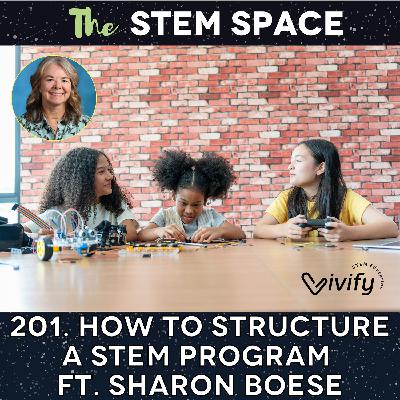
Show Summary:Claire sits down with Sharon Boese, a dynamic STEM educator from McKinney Christian Academy in Texas, to explore what hands-on, inquiry-based science education looks like in action. Sharon shares what a typical day in her classroom entails - from guiding 8th graders through Earth and Space Science to inspiring younger students in the school’s K–5 STEM enrichment program.We talk about how to balance multiple class preps and design unique experiences to prevent repetition across grade levels, and integrate creativity and rigor through project-based learning. Sharon also gives us a peek inside her students’ engineering notebooks and explains how documentation supports problem-solving and reflection. Whether you’re a fellow teacher looking for classroom inspiration or simply curious about how STEM education comes alive, this conversation offers practical insights and plenty of passion for learning.About Sharon Boese: Sharon Boese is currently an eighth grade science/STEM teacher and an Elementary School STEM Coordinator at McKinney Christian Academy in McKinney, Texas. She has a great passion for all things space and constantly encourages her students to reach for the stars. Sharon is happily married to Michael, an environmental engineer. They have three sons who all have no choice but to love the nighttime sky. All are Eagle Scouts who earned the Astronomy and Space Exploration merit badges! Sharon hopes that one day one of her sons will become an Astronaut!Credit: NASA Directory | Solar System Ambassadors - NASA Solar System ExplorationLinks from the Show:Related The STEM Space Podcast Episodes 128. Preparing for the New Science Standards in Texas131. How to Scaffold Engineering Design in K-12105. Explaining the 3 Stages of STEMVivify STEM Blog Posts How to Start an After School STEM ClubUnderstanding a Framework for P-12 Engineering LearningNot all STEM is Equal: 3 Stages of STEM Education10 Tips for Managing a STEM ClassroomVivify STEM LessonsIntro to Coding: STEM Distance Learning ActivityBuilding Bricks STEM Challenge Mats - GROWING BUNDLE!STEM by Grade LevelBridge Engineering STEM ChallengeFREE! - Engineering Design Teacher Slides (editable)FREE! - Editable Budget Sheet for Engineering Design ChallengesTower STEM ChallengesDesign a Car Engineering Design Challenge | 1st Grade STEM DiscoveriesSailboat STEM Challenge - K-5 or 6-8Simple Machines Toy Factory STEM ChallengeOther STEM ResourcesNASA Space Exploration Educators Conference (SEEC)Texas Essential Knowledge and Skills (TEKS) | Texas Education AgencyVivify STEM Space Library - free (Explorer Library) and paid (STEM Space All-Access: ALL Vivify lessons, PD, videos, and MORE) optionsVivify Scope and SequenceSphero Bolt+ | Sphero EducationTinkercadTHE STEM SPACE SHOWNOTESTHE STEM SPACE FACEBOOK GROUPVIVIFY INSTAGRAMVIVIFY FACEBOOKVIVIFY XVIVIFY TIKTOKVIVIFY YOUTUBE
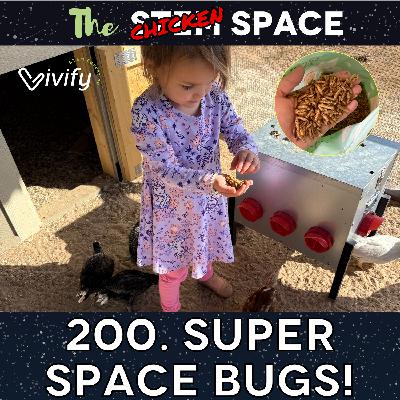
Show Summary:In this episode, Claire shares her recent discovery of a backyard superfood – the Black Soldier Fly! She and Natasha discuss how this creature plays a key role in ecosystems involving efficient decomposition, nutritional livestock feed, and even in future space habitats. Learn why you may want to get involved, too! Links from the Show:Related The STEM Space Podcast Episodes 197. You Should Build a Rocket… Seriously (Part 1)199. Chickens and Rockets (Part 2)Vivify STEM Blog Posts Design A School Garden STEM ProjectGo on a Mission to Mars!Vivify STEM LessonsDesign a School Garden: STEM Project GuideBuild a Colony on the Moon or MarsOther STEM ResourcesAll About Black Soldier Flies | Grubbly FarmsThe Urban Farm PodcastDr. Jeff Tomberlin | Texas A&MTransforming Waste into Wealth: Black Soldier Fly Frass Explained | FlyboxQuick TipsTHE STEM SPACE SHOWNOTESTHE STEM SPACE FACEBOOK GROUPVIVIFY INSTAGRAMVIVIFY FACEBOOKVIVIFY XVIVIFY TIKTOKVIVIFY YOUTUBEVIVIFY BLUESKY
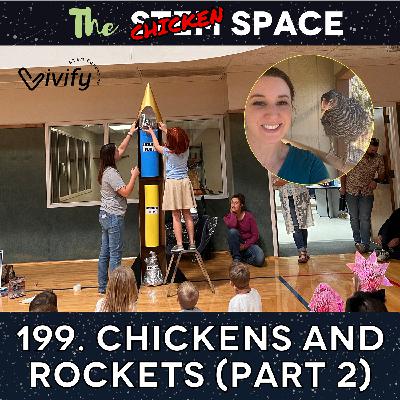
Show Summary:In this episode, Claire shares how she tells her story to inspire students and realistically see themselves achieving their dreams. Hear about her recent outreach day teaching about rockets using a home-built 8 foot tall model and of course an update on her chickens. Also get a taste of how STEM teachers can address the social emotional learning of their students. Natasha and Claire may not agree on the method of doing so. Tune in to hear more! Links from the Show:Related The STEM Space Podcast Episodes Related The STEM Space Podcast Episodes 197. You Should Build a Rocket… Seriously (Part 1)198. An Engineer's Guide to Thoughts and Emotions (ft. Alison West and Audrey Gilfillan)153. Don't Tell Your Kid to be an EngineerVivify STEM Blog Posts How to Launch RocketsI Didn’t Always Want to be an Engineer - Claire12 Ways to Boost Social-Emotional Learning with STEMHow to Teach Growth Mindset and Failing ForwardVivify STEM LessonsStraw Rocket STEM ChallengeUpstairs Downstairs Brain Paper Circuit SEL STEM ActivityAstronaut Training: 4 Cs of STEMFREE! - Engineering Framework Habits of Mind PostersAstro-Rover Space Science & Engineering Design UnitOther STEM ResourcesChickens and Cold Weather: How Cold Can Chickens Tolerate?Mars Pathfinder Sojourner Rover - Jet Propulsion LaboratoryDecompile Your Mind: An Engineer’s Guide to Thoughts and Emotions(book)Email us your questions!THE STEM SPACE SHOWNOTESTHE STEM SPACE FACEBOOK GROUPVIVIFY INSTAGRAMVIVIFY FACEBOOKVIVIFY XVIVIFY TIKTOKVIVIFY YOUTUBEVIVIFY BLUESKY
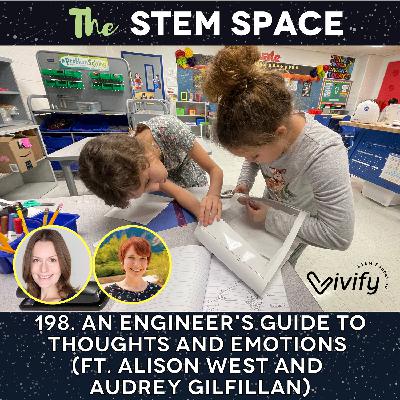
Show Summary:In this episode, Claire is joined by Audrey Gilfillan and Alison West, licensed professional counselors and embedded therapists in the College of Engineering and Applied Science at CU Boulder. Together, they bring extensive experience in college mental health, academic and career support, and community-based counseling. Audrey and Alison are co-authors of Decompile Your Mind: An Engineer’s Guide to Thoughts and Emotions and co-founders of Applied Wellness Initiatives, where they help educators, managers, and professionals integrate mental health awareness into their work and academic communities. Their shared passion is supporting young adults as they balance personal well-being with academic and professional goals in a fast-changing world.Links from the Show:Resources MentionedDecompile Your Mind: An Engineer’s Guide to Thoughts and Emotions (book)Scaffolded Mental Health Support Model (article)Applied Health InitiativesEmail us your questions!Related The STEM Space Podcast Episodes 146. Is It Squishy? How to Build Engineering Intuition153. Don't Tell Your Kid to be an Engineer59. How to Motivate Students and Regulate Emotions in STEMVivify STEM Blog Posts I Didn’t Always Want to be an Engineer - Claire12 Ways to Boost Social-Emotional Learning with STEMHow to Teach Growth Mindset and Failing ForwardHow to Integrate STEM into Your Gifted & Talented ProgramNot All STEM is Equal: The 3 stages of STEM EducationVivify STEM LessonsFREE! - Engineering Framework Habits of Mind PostersAstronaut Training: 4C's of STEM Middle School UnitSTEM Creativity Tools: 5 Activities to Boost Brainstorming PowerDesign a Car Engineering Design ChallengeUpstairs Downstairs Brain Paper Circuit SEL STEM ActivityTHE STEM SPACE SHOWNOTESTHE STEM SPACE FACEBOOK GROUPVIVIFY INSTAGRAMVIVIFY FACEBOOKVIVIFY XVIVIFY TIKTOKVIVIFY YOUTUBEVIVIFY BLUESKY
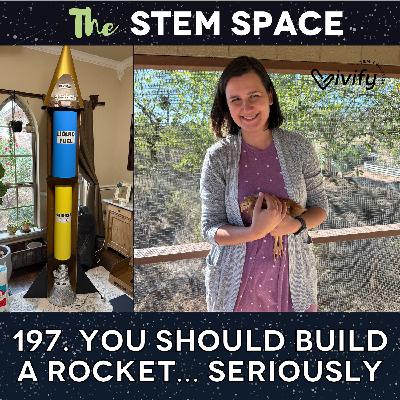
Show Summary:In this episode, Natasha and Claire dive into Claire’s upcoming outreach presentation on rockets. As Claire builds a large-scale cutaway model to showcase each part of a rocket, they explore the value of hands-on learning, problem-solving activities, and tackling common misconceptions about rockets. Plus, stick around for a fun update on Claire’s chickens!Links from the Show:Related The STEM Space Podcast Episodes 194. Should You Be a STEM Expert?147. When STEM Heats Up! Summer STEM Failures82. How to Rock it with Rockets119. Think Like A ScientistVivify STEM Blog Posts 5 STEM Activities for Fall & HalloweenHow to Launch Rockets blog postsBrick by Brick: Intro to Criteria and ConstraintsVivify STEM LessonsIntro to STEM: Think Like a Scientist & Engineer!Design a School Garden: STEM Project GuideStraw Rocket STEM Challenge: K-3 or 4-10Other STEM ResourcesWalking on eggshells — Assessing anxiety in chickensPitsco Straw Rocket LauncherEstes Rockets: Alpha III Launch SetRocket Parts - Glenn Research Center - NASAMeet the Vivify TeamSubscribe to the Vivify Newsletter!THE STEM SPACE SHOWNOTESTHE STEM SPACE FACEBOOK GROUPVIVIFY INSTAGRAMVIVIFY FACEBOOKVIVIFY XVIVIFY TIKTOKVIVIFY YOUTUBE

Show Summary:In this episode of the STEM Space podcast, Claire chats with the Founder & CEO of Changemaker Education, David Richards. He shares his passion for love-based, personalized education that led to establishing a microschool for his own children. As an alternative to the outdated factory model of education, microschools tailor learning to the children that are being served. Tune in to hear how David turned his passion and problem solving into an organization to help others start their own microschools and learn how you can too! About David Richards, Founder & CEO of Changemaker Education: David K. Richards is the Founder & CEO of Changemaker Education, a national network of affiliate love-based microschools and an incubator for founders who want to usher in a new paradigm for the future of education. He is also the host of the Changemaker ED“U” podcast. Previously, he was Founder & CEO of Growth Public Schools, and a founding teacher and leader with Summit Public Schools where he launched several innovative schools. In addition he serves as a leadership and life coach. David has worked in education reform for over 25 years as a teacher, principal, executive, and board member. He lives in Sacramento, CA with his wife and his two children, and holds a BA from UC Berkeley and an MA from Stanford University.Links from the Show:Related The STEM Space Podcast Episodes 59. How to Motivate Students and Regulate Emotions in STEM193. Are You Manufacturing Engineers?Vivify STEM Blog Posts I Didn’t Always Want to be an EngineerAstronaut Training and the 4 C's of STEM12 Ways to Boost Social-Emotional Learning with STEMHow to Teach Growth Mindset and Failing ForwardVivify STEM LessonsAstronaut Training: 4C's of STEM Middle School Unit | Engineering Our CosmosPaper Football Math Activity: Ratio & Proportions with STEM CareersHeart Rate Ratios & Graphing ActivityWearable Device Sports Engineering Activity (Sports & STEM)Brain Safety STEM Challenge: Design a Football HelmetOther STEM ResourcesChangemaker EducationVivify STEM’s StoryMontessori MethodChangemaker ED”U” PodcastTHE STEM SPACE SHOWNOTESTHE STEM SPACE FACEBOOK GROUPVIVIFY INSTAGRAMVIVIFY FACEBOOKVIVIFY XVIVIFY TIKTOKVIVIFY YOUTUBE
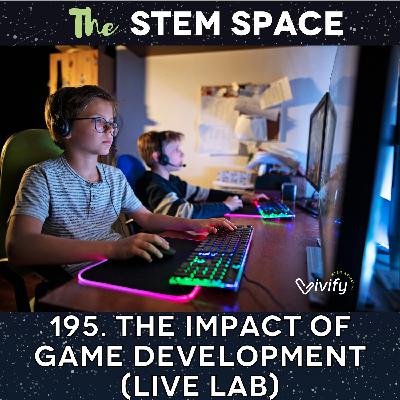
Show Summary:You are in for a treat! Do you have someone in your life that is interested in video games or game development? Claire talks with Aaron Thibault, the director of The LIVE Lab which is a research lab at Texas A&M University in the College of Performance, Visualization and Fine Arts where students learn to create interactive learning experiences while getting real industry experience. Hear his story along with the impact that game-based learning can have on learning as well as some ways you as a teacher can bring LIVE Lab projects to your classroom.About Aaron Thibault, LIVE Lab Director: Aaron Thibault is a game developer, educator and researcher who focuses on the innovation of game-based technologies that support learning and deep representations of people, environments and complex interactive scenarios. He was a key leader for the mega-franchise “Borderlands,” developed retention techniques and story pipelines for the first massive multiplayer game “Ultima Online,” and created the Digital Warrior game-based learning platform for the US Army as part of a joint TAMU-UT Austin “UXXI” digital transformation initiative. He organized and advised foundational research at his Digital Media CoLab including rtNEAT, a breakthrough real-time evolutionary neural network technique invented by Ken Stanley and an example of a core research invention that can only occur with support of a lab-based game development team. Aaron also helped start and managed the world’s first graduate degree program for games, The Guildhall at SMU, and is an ACM SIGGRAPH Pioneer and former IEEE virtual reality program chair.About Texas A&M’s LIVE Lab: The LIVE Lab is a research lab at Texas A&M University in the College of Performance, Visualization and Fine Arts where students learn to create interactive learning experiences while getting real industry experience. With the help of subject matter experts and instructional designers, students collaborate to make high-quality digital learning experiences, touching on every aspect of professional development including design, concept art, 3D modeling, development and management.Links from the Show:Related The STEM Space Podcast Episodes 68. Game Based Learning with André Thomas110. How to Implement Game-Based Learning ft. André ThomasVivify STEM Blog Posts Best Free AI Tools for EducatorsHow to Teach STEM Through A Story10 Must Have STEM ToolsVivify STEM LessonsIntro to Coding STEM ActivityTechnology Choice Boards FREE! - Using Geometry to Build a Safe Shelter!Other STEM ResourcesAaron Thibault | LinkedInTexas A&M LIVE LabA&M-developed calculus video game helps students pass, pursue STEM careersVariant: Limits Educational Trailer (YouTube)Variant: Limits (game)Train gamePrisms gameStudy: Learning Exponential Functions With Immersive Virtual Reality: Outcomes of a Randomized Controlled Trial as Part of the Prisms NSF SBIR Phase II ProjectThe Stanley Parable gameCortopia and Beyond Frames Wands AlliancesQuick TipsTHE STEM SPACE SHOWNOTESTHE STEM SPACE FACEBOOK GROUPVIVIFY INSTAGRAMVIVIFY FACEBOOKVIVIFY XVIVIFY TIKTOKVIVIFY YOUTUBE
Show Summary:Natasha and Claire outline a new STEM curriculum that will be available for free through Space Club. Claire details her process on creating the science labs and engineering design challenges in the curriculum including representing accurate science content. Unsurprisingly, she learned that turning to the subject matter experts is the best way to ensure quality science and engineering content to ensure the science informs the engineering design. From chicken coop design to exploring ocean worlds, this episode is filled with inspiration and resources for your STEM program!Links from the Show:Related The STEM Space Podcast Episodes 90. We Launched a Weather Balloon103. Teaching Light & Breaking MisconceptionsVivify STEM Blog Posts How to Teach STEM Through A StoryFinding Student SparksWeather Balloon LaunchTeaching Space Inspires YouthVivify STEM LessonsFREE! - Space Club Mission to Moon or Mission to MarsEngineering Our Cosmos 8th Grade CurriculumMission to Moon or Mission to Mars CurriculumOther STEM ResourcesSpace Club - completely free!NASA Dragonfly MissionNASA Cassini MissionSwRI Kelly MillerEmail us your questions!THE STEM SPACE SHOWNOTESTHE STEM SPACE FACEBOOK GROUPVIVIFY INSTAGRAMVIVIFY FACEBOOKVIVIFY XVIVIFY TIKTOKVIVIFY YOUTUBEVIVIFY BLUESKY
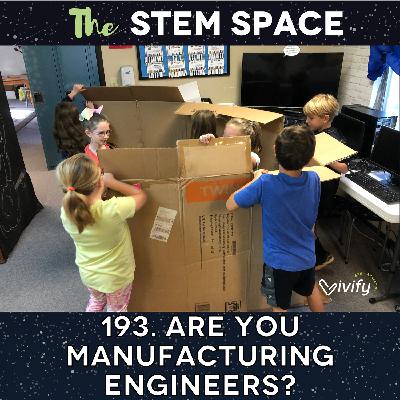
Show Summary:Natasha and Claire dive into the often-overlooked role of manufacturing in STEM education, exploring how it connects to engineering and real-world applications in the classroom. Along the way, they catch up on the back-to-school happenings from the humor of kindergarten drama to the challenges of STEM burnout and strategies for managing it. Tune in to hear why manufacturing matters, how educators can integrate it into their teaching, and why it’s more relevant than ever for preparing students for future careers.Links from the Show:Related The STEM Space Podcast Episodes 69. Can My Baby Do STEM?4. Why You Should Teach Space130. Amazing K-12 Space Projects ft. Juan NolascoVivify STEM Blog Posts The ABCs of Kindergarten STEMTeaching Space Inspires YouthVivify STEM LessonsAlphabet STEM Challenges Bundle - Kindergarten STEM UnitIntro to STEM: Think Like a Scientist & Engineer!STEM Careers BINGO - K-5 or 5-12Other STEM ResourcesVivify TikTok: Baby Stem - Extracting DNA From FruitDad Tries to Teach a Life Lesson | Ragdoll - Series 3 | Bluey (clip)San Antonio Manufacturing AssociationYouTube: How Things Work | NatGeo KidsSubscribe to the Vivify Newsletter!THE STEM SPACE SHOWNOTESTHE STEM SPACE FACEBOOK GROUPVIVIFY INSTAGRAMVIVIFY FACEBOOKVIVIFY XVIVIFY TIKTOKVIVIFY YOUTUBE
Show Summary:In this episode, Natasha and Claire kick things off with their latest animal adventures. But the real focus is on helping STEM teachers gear up for the new school year. They break down the top things you should be doing right now, including how to strategically approach your curriculum planning and what supplies you’ll want to stock up on before the school rush hits. Whether you’re a veteran teacher or new to the STEM classroom, this episode packs in practical tips to help you gear up for a great year ahead!Links from the Show:Related The STEM Space Podcast Episodes 191. What STEM Teachers Should Do In the Summer96. Chat with a Chemist ft Dr. Danna Freedman148. AI Tips for Teachers ft. Lauren KellyVivify STEM Blog Posts A Search for Life: Astro-Rover STEM ChallengeBest Free AI Tools for EducatorsScientific Method vs. Engineering Design Process: Which is used in STEM learning?Vivify STEM LessonsAstro-Rover Space Science & Engineering Design UnitFREE! - Explore the Universe: Star Party Astronomy Scavenger HuntFREE! - Host a Classroom DebateOther STEM ResourcesSETI InstituteThe Drake EquationThe Fermi Paradox: Where are all the aliens?Von Neumann ProbesThe Berserker Hypothesis: The Darkest Explanation Of The Fermi ParadoxTHE STEM SPACE SHOWNOTESTHE STEM SPACE FACEBOOK GROUPVIVIFY INSTAGRAMVIVIFY FACEBOOKVIVIFY XVIVIFY TIKTOKVIVIFY YOUTUBE
Show Summary:In this episode, Natasha and Claire kick things off with their latest animal adventures. But the real focus is on helping STEM teachers gear up for the new school year. They break down the top things you should be doing right now, including how to strategically approach your curriculum planning and what supplies you’ll want to stock up on before the school rush hits. Whether you’re a veteran teacher or new to the STEM classroom, this episode packs in practical tips to help you gear up for a great year ahead!Links from the Show:Related The STEM Space Podcast Episodes 105. Explaining the 3 Stages of STEM190. Prime Picks: Vivify STEM's Smartest 2025 DealsVivify STEM Blog Posts Exploring National Parks with a STEM Challenge!How to Teach STEM Through a StoryTop 35 Amazing STEM Books for Kids10 Tips for Managing a STEM ClassroomVivify STEM LessonsNational Park Research & Design: 5E STEM Project Animal Habitat & Biomes STEM Diorama Engineering Design ChallengeDesign a Magnetic Friend STEM ChallengeDesign a Car STEM ChallengeSTEM Careers BINGO - K-5 or 6-12Engineering Our Cosmos, featuring Solar Energy Tower, Space Capsule, or Space LanderOther STEM ResourcesMammoth Cave National ParkHot Springs National ParkVivify’s Approach to STEM EducationVivify’s Amazon Storefront - Books, Classroom Finds, or Claire’s 2025 Amazon DealsQuick TipsTHE STEM SPACE SHOWNOTESTHE STEM SPACE FACEBOOK GROUPVIVIFY INSTAGRAMVIVIFY FACEBOOKVIVIFY XVIVIFY TIKTOKVIVIFY YOUTUBE
Show Summary:Get ready for a deep dive into this year’s smartest Prime Day finds from Vivify STEM! In this episode, Claire spotlights her top picks to save you some money! From hands-on learning kits like Snap Circuits and the Smartphone-Controlled Paper Airplane, to classroom must-haves including science posters, thermal imaging cameras, and fluorescent light covers. Whether you're an educator, parent, or STEM enthusiast, she's curated a collection of innovative tools, quirky supplies, and helpful gear to level up any learning space. Tune in for a fun breakdown of each product and why it deserves a spot in your cart before the deals disappear!These will be published to our Amazon Store under “Prime Day 2025 Picks” on July 8, 2025!THE STEM SPACE SHOWNOTESTHE STEM SPACE FACEBOOK GROUPVIVIFY INSTAGRAMVIVIFY FACEBOOKVIVIFY XVIVIFY TIKTOKVIVIFY YOUTUBEVIVIFY BLUESKY
Show Summary:Natasha sits down with Rolanda Baldwin, a dynamic leader whose 20+ years in math education are transforming the way we think about numbers. Rolanda’s journey is nothing short of inspiring: from her early days as a classroom teacher and instructional coach in North Carolina, to serving as a district curriculum coordinator, and then rising through the ranks at UnboundEd from math specialist to Math Director. Now, as Vice President of Program Design, she’s spearheading the development of cutting-edge math and UPP programs that are setting new standards in education.Discover how Rolanda’s passion is empowering every learner to see themselves as “math people.” Through her groundbreaking GLEAM framework - delivering Grade-Level, Engaging, Affirming, and Meaningful instruction - she equips educators with the tools to re-engineer math education and ignite a lifelong love of learning. Tune in to catch insights that are as transformative as they are practical!About Rolanda Baldwin: With two decades of experience, Rolanda has worn many hats throughout her journey. She's been a middle and high school math teacher, a math instructional coach, and a district math curriculum coordinator in a large North Carolina district. Rolanda's love for mathematics education led her to join UnboundEd as a math specialist, where she rose to the role of Math Director. Today, she proudly serves as the Vice President of Program Design, where she's responsible for overseeing the growth and development of UnboundEd's entire math and UnboundEd Planning Process (UPP) program portfolio. Rolanda’s thoughtful approach to program development and active involvement in strategic organizational initiatives and external partnerships are testaments to her sincere commitment to her craft. Her enthusiasm for mathematics education is infectious, and she's dedicated to empowering every individual to become a "math person." Rolanda is passionate about reshaping educational systems and frameworks to help educators plan and deliver grade-level, engaging, affirming, and meaningful math instruction.About UnboundEd:UnboundEd is a trailblazing force in education, partnering with passionate educators to transform classrooms into hubs of high-quality, dynamic learning where every single student thrives. By championing innovative, research-based frameworks like GLEAM, UnboundEd is redefining the teaching landscape and inspiring educators to push the boundaries of what's possible in shaping tomorrow’s learners.Links from the Show:Related The STEM Space Podcast Episodes 187. How to Make Math Meaningful ft. Ki Karou of MIND Education180. The Secret to Loving Math ft. Nichole Austion of the National Math and Science Initiative179. Seeing Students as Mathematicians ft. Cherelle McKnight of Illustrative MathematicsVivify STEM Blog Posts I Didn't Always Want to be an EngineerUnderstanding a Framework for P-12 Engineering LearningScientific Method vs. Engineering Design Process: Which is used in STEM learning?Vivify STEM LessonsFREE! - Using Geometry to Build a Safe Shelter!Paper Football Math ActivityHeart Rate Ratios & Graphing ActivityFREE! - Add Math Practice to any Design Challenge using these Editable Budget SheetsOther STEM ResourcesUnboundEdZaretta Hammond’s Culturally Responsive Teaching and the Brain(book)Email us your questions!THE STEM SPACE SHOWNOTESTHE STEM SPACE FACEBOOK GROUPVIVIFY INSTAGRAMVIVIFY FACEBOOKVIVIFY XVIVIFY TIKTOKVIVIFY YOUTUBEVIVIFY BLUESKY
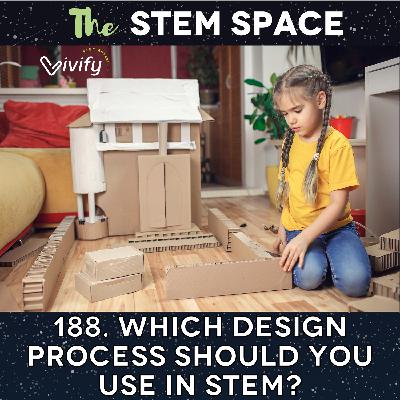
Show Summary:Natasha and Claire return to unpack an essential question for STEM educators: Should you be using the Design Process or the Engineering Design Process in your classroom? With a mix of practical advice and personal stories, they explore how each approach supports creativity, critical thinking, and hands-on learning. Whether you're a seasoned STEM teacher or just getting started, you'll hear thoughtful insights on when to emphasize open-ended design thinking versus structured problem-solving. Plus, the hosts dive into the importance of developing key “making” skills—like prototyping, tool use, and collaborative iteration—to empower students as confident creators and problem solvers. Tune in for a conversation that will help you make informed decisions to best support your students' growth as future innovators.Links from the Show:Related The STEM Space Podcast Episodes 8. STEM vs. STEAM+156. Would an Engineer Solve Your Problem?157. Training Astronauts ft. NASA's Ike TheriotVivify STEM Blog Posts Scientific Method vs. Engineering Design Process: Which is used in STEM Learning?I Didn’t Always Want to be an Engineer | ClaireVivify STEM LessonsEating in Space STEM ChallengeBridge Engineering STEM ChallengeNewspaper STEM ChallengesOther STEM ResourcesFood Truck Championship of TexasThe Facebook post that started this conversation!Space Colony CompetitionSEEC (Space Exploration Educators Conference)NASA | Meet the Teams Leading Moonwalking Test Mission (ft. Ike Theriot)Subscribe to the Vivify Newsletter!THE STEM SPACE SHOWNOTESTHE STEM SPACE FACEBOOK GROUPVIVIFY INSTAGRAMVIVIFY FACEBOOKVIVIFY XVIVIFY TIKTOKVIVIFY YOUTUBE
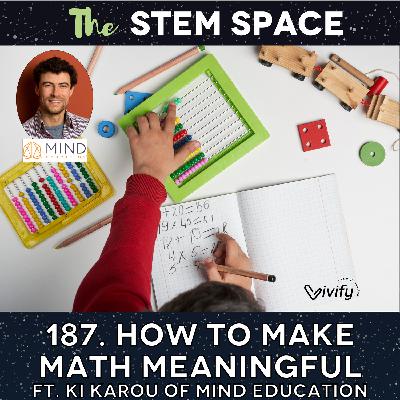
Show Summary:Have you used ST Math in your classroom? In today’s episode of The STEM Space, Natasha chats with Ki Karou, Senior Director of Product at MIND Education, creators of this game-based math program. Their goal is to challenge students through active, visual learning and critical thinking that teaches students not only to learn math, but how to think. Tune in on a great conversation including how Ki believes we should shift from “real-world” problem solving to “meaningful” problem-solving.About Ki Karou:Ki Karou, senior director of product at MIND Education, overseeing an entire team that is all about practical, low-lift strategies for sparking meaningful math conversations in any classroom—no extra prep, no fancy materials needed. It’s super actionable stuff for teachers who want to make math more collaborative and engaging without blowing up their lesson plans.About Mind Education: MIND Education is transforming math learning with neuroscience-driven, game-based programs like ST Math, designed to make math visual, intuitive, and accessible. With over 25 years of research-backed solutions, they empower students to develop deep conceptual understanding and build confidence in problem-solving. Their mission is simple: help students think, not just memorize, creating meaningful learning experiences that change how math is taught and understood.Links from the Show:Related The STEM Space Podcast Episodes 180. The Secret to Loving Math ft. Nichole Austion of the National Math and Science Initiative179. Seeing Students as Mathematicians ft. Cherelle McKnight of Illustrative MathematicsIs Teaching Engineering Bad? - Part 1 and Part 2Vivify STEM Blog Posts How to Teach Growth Mindset and Failing ForwardNot all STEM is Equal: 3 Stages of STEM EducationClaire: I Didn't Always Want to be an Engineer Vivify STEM LessonsAstronaut Training: 4 Cs of STEM - Creativity, Collaboration, Communication, and Critical ThinkingFREE! - Using Geometry to Build a Safe Shelter!Paper Football Math ActivityHeart Rate Ratios & Graphing Activity FREE! - Add Math Practice to any Design Challenge using these Editable Budget SheetsOther STEM ResourcesKi Karou | LinkedInMIND EducationThe Game Believes in You: How Digital Play Can Make Our Kids Smarter book“And you think they’ll qualify for Bletchley because they’re good at crossword puzzles?” Imitation Game clipGain access to our 200+ Lessons (& growing) STEM Space Library!THE STEM SPACE SHOWNOTESTHE STEM SPACE FACEBOOK GROUPVIVIFY INSTAGRAMVIVIFY FACEBOOKVIVIFY XVIVIFY TIKTOKVIVIFY YOUTUBEVIVIFY BLUESKY
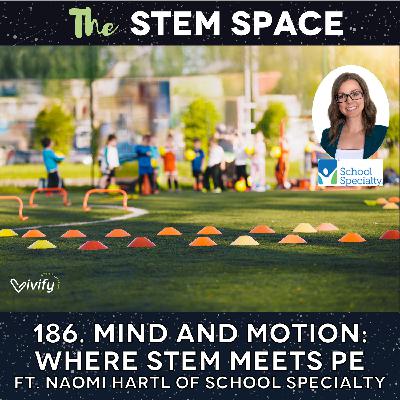
Show Summary:What happens when you bring physical education into the STEM classroom? In this episode of The STEM Space, we’re joined by Naomi Hartl, Education Strategist at School Specialty, who is excited about the possibilities of exactly that! With a teaching background that spans subjects such as biology, math, health, and PE, Naomi shares her passion for integrated learning that supports the whole child. She describes a favorite lesson that blends sports movement with physics and walks us through the surprising overlaps between PE and STEM standards. I think you will enjoy this energizing conversation that may spark ideas on how to bring health and wellness into your STEM classroom!About Naomi Hartl:Naomi Hartl is on a mission to transform education. With a diverse background spanning biology, mathematics, health education, physical education, home economics, and career education, she brings a wealth of expertise to the table. A proud graduate of the University of Saskatchewan, Naomi began her teaching journey in her home province before taking her passion for learning to Oregon, USA. Since joining School Specialty in 2015, she has played a pivotal role in curriculum development and writing, ultimately stepping into her current role as Education Strategist for PE, Health & Wellness, and HS Science. Driven by a commitment to empowering educators and students, Naomi curates innovative solutions that foster safe, equitable, and impactful learning experiences. Her work is shaping the future of education—one inspired classroom at a time.About School Specialty: School Specialty is a leading provider of educational products, services, and solutions designed to support student success. With a comprehensive portfolio that includes classroom supplies, furniture, curriculum resources, and professional development, they help schools create engaging and effective learning environments. Their mission is to empower educators and students by delivering innovative tools that enhance teaching and learning experiences.Links from the Show:Related The STEM Space Podcast Episodes 164. STEM Overload: A STEM Space Q&A148. AI Tips for Teachers ft. Lauren KellyVivify STEM Blog Posts The Story Behind Heart Rate MathBest Free AI Tools for EducatorsDesign A School Garden STEM ProjectVivify STEM LessonsSTEM Careers BINGO Game: Biosciences VersionSimple Machines Toy Factory STEM ChallengeHeart Rate Ratios & Graphing ActivityDesign a School Garden: STEM Project GuideOther STEM ResourcesNaomi Hartl | LinkedInSchool SpecialtyPE Standards Science Standards - NSTA and ISTEArduinoRaspberry PiTHE STEM SPACE SHOWNOTESTHE STEM SPACE FACEBOOK GROUPVIVIFY INSTAGRAMVIVIFY FACEBOOKVIVIFY XVIVIFY TIKTOKVIVIFY YOUTUBE
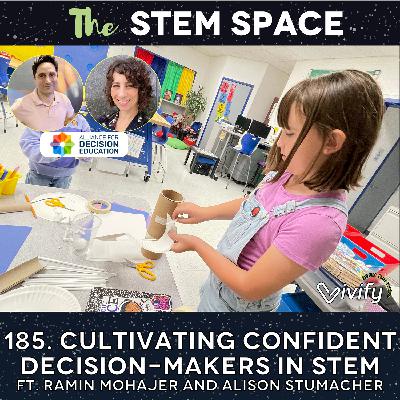
Show Summary:How do we help kids make better decisions, such as in STEM challenges? In this episode of The STEM Space, we’re joined by Ramin Mohajer and Alison Stumacher from the Alliance for Decision Education. Ramin, a former corporate attorney turned nonprofit leader, is the Deputy Director of Organizational Development and believes students need cognitive tools—not just rules—to manage choices like screen time. Alison, a longtime educator, now works as the Deputy Director of Education to bring Decision Education into classrooms to help students navigate choices in school, relationships, and life.Enjoy this thought-provoking conversation that may spark new ways to support your students as confident, capable decision-makers.About Ramin Mohajer:Ramin, Deputy Director of Organizational Development at the nonprofit Alliance for Decision Education, believes that decision-making skills are the missing piece in this conversation. Rather than relying solely on school-wide cellphone bans, educators can equip students with the cognitive tools to regulate their own screen use—an essential skill for future scientists, engineers and problem-solvers.About Alison Stumacher: Alison, Deputy Director of Education at the Alliance for Decision Education, is focused on ensuring that all students have access to the skills and tools they need to make better decisions. With over two decades in education across classroom teaching, instructional coaching, and leadership roles, she now works on developing solutions to bring Decision Education into classrooms—helping students build the skills they need to navigate choices in school, relationships, and life.About the Alliance for Decision Education: The Alliance for Decision Education is a national nonprofit dedicated to making decision-making skills a core part of K-12 education. They believe that better decisions lead to better lives and work with educators and experts to equip students with essential cognitive tools, empowering them to navigate challenges both in and out of the classroom. Through innovative curricula and community initiatives, the Alliance is transforming education to foster confident, capable decision-makers for a better society.Links from the Show:Related The STEM Space Podcast Episodes178. Getting Kids to Think122. How to Motivate Students119. Think Like A Scientist59. How to Motivate Students and Regulate Emotions in STEMVivify STEM Blog Posts 12 Ways to Boost Social-Emotional Learning with STEMHow to Teach Growth Mindset and Failing ForwardThrilling STEM Activities for Kids: Roller Coaster ChallengeCatapult ChallengeVivify STEM LessonsUpstairs Downstairs Brain Paper Circuit SEL STEM ActivityRoller Coaster STEM Challenge - K-5 or 6-8Catapult STEM ChallengeOther STEM ResourcesAlliance for Decision EducationRamin MohajerAlison StumacherTHE STEM SPACE SHOWNOTESTHE STEM SPACE FACEBOOK GROUPVIVIFY INSTAGRAMVIVIFY FACEBOOKVIVIFY XVIVIFY TIKTOKVIVIFY YOUTUBE
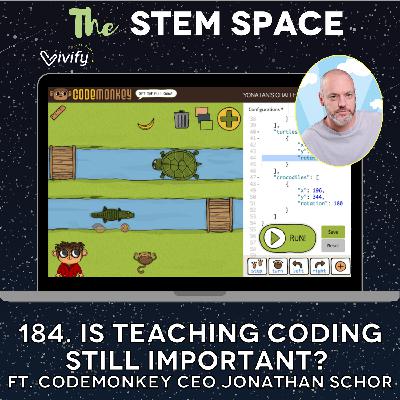
Show Summary:Natasha sits down with Jonathan Schor, visionary co-founder and CEO behind CodeMonkey. This award-winning, game-based platform isn’t just fun; it equips students with real-world coding skills in a way that makes computer science accessible and exciting for every classroom. Discover how Jonathan’s leadership has propelled CodeMonkey into a globally trusted tool for educators, and get inspired by his journey as he shares the impact of this groundbreaking platform and what the future holds for K-12 coding. Tune in now and get ready to re-imagine the possibilities in your classroom!About Jonathan Schor, CEO of CodeMonkey: Jonathan Schor is the driving force behind CodeMonkey, an award-winning game-based platform that teaches real-world coding skills to students in a fun and engaging way. With a passion for making coding accessible to learners of all ages, Jonathan has helped shape CodeMonkey into a global tool for educators looking to bring computer science into their classrooms. Under his leadership, CodeMonkey has reached millions of students worldwide, empowering the next generation of problem-solvers and creators. We’re excited to dive into Jonathan’s journey, the impact of CodeMonkey, and what’s next for coding in STEM education.About CodeMonkey: Write Code. Catch Bananas. Save the World. CodeMonkey was founded in 2014, based on Jonathan’s successful experiences in teaching young children to code through playful activities. Today, at CodeMonkey brings fun, knowledge and opportunity into the lives of millions of learners around the world. CodeMonkey envisions a global playful learning experience where the next generations of coders are born and raised. CodeMonkey aims to create an engaging platform where programming knowledge is acquired alongside 21st century skills through collaboratively playing and solving puzzles, inventing, creating and sharing.Links from the Show:Related The STEM Space Podcast Episodes 110. How to Implement Game-Based Learning ft. André Thomas111. How AI Will Transform Education ft. André Thomas142. An AI Lesson Gone Awry148. AI Tips for Teachers ft. Lauren Kelly161. Making Tech Education Accessible ft. imagi Co-FoundersVivify STEM Blog Posts Best Free AI Tools for EducatorsTop 3 AI Tools for EducatorsHour of Code Resources + Unplugged Coding ActivityEngineering and the 5E Science ModelVivify STEM LessonsIntro to Coding STEM ActivityTechnology Choice Boards Other STEM ResourcesCodeMonkeyCode.orgScratch, Jr.TynkerQuick TipsTHE STEM SPACE SHOWNOTESTHE STEM SPACE FACEBOOK GROUPVIVIFY INSTAGRAMVIVIFY FACEBOOKVIVIFY XVIVIFY TIKTOKVIVIFY YOUTUBE
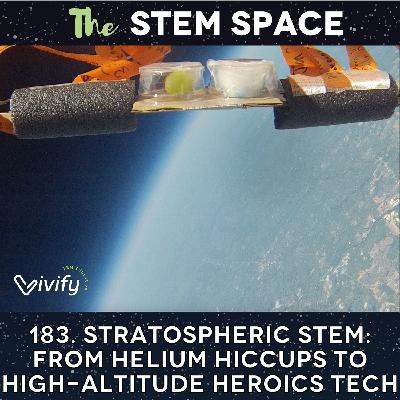
Show Summary:Claire is back — and she’s taking us to the edge of space!Listen in as she shares the behind-the-scenes story of launching a weather balloon nearly 89,000 feet into the atmosphere! Despite flooding in Texas, a helium tank mix-up, and a few unmotivated students, her class pulled off one of the ultimate STEM challenges: a high-altitude balloon mission with a successful recovery! Tune in to hear what happened to the onboard science experiment, and get all the details on how to plan your own stratospheric STEM adventure.Related The STEM Space Podcast EpisodesPreviously, with Claire: 178. Getting Kids to Think90. We Launched a Weather BalloonVivify STEM Blog PostsLaunching Weather BalloonsHow to Teach Growth Mindset and Failing ForwardThe Importance of FailureI Didn’t Always Want to be an Engineer | Claire MeschkatVivify STEM LessonsWeather Balloon Launch: STEM Engineering Project GuideSTEM Career Classroom PostersTechnology Choice Board Bundle - STEM Careers, Field Trip, & Types of TechFREE! - Interview Questions to ask STEM ProfessionalsOther STEM ResourcesHigh Altitude ScienceAir TractorRounds of severe thunderstorms bring giant hail, torrential rain and tornadoes (24-26 April 2025) | NWSVivify STEM YouTube: How to Launch a Weather Balloon to the Edge of Space: STEM Project GuideEmail us your questions!THE STEM SPACE SHOWNOTESTHE STEM SPACE FACEBOOK GROUPVIVIFY INSTAGRAMVIVIFY FACEBOOKVIVIFY XVIVIFY TIKTOKVIVIFY YOUTUBE
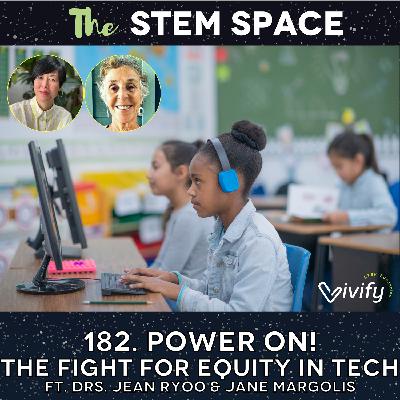
Show Summary:In this episode, Natasha chats with UCLA researchers Dr. Jean Ryoo and Dr. Jane Margolis—leaders on the frontlines of broadening K–12 computer science education. Their research inspired Power On!, a graphic novel that follows four high school students confronting technology’s harmful impact, urging young readers to evolve into critical creators rather than passive users. Dr. Ryoo champions culturally responsive computing by amplifying minoritized student voices, while Dr. Margolis—an advocate for equity since 1994 and a White House Champion of Change honoree—brings decades of experience to the conversation. Tune in for a dynamic discussion on empowering students to thoughtfully navigate and shape the future of technology.About Dr. Ryoo: Dr. Jean Ryoo is the Director of Research at UCLA’s Computer Science Equity Project, championing equity in STEM by amplifying minoritized voices. Her work transforms research into action—highlighted by Power On!, a graphic novel published by MIT Press—and she collaborates with initiatives like Girls Who Code and the Exploratorium’s Tinkering Studio. An AERA Jan Hawkins Early Career Award honoree with support from NSF, the Gates Foundation, and others, she earned her Ph.D. from UCLA, her Master’s in Teaching from Hawai’i, and her Bachelor’s from Harvard.About Dr. Margolis: Dr. Jane Margolis is a transformative leader in equitable computer science education. As a Senior Researcher Emerita at UCLA, she’s been challenging the status quo since 1994 by championing the inclusion of women and students of color. Co-author of Power On! and the groundbreaking texts Unlocking the Clubhouse and Stuck in the Shallow End, she helped launch the UCLA CS Equity Project and build a lasting partnership with LAUSD. Named a White House Champion of Change in 2016, Margolis’s work continues to redefine who gets to shape our digital future.Related The STEM Space Podcast Episodes180. The Secret to Loving Math ft. Nichole Austion of the National Math and Science Initiative178. Getting Kids to Think164. STEM Overload: A STEM Space Q&AVivify STEM Blog PostsHow to Host a Debate in Your Science Classroom10 Simple Summer STEM ActivitiesEngineer a New Fruit! Genetics STEM Lab ActivityVivify STEM LessonsFREE! - Grocery Store STEM Scavenger HuntManipulating Genetics: GMO STEM Unit + Classroom Debate (5E Model)Other STEM ResourcesNGS MagnifiedScience in the Wild: 52 Fun Projects and Activities to Explore, Discover, and Learn from Nature | Book by Dr. Erica ColónThe STEM Space at Home Series | Vivify YouTubeAccess 200+ STEM Lessons when you become a member of The STEM Space!THE STEM SPACE SHOWNOTESTHE STEM SPACE FACEBOOK GROUPVIVIFY INSTAGRAMVIVIFY FACEBOOKVIVIFY XVIVIFY TIKTOKVIVIFY YOUTUBE

Comments

Download from Google Play

Download from App Store
 United States