



 Claim Ownership
A Lawyer Talks
Subscribed: 21Played: 95
Subscribe

© Joshua Rozenberg
Description
Joshua Rozenberg KC (hon) is Britain's most experienced commentator on the law. This new podcast complements the daily updates he publishes on A Lawyer Writes.
rozenberg.substack.com
rozenberg.substack.com
67 Episodes
Reverse

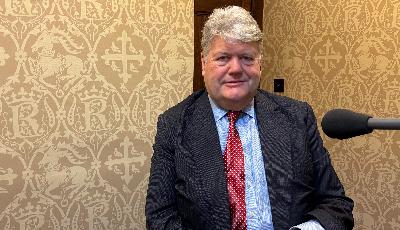
This is a free preview of a paid episode. To hear more, visit rozenberg.substack.comWith parliament and many of the courts not sitting, I can’t promise to publish a report every day over the next two or three weeks. But I don’t want 2025 to fade away without marking the 25th anniversary of White v White, a groundbreaking ruling from 2000 in which the UK’s most senior judges said that the division of joint property on the break-up of a marriage should be checked against the “yardstick of equality”.The judgment was hugely influential but not widely reported at the time — perhaps because the lawyers concerned, and their clients, didn’t speak to journalists. But times change and earlier this month I went to interview Mrs White’s solicitor at the offices in Lincoln’s Inn where his firm — Payne Hicks Beach — has been based since 1770. On the latest episode of A Lawyer Talks, Simon Beccle told me about Pamela White and the irony of her victory a quarter of her century ago.My weekly podcast is a bonus for paying subscribers to A Lawyer Writes. Everyone else can hear a short taster by clicking the ► symbol above.
This is a free preview of a paid episode. To hear more, visit rozenberg.substack.comIn its report earlier this month on the collapse of a high-profile Chinese espionage case, parliament’s joint committee on the national security strategy found evidence of questionable decision-making, misaligned expectations and failures to take potential opportunities that could remedy problems. “Some aspects are best described as shambolic,” the report added. “The government and Crown Prosecution Service must reflect… on how best to uphold public confidence in the integrity of the system in the face of public concern.” Ministers have until 3 February to respond.In the meantime, I have been discussing the committee’s findings with Nick Vamos, a former head of special crime at the Crown Prosecution Service and now head of business crime at the law firm Peters & Peters. As you can hear in the latest edition of A Lawyer Talks, he was surprised at how badly his former employers had handled the case. Vamos explained how the CPS had got it wrong — even though we still don’t understand why.My weekly podcast is a bonus for paying subscribers to A Lawyer Writes. Everyone else can hear a short taster by clicking the ► symbol above.
This is a free preview of a paid episode. To hear more, visit rozenberg.substack.comPeople respond to outcomes rather than reasoning, the deputy president of the UK Supreme Court told me last week. Lord Hodge was reflecting on the reaction to the court’s ruling in the For Women Scotland case, where he gave the leading judgment.“We decided the question of statutory interpretation,” he explained, “and have left it to others to work out the consequences. And of course the Equality and Human Rights Commission has the unenviable task of giving guidance on this matter.”The court delivered its ruling in April and the commission’s guidance has still not been approved by ministers, much to the frustration of its former chair Baroness Falkner of Margravine.In the course of a wide-ranging interview for A Lawyer Talks, Hodge told me why he thought former judges should not comment on matters of political controversy. But he regarded it as acceptable to talk about the rule of law. I had to weave my way carefully round the restrictions but in the end I had a much better understanding of what the UK’s second most senior judge thinks about the great issues of the day, across the UK and beyond.And since Hodge is not planning a formal valedictory speech when he retires at the end of this month, I took the opportunity to ask him for his reflections after 12 years in the Supreme Court — and his unique transformation into an English lawyer.My weekly podcast is a bonus for paying subscribers to A Lawyer Writes. Everyone else can hear a short taster by clicking the ► symbol above.

This is a free preview of a paid episode. To hear more, visit rozenberg.substack.comWe still don’t know why leaked government plans reported on Tuesday of last week — “juries will decide only murder, rape or manslaughter cases” — were so different from what ministers announced this Tuesday.It turns out that jury trial will be retained for cases where the likely sentence is over three years and for all indictable-only offences. Examples given by the government include murder, manslaughter, endangering life, rape and other penetrative sex offences, aggravated burglary, blackmail, kidnapping, people-trafficking, rioting, terrorism offences, grievous bodily harm with intent, the most serious drug offences and some weapons offences.So there are two possibilities: either the leaked document seen by other reporters was not an accurate account of the government’s plans or it was correct at the time it was circulated and ministers then modified their ambitions. When I interviewed the courts minister Sarah Sackman MP on Wednesday, I asked her which it was. On the latest episode of A Lawyer Talks, you can hear how she answered. I also took Sackman through detailed plans set out by the justice secretary in a written ministerial statement on Tuesday. During the interview, I began to understand why David Lammy had told MPs that we would have to wait until the next general election, due in 2029, before we could expect to see a fall in the crown court backlog.I analyse Sackman’s account of the government’s wide-ranging plans in my latest column for the Law Society Gazette.In my column, I also argue that public involvement in the criminal justice system should not be regarded as an immutable absolute. Putting it another way, I am not convinced by those who claim that we can substantially reduce the current unacceptable crown court delays without making significant structural changes. If you disagree, listen to Sackman and then add a comment below.Lammy’s statement should be read in full. For convenience, I have extracted the half-dozen proposals that I asked Sackman to explain or justify:* Magistrates’ courts’ sentencing powers will increase to 18 months, with provision to extend to 24 months if necessary to relieve pressure in the crown court.* The right of defendants to elect for a jury trial will be removed, meaning that it will be for the court to determine where a case will be heard based on the severity of offences.* The appeals process from magistrates’ courts will be reformed so that automatic appeals to the crown court in criminal cases are replaced with a permission stage, limited to points of law.* A new bench division will be established in the crown court for triable-either-way cases with likely sentences of three years or less, heard by a judge alone.* Jury trials will remain for indictable-only offences and cases with likely sentences over three years.* A small number of serious, but particularly technical and lengthy, fraud and financial cases may be heard by judge alone in the crown court, subject to certain requirements and at the discretion of the court.What emerges from the interview, it seems to me, is that there is still a lot left to play for.My weekly podcast — occasionally, twice-weekly — is a bonus for paying subscribers to A Lawyer Writes. Everyone else can hear a short taster by clicking the ► symbol above.

This is a free preview of a paid episode. To hear more, visit rozenberg.substack.comPete Hegseth, the US defence secretary, violated security protocols and endangered troops by using a personal device to share sensitive operational details on the unclassified messaging app Signal, according to reports in the US media of a forthcoming finding.Meanwhile, Hegseth is apparently trying to distance himself from allegations that he ordered a second military strike on a boat carrying drug smugglers in the Caribbean, unlawfully killing two survivors of an earlier attack.For the past three months, US forces have been targeting small boats thought to be ferrying narcotics to countries in Latin America — from which they could reach the United States. More than 80 drug smugglers are said to have been killed when their vessels were hit by US missiles.Where does this leave Hegseth and the naval commander responsible for the operation, Admiral Frank Bradley? Are they responsible for breaches of international humanitarian law? Could they be charged with murder? And what effect has the incident had on relations between the US and the UK?These are among the questions I put yesterday to John Bellinger, former legal adviser to the US State Department during the George W Bush administration and now a senior fellow in international law at the US Council on Foreign Relations. We met to record the latest episode of A Lawyer Talks during his visit to London.My weekly podcast is a bonus for paying subscribers to A Lawyer Writes. Everyone else can hear a short taster by clicking the ► symbol above.
Brexit has had an impact on everyone who holds a British passport but on none more so than those UK citizens who worked for the European Union and found themselves out of a job after the United Kingdom left the EU in 2020.It was therefore gratifying to see Middle Temple paying tribute to two senior members who had served in the EU courts by commissioning a painting of them. As you can see, it’s a custom that the inns of court have been following for centuries. This double-portrait is by Fiona Graham-Mackay.At a brief ceremony on Tuesday, Dame Eleanor Sharpston DCMG KC, who served as an advocate general at the Court of Justice for almost 15 years, and Ian Forrester KC, a former judge of the EU’s General Court, were introduced by Lady Justice Thirlwall, this year’s treasurer of Middle Temple.To listen to the brief speeches and see the painting being unveiled, just click the ► symbol on the image above. To watch in full-screen — which I recommend — click on the image and then click the appropriate symbol.A Lawyer Writes is a reader-supported publication. To receive new posts and support my work, consider becoming a free or paid subscriber. This is a public episode. If you'd like to discuss this with other subscribers or get access to bonus episodes, visit rozenberg.substack.com/subscribe
This is a free preview of a paid episode. To hear more, visit rozenberg.substack.comWhat is property? It seems a simple enough question. I own my clothes. But do I own my body, my ideas, my country? If I own my bicycle and it’s stolen, can I get it back by cutting the chain that the thief has used to secure it? My personal data may be better protected than my bicycle — but do I own it? And what about natural resources? Does anyone own them? Can private ownership bring public benefits? Are there limits on what we should own?These are among the profound questions that Professor Dame Sarah Worthington DBE, KC (Hon), FBA addressed in her Hamlyn lectures, delivered earlier this month. I asked her for some answers yesterday when we recorded this week’s episode of A Lawyer Talks.My weekly podcast is a bonus for paying subscribers to A Lawyer Writes. Everyone else can hear a short taster by clicking the ► symbol above.
This is a free preview of a paid episode. To hear more, visit rozenberg.substack.comThe rule of law must be protected against further erosion, an all-party parliamentary committee warns us today. Failure to do so, says the House of Lords constitution committee, risks the rise of extremist political parties, ultimately creating space for dictatorship. I was one of many who gave oral evidence.My analysis of the committee’s report— called The rule of law: holding the line against anarchy and tyranny — will appear in tomorrow’s Law Society Gazette.For today’s episode of A Lawyer Talks, though, I interviewed the committee’s chair, Lord Strathclyde (pictured), at the House of Lords. The chimes you’ll hear in the background, I should explain, are not those of Big Ben; it’s the ubiquitous House of Lords annunciator system.My weekly podcast is a bonus for paying subscribers to A Lawyer Writes. Everyone else can hear a short taster by clicking the ► symbol above.
This is a free preview of a paid episode. To hear more, visit rozenberg.substack.comCoCounsel is the name given by the content and technology company Thomson Reuters to its artificial intelligence assistant for legal professionals. But Pablo Arredondo, who developed its precursor with his colleague Jake Heller and then sold it to Thomson Reuters for $650m, is not so sure about the choice of name now. And while he fizzes with excitement at finding what AI can do, he is more aware than most of its limitations.Arredondo, who’s vice-president, CoCounsel, at Thomson Reuters, has a unique perspective as a successful lawyer and an award-winning technology developer. He spoke to me from California for the latest episode of A Lawyer Talks.My weekly podcast is a bonus for paying subscribers to A Lawyer Writes. Everyone else can hear a short taster by clicking the ► symbol above.
This is a free preview of a paid episode. To hear more, visit rozenberg.substack.comHugh Mercer KC has sat as the UK judge at the European Court of Human Rights for little more than a month. But there will be a general election in less than four years’ time and two major political parties are seeking to have Judge Mercer kicked off the court before he completes his nine-year term of office. Does he still think applying for the post was a good career move?That was one of the questions I asked him last week when we met to record the latest episode of A Lawyer Talks. It was no surprise to find that Mercer thinks the UK should remain signed up to the human rights convention — which celebrates its 75th anniversary tomorrow — but some of his reasons were not what I had expected.We also discussed a claim in May by nine Council of Europe members, led by Italy and Denmark, that his court’s rulings had made it too difficult for them to deal with what they described as irregular migration. To what extent could the judges take account of the mood among European nations when deciding cases of this sort?Being the most junior member of the 46-judge court, Mercer was naturally cautious. But as someone who was on the other side of the bench until recently, his response was particularly interesting.My weekly podcast is a bonus for paying subscribers to A Lawyer Writes. Everyone else can hear a short taster by clicking the ► symbol above.
This is a free preview of a paid episode. To hear more, visit rozenberg.substack.comDemocracy is under challenge in the west, a former president of the Supreme Court told me this week. Lord Neuberger of Abbotsbury, who was the UK’s most senior judge from 2012 to 2017, said the level of disappointment in governments — almost across the Western world — seemed to be pervasive and increasing. People were turning to populist alternatives and, he added, populism tends not to respect the rule of law.Neuberger (pictured) gave me a wide-ranging interview ahead of a lecture he is delivering at the Old Bailey tonight to mark the launch of a series of events called Justice for All. He will be considering the rule of law and its place in a fair and functional society.“Improving the rule of law ultimately comes down to political will and the appointment of strong ministers with real commitment and experience,” he says in his lecture. How, I wondered, could we encourage ministers to do what was right? That, he replied, was a very good question.You can hear how Neuberger tackled it in the latest episode of A Lawyer Talks. My weekly podcast is a bonus for paying subscribers to A Lawyer Writes. Everyone else can hear a short taster by clicking the ► symbol above.
This is a free preview of a paid episode. To hear more, visit rozenberg.substack.comA former diplomat who served at the British embassy in Beijing has cast doubt on what’s thought to have been a major allegation in the failed prosecution case against two men who were accused of spying for China. Professor Kerry Brown, a leading sinologist who would have been called as a defence expert if charges against Chris Berry and Chris Cash had not been dropped, thought it was entirely implausible that Cai Qi, a member of the standing committee of the Chinese Communist Party politburo, had arranged to meet Berry at a restaurant in eastern China and then been kept waiting for 40 minutes because of traffic delays.Brown was speaking to Ken Macdonald (pictured) and Tim Owen for an episode of their Double Jeopardy podcast released yesterday. The two KCs suggested that Brown’s expert report, disclosed to the Crown Prosecution Service shortly before the trial had been due to open, might have persuaded the director of public prosecutions to drop the case.But, as Macdonald told me yesterday, that theory raises more questions than it answers. In an interview for A Lawyer Talks, I asked the former prosecutor about implications of Double Jeopardy’s double scoop.My own weekly podcast is a bonus for paying subscribers to A Lawyer Writes. Everyone else can hear a short taster by clicking the ► symbol above.
This is a free preview of a paid episode. To hear more, visit rozenberg.substack.com“Politically motivated attacks on the legal profession are irresponsible and dangerous,” representatives of all 250,000 lawyers in the United Kingdom said this week. These attacks, they added, “weaken public trust and confidence in the rule of law and erode the very foundations of justice that underpin fairness and democracy”.In a joint statement, the Bar Council, the Law Society, the Law Society of Scotland, the Faculty of Advocates, the Bar of Northern Ireland and the Law Society of Northern Ireland said:Barristers, solicitors and judges have been subjected to violence, death threats and rape threats. Some have faced threats to their family members. We have repeatedly seen law firms and offices be set upon by protestors. We are deeply disturbed by this rising tide of intimidation targeting those who serve our justice system and uphold democratic principles.Lawyers should never suffer adverse consequences because they are identified with their clients or their clients’ causes. Lawyers are not their clients. Those who are unpopular or despised are still entitled to access the courts just as much as anyone else. Nobody is above the law, including politicians. Nobody is beneath the law’s protections.As the statement acknowledges, it’s not just the lawyers who have come under attack in the past couple of weeks. Judges are particularly vulnerable to ill-informed criticism from those seeking political advantage. For a unique perspective on the challenges now facing the judiciary I spoke yesterday to Professor Sir Ross Cranston, the only person alive to to have served in the legislature, the executive and the full-time senior judiciary of England and Wales. In a wide-ranging interview for A Lawyer Talks, Cranston discussed the themes of his new book, Judging, published this month by Oxford University Press. He made the case for a new offence of traducing the judiciary, which could be committed by those who make false allegations of corruption against judges online.My regular podcast is a bonus for paying subscribers to A Lawyer Writes. Everyone else can hear a short taster by clicking the ► symbol above.
This is a free preview of a paid episode. To hear more, visit rozenberg.substack.comThe Department for Business and Trade is currently reviewing the opt-out collective actions regime in competition law, a legal structure that enables consumers to claim compensation from corporations that are accused of abusing a dominant position in the marketplace. A recent example was the claim brought against Mastercard on behalf of up to 44 million consumers by the lawyer Walter Merricks, who discussed the outcome with me on A Lawyer Talks in May.Launching a consultation two months ago, the government said:We are committed to consumer protection and want to ensure that the regime has achieved, and continues to achieve, these objectives. This government is focused on economic growth; and a regime that is proportionate and focused on returns to consumers where they are due is good for growth and investment.However, we are aware of the potential burden on business that increased exposure to litigation can present. Finding the right balance between achieving redress for consumers and limiting the burden on business is essential to ensure that businesses can operate with certainty, whilst providing a clear, cost-effective, route for consumers.How should we calibrate the balance between corporations and consumers?Representing the consumers’ side is the Collective Redress Lawyers Association. It wants to ensure that people harmed through anti-competitive behaviour can secure compensation through the courts.Banging the drum for business is a group called Fair Civil Justice. It argues that collective actions in the courts should be a last resort, not the first port of call.Most cases settle. But how much of the compensation should go to individual consumers and how much to the lawyers and the funders without whom these cases would never get off the ground? Settling a class action originally valued at £14 billion earlier this year, Mastercard agreed to pay £200 million. But when the available balance is shared out, each consumer is expected to receive no more than £70 — and perhaps as little as £45.On the latest episode of A Lawyer Talks, I discussed these issues with David Greene (pictured), senior partner at the law firm Edwin Coe and a co-president of the Collective Redress Lawyers Association. He offered a robust — but not unqualified — defence of the legal regime introduced 10 years ago.My weekly podcast is a bonus for paying subscribers to A Lawyer Writes. Everyone else can hear a short taster by clicking the ► symbol above.
This is a free preview of a paid episode. To hear more, visit rozenberg.substack.comIt would be “shame and a mistake” for the United Kingdom to leave the European convention on human rights, the UK’s former judge at the human rights court told me last week. Tim Eicke KC, who was elected to the court in 2016 for a nine-year-term, spoke to me from Essex Court Chambers, the barristers’ set to which he returned earlier this month. As the judge “elected in respect of Northern Ireland” — plus the rest of the UK — Eicke (pictured) said he was particularly concerned about the effect that withdrawal from the convention would have on the Belfast Good Friday agreement.He also referred to a report this month from the Bonavero Institute of Human Rights, which examined how the human rights convention has been covered in the UK. According to the report — but contrary to the impression given by some media outlets — the human rights court had found against the UK in only 13 removal cases since 1980, just four of which concerned family life. In a wide-ranging interview for A Lawyer Talks, we discussed the government’s plans to limit the application of article 8 of the convention with the aim of deporting more illegal migrants. I also wanted to know why Eicke had applied for the Strasbourg job in the first place and the constraints it had imposed on his return to practice. And he explained why human rights judges from across Europe took such a close interest in the UK.My regular podcast series is a bonus for paying subscribers to A Lawyer Writes. Non-subscribers can savour a taster by clicking the ► symbol above.
This is a free preview of a paid episode. To hear more, visit rozenberg.substack.comThink of an international court that can stop foreign manufacturers selling pirated copies of British inventions in the UK. It’s a court whose proceedings are largely conducted in English and where UK lawyers abound. This is a court whose use of English legal principles has contributed to its success since it opened for business a couple of years ago. But its caselaw must do without the insights of British judges because the United Kingdom is not one of its 18 members. That leaves Britain as the missing piece in the jigsaw puzzle, according to my guest on this week’s podcast.Rob Jackson, pictured at his office in the City of London, is a patent attorney and a partner in the intellectual property firm Dehns. The court he’s referring to is the Unified Patent Court. Why did the UK withdraw from the agreement setting up the court? Should we try to re-join? Could they let us in? How much of an advantage would that be to British businesses?Those are among the questions I asked Jackson in the latest episode of A Lawyer Talks. My regular podcast series is a bonus for paying subscribers to A Lawyer Writes. Non-subscribers can savour a taster by clicking the ► symbol above.
This is a free preview of a paid episode. To hear more, visit rozenberg.substack.comLeaving the European Convention on Human Rights would be completely contrary to the UK’s national interests, the attorney general said yesterday.Addressing the House of Lords constitution committee, Lord Hermer KC said withdrawing from the convention — and the 46-nation Council of Europe that administers it — would be entirely counterproductive if we were seeking practical answers to irregular migration.The UK had already signed agreements with France and Germany that would “increasingly have real practical impact in addressing small boat crossings”. But it was “inconceivable that our partners would have entered into those agreements if we were not members of the Council of Europe — if we were not signed up to the European Convention on Human Rights”.Hermer confirmed that the government was looking at how article 8 of the convention, which protects private and family life, was being applied by courts in the UK. He suggested that domestic courts were not keeping up with developments at the human rights court in Strasbourg.That court’s case-law was “very permissive”, he explained:It accords states an enormous margin of appreciation as to what they can do in the asylum and immigration space. And that is something that has developed as the principle of subsidiarity. It has developed particularly over the last five or six years. And I am concerned to ensure that domestically we have kept pace with that.Some of our colleagues on the Council of Europe have, I think, more effective, more robust mechanisms that are compliant with article 8 that we need to look at. And so we are kicking the tyres hard at every level.We’re looking at caseworker guidance. Are they getting it right on Article 8?We're looking at the immigration rules, the body of secondary legislation that governs this. Have they got it right?If we need to, we will look at primary legislation to ensure that we're getting it right.And we are also adopting a very proactive litigation strategy. I when I came in, I was disturbed to learn that often Home Office officials wouldn't attend first-tier tribunal decisions — let alone was there in place what I would consider to be a fit-for-purpose litigation strategy, identifying the points that were important to the government, appealing cases that really should be appealed.So we’re changing all of that…The prime minister has, though, been absolutely crystal clear that we will not be leaving the European Convention on Human Rights. Now there are a number of reasons for that. But at the heart of it is because it would be completely contrary to the national interest of this country were we to do so.Hermer’s argument was that there was no need to seek amendments to the human rights convention. These took too long to implement. The government’s priority was how article 8 was being applied by our own courts. One of the problems was “an enormous backlog in the asylum and immigration system, which we are seeking to address”I discussed Hermer’s comments during a wide-ranging interview yesterday with Sam Townend KC, a former Labour councillor who chaired the Bar Council last year. We also discussed Sir Keir Starmer’’s appointment of a new secretary of state and two new ministers at the Ministry of Justice. And we considered Baroness Harman’s review of bullying, harassment and sexual harassment of barristers, which Townend set up as leader of the profession last year.Speaking to A Lawyer Talks, the former chair of the bar urged caution on replacing some jury trials by a judge and two magistrates. Townend — pictured alongside a paining of Donald Keating QC, a former head oi his chambers — also suggested ways of improving the legal profession’s regulatory structures.My regular podcast series is a bonus for paying subscribers to A Lawyer Writes. Non-subscribers can savour an hors d’oeuvre by clicking the ► symbol above.
This is a free preview of a paid episode. To hear more, visit rozenberg.substack.comIn July, a little-known body headed by the second most senior judge in England and Wales launched a public consultation on new ways of ensuring access to justice.The Online Procedure Rules Committee — chaired by the master of the rolls, Sir Geoffrey Vos — was created by parliament three years ago to make rules for legal proceedings “to be initiated by electronic means”. But instead of trying to create a costly new digital court, the rules committee is trying out its powers to set standards for existing online dispute-resolution services.These services are often provided by commercial or financial organisations, alongside with online advice. But they can be hard to track down if you don’t know what you’re looking for. And if they can’t solve your problem and you need to take things further, you have to go through the whole process again and start your claim from scratch.What the legislation now allows for is the transfer of information from private dispute-resolution services to public courts and tribunals. That will be done electronically. But in order for it to work, the private pre-action services will have to talk the same language as the public courts and tribunal service. That means setting a single standard for all private dispute-resolution services to use. At its simplest, it would require all users to fill in their first name followed by surname and “1 September” rather than “September 1”.Under regulations made earlier this year, the rules committee can make rules for:* civil and tribunal proceedings in relation to property; and* family proceedings for a financial remedyThe Online Procedure Rule Committee wants to know what people think of its pre-action model and there are still a couple of weeks or so before the consultation closes. For the latest episode of A Lawyer Talks, I’ve been discussing the reforms with Dr Natalie Byrom (pictured), honorary senior research fellow at UCL Laws. We discussed the Online Procedure Rule Committee — OPRC for short — as well as alternative dispute resolution (ADR) and online dispute resolution (ODR).My regular podcast series — resuming after the August break — is a bonus for paying subscribers to A Lawyer Writes. Non-subscribers can savour an hors d’oeuvre by clicking the ► symbol above.
This is a free preview of a paid episode. To hear more, visit rozenberg.substack.comEncouraging your future spouse to sign an English prenuptial agreement before you marry has always been a bit of a risk — as Jenny Alzena Helliwell discovered last week. Lawyers for her former husband Simon Graham Entwistle persuaded the Court of Appeal to set their pre-nup aside because she had deliberately failed to disclose nearly three-quarters of her personal wealth.The couple’s divorce became notorious last year after Entwistle — arguing that he would now need to spend £26,000 a year on a “meal plan” — told Mr Justice Francis that he couldn’t even cook an omelette. After Entwistle had initially said that his former wife should pay £10 million to cover his financial needs, the exasperated judge awarded him £400,000 (and some culinary advice) less £75,000 costs.Will this judgment have implications for other couples who have signed pre-nups? Do they need to get them checked for material disclosure now that this one has been declared ineffective? And will Entwistle end up with egg on his face if he keeps litigating?In the latest episode of A Lawyer Talks I discuss these questions with Nicholas Bennett (pictured), a barrister who specialises in this area of family practice.My weekly podcast series is a bonus for paying subscribers to A Lawyer Writes. Non-subscribers can savour an hors d’oeuvre by clicking the ► symbol above. But take out an annual subscription this week and the bill will be just £40; the yearly charge reverts to £50 on Sunday.

This is a free preview of a paid episode. To hear more, visit rozenberg.substack.comDonald Trump is not the only prominent figure who may be regretting his dealings with the disgraced financier and child sex offender Jeffrey Epstein. In October 2019, Barclays Bank sent a letter to the Financial Conduct Authority assuring the FCA that the bank’s chief executive, James Edward “Jes” Staley, “did not have a close relationship with Mr Epstein”, who had died in prison two months earlier. Staley’s “last contact with Mr Epstein was well before he joined Barclays in 2015”, the letter asserted.A month ago, the Upper Tribunal tax and chancery chamber “found that Mr Staley knew, when he approved the letter, that its contents were factually inaccurate”. For that reason, it declined to interfere with the FCA’s decision in May 2023 banning Staley from performing any senior management role in regulated financial services. He had resigned from Barclays in October 2021 after being told of the FCA’s preliminary conclusions.The FCA confirmed its decision last week after Staley had run out of time to appeal. He must pay a penalty of £1.1m by next week.Should the Financial Conduct Authority punish financiers for non-financial misconduct? And what implications does this case have for other professionals — lawyers, for example, whose regulators may seek to regulate what used to be regarded as their private lives?Those are among the questions I raised in the latest episode of A Lawyer Talks with David Hamilton, a partner at Howard Kennedy who specialises in financial services enforcement and compliance (pictured). We discussed whether the FCA had struck the right balance between protecting consumers and encouraging investment.My weekly podcast series is a bonus for paying subscribers to A Lawyer Writes. Everyone else can hear a short taster by clicking the ► symbol above.


Download from Google Play

Download from App Store
 United States
The timeline for **how long does divorce take Alberta** often depends on whether the divorce is contested or uncontested. In an uncontested case, where both parties agree on key issues like child custody and property division, the process may take around 6 to 8 weeks after filing. However, if disagreements arise, the case can extend for several months or more. Understanding **how long does divorce take Alberta** helps couples prepare emotionally and legally, ensuring they complete all necessary paperwork accurately and avoid unnecessary delays. https://win-windivorce.ca/articles/