


 Claim Ownership
Power Producers Podcast
Subscribed: 29Played: 2,975
Subscribe

Description
We are refining and redefining the sales game. A place where sales professionals can come to learn from other sales professionals and thought leaders who have mastered their craft. Real sales professionals. Real stories. Real results. Are you ready to feel the power?
754 Episodes
Reverse
In this solo episode of Shoptalk,
opened up about his single biggest affliction and why he believes it has also become his single biggest superpower. He shared personal stories from childhood, the frustration of being misunderstood, and the challenges of living with an undiagnosed attention issue in a time when people did not talk about ADHD the way they do now.
explained how getting clarity on how his brain works helped him redesign his workday, build systems that support his focus, and turn what once felt like a limitation into a source of output, creativity, and momentum. The episode is a direct message to listeners who feel different, unheard, or hesitant to seek help, with a clear reminder that adversity can be reframed into opportunity.
Key points:
Success Stories Often Hide the Mess Behind Them
challenges the perception that high performers have it all together. He warns that newer producers can set themselves up for disappointment by trying to emulate a polished image instead of understanding the human reality behind it. The core theme is that struggle and success can exist at the same time.
Growing Up Without a Diagnosis Creates Lasting Damage
He described childhood experiences of constant discipline for behavior that was not understood. The examples ranged from impulsivity and blurting things out to restlessness and difficulty focusing on reading or remembering tasks. His point is that what gets labeled as difficult or undisciplined is sometimes a brain wiring issue that needs understanding, not punishment.
A Diagnosis Creates Clarity and the Power to Adapt
explained that once he understood the issue, he could build his day around it instead of fighting it. He shared how medication was not the long term answer for him personally, but awareness was the turning point. The goal became adjusting habits, structure, and expectations to match how his mind actually works.
Organized Chaos Can Be a High Performance System
described how he works across multiple monitors and rotates between tasks to keep his mind stimulated. What looks like distraction from the outside is a deliberate structure that keeps him engaged and productive. He credits the insurance industry for providing constant variety and new problems that align with how he operates.
Many People Are Misunderstood Because They Are Different
He spoke directly about impulsivity, interruptions, distraction, and losing a thought mid sentence. David emphasized he is not sharing this for sympathy, but to normalize the experience and encourage people to seek support and coping tools. The episode frames difference as something that can be managed and even leveraged.
Stop Treating ADHD Like a Joke
He pushed back on casual language that turns mental health into a punchline. David explained why he does not use slides when he speaks and how people often laugh without realizing it is not a joke. He argued that when society trivializes these struggles, it loses access to the creativity and potential of people who could contribute at a high level.
Choosing to Be Yourself is the Real Win
closes with a call to draw a line in the sand and prioritize self care and self understanding. He invites listeners to reach out if they need to vent or want guidance. The final message is about embracing who you are, building systems that work for you, and refusing to shrink into a version of yourself that feels acceptable but untrue.
Connect with:
David Carothers LinkedIn
Kyle Houck LinkedIn
Visit Websites:
Power Producer Base Camp
Killing Commercial
Crushing Content
Power Producers Podcast
Policytee
The Dirty 130
The Extra 2 Minutes
In this episode of Shoptalk, David Carothers continued his exploration of total cost of risk, focusing on how producers can integrate it into their sales cadence without overhauling existing approaches. He explained that introducing total cost of risk doesn’t mean abandoning transactional sales calls but supplementing them with deeper, long-term risk assessments. David emphasized how asking the right discovery questions and sharing stories of past success can demonstrate value and build trust. This episode also touched on a key shift: moving from being just another vendor to becoming a trusted advisor who proactively identifies risks and delivers solutions.
Key points:
Total Cost of Risk and Sales Cadence
David stresses that integrating total cost of risk into your sales process doesn't mean overhauling everything. It means supplementing your cadence with conversations that consider the full scope of risk, allowing you to prospect year-round instead of focusing only on renewal periods. It’s okay to make transactional calls, but be ready to pivot into more consultative discussions when the opportunity arises.
Building Trust Without Saying "What Makes You Different"
David advocates for asking open-ended questions like, “What claims frustrate you?” or “What unexpected expenses have you encountered?” He explains that the stories you tell, not the “I’m different because…” statements, are what truly set you apart. Sharing specific examples from past experiences builds credibility and positions you as a valuable partner in their business operations.
Creating a Holistic Service Team for Your Clients
David discussed how he rebranded Florida Risk's value proposition with a team approach that brings together wealth management, cybersecurity, and business coaching to protect margins and ensure long-term financial health for clients. He explained how this multidisciplinary team addresses total cost of risk by covering areas outside of traditional insurance, giving clients comprehensive protection.
How Operational Efficiency Translates to Cost Savings
David shared a real-world example of how a service contractor client saved over $100,000 by addressing issues in their experience mod and shifting to a total cost of risk approach. By understanding the client’s operations deeply, David was able to identify inefficiencies and help reduce operational risk, showcasing how comprehensive risk management directly impacts profitability.
Shifting the Mindset from Transactional to Advisory
David emphasized the importance of thinking beyond price and focusing on the value you bring as a trusted advisor. By consistently asking the right questions and identifying hidden risks, producers can differentiate themselves, retain clients longer, and position themselves as integral to the client’s success—not just their insurance provider.
The Power of Proactive Communication
David urges producers to be proactive in communicating with clients, especially when it comes to identifying and mitigating risks that can affect the client’s bottom line. He encourages producers to book time with experts to troubleshoot roadblocks and deepen their understanding of total cost of risk, positioning themselves as go-to advisors.
Connect with:
David Carothers LinkedIn
Kyle Houck LinkedIn
Visit Websites:
Power Producer Base Camp
Killing Commercial
Crushing Content
Power Producers Podcast
Policytee
The Dirty 130
The Extra 2 Minutes
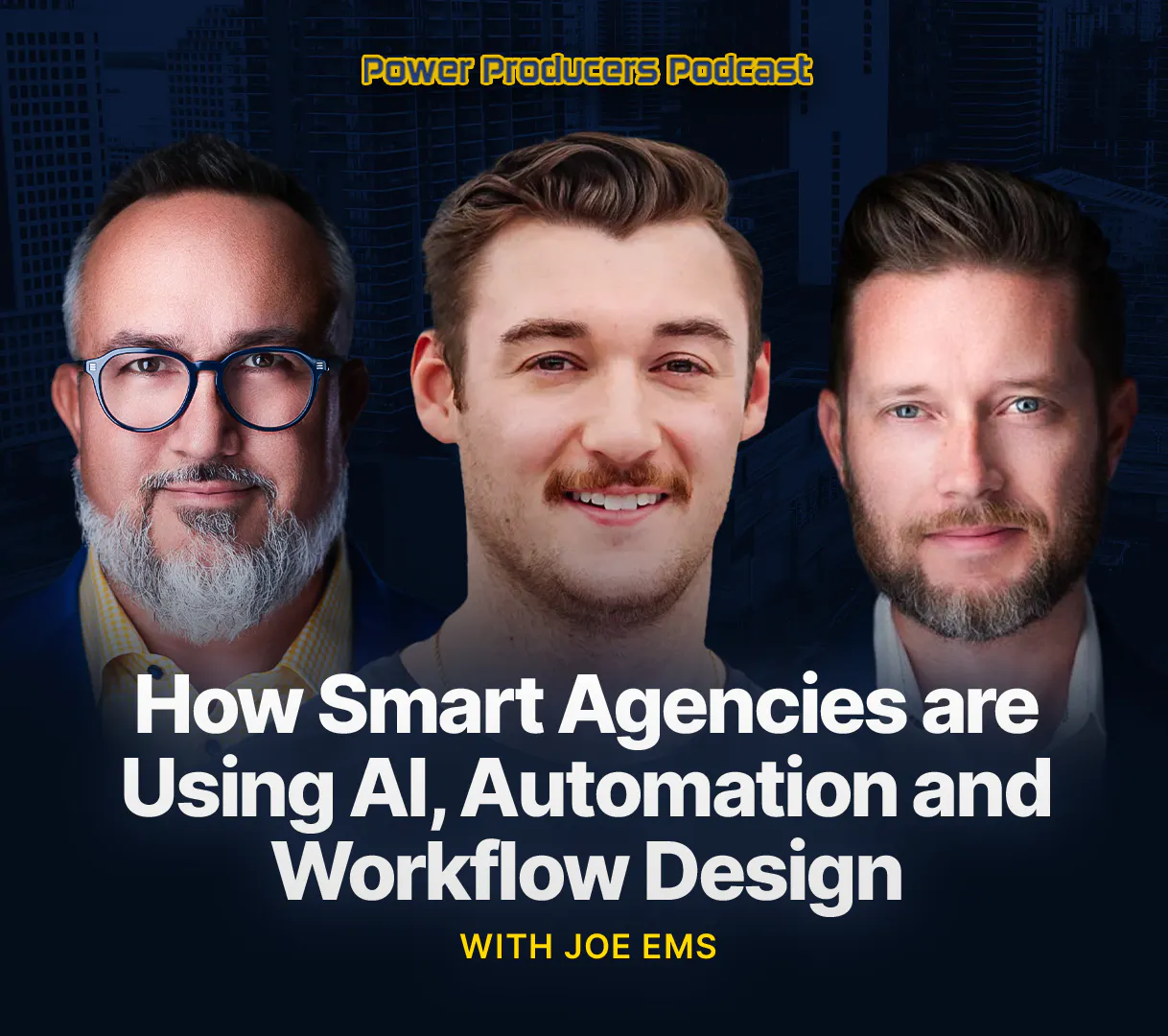
In this episode of the Power Producers Podcast, David Carothers welcomed Joe from Sembley to discuss a range of topics impacting agencies, from personal lines to AI-powered tools. David shared insights on the challenges of building a personal lines division from scratch, how tech investments have streamlined workflows, and the importance of agency owners evaluating their tech stack to maximize efficiency. They dove into the power of custom intake forms, e-signatures, and integrations with systems like Hawksoft. The conversation also emphasized the shift towards automation to save time and resources in an industry that’s increasingly tech-driven.
Key points:
Personal Lines Challenges and Tech Adaptation
David discussed how launching personal lines at Florida Risk has been a learning experience, especially in integrating new technology and adapting workflows. The move forced a deeper look into their tech stack and how it could support scalability and efficiency.
Building Custom Intake Forms for Streamlined Workflows
Joe explained how custom intake forms in Sembley can simplify data gathering, especially with conditional logic, and how it saves agents time by pre-populating accord forms, sub-apps, and client profiles.
Tech-Driven Time Savings and Reducing Manual Work
David emphasized that many agencies waste time on repetitive tasks like data entry and supplementals. He highlighted how tech can free up agents’ time to focus on high-value work, including meaningful client interactions and prospecting.
The Hawksoft Integration and Two-Way Data Flow
Joe shared how Sembley now integrates with Hawksoft, allowing agents to push data directly into their system, significantly cutting down on manual entry and improving data accuracy.
The Importance of Making Strategic Tech Investments
David encouraged agency owners to evaluate their tech stacks with an “abundance mindset” to avoid being left behind. He stressed that technology is an investment in saving time, increasing accuracy, and building stronger client relationships.
The Growing Role of AI and Automation in the Industry
Joe and David discussed how AI and automation tools are revolutionizing the insurance industry, from data gathering to policy renewal, and how adopting these technologies can be a game-changer for agencies looking to stay competitive.
Connect with:
David Carothers LinkedIn
Joe Ems LinkedIn
Kyle Houck LinkedIn
Visit Websites:
Power Producer Base Camp
Sembley
Killing Commercial
Crushing Content
Power Producers Podcast
Policytee
The Dirty 130
The Extra 2 Minutes
In this episode of Shoptalk, David Carothers discussed the concept of "found money" and the importance of auditing experience mods. By identifying claims that were overstated on NCCI worksheets, producers can get insurers to recalculate and issue refunds for overpaid premiums. David also delved into how agencies can add value by asking better, emotionally-driven questions to prospects, focusing on underlying issues like lost productivity, workers' comp claims, and operational risks. He warned against telemarketing agencies that pitch audit work for a 10% revenue share and emphasized that these tasks should be handled internally for maximum benefit.
Key points:
Found Money and the Power of Mod Audits
David explained how auditing experience mods for discrepancies between reported claims and actual closed claims can uncover "found money" for clients. By having NCCI recalculate the mod, agents can help clients recover overpaid premiums, creating a significant opportunity to build trust and add value.
Watch Out for Outsourced Auditors
David cautioned against agencies that pitch themselves as mod audit specialists and ask for a 10% share of account revenue. These telemarketing agencies often aim to infiltrate your book of business. Instead, he suggests learning how to perform these audits internally, which will benefit both the client and the agency.
The Right Questions Can Drive Change
David emphasized that asking open-ended questions, especially those that tap into emotional responses, is key to uncovering clients' pain points. Asking about frustrations with claims, such as workers’ comp issues, can uncover financial impacts that need to be addressed, which moves the conversation beyond just quoting policies.
Total Cost of Risk Focus Leads to Better Conversations
Instead of focusing solely on premium and coverage, David encouraged producers to address the total cost of risk. Asking questions about financial impacts, downtime, and claims frustrations helps shift the conversation to a more consultative and strategic role, ultimately positioning the producer as a trusted advisor.
Diagnostic Approach to Risk Management
Drawing parallels to the medical profession, David shared that producers should act as diagnosticians for their clients. By asking the right questions and understanding the full scope of the client’s risks, producers can move beyond transactional sales and develop deeper, long-term relationships with clients.
Connect with:
David Carothers LinkedIn
Kyle Houck LinkedIn
Visit Websites:
Power Producer Base Camp
Killing Commercial
Crushing Content
Power Producers Podcast
Policytee
The Dirty 130
The Extra 2 Minutes
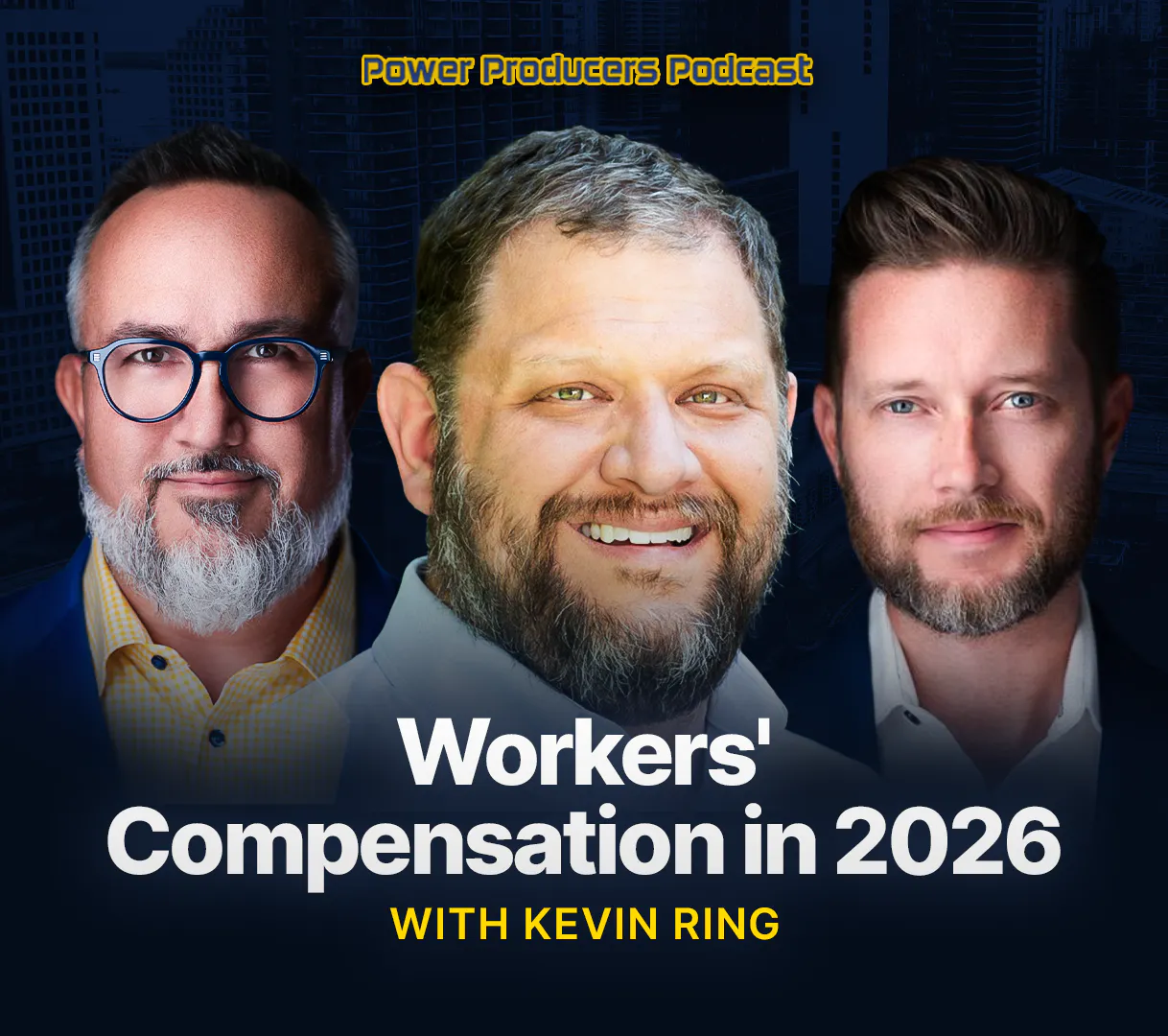
In this episode of the Power Producers Podcast, David Carothers welcomed Kevin Ring from the Institute of Work Comp Professionals to discuss what he is seeing in workers’ compensation heading into 2026. The conversation covered long term rate trends, signs that the market may be approaching the bottom, growing audit scrutiny, Nevada’s major payroll cap change, AI’s role in policy analysis, and the evolving legislative landscape around marijuana and the gig economy. As always, the discussion blended practical strategy for producers with broader industry outlook and regulatory insight.
Key points:
Workers’ Comp Rates May Be Nearing the Bottom
Kevin explains that while most states are still seeing rate decreases, the pace has slowed. California recently posted a rate increase for the first time in over a decade, which could signal broader market shifts. Slowing wage inflation and continued medical cost pressure suggest that long term downward trends may not continue indefinitely.
Premium Audits Are Becoming More Aggressive
Auditors are digging deeper, especially when reviewing uninsured subcontractors. Instead of relying solely on certificates of insurance, they are checking state coverage verification databases to confirm continuous coverage. This shift increases the importance of proper certificate tracking and creates exposure if subcontractor coverage lapses during the policy term.
Certificate Management Is No Longer a Simple Box Check
The conversation highlights how certificates are only a snapshot in time and may not reflect actual coverage intent. With exclusions for additional insured status and evolving endorsement language, producers must understand what policies truly provide. AI driven policy analysis tools are likely to accelerate compliance reviews and uncover hidden coverage gaps.
Nevada’s Payroll Cap Change Is a Game Changer
Nevada historically capped payroll at thirty six thousand dollars per employee, effectively removing many audit conversations from relevance. Beginning October 1, 2026, that cap will shift to a formula based on state wage data, significantly increasing reportable payroll. This change will create new audit exposure and education opportunities for producers who understand remuneration rules.
Legislation Remains Quiet but Marijuana and Gig Economy Issues Persist
While broad workers’ comp reform activity is limited due to overall system profitability, marijuana policy continues to evolve. Questions around drug free workplace credits, reimbursement for medical marijuana, and federal rescheduling remain unresolved. At the same time, classification disputes involving gig economy workers may eventually reshape how companies structure labor relationships.
Producers Must Know What They Are Selling
David reinforces that as AI tools make policy analysis easier, producers cannot rely on surface level understanding. Reviewing forms and endorsements, requesting specimen copies, and understanding exclusions are critical. The risk of losing an account or facing an errors and omissions claim increases when coverage does not align with client expectations.
Connect with:
David Carothers LinkedIn
Kevin Ring LinkedIn
Kyle Houck LinkedIn
Visit Websites:
Power Producer Base Camp
Institute of WorkComp Professionals
Killing Commercial
Crushing Content
Power Producers Podcast
Policytee
The Dirty 130
The Extra 2 Minutes

In this episode of Power Producers Shoptalk, David Carothers went deeper on how producers should introduce total cost of risk and experience mod conversations at the point of sale. He explained why many producers freeze when it is time to bring up total cost of risk, and why others lose the room by leading with technical safety language too early. David shared how his early success came from having strong risk services deliverables behind the sales process, and he emphasized that agencies need those deliverables if they want to sell this approach with confidence. He also broke down a practical prospecting sequence that starts with a short appointment setting call, moves into a fast discovery meeting over Zoom, and then transitions into a value focused on person meeting where the producer earns the right to present work product and ask for engagement.
Key points:
Why Producers Freeze When Total Cost of Risk Comes Up
David says the most common failure point is hesitation. Many producers go into meetings with good intentions but revert to familiar quoting talk once the conversation starts. He argues that total cost of risk should be introduced early, especially when prospects naturally mention premium pain, because it is the cleanest transition into what is driving cost.
Do Not Lead with Technical Safety Talk
The second big mistake is bringing too much heat too soon. David explains that producers overwhelm prospects with jargon like light duty, return to work, and program terms that the prospect does not understand. When you sound overly technical at the appointment setting stage, you also sound expensive, and prospects assume you will add cost instead of solving it.
You Need Deliverables Before You Sell the Strategy
David ties confidence to capability. He shares that his early success was supported by a built-in risk services team that could deliver on what he promised. He warns that many agencies fail to go all in on total cost of risk because they have not built the worksheets, processes, and service deliverables needed to support the conversation after the sale.
Appointment Setting is Not Education
David stresses that the goal of the first call is to book the meeting, not to teach the prospect the full framework. Most decision makers will meet with someone every year anyway, because they believe shopping is normal. Producers lose because they try to sell the entire approach in a short call instead of earning the right to have a deeper conversation.
A Simple Multi Step Meeting Sequence Wins
He outlines a sequence that starts with a short Zoom fact finding call, followed by a longer in person meeting where value and service cadence are explained. After that, the producer does the work product, then returns to present findings and ask the prospect to hire them. This structure reduces friction, keeps the prospect engaged, and shifts the process from quoting to advisory.
Found Money Can Fund the Relationship Before Renewal
David shares a compensation strategy that helps producers avoid doing months of work with no guarantee of getting paid. If a producer can identify mod errors, claims reporting issues, or refund opportunities, the agency can propose a shared savings approach where recovered money is split. This can compensate the agency before the policy is placed and creates a stronger commitment from the prospect.
Connect with:
David Carothers LinkedIn
Kyle Houck LinkedIn
Visit Websites:
Power Producer Base Camp
Killing Commercial
Crushing Content
Power Producers Podcast
Policytee
The Dirty 130
The Extra 2 Minutes

In this episode of Power Producers Podcast, David Carothers is joined by Warren Cleveland from Captive Coalition for a wide ranging conversation on specialization, creativity, and why producers must narrow their focus to survive in the middle market. Building off recent discussions around parametrics and alternative risk strategies, they explain how captives, benefits captives, and disciplined education can prevent producers from losing high value clients. The episode centers on asking better questions, using the right partners, and positioning captives as a long term strategic tool rather than a last minute reaction.
Key points:
Why Specialization Beats Generalization
David and Warren both stress that producers trying to write everything will struggle. They recommend limiting focus to three core classes of business and closely related peripheral industries. Deep operational knowledge creates credibility, sharper discovery, and better risk solutions that generalists simply cannot match.
Creativity Comes From Asking Better Questions
The conversation ties parametrics and captives together through one core idea. Partners can build solutions around clients, but only if producers identify the right risks. That requires curiosity, comfort with asking questions, and a willingness to look beyond traditional coverage conversations.
Phone a Friend Instead of Losing the Account
Warren emphasizes that producers do not need to be captive experts to win. They need to know when to call for help. He shares real examples of agents saving accounts by reaching out early, using talking points, and letting specialists support client conversations before competitors step in.
Captives Reward Performance in a True Meritocracy
David frames captives as one of the purest merit based systems in insurance. Well performing accounts can retain underwriting profit instead of giving it away. He argues there is no excuse for missing captive conversations when clients consistently complain about paying premiums without seeing returns.
Benefits Captives Are the Next Frontier
Warren outlines why benefits captives paired with self funding can outperform traditional approaches. With better data, wellness programs, and accountability, employers can finally align incentives and participate in underwriting profit rather than subsidizing poor performers.
Education Is the Real Differentiator
Captive Coalition positions education as the core offering. From webinars to one on one coaching and ready to use client materials, the goal is to make producers comfortable having the conversation. Warren stresses that missing these discussions often comes from fear and lack of knowledge, not lack of opportunity.
Captives as a Long Term Retention Strategy
Instead of selling captives reactively, both speakers encourage preparing clients years in advance. Building a three to five year roadmap keeps clients engaged, reduces churn, and eliminates surprise competition. Once clients buy into a long term plan, price driven defections become far less likely.
Using Tools You Already Have
David closes by reminding producers that captives are simply another tool. Losing accounts because a tool was never used is more frustrating than losing on price. The message is clear. Learn the tools, use the partners available, and stop leaving opportunities on the table.
Connect with:
David Carothers LinkedIn
Warren Cleveland LinkedIn
Kyle Houck LinkedIn
Visit Websites:
Power Producer Base Camp
Captive Coalition
Killing Commercial
Crushing Content
Power Producers Podcast
Policytee
The Dirty 130
The Extra 2 Minutes

In this episode of Shoptalk, David Carothers dug into total cost of risk with a focus on downtime, disruption, and distraction as hidden drivers of long term expense. Using real manufacturing examples, he explained how equipment breakdown, supply chain delays, and even severe workers’ comp injuries can create operational losses far beyond what shows up in loss runs. He also outlined how middle market producers can use a year-round cadence of touch points to control costs, strengthen submissions, and create clear wedges in prospecting. The episode ends with a note that this is part one, with part two continuing next week.
Key points:
Downtime is a Business Threat Not Just a Claim Issue
David explains that equipment breakdown and specialized machinery delays can shut production down for weeks. He shared a story about a printing operation where a simple mistake destroyed equipment and required overseas technicians and parts, resulting in four to six weeks of downtime. The bigger point is that downtime can create losses that linger well beyond the repair window.
Shelf Space and Reputation Loss Can Be Permanent
For manufacturers selling into major retailers, downtime can cost more than sales for a single season. David breaks down how hard it is to earn premium placement and holiday displays, and how quickly retailers replace brands that cannot fulfill orders. Once that shelf space is lost, it is often gone for good, creating a long tail financial hit.
Workers’ Comp Injuries Can Trigger Operational Chaos
A severe injury is not only a claim cost. It can shut down equipment, trigger investigations, delay production, and reduce productivity across the floor. David described an extreme degloving incident tied to bypassed guarding on machinery and highlighted how fear, disruption, and compliance activity stack costs for years.
Total Cost of Risk Changes the Sales Conversation
Instead of reacting to bad loss runs with tactical fixes like consent to rate or a PEO, David pushes producers to quantify all hidden costs. That includes downtime, out of pocket claims, administrative time, and disruption impacts. When clients see total cost, the conversation shifts from price shopping to strategic planning.
This is a Year Round Process Not a Renewal Project
David emphasizes that total cost of risk is not a spreadsheet exercise done once a year. It is a 365 day approach built on consistent accountability and structured touch points. He recommends using a twelve subject cadence to stay in front of accounts, strengthen renewals, and build trust over time.
Risk Management Actions Can Create Underwriting Leverage
He shared a practical example where a manufacturer lost power for over a week after hurricanes. The solution was putting a generator company on retainer so a large unit could be delivered when storms approached. David explains how actions like this protect reputation, reduce downtime, and can be positioned to underwriters for potential credits.
Trusted Advisor Positioning Wins Even at Higher Cost
David compares advisory insurance work to paying for high quality legal or accounting help. Clients may pay more upfront, but the long term savings and control are what matter. He argues that better stories, better frameworks, and measurable risk control results eliminate late stage price objections and create stronger referrals.
Connect with:
David Carothers LinkedIn
Kyle Houck LinkedIn
Visit Websites:
Power Producer Base Camp
Killing Commercial
Crushing Content
Power Producers Podcast
Policytee
The Dirty 130
The Extra 2 Minutes

In this episode of Power Producers Podcast, David Carothers sat down with Brian Thompson from Descartes Underwriting to break down parametric coverage and why it is becoming a serious differentiator for producers. Brian explained parametric as a predefined payout tied to a predefined event, with payment triggered by the event and supported by a loss attestation. They explored how parametric can address gaps traditional insurance does not, especially economic loss, non damage business interruption, and revenue disruption tied to access and supply chain issues. David emphasized that producers do not need to be experts, but they do need to know parametric exists and ask better discovery questions to uncover risks that can be solved with these programs.
Key points:
Parametric 101 and How It Actually Works
Brian Thompson explains that parametric coverage is built around pre negotiated payouts for predefined events. Instead of adjusting the claim, coverage triggers based on the event, and the insured attests they suffered a loss. This structure can allow funds to arrive within days, helping clients recover faster and avoid long delays.
Economic Loss Matters More Than Physical Damage
A major takeaway is that parametric can cover full economic loss, not just physical damage. That includes revenue disruption after a storm, cancellations, loss of access, and increased operating costs. This is where many producers get stuck because they assume insurance only responds to visible property damage.
Real World Use Cases Beyond Property Insurance
They shared examples like a casino location in Macau where coverage was tied to access over a bridge, resulting in a fast payout after a typhoon closed access. Another example involved Mississippi River water levels impacting barge shipments, forcing higher costs through trucking and rail. These scenarios show how parametric can insure risks that usually fall outside standard policies.
How Pricing and Structuring Really Happens
David pushed for clarity on pricing, and Brian explained that rate depends on frequency, severity, and what the client wants to retain versus transfer. The structuring process is iterative, often requiring several quote revisions. Back testing is a key advantage because teams can model how coverage would have performed during past events.
Why Generalists Will Struggle Going Forward
David reinforced that generalist producers will lose because they miss nuanced operational risks. Parametric requires deeper discovery to uncover what truly threatens profitability, liquidity, and continuity. Knowing how to ask the right questions helps producers create wedge opportunities and win accounts.
Education Resources and How Producers Can Get Started
Brian shared that education is a major part of adoption, and Dart runs webinars, publishes a newsletter, and provides case studies and examples. The most important step is sending a what if scenario and using real quotes to understand how the product behaves. Producers can lean on the carrier team as an in house expert until they build confidence.
Connect with:
David Carothers LinkedIn
Brian Thompson LinkedIn
Kyle Houck LinkedIn
Visit Websites:
Power Producer Base Camp
Descartes Underwriting
Killing Commercial
Crushing Content
Power Producers Podcast
Policytee
The Dirty 130
The Extra 2 Minutes

In this episode of Power Producer Shop Talk, host David Carothers delivers a masterclass on navigating the shift from a hard to a soft market, emphasizing that the time to prepare is now. With reinsurance renewals signaling a softening, David warns that the easy "price shopping" wins of the hard market are disappearing, and producers must pivot to value-based selling to displace incumbents who are now delivering good news (rate decreases).
David also breaks down the Total Cost of Risk (TCOR) conversation, explaining why it is the ultimate differentiator for accounts in the $100k-$250k premium range. He details how to uncover "hidden" costs like active vs. passive retained losses and why many businesses are overpaying by acting as their own insurance company without getting the credit for it.
Key Highlights:
The Market Pivot: Hard to Soft
David explains that while the message remains consistent, the delivery must change as we move from a hard market (where incumbents deliver bad news) to a soft market (where they deliver rate decreases). Producers must "sew their seeds" now by cleaning up accounts and focusing on Total Cost of Risk to lock in clients before the next hard cycle hits.
Total Cost of Risk (TCOR) Explained
For producers intimidated by financial jargon, David simplifies TCOR. It’s not just premium—it’s the sum of insurance costs, retained losses, and risk management expenses. He explains that using the word "cost" instead of "price" or "premium" instantly elevates the conversation and positions you as a strategic partner rather than a vendor.
Active vs. Passive Retained Losses
David dives into the nuance of retained losses. An active retained loss is a conscious decision (e.g., a high deductible or choosing not to buy cyber coverage). A passive retained loss is an unexpected hit (e.g., an uncovered claim due to an exclusion). He shares a story of a contractor paying all claims under $5k out of pocket without getting any deductible credit—a massive opportunity for a savvy producer to step in and structure a proper program.
Overcoming Obstacles with Creativity
David shares a personal example of how he handles Department of Defense (DoD) contractors. Since he lacks the security clearance to inspect classified manufacturing areas, he uses a service called Yellowbird to hire ex-military professionals with active clearances to perform the loss control inspections. This creative problem-solving eliminates a major barrier to entry that stops most competitors in their tracks.
The $100k-$250k Sweet Spot
While TCOR works for larger accounts, David argues that the $100k-$250k premium space is the "fertile ground" where this conversation is most effective. These businesses are often large enough to have complex risks but small enough that they haven't been introduced to sophisticated risk management concepts by their current broker.
Connect with:
David Carothers LinkedIn
Kyle Houck LinkedIn
Visit Websites:
Power Producer Base Camp
Killing Commercial
Crushing Content
Power Producers Podcast
Policytee
The Dirty 130
The Extra 2 Minutes

In this episode of the Power Producers Podcast, host David Carothers sits down with Dan Sachkowsky, a business growth expert and founder of Big D Coaching. Recorded on location in Florida, this raw and unfiltered conversation traces Dan’s roller-coaster journey from growing up in "the hood" of New Jersey to building and selling three companies for over $30 million—and losing everything in between.
They dive deep into the trap of the "hustle culture," why most businesses are unsellable because the owner is the bottleneck, and how to transition from an operator to a true CEO. Whether you run an insurance agency or a service-based business, this episode is a blueprint for scaling without burnout.
Key Highlights:
The Bon Jovi Moment & The Bankruptcy
Dan shares his powerful origin story. At 15, seeing Jon Bon Jovi's house challenged his father's limiting beliefs about wealth. Motivated by books like Rich Dad Poor Dad, Dan started his first business at 17 and made $3.8 million by age 24. However, the 2008 crash wiped him out, leading to bankruptcy. He explains how hiring a coach at 25 was the pivot point that allowed him to rebuild even bigger.
Operator vs. Owner: Escaping the Bottleneck
Most business owners think working harder equals more success, but Dan argues this leads to burnout and a business that cannot exist without them. They discuss the necessity of building systems and processes that allow the business to run while the owner steps back to focus on strategy and lifestyle.
Employees vs. Teams
Dan emphasizes a critical mindset shift: You don't have employees; you have a team. He and David discuss why hiring the cheapest labor off Indeed is a recipe for failure. True scaling comes from building a culture where people feel valued and part of a mission, not just a line item on a P&L.
The "Show, Don't Tell" Era
David and Dan discuss the shifting landscape of marketing. A static website with stock photos no longer works. To win in 2026, you must build a personal brand through video and social proof. David reiterates his commitment to "showing" his work by documenting his path to $1M in new revenue, rather than just talking about theory.
Generational Wealth & Mindset
The duo reflects on the differences between their generation's "grind" mentality and the younger generation's approach to leverage and passive income. They discuss how modern entrepreneurs are often involved in multiple ventures, taking smaller cuts of bigger pies to mitigate risk and maximize freedom.
Connect with:
David Carothers LinkedIn
Dan Sachkowsky LinkedIn
Kyle Houck LinkedIn
Visit Websites:
Power Producer Base Camp
DanSachkowsky.com
Killing Commercial
Crushing Content
Power Producers Podcast
Policytee
The Dirty 130
The Extra 2 Minutes

In this episode of Power Producer Shoptalk, host David Carothers kicks off the new year with a deep dive into the shifting dynamics of the reinsurance market and what producers need to do to prepare for a softening market. He emphasizes that the "bad news" hard market—where price shopping is rampant—is giving way to a "good news" soft market, where incumbents are harder to displace.
David also outlines his aggressive goal to write $1 million in new business revenue in 2026, promising to "show, not tell" by documenting every step of the process. The core of this episode focuses on the Total Cost of Risk (TCOR) sales conversation: how to have it, why it works best in the $100k-$250k premium space, and why getting a Letter of Engagement before going to market is non-negotiable for serious producers.
Key Highlights:
The Shift from Hard to Soft Market
David discusses the recent reinsurance renewals and the early signs of a softening market. He warns producers that the strategies used during the hard market (competing on price when incumbents deliver bad news) will no longer work. In a soft market, incumbents deliver rate decreases, making it harder to get appointments. Now is the time to "sew your seeds" and pivot your messaging.
The "Show, Don't Tell" 2026 Challenge
David announces his personal goal to write $1 million in new business revenue in 2026. He commits to documenting the entire journey—prospecting, meetings, and closing—in real-time, shifting his content focus back to the trenches of Florida Risk Partners to prove that his methods work in today's environment.
Mastering the Total Cost of Risk (TCOR) Conversation
This episode is a masterclass on the TCOR sales process. David explains why he never goes to market without a signed Letter of Engagement on middle-market accounts. He breaks down the ideal premium sweet spot ($100k-$250k) where this conversation is most effective, noting that accounts in this range are often hearing about TCOR and broker selection for the first time.
Qualifying the Decision Maker
David shares a critical soft-skill tactic for identifying the true decision maker without offending your point of contact. Instead of bluntly asking "Are you the decision maker?", he suggests asking: "Is there anyone else who is typically part of the decision-making process that we should include in our next meeting?" This question preserves relationships while ensuring you aren't wasting time pitching to someone who can't sign the check.
Stop "Quoting and Hoping"
The episode challenges the traditional "quote and hope" strategy of waiting 90 days out to shop a renewal. David argues that this method commoditizes the producer. Instead, he advocates for a consultative approach that secures the client's commitment before doing the work, using a Letter of Engagement to validate the relationship and take control of the market.
Connect with:
David Carothers LinkedIn
Kyle Houck LinkedIn
Visit Websites:
Power Producer Base Camp
Killing Commercial
Crushing Content
Power Producers Podcast
Policytee
The Dirty 130
The Extra 2 Minutes

In this episode of the Power Producers Podcast, host David Carothers interviews Don Weber of DR Weber Coaching. Don’s background reads like an international spy thriller—from selling diamonds in Antwerp to conducting intelligence operations for the U.S. and French governments. He joins the show to discuss how the skills he learned in those high-stakes environments translate to elite sales performance and corporate training.
They dive into the art of profiling C-Suite executives before a meeting, the psychology of manipulation vs. persuasion, and why Don believes chasing money and power is ultimately unfulfilling. If you want to learn how to read people like an intelligence operative and communicate with absolute confidence, this episode is a must-listen.
Key Highlights:
From Diamonds to Intelligence Operative
Don Weber shares his fascinating journey from being a commercial insurance broker to a diamond trader in Antwerp, which eventually served as his cover for intelligence work. He reveals how a background of "getting into trouble" made him a perfect recruit for government operations that required him to live under assumed identities in dangerous territories.
Profiling the C-Suite
Drawing on his intelligence background, Don explains the importance of building a psychological profile of your prospect before you ever step into the room. He and David discuss how to research a CEO or CFO—looking beyond just company stats to understand their personal motivations, lifestyle (e.g., home value, charitable giving), and risk tolerance to tailor the perfect pitch.
The "Root Cause" of Sales Success
Don and David agree that most salespeople fail because they focus on the product (insurance policies) rather than the root cause of the client's problem. Whether it's a dirty workers' comp mod or a lack of safety culture, identifying and fixing the underlying issue is the key to winning the account and delivering true value.
Communication is the Ultimate Skill
While hard skills are important, Don argues that communication is the ceiling on your potential. He shares how he helps corporate executives polish high-stakes presentations and master the art of engagement, ensuring that their message lands with impact—whether they are speaking to a board of directors or a room full of politicians.
The Empty Cup of Materialism
Having lived a life full of danger, money, and power, Don offers a sobering perspective on success. He warns against the trap of materialism, noting that many of the wealthiest people he knows are also the loneliest. True fulfillment, he argues, comes from helping others and living with purpose, not just accumulating "stuff."
Connect with:
David Carothers LinkedIn
Don Weber LinkedIn
Kyle Houck LinkedIn
Visit Websites:
Power Producer Base Camp
Dr Weber Coaching
Killing Commercial
Crushing Content
Power Producers Podcast
Policytee
The Dirty 130
The Extra 2 Minutes

In this episode of the Power Producers Podcast, David Carothers welcomes back Craig Bender, founder of INSUREU2, INC. What started as a marketing venture has evolved into a comprehensive ecosystem for insurance professionals, culminating in the launch of a new AI software designed to provide real-time guidance to producers.
David and Craig discuss the noise in the industry regarding "coaches vs. doers," the pitfalls of hiring Virtual Assistants (VAs) without proper systems, and the difference between static chatbots and dynamic AI learning models. David also drops a major announcement about his personal production goals for 2026, pledging to document his journey to writing $1 million in new business revenue to prove that his strategies work in the current market.
Key Topics Discussed:
Insure You 2 AI
Craig reveals his new software solution that sits on a producer's desktop and provides guidance in 0.5 seconds during live calls. Whether it is objection handling, cross-selling opportunities, or immediate quoting eligibility, the AI acts as an expert whisperer (or a "digital David Carothers") on the agent's shoulder.
David’s 2026 "Show, Don't Tell" Challenge
Tired of "keyboard warriors" and coaches who no longer produce, David announces his goal to write $1,000,000 in new business revenue in 2026. He plans to film and document every step of the process—from the cold calls to the closing meetings—celebrating every $100k milestone with a rare Cohiba Spectre cigar.
The Virtual Assistant Dilemma
The duo discusses why many agencies fail with VAs. Craig argues that VAs are often hired without the necessary guardrails or systems. He explains how his new AI solution pairs with VAs to monitor sentiment and compliance in real-time, ensuring they stay within authorized parameters.
Operational vs. Sales AI
David breaks down how he currently uses AI in his agency for operations (Refocus for renewals), content (Synthesia), and knowledge management (Delphi), while Craig contrasts this with his software's focus on live, front-end sales execution and sentiment analysis.
Global Insurance Solutions
Craig discusses taking Insure You 2 international, with operations in London and Asia, aiming to build a tech stack that is universally applicable across the global insurance industry.
Connect with:
David Carothers LinkedIn
Craig Bender LinkedIn
Kyle Houck LinkedIn
Visit Websites:
Power Producer Base Camp
INSUREU2, INC
Killing Commercial
Crushing Content
Power Producers Podcast
Policytee
The Dirty 130
The Extra 2 Minutes

In this episode of the Power Producers Podcast, host David Carothers interviews Heather McKinnon, a "Protege" contestant from Horizon Insurance Services in Columbus, Ohio. Heather shares her atypical journey into the insurance world, transitioning from a background in biochemistry and CPG brand management to joining her husband's agency.
They discuss the chaotic reality of balancing family life (including holiday stress and broken appliances) with the demands of being a producer, why "solving and serving" is the most effective form of selling, and how new producers can leverage referral networks to build trust before they even walk in the room.
Key Highlights:
The "Atypical" Path to Insurance
Heather describes her background in biochemistry and brand management before being "recruited" by her husband to join the family agency. While she jokingly calls herself atypical, David points out that almost no one plans to go into insurance—most successful producers stumble into it from other careers.
Solving and Serving IS Selling
Heather admits she doesn't like "selling" in the traditional sense but loves solving problems. David validates this, noting that the best producers are often educators and problem solvers who don't need to use high-pressure tactics because they lead with value and solutions.
The Power of Walking Away
David shares a detailed story about a prospect with messy data and four other agents involved. By setting boundaries, demanding transparency (unredacted policies), and being willing to walk away, he flipped the power dynamic and won the account. This serves as a masterclass for new producers on why scarcity creates value.
Time Management Sprints
David breaks down his 50/10 rule for productivity: working with intense focus for 50 minutes (no phone, no email) and then taking a 10-minute break. This simple system eliminates distractions and ensures that no client waits longer than an hour for a response.
Building a Referral Ecosystem
For new producers battling imposter syndrome, David advises building a referral network with B2B salespeople (payroll, IT, etc.) who are calling on the same accounts. By establishing regular accountability meetings and sharing target lists, producers can generate warm leads and bypass the cold-calling grind.
Connect with:
David Carothers LinkedIn
Heather McKinnon LinkedIn
Kyle Houck LinkedIn
Visit Websites:
Power Producer Base Camp
Horizon Insurance Services
Killing Commercial
Crushing Content
Power Producers Podcast
Policytee
The Dirty 130
The Extra 2 Minutes

In the tenth installment of the "Becoming the Protégé" series on Power Producers Shop Talk, host David Carothers sits down with Rich Bales of the Avanti Group to discuss his journey from medical device sales to becoming an agency owner and contestant on The Protégé Season 3. Rich shares his entrepreneurial story, detailing why he left a high-stress corporate career to build a business with more freedom and control.
They also dive into the realities of starting in personal lines versus commercial, the power of risk management over selling policies, and why Rich believes his background in medical sales gives him a unique edge in targeting healthcare accounts.
Key Highlights:
From Corporate Grind to Agency Ownership
Rich explains his transition from a demanding career in medical device sales to launching his own independent agency. Motivated by a desire for better work-life balance and tax advantages, he left behind the "golden handcuffs" of corporate quotas to build something sustainable for his family.
Starting Where You Want to Finish
David and Rich discuss the common advice given to new producers to start in personal lines. David challenges this notion, arguing that there is zero correlation between selling a $500 auto policy and closing a $25,000 revenue commercial account. Rich agrees, noting that while personal lines provided "at-bats," his goal is to move entirely into the commercial space.
Risk Management vs. Selling Insurance
The duo emphasizes that the most successful producers don't sell insurance—they sell risk management. David shares his strategy of opening meetings by explicitly stating, "This is not an insurance conversation," focusing instead on solving operational problems that naturally lead to the sale.
Leveraging Past Experience
Rich discusses his plan to target the healthcare vertical, utilizing his deep understanding of hospital administration and medical groups from his previous career. He and David explore how private equity is consolidating the space, creating opportunities for agents who can offer sophisticated risk management solutions rather than just transactional policies.
The "Protege" Mindset
When asked why he joined The Protégé, Rich admits he wants to be the "dumbest guy in the room" to maximize his learning. He views the competition not just as a contest, but as a priceless opportunity to steal best practices from top industry leaders and implement them immediately to scale his agency.
Connect with:
David Carothers LinkedIn
Rich Bales LinkedIn
Kyle Houck LinkedIn
Visit Websites:
Power Producer Base Camp
The Avanti Group
Killing Commercial
Crushing Content
Power Producers Podcast
Policytee
The Dirty 130
The Extra 2 Minutes

In this episode of the Power Producers Podcast, host David Carothers interviews Terrence McLean, Co-Founder and CEO of SageSure. Terry joins the show from Silicon Valley to discuss how SageSure has grown into a powerhouse in the catastrophe-exposed property market. They dive deep into the philosophy of running toward risk when others run away, the critical importance of physical inspections, and why independent agents remain the ultimate experts in distribution.
Key Highlights:
The "Go Left" Philosophy
Terry explains why SageSure enters markets that national carriers flee. While others retrench, SageSure finds fertile ground in difficult territories by understanding the risk better than anyone else and "going left" when the industry goes right.
Boots on the Ground: The Inspection Mandate
Despite advancements in technology, Terry emphasizes that AI and aerial imagery are not yet ready to replace physical inspections. He details why SageSure relies on boots-on-the-ground to verify insurance-to-value (ITV) and condition, ensuring they only write the best risks to protect their capacity.
Carriers Can't Be Everything
Terry argues that insurance carriers cannot be "all things to all people." Their job is to manage capital and margin. He highlights that independent agents are the necessary experts who must navigate the market on behalf of the consumer to find the right fit when a carrier's appetite is full.
The "Parting Gift": Market Stabilization
Terry offers a positive forecast for the future, predicting double-digit price decreases in reinsurance by 2026. This signals that the worst of the hard market is likely behind us, which should eventually lead to primary price stabilization for consumers.
Top Tier Agency Partners
When asked what separates a top-tier partner from the rest, Terry points to relationships and trust. SageSure aims to be a "top 3" carrier for their partners, and in return, they prioritize agents who maintain open communication and consistent volume.
Connect with:
David Carothers LinkedIn
Terrence McLean LinkedIn
Kyle Houck LinkedIn
Visit Websites:
Power Producer Base Camp
SageSure
Killing Commercial
Crushing Content
Power Producers Podcast
Policytee
The Dirty 130
The Extra 2 Minutes

In this episode of the Power Producers Podcast, host David Carothers sits down with Aaron Puchbauer, a contestant on Season 3 of The Protégé. Aaron’s journey to insurance is unique—he spent 15 years as a healthcare executive before a corporate restructuring led him to pivot into the world of risk management.
They discuss how Aaron’s background as a C-Suite buyer gives him a unique advantage in selling to decision-makers, why he sends meeting agendas in advance, and how he utilizes AI to prep for appointments. If you are a new producer looking to differentiate yourself, or a veteran looking to refine your process, Aaron’s "buyer-first" perspective is invaluable.
Key Highlights:
From Healthcare Executive to Insurance Producer
Aaron Puchbauer shares his transition from a 15-year career in hospital administration to becoming an independent insurance agent. He explains how the desire to control his own destiny and provide stability for his family (specifically his son with autism) drove him to an industry where effort equals equity.
The Buyer’s Perspective: Winning the Meeting
Having spent years on the other side of the table fielding pitches from vendors, Aaron knows exactly what decision-makers hate—and what they respect. He details his strategy of sending a proposed agenda well in advance of the meeting, asking the prospect to strike or add items. This simple step establishes respect for the prospect's time and differentiates him from the "show up and throw up" competition.
Boots on the Ground: Physical Risk Assessment
Aaron and David discuss the necessity of "walking the walk" during a prospect visit. Aaron shares a recent experience inspecting a restaurant where he checked everything from the walk-in coolers to the Ansel system (fire suppression). By physically inspecting the risk, he identified misclassifications and coverage gaps that the incumbent agent missed entirely.
Leveraging AI for Sales Preparation
Aaron reveals how he uses ChatGPT to prepare for sales calls. By prompting the AI to act as the business owner (e.g., a restaurant owner) and asking it to generate likely objections and questions, he walks into meetings prepared for the specific operational concerns of that industry.
The Power of "Walking Away"
David emphasizes a lesson that usually takes new producers years to learn: the ability to spot a "fool's errand." They discuss a specific case where a prospect’s data was so disjointed (impossible liquor sales vs. gross receipts) that it required a hard conversation about whether the account was even insurable, highlighting the importance of underwriting on the front end.
Connect with:
David Carothers LinkedIn
Aaron Puchbauer LinkedIn
Kyle Houck LinkedIn
Visit Websites:
Power Producer Base Camp
Imming Insurance Agency
Killing Commercial
Crushing Content
Power Producers Podcast
Policytee
The Dirty 130
The Extra 2 Minutes

In this episode of the Power Producers Podcast, host David Carothers welcomes back Andy Mathisen, Insurance Sales Manager for Homebot. They dive into how agencies can dominate the personal lines market by shifting from transactional relationships to value-driven engagement.
Andy breaks down how Homebot serves as a "set it and forget it" tool that keeps agents front-and-center with insureds while simultaneously generating leads for loan officers and realtors—flipping the traditional referral food chain on its head.
Key Highlights:
What is Homebot?
Andy explains that Homebot is a monthly home digest sent to insureds with a staggering 76% open rate. Unlike standard newsletters, this digest provides homeowners with real-time data on their home value, loan balance, and purchasing power (equity for refinances, HELOCs, or new purchases).
The "Santa Claus" Effect: Gaining Leverage
Historically, insurance agents are at the bottom of the referral food chain (Realtor > Lender > Agent). Andy details how Homebot changes this dynamic by aggregating a "Team of Professionals" on the client's dashboard. When a homeowner interacts with financial tools on the platform, the insurance agent can pass those leads back to lenders and realtors, creating immense leverage and reciprocity.
Content Strategy: Donuts vs. Data
David and Andy discuss why dropping off donuts at a loan officer's office no longer works. To win in today's market, agents must provide actionable data and tools that help their referral partners grow.
The "Too Busy" Trap
The duo critiques the mindset of agency owners who claim they are "too busy" for new leads. They discuss the necessity of implementing systems, departmentalization, and proper website content strategies (blogs vs. paid ads) to scale consulting capabilities without drowning in work.
Pet Peeves: Pick Up the Phone!
Andy shares his frustration with agencies that rely on complex phone trees or refuse to answer calls, and the growing trend of prospects "ghosting" after good sales calls.
Connect with:
David Carothers LinkedIn
Andy Mathisen LinkedIn
Kyle Houck LinkedIn
Visit Websites:
Power Producer Base Camp
Homebot Ai
Killing Commercial
Crushing Content
Power Producers Podcast
Policytee
The Dirty 130
The Extra 2 Minutes

In this episode of Power Producer Shop Talk, host David Carothers interviews Pam Seidler, the only female contestant in Season 3 of The Protégé. Pam shares her diverse background, from working in radio and TV to oxygen sales and a stint in the captive insurance world with AAA. Now, she's diving headfirst into commercial insurance, eager to prove that being new to the industry is not a disadvantage but an opportunity to learn without bad habits.
David and Pam discuss the importance of mentorship, finding the right agency culture, and why starting directly in the middle market can be more beneficial than cutting teeth on small commercial accounts. Pam also opens up about her niche focus on the pet industry and gathering places (coffee shops, etc.), leveraging her past experiences to build a unique book of business.
Key Highlights:
Breaking into the Industry
Pam shares her winding career path, which included stops at Fox News, tech startups, and medical sales, before a chance encounter on a plane planted the seed for an insurance career. After gaining experience as a captive agent, she made the leap to the independent side, drawn by the freedom and limitless potential of commercial insurance.
The "New Producer" Advantage
David argues that hiring producers with zero insurance experience is often better than hiring veterans with bad habits. Pam embodies this "blank slate" advantage, approaching the competition with a hunger to learn and no preconceived notions about how things should be done. This mindset allows her to absorb coaching and implement new strategies rapidly.
Niche Focus: Pets & Gathering Places
Drawing on her early career aspirations with Petco and PetSmart, Pam discusses her strategy to target the pet industry—from groomers to boarding facilities—as a primary niche. She also plans to focus on "gathering places" like coffee shops, utilizing her natural ability as a connector to build relationships in these community hubs.
Finding the Right Agency Culture
David advises Pam (and listeners) on how to interview an agency. He suggests bold moves like asking to speak with top and bottom producers, as well as current and former clients, to get a true picture of the agency's deliverables and support structure. This transparency is key to finding a long-term home.
The Power of Spousal Support
David shares a personal story about how his wife's unwavering support was the catalyst for launching Florida Risk Partners. He emphasizes that a strong support system at home is crucial for any producer navigating the ups and downs of a sales career, a philosophy he integrates into his Producers in Paradise event.
Connect with:
David Carothers LinkedIn
Pam Siedler LinkedIn
Kyle Houck LinkedIn
Visit Websites:
Power Producer Base Camp
AHI Insurance Group
Killing Commercial
Crushing Content
Power Producers Podcast
Policytee
The Dirty 130
The Extra 2 Minutes

Comments

Download from Google Play

Download from App Store
 United States