


 Claim Ownership
Two Hooks Podcast
Subscribed: 0Played: 1
Subscribe

© Randy Brown
Description
Welcome to Two Hooks Podcast with Randy Brown. Join me as I discuss martial arts training, tips, insights, problems, and personal experiences. Get hooked!
32 Episodes
Reverse
What is martial arts? Is it simply the practice of methods of violence? Or dancing around in costumes? What does it mean to you?
Today's special guest is my friend Roy Dean. You may know Roy from his Brazilian jiu-jitsu DVD's, online courses, YouTube videos, or books. Roy and I tried to connect for another ordinary podcast interview, but technology squashed our attempts and we ended up chatting for an hour anyway. This was serendipitous as we ended up on topics with the makings of a great podcast. Things often not talked about by black belt instructors in the martial arts. We linked up a week later and recorded this intriguing discussion for all of you. Join me today, as I welcome Roy Dean and we take you on a journey inside the minds of black belts.

I have a great first-time conversation for all of you today. I’m joined by Iain Abernethy, a karateka from the UK. Iain runs a popular YouTube channel known as PracticalKataBunkai, is the author of multiple books, and DVD’s, and travels the world teaching Karate.Over the past year or two, many of you have reached out to me urging Iain and I to connect due to our similar approaches to the martial arts. Well it finally happened, and we have you to thank for this exceptional conversation. Thank you and enjoy.

Jerry Liu of 'Fight Commentary Breakdowns' & 'FC Chats' stopped by for a great discussion. Jerry runs some popular YouTube channels but has been a life long martial artist from Kung Fu as a kid, to Kempo, Muay Thai, and BJJ as he continues his journey. Join us as we go the rounds and attempt to change one another's minds, or agree on topics such as:‘Teacher : Student' ratios in Brazilian Jiu-JitsuEmotional Control and Sparring with Wild PartnersConcussions | CTE in Combat SportsHow to Spot Bad Self-Defense Courses
For this podcast my friend and BJJ Black Belt Stephen Kesting stops by to chat about his background in Judo, Kung Fu, and his eventual shift to BJJ. We also discuss the current state of BJJ, where it is heading, and wrap up with some technical advice for beginners and where to focus your efforts in BJJ early on. A great conversation that I know you will enjoy. Stephen started his website grapplearts.com back in 2003 to share his passion for BJJ and help others learn through systematic practice and easy to follow instruction.
Today's podcast is with my good friend and martial arts aficionado, Sensei Ando of SenseiAndo.com, and Happy Life Martial Arts. We may very well have opened Pandora's Box here with this discussion. In his first appearance on my podcast, Sensei Ando and I discuss a variety of topics from fitness in martial arts, training failures, martial arts psychology, dissecting frogs, serial killers, bad teachers and whatever other manner of odd conversation that happened to introduce itself to this conversation. As always though, a rich and enjoyable conversation with Ando and something I'm sure all of you will enjoy.

Here are 5 tips to help you with setting up, and training martial arts (boxing, Brazilian jiu-jitsu, wrestling, judo, etc.) at home. Today I'll go over good training practices to make sure you stay with your training, ideal locations and how to adapt to what type of space you live in, types of heavy bags and how to size them, throwing dummies, grappling dummies, and type of mats you want to look for if you do any ground work/takedowns/grappling or wrestling.

Today I had the distinct pleasure of interviewing Dr. Kate Kelly of Active Recovery Boston. Dr. Kelly has helped me work through a myriad of injuries over the past 10+ years. She is one of my first stops whenever I have something getting in the way of my training.We had a great discussion on ‘What active recovery means', and how it can interplay with injury prevention and recovery; strategies to apply it, and why it is important to athletes and non-athletes alike. We also delve into the differences in training for women and men, and the affects of ageing on athletes and how we can keep training smart well into our twilight years. Join us for this excellent conversation.
Delve into the history of Chinese boxing, famous generals, Brazilian jiu-jitsu, UFC leg locks, gunpowder, and all things martial arts, as I interview Dr. Peter Lorge, author of Chinese Martial Arts from Antiquity to the Twenty-First Century. The second half we delve into General Qi Ji Guang, Sun-Tzu, Brazilian jiu-jitsu, teaching methods, and...INTERNAL vs EXTERNAL nonsense!
How to tackle and solve difficult problems we have in learning and practicing martial arts forms/kata/tao lu. Check out these tips I used to improve my own forms training that are found in the classic game of chess.
A common question in the martial arts world that bleeds over to bystanders and family members. "How long does it take to receive your first black belt?" Listen in and I'll share my thoughts on this after working to receive black belts from two culturally, historically, and functionally divergent martial arts styles.
How our brain and body benefit from solo training in martial arts. But there are pitfalls too. In this latest podcast we’ll discuss the nuances with this style of training, which can have many positive benefits.
Follow these 7 tips to train martial arts on your own. Included in the original post is a parent section as well. This is for parents who have children in martial arts and wish to empower them to train outside of a class.Go here for more content - https://randybrownmantisboxing.com/two-hooks-podcast/2020/3/20/episode-19-how-to-train-martial-arts-on-your-own
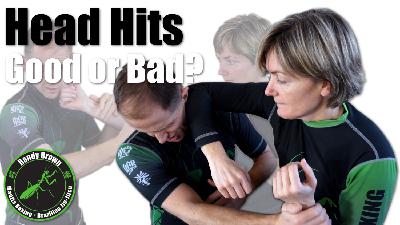
Is getting hit in the head bad for us when we train in martial arts such as boxing, MMA, kickboxing, karate, muay thai, etc.??? Here is how I see it, and what I did to my students to make them train smarter. Being educated on the truth can keep us training safe for years to come.
I get this question from all of you quite frequently - "What style of Mantis Boxing do I practice/teach?" Seven Star, Tai Ji (Supreme Ultimate), Plum Blossom, Supreme Ultimate Plum Blossom, 6 Harmony, 8 Step, Wah Lum? I decided to take some time to answer you instead of leaving a quick comment when you ask. Hope this helps.
This podcast is a re-recording of a talk I gave at the 5th Annual Martial Arts Studies Conference held at Chapman University in Los Angeles, California in May 2019. The event was hosted by Dr. Paul Bowman, and Dr. Andrea Molle. A two day extravaganza of martial arts history, politics, and culture. There is amazing research into the martial arts taking place around the globe today. It was an honor to be a part of this significant event, and contribute in some small way to the Martial Arts Research Network.
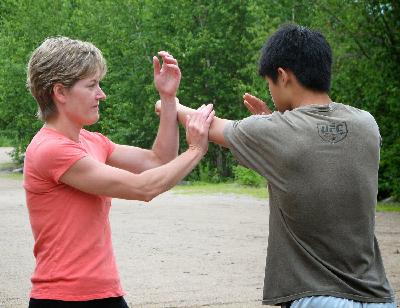
Forms are windows to the past. They can show not only a fighters techniques, system, and series of counters, and counters to an opponent's counter. They are a fascinating anomaly. Are they worth the mining for these techniques and sequences within? Today I'll discuss my thoughts on this, and hopefully shed some light on this facet of Chinese martial arts training.
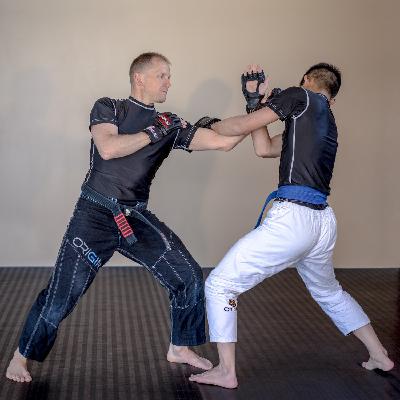
Forrest Chang and I discussed at great length a style of Chinese boxing known as xingyiquan. I thought I would add a follow-up explaining what Xing Yi Quan is, and share with you some of the history I uncovered while researching another project. Listen and find out more...
Are Chinese martial arts still relevant in modern times? Are they worth saving? A conversation with Forrest Chang of the Chinese boxing style known as xingyiquan. He and I discuss these issues along with current CMA disruptor and MMA fighter Xu Xiaodong, the Shuai Jiao paradox and other changes happening in Chinese martial arts.
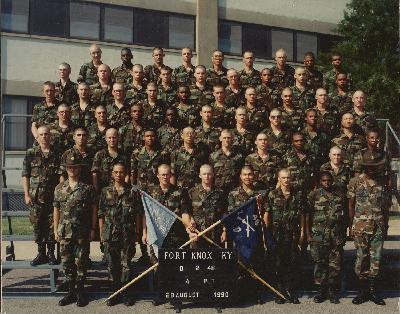
Out of all the martial arts available, should ‘Boxing’ be used in hand-to-hand combat training for American soldiers who occupy combat arms roles? These are military occupations that have direct contact with enemy combatants. This especially pertains to infantry, military police, and special forces. While there are certainly benefits to boxing, here are my thoughts on why this may not be the best fighting style for troops to train, or even practice.

Comments

Download from Google Play

Download from App Store
 United States