


 Claim Ownership
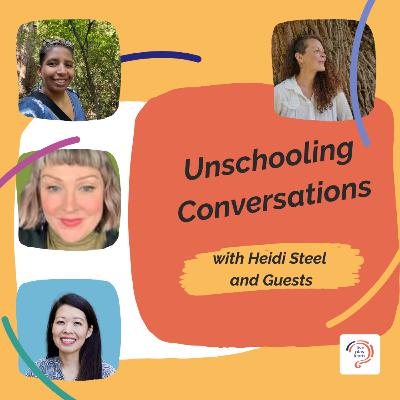
Unschooling Conversations
Subscribed: 87Played: 791
Subscribe

© Heidi Steel
Description
Unschooling conversations with Heidi Steel and guests, discussing life and learning from an Unschooling perspective
47 Episodes
Reverse
Unschooling and Self-Directed Education can often lead people to believe that children are left to do what they want and learn by themselves. Whilst there is space for independence and doing things on their own, children always need a dedicated and supportive adult alongside them. It is apparent though that direct teaching and the task of providing a curriculum, or workbooks is not compatible with the ethos of unschooling and can leave parents feeling like they are doing nothing and unsure of what their role is. This chapter brings together the essential role of the parent or main care giver in practical terms. It discusses key ideas, provides a concrete plan, and leaves parents confident in their role in providing an education for their child.
Chapter 8 Unschooled children are different. Their experience of the world is different, their relationships with family, friends and their community are different, the way they live is different and how they learn is different. Throughout this book I have talked about how school does things and the effect that that can have on our children. I have also talked about how unschooling families approach things and the impact that those choices have on our children. As our children grow up the difference between schooled and unschooled children becomes noticeably bigger and increasingly more obvious, especially for those in the habit of comparing their children with their schooled peers (which I don’t recommend and don’t find overly helpful.) The truth is that schooled children often appear to be doing better, learning more, and getting on in life or growing up, faster than children who are self-directed. Children who are growing and developing according to their own time line play longer, accept support from others for longer (by which I mean that adults are needed to do more for and with their children,) are more relaxed about taking exams or have a broader view when it comes to the pressures and expectations that others put on them and are often clearer about what they want to do and how they want to do it. Their growth and development is noticeable in other ways and the way that we relate to and support our child changes too. Here’s what you can expect through the seasons of unschooling.Chapter 9Here I address the three most common questions that I am asked: How will my teen get GCSE’s if I deregister them from school? I am worried that my child won’t have any friends if we Home Educate, and ‘when you say, ‘unlimited screen time’ you don’t mean that they should be allowed to play on their tablet all day, do you?’ Taking my observations from over 20 years’ experience in education, more than twelve of those in the unschooling community, I bring a different perspective to each of these questions, re-evaluating our priorities for our young people, shifting our thinking, and questioning the dichotomy of thought in our society.
It is not uncommon for children to leave school carrying strong negative feelings about reading and those who have never been to school may not show an interest in learning to read much later than their schooled peers. The interview in this chapter draws on the experience of one family with two children, one of whom initially attended school and came to unschooling with significant trauma, and the other has always been unschooled. Both are now able to read. The question that this chapter asks is, what do children really need to be able to learn to read? Drawing on the research from Harriet Patterson, Alan Thomas, and Peter Grey it looks at how learning to read in unschooled families happens and provides a framework for parents with a different approach to learning to read.
It’s difficult to let go of curriculums and to see how learning can happen without them. It’s not a surprise, it is the way that we were taught, it is the way that most children are taught, and it is the way that gives us some concrete assurance that learning is happening, and our children are moving forwards. When we don’t use a curriculum, or our children aren’t interested in formal lessons (they want to play all day because they are children) their learning appears chaotic, or it feels impossible to see what they are learning. This chapter describes two models for learning and introduces techniques for mapping learning journeys in unschooled children. It outlines how learning happens without a curriculum, helps parents to see the learning, and provides reassurance that children can live and learn naturally.Including guest appearance from Nicola Leyland who shares her family story in the book and joins me to talk about trusting the process and our child.
This chapter challenges the value and importance of play for our children’s health and development. Beginning with redefining play and what it means to children, providing reasons for play to exist in abundance beyond the early years and equipping parents with the tools they need to be confident in the learning that is taking place (whilst our child is building with Lego or playing with dolls) and describing how that play evolves during adolescence and into adulthood.
It’s not uncommon to want to invest in curriculums, tutors, and online programmes as soon as we start home educating. Unschooling calls you to resist the urge to do this and to allow time to recover from your school experience, move away from relying on professionals telling you what to learn, when and how, and move towards increased autonomy, and a self-determined path. It includes tips on how to support your child’s journey from extrinsically motivated learning to intrinsically motivated learning, key signs to look for that they are moving in the right direction, and a guide to help you stay the course.
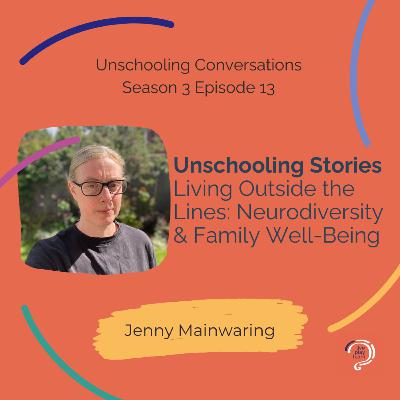
In this episode of "Unschooling Stories: Living Outside the Lines," Heidi Steel sits down with guest Jenny to share an authentic, hope-filled journey through unschooling and supporting neurodivergent children at home. Together, they discuss the decision to deregister from traditional schooling after burnout, and the practical day-to-day strategies their families use to thrive outside the conventional system. Heidi and Jenny open up about navigating mental health challenges, using sensory tools, fostering social connections, and the power of listening to your instincts as a parent. Honest, insightful, and richly detailed, this conversation offers valuable encouragement and practical tips for anyone exploring unschooling and looking to support children’s well-being.Podcast Notes:The decision to leave mainstream education: burnout, anxiety, and advocating for your child’s mental healthWhat “cocooning” looks like: low-demand environments, comfort, and removing unnecessary pressuresCreating a sensory-friendly home: swings, trampolines, crunchy snacks, white noise, and flexible bedtime routinesChild-centred learning and embracing interests whatever they may be.Using VR and technology to ease anxiety and prepare for new experiencesNavigating family and social judgment: trusting yourself and focusing on your own child’s needsReintroducing social activities: finding the right time, place, and support for outingsThe positive impact of collaboration, flexibility, and authentic family dialogueReal-life success stories: increased well-being, renewed hope, and adventures beyond school ResourcesFind the Unschooling Village Hub and resources for unschooling families: liveplaylearn.orgThank you for listening to Unschooling Conversations. If you enjoyed this episode, please like, subscribe, and share - it helps towards increasing the chances that you will see a post on future episode releases and spreads the love.
Have you ever learnt a new skill? Did you manage to do it without someone telling you that you had to or force you to learn it in a way that wasn’t working for you? The school approach to learning is only one way to learn. School is not the only way. And school type learning is not the only way. For many this is the beginning of unlearning. Here we are not only unlearning what we thought we knew but re-learning some educational ideas together. Coming to a realisation that there must be another way. The beginning of discovering that there are other ways to learn.Learning doesn’t have to look like school, in fact developmentally school type learning is not the optimal way of learning.This chapter opens up the world of unschooling by introducing the idea and what it is.
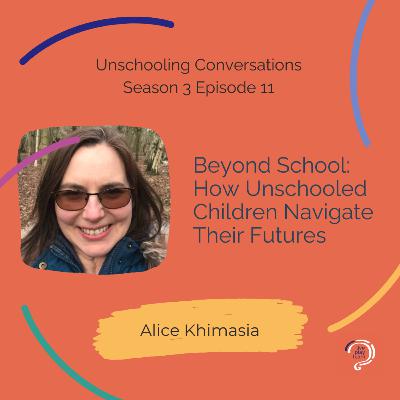
Episode Overview:In this episode of Unschooling Conversations, host Heidi Steel is joined by returning guest Alice Khimasia to explore how unschooled children transition into adulthood. Both share personal stories and reflect on evolving family dynamics, shifting educational landscapes, and the lasting impact of self-directed learning.Key Topics Discussed:Personal updates: Changes in Alice and Heidi’s families, including children moving out, volunteering, and new interests.Navigating transitions: How unschooled children find their paths as they approach adulthood, and the non-linear, organic nature of their journeys.Alternative pathways: Apprenticeships, volunteering, non-traditional routes to degrees and careers, and the importance of following personal interests.Lifelong learning for all: The ongoing process of learning and adapting, not just for children but for parents as well.The importance of mentorship, community, and diverse milestones, rather than rigid educational timelines.Parent reflections: Modeling adaptability, embracing uncertainty, and finding joy in watching children take the lead.Listener Takeaways:There is no single pathway to successful adulthood for unschooled children; self-knowledge, agency, and confidence are key.Community support, mentorship, and real-life examples can reassure and inspire families at all stages.Trusting the process and permitting organic growth often yields surprising and positive outcomes.Alice Khimaisahttps://organic-education.co.uk/https://linktr.ee/alicekhimasiaResourcesFind the Unschooling Village Hub and resources for unschooling families: liveplaylearn.orgThank you for listening to Unschooling Conversations. If you enjoyed this episode, please like, subscribe, and share - it helps towards increasing the chances that you will see a post on future episode releases and spreads the love.
Your child is not broken or wrongSome children find it easy to comply, others excel at it. Listening to instructions, remembering the rules, and controlling their emotions and behaviours. For others it takes significantly more effort. Sometimes the effort they put in all day means that the falling apart happens at home. There is no time for homework. There is only time for crying, watching TV, or bubbly baths. Hours of recovery and exhaustion from the effort of ‘being good’ all day.It is often our child that alerts us to their being something amiss with going to school and when they are home educated, they become even more vocal about what they want to do and what they don’t want to do (this is okay, they should!)Chapter Two is where we first introduce the ideas of radical acceptance, trusting your child, and embracing the wider definition of education as we attend to your child’s emotional well-being, health, sense of self and neurological differences, alongside academic progress.And we lean into the idea that your child s okay just the way that they are.
School shapes our views about education and learning. Most of us have been to school and have heard the messages on repeat about the need to pay attention, get top marks, and pass exams. It is culturally part of our society, governs our days and family life, and for the most part is our only experience of education. School was built and designed for a reason and there have always been signs that school isn’t for everyone. Children up and down the country are telling us that school is stressful, and irrelevant, and parents are questioning behavioural policies and the developmental appropriateness of some of school’s requirements. It doesn’t change the fact that choosing to do something different, to take full responsibility for your child’s education, is a big decision. Chapter One starts at the beginning: why does school exist? how can you know that school isn’t for your child? And is it possible for you to do something different?My book, School isn’t for Everyone (and what you can do instead,) is a book that opens up the world of self-directed education and unschooling to parents. It combines theory and practice whilst being grounded in the reality of being with your child day in and day out. It addresses the key concerns and questions that parents have when they first discover unschooling and at the same time provides the tools that are needed for parents to begin following this approach at home. Ultimately it leaves parents confident in their own abilities to educate their children in a way that (I believe) is quite magical.When parents begin to look at their options and they discover home education then a door opens into another world. A whole world of possibilities, and one of those is unschooling, a way of living and learning together as a family without the influence of school.
Heidi Steel is joined by Esther Jones in this episode of Unschooling Conversations—author, mindfulness teacher, and unschooling parent—to explore the transformative journey of unschooling, both for children and parents. Together, they discuss Esther’s new book, The Parent’s Handbook to Unschooling Yourself: A Mindful Guide to Embracing a New Way of Living and Learning with Your Child, and share candid reflections on the challenges and rewards of stepping outside the mainstream education system.Chit chat circles around:Esther’s personal journey from traditional schooling to unschooling and how it shaped her family’s lifeThe emotional and psychological challenges parents face when choosing unschoolingStrategies for balancing self-care, personal hobbies, and the demands of parentingThe importance of self-compassion and mindful presence in the unschooling processHow unschooling fosters deep personal growth, self-awareness, and healing for parentsThe role of community and connection in sustaining the unschooling journeyPractical tips for creating a supportive home environment and modelling healthy habits for childrenInsights from Esther’s book and her work with unschooling familiesResources Mentioned:Esther’s website: esther-jones.com – Find her book, blog, podcast, and moreThe Parent’s Handbook to Unschooling Yourself (available on Amazon and from publisher Jessica Kingsley)Heidi’s community and resources for unschooling families: liveplaylearn.orgEsther’s podcast: The Unschool SpaceGuest information:Esther Jones is an unschooling mother of three, founder of the The Unschool Space podcast and author of the recently published The Parent’s Handbook to Unschooling Yourself. Esther was led into unschooling by her children, who have helped her unravel years of conditioned beliefs around parenting, children, learning and neurodiversity. Today, she supports other parents in transforming their mindset and building a life beyond traditional schooling in which their children and themselves can thrive, using mindfulness and self-compassion as the foundation tools for change.You can find all her work at www.esther-jones.comWhether you’re new to unschooling or a seasoned home educator, this episode offers heartfelt wisdom, practical advice, and inspiration for embracing a more mindful, compassionate approach to parenting and learning. Listen now and join the conversation!Thank you for listening to Unschooling Conversations. If you enjoyed this episode, please like, subscribe, and share - it helps towards increasing the chances that you will see a post on future episode releases and spreads the love.
In this episode of "Unschooling Conversations," Heidi Steel is joined by clinical psychologist and author Naomi Fisher to explore the topic of burnout in children, particularly those moving beyond school and exploring unschooling approaches. Together, they discuss:What burnout looks like in children and how it differs from adult experiences.Early warning signs, such as loss of curiosity, flatness, and withdrawal.The factors that contribute to burnout, including individual temperament, life events, and school environment.The importance of removing pressure and creating a nurturing, low-stress home environment for recovery.Practical strategies for parents, including relationship repair, being present, and gently reintroducing opportunities for curiosity and engagement.The non-linear nature of recovery and recognising the signs that things are changing.The value of community support and sharing experiences with others.Naomi also shares insights from her new book, "The Teenager’s Guide to Burnout," and both hosts reflect on their personal journeys and the unique opportunities unschooling families have to support healing and growth. The episode offers hope, practical advice, and reassurance that recovery from burnout is possible, with an emphasis on patience, empathy, and trust in the process.Connect with NaomiDr Naomi Fisher is a clinical psychologist, author and speaker specialising in parenting, mental health issues in children, autism and trauma.websiteFacebookInstaSubstackConnect with Heidi and discover the blog, courses and the Unschooling Village Hub at http://liveplaylearn.orgFollow on FacebookTune in for insight, practical tips, and encouragement.Thank you for listening to Unschooling Conversations. If you enjoyed this episode, please subscribe, leave a like, and share.
Today I'm chatting with Melissa Crockett-Joyoue from New Zealand. Melissa and her partner have two neurodivergent children and they came to unschooling after their son had an extremely challenging time at school. She co-hosts the Unschooling Summit and holds the Weave online community for unschooling parents of neurodivergent children.In this episode, we have an honest and heartfelt conversation about the realities of unschooling—especially for neurodivergent families. Together, we share our personal journeys, the challenges of leaving traditional education, and the pivotal role that community and connection play in supporting both parents and children.Topics discussed include:Why traditional schooling doesn’t work for every child, particularly those who are neurodivergentThe emotional and practical challenges of transitioning to unschoolingThe importance of building flexible, inclusive support networks—both online and offlineHow self-care and parental well-being are essential for family thrivingPractical tips for finding connection, support, and resources as an unschooling familyWhether you’re considering unschooling, already on the journey, or supporting someone who is, this episode offers validation, encouragement, and a wealth of lived experience.Connect with Melissa and learn more about the Weave community:https://www.instagram.com/weave_ndhttps://www.instagram.com/mama.weavesConnect with Heidi and discover the blog, courses and the Unschooling Village Hub at liveplaylearn.orgTune in for warmth, empathy, and practical wisdom on creating a path that works for your unique family.Thank you for listening to Unschooling Conversations. If you enjoyed this episode, please subscribe, leave a like, and share.
Unschooling Conversations Podcast - Episode: Doing Things Differently with Amanda Diekman In this thought provoking episode, I sit down with Amanda Diekman, author of "Low Demand Parenting," for a transformative conversation about radical acceptance, deschooling, and reimagining family dynamics.You will find:The power of radical acceptance in neurodivergent familiesHow to drop demands on yourself and your childrenReframing "challenging" behaviours as valuable communicationThe importance of self-advocacy for both parents and childrenWhat You'll Discover:Why productivity doesn't define human worthPractical strategies for creating a low-demand family environmentHow to unlearn societal expectations about parenting and learningThe circular nature of deschooling - how parents and children learn togetherAbout Amanda Diekman: Amanda is a mother of three, living in an intentional community in Durham, North Carolina. She's the author of "Low Demand Parenting" and passionate about supporting neurodivergent families in breaking cycles of burnout and shame. Connect with Amanda: http://www.amandadiekman.com/http://www.instagram.com/lowdemandamandahttp://www.facebook.com/lowdemandamandaListener Challenge: This week, practice radical acceptance. Choose one area where you typically place demands on yourself or your children, and instead, approach it with curiosity and compassion. Join The Unschooling Village Hub: Exploration, witness, and healing for your unschooling journey https://liveplaylearn.org/unschooling-village-hub/ Thank you for listening to Unschooling Conversations. If you enjoyed this episode, please subscribe, leave a review, and share with a friend who might need to hear this message.
In this powerful conversation, Heidi Steel and Alice Bramhill dive deep into the transformative world of self-compassion, unschooling, and neurodivergent family life. They explore how breaking free from traditional educational and societal expectations can lead to more authentic, compassionate living.Key Highlights:The challenges of unschooling neurodivergent children.Deconstructing, deschooling, and decolonising societal expectations about education and success.Practical strategies for developing self-compassion.The importance of curiosity and permission in personal growth.Guest Bio:Alice Bramhill - Psychotherapist, mental health nurse, and unschooling parent specialising in neurodivergent can be found atAliceBramhill.co.uk and on Instagram: @AliceBramhillTop Takeaways:Practice daily self-check-insChallenge your inner criticGive yourself permission to be curiousRecognise that personal growth is non-linear"The way we show up at home is how we change the world."
Heidi Steel talks with Iris Wong about her unschooling journey, neurodivergence, and supporting children's unique learning experiences.Highlights:Navigating Neurodivergent Unschooling: Challenges traditional educational models that don't support neurodivergent childrenRecognising and Healing from Educational Burnout: Iris's son experienced early school burnout, leading them to unschoolingGaming as a Learning Platform: Discusses gaming as a valuable learning and exploration toolExecutive Functioning and Neurodiversity: Emphasises the importance of validating children's experiences and providing autonomyGuest Bio: Iris Wong is a late-diagnosed autistic and ADHD parent, speech therapist, and executive functioning coach from Northern California. She's unschooling two children and brings a compassionate, neurodivergent-affirming perspective to education.Connect with Iris: https://eftoolkit.com/Listener Takeaways:Education can look different for every childSupporting a child's interests is crucial to their learningNeurodivergent children need flexible, understanding environments
In this episode of Unschooling Conversations Essie Richards talks about the real journey of unschooling beyond the Instagram moments. Embracing the entire spectrum of experiences is key to a successful education approach and leaning into the complex, nuanced journey that includes both beautiful moments and challenging times.Key Highlights:Exploring the authentic challenges and experiences of unschoolingBreaking down the myth of constant joy Navigating neurodivergence and family learningMain Discussion Points:1. The Pressure of PerfectionChallenging the narrative that unschooling must always be joyfulRecognising the importance of embracing difficult momentsUnderstanding that not every learning experience is Instagram-worthy2. Community and SupportThe critical role of supportive unschooling communitiesSharing real experiences and challengesFinding validation through shared experiences3. Neurodiversity and UnschoolingHow ADHD impacts perception and interpretation of learningThe importance of flexibility and understanding individual learning stylesDecolonising educational expectationsYou can find Essie and her offerings in the following places:https://www.instagram.com/unschoolingcircle/https://discocircle.mn.co/https://www.instagram.com/essiejrichardshttps://www.essierichardscoach.com/
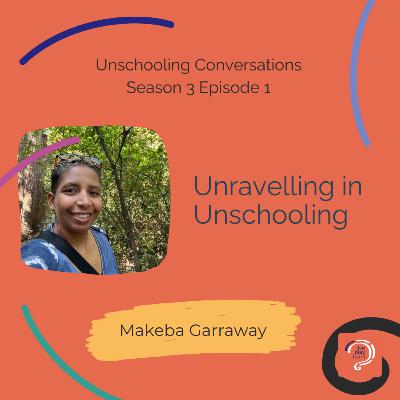
Unravelling in Unschooling - A Conversation with Makeba GarrawayIn this deeply personal and insightful conversation, Heidi Steel and Makeba Garraway explore the concept of "unravelling" - a metaphorical journey of questioning, discovering, and transforming personal beliefs and societal systems.This episode is accompanied by a sensitivity warning as we discuss the recent shooting and subsequent death of Victor PerezKey Themes:The Metaphor of UnravellingCompared to pulling a thread in a knitted sweaterVoluntary process of questioning and explorationEmbracing the messiness of personal growthProfessional and Personal TransformationsMakeba's transition from doctor to full-time unschooling parentChallenging traditional career and education narrativesDiscovering personal interests and passionsUnschooling and System QuestioningChallenging educational normsSupporting children's autonomyAddressing intersectionality in parentingNavigating Cultural and Social ExpectationsDiscussing race, neurodiversity, and safetyCreating safe spaces for childrenHaving difficult conversations about systemic challengesPersonal Growth and Self-DiscoveryLearning to trust intuitionValuing internal validation over external expectationsEmbracing continuous learning and changeTakeaways:Unraveling is a lifelong, non-linear journeyCuriosity and compassion are essentialCommunity support is crucial in personal transformation
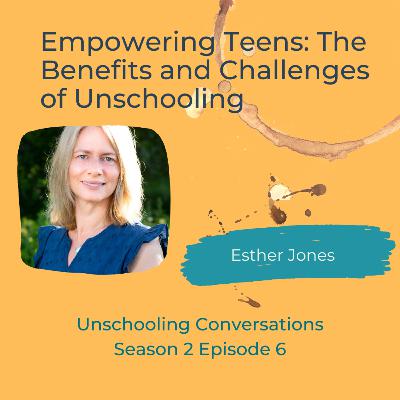
The teenage years are undoubtedly a whole new phase even for unschooling parents. We come equipped with unschooling principles but they take on a whole new meaning as your young people naturally develop, grow, and change in new ways.
Heidi Steel is joined in this episode by Esther Jones from
Esther Jones | Mindful parenting and learning beyond school to explore unschooling through the teenage years. We share the importance of trusting teenagers' agency and allowing them to take ownership of their learning and future choices. We compare our experiences with guiding teenage children towards independence and self-discovery, while also respecting their limits and autonomy. We discuss the importance of flexibility and adaptability in navigating these paths, and highlight the need to support teenagers in pursuing their interests and passions in ways that they choose and are suitable for them.
2.30 Expectations for unschooling in the teen years
6.30 When your teen meets the wider world and outside expectations.
7.35 Moving naturally towards independence
10.30 Experiencing college as an unschooler
13.01 Different routes and learning pathways
19.04 How can we support our teens who are studying GCSE’s at home
21:40 Always about relationship and open communication
24.00 The challenges that parents of unschooled teens face
28.30 Finding one’s true path in life

Comments

Download from Google Play

Download from App Store
 United States