


 Claim Ownership
Tech Can't Save Us
Subscribed: 11Played: 266
Subscribe

© Literal Humans
Description
Every week, hosts Paul David and Maya Dharampal-Hornby sit down with founders, CEOs, and innovators at mission-driven tech companies to discuss how tech can help solve the most pressing issues of our time— and how to avoid losing sight of the humans it affects.
192 Episodes
Reverse
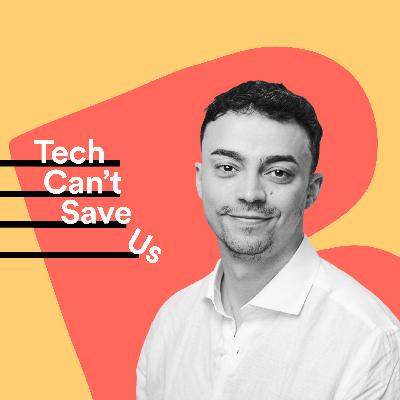
This week on Tech Can’t Save Us, host Paul David is joined by Leo Crowe, the co-founder and CEO of Souk, a newly launched AI platform transforming how companies build and scale channel partnerships. Selected for Antler’s 2025 London cohort from over 150,000 applicants, Leo brings a wealth of experience from leadership roles at Deel and Papaya Global to solve the age-old inefficiencies of partnership management.They discuss the rising importance of partner-led growth, noting that giants like Salesforce and HubSpot now derive over 50% of their revenue from partnerships. Leo explains why these relationships often fail, citing that historically, 9 out of 10 partners never refer a single lead due to friction in finding, activating, and paying them.Find more about Souk here: joinSouk.comFollow Leo Crowe here: https://www.linkedin.com/in/leo-crowe-457815121/
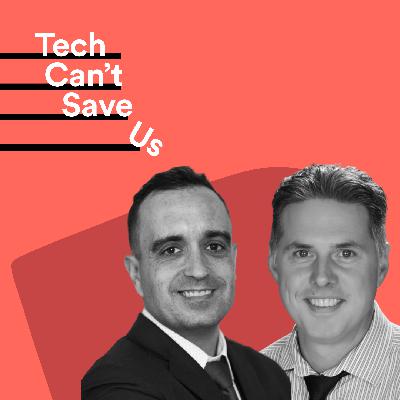
This week on Tech Can’t Save Us, host Paul David is joined by Robert "Robby" Cobbs, CEO and founder, and Kyle Sumrow, director of development at TechMySchool. As the Caribbean’s leading EdTech consulting nonprofit, TechMySchool serves over 40 schools across Puerto Rico, the U.S., and internationally, helping them modernize systems and create student-centered learning environments.They discuss the fundamental disconnect in modern education, where schools often have more technology than ever but feel overwhelmed and underprepared to use it effectively. Robert and Kyle explain how educator hesitation and a "retreat from technology" driven by parental concerns about screen time are shaping the current landscape.Key conversation points include:
Individualized Tech Plans (ITPs): How TechMySchool uses a non-judgmental, data-driven approach to diagnose school needs across educational systems, adult learning capacity, and student empowerment.
The "Flock Leader" Program: A sustainable model that pays stipends to teachers to step into leadership roles, ensuring schools build long-term internal savvy rather than relying on one-off workshops.
The Puerto Rico Context: The unique challenges facing students in Puerto Rico, who often lack access to basic infrastructure like public libraries and enter the continental U.S. workforce several grade levels behind their peers.
Leading Through Curiosity: Why the most successful school transformations happen when leadership prioritizes a growth mindset and models a love of learning for their students.
Robert and Kyle also share insights from their international careers—spanning from Saudi Arabia to Switzerland—and explain why their "terrible business model" of trying to work themselves out of a job is the most ethical way to support schools.Find more about TechMySchool here: https://techmyschool.orgRobert Cobbs: https://www.linkedin.com/in/robertcobbs/Kyle Sumrow: https://www.linkedin.com/in/kyle-sumrow-869516183/
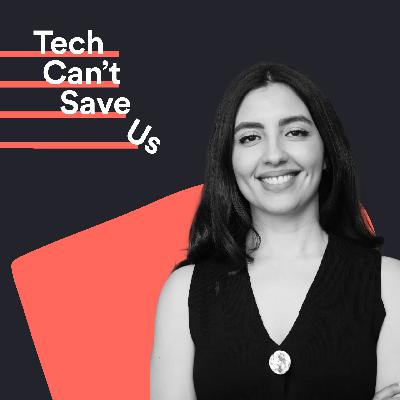
This week on Tech Can’t Save Us, host Paul David is joined by Asmaa Bencherif, founder of Lori. Lori is an AI operating system designed to make real-world patient stories and outcomes usable at scale, helping individuals find health products that genuinely work in a crowded and often untrustworthy market.Asmaa shares her personal journey of being diagnosed with an autoimmune condition and the difficulty of navigating vague online reviews and unverified forums while trying to manage her health outside the doctor's office. They discuss how Lori addresses these challenges by asking the right questions at the right time to generate structured, contextualized feedback from verified buyers.The conversation covers:
The Power of Storytelling: How Lori turns personal health narratives into searchable data assets and short-form content for brands.
Trust as Currency: Partnering with science-backed companies in sectors like Neurotech, SleepTech, and FemTech to ensure a high standard of proof.
Ethical AI & Compliance: Navigating strict regulations to ensure patient testimonials are safe and do not make unsubstantiated medical claims.
Intentional Growth: Asmaa’s philosophy on "growing slow" to maintain data integrity and protect the customer relationship during her current £600,000 pre-seed fundraising round.
Asmaa also highlights the shift toward direct-to-consumer medical devices and why a trusted filter is necessary to reduce the "trial and error" often experienced by those living with chronic conditions.Find out more about Lori here: https://lori.healthFollow Asmaa Bencherif here: https://www.linkedin.com/in/asmaa-bencherif
This week on Tech Can’t Save Us, host Paul David is joined by Galen Wolfe-Pauly, co-founder of Tlon. Tlon is a company radically reimagining the internet's foundation to create a simpler, more personal computing experience.They discuss the structural flaws of the modern internet, where users rely on centralized identifiers and servers they do not own, leading to issues with privacy, data mining, and a lack of digital permanence. Galen explains how Tlon addresses these failures through a peer-to-peer network of nodes, where every individual owns their own cryptographic identity and "virtual machine".The conversation covers:
Digital Sovereignty: Why owning your entire computing stack is essential for building products that truly serve people.
Architecture & Longevity: How Galen’s background in architecture influences his vision for digital tools that can last for decades or even centuries.
The Tlon Messenger: A look at their current product—a highly customizable, extensible "super app" that allows communities to run their own servers.
Craftsmanship in Software: Why the next "battle" on the internet is shifting from mediocre, ad-driven platforms to high-quality, carefully crafted digital environments.
Galen also shares the immense technical challenges of building a new programming language and operating environment from scratch and why Tlon’s mission to create software that outlives its creators provides a deeper sense of purpose.Find more about Tlon here:https://tlon.io/Follow Galen Wolfe-Pauly here:https://www.linkedin.com/in/galenwolfepauly/
This week on Tech Can’t Save Us, host Paul David is joined by Richard Savoie, Founding CEO of Adiona, an award-winning AI-powered delivery optimization platform that is reinventing how cities move goods. As urban populations grow and delivery volumes explode, the "last mile" has become the most expensive, complex, and emissions-intensive part of the supply chain.They discuss the "cracks" in modern logistics, where the loss of batching efficiency makes individual home deliveries incredibly costly for retailers. Rich explains how Adiona’s AI engine helps fleets deliver up to 87% faster and 50% cheaper by automating complex dispatch decisions that were traditionally handled manually with paper maps and spreadsheets.The conversation covers:
The Sustainability Challenge: Why transport is predicted to be the highest single emitting industry by 2030 and the specific difficulties of electrifying commercial fleets at scale.
Digital Twins and Simulations: How Adiona uses historical data to help retailers predict driver needs for peak seasons like Black Friday.
The "Knowledge" of AI: Moving beyond human limitations to dynamically prioritize deliveries based on revenue and profit margin during disruptions like snowstorms.
Growth and Financing: Rich’s journey from failing to raise VC funds for a commuting app to finding success with a mission-driven, debt-financed model for logistics.
Rich also shares insights on the psychological barriers to automation in large enterprises and why he believes the convergence of AI, robotics, and quantum computing offers a path toward a better world for the most vulnerable.Find more about Adiona here:https://www.adionatech.com/Follow Rich Savoie here:https://www.linkedin.com/in/richsavoie/
This week on Tech Can’t Save Us, host Paul David is joined by Connor Mason and Glenn Stephenson, co-founders of Fluid Focus, a Belfast-based company rethinking our relationship with technology. With research showing the average adult spends nearly a third of their waking hours—and Gen Z over six hours a day—on their smartphones, Fluid Focus aims to flip the dynamic from tech consuming our lives to tech enhancing them.They discuss the alarming "attention economy" where products are designed to monetize human focus, leading to fractured productivity, increased anxiety, and a "loneliness epidemic" as physical socialization declines. Connor and Glenn share how their background in big tech and corporate consulting revealed a shared struggle: the inability to focus for more than a few minutes without compulsively reaching for a phone.The conversation covers the Fluid Focus app’s innovative approach, which combines:
Deep Work Tools: One-click focus sessions that block distracting apps and utilize curated "focus music" from global leader Mindstream to keep users on task.
Gamification and Incentives: A system where users earn "Fluid Coins" for focus sessions, which can be used to enter wellness raffles or provide days of education for children through the charity Mary’s Meals.
Data-Driven Habits: Passive blocking rules (like "no social media until 10,000 steps") and tracking tools for mood and productivity.
Glenn and Connor discuss their strategic move to partner with academic institutions and workplaces rather than competing in the crowded consumer market, aiming to create a "focus operating system" for the modern world.Find more about Fluid Focus here: https://www.fluidfocus.app/Connor Mason:https://www.linkedin.com/in/connor-mason-2b347b128/Glenn Stephenson:https://www.linkedin.com/in/glenn-stephenson-1297849a/
This week on Tech Can't Save Us, host Paul David is joined by Jinesh Vohra, founder and CEO of Sprive, a UK-based fintech on a mission to help homeowners pay off their mortgages years earlier and save thousands in interest.The conversation dives deep into the structural flaws of the UK mortgage system, where high property prices relative to salaries have forced many into 30 or 40-year mortgage terms. Jinesh highlights the sobering reality that millions of people are now on track to carry mortgage debt well past the age of retirement. He shares his personal journey of frustration with traditional banking—ranging from the manual slog of tracking overpayments on Excel spreadsheets to the "nightmare" nine-month process of actually moving into a home in the UK. This personal friction, combined with a 14-year career at Goldman Sachs, inspired him to build a consumer-centric solution that empowers homeowners to take back control.Jinesh explains how Sprive differentiates itself by making mortgage reduction a seamless part of daily life through its "Shop Away Your Mortgage" feature. By partnering with major brands like Amazon, Tesco, and Sainsbury’s, the app allows users to earn rewards on everyday purchases that are instantly pushed toward their mortgage balance. These small, frequent contributions benefit from compound interest, often saving the homeowner triple the original reward amount over the life of the loan. The platform further optimizes financial health by using open banking to analyze spending patterns, automatically setting aside spare cash for overpayments only when the user can afford it.The episode also explores the challenges of disrupting an industry dominated by an oligopoly of lenders who lack the motivation to innovate or simplify the customer experience. Jinesh discusses the rigor required to build a trusted fintech brand, including raising £4.5 million in funding and passing strict regulatory checks to ensure zero fraud. He concludes by painting a picture of the life-changing freedom that comes with being mortgage-free, which can unlock new hobbies, career shifts, and the ability to build generational wealth.Find more about Sprive here: https://sprive.com/Follow Jinesh Vohra here:https://www.linkedin.com/in/jinesh-vohra/
This week on Tech Can’t Save Us, host Paul David is joined by Greg Freeman, founder and CEO of Data Literacy Academy, an organization dedicated to building data-confident cultures within the world’s top companies.They discuss the staggering reality that up to 83% of the workforce is data illiterate, leaving businesses unable to effectively monetize or act upon the billions of dollars they invest in AI platforms and data infrastructure. Greg explains why technology alone cannot solve business problems if the people using it lack the confidence and mindset to make data-led decisions.The conversation covers the critical role of leadership in driving change, the concept of "taught fear" in education, and how Data Literacy Academy uses live learning to transform anxious employees into confident data thinkers. Greg also shares insights on moving industry measurements from inputs and outputs to meaningful outcomes, treating data literacy as a multi-year cultural change rather than a one-off training session and the "champagne problem" of a data-literate workforce surfacing more business use cases than a data office can handle.Find more about Data Literacy Academy here: www.dl-academy.comFollow Greg Freeman here:https://www.linkedin.com/in/gregdata/
This week on Tech Can't Save Us, host Paul David is joined by Matthew Whyatt, founder and chief strategist at TechTorque, a consultancy that helps B2B software and SaaS companies sharpen their go-to-market strategies, scale revenue, and build predictable sales systems.They discuss how AI is fundamentally reshaping B2B software sales while emphasizing that great selling isn't dying, it's evolving. With over 25 years in software sales and more than $100 million in tech sales across startups and global markets, Matthew shares why AI won't replace salespeople but will eliminate lazy approaches and amplify the performance of skilled reps.The conversation covers the critical importance of bio-led qualification over demos, why hyper-personalization is now essential even for lower-priced products, and how sales teams need to invest in empathy and structured frameworks rather than just adding more AI tools. Matthew also reveals his approach to selling diagnosis before solutions, the power of scripting in sales, and why the best salespeople will become even more valuable in the AI era.Find more about TechTorque here: https://techtorque.coFollow Matthew Whyatt here: https://www.linkedin.com/in/matthewwhyatt
This week on Tech Can't Save Us, host Paul David is joined by Mijke van Ballegooijen, CEO of BYBORRE, a pioneering textile innovation company based in Amsterdam that's redefining how fabrics are designed, produced, and valued through data-driven design and radical transparency.They discuss the fundamental problems plaguing the global textile industry, which accounts for up to 10% of global carbon emissions, including fragmented supply chains, overproduction, and greenwashing. Mijke explains how BYBORRE is tackling these challenges through true on-demand production, focusing on longevity over recyclability, and providing designers with digital tools that reveal the environmental impact of their design choices in real-time.The conversation covers BYBORRE's strategic pivot from fashion to the interior design market, their innovative software platform that translates any design into knit files for mattress-ticking machines worldwide, and their recent recognition as both an innovation and sustainability startup and the "coolest Dutch brand." Mijke also shares insights on leading through aligned autonomy, building mission-driven companies at scale, and why radical transparency, including their seven-year-old textile passport system, is essential for driving real change in the industry.Find more about BYBORRE here: https://byborre.comFollow Mijke van Ballegooijen here: https://www.linkedin.com/in/mijkevanballegooijen
This week on Tech Can't Save Us, host Paul David is joined by Kirsten Karchmer, CEO of Conceivable, a pioneering digital health company that is revolutionizing precision medicine for fertility and women's wellness. Kirsten's career spans more than two decades transforming how women approach their reproductive health. After running one of North America's largest fertility wellness clinics as the first board-certified reproductive acupuncturist in North America, she founded Conceivable to bring clinical expertise to scale through data science, personalized nutraceuticals, and lifestyle interventions.Kirsten explains why the current fertility care system is fundamentally broken—pushing women toward expensive IVF and IUI treatments without addressing the underlying health issues that impact their ability to conceive and stay pregnant. She argues that 75-80% of fertility challenges stem from lifestyle factors like sleep, nutrition, stress, and behavioral health, which can be addressed for a fraction of the cost of traditional treatments. Rather than using fertility interventions to override the body's warning signals, Conceivable helps women understand and resolve root causes, improving not just fertility outcomes but long-term health.The conversation explores Conceivable's innovative approach: an AI-powered "operating system for women's health" featuring a virtual care team that includes therapists, nutritionists, chefs, and formulators who provide daily, personalized support. Using predictive analytics, wearable data, and individualized supplement formulations, the platform addresses each woman's unique health profile rather than offering generic fertility advice. Kirsten shares insights from building the company, including a previous failed attempt in 2016, her breakthrough growth on TikTok after advice from investor Gary Vaynerchuk, and why authentic customer connection through daily live Q&A sessions shaped the product's development.Paul and Kirsten dig into women's health innovation, the dangers of tracking apps that provide data without actionable guidance, the importance of building products people genuinely love, and why behavioral health interventions are more effective than supplements alone. They also discuss Kirsten's book Seeing Red, which tackles how menstrual health became stigmatized, and her vision for an operating system that supports women across their entire reproductive lifecycle.Find more about Conceivable here: https://www.conceivable.com/Follow Kirsten Karchmer here: https://www.linkedin.com/in/kirsten-karchmer-0139808/
This week on Tech Can’t Save Us, host Paul David is joined by Gary Bonilla, Co-Founder of GoodMora, a company pioneering structural intelligence. AI-driven tools that make the hidden architecture of a business visible, measurable, and adaptable. Gary’s career spans newsroom reporting, global brand strategy, and creative leadership at Nickelodeon, where he helped revive icons like SpongeBob SquarePants and Dora the Explorer, and later at Interpublic Group, where he led strategy across multinational portfolios including Nestlé and Unilever.Gary explains why most organisations still treat AI as an add-on (automating content or workflows) while ignoring the structural systems that shape decisions, incentives, creativity, and trust. At GoodMora, he and his team use AI, ontology, and graph technology to map how a business truly functions: where alignment breaks down, where workstreams become “orphaned,” and where strategy fails long before execution. This structural visibility enables leaders to simulate transformations before they spend, turning strategy from guesswork into science.The conversation explores how adaptability has become the defining competitive advantage, why creativity and data must work together (not in opposition), and how brands can evolve from static assets to living systems that sense and respond to real-time signals. Gary also shares insights from GoodMora’s early pilots, including how mapping organisational trust and decision flows uncovered strategic blind spots for a major healthcare group pursuing AI at scale.Paul and Gary dig into leadership, transformation failure rates, the future of brand building, and the role AI will play in collapsing the traditional gap between strategy and execution, enabling leaders to “play” again, rather than manage from the sidelines.Find more about GoodMora here: https://www.goodmora.ai/Read Gary’s white paper on Structural Intelligence: https://www.linkedin.com/pulse/ai-driven-talent-augmentation-empowering-future-edgardo-bonilla-guuie/Follow Gary Bonilla here: https://www.linkedin.com/in/garybonilla1/
This week on Tech Can’t Save Us, host Paul David is joined by Erin Lee, CEO of Flow Neuroscience, the Swedish health-tech company behind a breakthrough in depression treatment: a wearable brain-stimulation headset that offers a safe, evidence-based alternative to traditional antidepressants.
Flow’s device uses transcranial direct current stimulation (tDCS) to gently activate brain regions responsible for mood regulation. In a landmark 2023 double-blind, placebo-controlled trial, Flow outperformed 21 frontline antidepressants, earning a feature in Nature’s “Future of Medicine” edition, an unprecedented milestone for at-home neuroscience technology. Today, Flow has 50,000+ users, is available across 200 clinics and multiple NHS trusts, and has raised nearly $20M to bring new forms of treatment to those who need it most.
Erin shares how the Flow experience works day-to-day, why users often see improvements within the first two weeks, and how pairing brain stimulation with an app-driven behavioral toolkit increases neuroplasticity and supports long-term recovery. She also speaks candidly about public perception, clinician adoption, and why Flow chose the harder, highly regulated path to build trust and clinical credibility from day one.
The conversation expands into Flow’s growth strategy, upcoming global expansion, and Erin’s transition from leadership roles at Google, Uber, and Babylon Health into one of the most personal and emotionally charged spaces in healthcare. She reflects on the influence of her own family’s mental health history, the importance of scientific rigor, and what it means to build a startup where the mission is literally life-changing.
Find more about Flow Neuroscience here: https://www.flowneuroscience.com
Follow Erin on LinkedIn: https://www.linkedin.com/in/erinslee/
This week on Tech Can’t Save Us, host Paul David is joined by Andy Ellwood, founder and CEO of Stretch, the first shopping intelligence platform built to help families save money and make smarter grocery decisions. Andy’s career spans private aviation, startups acquired by Facebook and Google, business development at Waze, and years spent coaching top founders and now he’s bringing that eclectic experience to one of the most universal, everyday challenges: buying groceries.Andy explains why the grocery industry is overdue for reinvention. Despite rising prices and endless choices, shoppers still lack the information parity they now expect in categories like travel, real estate, and healthcare. Stretch solves this by turning individual shopping lists into collective intelligence: shoppers enter their weekly items, and the app instantly shows which nearby retailers offer the best total basket price, often saving families $20–$40 per week.The conversation explores Stretch’s early traction, from thousands joining the waitlist to viral TikTok growth, and how the team is building a massive data moat by connecting cross-retailer pricing in ways the industry never had to before. Andy shares how AI and “agentic commerce” will transform shopping, why Stretch centers dignity and agency for families navigating rising costs, and how his background at Waze shaped his approach to scaling community-driven products.Find more about Stretch here: https://stretchformore.com Download Stretch on iOS or Android by clicking here. Follow Andy Ellwood here: https://www.linkedin.com/in/andyellwood/
This week on Tech Can’t Save Us, host Paul David is joined by Dr. Serge Santos, entrepreneur, investor, and award-winning leader known as The Business Physicist. After deploying over $1 billion in capital during his investment banking and hedge fund career and achieving a multi-million-dollar exit with his previous company, Serge is now tackling one of the UK’s most persistent economic challenges: SME access to finance.
Through Funding Alternative Group, Serge and his team are reimagining how small businesses secure funding when traditional banks say no. Since 2022, the platform has deployed £8M in SME loans and £18M in invoice finance, offering fast, flexible, and human-centred lending for businesses often shut out of conventional systems. Serge explains how open banking allows Funding Alternative to assess risk using real-time data rather than outdated statements, enabling decisions in hours instead of weeks when clients face challenges.
The conversation explores the company’s biggest growth opportunities, the complexities of raising institutional capital responsibly, and how Serge applies his “business physicist” mindset to simplify complexity through rational, systems-based thinking. He also shares why culture is his “ultimate multiplier of success,” and why discipline, transparency, and trust sit at the heart of every funding decision.
Find more about Funding Alternative here: https://fundingalternative.co.uk
Follow Dr. Serge Santos here: https://www.linkedin.com/in/santosserge/
This week on Tech Can’t Save Us, host Paul David is joined by Professor Rob Young, Co-Founder & Chief Science Officer of Quantum Base, a pioneering deep-tech company using quantum physics to authenticate products and stop counterfeiting at the atomic level.
Rob explains how Quantum Base’s flagship technology, Q-ID, a tiny, printed tag containing “atomic-level uniqueness,” delivers provably secure authentication that’s impossible to clone and can be verified by anyone using a standard smartphone. With over half a billion Q-ID tags already produced, the company is tackling a global counterfeiting problem worth $2.8 trillion, including counterfeit medicines that cause more than 1 million deaths annually.
The conversation explores Quantum Base’s journey from university research to becoming a publicly listed company on London’s AIM market, raising £4.8M to scale its technology across industries, from luxury goods and government documents to pharmaceuticals and critical supply chains. Rob also reflects on his 20-year academic career across Cambridge, Tyndall, and Lancaster, how a breakthrough in his PhD work inspired the origins of Q-ID, and why he believes quantum security must be accessible, affordable, and deployable at global scale.
Find more about Quantum Base here: https://quantumbase.com
Follow Rob Young here: https://www.linkedin.com/in/qopto/
This week on Tech Can’t Save Us, host Paul David sits down with John Richardson, Co-Founder and Director of Coaching at MySalesCoach, the fast-growing platform tackling a problem almost every sales leader knows too well: sales reps simply aren’t getting enough meaningful coaching.
John explains why traditional sales management often fails to deliver authentic coaching, outlining the fundamental disconnect between holding reps accountable and creating a safe space for them to grow. MySalesCoach solves this by pairing salespeople with independent, specialist coaches, creating a personal-trainer-for-sales model that has already delivered 5,000+ coaching sessions to more than 100 sales teams.
The conversation digs into how MySalesCoach matches reps to the right expert, how they measure coaching impact through baselines and ongoing evaluation, and why sales qualification remains one of the biggest skill gaps in the industry. John also shares insights into the company’s rapid growth, including £1.1M in recent funding, over £1M in ARR, and new AI-driven tools built to provide real-time sales support without replacing the human coaching experience.
Find more about MySalesCoach here: https://mysalescoach.com
Follow John Richardson here: https://www.linkedin.com/in/johnrichardson11/
This week on Tech Can’t Save Us, host Paul David is joined by Rupert Shaw, founder and CEO of BILRS, a global bill payment platform that allows companies to offer everything from electricity and gas to mobile top-ups and TV subscriptions, all through a single API integration.
Rupert shares how BILRS is tackling one of fintech’s biggest challenges: the “last mile” of cross-border payments. While many remittance companies have digitized the transfer process, billions of users still struggle to convert those funds into everyday bill payments. BILRS bridges that gap, giving economic migrants and their families direct control over how their money is spent, while helping businesses standardize complex payment systems across thousands of local billers.
The conversation explores BILRS’s rapid global expansion into 20+ markets, its partnerships with major players like Al Ansari Exchange in the UAE, and how the company is leveraging embedded finance to deliver transparency, insight, and financial inclusion to underserved populations. Rupert also reflects on lessons from his 20-year career in mobile, gaming, and fintech (from EA to Ding) and how those experiences shaped his vision for a more connected and human-centered payments ecosystem.
Find more about BILRS here: https://bilrs.com
Follow Rupert Shaw here: https://www.linkedin.com/in/rupertshaw
This week on Tech Can’t Save Us, host Paul David is joined by Jason Saltzman, co-founder and CEO of Relief, the first AI-powered consumer debt resolution platform designed to help people tackle the overwhelming credit-card debt crisis.
Jason shares how Relief automates the complex process of negotiating with creditors, helping users save up to 70% on what they owe, while restoring trust, transparency, and dignity to an industry long plagued by hidden fees and predatory models. Using AI, Relief analyzes users’ financial data, identifies optimal settlement strategies, and executes negotiations automatically, allowing anyone to access professional-grade debt relief right from their phone.
The conversation explores Relief’s journey from a $15M Series A to a strategic partnership with National Debt Relief, the largest settlement company in the U.S., enabling the startup to expand nationwide. Jason also discusses his personal mission to democratize access to financial help, his early experiences with debt that shaped Relief’s ethos, and his broader vision for tech that delivers tangible, human-first impact.
Find more about Relief here: https://www.relief.app/
Follow Jason Saltzman here: https://www.linkedin.com/in/jasonsaltzman
This week on Tech Can’t Save Us, host Paul David is joined by Dr. Benyamin Deldar and David Hanbury, the co-founders of Deep Medical, a healthcare startup using AI to tackle one of medicine’s most expensive and overlooked problems: patient no-shows.
Deep Medical’s platform analyzes over a decade of appointment and social data to predict which patients are most likely to miss visits and why. Their explainable AI helps hospitals take early action, from sending targeted reminders to offering transport through partnerships like Uber Health, unlocking millions of new appointments and reducing health inequalities in the process.
Ben and Dave share how a doctor and a data scientist came together (literally matched by an algorithm!) to build tech that makes healthcare more efficient, fair, and humane. They discuss the global scale of the problem, what it takes to earn clinicians’ trust in AI, and how their mission could help eliminate hospital waitlists altogether.
Find more about Deep Medical here: https://deep-medical.ai
Follow Dr. Benyamin Deldar: https://www.linkedin.com/in/benyamin-deldar-951ab3153/
Follow David Hanbury:https://www.linkedin.com/in/david-hanbury-686a3ab/


Download from Google Play

Download from App Store
 United States
Tremor is one of the most unpleasant symptoms of Parkinson's disease. Thus we at Stediwear have developed a new smart technology to help you deal with it. The Stedi-Two gloves feature a magnetic system that moves in the opposite direction of your tremor, reducing hand-shaking and allowing you to perform your activity more comfortably. https://steadiwear.com/
hello, I loved your episode it was super entertaining and I would like to add that Calgee is amazing website I found a similar website too https://naturesageomega3.com/ can you please make a podcast about it I trust your opinion