


 Claim Ownership
Tank Talks By Ripple Ventures
Subscribed: 12Played: 474
Subscribe

© Matt Cohen
Description
Join your host, Matt Cohen, Founder & Managing Partner at Ripple Ventures for weekly conversations with leaders in the startup ecosystem discussing the truth about investing, building and running startups.
tanktalks.substack.com
tanktalks.substack.com
303 Episodes
Reverse

In this episode of Tank Talks, Matt Cohen sits down with Timothy Chen, the sole General Partner at Essence VC. Tim shares his remarkable journey from being a “nerdy, geeky kid” who hacked open-source projects to becoming one of the most respected early-stage infrastructure investors, backing breakout companies like Tabular (acquired by Databricks for $2.2 billion). A former engineer at Microsoft and VMware, co-founder of Hyperpilot (acquired by Cloudera), and now a solo GP who quietly raised over $41 million for his latest fund, Tim offers a unique, no-BS perspective on spotting technical founders, navigating the idea maze, and rethinking sales and traction in the world of AI and infrastructure.We dive deep into his unconventional path into VC, rejected by traditional Sand Hill Road firms, only to build a powerhouse reputation through sheer technical credibility and founder empathy. Tim reveals the patterns behind disruptive infra companies, why most VCs can’t help with product-market fit, and how he leverages his engineering background to win competitive deals.Whether you’re a founder building the next foundational layer or an investor trying to understand the infra and AI boom, this conversation is packed with hard-won insights.The Open Source Resume (00:03:44)* How contributing to Apache projects (Drill, Cloud Foundry) built his career when a CS degree couldn’t.* The moment he realized open source was a path to industry influence, not just a hobby.* Why the open source model is more “vertical than horizontal”, allowing deep contribution without corporate red tape.From Engineer to Founder: The Hyperpilot Journey (00:13:24)* Leaving Docker to start Hyperpilot and raising seed funding from NEA and Bessemer.* The harsh reality of founder responsibility: “It’s not about the effort hard, it’s about all the other things that has to go right.”* Learning from being “way too early to market” and the acquisition by Cloudera.The Unlikely Path into Venture Capital (00:26:07)* Rejected by top-tier VC firms for a job, then prompted to start his own fund via AngelList.* Starting with a $1M “Tim Chen Angel Fund” focused solely on infrastructure.* How Bain Capital’s small anchor investment gave him the initial credibility.Building a Brand Through Focus & Reputation (00:30:42)* Why focusing exclusively on infrastructure was his “best blessing” creating a standout identity in a sparse field.* The reputation flywheel: Founders praising his help led to introductions from top-tier GPs and LPs.* StepStone reaching out for a commitment before he even had fund documents ready.The Essence VC Investment Philosophy (00:44:34)* Pattern Recognition: What he learned from witnessing the early days of Confluent, Databricks, and Docker.* Seeking Disruptors, Not Incrementalists: Backing founders who have a “non-common belief” that leads to a 10x better product (e.g., Modal Labs, Cursor, Warp).* Rethinking Sales & Traction: Why revenue-first playbooks don’t apply in early-stage infra; comfort comes from technical co-building and roadmap planning.* The “Superpower”: Using his engineering background to pressure-test technical assumptions and timelines with founders.The Future of Infra & AI (00:52:09)* Infrastructure as an “enabler” for new application paradigms (real-time video, multimodal apps).* The coming democratization of building complex systems (the “next Netflix” built by smaller teams).* The shift from generalist backend engineers to specialists, enabled by new stacks and AI.Solo GP Life & Staying Relevant (00:54:55)* Why being a solo GP doesn’t mean being a lone wolf; 20-30% of his time is spent syncing with other investors to learn.* The importance of continuous learning and adaptation in a fast-moving tech landscape.* His toolkit: Using portfolio company Clerky (a CRM) to manage workflow.About Timothy ChenFounder and Sole General Partner, Essence VCTimothy Chen is the Sole General Partner at Essence VC, a fund focused on early-stage infrastructure, AI, and open-source innovation. A three-time founder with an exit, his journey from Microsoft engineer to sought-after investor is a masterclass in building credibility through technical depth and founder-centric support. He has backed companies like Tabular, Iteratively, and Warp, and his insights are shaped by hundreds of conversations at the bleeding edge of infrastructure.Connect with Timothy Chen on LinkedIn: linkedin.com/in/timchenVisit the Essence VC Website: https://www.essencevc.fund/Connect with Matt Cohen on LinkedIn: https://ca.linkedin.com/in/matt-cohen1Visit the Ripple Ventures website: https://www.rippleventures.com/ This is a public episode. If you would like to discuss this with other subscribers or get access to bonus episodes, visit tanktalks.substack.com
In this episode of Tank Talks, host Matt Cohen and recurring guest John Ruffolo kick off the new year with a true “only in 2026” combo: a front-row seat to a SpaceX Falcon 9 launch carrying Kepler Communications’ satellites, followed by a hard reality check on Canada’s venture capital slowdown. John breaks down what it felt like watching the rocket, the first-stage landing, and why Kepler’s mission is bigger than a cool space flex: it’s the early shape of space-based data centers and laser-linked networks.From there, Matt and John unpack an RBCx report arguing 2025 was Canada’s worst VC fundraising year since 2016, and why “capital is fungible” is a comforting myth at the seed stage. They dig into how de-globalization and national self-interest are reshaping capital flows, why Canada is getting squeezed by the barbell effect in venture, and what policy levers (like a QSBS-style incentive) could actually restart domestic risk capital. The episode closes with two tension points that rhyme: Nvidia’s $20B Groq (with a Q) deal showing how returns can flow outside Canada, and the escalating political drama of Trump’s DOJ targeting Fed Chair Jerome Powell and what that uncertainty does to markets.If Canada can help put “data centers in the sky,” can it also build the domestic capital base to keep its best companies anchored at home?“A Data Center in the Sky” + Laser-Linked Networks (00:03:07)Kepler’s satellites are positioned as more than comms hardware: think orbital compute + storage + real-time processing, with laser links connecting satellites like a network in space.The RBCx VC Report: 2025 Fundraising Hits a Low (00:05:51)Matt summarizes the report’s headline numbers and why the pain concentrates on emerging managers and the long tail, not the handful of breakout founders who can raise anywhere.“Venture Investing Is Local” in a De-Globalizing World (00:08:39)John challenges the idea that foreign capital will fill gaps at the earliest stages. In this cycle, countries increasingly keep capital for their own ecosystems, making Canada’s domestic shortage more dangerous.The Barbell Effect: Giants and Niche Funds Win, the Middle Gets Crushed (00:10:17)They outline how venture is polarizing into mega-platform funds and specialized micro-funds, while mid-sized generalists get squeezed, and why that dynamic is amplified in Canada.Nvidia’s $20B Groq Deal and Canada’s Return Profile (00:12:36)They break down the Groq (Q) story, Canadian ties among investors and operators, and the bigger question: if LPs can make outsized returns elsewhere, what keeps capital committed to Canada?Trump vs Powell: DOJ Pressure, Fed Independence, and Market Fallout (00:17:38)They react to the reported DOJ move against Jerome Powell, how even Republicans are uneasy about weaponization, and why political pressure campaigns tend to increase uncertainty, not lower it.Why Uncertainty Pushes Rates Up, Not Down (00:19:30)John’s punchline: the intended outcome (lower costs, lower rates) can backfire as markets price in instability, and the Powell timeline may extend into a longer institutional fight.Connect with John Ruffolo on LinkedIn: https://ca.linkedin.com/in/joruffoloConnect with Matt Cohen on LinkedIn: https://ca.linkedin.com/in/matt-cohen1Visit the Ripple Ventures website: https://www.rippleventures.com/ This is a public episode. If you would like to discuss this with other subscribers or get access to bonus episodes, visit tanktalks.substack.com

In this episode of Tank Talks, host Matt Cohen sits down with Michael Platt, CEO of Carma Corp., and lifelong friend, to explore his incredible journey from corporate lawyer to building and selling one of Canada’s leading sub-metering companies.Michael shares how he transitioned from practicing law to launching a self-funded search fund, ultimately acquiring Carma Corp., a family-run business he scaled from 40,000 to over 135,000 customers nationwide. He opens up about the challenges of cold-calling owners, managing a solo search process, and living out of a motel during due diligence, all while learning the ropes of entrepreneurship on the fly.He also dives into the bold decisions that fueled Carma’s growth, from strategic acquisitions like Priority Submetering and Spectrum Building Services to the recent landmark sale to CVC DIF. He reflects on lessons from missed deals, imposter syndrome, and why relationships are the real key to success in M&A.From humble beginnings to leading a national powerhouse, Michael’s story is one of persistence, grit, and lifelong learning. Whether you’re an aspiring entrepreneur, investor, or operator, this conversation offers an honest look at what it takes to go “all in” and build something extraordinary.From Corporate Law to Entrepreneurship (02:45)* Michael’s roots in a family of lawyers, and his early career in corporate tax law.* The “non-merit-based” soft skills learned as a junior lawyer: preparation, punctuality, and clear communication.* The decision to supplement his skills with business courses leading him to a new path in management consulting.The Search Fund Journey: Going Rogue (10:17)* Why Michael chose the self-funded search path over the traditional model for greater flexibility.* The grueling process: building a team of unpaid analysts, sourcing thousands of leads, and the power of relentless follow-up.* The 23-month proprietary pursuit of Carma, including an 8-month stint living in a Lindsay motel to build trust and conduct diligence.Acquiring and Scaling Carma Corp (18:40)* Finding the right capital partner in Terranova Partners.* Stepping in as CEO and fostering a “soft landing” with the existing team.* The acquisition strategy that fueled growth: buying competitors like Priority Submetering and expanding services with Spectrum Building Services.* Scaling from 40 to 225 employees and from 40,000 to 135,000 customer accounts.Navigating a Landmark Sale to CVC DIF (31:44)* Recognizing the right time to sell and the decision to go to market.* The intense, year-long sale process: working with Jefferies, meeting global buyers, and running an auction.* Why CVC Dif was the ideal partner for Carma’s next chapter.* The key takeaway: it takes a deep bench of advisors, investors, and a strong leadership team to reach the finish line.Lessons on Resilience and Building (35:25)* Michael’s pride in what the team built and the people he built it with.* Advice for aspiring searchers: “You have to be all in” and hold yourself accountable.* The life lessons that guided him: “The Man in the Arena” and “This too shall pass.”About Michael PlattMichael Platt is a serial operator and entrepreneur. He is the CEO and visionary behind Carma Corp., a leading sub-metering provider in Canada. After a career in corporate law and management consulting, Michael successfully launched a search fund, acquired Carma, and scaled it dramatically before leading its successful sale to CVC DIF in a landmark deal. He remains dedicated to Carma’s future growth as its CEO.Connect with Michael Platt on LinkedIn: https://www.linkedin.com/in/michael-plattVisit the Carma Corp. website: https://carmacorp.com/Connect with Matt Cohen on LinkedIn: https://ca.linkedin.com/in/matt-cohen1Visit the Ripple Ventures website: https://www.rippleventures.com/ This is a public episode. If you would like to discuss this with other subscribers or get access to bonus episodes, visit tanktalks.substack.com
In this episode of Tank Talks, host Matt Cohen is joined by Avinash Chidambaram, the CEO of Cybrid, to dive into the evolving role of stablecoins in global trade. Avinash, a pioneer in the world of FinTech, shares his journey from working with Blackberry and Interac to leading Cybrid’s mission to bridge stablecoins with traditional banking infrastructure. He discusses the growing importance of stablecoins as a fast, secure, and efficient method of cross-border payments, especially in an era marked by geopolitical tensions. Recurring guest John Ruffolo also joins the conversation to provide his expert perspective on the implications of stablecoin adoption and how it’s reshaping the financial ecosystem globally.With insights into the regulatory shifts happening globally and the potential of blockchain to solve longstanding issues in the financial sector, this episode offers a deep dive into the future of money and its role in cross-border transactions. Whether you’re a fintech enthusiast or a business leader looking to stay ahead of the curve, this conversation is packed with valuable insights.The Evolution of Payments & Stablecoin Adoption (04:55)From his experience at Blackberry and Interac, Avinash discusses the historical challenges of digital payments and how stablecoins are solving the efficiency problem.How Stablecoins Differ from Traditional Banking (06:08)Avinash compares traditional payment systems like Zelle and Interac with stablecoins, highlighting the advantages of decentralization and real-time settlement without intermediaries.The Role of Canadian Banks in the Stablecoin Revolution (10:23)Avinash discusses the role of Canadian banks in adopting stablecoin infrastructure, focusing on how they can enhance cross-border payments and gain a competitive edge.Tokenized Deposits vs. Stablecoins: What’s the Difference? (13:36)John and Avinash explore the distinction between tokenized deposits and stablecoins, examining how both concepts will evolve in the Canadian market and globally.Stablecoin Interoperability & Global Trade (18:17)Avinash elaborates on the need for interoperable stablecoins, ensuring businesses can transact globally without the constraints of traditional payment systems.The Future of Stablecoin Integration with Traditional Financial Systems (22:44)How Cybrid’s infrastructure is designed to bridge the gap between stablecoins and fiat currencies, enabling businesses to transact across multiple stablecoins and blockchains seamlessly.Banks vs. Crypto Platforms: Who Will Win the Stablecoin Battle? (25:59)Matt, Avinash, and John discuss the competition between traditional banks and crypto platforms like Coinbase, debating which will dominate the future of global payments.The Geopolitical and Economic Implications of Stablecoins (35:40)John discusses how stablecoin adoption is becoming a geopolitical issue, with countries like China and the U.S. influencing global trade through their stablecoin policies.The Shift in Financial Infrastructure & What’s Next for Stablecoins (39:50)Avinash predicts the future of stablecoins in financial systems, highlighting how regulations and technological advancements will shape the industry’s evolution.About Avinash ChidambaramAvinash Chidambaram is the co-founder and CEO of Cybrid, a Toronto-based fintech company that specializes in stablecoin infrastructure. With over two decades of experience in financial technology, Avinash has worked with top institutions like RBC, Scotiabank, and Blackberry. Under his leadership, Cybrid has grown rapidly and is playing a pivotal role in enabling faster, more secure cross-border payments through stablecoins.Connect with Avinash Chidambaram on LinkedIn: https://www.linkedin.com/in/avinashchidambaram/Visit the Cybrid website: https://cybrid.xyz/Connect with John Ruffolo on LinkedIn: https://ca.linkedin.com/in/joruffoloConnect with Matt Cohen on LinkedIn: https://ca.linkedin.com/in/matt-cohen1Visit the Ripple Ventures website: https://www.rippleventures.com/ This is a public episode. If you would like to discuss this with other subscribers or get access to bonus episodes, visit tanktalks.substack.com
In the final episode of 2025, Matt Cohen and John Ruffolo reflect on a turbulent year for technology, capital markets, and Canadian innovation, while looking ahead to the forces that will shape 2026. The conversation opens with Canada’s largest private startup round of the year, a $1.76B raise by Toronto based HydroStar Energy Storage, and uses it as a springboard to examine the AI shakeout now underway. John describes the sector as entering a “forest fire” phase, where overfunded and undifferentiated companies fall away, creating room for stronger, more durable players to emerge.Matt and John then explore whether 2026 will finally mark a return of major tech IPOs, or whether the regulatory burden and liquidity options in private markets will keep companies like SpaceX, Stripe, and OpenAI on the sidelines. Despite interest rate cuts, the hosts argue capital markets remain constrained and selective.The discussion shifts to Canada’s strategic priorities, including a growing focus on defense technology viewed through a dual use lens of sovereignty and innovation. As talent emigration rises and domestic risk capital lags, the episode closes with a clear warning. Without addressing capital access, taxation, and long term retention, Canada risks becoming a leaky boat, losing its builders and economic future to the United States.The 2025 AI Shakeout & The 2026 Forest Fire (02:06)John predicts a period of simultaneous “carnage” and opportunity in AI, comparing the market to a forest fire that burns the weak but creates fertile ground for the strong. They debate which companies are the true “sequoias” built to last.IPO or Bust? The Reluctant March to Public Markets (04:57)With rumors swirling around SpaceX, Anthropic, and OpenAI, Matt and John explore why 2026 might see major IPOs. John argues that many are driven not by ambition, but by investor pressure for liquidity, calling it a “panacea” for fund timelines rather than a strategic goal.Rate Cuts & Stagnation: Why Cheap Money Isn’t Fixing Canada’s Economy (07:28)Despite multiple rate cuts in 2025, investment activity remains sluggish. The hosts diagnose a holding pattern for Canada’s economy, where further cuts risk devaluing the dollar without spurring meaningful productivity gains.Bullets, Bombs, and Blockchain: Canada’s New Defense Tech Mandate (08:17)Matt highlights new government funds for defense tech. John reframes the spending as critical for “physical sovereignty” in a tech-driven Cold War, emphasizing the “dual-use” nature of investments in AI, quantum, and satellite technology.Predictions for 2026: Agents, Physical AI, and Nuclear’s Comeback (11:23)The hosts share their forecasts: Matt bets on AI “agents” automating complex workflows and tangible ROI finally hitting enterprise software. John is bullish on “AI meeting the physical world” through robotics and autonomous machinery, and predicts a major comeback for nuclear energy.Canada’s Leaky Boat: The Capital and Talent Retention Crisis (18:32)Addressing record-high emigration, John identifies the twin failures crippling Canadian innovation: a lack of domestic risk capital at scale and an uncompetitive personal tax regime. He warns that without urgent fixes in the next budget, the brain drain will accelerate, with U.S. capital actively pulling companies and founders south.Connect with John Ruffolo on LinkedIn: https://ca.linkedin.com/in/joruffoloConnect with Matt Cohen on LinkedIn: https://ca.linkedin.com/in/matt-cohen1Visit the Ripple Ventures website: https://www.rippleventures.com/ This is a public episode. If you would like to discuss this with other subscribers or get access to bonus episodes, visit tanktalks.substack.com

In this episode of Tank Talks, Matt Cohen and John Ruffolo break down a pivotal week for Canada’s innovation economy. Microsoft’s $7.5 billion investment in Canadian AI and cloud infrastructure sets the stage for a deeper discussion about whether foreign hyperscalers can genuinely support Canadian data and AI sovereignty under U.S. laws like the Cloud Act.John challenges the assumption that scale equals sovereignty, arguing for a more intentional strategy built through government procurement, layered infrastructure, and selective partnerships. The episode also examines Canada’s new Quantum Champions program and the funding directed toward companies Anyon Systems, Xanadu, Photonic, and Nord Quantique, questioning whether current capital levels are enough to prevent Canadian breakthroughs from moving south.Layoffs across the consulting industry surface broader shifts in knowledge work, as information becomes increasingly commoditized in the age of AI. Matt and John discuss how trust, execution, and implementation are replacing traditional advisory models as the real sources of value. The episode closes with a collision of crypto and legacy power, as stablecoin issuer Tether pursues a controlling stake in Juventus, raising new questions about regulation, asset backing, and trust.As foreign capital pours in and domestic funding lags, how much control does Canada actually retain?Microsoft’s $7.5B Canadian AI Investment & the Sovereignty Question (01:04)Microsoft announces a massive investment to expand AI and cloud infrastructure in Canada. Matt and John unpack why foreign capital is welcome, but claims of “sovereign AI” raise serious concerns under the U.S. Cloud Act and data jurisdiction realities.Sovereign Compute Strategy: Procurement Over Promises (04:39)John outlines how Canada could realistically build sovereign compute capacity by breaking the stack into layers, using government procurement to back domestic players, and making intentional choices about allies, chips, and infrastructure.Canada’s Quantum Champions Program: A Signal or a Solution? (07:49)The federal government commits funding to four Canadian quantum startups, including Xanadu. The discussion explores whether milestone-based funding is enough or if Canada risks losing its quantum leaders to U.S. capital markets again.Why Canadian Capital Isn’t Backing Its Winners (09:04)Xanadu’s SPAC decision becomes a case study in Canada’s capital formation problem. John explains why strong companies still struggle to raise meaningful domestic capital and what that means for long-term value creation.Consulting Firms Face Layoffs as Demand Shifts (11:36)McKinsey and other professional services firms prepare for significant job cuts. Matt and John discuss overhiring during COVID, slowing demand, and how AI is compressing the value of information-based consulting.The End of the Traditional Consulting Pyramid (14:07)AI-driven efficiency challenges the apprenticeship model. The conversation explores why implementation and trust now matter more than slide decks and why junior-heavy consulting structures may no longer work.Forward-Deployed Engineers & New Service Models (16:17)From Palantir’s FDE approach to new AI-enabled services firms, Matt highlights how execution-first models are eroding traditional consulting margins and reshaping enterprise problem-solving.Crypto Meets European Dynasties: Tether & Juventus (19:00)Tether’s attempted acquisition of Juventus sparks debate around stablecoin backing, asset quality, and trust. John questions whether a treasury-backed stablecoin should ever be tied to assets like football clubs.Trust as the Core Currency of the AI Era (21:03)The episode closes with a clear takeaway: information is cheap, execution is hard, and trust is everything, from sovereign infrastructure to consulting, investing, and crypto.Connect with John Ruffolo on LinkedIn: https://ca.linkedin.com/in/joruffoloConnect with Matt Cohen on LinkedIn: https://ca.linkedin.com/in/matt-cohen1Visit the Ripple Ventures website: https://www.rippleventures.com/ This is a public episode. If you would like to discuss this with other subscribers or get access to bonus episodes, visit tanktalks.substack.com
In this episode of Tank Talks, host Matt Cohen sits down with global venture capitalist Alex Lazarow, founder of Fluent Ventures, to unpack the future of early-stage investing as AI, globalization, and shifting economic forces reshape the startup landscape. Alex brings a rare perspective shaped by 20+ markets across Africa, Latin America, Europe, and Asia, plus experience backing seven unicorns, from Chime to breakout fintechs worldwide.Alex shares insights from his unconventional path from academia-curious economist to McKinsey consultant, impact investor at Omidyar Network, partner at global firm Cathay Innovation, and now solo GP building a research-driven, globally distributed early-stage fund. He dives into why the best startup ideas no longer come from one geography, why AI has permanently rewritten the cost structure of company building, and how proven business models are being successfully reinvented in emerging markets and then exported back to the U.S.He also breaks down why small businesses may become more powerful than ever, the rise of “camel startups,” and what founders everywhere must understand about raising capital in a world where early traction matters more than ever.Whether you are a founder, operator, or investor navigating the next era of innovation, this conversation reveals how global patterns, AI tailwinds, and disciplined research can uncover tomorrow’s winners.From Winnipeg to Wall Street: Early Career Lessons (00:01:17)* Alex reflects on growing up in Winnipeg and navigating a multicultural family background.* How early roles at RBC M&A and the Bank of Canada shaped his analytical lens.* Why he pursued economics, consulting, and academia before landing in venture.* The value of testing career hypotheses instead of blindly following one path.Building a Global Perspective Through McKinsey (00:06:42)* Alex describes working in 20 markets, from Tunisia during the revolution to Indonesia and Brazil.* Why exposure to varied cultures and economies sharpened his ability to spot emerging global patterns.* The framework he used to choose projects: people, content, geography.Entering Venture Through Impact Investing (00:08:05)* Joining Omidyar Network to explore fintech innovation and financial inclusion.* Early exposure to global mobile banking and super-app models.* The origin story behind investing in Chime.* Why mission-driven investing shaped his lifelong global investment thesis.Scaling Globally at Cathay Innovation (00:13:14)* Transitioning into a traditional VC role after Omidyar.* Helping scale Cathay from a $287M fund to nearly $1B.* Why he eventually left to build a more focused, research-driven early-stage fund.The Fluent Ventures Thesis: Proven Models, Global Arbitrage (00:16:45)* Fluent backs founders who take validated business models and execute them in new geographies or industries.* Investing between pre-seed and Series A with a tightly defined “10 business model portfolio.”* Why their TAM is intentionally much smaller, only 200–500 companies worth meeting each quarter.* Leveraging a network of 50 unicorn founders and global VCs to discover breakout teams early.Why AI Is Reshaping Early-Stage Investing (00:23:01)* AI has dramatically reduced the cost of building early products.* Increasingly, startups raise capital after launching revenue not before.* The new risk: foundational AI models may “eat” many SaaS products.* What types of companies will survive AI disruption.The Camel Startup & The Great Diffusion (00:28:14)* The “camel startup” concept: resilient, capital-efficient companies built outside Silicon Valley norms.* How software (and now AI) lets small companies “rent scale” once only available to big enterprises.* Why the next decade will favor startups that focus on durability, not blitzscaling.Why Silicon Valley Still Matters, Even for Global Founders (00:32:47)* Alex encourages founders to build in their home markets but visit Silicon Valley to raise capital and absorb cutting-edge ideas.* How one founder raised SF-level valuations while building in the Midwest.* The “global arbitrage” advantage: raise capital where it’s abundant, build where costs are low.Where Global Markets Are Leading Innovation (00:35:41)* Why Japan is 5–10 years ahead in generational small-business transitions.Examples of B2B marketplace models thriving in India and now being imported to the U.S.* How construction marketplaces, industrial marketplaces, and embedded fintech platforms are spreading across continents.About Alex LazarowAlex Lazarow is the founder and Managing Partner of Fluent Ventures, an early-stage global venture fund investing in proven business models across fintech, commerce enablement, and digital health. A veteran global investor, Alex has backed seven unicorns, authored the award-winning book Out-Innovate, and previously invested at Omidyar Network and Cathay Innovation. He has worked in more than 20 countries and teaches entrepreneurship at Middlebury Institute.Connect with Alex Lazarow on LinkedIn: linkedin.com/in/alexandrelazarowVisit the Fluent Ventures website: https://www.fluent.vc/Connect with Matt Cohen on LinkedIn: https://ca.linkedin.com/in/matt-cohen1Visit the Ripple Ventures website: https://www.rippleventures.com/ This is a public episode. If you would like to discuss this with other subscribers or get access to bonus episodes, visit tanktalks.substack.com
In this episode of Tank Talks, Matt Cohen is joined by Samir Kaji, CEO and Co-Founder of Allocate, to break down the explosive growth of private market investing and why trillions in new capital are about to reshape the entire wealth ecosystem. Fresh off a $30.5M Series B, Samir unpacks how Allocate is building the missing infrastructure connecting fund managers, RIAs, and the next generation of investors, solving the painful workflows, broken data pipes, and manual processes still holding the industry back. From intelligent deal discovery and auto-filled subscriptions to AI-powered diligence and portfolio personalization, Samir explains how technology will unlock access, efficiency, and liquidity at scale for both advisors and allocators.He also dives deep into the current venture cycle, the AI valuation frenzy, and the widening gap between mega-funds and emerging managers. Samir gives an unfiltered look at where the real opportunities lie, why liquidity is the next trillion-dollar unlock, how secondaries will redefine private markets, and what investors should be watching heading into 2030. If you want to understand where private markets, wealth management, and alternative investing are truly headed, this episode is essential listening.The Origin Story: 25 Years Watching the Market Shift (03:09)* Samir’s work at SVB and First Republic observing the decline of IPOs* Cloud computing’s impact on fund proliferation* Early signs that private markets needed new infrastructure* How HNWIs and family offices began demanding access decades before the rails existedWhy Allocate Exists & What It Actually Solves (07:04)* The fragmented “dark forest” problem of GP RIA connectivity* Why wealth advisors can’t scale alt allocations using PDFs and lawyers* The three pillars of AllocateHow Advisors Use Allocate to Scale 10x Without Adding Headcount (14:18)* Auto-filled subs, KYC, allocation setup, client mapping* Helping advisors serve all 150 clients, not just the top 20%* Improving revenue while slashing operational dragUnlocking Liquidity: The Biggest Missing Piece of Private Markets (21:16)* Why secondaries are essential for opening the wealth channel* Borrowing against private fund positions* How tech will reduce massive bid-ask spreads* Why liquidity options will double alt allocations from 5% → 10-30% over timeAI’s Real Role in Private Markets (25:20)* AI as the intelligence layer for discovery, diligence & personalization* Uploading 10 fund decks → receiving full breakdowns in minutes* Why workflows, not chatbots, will unlock trillions* Execution, payments & portfolio modeling going from days to secondsThe State of Venture Capital in 2025 (32:17)* Why today’s market is “the extreme Tale of Two Cities”* AI startups raising at insane velocity vs. great non-AI companies starving* Why 90% of AI companies won’t justify valuations* Seed funds getting squeezed by mega-funds writing “option checks”* How emerging managers can still win (go earlier or niche down hard)Founder Discipline, Revenue per Head, & the New Efficiency Era (40:06)* Revenue-per-employee as the new defining KPI* Why scarcity birthed a healthier generation of founders* Companies going from 5 → 50 → back to 20 employees* Running lean with AI as leverage instead of headcountAbout Samir KajiSamir Kaji is the Co-Founder and CEO of Allocate, a platform revolutionizing how investors access and manage private market investments. With a career in venture banking spanning over two decades at Silicon Valley Bank and First Republic, Samir has an unparalleled view of the venture capital and private equity landscapes. He is also a Kauffman Fellow, the host of the Venture Unlocked podcast, and a personal investor in companies like Carta and Reddit. He remains dedicated to Allocate’s mission of making the private markets as transparent and responsible as the public markets.Connect with Samir Kaji on LinkedIn: https://www.linkedin.com/in/samirkajiVisit the Allocate website: https://allocate.co/Connect with Matt Cohen on LinkedIn: https://ca.linkedin.com/in/matt-cohen1Visit the Ripple Ventures website: https://www.rippleventures.com/ This is a public episode. If you would like to discuss this with other subscribers or get access to bonus episodes, visit tanktalks.substack.com
In this episode of Tank Talks, host Matt Cohen sits down with Chris Canavan, founder and general manager of Canavan Private Wealth, to unpack one of the most confusing and emotionally charged chapters in a founder’s journey: life after the liquidity event.Chris brings thirty years of global institutional and private office experience to the table, but his superpower is not managing money. It is designing and running the system around a founder’s wealth. After watching countless entrepreneurs exit their companies only to be overwhelmed by advisors, decisions, documents, and emotional pressure, Chris built a model that restores clarity, control, and purpose.He explains how founders lose sight of their instincts amid a fire hose of new advisors promising the world, why trust erodes so quickly after a deal closes, and how fragmented systems lead to panic, confusion, and poor decisions. Chris breaks down the architecture of a modern private office, why most founders rely on sticky notes and spreadsheets, and how his closed-loop operational model gives founders their time back.From early warning signs of wealth fragmentation, to the psychological crash founders face when purpose suddenly disappears, to his triage process for investment opportunities, Chris delivers a brutally honest guide to navigating life after the big exit.Whether you are preparing for a liquidity event or already living through the post-sale fog, this episode shows you what founders get wrong, what they must put in place, and how to build a system that supports your next chapter rather than suffocates it.Spotting the Gaps: Managing the System, Not the Money (03:38)* How advisory silos fail ultra-high net worth individuals* Why communication, not talent, is the biggest weakness in wealth management* The role of the generalist who understands every silo deeply enough to connect them* Why founders need someone three to seven feet deep across all disciplinesFinding the Right Clients and Building Trust-Based Relationships (07:06)* Why fit, values, and authenticity matter more than money* How Chris screens clients who actually want to be helped* Why some founders treat advisors like commodities and how that destroys outcomes* Building long-lasting relationships built on accountability and transparencyManaging Founder Emotions and Behaviors Post-Exit (09:00)* Founders are used to speed, scale, and instant execution* Why slowing down is the hardest adjustment* How Chris handles frustration, urgency, and emotional volatility* The importance of respect and boundaries when multiple advisors and egos collideEarly Warning Signs of Wealth Fragmentation (16:21)* When day-to-day tasks start consuming founder’s mental bandwidth* The “black flies in cottage country” analogy* Why founders lose the ability to focus on what matters* The fire hose of advisors and opportunities after an exitHow Chris Evaluates Investment Opportunities for Clients (25:09)* Pain reliever vs. gain creator: the framework for evaluating pitches* Why relationships and trust matter more than projected returns* How Chris filters noise before presenting anything to a founder* The story-first, numbers-second diligence processThe Psychological Crash After a Big Exit (28:17)* Why life will never be the same after selling a company* How society begins to define founders by the name of their exit* The loneliness and loss of identity that shock new millionaires* Why every human needs a sense of purpose to avoid emotional collapseBecoming a Project Manager of Your Own Life (31:45)* Why successful entrepreneurs struggle when their team disappears* Trust-building, listening, and meeting founders where they areHow Chris transitions from advisor to integratorWhy trust cannot be demanded, only earned over timeAdvice for Founders Preparing for an Exit (36:48)* Why founders must build structure before signing final documents* The danger of early engagement with performance-focused advisors* Why founders need an unconflicted advisory boardHow to breathe, slow down, and avoid urgency-driven decisionsThe Future of Private Wealth for Canadian Founders (40:10)* Why founders will disrupt the private office industry* The coming shift from advice to execution* How operational efficiency will redefine wealth managemen* The democratization of systems once reserved for legacy familiesAbout Chris CanavanChris Canavan is the founder and General Manager of Canavan Private Wealth, a private office that provides institutional discipline and operational clarity to ultra-high-net-worth individuals. With a background at global institutions and Big Four firms, Chris specializes in helping founders navigate the complex transition after a liquidity event by managing the systems around their wealth, coordinating advisors, and helping them find renewed purpose.Connect with Chris Canavan on LinkedIn: https://www.linkedin.com/in/chrislcanavan/Connect with Matt Cohen on LinkedIn: https://ca.linkedin.com/in/matt-cohen1Visit the Ripple Ventures website: https://www.rippleventures.com/ This is a public episode. If you would like to discuss this with other subscribers or get access to bonus episodes, visit tanktalks.substack.com
In this episode of Tank Talks, host Matt Cohen is joined by John Ruffolo for an in-depth discussion on the latest business innovation news, cutting-edge tech developments, and disruptive market shifts that are shaping the global innovation economy. From game-changing legal tech acquisitions to the next big wave in quantum computing, the two break down the trends transforming Canadian fintech and the rise of stablecoin regulation. They also dive deep into AI advancements, big tech strategies, and the future of payments, offering fresh insights and actionable takeaways.Clio’s Billion-Dollar Acquisition & Vertical Expansion in Legal Tech (01:38)In a major legal tech acquisition, Clio secures a $5 billion valuation following its acquisition of vLex, expanding its role as a dominant player in the legal technology sector. Matt and John discuss how this deal positions Clio alongside industry giants like Thomson Reuters and LexisNexis and explore the risks and rewards of a vertical integration strategy.Toronto’s Quantum Tech Breakthrough: SPAC Merger with Crane Harbor (05:11)Toronto-based Xanadu Quantum Technologies makes headlines with its SPAC merger with Crane Harbor Acquisition Corp., paving the way for the first-ever Canadian quantum tech debut on the TSX and NASDAQ. John shares exclusive insights into the company’s growth trajectory and how the merger will impact the quantum computing industry.Elon Musk’s Trillion-Dollar CEO Package: Will He Become the First Trillionaire? (09:05)Matt and John dive into the details of Elon Musk’s massive CEO package, designed to potentially turn him into the first trillionaire. They analyze the massive financial goals Musk must achieve and the broader economic impact this deal could have on industries like electric vehicles, space tech, and AI innovation.Google and Apple’s AI Partnership: What Does It Mean for Siri? (12:21)A landmark deal between Google and Apple will see Google’s Gemini AI powering Siri’s next-generation intelligence. Matt and John discuss the implications of this collaboration for artificial intelligence, cloud computing, and the future of voice assistants in the consumer tech market.Robinhood’s New AI Fund: The Risks of Retail Investor FOMO (15:14)In a bold move, Robinhood announces plans to give retail investors access to private AI companies. While this could open up private equity investments to the masses, Matt and John debate the risks of retail investor FOMO and the potential impact of AI investment bubbles on individual portfolios.Visa & Mastercard Lowering Interchange Fees: The Impact on Credit Card Rewards (16:39)In a significant shift, Visa and Mastercard are negotiating a deal to lower interchange fees, a change that could fundamentally alter the credit card rewards system. John explains the long-term effects on merchant relationships, consumer rewards, and the potential disruption of traditional payment systems as blockchain technologies emerge.Connect with John Ruffolo on LinkedIn: https://ca.linkedin.com/in/joruffoloConnect with Matt Cohen on LinkedIn: https://ca.linkedin.com/in/matt-cohen1Visit the Ripple Ventures website: https://www.rippleventures.com/ This is a public episode. If you would like to discuss this with other subscribers or get access to bonus episodes, visit tanktalks.substack.com
In this episode of Tank Talks, host Matt Cohen is joined by John Ruffolo and special guest Mark McQueen, Founder of Wellington Growth Partners and one of Canada’s leading voices on capital markets and policy, as they dive into Canada’s 2025 Federal Budget. Together, they unpack the implications of Ottawa’s newly tabled “Building a Stronger Canada” budget, one that promises $1 trillion in investment over five years, with a heavy focus on productivity, infrastructure, defense, and innovation.The three dissect everything from the $78B deficit and 40,000 public service cuts, to new measures for AI, fintech, and open banking. Mark brings a pragmatic lens to the table, calling out where policy meets politics, and where Canada’s ambitions fall short compared to U.S. spending.They debate whether this really is the “FinTech Budget,” explore the Bank of Canada’s new stablecoin oversight, and discuss how Canada’s pension funds, capital markets, and innovation ecosystem might respond. The conversation also touches on AI infrastructure, quantum tech, and the Build Canada Exchange, before ending with an analysis of the surprise party floor crossing in Parliament and what it signals about political volatility ahead of the next election.This is a data-driven, no-spin breakdown of the biggest budget in Canadian history, filled with insights for founders, investors, and policymakers navigating the next decade of Canadian innovation.Market Reactions and Fiscal Discipline (01:51)* How the bond market’s muted reaction signals investor confidence* What a 3.07% 10-year yield says about fiscal credibilityPolitical Optics and Policy Recycling (03:16)* Mark’s take on why budget speeches feel like déjà vu from 2016* How repeating “middle-class growth” messaging masks deeper issuesCanada’s AI Spending Reality Check (05:39)* $186M in new AI funding versus $207B in U.S. venture capital* Mark calls Canada’s AI plan a “rounding error” in global competitionHousing, Media, and Missed Opportunities (07:26)* Why Canada’s housing policy still taxes development and stifles growth* How inflated consultant costs drain infrastructure progressPrivate Capital and the $500B Question (08:51)* Mark explains why private-sector “recycling” of assets rarely works as advertised* The hidden costs behind selling public infrastructureThe Rise of the FinTech Budget (13:15)* John calls this the “FinTech Budget” for its zero-cost innovation plays* How open banking and stablecoin regulation could unlock private innovationPolicy Over Capital: A New Model (14:46)* Why regulation, not spending, may be the most powerful innovation tool* How Minister Champagne’s policy shift empowers private playersThe Stablecoin Debate (17:46)* John explains tokenization and one-for-one backing of digital assets* Mark questions whether consumers can truly distinguish trust in DeFiCanada’s Shot at Becoming “Switzerland of DeFi” (21:01)* How upcoming legislation could make Canada a global leader in digital finance* Why trust, not capital, is Canada’s biggest competitive advantageWhy Execution Matters More Than Promises (27:04)* Matt, John, and Mark close with a reality check: policy means nothing without follow-through* Why 2025 will test whether the government can turn big ideas into real resultsAbout Mark McQueenMark McQueen is a veteran Canadian venture capitalist, financial commentator, and former Chair of the Toronto Port Authority. As President and Executive Managing Director of Wellington Financial LP, he has financed hundreds of high-growth companies across North America and is known for his sharp insights into capital markets, infrastructure, and public policy. A regular contributor to BNN Bloomberg and The Toronto Star, Mark offers a pragmatic, data-driven perspective on how fiscal decisions and government budgets shape Canada’s innovation economy.Connect with Mark McQueen on LinkedIn: https://www.linkedin.com/in/mark-r-mcqueen/Connect with John Ruffolo on LinkedIn: https://ca.linkedin.com/in/joruffoloConnect with Matt Cohen on LinkedIn: https://ca.linkedin.com/in/matt-cohen1Visit the Ripple Ventures website: https://www.rippleventures.com/ This is a public episode. If you would like to discuss this with other subscribers or get access to bonus episodes, visit tanktalks.substack.com
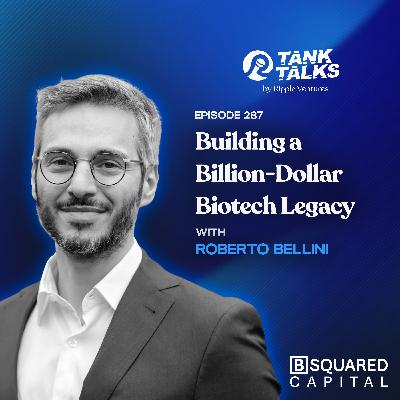
In this episode of Tank Talks, host Matt Cohen sits down with Roberto Bellini, Co-Founder of BSQUARED Capital and former CEO of Bellus Health, for a powerful conversation about family, legacy, and resilience in the world of biotech.Originally recorded just two weeks before the passing of his father, Dr. Francesco Bellini, one of the founding giants of Canadian biotech, this re-recorded episode serves as a moving tribute to the man known as “Mr. Biotech Canada.” Roberto opens up about what it was like growing up under the guidance of such a visionary figure and how that experience shaped his own path as an entrepreneur and leader.He reflects on the highs and lows of leading Bellus Health, from moments of near collapse to its remarkable $2 billion acquisition by GSK, sharing lessons on risk-taking, perseverance, and the importance of staying grounded through uncertainty. Roberto also offers his perspective on the future of Canadian biotech, highlighting the need for stronger late-stage funding and how BSquared Capital is helping to cultivate the next generation of innovators.This episode isn’t just about business success; it’s about honoring a legacy, learning through adversity, and discovering what it truly means to build something that endures.The Legacy of Dr. Francesco Bellini (00:02:52)* Francesco Bellini’s incredible immigrant story: from arriving in Canada with nothing to a $6B biotech exit.* Business was the family’s dinner table conversation, and attending AGMs as a child.* The founding of Biochem Pharma and the discovery of the groundbreaking HIV treatment.* “He was a visionary... he saw things before other people saw them.”Growing Up in Biotech (00:06:30)* Roberto’s early memories of board meetings and dinner-table business lessons* How being “in the room” shaped his entrepreneurial mindset* Watching a $6B biotech deal become part of family historyThe Rise, Fall, and Rebirth of Bellus Health (00:08:27)* Roberto’s journey from family office analyst to a 30-year-old, first-time CEO of a public company.* The devastating failure of the phase three trial for a rare kidney disease.* Inside a Biotech Failure: The intense, weekend-long “war room” process of unblinding clinical trial data and preparing for a public announcement.The Second Act: Finding the Cough Drug (00:13:47)* Discovering a promising molecule through the NeoMed Institute* Betting the company’s future on a last-chance asset* Raising $20M when no one believed and turning it into a $2B successNegotiating the GSK Deal (00:24:45)* The strategic shift from “build-to-sell” to “build-to-scale”, positioning the company for a premium acquisition.* The M&A Playbook: Why you should never lead with a desire to sell; the importance of building for independence.* The high-stakes negotiation with GSK: going from an $11 offer to $14.75, almost losing the deal, and the “mellow tone” that saved it.* The entrepreneur’s dilemma: “Every single entrepreneur I’ve met that sold their company, there’s always a moment of not wanting to do it.”Building Canada’s Biotech Future (00:30:11)* Why Canada has the innovation but lacks the enduring biotech giants.* The critical gap: The need for more late-stage capital and the role of Canadian pension funds.* The “Gilead of the North” vision: Creating a virtuous cycle of capital, entrepreneurs, and translational science.* Upcoming trends: The convergence of AI and drug discovery to de-risk development and lower costs.Beyond the Lab: Leadership, Risk, and Legacy (00:46:20)* Learning to embrace risk and find joy in reinvention* The best advice from Dr. B: “Spend your money, it’ll make you want to earn more.”* Why true success isn’t just building a company, but building peopleAbout Roberto BelliniFounder & Managing Partner, BSQUARED CapitalRoberto Bellini is a second-generation biotech entrepreneur and investor. As the former CEO of Bellus Health, he led the company’s dramatic turnaround and eventual $2 billion acquisition by GSK. Drawing on his deep operational experience in drug development, he now co-manages BSQUARED Capital, a family office focused on investing in and supporting promising biotech ventures. He is a passionate advocate for building a stronger, more resilient biotech ecosystem in Canada.Connect with Roberto Bellini on LinkedIn: https://www.linkedin.com/in/robertobellini/Visit BSQUARED Capital Website: https://bsq-c.com/Connect with Matt Cohen on LinkedIn: https://ca.linkedin.com/in/matt-cohen1Visit the Ripple Ventures website: https://www.rippleventures.com/ This is a public episode. If you would like to discuss this with other subscribers or get access to bonus episodes, visit tanktalks.substack.com
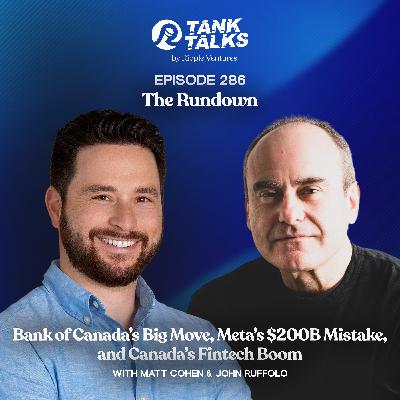
In this episode of Tank Talks, host Matt Cohen is joined by John Ruffolo to break down the week’s biggest stories shaping the innovation economy. From the Bank of Canada’s surprise rate cut to Meta’s $200B market crash, and the rise of Canada’s fintech and stablecoin revolution. They kick off with a spotlight on Waterloo’s AI-powered baseball tech that’s changing Major League play, before unpacking the renewed U.S.-Canada tariff tensions and what the Bank’s fourth rate cut signals for inflation, growth, and fiscal strategy ahead of the November 4th budget. The two also dive deep into the stablecoin boom, Mastercard’s $2B bet on crypto infrastructure, and how Ottawa is scrambling to keep pace with the U.S. Genius Act and its implications for the future of Canadian payments.Matt and John then turn to Wealthsimple’s record-breaking $10B valuation and what it means for Canada’s domestic market opportunity, before dissecting Meta’s controversial accounting maneuvers that wiped out $200B in market cap. They close by exploring OpenAI’s trillion-dollar restructuring, Microsoft’s 20x return on investment, and the race among tech giants to fund the next phase of AI infrastructure. It’s a sharp, data-packed Rundown filled with fresh insights on capital markets, emerging technologies, and the power shifts redefining global innovation.Waterloo’s AI Baseball Revolution (01:08)* How a University of Waterloo startup is changing the game with AI-powered pitching machines* The rise of Tradex Sports and MLB’s tech adoption* What this means for Canada’s sports innovation ecosystemU.S.-Canada Tariff Tensions Rise Again (03:25)* The Senate votes to nullify tariffs on Canada, but Trump’s volatility looms large* The politics behind tariff rollbacks* Why Canada’s “elbows up” strategy backfired* What this means for trade and cross-border investorsBank of Canada’s Fourth Rate Cut (06:33)* Governor Tiff Macklem cuts rates by 25bps. Is this the end of the easing cycle?* Inflation, weak GDP, and the limits of monetary policy* Why fiscal stimulus might be the only lever left* What to watch on November 4th as markets reactCanada’s Stablecoin Race Heats Up (09:10)* Stablecoins triple Visa’s volume: Can Canada keep up with the U.S.?* Mastercard eyes $2B Zero Hash acquisition* Inside Ottawa’s urgent push for stablecoin regulation* The rise of “sovereign blockchains” and real-time railsThe Future of Payments Canada (14:34)* Why the nation’s 10-year-late “Real-Time Rails” might already be outdated* How blockchain will reshape payment infrastructure* The hidden trillions moving on ancient financial railsWealthsimple’s $10B Milestone (16:17)* A Canadian fintech unicorn doubles its assets in one year* Lessons from its Series E and $750M raise* Why Canada’s domestic market is finally worth betting onMeta’s $200B Accounting Meltdown (20:04)* Zuckerberg’s AI spending spree and the fallout from “funny accounting”* Why investors are calling out Meta’s SPV strategy* What this says about the next phase of Big Tech CapEx warsOpenAI’s $1 Trillion Restructure (24:06)* Inside the new deal that redefines AI ownership and governance* How Microsoft turned a $13B bet into a 10x gain* Why this could become the most lucrative investment in tech historyConnect with John Ruffolo on LinkedIn: https://ca.linkedin.com/in/joruffoloConnect with Matt Cohen on LinkedIn: https://ca.linkedin.com/in/matt-cohen1Visit the Ripple Ventures website: https://www.rippleventures.com/ This is a public episode. If you would like to discuss this with other subscribers or get access to bonus episodes, visit tanktalks.substack.com
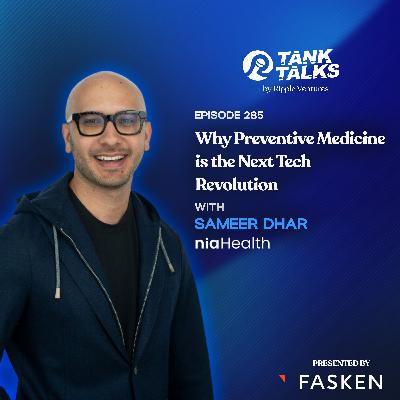
In this episode of Tank Talks, host Matt Cohen sits down with Sameer Dhar, Co-Founder and CEO of NiaHealth, to explore how proactive healthcare is reshaping the future of medicine.Sameer shares his remarkable journey from living in nursing homes for a year while building his first startup (Sensassure) to launching NiaHealth, a Canadian health-tech company empowering people to take ownership of their longevity through AI-driven diagnostics and personalized insights.With over $8 million in funding and a 12,000-person waitlist, NiaHealth is building a clinician-first model that complements Canada’s public system, helping users prevent disease decades before it develops. Sameer also discusses why prevention, not treatment, must drive the next wave of healthcare innovation, how AI will augment rather than replace clinicians, and what it takes to build a mission-driven company in a regulated industry.Whether you’re a founder, investor, or health enthusiast, this conversation reveals how the next generation of health tech startups can blend AI, clinical integrity, and human empathy to create lasting impact.A Quick Word from our Sponsor, FaskenAt Fasken, our clients don’t wait for the future. They build it. As the first and largest dedicated emerging tech practice in Canada, our team is composed of founders, ex in-house counsel, developers and business advisors who have guided clients from startup, to scale-up, to exit. The trust of our clients has enabled us to consistently rank at the top of every major Canadian M&A, Capital Markets and Venture Capital league table. With deep industry knowledge and experience across all areas of emerging and high growth technology including ClimateTech, MedTech, Artificial Intelligence, Fintech, and AgTech we’re your partners within the innovation ecosystem as you transform the landscape of what’s possible.Tomorrow starts here. Own it with us.For more information, visit fasken.com/emergingtech and follow us on LinkedIn.The Entrepreneurial Spark (05:52)* How the Next 36 program transformed Sameer from a finance student into a founder* The power of founder-focused education in shaping Canada’s startup ecosystem* Lessons from learning to “think like a builder” instead of an employeeFrom Customer Discovery to Conviction (10:46)* How customer discovery can turn into “analysis paralysis” if you never act* Why true innovation means taking bold bets, not just collecting insights* The importance of timing when moving from research to executionBuilding NiaHealth (13:26)* The personal mission to keep people healthy long before disease develops* How the pandemic revealed gaps in personal healthcare ownership* The evolution of NiaHealth into a platform offering advanced diagnostics, clinician reviews, and personalized longevity plansIntegrating with the System (17:12)* Why NiaHealth chose a “clinician-first” model rather than going fully digital* How nurse practitioners bridge the gap between data and diagnosis* The importance of integrating with Canada’s public system to maintain trustTrust and Transparency (22:51)* Addressing criticism about private healthcare models in Canada* Why NiaHealth avoids affiliate sales to maintain clinical integrity* The company’s research-led approach to responsible, evidence-based testingFilling the System’s Blind Spots (26:13)* Canada’s biggest blind spot: a reactive healthcare model built around disease* How prevention and early diagnostics reduce system strain and save lives* The mission to empower users to act on health risks decades in advanceAI as an Enhancer, Not a Replacement (29:16)* Why Sameer believes AI should support, not replace, clinicians* How AI enhances diagnostic accuracy and clinician productivity* The role of empathy and human connection in patient outcomesScaling Impact (33:11)* NiaHealth’s vision to reach 100,000 Canadians by the end of next year* Partnering with insurers and governments to expand preventative care* Why a “built in Canada, for Canada” strategy is key to long-term successAbout Sameer DharSameer Dhar is the Co-Founder and CEO of Nia Health, a serial entrepreneur and health-tech innovator recognized among Canada’s Top 20 Under 20 and Edmonton’s Top 40 Under 40. He previously founded Sensassure, an elder-care technology startup acquired by global health leader Essity.Connect with Sameer Dhar on LinkedIn: https://www.linkedin.com/in/sameerdhar/Visit the NiaHealth website: https://www.niahealth.co/Connect with Matt Cohen on LinkedIn: https://ca.linkedin.com/in/matt-cohen1Visit the Ripple Ventures website: https://www.rippleventures.com/ This is a public episode. If you would like to discuss this with other subscribers or get access to bonus episodes, visit tanktalks.substack.com
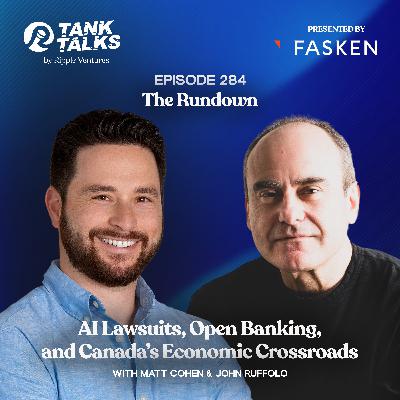
In this episode of Tank Talks, host Matt Cohen and John Ruffolo break down the most important stories shaping Canada’s innovation economy, from the upcoming federal budget and its impact on founders and investors, to Canada’s fintech shake-up as open banking finally gains momentum.The duo dives into AI’s growing legal minefield, including the mounting lawsuits against Perplexity and Sora, and discusses what this means for startups training models on licensed versus unlicensed data. They also unpack Cohere’s rumored IPO, Canada’s AI partnership with the UAE, and what it reveals about the country’s global strategy for data centers and sovereign capital.From Blue Jays playoff economics to AI data sovereignty, this Rundown is packed with sharp insights, timely analysis, and the kind of candid commentary you won’t hear anywhere else.A Quick Word from our Sponsor, FaskenAt Fasken, our clients don’t wait for the future. They build it. As the first and largest dedicated emerging tech practice in Canada, our team is composed of founders, ex in-house counsel, developers and business advisors who have guided clients from startup, to scale-up, to exit. The trust of our clients has enabled us to consistently rank at the top of every major Canadian M&A, Capital Markets and Venture Capital league table. With deep industry knowledge and experience across all areas of emerging and high growth technology including ClimateTech, MedTech, Artificial Intelligence, Fintech, and AgTech we’re your partners within the innovation ecosystem as you transform the landscape of what’s possible.Tomorrow starts here. Own it with us.For more information, visit fasken.com/emergingtech and follow us on LinkedIn.Canada’s Make-or-Break Federal Budget (08:46)With the federal budget weeks away, John calls this the Liberal government’s credibility test, a defining moment for innovation, R&D reform, and fiscal discipline.* The state of Canada’s finances and investor sentiment* Expectations for R&D tax credit and AI policy reform* Why “good ideas” might not matter if the fiscal hole is too deepOpen Banking Finally Gets Real (12:55)The Bank of Canada registers 300 new payment service providers, marking a major milestone for Canada’s fintech ecosystem.* How this could shake up the Big 5 banks’ oligopoly* Why Wealthsimple, Shopify, and Koho stand to gain* John’s take on trust, liquidity, and the future of financial competitionCanada-UAE AI Investment Deal (15:34)AI Minister Evan Solomon signs a non-binding MOU with the UAE on data center investment. Is this a real opportunity or political theater?* What “non-binding” really means for Canada’s capital strategy* Mark Carney’s push to diversify trade away from the U.S.* Why every major country is chasing sovereign data capitalCohere’s IPO Tease and the AI Hype Cycle (18:11)Cohere’s CEO Aidan Gomez hints at “going public soon.” Matt and John weigh the risks and timing of an AI IPO in a frothy market.* Lessons from the Faire America IPO and $16B valuations with no assets* The pressure of capital requirements in AI infrastructure* Why timing the public markets almost never worksAI Lawsuits, IP Infringement, and Data Licensing Wars (20:48)From Reddit vs Perplexity to Hollywood vs. Sora, Matt and John break down the growing AI legal battles over content rights.* The global IP divide: what happens when China ignores licensing rules* Why only the biggest players can afford compliance* The coming “Rule of Three” in the AI data economyConnect with John Ruffolo on LinkedIn: https://ca.linkedin.com/in/joruffoloConnect with Matt Cohen on LinkedIn: https://ca.linkedin.com/in/matt-cohen1Visit the Ripple Ventures website: https://www.rippleventures.com/ This is a public episode. If you would like to discuss this with other subscribers or get access to bonus episodes, visit tanktalks.substack.com
In this episode of Tank Talks, Matt Cohen is joined by James Baskin, Founder and CEO of ZeroStone AI, to explore how businesses can transition from AI experimentation to real-world impact. James, a three-time founder with multiple successful exits, shares his journey from engineering at the University of Toronto to building and selling telecom ventures alongside Globalive’s Anthony Lacavera. He offers valuable insights into leadership, resilience, and overcoming imposter syndrome.Drawing from over 300 conversations with CEOs and AI leaders, James discusses why many companies are “AI-aware but not AI-ready.” He reveals how ZeroStone helps mid-market firms turn failed pilots into scalable, impactful AI systems. James also highlights the differences between generative and agentic AI, the dual transformation of technology and people, and the importance of fostering a culture of curiosity and continuous learning for long-term success. This episode offers practical advice for founders and executives navigating the AI revolution.A Quick Word from our Sponsor, FaskenAt Fasken, our clients don’t wait for the future. They build it. As the first and largest dedicated emerging tech practice in Canada, our team is composed of founders, ex in-house counsel, developers and business advisors who have guided clients from startup, to scale-up, to exit. The trust of our clients has enabled us to consistently rank at the top of every major Canadian M&A, Capital Markets and Venture Capital league table. With deep industry knowledge and experience across all areas of emerging and high growth technology including ClimateTech, MedTech, Artificial Intelligence, Fintech, and AgTech we’re your partners within the innovation ecosystem as you transform the landscape of what’s possible.Tomorrow starts here. Own it with us.For more information, visit fasken.com/emergingtech and follow us on LinkedIn.The Founder’s Journey & Imposter Syndrome (00:09:41)* “Scaling Your Everest”: the emotional toll of leadership* Facing imposter syndrome in boardrooms* Anthony Lacavera’s hard advice: “You don’t know what you’re doing.”* How that painful truth became a turning pointFrom Go-To-Market to AI Strategy (00:16:00)* Consulting with Series A/B startups on GTM and sales* Transition to AI after dozens of founder conversations* Why most OKRs fail: objectives must tie directly to long-term strategy* Introducing a new framework rooted in “Seven Powers” by Hamilton HelmerBuilding ZeroStone AI (00:22:22)* Founding mission: help mid-market firms (>$50M revenue) unlock real AI value* Observing 300+ executive discussions on AI, awareness high, action low* Why cultural and digital transformations must happen together* Moving beyond “copilots” to autonomous, agentic AI systemsThe AI Leadership Gap (00:24:27)* Boards push for AI results, but internal teams lack clarity* “You need both a data transformation and a human capital transformation.”* The rise of self-selecting teams, who adapts, who opts out* Building cultures of learning, not fearWhy 95% of GenAI Pilots Fail (00:31:16)* Most projects don’t touch core business processes* Generative AI ≠ Agentic AI: only the latter changes workflows* AI agents as “digital workers” vs. human productivity tools* How CEOs can start small, measure impact, and scale over three yearsOvercoming the Pilot Trap (00:36:30)* Scaling beyond sandboxes by fixing data architecture* The critical role of clean data lakes, enrichment, and governance* Why early-stage companies move faster than legacy enterprisesAbout James BaskinFounder & CEO of Zero Stone AIA three-time founder with successful exits, James is a seasoned expert in go-to-market strategy, OKRs, and sales leadership. Through ZeroStone AI, he is now guiding mid-market companies to unlock true, measurable value from agentic AI, moving beyond failed pilots to autonomous systems that transform businesses.Connect with James Baskin on LinkedIn: https://www.linkedin.com/in/jamesbaskin/Visit the ZeroStone AI Website: https://www.zerostone.ai/Connect with Matt Cohen on LinkedIn: https://ca.linkedin.com/in/matt-cohen1Visit the Ripple Ventures website: https://www.rippleventures.com/ This is a public episode. If you would like to discuss this with other subscribers or get access to bonus episodes, visit tanktalks.substack.com
In this episode of Tank Talks, Matt Cohen and John Ruffolo break down the latest developments in U.S.-Canada trade negotiations, particularly around tariffs and energy, with insights into how these pressures could shape future relationships.The conversation shifts to the growing energy demands of AI, as Matt and John explore how both the U.S. and China are navigating energy needs, and whether Canada could play a more significant role. They also analyze NVIDIA’s $110 billion vendor financing strategy, drawing comparisons to the telecom bubble, and discuss the growing risks in data center financing. With the IPO of Fair Me America, they examine how the market is reacting to tech companies with no assets but huge valuations. A packed episode full of fresh insights on the intersection of tech, politics, and business.A Quick Word from our Sponsor, FaskenAt Fasken, our clients don’t wait for the future. They build it. As the first and largest dedicated emerging tech practice in Canada, our team is composed of founders, ex in-house counsel, developers and business advisors who have guided clients from startup, to scale-up, to exit. The trust of our clients has enabled us to consistently rank at the top of every major Canadian M&A, Capital Markets and Venture Capital league table. With deep industry knowledge and experience across all areas of emerging and high growth technology including ClimateTech, MedTech, Artificial Intelligence, Fintech, and AgTech we’re your partners within the innovation ecosystem as you transform the landscape of what’s possible.Tomorrow starts here. Own it with us.For more information, visit fasken.com/emergingtech and follow us on LinkedIn.US-Canada Relations & Trump’s Tariff Strategy (04:28)Matt and John discuss the ongoing negotiations between Mark Carney and President Trump regarding trade policies, tariffs, and key sectors like steel, aluminum, and energy. Can Canada withstand the pressure, or will it need to change its approach?The Energy Battle Between the US and China (09:03)What role does energy play in geopolitics? Matt and John explore how both the US and China are navigating their energy needs, and why Canada has lost some of its leverage as the world’s energy supply game changes.NVIDIA’s Vendor Financing Playbook: Lessons from Lucent & Nortel (11:18)John shares a deep dive into how NVIDIA’s vendor financing strategy mirrors the mistakes made during the telecom bubble, drawing parallels to the strategies employed by Lucent and Nortel. What’s the risk when revenues are tied to customers who may never pay?AI, Data Centers, and the Future of Technology (17:20)From the massive energy demands of AI to the rise of private equity-backed data centers, Matt and John dissect the latest AI and GPU investments and how the industry’s future could be shaped by companies like Meta and OpenAI.The “Yellowstone Club” of Hyperscalers (20:26)The two discuss the bizarre world of hyperscalers and REITs, looking at how some data center startups are getting massive valuations without any real assets or revenue, and what this means for the future of tech investments.Bezos Weighs In on the AI Bubble (25:12)Jeff Bezos surprises everyone with his thoughts on the AI industry, calling it an “industrial bubble” rather than a financial one, and analyzing the disconnect between massive investments and real-world returns.Connect with John Ruffolo on LinkedIn: https://ca.linkedin.com/in/joruffoloConnect with Matt Cohen on LinkedIn: https://ca.linkedin.com/in/matt-cohen1Visit the Ripple Ventures website: https://www.rippleventures.com/ This is a public episode. If you would like to discuss this with other subscribers or get access to bonus episodes, visit tanktalks.substack.com
In this episode of Tank Talks, host Matt Cohen is joined by John Ruffolo to dive deep into the rapidly evolving AI landscape, its economic ramifications, and Canada’s growing potential as a global tech leader. They discuss pivotal topics, such as energy challenges in AI infrastructure, the rise of AI tokenization, and the impact of government policies on the sector. With a focus on the future of tech, investments, and the role of Canada, this episode offers an insightful look at where the industry is headed.A Quick Word from our Sponsor, FaskenAt Fasken, our clients don’t wait for the future. They build it. As the first and largest dedicated emerging tech practice in Canada, our team is composed of founders, ex in-house counsel, developers and business advisors who have guided clients from startup, to scale-up, to exit. The trust of our clients has enabled us to consistently rank at the top of every major Canadian M&A, Capital Markets and Venture Capital league table. With deep industry knowledge and experience across all areas of emerging and high growth technology including ClimateTech, MedTech, Artificial Intelligence, Fintech, and AgTech we’re your partners within the innovation ecosystem as you transform the landscape of what’s possible.Tomorrow starts here. Own it with us.For more information, visit fasken.com/emergingtech and follow us on LinkedIn.AI Energy Demands & Canada’s Opportunity (00:04:39)John and Matt discuss the massive demand for compute power in AI and Canada’s potential to lead by meeting these energy needs. They highlight the importance of matching energy capacity with data center development to become a global tech leader.The AI CapEx Boom and the Trillion-Dollar Question (00:07:05)The discussion shifts to the booming capital expenditures in AI, with a particular focus on the rising costs of building AI infrastructure and whether this growth is sustainable in the long term.Canada’s AI Strategy and Sovereign Identity (00:14:21)The conversation turns to Canada’s AI strategy, with a task force focusing on innovation, research, and talent retention. John shares his thoughts on the potential challenges and opportunities for Canada in becoming a key player in the AI space.The SEC’s Push for Tokenization in the U.S. (00:19:33)The episode also delves into the SEC’s efforts to allow the tokenization of stocks and what this could mean for the financial industry and blockchain adoption.Connect with John Ruffolo on LinkedIn: https://ca.linkedin.com/in/joruffoloConnect with Matt Cohen on LinkedIn: https://ca.linkedin.com/in/matt-cohen1Visit the Ripple Ventures website: https://www.rippleventures.com/ This is a public episode. If you would like to discuss this with other subscribers or get access to bonus episodes, visit tanktalks.substack.com
In this episode of Tank Talks, host Matt Cohen is joined by John Ruffolo to discuss pivotal developments shaping Canada’s economy and tech industry. They cover a range of topics, from Canada’s immigration policies in light of changes to the U.S. H1-B visa program to the evolving AI landscape and its economic implications. John provides insights on how Canada could leverage these immigration shifts to attract global talent, while exploring the risks of inflated AI valuations and the potential for an AI bubble.The conversation also delves into the rising vendor financing model in AI, which could contribute to market instability, and examines whether the massive investments in AI infrastructure are sustainable. John reflects on the challenges facing Canadian companies, including the latest news from Constellation Software and its founder, Mark Leonard’s resignation. Together, they explore how AI and its financial impact may create headwinds for established companies while offering opportunities for the Canadian tech sector to emerge as a global leader.A Quick Word from our Sponsor, FaskenAt Fasken, our clients don’t wait for the future. They build it. As the first and largest dedicated emerging tech practice in Canada, our team is composed of founders, ex in-house counsel, developers and business advisors who have guided clients from startup, to scale-up, to exit. The trust of our clients has enabled us to consistently rank at the top of every major Canadian M&A, Capital Markets and Venture Capital league table. With deep industry knowledge and experience across all areas of emerging and high growth technology including ClimateTech, MedTech, Artificial Intelligence, Fintech, and AgTech we’re your partners within the innovation ecosystem as you transform the landscape of what’s possible.Tomorrow starts here. Own it with us.For more information, visit fasken.com/emergingtech and follow us on LinkedIn.AI CapEx Bubble: A Growing Concern (07:30)The conversation shifts to the massive capital expenditures in AI, with John analyzing the risks associated with overbuilding data center infrastructure and the possibility of a tech bubble.Vendor Financing in AI: A Dot-Com Repeat? (09:52)John draws parallels between current AI financing models and the early 2000s dot-com bubble, exploring whether companies are overexposed in the AI sector.The Future of AI Valuations (15:04)An in-depth discussion on the risks of inflated AI company valuations and the potential economic fallout.Canada’s Immigration Advantage: H1-B Visa Adjustments (18:12)John and Matt discuss the implications of recent changes to the U.S. H1-B visa program and how Canada could use this shift to attract top talent.Constellation Software: A Transition and the Role of AI (27:09)John reflects on the recent news of Mark Leonard’s resignation from Constellation Software and what this means for the company, especially in light of AI-driven changes.Connect with John Ruffolo on LinkedIn: https://ca.linkedin.com/in/joruffoloConnect with Matt Cohen on LinkedIn: https://ca.linkedin.com/in/matt-cohen1Visit the Ripple Ventures website: https://www.rippleventures.com/ This is a public episode. If you would like to discuss this with other subscribers or get access to bonus episodes, visit tanktalks.substack.com
In this episode of Tank Talks, host Matt Cohen sits down with Nejeed Kassam, a serial founder, investor, and advocate for positive change. With a journey that spans from launching his first business as a teenager to scaling and selling Keela, a CRM for nonprofits, Nejeed’s experience offers valuable insights for entrepreneurs, especially those navigating the challenges of building tech-driven impact companies.Nejeed shares his entrepreneurial beginnings, the lessons he learned growing Keela, and the challenges he faced when taking on external funding. He also discusses his new venture, Rewire Digital Therapeutics, an AI-powered mental health company using gamification to help users manage depression and anxiety.From scaling Keela to navigating a successful exit, Nejeed dives into his journey and the key principles he follows in his entrepreneurial endeavors. Whether you’re interested in nonprofit tech, mental health, or financial literacy, Nejeed’s story provides inspiration and practical wisdom.A Quick Word from our Sponsor, FaskenAt Fasken, our clients don’t wait for the future. They build it. As the first and largest dedicated emerging tech practice in Canada, our team is composed of founders, ex in-house counsel, developers and business advisors who have guided clients from startup, to scale-up, to exit. The trust of our clients has enabled us to consistently rank at the top of every major Canadian M&A, Capital Markets and Venture Capital league table. With deep industry knowledge and experience across all areas of emerging and high growth technology including ClimateTech, MedTech, Artificial Intelligence, Fintech, and AgTech we’re your partners within the innovation ecosystem as you transform the landscape of what’s possible.Tomorrow starts here. Own it with us.For more information, visit fasken.com/emergingtech and follow us on LinkedIn.Nejeed’s Early Entrepreneurial Beginnings (08:12)* Starting a business at 14 with his brothers in Vancouver* Learning from early failures and the importance of sales in businessScaling Keela and the Path to Acquisition (15:17)* The journey from building Keela as a side hustle to scaling it into a successful company* The decision-making process behind bringing in external capital and navigating an exit* Insights on the acquisition process and private equity rollupsRewire Digital Therapeutics: Tackling Mental Health with AI (25:34)* How Nejeed’s personal experiences with mental health drove him to create Rewire* Leveraging AI and gamification to address mental health issues like depression and anxiety* The future of digital therapeutics and its potential to impact millionsFinancial Literacy: Teaching Kids Money Management (35:11)* How Nejeed teaches his kids about financial literacy* Building the financial literacy platform, Snowball 72, and its impact on Gen Z and Gen Alpha* The importance of creating safe, accessible financial learning environmentsNejeed’s Lessons on Building Impactful Businesses (45:23)* The importance of staying committed to solving meaningful problems* Building businesses that balance profit with positive societal impact* The role of resilience and discomfort in entrepreneurshipAbout Nejeed KassamNejeed Kassam is a serial entrepreneur, author, and advocate for positive change. He co-founded Keela, a CRM for nonprofits, which he successfully scaled and sold in 2024. He is now co-founder of Rewire Digital Therapeutics, a company focused on using AI and gamification to help people manage mental health issues like depression and anxiety. In addition to his work in tech, Nejeed is passionate about financial literacy and has launched Snowball 72, a platform aimed at teaching the next generation about money management. Nejeed’s entrepreneurial spirit is driven by his desire to solve real-world problems and make a meaningful impact on society.Connect with Nejeed Kassam on LinkedIn: https://www.linkedin.com/in/nejeed/Visit the Keela website: https://www.keela.co/Visit the Rewire Digital Therapeutics website: https://rewiredigitaltherapeutics.com/Connect with Matt Cohen on LinkedIn: https://ca.linkedin.com/in/matt-cohen1Visit the Ripple Ventures website: https://www.rippleventures.com/ This is a public episode. If you would like to discuss this with other subscribers or get access to bonus episodes, visit tanktalks.substack.com

Comments

Download from Google Play

Download from App Store
 United States