


 Claim Ownership
Evolve & Elevate
Subscribed: 0Played: 4
Subscribe

© Zama Mthombeni
Description
Welcome to Evolve & Elevate a reflective space for purposeful growth and authentic becoming.
Hosted by Dr. Zama Mthombeni, a Christian and development scholar, this podcast explores the layers of human development spiritual, emotional, intellectual, and social through thought-provoking reflections and honest conversations.
Each episode invites you to grow with intention, live with depth, and rise with purpose.
Connect with us
Instagram: https://www.instagram.com/evolve_elevate21/
email: evolveelevate21@gmail.com
Hosted by Dr. Zama Mthombeni, a Christian and development scholar, this podcast explores the layers of human development spiritual, emotional, intellectual, and social through thought-provoking reflections and honest conversations.
Each episode invites you to grow with intention, live with depth, and rise with purpose.
Connect with us
Instagram: https://www.instagram.com/evolve_elevate21/
email: evolveelevate21@gmail.com
110 Episodes
Reverse

In this episode, we reflect on four simple but powerful habits behind consistency: planning, systems, boundaries, and responsibility. We often admire consistent people for their discipline and reliability, but we do not always pay attention to the structures, choices, and habits that make that consistency possible. This conversation explores the reality that consistency is rarely accidental. It is usually built through intentional routines, clear limits, and a willingness to take responsibility for how we manage our lives.If you have ever admired consistency from a distance, this episode invites you to look more closely at what it actually requires.
There are seasons in life when we step away from people. Sometimes that withdrawal is necessary a space for reflection, clarity, and spiritual alignment. Other times it may be a deliberate personal decision to regain balance in a life that has become too crowded with responsibilities and expectations.But there is also another possibility: what if the solitude we call “peace” is actually a quiet form of escape?In this episode, I explore the deeper question of why we withdraw. Is our solitude spirit-led, like the pattern we see in the life of Jesus who often withdrew to pray? Is it a healthy, intentional space for thinking and renewal? Or could it be avoidance stepping away from conversations, responsibilities, or realities we would rather not face?This episode reflects on the motivations behind solitude and invites us to examine what our quiet seasons are truly producing in us.
Have you ever noticed how quickly you make things personal?A delayed reply becomes rejection.Critique feels like disrespect.Silence feels intentional.Someone else’s success becomes comparison.Without realising it, you place yourself at the centre of every interaction and then wonder why everything feels heavy.This episode explores the quiet habit of self-centring and how it shapes the way we interpret people, conversations, and meaning itself.We unpack:How ego subtly becomes the axis in everyday behaviourWhy we mistake emotional reactions for objective truthHow resonance is shaped by season and maturityAnd what shifts internally when you stop assuming everything is a reflection of youDecentring yourself is not shrinking.It is stabilising.It is the discipline of pausing before reacting.Of questioning your lens before judging reality.Of allowing value to exist beyond your alignment.Maturity begins when you realise:You matter but you are not the axis.
We often assume wisdom comes with age.With intelligence.With experience.But years passing is not wisdom.Being informed is not wisdom.Even surviving something is not wisdom.Wisdom is what forms when we reflect.When we allow seasons to shape us.When knowledge becomes governed by character.In this episode, we examine what wisdom is not so we can understand what it truly is.Because wisdom is not found in grey hair.It is found in how you live.
Not All Mirrors Hang on WallsWe spend so much time checking mirrors adjusting angles, fixing posture, managing presentation. But what if the most powerful mirrors in our lives aren’t the ones we stand in front of?In this episode of Zama Mthombeni explores the different kinds of mirrors shaping who we become.🪞 The aesthetic mirror : the one that helps us manage image but never questions character.🪞 Affirming mirrors: the voices that restore proportion when life shrinks us.🪞 Corrective mirrors : the uncomfortable reflections that refine us.🪞 Character mirrors : the quiet revelations hidden in our reactions, pride, jealousy, and power.Why do we prefer mirrors that flatter?Why do we resist mirrors that expose patterns?And what happens when presentation improves, but formation does not?This episode is an invitation to examine the mirrors you allow to shape you because development is never cosmetic.
In this episode, I reflect on the quiet disappearance of admiration in our personal, professional, and public lives.Where admiration once sparked curiosity, growth, and aspiration, it is increasingly replaced by suspicion, comparison, and resentment.This episode explores admiration as a developmental function how it helps us locate possibility beyond ourselves, orient growth, and imagine what we could become. I also reflect on what happens when admiration collapses into interrogation, and how that shift shapes how we relate to excellence, leadership, and one another.This is not about idolising people, but about recovering the capacity to learn from lives that stretch us rather than threaten us.A reflection for anyone navigating growth, maturity, and the discomfort that often comes with becoming.connect with us on instagram: evolve_elevate21
Black Excellency is a phrase that circulates widely celebrated by some, rejected by others, and rarely examined carefully.In this episode, we slow the term down.Rather than treating Black Excellency as a slogan, the conversation unpacks it as a social idea that shapes how success is understood, how belonging is negotiated, and how growth is directed. The episode explores why many people resist the term, how racialising excellence can feel both affirming and unsettling, and what happens when excellence becomes tied to exception rather than expectation.Moving beyond surface debates, the episode examines the role of exceptionalism, the anxiety that emerges when excellence appears in numbers, and how these dynamics play out in everyday settings such as schools, workplaces, and neighbourhoods.The episode closes by asking what a reclaimed Black Excellency would require one that supports purpose, sustainable growth, and collective development rather than performance or distance.This is a reflective, development-focused conversation about excellence, identity, and the conditions we build for becoming.
When Leadership Needs Crab MentalityCrab mentality is often framed as a people problem jealousy, insecurity, small thinking.But what if, in some environments, it is structural?In this episode, we explore how crab mentality can quietly become a leadership ecosystem one that discourages growth, reframes excellence as betrayal, and redirects attention away from leadership accountability.When people begin policing each other’s progress, leaders are rarely questioned. Over time, individuals shrink themselves not because they were told to, but because the cost of standing out becomes too high.This is not an episode about bitterness.It’s about clarity.And once you see it, you cannot unsee it.
Crab mentality is often misunderstood as jealousy, but it is really about what happens when someone confronts a shared limitation. Using the image of crabs in a jar where any crab that tries to climb out is pulled back down this episode explores why movement unsettles people more than success ever does.Through five focused reflections, the episode examines how limitation becomes normalised, why movement provokes resistance, and how fear, scarcity, and loyalty are used to keep things the same. The aim is not to accuse, but to create clarity about what resistance is responding to when it shows up.Reflection questions explored in this episode:Which limitations have I accepted simply because they are shared?What does someone else’s movement out of limitation awaken in me?Where might moral language be disguising discomfort with change?How does scarcity shape the way I interpret other people’s growth?What am I being pulled back from — not because it is wrong, but because it disrupts familiarity?
We often enter a new year with renewed intention and the hope that things will finally change.But for many of us, growth begins internally while external conditions remain the same.In this episode of Evolve and Elevate, I reflect on what it means to start a new year as a different person in unchanged spaces the same environments, systems, and relationships that once drained us. I explore the quiet frustrations that arise when growth comes before change, and the responsibility we carry in how we show up while navigating that tension.This conversation is about learning how to grow without making others pay for what they didn’t do, how to avoid becoming emotionally unbearable when we’re dissatisfied, and how to sit in spaces we’ve already outgrown with integrity. It’s also about managing transition well — without burning bridges, withdrawing care, or exporting frustration onto people around us.This episode invites you to reflect on how you carry yourself in seasons of waiting, constraint, and internal change and how growth can be practised responsibly, not carelessly.

We often talk about overgiving as if it’s a behaviour problem as if some people simply give too much.In this episode, I argue something different.Overgiving is not about generosity. It’s about repression.We overgive when giving becomes the place where unspoken things are stored: fear, guilt, lack of distance, loss of self. Instead of naming needs, limits, or responsibility, we give and relationships quietly reorganise around that silence.This episode unpacks different types of overgiving, what is being repressed in each, and the relational consequencesthat follow. I look closely at empathic giving as identification with the one in need, how rescue creates dependence, and why imbalance is often the unintended outcome of care that was never meant to carry so much.This is not an episode about becoming less caring.It’s about learning to give without losing yourself or the relationship.Connect with us: instagram: @evolve_elevate21Email: evolveelecate21@gmail.com
every year end cutting people off becomes a ritual rather than a decision. In this episode, I interrogate how the language of boundaries and peace is often used to avoid accountability at teh turn of the year. And also how the same language can also describe necessary, ethical distance.This episode examines:Why end of year cutt offs intensifyHow victims and perpetrators use the same language differently.When cutting people off functions as avoidance When it is a legitimate response to repeated harm.This is not a motivational episode.Its a critical reflection on accountability, distance and discernment.Please follow us on instagram: evovle_elevate21Email us: evolveelevate21@gmail.com
Overthinking can make you feel busy, responsible, and productive even when nothing is actually moving.In this episode, I reflect on how overthinking quietly becomes procrastination, why “thinking it through” can delay action, and what it really costs us when we stay in our heads for too long.If you’ve ever felt mentally exhausted but still stuck, this conversation will resonate.Press play when you’re ready to move past preparation and into action.Connect with us Instagram: Evolve_Elevate21email: evolveelevate21@gmail.com
We often assume that competence naturally leads to confidence. That if you are good at what you do, confidence will follow effortlessly.But what if that assumption is wrong?In this episode, I unpack a difficult truth many capable people live with quietly: competence is often absorbed, while confidence is rewarded. We explore how being taught to “let your work speak for itself” can produce silence rather than self-belief especially in systems that value speed, certainty, and performance over depth and substance.This episode is not about becoming louder for the sake of visibility. It’s about discernment understanding where your excellence is valued, where it is exploited, and when silence serves wisdom versus when it costs you.If you’ve ever felt capable but overlooked, prepared but unseen, or exhausted by carrying more than your share, this episode is for you.Because sometimes the most confident thing you can do is stop disappearing behind your work and start choosing where your competence belongs.Follow us on instagram ; evolve_elevate21email: evolveelevate21@gmail.com
We spend so much time mastering the mechanics of adulthood the job, the bills, the responsibilities yet many of us never develop the inner architecture that maturity requires. This episode breaks down the gap between functioning and actually growing, and why becoming the adult your life needs is intentional work. If you’ve been managing your life but not evolving through it, this one is for you.
Today Zama looks ats 4 common pitfalls that high achievers do to undercut their value in workplaces. Zama emphasizes the importance of understanding and articulating one's value in the workplace. She discusses the dynamic nature of value, the necessity of negotiation skills, and the role of confidence in professional settings. Zama also highlights common behavioral patterns that can undermine one's authority and the significance of professional positioning and narrative in shaping perceptions of competence and identity. Ultimately, the conversation encourages listeners to develop skills related to value recognition, negotiation, confidence, and professional behavior to enhance their career trajectories.TakeawaysValue is dynamic and evolves with experience.Many professionals fail to update their sense of worth.Negotiation is a skill that can be learned.Confidence should match your professional profile.Unconscious behaviors can undermine your value.Professional positioning shapes how others perceive you.Your reputation is a key professional asset.Articulating your contributions is essential.Intellectual property should be owned and claimed.Professional identity is crafted intentionally.Remember to follow us on Instagram on evolve_elevate21 and contact us on email: evolveelevate21@gmail.com
In this conversation I explore the concept of fear, particularly the fear of failure, and how acknowledging and naming it can help individuals disarm its power. The discussion emphasizes the importance of not allowing fear to dictate one's actions or limit personal growth, advocating for a healthier relationship with oneself.Follow us: https://www.instagram.com/evolve_elevate21/contact us: evolveelevate21@gmail.com

This conversation looks into the multifaceted issue of gender-based violence, exploring its roots in emotional underdevelopment, power dynamics, empathy loss, spiritual emptiness, and financial pressures. It emphasizes the need for a comprehensive understanding and honest dialogue about these interconnected factors, urging society to reflect on its values and responsibilities in addressing this pervasive problem.

In this conversation, the speakers (Senzo & Zama ) explore the concept of excellence within the church, discussing the importance of integrating skills and professionalism into spiritual practices. They emphasize that excellence is not merely about perfection but about diligence, integrity, and the ability to bring one's best to all areas of life, including work and ministry. The discussion also highlights the need for a kingdom perspective that sees no divide between secular and sacred, urging believers to model excellence in every aspect of their lives
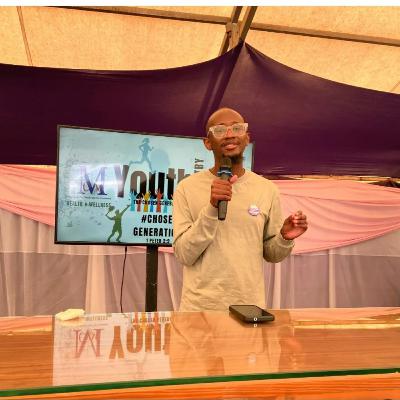
This conversation explores the intersection of mental health and Christianity, emphasizing the importance of understanding mental health within the faith community. The guest, Khethizwi Heavenlygift Hearthstones, shares his journey as a mental health advocate, discussing the stigma surrounding mental health in churches, the need for empathy, and the balance between faith and professional help. The dialogue encourages open conversations about mental health, the role of the church, and practical mental health practices for believers.

Comments

Download from Google Play

Download from App Store
 United States