



 Claim Ownership
 Agile and Project Management - DrunkenPM Radio
Agile and Project Management - DrunkenPM RadioSubscribed: 497Played: 7,432
Subscribe

© All rights reserved
Description
A podcast about Agile and Project Management
272 Episodes
Reverse

Dave sits down with Evan Campbell to discuss his new book, Adapt to Win: A Framework to Overcome Strategy Decay Using OKRs and Lean Portfolio Management, published by Wiley. Evan shares why most organizations fail to execute on beautifully crafted strategies — and what to do about it.
Key Topics Covered
Strategy Decay — Evan introduces the concept of "strategy decay," the entropic force that constantly pulls organizations away from their strategic objectives. Studies show only 51% of senior executives can name their company's top three priorities — and that drops to 22% one level down.
The Three Sub-Processes of Strategy — Evan breaks down strategy into: (1) formulation, (2) deployment, and (3) execution tracking. Most organizations do the first reasonably well and muddle through the third — but strategy deployment is where the wheels come off.
OKRs as the "Steel Thread" — The power of OKRs isn't just top-down goal-setting. The bottom-up element — where teams define their own objectives in response to company goals — drives alignment, understanding, and genuine accountability. Evan distinguishes OKRs (change the business) from KPIs (run the business) using a great airplane instrument cluster analogy.
Lean Portfolio Management — The largest section of the book covers enterprise portfolio management practices that Evan says have never been published before. The core idea: treat investments more like a VC would — fund in tranches, set measurable objectives, and be willing to pivot quickly when a better opportunity emerges.
Valuing Strategic Initiatives — ROI, IRR, and NPV alone will never fund innovation. Evan explains why organizations need a richer methodology to fairly prioritize strategic bets — and how the book provides one.
Types of Portfolios — Enterprise, product, corporate IT, and innovation portfolios each have distinct characteristics and challenges. IT shops tend to struggle with delivery; product organizations tend to struggle with demand management and value prioritization.
AI Investment Discipline — Evan flags that 95% of corporate AI spending is producing zero value (citing MIT research) — the same pattern we saw with the internet and agile. The culprit: a lack of directed innovation and strategic clarity.
Links from the Podcast
Adapt to Win site: https://adapttowin.co
Adapt to Win book on Amazon: https://tinyurl.com/53kae743
Adaptivity: https://www.adaptivitygroup.com
Manifesto for Enterprise Agility: https://www.pmi.org/learning/agile/manifesto-for-enterprise-agility
Enterprise Agility Network: https://theagilenetwork.com
Contacting Evan
LinkedIn: https://www.linkedin.com/in/evcampbell/
Contacting Dave
Linktree: https://linktr.ee/mrsungo

Busy brain? Moving feet? This one's for you.
In this episode, Dave and Stu cover the tools, trends, and mindset shifts worth your attention right now. Stu makes the case for a surprisingly powerful low-tech feedback tool (index cards and envelopes — trust the process), then calls out the "waiting trap" that's keeping too many people stuck while the world moves on without them.
Dave shares a heads-up on the upcoming Enterprise Agility Manifesto, dropping March 3rd from PMI and the Agile Alliance — and tempers expectations with just the right amount of agile-community realism.
Plus: upcoming training classes, a CSPO in Edinburgh, a talk in Finland, and a book your mother-in-law might just love.
Short. Sharp. Worth your time.
Find Stuart https://linktr.ee/stuartliveart
Find Dave https://linktr.ee/mrsungo
No One Is Coming to Save You: The Power-Ups you need to surf the chaos
Amazon: https://tinyurl.com/yv7chp54
Leanpub: https://leanpub.com/surfthechaos
******************************************************
The soundbed at the start and end of the podcast was built using samples from https://freesound.org/
Waves on Rocks with CP water and surf.wav by sparxx001 -- https://freesound.org/s/684383/ -- License: Creative Commons 0
SFXShuffling Dominos_Ennerdale_Xena_Owsfx.wav by Xena123457 -- https://freesound.org/s/709628/ -- License: Creative Commons 0
RussianMeteorite_SFX.flac by jongrubbs -- https://freesound.org/s/178182/ -- License: Creative Commons 0
Weather station on 5450 kHz in USB RAF Volmet 220113.wav by klankbeeld -- https://freesound.org/s/614719/ -- License: Attribution 4.0
Sounded created using the following samples:
Floyd Filtertron Riding G.wav by aceinet -- https://freesound.org/s/424240/ -- License: Attribution 4.0
In this eye-opening episode, Dave and Stu explore how organizations lose their edge by mistaking agility for abandoning solid project management. They reveal the perilous consequences of sacrificing skills for surface-level agility and offer practical steps to regain control before chaos takes over. Discover why planning skills are collapsing, how to identify and fix skill gaps, and the critical role human skills play as return-to-office trends revive collaboration. Perfect for project managers and leaders, this episode is your blueprint for thriving amid chaos and complexity.
The Plaud Note Pro
https://www.plaud.ai/products/plaud-note-pro
Find Stuart https://linktr.ee/stuartliveart
Find Dave https://linktr.ee/mrsungo
No One Is Coming to Save You: The Power-Ups you need to surf the chaos
Amazon: https://tinyurl.com/yv7chp54
Leanpub: https://leanpub.com/surfthechaos
******************************************************
The soundbed at the start and end of the podcast was built using samples from https://freesound.org/
Waves on Rocks with CP water and surf.wav by sparxx001 -- https://freesound.org/s/684383/ -- License: Creative Commons 0
SFXShuffling Dominos_Ennerdale_Xena_Owsfx.wav by Xena123457 -- https://freesound.org/s/709628/ -- License: Creative Commons 0
RussianMeteorite_SFX.flac by jongrubbs -- https://freesound.org/s/178182/ -- License: Creative Commons 0
Weather station on 5450 kHz in USB RAF Volmet 220113.wav by klankbeeld -- https://freesound.org/s/614719/ -- License: Attribution 4.0
Sounded created using the following samples:
Floyd Filtertron Riding G.wav by aceinet -- https://freesound.org/s/424240/ -- License: Attribution 4.0

In this conversation, John Tanner discusses the evolving role of AI in business strategy, emphasizing the need for leaders to understand AI's impact on their organizations. He highlights the challenges of integrating AI, the importance of data management, and the necessity for project managers to adapt their skills in the face of new technologies. Tanner also introduces his course on AI readiness, which aims to equip professionals with the knowledge and skills needed to navigate the AI landscape effectively.
Takeaways
AI is not just a tool; it's reshaping business strategy.
The integration of AI requires a clear roadmap.
Project managers play a crucial role in AI transformation.
Data management is essential for effective AI implementation.
AI can augment workflows but cannot replace human insight.
Understanding AI's cultural impact is vital for leaders.
The hype around AI has shifted to operationalizing its use.
AI readiness involves assessing organizational gaps.
Training and certification in AI are becoming increasingly important.
The future of work will require a blend of technical and strategic skills.
Chapters
00:18 Introduction to AI and Business Strategy
03:21 The Evolution of AI in Business
06:13 Challenges of AI Integration
09:17 AI Governance and Leadership
12:26 AI Enablement Roadmap
15:21 Data Management for AI Success
19:14 The Importance of Technical Discipline in Agile
21:31 The Role of AI in Modern Workflows
24:51 AI's Influence on Strategy and Decision Making
28:01 Evolving Skill Sets in the Age of AI
30:54 Project Management in the AI Era
35:05 Preparing for the Future with AI Training
AI Ready Certification powered by ICAgile
https://www.maven.com/c4g-academy/ai-ready
Contacting John
LinkedIn: https://www.linkedin.com/in/tannerjs/
C4G Enterprises: https://c4genterprises.com
Contacting Dave
LinkedIn: https://www.linkedin.com/in/mrsungo/
Linktree: https://linktr.ee/mrsungo

In this episode of the Reluctant Agilist, Dave Prior and Lonnie Weaver-Johnson delve into the intricacies of giving and receiving feedback. They explore personal experiences, the importance of empathy, and various models for effective feedback. The conversation emphasizes the need for clarity, intent, and kindness in feedback delivery, while also addressing the challenges of navigating feedback in professional settings. Lonnie shares her insights from years of experience in performance reviews and coaching, highlighting the significance of understanding individual differences in feedback reception.
Takeaways
- Feedback is a gift, not a weapon.
- Understanding the intent behind feedback is crucial.
- Empathy plays a significant role in effective feedback.
- Clarity in communication helps avoid misunderstandings.
- Different people react to feedback in various ways.
- Feedback should serve the recipient's growth.
- Self-reflection is important after giving feedback.
- Models like SBI (Situation, Behavior, Impact) can guide feedback delivery.
- Creating a safe space for feedback encourages openness.
- Feedback should be a two-way conversation.
Chapters
00:00 Podcast Intro
02:31 The Importance of Giving Feedback
05:31 The Importance of Receiving Feedback
08:35 The Art of Giving Feedback
11:29 Navigating Feedback in Professional Settings
14:30 The Role of Choice in Feedback
17:34 Personal Reflections on Feedback
20:27 Feedback and Personal Growth
25:38 The Importance of Feedback and Follow-Up
34:10 Self-Reflection and Self-Feedback
37:11 Feedback Models and Their Effectiveness
45:11 Intent Behind Feedback and Its Impact
Contacting Lonnie
LinkedIn: https://www.linkedin.com/in/lonnieweaverjohnson/
Web: https://www.lonniewj.com/
Dave’s classes (CSM, CSPO, A-CSPO, PMP, PMI-ACP)
https://www.eventbrite.com/cc/dave-prior-classes-4758623
Dave and Stuart’s Book
No One Is Coming to Save You: Power-ups to help surf the chaos
Amazon: https://tinyurl.com/ydvzx7ux
Leanpub: https://leanpub.com/surfthechaos

In this episode of the Reluctant Agilist, host Dave Prior welcomes Mark Kilby and Johanna Rothman to discuss their reflections and plans for the new year. The conversation begins with a candid admission from Dave about feeling lost in setting goals for 2026, prompting Johanna to suggest a shift in focus from preparing for risks to preparing for success. The trio explores the importance of collaboration and the need to let go of what hinders progress, particularly in the context of AI and its implications for project management. They emphasize the necessity of resilience and adaptability in a rapidly changing world, advocating for a more positive outlook on success rather than a fear-based approach to risk management.
As the discussion unfolds, they delve into the challenges posed by generative AI, the importance of trust in technology, and the need for personal and organizational resilience. The episode culminates in a reflection on the significance of collaboration and the value of learning from one another, highlighting the importance of community in navigating the complexities of modern work environments. Ultimately, the conversation serves as a reminder to focus on personal growth, inclusivity, and the pursuit of meaningful connections in both professional and personal spheres.
Takeaways
"Preparing for success allows for managing risk."
"We need to focus more on the next place."
"Trust is the one thing we need even more of."
"You can't do all that with AI."
"Don't do it alone. Collaborate with others."
Chapters
00:00 New Year Reflections and Inspirations
03:27 Preparing for Success vs. Risk Management
06:18 AI in Project Management: Opportunities and Challenges
09:19 Trust and Technology: A Post-Trust World?
12:22 Betrayal of the Social Contract in Technology
15:22 Planning for Success: Onward and Inclusive
18:17 Finding Joy in Work Post-Pandemic
31:35 AI in Interviewing: A New Frontier
34:06 Rethinking Hiring Practices
35:39 Productivity: Beyond the Workplace
36:53 Learning and Adapting to AI
38:31 The Impact of the Pandemic on Work Relationships
41:54 Navigating Uncertainty in Leadership
43:19 Building Resilience in Teams
46:04 Personal Growth and Double Loop Learning
50:38 The Importance of Physical and Mental Health
54:32 Creating a Supportive Work Environment
Contact Info
Contacting Johanna Rothman
Web: https://www.jrothman.com/
LinkedIn: linkedin.com/in/johannarothman
Amazon: https://tinyurl.com/vjbd4xmd
Contacting Mark Kilby
Web: https://www.markkilby.com/
LinkedIn: linkedin.com/in/mkilby
Amazon: https://tinyurl.com/3sfud7sh
Contacting Dave Prior
Web: https://linktr.ee/mrsungo
LinkedIn: linkedin.com/in/mrsungo
Amazon: https://tinyurl.com/4672s298

In this conversation, Dave Prior interviews Victor Njoroge about the intersection of AI and product management. Victor shares his background and role at Clarion, emphasizing the importance of optimizing workflows for sales development representatives. They discuss the concept of Sidebar, a platform for brainstorming and sharing ideas among professionals. Victor explains how he built a virtual board of directors using AI to gain diverse perspectives on product management challenges. The conversation highlights the significance of trust in AI tools, the need for continuous learning, and the enduring value of human skills in the age of AI.
Takeaways
- AI can optimize product management processes.
- Building a virtual board of directors enhances decision-making.
- Diverse perspectives are crucial for effective product management.
- Trust in AI tools is essential for their successful implementation.
- Understanding user pain points is key to product management.
- AI can help in brainstorming and generating ideas.
- Using personas can provide valuable insights in product development.
- AI tools can save time and improve efficiency in product management.
- Continuous learning about AI tools is necessary for staying competitive.
- Human skills remain invaluable despite advancements in AI.
Chapters
01:28 Introduction to AI in Product Management
04:15 Victor's Background and Role at Clarion
07:05 The Concept of Sidebar and Networking
09:53 The Genesis of AI in Product Management
12:24 Building a Virtual Board of Directors
15:21 Creating Personas for Product Management
18:10 Using AI to Challenge Bias in Decision Making
21:11 Practical Applications of AI in Product Management
24:49 Exploring Prioritization Techniques
30:39 The Role of AI in Product Management
36:36 Finding and Prioritizing AI Tools
41:47 The Human Element in AI and Product Management
Links from the podcast:
MITSloan Review Article "How I Built a Personal Board of Directors With GenAI"
https://tinyurl.com/m28e8h4k
Sidebar: https://www.sidebar.com
Contacting Victor
LinkedIn: https://www.linkedin.com/in/victor-njoroge/
Contacting Dave
LinkedIn: https://www.linkedin.com/in/mrsungo/
Dave's classes: https://www.eventbrite.com/cc/dave-prior-classes-4758623

Revolutionizing Recruitment with SuperHired featuring Josh Hill
In this conversation, Josh Hill discusses the innovative approach of SuperHired in transforming the recruitment process. He emphasizes the flaws of traditional hiring methods, the importance of understanding both candidate and company contexts, and the role of AI in recruitment. Josh advocates for a more human-centered approach to hiring, focusing on the 'job to be done' framework and the need for candidates to advocate for their own needs. He also provides insights on navigating the current job market and offers advice for both candidates and hiring managers.
Takeaways
- Recruitment should be viewed as a matchmaking process.
- Traditional resumes are outdated and do not represent candidates accurately.
- Work today is dynamic and requires a different approach to hiring.
- AI in recruitment often complicates rather than simplifies the process.
- Understanding the context of both candidates and companies is crucial.
- Companies need to be transparent about their culture and values.
- Candidates should advocate for their needs during the hiring process.
- Creativity in presenting oneself can help candidates stand out.
- The current recruitment system often leads to a lose-lose situation for both candidates and companies.
- I nvesting in the right hiring practices can lead to long-term success for companies.
Chapters
00:00 Introduction to SuperHired and Its Mission
05:52 The Flaws of Traditional Recruitment
08:38 The Role of AI in Recruitment
11:09 Understanding Candidate Context
13:51 The ATS Dilemma
16:16 Innovative Approaches to Hiring
19:08 Self-Discovery in Job Seeking
21:45 The Exchange of Value in Hiring
24:13 The Future of Recruitment
27:32 The Cost of Recruitment Mistakes
29:29 Transformational Hiring for Small Businesses
31:38 The Human Element in Business Success
33:54 Due Diligence in Recruitment
37:07 Advice for Job Seekers in a Tough Market
41:28 The Dark Side of Recruiting
44:36 Engaging with Hiring Managers
Contacting Josh
LinkedIn: https://www.linkedin.com/in/josh-hill-24b760a6/
SuperHired on LinkedIn: https://www.linkedin.com/company/108121043/
Web: https://www.superhired.ai/
Dave's Links
Contacting Dave: https://linktr.ee/mrsungo
Upcoming Classes on Katanu https://www.eventbrite.com/cc/dave-prior-classes-4758623
All Upcoming Katanu Classes https://katanu.com/
The Agile Network https://theagilenetwork.com/discover Use Expert Discount Code: DRUNKENPMCMC33 to get 33% OFF all memberships

In this engaging conversation, Dave Prior and Lonnie Weaver-Johnson delve into the complexities of giving and receiving feedback. They explore personal experiences, the emotional challenges associated with feedback, and practical strategies for improving feedback dynamics. Lonnie shares her insights on the importance of mindset, recognizing triggers, and the four Rs of feedback: recognize, receive, react, and respond. The discussion emphasizes the value of self-awareness and the need for constructive communication in both personal and professional settings.
Takeaways
- Feedback can be life-changing if handled positively.
- Many people struggle with receiving positive feedback.
- It's crucial to learn how to accept feedback in various settings.
- Feedback givers can help receivers by being mindful of their delivery.
- The receiver ultimately controls how they handle feedback.
- Compartmentalizing feedback can help in processing it effectively.
- Recognizing triggers can aid in managing emotional responses to feedback.
- Practicing self-talk can help combat negative internal feedback.
- It's okay to ask for time to process feedback before responding.
- Showing gratitude for feedback, even if it's hard to hear, can be beneficial.
Chapters
02:49 Introduction to Feedback Dynamics
05:35 The Importance of Receiving Feedback
8:26 Navigating Negative Feedback
11:40 Personal Stories and Lessons Learned
13:54 Triggers and Reactions to Feedback
16:38 The Four Rs of Feedback
19:42 Responding to Feedback Effectively
22:29 Self-Feedback and Positive Reinforcement
Links
Lonnie’s Session at 2025 PMI Global Summit
Beyond Going Through the Motions: Create Retrospectives That Lead To Change
https://pmiglobalsummit.gcs-web.com/program/agenda#sess61853976
Dave and Stuart’s Book
No One Is Coming to Save You: Power-ups to help surf the chaos
- Amazon: https://tinyurl.com/2765ztum
- Leanpub: https://leanpub.com/surfthechaos
Dave’s classes (CSM, CSPO, A-CSPO, PMP, PMI-ACP)
https://www.eventbrite.com/cc/dave-prior-classes-4758623
Contacting Lonnie
LinkedIn: https://www.linkedin.com/in/lonnieweaverjohnson/
Web: https://www.lonniewj.com/

In this conversation, Dave Prior and Hugo Bowne-Anderson discuss the evolving landscape of AI and data science, focusing on the role of AI agents in solving business problems. Hugo shares insights on how to effectively implement AI solutions, the importance of understanding the underlying data, and the need for continuous improvement in AI systems. They also touch on the skills necessary for navigating the AI landscape, the value of collaboration between technical and non-technical teams, and the importance of assessing the value of AI projects. Hugo concludes by offering a course on building AI applications, emphasizing the iterative nature of AI development.
Takeaways
- Hugo emphasizes the importance of data in AI applications.
- AI agents can automate tasks but require human oversight.
- Understanding the problem is crucial before implementing AI solutions.
- Prompt engineering remains a valuable skill alongside learning about agents.
- Consultants should educate clients on practical AI applications.
- AI systems should be built incrementally and iteratively.
- Value assessment in AI projects should focus on efficiency and cost savings.
- Continuous improvement is essential for AI systems to remain effective.
- Experimentation with AI tools can lead to innovative solutions.
- Collaboration between technical and non-technical teams is vital for successful AI implementation.
Chapters
00:00 Introduction to Data and AI Literacy
06:14 Understanding AI Agents vs. LLMs
09:18 The Role of Agents in Business Solutions
12:21 Navigating the Future of AI and Agents
15:24 Consulting and Client Education in AI
18:37 Building Incremental AI Solutions
21:29 The Future of AI Coding and Debugging
24:32 Prototyping with AI: Challenges and Solutions
25:32 Leveraging AI for User Insights and Competitive Analysis
27:29 Understanding Value in AI Development
32:05 The Role of Product Managers in AI Integration
33:00 AI as an Instrument: The Human Element
35:33 Getting Started with AI: Practical Steps for Teams
38:51 Building AI Applications: Course Overview and Insights
Links from the Podcast:
Stop Building AI Agents - Here’s what you should build instead (Article) https://www.decodingai.com/p/stop-building-ai-agents
Anthropic https://www.anthropic.com/engineering/multi-agent-research-system
The Colgate Study https://www.pymc-labs.com/blog-posts/AI-based-Customer-Research
Hugo’s Course (Starts November 3, 2025)
Building AI Applications for Data Scientists and Software Engineers (with a 25% discount)
https://maven.com/hugo-stefan/building-ai-apps-ds-and-swe-from-first-principles?promoCode=drunkenpm
(You can use the discount code drunkenpm to get 25% off)
How To Be A Podcast Guest with Jay Hrcsko https://youtu.be/vkNbgwcolIM
Contacting Hugo
LinkedIn https://www.linkedin.com/in/hugo-bowne-anderson-045939a5/
Substack https://hugobowne.substack.com/
Contacting Dave
Linktree: https://linktr.ee/mrsungo
Dave’s Classes: https://www.eventbrite.com/cc/dave-prior-classes-4758623

This interview is also available via video form here: https://youtu.be/vkNbgwcolIM
If you’ve never been on a podcast before, the whole idea of it can be intimidating. What if you say the wrong thing? Or say “Um… to your point” too many times. EVERYONE will judge you. Your career will be over. It will be the end of days….
Except none of that will happen. But just to put your mind at ease, Jack Hrcsko and I have put together a podcast with tips to help you be an excellent podcast guest. Between the two of us we’ve done thousands of podcast interviews. As hosts, we want to help you shine, and we want to create compelling content that will be valuable to he listeners. Selfishly, we also want help you make our jobs as hosts and editors a little easier.
Whether you are about to do your very first interview or you just want to make sure you are set up for success, there are tips in here that will help you level up your podcast guestiness.
Jay’s Contact Info:
LinkedIn: https://www.linkedin.com/in/jhrcsko/
Agile Uprising: https://www.agileuprising.com
Agile Uprising Podcast: https://agileuprising.libsyn.com
Chapters
00:18 Introduction to Podcasting and Guest Preparation
03:17 Effective Interview Preparation Strategies
06:20 Creating a Comfortable Interview Environment
09:05 Technical Setup for Podcast Interviews
12:11 Speaking Naturally and Avoiding Overthinking
15:16 Navigating the Interview Dynamics
18:10 The Role of Alcohol and Comfort in Interviews
24:32 Crafting Engaging Interviews
27:22 Navigating Guest Comfort and Communication
29:16 Embarrassing Moments in Podcasting
32:07 Worst Interview Experiences
35:49 Memorable Guests and Conversations
38:31 Utilizing Technology for Better Interviews
39:26 Connecting with Jay Hrcsko
40:26 Exploring Management Concepts
43:37 The Future of Work and Podcasting

Dennis Stevens joins drunkenpm for a deep dive into the challenges faced by middle management in organizational change. Dennis argues that Agile and transformation efforts often fail because they treat middle managers as a roadblock, when in fact, these managers are simply victims of a badly designed system. The core idea is that companies shouldn't try to eliminate these roles but must instead design specific organizational "containers" and routines that force middle managers to leverage human nature (like self-interest and competition) to drive innovation. The goal is to shift strategy from a static plan to a dynamic process that lives in the interactions between people, ensuring all the work being done is strategically aligned, measurable, and ultimately successful.
Key Takeaways
Middle Management is the Constraint: Organizational change, adaptability, and innovation will either happen or stall at the middle management level.
Systemic Failure: Middle managers are often marginalized as the "stepchild" and are expected to manage tasks and activities instead of creating the conditions necessary for teams to achieve outcomes.
Strategy is Dynamic: Strategy doesn't happen when a leader speaks; it becomes real when people start talking to each other and applying it, which requires designing routines that create safety for delegation.
Embrace Human Nature: Successful organizational design must leverage human nature, where competitiveness is the fuel, rather than relying on idealistic notions of "no ego, total alignment".
Conditions Over Practices: The success of Agile is due to the environment and conditions created for the teams, not the specific practices (like stand-ups or language). A key function of management is to consciously create those conditions.
Constraints Drive Innovation: Setting clear goals and enforcing constraints and consequences within the designed container will drive innovation by forcing teams to be efficient and reinvent, as opposed to operating without pressure.
Key Moments
0:02:24 The Core Thesis: Stevens introduces the central argument: "If you're trying to change how an organization runs, middle management is where it will either happen or stall."
0:03:41 The Problem Defined: Stevens uses the "stepchild" analogy to describe the plight of middle managers: having "fake power," lacking strategy, and being blamed for a system that was not designed to support them.
0:08:50 The Root Cause: Stevens identifies the problem: it's not a failure of management but a failure of the organization to deeply understand the conditions necessary for teams to innovate coherently in a complex system.
0:15:26 The Anti-Commune Stance: Stevens argues against the idealistic view of self-organization, stating that to succeed at scale, a system must be built where competitiveness is the fuel, rather than expecting people "to not be people."
0:20:08 The Glue of Strategy: Stevens defines where strategy truly exists: "Strategy becomes real when people start talking to each other." He stresses the need to build routines that create safety for delegation.
0:30:46 Constraints & Innovation: Stevens explains that constraints drive innovation by forcing efficiency, while a lack of constraints leads to inefficiency and a lack of pressure to reinvent.
Dennis's Article: Innovation By Design https://www.linkedin.com/pulse/innovation-design-orgwright-qeipe/?trackingId=6eh7kgcyKabru1Cdv4%2BERg%3D%3D
Links from the Intro:
Productivity Survival: https://www.tickettailor.com/events/markkilby/1905697
No One is Coming to Save You
Amazon: https://tinyurl.com/yhdk785j
Leanpub: https://leanpub.com/surfthechaos
Contacting Dennis
LinkedIn: https://www.linkedin.com/in/dennisstevens/
OrgWright: https://www.orgwright.com/
The Agile Network: https://tinyurl.com/2tywk29e
Contacting Dave
LinkedIn:https://www.linkedin.com/in/mrsungo/
Linktree: https://linktr.ee/mrsungo
The Agile Network: https://tinyurl.com/y3rhnnxp

In this conversation, Dave Prior speaks with Ashley Lucio about her extensive experience in communications, particularly focusing on the differences between internal communications and marketing. They discuss the challenges organizations face in deploying AI technologies and the importance of having communication professionals involved in these processes. Ashley emphasizes the need for effective communication strategies to manage organizational change and the potential pitfalls of neglecting this aspect. The conversation also touches on the evolving role of AI in communications and the necessity for a balanced approach that leverages technology while maintaining human insight.
Sign up for my Newsletter http://eepurl.com/iB2jUI
Takeaways
• Ashley Lucio has a diverse background in communications, marketing, and internal communications.
• Internal communications focus on employee engagement and understanding sentiment, distinct from marketing and PR.
• Effective communication is crucial during organizational changes, especially with AI deployment.
• Leadership plays a significant role in shaping communication strategies within organizations.
• Cognitive dissonance can arise when company values do not align with employee experiences.
• AI deployment should involve communication professionals to foresee potential issues.
• Organizations often rush AI implementations without proper planning or communication.
• The role of communications in project management is often undervalued but essential for success.
• AI can enhance efficiency in communications but should not replace human insight.
• The future of communications will require a balance between technology and human creativity.
Chapters
03:11 Introduction and Background
05:40 The Role of Communications in Organizations
09:00 Internal vs External Communications
12:26 The Impact of AI on Organizational Messaging
17:36 The Need for Communication Professionals in Change Management
22:23 The Importance of Holistic Communication Strategies
24:02 The Role of Data in AI Development
24:45 Communication Strategies in AI Implementation
25:50 Damage Control in AI Adoption
26:35 Pilot Programs and Scaling AI Solutions
28:34 The Value of Project Management and Communication
29:44 Metrics of Success in Internal Communications
30:43 The Importance of Intentional Messaging
32:48 AI's Impact on Communication Roles
34:29 The Future of AI in Creative Fields
36:14 Using AI as a Tool, Not a Replacement
Contacting Ashley
LinkedIn: http://linkedin.com/in/alucio
Other Links:
The Agile Network - Resilient: Adapt and Thrive (10/7- 10/8):
https://tinyurl.com/ynj5wjjm
Productivity Survival with Dave Prior and Mark Kilby
https://tinyurl.com/3zbdst52 (Use DavesDeep75 for a special discounted price)
DC Lean Agile Meetup - No One Is Coming to Save You with Dave Prior (10/8 12 PM Eastern):
https://www.meetup.com/dc-lean-agile/events/310850331/

 1
1(This podcast was originally recorded as a video episode. If you'd like to see that version: https://youtu.be/YSDNeAdyZiw)
In this conversation, Dave Prior and Johnu Marattil discuss the challenges of job applications, particularly the importance of tailoring resumes for each position. Johnu shares his personal journey of creating a tool, WahResume, to automate and enhance the job application process. They delve into the significance of understanding ATS filters, common mistakes applicants make, and strategies for effectively showcasing skills and experiences. The discussion also covers the role of AI in improving resumes and the necessity of preparing for interviews in today's competitive job market.
Takeaways
• Tailoring your resume for each job application is essential.
• Understanding ATS filters can significantly improve your chances of getting noticed.
• Automating the resume creation process can save time and effort.
• Highlighting skills and achievements is crucial for standing out.
• Using keywords from job descriptions in your cover letter can enhance your application.
• Applying for multiple roles increases your chances of getting shortlisted.
• A simple and lightweight resume format is often more effective.
• Practicing interviews can help build confidence and improve performance.
• The goal of job applications has shifted to getting interviews rather than just landing jobs.
• WahResume is a tool designed to streamline the job application process.
Links:
WahResume: https://www.wahresume.com/
(In the interview, Johnu shares a promo code that will give you a free month of full access - but you’ll need to listen to the recording to find out what it is.)
Johnu on LinkedIn: https://www.linkedin.com/in/johnumarattil/
Chapters
00:20 Introduction to Job Application Challenges
03:19 The Importance of Tailoring Resumes
06:11 Automating the Job Application Process
09:15 Using AI to Enhance Resumes
11:42 Common Mistakes in Job Applications
14:28 Navigating the Job Market Today
17:23 Demonstrating the Resume Tool
20:14 Improving Resume Scores with Keywords
24:59 Navigating Job Descriptions and Resumes
27:13 Tailoring Resumes for Experience
28:55 The Importance of Relevant Skills
30:10 Optimizing Resume Formats for ATS
33:04 Understanding ATS Parsing Challenges
37:52 Simplifying Resume Formats
39:50 Job Application Strategies and Tips
43:48 Leveraging Tools for Job Seekers
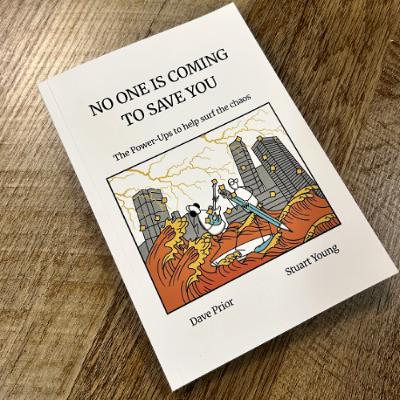
In this engaging conversation, Johanna Rothman takes over Dave Prior's podcast to discuss the journey of writing their new book with Stu Young. They explore themes of self-responsibility, emotional intelligence, and the importance of visual thinking in navigating complexity. The authors share their personal experiences and insights on collaboration, the writing process, and the necessity of embracing change in both personal and professional lives. They emphasize the significance of authenticity and continuous improvement as key elements in achieving success and fulfillment.
Takeaways
• The book was inspired by a drunken conversation on a ship.
• Self-responsibility is crucial; no one will save you.
• Emotional intelligence is a key skill for success.
• Personal Kanban helps in organizing tasks effectively.
• PDSA (Plan, Do, Study, Adjust) is essential for personal growth.
• Visual thinking aids in problem-solving and idea generation.
• Careers are not linear; adaptability is vital.
• Change is inevitable; embrace it rather than resist.
• Collaboration enhances the writing process and creativity.
• Authenticity and imperfection are strengths, not weaknesses.
Links from the Interview:
Johanna Rothman
Web: http://www.jrothman.com/
LinkedIn: https://www.linkedin.com/in/johannarothman/
Stuart Young
Web: https://www.stuartyoung.uk/
LinkedIn: https://www.linkedin.com/in/stuart-young-vis/
Dave Prior
Web: https://linktr.ee/mrsungo
LinkedIn:https://www.linkedin.com/in/mrsungo/
Newsletter Sign Up: https://tinyurl.com/3f5aevts
No One Is Coming to Save You
https://leanpub.com/surfthechaos
The Agile Network September Event (24 hours) - Expert's Showcase
Begins 9/7 at 8 AM Eastern
https://theagilenetwork.com/group/cca3b7ef-4fb3-42a7-8f97-59ab04a7b2e5/profile
Lean Coffee with Dave, Anu Smalley, Bob Galen, and Angela Johnson
9/7 at 2 PM Eastern
https://theagilenetwork.com/event/6ba65f21-fef8-4f48-8fb5-9b769c1b1b96/ROUND_TABLE
Lean DC - Agile Meetup - No One is Coming to Save You
10/8 at 12 PM Eastern
https://www.meetup.com/dc-lean-agile/events/310850331/?eventOrigin=group_events_list
Chapters
02:28 The Backstory of the Book
08:02 The Book's Premise: No One is Coming to Save You
13:59 Emotional Intelligence and Self-Awareness
17:24 Understanding PDSA vs. PDCA
18:41 The Importance of Self-Reflection
20:06 Getting Your Shit Together: Personal Kanban and PDSA
20:37 Visual Thinking in Agile Coaching
24:35 Navigating Non-Linear Career Paths
26:22 Embracing Change in Careers
32:251 Collaborative Writing and Finishing Projects
37:45 Dealing with Change and Relationships
41:12 The Value of Time and Self-Awareness

Dave Prior transitions control of his podcast to Alex Silva, a fellow Personal Kanban practitioner. They discuss the challenges of time management and productivity, sharing personal experiences and strategies. Dave emphasizes the importance of using personal Kanban as a tool for self-reflection and optimization, rather than just task management. He describes his "productivity recovery plan" using a notebook to maintain focus when his electronic system fails. Alex highlights the benefits of community and continuous learning, noting the impact of face-to-face interactions. Both agree on the value of daily routines, such as reading and exercise, for maintaining balance and productivity.
Contacting Alex
LinkedIn: https://www.linkedin.com/in/soualexsilva/
To learn more about Personal Kanban
Personal Kanban: https://www.personalkanban.com/pk/blog/
Dave’s Personal Kanban Blog Posts: https://drunkenpm.blogspot.com/2014/10/summary-of-personal-kanban-posts-for.html
The Agile Network’s Discover What’s NEXT event 8/20-21
https://theagilenetwork.com/group/ddb2c98a-5768-4763-9b3d-3ae170c384e0/profile

In this conversation, David Marquet shares his transformative leadership journey from commanding the Santa Fe submarine, one of the worst performers in the fleet, to implementing a culture of empowerment and accountability. He discusses the importance of shifting from a language of permission to a language of intent, encouraging leaders to empower their teams to think critically and make decisions. Marquet emphasizes the significance of mindset, distance, and self-coaching in effective decision-making, and how visualizing problems can lead to better solutions. The discussion culminates in practical advice for creating a culture of accountability and fostering a proactive mindset within teams.
Takeaways
Leadership is about inspiring teams, not just giving orders.
The language of permission can stifle innovation and accountability.
Empower your team to think critically and make decisions.
Mindset and distance are crucial for effective decision-making.
Coaching yourself can lead to better outcomes.
Visualizing problems helps in understanding and solving them.
Creating a culture of accountability is essential for success.
Encourage a language of intent over a language of permission.
Fresh perspectives can lead to innovative solutions.
Transformational leadership requires a shift in mindset and language.
LINKS
Distancing - How Great Leaders Reframe to Make Better Decisions by L. David Marquet and Michael A. Gillespie https://tinyurl.com/wtadnumb
You can check out the interview with David’s co-author, Michael Gillespie, here: https://on.soundcloud.com/zb166tQR3Ce8gp0tHd
Contacting L. David Marquet
Web: https://davidmarquet.com
LinkedIn: https://www.linkedin.com/in/davidmarquet/
Amazon: https://tinyurl.com/4ezbp4a9
Contacting Michael Gillespie
University of South Florida: https://tinyurl.com/yds54cbe
LinkedIn: https://www.linkedin.com/in/michael-gillespie-78661a4/

In this episode, Dave interviews Dr. Michael Gillespie about his book 'Distancing - How Great Leaders Reframe to Make Better Decisions', which explores psychological distancing as a tool for better decision-making. They discuss the importance of stepping outside one's own perspective to gain clarity, the different types of distancing (self, time, and space), and practical applications of these techniques. The conversation also touches on the role of journaling, the significance of construal level theory, and how mindfulness can complement these strategies. Ultimately, the discussion emphasizes the need for individuals to pause and reflect in order to make more informed decisions.
Takeaways
• Psychological distancing helps individuals see situations more clearly.
• Mindfulness is beneficial, but not always sufficient for immediate decision-making.
• There are three primary types of distancing: self, time, and space.
• Journaling in the third person can enhance self-awareness and clarity.
• Construal level theory explains the difference between high-level abstract thinking and low-level concrete thinking.
• Taking a pause is crucial in emotionally charged situations.
• Practicing distancing techniques can lead to better emotional regulation.
• Being a 'fly on the wall' can provide valuable perspective in difficult moments.
• It's important to normalize the practice of pausing in group settings.
• The ultimate goal is to make better decisions and improve overall well-being.
LINKS
Distancing - How Great Leaders Reframe to Make Better Decisions by L. David Marquet and Michael A. Gillespie https://tinyurl.com/wtadnumb
Contacting Michael Gillespie
University of South Florida: https://tinyurl.com/yds54cbe
LinkedIn: https://www.linkedin.com/in/michael-gillespie-78661a4/
Contacting L. David Marquet
Web: https://davidmarquet.com
LinkedIn: https://www.linkedin.com/in/davidmarquet/
Amazon: https://tinyurl.com/4ezbp4a9

In this conversation, Henry Poydar joins Dave on the podcast to discuss the innovative platform Steady, which aims to enhance team coordination and communication in the workplace. Henry shares his extensive background in engineering and web development, emphasizing the importance of context and intentions in project management. They explore the challenges of cross-team coordination, especially in the wake of the pandemic, and how Steady seeks to unburden teams from the coordination crisis. The discussion also highlights the concept of 'echoes' as a new way to provide contextual insights and the significance of celebrating individual contributions within teams. Overall, the conversation sheds light on the future of work and the role of technology in fostering collaboration and productivity.
Takeaways
- The importance of context in team coordination cannot be overstated.
- Intentions should be prioritized over commitments in project management.
- Writing down intentions serves as a forcing function for clarity.
- The pandemic has highlighted the need for better cross-team coordination.
- Steady aims to unburden teams from coordination challenges.
- The concept of a shared brain can enhance teamwork and communication.
- Echoes are a new way to provide contextual insights to team members.
- Nudges can help optimize workflows and improve productivity.
- Celebrating individual contributions is essential for team morale.
Chapters
04:22 Introduction to Steady and Henry's Background
07:25 The Evolution of Engineering and Design in Tech
10:17 The Importance of Context in Team Coordination
13:05 Intentions vs. Commitments in Project Management
16:08 The Role of Writing in Clarifying Intentions
18:55 The Impact of the Pandemic on Team Dynamics
22:07 Cross-Team Coordination Challenges
25:04 The Cost of Poor Coordination in Knowledge Work
27:54 Steady's Approach to Reducing Coordination Burden
30:58 Creating a Shared Brain for Teams
38:26 Contextualizing Team Dynamics
34:04 Empowering Autonomy in Project Management
39:50 Leveraging AI for Enhanced Collaboration
43:27 The Importance of Personal Recognition
46:00 Tailored Insights for Effective Decision Making
50:28 Vision for a Meaningful Work Environment
Contacting Henry:
- Steady: https://runsteady.com/
- LinkedIn: https://www.linkedin.com/in/henrypoydar/
Other Links from the Podcast:
- Dave and Stuart’s Book: “No One Is Coming to Save You”
www.stuartyoung.uk/copy-of-human-skills-1
- AI Readiness for Professionals Course
tinyurl.com/y79kassb
- Dave’s Upcoming Scrum Certification Classes
www.scrumalliance.org/courses-events…=14153&cnty=US

Join Dave Prior as he sits down with Ross Beurmann, author of "From Theater to Flow: Rebuilding the System Behind Agility." In this episode, they delve into the challenges of agile transformations, the concept of "Agile Theater," and the importance of focusing on the middle management to drive meaningful change. Ross shares insights from his book and discusses the need for organizations to rethink their approach to agility.
Key Topics:
The pitfalls of "Agile Theater" and how to avoid them
The role of middle management in successful transformations
Ross's unique approach to integrating governance and agility
Real-world examples and lessons learned from Ross's consulting experience
Links:
Ross's Book on Amazon https://tinyurl.com/37neasdm
Ross's Website https://rossbeurmann.com
Connect with Ross on LinkedIn: https://www.linkedin.com/in/rossbeurmann/
Links from the intro:
The Agile Network https://theagilenetwork.com/
Agile 2025 https://agilealliance.org/agile2025/
Dave and Stuarts Talk at Agile 2025: Career Power-Ups: Surviving Through Uncertainty and Change https://tinyurl.com/2s4zhzts
Dave and Stuart’s Book: “No One Is Coming to Save You” https://leanpub.com/surfthechaos


Download from Google Play

Download from App Store
 United States
Compare Celoxis, Microsoft Planner, and Microsoft Project to find the best project management software. This PPM tool comparison highlights features, usability, and pricing. https://www.celoxis.com/article/microsoft-planner-vs-project-vs-celoxis
I recall having to calculate the cost of the logistics application we were developing, which was really tough due to the lack of a suitable calculator. But then I was fortunate and discovered it here project cost calculator https://fulcrum.rocks/blog/software-cost-estimation/ , which I highly recommend. It will, in my opinion, benefit a vast number of people.