


 Claim Ownership
Seismic Soundoff
Subscribed: 112Played: 2,046
Subscribe

© All rights reserved
Description
Seismic Soundoff showcases conversations addressing the challenges of energy, water, and climate. Produced by the Society of Exploration Geophysicists (SEG) and hosted by Andrew Geary of 51 features, these episodes celebrate and inspire the geophysicists of today and tomorrow. Three new episodes monthly.
297 Episodes
Reverse
“And what the world really needs is this flexibility on energy and the agility to ensure access and affordability. And that's where steering the offshore energy business is really critical.”
Offshore energy is evolving quickly as global demand grows and new technologies emerge across oil and gas, offshore wind, and other energy systems. Alex Martinez and Joe Reilly discuss why the Offshore Technology Conference remains one of the most important places for engineers, geoscientists, and industry leaders to collaborate and share ideas. OTC 2026 in Houston (4-7 May 2026) brings the full offshore energy community together to explore solutions that will shape a reliable and sustainable energy future.
KEY TAKEAWAYS
> Rising global energy demand is driving offshore innovation. Growing energy needs are pushing companies to improve efficiency and develop new technologies across both traditional offshore oil and gas and emerging energy solutions.
> OTC creates a unique space for cross-disciplinary collaboration. Experts from many technical fields come together to share ideas and solve complex offshore energy challenges.
> Geoscientists play an important role in the future of offshore energy. Understanding the subsurface remains critical for oil and gas, offshore wind, and carbon storage projects.
LINKS
* Learn more OTC '26 - https://2026.otcnet.org/
* Register for the event (4-7 May 2026) - https://2026.otcnet.org/registration
ABOUT SEISMIC SOUNDOFF
Seismic Soundoff showcases conversations addressing the challenges of energy, water, and climate. Produced by the Society of Exploration Geophysicists (SEG) and hosted by Andrew Geary of 51 features, these episodes celebrate and inspire the geophysicists of today and tomorrow. Three new episodes monthly. See the full archive at https://seg.org/resources/podcast/.
“It’s not only about discovering resources, but about safeguarding them and safeguarding our future. When you understand the subsurface, you understand the foundation of food security, water security, and environmental stability.”
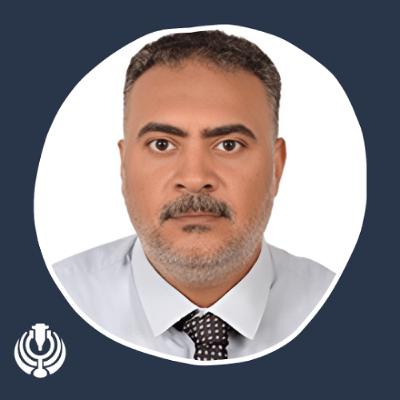
Ahmed Elshenawy, SEG’s 2026 Middle East and Africa Honorary Lecturer, explores how geophysics can help solve some of today’s biggest challenges in agriculture and environmental management. In this conversation, he explains how imaging the shallow subsurface can reveal hidden patterns of soil moisture, salinity, and groundwater movement that shape farming success. His work shows how understanding what lies beneath our feet may be key to sustainable agriculture, climate resilience, and the future of food and water security.
Learn more about Ahmed's lecture and register for his 12 March webinar - https://seg.org/education/lectures/seg-honorary-lecture-ahmed-elshenawy/
KEY TAKEAWAYS
> Geophysical tools can map soil moisture, salinity, and subsurface conditions that directly affect agriculture and water management.
> The same methods used in energy and mineral exploration can support sustainability, land restoration, and climate adaptation.
> Students who combine geophysics with hydrology, soil science, and data science will find growing career opportunities in environmental and agricultural applications.
GUEST BIO
Since 2000, Ahmed has been involved as a research team member of several national, international, and private projects regarding the application of geophysical methods for groundwater exploration, water management, aquifer characterization, desertification process monitoring, sustainable development, engineering, geotechnical and environmental problems. He’s conducted intensive data acquisition, processing, modeling, and interpretation of geoelectric and electromagnetic (VES, 2D/3D ERT, SP, IP/SIP, VLF, TDEM, and MT), geomagnetic and seismic refraction measurements as well as petrophysical measurements on both field and laboratory scale in Egypt, UK, and USA.
Currently Ahmed is CEO of the Egyptian team of the project: Sustainable Approaches to Water and Soil Management for Drylands in the Mediterranean Basin (SALM-MED) funded by the European Union’s Programme for Research and Innovation in the Mediterranean Area (PRIMA).
ABOUT SEISMIC SOUNDOFF
Seismic Soundoff showcases conversations addressing the challenges of energy, water, and climate. Produced by the Society of Exploration Geophysicists (SEG) and hosted by Andrew Geary of 51 features, these episodes celebrate and inspire the geophysicists of today and tomorrow. Three new episodes monthly. See the full archive at https://seg.org/resources/podcast/.
“The major pitfall of machine learning of any kind is to be overly confident in the results. We run the risk of garbage in gospel out.”
This discussion offers a rare chance to go a little deeper into a Leading Edge article and hear directly from the authors about the thinking behind their workflow. Satinder Chopra and Kurt Marfurt walk through how unsupervised machine learning, careful attribute selection, and simple preprocessing steps can reveal subtle channel features in a deepwater New Zealand example. It feels less like a theory lesson and more like practical guidance on using machine learning as a helpful partner in everyday seismic interpretation.
KEY TAKEAWAYS
> Small workflow choices have big impact. Clean input data, thoughtful attribute selection, and simple normalization steps often determine whether machine learning highlights geology or just amplifies noise.
> The value is in the combination of tools and judgment. Unsupervised methods quickly expose patterns, but interpreters still need to compare results with seismic sections, wells, and regional context to confirm what is real.
> PCA and SOM make complex attribute sets easier to explore. By reducing dozens of attributes into clearer clusters, they help interpreters see channel shapes and reservoir variability that might otherwise be overlooked.
LINKS
* Read the December 2025 special section - https://pubs.geoscienceworld.org/tle/issue/44/12
* Seismic characterization with unsupervised machine learning applications for facies classification by Satinder Chopra and Kurt Marfurt - https://doi.org/10.1190/tle44120934.1
ABOUT SEISMIC SOUNDOFF
Seismic Soundoff showcases conversations addressing the challenges of energy, water, and climate. Produced by the Society of Exploration Geophysicists (SEG) and hosted by Andrew Geary of 51 features, these episodes celebrate and inspire the geophysicists of today and tomorrow. Three new episodes monthly. See the full archive at https://seg.org/resources/podcast/.
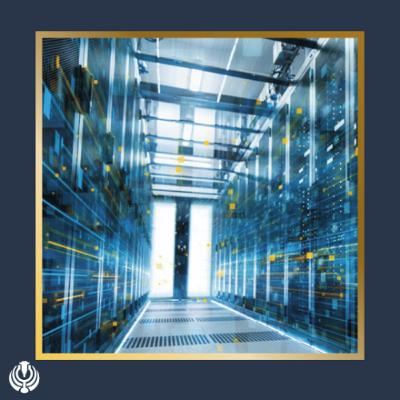
“I think that for geophysicists out there, people need to realize that it's an integrated career path. You can't separate the geophysics from the HPC anymore, if we ever did to begin with.”
High-performance computing is becoming more important as seismic data grows in size and complexity. This episode highlights the January The Leading Edge special section on high-performance computing. Guest editors Madhav Vyas and Elizabeth L’Heureux share their perspective on GPUs, CPUs, AI tools, and better algorithms in geophysics, and they stress that future success depends on combining geophysical knowledge with strong computational skills.
KEY TAKEAWAYS
> Modern seismic imaging depends on both advanced physics and powerful, well-chosen computing hardware.
> Data movement and system architecture can limit performance as much as raw processing speed.
> Geophysicists increasingly need programming and computational science skills alongside domain expertise.
LINKS
* Read the January 2026 special section, High-performance computing in geophysics - https://pubs.geoscienceworld.org/tle/issue/45/1
* Introduction to this special section: High-performance computing in geophysics by
Madhav Vyas; Elizabeth L’Heureux; Raj Gautam - https://doi.org/10.1190/tle-4501-SS01
ABOUT SEISMIC SOUNDOFF
Seismic Soundoff showcases conversations addressing the challenges of energy, water, and climate. Produced by the Society of Exploration Geophysicists (SEG) and hosted by Andrew Geary of 51 features, these episodes celebrate and inspire the geophysicists of today and tomorrow. Three new episodes monthly. See the full archive at https://seg.org/resources/podcast/.
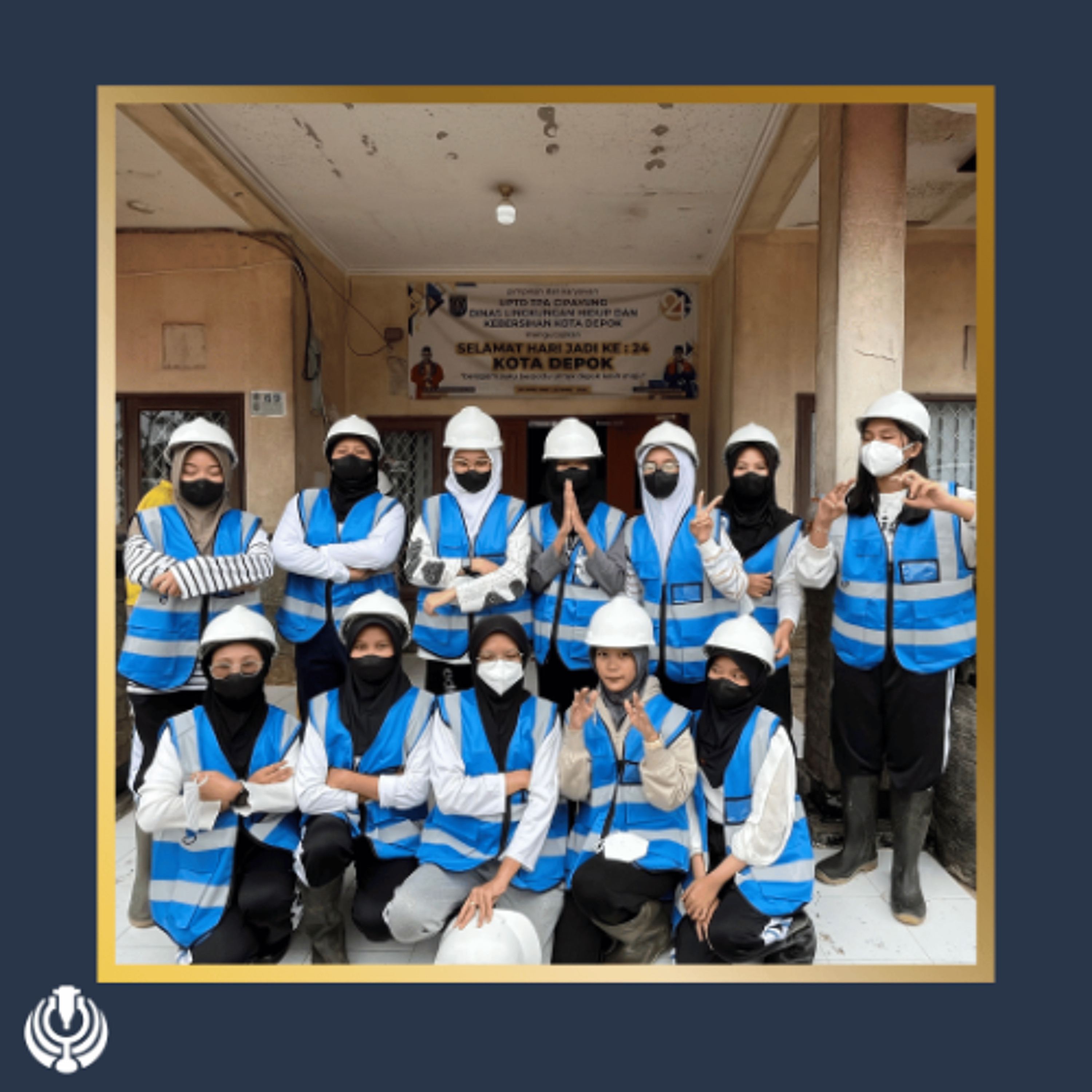
“This project really bridged the gap that we get from just learning in university and actually doing it in real life. It is actually making an impact on society.”
Stella Eulia Andoka and Michael Partogi share how their student team used applied geophysical tools to investigate groundwater contamination affecting more than 2,600 families living near the Cipayung landfill in Indonesia. With support from the SEG Foundation and Geoscientists Without Borders, the project expanded beyond data collection to include community education and engagement with residents, schools, and local decision-makers. Their work shows how resourceful, student-led teams can deliver meaningful, real-world impact through applied geoscience.
KEY TAKEAWAYS
> Student-led geophysics projects can have a direct impact on community awareness and local decision-making.
> Modest funding can deliver strong returns when teams work creatively and efficiently.
> Applied geophysics becomes more powerful when paired with education and community trust.
LINKS
* Learn more about this GWB project at https://seg.org/gwb_projects/indonesia/
* Donate to the SEG Foundation at https://seg.org/donate/
ABOUT SEISMIC SOUNDOFF
Seismic Soundoff showcases conversations addressing the challenges of energy, water, and climate. Produced by the Society of Exploration Geophysicists (SEG) and hosted by Andrew Geary of 51 features, these episodes celebrate and inspire the geophysicists of today and tomorrow. Three new episodes monthly. See the full archive at https://seg.org/resources/podcast/.
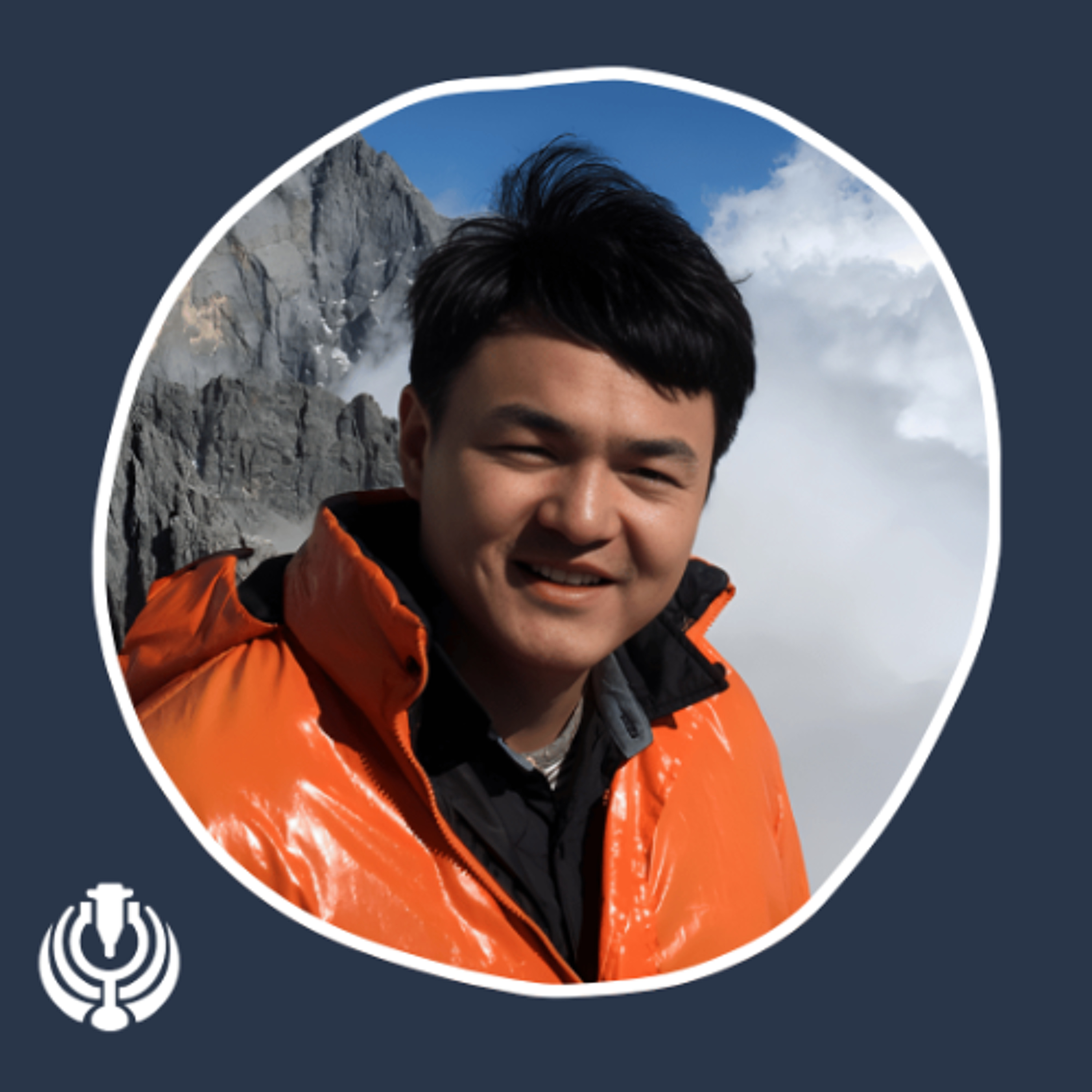
“Deep learning is ubiquitous in data processing. The question is whether we have the courage to change the way we work.”
Yangkang Chen discusses how deep learning has moved from experimentation to production in seismic processing and earthquake monitoring. Drawing on a decade-long effort to build an operational AI-driven monitoring system, he explains why tasks like first-arrival picking, velocity analysis, denoising, and reconstruction are especially well suited for deep learning. Yangkang emphasizes that success depends not just on algorithms, but on benchmarks, stability, teamwork, and trust. He also highlights how open and reproducible research lowers barriers for adoption and helps geophysicists apply AI confidently in real workflows.
KEY TAKEAWAYS
> Deep learning excels at repetitive, label-intensive seismic tasks that are slow and inconsistent using traditional methods.
> Operational AI requires trust, built through benchmarks, validation, and a clear understanding of model behavior.
> Open and reproducible workflows accelerate adoption, collaboration, and innovation across the geophysics community.
Register for his course, Deep learning for revolutionizing seismic data processing, on March 24-25, 2026 at https://seg.org/shop/product/?id+=product&id=5c3b6821-549d-f011-b41b-7c1e521913ef.
ABOUT SEISMIC SOUNDOFF
Seismic Soundoff showcases conversations addressing the challenges of energy, water, and climate. Produced by the Society of Exploration Geophysicists (SEG) and hosted by Andrew Geary of 51 features, these episodes celebrate and inspire the geophysicists of today and tomorrow. Three new episodes monthly. See the full archive at https://seg.org/resources/podcast/.
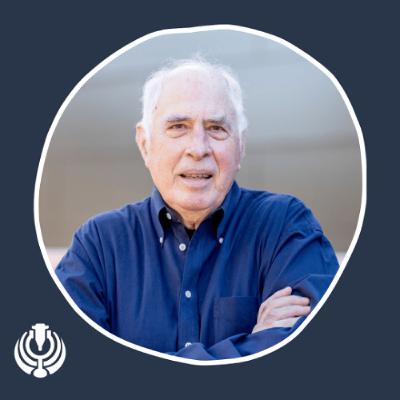
“Oil company management has to understand that its business is essentially a technology business. It's not a marketing business.”
In this episode of Seismic Soundoff, Andrew Geary speaks with Dr. Leon Thomsen about his memoir, “‘Surely You’re Joking, Mr. Thomsen!’: Adventures of a Petroleum Scientist,” and a career that helped redefine applied geophysics.
Leon reflects on the experiences that shaped his scientific mindset, from early exposure to field crews, to formative lessons in geology at Caltech, to decades of research in academia and industry. He explains how curiosity-driven exploration led him to recognize the importance of seismic anisotropy and shear-wave technology, work that ultimately carried trillion-dollar implications for hydrocarbon exploration.
The conversation also explores why transformative ideas often struggle inside large organizations, how a lack of technological literacy in management can lead to missed opportunities, and why applied science can be every bit as creative and demanding as pure research.
Looking ahead, Leon shares his perspective on the future of applied geophysics, including opportunities in fracking optimization, carbon sequestration monitoring, and subsurface hydrogen exploration, and offers encouragement to young scientists preparing to navigate the energy transition.
KEY TAKEAWAYS
> Energy is a technology business: Long-term success depends on leadership that understands and trusts science, not just short-term metrics.
> Applied science is real science: Solving practical problems can be as intellectually challenging and rewarding as purely theoretical work.
> The next frontier is subsurface innovation: Geophysics will play a critical role in fracking efficiency, CO₂ monitoring, and hydrogen exploration during the energy transition.
LINKS
* Buy Leon's memoir - https://seg.org/shop/product/?id=fe4953e4-cc89-f011-b4cb-7c1e527dc295
* Buy his previous book, "Understanding Seismic Anisotropy in Exploration and Exploitation" - https://pubs.geoscienceworld.org/seg/books/book/1042/Understanding-Seismic-Anisotropy-in-Exploration
* Read Leon's award-winning article: "A logical error in Gassmann poroelasticity" - https://www.earthdoc.org/content/journals/10.1111/1365-2478.13290
ABOUT SEISMIC SOUNDOFF
Seismic Soundoff showcases conversations addressing the challenges of energy, water, and climate. Produced by the Society of Exploration Geophysicists (SEG) and hosted by Andrew Geary of 51 features, these episodes celebrate and inspire the geophysicists of today and tomorrow. Three new episodes monthly. See the full archive at https://seg.org/resources/podcast/.
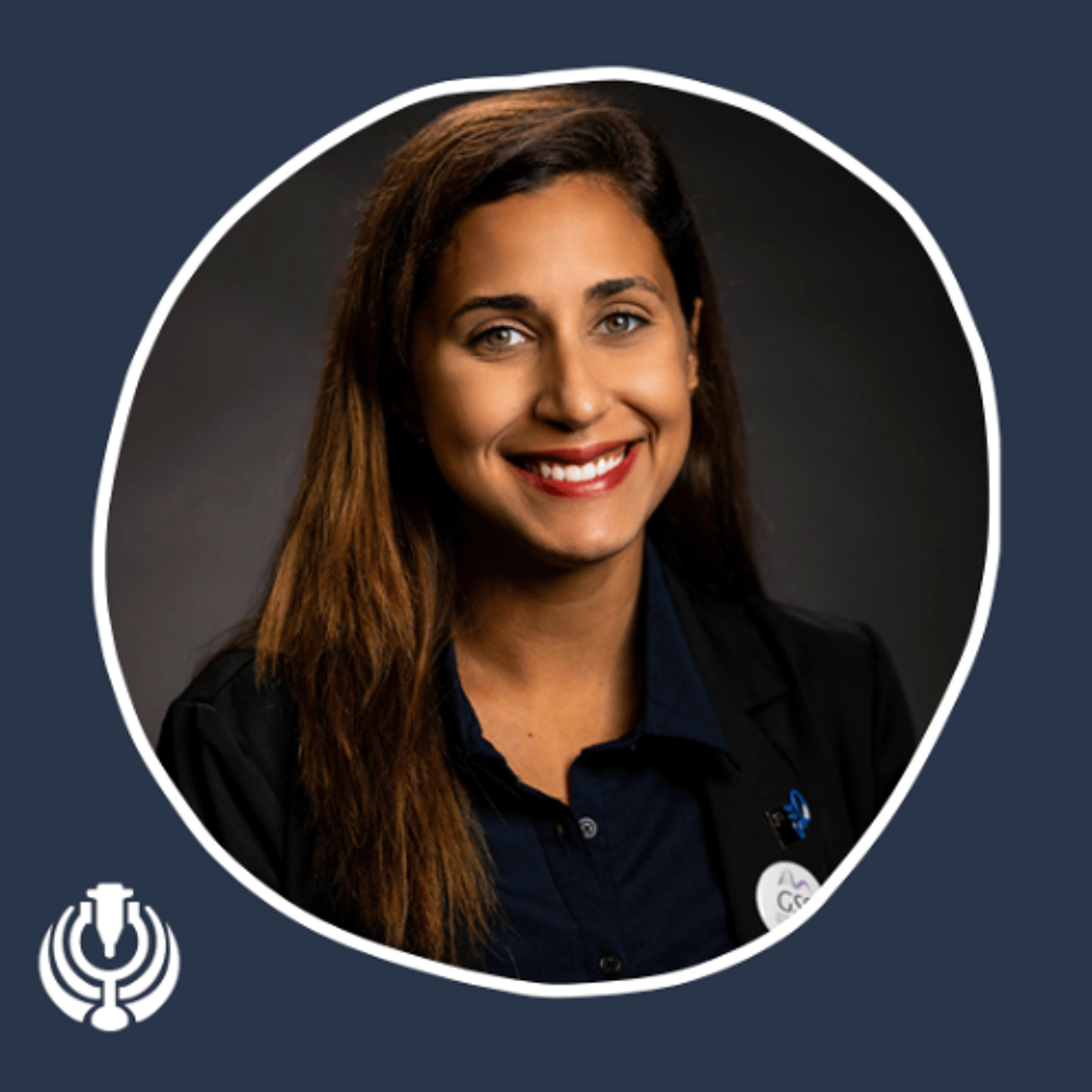
“Latin America doesn't just belong in SEG; it can help shape SEG's future. And SEG, in turn, can help shape a more connected and innovative future for geoscience in our region.”
Fernanda Hermes, SEG's Latin America Market Development & Engagement Manager, shares how Latin America is becoming a key contributor to global geophysics through its geological diversity, energy transitions, and active student communities. She explains how local partnerships and regional presence help SEG better support members and expand opportunities. Her insights show a region full of talent, ambition, and momentum for the next decade of applied geophysics.
KEY TAKEAWAYS
> Latin America is central to emerging sectors such as geothermal, CCS, critical minerals, and near‑surface studies.
> Strong student chapters and local societies are driving community, visibility, and professional growth.
> SEG’s regional presence builds trust, strengthens partnerships, and opens new opportunities for collaboration.
GUEST BIO
Fernanda Hermes holds a degree in geophysics from Fluminense Federal University (UFF) and is currently completing her Master's degree in Ocean and Earth Dynamics with a focus on onshore seismic data processing at GISIS/UFF. Fernanda previously volunteered with SEG as Marketing Director (2021-2023) of the Geoscientific Student Chapter (GSS-SEG). Fernanda is passionate about innovation, collaboration, and continuous learning.
RELATED LINKS
* Connect with Fernanda on LinkedIn at https://www.linkedin.com/in/fernanda-clara-hermes/.
* Read President’s Page: SEG’s renewed focus in Latin America by Jim White at https://doi.org/10.1190/tle44110822.1.
ABOUT SEISMIC SOUNDOFF
Seismic Soundoff showcases conversations addressing the challenges of energy, water, and climate. Produced by the Society of Exploration Geophysicists (SEG) and hosted by Andrew Geary of 51 features, these episodes celebrate and inspire the geophysicists of today and tomorrow. Three new episodes monthly. See the full archive at https://seg.org/resources/podcast/.
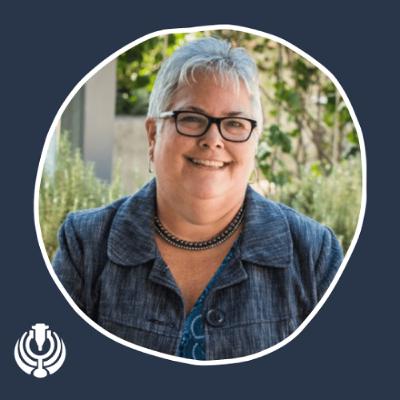
“Models are still the bread and butter in gravity and magnetics interpretation. Interpreters still have to condition the data properly, and that's half technical, half art.”
Betty Johnson shares how her early career in gravity and magnetics grew from curiosity, hands‑on learning, and rapidly changing technology. She explains how potential field methods remain valuable for addressing energy, water, and climate challenges because they are affordable, scalable, and deeply rooted in Earth’s history. Her reflections underscore the importance of high-quality data, solid fundamentals, and ongoing learning.
KEY TAKEAWAYS
> Gravity and magnetics remain essential because they are cost‑effective, scalable, and useful across many energy and environmental applications.
> Strong fundamentals in physics, geology, and modeling help interpreters make better decisions and collaborate across disciplines.
> Good data, field experience, and continuous learning are critical for building a long and impactful geophysics career.
LINKS
* Read "The Meter Reader—The tools of the trade in gravity and magnetics, 1978–1988" at https://doi.org/10.1190/tle44090738.1
* Elizabeth A. Johnson, "Gravity and magnetic analyses can address various petroleum issues" at https://doi.org/10.1190/1.1437844
* Elizabeth A. E. Johnson, "Use higher resolution gravity and magnetic data as your resource evaluation progresses" at https://doi.org/10.1190/1.1437846
THIS EPISODE SPONSORED BY STRYDE
STRYDE enables high-resolution subsurface imaging that helps emerging sectors such as CCS, hydrogen, geothermal, and minerals de-risk and accelerate exploration - delivered through the industry’s fastest, most cost-efficient, and agile seismic solution. Discover more about STRYDE at https://stryde.io/what-we-do.
ABOUT SEISMIC SOUNDOFF
Seismic Soundoff showcases conversations addressing the challenges of energy, water, and climate. Produced by the Society of Exploration Geophysicists (SEG) and hosted by Andrew Geary of 51 features, these episodes celebrate and inspire the geophysicists of today and tomorrow. Three new episodes monthly. See the full archive at https://seg.org/resources/podcast/.
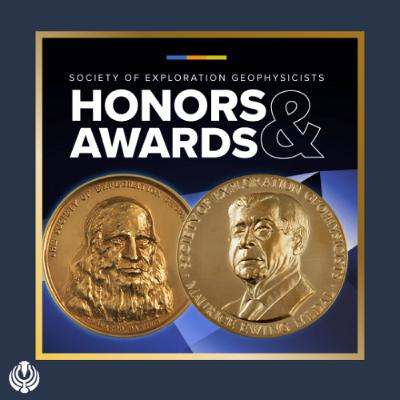
“Your nomination might be the only way their work is recognized at the level it deserves. The Honors and Awards program is powered by our members and only succeeds when we take the time to lift up one another.”
Maurice Nessim explains why SEG Honors and Awards are essential for recognizing scientific, professional, and social contributions in applied geophysics. He shares how member nominations ensure a diverse and meaningful set of candidates and encourages everyone to participate before the January 1 deadline. He also highlights the value of attending the IMAGE ’26 ceremony to celebrate the awardees and learn from their achievements.
Nominate a colleague by 1 January, 2026 at https://seg.org/resources/honors-and-awards/.
KEY TAKEAWAYS
> SEG Honors and Awards rely on member nominations to recognize impactful scientific, professional, and humanitarian contributions.
> Recognition strengthens careers, elevates organizations, and encourages innovation across applied geophysics.
> Attending the IMAGE ’26 ceremony supports awardees and helps the community learn from their work.
GUEST BIO
Maurice Nessim is the Founder, CEO, and Chairman of Greener Cleaner Cooler Globe and currently serves as Chair of the SEG Honors and Awards Committee. He brings several decades of leadership in earth science and energy, applying that expertise to advance medical imaging through his work with Ultrasound Associates. His career includes serving as a Board Director at TGS, where he guides strategy and innovation across the geoscience and energy sectors. With more than thirty years in geophysics, he has consistently championed excellence and forward‑looking solutions. His work reflects a deep commitment to using scientific progress for societal benefit.
Complete show notes at https://seg.org/podcasts/episode-280-the-awards-that-shape-geophysics-and-why-they-need-you/.
ABOUT SEISMIC SOUNDOFF
Seismic Soundoff showcases conversations addressing the challenges of energy, water, and climate. Produced by the Society of Exploration Geophysicists (SEG) and hosted by Andrew Geary of 51 features, these episodes celebrate and inspire the geophysicists of today and tomorrow. Three new episodes monthly. See the full archive at https://seg.org/resources/podcast/.
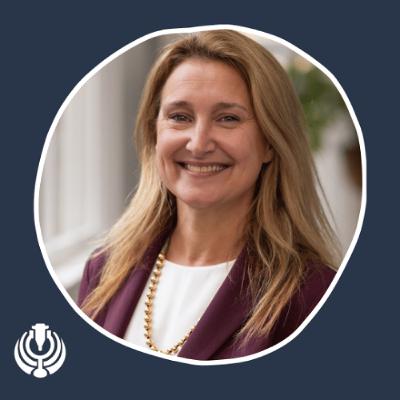
"Sustainability is about reliance and resilience. Our focus needs to be on how systems remain reliable over time."
Céline Gerson shares how Fugro is reshaping its business to focus on resilience, adaptability, and sustainability. She explains the importance of critical minerals, coastal resilience, and digital transformation for the future of geophysics. Her insights highlight how innovation, respect, and collaboration can help geoscientists succeed in a rapidly changing world.
KEY TAKEAWAYS
> Innovation often emerges during times of crisis, and companies can use downturns to launch new technologies and approaches.
> Applied geophysics plays a direct role in climate resiliency projects, from strengthening coastal infrastructure to modeling storm surge impacts.
> Transparency about data limitations and involving diverse teams in decision-making strengthens risk management and builds trust in geoscience recommendations.
GUEST BIO
Céline Gerson is the Group Director Americas at Fugro and President of Fugro USA. With over 25 years of experience, Céline has a proven record of successfully growing complex technical businesses across various industries. Before joining Fugro, Céline served as Vice President, Global Account Director for Schlumberger. She was particularly focused on energy transition, sustainability, and digital transformation. Before that, she was President of Schlumberger Canada. Along with being a Harvard Business School Alumna, Céline holds a Bachelor’s degree from the European University of Brussels and a Juris Doctorate from the University of Houston.
THIS EPISODE SPONSORED BY STRYDE
STRYDE enables high-resolution subsurface imaging that helps emerging sectors such as CCS, hydrogen, geothermal, and minerals de-risk and accelerate exploration - delivered through the industry’s fastest, most cost-efficient, and agile seismic solution. Discover more about STRYDE at https://stryde.io/what-we-do.
ABOUT SEISMIC SOUNDOFF
Seismic Soundoff showcases conversations addressing the challenges of energy, water, and climate. Produced by the Society of Exploration Geophysicists (SEG) and hosted by Andrew Geary of 51 features, these episodes celebrate and inspire the geophysicists of today and tomorrow. Three new episodes monthly. See the full archive at https://seg.org/resources/podcast/.
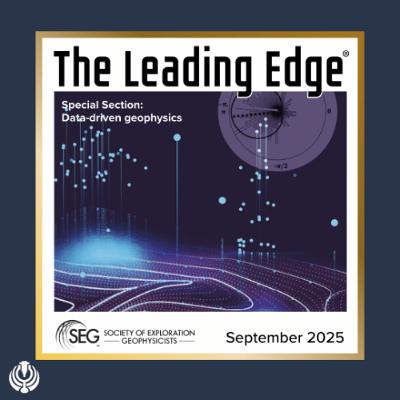
"Sometimes the traditional methods are way more effective or efficient in handling certain things. To succeed in this new paradigm, we need to build on our strong fundamentals and progress further."
Ivan Lim Chen Ning shares how data-driven methods are reshaping geophysics by challenging traditional workflows and opening new possibilities. He highlights the role of AI, machine learning, and fiber-optic sensing in improving seismic interpretation, imaging, and monitoring. His insights show how combining strong fundamentals with modern digital tools can help geophysicists solve problems more effectively.
Read the September issue of TLE about data-driven geophysics at https://library.seg.org/toc/leedff/44/9.
KEY TAKEAWAYS
> AI and data-driven tools open new paths. They help geophysicists move beyond traditional workflows to find faster and simpler solutions.
> Fiber-optic sensing changes monitoring. DAS provides continuous well data, replacing point sensors and revealing signals directly.
> Strong fundamentals still matter. Success comes from combining proven geophysical methods with modern digital skills.
GUEST BIO
Ivan Lim Chen Ning is an Earth Scientist – Fiber Optics at Chevron, where he analyzes Distributed Fiber Optic Sensing (DFOS) data and develops real-time algorithms for field applications. He applies deep learning and signal processing to improve DFOS workflows, advancing distributed acoustic sensing in the energy industry. A member of Chevron’s Emerging Leader 2024 cohort, Ivan is recognized for solving cross-disciplinary challenges and driving innovation to help secure energy for the future.
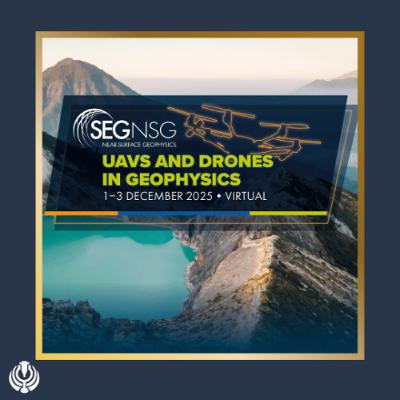
"The applications of drones in geophysics have increased dramatically in the last 10 years. Drones can be said to be an established platform for geophysical measurement methods."
Drones have quickly moved from experimental tools to essential platforms in geophysics. Johannes Stoll explains how advances in sensor miniaturization, AI navigation, and regulatory clarity are enabling wide-area surveys that deliver better data at lower costs. He highlights how collaboration across disciplines and countries is driving innovation, opening new opportunities for energy transition projects and subsurface modeling.
KEY TAKEAWAYS
> Drones are now established tools for geophysical surveys, especially in magnetics and electromagnetics.
> Sensor miniaturization and AI navigation are enabling wider, more precise, and cost-effective measurements.
> Collaboration between industry, academia, and government is critical to advancing drone-based geophysics.
LINKS
* UAVs and Drones in Geophysics (1-3 December 2025): Read the summit topics, technical program, explore the virtual showcase information, register to attend, and more at https://seg.org/calendar_events/uavs-and-drones-in-the-geophysics/.
GUEST BIO
Dr. Johannes Stoll is the founder and CEO of Mobile Geophysical Technologies (MGT). With a background in geophysics and electrochemistry, he has held multiple roles across the Oil & Gas industry as well as in leading research institutions. Bringing more than 30 years of experience as an active exploration geophysicist, Dr. Stoll combines scientific expertise with entrepreneurial vision to drive innovation in mobile geophysical solutions.
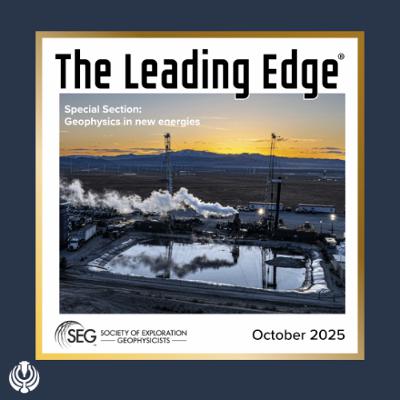
"Geophysics plays a central role in this energy transition because it provides the tools and insights needed to understand, manage, and optimize subsurface resources. These resources are critical for both traditional and renewable energy systems."
Geophysics is essential for geothermal energy, carbon storage, hydrogen storage, and critical minerals. Joël Le Calvez and Erkan Ay explain how methods like multi-physics workflows and distributed acoustic sensing are improving reliability, scalability, and safety. They also highlight the skills and mindset geophysicists need to succeed in a rapidly changing energy landscape.
Read the October issue of The Leading Edge that features a special section about geophysics for new energies at https://library.seg.org/toc/leedff/44/10.
KEY TAKEAWAYS
> Geophysics provides the foundation for safe, efficient, and scalable use of subsurface resources in the energy transition.
> Multi-physics workflows and DAS technologies reduce uncertainty and improve monitoring of geothermal and storage projects.
> Future geophysicists must combine technical expertise with adaptability, collaboration, and field experience.
GUEST BIOS
Joël Le Calvez is Principal Geologist at SLB, where he develops software for processing, visualization, and interpretation of microseismic monitoring data. His work supports applications ranging from hydraulic fracture treatment to CO₂ sequestration and geothermal injection, using downhole, shallow wellbore, and surface arrays. Before joining SLB, Joël contributed to research at the Bureau of Economic Geology’s Applied Geodynamics Laboratory and at Etudes et Recherches Géotechniques. He holds a Ph.D. in salt tectonics, an M.Sc. in geosciences, and a B.Sc. in physics.
Erkan Ay is an accomplished geophysicist with more than 18 years of international experience across oil and gas, carbon capture and storage, and academic research. He is recognized for advancing techniques in microseismic monitoring, DAS, 4D VSP, and seismic-while-drilling. Erkan’s work integrates seismology and petrophysics to better characterize complex subsurface structures. Currently, Erkan serves as Chair of the SEG Research Committee and Vice Chair of the SEG IMAGE 2026 Technical Committee, guiding collaborative efforts to advance geophysics for sustainable energy solutions.

"Generative modeling is a game-changer. We can now capture high-dimensional statistics that we could never have captured in the past."
Felix Herrmann explains how digital twins and generative AI are reshaping subsurface geophysics. He highlights the importance of open-source tools, multimodal data, and uncertainty-aware models for better decision-making in energy and storage projects. By combining physics with AI, his work shows how geophysics can move beyond silos and create more reliable and efficient solutions.
KEY TAKEAWAYS
> Digital twins informed by multimodal data can reduce uncertainty and improve reservoir management.
> Open-source tools and agreed benchmarks are essential for accelerating innovation in geophysics.
> Combining physics-based models with generative AI creates robust, practical solutions for complex subsurface challenges.
Read Felix's article in The Leading Edge, "President's Page: Digital twins in the era of generative AI," at https://doi.org/10.1190/tle42110730.1.
GUEST BIO
Felix J. Herrmann earned his Ph.D. in engineering physics from Delft University of Technology in 1997, followed by research appointments at Stanford and MIT. He later joined the University of British Columbia faculty in 2002 and moved to the Georgia Institute of Technology in 2017, where he is the Georgia Research Alliance Scholar Chair in Energy with cross-appointments across multiple schools.
Dr. Herrmann leads a cross-disciplinary research program in computational imaging, spanning seismic and medical applications, and is recognized for innovations in machine learning, optimization, and high-performance computing that have reduced costs in seismic data acquisition and imaging. A past SEG Distinguished Lecturer and recipient of the SEG Reginald Fessenden Award, he directs the Seismic Laboratory for Imaging and Modeling and co-founded the Center for Machine Learning for Seismic (ML4Seismic) to advance AI-assisted seismic imaging and reservoir monitoring through industry collaboration.
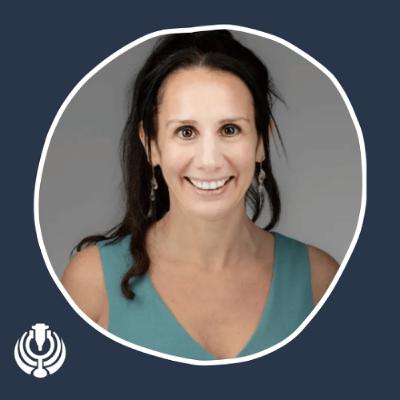
"South America is a region with great potential in terms of energy transition, mining, and geothermal. I would like to be part of the next major discoveries in critical minerals and contribute to new technologies for future generations."
Ana Curcio shares her journey from academia to industry and highlights the growing role of geophysics in South America’s energy and resource development. She explains the challenges of lithium brine exploration, the promise of geothermal energy, and the importance of connecting geophysics with engineering. Her insights show how geophysicists can play a key role in sustainable resource management and the energy transition.
Read her article, "President's Page: Resources and geophysical opportunities in South America," on the SEG Library at https://doi.org/10.1190/tle41040228.1.
For a continuing conversation on geophysics in Latin America, listen to episode 282 - https://seg.org/podcasts/episode-282-how-latin-america-is-shaping-the-next-era-of-geophysics/.
KEY TAKEAWAYS
> Geophysics must integrate with engineering to move exploration into production and add value to resource development.
> Lithium brine and geothermal exploration in South America present both technical challenges and major opportunities for innovation.
> Building stronger geophysical capacity in Latin America requires investment, education, and closer collaboration with local societies.
GUEST BIO
Ana Curcio is a Consultant at Proingeo SA and Professor at Buenos Aires University. She earned a Doctor of Engineering and has more than 15 years of experience in hydrocarbons, lithium, and mining. A former SEG Director-at-Large, she has held multiple leadership roles within SEG and currently serves on the board of the Argentinean Association of Petroleum Geologists and Geophysicists. Ana specializes in multiphysics integration for reservoir monitoring, brine prospecting, and anisotropy studies. She is fluent in Spanish, English, Portuguese, and Chinese.
ABOUT SEISMIC SOUNDOFF
Seismic Soundoff showcases conversations addressing the challenges of energy, water, and climate. Produced by the Society of Exploration Geophysicists (SEG) and hosted by Andrew Geary of 51 features, these episodes celebrate and inspire the geophysicists of today and tomorrow. Three new episodes monthly. See the full archive at https://seg.org/resources/podcast/.
"Physics-based approaches are like solving a puzzle with a set of rules. Data-driven geophysics is more like giving the puzzle to a computer that can learn the rules itself."
Amine Ourabah shares how data-driven geophysics is transforming our understanding of the subsurface by combining physics with the power of machine learning. He explains how new tools, such as nimble nodes and distributed acoustic sensing, are making seismic imaging faster, cheaper, and more accessible across various industries, including oil and gas, geothermal, and carbon storage. Amine also highlights the importance of curiosity, adaptability, and simplicity in shaping the next generation of geophysicists and technologies.
Read the September issue of The Leading Edge that features a special section about data-driven geophysics at https://library.seg.org/toc/leedff/44/9.
KEY TAKEAWAYS
> Data-driven methods reduce uncertainty, speed up workflows, and make seismic imaging more affordable for industries with limited budgets.
> Advances in sensing technology and open data sharing are fueling breakthroughs in AI-driven geophysics.
> Curiosity, adaptability, and strong fundamentals in physics and data science are essential skills for future geophysicists.
GUEST BIO
Amine Ourabah serves as Chief Geophysicist at STRYDE’s London office, where he leads a world-class team of imaging experts and drives the company’s data analytics strategy. He focuses on evolving STRYDE’s technology to deliver faster, leaner, and more accurate subsurface insights, particularly in support of the rapidly expanding renewables sector.
THIS EPISODE SPONSORED BY KATALYST DATA MANAGEMENT
Katalyst Data Management provides the only integrated, end-to-end subsurface data management solution for the oil and gas industry. Its employees operate in North America, Europe, Asia-Pacific, and South America and are dedicated to optimizing the value of subsurface data, including seismic and well data. Katalyst enables clients’ digital transformation of E&P data with digitizing services and digital transformation consulting. Learn more at https://katalystdm.com.
THIS EPISODE SPONSORED BY STRYDE
STRYDE is the world’s premier provider of ultra-lightweight seismic nodes, revolutionizing high-density subsurface imaging by making it faster, more cost-effective, and environmentally sustainable. Serving industries from oil and gas, geothermal, mining, and CCUS to academic research, STRYDE combines advanced technology, innovative exploration solutions, and expert data processing services to deliver actionable subsurface intelligence like never before. Discover STRYDE at https://stryde.io.
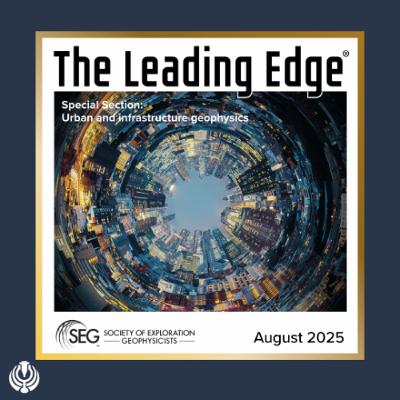
“Distributed chemical sensing really is the next frontier in fiber-optic monitoring. It adds a new dimension by directly connecting chemical changes in the environment to signals we can read.”
Distributed chemical sensing (DCS) is an emerging technology that utilizes fiber optics to measure chemical changes over long distances in real-time. Authors Christian Totland, Thomas Dylan Mikesell, and Peter James Thomas join host Andrew Geary to discuss their new paper, "Distributed chemical sensing: An unexplored frontier in urban, industrial, and environmental monitoring." Unlike traditional point sensors, which only capture data at one location, DCS has the potential to provide continuous chemical information with both high spatial and temporal resolution. This innovation could transform how we monitor pipelines, groundwater, and industrial sites, while also opening new opportunities for collaboration between geophysics, chemistry, and material science.
KEY TAKEAWAYS
> DCS can detect leaks, contamination, and chemical changes directly, offering more accurate monitoring than pressure or temperature proxies.
> The technology is still in its early stages, which means there are many opportunities for research, innovation, and interdisciplinary collaboration.
> If developed further, DCS could provide affordable, real-time monitoring for critical infrastructure and environmental systems worldwide.
LINKS
* Christian Totland, Thomas Dylan Mikesell, and Peter James Thomas, (2025), "Distributed chemical sensing: An unexplored frontier in urban, industrial, and environmental monitoring," The Leading Edge 44: 598–605. - https://doi.org/10.1190/tle44080598.1
* Learn more about this special section on urban and infrastructure geophysics - https://library.seg.org/doi/10.1190/tle44080587.1
* Listen to Haipeng Li's interview (also from this special section) - https://seg.org/podcasts/episode-271-the-low-cost-seismic-revolution-already-buried-in-your-city/
"By mapping fiber optic cables accurately, we can transform them into dense seismic arrays. This opens the door to city-scale imaging and monitoring."
Haipeng Li explains how distributed acoustic sensing (DAS) can turn existing urban fiber optic cables into powerful seismic arrays for near-surface imaging and monitoring. By using everyday traffic and ambient noise, his team can track groundwater changes, detect geohazards, and study fault structures without costly field deployments. This approach offers a new way for geophysicists, engineers, and city planners to work together for safer, more resilient urban environments.
KEY TAKEAWAYS
> Existing fiber optic cables can be transformed into dense, city-scale seismic arrays using DAS technology.
> Vehicle-induced seismic waves provide highly repeatable data for monitoring small subsurface changes, while ambient noise helps extend imaging depth.
> Urban DAS monitoring can reveal how infrastructure affects groundwater recharge and can support hazard assessment and infrastructure planning.
GUEST BIO
Haipeng Li is a third-year Ph.D. candidate in the Geophysics Department at Stanford University, advised by Biondo Biondi in the Stanford Earth Imaging Project (SEP). His research centers on spatiotemporal subsurface monitoring, with a focus on developing efficient and robust time-lapse seismic waveform inversion methods and uncertainty quantification approaches. He applies these techniques to real-world challenges such as geological CO2 sequestration for the energy transition and groundwater monitoring in urban environments, often leveraging Distributed Acoustic Sensing (DAS) data. He is a student member of the AGU, SSA, and SEG.
LINKS
* Haipeng Li, Jingxiao Liu, and Biondo L. Biondi, (2025), "Near-surface imaging and monitoring enabled by urban distributed acoustic sensing seismic arrays," The Leading Edge 44: 588–597. - https://doi.org/10.1190/tle44080588.1
"The glossary will bridge two complex worlds, geoscience and sustainability, and make them easier to understand."
Maria Angela Capello shares her vision for a new glossary that connects geoscience to sustainability in clear, practical terms. She explains how a shared vocabulary can help scientists, educators, and policymakers better understand the purpose and global impact of geoscience work. By linking technical expertise to the UN Sustainable Development Goals, the glossary aims to inspire collaboration, education, and a stronger sense of purpose across the profession.
KEY TAKEAWAYS
> A dedicated glossary can make sustainability concepts easier to understand and apply in geoscience work.
> Geoscientists contribute to all 17 UN Sustainable Development Goals, not just climate-related ones.
> Clear, shared language can help connect technical work to education, policy, and public understanding.
GUEST BIO
Maria Angela Capello (MAC) is a global leader in the energy sector, championing sustainability, equity, and diversity. An active collaborator with the United Nations and major geoscience societies, she has been honored with Italy’s Star of Italy knighthood and UNESCO recognition for advancing the UN Sustainable Development Goals. A sought-after speaker and author of three books, MAC is the only person to serve as a Distinguished Lecturer for AAPG, SPE, and SEG. She advises on sustainability, ESG, and leadership worldwide, with certifications from Cambridge University and IFP School.
LINKS
* Read "The Geophysical Sustainability Atlas: Mapping geophysics to the UN Sustainable Development Goals" - https://doi.org/10.1190/tle40010010.1
* K-12 Resources - https://education.americangeosciences.org/resources
* Practical Geocommunication for the American Geosciences Institute - https://training.geologize.org/pages/agi

Comments

Download from Google Play

Download from App Store
 United States