


Data, Insight, and Risk in Modern Geoscience
Update: 2025-12-04
Description
"Sustainability is about reliance and resilience. Our focus needs to be on how systems remain reliable over time."
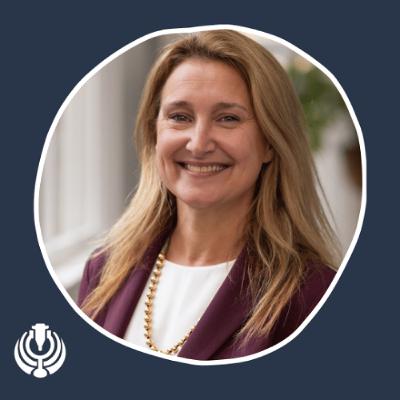
Céline Gerson shares how Fugro is reshaping its business to focus on resilience, adaptability, and sustainability. She explains the importance of critical minerals, coastal resilience, and digital transformation for the future of geophysics. Her insights highlight how innovation, respect, and collaboration can help geoscientists succeed in a rapidly changing world.
KEY TAKEAWAYS
> Innovation often emerges during times of crisis, and companies can use downturns to launch new technologies and approaches.
> Applied geophysics plays a direct role in climate resiliency projects, from strengthening coastal infrastructure to modeling storm surge impacts.
> Transparency about data limitations and involving diverse teams in decision-making strengthens risk management and builds trust in geoscience recommendations.
GUEST BIO
Céline Gerson is the Group Director Americas at Fugro and President of Fugro USA. With over 25 years of experience, Céline has a proven record of successfully growing complex technical businesses across various industries. Before joining Fugro, Céline served as Vice President, Global Account Director for Schlumberger. She was particularly focused on energy transition, sustainability, and digital transformation. Before that, she was President of Schlumberger Canada. Along with being a Harvard Business School Alumna, Céline holds a Bachelor’s degree from the European University of Brussels and a Juris Doctorate from the University of Houston.
THIS EPISODE SPONSORED BY STRYDE
STRYDE enables high-resolution subsurface imaging that helps emerging sectors such as CCS, hydrogen, geothermal, and minerals de-risk and accelerate exploration - delivered through the industry’s fastest, most cost-efficient, and agile seismic solution. Discover more about STRYDE at https://stryde.io/what-we-do.
Céline Gerson shares how Fugro is reshaping its business to focus on resilience, adaptability, and sustainability. She explains the importance of critical minerals, coastal resilience, and digital transformation for the future of geophysics. Her insights highlight how innovation, respect, and collaboration can help geoscientists succeed in a rapidly changing world.
KEY TAKEAWAYS
> Innovation often emerges during times of crisis, and companies can use downturns to launch new technologies and approaches.
> Applied geophysics plays a direct role in climate resiliency projects, from strengthening coastal infrastructure to modeling storm surge impacts.
> Transparency about data limitations and involving diverse teams in decision-making strengthens risk management and builds trust in geoscience recommendations.
GUEST BIO
Céline Gerson is the Group Director Americas at Fugro and President of Fugro USA. With over 25 years of experience, Céline has a proven record of successfully growing complex technical businesses across various industries. Before joining Fugro, Céline served as Vice President, Global Account Director for Schlumberger. She was particularly focused on energy transition, sustainability, and digital transformation. Before that, she was President of Schlumberger Canada. Along with being a Harvard Business School Alumna, Céline holds a Bachelor’s degree from the European University of Brussels and a Juris Doctorate from the University of Houston.
THIS EPISODE SPONSORED BY STRYDE
STRYDE enables high-resolution subsurface imaging that helps emerging sectors such as CCS, hydrogen, geothermal, and minerals de-risk and accelerate exploration - delivered through the industry’s fastest, most cost-efficient, and agile seismic solution. Discover more about STRYDE at https://stryde.io/what-we-do.

Comments
In Channel








Download from Google Play

Download from App Store
 United States
00:00
00:00
x

