


 Claim Ownership
Lama Zopa Rinpoche full length teachings
Subscribed: 24Played: 352
Subscribe

© Copyright 2026 Lama Zopa Rinpoche
Description
This podcast brings to you the teachings given by Lama Zopa Rinpoche in full length. Our current focus for new episodes lies on older teachings by Rinpoche that have not been published in video yet as well as major retreats that Rinpoche had led over the years. These episodes are mostly unedited in terms of content but often improved in terms of sound quality. See their video counterparts on our RAN page at fpmt.org/media/streaming/teachings-of-lama-zopa-rinpoche/
151 Episodes
Reverse
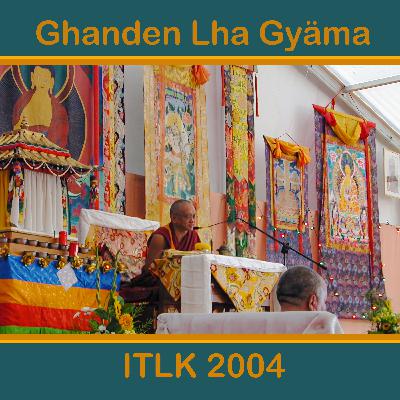
This teaching was given by Lama Zopa Rinpoche at Lama Tsonkhapa Institute in Italy as part of the Ganden Lha Gyama retreat between September 3-30, 2004.00:00:00 Rinpoche leads the motivation and protector prayers.00:26:00 Rinpoche gives a commentary on a quote from Lama Tsongkhapa about giving up the essenceless activities, like casting the husk, and practicing Dharma.00:51:00 Rinpoche explains the meaning dag nyen - all sentient beings being one's kin.00:57:35 From beginningless rebirths, every sentient being has cherished us more than themselves, especially when being our mother, suffering numberless times for our well-being, happiness, and even our education, creating so much negative karma due to not having Dharma wisdom. Even those who abuse us in this life have done this numberless times, and they continuously suffer in the lower realms without even one second of freedom from samsaric suffering, so we must generate compassion and loving kindness towards them.01:36:15 All the Buddhas and bodhisattvas whom I pray to, follow, who inspire me, all the rest of the Mahayana path realizations come from suffering sentient beings.01:50:50 Rinpoche leads the analytical meditation on taking responsibility to free suffering sentient beings and generating bodhicitta.01:54:10 Rinpoche explains the importance of Highest Yoga Tantra in achieving enlightenment.02:19:50 According to Lama Tsongkhapa tradition, integrating Chakrasamvara, Guhyasamaja and Yamantaka makes it possible to achieve enlightenment quicker.Find out more about Lama Zopa Rinpoche, his teachings and projects at https://fpmt.org/
This teaching was given by Lama Zopa Rinpoche at Lama Tsonkhapa Institute in Italy as part of the Ganden Lha Gyama retreat between September 3-30, 2004.00:04:23 Lama Zopa Rinpoche thanks the organization and Lama Tsongkhapa Institute for providing the facilities and course.00:08:46 To achieve enlightenment, we need to engage in both study and retreat. Dromtonpa explained, “While I am listening, I am reflecting. While I am reflecting, I meditate.” Listening, reflecting, and meditating should be practiced without separation.00:16:15 Without learning and explanation, there is nothing to meditate on, except delusions. The more we practice, the more powerful our actions become to benefit others.00:22:48 Even with intellectual understanding we can benefit so much, but especially if we have realizations, we are able to offer very deep benefit to others.00:24:54 The meaning of "transmigratory beings": all those sentient beings who are transmigrating to one of the six realms under the control of karma and delusion.00:42:43 If it was only up to the compassion and power of the Buddhas, there would not be a single suffering sentient being left. Sentient beings need to make effort from their side to change their karma.00:59:14 The best way to benefit sentient beings is by learning and practicing Dharma - stopping non-virtuous actions and engaging in virtuous ones. This enables us to give others the ultimate benefit.01:01:45 Even just by educating others in the Four Noble Truths, we can offer incredible benefit and lead them to ultimate happiness. This is the best solution and our contribution to world peace.Find out more about Lama Zopa Rinpoche, his teachings and projects at https://fpmt.org/
Lama Zopa Rinpoche explains that the purpose of visualizing the mandala is to attain those paths within one’s own heart. To collect the most extensive merit for this practice, Lama Tsongkhapa advised to do the visualizations clearly and visualize as many as possible.Rinpoche describes how to start the day with a bodhicitta motivation and a meditation on impermanence-death. We should think how wonderful it is to wake up alive again as a human being. Every second of our life is more precious than the whole sky filled with wish-granting jewels. By reflecting on impermanence and the precious human rebirth, we should determine to practice the three levels of teachings based on correctly devoting ourselves to the virtuous friend.After that, Rinpoche advises to think, ‘I’m going to die today.’ By thinking like this, you’ll engage in practice, and you’ll be prepared for death. Then, the question arises, ‘What should I do?’ The answer is to cherish other sentient beings. By thinking of the shortcomings of self-cherishing and the benefits of cherishing others, we then engage in tong-len practice. From this, we conclude to never separate from bodhicitta. In this way, all our activities become the cause of enlightenment.Rinpoche completes the oral transmission of the Arya Sanghata Sutra and talks about the benefits of this sutra. He says that even hearing one word of it brings unimaginable purification.Rinpoche says that for all attendees who undertook hardships to complete the retreat, there’s some benefit. However, he emphasizes that intellectual understanding is one thing, but what he is really looking for is practice and to have some effect, some change in the heart.From April 10 to May 10, 2004, Lama Zopa Rinpoche gave extensive teachings during the Mahamudra Retreat at Buddha House in Australia. While the retreat focused on Mahamudra, Rinpoche also taught on a wide range of Lamrim topics. This retreat marked the beginning of a series of month-long retreats in Australia. Subsequent retreats were held in 2011, 2014, and 2018, hosted by the Great Stupa of Universal Compassion in Bendigo.Find out more about Lama Zopa Rinpoche, his teachings and projects at https://fpmt.org/
Lama Zopa Rinpoche describes the motivation, visualizations, and dedications for making our offerings expansive. With a bodhicitta motivation, we should visualize that we are offering all the offerings in all FPMT centers on behalf of all sentient beings to the ten-direction Buddha, Dharma, and Sangha, thinking that their essence is the root virtuous friend.Rinpoche goes into detail about incense offerings and describes how they can become a means for healing illnesses. He says that most sicknesses are related to spirits. He explains how reciting Hayagriva and Vajrapani mantras can cure cancer because Vajrapani-Hayagriva-Garuda protects sentient beings from nagas’ harms. He also relates a story about how Guru Padmasambhava did an incense puja to protect Songtsen Gampo and his wife from sickness due to pollution. After the puja, they were completely healed.Rinpoche describes the visualization for offering the bell. He says that after offering the bell to the guru, when you ring it again, all the hell beings hear the sound and realize emptiness. Again, as you ring the bell, all the pretas, animals, human beings, sura, asura, and intermediate stage beings hear it and realize emptiness.Rinpoche describes the offering mandala with the golden earth, golden base, four continents, and Mount Meru. He says that it becomes a pure land, and you should visualize it as whichever pure land you want to be reborn in. Then, you think that sentient beings are born there, receive teachings from the buddha of that pure land, and become enlightened. Rinpoche emphasizes that the minute you visualize the mandala offering, you must offer it immediately.From April 10 to May 10, 2004, Lama Zopa Rinpoche gave extensive teachings during the Mahamudra Retreat at Buddha House in Australia. While the retreat focused on Mahamudra, Rinpoche also taught on a wide range of Lamrim topics. This retreat marked the beginning of a series of month-long retreats in Australia. Subsequent retreats were held in 2011, 2014, and 2018, hosted by the Great Stupa of Universal Compassion in Bendigo.Find out more about Lama Zopa Rinpoche, his teachings and projects at https://fpmt.org/
Lama Zopa Rinpoche talks about the Arya Sanghata Sutra. He says it is an incredible source of collecting merit. The minute you hear this Arya Sanghata Sutra, it completely purifies all the five uninterrupted negative karmas. It’s like an atomic bomb to purify negative karma.Rinpoche says that to build the Maitreya Buddha statue as quickly as possible, many sangha and students have been reciting this sutra. Rinpoche explains that this project requires a lot of merit due to the inconceivable benefit that it will bring to sentient beings.Rinpoche describes how thousands of pilgrims will come to see the Maitreya statue every day. Due to the power of the holy object, they will be liberated from samsara. Rinpoche emphasizes that the existence of these holy objects makes it unbelievably easy for us ordinary sentient beings, who don’t have special realizations, to create the cause for enlightenment. Every time we offer one stick of incense, a flower, or anything else to the holy object, we create the cause for enlightenment.Rinpoche says that Kirti Tsenshab Rinpoche explained that having received the oral transmission of the Arya Sanghata Sutra makes a huge difference when you read it. After receiving the transmission, the power of the merit of reading it once is equivalent to reading it one hundred times. Thus, Rinpoche begins the oral transmission of the Arya Sanghata Sutra and completes the first section.From April 10 to May 10, 2004, Lama Zopa Rinpoche gave extensive teachings during the Mahamudra Retreat at Buddha House in Australia. While the retreat focused on Mahamudra, Rinpoche also taught on a wide range of Lamrim topics. This retreat marked the beginning of a series of month-long retreats in Australia. Subsequent retreats were held in 2011, 2014, and 2018, hosted by the Great Stupa of Universal Compassion in Bendigo.Find out more about Lama Zopa Rinpoche, his teachings and projects at https://fpmt.org/
In recapping the benefits of stupas and the mantras to fill them, Rinpoche advises not to put all kinds of things inside the stupa, such as incomplete Dharma texts or wrong-view texts. He says that we need to be careful because what you put inside a stupa affects the monastery, nunnery, center, or family. It’s also necessary to check what kind of person made the offering. If it comes from someone who has broken samaya with the guru, many others will lose faith.Rinpoche emphasizes that everything must be neat with the filling of different mantras in different parts of the stupa. The mantras should not be upside down as this can cause obstacles. The print should be perfectly clear without any smudges. Additionally, the person filling the stupa should be a devoted practitioner.Rinpoche recites the Requesting Prayer to the Lineage Lamas and clarifies some of the translations. In particular, he queries the use of ‘as’ in the phrase, ‘to see the guru as Buddha’.Rinpoche explains that when ringing the bell at the end of mantra recitation, the meaning is to bring our awareness into emptiness. The bell signifies the wisdom of emptiness. At all other times, the meaning is an offering. Thus, when we use the bell, we shouldn’t just play it, rather we should make an offering.From April 10 to May 10, 2004, Lama Zopa Rinpoche gave extensive teachings during the Mahamudra Retreat at Buddha House in Australia. While the retreat focused on Mahamudra, Rinpoche also taught on a wide range of Lamrim topics. This retreat marked the beginning of a series of month-long retreats in Australia. Subsequent retreats were held in 2011, 2014, and 2018, hosted by the Great Stupa of Universal Compassion in Bendigo.Find out more about Lama Zopa Rinpoche, his teachings and projects at https://fpmt.org/
Lama Zopa Rinpoche explains why Buddha manifested relics. He says that it was explained in the Golden Light Sutra that the Buddha showed a short lifespan to benefit sentient beings. The activity of passing away and leaving relics shows the skillful means of the Buddha. By prostrating, making offerings, and serving the relic, you are able to abandon the eight non-freedoms. You will also meet a virtuous friend, not give up bodhicitta, increase unimaginable merit, and quickly go beyond samsara. Also, each time you see Buddha’s relic, it purifies one thousand eons of negative karma.Rinpoche says that one time he went to Chenrezig Institute and noticed that the atmosphere had changed. It had become very peaceful and calm. Then, he realized it was because of the new prayer wheel. This was one of the first prayer wheels in the FPMT organization. Rinpoche says that the prayer wheel inspiration came from Geshe Lama Konchog, who told him where he could find a text that refers to the incredible benefits of prayer wheels. Rinpoche read this text, put it on his head, and declared that he would spread this practice all over the world.Rinpoche talks about Geshe Lama Konchog, who left five-colored relics. He says that these relics are very unusual; they indicate someone who has attained Buddha’s five wisdoms. Rinpoche praises the way Geshe Lama Konchog lived austerely and practiced Dharma.Rinpoche also discusses Zina’s life story and the emergence of the FPMT organization. He talks about how they first met in Darjeeling and how she passed away while doing a long retreat in Nepal. Rinpoche says that he checked with two lamas, and both asserted that she had gone to a pure realm.From April 10 to May 10, 2004, Lama Zopa Rinpoche gave extensive teachings during the Mahamudra Retreat at Buddha House in Australia. While the retreat focused on Mahamudra, Rinpoche also taught on a wide range of Lamrim topics. This retreat marked the beginning of a series of month-long retreats in Australia. Subsequent retreats were held in 2011, 2014, and 2018, hosted by the Great Stupa of Universal Compassion in Bendigo.Find out more about Lama Zopa Rinpoche, his teachings and projects at https://fpmt.org/
Lama Zopa Rinpoche reads the General Confession in the presence of two relics. He clarifies some of the points and explains how to mediate on how everything is merely labeled.Rinpoche then recites the increasing effect mantra, the mala blessing mantra, and the mantra for blessing the feet. He describes the benefits of these mantras. Next, he gives the oral transmission and a detailed commentary of the blessing the speech practice. He says that if you do this practice, it perfects the power of speech, increases whatever recitation you do by ten million times, and prevents the power of mantra being destroyed by black foods. He describes the visualizations, mantras, and prayers of this practice.To conclude, Rinpoche asserts that everyone should recite Chenrezig and Medicine Buddha mantras. The Chenrezig mantra is needed to develop compassion, achieve bodhicitta, and fulfill the wishes of all beings. The Medicine Buddha mantra is needed for success as it pacifies obstacles. Rinpoche says that as long as you are still breathing, even if you don’t do other prayers, you should at least recite these two mantras.From April 10 to May 10, 2004, Lama Zopa Rinpoche gave extensive teachings during the Mahamudra Retreat at Buddha House in Australia. While the retreat focused on Mahamudra, Rinpoche also taught on a wide range of Lamrim topics. This retreat marked the beginning of a series of month-long retreats in Australia. Subsequent retreats were held in 2011, 2014, and 2018, hosted by the Great Stupa of Universal Compassion in Bendigo.Find out more about Lama Zopa Rinpoche, his teachings and projects at https://fpmt.org/
Lama Zopa Rinpoche reads some verses from Phabongkha Dechen Nyingpo’s Calling the Guru from Afar and discusses the meaning. He talks about the rarity of finding a precious human body and meeting the Dharma. In every second, you have the unmistaken choice to either create the cause to be born in hell or to achieve enlightenment. Having this incredible opportunity is only due to the kindness of the guru.Rinpoche says that all happiness comes from bodhicitta. Whatever way we can benefit others, we must do it. To illustrate, he gives the example of a van that Roger bought, and they covered with mantras, images of deities, and Dharma messages. In this way, whoever sees, touches, remembers, or dreams of this van purifies all their sufferings and achieves enlightenment.Rinpoche says that there’s nobody to work for except other sentient beings. To free them from all suffering and bring them to enlightenment, you first need to achieve the omniscient mind and then full enlightenment. To do that, you need to actualize the steps of the path to enlightenment. Rinpoche explains that this means not just meditating on what you like and leaving aside what you don’t like, such as the lower realm sufferings or impermanence and death. Without renunciation of samsara, you cannot realize compassion and bodhicitta. Thus, you cannot enter the Mahayana path.Having the realization of bodhicitta is not enough, one must also realize emptiness through dependent arising. Rinpoche says that the borderline of existing and not existing is extremely subtle. Phenomena exist in mere name, merely imputed by mind. He says that the analysis of emptiness is completed when one realizes the unification of emptiness and dependent arising. If it comes to this point of realizing the subtle dependent arising, then your realization of emptiness is correct. If it doesn’t lead to this point—if it leads to either nihilism or externalism—that is not realizing the Middle Way view.From April 10 to May 10, 2004, Lama Zopa Rinpoche gave extensive teachings during the Mahamudra Retreat at Buddha House in Australia. While the retreat focused on Mahamudra, Rinpoche also taught on a wide range of Lamrim topics. This retreat marked the beginning of a series of month-long retreats in Australia. Subsequent retreats were held in 2011, 2014, and 2018, hosted by the Great Stupa of Universal Compassion in Bendigo.Find out more about Lama Zopa Rinpoche, his teachings and projects at https://fpmt.org/
Lama Zopa Rinpoche gives an extensive presentation on the benefits of making stupas. He says that it’s so easy to benefit other sentient beings by making holy objects, such as statues and stupas. The minute it’s completed, it becomes an object of purification. It purifies sentient beings’ negative karma and plants the seed of enlightenment because of the powerful mantras and sutras held within. Rinpoche gives the example of the benefits of the Diamond-Cutter Sutra and the Mitukpa mantra. Just seeing the holy object from afar brings so many benefits, but if you make offerings, prostrate, and circumambulate, then you collect even greater merit.Rinpoche says that it’s important to know the benefits of making holy objects and how they offer extensive benefits to sentient beings. He outlines the ten benefits of building a stupa according to Puten Rinpoche. He also talks about the eighteen benefits of building a stupa mentioned in the Sutra Clarifying the Aspects of Karma (which are similar to the ten benefits mentioned by Puten Rinpoche).Next, Rinpoche explains the mantra to recite before building a stupa and the mantras to place inside the life-tree of the stupa. He outlines the enormous benefits of these mantras. He also talks about the mala blessing mantras, which multiply the number of mantras and the merit. He says that this is a way to take the greatest benefit in your life.From April 10 to May 10, 2004, Lama Zopa Rinpoche gave extensive teachings during the Mahamudra Retreat at Buddha House in Australia. While the retreat focused on Mahamudra, Rinpoche also taught on a wide range of Lamrim topics. This retreat marked the beginning of a series of month-long retreats in Australia. Subsequent retreats were held in 2011, 2014, and 2018, hosted by the Great Stupa of Universal Compassion in Bendigo.Find out more about Lama Zopa Rinpoche, his teachings and projects at https://fpmt.org/
Lama Zopa Rinpoche reads the Mahamudra lineage prayer and explains the fundamental meaning of mahamudra. He says it is the unification of emptiness and dependent arising. No phenomena exist without being empty. All phenomena are sealed by emptiness; they exist by dependent arising, being merely imputed by the mind, related to the base. Rinpoche also outlines the supreme mahamudra, which is the path of unification.Rinpoche continues reading the Mahamudra lineage prayer and explains how to meditate on the points. He says that by knowing the life stories of the lineage lamas, so much faith is generated. For example, by knowing Lama Tsongkhapa’s life story, it’s easier to develop devotion. Rinpoche also explains how to see each lineage lama and your own guru as one. He says that when we say ‘Lama Tsongkhapa’, it’s not that. ‘Lama’ means your own root guru, so you are looking at it as one. In this way, the Mahamudra lineage prayer is combined with guru yoga.Rinpoche cites a lama who said, ‘I have no other meditation except the guru’. By this, he meant there’s no deity you visualize that is not the guru.From April 10 to May 10, 2004, Lama Zopa Rinpoche gave extensive teachings during the Mahamudra Retreat at Buddha House in Australia. While the retreat focused on Mahamudra, Rinpoche also taught on a wide range of Lamrim topics. This retreat marked the beginning of a series of month-long retreats in Australia. Subsequent retreats were held in 2011, 2014, and 2018, hosted by the Great Stupa of Universal Compassion in Bendigo.Find out more about Lama Zopa Rinpoche, his teachings and projects at https://fpmt.org/
Lama Zopa Rinpoche explains that the Ten Innermost Jewels of the Kadampa Geshes is mainly aimed toward Sangha and those doing a lifetime retreat. Even though most of us are unable to practice like the Kadampa geshes, reciting the Ten Innermost Jewels leaves a positive imprint so that we can practice like them in the future.Rinpoche reads the bodhicitta motivation aimed toward freeing hell beings, hungry ghosts, animals, human beings, sura beings, asura beings, and intermediate state beings. He continues with the tsog offering and Praise in Eight Lines. He says that it’s important to make strong requests to actualize the three principals of the path in this very lifetime without delay.Rinpoche concludes with dedications and the Medicine Buddha practice. He explains how to visualize and pray to each of the seven Medicine Buddhas, while dedicating it to those who are sick as well as those who have passed away.From April 10 to May 10, 2004, Lama Zopa Rinpoche gave extensive teachings during the Mahamudra Retreat at Buddha House in Australia. While the retreat focused on Mahamudra, Rinpoche also taught on a wide range of Lamrim topics. This retreat marked the beginning of a series of month-long retreats in Australia. Subsequent retreats were held in 2011, 2014, and 2018, hosted by the Great Stupa of Universal Compassion in Bendigo.From April 10 to May 10, 2004, Lama Zopa Rinpoche gave extensive teachings during the Mahamudra Retreat at Buddha House in Australia. While the retreat focused on Mahamudra, Rinpoche also taught on a wide range of Lamrim topics. This retreat marked the beginning of a series of month-long retreats in Australia. Subsequent retreats were held in 2011, 2014, and 2018, hosted by the Great Stupa of Universal Compassion in Bendigo.Find out more about Lama Zopa Rinpoche, his teachings and projects at https://fpmt.org/
Lama Zopa Rinpoche explains that the Ten Innermost Jewels of the Kadampa Geshes is mainly aimed toward Sangha and those doing a lifetime retreat. Even though most of us are unable to practice like the Kadampa geshes, reciting the Ten Innermost Jewels leaves a positive imprint so that we can practice like them in the future.Rinpoche reads the bodhicitta motivation aimed toward freeing hell beings, hungry ghosts, animals, human beings, sura beings, asura beings, and intermediate state beings. He continues with the tsog offering and Praise in Eight Lines. He says that it’s important to make strong requests to actualize the three principals of the path in this very lifetime without delay.Rinpoche concludes with dedications and the Medicine Buddha practice. He explains how to visualize and pray to each of the seven Medicine Buddhas, while dedicating it to those who are sick as well as those who have passed away.From April 10 to May 10, 2004, Lama Zopa Rinpoche gave extensive teachings during the Mahamudra Retreat at Buddha House in Australia. While the retreat focused on Mahamudra, Rinpoche also taught on a wide range of Lamrim topics. This retreat marked the beginning of a series of month-long retreats in Australia. Subsequent retreats were held in 2011, 2014, and 2018, hosted by the Great Stupa of Universal Compassion in Bendigo.From April 10 to May 10, 2004, Lama Zopa Rinpoche gave extensive teachings during the Mahamudra Retreat at Buddha House in Australia. While the retreat focused on Mahamudra, Rinpoche also taught on a wide range of Lamrim topics. This retreat marked the beginning of a series of month-long retreats in Australia. Subsequent retreats were held in 2011, 2014, and 2018, hosted by the Great Stupa of Universal Compassion in Bendigo.Find out more about Lama Zopa Rinpoche, his teachings and projects at https://fpmt.org//
Lama Zopa Rinpoche emphasizes that this perfect human body is more precious than skies of wish-fulfilling gems. It enables you to achieve any happiness you want. Therefore, it’s important not to waste it. Rinpoche cites Shantideva, who said that while one is ignorant, don’t sleep. Rinpoche explains that this not only refers to sleep, but also the mind being distracted by meaningless activities, particularly the eight worldly dharmas.Rinpoche mentions that watching TV can waste time and life. Like many activities, if it’s following the evil thought of the eight worldly dharmas, then so much life is wasted. However, he says that if you watch with the idea of lamrim and think about how samsara is in the nature of suffering, it becomes inspiration to seek liberation. You can see how people are totally living in hallucination.Rinpoche talks about the correct motivation to have when raising a child. He suggests viewing them with compassion as one of the numberless sentient beings, not as an object of attachment and self-cherishing. He also elaborates on the proper attitude to have when offering charity to a beggar and helping in a Dharma center. He says that it’s very important to have the proper motivation to make your activities beneficial. This makes life meaningful.Rinpoche discusses universal education. He says that education about how to live life inwardly is more important than external aspects, but this is lacking in schools, colleges, and universities. If people aren’t educated about the good heart, then whatever they do only becomes a cause of samsara. Thus, people need education about the good heart; they need to learn the psychology of how attachment destroys life. They also need to learn tolerance, patience, rejoicing, and forgiveness. Rinpoche says these qualities are essential for living a happy and meaningful life.Rinpoche concludes by talking about prostrations. He says that this is another extremely important daily practice to make life meaningful. He outlines the ten benefits of prostrations and describes how to do them properly. Rinpoche says that how much purification and merit you attain mainly depends on the quality of your prostrations not the quantity.From April 10 to May 10, 2004, Lama Zopa Rinpoche gave extensive teachings during the Mahamudra Retreat at Buddha House in Australia. While the retreat focused on Mahamudra, Rinpoche also taught on a wide range of Lamrim topics. This retreat marked the beginning of a series of month-long retreats in Australia. Subsequent retreats were held in 2011, 2014, and 2018, hosted by the Great Stupa of Universal Compassion in Bendigo.Find out more about Lama Zopa Rinpoche, his teachings and projects at https://fpmt.org/
Lama Zopa Rinpoche says that bearing hardships while doing this retreat purifies negative karma in the same manner as when doing a nyung-nä. He mentions how bodhisattvas bear hardships for other sentient beings, even if it causes life danger. They enjoy it so much because they can see the benefit for others.Rinpoche says that he wants to speak out on behalf of all the millipedes, worms, and other insects. He says that it’s important to help insects circumambulate holy objects. He mentions several stories about insects that collected merit in this way and then later attained a higher rebirth. In the same way, we can bring countless benefits to insects and animals by taking them around relics, statues, stupas, and scriptures. It directs their life towards enlightenment, it’s only going up.Rinpoche states that the essence of Buddhism is compassion. Buddha was inspired by compassion to achieve enlightenment, complete the two types of merit, and show us the whole path to enlightenment. Thus, holy objects have so much power because they came from Buddha’s compassion.Rinpoche talks about the realization of remembering the kindness of each insect by recognizing that it has been our mother numberless times. We should feel like that with every sentient being—whether it’s a person or an insect—anyone you see, then immediately you feel that they are so kind, precious, and close to your heart.From April 10 to May 10, 2004, Lama Zopa Rinpoche gave extensive teachings during the Mahamudra Retreat at Buddha House in Australia. While the retreat focused on Mahamudra, Rinpoche also taught on a wide range of Lamrim topics. This retreat marked the beginning of a series of month-long retreats in Australia. Subsequent retreats were held in 2011, 2014, and 2018, hosted by the Great Stupa of Universal Compassion in Bendigo.Find out more about Lama Zopa Rinpoche, his teachings and projects at https://fpmt.org/
Lama Zopa Rinpoche gives the oral transmissions of the long and short Namgyalma mantras and the Twenty-one Taras’ praise.Next, Rinpoche discusses how the first realization of lamrim is to switch from thinking about the happiness of this life to thinking about future lives. This transformation is achieved by training the mind in the eight freedoms, ten richnesses, impermanence, the sufferings of the lower realms, refuge, and karma. In this way, the happiness of this life becomes unimportant because there’s no attachment to the four desirable objects (pleasure, material gain, praise, and good reputation). When there’s attachment to these objects, there’s no inner peace and happiness because you never get satisfaction by following desire. While the mind is totally overwhelmed by attachment, there’s no space for loving kindness and compassion. At that time, the mind is not thinking about impermanence and death. Moreover, it obscures one from seeing the ultimate nature of the I, the aggregates, and phenomena.Rinpoche says that until we have the realization of renunciation of samsara, we have to meditate on true suffering and the cause of suffering. This becomes the preliminary. Afterwards, the thought to free others from samsara arises, which makes it easy to generate compassion. From this, great compassion arises, and this leads to bodhicitta. However, if renunciation to one’s own samsara is not felt strongly, then you won’t have much thought of becoming free from this. Then, there’s no real feeling of deep compassion; it becomes just words. Then, bodhicitta—the thought to achieve enlightenment for them—also becomes just words.From April 10 to May 10, 2004, Lama Zopa Rinpoche gave extensive teachings during the Mahamudra Retreat at Buddha House in Australia. While the retreat focused on Mahamudra, Rinpoche also taught on a wide range of Lamrim topics. This retreat marked the beginning of a series of month-long retreats in Australia. Subsequent retreats were held in 2011, 2014, and 2018, hosted by the Great Stupa of Universal Compassion in Bendigo.Find out more about Lama Zopa Rinpoche, his teachings and projects at https://fpmt.org/
Lama Zopa Rinpoche emphasizes that the five powerful mantras (Namgyalma, Mitukpa, Kunrig, Stainless Pinnacle, and Wish-granting Wheel) are very powerful for purification. When someone has died, if you recite these mantras while thinking of them, it protects them from the lower realms. Even if they’re already born in the lower realms, they will transcend into a higher realm. It’s also very powerful to recite for living people and animals.Rinpoche advises that before death comes, we must ensure that we have a good rebirth. This is not the ultimate achievement of this life; however, if we’re unable to achieve enlightenment in this life, we need a good rebirth (either in a pure land or the perfect human rebirth) to complete the path to enlightenment.Rinpoche highlights how all the suffering in this life is the result of self-cherishing. Conversely, all happiness and realizations of the path to enlightenment are the result of bodhicitta. Bodhicitta comes from the root, compassion. Compassion is generated by depending on the kindness of every single sentient being. Therefore, all our present, past, and future happiness—including enlightenment—is received by the kindness of every sentient being. Rinpoche encourages us to meditate on the kindness we’ve received from every hell being, preta being, hungry ghost, animal, human being, sura being, asura being, and intermediate stage being. Rinpoche concludes by stating that there’s nobody to cherish other than sentient beings. Therefore, we must free them from all suffering and its causes and lead them to enlightenment. With this motivation, we take the oral transmissions and recite the mantras.Rinpoche bestows the oral transmissions of the Mitukpa, Kunrig, Namgyalma (short version), and Stainless Pinnacle mantras. He also bestows the Milarepa mantra, which he received from His Holiness Serkong Tsenshab Rinpoche, who is the incarnation of Marpa’s son, Dharma Dode. Lama Zopa says that the Milarepa mantra is also a powerful purification for a dying person. Reciting it causes you to be born in the pure land of Milarepa, and then you receive teachings from Milarepa.From April 10 to May 10, 2004, Lama Zopa Rinpoche gave extensive teachings during the Mahamudra Retreat at Buddha House in Australia. While the retreat focused on Mahamudra, Rinpoche also taught on a wide range of Lamrim topics. This retreat marked the beginning of a series of month-long retreats in Australia. Subsequent retreats were held in 2011, 2014, and 2018, hosted by the Great Stupa of Universal Compassion in Bendigo.Find out more about Lama Zopa Rinpoche, his teachings and projects at https://fpmt.org/
Lama Zopa Rinpoche describes how to do the Lama Chöpa chants based on His Holiness Song Rinpoche’s tunes from Gaden Shartse Monastery (supposed to be also from Pabongka’s lineage). He says that in the past, the chanting came from enlightened beings. It came out of their bodhicitta to benefit sentient beings, and with their realization, so it carries their blessings.Rinpoche advises that when the chants are done nicely, it brings several benefits. It moves the minds of sentient beings and helps transform their minds into Dharma. When the chants are done slowly, they help by giving one time to think about the deep meaning of the meditation. The tunes can also persuade the holy minds of the protectors. Thus, the chanting can both benefit sentient beings and be an offering to the merit field.Rinpoche demonstrates the chants and suggests recording, practicing, and writing down the rhythms. He gives detailed instructions of the chants and shows the differences between the slow and fast chants.From April 10 to May 10, 2004, Lama Zopa Rinpoche gave extensive teachings during the Mahamudra Retreat at Buddha House in Australia. While the retreat focused on Mahamudra, Rinpoche also taught on a wide range of Lamrim topics. This retreat marked the beginning of a series of month-long retreats in Australia. Subsequent retreats were held in 2011, 2014, and 2018, hosted by the Great Stupa of Universal Compassion in Bendigo.Find out more about Lama Zopa Rinpoche, his teachings and projects at https://fpmt.org/
Lama Zopa Rinpoche says that Lama Tsongkhapa gave very clear explanations about the difficult points of sutra and tantra. He points out that this is not just his personal view but is commonly known. He cites His Holiness Dudjom Rinpoche, the head of the Nyingma, who praised Lama Tsongkhapa’s clear explanation of the path. Lama Zopa mentions that all four traditions can lead to enlightenment if practiced correctly.Next, Rinpoche analyses the existence of the letter M. He distinguishes between the base and the label of the letter M. He says that the minute you see M on the base, it’s mistaken. When you see a real M, in the sense of independent and existing from its own side, this is a hallucination. If you search for the M in any of the lines or in the collection of all these lines together, you can’t find it.Rinpoche highlights the difference between the Prasangika and Svatantrika schools. He says that in the Svatantrika view, the I is findable on the aggregates; it is findable on the base. However, in the Prasangika school, it is unfindable.Rinpoche says that the first thing we have to realize is that the real I as it appears to us—in the sense of independent, truly existent from its own side—is totally empty. He explains that everything is merely imputed by the mind—the label, the base, everything. Everything exists in mere name and is totally empty of existing from its own side.From April 10 to May 10, 2004, Lama Zopa Rinpoche gave extensive teachings during the Mahamudra Retreat at Buddha House in Australia. While the retreat focused on Mahamudra, Rinpoche also taught on a wide range of Lamrim topics. This retreat marked the beginning of a series of month-long retreats in Australia. Subsequent retreats were held in 2011, 2014, and 2018, hosted by the Great Stupa of Universal Compassion in Bendigo.Find out more about Lama Zopa Rinpoche, his teachings and projects at https://fpmt.org/
Lama Zopa Rinpoche continues his oral transmission and commentary of the Praise to Buddha Shakyamuni. He explains how the second last verse of this prayer shows how all causative phenomena are transitory and they do not exist in the way they appear. He emphasizes that they do exist, just not in the way they appear.Rinpoche says that it’s a very good meditation to continuously practice mindfulness by looking at life as like a dream. Similarly, when we recite the Heart Sutra, we use the word “no” on the merely labeled aggregates, form, feeling, cognition, consciousness. We use the word “no” like an atomic bomb thrown over the object of ignorance, which is the I appearing as a real one existing from its own side.Rinpoche explains how Lama Atisha used the word “AH” instead of “no” when reciting the Heart Sutra. He would say “AH form, AH sound” instead of “no form, no sound”. The reason is because AH is one syllable of the Perfection of Wisdom Sutra, which encompasses the heart of the 84,000 teachings of Shakyamuni Buddha. “AH” is a negative word, the same as “no”; it negates the hallucination of true existence.Rinpoche states that Buddha liberates us by revealing the truth, and it’s only the wisdom realizing emptiness that can directly remove our delusions. So, it’s important to be continually mindful of looking at the hallucination as a hallucination. Rinpoche says that we should use the dream in the place of no or AH and put the dream over the hallucination. When you practice mindfulness of this continuously, it brings you to the point of realizing emptiness (or at least reducing anger and attachment).From April 10 to May 10, 2004, Lama Zopa Rinpoche gave extensive teachings during the Mahamudra Retreat at Buddha House in Australia. While the retreat focused on Mahamudra, Rinpoche also taught on a wide range of Lamrim topics. This retreat marked the beginning of a series of month-long retreats in Australia. Subsequent retreats were held in 2011, 2014, and 2018, hosted by the Great Stupa of Universal Compassion in Bendigo.Find out more about Lama Zopa Rinpoche, his teachings and projects at https://fpmt.org/

Comments

Download from Google Play

Download from App Store
 United States