


48 Filling Stupas And Offering Bells 02-May-2004
Description
In recapping the benefits of stupas and the mantras to fill them, Rinpoche advises not to put all kinds of things inside the stupa, such as incomplete Dharma texts or wrong-view texts. He says that we need to be careful because what you put inside a stupa affects the monastery, nunnery, center, or family. It’s also necessary to check what kind of person made the offering. If it comes from someone who has broken samaya with the guru, many others will lose faith.
Rinpoche emphasizes that everything must be neat with the filling of different mantras in different parts of the stupa. The mantras should not be upside down as this can cause obstacles. The print should be perfectly clear without any smudges. Additionally, the person filling the stupa should be a devoted practitioner.
Rinpoche recites the Requesting Prayer to the Lineage Lamas and clarifies some of the translations. In particular, he queries the use of ‘as’ in the phrase, ‘to see the guru as Buddha’.
Rinpoche explains that when ringing the bell at the end of mantra recitation, the meaning is to bring our awareness into emptiness. The bell signifies the wisdom of emptiness. At all other times, the meaning is an offering. Thus, when we use the bell, we shouldn’t just play it, rather we should make an offering.
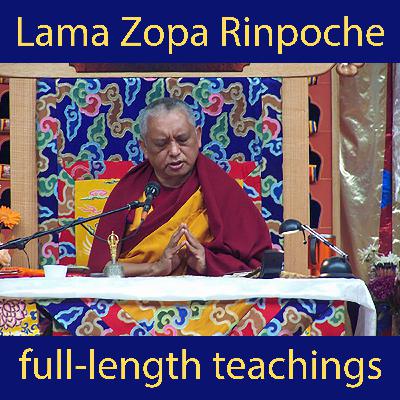
From April 10 to May 10, 2004, Lama Zopa Rinpoche gave extensive teachings during the Mahamudra Retreat at Buddha House in Australia. While the retreat focused on Mahamudra, Rinpoche also taught on a wide range of Lamrim topics. This retreat marked the beginning of a series of month-long retreats in Australia. Subsequent retreats were held in 2011, 2014, and 2018, hosted by the Great Stupa of Universal Compassion in Bendigo.
Find out more about Lama Zopa Rinpoche, his teachings and projects at https://fpmt.org/


 United States
