


 Claim Ownership
BrainFuel
Subscribed: 12Played: 90
Subscribe

© 2023 Behaviour Change Marketing Bootcamp
Description
BrainFuel – A Podcast for Health Leaders & Health Communicators
Decoding health decisions with behavioural science, real-life stories, and mindfulness—fueling clarity and empathy for better decisions.
83 Episodes
Reverse
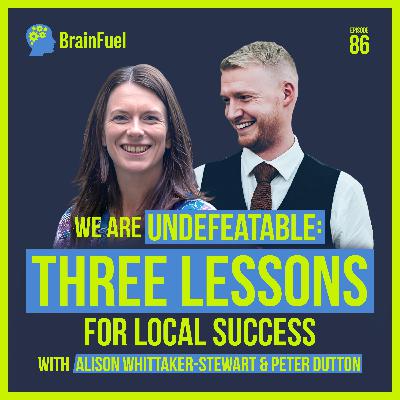
Alison Whitaker Stewart & Peter Dutton — localising We Are Undefeatable in Blackburn with Darwen
In this episode of BrainFuel, Ruth is joined by Alison Whitaker Stewart, Physical Activity Campaigns Lead at Together in Active Future (a Sport England place-based partner), and Peter Dutton, Senior Engagement Manager at the Richmond Group of Charities.
They share how they took the national We Are Undefeatable campaign and made it work locally — using real residents’ stories, strong system partnerships, and evaluation that goes beyond reach and impressions. This is a practical, behind-the-scenes look at what it takes to run a behaviour change campaign that actually lands.
🧠 What you’ll learn
The three things to do first when starting a local campaign: stakeholder buy-in, strategic alignment, and realistic resourcing
How they built community partnership by recruiting 16 local storytellers through trusted networks
How to link inspiration to action by signposting directly to local sessions and services
Why agile content wins (reels, WhatsApp-friendly edits, community-led tweaks)
How they measured impact with both numbers and qualitative insight
What “system change” looks like after the campaign goes live
📊 Outcomes & impact shared
85% said it showed people with health conditions can be active
87% said it showed being active helps you enjoy more of life
62% said it encouraged them to visit the campaign website
Stakeholders reported strong fit with local needs and priorities (including 73% saying it reflected local demographics)
The work helped trigger ongoing system activity (including funded local offers and continued partnership working)
🚪 Room 101
Peter: bin “traditional before/after case studies” — the power is in lived experience, emotion, and solidarity
Alison: bin short-term thinking — campaigns work better when you can build, iterate, and keep going
🎉 Free Event — Making Hidden Voices Heard (26 March 2026)
To celebrate five years of Hidden Voices Heard, we’re hosting a free training event:
📅 26 March 2026➡️ www.hiddenvoicesheard.com to save your spot.
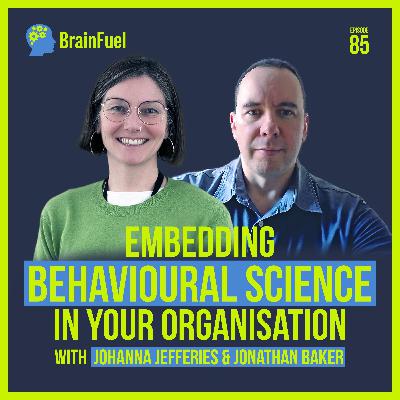
In this episode of BrainFuel, Ruth is joined by Johanna Jefferies, Public Health Consultant and Associate Director at Hampshire County Council, and Jonathan Baker, Senior Insight Lead, to share how they’ve successfully embedded behavioural science into council and public health work in a way that’s practical, memorable, and genuinely usable.
Jo and Jonathan unpack what it really takes to roll behavioural science out across an organisation iincluding what didn’t work at first, what they changed, and why training alone is never enough. You’ll hear how Hampshire redesigned its approach to focus on real-world application, post-training support, and building confidence (not overwhelm).
We also dive into their personal behaviour change stories, the biggest myth they’d throw into Room 101, and the three ingredients they believe every council needs if they want behavioural science to stick.
🧠 What You’ll Learn In This Episode
Why “good training” isn’t the same as behavioural science actually being used in day-to-day work
Why councils need to apply behavioural science to how they embed behavioural science
Why training should focus on mechanism and practice, not just theory
The biggest blocker: behavioural science being seen as “for frontline behaviour change”, not strategic council work
Why follow-up support matters more than templates
Three ingredients councils can copy if they want behavioural science to scale internally.
🚪 Room 101: Training Without Support
If Jo and Jonathan could throw one thing into Room 101 forever, it would be this:
The idea that you can train people in behavioural science and then leave them to figure it out alone.
Even great training doesn’t translate into real practice without follow-up support, confidence-building, and early case studies that show it working inside the organisation.
🎉 Free Event - Making Hidden Voices Heard - 26 March 2026
To celebrate five years of Hidden Voices Heard (and our much-loved Behaviour Change Marketing Bootcamp training), we’re hosting a free event dedicated to just that 'Making Hidden Voices Heard' on:
📅 26 March 2026➡️ Head to www.hiddenvoicesheard.com to save your spot.
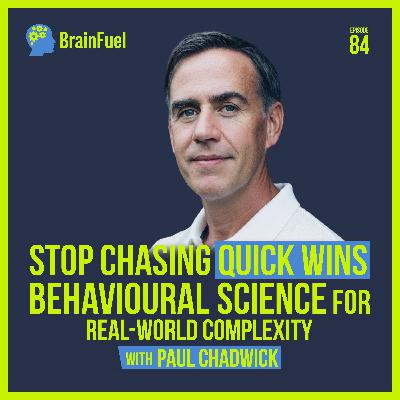
In this episode of BrainFuel, Ruth is joined by Dr Paul Chadwick Chief Executive of the Behavioural Science and Public Health Network (BSPHN), clinical psychologist, and former Co-Director at the UCL Centre for Behaviour Change.
Paul shares what’s changing inside BSPHN, why the organisation is expanding beyond public health, and what it will take to embed behavioural science across the public sector in a way that’s practical, inclusive, and built for real-world complexity.
We also dive into Paul’s personal behaviour change story, why applied behavioural science can be a lonely job, and the big myth he’d send straight to Room 101…
🧠 What You’ll Learn In This Episode
Why BSPHN believes the question is no longer “Do we need behavioural science?” but “How do we make it happen?”
Why behavioural science must expand beyond public health because everything connects back to public health
The value of the applied behavioural science practitioner (and why their wisdom needs amplifying)
The four strategic pillars shaping BSPHN’s next chapter:
Community of practice
Capacity building
Advocacy
Partnerships
Why behavioural science should never be treated as something “only for PhDs”
How BSPHN is redesigning its approach to be more useful to practitioners and academics
Why we need to stop hunting for quick-win “magic fixes” and take complexity seriously
⭐ Standout Moments
📌 Paul on moving from clinical settings into public health:
“The origins of the behaviours I was trying to change had their roots in people’s childhoods… shaped by social and cultural circumstances.”
📌 Paul on community:
“Being a behavioural scientist or applying behavioural science can be a lonely business.”
📌 The best Room 101 moment: The Behavioural Science Unicorn — the myth that tiny interventions must always create massive cost savings to be “worth it”.
🦄 Room 101: The Behavioural Science Unicorn
Paul would send this idea into Room 101:
The belief that behavioural science is only valuable when it produces simple, tiny, low-effort interventions with huge measurable impact and cost savings.
Yes nudges can be powerful. But chasing mythical “unicorn wins” can stop teams from doing the deeper work of embedding behavioural science in systems, services, leadership, and culture.
📚 Mentioned in the Episode
Paul’s book: Do I Drink Too Much? A practical, psychologically-informed guide to reflecting on alcohol use and exploring a strategic break.
📅 BSPHN Conference 2026 (Don’t Miss This)
Paul also shares details of the upcoming BSPHN conference:
🗓 8–9 March 2026 🎯 Theme: Complexity — using behavioural science to make complexity more manageable (without dumbing it down)
Don't forget to register to x
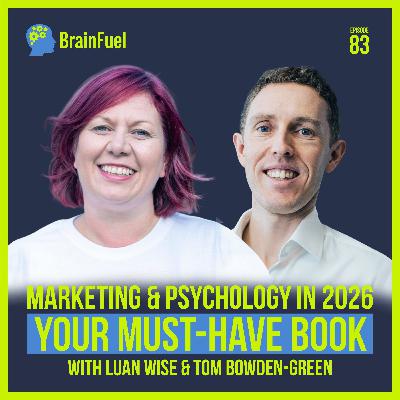
Marketing & Psychology: Understanding Customer Behaviour with the ABC Approach
In this episode, Ruth Dale is joined by Luan Wise and Dr Tom Bowden-Green to explore their new book, Marketing and Psychology: Understanding Customer Behaviour with the ABC Approach — a practical, evidence-led guide for anyone working in marketing, communications, public health, or behaviour change.
This conversation bridges academic psychology and real-world practice, cutting through guesswork and pop psychology to show how behavioural science can be applied with confidence, clarity, and integrity.
If you work in comms, health promotion, social marketing, B2B or B2C, this episode is for you — regardless of whether “marketing” is in your job title.
🧠 What you’ll learn in this episode
Why this book needed to exist — and why now
How the ABC framework (Audience, Brand, Choice) helps structure behavioural thinking
Why behaviour change is about marginal gains, not silver bullets
The danger of guessing behaviour based on demographics alone
How to use personas properly (with evidence, not stereotypes)
Why marketers often are using behavioural science — without realising it
How academics and practitioners can (and should) work better together
What it really takes to turn a huge academic field into a practical, usable book
💬 Standout quotes from the episode
“There isn’t a silver bullet. Behaviour change is about marginal gains — lots of small shifts that add up to something meaningful.”— Tom
“Most marketers are already doing behavioural science — they just don’t realise there’s evidence behind what they’re doing.”— Luann
🚫 Room 101 (what they’d happily bin)
Over-simplified generational labels that flatten human behaviour
Algorithm-chasing instead of focusing on real people and real decisions
📚 BrainFuel Book Club
This book is officially on the reading list for the BrainFuel Book Club — a space for people who want smarter, evidence-led thinking without the academic fog or marketing gimmicks.
If you like books that make you better at your job, not just better at sounding clever, this one’s for you.
🔗 Useful links
📖 Pre-order the book via Amazon
🌐 Learn more at marketingandpsychology.com
💬 Connect with Luan and Tom on LinkedIn and follow their ongoing work and newsletter
BrainFuel Book Club - FREE FOR EVERYONE JOIN US HERE
If this episode sparked a new way of thinking, share it with a colleague or friend — and don’t forget to hit subscribe. It really helps 💛🔥
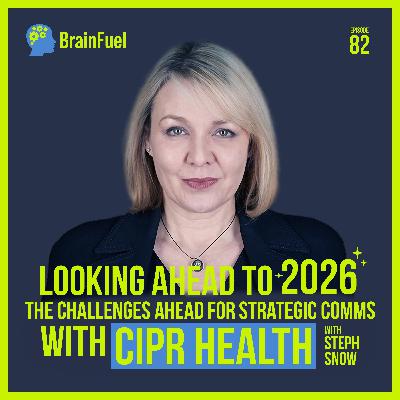
Final Episode of 2025
Guest: Stephanie Snow, Chair of CIPR HealthTheme: The future of health communications, behaviour change, and reputation as we head into 2026
Episode overview
We’re closing out 2025 with a thoughtful, energising conversation about where health communications is heading next. Recorded earlier this year but released now to harness the fresh start effect, this episode looks squarely at the realities communicators face as we plan for 2026.
Steph brings over 20 years’ experience across agency and in-house roles, and shares sharp insight on leadership, professional standards, and why communications has never been more critical—or more misunderstood.
A quote from Steph
“Reputations are long and hard to build, and very easily broken. Organisations that treat communications as a ‘nice to have’ rather than a strategic function are making themselves extremely vulnerable.”
Steph’s top challenges for health communications in 2026
1. Fragmented information ecosystemsAudiences now live in highly personalised, often invisible digital spaces. Conversations are happening in places communicators can’t easily see, track, or respond to—raising both reputational and ethical challenges.
2. Communications being undervalued in tough economic timesWhen budgets tighten, comms roles are often the first to go. Steph argues this is a false economy: organisations that cut strategic communications weaken their ability to manage trust, credibility, and long-term impact.
3. Behaviour change in an environment stacked against healthFrom junk food saturation to commercial determinants of health, communicators are trying to influence behaviour in contexts that actively undermine healthy choices—making strategy, not just messaging, essential.
4. The shift from strategic leadership to tactical deliveryDespite rising complexity, communications is still too often reduced to outputs rather than influence. Steph makes a strong case for reclaiming comms as a core leadership and decision-making function.
5. Skills, confidence, and professional development gapsAs roles evolve, so must capability. Ongoing CPD, ethical reflection, and peer learning are no longer optional extras—they’re how the profession stays credible and resilient.
Stand-out moments from the conversation
Why eye contact still matters—even in a Zoom-dominated world
How being a “well-hidden introvert” can make you a better communicator
What health communicators can learn from aviation, failure, and pre-mortems
Why learning should feel energising, not like another item on the to-do list
How community, connection, and shared thinking protect against burnout
Book recommendation
📘 Black Box Thinking by Matthew SyedA powerful reminder that progress comes from learning rigorously from what goes wrong—and applying that thinking to campaign planning, misinformation, and reputation management.
Why this episode matters now
As we step into 2026, this conversation is a call to take communications seriously again: as a profession, a strategic discipline, and a force for better health outcomes. It’s thoughtful, honest, and quietly galvanising.
If this episode sparked something for you, share it with a colleague and hit subscribe—it helps keep these conversations going 💛
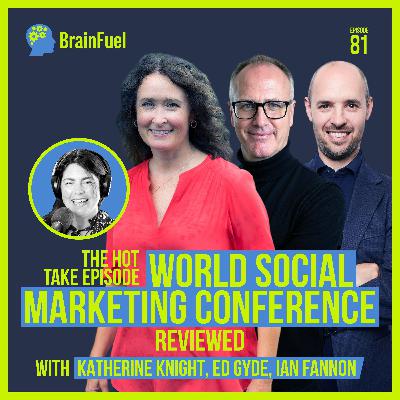
Emergency Episode!
World Social Marketing Conference: Hot Takes & Game-Changing Ideas
Host: Ruth Dale Guests: Ed Gyde, Katherine Knight, Ian Fannon
We rushed home from sunny Spain with too much excitement not to podcast about it. This episode unpacks the World Social Marketing Conference, its biggest sparks, freshest ideas, and the vibe shift happening across global behaviour change.
🔥 Theme of the Conference
Social marketing isn’t social media. It’s a discipline that improves lives - at scale.
The event was bursting with:
Planet-saving ideas 🌍
New ways to boost agency + confidence 💪
Serious ✨community power✨
Big questions about equity + systems change 🏛️
💡 Guest Highlights & Key Takeaways
🟦 Ed Joy – Audience, Social Marketing (UK)
KEY TAKEAWAY: Stop peppering teens with single-issue campaigns. Build spaces and confidence instead.
Ed shared the Sky Girls campaign — an empowering pan-African platform helping girls say no to pressure and yes to themselves.
His energy: 👟 Less “don’t smoke” 🎮 More DJ booths, gaming, and real talk 💬 Real empowerment > behaviour nagging
Ed’s Big Thought:
“Create places and platforms where young people want to be - then the learning sticks.”
🟩 Katherine Knight – Intelligent Health
KEY TAKEAWAY: Boosting > Nudging. Joy is a public health tool.
Her Beat the Streets programme has already inspired 2 million people to get active, connect, and build community agency.
🔥 Massive shift at the conference: Climate change + inequality + health? ➡️ One and the same mission.
Catherine’s favourite learning:
Boosting builds people's capacity to choose change — together, not alone.
Bonus: we want a whole episode on Catherine’s disaster-prep flannel story. 🚿🧽 Pure gold.
🟥 Ian Fannon – Claremont Communications
KEY TAKEAWAY: Behaviour change takes time. Build, boost, bond and evaluate rigorously.
Ian’s 3 B’s of brilliant behaviour change: 1️⃣ Building — long-term investment beats short campaigns 2️⃣ Boosting — focus on strengths + capabilities 3️⃣ Bonding — community + connection = magic ✨
His favourite takeaway:
“We strengthen the good already in communities - we don’t fix broken humans.”
🧠 Big Ideas We’re Taking Forward
✔ Elevate agency over persuasion ✔ Build movements, not one-off messages ✔ Climate + health + equity are intertwined ✔ We need practitioners and academics working side-by-side ✔ Behaviour change isn’t instant -invest in longevity
🤫 Room 101 — What We’re Banning
We nearly confiscated all bad PowerPoint slides forever… … but the official Room 101 winner is:
🚫 Harm-reduction messaging that shifts responsibility onto individuals and deepens inequality. 👉 Behaviour change must tackle systems, not shame people.
❤️ Conference Vibes
Sunshine + tapas 🌞🍷
Inspiration + brilliant humans
A real sense of movement and momentum
A tribe found (but everyone’s invited)
Next stop? Montpellier 2026 🇫🇷 (We’ll race you to the plenary hall.)
🔗 Connect on LinkedIn
Find Ed Gyde, Katherine Knight, and Ian Fannon over on LinkedIn
🌟 Final Thought
This episode is your postcard from Spain - minus the sangria. The spark is real. The movement is growing. Health change is joy-change.
Let’s boost a better world. 💥\
To stay up to date on behaviour change in health comms, and public health join BrainFuel over on Substack!
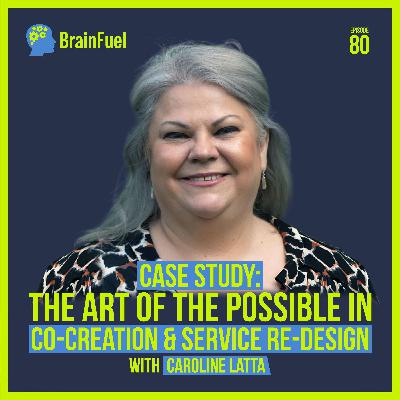
Ruth is joined by Caroline Latta, communications and engagement specialist and founder of OLOVUS, for a powerful conversation about what real co-design looks like when it moves beyond surveys, hypotheticals and “tell us what service you want.”
This episode tells the story of a short break service for people with learning disabilities—re-imagined from the ground up.
Instead of asking families to imagine a different service, Caroline and her team showed them what was possible.
They took families and people with learning disabilities on visits to alternative short break providers: outdoor activity centres, community-based supports, spaces full of independence and joy rather than hospital-style care.
The visits revealed moments of trust, connection and delight that completely reshaped the service design—and shifted the focus from “safe respite” to aspirational, joyful breaks that feel like holidays.
We also explore Caroline’s deeply personal experience with weight loss medication, what it taught her about shame and biology, and how it strengthened her commitment to non-judgemental, inclusive design.
A rich, emotional and practical episode - full of behaviour change thinking for anyone working across health, care or commissioning.
💬 Caroline's Quotes
On co-design done properly
“You don’t realise how limited your imagination is until someone shows you what’s possible.”
On why surveys fall short
“You can fill in as many questionnaires as you like, but you don’t see the smile on someone’s face in a survey.”
On shifting the frame
“We weren’t trying to fix a ‘respite problem.’ We were asking, ‘What does a joyful break look like?’”
📚 Book Recommendation
Invisible Women – Caroline Criado Perez
A sharp, essential read that reveals how system design often defaults to men—and how invisible data gaps create very visible barriers. Perfect for anyone designing public health, social care or behaviour change programmes.
🔍 What You’ll Learn
How to run co-design that produces real insight
Why showing beats asking people to imagine
The shift from “respite” to aspirational breaks
How field visits surface truths workshops never will
How robust involvement frees commissioners to lead boldly
Desired vs problem behaviours in behaviour change
Why paying people matters—practically and ethically
How privilege, hormones and biology shape health behaviour
🎧 Links
Connect with Caroline on LinkedIn
Check out Olovus
Training update
🔗 Behaviour Change Marketing Bootcamp – 10 December Misinformation, AI and behavioural science for health communicators.
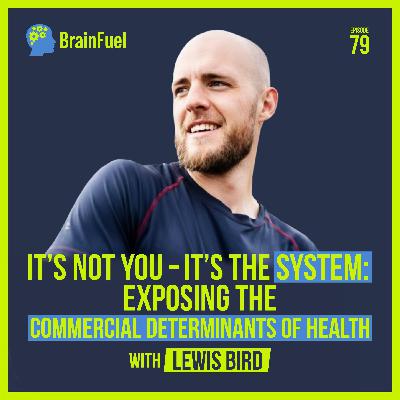
"Must Listen for Everyone Working in or On Individual Change projects or Campaigns"
Is blaming “individual willpower” one of the industry’s most successful PR tactics.Why do our environments make the healthy choice so hard? And who profits when they do?
In this powerful episode of the Behaviour Change Marketing Bootcamp Podcast, Ruth Dale sits down with Louis Bird, Principal in Public Health and national obstacle-course racer, to unpack the commercial determinants of health and what they mean for the everyday choices we think we’re making freely.
Louis explains how industries like food, alcohol, tobacco, and fossil fuels shape our behaviour, our environments, and ultimately our health; often without us realising.
And what you can do it about it at Local Authority level.
This conversation shines a light on how power, profit and public health collide.
But all is not lost. Louis shares his work in Swindon with tips on what you can do too.
If you work in public health, health marketing, or behavioural science, this episode will change how you see your town, your life and the choices you make.
Quote from Lewis
“When profit depends on harm, it’s not personal choice - it’s structural design.”
Useful Links
Transport for London - Food Advertising Regulations - NIHR Impact Study - Easy Read
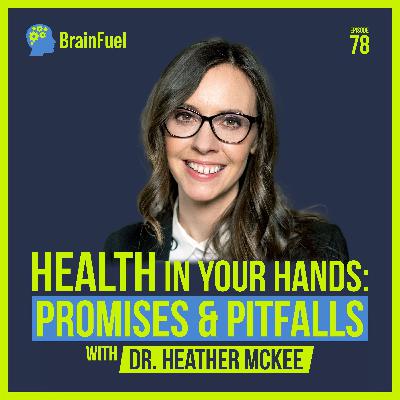
Welcome to another episode of Brain Fuel! I’m so excited to share my conversation with Dr. Heather McKee, one of Europe’s leading lifestyle behaviour change specialists. Heather brings a wealth of experience in health psychology and digital health, and her insights are both practical and inspiring.
In this episode, we explore the science of sustainable behaviour change, the promise and pitfalls of digital health, and how to make real, lasting improvements in our lives and organisations.
Top 3 Takeaways:
Intrinsic Motivation is Key: Real, lasting behaviour change comes from understanding and tapping into our intrinsic motivations—not just relying on external rewards or pressure.
Implementation Over Information: Most of us know what we “should” do for our health; the real challenge is turning that knowledge into action. It’s not an information gap, it’s an implementation gap.
Find Joy in Healthy Habits: Sustainable change is easier when we focus on the healthy habits we actually enjoy, rather than punishing ourselves or chasing short-term goals.
Quote from Heather:“What we feed the mind is ultimately what becomes our behaviours. Be careful of what your media diet is, because what you consume, consumes you.”
Book Recommendation:Heather recommends “Good Habits, Bad Habits” by Wendy Wood for a deep dive into the science of habits, and also gives a shoutout to “Atomic Habits” by James Clear for accessible, actionable advice.
If you’re interested in behaviour change, digital health, or just want some inspiration for making positive changes in your own life, this episode is packed with insights and practical tips. As always, if you enjoyed the show, please like, share, or leave a review. And if you have a project or story to share, get in touch at brainfuel@hiddenvoicesheard.com I’d love to hear from you!
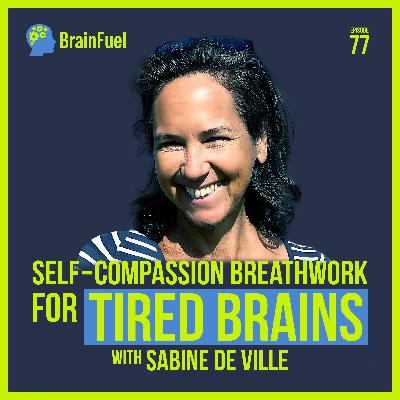
A very different episode with Sabine De-Ville
Instead of talking about health
Let's embody it.
In all our behavioural insights work, there is one common theme - despite the subject.
It also appeared again and again in our training.
Your tired brain.
Breathwork can be a game-changer.
Especially if you live meeting to meeting - Zoom call to Zoom call.
The air is free, you can do it anytime, anywhere.
Sabine has over 20 years of experience delivering breath work, mindfulness, and cognitive resets for tired brains.
Enjoy x
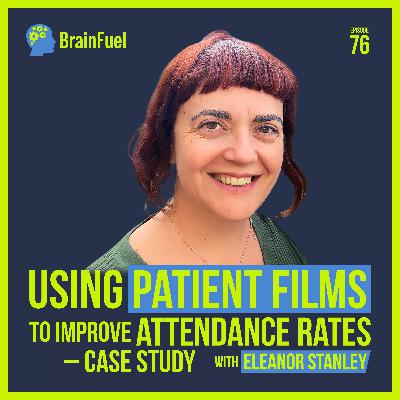
In this episode, I had the pleasure of speaking with Eleanor Stanley, a coach and communication specialist, about her inspiring work with Guy’s and St. Thomas’ NHS and the British Association of Retinal Screeners.
Eleanor shared a powerful case study on using co-production and storytelling to increase attendance for diabetic eye screenings, especially among groups that are often harder to reach. We discussed the importance of authentic communication, the value of patient voices, and how even small-scale projects can drive real behavior change.
Top 3 Takeaways:
Co-production with clear roles is key: Involving patients directly in the creation of communication materials leads to more authentic and effective messaging, but it’s crucial to define everyone’s role and manage expectations, especially with limited resources.
Storytelling drives behaviour change: Crafting a compelling narrative, rather than just sharing facts creates emotional engagement and helps audiences connect with the message on a deeper level.
Measurable impact matters: Adding a patient story video to appointment reminders led to a 25% higher rebooking rate for diabetic eye screenings, demonstrating the real-world value of thoughtful communication interventions.
Eleanor's Quote
“You need to be very clear on your outcomes. You need to be measuring for results and all of that, but it’s so much nicer for you if you are doing it from a place of authenticity and also it’s so much more effective in what you can produce. It’s just people, and it can sound scary…but actually just one really good conversation with someone can just completely change everything.”
Book Recommendation
Eleanor recommends “The Advice Trap” by Michael Bungay Stanier. She highlights its focus on humility, curiosity, and changing the way you lead through better listening.
Resonance Programme
Resonance Programme is a bespoke journey for leaders and communicators ready to rethink how they show up at work and beyond. It is professional development - led by Eleanor - for mid-career senior leaders and communicators working in health social impact. Click here for more info.
Come on the show
If you enjoyed this episode or have a case study to share, reach out at brainfuel@hiddenvoicesheard.com!
We explore the real reason why many health campaigns fail: a lack of clarity rooted in assumptions about the audience.
Over the past few episodes, Ruth has walked us through how brains get overwhelmed, how decision fatigue kicks in, and how even well-meaning messages can backfire.
This week’s episode brings it all together with a simple but powerful test: 👉 Do you really know your audience?
💡 Key Takeaways:
Empathy fades under pressure: Deadlines and noise can push teams to default to generic messaging. The Clarity Test is your reminder to re-centre on people.
Campaigns fail when insight is missing: If your work isn’t grounded in real understanding, you’ll see low engagement, low action, and lots of frustration.
Assumptions ≠ empathy: Thinking you know your audience isn’t the same as truly understanding their world.
Clarity is behavioural power: Clear minds craft better messages. Clarity isn’t a luxury — it’s a strategic asset.
In this episode, Ruth explores what happens when our brain’s decision-making battery runs flat — and why that matters deeply for health communication. Drawing on behavioural science concepts like ego depletion and bounded rationality, she shares how cognitive overload derails even the best campaigns. If your work relies on a calm, rational audience... it might be time to rethink.
This one’s short, sharp, and designed to make you pause.
Quote from the Episode: “Are we adding pressure to a depleted brain — or clearing the way for action?”
What You'll Learn:
What ego depletion actually is, and how it affects behaviour
Why people don’t make ‘perfect’ decisions — and that’s okay
The hidden mental cost of too many messages or choices
How to design for clarity when your audience is distracted and overwhelmed
Why It Matters: Health communication often assumes people are logical, focused, and ready to listen. But real-life decision-making doesn’t happen in a vacuum — it happens in a fog. Understanding the limits of mental energy can help you write, design, and plan with more compassion and impact.
Takeaway: Clarity is a kindness. When you reduce the mental load for your audience, you reduce it for yourself too.
💌 Want the BrainFuel Breather ? Join us on Substack
Do Health Messages Nag or Nudge? In this episode of BrainFuel: The Clarity Series, Ruth dives into psychological reactance — the powerful force behind why people reject health advice (even the good kind).
You'll learn:
Why audiences push back (and how to stop pushing them)
How clarity, tone, and choice impact trust
Simple tweaks to make your message land better
🌬️ Want the BrainFuel Breather audio? → Join us on Substack
🎟️ Plus: Join our Social Norms Summer School on Aug 19 — only £49. Includes your Social Norms Starter Kit. → Grab your ticket
Ever poured your heart into a health campaign only to see… crickets?
You’re not alone. In this episode, Ruth dives into why clarity is the key to behaviour change — and why it’s so hard to find in a world of noise, deadlines, and overloaded brains (yes, yours too). We’re talking cognitive fatigue, irrational audiences, and the myth of "more info = better choices".
🎧 Plus, you'll hear:
Why clarity starts with you — the communicator, strategist, planner
How social norms quietly shape everything (and how to wield them with care)
The secret sauce of choice architecture (used in canteens, emails & even inbox design!)
An unfiltered behind-the-scenes peek into AI experiments gone wrong – including made-up research studies 😱
The BrainFuel Breathers: guided reset sessions just for you (yes, really)
🧠 Key Takeaways
Audiences are overwhelmed. According to studies, we consume over 34GB of info a day — the equivalent of a million photos or 16 films daily. Design for this reality.
Rational choice is a myth. If your strategy is built on “if they only knew,” you’re missing the behavioural science.
You’re already nudging. Every piece of content you create shapes choices. Learn how to do it with intention (see: choice architecture).
You need inner clarity too. Your ability to influence others is directly tied to how clear you are in your own thinking, purpose, and planning.
🛠️ Tools, Resources & Offers
🎟️ Mini Bootcamp: Social Norms Summer School → A 2-hour online masterclass on August 19th → Tools, case studies, evidence-based strategies → Only £49 | Free for Substack Yearly Subscribers 👉 Sign up now — doors close August 8th!
🧘 BrainFuel Breathers → Weekly audio reset sessions created with Sabine (breathwork facilitator & yoga teacher) → Exclusive to Substack subscribers → Subscribe here
📚 Mentioned Study:
Click & Crunch Canteen Study – Australian high school experiment on menu design & healthy eating (via choice architecture)
🧪 Experiments, Mistakes & AI Misfires
Ruth shares the truth about using AI in podcast production:
Tried a chatbot co-host: fun but too chaotic
Used AI for research: it made up studies (!)
Takeaway? AI is powerful — but always, always fact-check
🗣️ Quote of the Episode
“You’re already nudging — whether you mean to or not. Every message, every menu, every layout is shaping choice.”
🧭 Final Thought
You’re not just delivering messages. You’re shaping behaviour, influencing decisions, and holding the power to make real change. But you can’t do that without clarity — for yourself and your audience.
Stay kind. Stay curious. And give your brain a breather 💛
💌 Stay Connected
→ Subscribe: BrainFuel on Substack → Join the Mini Bootcamp: BehaviourChange.Marketing/Social → Connect on LinkedIn: Ruth Dale
These show notes were developed using Otter AI.
This episode was sparked by a newsletter.
When Elina’s Artificial Thought landed in my inbox, it immediately lit a fire under a question I’d been sitting with: Where does AI fit in behaviour change work? I invited Elina onto BrainFuel — and this episode is where the conversation began.
Together, we dive into the emerging relationship between behavioural science and artificial intelligence — not as hype, but as a thoughtful, grounded exploration of where we go from here.
One of the biggest themes? Bias. And Spaniels. We explore how:
AI tools like ChatGPT, Claude, and others inherit human bias, baked into training data and system design
Behavioural science has its own blind spots, often shaped by the same cultural assumptions and power dynamics
And why it’s not enough to be evidence-based — we have to stay curious, critical, and open to new ways of thinking
Elina said something that stayed with me:
"Behavioural science is all about looking for a problem to solve—even if that search sometimes leads us to frame challenges in ways that mirror our own biases."
We also discuss how we’re using AI in our day-to-day work:
ChatGPT and Claude as brainstorming buddies and thinking partners
AI for creative workflows (like these show notes!)
But never in analysis or insight work, where data sensitivity and confidentiality come first
In this episode:
The risks and responsibilities of integrating AI into behaviour change
How bias shows up in both datasets and frameworks
The practical limits of AI in public health work
Why we need more human judgment, not less
👉 If you do one thing - check Elina's newsletter Artificial Thought
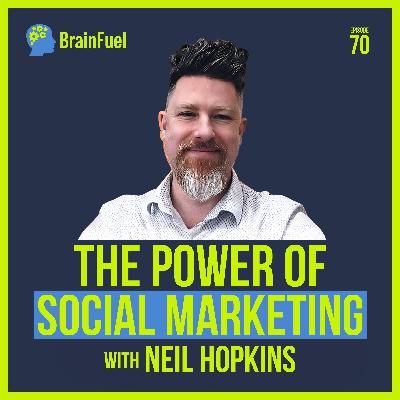
Today's episode continues exploring Social Marketing with Communications Strategy Consultant Neil Hopkins. Neil is also he founder of the Secret Social Marketers Club on LinkedIn. He has extensive experience in public service, particularly in road safety and local government communications.
Listen to the episode to as we explore
what social marketing is (hint - not social media)
where it sits in behaviour change.
why it is the solution if you want to move beyond awareness raising campaigns
Because Social Marketing:
Empowers target audiences
Shifts power dynamics from deficit-based to skills-boosting approaches
Fcuses on understanding lived experiences
We tackle industry challenges head on including
Disconnect between marketing, communications, and academic research
Pressure on professionals to perform multiple roles
Limited resources in public sector communications
Quote from Neil:
"Social marketing is the application of commercial marketing principles for those social good outcomes that result in behaviour change. It's using that understanding, based in understanding of people and rooted in empathy for those people as well, and what will work for them."
If you enjoyed this episode (and Nedra's last week) you could:- Join the Secret Social Marketers LinkedIn group- Attend World Social Marketing Conference (5-7 November in Alicante, Spain)- Attend the CIPR Ethics Webinar delivered through a social marketing lens
Special Offer:Get 10% off the World Social Marketing Conference using discount code BRAINFUEL10 at www.wsmconference.com
p.s. for more on Social Marketing check out:
E22 - The TITE Process - 4 steps to applying theory in social marketing
E10. Don't engage too late! How to use social marketing concepts reward & exchange
E8. Segmenting Your Audience Don't overcook then undercook your audience: Social marketing & segmentation
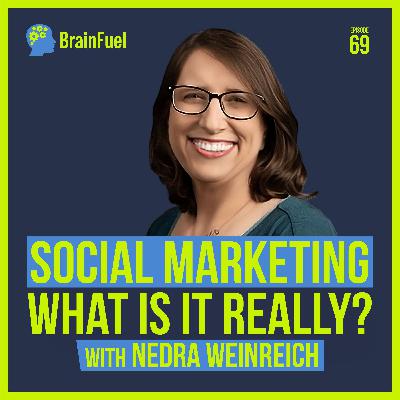
This week is an exploration of social marketing, challenging misconceptions, and driving meaningful behaviour change with one of the field's most respected practitioners, Nedra Weinriech.
Nedra is founder of Weinreich Communications, and an editorial board member for Social Marketing Quarterly. She has been practising social marketing for over 30 years.
Highlights:
Nedra's Personal Productivity Hack:- Discovered virtual co-working- Uses "body doubling" technique- Increased focus and productivity through intentional work sessions
What is Social Marketing? - Not social media- Systematic approach to behaviour change- Focuses on audience insights and making desired actions easier- Integrates psychology, design, and marketing principles
Case Study: California Teen Suicide Prevention Campaign- Campaign: "Never a Bother"- Target: Low-income teens- Innovative co-design process with youth- Addressed key barriers to seeking mental health support
Social Marketing vs. Behavioural Science:- More than just awareness- Systematic research-driven approach- Audience-centered design- Scalable behaviour change strategies
Quote:"Social marketing is applied behavioural science at scale." - Nedra Weinreich
Free Resources:
Social-Marketing.com (or to go directly to my library of articles including my free ebook: https://Social-Marketing.com/library
The Social Media for Behavior Change Toolkit can be downloaded from my website above or here is the “official” page with more resources: https://preparecenter.org/site/sm4bc-toolkit
Creative Mornings - their "virtual field trips” are where I first encountered the idea of virtual co-working, but they have lots of fun free online events - https://creativemornings.com/fieldtrips/brows
Flown - they give you a free month to try it out, and after that it’s subscription based. Nedra's referral link includes 25% off (and she gets a free mug if someone signs up ): https://flown.com/join-flown-referral-page?referral=nedra-weinreich-fb9c2
The Never a Bother campaign - https://neverabother.org/
Don't forget your 10% saving:
BrainFuel10
World Social Marketing Conference

This week, we’re celebrating 10 years of the EAST Framework (Easy, Attractive, Social, Timely) and asking a powerful question:
How often do we reflect on our own behaviour as change-makers?
We explore why simple frameworks still work in a complex world, what the “toothbrush problem” is, and why mastering a few tools beats collecting many.
🛠️ Action tip: Start by checking in on your decision-making and how you use behavioural frameworks to support change—not stress you out.
This week on BrainFuel, we’re taking a moment to turn the lens inward—not just on the behaviours we’re trying to shift, but on our own as the people designing change.
We’re celebrating the 10th birthday of the EAST Framework—Easy, Attractive, Social, Timely. It’s still our go-to tool when we need something clear, fast, and grounded in how people actually think and behave. But we’re also asking a deeper question: Do we ever pause to reflect on our own behaviours when we’re planning programmes for others?
We share thoughts on a brilliant article by Michael Holdsworth, written for EAST’s 10-year anniversary, exploring whether simplicity still holds up in today’s world of generative AI, personalisation, and complexity. Spoiler alert—we believe it does. Simplicity cuts through the noise.
We also dig into the “toothbrush problem” (you’ll have to listen!) and remind ourselves that frameworks are tools, not trophies. Mastering a few—and using them well—is often more powerful than collecting many.
🧠 Episode Outline
We ask: what if the first step in designing change is understanding ourselves as practitioners?
Is that why E.A.S.T. Still Works?
Reflecting on the E.A.S.T. Framework
We share some highlights from Michael Holdsworth’s anniversary article, “Why Simplicity Can Be Strength in a Complex World.”
HIs article asks: does a simple framework still hold value in a world of complexity and AI?
We say yes—and talk through why simplicity still has real power in our work.
The Role of Frameworks in Behavioural Science
We remind ourselves that frameworks aren’t for show. They’re here to serve the change, not our egos.
We talk through why E.A.S.T. is so memorable, and how new frameworks often muddy the waters.
We highlight the “toothbrush problem”—how everyone wants to invent their own framework—and suggest we focus on mastering a few instead.
Embodying the Principles of Behavioural Science
We reflect on what it means to embody behavioural science—not just use it.
That means making things easy for others, reducing stress for our teams, and staying clear-headed ourselves.
We encourage everyone to ask: are we making our work easier or harder? Are we showing up in the way we want others to?
Our show notes are generated by AI then read through for clarity and sense-checking.
Hi everyone,
this is a reflective episode, and a soft announcement - softly very softly!
We are ...rebranding the Podcast!Transitioning from "Behaviour Change Marketing Bootcamp" to "BrainFuel"
This is allow us to focus more on our core mission which is to focus on health and reducing health inequalites fueling brain power and decision-making skills.
Our vision is for the episodes to spark curiosity and creativity combined with practical decision-making insights.
We will still deep dive into behavioural science, AI and if there is an evidence-based approach that helps the health communicator we will share it!
Stay tuned for exciting new episodes.
As part of our revamp we have the next Behaviour Change Marketing Boootcamp training on May 15th 2025.
Ir promises to be an exciting day!
Only 5 spots left - click here for more

Comments

Download from Google Play

Download from App Store
 United States