



 Claim Ownership
The Gay Buddhist Forum by GBF
Subscribed: 21Played: 121
Subscribe

© 2026 Gay Buddhist Fellowship
Description
Buddhism for Liberation and Social Action. We invite teachers from all schools of Buddhism to offer their perspectives on the dharma and its application in modern times, especially for LGBTQIA audiences.
Produced by GBF - The Gay Buddhist Fellowship of San Francisco.
917 Episodes
Reverse

Exploring the Buddha's nine causes of spiritual and personal development, Kevin Griffin identifies one that is the foundation for all the others: community and spiritual friends. He notes that once a person has good friends, it can be expected that they will naturally become moral, hear the dharma, have energy, and become wise. But this presents a paradox: while noble friendships are described as the entirety of the holy life, the Buddha also warns that deep attachments can lead to suffering ...

How can we cultivate a mind that stays steady, open, and responsive even when life becomes unpredictable? In this talk, Beth Mulligan explores equanimity as a living practice rather than a distant ideal. She frames equanimity as the quiet strength that allows a person to meet experience without collapsing into overwhelm or tightening into resistance. Speaking with warmth and clarity, she describes how this quality grows not through detachment, but through intimacy with our own moment‑to‑momen...

What stories do we tell ourselves when life feels overwhelming, painful, or uncertain? Steven Tierney invites us to look closely at the narratives that shape our experience—especially in moments of grief and fear. Reflecting on the recent loss of Jeff Lindemood, he shows how the mind rushes to create stories about unfairness, danger, and identity, and how Buddhist practice helps us pause long enough to see these stories clearly. He reminds us that grief itself is a Buddha, a natural expressio...

What if “liberation” isn’t an escape from the world’s pain, but the most grounded way to meet it? In Part 2, Ian Challis continues his exploration of the journey from samsara (the spinning wheel of greed, hatred, and delusion) toward nibbāna—not as a far-off trophy, but as an orientation we can practice right here. He frames refuge (Buddha, Dharma, Sangha) as a real-time source of strength rather than a hiding place: community, ethics, and wise effort become the “places we gather power” when ...

What does it take to finally say, “I’ve had enough of being swept around by life,” and begin walking a path toward real freedom? Ian Challis invites us to first take a grounded look at samsara—the restless, exhausting cycle of craving, aversion, and wandering that shapes so much of human experience. Ian describes samsara not as a moral failing but as the natural turbulence of being human: the push and pull of desire, fear, habit, and cultural conditioning. Through vivid stories—including a mo...

What if the imagination itself could become a doorway to compassion, ease, and awakening? Danadasa begins by grounding listeners in the Tibetan practice of tonglen—breathing in the suffering of oneself and others as dark smoke, and breathing out cool, healing moonlight. Rather than treating this as a grim or burdensome task, he reframes it through the imaginal realm: a space where metaphor, poetry, and visualization bypass the thinking mind and speak directly to the heart. Danadasa highlights...

When will we realize that peace isn’t something we create, but something already here—quietly waiting for us? That’s the thread David Lewis follows in this winter‑solstice talk, weaving together poetry, Buddhist teachings, and reflections on the natural world. He begins by exploring how solstice traditions mirror dharmic values: stillness, silence, and the movement from darkness toward light. Drawing on images from Patricia Fargnoli’s poem Winter Grace, David invites listeners to recognize ho...

What does it mean to give something freely, without expecting anything in return? In this talk, Marcia Lieberman introduces us to the Japanese word kubari—a term for paying attention to others, as well as a twig used in flower arranging. Drawing from both cultural insight and Buddhist teachings, she shares how kubari expresses a kind of mindful generosity that is not transactional, but attuned and spontaneous. Through personal reflections and references to traditional stories, Mar...

In this quietly powerful talk, Jokai Blackwell reflects on how Zen practice invites us into a deeper intimacy with life — not by escaping discomfort, but by softening our resistance to it. He shares personal stories and teachings from Zen and early Buddhism that reveal how clinging to control or certainty only increases suffering. Instead, Jokai encourages listeners to cultivate a practice of surrender: of returning, again and again, to the grounded experience of the body, breath, and present...
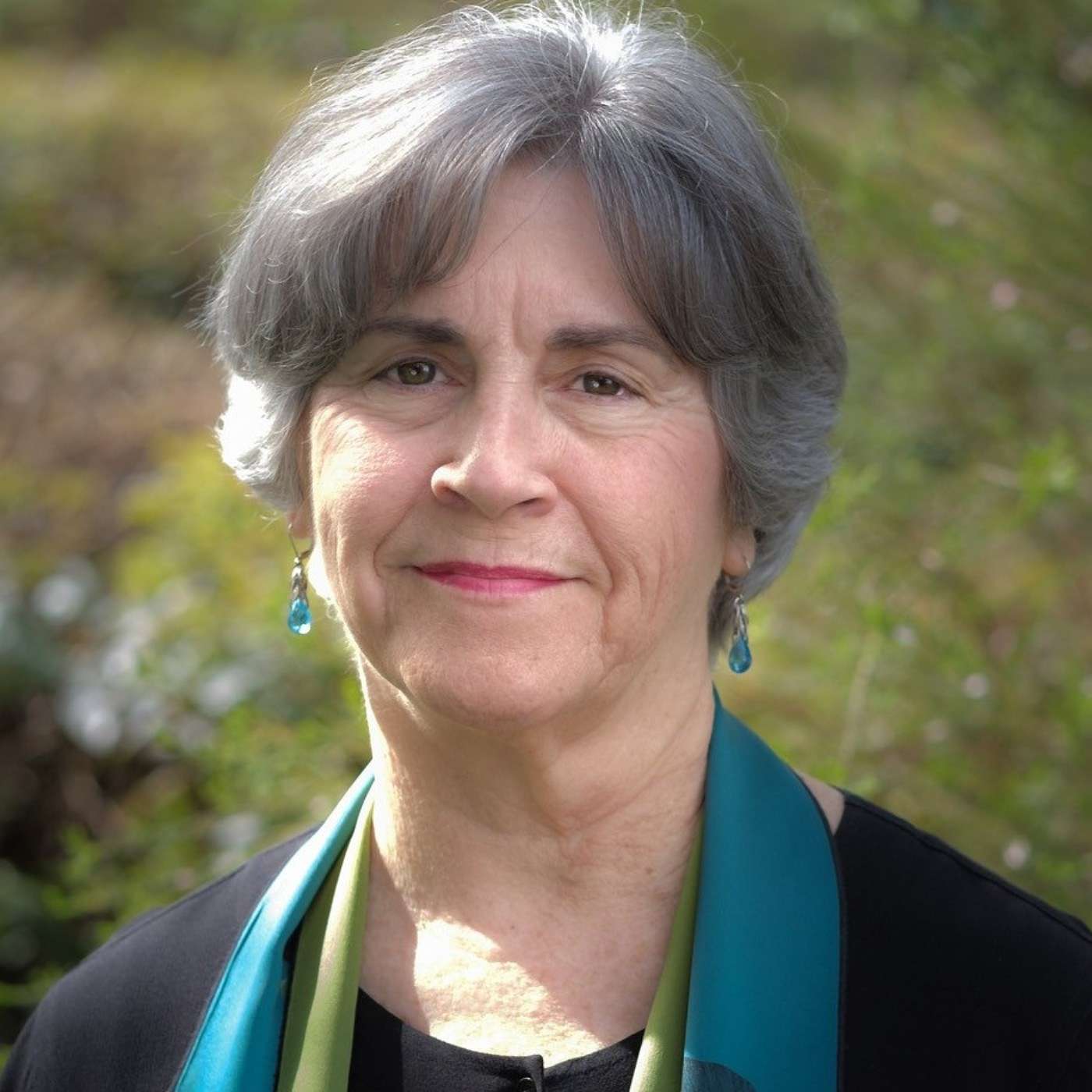
What does it mean to “be awareness” rather than simply observing it? Dorothy Hunt invites us to see awareness not as something separate from thoughts, feelings, or experiences, but as the very ground of being that is already present. Grounding her reflections in both tradition and poetry, she illustrates how awareness reveals itself in every moment, whether through beauty, suffering, or the ordinary flow of life. Her teaching emphasizes that awakening is not about bypassing human experi...

What does it mean to truly awaken—and how do we live with full awareness in every moment, even in the face of impermanence? Eugene Cash's warm, playful, and deeply sincere style invites us into a rich exploration of mindfulness, death, and the immediacy of life. Drawing from the Four Foundations of Mindfulness, Eugene emphasizes the experiential nature of awareness, encouraging us to feel our bodies, notice our breath, and recognize the fleeting nature of each moment. He shares personal...

Jennifer Berezan reflects on the necessity for courage, compassion, and the power of community in uncertain times. Even to simply stop and sit with what is requires bravery—especially amid aging, societal unrest, and personal struggles. She emphasizes meeting the moment with “loving awareness,” as Jack Kornfield taught, and encourages us to find refuge in practice, even when the world feels heavy. In her signature style, Jennifer weaves music and story into the dharma, sharing mantras and son...

When seen with clarity, the dharma sheds light on nearly every aspect of our daily lives. In this highly engaging talk, Eve Decker explores in plain language how Buddhist teachings can help us deal with our daily struggles. By highlighting the intersection of Buddhist wisdom and neuroscience, she shows how ancient teachings align with modern psychological frameworks. Eve emphasizes that the Buddha was, in many ways, a master psychologist—offering insights into suffering, habit formation...

Self-compassion is a vital part of the Buddhist path, especially here in the West. Here, Walt Opie shares personal stories and reflections on how difficult it can be to extend kindness toward ourselves, especially when we’re caught in patterns of self-judgment or perfectionism. Walt emphasizes that self-compassion isn’t selfish—it’s foundational. When we treat ourselves with care and understanding, we’re better able to show up for others and engage with the world from a place of balance...

In this talk, Steven Tierney emphasizes living with integrity as the core of Buddhist practice. He helps us reflect on living a meaningful and compassionate practice that is responsive to our unique life situations while benefitting both ourselves and others. Steven defines integrity as aligning thoughts, words, and actions with core values while living for the benefit of others. Integrity means wholeness and completeness, derived from Latin meaning "whole"Encourages self-reflection and inter...

In a world rife with violence and intolerance, how do we embody Buddhist ethical practice that balances compassion, wisdom, and courageous action? When we feel overwhelmed by the state of society, Daigan Gaither suggests focusing on ethical behavior as a foundation for meaningful action. He reminds us that: Buddhist practice comprises three interdependent trainings: ethical conduct (Shīla), concentration (Samādhi), and wisdom (Prajñā).Ethical conduct demands we actively oppose oppression and ...

Laura Burges discusses how being present with our fears can help us break the grip they hold over us so we can develop the courage to live openly and compassionately in uncertain times. Finding Buddhist truths in stories from many cultures, Laura explores how fear shows up in our lives, reminding us that fear is universal, often rooted in uncertainty, and can feel overwhelming, especially in today’s unsettled world. She highlights that Buddhism offers tools to recognize and sit with fear rath...

Human connection brings an inherent amount of suffering with it, so how do we cultivate equanimity in interpersonal relationships? In this talk, Matthew Brensilver reflects on the deep human need for belonging. Yet an unavoidable tension arises because no person or relationship can fully satisfy craving or end suffering. He explains that understanding this unsatisfactoriness helps us realistically approach relationships without expecting them to be perfect refuges. Instead, we learn to welcom...

As practitioners, how can we respond when things fall apart? Larry Robinson invites us to find refuge and stability amid chaotic and uncertain times by leaning into the core Buddhist teachings and practices. He frames our current historical moment as a “dark age” where things seem to fall apart, but reminds us that history moves in cycles and renewal always follows. Larry highlights the importance of taking refuge in the Three Jewels—the Buddha, the Dharma, and the Sangha—and cultivatin...

How can we transform suffering and self-centeredness into compassion and wakefulness? In this talk, Gary Ost explores a practical path to emotional freedom and authentic connection -- something that he developed on his personal journey into Tibetan Buddhism, especially through the Shambhala Lojong teachings and Tonglen. He shares how he discovered and embraced practices that cultivate compassion and wakefulness, and explains the often misunderstood aspects of Tibetan Buddhism—like mantr...

Comments

Download from Google Play

Download from App Store
 United States