


 Claim Ownership
Law Vaarta | लॉ वार्ता
Subscribed: 3Played: 4
Subscribe

© Shrutanjaya Bhardwaj
Description
सभी पेचीदा कानूनी मुद्दों को आसान भाषा में समझा और समझाया जा सकता है, यह सोच कर हमने इस पॉडकास्ट की शुरुआत की है। हिंदी और अंग्रेजी का मिश्रण करके हम आप तक ताज़ा कानून-संबंधी जानकारी पहुंचाने की कोशिश करेंगे।
All complex legal issues can be explained and understood in simple language; this belief has driven us to start this podcast. We will try and convey to you the latest law-related information in a mix of Hindi and English.
All complex legal issues can be explained and understood in simple language; this belief has driven us to start this podcast. We will try and convey to you the latest law-related information in a mix of Hindi and English.
20 Episodes
Reverse
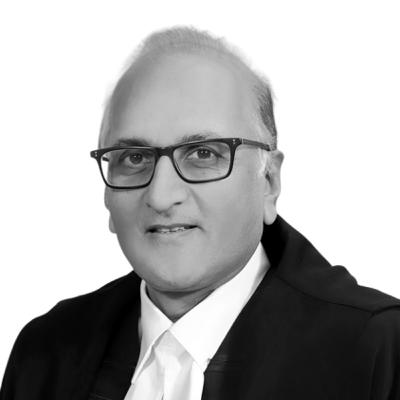
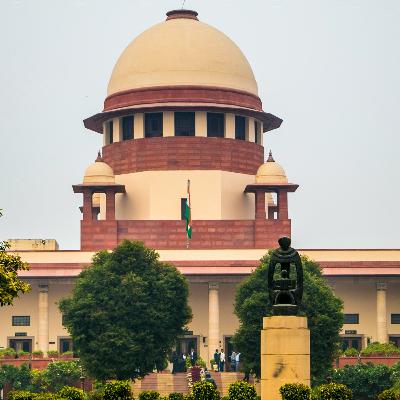
On 17th October 2023, a 5-judge bench of the Indian Supreme Court rejected petitions seeking legal recognition of same-sex marriages. The judgment is unanimous on some questions but divided on others.
In this video, we break down and explain the Court's holding on nine questions:
1. Is there a fundamental right to State-recognition of marriage?
2. Can the Court re-interpret the Special Marriage Act to allow same-sex marriages?
3. Is the State discriminating against same-sex couples by not allowing them access to the benefits flowing from marriage?
4. If yes, can the Court direct the State to ensure that these benefits are given to same-sex couples?
5. Is the Indian context of marriage different from the US context?
6. Can same-sex couples adopt a child?
7. Can transgender persons marry under the Special Marriage Act?
8. Can States make law relating to marriage?
Leave a comment and let us know your feedback!
Video editing credits: Shrijan Verma
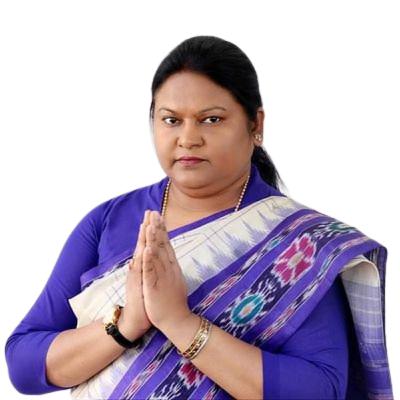
Tanya Srivastava, Vishal Sinha and Shivani Vij speak to Shrutanjaya Bhardwaj on the 7-judge bench case, Sita Soren v. Union of India, in which the Supreme Court recently reserved judgment on the correctness of the Constitution Bench judgment in ex-Prime Minister PV Narasimha Rao's case.
The legal question before the Supreme Court is whether a Member of Parliament who accepts a #bribe for casting a vote inside Parliament is, on account of his #parliamentary #privileges, immune from prosecution under the Prevention of Corruption Act, 1988.
Attributions:
Newspaper clips: The Hindu and Hindustan Times
Law Vaarta animation: Vaibhav Bhatia
Video editing by: Shrijan Verma
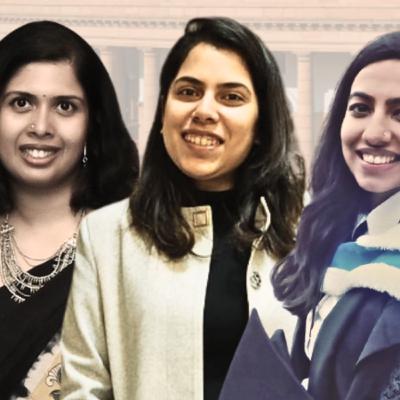
What is the Women's Reservation Act all about? Why do we need it? How will it work? What are its criticisms? Could we have done it any better?
Shrutanjaya Bhardwaj speaks to Supreme Court advocates Shivani Vij, Tanya Srivastava and Trisha Chandran to understand the details of India's most recent constitutional amendment—the first one to be passed in the new Parliament building.

The Union Home Minister recently introduced three criminal law bills in Parliament, proposing to replace the Indian Penal Code, 1860, the Code of Criminal Procedure, 1973, and the Indian Evidence Act, 1872.
This video explains all key changes proposed to the Indian Penal Code, 1860 by the "Bharatiya Nyaya Sanhita".
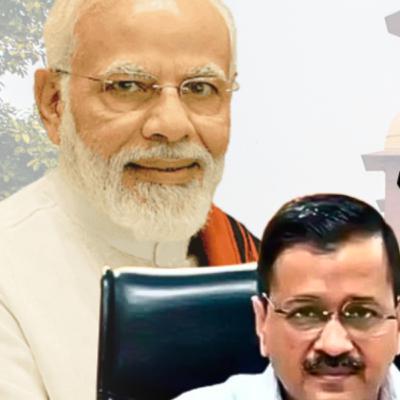
On 11th May 2023, the Supreme Court of India directed that control over "services" in Delhi shall vest with the elected government. The Court noted that this was necessary in any democratic setup to ensure that civil servants carry out their duties with discipline.
On 19th May 2023, the President of India promulgated an Ordinance to overturn the Supreme Court's judgment. The President instituted a 3-member authority to appoint all Group 'A' officers for Delhi. The authority consists of Delhi's Chief Minister and two Secretaries, and its decisions are to be taken by a majority of "members" present and voting.
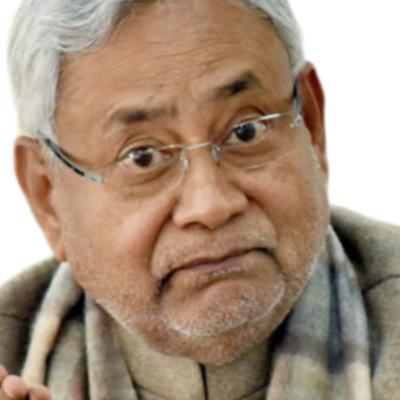
On 4th May 2023, the Patna High Court restrained the Government of Bihar from proceeding with its programme of a "caste-based survey".
Join Shrutanjaya Bhardwaj in a brief description of the judgment.
[Edit: After this episode was recorded, the stay order was vacated and a caste census has been conducted by the Bihar Government.]
Attributions:
Law Vaarta animation: Vaibhav Bhatia
Nitish Kumar interview: NDTV
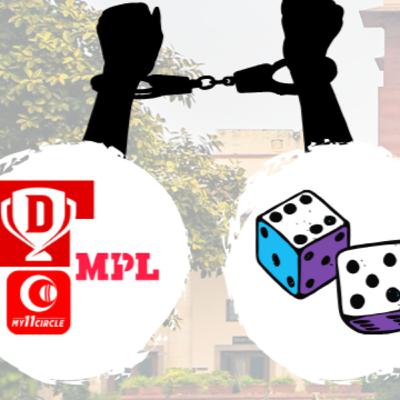
On 7th April 2023, the State of Tamil Nadu passed a new law prohibiting online "gambling" and online "games of chance".
What is "gambling"? What are games of chance? How are they different from games of skill? When did this concept originate?
Join us for a brief discussion on the new Tamil Nadu law.
Attributions:
Law Vaarta animation: Vaibhav Bhatia
Dream 11 logo: Pixlok.com

On 10 March 2023, the Ministry of Fisheries, Animal Husbandry and Dairying, Government of India published the Animal Birth Control Rules, 2023.
The Rules govern:
1. Dog catching
2. Euthanasia
3. Dog bites
4. Dog feeding
How does the Supreme Court of India function? What is its strength? How many judges usually hear a case? What types of cases reach the Supreme Court? What does its workload look like?
Join us for an overview of the Supreme Court of India.

On 13 April 2019, in a Karnataka rally, Congress Leader Rahul Gandhi allegedly made a defamatory allegation against the Modi community. On 23 March 2023, the Chief Judicial Magistrate, Surat convicted him for defamation under Sections 499 & 500 of the Indian Penal Code, 1860 and sentenced him to two years in prison.
The judgment came upon a complaint filed by Gujarat MLA Purneshbhai Ishwarbhai Modi, who claimed to be a victim of the defamatory statements along with 13 Crore other persons belonging to the Modi community.
In a pathbreaking judgment, the Lahore High Court declared S.124-A of the Pakistan Penal Code (pari materia to S.124-A of the Indian Penal Code) as unconstitutional and violative of the freedom of speech.
On 24 March 2023, a three-judge bench of the Supreme Court overruled two of its earlier judgments from 2011. The earlier judgments held that it is not a criminal offence to merely be a 'member' of an association declared 'unlawful' under the UAPA. But now it is. Join us for a brief explainer of the judgment in Arup Bhuyan v. State of Assam (2023).
On 6th March 2023, the Delhi High Court held that portions of the online show 'College Romance' are obscene publications for the purposes of Ss. 67 & 67A of the Information Technology Act, 2000. The Court refused to quash the criminal complaint against the producers and an actor.
Join Shrutanjaya Bhardwaj in a brief analysis of the judgment.
On 2 March 2023, the Supreme Court directed that the Chief Election Commissioner (CEC) and the Election Commissioners (ECs) shall be appointed by a 3-member committee comprising of:
Prime Minister
Leader of (the largest) Opposition
Chief Justice of India
Join me for a brief explainer of the 378-page judgment: https://main.sci.gov.in/supremecourt/2015/1458/1458_2015_3_1501_42634_Judgement_02-Mar-2023.pdf.
[Not covered in the Episode: The Supreme Court made some observations about an incumbent Election Commissioner. They are not included in the video because they are not essential to the Court's holding.]
On 8th November 2016, the Central Government declared that currency notes of Rs. 500 and Rs. 1000 denominations shall no longer be legal tender in India. This measure, colloquially called “demonetisation”, was taken in exercise of powers conferred upon the Government by S.26(2) of the RBI Act. Several petitions were filed in the Supreme Court challenging the validity of this measure. More than four years later, on 2nd January 2023, the Supreme Court dismissed those petitions by a verbose 400-page judgment, including a 260-page majority judgment.
Join Shrutanjaya Bhardwaj for a crisp explainer on the judgment.
क्या है कॉलेजियम? सुप्रीम कोर्ट और हाई कोर्ट के जज कैसे नियुक्त होते हैं? संविधान में क्या प्रक्रिया निर्धारित है, और वास्तविकता में किस प्रक्रिया का पालन किया जाता है?
What is the Collegium? How are judges of the Supreme Court and the High Court appointed? What is the process prescribed in the Constitution, and what is the process in fact followed for judicial appointments?
Join Shrutanjaya Bhardwaj for a quick explainer.
मृत्युदंड विवादास्पद क्यों है? क्या इससे गुनहगार डरते हैं? कौन से तबके के लोगों को मृत्युदंड सबसे ज़्यादा दिया जाता है? कोई जज उम्रकैद और फांसी के बीच में फ़ैसला कैसे करता है? क्या हमारी न्यायपालिका मैं कोई त्रुटि नहीं है? इस सब के बारे में डाटा हमें क्या बताता है?
Why is the death penalty controversial? Does the death penalty deter criminals? Which class of people are sentenced to death the most? How does a judge choose between death penalty and life imprisonment? Is our justice system perfect? What does data tell us about all this?
Join Ayush Baheti and Shrutanjaya Bhardwaj in their discussion on the death penalty.
What is the "basic structure" debate all about? What did the Supreme Court hold in 1973 about Parliament's powers to amend the Constitution? What can the Parliament do, and what can it not? And why does all this matter?
What was the 'hijab' ban imposed by the Karnataka Government? Why was it challenged? Which fundamental rights and other legal issues did it implicate? And why did the two Supreme Court judges (Hemant Gupta J. and Sudhanshu Dhulia J.) disagree with each other? Shrutanjaya Bhardwaj speaks to Amber Tickoo and Saral Minocha.

On 7th November 2022, the Indian Supreme Court upheld the constitutional validity of the 103rd Constitutional Amendment by which Parliament inserted Articles 15(6) and 16(6) into the Constitution, enabling reservations in jobs and education for the "Economically Weaker Sections" (EWS).
Join Ayush Baheti and Shrutanjaya Bhardwaj for a brief discussion on the judgment. The episode is meant for legal as well as non-legal audiences as we try to discuss the nuances of constitutional law in simple language.
Access the full judgment here: https://main.sci.gov.in/supremecourt/2019/1827/1827_2019_1_1501_39619_Judgement_07-Nov-2022.pdf.
Comments

Download from Google Play

Download from App Store
 United States