


 Claim Ownership
SochCast by Product Soch
Subscribed: 1Played: 5
Subscribe

© Product Soch 2022
Description
A Pakistani podcast that dives deep into the world of product management, growth & product marketing.
13 Episodes
Reverse
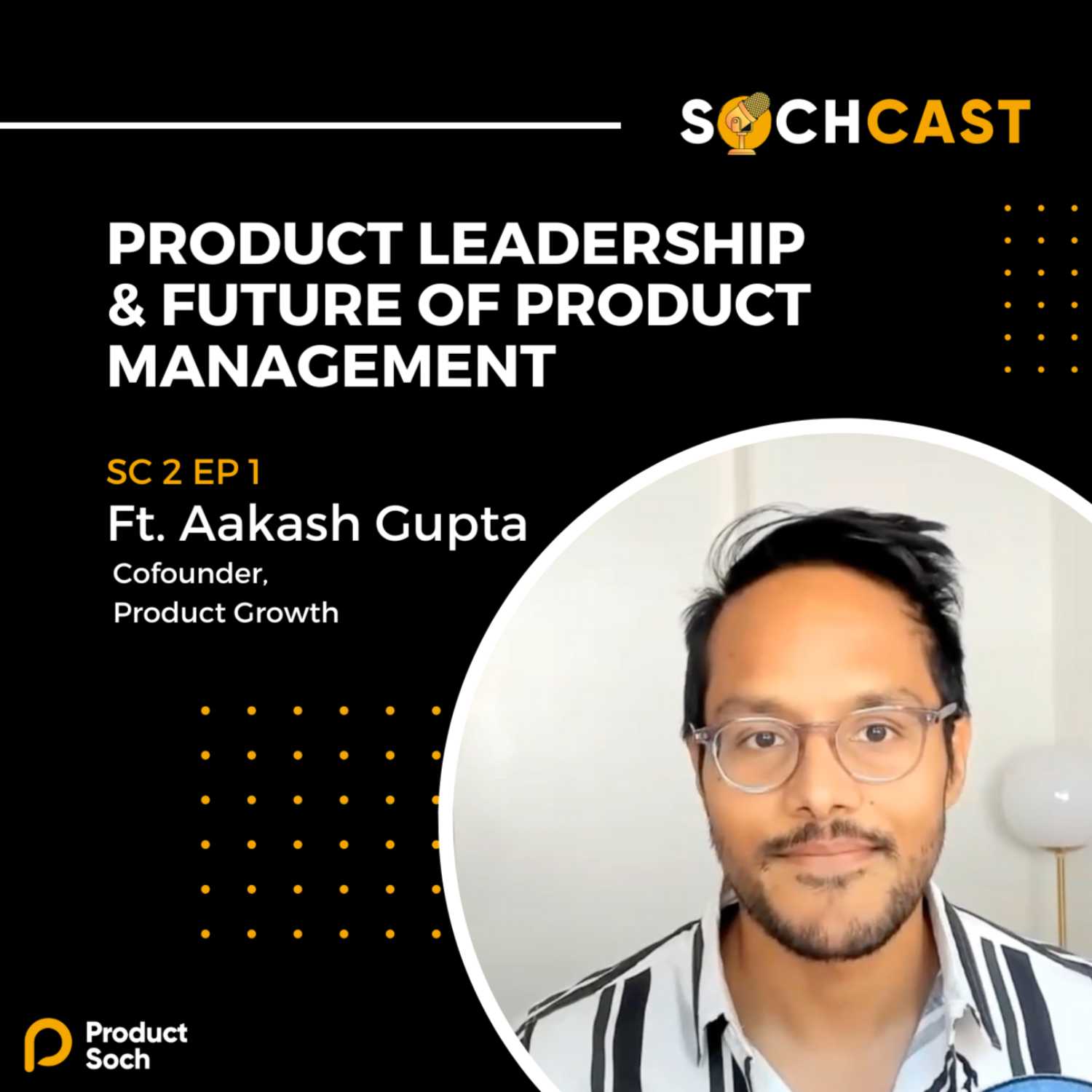
Get ready for an insightful conversation in this week's episode of SochCast as we sit down with Aakash Gupta, CoFounder at Product Growth, to delve into the world of product management and its evolution over the years.Aakash discusses the changes and advancements in Product Management, the skills required, and ways to achieve clarity of thought. They also cover sharing knowledge, virality and network effects. Aakash advises on balancing product strategy and management responsibilities, essential traits for Product Leaders, and characteristics of high-performing teams.Whether you are a seasoned Product Manager or just starting out in the Product Management field, this episode offers valuable insights and practical tips to help you succeed.About the SpeakerAakash Gupta is a renowned Product Leader having worked with giants like Google, Epic Games, and Affirm. He's also one of the leading content creators on Product Leadership and Product Strategy, helping shape the next generation of product managers.Chapters0:00 Aakash’s Introduction1:37 Aakash’s journey into Product Management3:20 How has Product Management evolved over the last decade?6:15 What factors drive popularity of Product Management as a profession?7:23 How to be a clear thinker as a Product Manager11:48 Should PMs start publishing content with thin domain expertise?14:27 What role do virality and network effects play in driving a company's success17:22 Principles of Product-Led Growth20:20 How can PMs avoid a delivery-focused mindset?24:12 How doe s the PM role evolve as they ascend the career ladder?27:20 How to focus on product strategy vs management responsibilities30:26 Traits of effective Product Leaders33:15 What do top product teams at tech giants have in common?35:46 Impact of AI on Product Management Role40:02 Evolution of Product Management Role with AI41:43 Recommended ReadingsRecommendations from the episodeKite Runner by Khaled Hussainihttps://www.amazon.com/Kite-Runner-Khaled-Hosseini-author/dp/1526604736Design of Everyday Things by Don Normanhttps://www.amazon.com/Design-Everyday-Things-Revised-Expanded/dp/0465050654Give and Take by Adam Granthttps://www.amazon.com/Give-Take-Helping-Others-Success/dp/0143124986Inspired by Marty Caganhttps://www.amazon.com/INSPIRED-Create-Tech-Products-Customers/dp/1119387507
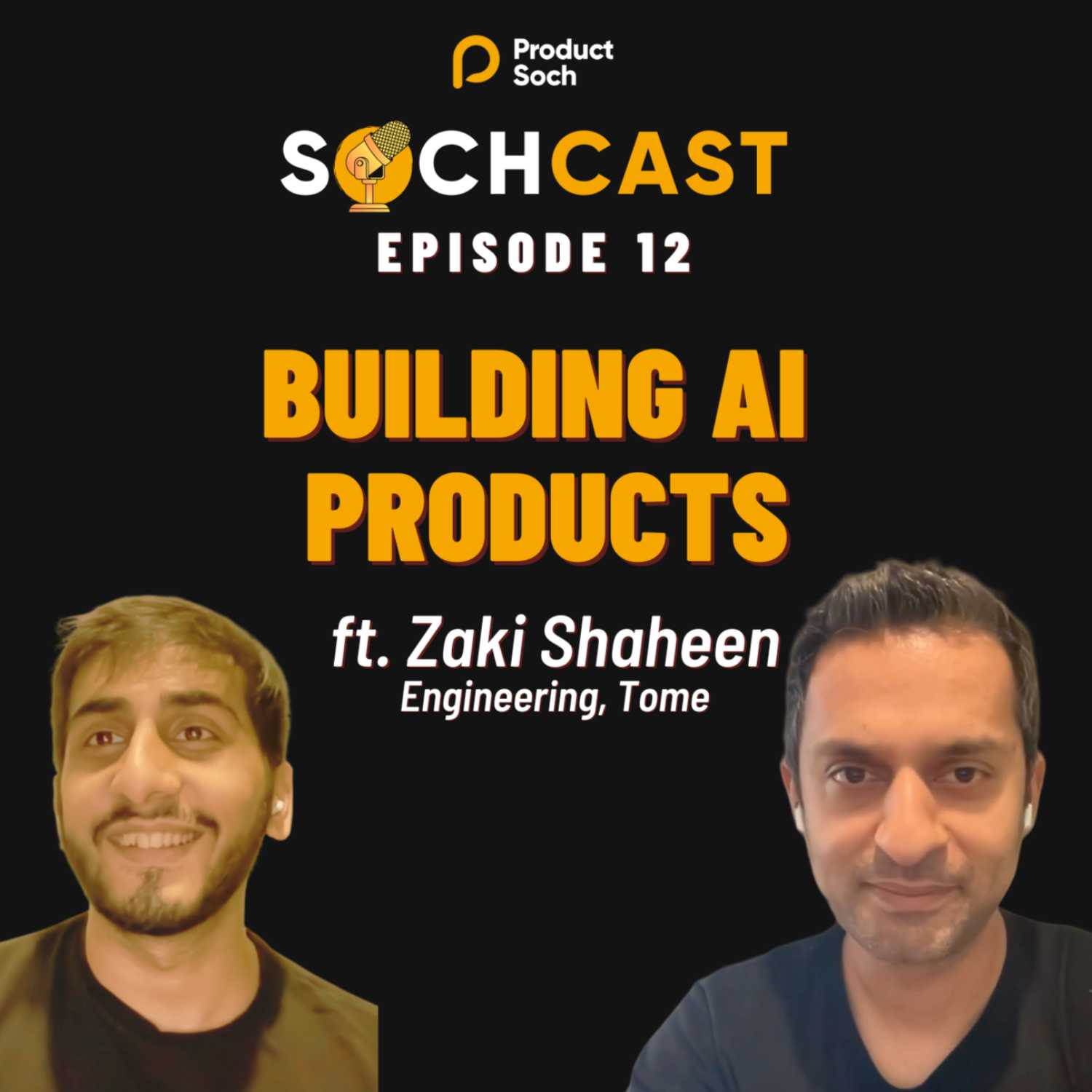
In this week’s episode of SochCast, Abdul Ghaffar sits down with Zaki Shaheen, Engineer at Tome - to unpack the great insights on building AI products and its impact on our future.Throughout the episode, Zaki shares his insights and expertise on how to create AI products, how openAI fundamental models can be modified, and how jobs will evolve around AI.Whether you are a seasoned Product Manager or just starting out in the AI field, this episode offers valuable insights and practical tips to help you succeed. Tune in to hear Zaki in a thoughtful and engaging conversation about all things building AI Products.About the SpeakerZaki Shaheen is a seasoned software engineer working at a Silicon Valley startup called Tome - an AI tool that transforms documents into presentations. After graduating from FAST in 2008, Zaki worked for a few years in Pakistan’s software services ecosystem before getting the nod from Yelp in San Francisco to work on their iOS app. Soon after that, Zaki was hired by Meta (then Facebook) at Menlo Park where he worked on products like Facebook Avatars and Whatsapp.Chapters0:00 Zaki’s Introduction2:41 Idea Behind Tome4:34 What it means to build an AI Product?9:19 How to modify openAI Fundamental models?12:34 How do social biases works in AI?17:10 How do you go about building AI Products?25:17 What are some of your favourite AI Products?26:38 Upcoming AI Products?29:42 AI Role in AR/VR31:31 AI's future: what does it hold?41:27 In the age of AI, how can one future-proof themselves?
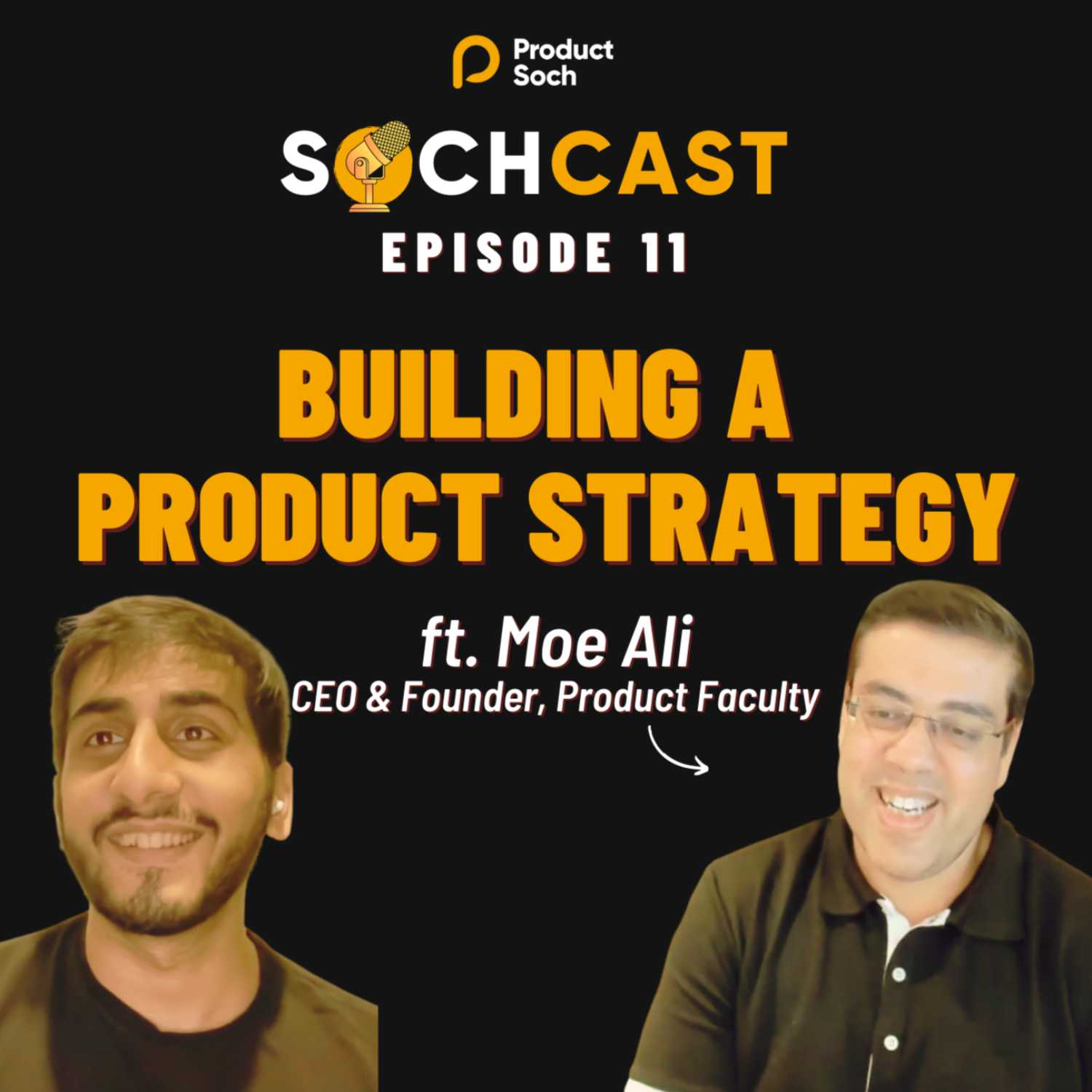
In this week’s episode of SochCast, Abdul Ghaffar sits down with the one and only - Moe Ali, the CEO and Founder of Product Faculty - to unpack product strategy and the potential of AI in product management.Throughout the episode, Moe shares his insights and expertise on how to create a sound product strategy, how to pivot effectively, and what traits great Product Managers possess.Whether you are a seasoned Product Manager or just starting out in the field, this episode offers valuable insights and practical tips to help you succeed. Tune in to hear Moe Ali in a thoughtful and engaging conversation about all things product strategy.About the SpeakerMoe Ali is a prominent figure in the world of Product Management, with extensive experience in leading product positions at renowned companies like Loblaw Digital, Bell, Invista, and Apple. In 2016, he founded Product Faculty, a leading training institution that provides Product Management training to Product Managers, coaching them to become their best. As the CEO and Founder of Product Faculty, Moe Ali has dedicated himself to advancing the field of Product Management and helping others succeed.Moe Ali's expertise and insights are sought after by companies around the world, including IBM, McKinsey, and Pearson Education, for whom he serves as a product advisor. He is recognized for his thought-provoking and insightful posts on LinkedIn, where he has amassed a following of nearly 50,000 followers.Chapters0:00 Moe’s Introduction1:30 What is product strategy?5:06 Product strategy for true innovations9:45 How does one understand the problem space?14:24 How do you strategize for companies in different stages?17:09 How do you know if you're a 0-1 or 1-N PM?19:08 Examples of products with great strategy26:26 Do larger companies let smaller ones innovate only to acquire them?30:16 How do successful PMs utilize data?35:12 How will AI impact product management?37:49 How can PMs future proof themselves?40:10 Traits of great Product Managers45:39 Recommended ReadingsRecommended ReadingsShreyas Doshi Twitter: https://twitter.com/shreyasShreyas Doshi LinkedIn: https://www.linkedin.com/in/shreyasdoshi
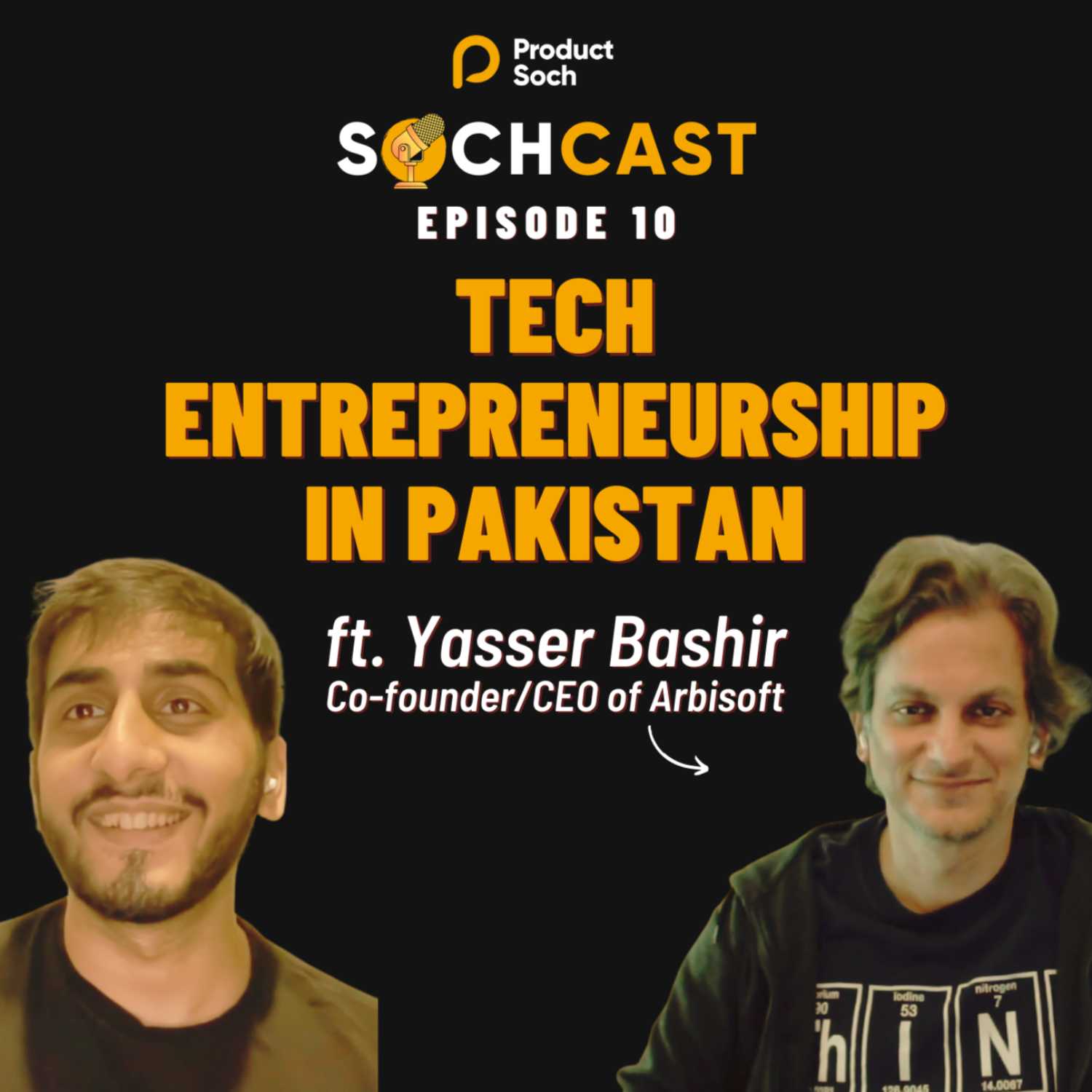
In this episode of Sochcast, Abdul sits down with Yasser Bashir, the CEO of Arbisoft, one of the largest software development companies based in Pakistan with a thriving product arm. The discussion centers around tech entrepreneurship in Pakistan, the startup funding situation in the country, and the role that Arbisoft is playing in supporting entrepreneurship.Yasser Bashir shares his insights on the challenges and opportunities facing entrepreneurs in Pakistan. Abdul and Yasser also unpack the exciting potential of AI and its potential impact on the tech industry at large.This episode is a must-listen for anyone interested in the future of tech and entrepreneurship in Pakistan.About the SpeakerYasser Bashir is the co-founder and CEO of Arbisoft, a software development company based in Pakistan that employes over 800 employees. Along with software development services, Arbisoft also boast a strong product culture with products like edX, Sentimeter, Fatafat and more. They have been able to materialize strong exits for a number of their product lines.Yasser is a Stanford and LUMS graduate. After starting his career in software engineering and a stint at Orthoclear, Yasser started Arbisoft. Under Yasser’s leadership, Arbisoft has led the development of 3D/CADD systems, enterprise software including ERPs and CRMs, web, cloud, and mobile applications. Moreover, Yasser is committed to promoting tech entrepreneurship in Pakistan and supporting the growth of the tech industry in the country.Chapters0:00 Yasser’s Introduction1:46 How & Why Yasser started Arbisoft3:26 Why Yasser chose to start a software dev company6:55 How has the entrepreneurial landscape evolved in Pakistan?9:55 Will private equity interest return to Pakistan with the same momentum?18:30 Role of governance in Pakistan’s tech sector23:58 Role of Pakistani entrepreneurs to lift the tech sector25:06 What should Pakistani tech entrepreneurs aim to do?31:42 Dilemma around brain drain35:02 Arbisoft's role in the future Pakistani entrepreneurship39:51 Potential of AI in context of Pakistan49:39 Is Artifical General Intelligence coming?58:25 How might AI be exploited?1:02:39 Advice to Pakistani entrepreneurs1:06:23 Will doors to funding re-open for Pakistan with the same vigor soon?Recommended ReadingChatGPT is a lossy compression of the internethttps://www.newyorker.com/tech/annals-of-technology/chatgpt-is-a-blurry-jpeg-of-the-web
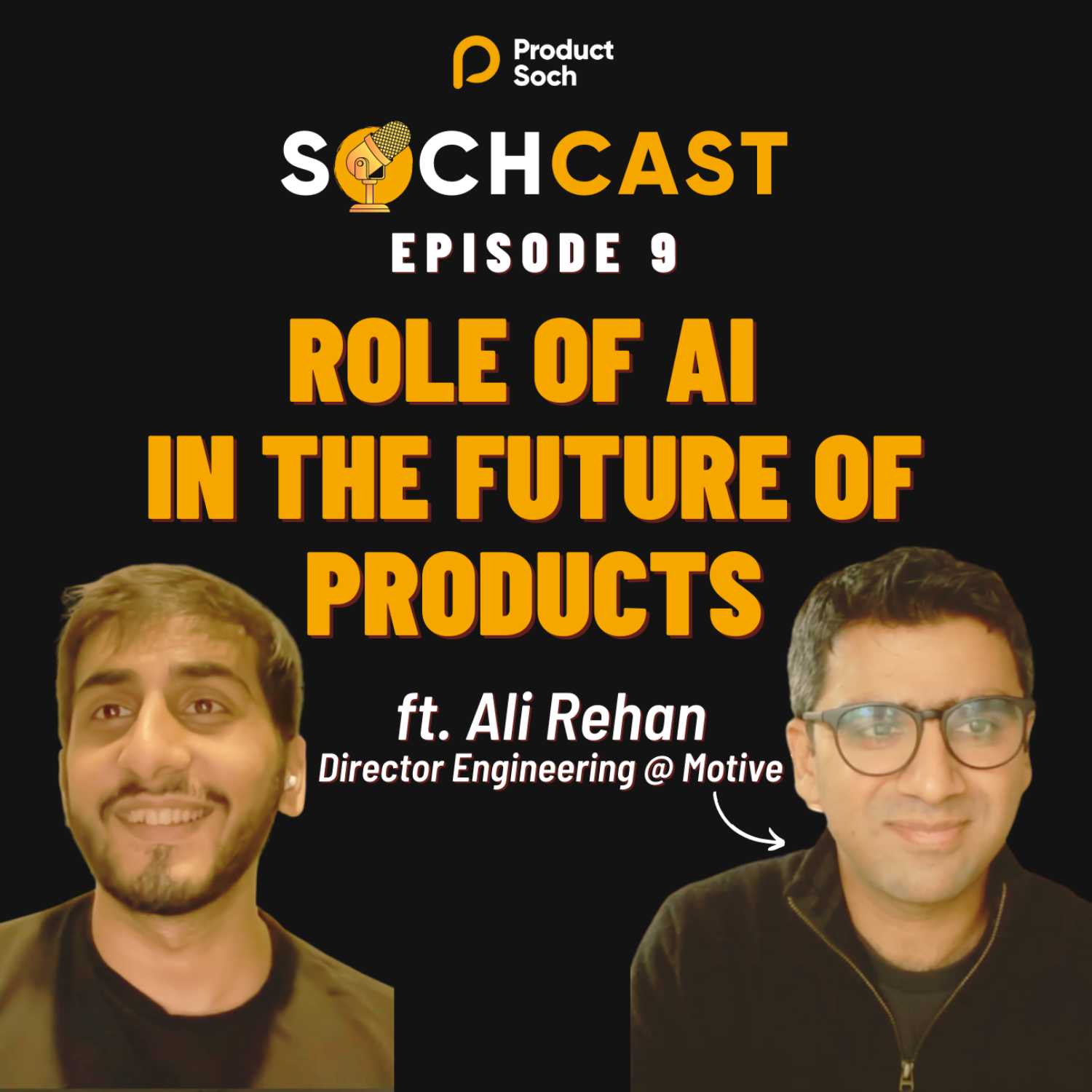
In this episode, Abdul sits with Ali Rehan - Director of Engineering at Motive - to dive into the fascinating world of Product Management in AI, exploring how AI PMs differ from regular PMs, the impact of AI on our future, the importance of AI ethics and much more.This is a a must-listen for anyone interested in the intersection of AI, technology, human impact and business.About the SpeakerAli Rehan is a seasoned Product & Engineering Manager with a proven track record of building successful products, especially in the AI domain. Ali started out as a Product Manager at Motive where he managed their Dashcam products and now currently leads the core AI/Vision team.Before joining Motive, Ali co-founded Groopic, an app that revolutionized group photography with its innovative technology. Under his leadership, the app achieved over 1 million downloads and was recognized by major media outlets such as CNN, TechCrunch, and Gizmodo. With a background in computer vision research and a passion for UI/UX design, Ali's expertise has been recognized with multiple awards, including the Best Startup + Media & Ent Tech Award at the Asia Pacific ICT Awards from 2013 to 2015.With a Bachelor's and Master's from LUMS, Ali is now bringing his wealth of experience to his role as Director of Engineering at Motive.Recommended ResourcesHarvard Innovation Labshttps://www.youtube.com/channel/UCm_WkN0wg49-eG4SymAQ_4gPredictably Irrational: The Hidden Forces That Shape Our Decisions by Dan Arielyhttps://www.amazon.com/Predictably-Irrational-Revised-Expanded-Decisions/dp/0061353248/ref=sr_1_1Tribe of Mentors by Timothy Ferrisshttps://www.amazon.com/Tribe-Mentors-Short-Advice-World/dp/B082VM5VZN/ref=sr_1_1Chapters0:00 Introduction2:50 Ali’s academic & professional journey6:17 Journey after Groopic (product)8:20 Journey into KeepTruckin’9:36 The drive behind Ali’s early work13:30 Products Ali worked on during undergrad15:18 Reflecting on the Groopic app22:53 Potential to productize Groopic for other businesses26:47 What is Artificial Intelligence?33:26 How has Motive productized AI?39:45 Role of AI in self-driving cars46:51 How can we better prepare for the ethical challenges of AI?53:51 What is AI Product Management?58:58 What AI PMs need to be wary about1:06:00 Does an AI PM need to be technical?1:08:46 Will AI lose impact over time?1:15:39 Recommended Readings
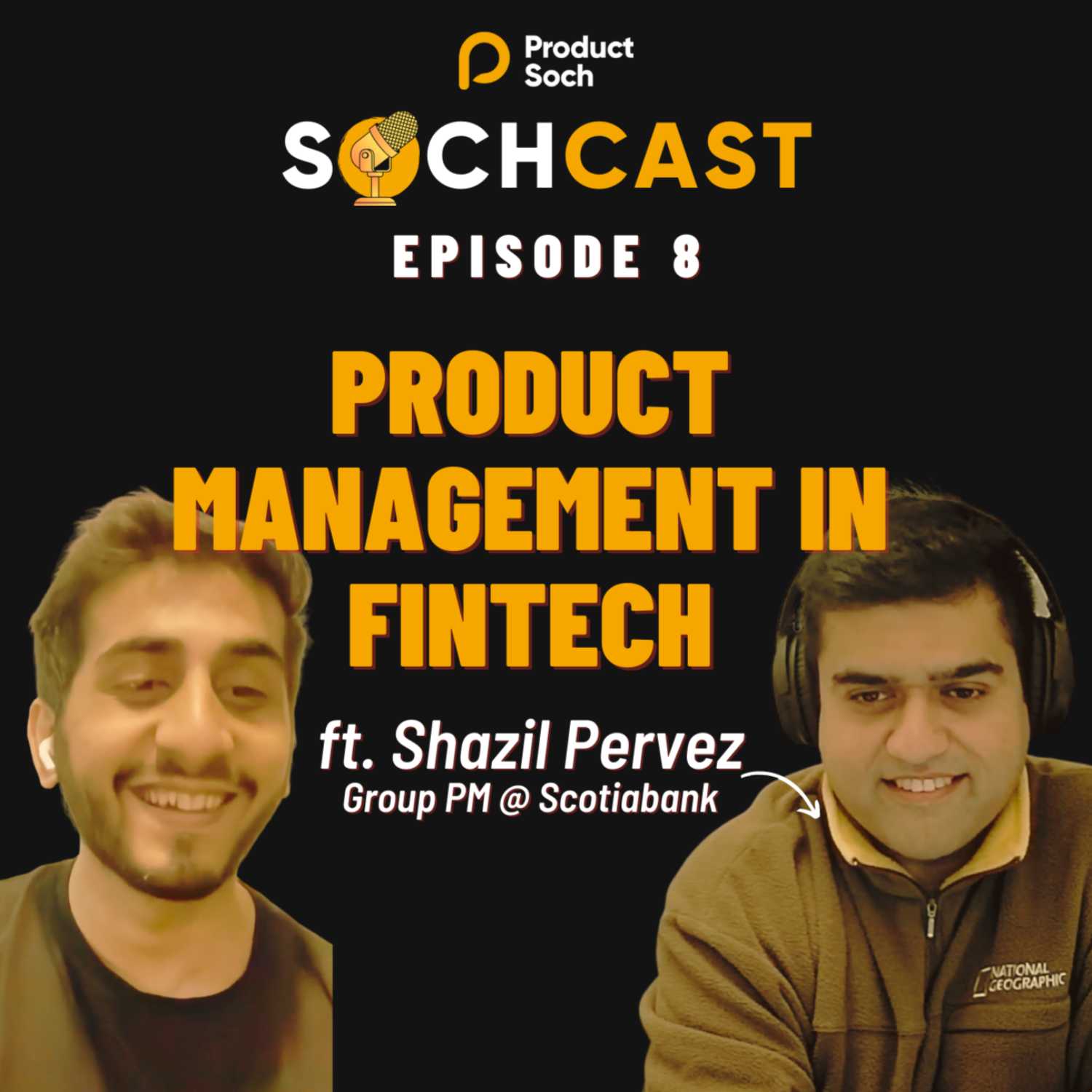
Join Abdul Ghaffar on SochCast as he sits down with Shazil Pervez, a Group Product Manager at Scotiabank, to discuss the world of Fintech. Explore the differences between Product Management in Canada vs Pakistan, why Pakistan hasn't yet achieved its Fintech potential, and insights into driving product innovation and pricing in the industry. Tune in to hear about the future of FinTech in Pakistan and the metrics that inform strategy. This episode is a must-listen for anyone interested in the FinTech industry.About the speakerShazil Pervez is a seasoned product management professional with extensive experience in the fintech industry. He currently leads the product team at Scotiabank as a Group Product Manager, responsible for all domestic and cross-border money movement initiatives. Shazil has a rich history of success in product management, having served as Senior PM at Loblaw Digital and ApplyBoard, as well as Head of Fintech (APAC) at DeliveryHero. He has also spent 7 years at Jazz, where he led a team of 10 and contributed to the growth of their e-wallet customer base to over 12 million users. Shazil holds a BBA and MBA from NUST in Pakistan and has a passion for fintech product management.Shazil's Recommended ReadingsInspired by Marty Cagan: https://www.amazon.com/INSPIRED-Create-Tech-Products-Customers/dp/1119387507/ref=sr_1_1Empowered by Marty Cagan: https://www.amazon.ca/EMPOWERED-Ordinary-People-Extraordinary-Products/dp/111969129X/ref=sr_1_1Continuous Discovery Habits: https://www.amazon.ca/Continuous-Discovery-Habits-Discover-Products/dp/1736633309/ref=sr_1_1Teresa Torres Product Talk Blog: https://www.producttalk.org/blog/Lenny’s Newsletter: https://www.lennysnewsletter.com/The Lean Startup: https://www.amazon.ca/Lean-Startup-Entrepreneurs-Continuous-Innovation/dp/0307887898/ref=asc_df_0307887898/Chapters0:00 Introduction2:29 Shazil’s Product Journey6:35 Product Management in Canada vs Pakistan12:45 Defining Fintech14:19 Why did Pakistan not achieve it’s Fintech potential?20:49 Will Pakistan FinTech pick up in the near future?23:55 Why did Pak telecos move into Fintech?27:10 How can FinTech players ease the loan process?32:17 What metrics do you measure & how do they inform strategy?36:01 How do you drive product innovation in Fintech?40:45 How do you price Fintech products?44:25 Difference between Fintech and non-fintech products47:35 Recommended Readings
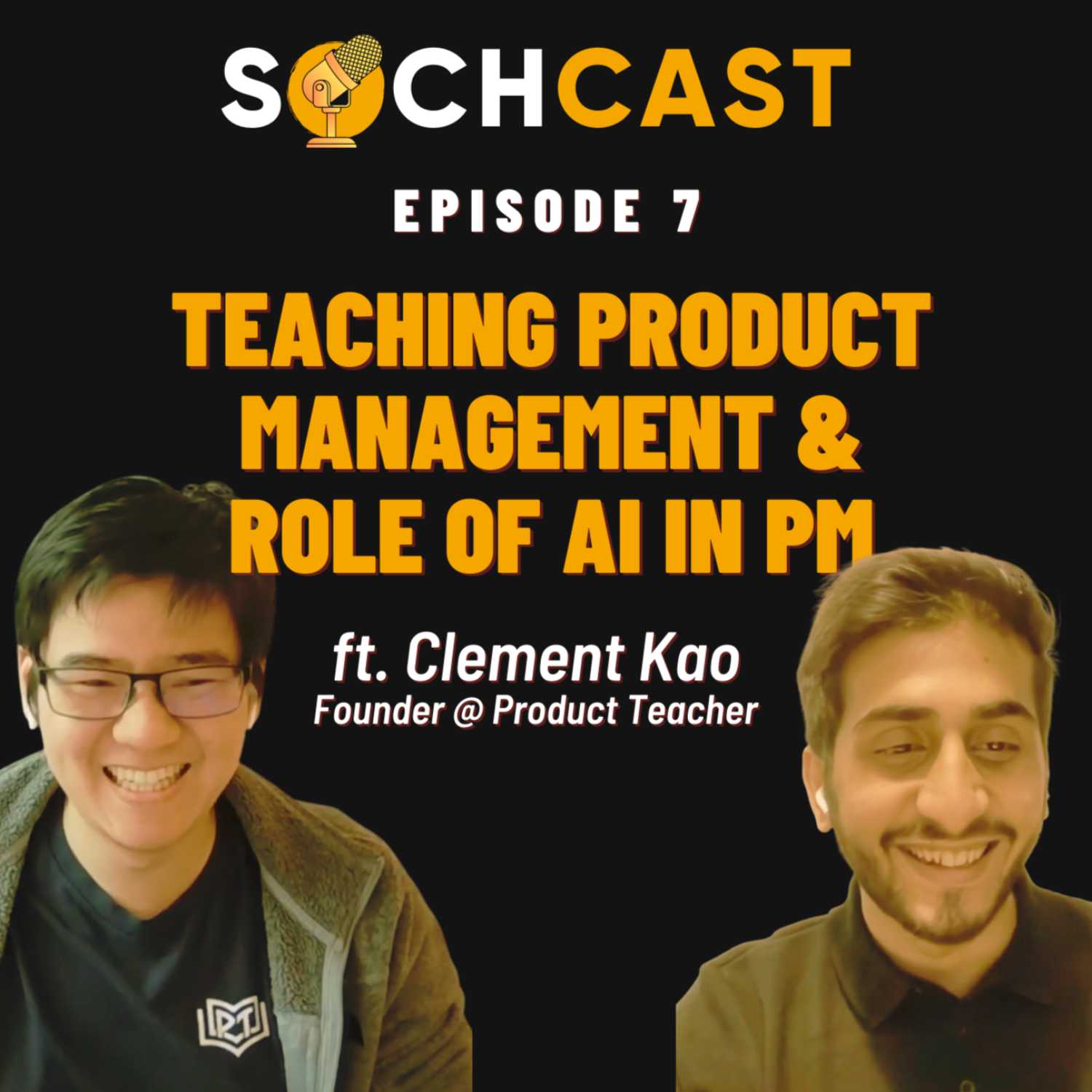
In this episode, Clement (Founder @ Product Teacher) talks to us to explore everything from product management and how Clement saved a marriage through his superpowers, to understanding how Product management will evolve in an age of AI and the responsibility of Product managers in ensuring the right balance between leveraging the capabilities of AI and maintaining human oversight and control. Whether you're a product manager, entrepreneur, or just curious about the world of technology, this episode is sure to be a must-listen.About the SpeakerClement is a household name in product management and doesn't need any introduction. But for the uninitiated, Clement is the founder of Product Teacher, which offers services from workshops to career counselling and coaching for professionals from companies like Google, Facebook, Amazon, Apple, Microsoft, LinkedIn, and many more. He's served as a product leader for leading silicon valley startups, and authored 4 books and 90+ articles on product management.And as always, if you have any feedback or ideas for future episodes, we'd love to hear from you!Chapters0:00 Introduction6:29 Clement’s motivation behind his career shifts13:44 How do you “teach” Product Management?25:21 How do you build a culture of collaboration?32:07 Setting up a product analytics strategy43:55 How technical does a PM need to be?1:01:19 How will PM evolve in the age of AI?1:18:08 Recommended ReadingsRecommended ReadingsHigh Output Management by Andy Grovehttps://www.goodreads.com/book/show/324750.High_Output_ManagementDon’t Make Me Think by Steve Krughttps://www.goodreads.com/book/show/18197267-don-t-make-me-think-revisitedThe Hard Things about Hard Things by Ben Horowitzhttps://www.goodreads.com/book/show/18176747-the-hard-thing-about-hard-things?from_search=true&from_srp=true&qid=Yv52Rywjld&rank=2Product Teacher Articles & Blogshttps://www.productteacher.com/articlesFirst Round Reviewhttps://review.firstround.com/articles
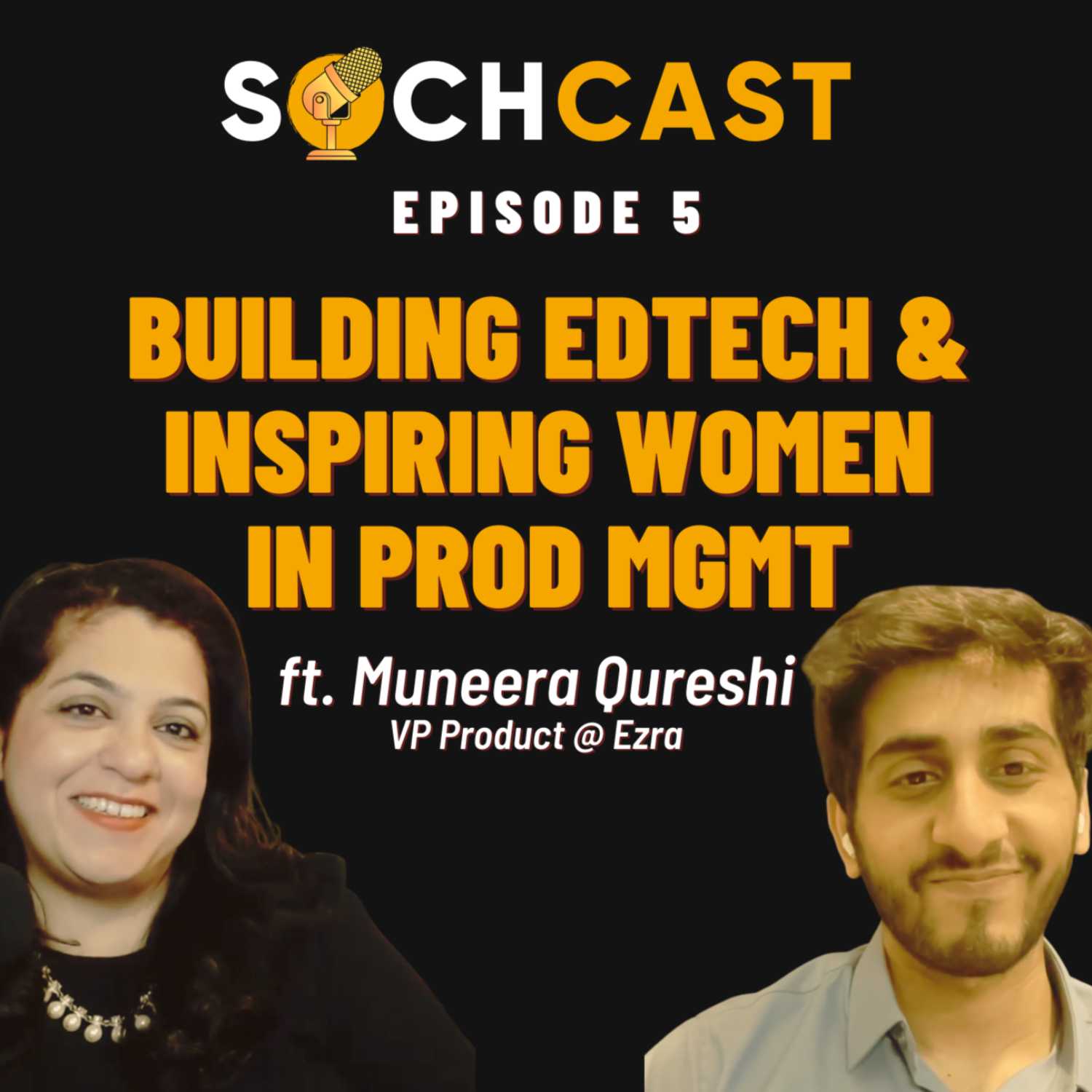
Today’s guest is Muneera Qureshi, VP of Product at Ezra. In this episode, Muneera sits with Abdul to discuss about her product management experience in ed tech products, how ed tech as an industry has evolved and what are the traits a product manager should aspire to adopt to thrive and grow. About the SpeakerMuneera is the VP of Product at Ezra. She has over 20 years of expertise leading small and medium enterprises, strategizing software products, transitioning teams to agile frameworks, and generating year-over-year revenue increase. As a major supporter of the Toronto and Canadian startup and tech ecosystems, Muneera also mentors/coaches/advises professionals aspiring to get into the product discipline. Muneera also serves as a mentor in the “Women in Product” community.Episode Chapters0:00 Muneera’s Introduction1:58 Muneera’s journey growing up6:44 Product Management in Ed Tech10:50 How had Ed Tech evolved?18:47 Challenges in distributing Ed Tech products26:18 Getting the “system” on board with Ed Tech30:45 Traits of a great Product Manager35:05 Role as a mentor in “Women in Product”39:02 Muneera’s book recommendationsRecommended BooksInspired by Marty CaganEmpowered by Marty CaganEscaping the Build Trap by Melissa PerriHooked by Nir EyalTrillion Dollar Coach by Alan Eagle, Eric Schmidt, and Jonathan RosenbergPodcast: Diary of a CEO by Steven Bartletthttps://podcasts.apple.com/gb/podcast/the-diary-of-a-ceo-with-steven-bartlett/id1291423644Steven’s episode with Galloway:https://podcasts.apple.com/gb/podcast/e190-the-number-one-reason-this-generation-is/id1291423644?i=1000584049023Follow & Engage with Product SochWebsite: https://www.productsoch.comLinkedIn: https://www.linkedin.com/company/productsoch/Slack Community: slack.productsoch.comNewsletter: https://productsoch.substack.com
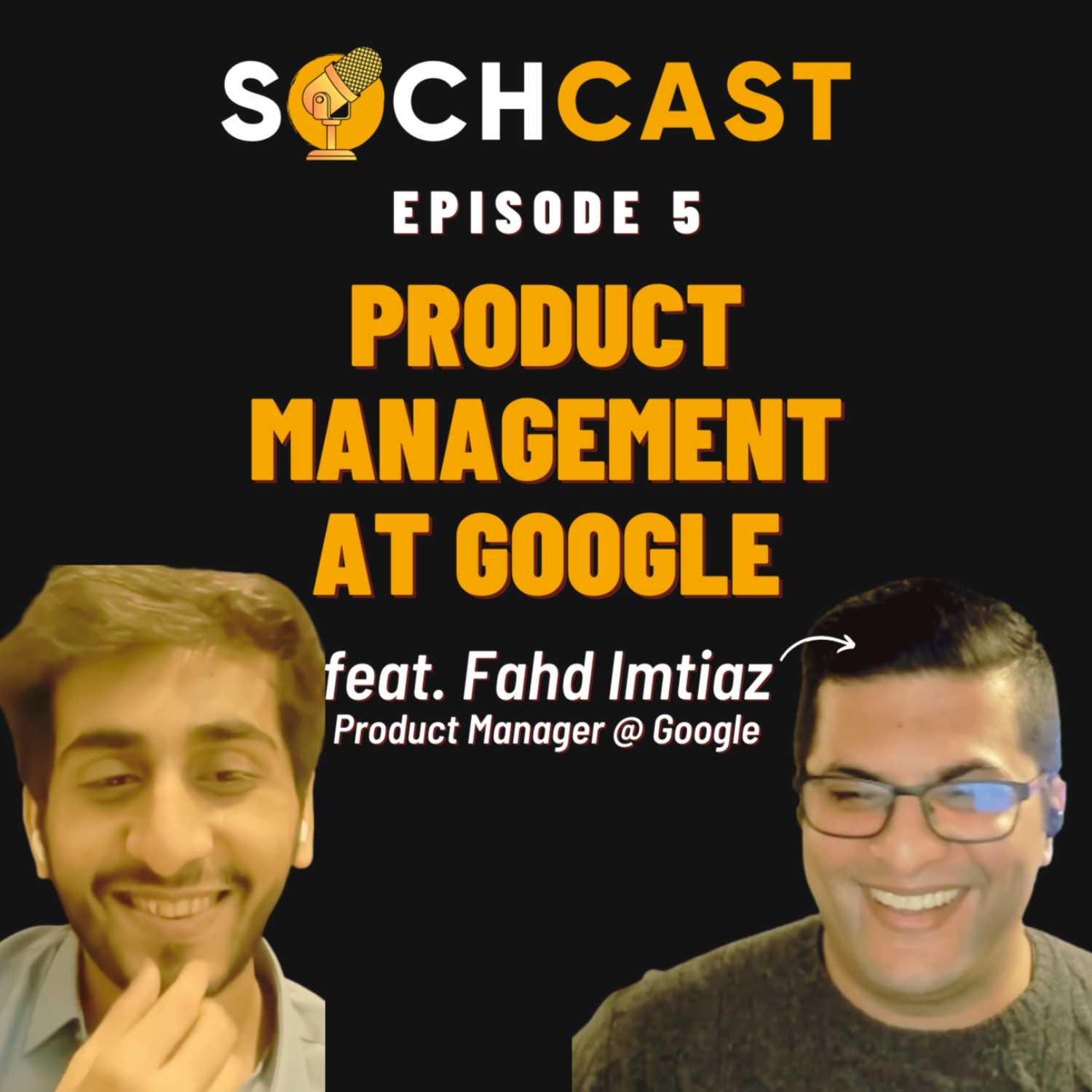
Fahd Imtiaz, a Product Manager at Google, chats with Abdul about his career journey - from his days at Aitchison to his Blackberry stint to his current tenure at Google. Fahd sheds light on important traits that a Product Manager should have and shares advice on what PMs should do during economic downturns. About the Speaker Fahd Imtiaz currently works as a Product Manager at Google in the Android runtime team for ChromeOS. Originally from Pakistan, Fahd turned towards Canada after completing studies at Aitchison. He holds a Bachelor's degree from McGill University & a Master's from the University of Waterloo. After graduation, he kicked off his career at Blackberry as an interoperability specialist but soon found his calling as a Product Manager 4 years into his journey. From there, he worked on product at companies like PointClickCare, Tulip and the retail POS, Lightspeed HQ. Finally, he landed a prestigious role at Google 1.5 years ago where as a PM, he solves tech challenges alongside some of the brightest engineers in the world. Chapters 0:00:00 Intro 0:02:29 What's an interoperability specialist? 0:04:23 Fahd as an Aitchisonian 0:09:50 How Fahd moved to a PM role in Blackberry 0:15:09 Factors behind Blackberry's decline 0:20:00 Learnings from Blackberry 0:24:26 Product Leadership at Lightspeed HQ 0:30:10 How Fahd got into Google 0:36:49 Can the interview process be hacked? 0:39:36 What does it mean to be a PM at Google? 0:44:07 Traits of great Product Managers 0:51:44 How should laid off PMs level up during recessions? 1:03:01 How technical should Product Managers be? 1:05:56 Potential of Generative AI 1:11:15 Recommended Readings Recommended Content (referenced in the episode) Never Split the Difference by Chris Voss https://www.amazon.ca/Never-Split-Difference-Negotiating-Depended/dp/0062407805 Welcome Home by Najwa Zebian https://www.amazon.ca/Welcome-Home-Guide-Building-Your/dp/0735240671 Netflix planning to enter gaming market with triple A PC game: https://finance.yahoo.com/news/netflix-goes-aggressive-gaming-venture-134543410.html Follow & Engage with Product SochWebsite: https://www.productsoch.com/ LinkedIn: https://www.linkedin.com/company/productsoch/ Slack Community: slack.productsoch.com Newsletter: https://productsoch.substack.com
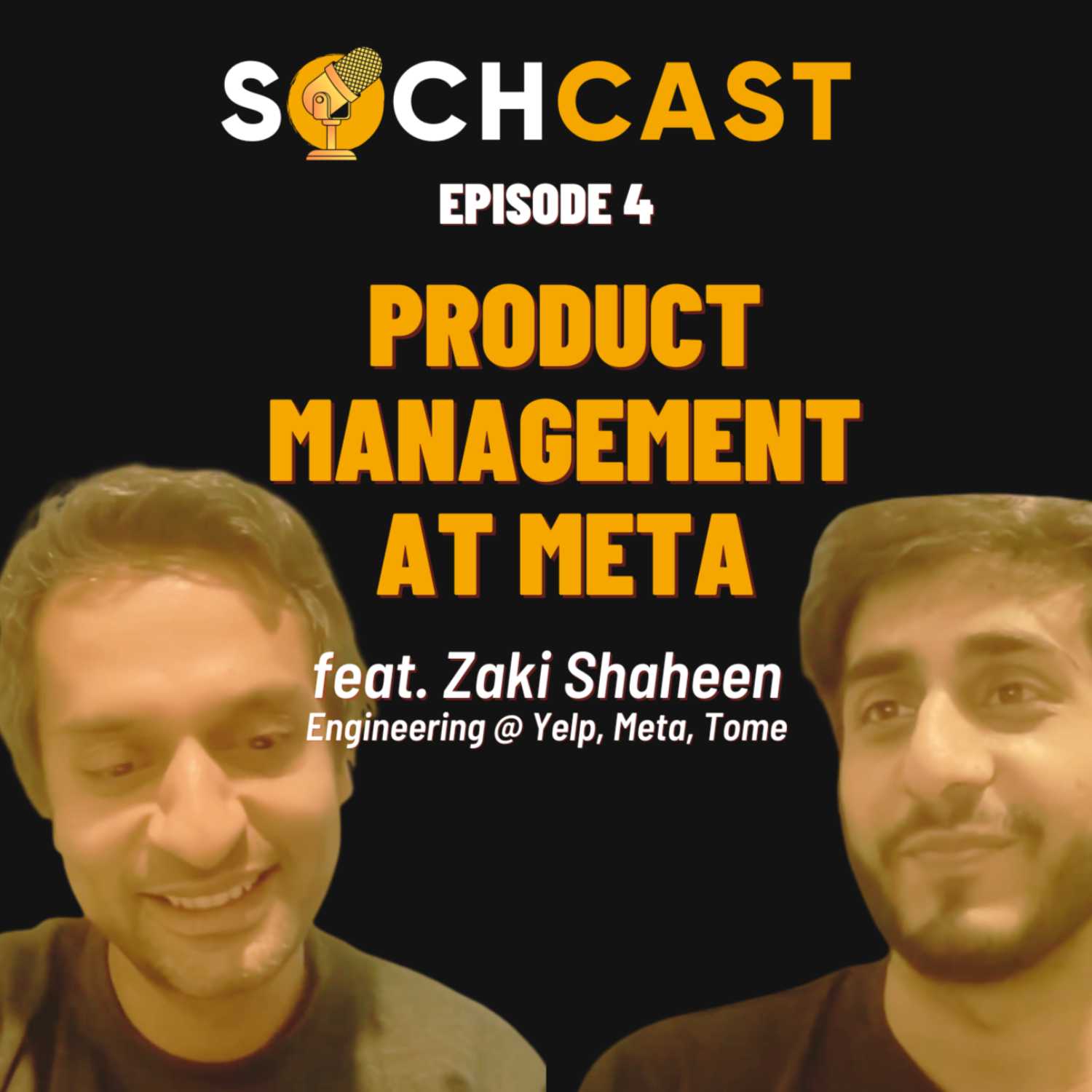
Zaki and Abdul start with a chat on Elon’s buyout of Twitter before moving on to topics like the product management culture at Meta, archetypes of product managers & what it takes to be a successful PM at Meta.About the GuestZaki Shaheen is a seasoned software engineer who currently works in Silicon Valley at a startup called Tome - a storytelling app for work. After graduating from FAST in 2008, Zaki worked for a few years in Pakistan’s software services ecosystem before getting the nod from Yelp in San Francisco to work on their iOS app. Soon after that, Zaki was hired by Meta (then Facebook) at Menlo Park where he worked on products like Facebook Avatars and Whatsapp. He is still involved with Pakistan’s tech ecosystem as a technical advisor to Aimfit.Chapters0:00:00 Intro0:03:24 Elon Musk buys Twitter - Zaki’s thoughts0:19:50 Zaki’s experience at Meta/Facebook0:27:38 How to be a successful PM at Meta0:46:39 Discovery & User Research at Meta0:49:32 Archetypes of Product Managers0:58:29 Zaki’s Career Journey1:11:20 Finding your purpose as an engineer or PM1:16:40 Recommended ReadingRecommended Content (referenced in the episode)User Story Mapping: https://www.amazon.ca/User-Story-Mapping-Discover-Product/dp/1491904909Acquired: https://www.acquired.fm/)Practical Engineering: https://practical.engineering/3Blue1Brown: https://www.youtube.com/c/3blue1brownFollow & Engage with Product SochWebsite: https://www.productsoch.com/LinkedIn: https://www.linkedin.com/company/productsoch/Slack Community: https://productsoch.slack.com/join/shared_invite/zt-1adquagb5-9WyIQ33fL35WIMZ9fmt7ow#/shared-invite/emailNewsletter: https://productsoch.substack.com
Aatir and Abdul talk about what network effects are & examples of products that carry them. They discuss how one networked product wins over another, what smaller incumbers can do to topple the status quo and how a team can measure if their product has network effects.0:00 Intro5:29 What are Network Effects?12:27 How have Network Effects been enabled in developing countries?17:22 Factors leading to one Networked Product to win over another27:06 How do smaller networked products challenge bigger ones?32:23 How do you create & measure network effects?40:33 Recommended ReadingRecommended Reading Linkshttps://www.amazon.ca/Cold-Start-Problem-Andrew-Chen/dp/0062969749 https://a16z.com/book/the-cold-start-problem/ https://www.ycombinator.com/library/5K-network-effects#:~:text=Anu%20Hariharan%20is%20a%20Partner,and%20share%20advice%20for%20entrepreneurs.
Abdul and Aatir discuss how easy it is for Product Managers to become immune to the little flaws in their product over time & tactics to overcome that. They unpack how company culture plays a part in the extent of product discovery that will be conducted. They also touch upon how Customer Journey Maps can help you identify weak links in your product & pursue innovative solutions.About the guestAatir Abdul Rauf is the Director of Product Marketing at vFairs. He has 12+ years of experience in the Product Management world with contributions at Pakwheels, Yallamotor, Bayt.com, Talentera & now vFairs. He regularly writes on Product Management & Marketing topics on LinkedIn.
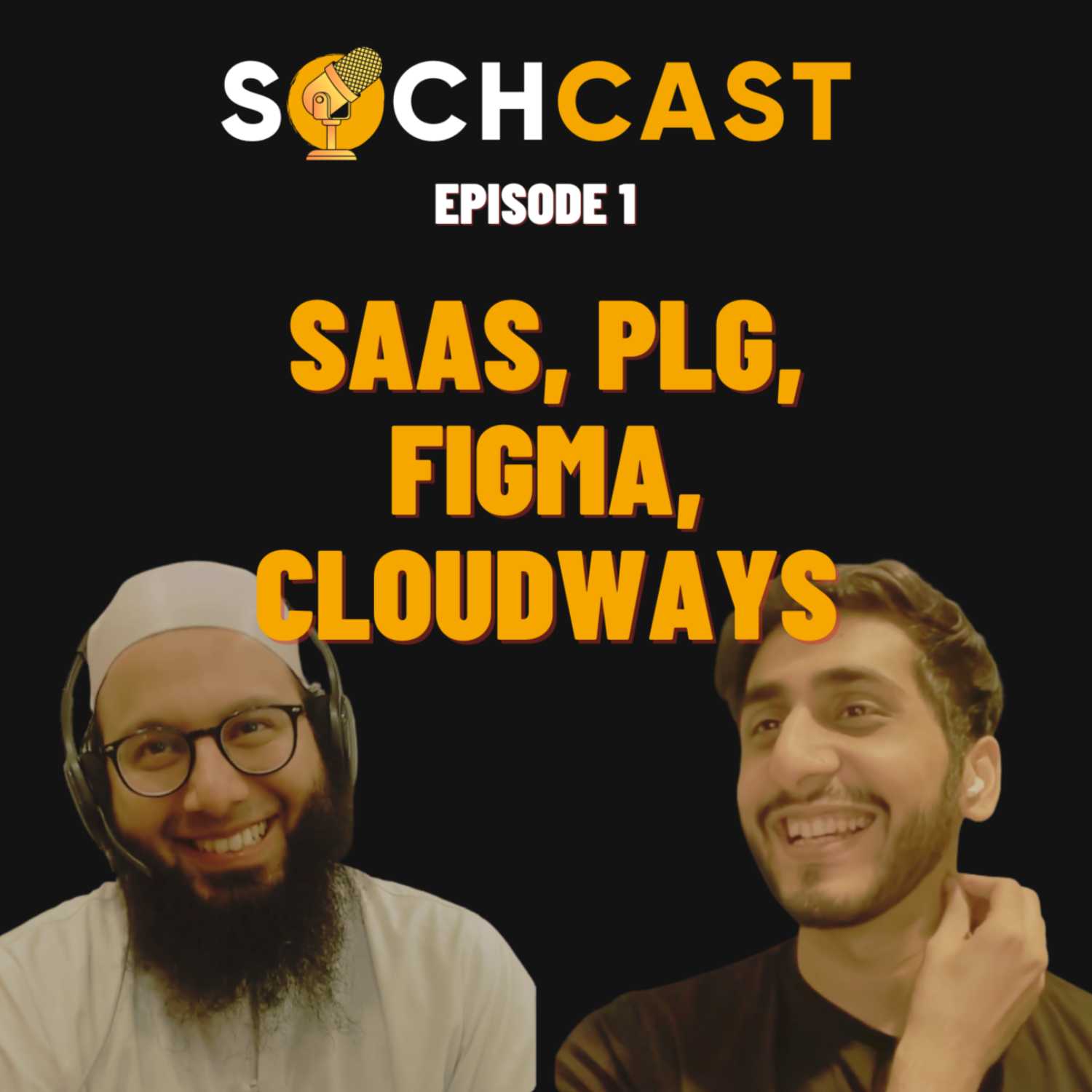
Abdul and Aatir talk about Software-as-a-service as a business model, discuss PLG & weigh in on the Figma & Cloudways acquisition.0:00 Intro6:02 Unpacking Software-as-a-Service basics10:14 Why did Adobe pay so much for Figma?20:34 What is Product-led growth?28:36 Role of Collaborative Software in SaaS33:06 Cloudways Acquisition39:39 Recommended Reading (LNO Framework)Website: www.productsoch.comLinkedIn: https://pk.linkedin.com/company/productsochSochnama Newsletter: productsoch.substack.comTwitter: https://twitter.com/ProductSoch
Comments

Download from Google Play

Download from App Store
 United States