


 Claim Ownership
Culture Matters
Subscribed: 1Played: 13
Subscribe

© Copyright 2023 Subbu Kalpathi
Description
Learning, Leadership and Organizational Development expert Subbu Kalpathi talks with leading academics, researchers, authors, corporate leaders, consultants and subject matter experts on the topic of organizational culture. From harnessing the science of happiness at work to innovations such as the 4-day workweek, Culture Matters will challenge the way you think about your people strategy for the new world of work.
43 Episodes
Reverse

Pawan Kumar Marella is a global business leader whose career spans sales, marketing, strategy, and general management across India, Africa, and the UK. From starting out in sales at Unilever—despite training in engineering and finance—to setting up business operations in Ethiopia and later working in corporate strategy in London, Pawan’s journey reflects both range and reinvention.He is also the author of Dear Rookie, Don’t Panic—a candid, practical guide to navigating the realities of corporate life. Drawing from two decades of experience, the book distills what most professionals learn the hard way: how to deal with uncertainty, manage relationships, build credibility, and grow through setbacks.In this episode, Pawan and Subbu explore the often-unspoken side of early careers—the panic, the pressure, and the steep shift from campus to corporate life. They unpack what it really takes to succeed at work: skill, but adaptability, self-awareness, and the ability to work effectively with others.We cover:Why the transition from competition to collaboration is harder than most expectThe four non-negotiables for long-term success: health, integrity, trust, and showing upWhat personal branding really means—and why it’s more than self-promotionHow to navigate teams, conflict, and corporate culture with practical toolsThe idea of “trust but verify” and how to build reliability without micromanagingWhy performance is the true currency of corporate lifeThe importance of visibility and documenting your work in today’s environmentAnd how the energy you bring—being a radiator or a vacuum cleaner—shapes the culture around you

Jim Harter is Chief Scientist of Workplace Management and Well-being at Gallup — one of the world’s most trusted voices in understanding what makes work, and workers, thrive. Over three decades at Gallup, Jim has helped shape how organizations across the globe make sense of engagement, performance, and well-being.His research has defined the modern science of engagement. From pioneering the first meta-analysis linking engagement to performance outcomes, to co-authoring Wellbeing at Work with Jim Clifton, Jim’s work has influenced leaders, managers, and policymakers in every industry.In this episode, Jim and Subbu explore the evolving story of how people feel about their work: what drives engagement, why well-being can’t be separated from it, and how today’s hybrid workplaces are testing the limits of both. They unpack Gallup’s latest State of the Global Workplace 2025 report — from the sharp decline in manager engagement to the paradox of remote work, where autonomy rises but connection fades.We cover:How Gallup’s decades of research have reshaped our understanding of workThe drop in global engagement and why it matters more than most leaders thinkWhy managers hold 70% of the variance in engagement and what to do about itThe three habits of great managersHow engagement and well-being intertwine, and why one without the other won’t lastThe rise of “the great detachment” and what it says about loyalty and belongingHow AI and hybrid work are redefining the manager’s roleThe next frontier in Gallup’s research: strengths utilization and how it drives both performance and prosperity

Professor Malissa Clark is one of the world’s leading scholars on workaholism, burnout, and the science of healthy work. She is Professor and Head of Psychology Department at the University of Georgia, where she also leads the Healthy Work Lab. Her research has redefined how we think about overwork as a multidimensional phenomenon with deep consequences for individuals, families, and organizations.Prof. Clark is the author of Never Not Working, a book that blends rigorous research with personal insight to challenge the myths of productivity and the culture of “always on.”In this episode, Malissa and Subbu unpack why workaholism is far more complex than simply clocking long hours, how burnout is preventable, and what both individuals and organizations can do to build healthier ways of working. They also explore the hidden costs of overwork on families, the myths that refuse to die, and the cultural signals that silently enforce “ideal worker” norms.We cover:Malissa’s winding career path—from sales and consulting to academiaWhy she founded the Healthy Work Lab and what “healthy work” really meansThe four dimensions of workaholism: motivational, cognitive, emotional, and behavioralWhy long hours don’t predict productivity—and how overwork can harm teamsThe health consequences of chronic overwork—from poor sleep to cardiovascular riskThe ripple effects of workaholism on spouses, children, and workplace cultureBurnout as an organizational problem, not just an individual one—and why it’s preventablePractical strategies to “kick the habit”: Eisenhower matrix, recovery breaks, and mastery experiencesHow organizational norms—like praising late-night availability—shape unhealthy culturesWhat leaders can do to reset expectations, model balance, and experiment with changeThe promise and challenges of the four-day week movementWhy vulnerability and personal storytelling matter in academic work

Daniel Pink is one of the world’s most influential thinkers on work, behavior, and human motivation. He is the author of seven New York Times bestsellers—including Drive, When, and The Power of Regret—books that have shaped how leaders, educators, and individuals approach purpose, timing, decision-making, and the emotions that drive us.Across a career that spans law, politics, speechwriting, and two decades of groundbreaking writing, Dan has made complex research in psychology and behavioral science accessible to millions of readers worldwide. His TED talks have been viewed tens of millions of times, and his work continues to influence the way organizations and individuals think about performance, choice, and meaning.In this episode, Dan and Subbu unpack why regret is not something to suppress but a vital emotion that helps us learn, grow, and make better choices. They also explore how to navigate today’s flood of information, the habits of good decision-making, and the human commonalities revealed by studying regrets from around the world.We cover:Dan’s winding career path—from law school and politics to bestselling authorWhy he regrets not having mentors early in his careerHow he stays current with fast-moving research without drowning in informationThe puzzle at the heart of The Power of Regret—why an emotion that feels terrible is so universalWhy “no regrets” culture is misguided, and how to confront regrets productivelyThe difference between regrets of action and inaction—and why inaction regrets dominate as we ageThe four universal categories of regret: foundation, boldness, moral, and connectionWhat 26,000 submissions to the World Regret Survey reveal about being humanHow to deal with regrets through self-compassion, writing, and sense-makingThe regret optimization framework, and how to apply it to the decisions that matter mostWhy kindness and pro-social behavior should become our “default setting”How changing the delivery of ideas matters as much as the ideas themselves in an age of AI and distraction

Alex Soojung-Kim Pang is a historian, futurist, and one of the most compelling voices rethinking the way we work, rest, and create. He is the author of Rest, Shorter, and The Distraction Addiction—books that have reshaped the global conversation on productivity and wellbeing.Alex has worked across academia, tech, publishing, and firms like the 4 Day Week Gobal. Today, he leads programs with 4.dk - a Dutch team leading 4-day week experiments in Denmark, and 4 Day Week studio.In this episode, Alex and Subbu explore the science and art of deliberate rest, why overwork is counterproductive, and how the four-day week is moving from radical idea to mainstream practice. The conversation draws on history, neuroscience, and real-world experiments to reveal how we can all work better by working less.We cover:Alex’s unconventional “Grand Theft Auto” career path—from historian to tech futurist to rest evangelistThe mentors and moments that shaped his thinkingWhy overwork persists—and how it erodes creativity, judgment, and empathyWhat it really takes to rest well: active recovery, multiple time scales, and deliberate planningThe “four-hour rule” of deep work and how great minds from Darwin to Hemingway structured their daysThe link between morning routines, the default mode network, and creativityThe concept of deep play and why serious hobbies sustain high performanceThe business case for the four-day week, and what early adopters have learnedHow AI is changing the way we discover and apply researchWhat the music industry can teach us about creativity and collaboration in the age of automation

Michael Morris is the Chavkin-Chang Professor of Leadership at Columbia Business School, and one of the world’s leading scholars at the intersection of culture, cognition, and leadership. A cultural psychologist by training, his research has shaped how we understand identity, influence, and the psychology of change across global contexts. Over a career spanning decades, Prof. Morris has published over 200 academic papers and founded Columbia’s Leadership Lab and Behavioral Lab.In this episode, Prof. Morris and Subbu unpack the deep instincts that shape our collective lives—from the psychology of sports teams to corporate leadership—and why culture is not fixed, but dynamic, contested, and constantly evolving.To listen to the full episode, go here: bit.ly/m/cult_mWe cover:- Prof. Morris' journey from literature and cognitive science to pioneering cultural psychology- The origin story of the field—and why it had to reemerge after being sidelined for decades- Why culture is not what people say, but what people signal- What South Korea’s 2002 World Cup team taught us about identity and adaptability- Peer, hero, and ancestor instincts—and how they shape organizational behavior- What leaders often get wrong about culture change- Why the legitimacy of the messenger matters more than the message- How companies like Infosys, HCL, and GM shifted culture through surprising signals- The future of cultural analysis in an age of AI and big data

Amy Edmondson is the Novartis Professor of Leadership and Management at Harvard Business School, and one of the world’s foremost thinkers on organizational behavior. Best known for her pioneering work on psychological safety, Amy’s research has transformed how leaders build trust, foster learning, and create high-performing teams. Her books—including The Fearless Organization and Right Kind of Wrong—have become must-reads for anyone serious about culture and innovation.In this episode, Amy and Subbu dive deep into the science of failing well, teaming in a hybrid world, and why psychological safety isn’t about being nice but about being brave. We explore the roots of her work, lessons from early setbacks, and what it takes to build resilient, learning-focused organizations in an age of AI, burnout, and constant change.In this episode, we cover:Amy’s unconventional journey—from working with Buckminster Fuller to redefining team learningThe surprising discovery that launched psychological safety researchCommon myths about psychological safetyHow hybrid and remote work are reshaping interpersonal risk-takingThe difference between errors and failures, and why most organizations confuse the twoWhat “intelligent failure” looks like, and how to cultivate itWhy team-based learning is the underappreciated engine of innovationThe link between psychological safety and burnout—and what leaders can do about itA systems-thinking lens for navigating consistent, variable, and novel work contextsAmy’s next big question: Given the larger societal and technological changes around us, how do we make work work for everybody?

Ankur Mehra is a creator economist, bestselling author of Pixels to Profits, and one of LinkedIn’s Top Voices on the creator economy. With a diverse career spanning the armed forces, big tech, and media, Ankur brings a rare blend of structure, strategy, and storytelling to the world of digital creators. He has worked with platforms like Facebook and Instagram, built media partnerships with cultural icons like Rajinikanth, and today champions the rise of creator-led ecosystems.In this episode, Ankur and I unpack how the creator economy is not just disrupting media—it’s reshaping leadership, organizations, and the future of work. We explore what it means for CEOs, CHROs, and employees to embrace their voice, create content with purpose, and build communities—not just audiences.In this episode, we cover:Ankur’s journey from lieutenant in the Indian Army to creator economy evangelistThe media moment that changed how he saw purpose at workWhy creators are the new media, and what that means for influence and trustHow CEOs and CHROs can lead with content and culture through employee-generated content (EGC)The 5C and 3R frameworks that decode the complexity of content creationMental health, originality, and fighting FOMO in a content-saturated worldA thought-provoking glimpse into the decentralized, creator-led future of the internet

Gurucharan Singh Gandhi (Guru) is the CHRO of Vodafone Idea Limited and has held leadership roles at Madura, Aditya Birla Capital, Max Life Insurance, and more. He’s the author of Kabir in Corporates and Careerathon, and a passionate marathon runner who brings a poetic clarity to life and work.In this episode Guru and I explore how careers are best viewed as long-distance runs rather than short-term races. Guru shares his unconventional, adjacency-led career path and the life lessons that came from embracing change, nurturing endurance, and respecting the track—whether in work or while running a marathon.In this episode, we cover:Guru’s zigzag yet intentional career journey across sales, L&D, and HRWhy personal evolution is the real foundation for career growthThe metaphor of running – from hydrating well to forgetting the last race – and how it mirrors modern careersLearning to recognize your own “drivers” and how not to get trapped by comparisonHow resilience, reflection, and mentorship help you navigate downturnsWhat forgetting the last race teaches us about transitions and adaptabilityA provocative take on the future of work – and why the question should be “whose future of work?”Whether you're early in your career, rethinking your path, or just looking for a fresh take on leadership and growth, this episode is a thoughtful listen packed with insights.

Dave Ulrich is ranked #1 management guru by Business Week, named one of the Top 10 Creative People in Business by Fast Company, a Top 5 Executive Coach by Forbes, and consistently featured on the Thinkers50 list of the world’s most influential business thinkers. Dave has written over 30 books, shaped the field of HR as we know it, and continues to inspire with his unwavering passion for ideas with impact.In this episode, Subbu and Dave discuss Dave's illustrious career spanning over 4 decades, how he keeps going even today, the evolving definition of culture, how culture impacts customer value, the importance of hope, and a whole lot more.Key topics discussed:How Dave got interested in the field of organizational behavior and theoryDave's OCD - Organization Compulsive BehaviorWhat keeps Dave going even todayWhy does culture matter?How the definition of culture has evolved over the yearsA bold new definition of cultureWhy culture transformation efforts may failRituals turn personal habits into realized values and guiding principlesWhen rituals can become powerful in an organizational contextA lesson from Dave's mentor: the late CK PrahladEmployee experience v/s team performanceThe need to look seriously at mental health in a work settingThe 5 waves of employee experienceHR is on the cusp of transformation, thanks to AIWord-ball game!The future of work and the emphasis on cultureHow stay relevant in the world of AIHonoring Dave's legacy

Aruna Gopakumar is the founder of leadership consulting firm Navgati and The School Of You. Aruna is also co-author of the book 'And How Do you Feel About That’. She has spent over two decades helping leaders navigate complexity, build emotional intelligence, and create meaningful impact. She is a Master Certified Coach (MCC) with the International Coaching Federation (ICF), and also an expert in the area of Transactional Analysis.In this episode, Subbu and Aruna discuss a whole host of topics, including why it's time we shifted the narrative around mental health at the workplace.Key topics:Aruna's very unique career arc spanning engineering, MBA and psychotherapy!The motto - Build and they will come!The journey to becoming an authorStories of personal transformationShifting the narrative on mental health at workAruna's new venture - The School Of YouDown the rabbit hole with Alice in WonderlandThoughts on the future of work

Tessa West is a Professor of Psychology at New York University and a leading expert in the science of interpersonal communication. This is the second time that Professor West has come on this show – to listen to our first conversation, check out episode 12 of this podcast. In this episode, we dive deep into her latest book – Job Therapy, How Do You Find Work That Works For YouKey topics covered -Our psychological relationship with jobs and careers Can a job fundamentally change a person?Why we need to hear tough feedbackTake the daily stress test How to do some psychological self-diggingUncovering the 5 types of 'career-goers'In your quest for compensation, don't forget statusHow status differs from powerWhat to do when you feel like an underappreciated starDealing with the newcomer hump Your skills are great, but are they helpful?The big reveal!Why leaders need to think about the psychological well-being of their teamsHead or heart, where do you start?
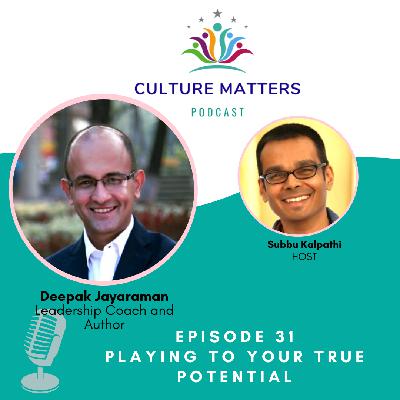
Deepak Jayaraman's mission is to help people play to potential. He strives to do it through his advisory work as a coach and sounding board, as a podcaster and as an author. As an advisor, Deepak works with Leaders and Organizations with a growth mindset and helps them play to their full potential. Deepak has been curating the Play to Potential Podcast since Dec 2016.In this episode, Subbu and Deepak discuss Deepak's unconventional career path, navigating the 'messy' midlife, the paradox of self-awareness, discovering our values and a whole lot more.Key topics covered:Why Deepak chose an unconventional career path Lessons from long distance runningGetting to Work-life harmonyWhat inspired Deepak to write his book - Play To PotentialType 1 v/s Type 2 personalitiesHow to navigate the 'messy middle' of lifeWhy it's OK to let go of the trapezeThe paradox of self-awarenessCultivating internal and external self-awarenessThree ways to discovering our values and principlesThe FLAVOUR Model of leadership"Where to play" is the most strategic question6 inspiring stories of people living a FLAVOUR-ful lifeCrafting a FLAVOUR-ful work cultureThe word-ball gameMidlife is the time for opportunitiesBeing fluid about our identities

James is the founder of Behavioral science practice firm More Than Now. He’s an expert in bringing behavioral science into organizations, and is changing the workplace one experiment at a time. Priya is a co-conspirator behavioural scientist and works closely with James at More Than Now. She is a London School of Economics and Harvard University graduate, and is particularly interested in the field of wellbeing. Key topics discussed in this episode:How James Elfer founded More Than Now How Priya got hooked to behavioural science thanks to Danny Kahneman's workThe power of experimental research within organizationsThe problem with organizational decision making processesSolving organizational problems and contributing back to scienceWill your inclusive leadership program work? Test it firstRedefining our approach to developing leaders Marrying goal-setting with the Fresh Start EffectBoosting psychological safety across the organizationBehavioral science to boost talent attraction Rethinking unconscious bias trainingBehavioral science jokes!

Nitin More is the founder of Brainaayan, a consulting organization focused on leadership development, people manager development, DEI, and building high performing teams. Nitin’s work encompasses neuroscience, psychology and associated areas. He has a PhD in linguistics, and has spearheaded Learning and Development with firms such as Facebook and Google.In this episode, we discuss Nitin’s career journey from a PhD in linguistics to an L&D professional, the role of language in shaping culture, how we can build resilient organizational cultures and so much more!What we discussed:Nitin's background as a linguistics professorThe crucible experiences of Nitin's careerHow to scale a cultureThe role of language in shaping cultureThe research on organizational resilienceBouncing back from adversityKey findings from the researchThe factors that can make you more resilientHow can organizations build resilient cultures?The word ball game!The future of leadership development

R Gopalakrishnan (Gopal) has spent over 50 years in executive roles at both Unilever and the Tata Group. He is one of the most celebrated leaders and incisive authors in the corporate world today. Harish Bhat is a marketer, bestselling author, poet and columnist. Harish has spent all 37+ years of his career with the Tata group, and until recently Harish was Brand Custodian of the group. In this episode, Subbu, Gopal and Harish dive into the legacy of Jamsetji Tata. They discuss how the philosophy of one of the greatest Indians of the 19th century has left a lasting impact on successive generations of business leaders of the Tata Group.Key points: Tribute to Shri Ratan TataHow the experience of working at the Tata Group shaped our guests' outlook towards lifeHow Mr. Bhat found a writing mentor in Mr. GopalHow the book idea for Jamsetji Tata came to beWhy is Jamsetji Tata among the greatest Indians of the 19th century?Is 'enlightened capitalism' an oxymoron or can community and enterprise go together?The river source as an analogy to the birth of organizational philosophyHow Jamsetji Tata focused on worker welfare by way of pension, insurance and more Learning from failures - the story of Tata Shipping LinePeople are tougher to build than factories!How successive leaders have groomed talent at the Tata Group over the yearsHire for attitude, train for skillsNote of thanks

Vivek Gambhir is a Venture Partner with Lightspeed. He’s also the Chairperson of the Board of boAT Lifestyle. He serves on the board of a number of firms such as Honasa Consumer Limited and Magic Pin. His career has spanned leadership roles with firms such as Godrej Consumer Products and Bain & Co. Vivek also runs the weekly blog Monday 8am which has over 20k subscribers.Sunder Ramachandran brings 20 yrs of experience across healthcare, financial services, and technology, including a 5-year stint as an entrepreneur, during which he founded a consulting firm serving companies in the business process management space. Sunder is currently the head of transformation and commercial excellence at Dr. Reddy’s, with stints spanning firms such as GSK, Pfizer, JLT and more. In this episode, Subbu, Vivek and Sunder discuss the factors that can help professionals navigate a successful corporate career, including continuous learning, being an effective team player, giving and receiving feedback, bringing your best self to work, successfully transitioning across roles and much more.Key points - The career arcs of Vivek and SunderThe backstory behind the book - HeadstartThe idea behind a 'to-learn' list Effective team work requires the right team cultureConsider an appreciation tracker to keep your team motivated Why asking for feedback is critical for self-improvementBring your best self to workWorking through adjacencies as you pivot rolesThe three-day rule as the litmus test to moving rolesThe 'Slingshot move' can aid your transitionHow to be a go-getterWhy it's important to build your personal brandThe authors' favorite stories from the bookHow a health scare shifted Vivek's outlook towards work and lifeThoughts on the future of work

Jay Van Bavel is a Professor of Psychology and Neural Science at New York University, an affiliate at the Stern School of Business, Director of the NYU Center for Conflict & Cooperation. He is co-author of the award-winning book "THE POWER OF US", and an award-winning teacher and public speaker. In this wide-ranging conversation, Prof Jay and Subbu discuss a new way to think about our identities, how bias, prejudice and discrimination work, how to dissent well, and a whole lot more.Key topics:How Prof Jay got interested in the field of social psychologyHow principles of prejudice can be used to unravel team conflictThe wine-and-cheese party that brought the co-authors togetherHow our identities are shaped (it's not what you think)The significance of Minimal Group Studies by Henry TajfelOur identities are constantly shiftingHow do we throw away parts of our identity that no longer serve us?How do we surface our biases and start acting on them?Dealing with backlash against DEI initiativesIs there a right way to dissent?Why effective leadership matters for team cultureEngaged followership v/s Quiet QuittingTyrants, but of the petty kindWord-ball gameDo we over-identify with our work-selves?
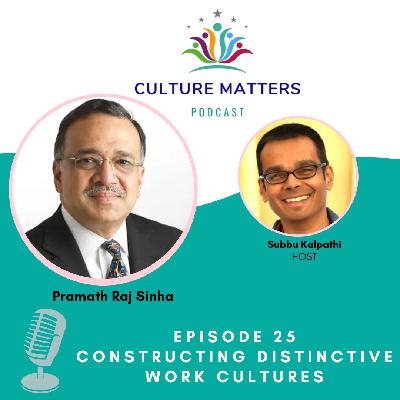
Pramath Raj Sinha wears many hats – he is a serial entrepreneur, having founded organizations like Harappa, 9.9 group, Vedica Scholars Program for Women, and is President at UpGrad. He is an institution builder – he was the Founding Dean of ISB and is the Founder and Trustee of Ashoka University. In this episode, Subbu and Pramath discuss the importance of mentorship, the value of education, how careers are transforming today, and how founders can build distinctive workplace cultures. Key topics coveredPramath's reflections on building institutions The value of education and mentoringWhy Pramath wrote his latest book - Learn Don't StudyHow the workplace and careers are transforming todayBuilding distinctive workplace culture as a founderWhy founders need to build self-awareness The word-ball game!Entrepreneurship is about recovering from failuresEveryone is a leaderThe future of education and impact of AI
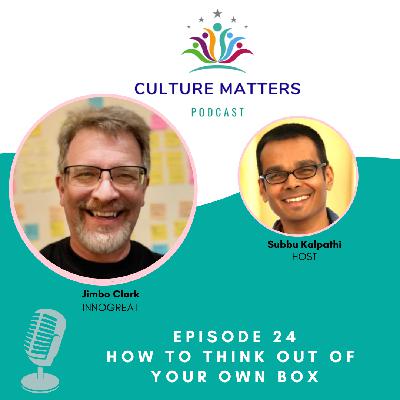
Jimbo Clark works across APAC with individuals, teams and organizations on achieving transformational change. He excels at meaningfully facilitating activities, games and simulations to bring new awareness of possibilities and clear actions for future improvements.In this episode, Jim and Subbu talk about what it takes to enable meaningful change for people, and how this can be transformative for not just individuals, but also teams and organizations. Key topics: Why Jimbo Clark decided to move to Taiwan from the USJimbo's "Working Retirement" philosophy to lifeBusting the myth about people not wanting to change Why less is moreThe origin story of THE BOX Helping people think out of THE BOXMaking the unconscious, consciousApplying THE BOX in the context of a period of transitionThe Word Ball Game!My experience with THE BOX

Comments

Download from Google Play

Download from App Store
 United States