


 Claim Ownership
Hello Merge Tag: Where Social Media and Politics Intersect
Subscribed: 2Played: 11
Subscribe

© 2023 Reverbal Communications
Description
Hello Merge Tag is a podcast about social media, politics and where they intersect.
We check in with candidates, strategists and digital practitioners to find out what's working, what's not and a whole lot more.
Stream all episodes at HelloMergeTag.com or wherever you stream podcasts.
44 Episodes
Reverse
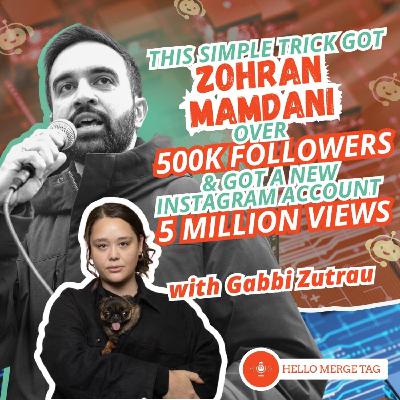
Gabbi Zutrau was Zohran Mamdani’s ManyChat wizard, helping drive tens of thousands of clicks and thousands of email subscribers from Instagram — all via automation, and all for just… $318.
But she's also so much more than just an automation expert! Gabbi took a brand new Instagram account from zero to 5 million views in just six weeks. And she used one simple trick (yes, really!) to help Zohran’s Instagram grow by over 500,000 followers heading into his primary night win.
For context: Zohran hit 1 million followers on election night. That means more than half came from that single tactic, in the lead-up to election night.
In this episode, we dig into:
How Gabbi grew her own account from scratch The role she played in Zohran’s digital strategy Why campaigns should invest in digital early What authenticity in politics actually looks like One key shift campaigns can make to get more out of social media
…and so much more.
Find all episodes, a transcript, links and more at HelloMergeTag.com.
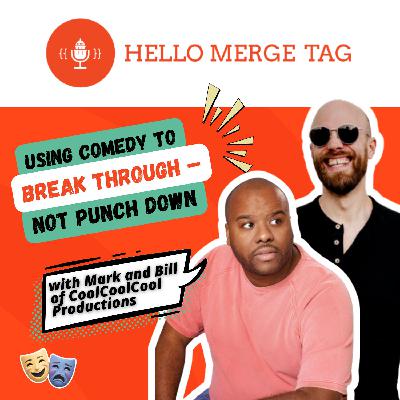
"Think more about the message you're trying to get across and then make the humor something that brings people in instead of pushing people away."
I met Mark Kendall and Bill Worley at Netroots this year and was super excited to invite them on the pod.
They’re doing something very unique in our space — using comedy, intentionally, to win hearts and change minds.
Their firm, CoolCoolCool Productions, is an Atlanta-based production company and boutique agency that uses comedy to encourage civic engagement and foster community.
Their videos have racked up tens of millions of views across social media. They’ve been featured on NPR and in the Atlanta Journal-Constitution, and named “Best Reason to Laugh” by Atlanta Magazine.
I went to a session they ran at Netroots, and every example they shared hit harder than the last. Thoughtful, smart, hilarious work—designed to move people.
Throughout our conversation, we talked about:
their origin storythe importance of finding joy, even in dark placeswhy embracing specificity matters if you want to change hearts and mindshow their process worksthe advice they’d offer to campaigns looking to use humor effectivelyand more
Find links, transcript and more at HelloMergeTag.com.
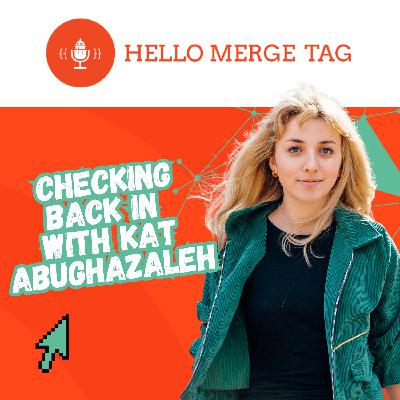
“What I would really like to see is more Democrats using their resources to help people right now to fill in the material gaps that Trump has created. I think it's the right thing to do and I also think it is the most persuasive thing to do if you want to flip either chamber in 2026 and make a serious cultural impact."
Kat Abughazaleh is running for Congress in Illinois’ 9th District.
I personally think she’s running one of the most innovative campaigns of the cycle, both from a digital and from a field perspective.
Listeners might remember Kat joined us back in April to talk about what it means to run a Bluesky-first campaign.
She joined us again to talk about how her campaign is navigating the internet, fascism and so much more.
She talked about the social platform helping her campaign raise the most money (Bluesky!), how her campaign is serving as a mutual aid hub for her community, what it means to fight back against the Trump regime in these dark times and so much more.
Find links to her site, an episode transcript and more at HelloMergeTag.com.
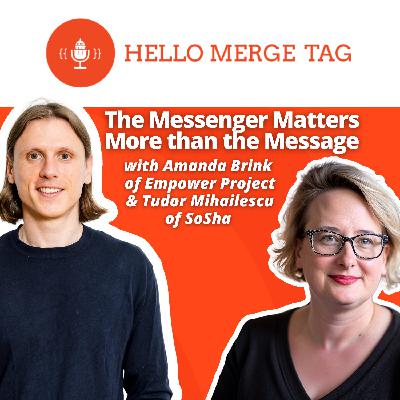
“The most powerful form of engagement online is when a regular person posts on their channel about something they truly believe in.”
Tudor Mihailescu is a cofounder and CEO of SoSha, an AI powered social amplification platform that helps mission-driven organizations leverage the social clout of their communities. Before SoSha, Tudor did a PhD in political science focused on US Presidential Speechwriting patterns and cofounded a social network for politics called GovFaces.
Amanda Brink is the Executive Director of Empower Project, helping organizations grow relational organizing programs. Prior to Empower Project, she worked with Organizing For America, the Democratic Party of Wisconsin, Hillary Clinton’s presidential campaign, Tony Evers first statewide race and beyond.
In 2024, they teamed up on a nano-influencer program. They facilitated 9 million relational conversations with 3 million potential voters across 10 targeted states.
They built a network of Community Mobilizers who collectively earned 80 million organic impressions on social media.
I invited them on the pod to unpack that work—how they built it, what they learned, and they think it means for the future of organizing and persuasion in the digital era.
Find links, transcript, additional episodes and more at HelloMergeTag.com.
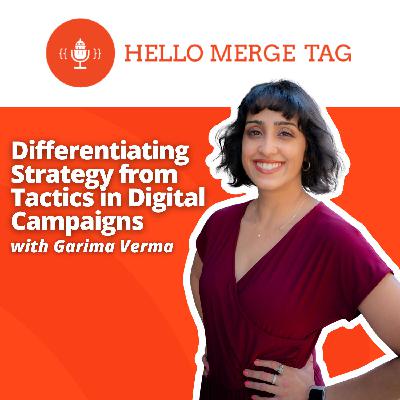
“I've always believed in the power of storytelling and storytelling as a means for kind of creating understanding across difference."
Garima Verma is a strategist and storyteller who bridges the worlds of culture, politics, media and social change.
With over 10 years of experience spanning entertainment, political campaigns, and impact organizations, she specializes in transforming visionary ideas into actionable strategies, impactful programming and compelling narratives on-and-offline.
She’s worked across entertainment and politics—leading digital campaigns for Mission: Impossible – Fallout, black-ish, and The Oscars, as well as for Stacey Abrams’ 2022 gubernatorial run, Dr. Jill Biden’s FLOTUS office, and the Biden-Harris 2020 campaign.
Today, she partners with mission-driven leaders and organizations—from the DCCC to GoFundMe—to help them be more strategic online and maximize their impact in the digital age.
Her and I connected to talk about the importance of differentiating between digital strategy and digital tactics, setting appropriate KPIs, what DC can learn from Hollywood, how Zohran's campaign helped digital strategists everywhere and so much more.
Find links, transcript and more at HelloMergeTag.com.

"We do not need to run the same ad to everyone. It’s 2025 — we don’t need to do that.”
Maya Hutchinson is a data-driven marketer with roots in Democratic politics. She started her career on the digital team of President Obama’s re-election campaign and has continued to work at the intersection of tech and politics ever since.
She helped build the European market for NationBuilder, the first community organizing software supporting candidates, parties and campaigns across the EU. She then helped launch the analytics, polling and paid advertising division of DKC, one of the largest independently owned PR and comms agencies in the US.
She’s worked with brand like Uber, Honest Company, Health Ade and OpenTable and political campaigns like Bloomberg for President, the DNCC and Amy McGrath’s Senate race.
She’s the founder and CEO of BattlegroundAI, a platform built to help progressive agencies, non-profits and political campaigns create high-impact, platform-ready digital ads.
She joined us on the pod to talk personalization in digital ads.
Throughout our conversation, we spoke about the role of AI in supporting the people doing the work, why you should be A/B testing everything, how her toolkit works and a whole lot more.
Find video of our conversation, links, a transcript and more at HelloMergeTag.com.
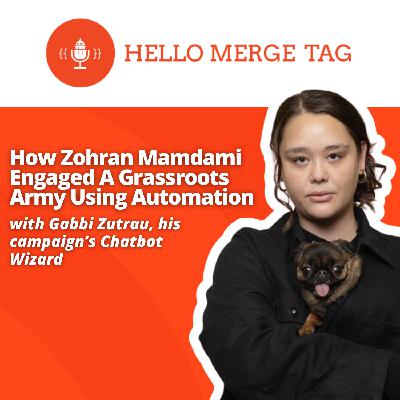
“You don't want to be caught in that high volume moment and not have a way to capture people, not have a way or a plan to funnel people from Instagram onto your owned list.”
You might not recognize today’s guest by name, but you’ve seen her work in action.
Gabbi Zutrau is a freelance digital consultant in the progressive space, with clients ranging from MoveOn to Stop AAPI Hate. She’s also the creator of Edna the Runt, an adorable pup who anchors her own lively social community with a ton of followers and massive engagement.
As an independent digital consultant, Gabbi built the Zohran Mamdani campaign’s chatbot automation infrastructure during his recent New York City mayoral primary campaign. By deploying Manychat automations, she played a pivotal role in turning social engagement into real-world impact—helping Mamdani defeat Andrew Cuomo and his billionaire backers.It was low-cost, high-scale organizing in action.
Throughout our conversation, we cover:
Building ladders of engagement that nurture supporters step-by-step from interest to actionDifferences in how automation can be deployed for campaigns versus advocacy groupsUsing automation to support fundraising, volunteer recruitment, and event sign‑upsLeveraging automation to lean into — rather than try to fight — the endless scroll and capture attentionThe role of engagement bait—and how ManyChat flows can avoid feeling spammy while maintaining their effectivenessAnd more!
📊 Some key metrics from the campaign:
Over 77,000 automated messages sent across comment, DM and Story flows20,000+ clicks generated directly from Instagram DMs3,000+ emails collected via in-app conversation flowsA 76% click-through rate on trigger-word comment flowsAll achieved for roughly $318 total—about $0.03 per action
In a world where “link in bio” gets ignored and the platforms are designed to keep people scrolling, this campaign shows what’s possible when you meet supporters where they are—and have a plan to keep them engaged, both online and off..
Tune in to hear how campaigns can—and should—embrace automation to turn online momentum into real-world organizing power.
Find links, YouTube video and more at HelloMergeTag.com.

"It can't just be about the things that affect us as individuals. It has to be broader."
There’s been a lot of talk lately about looking for a Joe Rogan of the left.
The whole thing is ridiculous… for so many reasons.
Instead of banking on a single, superstar personality to magically unite our movement, what we really need is to amplify the many voices of folks aligned with our values who are already creating great content online for large audiences.
That’s why I was so excited to welcome Jess Zander of You Can Do It Gardening to the podcast.
Jess is a Boston-based garden coach and consultant who launched You Can Do It Gardening in 2022 to help everyday people feel confident tackling their gardens—no matter their experience level. My wife is the green thumb in our household, but Jess’s content is super relatable and fun, even if you’re not a gardening aficionado. Jess is known for her no-nonsense, encouraging style. Think Mary Poppins—but for your garden.
So is Jess the Joe Rogan of the left? Of course not!
But she is a content creator with a large and engaged audience. And while she’s definitely not leading with politics, she’s also not shying away from her progressive values.
Throughout our conversation, we discussed:
How she got started (not that long ago!)The types of content that's working for herThe difference in response she sees across platformsHow she would start now, if she were starting from scratchWhy she’s public about her values, despite working in a non-political spaceWhy she’s comfortable losing followers to speak her truthsAnd so much more
As Jess puts it:
“It’s a business decision, but it’s also just a values decision… I don’t feel that this is the time to be silent. Silence is complicit.”
Find links, a transcript and more at HelloMergeTag.com.

"Every newsroom, whether they acknowledge it or not, is values-driven. The choice to cover something or not cover something, the choice to use a word in a headline or not, is a statement on your values and your mission. We are just more transparent about it."
RC Di Mezzo is a Democratic digital strategist with a decade of experience building online brands that connect directly with voters.
As Vice President of Brand & Social at Courier, he led the 2023 launch of @Couriernewsroom—a social-first, values-driven progressive newsroom that became the fastest-growing news brand in the US, reaching over 100 million weekly views and generating more than 3 billion social views throughout the 2024 cycle.
Courier’s rapid growth—from 1.8 to over 5 million subscribers in a year—has positioned it as a benchmark for both legacy and emerging digital news outlets.
This episode is especially timely: a recent Reuters/Oxford report reveals that 54% of Americans now get their news from social media, surpassing TV’s 50% for the first time.
While the right has spent years building creator-driven narrative ecosystems, the left has lagged—Courier Newsroom has emerged as our leading response, creating shareable, social-first content built for group chats and feeds.
🎧 What we covered:
How Courier built a digital-first content machine for today’s social audienceWhy editorial and digital teams must work in lockstep—no silosWhy context outperforms clickbait Creating content in the app without fancy 3rd-party editing toolsBalancing national messaging with state-level storytellingLessons from successful campaigns—from Gavin Newsom to Kamala HarrisWhy campaigns should invest in digital earlyWhich social platform is Courier’s fastest-growing (hint: it's not TikTok!)
Plus: RC’s tips for campaigns and creators building momentum from day one.
If you want to unlock the digital tactics that drove billions of views, this is your behind-the-scenes guide. 🎙️
Find links, full video of our conversation and more at HelloMergeTag.com.
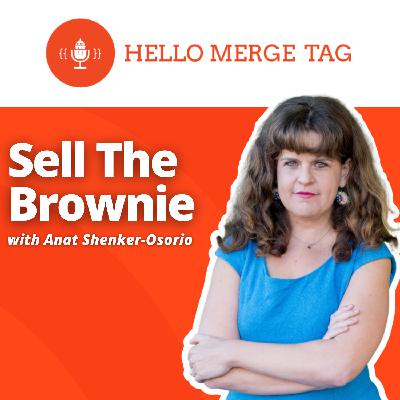
"Sell the brownie, not the recipe... So instead of taking your public policy out in public and thinking that that is a message, which it is not, you talk about the outcome of your policy."
Anat Shenker-Osorio is a political strategist, messaging consultant, and communications researcher renowned for helping progressive campaigns win by using more effective language.
She is the founder of ASO Communications, a firm that specializes in crafting compelling narratives for progressive causes. Anat is also an author, podcast host, and one of the most respected messaging experts on the left.
Recently, she released a concise yet impactful glossary titled Fascism and the English Language—a guide on how we should (and shouldn’t) discuss the authoritarian threats facing our country.
I invited her on the podcast to delve into that piece and to help all of us become better, more strategic, and more disciplined communicators.
Throughout our conversation, we explored the what, how, and why of Free America.
We discussed values, villains, and vision. We examined the importance of focusing on shared values and avoiding "zombie writing."
Anat renamed the so-called "Big, Beautiful Bill" the "MAGA Murder Budget."
We emphasized the strategy of highlighting outcomes (the brownie!) rather than processes (the recipe).
Additionally, we reviewed messaging from elected officials, identifying posts that missed the mark and discussing how they could be rewritten to be more effective.
You can listen to the episode where you stream podcasts, or watch it in full on YouTube.
Find links, full transcript and more at HelloMergeTag.com.
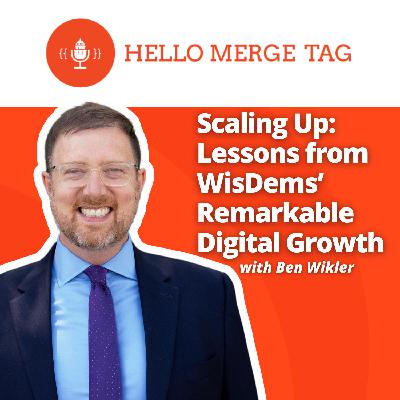
"Democrats can absolutely win, even in the face of this flood of money from the right and every horrific tactic that the right wants to use."
Y’all know Ben Wikler. He’s currently the head of the Democratic Party of Wisconsin — a role he’s held since 2019.
Here’s a quick relevant fact for you: I live in Wisconsin and do a lot of work in Wisconsin politics. Back in 2018, I was hired by WisDems to help train their comms team on digital — because at the time, they literally didn’t have a single digital staffer. Ben came in shortly after and… let’s just say things changed real quick.
Before leading WisDems, Ben served as the Washington, DC Director and Senior Advisor for MoveOn. One of my favorite parts of his very long and impressive bio: as a student, he was recruited by Al Franken to help write Lies and the Lying Liars Who Tell Them — a book that absolutely needs a second edition.
Ben’s done a lot of cool things to push the Democratic Party forward in innovative and important ways. But now, his tenure as chair is coming to an end — and I invited him on the pod to reflect on what he’s learned and what others can take away from the powerhouse digital program he helped build here in Wisconsin.
Throughout our conversation, we spoke about:
How Ben’s feeling as he steps away — a mix of gratitude, fury, and hopeHow WisDems went from a minimal digital program to a national modelWhat lessons he brought from MoveOn and Avaaz to shape that transformationThe importance of building trust through your digital programThe power of visual communication — if you can't reach voters who watching TV in a bar with the sound off, you have a problemWhat he’d do differently if he were starting from scratch todayWho his biggest adversary was throughout his tenure leading the Democratic Party of WisconsinWho he’s looking to for inspiration nowWhere he’s spending time onlineThe diminishing, but still relevant, role Twitter plays for progressive orgsWhat he’d do now if he were running the DNCWhere he’s excited to see WisDems go from here
You can find this full episode on YouTube, at HelloMergeTag.com or wherever you stream podcasts.
“Dark woke is Democrats breaking out of the respectability prison that Republicans have put us in for decades and finally saying shit and doing things that stop voters in their tracks and actually get their attention.”
Bhavik Lathia is a political strategist and technologist. He’s led campaigns in India, Australia, and the US, and supported activists around the world as they built and executed strategies superpowered by technology.
He recently served as Battleground Mobilization Director on the Harris-Walz campaign. Before that he was Senior Digital Director for WisDems. He helped lead the distributed organizing team on the Bernie 2020 campaign and served as Digital Director for Color Of Change.
This past month, he was one of several democratic strategists quoted in a New York Times piece on the idea of “Dark Woke.”
Throughout our conversation, we spoke about:
The origins of “Dark Woke”What voters actually care aboutWhy Republicans’ shamelessness is their superpower — and why we need to combat itWhere Democrats got it right in 2024 — and where we got it wrongWhy we need to keep pushing back on the right wing’s bad-faith attacks — and how to turn them into liabilities Why Democrats need edgier ways to talk to votersWhy Senator Booker’s filibuster was more effective than most folks realizeThe role of podcasting in Democratic messaging (and who’s doing it well)Why our party needs to invest in and empower content creators who know how to speak directly to their audiencesThe power — and importance — of WhatsAppHow WisDems thinks about winning State Supreme Court races and what we can learn from themHow WisDems used Elon’s money against him during the SCOWIS raceHow technology has evolved in the industry — and why progressives must keep evolving with itWhy everyone working in digital should focus on becoming a better writer And a whole lot more!
"Dark Woke is about Democrats doing and saying things that optimize for getting attention. We all want to drive our messages with voters and build narratives to help us win campaigns. But we can’t do any of that unless we first get the attention of voters. And Republicans have basically spent my entire life — the past few decades — investing in and optimizing for talents and topics that grab voters attention. And Democrats basically started caring about attention as a strategy on November 6th, 2024."
Find all episodes at HelloMergeTag.com or wherever you stream podcasts.
“What I’ve been most frustrated with politics is how impersonal it is and so we’re trying to make it accessible and personal again.”
Kat Abughazaleh is running for Congress, challenging long-time incumbent Jan Schakowsky in Illinois’ 9th District.
Needless to say, Kat doesn’t look like, sound or act like your typical candidate. Her announcement video led with the simple question: What if we didn’t suck?
She’s called on Democrats to “drop the excuses and grow a fucking spine,” and has made it clear she’s not interested in playing it safe while Donald Trump and Republicans steamroll the country. In her words: “while current Democratic leadership might be fine cowering to Trump, I’m not.”
One of my favorite parts of her digital program so far: her website lists anti-endorsements, which include personal attacks leveled against her from Elon Musk, Libs of TikTok and Tucker Carlson. Epic.
She’s also doing something I’ve never seen before from any political campaign: she’s prioritizing Bluesky—yes, Bluesky—as her primary platform. She’s not just hedging her bets on Twitter. She said during her launch, “I’m prioritizing Bluesky this election not only because it’s more ethical—but because it just makes sense.” Which is fascinating to me.
Throughout our conversation, we spoke about:
Why she’s prioritizing Bluesky over the cesspool that is TwitterFeatures on Bluesky she’s really excited aboutWhat she wishes Democrats were doing with their social programsWhy we need to give progressive content creators more room to be themselvesHow Fox News built its power on the bedrock of fearWhy we need to focus on the “puncture” to help break folks out of the Fox News/rightwing media bubbleHow America should be fighting back against Elon MuskAnd a whole lot more!
”Republicans control the narrative because democrats often let them. They’re always reacting, and you can’t always be reacting. Otherwise, you’re letting them set the terms — you’re letting Republicans say this is what reality is.”
Find links and more episodes at HelloMergeTag.com.
“I’m constantly just enamored with the power that women have and do not use. And I just want to harness that and spread it.”
Kate Duffy is the founder of Motherhood for Good, a grassroots movement and independent media group dedicated to educating and empowering women so they can tap into their power—and use it for good. Through strategic content creation, community-driven advocacy, and real-world action, they help moms and women cut through the noise, stay informed, and make a meaningful impact in their communities and beyond.
Fun fact: Kate and I both recently appeared in a CNN piece about using social media to mobilize voters in Wisconsin.
We recorded this conversation just hours before the polls closed on an extremely important race. So at the time of our conversation, we didn't yet know the outcome. For those who missed it though, WE WON! Wisconsin rejected Elon Musk's money and elected Susan Crawford to the Wisconsin State Supreme Court.
Individual elections aside, Kate and I both agree: if we want to move people, we need to meet them where they are—and that means online.
Throughout our conversation, we spoke about:
The issues she sees bringing people (especially moms) into the foldThe importance of campaigns investing in content creatorsThe untapped potential of moms, the "OG organizers"The value of "sitting in the suck"The importance of understanding just how fast the internet really isWhy Democrats and progressives need to do a better job showing, not just tellingAnd a whole lot more!
“[The internet] moves so fast, you just gotta keep going. You can’t be sitting there overthinking everything and putting things through a 4-person approval process. Just get out there — trust yourself to talk about what you want to talk about and put your message out there.”
Find links and more at hellomergetag.com.
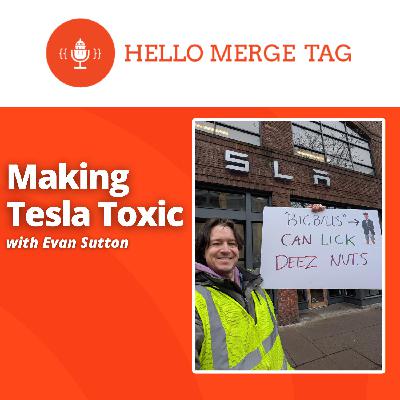
“Unless you genuinely believe that elections should be up for sale to the highest bidder… I want you to realize that Elon Musk will be the highest bidder in any election that he wants to participate in.”
Evan Sutton is the founder of Firekit Campaigns, where he works with unions, Democrats and nonprofits to build powerful stories in today's fractured media landscape.
Before founding Firekit Campaigns, he worked as senior leadership at the American Federation of Teachers and the New Organizing Institute.
Evan started his career in politics and advocacy in 2007 as a field organizer on Barack Obama's campaign.
He recently wrote a piece for Melissa Ryan’s Control Alt-Right Delete called Make Tesla Toxic.
That piece will be linked in the show notes, along with his follow up from a few days later called “Not All Tesla Owners.”
Throughout our conversation, we discuss:
Why Tesla is such a strong targetHow targeting Tesla can be an effective tactic in the fight against the companyHow actions against Tesla not only send a message but can also limit Elon Musk’s ability to influence future electionsLessons from the anti-smoking campaign that can be applied in taking on TeslaWhy simply putting up anti-Elon stickers isn’t enough—and why people should consider divesting completely from TeslaElon’s role in the upcoming Wisconsin State Supreme Court raceA visualization of just how wealthy Elon really isWhere digital organizing is taking place these daysThe importance of centering stories that truly impact people’s livesWho is excelling at digital organizing right nowThe response to Al Green and what Democrats should have done during the State of the UnionWhy now is the time for "Blood and Teeth Mode”And much more!
“Don’t get stuck in the sunk cost fallacy. If you think you’re underwater in your Tesla today… think about what your Tesla’s gonna be worth [in 6 months] and how hard it’s gonna be to offload… And if you own Tesla stock, get out while it’s still worth something.”
Listen to the full episode at HelloMergeTag.com or wherever you stream podcasts.
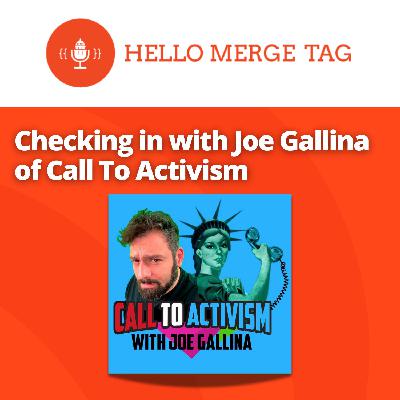
Joe Gallina is an attorney and the founder of Call to Activism, a digital media organization dedicated to countering MAGA rhetoric and advocating for democracy, transparency, and justice.
On the day of Donald Trump’s inauguration in 2017, Gallina left his legal career to commit fully to this mission.
Through Call to Activism, he has built a massive social media presence across Twitter, Bluesky, Facebook, TikTok, and Instagram—reaching over 3.1 million followers and generating more than 3 billion views annually.
His work focuses on informing and engaging the public on critical political issues through viral content and strategic storytelling.
In this episode, we discussed:
His process for creating high-impact digital contentWhy storytelling beats raw facts and statistics in political messagingHow to create digestible content that reaches a wide audienceHow he and his team have scaled Call to Activism across multiple platformsTactical tips for growing your own social media presenceWhat’s working right now on each major platformHis approach to moving people from online engagement to real-world actionAn unexpected reason you shouldn’t engage with trollsHow showing up at the right moment can create viral political momentsWhy elected officials and candidates should collaborate with digital creators to amplify their messageWhat the right is doing well in digital strategy—and what the left should learn from itAnd so much more!
This episode is packed with insights for activists, content creators, and anyone looking to make an impact in the digital space.
Find links and more at HelloMergeTag.com.
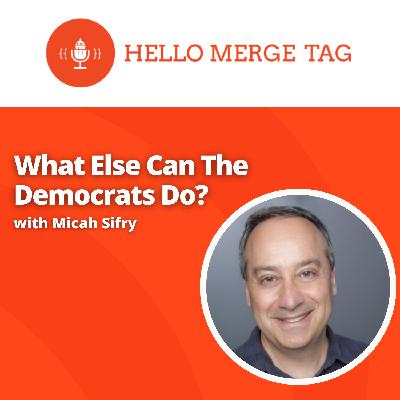
“Democrats who have been in office for a long time follow polls instead of trying to change them. So while they’ll attack Republicans for threatening to cut Medicaid in order to fund tax cuts for the rich, they’re mostly shy about making a big picture argument about Trump’s fascism.”
So says Micah Sifry in a piece called “3 Things Democrats Could Do That They Aren’t (Yet).”
If you don’t know him, he’s the author or editor of nine books, most recently Civic Tech in the Global South; A Lever and a Place to Stand: How Civic Tech Can Move the World and The Big Disconnect: Why the Internet Hasn’t Transformed Politics (Yet).
He’s also a contributor to The Nation, The New Republic, and The American Prospect and writes a weekly newsletter on democracy, movements, organizing and tech, called The Connector.
I invited him on the pod to continue the conversation about what Democrats could be doing that they aren’t already.
Now, while I’m particularly interested in the tech and the digital components of these solutions, this conversation is bigger and broader than just whether or not Democrats should be on TikTok.
So let’s talk about the future!
Find links to his channels and more at HelloMergeTag.com.
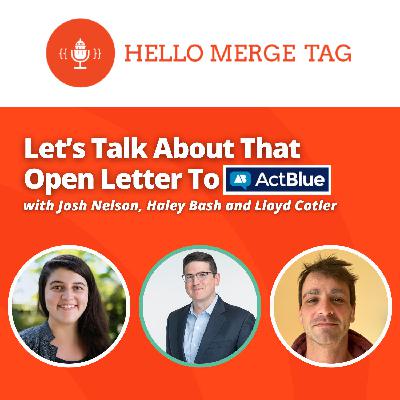
“Folks… need to be able to trust communications that we send them. By poisoning the well with some of the[se] texts and emails… people can’t trust the communications they’re receiving.”
What happens when the backbone of Democratic fundraising comes under scrutiny? I checked in with some of the organizers of that open letter to ActBlue.
In December 2024, a group of 142 consultants, campaign and nonprofit staff, technology vendors, and donors signed onto an open letter to ActBlue calling on the platform to do more to protect donors from spammers, scammers and exploitative digital fundraising tactics.
Collectively, the signers of this letter have raised over a billion dollars using ActBlue. For context, that’s nearly 7% of the total sum raised on ActBlue since they launched in 2004.
Those who signed on included MoveOn, SwingLeft, New Blue Interactive, the founders of Indivisible, senior digital folks who have worked with Senators Elizabeth Warren and Bernie Sanders, as well as the SMS director for Hillary for America.
That said, not everyone in the democratic digital world signed on.
There were prominent voices who publicly opted out.
Serious people in the space came forward with concerns about the letter.
I invited some of the organizers of this letter onto the pod today to discuss why they started this process, why now, what they say to those who think this was a mistake and more.
With me today is Josh Nelson, the CEO of Civic Shout, the digital ad platform for progressive causes. Josh previously served as vice president at CREDO Mobile, and led digital for Al Gore's nonprofits.
I hosted Josh on episode 15 of this podcast for a conversation on how democratic fundraising got so problematic and where we can go from here. If you care about this topic, and haven’t already listened to that episode, I highly recommend it.
Haley Bash is a grassroots fundraiser, distributed organizer, and facilitator with 10+ years of experience in the social movement sector. They are Founder and Executive Director of Donor Organizer Hub and amongst many other notable projects, they previously built the largest volunteer-run texting program for down ballot candidates at Red2Blue Texting and serve on the Steering Committee of the Grassroots Fundraising Network.
Lloyd Cotler, an early adopter of conversational marketing, has worked with some of the biggest organizations in the country to develop engaging and successful SMS marketing strategies. He has crafted interactive text messages for Hillary Clinton’s presidential campaign, Random House, the American Cancer Society, the National Education Association and more.
Throughout this conversation, we spoke about:
Why nowWhat led to this conversation going public How this letter is actually intended to help protect ActBlueWhy it’s in our movement’s interest to solve this problem ourselves (as opposed to letting external parties making these decisions for us!)Who’s doing a good job raising money without using spammy tactics Why people are so down on democrats at the momentAnd a whole lot more
Find links, more episodes and more at HelloMergeTag.com.
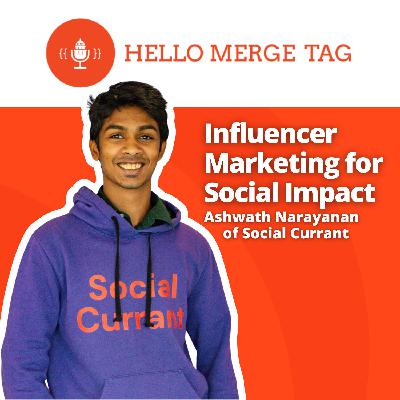
"Creative work isn't going to be an option anymore. You have to do creative work."
Ashwath Narayanan is the Co-founder & CEO at Social Currant, a platform that helps nonprofits and social impact organizations collaborate with creators to reach audiences more effectively.
He founded Social Currant while still a student at The George Washington University. He’s now graduated, but the work continues on.
In a world where around half of TikTok users under the age of 30 report using the platform to keep up with the news, who’s creating content has never mattered more.
I invited him on the pod to talk about the role of creators in the social advocacy space, how they’re shaping the conversations happening online, and how brands are leveraging this influential group to reach new audiences and grow their own digital presence.
Throughout our conversation, we talked about:
Why this work mattersHow we can explain this work to my grandmaThe difference between brands humanizing themselves and them centering actual peopleBrands - and creators - doing influencer marketing well in the social impact spaceWhether or not Democrats need their own Joe Rogan (hint: they don’t!)The importance of investing in progressive creators year-roundThe opportunity for organizations to partner together towards bigger outcomesTrends brands should be paying attention toAnd a whole lot more!
Find links, and all episodes, at HelloMergeTag.com.
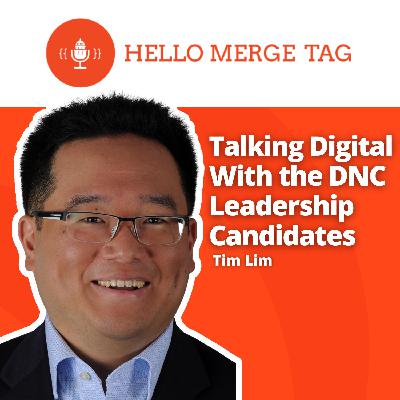
“It doesn’t feel like you’re joining a community, it feels like you’re joining a list.”
On February 1st, the DNC will elect new leadership.
Those elected will be tasked with leading the Democratic Party at a critical time, as they work to rebuild while Republicans control every level of the federal government.
They will oversee fundraising and operations, but they will also play a key role in shaping the strategy and outlining the vision for what the party should be and how it should allocate its time, energy, and resources.
Along with interviewing several candidates for DNC Chair, I also reached out to folks running for other DNC leadership positions.
Today, we’re checking in with one of those candidates.
Tim Lim is a lifelong Democratic activist who serves as board treasurer for Run For Something, founded Blue Digital Exchange (a trade association for progressive digital professionals who work in the political, non-profit, and advocacy spaces), was a partner at Bully Pulpit Interactive and is the President and Founder of Precision Network.
He’s worked at Change.org and he ran the Washington, DC office for Grossman Marketing Group. He’s also served on the National Finance Committee for the last four presidential campaigns. Honestly, his resume is immense. This list goes on and on.
He's currently running for DNC National Finance Chair.
I invited him on the pod to hear specifically about the role he envisions digital strategy playing in the future of the Democratic Party.
Throughout our conversation, we spoke about
The importance of accountability, transparency and connection.Deplatforming bad faith actors who are making the environment untenable for everyone elseWhy he wants to bring the National Finance Committee and the grassroots fundraising program under one roofWhat lessons the DNC can incorporate from Run For SomethingWhy this is the time for painful conversationsThe importance of finding a home for everyone who wants to get involved in the party, regardless of how much money they have to donateAnd a whole lot more
Listen to our full conversation at HelloMergeTag.com or wherever you stream podcasts.

Comments

Download from Google Play

Download from App Store
 United States