


 Claim Ownership
The Football Mental Health Alliance
Subscribed: 0Played: 4
Subscribe

© Copyright 2024 The Football Mental Health Alliance
Description
The Football Mental Health Alliance podcast is dedicated to delving into the topic of mental health in the football world. Each episode features well-known experts and ex-professional athletes who share their knowledge and personal experiences with mental health. Our guests will provide advice and insights on how to support yourself or those in your care who may be experiencing mental health conditions.
This podcast is for you if you are a fan of professional football clubs, a member of a football community, or involved in grassroots football at any level. We believe that mental health is an important topic that deserves to be addressed and understood in all aspects of the football world.
We will cover a wide range of mental health topics in each episode. Our guests will share their experiences and provide practical advice on how to deal with these challenges while also supporting those around you.
So come along with us as we investigate the relationship between mental health and football. Listen to our podcast to gain valuable insights, helpful tips, and important information that can assist you or someone you care about in managing their mental health and thriving both on and off the pitch.
This podcast is for you if you are a fan of professional football clubs, a member of a football community, or involved in grassroots football at any level. We believe that mental health is an important topic that deserves to be addressed and understood in all aspects of the football world.
We will cover a wide range of mental health topics in each episode. Our guests will share their experiences and provide practical advice on how to deal with these challenges while also supporting those around you.
So come along with us as we investigate the relationship between mental health and football. Listen to our podcast to gain valuable insights, helpful tips, and important information that can assist you or someone you care about in managing their mental health and thriving both on and off the pitch.
94 Episodes
Reverse
Every weekend, I watch the same scenario unfold.A young referee – 15, maybe 16 years old – walks onto the pitch. Recently trained, nervous as hell, giving up their weekends so your child can play football. They’re hesitant with decisions. They don’t blow the whistle with confidence. They go with the shout because they’re still learning what match control actually feels like.And you, standing on the touchline, you deal with it. Initially.You understand they’re new. You bite your tongue when a throw-in goes the wrong way. You remind yourself they’re just a kid learning. You are, in that moment, fairly rational.Then comes the flashpoint.A challenge in the box. A potential penalty. The young ref bottles it or gets it wrong or doesn’t see it the way you do. And something shifts. You stop being a parent/carer/guardian (PCG – Danny told me to use this term) watching their child play football. You become a football supporter. That emotion turns, and you explode.I’ve seen it hundreds of times. That transformation happens in seconds. The rational person you were thirty seconds ago is gone, replaced by someone screaming at a teenager about competence, bias, fairness—whatever justification your anger reaches for in the moment.And here’s what you don’t realise as you’re losing it: you’ve just given every other PCG permission to do the same.
You’ve got a question. A challenge. A situation you don’t know how to handle.So where do you go? Facebook groups. Thousands of them. Tens of thousands of members.And within three replies, Dave shows up.Where Grassroots Football is Going For HelpWhen you need advice, the options are limited.There’s no ongoing support system. The one-off training you did six months ago didn’t cover this specific situation. Your club’s welfare officer is in the same boat as you.So you turn to Facebook.Grassroots football coaching groups. Youth football forums. Neurodiversity in sport pages. There’s clearly a need. The groups are massive. The questions are constant.And the advice you get?Wildly inconsistent. Sometimes helpful. Sometimes actively harmful.Football is trying to solve its biggest challenges on Facebook. And that’s worrying.Mentioned in this episode:The Football Mental Health Alliance Neurodiversity, Mental Health & Safeguarding AcademyThe only ongoing support system that gives coaches, welfare officers, players and parents/carers the tools, training, and peer network to confidently support neurodivergent players and mental health in grassroots football.
Because one-off, tick box, solitary e-learning doesn't cut it.
Because Facebook groups aren't safe.
Because your coaches, welfare officers, players and parents/carers deserve actual, expert support.
The game is changing. Parents/carers/guardians (PCGs) are educating themselves. And clubs aren’t keeping up.Here’s what’s coming.What PCGs Are Searching ForGoogle Trends tells a clear story.Searches for “reasonable adjustments grassroots football” are climbing.“Equality Act youth sports” – rising.“Neurodiversity discrimination” – rising.“Can my child be excluded from football for behaviour” – rising.PCGs aren’t just hoping their kids get good coaching anymore. They’re researching their legal rights.Why This MattersBecause awareness is growing faster among PCGs than among clubs. PCGs know adjustments exist. They know the Equality Act creates duties. They know what discrimination looks like.But clubs? Many still think “we treat everyone the same” is an acceptable response.It’s not. It never was. And increasingly, PCGs know it.We cover this in our Understanding Neurodiversity in Grassroots Football training:Mentioned in this episode:The Football Mental Health Alliance Neurodiversity, Mental Health & Safeguarding AcademyThe only ongoing support system that gives coaches, welfare officers, players and parents/carers the tools, training, and peer network to confidently support neurodivergent players and mental health in grassroots football.
Because one-off, tick box, solitary e-learning doesn't cut it.
Because Facebook groups aren't safe.
Because your coaches, welfare officers, players and parents/carers deserve actual, expert support.
Most clubs are one complaint away from a serious problem. Not because they’re doing anything malicious. But because they can’t prove they’ve done anything at all.Here’s the document that protects you.Mentioned in this episode:The Football Mental Health Alliance Neurodiversity, Mental Health & Safeguarding AcademyThe only ongoing support system that gives coaches, welfare officers, players and parents/carers the tools, training, and peer network to confidently support neurodivergent players and mental health in grassroots football.
Because one-off, tick box, solitary e-learning doesn't cut it.
Because Facebook groups aren't safe.
Because your coaches, welfare officers, players and parents/carers deserve actual, expert support.
You’re seeing it more and more. Players who “won’t listen.” Kids who “act out.” Behaviour that disrupts sessions. Coaches are frustrated. Parents/carers/guardians are defensive. Everyone’s stuck.Here’s what’s actually happening.Mentioned in this episode:The Football Mental Health Alliance Neurodiversity, Mental Health & Safeguarding AcademyThe only ongoing support system that gives coaches, welfare officers, players and parents/carers the tools, training, and peer network to confidently support neurodivergent players and mental health in grassroots football.
Because one-off, tick box, solitary e-learning doesn't cut it.
Because Facebook groups aren't safe.
Because your coaches, welfare officers, players and parents/carers deserve actual, expert support.
The Equality Act 2010 has been law for fifteen years. Most grassroots clubs still don’t understand their obligations. Here’s what you need to know.What the Law Actually SaysUnder the Equality Act, clubs have a legal duty to make reasonable adjustments for disabled players. Neurodivergence can be considered a disability. ADHD, autism, dyslexia, dyspraxia, anxiety disorders – all can qualify.You don’t need a formal diagnosis to make adjustments. You just need evidence of need. And here’s the bit that catches clubs out: you have an anticipatory duty.That means you should be thinking about accessibility before someone asks. Not after.Mentioned in this episode:The FMHA Neurodiversity, Mental Health & Safeguarding Academy.The FMHA Neurodiversity, Mental Health & Safeguarding Academy gives your entire club unlimited access to:
Unlimited seats in face-to-face training in neurodiversity, mental health first aid and emotional regulation
Monthly expert-led CPD from recognised specialists
Football-specific resources updated monthly (matchday checklists, parent conversation templates, adjustment guides)
A fiercely moderated peer community – no ‘Daves’ allowed
The Player Log App (in development) for documenting reasonable adjustments
Free Parent/Carer/Guardian Academy so families become partners, not problems
Not a one-off workshop. Not a Facebook group. An ongoing support system built specifically for grassroots football.
Grassroots football clubs are struggling. Coaches work in isolation. Welfare officers lack ongoing support. Parents feel frustrated and helpless. And despite good intentions, one-off e-learning courses and workshops aren't creating the lasting change clubs desperately need.In this episode, we explore the critical gaps in how grassroots football currently approaches neurodiversity, mental health and safeguarding - and why the traditional training model is fundamentally broken.What We Cover:The Problems:Why e-learning and one-off workshops fail to translate into real, on-pitch changeThe isolation crisis facing coaches, welfare officers and safeguarding leads who work in silosThe legal minefield: how clubs unknowingly breach the Equality Act by failing to make reasonable adjustmentsParent-club friction: why families without proper guidance create pressure on volunteersThe CPD gap: why grassroots football needs ongoing development, not just annual tick-box trainingThe Solution: How the Grassroots Football Neurodiversity, Mental Health & Safeguarding Academy provides ongoing supportUnlimited access to core training for entire clubs - not just one person per courseMonthly expert-led sessions from neurodiversity specialists, mental health practitioners, Equality Act experts and moreFootball-specific practical resources: game-day checklists, communication strategies, sensory environment toolsPeer learning spaces that break volunteer isolationThe parallel Parent/Carer/Guardian Academy that equips families and reduces club frictionEvidence-based approach combining academic research with lived experienceThe Player Log App (in development) to document reasonable adjustments and demonstrate Equality Act complianceWhy This Matters:This isn't about adding more work to already-stretched volunteers. It's about giving clubs a complete, ongoing support system that makes everyone's life easier - coaches, welfare officers, parents/carers/guardians and most importantly, the players themselves.Key Takeaway:Grassroots football needs to move beyond treating neurodiversity, mental health and safeguarding as one-off training requirements. Clubs need practical tools, ongoing CPD, peer support and evidence-based strategies that actually work on the pitch and in the clubhouse.Learn More:Visit the Academy landing page: https://vault.thefmha.com/neurodiversity-mental-health-and-safeguarding-academy/Contact: Danny MatharuPhone: 03330 500 399Email: support (at) withinu.net
Fellow referees, let’s be brutally honest about what’s happening to us.You know the routine. Another weekend, another match where you’ll be screamed at, questioned, insulted and quite possibly threatened. You’ll drive home alone, replaying every decision, wondering if you made the right calls, and asking yourself why you put up with this treatment for what amounts to pocket change and a genuine love of the game.If you’re listening to this, chances are you’re struggling. Maybe you’re having trouble sleeping before matches, feeling your stomach churn as you drive to the pitch/ground, or finding yourself snapping at family members after particularly hostile games. Perhaps you’ve started avoiding certain fixtures, questioning every decision you make, or seriously considering hanging up your whistle for good.Here’s what I want you to understand from the very beginning: your distress is not a personal failing. It’s a rational response to an irrational situation.
Meet Dr Fleur-Michelle Coiffait: clinical psychologist, founder and advocate for neurodiversity. With nearly two decades of experience, Fleur has worked across the NHS, private, and charitable sectors, specialising in autism, ADHD, and learning differences. She’s also neurodivergent herself and a parent to a neurodivergent child, bringing both professional expertise and lived experience to her work. Fleur has led national assessment services, lectures on doctoral training courses, and regularly shares her insights through publications and media, including TV appearances on the impact of COVID-19 on families.In this episode, we explore the challenges and opportunities for neurodivergent athletes, the importance of creating inclusive environments and the need for a proactive approach to support. The discussion covers a wide range of topics, from the emotional toll of masking and rejection sensitivity to practical coaching strategies and the generational impact of neurodiversity.You can find Fleur at: https://www.coiffpsych.com/Key Discussion Points:Meeting Format and Authenticity: Danny and Fleur-Michelle discuss the conversational nature of their meeting and the importance of comfort and authenticity, even in professional settings, particularly when discussing neurodiversity in sports.Worrying About Others' Opinions: The conversation delves into the significant impact of worrying about others' opinions, especially for neurodivergent individuals, and the internal exhaustion it can cause."Fight or Flight" Mode in Neurodiversity: They explore the constant "fight or flight" mode experienced by many neurodivergent individuals and how it affects performance in sports and daily life.Anxiety in Young Athletes During Transitions: The discussion highlights heightened anxiety among young academy players during transitions like preseason or contractual changes, and how an "overactive mind" can exacerbate these worries.Rejection Sensitivity Dysphoria (RSD): Fleur-Michelle describes RSD and its impact on individuals, including chronic lateness and dwelling on perceived negatives.Harnessing Analytical Thinking: The conversation shifts to how the analytical thinking often associated with neurodiversity can be positively harnessed to analyse past situations and brainstorm future approaches.Filtering Out Noise and Seeking Support: Danny and Fleur-Michelle discuss the difficulty neurodivergent brains have in filtering out "noise" and the crucial role of external support (friends, coaches, family) in managing an overactive mind.Identifying Neurodiversity in Athletes: They explore how coaches can identify signs of neurodiversity, noting the challenge of "masking" where athletes conceal their struggles.Stigma and Disclosure in Football: The discussion addresses the stigma surrounding neurodiversity in football, the defensive reactions of parents, and the importance of framing conversations around support and well-being.Football's Lag in Inclusivity: Danny asserts that football lags behind society in addressing neurodiversity and other inclusivity issues, particularly in the men's game compared to women's football.Generational Neurodiversity and Family Journeys: They discuss how a child's diagnosis can often trigger a parent's own journey of self-discovery and understanding of neurodiversity.Clubs' Duty of Care and Potential Litigation: Danny warns professional clubs about the risk of litigation under the Equality Act if they fail to make reasonable adjustments for neurodivergent players.Recommendations for Clubs: Fleur-Michelle proposes that clubs publicly commit to understanding neurodiversity, implement strategies, provide staff training and have specialist advisors.Neurodiversity Inclusion in Football: The conversation highlights the perceived lack of focus on...
If you're listening to this as a football official, you already know what others might not fully understand: officiating is one of the most mentally challenging roles in grassroots football. You make split-second decisions under intense scrutiny, manage conflict between emotional participants and maintain fairness while facing criticism from multiple directions.
From pressure to performance: Match day brings a unique energy to grassroots football. The anticipation, excitement, and yes - the pressure- can create a perfect storm of emotions for players, parents/carers/guardians (PCGs), coaches and spectators alike. Learning to navigate match day mentally isn't about eliminating these feelings; it's about channelling them in ways that enhance rather than hinder your football experience.
In grassroots football, there’s a troubling paradox that can affect coaches’ mental health. The coaches who follow best practices – those focusing on player development, long-term growth and enjoyment over immediate results – often face more criticism and pressure from parents/carers/guardians (PCGs) than those who prioritise winning at all costs.This creates a mental health challenge that’s rarely discussed but significantly impacts the very people we rely on to develop our young footballers in the right way.
Football is full of goals – scoring them, preventing them, celebrating them. Here's a different type of goal that can boost mental wellbeing for everyone in your football community: The Kindness Goal.Research shows that acts of kindness don't just help the receiver – they actually boost the mental health and happiness of the person giving. In football, where emotions run high and pressure can build, intentional kindness can transform the atmosphere and strengthen our community bonds.
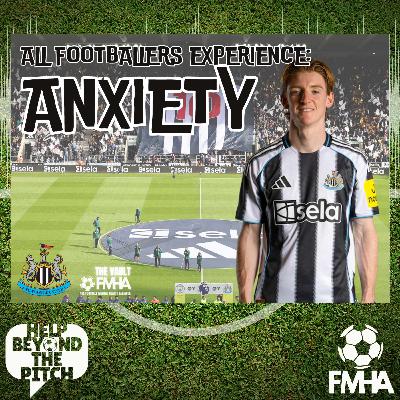
"All Footballers Experience: Anxiety" transforms how we teach children about mental health through storytelling and trust.Following young Newcastle fan Jude's magical journey, readers meet their heroes in a new light - not as untouchable superstars, but as understanding mentors who share their own experiences with anxiety.Through Anthony Gordon's guidance, with help from Bruno Guimarães, Joelinton, Sandro Tonali, Eddie Howe, Dan Burn and Alan Shearer, children learn practical tools for managing anxiety in clear, age-appropriate language. Each section includes interactive elements, from practice exercises to QR codes linking to additional resources, ensuring children remain engaged while developing crucial life skills.Beyond the immediate impact of supporting young fans' mental health, this initiative positions Newcastle at the forefront of youth mental health advocacy.By featuring current players sharing authentic experiences, the club builds lasting emotional connections with young supporters and their families. The book offers a meaningful alternative to screen time, while creating lifelong associations between learned coping strategies and the Newcastle players who taught them.With opportunities for workshops, school programs and international adaptation, this project transforms Newcastle's relationship with young fans from purely sporting entertainment to a supportive force in their personal development, creating positive associations that last a lifetime.
Let's get one thing straight: we're not about to tell you to "just be grateful" when you're struggling, or suggest that positive thinking can solve all your problems. That's not what gratitude practice is about, and frankly, that kind of advice can be pretty unhelpful when you're dealing with real challenges.
We've all been there. You wake up and everything just feels... off. Maybe you've got a work deadline looming, your family is getting on your nerves, household responsibilities are piling up, or you're just having one of those days where your brain seems determined to focus on everything that's going wrong. Some days, even getting out of bed feels like climbing a mountain.You don't need hours of free time or expensive equipment to lift your spirits. These five mood-boosting techniques are designed for real life – when you're juggling work and home responsibilities, feeling overwhelmed by daily pressures, or just need a quick reset during a challenging day.
What Actually Is Mental Health?When you hear “mental health,” what comes to mind? If you’re picturing someone having a complete breakdown on the touchline or a player who can’t cope with pressure, you’re not alone – but you’re also missing the bigger picture. Mental health isn’t just about mental illness, and it definitely isn’t just about feeling down after a defeat.Think of mental health like physical fitness. Just as your physical health exists on a spectrum – from feeling energetic and match-ready to nursing a niggling injury or dealing with a serious strain – your mental health is constantly changing too. Some days you might feel mentally sharp, resilient and ready to tackle anything the game throws at you. On other days, you might feel overwhelmed by team pressures, anxious about performance, or just not quite yourself. All of this is completely normal.
Neurodiversity refers to natural variations in brain development and function, not a mental health condition.
Do your players sometimes struggle to understand their neurodiverse teammate's needs? Creating an environment where neurotypical players comprehend and support neurodiversity within the team is essential for building genuine inclusion, empathy and compassion throughout the squad.
If you ask a doctor or read a medical book, it will define ADHD as a neurodevelopmental disorder characterised by traits of impulsivity, forgetfulness, and disorganisation.

Comments

Download from Google Play

Download from App Store
 United States