Discover
RevOps 500
RevOps 500
Author: RevOps 500
Subscribed: 1Played: 4Subscribe
Share
© RevOps 500
Description
Welcome to RevOps 500 where we invite the world’s top marketers to answer the tough questions facing growing companies. Join us as we dive deep into the world of RevOps. We’ll be learning strategies and expertise from first-hand experiences.
44 Episodes
Reverse
SummaryIn this episode of RevOps 500, Sajeel Qureshi engages in a thought-provoking conversation with Gisele Lempert, CEO and co-founder of Vende Más. They explore the concept of mistakes as learning opportunities, the importance of accountability in business, and the complexities of team dynamics. Gisele shares her insights on navigating misalignment, the role of leadership in decision-making, and the challenges of human relationships in a business context. The discussion also touches on the nature of customer relationships and the significance of aligning team values for success. Gisele emphasizes the need for collaboration and the evolution of leadership styles in today's business environment, providing valuable lessons for entrepreneurs and leaders alike.TakeawaysMistakes are learning opportunities, not failures.Accountability is essential in business relationships.Team dynamics can significantly impact project outcomes.Misalignment often becomes apparent only after issues arise.Effective leadership requires balancing authority and collaboration.Human relationships in business are complex and require understanding.Customer relationships are akin to personal relationships.Aligning team values is crucial for success.Decisions in business often require compromise and understanding.Leadership styles can evolve based on experiences.Chapters00:00 Embracing Mistakes as Learning Opportunities02:57 The Importance of Accountability in Business06:02 Aligning Expectations with Team Dynamics09:02 Navigating Misalignment in Projects12:01 The Role of Detachment in Decision Making15:03 Learning from Customer Relationships19:59 Navigating Business Relationships and Breakups21:27 Achieving Team Alignment23:47 Understanding Human Emotions in Decision Making25:40 The Role of Leadership in Decision Making27:53 Learning from Mistakes in Leadership29:29 The Transition from Employee to Boss31:54 Redefining the Concept of a Boss36:41 Introduction to VendeMas and Its MissionGisele's LinkedInVendeMas LinkedInSajeel Qureshi's LinkedInComputan's LinkedIn

In this episode of RevOps 500, Sajeel Qureshi interviews Sarah McDevitt, a senior director at HubSpot, who shares her experiences with mistakes throughout her career. Sarah discusses a significant early mistake involving a typo in a major advertising campaign, the lessons learned from that experience, and how it shaped her approach to relationships and trust in business. The conversation explores the importance of owning mistakes, building relational assets, and the role of AI in enhancing human interactions. Sarah emphasizes the value of perspective and communication in navigating challenges and fostering growth.TakeawaysMistakes are essential for growth and learning.Owning your mistakes builds trust and relationships.Perspective helps in managing the impact of mistakes.Building relational assets is crucial in business.Effective communication is key in escalations.AI can enhance human interaction and understanding.Listening deeply is vital in resolving conflicts.Directness in communication fosters stronger relationships.Mistakes can lead to valuable insights and skills.Emotional intelligence plays a significant role in business relationships.Sound Bites"I remember the way I felt.""I still love a Whopper.""We should talk about mistakes more."Chapters00:00 Introduction to Sarah McDevitt04:20 Learning from Mistakes10:34 Building Relationships in Business14:46 Understanding Relational Assets20:25 Reflections on Career Growth25:43 Navigating Escalations and Communication31:22 The Role of AI in Human Interaction35:53 Conclusion and Podcast PromotionSarah McDevitt's LinkedinSajeel Qureshi's LinkedInComputan's LinkedIn
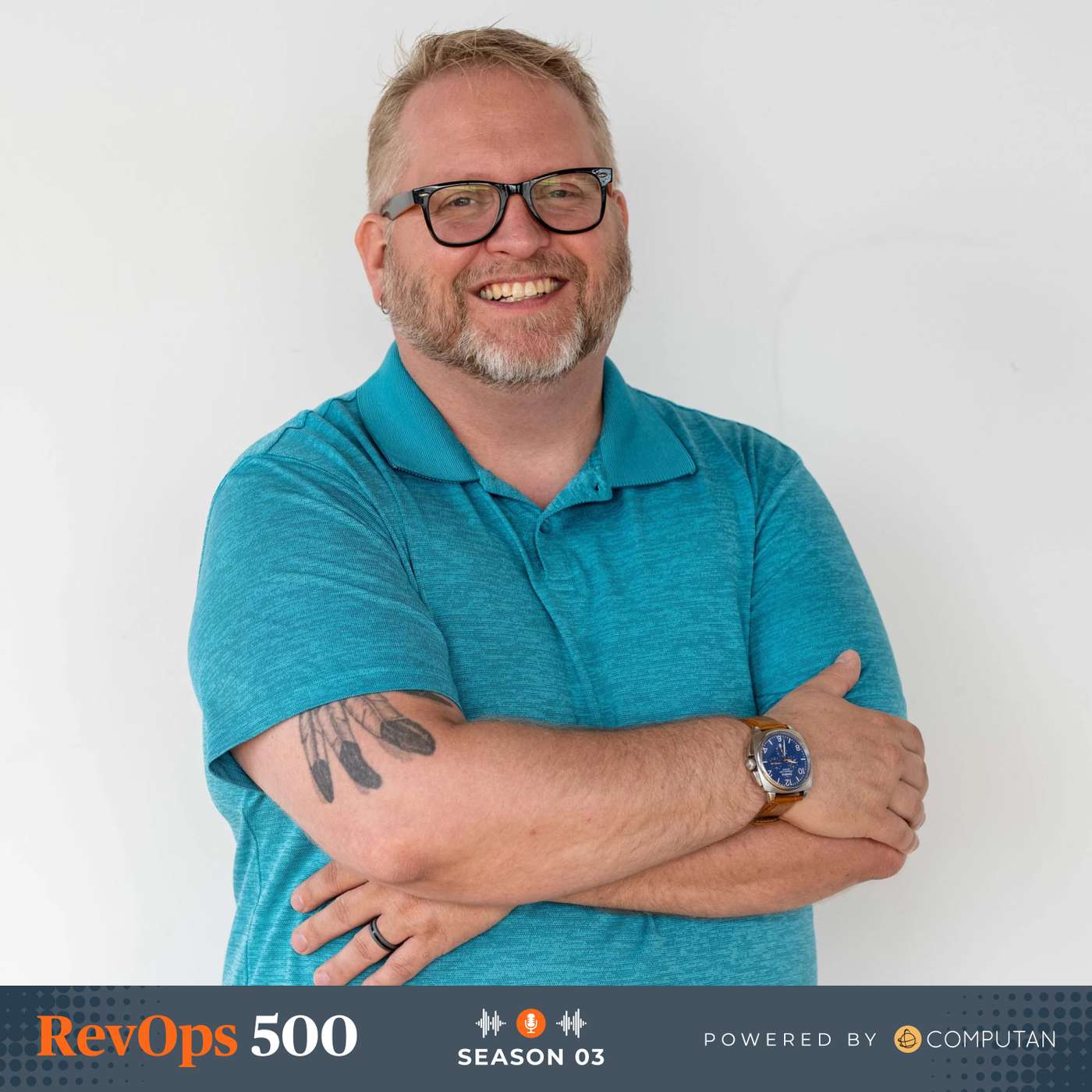
In this episode of RevOps 500, Sajeel Qureshi interviews Evan Patterson, a fractional CMO and marketing expert. They discuss Evan's journey through traditional marketing roles, the importance of mental health, and the power of delegation in achieving success. Evan shares his experiences of being fired from multiple jobs, the lessons learned from failures, and how he found his niche in the marketing world. The conversation emphasizes the significance of understanding one's strengths and the impact of mental health on career growth.TakeawaysEvan regrets trying to fit into traditional marketing roles.Delegation is crucial for success in marketing.Mental health plays a significant role in career satisfaction.Failures can be valuable learning experiences.Finding your niche can lead to greater job satisfaction.It's important to recognize toxic work environments.Emotional intelligence is key in marketing roles.Understanding personal strengths can enhance career growth.The marketing field requires diverse skill sets.Self-awareness is essential for professional development.Chapters00:00 Introduction to Evan Patterson01:27 The Pitfalls of Traditional Marketing Roles04:41 The Power of Delegation in Marketing07:28 Recognizing Toxic Work Environments12:21 Finding Your Place in the Marketing Matrix19:28 The Importance of Mental Health in Career Success23:50 Learning from Failures and Rejections29:10 The Future of Marketing and Personal GrowthEvan Patterson's LinkedInSajeel Qureshi's LinkedInComputan Website
In this episode of RevOps 500, Sajeel Qureshi interviews Zoe Zankowski, a strategic alliances manager at PandaDoc. They discuss the evolving role of RevOps, debunk common myths, and explore the importance of cross-functional collaboration in driving business success. Zoe shares her insights on managing partner relationships, the challenges of customer success, and the future of partnerships in the B2B SaaS landscape.RevOps is not just about sales and marketing; it impacts the entire organization.Breaking down silos is essential for effective RevOps.Cross-functional collaboration is key to successful partnerships.Understanding both your ideal customer profile and your partner's is crucial.Customer success is a shared responsibility between partners and the company.Building a RevOps strategy requires buy-in from all teams.Partnerships can enhance customer experience and retention.Mistakes in partnerships require accountability and open communication.The future of RevOps will increasingly focus on partnerships as a growth strategy. Success in RevOps is about enabling both internal teams and external partners.Chapters00:00 Introduction to Zoe Zankowski01:38 Debunking the Myth: RevOps is More Than Go-to-Market and Customer-Facing Teams03:14 Breaking Down Silos: The Role of Collaboration in RevOps05:02 Managing Partnerships in a RevOps Model07:59 Resolving Relationship Breakdowns in RevOps: Communication, Accountability, and Empathy20:30 The Importance of Partnerships in Marketing25:51 The Challenges and Autonomy of Working in a Startup26:07 What Keeps Zoe Up at Night in RevOps31:13The Rise of Partnerships in B2B SaaS35:33 The Future of Partnerships: A Partner-Led Growth Model38:58 The Role of RevOps in Enabling Successful Partnerships41:27 Building a Successful RevOps Framework: Top-Down Buy-In and a Culture of PartnershipZoe Zankowski's LinkedInPandaDoc WebsiteSajeel's LinkedInComputan Website
In this episode of RevOps 500, Sajeel Qureshi interviews Klemen Hrovat, co-founder of Sellestial, who shares his entrepreneurial journey, including the mistakes made during the development of their initial app. Klemen discusses the importance of honest feedback, the challenges of building a SaaS product, and how they pivoted their focus to better serve their users. He emphasizes the significance of data hygiene and AI solutions in sales processes, and reflects on the lessons learned throughout their journey.TakeawaysKlemen reflects on the numerous mistakes made during his entrepreneurial journey.The realization of their app not meeting market needs took 11 months.Honest feedback is crucial for product development and iteration.Data hygiene remains a significant challenge for many businesses.AI can enhance data enrichment and improve sales processes.Building relationships with users is essential for understanding their needs.The importance of pivoting based on user feedback and market demands.Klemen emphasizes the need for clean data in the age of AI.The evolution of Sellestial's focus is a response to user pain points.Klemen's reflections highlight the value of learning from past experiences.Chapters00:00 Introduction to the Journey02:23 Lessons from Mistakes05:32 Iterative Development and User Feedback08:22 The Importance of Honest Feedback11:16 Pivoting the Business Model14:00 Data Challenges and Solutions16:59 Building with AI Capabilities20:02 Realizations and Changes22:43 Current Focus and Future Directions25:44 Reflections on the JourneyKlemen's LinkedInSellestial's websiteSajeel's LinkedInComputan's LinkedInComputan website
In this episode of RevOps 500, Sajeel Qureshi interviews Joaquin Interlandi, a RevOps expert, who shares his experiences with significant mistakes in workflow management. Joaquin discusses a major error involving the enrollment of 50,000 contacts in a workflow, the lessons learned from this incident, and the importance of communication and transparency with clients. The conversation also touches on the role of AI in workflow management, best practices for creating workflows, and the significance of honesty in building trust with colleagues and clients. Joaquin emphasizes the need for diligence in using CRM tools and the importance of asking questions when uncertain.TakeawaysJoaquin's biggest mistake involved enrolling 50,000 contacts in a workflow.He learned the importance of checking workflows before making updates.Communication with clients is crucial when mistakes happen.Transparency helps maintain trust with clients after errors.AI can complicate workflow management if not used carefully.Best practices include double-checking and using test labels.Sharing mistakes can help others learn and avoid similar issues.CRM tools need better safeguards against mass errors.Honesty about one's knowledge builds trust in professional relationships.Handling pressure with transparency is key to resolving issues.Joaquin's LinkedInMomentum's websiteSajeel's LinkedInComputan's LinkedInComputan website
In this episode of RevOps 500, Sajeel Qureshi interviews Jonas De Mets, co-founder of Koalify, a HubSpot app focused on data quality. They discuss the challenges of building a startup, the importance of focus, and the lessons learned from past mistakes. Jonas shares insights on navigating partnerships, understanding market needs, and maintaining a customer-centric approach. The conversation also touches on the dynamics between co-founders and the strategies for aligning their vision for the future of Koalify.TakeawaysJonas reflects on the importance of focus in business.He emphasizes the need to say no to avoid overwhelm.Koalify was born out of a recognized need for better data quality.The startup journey involves navigating many challenges and learning from mistakes.Customer experience is prioritized over immediate financial gain.Partnerships play a crucial role in scaling the business.Jonas and his co-founder maintain a strong alignment in their vision.The market for their product is niche but significant enough to pursue.They are currently in an experimentation phase for future product development.The dynamics between co-founders can greatly influence the startup's success.LinksJonas De Mets' LinkedInKoalify's WebsiteSajeel's LinkedInComputan's LinkedInComputan website
In this episode of RevOps 500, Sajeel Qureshi interviews Max Cohen, the Chief Evangelist of Hapily. They discuss Max's journey through mistakes and learning experiences in his career, reflections on childhood regrets, and the challenges of parenting. The conversation shifts to the complexities of event management within HubSpot, exploring the need for better integration and innovative solutions. Max shares insights on the importance of creativity in content creation and the evolving landscape of event management, emphasizing the potential for innovation in this space.Max's humorous take on his name and identity.The importance of learning from mistakes in professional settings.Reflecting on childhood regrets and the impact of persistence.Navigating parenting challenges and encouraging kids to stick with activities.The struggle of maintaining creativity in content creation.The complexities of event management in a CRM system.The need for better integration between event management and CRM tools.Understanding the importance of tracking event ROI effectively.The unique challenges of managing events in HubSpot.The potential for innovation in event management solutions.LinksMax CohenSajeel QureshiComputan
In this episode of RevOps 500, Sajeel Qureshi interviews Chris Carolan, a HubSpot coach and consultant, discussing the challenges and lessons learned in the realm of Revenue Operations (RevOps). Chris shares his experiences with organizational buy-in, the importance of communication, and the complexities of sales and marketing operations. He emphasizes the need for cross-functional collaboration and the role of data in enhancing customer experience. The conversation also explores the impact of AI on business adaptability and the future of CRM in understanding the entire customer journey.TakeawaysBuy-in from leadership is not enough for success.Understanding the importance of communication in organizations is crucial.RevOps requires a shift in perspective from traditional sales and marketing.Complexity in operations can hinder effective change.Data and systems play a vital role in enhancing customer experience.Sales and customer success must work together for better outcomes.Cross-functional collaboration is essential for organizational success.AI can help organizations adapt and innovate more quickly.Rethinking customer relationships can improve retention and satisfaction.The future of CRM lies in understanding the entire customer journey.LinksChris CarolanSajeel QureshiComputan
In this episode of RevOps 500, Sajeel Qureshi interviews Chris Grant, a consultant at BabelQuest, who shares his journey from a long tenure in sales to becoming a consultant. Chris reflects on his biggest mistake of staying too long in one role, the transition to a more dynamic environment, and the importance of continuous learning and adaptation in sales and consultancy. He discusses the unique challenges faced by different sales organizations and emphasizes the significance of mindset in problem-solving and growth.takeawaysChris's biggest mistake was staying in one job for too long.He realized the importance of challenging oneself in a career.Transitioning to a new role opened up a world of possibilities.Sales processes can become routine and mundane over time.Learning from mistakes is crucial for growth.Every sales organization has unique challenges and processes.Mindset plays a significant role in problem-solving.Teaching others can also lead to personal growth.Continuous learning is essential in a rapidly changing environment.Collaboration with colleagues enhances creativity and problem-solving.Chapters00:00 Introduction to Chris Grant and His Journey00:43 The Biggest Mistake: Staying Too Long in One Place06:17 The Tipping Point: Transitioning to a Startup09:22 From Sales to Consultancy: A Natural Evolution12:07 Learning from Mistakes: The Call That Changed Everything14:33 The Gradual Shift: Becoming a Consultant17:20 Understanding Unique Sales Processes19:58 The Importance of Data and Reporting in Sales20:32 Reflecting on Career Choices22:35 The Joy of Continuous Learning25:32 Teaching and Problem Solving28:25 Mindset and Questioning34:23 A Day in the Life at Babel QuestLinkedIn LinksChris GrantBabel QuestSajeel QureshiComputan
In this episode of RevOps 500, Sajeel Qureshi interviews Amber Kemmis, a seasoned expert in the HubSpot ecosystem. Amber shares her experiences and insights on the importance of regular audits, the role of checklists, and the necessity of understanding customer journeys. She discusses common mistakes made in HubSpot implementations and emphasizes the value of asking the right questions to uncover deeper insights. The conversation highlights the significance of continuous improvement and learning from mistakes in the RevOps space.Chapters00:00 Introduction to RevOps and HubSpot Mistakes00:57 The Importance of Regular Audits02:59 Learning from Major Mistakes06:04 Creating Effective Health Checks08:47 The Role of Checklists in Operations12:02 Adapting to Changes in Client Needs14:55 The Evolution of HubSpot Tools18:00 Diagnosing Lead Generation Issues24:49 Understanding Customer Journeys28:19 The Importance of Journey Mapping30:12 Uncovering Customer Needs32:45 The Art of Asking the Right Questions36:40 Learning from Mistakes39:43 Common Mistakes in Client Interactions42:54 Transformative Moments in Business45:50 Embracing Imperfection in BusinessTakeawaysRegular audits of HubSpot portals are crucial for success.Mistakes often lead to valuable lessons in RevOps.Checklists can help ensure all aspects of a portal are functioning properly.Understanding customer journeys is key to improving service.Asking the right questions can uncover deeper insights.Common mistakes include focusing too much on technical requests.Effective communication with clients is essential for success.Using data to inform decisions can prevent future issues.Automation tools can enhance visibility and efficiency.Continuous improvement is necessary for long-term success.LinkedIn LinksAmber KemmisGrowthSajeel QureshiComputan
In this episode of RevOps 500, Sajeel Qureshi and Abhinav Sahai discuss the challenges and lessons learned in business, particularly focusing on complacency, team dynamics, and the importance of hiring the right people. Abhinav shares his journey to becoming an elite HubSpot partner and the realization that complacency can hinder growth. They explore the concept of 'elephant catchers' versus 'fishermen' in team building, the emotional toll of losing team members, and the methodologies implemented to foster transparency and growth within the organization. The discussion emphasizes the need for continuous learning and adaptation in the ever-evolving business landscape.Chapters00:00 Introduction and Complacency in Business02:42 The Journey of Building a Team05:49 Understanding Elephant Catchers vs. Fishermen08:46 Hiring Challenges and Team Dynamics11:31 Navigating Growth and Change14:37 The Emotional Toll of Team Changes21:16 The Journey to Success24:05 Building a Transparent Organization27:08 Implementing New Methodologies28:40 Navigating Team Dynamics35:00 Recognizing and Addressing Plateaus39:00 Internal Solutions vs. External HelpTakeawaysComplacency can lead to significant business mistakes.Recognizing the need for change is crucial for growth.Building a diverse team is essential for tackling complex projects.The journey to elite status is just the beginning of new challenges.Hiring the right people can make or break a project.Team dynamics can be affected by the introduction of new members.Transparency in communication helps manage team changes.Learning from past mistakes is vital for future success.Emotional connections with team members can complicate leadership decisions.Implementing effective methodologies can improve team performance.LinkedIn LinksAbhinav SahaiNisweySajeel QureshiComputan
In this conversation, Sajeel Qureshi interviews Jen Bergren, an operations trainer and HubSpot RevOps certification professor, about the myths and challenges of RevOps. They discuss the misconception that RevOps is solely about software administration and the importance of teaching strategic skills in addition to technical ones. Jen shares that in her RevOps bootcamp, she focuses on teaching prioritization, project management, goal setting, overcoming objections, and process mapping. They also discuss the prerequisites for becoming a RevOps professional and the need for generalists with a wide range of experience. Jen talks about the challenges of fending off requests from different departments and the importance of making your work visible and proving your success. They touch on common problems in RevOps, such as dealing with bad data and articulating the value of RevOps work. Jen shares her journey into RevOps and her upcoming book, 'What is RevOps?' which aims to provide clarity and create career paths in the field. Jen Bergren discusses the importance of documentation in various aspects of her career, including training new hires, seeking promotions, and improving team efficiency. She emphasizes the need for clear and user-focused documentation, incorporating multiple formats to cater to different learning styles. Jen also shares her insights on the future of documentation and the role of AI in note-taking. Additionally, she talks about her weekly newsletter, where she shares interesting and diverse content with her audience.TakeawaysRevOps is often misunderstood as solely being about software administration, but it is a strategic role that requires a wide range of skills.In addition to technical skills, RevOps professionals need to be proficient in prioritization, project management, goal setting, overcoming objections, and process mapping.There are no strict prerequisites for becoming a RevOps professional, but a background in various functions across the business can be beneficial.One of the challenges in RevOps is fending off requests from different departments and proving the value of RevOps work.Common problems in RevOps include dealing with bad data and articulating the value of RevOps work.Jen Bergren is writing a book titled 'What is RevOps?' to provide clarity and create career paths in the field. Documentation plays a crucial role in various aspects of a career, such as training new hires, seeking promotions, and improving team efficiency.Good documentation is clear, user-focused, and incorporates multiple formats to cater to different learning styles.The future of documentation is not threatened by AI, as robots cannot extract the context and history behind the information like humans can.Jen's weekly newsletter is a curated collection of diverse and interesting content that aims to save people time and share valuable resources.The act of taking notes and documenting processes helps individuals understand and learn more about the subject matter.Sound Bites"RevOps people are just software admins or tool people, that revops is not strategic.""It's all about frameworks and project management and goal setting and prioritizing and overcoming objections and big picture things that lead people to success that usually aren't taught.""We teach prioritizing, like how to prioritize projects, how to make a roadmap of your projects and how to present that information so that everyone can agree on like this is what you're doing.""I also used documentation to try to get a promotion because at one corporate job I had, like my manager changed five times in one year. Nobody knew what I was doing.""I would say that it is clear that it's written for the user and not for yourself unless you are the only user.""Building that culture of document using documentation of communication of when you're answering someone's question also including the documentation as a reminder."Chapters00:00 Dispelling the Myth: RevOps is More Than Software Administration03:01 Teaching Strategic Skills in RevOps Bootcamps05:24 The Importance of Making Your Work Visible in RevOps08:47 Dealing with Common Problems in RevOps11:46 Jen Bergren's Journey into RevOps and Her Upcoming Book24:58 The Importance of Documentation in Career Development26:33 Creating User-Focused and Multi-Format Documentation34:06 The Future of Documentation and AI43:46 Jen's Weekly Newsletter: Sharing Valuable Resources48:48 The Learning Power of Taking Notes and Documenting ProcessesLinksJen Bergren's LinkedInSajeel's LinkedInComputan's LinkedIn
In this episode of RepOps 500, Sajeel Qureshi interviews Pete Caputa, the CEO of DataBox. They discuss the misconceptions of the linear buyer's journey in RevOps, the importance of collaboration and networking, and the evolution of customer support and success.Pete shares his observations on the changing market dynamics and the need for businesses to differentiate themselves. He also explains the various support channels and resources available to DataBox customers.The conversation highlights the significance of customer-centric strategies in driving growth and retention. DataBox is a product that helps professional services firms, particularly marketing agencies, better guide their clients using data. It offers goal-setting, benchmarking, forecasting, and correlation capabilities to help companies understand their performance and make informed decisions.The focus is empowering teams to own certain parts of the business and holding them accountable for results. Data is a critical management tool that allows companies to measure and track their performance, identify opportunities for improvement, and diagnose problems. Marketing should focus more on creating a unique and differentiated business informed by qualitative research and feedback.TakeawaysThe buyer's journey is not a straight line from prospect to customer; it is a complex and non-linear process.Collaboration and networking with industry peers and potential partners can lead to indirect sales and referrals.Businesses need to differentiate themselves in a crowded market to stand out and attract customers.Customer support and success are crucial for driving growth and retention.DataBox offers a range of support channels, including chat, help docs, account management, and technical services. DataBox helps professional services firms better guide their clients using data.DataBox offers goal-setting, benchmarking, forecasting, and correlation capabilities.Data is a critical management tool for measuring and tracking performanceMarketing should focus on creating a unique and differentiated businessQualitative research and feedback are important for making informed decisionsSound Bites"Buyers take a crazy circuitous start-stop journey from going from unaware of a problem and unaware of a solution to becoming aware and then to the point where they ultimately make a decision to change something and buy a product.""The problem I see with most marketing and sales org is like, they spend money on paid ads, they put people to landing pages, they capture lead. Then the sales team goes crazy trying to pitch them, pitch them, pitch them. And then if they don't buy in 30 days or don't respond to 16 emails, they give up. And so it's so one track.""Most people basically launch a commodified business and then they wonder why their cold outreach doesn't go to get answered. They wonder why they're constantly dropping in search rankings for stuff that they used to rank for just a month ago. They wonder why their following isn't growing, why they aren't getting engagement on their LinkedIn.""Our core focus is helping companies get a handle on their performance so that they can better achieve what they want.""Goal tracking is important for any well-run company.""Businesses will operate in the future with software that pulls everything together and a few smart people paying attention to everything."Chapters00:00 Introduction and Background01:36 Demystifying the Linear Buyer's Journey in RevOps07:45 Differentiation: Standing Out in a Crowded Market13:20 The Evolution of Customer Support and Success19:32 Support Channels and Resources for DataBox Customers27:19 The Complexity of DataBox's Product and Challenges28:23 The Challenges of Managing Multiple Markets30:08 Helping Companies Get a Handle on Performance35:03 The Future of Business Operations41:41 The Critical Role of Data in Management48:57 Creating a Unique and Differentiated Business53:04 The Importance of Qualitative Research in MarketingLinksPete Caputa's LinkedInDatabox' LinkedInDatabox WebsiteSajeel's LinkedInComputan's LinkedInComputan website
In this episode of Revops 500, Sajeel Qureshi interviews Christopher Nault, founder of Growth, a HubSpot partner agency. They discuss the role of RevOps and its importance in businesses of all sizes. Christopher emphasizes that RevOps is about putting systems in place to track and adjust variables, and it requires business acumen and experience. They also discuss the challenges of implementing RevOps in smaller organizations with limited resources. Christopher highlights the value of technology, particularly tools like HubSpot, in helping smaller organizations automate processes. They also touch on the importance of transparency and communication in managing teams and the future of RevOps. In this conversation, Christopher Nault and Sajeel Qureshi discuss managing remote teams and building company culture. They also touch on finding the right talent for a team and creating a successful rev ops operation. The conversation is light-hearted and humorous, with Sajeel using sock puppets to add a playful element.TakeawaysRevOps is about putting systems in place to track and adjust variablesBusiness acumen and experience are essential for success in RevOpsImplementing RevOps in smaller organizations can be challenging due to limited resourcesTechnology, such as HubSpot, can help automate processes for smaller organizationsTransparency and communication are vital in managing teamsThe future of RevOps involves reducing manual work and focusing on forward-thinking strategies. Managing remote teams requires more than just sharing documents; it involves effective communication and understanding cultural differences.Finding the right talent involves a combination of HR support, interviews, and evaluating problem-solving skills.Creating a company culture that allows for intercommunication and growth requires understanding the team's vibe and selecting team members accordingly.A successful rev ops operation focuses on the intersection of sales, marketing, and customer service and keeps the flywheel spinning.Humor and playfulness can be valuable in building relationships and creating a positive work environment.Sound Bites"RevOps is really just putting the systems and identifying and putting in the systems in place to see the work that you're doing and give you the ability to adjust variables.""Implementing RevOps in smaller organizations is harder due to knowledge, expectation, and resource allocation.""With tools like HubSpot, smaller organizations can do a lot with automation and pay practically nothing.""That's good to while.""The soft skills to be successful.""It's like cookies and cream, it kind of works."Chapters00:00 Introduction and Background03:34 Challenges of Implementing RevOps in Smaller Organizations07:09 Transparency and Communication in Managing Teams14:24 The Future of RevOps: Reduction of Manual Work and Forward-Thinking Strategies19:53 Personalization in RevOps24:22 Choosing the Right Tools for RevOps26:27 Managing Remote Teams and Building Company Culture33:05 The Importance of Humor in the WorkplaceLinksChris Nault LinkedInGrowth Operations Firm's LinkedInGrowth Operations Firm websiteSajeel Qureshi's LinkedInComputan's WebsiteComputan's LinkedIn
Gill Bates interviews Rick Roberge, a sales expert, about effective sales strategies in this conversation. They discuss the importance of having meaningful conversations with prospects, the problem with spam messages, the value of introductions, and the need to focus on solving customers' problems. Roberge emphasizes the importance of listening and understanding the needs of potential customers. He also highlights the need for salespeople to ask the right questions and dig deeper to uncover the obstacles preventing prospects from achieving their goals. In this conversation, Rick Roberge and Gill Bates discuss self-limiting beliefs, cold calling, and finding creative ways to attract customers. They also play a role-playing game to explore different customer acquisition strategies. Rick shares his insights on the importance of building relationships and being authentic in sales. The conversation concludes with a discussion of work-life balance and the importance of enjoying what you do.TakeawaysEffective sales involves having meaningful conversations and understanding the needs of potential customers.Spam messages are not an effective sales strategy and can be counterproductive.Introductions from trusted sources can help establish credibility and build relationships with prospects.Salespeople should focus on solving customers' problems rather than pushing their products or services.Asking the right questions and digging deeper can uncover the obstacles preventing prospects from purchasing. Self-limiting beliefs can also prevent people from taking necessary actions in sales.Cold calling may not be effective in today's world, so finding alternative ways to attract customers is essential.Building relationships and finding common ground are essential to successful sales conversations.Work-life balance is about integrating work and personal life rather than separating them.Enjoying what you do is essential for long-term success in sales.Quote from the episode: "If I want to meet somebody that I don't know, I get somebody to introduce me that does know them."00:00 Introduction and Excitement01:00 Rev Ops Myths and Spam Messages06:30 Solving Customers' Problems10:10 Asking the Right Questions28:00 Finding Creative Ways to Attract Customers29:13 Role-Playing and Exploring Strategies33:20 The Importance of Building Relationships36:31 Exploring Work-Life Balance in SalesLinks:Rick Roberge's LinkedIn164thFloor's LinkedinComputan's WebsiteComputan's LinkedIn
In the second season's first episode, we have Caleb King, a HubSpot superstar and account executive at Superd on RevOps 500. RevOps Myth: I know what RevOps is.Quote of the Show: Motivation or excitement is a luxuryCaleb King discusses RevOps, its definition, and its application in a startup environment. He shares that RevOps is still in the hype phase and has no singular one-line definition.He explains that RevOps is about finding more people to talk to, translating that into the system, and setting up processes to achieve sales goals. They also discuss the importance of customer success and the alignment between a startup's sales, marketing, and service teams.Caleb emphasizes the need for speed and the willingness to iterate processes as the company grows. They touch on the technical challenges of building a RevOps system in a startup and the importance of increasing top-line revenue.In this conversation, Caleb King, Director of Partnerships at Superd, discusses the challenges that HubSpot partners face in adopting new systems and processes. He emphasizes the importance of focusing on business problems and finding the right tools to solve them.Caleb also shares his sales and account management journey, highlighting the value of critical thinking and human-driven innovation. He envisions a future where technology supports human decision-making and problem-solving. Superd software acts as a floating Chrome extension, guiding users through their daily tasks and helping businesses create a better client experience.Links:Caleb King's LinkedIn: https://www.linkedin.com/in/caleb-king-/Supered’s Website: https://www.supered.io/Sajeel Qureshi's LinkedIn: https://www.linkedin.com/in/sajeelqureshi/Computan's Website: https://www.computan.com/Computan's LinkedIn: https://www.linkedin.com/company/computanLinks of this episodeSpotify Link: https://open.spotify.com/episode/7DLgPZvs41PAP72ykWl27g?si=FQ7ciuHlTjSlqwHpt8pD8gApple Podcasts: https://podcasts.apple.com/us/podcast/startups-strategy-and-success-caleb-king-revops-500/id1664472466?i=1000657642642Amazon Music: https://music.amazon.com/podcasts/b00fc3f0-6831-499b-b670-ee5a81b750a3/episodes/1cf36e2a-7e0c-4ef4-8897-4537bbfafb33/revops-500-startups-strategy-and-success---caleb-king---revops-500-podcast---s02e01Podcast Addict: https://chrt.fm/track/61E794/media.transistor.fm/19cec17f/7b37a0b1.mp3Podchaser: https://www.podchaser.com/podcasts/revops-500-5099575/episodes/startups-strategy-and-success-212897829Listen Notes: https://lnns.co/SJfmXdtaMbO
Joining us today is Briana Walgenbach, AI Strategic Lead and Content & Video Coach at IMPACT. Briana and our host Sajeel Qureshi discuss the integration of AI within B2B marketing and sales, assignment selling, and the importance of breaking down department silos for business growth. Brianna emphasizes the need for CEOs to be involved in the process and to nurture collaboration across the organization. The conversation also reveals various tactics to implement effective business strategies such as educational content creation, transparency in pricing, getting customer data through CRM, and nurturing repeat customers.RevOps Myth:“RevOps is just another marketing thing.”Briana is suggesting that instead of treating RevOps as just another marketing thing, business leaders, owners, and employees should collaborate to obsess over their customers. She believes that working together towards a common goal would make it easier to educate and qualify customers, leading to closing more deals with intention and at a faster pace.Takeaways: "Collaborate to create effective sales strategies": Understand the importance of collaboration within the organization. Break down the silos between your marketing, sales, content, and operation teams. Communicate with one another to understand each department's needs and challenges. "Assign a content owner within your team": An essential role that needs to be fulfilled within your team is that of a 'content owner'. Someone needs to be responsible for generating and managing educational content that responds to commonly asked questions by potential customers. This content should educate the customers and be available before any sales conversation takes place."Practice assignment selling": This method allows your marketing and sales team to work together to educate your customers before a sales call, using educational content you provide upfront. "Use AI, but have a human oversee it": You can leverage AI for several tasks, from writing to data analysis. However, it is essential to have a human element involved, as someone needs to own the process to ensure the quality and relevance of the AI to your specific needs and goals."Fully integrate Teams": Don't just form different teams within your organization; instead, work towards making them fully integrated units that understand and appreciate the work of their fellow departments. For example, your sales team should be well-versed in the marketing content that your customers are consuming, and vice versa."Ensure CEO involvement": For a successful RevOps implementation, it is crucial to have absolute buy-in from the CEO. The CEO doesn’t have to be on the front lines doing the everyday work. Still, they need to be actively involved in the process, making themselves accessible, knowing what's going on, and showing genuine interest and backing for the initiatives."Nurture existing clients": Do not just focus on bringing new clients; ensure you also take care of the existing clients. Use content to keep them educated and engaged, and consider them partners in your business. Making the current customers satisfied could lead to more repeated business, which will increase the company's growth and profit.Quote of the Show:“If our buyers are changing, we need to change along with them.” - Briana WalgenbachLinks:Briana Walgenbach’s LinkedIn: https://www.linkedin.com/in/briana-meisel IMPACT’s Website: https://www.impactplus.com Ways to Tune In:Apple Podcast: https://podcasts.apple.com/us/podcast/revops-500-podcast/id1664472466?uo=4 Google Podcast: https://podcasts.google.com/feed/aHR0cHM6Ly9hbmNob3IuZm0vcy9jNTc1MjJlOC9wb2RjYXN0L3Jzcw== Spotify: https://open.spotify.com/show/2QxBhbhRbiG5XBOdRDjWum Stitcher: https://www.stitcher.com/show/1052213 Podcast Addict: https://podcastaddict.com/podcast/revops-500/4488882 Deezer: https://www.deezer.com/show/6101085 Player FM: https://player.fm/series/series-3480832 Podchaser: https://www.podchaser.com/podcasts/revops-500-5099575 Listen Notes: https://www.listennotes.com/c/286dcf154b674018ad35b986d14f664f/ YouTube: https://youtu.be/XnuYCHkshskRevOps 500 Podcast is produced by Ringmaster, on a mission to create connections through B2B podcasts. Learn more at https://ringmaster.com/ and https://www.computan.com/
Joining us today is Alaina Corsini, Marketing Director at Red Shark Digital. Alaina and Sajeel discuss the roots of RevOps and its application in different businesses, regardless of size. The conversation covers key RevOps components: the connection between marketing and sales, customer success, and the role of AI in RevOps. The discussion also sheds light on Alaina's experience in the hospitality industry and how it informed her approach to the RevOps field.RevOps Myths:RevOps is only for large enterprises and businesses. Alaina believes RevOps can benefit businesses of all sizes, improving efficiency, collaboration, and revenue generation.Takeaways: Align Marketing and Sales: Ensure that the marketing and sales departments are communicating well. Avoid running them as separate silos to ensure overall business growth.Utilize Available Tech Resources: Utilize platforms like HubSpot or Salesforce for seamless integration of your sales and marketing efforts. These platforms provide valuable data that can be used to measure the effectiveness of different marketing channels.Implement RevOps Regardless of Business Size: Understand that RevOps is not just meant for large businesses. Even small and medium-sized businesses can benefit from RevOps by improving efficiency and collaboration, leading to enhanced revenue generation.Consider the Human Element: Remember that despite the increasing role of AI and technology, there is still a need for the human element, especially in areas like customer service, where direct interaction and empathy matter.Invest in Continuous Learning and Improvements: The field of RevOps is constantly changing, so commit to ongoing education. Utilize free resources and training to keep your knowledge up-to-date and stay competitive in the field.Create Value Through Understanding Clients: Take the time to understand each client's specific needs and circumstances. Use that understanding to craft strategies that deliver the best value to the client and provide genuine solutions to their problems.Practice Efficient Communication: Effective communication across different departments of an organization is paramount to ensure that everyone is clear on their roles and responsibilities, which in turn leads to better revenue operations. Quote of the Show:“There is so much opportunity to create such an amazing life for yourself.” - Alaina CorsiniLinks:Alaina Corsini’s LinkedIn: https://www.linkedin.com/in/alaina-corsini Red Shark Digital’s Website: https://www.redsharkdigital.com Ways to Tune In:Apple Podcast: https://podcasts.apple.com/us/podcast/revops-500-podcast/id1664472466?uo=4 Google Podcast: https://podcasts.google.com/feed/aHR0cHM6Ly9hbmNob3IuZm0vcy9jNTc1MjJlOC9wb2RjYXN0L3Jzcw== Spotify: https://open.spotify.com/show/2QxBhbhRbiG5XBOdRDjWum Stitcher: https://www.stitcher.com/show/1052213 Podcast Addict: https://podcastaddict.com/podcast/revops-500/4488882 Deezer: https://www.deezer.com/show/6101085 Player FM: https://player.fm/series/series-3480832 Podchaser: https://www.podchaser.com/podcasts/revops-500-5099575 Listen Notes: https://www.listennotes.com/c/286dcf154b674018ad35b986d14f664f/ YouTube: https://youtu.be/hNVTckvePsURevOps 500 Podcast is produced by Ringmaster, on a mission to create connections through B2B podcasts. Learn more at https://ringmaster.com/ and https://www.computan.com/
Joining us today is Casey Peddicord, Senior Vice President Of Sales at Globalia. Casey shares his philosophy on optimizing RevOps, emphasizing the need for simplicity and reduction of complexities. He speaks to the misconception that growth demands complexity and argues that businesses, large and small, should focus on creating easy, streamlined processes for revenue growth. Casey draws from his own experiences and analogies to illustrate the importance of going back to basics, simplifying tech stacks, focusing on top priorities at each business step, and ensuring a unique customer experience for sustained business growth. Casey also discusses the recent acquisition of Globalia by SmartBug and the benefits of this partnership. Join Sajeel and Casey for a riveting conversation on the intricacies of RevOps and insights on furthering business growth whilst keeping processes simple.RevOps Myths:RevOps processes need to be complex and involve a large team. Casey Peddicord argues that businesses often make their processes unnecessarily complex and that the focus should be on simplifying and streamlining the process. The myth suggests that RevOps requires a complicated system with extensive workflows and automation, but Casey believes that it can be easy and straightforward.Takeaways: Keep things Simple - The process of sales or any business strategy does not have to be complex. It can be simple and still provide a lot of value.Slow down to Speed Up - Taking the time to map out the business process thoroughly can help in identifying the top priorities which can ultimately lead to faster business growth.Leverage Technology but Don’t Overcomplicate - While technology is crucial in today’s business world, having too many software solutions in place can complicate the process.Continual Improvement - Always looking for the next level of improvement and growth will keep the business moving forward.Not Everything Needs ROI - Some actions, like the personal touch of a COO sending a video message to customers, may not have direct ROI but significantly contribute to creating a positive customer experience.Get Outside Help - It is beneficial to bring in a third party for a different perspective. This view helps you to identify blind spots and make your process smoother.Quotes of the Show:“Have the self-awareness to go: hey, we got to fix something” - Casey Peddicord“You're so in the details of making it perfect when it could have been 90% and you could have been down the road already” - Casey PeddicordLinks:Casey Peddicord’s LinkedIn: https://www.linkedin.com/in/caseypeddicord Globalia’s Website: https://www.globaliadigital.com/en Ways to Tune In:Apple Podcast: https://podcasts.apple.com/us/podcast/revops-500-podcast/id1664472466?uo=4 Google Podcast: https://podcasts.google.com/feed/aHR0cHM6Ly9hbmNob3IuZm0vcy9jNTc1MjJlOC9wb2RjYXN0L3Jzcw== Spotify: https://open.spotify.com/show/2QxBhbhRbiG5XBOdRDjWum Stitcher: https://www.stitcher.com/show/1052213 Podcast Addict: https://podcastaddict.com/podcast/revops-500/4488882 Deezer: https://www.deezer.com/show/6101085 Player FM: https://player.fm/series/series-3480832 Podchaser: https://www.podchaser.com/podcasts/revops-500-5099575 Listen Notes: https://www.listennotes.com/c/286dcf154b674018ad35b986d14f664f/ YouTube: https://youtu.be/46UQdsWLiLERevOps 500 Podcast is produced by Ringmaster, on a mission to create connections through B2B podcasts. Learn more at https://ringmaster.com/ and https://www.computan.com/