


 Claim Ownership
The Thoughts on Selling™ Podcast
Subscribed: 1Played: 6
Subscribe

© Lee Levitt
Description
The Thoughts On Selling™ podcast explores the issues in driving enterprise sales revenue through effective pipeline development, account planning and sales performance management. Join us to learn best practices and things to avoid, with the goal of maximizing the account penetration, customer share of wallet, customer satisfaction and sales productivity of your organization.
For more information and to browse the podcast library, please visit http://podcast.thoughtsonselling.com
For more information and to browse the podcast library, please visit http://podcast.thoughtsonselling.com
79 Episodes
Reverse
In this episode of Thoughts on Selling, I sit down with Ted McKenna — researcher, author, and co-creator of some of the most influential sales frameworks of the past two decades. Ted has been behind The Challenger Sale, The JOLT Effect, and most recently, The Activator Advantage.We dive into the evolving dynamics of B2B sales, why buyers are more informed (and more hesitant) than ever, and what high-performing sellers do differently.Some highlights from our discussion:Data meets sales anthropology. Ted shares how deep analysis of 2.5 million sales calls revealed why more deals end in “no decision” — and what sellers can do about it.The JOLT Effect in practice. Why too much information overwhelms buyers, and how great sellers guide decisions rather than flood inboxes with decks.The Activator Advantage. A deep look at what makes “activators” so successful — consistent business development, building zipper relationships, and flowing value across networks.Fear of messing up. Discounts don’t move deals — risk and career impact do. Sellers must address the emotional side of decision-making.Authenticity wins. Buyers can spot when you’re coin-operated. The best sellers genuinely care about client outcomes and align their work with customer missions.We also touch on AI’s role in selling, improv as sales training, and the timeless truth that how you sell matters more than what you sell.🎧 This is one you’ll want to play back with your team.#salesenablement #jolteffect #activatoradvantage #salescoaching #thoughtsonselling
In this episode of Thoughts on Selling, I sit down with AI strategist and workforce transformation expert Ben Tasker. Ben has spent over a decade helping organizations harness AI not just as a shiny tool, but as a way to amplify human abilities through upskilling, reskilling, and smarter systems thinking.We dive into:The “AI Between Times”: why we’re in a transition period where adoption is fast, mistakes will happen, and systems thinking is essential.Upskilling & Reskilling: how organizations can build learning plans to keep talent relevant and amplify what people already do well.Applied AI in Sales: from RFP prep to simulated buyer conversations, how sales teams can use AI for deliberate practice and better customer engagement.Systems Thinking & Change Management: why AI adoption fails without clear processes, data quality, and organizational alignment.Personal Branding in the AI Era: how individuals can leverage AI to publish, create, and stay visible in a world where recommendation engines drive discovery.Ben makes a strong case: While AI won’t replace us— those who embrace it will win over those who don’t.If you’re a sales leader, enablement pro, or individual contributor wondering how to stay relevant in this exponential era of change, this conversation is for you.👉 Connect with Ben at bentaskerai.com
In this episode of Thoughts on Selling, I sit down with Britt White—sales leader, edtech evangelist, former VP of Sales at SmartPass, and a force of nature when it comes to bringing passion to work.This isn’t a scripted “how-to” chat. It’s a real conversation between two humans unpacking what it means to love what you do—and how that love shows up (or doesn’t) in sales, leadership, and culture.🔥 Key TakeawaysPassion isn’t optional—it’s fuel. Passion doesn’t just live inside us—it’s contagious. Britt talks about how her energy draws people in, builds trust, and lifts her teams.Process enables freedom. Passion without process? Chaos. But the right systems let us lead, coach, and innovate without falling into micromanagement.Leadership and management are not the same. Britt puts it clearly: “If I have to manage you, I’m probably managing you out.” Leadership is about direction and inspiration, not control.Curiosity keeps the work fresh. We talk about how early career environments often crush curiosity—but the best sellers never stop asking questions or challenging assumptions.Break the routine. Britt runs cold call power hours with her team sitting on the floor, snacks in hand. It shifts the vibe, lowers pressure, and opens people up.Comfort breeds confidence. Whether it’s taking my shoes off before a keynote or visualizing a client’s challenge like it’s my own—getting grounded helps me show up as my best self.Question the sacred cows. From SKOs to quotas, we ask: do we do this because it works—or because it’s just always been done?💭 One idea to try this week:Take something routine—your next 1:1, your team huddle, your practice session—and flip it. Sit on the floor. Skip the slides. Shake it up. See what changes.🎧 Listen in if you’re into:Leading with heart, not controlSales teams that actually careEdtech sales and mission-driven workDitching the mask and doing work that matters👋 You can find Britt on LinkedIn here—and if you’re thinking about working with her, get to know her in person before listening. Trust me—it’ll hit different.Thanks for listening—and remember: get comfortable-er.—Lee
In this episode, I geek out with Maeve Ferguson, an ex-steeplechase jockey turned Big Four consultant and data expert. We dive deep into the often-overlooked power of diagnostic assessments and how "Agentic AI" is revolutionizing the way experts build sales funnels.Maeve shares how moving beyond simple "quiz funnels" to robust data diagnostics can uncover the gap between an entrepreneur's perception and their business reality, ultimately leading to higher-quality leads and closed deals.Key Highlights & Takeaways:The Power of Diagnostics: Maeve explains why diagnostic assessments are superior to standard lead magnets. They provide proprietary data that allows you to segment audiences by investment ability (Platinum to Bronze) and customize the sales journey based on their specific struggles.Unicorn Leadership Types: We discuss the "Ulta" framework—Visionizer, Strategizer, and Mobilizer. Understanding these profiles is critical not just for leadership, but for ensuring your sales and marketing teams aren't operating at cross-purposes.Agentic AI in Sales: Maeve reveals how she uses AI agents to run continuously in the background. These agents analyze who buys high-ticket items versus low-ticket items and automatically optimize ad copy to attract better buyers.The "Delulu" Factor: Data hates nature and never lies. Maeve shares amusing insights on how diagnostics expose the gap between where business owners feel they are versus what the numbers actually say—a critical leverage point for sales conversations.Sales Coaching Automation: We explore how AI agents now review sales call transcripts against frameworks to provide immediate, in-context coaching to sales reps, celebrating wins and flagging missed opportunities.Passion, Authenticity, and Curiosity: I challenge Maeve on her self-assessment as a salesperson, applying my three-part diagnostic for sales effectiveness.Resources Mentioned:Maeve’s Diagnostic: Impact Score Assessment Book Mentioned: Surrounded by Idiots by Thomas Erikson Connect with Maeve Ferguson:LinkedIn: Maeve Ferguson Substack: Maeve Ferguson This is one of the most high-energy, high-insight conversations we've had on the show!If you care about data, diagnostics, sales, or the future of AI-powered selling, you’re going to love this one.
In this episode of Thoughts on Selling, I sit down with someone I truly consider a “brother from another mother” — Lester Sidney.If there’s a theme for this conversation, it’s this:👉 Sales is human work. And humans run on purpose, energy, trust, and honesty.Lester discusses his 17-year tech sales career, a couple ofunexpected detours, and the journey that ultimately led him to rediscover his why: helping people see the potential insidethemselves that they can’t yet see. What unfolds from there is one of the most honest, raw, and deeply human sales conversations we've recorded.We talk about:· Finding purpose when life knocks you flat, including Lester’s battle with depression after leaving a company he helped build.· The Ikigai framework and how it helped him identify a deeper purpose rooted in mentoring and coaching.· Energy as a magnet — how the energy we project determines the people and opportunities we attract.· Why giving beats taking, and how “pay it forward” moments shape who we become.· The sacred role of trust in sales, and why walking away from a deal can be the single biggest credibility builder you’ll ever have.· Extreme Ownership — and why real leaders take responsibility for everything their team does. (Yes, this comes with stories.)· Why vulnerability isn’t weakness — it’s a sales superpower. Lester is candid about how being open unlocks deeper relationships with customers.· The compound effect, and why small improvements add up to big transformation — in fitness, in selling, and in life.· Raising kids with mindset, from eliminating the word can’tto teaching his son that mistakes are how we grow. · What Lester looks for when hiring sellers — and why coachable is the non-negotiable #1 trait.This is an episode about selling, yes — but more importantly, it’sabout being human. It’s about showing up with authenticity, owning your story, doing the hard things, and leading with heart.It’s one of my favorite episodes we’ve done. Give it a listen —and please tell me what resonates most with you!
In this episode of the Thoughts on Selling podcast, Torquil Thomson, joining me from Barcelona, explore something most revenue leaders know but rarely address head-on: your go-to-market engine is only as good as the data, systems, and human judgment beneath it.Torquil brings 20+ years of experience across SaaS, sales ops, and country leadership, and today helps companies fix the messy operational foundations that stall growth — especially in the age of AI.We start with his background, his move from Scotland to Spain, and how he kept gravitating toward building systems that help people perform, no matter the role he was in. From there, we dig into what The Conversion Architects do — and why so many companies think they have a “pipeline problem” when they really have a data quality and process problem.Torquil shares astonishing numbers:Many companies have 40–50% duplicate records.Another 5–10% of contacts have no name.In one case, a customer had 2 million accounts… and only 1 million contacts.As Torquil puts it, “You can’t build AI on chaos.”AI isn’t magic — it’s a learning model. If your CRM is full of mud, your revenue engine runs on mud. 🔍 The Hard Truth About CRM DataTorquil shares astonishing numbers:Many companies have 40–50% duplicate records.Another 5–10% of contacts have no name.In one case, a customer had 2 million accounts… and only 1 million contacts.As Torquil puts it, “You can’t build AI on chaos.”AI isn’t magic — it’s a learning model. If your CRM is full of mud, your revenue engine runs on mud. 🤖 AI, GTM Systems & the Illusion of the “Magic Wand”We break down why so many organizations bolt AI tools onto broken systems and expect miracles. Torquil explains how:AI fails when the underlying data is incoherent.SDR/BDR tech stacks have become increasingly fragmented.Go-to-market engineers often build “Frankenstein systems” companies can’t maintain.The Conversion Architects focuses on cleaning, deduping, enriching, and restructuring CRM data using a bow-tie model — because revenue systems must work underneath the automation, not just on top of it. 🔄 Humans > Machines (at Least for Now)One theme that comes up again and again:Sales is — and will remain — human.Automation should eliminate admin work, not connection, nuance, or judgment.Torquil talks about using AI to help reps:Manage more opportunities without burning outKeep customer handoffs cleanIdentify when key roles change within an accountFlag renewal risks before it’s too lateBut not to replace the human element that actually moves deals. 🎯 Where Companies Gain the Most LeverageTorquil sees opportunity across the full bowtie, especially here:Fixing handoffs between Sales → CSAligning systems that don’t speak to each otherRenewals and expansions (where companies often lose track of decision-makers)Automating the long-tail of high-propensity customers that reps never have time forHe shares a success story involving product-triggered outreach that drove huge lift — from understanding behavior, rather than blasting cold lists.🧠 The Human Insights Sales Leaders Keep MissingWe talk about:Why sales engineers and first-line managers remain the highest-leverage rolesWhy reps struggle to talk about change managementHow AI allows buyers to become dramatically more informedWhy customers don’t want more information — they want confidenceThis leads to a discussion of The JOLT Effect (Matt Dixon & Ted McKenna), and how true sales impact comes from helping customers feel safer moving forward, not drowning them in detail. ⭐ Key TakeawaysYou can’t automate your way out of bad data.AI amplifies whatever foundation you have — good or bad.Sales is still human, especially when change and risk are involved.Fixing the middle of the bowtie (handoffs, renewals, role changes) unlocks huge value.Sales engineers and CS handoffs remain massively underutilized assets.Confidence beats information — especially in complex sales.
In this episode of Thoughts on Selling, I sit down with my friend and long-time sales industry pioneer Gerhard Gschwandtner — founder of Selling Power Magazine and an enduring voice in the world of sales leadership, mindset, and authenticity.Gerhard’s story is extraordinary — from growing up in Austria and stumbling into his first sales role (inventing sales enablement decades before it had a name) to creating Selling Power Magazine, one of the most influential platforms in the history of professional selling.We talk about how curiosity, creativity, and courage shape every career — and how staying in the question, not rushing to the answer, is what keeps you growing. Gerhard shares how he’s helped shape the profession through interviews with legends like Mary Kay, Zig Ziglar, Wayne Dyer, Mark Benioff, and even a few time-travel guests like “Abraham Lincoln” and “Aristotle.”This isn’t just a history of sales — it’s a masterclass in mindset.💡 Key Takeaways“Who are you?” is the most important sales question. You can’t sell authentically until you know yourself.Mindset is everything. Gerhard outlines three lenses — implanted, imprinted, and inspired mindsets — that shape how we think and sell.Sales enablement started long before software. His early innovations — customer tours, training vignettes, and user groups — became today’s best practices.Authenticity builds trust faster than persuasion. Telling the truth, even when it’s uncomfortable, turns customers into lifelong advocates.AI is both a gift and a trap. Used wisely, it elevates preparation. Used poorly, it replaces thinking.The bigger the why, the bigger the try — and the easier the how.This conversation spans history, psychology, and purpose — from Aristotle to AI — reminding us that great salespeople are first and foremost great humans.🎧 Listen in and rediscover the timeless truth of selling: authenticity wins.#ThoughtsOnSelling #SalesMindset #Authenticity #SellingPower #SalesEnablement #InnerGame
In this episode of Thoughts on Selling, I sit down with Lauren Bailey, one of the most dynamic voices in modern sales leadership. She’s the founder of Factor 8 (award-winning inside sales training), #GirlsClub (empowering women in revenue roles), and Legacy VIP (a community for seasoned executives who crave purpose and authentic connection).What starts as a conversation about leadership quickly turns into something deeper — a raw, funny, and inspiring dialogue about who we are and why we do what we do.Lauren shares how losing her best friend became the catalyst for creating Legacy, a space where executives show up as their whole selves — not just their résumés. She also talks about integrity, self-awareness, and the power of human connection — lessons drawn from personal experience, Landmark Forum, and years of leading sales teams worldwide.Show up and say yes. These two rules, says Lauren, change everything — in leadership, friendship, and sales.Be impeccable with your word. (A nod to The Four Agreements.) If you say it, do it — and say less if you can’t commit.Authenticity over perfection. Perfectionism kills confidence; authenticity builds it.Celebrate the 3 F’s — fears, failures, and f-ups. Vulnerability builds confidence faster than success ever could.Coachability matters. The best sellers aren’t perfect — they’re curious, confident, and willing to be coached.The pause game. Lauren’s favorite technique: pause a recorded sales call every 10 seconds and ask, “What’s the customer thinking?” and “What would you do next?” It builds awareness, empathy, and skill faster than any script.Leadership is a “we” sport. The skills that make us great sellers don’t always make us great managers. True leadership is about creating space — not taking it.We talk about Landmark Forum, Don Miguel Ruiz’s The Four Agreements, and the difference between selling and buying. It’s a conversation full of laughter, truth bombs, and practical takeaways for anyone leading, coaching, or selling today.Lauren’s energy is contagious — she’ll make you laugh, nod, and probably take notes.🎧 Listen in and rediscover the joy in what we do — showing up, saying yes, and being fully human while we sell, lead, and live.#ThoughtsOnSelling #SalesLeadership #AuthenticSelling #InnerGame #WomenInSales #SalesEnablement #LegacyVIP🧭 Key Themes & Lessons
In this episode of Thoughts on Selling, I sit down with Kevin Hubschmann, a former enterprise software rep turned comedian and founder of Laugh.Events — a company literally delivering “Laughter as a Service.”We dig into the parallels between improv, comedy, and enterprise sales, exploring how humor, presence, and curiosity can transform the way we connect with customers. Kevin shares his story of balancing daytime sales calls with nighttime comedy clubs, and how the two worlds collided to shape his philosophy on sales as performance and connection.Key themes:Listening > Talking. Kevin breaks down why most sales calls fail because reps talk too much — and how mastering silence is the first step to earning trustF your good idea. (Yes, really.) In improv and in sales, the goal isn’t to deliver your rehearsed pitch — it’s to respond to what’s actually happening in the momentYes, And… We explore how collaboration — not control — drives great sales conversationsCallbacks in sales. Borrowed from stand-up comedy, callbacks create instant connection by recalling earlier details — proving you were listening and careDeliberate practice builds instinct. Sales mastery, like comedy, comes from reps — not scriptsLaughter builds trust. Humor isn’t about cracking jokes. It’s a sign of shared understanding — the customer’s way of saying, “I get you”We also talk about how curiosity creates genuine human connections — the kind that earn referrals and deepen relationships. From field sales to front-stage comedy, Kevin shows how the same skills that make people laugh also make people buy.🎧 Tune in and learn how the best salespeople stay in the moment and create powerful connections#ThoughtsOnSelling #SalesEnablement #Storytelling #AuthenticSelling #ImprovInSales #LaughterAsAService
In this episode of Thoughts on Selling, I sit down with Jake Isham — filmmaker, creative director, and founder of Creative Minds Agency.Jake’s story is pure art-meets-entrepreneurship. He started as an actor, moved behind the camera to direct, and somewhere along the way became what he calls an “accidental marketer.”We dig deep into the intersection of storytelling, sales, and authenticity — how great art and great selling share the same purpose: to create an effect. Jake explains how the best salespeople are actually performers — not in a fake way, but in the sense that they listen, adapt, and stay present in the scene.Our conversation bounces between filmmaking, improv, and enterprise sales, but it all comes back to one central idea: sales is an art form. The goal isn’t to pitch harder or talk faster; it’s to create a feeling that sticks.A few big takeaways:🎭 Sales and acting share the same core skill — presence. Great sellers listen, improvise, and respond in the moment.💬 Be interested, not interesting. Shift the spotlight to the customer; that’s where trust begins.🧠 Reps build mastery. Like athletes and artists, salespeople get better through repetition and reflection — not theory.🔥 Authenticity beats polish. When you lead with genuine curiosity and passion, selling stops feeling like selling.🎥 Personal brand is leverage. Jake shows how documenting your story builds trust and visibility that lasts beyond any one deal.💡 The right views matter more than viral views. You don’t need a million followers — you need the right audience.Jake and I also talk about the business of creativity — how he learned to blend craft with commerce, the value of expertise (“knowing where to tap”), and why every creator, seller, and leader needs to believe in what they’re offering.It’s a fun, high-energy conversation about where art meets revenue — and how showing up as yourself is the real competitive edge.🎧 Give it a listen, and let me know what lands with you.#SalesLeadership #PersonalBranding #AuthenticSelling #Storytelling #ThoughtsOnSelling
In this episode of Thoughts on Selling, I sit down with Laura Keith, CEO of Hive Perform and Hive Learning — and self-proclaimed “Chief Entertainment Officer” of three kids. We dig into the psychology of selling, the human side of enablement, and how data, AI, and coaching are reshaping modern sales.Laura’s journey from studying psychology to leading sales organizations is fascinating. She never planned to work in sales — but curiosity, empathy, and a deep understanding of human behavior naturally pulled her in. Those same traits now shape her leadership and the products she’s building at Hive Perform.We talk about how sales has lost touch with its human side — too often focused on product features and process over people — and how AI might actually help bring humanity back into selling. As automation handles more of the science, the art becomes more valuable: listening deeply, reading motivation, and understanding buyer psychology.A few big takeaways from our conversation:Sales is psychology. Understanding what makes buyers tick — their motivations, fears, and goals — is at the heart of effective selling.AI can’t replace empathy. The best sales reps will use AI as a tool but rely on human insight and curiosity to create connection.Coaching and practice drive performance. The highest-performing teams make time to practice and coach — not just inspect pipelines.Leaders must define “what good looks like.” Without clear frameworks, coaching and development can’t happen effectively.Data makes conversations objective. When performance data is visible, reps and leaders can focus on solving problems together, not defending opinions.Curiosity beats scripts. Great sellers ask one more question instead of firing back with a pre-rehearsed answer.We wrap by talking about the future of sales enablement — one where data, AI, and human insight combine to make teams more adaptable, empathetic, and effective.🎧 Give it a listen — and let me know what resonates most with you.#SalesEnablement #SalesLeadership #AIinSales #PsychologyofSelling #ThoughtsOnSelling
In this episode of Thoughts on Selling, I sit down with Jeff Kirchick — sales leader, author, and big believer in authenticity. We dig into how authenticity plays out in sales, what AI can and can’t replace, and why building trust matters more than ever.Jeff shares his journey from English major and aspiring screenwriter to startup sales leader, selling seven-figure deals to Fortune 500s. We talk about his book, the hard truths he learned writing it, and why he believes authenticity is the ultimate differentiator in a world where AI can generate scripts, emails, and playbooks.We get into some fun and unexpected territory too — from Dennis Rodman and Larry David as surprising role models for authenticity, to the cultural differences between selling in Boston, Japan, and Boulder. The through-line? Real relationships, built on curiosity, honesty, and non-attachment to outcomes, are what drive sustainable success in sales.A few key takeaways:Authenticity builds trust. Buyers can tell when you’re real — and they reward it.AI can’t replace relationships. Tools help, but risk management and shared experience still come from humans.Deliberate practice matters. Salespeople need to rehearse pivots and build confidence outside scripts.Non-attachment to outcomes frees you. Curiosity and care create openings, even if they don’t lead to immediate deals.Great leaders go first. Vulnerability and empathy from the top invite teams to bring their full selves.This conversation is packed with stories, insights, and practical wisdom for anyone looking to level up as a sales leader or seller.🎧 Give it a listen, and let me know what lands with you.
In this episode of Thoughts on Selling, I sit down with David Donlan, VP of Sales at IP Co-Pilot, longtime tech sales leader, and passionate mentor for the next generation of sales professionals.David and I cover a wide range of topics — from his early days upselling azaleas with fertilizer at age 15 to shaping sales teams at HubSpot, and now building a company that helps innovators protect and accelerate patents.A few highlights from our conversation:Three ways to sell. David breaks down selling on product (easy but competitive), outcomes (about solving real business problems), and feelings (the hardest, but most powerful when done well).The heart of leadership. Why helping SDRs and junior salespeople grow into leaders is one of the most rewarding parts of a career.Hiring with discipline. Scorecards, structured onboarding, and clear expectations turn hiring from a gamble into a repeatable, measurable process.Culture in action. It’s not about slogans on the wall; it’s about building a place where individual motivations are recognized and supported.From landscaping to leadership. How lessons from selling plants, teaching swim lessons, and working in services carried forward into leading tech sales organizations.David also shares his excitement about IP Co-Pilot — and how reducing the patent process from years to weeks can completely change the trajectory of companies large and small.This one’s packed with stories, lessons, and practical ideas you can put into play immediately.🎧 Tune in — and let me know which part resonates most with your sales journey.#SalesLeadership #SalesEnablement #TeamBuilding #ThoughtsOnSelling
In this episode of Thoughts on Selling, I sit down with Mike Baron — longtime sales leader, mentor, and operator who has lived the startup, PE, and enterprise trenches. Our conversation is part playbook, part reality check, and packed with practical wisdom for anyone leading or enabling sales teams.We dive right into a “what if” scenario: if Mike were CRO and I were head of sales enablement at a security startup, what would we do first? Mike breaks it down with clarity:Start with comp plans. Keep them simple, transparent, and behavior-driving. A clear plan motivates, while a 65-page manual kills performance.Talk to customers — and closed-lost deals. Understand where you win, where you lose, and why. The gold is in the feedback loop.Assess the tech stack. Too many tools = administrivia. Too few = inefficiency. The goal: help reps spend more time selling.From there, we cover the importance of defining an ICP that’s not just a “total addressable market” (because “anyone between 200 and 2,500 employees” isn’t a strategy). We talk about how to apply the “hive mind” to big deals by letting reps present stuck opportunities for group problem-solving.We also dig into value selling: moving past feature talk to true business outcomes — revenue growth, OPEX reduction, market expansion. Mike shares how coaching, role play, and peer-led conversations shift reps into those business-focused dialogues.A few key takeaways:Comp drives behavior. A well-built plan aligns sellers, customers, and company goals.Feedback is fuel. Win/loss analysis and customer conversations sharpen the value prop.Simplify to amplify. Tech should serve sellers, not bury them.Deliberate practice matters. Just like athletes, reps need repetition and coaching to build muscle memory.Celebrate the whole team. SEs, rev ops, legal — reward them too, not just quota carriers.This is a fun, wide-ranging conversation full of actionable ideas. If you’re leading a team, building enablement, or just want to sharpen your own selling, you’ll take something useful away.🎧 Tune in — and let me know what resonates most.#salesleadership #salesenablement #valueselling #thoughtsonselling
In this episode, I sit down with Matt Wilkinson — life sciences marketer turned AI strategy partner, Visiting Fellow at Cranfield School of Management, and board member at the Association of Key Account Management. Matt brings a sharp lens to the challenges of sales and marketing alignment, the rise of AI in B2B, and what it really takes to create customers in today’s environment.We cover a wide range of topics, from why account-based approaches are so powerful when done right, to how culture inside organizations shapes buying behavior, to the shifting role of brand and trust in an AI-driven world.Some key takeaways from our conversation:Sales + Marketing must share the same North Star. Vanity metrics and siloed KPIs create friction instead of customers.Account-based strategy works best when sales and marketing co-create it. Alignment starts with shared target accounts, shared narratives, and shared wins.AI is rewriting the buying journey. Buyers come to conversations armed with custom, AI-generated insights — which means sellers need a point of view, not just information.Brand still matters. Even in a digital-first, bot-enabled world, strong brands reduce perceived risk and influence decisions.Know your customer deeply. Visit them, learn their culture, and align your story to their mission — whether that’s patient outcomes, revenue growth, or reducing risk.Trust and human connection win. Efficiency is not effectiveness; one meaningful, risk-reducing conversation beats 10,000 shallow ones.Matt’s blend of academic insight, practical experience, and stories (yes, even about coffee makers!) makes this a conversation packed with perspective for anyone navigating modern B2B sales and marketing.🎧 Give it a listen — and let me know what resonates with you.#sales #marketing #AI #accountbasedmarketing #thoughtsonselling
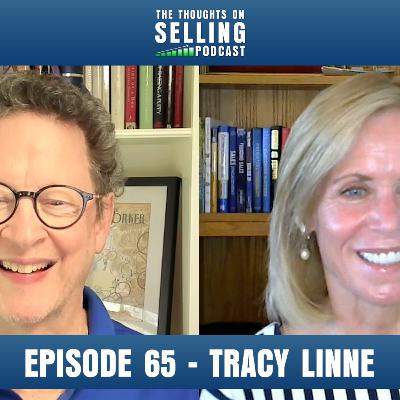
Tracy Linne, an experienced sales leader and strategist, joins me for a powerful conversation on the intersection of leadership, clarity, and sales performance for this episode of the Thoughts on Selling podcast.Tracy emphasizes the role of leaders in shaping not just strategy but belief within teams. Our discussion covers the importance of creating clarity in complex environments, the necessity of building trust as the foundation for growth, and why adaptability is a hallmark of modern sales leadership.Key insights include:Sales as an energy exchange. Leaders must embody the inspiration they want their teams to deliver.The power of simplicity. Clear direction removes friction and accelerates execution.Trust as a multiplier. High-trust environments drive accountability, creativity, and resilience.Leadership by example. The behaviors modeled by leaders set the cultural tone.This episode is particularly relevant for sales executives, revenue leaders, and anyone navigating the challenges of leading high-performing teams in dynamic markets.🎧 Tune in and discover how Tracy’s insights can sharpen your leadership approach.#salesstrategy #leadership #salesenablement #growthmindset #thoughtsonselling
For this episode I’m joined by Vance Morris—a guy whose journey goes from rock bands to Disney to running premium home services, and now helping businesses “Disney-fy” their customer experience. And let me tell you, the parallels to sales are everywhere.If you’re in sales and think “customer experience” doesn’t apply to you—this episode will change your mind.✅ Systems Create Freedom… and Room for DelightAt Disney, every detail is scripted and systematized so cast members can focus on the magic. It’s the same in sales: if you’ve got your basics dialed in—your research, your process, your CRM—you’re free to actually connect with buyers and deliver value instead of scrambling.✅ First and Last Touches Make or Break YouDisney obsesses over the first impression (parking, music, greetings) and the final moment (fireworks). As salespeople, our first touch is the brand experience. Whether it’s an email, call, or meeting, buyers decide quickly whether they trust us—or not. And how we end a conversation matters just as much.✅ Experiences Beat TransactionsVance’s carpet cleaning business sends a $5 gift box to every customer—just a small delight that led to a 26% increase in higher-tier sales. In sales, it might be a thoughtful follow-up, a handwritten note, or sending a “lumpy mail” package that stands out. It’s about making buyers say: “These people are different.”✅ Don’t Race to the BottomSalespeople who lead with discounts or lowest price become commodities. Vance urges businesses to charge for the experience they deliver. In sales, we need to sell on value, not price—and confidently walk away from bad deals.✅ Retention > AcquisitionIt costs Vance $135 to get a new customer, but only $22 a year to keep one. Salespeople too often chase new logos and forget that existing customers are way more profitable. Delight your customers, and they’ll stay—and buy more.✅ Delight = RevenueDisney servers giving FastPasses to stressed-out families is a perfect metaphor for sales: solve problems proactively, even ones that “aren’t your department.” It builds loyalty, trust, and bigger deals.We also dig into:Creative ways to stand out (cowbells, coffee mailers, even rubber feet for “getting a foot in the door”)Why salespeople should never be boringWhy “what would Grandma do?” might be the best sales strategy everThe real meaning of primacy and recency in sales conversationsWhy you should never assume buyers think like you doBottom line: As salespeople, we’re in the experience business. Every touchpoint is your chance to create delight—and separate yourself from the crowd.Get more from Vance:→ Grab his free guide: 52 Ways to Wow Without Breaking the Bank→ Check out his business and Disney bootcamps: deliverservicenow.comThanks, Vance, for an awesome conversation that’s pure gold for anyone selling anything!#Sales #CustomerExperience #RevenueGrowth #DisneySecrets #ThoughtsOnSelling
This episode was an absolute blast. I’m joined by Guy Rubin, CEO of Ebsta, who brings not just revenue intelligence expertise—but also a love of physics, football (the British kind), and skiing—to the conversation.We talk about the problem that’s plagued sales teams for decades: data that’s incomplete, inaccurate, or invisible. Guy shares how Ebsta evolved from solving Salesforce data issues into building a revenue intelligence platform that helps companies truly understand what’s driving wins—and where deals stall.Some of the big takeaways from our chat:✅ Your CRM isn’t the whole truth. Email, calendars, and “hidden” stakeholder interactions hold critical data about deals. Mining that signals where opportunities are real—and where they’re just wishful thinking.✅ Sales is the last department to get truly data-driven. Imagine marketing running on gut feel—it’s unthinkable. Sales orgs need to catch up.✅ B and C players can level up. Guy makes a strong case that coaching and data insights—not just “cutting the bottom third”—can help more reps replicate A-player behavior.✅ Pipeline inspection needs consistency AND context. It’s not enough to follow a checklist; you need to tie activities and engagement to outcomes you can actually prove.✅ Discovery is co-creation. We both rant (a bit) about how discovery is more than just running through questions. It’s a collaborative process that evolves throughout the deal.✅ Retention > new logos (sometimes). Ebsta’s data shows that in B2B SaaS, existing customers generated more new revenue than new logos last year. The key? C-level engagement during QBRs.We geek out about pipeline forecasting, coaching, the role of RevOps, and why “happy ears” still kill deals. Guy also shares fascinating benchmarks—like how engaging six stakeholders (including finance and a C-level exec) in stage two of a deal can nearly triple win rates.Guy’s message is clear: Sales can (and must) become data-driven if we want predictable, scalable growth.Check it out—and let me know which insights resonate with you most!#sales #revenuestrategy #salescoaching #salesenablement #revenueintelligence #thoughtsonselling
On this episode of Thoughts on Selling, I sit down with Jackie Retig, a passionate sales enablement leader and COO at EnableWorks. Jackie recently made the leap into entrepreneurship after years in the tech space, and she brings a grounded, practical perspective to what it really takes to build consistent, scalable sales teams.We get into why enablement is more than just onboarding and training—it's about creating the conditions for consistency, repeatability, and predictability in your sales org. Jackie and I talk about the transformation that comes from good enablement, how to help reps lean in and grow, and why the founder-led sales playbook doesn’t scale.We also dive into:Why enablement is finally being seen as a force multiplier by CROs and VPs of SalesHow tribal knowledge is great—but institutional knowledge winsWhat makes discovery truly impactful (hint: it’s not about checking boxes)Why AI is an assist—not a substitute—for great sellingThe power of deliberate practice and role play in building sales muscleKey takeaways:🎯 Consistency, repeatability, and predictability are the north stars of effective enablement.🔁 Discovery isn’t a stage—it’s a mindset. Great sellers co-create value throughout the sales process.⚙️ AI can streamline the busywork, but insight and connection still require the human touch.💡 Sales enablement isn’t just tactical—it’s transformational when tied to business outcomes and measured impact.Whether you're in enablement, sales leadership, or building out your first team, Jackie’s insights on modernizing and scaling sales efforts are well worth your time.
In this episode of Thoughts on Selling, I sit down with Borja Cuan, co-founder of Four15 Digital, to talk all things demand gen, agency life, and what it takes to deliver results—not just leads. Borja's been in the digital marketing game since the late '90s, and his perspective on execution, transparency, and the importance of asking the right questions is both refreshing and, frankly, necessary in today’s B2B landscape.We dig into the realities of running a growth agency in a high-pressure environment, including the need to go deep with clients—not just generate leads and toss them over the fence. Borja shares how they push for real alignment and results, why communication is everything, and how referrals and transparency build trust in an industry plagued by skepticism.We also talk about the importance of recognizing client pressure, being honest about what’s working (and what’s not), and how to keep your team focused on delivering high-quality outcomes every single time.Oh, and we had some laughs too. That’s always part of the plan.Execution is everything. Tools and platforms are accessible to all—it's what you do with them that sets you apart.Leads ≠ Results. Agencies need to care about what happens after the lead is generated.Communication wins. Weekly check-ins, note-takers, action items—it's the small things that keep relationships strong.Referrals help, but trust is earned. Even warm intros come with skepticism. Be ready to prove yourself.Curiosity matters. Ask why something’s working. Or not. Dig deep into the data and the client's goals.Push back (respectfully). If a client’s idea isn’t the best for their business, say so.Ask your clients: What are we not doing today that you wish we were?Get clear on what success looks like—then document it, track it, and revisit it often.Keep your "house" (aka accounts and campaigns) clean—small details build (or break) trust.Set up a regular client health score review—don’t assume silence means satisfaction.Don't just celebrate wins—use them to reinforce value and deepen the relationship.🔑 Key Takeaways✅ Action Items

Comments

Download from Google Play

Download from App Store
 United States