


 Claim Ownership
The Peel with Turner Novak
Subscribed: 16Played: 480
Subscribe

© Turner Novak
Description
Exploring the world’s greatest startup stories.
Get a behind the scenes look into the founding stories of your favorite companies. Learn how the industries they operate in actually work, and learn playbooks and tactics you can use to launch and scale your own business.
Get a behind the scenes look into the founding stories of your favorite companies. Learn how the industries they operate in actually work, and learn playbooks and tactics you can use to launch and scale your own business.
127 Episodes
Reverse

Eoghan McCabe is the Co-founder and CEO of Intercom, building Fin.ai, the AI customer service company.This was an extremely candid, two hour conversation going inside every detail of how Intercom was the first late stage software company to successfully re-architect itself to be AI-native.Intercom just announced they’ve built their own customer service-focused AI models, and Eoghan explains why most software companies will have to do the same.We also talk through the lessons he learned coming back to run Intercom in 2022 after stepping back in 2020, why many AI companies have strong negative gross margins despite the narrative, how Intercom designed AI’s first outcome-based pricing model, the challenges of buying AI software today, the importance of brand when building new products, and we get in the wayback machine, talking through the pain raising Intercom’s initial million dollar Seed round, and how venture capital has changed since then.Thank you to Eoghan’s Co-founder Des Traynor for helping me brainstorm topics for the conversation.Special thanks to Ramp for supporting this episode. It's the corporate card and expense management platform used by over 40,000 companies, like Shopify, CBRE and Stripe. Time is money. Save both with Ramp. Get $250 for signing-up here: https://ramp.com/ThePeelTimestamps:(4:18) We’re at peak SaaS(9:11) Inside early days of Intercom’s turnaround(16:43) AI will beat humans at everything(21:17) Making trade-offs building AI products(24:25) Why Intercom trained their own AI models(28:33) Lessons from returning as CEO(34:19) Overcoming initial AI skepticism in 2022(40:02) Creating AI’s first outcome-based pricing(45:15) Intercom’s best-in-class gross margins(49:25) Why its so hard to buy AI software today(51:28) Unpacking AI’s negative gross margins(58:12) Being perfectly positioned for AI(1:09:47) Why AI products need their own brand(1:16:13) Founder CEOs vs Manager CEOs in AI(1:21:29) AI startup opportunities(1:24:57) Lessons running a team in Dublin and SF(1:28:25) How media has changed over time(1:37:32) Raising Intercom’s first $1 million Seed round(1:43:53) Why there are so many VC’s(1:47:38) Advice for investorsReferencedIntercom: https://www.intercom.com/Fin: https://fin.ai/Intercom Careers: https://www.intercom.com/careersEoghan’s website: https://eoghanmccabe.comIntercom’s first pitch deck: https://www.slideshare.net/slideshow/intercompitchdeckpdf/253317574Follow EoghanTwitter: https://x.com/eoghanLinkedIn: https://www.linkedin.com/in/eoghanmccabeFollow TurnerTwitter: https://twitter.com/TurnerNovakLinkedIn: https://www.linkedin.com/in/turnernovakSubscribe to my newsletter to get every episode + the transcript in your inbox every week: https://www.thespl.it/
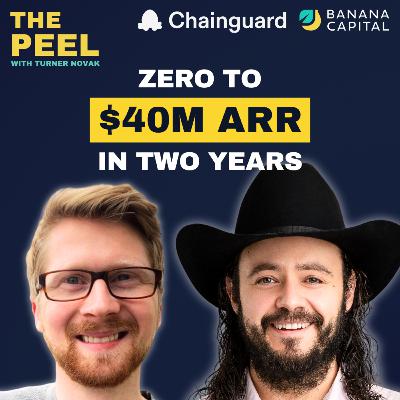
Dan Lorenc is the Co-founder and CEO of Chainguard, the safe source for open source.The internet runs on free, open source software. But as its risen in popularity, its become the latest attack point targeted by hackers and nation states.This conversation with Dan gets into the history of open source software, cloud computing, Linux, the software supply chain, how AI will impact it, and what the next big cyber attack will look like.Dan is an engineer, but he also loves sales and go-to-market. We unpack how Chainguard went from zero to 150 customers and a $40m ARR in two years.Chainguard just announced a $350 million Series D led by Kleiner and IVP, and Dan unpacks the round, plus shares his secret methodology for valuing the company.A big thank you to Dan’s Co-founder Kim Lewandowski, to Clay Fisher @ Spark, Bogomil Balkansky & Andrew Reed @ Sequoia, and Tom Loverro @ IVP for their help brainstorming topics for Dan.Thanks to Numeral for supporting this episode, the end-to-end platform for sales tax and compliance. Try it here: https://bit.ly/NumeralThePeelTimestamps:(3:26) A safe source for open source(4:57) The software supply chain(7:19) Can you trust open source code with contributors in Russia?(9:43) Malware attack that almost took down the entire internet(12:40) What the next big cyber attack will look like(15:12) How will AI impact the software supply chain(17:53) The history of cloud computing(21:42) Why all cloud computing runs on Linux(23:16) How Linux + Linux distros work(29:28) Automating open source security(32:43) Chainguard roadmap: Libraries and VMs(36:40) Focusing on FedRAMP(42:44) Impact of DOGE(44:06) Zero to $40m ARR in two years(45:40) Learning to love sales as a technical founder(47:24) Lessons from Frank Slootman(51:15) How to create urgency in sales(53:16) How to build a sales team(58:23) Hiring Ryan Carlson from Wiz & Okta(1:01:45) Inside Chainguard’s $350m Series D(1:07:41) Vibe coding + Dan’s software stack(1:09:51) Cutting his hair in front of the entire company(1:10:27) Wearing a different suit to each board meeting(1:12:32) Bogomil, world’s best SDRReferencedCheck out Chainguard: https://www.chainguard.dev/Jobs at Chainguard: https://www.chainguard.dev/careersPrior episode with Dan: https://www.youtube.com/watch?v=AC4cOJ9n_Z8Linux Origin Email: https://www.reddit.com/r/linux/comments/mmmlh3/linux_has_a_interested_history_this_is_one_of/The Qualified Sales Leader: https://www.amazon.com/Qualified-Sales-Leader-Proven-Lessons/dp/0578895064Julius, AI data analysis: https://julius.ai/Claude Code: https://www.anthropic.com/claude-codeWorld’s best SDR: https://x.com/BogieBalkansky/status/19132697148828143502025 Chainguard Assemble Keynote: https://www.youtube.com/watch?v=adfU9LJg3I0Follow DanTwitter: https://x.com/lorenc_danLinkedIn: https://www.linkedin.com/in/danlorenc/Follow TurnerTwitter: https://twitter.com/TurnerNovakLinkedIn: https://www.linkedin.com/in/turnernovakSubscribe to my newsletter to get every episode + the transcript in your inbox every week: https://www.thespl.it/

Dug Song and Jon Oberheide are the co-founders of Duo Security.If you’ve never heard of Duo, it might be one of the most underrated software stories of all-time.Starting in 2010, they burned only $14 million to hit $100m in ARR, were acquired by Cisco for $2.35 billion in 2014, and now rumored to be doing over $1 billion in ARR inside Cisco 16 years later.We talk about how they built one of the most capital efficient SaaS companies ever from Ann Arbor, Michigan, and how their focus on the customer and company culture helped them win in a crowded cybersecurity market.We talk growing up in the early hacking culture of the 90s, why most security tools are painful to use, sizing their market, solving for non-consumption of a product, and how Duo flipped the model by designing for end users instead of security teams.We talk about staying in Michigan instead of moving to Silicon Valley, and why staying out of the tech bubble helped them execute.We break down the mechanics of scaling from zero to $100 million in ARR, everything they learned integrating with Cisco, and why more founders should build outside of San Francisco. A quick thank you ex-Duo employees Zack Urlocker, Ash Devata, and Katie Kilroy for their help brainstorming topics for the conversation.Try Numeral, the end-to-end platform for sales tax and compliance: [https://www.numeral.com](https://www.numeral.com/)Sign-up for Flex Elite with code TURNER, get $1,000: https://form.typeform.com/to/Rx9rTjFzTimestamps:(4:49) Meeting from Dug’s Wi-Fi honeypot(7:33) 90’s hacking culture and cybersecurity’s wild west(14:49) How the internet was born in Ann Arbor(18:58) Staying in Michigan instead of moving to Silicon Valley(31:20) Philosophy on leadership and team building(39:48) What makes a good engineering leader(44:01) Starting Duo to make security easier(45:22) Why most security products suck(48:36) How fixing account takeover became a $1B ARR company(59:10) TAM, competition, fixing the non-consumption of security(1:04:04) Being a radical advocate for the customer(1:08:35) Duo’s pizza sales play(1:12:45) Branding lessons from Anthropic, Tesla, Cliff Bar(1:17:47) When to say no to customers(1:21:27) Importance of culture when scaling(1:27:56) Duo’s role in uncovering the SolarWinds breach(1:31:29) Scaling to $100M ARR on $14M burned(1:39:30) Inside the $2.35B Cisco acquisition(1:44:02) What big companies get wrong about customers(1:51:53) Building Michigan’s startup ecosystemReferencedDuo Security: [https://duo.com](https://duo.com/)Cisco: [https://www.cisco.com](https://www.cisco.com/)University of Michigan: [https://umich.edu](https://umich.edu/)Follow DugTwitter: https://x.com/dugsongLinkedIn: https://www.linkedin.com/in/dugsongFollow JonLinkedIn: https://www.linkedin.com/in/jonoFollow TurnerTwitter: https://twitter.com/TurnerNovakLinkedIn: https://www.linkedin.com/in/turnernovakSubscribe to my newsletter to get every episode + the transcript in your inbox every week: https://www.thespl.it/

Jacqueline Cheong is the Co-founder and CEO of Artie.Artie moves data across your systems in real-time, and we talk about why that’s so important in the age of AI.It’s a lot harder than you’d think, as less than 5% of real-time data streaming projects are successful.I talked to a dozen people to prepare for this conversation, including Jared Friedman who worked with Jacqueline during YC, her sales coach Ras, and numerous Artie employees like A-nee-rud, Ryan, Sarah, Shangbing and Jacqueline’s co-founder Robin.We talk through how Robin built real-time data streaming at OpenDoor and Zendesk before they started Artie, and Jacqueline shares the sales playbook she learned going from hedge fund analyst to software CEO, including asking customers for their hardest problem and then solving it with the product.Artie just announced a $12 million Series A a few weeks before we published this episode. We talk about how they landed all of their early enterprise customers through cold outbound, how they structure and automate their prospecting with AI so they have no BDRs, and why they’re seeing customers switch to Artie even after building their own multi-million dollar real-time streaming projects in-house.I also asked Jacqueline what it’s like working with Standard Capital. They’re a new fund started by a group of YC partners, and it was fascinating to hear about the things they’ve borrowed from YC when investing at the Series A stage.Try Numeral, the end-to-end platform for sales tax and compliance: https://www.numeral.comSign-up for Flex Elite with code TURNER, get $1,000: https://form.typeform.com/to/Rx9rTjFzTimestamps:(4:08) Artie: Real-time data streaming(5:13) Why moving data is so hard(9:14) Evolution of data warehouses(12:47) AI needs real-time data(18:44) Build vs buy in data streaming(22:51) How to build in a crowded market(26:26) Early focus on a specific hard problem(30:33) Acquiring enterprise customers from cold emails(32:51) Onboarding their first customer with no UI(35:46) Solving compliance and implementation(38:50) How to automate internal engineering, marketing, and ops(44:01) Building an AI-powered GTM pipeline and motion(46:52) Add your customers on iMessage, Slack, Teams(53:00) Starting Artie to solve their own problem(59:25) Discovering YC through a friend(1:02:20) Everything Jacqueline learned about sales(1:06:29) How to improve your sales discovery calls(1:10:08) Inside Artie’s $12m Series A(1:16:44) What its like working with Standard Capital(1:22:59) Jacqueline’s favorite bookReferencedTry Artie: https://artie.comCareers at Artie: https://www.artie.com/careersClay: https://www.clay.comPodcast with Tommy @ Alloy: https://www.youtube.com/watch?v=e7i8Wxklu-YYCombinator: https://www.ycombinator.comStandard Capital: https://www.standardcap.comFounding Sales: https://www.foundingsales.comThe Score Takes Care of Itself: https://www.amazon.com/Score-Takes-Care-Itself-Philosophy/dp/1591843472Follow JacquelineTwitter: https://x.com/JacquelineSYC19LinkedIn: https://www.linkedin.com/in/jacqueline-cheongFollow TurnerTwitter: https://twitter.com/TurnerNovakLinkedIn: https://www.linkedin.com/in/turnernovakSubscribe to my newsletter to get every episode + the transcript in your inbox every week: https://www.thespl.it/
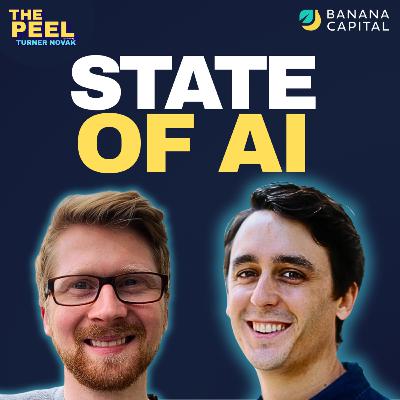
Nathan Benaich is the founder of Air Street Capital and author of the State of AI report. On its eighth year, the report is a year-long effort on the biggest things happening in AI, across research, industry, politics, and safety.This episode covers the biggest takeaways from the latest report, like the rise in reasoning, the surge in China’s open source models, where AI is working in practice, the rise of sovereign AI, where he thinks value will actually accrue over the long-term, if we’re in an AI bubble, and how he’s investing in AI today at Air Street.Thanks to Nico at Adjacent and Dan at Michigan for helping brainstorm topics for Nathan.Try Numeral, the end-to-end platform for sales tax and compliance: https://www.numeral.comSign-up for Flex Elite with code TURNER, get $1,000: https://form.typeform.com/to/Rx9rTjFzTimestamps:(3:39) State of AI 2025(6:22) Takeaway #1: Reasoning & tool calling(13:01) Takeaway #2: Rise of Chinese open source(15:25) Open vs closed source models(26:46) Takeaway #3: AI revenue is real(27:51) Takeaway #4: Sovereign AI(36:44) Are we in an AI bubble?(59:23) Starting Air Street Capital(1:05:18) Raising Fund 1(1:16:20) Air Street portfolio strategy(1:25:15) When and who Nathan decides to invest(1:35:04) How important are AI benchmarks?(1:39:31) When to train your own models(1:45:56) Rise of European defense tech(2:01:43) Nathan’s personal AI stack(2:07:32) Is niching down too risky?(2:16:12) Nadal vs FedererReferencedState of AI Report: https://www.stateof.aiThe Thinking Game Documentary: https://www.youtube.com/watch?v=d95J8yzvjbQV7: https://www.v7labs.comFollow NathanTwitter: https://x.com/nathanbenaichLinkedIn: https://www.linkedin.com/in/nathanbenaichFollow TurnerTwitter: https://twitter.com/TurnerNovakLinkedIn: https://www.linkedin.com/in/turnernovakSubscribe to my newsletter to get every episode + the transcript in your inbox every week: https://www.thespl.it/

Marcelo Lebre is the Co-founder and President of Remote, the payroll and international employment company.Remote is one of today's most underrated software companies. We get into why payroll is such a hard problem, why most of the industry still runs on spreadsheets, the edge cases of software meeting government, and a diagnosis of Europe’s regulation problem.We also talk through the journey trying 8 different startup ideas before Remote, how COVID changed the business overnight, and what he’s learned about building culture and running remote teams.Thanks to Gillian O’Brien, Villi Iltchev, Andreas Klinger, Masha Bucher, and Marcelo’s co-founder Job for helping brainstorm topics for this.Try Numeral, the end-to-end platform for sales tax and compliance: https://www.numeral.comSign-up for Flex Elite with code TURNER, get $1,000: https://form.typeform.com/to/Rx9rTjFzTimestamps:(3:22) Gaming with kids(6:05) Hundreds of millions in revenue in the most boring market(8:22) Payroll corporate spies(14:54) Why payroll tax is such a hard problem(19:46) Why tax is even more complicated outside the US(23:08) Legacy payroll still runs on manual spreadsheets(29:14) Remote’s unfair advantage in AI(31:40) Building the global payroll API that didn’t exist(38:06) Meeting his co-founder on a double date(42:04) Seven years of failed products before Remote(49:25) Launching Remote in 2019(52:39) Each year felt like a new apocalypse(59:25) Distributed teams must master async, document everything(1:02:42) Culture is what you tolerate(1:13:05) Europe's regulation problem and why it can't innovate(1:21:18) Why fundraising is so hard in Europe(1:28:23) Deleting spreadsheets to force automation(1:40:25) Burnout, health, fixing the system instead of grinding harder(1:47:57) Writing honestly about the hard parts of building companiesReferencedTry Remote: https://remote.com/Careers at Remote: https://remote.com/careersRemote Handbook: https://remotecom.notion.site/a3439c6ccaac4d5f8c7515c357345c11?v=8bb7f9be662f45da87ef4ab14a42be37The Toyota Way: https://www.amazon.com/Toyota-Way-Management-Principles-Manufacturer/dp/0071392319The Book of Five Rings: https://www.amazon.com/Book-Five-Rings-Miyamoto-Musashi/dp/1590309847Follow MarceloTwitter: https://x.com/marcelolebreLinkedIn: https://www.linkedin.com/in/marcelolebreFollow TurnerTwitter: https://twitter.com/TurnerNovakLinkedIn: https://www.linkedin.com/in/turnernovakSubscribe to my newsletter to get every episode + the transcript in your inbox every week: https://www.thespl.it/
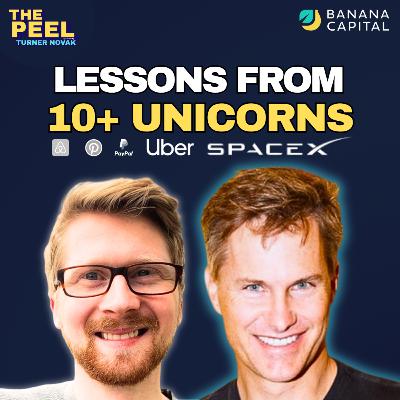
Kevin Hartz, Co-founder of A*, Eventbrite, Xoom, and Sauron.Kevin has been building and investing in technology companies for 30 years, and we talk about how the industry’s evolved, why he calls AI the Mother of All Bubbles, why we’re still early, and lessons today’s breakout AI companies can learn from those that survived the Dot Com Crash.Kevin is a big proponent of backing young founders. A significant percentage of his latest fund at A* is invested in teenagers, and he shares how he identifies outlier talent so early, from Seed investments in Airbnb, PayPal, and Pinterest, to many of today’s hottest AI companies.He also shares the insane story of investing 100% of the proceeds from his first startup into PayPal’s Seed round, how PayPal’s early fraud systems inspired Palantir, what he learned from the PayPal Mafia, from Peter Thiel, and what makes Founders Fund special.We also talk about how he and his wife recently had two babies, five months apart, using genome screening and surrogates.Thanks to Ramtin Naimi, Navya Gudimetla, and Bennett Siegel for helping brainstorm topics for the conversation.Try Numeral, the end-to-end platform for sales tax and compliance: https://www.numeral.comSign-up for Flex Elite with code TURNER, get $1,000: https://form.typeform.com/to/Rx9rTjFzTimestamps:(4:25) Power shift from VC’s to founders since the 90’s(9:08) AI is the mother of all bubbles(12:40) Why AI is still underhyped(14:10) What Kevin and A* are investing in today(16:02) Investing 100% of his first startups proceeds in PayPal’s Seed round(21:21) What made the PayPal Mafia special(23:37) Parallels between the 90’s and today(26:40) What makes Founders Fund special(35:07) How Palantir evolved from PayPal’s fraud models(39:06) Building Xoom on the PayPal API(43:38) Lessons between Kevin’s 1st and 2nd startups(46:52) Starting Eventbrite off early PayPal API app(51:51) Eventbrite’s hidden TAM challenge(53:49) Selling Eventbrite to Bending Spoons(54:59) Investing 20% of A* in teenage founders(1:02:33) Incubating Sauron, the home security company(1:08:44) Making breakfast for our kids(1:13:33) Having kids with genome screening and surrogates(1:20:31) Collecting art, how to get startedReferencedhttps://www.a-star.co/https://www.eventbrite.com/https://www.xoom.com/https://www.sauron.systems/https://www.orchidhealth.com/Setting the Table by Danny Meyer: https://www.amazon.com/Setting-Table-Transforming-Hospitality-Business/dp/006074276320% of fund in teenage founders: https://techcrunch.com/2025/10/18/this-top-vc-bet-close-to-20-of-his-fund-on-teenagers-heres-why/https://nypost.com/2025/12/14/us-news/xu-bo-chinese-billionaire-reportedly-sires-more-than-100-kids/Follow KevinTwitter: https://x.com/kevinhartzLinkedIn: https://www.linkedin.com/in/hartzFollow TurnerTwitter: https://twitter.com/TurnerNovakLinkedIn: https://www.linkedin.com/in/turnernovakSubscribe to my newsletter to get every episode + the transcript in your inbox every week: https://www.thespl.it/

Jason Calacanis is the host of the All-In Podcast, This Week in Startups, co-founder of the Launch Accelerator, and the “3rd or 4th investor in uber”.We go inside the origins of All-In, how they decide what to talk about each week, and if Jason thinks it helped swing the election.We also talk lesson from starting 7 media companies over the past three decades, what he's learned from studying the world's best interviewers, joining Sequoia’s first scout program, his investing strategy at Launch, the story of being the “3rd or 4th investor in Uber", what people underestimate about Elon, and what it was like inside the Twitter buyout in 2022.Thank you to Austin Petersmith for helping brainstorming topics for the conversation.Thanks to Numeral for supporting this episode. It’s the end-to-end platform for sales tax and compliance. Try it here: https://www.numeral.comTimestamps:(3:34) Interviewing lessons from Oprah, Charlie Rose(6:48) How to ask good questions(12:20) Jason’s favorite upcoming podcasters(17:57) Starting 7 media companies(22:50) How he'd start a new media company today(27:56) In-person experiences, “Bang Bang” in Japan(32:44) Vinyl bars, smartphones, mental health(38:41) Origin of the All-In Podcast(42:58) All-In’s influence on the 2024 Election(46:58) Why All-In got so political(52:35) Media lessons from Trump(55:01) Joining Sequoia’s very first scout program(57:55) Jason’s VC investing strategy(1:03:55) How Launch competes with other accelerators(1:08:46) Fundraising is a numbers game(1:13:06) Investing in Uber and Robinhood Seed rounds(1:18:31) Origin of “3rd or 4th investor in Uber” meme(1:20:57) How Jason got the first Model S(1:26:19) What people underestimate about Elon(1:27:37) Inside the Twitter takeover(1:31:44) Career advice for young people(1:35:22) Jason’s experience taking GLP-1’s(1:40:05) How All-in picks topics each weekReferencedHowie: https://howie.com/All-In Podcast: https://allin.com/Bret Easton Ellis (Podcast): https://www.breteastonellis.com/podcastRed Scare (Podcast): https://en.wikipedia.org/wiki/Red_Scare_(podcast)Preet Berrara (Podcast): https://cafe.com/stay-tuned-podcast/Adam Friedland Show: https://www.youtube.com/c/TheAdamFriedlandShowThe Insider (Movie): https://www.imdb.com/title/tt0140352/Launch: https://www.launch.co/Ro: https://ro.co/Follow JasonTwitter: https://twitter.com/JasonLinkedIn: https://www.linkedin.com/in/jasoncalacanis/Follow TurnerTwitter: https://twitter.com/TurnerNovakLinkedIn: https://www.linkedin.com/in/turnernovakSubscribe to my newsletter to get every episode + the transcript in your inbox every week: https://www.thespl.it
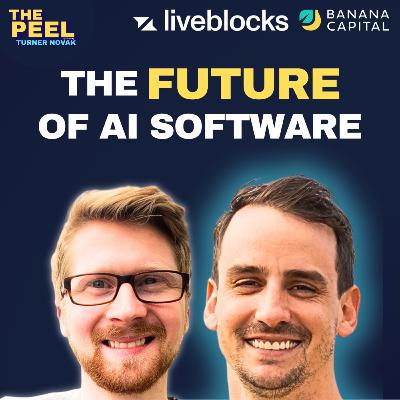
Steven Fabre is the Co-founder and CEO of Liveblocks.Liveblocks builds ready-made AI copilots and collaboration for your product, and Steven is one of my smartest friends on how people are actually using AI on a day-to-day basis.We talk about what most people get wrong when trying to build AI-native software, how to treat it as more than just a copilot that sits on top of your product, and what he’s learned about how large enterprises are actually buying and using AI right now.We also talk through Liveblocks journey of evolving from real-time human collaboration components into one that also incorporates AI, what he’s learned going from a designer to a CEO, and how he rebuilt the company after his co-founder stepped away.Thank you to Numeral for supporting this episode. It’s the end-to-end platform for sales tax and compliance. Try it here: https://www.numeral.comTimestamps:(2:17) Liveblocks: Infrastructure for people + AI(6:08) Wrong ways to add AI to software(8:05) Why humans and AI must collaborate(12:35) How AI will change software UI(18:58) AI search optimization(26:20) How to get #1 on Product Hunt(32:33) Liveblocks 1.0 to 3.0 evolution(36:40) Why collaboration software is so hard(38:38) How customers use Liveblocks(42:36) Hiring a coach to get better at sales(47:07) Steven’s biggest enterprise sales mistakes(50:28) How AI changes GTM and funding milestones(57:57) Going from a designer to a CEO(1:01:06) How Liveblocks first started(1:04:56) Importance of design in company building(1:06:51) Learning to become a CEO(1:12:29) When his co-founder left 5 years in(1:15:49) Becoming stronger hiring a new Head of Engineering(1:22:10) Remote culture: what doesn’t work(1:24:08) Remote culture: what does work(1:26:47) Importance of autonomy on remote teams(1:28:05) Most underrated basketball players(1:33:38) ACL injury that kickstarted his first businessReferencedLiveblocks: https://liveblocks.io/Careers at Liveblocks: https://join.team/liveblocksFollow StevenTwitter: https://x.com/stevenfabreLinkedIn: https://www.linkedin.com/in/steven-fabre-5510bb38Follow TurnerTwitter: https://twitter.com/TurnerNovakLinkedIn: https://www.linkedin.com/in/turnernovakSubscribe to my newsletter to get every episode + the transcript in your inbox every week: https://www.thespl.it/

Zaid Rahman is the Co-founder and CEO of Flex.Flex is the AI native private bank for high net worth middle market business owners, headlined by it’s 60-day interest free credit card for businesses.Flex just announced their $60 million Series B, as well as their new consumer product, Flex Elite, which pits it head-to-head against Amex for the consumer spending of some of the wealthiest people in America. It's products now spans from when a business owner first generates revenue, all the way to when they spend that cash personally.This conversation goes inside how the company scaled from zero to a $70 million revenue run rate in two years, and everything Zaid learned along the way.Thank you to Eric Bahn at Hustle Fund, Jeff Morris Jr. at Chapter One, Andrew Ziperski at General Catalyst, and Jared Thomas and Ewan Steel at Flex for helping brainstorming topics for the conversation.Timestamps:(1:44) Raising $60m to fix business finance(3:23) Flex Elite: Personal + Business banking(4:48) Jumbo shrimps: powering 40% of US payroll(9:16) The forgotten mid market business(14:01) “Flex fuels ambition”(16:08) How to serve entrepreneurs in middle America(22:58) Flex’s 5-pillar product suite(27:12) Starting Flex to help construction companies(31:51) Using AI to lend to mid-market customers(40:22) Power of multi-product in fintech(43:53) Zero to $3B in volume in 18 months(44:43) Raising a bear market Series A in 2023(51:00) How referrals landed their first big customers(55:07) Flex’s playbook for 85% organic growth(1:01:15) Dissecting various accents(1:04:22) Building a quiet luxury brand(1:09:33) Importance of customer happiness(1:12:43) Why CEO’s should be the top sales person(1:13:58) Building lots of in-house software(1:24:33) PMF is like operating a popular restaurant(1:30:49) How to raise a debt facility(1:34:48) Recruiting is so crucial for startups(1:39:00) Why VC’s hate lending businesses(1:45:14) Underserved vs Underbanked in fintech(1:48:02) Why business owners want personal + business banking(1:54:49) Acquiring Maza, leaning in to M&A(2:02:53) Most fintech companies look the same(2:08:35) Founder group therapy with Eric at Hustle Fund(2:11:50) The Thiel Fellowship’s 10% unicorn hit rate(2:15:52) Lesson from the ruler of Dubai(2:19:24) Building Flex’s risk underwriting engine(2:26:58) Flex’s AI opportunityReferencedTry Flex: https://www.flex.oneCareers at Flex: https://jobs.lever.co/Flex/Basel III https://en.wikipedia.org/wiki/Basel_IIILinguistic TikTok account: https://www.tiktok.com/@zaydupreeLazy luxury: most worn shoes on private jets: https://www.wsj.com/style/fashion/lazy-luxury-sneakers-are-these-the-most-worn-shoes-on-private-jets-7801be30Follow ZaidTwitter: https://x.com/zaidrmnLinkedIn: https://www.linkedin.com/in/zaidrahmanFollow TurnerTwitter: https://twitter.com/TurnerNovakLinkedIn: https://www.linkedin.com/in/turnernovakSubscribe to my newsletter to get every episode + the transcript in your inbox every week: https://www.thespl.it/

Matteo Franceschetti is the Co-founder and CEO of Eight Sleep.Eight Sleep created one of the original breakout consumer health products in 2014, quietly building a business that’s raised over $300 million dollars and was reportedly free cash flow positive in the first half of 2025.But things weren’t always easy, and Matteo shares the challenges of starting a hardware company, why hardware has stronger moats, and the fundraising mindset he adopted that eventually got Khosla Ventures and Founders Fund to invest.We also get into the importance of sleep, how the company’s Sleep Butler uses AI to help you sleep better, and the big opportunity building more consumer health products.Thanks to Numeral for supporting this episode. It’s the end-to-end platform for sales tax and compliance. Try it here: https://www.numeral.comTimestamps:(2:18) Three pillars of health: sleep, nutrition, fitness(4:02) Creating a sleep routine(6:59) Importance of body temperature in sleep(8:43) How Eight Sleep works(12:14) Using AI to help you sleep(18:35) The AWS outage(24:12) It’s too hard to build in Europe(28:09) Why hardware has stronger moats(32:23) How to fundraise for a hardware company(35:30) The opportunity in Sleep tech(38:43) Hiring is easy when you have a mission(40:37) How to fight jet lag(43:03) Opportunities in women’s health(45:54) Evolving from single purchase to subscription model(47:12) Matteo’s personal health stack(49:41) Racing sports carsReferencedEight Sleep: https://www.eightsleep.com/Compliant VC Meme Account: https://x.com/compliantvcFollow MatteoTwitter: https://x.com/m_franceschettiLinkedIn: https://www.linkedin.com/in/matteofranceschetti/Follow TurnerTwitter: https://twitter.com/TurnerNovakLinkedIn: https://www.linkedin.com/in/turnernovakSubscribe to my newsletter to get every episode + the transcript in your inbox every week: https://www.thespl.it/

Rahul Vohra is the Founder and CEO of Superhuman Mail.Rahul sold his company to Grammarly in July of 2025, which had just acquired Coda in 2024. Following the acquisitions, the combined companies rebranded to Superhuman in October of 2025.And it’s quietly one of the most underrated businesses that no one is talking about, with over $700 million ARR and 40 million Daily Active Users. Grammarly spent 15+ years building integrations with over a million other products, that they’re now layering more AI products on top of.We talk about Rahul’s journey building Superhuman, go inside the acquisition, all the lessons he’s learned from selling two companies, why you should design your product like a video game, and we also re-visit his famous quantitative guide to finding PMF.Thanks to Todd Goldberg, Ed Sim, Shomik Ghosh, Ryan Hoover, and Rahul’s brother Gaurav Vohra for helping brainstorm topics for this conversation.Thank you to Hanover Park for supporting this episode! Upgrade your fund admin to the 21st century https://www.hanoverpark.com/TurnerTimestamps:(2:42) Inside the Superhuman acquisition(11:09) Grammarly: $700M ARR, 40M DAUs(18:53) How to sequence your product roadmap(24:43) Vision for the new Superhuman(32:43) Build your product like a video game(38:24) Designing Karamja island in Runescape(41:10) Build products like toys and games(44:53) Starting a Machine Learning PhD in 2006(48:49) Dropping out to start his first company(50:47) Rapportive’s crazy accidental launch(57:56) Meeting Superhuman co-founders(1:02:17) Being 1 of 20 to access LinkedIn’s API(1:06:38) Almost getting acquired by LinkedIn(1:10:32) Nearly dieing, getting acquired with 2 weeks of runway(1:20:08) Diligence from VCs vs Acquirers(1:26:37) Rahul’s quantitative framework for PMF(1:30:45) How to build an enduring brand(1:31:51) Rahul’s AI-powered productivity stack(1:35:01) Todd and Rahul’s angel fund(1:36:45) We need more solo foundersReferencedSuperhuman: https://www.superhuman.comGrammarly: https://www.grammarly.comHigh Resolution Fundraising: https://paulgraham.com/hiresfund.htmlHigh Resolution Fundraising: https://paulgraham.com/hiresfund.htmlSuperhuman Quantitative Framework for Finding PMF: https://review.firstround.com/how-superhuman-built-an-engine-to-find-product-market-fit/Whisper Flow: https://wisprflow.aiFollow RahulTwitter: https://x.com/rahulvohraLinkedIn: https://www.linkedin.com/in/rahulvohra/Follow TurnerTwitter: https://twitter.com/TurnerNovakLinkedIn: https://www.linkedin.com/in/turnernovakSubscribe to my newsletter to get every episode + the transcript in your inbox every week: https://www.thespl.it/

Will Gaybrick is the President of Technology and Business at Stripe.Stripe builds financial infrastructure for the internet, and if you’ve ever purchased a product online, you’ve probably used Stripe.We talk about what Stripe’s doing in crypto and stablecoins, how AI is changing commerce and payments, how they’re thinking about going public, how they build products internally, and interesting data they’re seeing around AI-native companies, like how they’re growing 3.5x faster than SaaS companies.Thank you to Claire Hughes Johnson, Josh Kushner, and Cosmin Nicolaescu for help brainstorming topics for the conversation.Thank you to Numeral and Amplitude for sponsoring this episode.Numeral: The end-to-end platform for sales tax and compliance. Try it here: https://www.numeral.comAmplitude: Listen to users at scale with AI https://www.amplitude.com/AI-FeedbackTimestamps:2:42 Will’s promotion5:29 Build vs Buy in AI6:39 Inside the Bridge acquisition8:54 Stripe’s stablecoin strategy11:20 Why building Stripe is so complicated13:22 How Stripe builds new products18:29 AI companies growing 3.5x faster than SaaS22:58 New fraud vectors in AI businesses25:19 Agentic commerce in ChatGPT29:34 Building modular products34:05 How Stripe uses AI internally42:12 Building the first payments foundation model48:23 Link, Stripe’s 200M user consumer product56:52 Will Stripe ever IPO?59:14 Blurring of private and public companies1:03:39 Starting Hack Yale1:08:23 Joining Thrive’s $5 million Fund 11:12:30 Low margin businesses are underrated1:16:30 Joining Stripe as CFO1:21:59 How Stripe’s go-to-market has evolved1:25:56 Stripe’s margins1:29:52 Why financial services are so hard to use1:33:04 Lessons from Alan MulallyReferencedStripe: https://stripe.com/Careers at Stripe: https://stripe.com/jobs/searchFollow WillTwitter: https://x.com/gaybrickLinkedIn: https://www.linkedin.com/in/william-gaybrick-5730347Follow TurnerTwitter: https://twitter.com/TurnerNovakLinkedIn: https://www.linkedin.com/in/turnernovakSubscribe to my newsletter to get every episode + the transcript in your inbox every week: https://www.thespl.it/

Roger Ehrenberg is the Co-founder of Game Changers Ventures and IA Ventures.We talk about the current Seed stage venture environment, what he learned investing in sports teams, how COVID changed sports, what he’s investing in today, characteristics of the top founders, advice for emerging managers, and his real estate and consumer brand projects in Detroit.Thank you to Michael Kim, Jon Oberheide, Jesse Beyroutey, James Fitzgerald, Dan Feder, Sarah Smith, Marc Weisser, and Charles Hudson for help brainstorming topics for the conversation.Thank you to Hanover Park for supporting this episode. Upgrade to an AI-native fund admin at https://www.hanoverpark.com/TurnerTimestamps:3:45 Current Seed stage market7:17 Starting Game Changers to invest in sports 12:25 Investing in the Miami Marlins16:45 Investment opportunities in sports18:21 Tomorrow Golf League23:54 Investing in sports teams25:50 Business models in sports27:12 Importance of real estate development, gambling32:53 How COVID changed sports38:41 Clippers experimenting with cheap tickets & concessions41:51 Opportunities monetizing super fans46:51 Sports as an investable venture asset53:24 Great founders find big TAMs56:31 The desire to win58:09 Sending letters to break into Wall Street from Michigan1:02:38 Raising IA Ventures Fund 1 in 20091:07:58 Advice for emerging managers1:13:18 The Trade Desk’s three bridge rounds1:18:03 Lessons on recycling capital1:20:16 What it’s like working with your kids1:24:53 Brand Detroit1:29:14 Being world class at multiple disciplinesReferencedGame Changers Ventures: https://gamechangers.vcIA Ventures: https://www.iaventures.comEberg Capital: https://www.ebergcapital.comTGL Golf: https://tglgolf.comBrand Detroit: https://www.branddetroit.comFollow RogerTwitter: https://x.com/infoarbitrageLinkedIn: https://www.linkedin.com/in/rehrenbergFollow TurnerTwitter: https://twitter.com/TurnerNovakLinkedIn: https://www.linkedin.com/in/turnernovakSubscribe to my newsletter to get every episode + the transcript in your inbox every week: https://www.thespl.it/
Daksh Gupta is the Co-founder and CEO of Greptile, the AI code reviewer that understands your entire code base.Greptile just closed a $25M Series A led by Eric Vishria at Benchmark, and we get into their long and winding journey to build one of the fastest growing AI companies.Thanks to Suds at SF1 for helping brainstorm topics for the conversation.Thank you to Numeral and Hanover Park for sponsoring this episode.Numeral: The end-to-end platform for sales tax and compliance. Try it here: https://bit.ly/NumeralThePeelHanover Park: Modern, AI-native fund admin at https://www.hanoverpark.com/TurnerTimestamps:(3:15) Evolution of AI coding + code review(11:23) Coding will never be fully automated(18:07) Why you need a separate code reviewer(24:34) How eng teams adopting AI is changing(27:37) Why LLM costs will come down(31:54) Pricing AI products(35:27) Getting your team to adopt AI(38:17) How Daksh started the 996 discourse(42:10) Recruiting is a funnel, open roles are a product(49:19) Making an energy drink for programmers(51:19) Brainstorming marketing stunts(57:22) Don’t do hype marketing too early(59:41) Starting a band, hitting #14 on Spotify(1:06:35) Evolution of the startup meta(1:12:39) Starting Greptile in class at Georgia Tech(1:19:18) Moving to SF, getting into YC(1:23:44) Pivoting from codebase chat to code review(1:27:09) Crazy growth and mimetic desire(1:29:47) Pricing AI software(1:34:44) How to market developer tools(1:39:46) Greptile's fundraising journey(1:42:57) Why YC is worth the 7% dilution(1:46:39) Treat fundraising like datingReferencedGreptile: https://www.greptile.com/Careers at Greptile: https://www.greptile.com/careersMonetizing Innovation: https://www.amazon.com/Monetizing-Innovation-Companies-Design-Product/dp/1119240867Greptile Work Culture: https://www.greptile.com/blog/work-cultureEpisode with Adit @ Reducto: https://youtu.be/h98dLRJFHMMFollow DakshTwitter: https://x.com/dakshgupLinkedIn: https://www.linkedin.com/in/dakshg/Follow TurnerTwitter: https://twitter.com/TurnerNovakLinkedIn: https://www.linkedin.com/in/turnernovakSubscribe to my newsletter to get every episode + the transcript in your inbox every week: https://www.thespl.it/
Sign-up here to get weekly episodes + transcripts in your inbox: https://www.thespl.it/Adit Abraham is the Co-founder and CEO of Reducto. Reducto’s product takes PDFs and physical documents, and extracts all the data, just like a human would if they were reading it.At the time of recording, they’ve processed over 1 billion pages, grew 6x over the past five months, and are fresh off a $75 million Series B led by a16z. And Adit told me they’ve only burned $1 million of capital so far to get here.And the craziest part, Adit told me they’ve only burned $1 million of capital so far to get here.Anyone building an AI product probably sees Reducto as essential infrastructure. Our conversation gets into how they built the best product in the space, landing a Fortune 10 customer as a two-person startup, getting to $1 million in ARR within a few months, lessons doing founder led sales to over $5 million in ARR, and what the future of PDF’s, and human / computer data looks like.Thank you to Liz Wessel at First Round, Chetan Puttagunta at Benchmark, and Adel Wu at Reducto for helping brainstorm topics for Adit.Thank you to Numeral and Hanover Park for sponsoring this episode.Numeral: The end-to-end platform for sales tax and compliance. Try it here: https://bit.ly/NumeralThePeelHanover Park: Modern, AI-native fund admin at https://www.hanoverpark.com/TurnerTimestamps:(3:35) Reading unstructured human data(10:44) Growing 5x in four moths(12:38) Insurance, healthcare, legal, logistics(19:13) Where LLM’s still struggle(28:23) Starting Reducto from a blog post during YC(32:01) Landing a Fortune 10 customer with two people(35:48) Limiting the product and growth early on(40:57) Getting an MIT professor fired(43:50) How to avoid pivot hell(49:00) $108M from First Round, Benchmark, a16z(51:48) Chetan convincing them to raise a Series A(55:50) Raising a Series B in 48 hours(59:36) Redeye flight to hire the 1st AI researcher(1:05:42) Lessons hitting $5m ARR with founder-led sales(1:13:09) Staying on top of changes in AI modelsReferenced:https://reducto.aihttps://reducto.ai/careersFollow AditTwitter: https://x.com/aditabrmLinkedIn: https://www.linkedin.com/in/aditabrahamFollow TurnerTwitter: https://twitter.com/TurnerNovakLinkedIn: https://www.linkedin.com/in/turnernovakSign-up here to get weekly episodes + transcripts in your inbox: https://www.thespl.it/

Erik Bernhardsson is the Co-founder and CEO of Modal, building high-performance AI infrastructure.We talk about building what is essentially a new cloud provider, created from the ground up, optimized for AI. We also talk about what actually happened with the great GPU shortage, how Modal fixes the inference problem in AI, and why he thinks AI will lead to 10x more developers.He also shares lessons on culture from joining Spotify as the 40th employee, treating hiring like a prediction problem, what most people get wrong working with early customers, why more people should start companies in their 30’s and 40’s, and reflections on fundraising in a hot market.Thank you to Tim Chen at Essence Venture Capital and Erik’s Co-founder Akshat for their help brainstorming topics for this conversation.Thank you to Meow and Hanover Park for supporting this episode.Meow: Get free bookkeeping for your startup at https://www.meow.comHanover Park: Modern, AI-native fund admin at https://www.hanoverpark.com/TurnerTimestamps:(4:26) Modal: AI-native infrastructure(9:02) Why its so hard to get GPU’s(15:00) Hitting PMF with AI generated media(20:37) Competing in IOI competitions(23:09) 40th employee at Spotify(27:17) Lessons from Spotify(31:17) Starting Better[dot]com(34:05) Treating hiring like a prediction problem(36:12) Erik’s favorite interview question(39:07) Sales + common design partner mistakes(42:02) Startups should solve hard problems(44:05) Evolution of Modal’s product over time(50:15) Rise in importance of inference in AI(52:07) AI development post-GPU scarcity(58:51) Building a brand in dev tools(1:04:31) Fundraising from Seed to Series B(1:07:42) More 30+ year old’s should start companies(1:10:00) Reducing developer tax, increasing productivity(1:20:37) Why Erik’s bullish and bearish on AI(1:26:17) Bubbles, downsides to inappropriate valuations(1:34:58) High CO2 levels make you dumb(1:37:38) Difference between US and European startupsReferencedModal: https://modal.comCareers at Modal: https://jobs.ashbyhq.com/modalSuno: https://suno.comPlanet Scale: https://planetscale.comHow to hire smarter than the market: https://erikbern.com/2020/01/13/how-to-hire-smarter-than-the-market-a-toy-modelInterviewing is a noisy prediction problem: https://erikbern.com/2018/05/02/interviewing-is-a-noisy-prediction-problemCloud in 2030: https://erikbern.com/2021/11/30/storm-in-the-stratosphere-how-the-cloud-will-be-reshuffledFollow ErikTwitter: https://x.com/bernhardssonLinkedIn: https://www.linkedin.com/in/erikbernFollow TurnerTwitter: https://twitter.com/TurnerNovakLinkedIn: https://www.linkedin.com/in/turnernovakSubscribe to my newsletter to get every episode + the transcript in your inbox every week: https://www.thespl.it/

Austin Petersmith is the Co-founder and CEO of Howie, the AI secretary.We talk about why AI assistants are so hard to build, why they decided to build Howie super narrow, and everything that went into their brand, name, and viral launch.Thank you to Adam D’Augelli, Sophia Amoruso and Alex Cohen for help brainstorming topics for the conversation.Thank you to Hanover Park for supporting this episode. Try the modern, AI-native fund admin at https://www.hanoverpark.com/TurnerTimestamps:(3:35) Howie: The AI Secretary(6:08) Why AI assistants are so hard to build(16:19) Why Howie started in email(20:49) Adding a human in the loop(30:48) AI software vs AI-powered humans(36:21) How a meme inspired Howie(39:29) Inside the making of Howie’s launch video(44:15) Howie’s viral launch video + Discussion(53:47) Designing the brand(1:01:37) Long-term opportunity and roadmap(1:07:53) Working for Jason Calacanis(1:12:00) Jason's media lessons(1:16:51) Getting Howie's first users(1:19:35) Pitch deck strategy that raised $6m(1:24:09) The mistake of optimizing for growth too soon(1:29:48) Building an AI company outside of SF(1:33:13) Being Superhuman’s 1st customer, Mercury’s 3rdReferencedTry Howie: https://howie.com/Jobs at Howie: https://app.dover.com/jobs/howieHowie Dewitt Meme: https://knowyourmeme.com/memes/howie-dewittNewKid: https://newkid.services/Follow AustinTwitter: https://x.com/awwstnLinkedIn: https://www.linkedin.com/in/awwstnFollow TurnerTwitter: https://twitter.com/TurnerNovakLinkedIn: https://www.linkedin.com/in/turnernovakSubscribe to my newsletter to get every episode + the transcript in your inbox every week: https://www.thespl.it/

Chris Frantz is the Co-founder and CEO of Loops, the email platform for software companies.We get into why sending emails is still a big problem, his hilariously simple framework for building products, getting in to YC with a last minute application, and why they skipped raising a Series A.We also talk through Chris decade of working in marketing, like when to lean into PLG vs Sales vs hype led growth, early stunts they did to get their first users, why they do no marketing now, and why Loops’ customer support team is all engineers.Thanks to Ramp for supporting this episode. It's the corporate card and expense management platform used by over 40,000 companies, like Shopify, CBRE and Stripe. Time is money. Save both with Ramp. Get $250 for signing-up here: https://ramp.com/ThePeelTry Hanover Park - the modern, AI-native fund admin https://www.hanoverpark.com/TurnerTimestamps:(4:37) Email for software companies(8:28) Why email is a big deal(14:05) The future of email(17:00) Product vs Sales vs Hype led growth(24:33) Coming up with the idea for Loops(29:36) Building one of the first GPT wrappers in 2020(34:34) Lessons selling his first company(37:13) Doing their YC app in 10 minutes(40:53) Avoiding VC’s who add value(46:58) Skipping a Series A(51:37) Building in stealth for 18 months(53:21) Marketing stunts to get the first waitlist sign-ups(58:44) Four step cadence of building Loops(1:01:58) Personally onboarding every new customer(1:04:03) Balancing 996 with family(1:11:11) Cleaning wasp nests with a shop vacReferencedLoops: https://loops.soCareers at Loops: https://loops.so/careersCuriosity: https://curiositystream.comSnazzy AI / Unbounce: https://unbounce.com/product/smart-copyAtlas customer support: https://atlas.soFollow ChrisTwitter: https://x.com/frantzfriesLinkedIn: https://www.linkedin.com/in/ctfrantzFollow TurnerTwitter: https://twitter.com/TurnerNovakLinkedIn: https://www.linkedin.com/in/turnernovakSubscribe to my newsletter to get every episode + the transcript in your inbox every week: https://www.thespl.it/
Dan Gray is the Head of Insights at Equidam.If you’re a tech and investing nerd like us, you’ll love this conversation. We cover everything Dan’s learned reading dozens of academic research papers on startups and venture capital, debunking many popular narratives of the industry.We talk about the dangers of pre-mature startup scaling, the importance of origination stage investing, the concept of startup catering and why so many startups look the same, and the role of mega funds play in the ecosystem.We also discuss what the data says about concentration vs diversification, what VC’s get wrong about pattern matching, and why pivoting is more valuable than you thinkThanks to Ramp for supporting this episode. It's the corporate card and expense management platform used by over 40,000 companies, like Shopify, CBRE and Stripe. Time is money. Save both with Ramp. Get $250 for signing-up here: https://ramp.com/ThePeelTry Harmonic - The startup discovery engine https://harmonic.ai/turnerTimestamps:(6:43) What’s the required rate of return in VC?(9:29) Venture capital needs new definitions(16:10) QSBS(18:23) Are we in an AI bubble?(24:07) Re-branding early and late stage venture(28:25) We need more origination stage capital(40:05) Survivorship bias in emerging manager outperformance(42:57) Incentives driving larger fund sizes(48:10) Raising overvalued rounds re-risks a startup(52:08) Startup catering: why all startups look alike(58:42) Are VC mega funds still an experiment?(1:08:06) Late stage VC is competing with PE(1:13:42) a16z’s Fund 1 strategy(1:18:18) How diversified should VC funds be?(1:25:06) Performance of Generalist vs Specialist firms(1:30:35) How to value a startup(1:40:58) Why VC firm location correlates to returns, but startup location does not(1:44:05) Founder background doesn’t predict success(1:48:27) Startups with one pivot are most successful(1:50:24) Premature scaling kills 70% of startups(1:54:47) Does mega fund model work for origination investing?(1:56:15) Value of Twitter and writing onlineReferenced Research PapersVenture Predation: https://papers.ssrn.com/sol3/papers.cfm?abstract_id=4437360Process Alpha: https://angelspan.com/process-alpha-how-to-construct-and-manage-optimized-venture-portfolios-joe-milam-journal-of-portfolio-management-august-2022/The Sunk Cost Fallacy in VC: https://www.sciencedirect.com/science/article/pii/S0929119924000518Predictably Bad Investments in VC: https://papers.ssrn.com/sol3/papers.cfm?abstract_id=4135861Startup Catering to Venture Capitalists: https://afajof.org/management/viewp.php?n=58968Premature Scaling: https://innovationfootprints.com/wp-content/uploads/2015/07/startup-genome-report-extra-on-premature-scaling.pdfReferenced BooksThe Otherland Tetrology: https://www.goodreads.com/series/43762-otherlandPermutation City: https://www.goodreads.com/book/show/156784.Permutation_City?from_search=true&from_srp=true&qid=lf7FuUR9se&rank=1Necromancer: https://www.goodreads.com/book/show/6088007-neuromancer?ref=nav_sb_ss_1_29Other Referenced ItemsQSBS changes: https://www.dwt.com/blogs/startup-law-blog/2025/07/qsbs-big-beautiful-bill-tax-code-upgradesMega funds and the great re-risking: https://nextview.vc/blog/megafunds-and-the-great-re-risking/Rex Woodbury’s post on hot companies: https://www.digitalnative.tech/p/the-taxi-cab-theory-of-venture-capitalThe VC Performance Paradox: https://www.linkedin.com/pulse/performance-paradox-venture-capital-dan-gray-2fqrePrior episodes mentionedDan Feder: https://youtu.be/_Ou6D9PLSBIMichael Dempsey: https://youtu.be/UzSbG6DL8CMSolugen: https://youtu.be/ofkNiB2nI3QFollow DanTwitter: https://x.com/credistickBlog: https://credistick.comFollow TurnerTwitter: https://twitter.com/TurnerNovakLinkedIn: https://www.linkedin.com/in/turnernovakSubscribe to my newsletter to get every episode + the transcript in your inbox every week: https://www.thespl.it/

Comments

Download from Google Play

Download from App Store
 United States