


 Claim Ownership
Leader to Leader
Subscribed: 2Played: 0
Subscribe

© Copyright 2023
Description
Candid conversations with healthcare’s brightest leaders.
On Leader to Leader, hospital lifer and Healthcare IT Leaders President Ben Hilmes, MHA, FACHE, holds insightful conversations with some of the brightest minds in both healthcare and tech. Learn from their successes (and failures) and take away insights to fuel your own personal leadership journey through the healthcare industry.
On Leader to Leader, hospital lifer and Healthcare IT Leaders President Ben Hilmes, MHA, FACHE, holds insightful conversations with some of the brightest minds in both healthcare and tech. Learn from their successes (and failures) and take away insights to fuel your own personal leadership journey through the healthcare industry.
32 Episodes
Reverse

How do you lead through change and uncertainty?Start with your mission and let it guide the way.For Michael Carr, Chief Information Officer at Health First, that clarity of purpose has kept the organization steady through leadership turnover, provider shortages, and a system-wide Epic implementation. In this episode, he shares how Health First’s community-first approach impacts their AI strategy and technological investments.Learn more about Healthcare IT Leaders.In this episode, you’ll learn:How to lead through turnover and organizational changeWhat innovation means in leadershipHow to apply AI in ways that support human careJump into the conversation:(00:00) Introducing Michael Carr, Chief Information Officer at Health First(01:31) Providing world-class healthcare to Brevard County(05:27) Epic implementation insights(09:23) How to navigate organizational change(11:52) Health First’s adoption of AI (15:43) Leadership lessons from the military
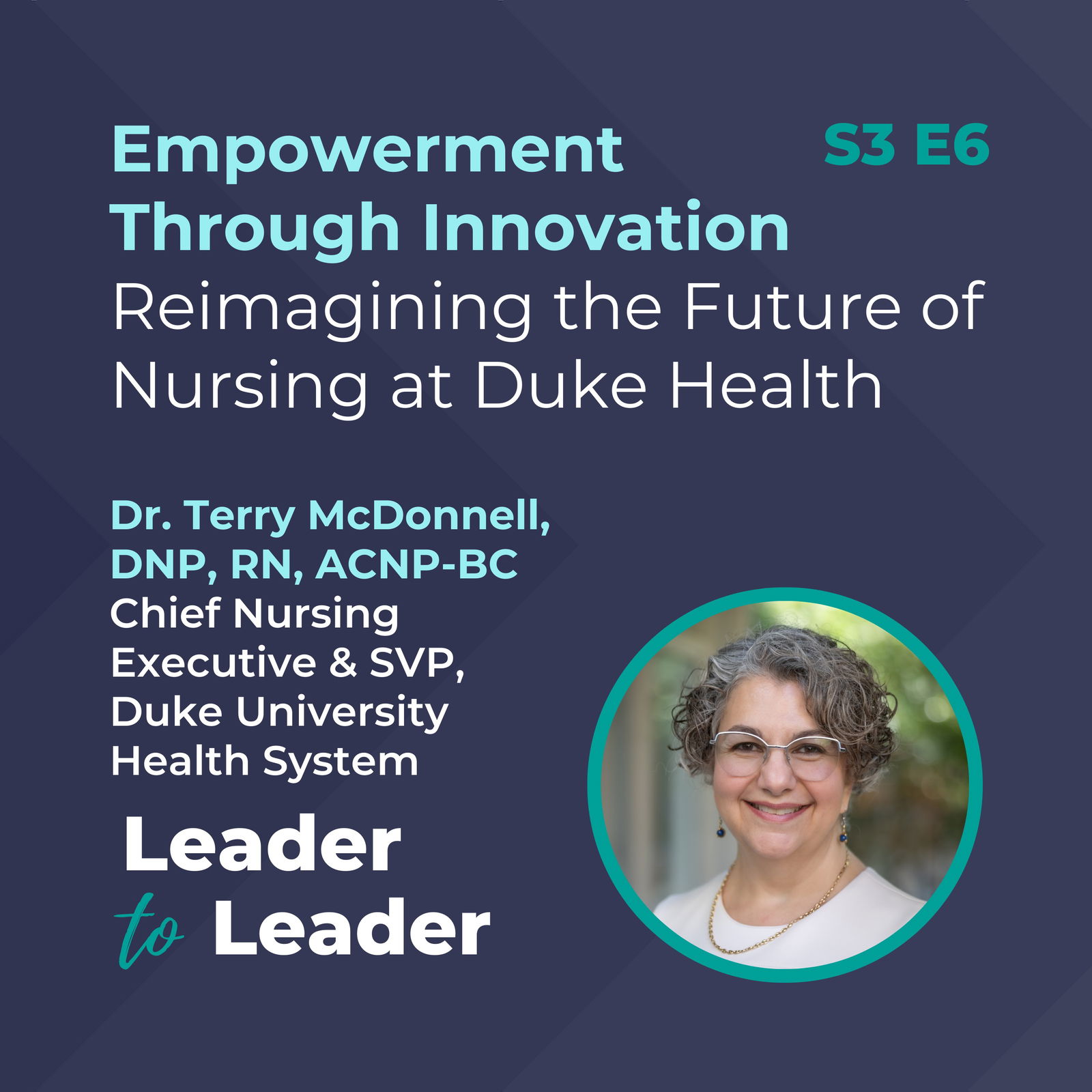
The pandemic has fundamentally reshaped the nursing workforce, creating both challenges and opportunities to reimagine care delivery. In this episode, Dr. Terry McDonnell, Chief Nursing Executive and Senior Vice President at Duke University Health System, discusses how Duke Health is addressing turnover in nursing, empowering frontline staff through innovation initiatives, and building robust career pipelines as early as eighth grade. With a goal of building a sustainable, future-focused nursing workforce, Dr. McDonnell offers valuable insights into creating technology-enhanced innovation units, leveraging AI and ambient technology to transform documentation, and adapting care models for the next generation of patients.Learn more about Healthcare IT Leaders.In this episode, you’ll learn:How Duke Health is addressing the post-pandemic nursing challenge with empowerment initiatives that reduced turnover by 10%The role of AI and technology in building the care environments of the futureWhy Dr. McDonnell believes the future of nursing will be hybrid, creating a need for nurses skilled in both direct and virtual patient careJump into the conversation:(00:00) Introducing Terry McDonnell, Chief Nursing Executive and Senior Vice President at Duke University Health System(01:54) Impact of the pandemic on nursing(03:13) Challenges in the nursing workforce(04:55) Strategies to reduce nurse turnover(06:27) Empowering frontline staff(07:22) Building future nursing pipelines(09:37) Leveraging technology in healthcare(11:52) Innovation units at Duke(16:17) Hybrid models of care(17:07) Nursing innovation summit(20:18) Dr. McDonnell’s leadership journey

AI adoption in healthcare is no longer a question of if, but when. For leaders embracing this shift, the true challenge lies in addressing foundational issues, clearing technical debt, and ensuring data integrity to create a scalable and sustainable future.In this episode, Bradd Busick, SVP, Chief Information Officer at MultiCare, shares his leadership philosophy and emphasizes the importance of getting your foundations right before exploring innovative technologies like AI. With a focus on reducing clinician burnout, strengthening patient-provider relationships, and leading with authenticity, Bradd offers valuable insights on how healthcare organizations can scale effectively and create a more intimate, personalized care experience.Learn more about Healthcare IT Leaders.In this episode, you’ll learn:How ambient listening is reducing clinician burden and improving patient relationships in clinicsBradd’s leadership philosophy of wanting more for his team than from them, and why authenticity mattersThe role of AI in fostering deeper connections between healthcare providers and patientsJump into the conversation:(00:00) Introducing Bradd Busick, SVP, Chief Information Officer at MultiCare Health System(01:12) MultiCare's vision and strategy(02:07) The importance of foundational tech(03:23) Data orchestration and AI integration(04:27) Challenges in healthcare technology(05:10) The philosophy of base hits(06:09) Enhancing clinician-patient interaction(10:00) Leadership lessons from COVID-19(11:12) Healthcare's arrogance and private sector lessons(14:19) The future of healthcare partnerships(15:05) Leadership and emotional intelligence(19:30) Final learnings with Paul
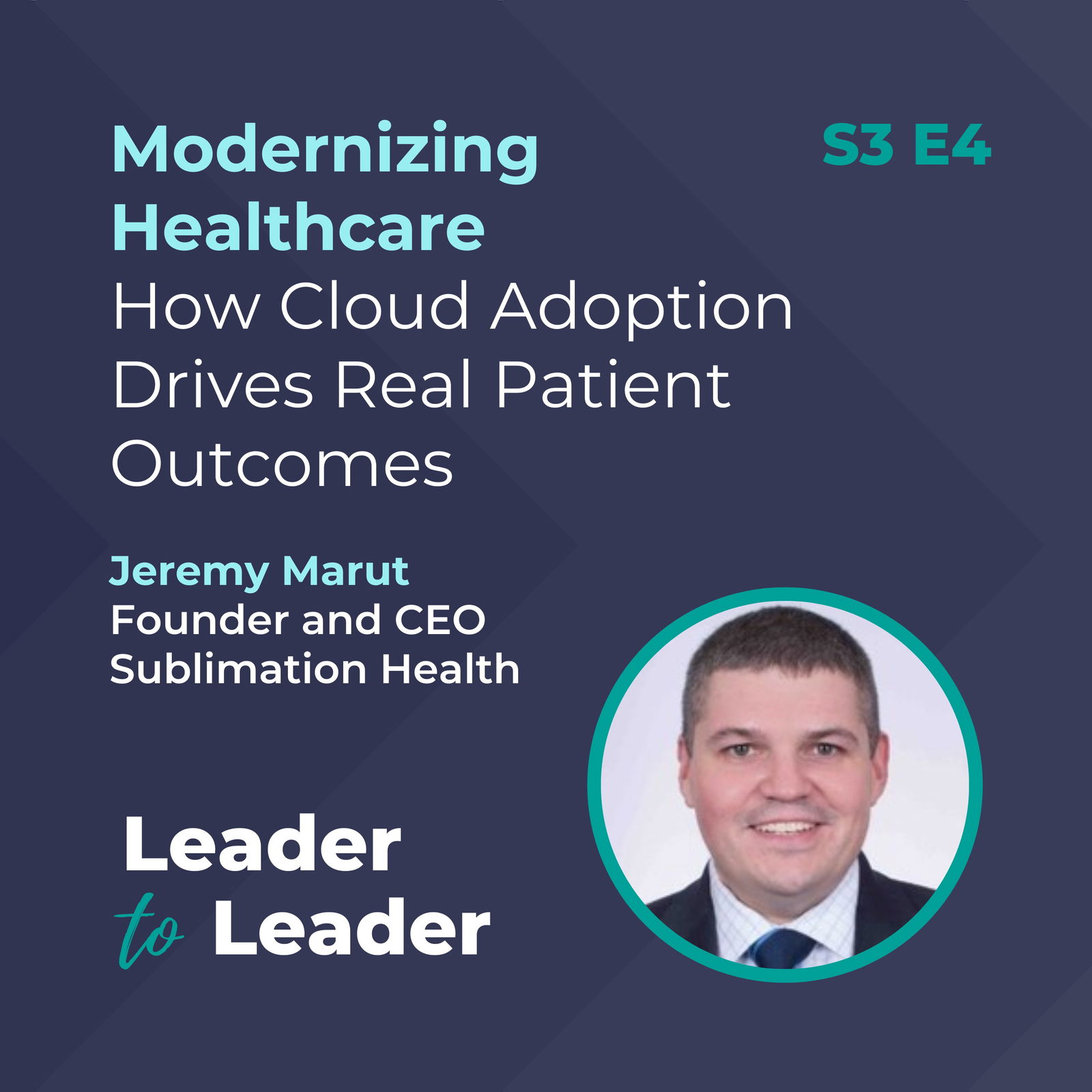
Cloud adoption in healthcare is no longer a question of if, but how. For leaders navigating this transformation, the real challenge is in aligning technology with organizational purpose, trust, and long-term impact.In this episode, Jeremy Marut, Founder and CEO of Sublimation Health, shares how his decades of experience in hospital IT led him to build a company that helps health systems shift from managing infrastructure to delivering meaningful solutions. He explores what it takes to overcome fear and uncertainty around cloud migration, why cost transparency matters, and how to reframe technical debt as an opportunity for reinvention.Learn more about Healthcare IT Leaders.In this episode, you’ll learn:Why Jeremy Marut left hospital IT after 25 years to help health systems escape the burden of technical debtThe biggest misconceptions about cloud migration in healthcare and how to overcome themHow cost transparency, job security, and organizational alignment shape successful cloud transitionsWhat’s next in cloud innovation, from AI-enhanced workflows to quantum computing, and why the future of healthcare depends on itHow Stoicism and servant leadership guide Jeremy’s decision-making as a founder and CEOJump into the conversation:(00:00) Introducing Jeremy Marut, Founder and CEO of Sublimation Health(02:08) The problem with never-ending implementations and growing technical debt(03:46) “Save lives, not drives”: the personal meaning behind Sublimation’s tagline(07:54) Biggest misconceptions about cloud migration in healthcare(10:13) Addressing fear, uncertainty, and doubt: why cloud transformation feels risky(12:35) Where real cloud savings come from: hard vs. soft cost reductions(16:12) The future: AI, quantum computing, and workflow-driven cloud innovation(18:17) Jeremy’s leadership philosophy in Stoicism and servant leadership(20:20) The challenge of celebrating wins and evolving as a startup leader(20:46) Episode recap and closing thoughts on leadership in healthcare IT
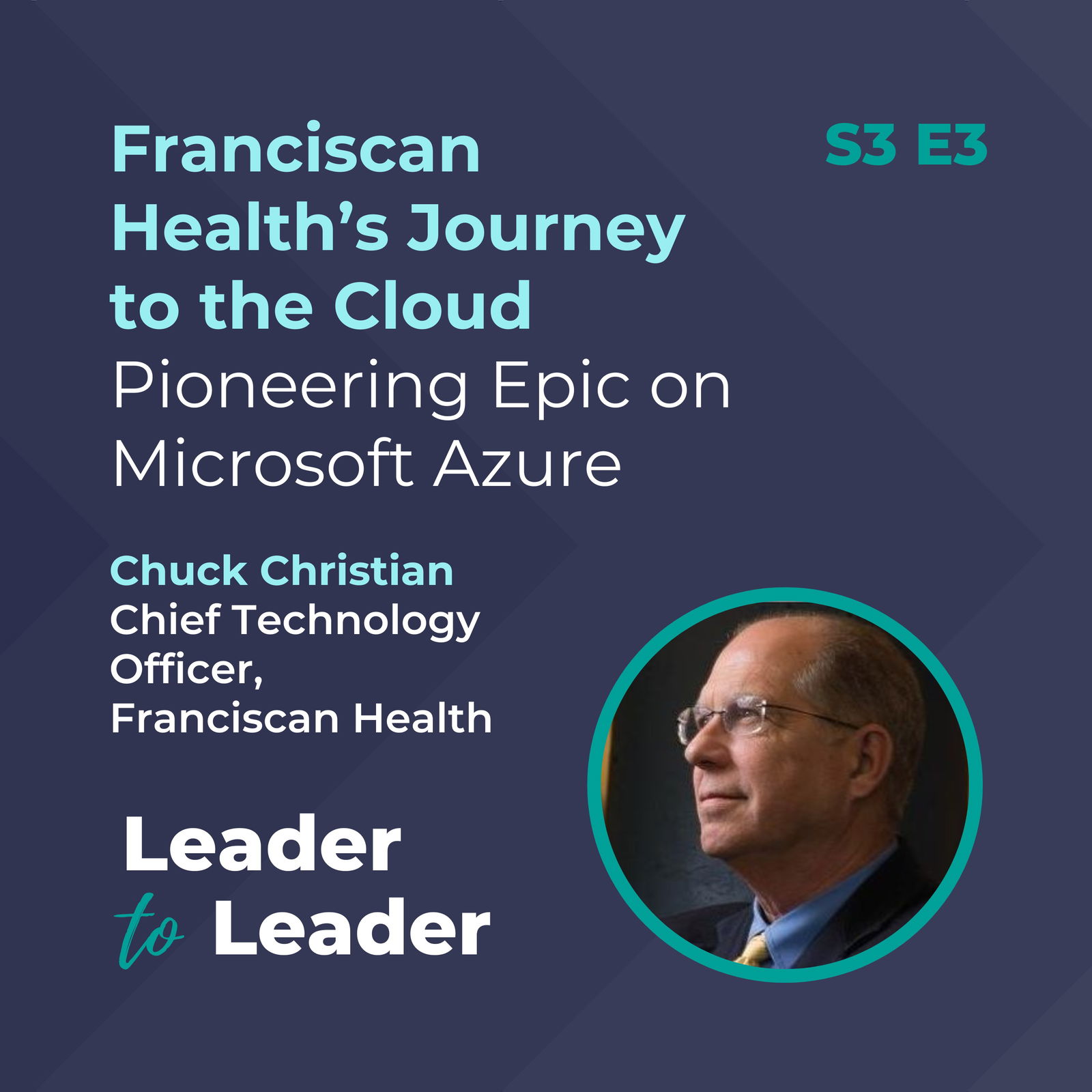
When hospital systems move to the cloud, it’s not just an IT project—it’s a leadership journey. Strategic choices made in this transition shape not only technical outcomes but also how teams collaborate and deliver care.In this episode, Chuck Christian, Chief Technology Officer at Franciscan Health, discusses the organization's move to migrate Epic to Microsoft Azure, paving a path for scalability and long-term success.Chuck talks about the complexities of cloud cost management and how it’s able to save them millions of dollars, and he also shares the leadership lessons that have shaped his career, especially around staying curious, practicing humility, and truly working together as a team. Learn more about Healthcare IT Leaders.In this episode, you’ll learn:How Franciscan Health achieved a successful migration of Epic to Microsoft Azure, enhancing scalability and infrastructureThe impact of introducing a cloud cost analyst role, leading to millions in savings through better cost management and predictionWhy leadership is practiced through curiosity and teamworkJump into the conversation:(00:00) Introduction to leadership and finance(00:22) Meet Chuck Christian: CTO at Franciscan Health(00:33) Pioneering move to Microsoft Azure(03:02) Challenges and learnings from cloud migration(05:45) Cloud cost management strategies(07:52) Consolidation and standardization efforts(10:11) The role of health information exchanges(12:58) Leadership and the CIO bootcamp(16:02) Chuck’s leadership styles

Innovation is required for navigating the evolving healthcare landscape. For leaders, however, this requires more than just technology. Organizational culture and norms, strategy, and people-first leadership come into play. In this episode, Scott Smiser, Chief Innovation and Technology Officer at Emory Healthcare, shares how meaningful change is achieved through cloud migration and AI advances. He also tells us about Emory’s experiments with using Apple devices in clinical settings, as well as his growth-centered approach to leadership. In a field where technology and humanity intersect, we’ll learn how innovation is a natural outcome when there is a harmonious relationship between people, processes, and technology.Learn more about Healthcare IT Leaders.In this episode, you’ll learn:How Emory Healthcare is using innovation to drive both cost efficiency and top-line growthHow Emory’s “Shark Tank” style Innovation Hub is funding and scaling new ideas to drive meaningful healthcare improvementsWhy empowering teams and developing talent is at the heart of Scott Smiser’s leadership approachWhy Emory Healthcare is piloting the use of Apple products in clinical settings, and how it’s ultimately benefiting patient careJump into the conversation:(00:00) Introducing Scott Smiser, Chief Innovation & Technology Officer at Emory Healthcare(00:22) Emory Healthcare’s approach to innovation: Internal and external impacts(03:34) The role of innovation in delivering better services and creating new value for patients and researchers(06:50) Emory’s “Shark Tank” style Innovation Hub(10:35) Moving to the cloud and shifting from managing data centers to cloud solutions(13:17) The importance of AI tools like ambient listening in transforming clinician workflows(17:30) Emory's experiment with Apple products in clinical settings(22:16) Empowering teams and leadership lessons learned from mentors(25:43) The future of healthcare innovation, leading a people-first culture

Data is at the heart of modern healthcare, but turning information into better patient outcomes requires more than just technology—it takes a clear strategy and a shift in mindset.In this episode, Shahran Haider, Deputy Chief Data Officer at NYC Health, unpacks how the nation’s largest public health system is rethinking its approach to data. He shares why NYC Health is moving from projects to products, how AI is being integrated responsibly to support clinicians, and what it takes to make data truly accessible across a massive, complex organization.But it’s not just about systems and tools. Shahran also reflects on the leadership principles guiding this transformation and why adaptability, collaboration, and trust are just as critical as any technology.Learn more about Healthcare IT Leaders.In this episode, you’ll learn:Why NYC Health shifted from projects to products for sustainable data impactHow AI is driving clinical efficiency, ROI, and scalability in public healthHow data democratization is empowering teams while maintaining security and governanceJump into the conversation:(00:00) Introducing Shahran Haider(00:47) How data improves patient care at NYC Health + Hospitals(04:15) Shifting from projects to a product mindset in healthcare(08:19) The AI Advisory Board’s three priorities for responsible AI(13:20) How Snowflake cut data delivery time from days to minutes(17:43) Data democratization and empowering self-service analytics(22:37) Leadership, AI, and the skills needed for the future

Technology is reshaping healthcare, but it takes strong leadership to transform innovation into real impact.In this episode, Jeff Gautney, Senior Vice President & Chief Information Officer at Rush University System for Health, shares his career path from consulting to leading IT at a top academic medical center. He breaks down Rush’s digital transformation strategy—leveraging AI and automation, modernizing infrastructure, and driving operational efficiency.Beyond the technology, Jeff explores how the role of IT leadership is shifting and why change management is now a must-have skill.Learn more about Healthcare IT Leaders.In this episode, you’ll learn:How AI is reshaping healthcare operations—from ambient listening to robotic process automation.Why change management is now central to IT leadership and how Rush is embedding it as a core function.How automation is helping address workforce shortages while improving efficiency and patient care.Jump into the conversation:(00:00) Introducing Jeff Gautney(02:31) How an unconventional career path led to a CIO role(05:33) Rush’s four-bucket AI strategy and responsible implementation(09:35) Why AI’s productivity gains don’t always mean cost savings(12:15) Using automation to address workforce shortages in healthcare(14:43) The three pillars driving digital transformation at Rush(23:08) The evolving role of CIOs and cybersecurity challenges
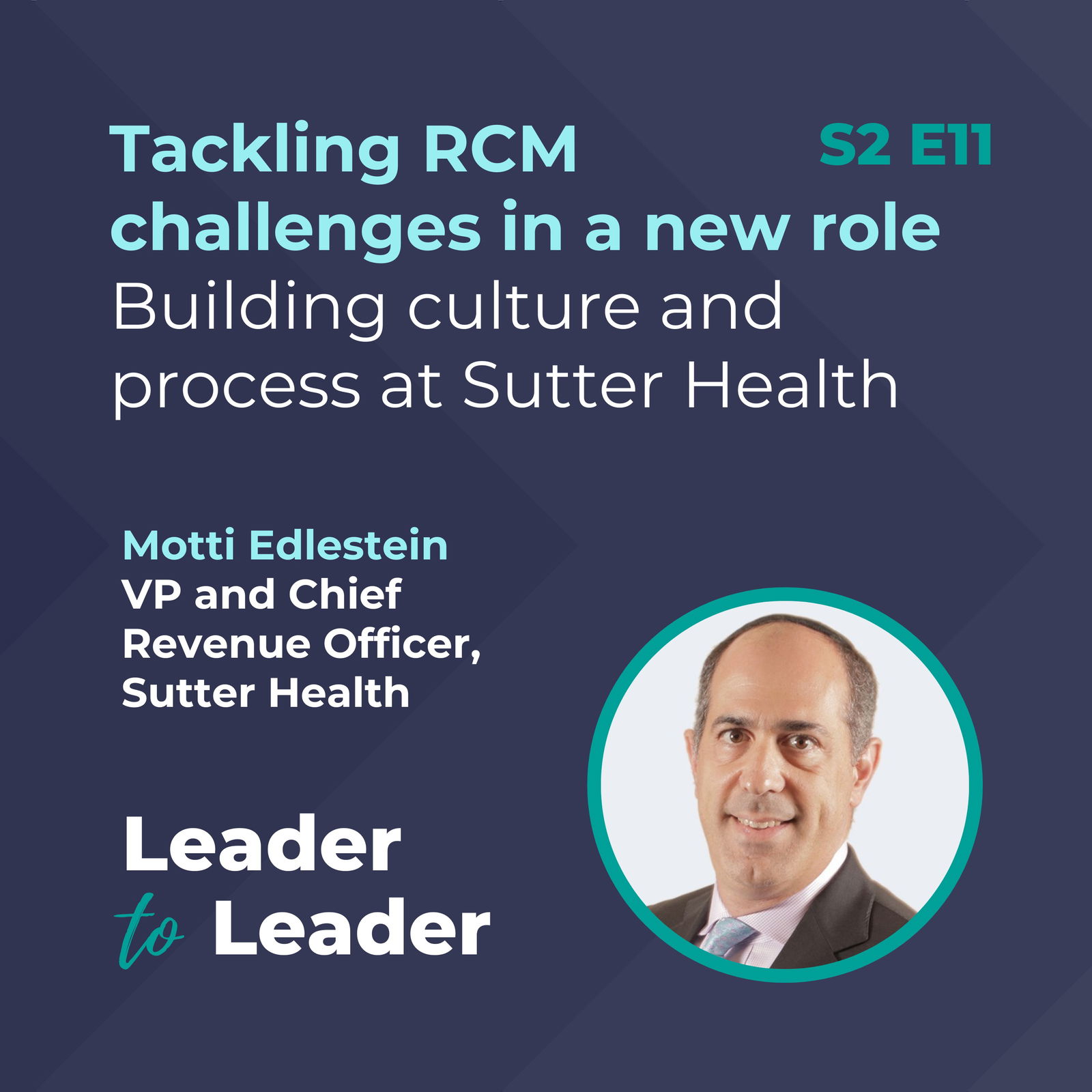
When technology and leadership converge, wonderful things may happen. In this episode, Motti Edelstein, Vice President of the Chief Revenue Office at Sutter Health, shares his journey in leading revenue cycle transformation across two of the nation's largest healthcare systems. Motti reflects on his transition from Allina Health to Sutter Health, offering insights into managing payer-provider relationships, navigating complex regulatory landscapes, and leveraging technology to drive efficiency and improve patient experiences.Learn more about Healthcare IT Leaders.In this episode, you’ll learn:How Sutter Health is rethinking payer-provider dynamics to streamline processes and reduce operational waste.The importance of aligning patient-centered workflows with financial goals to minimize healthcare debt and enhance patient experiences.Why automation and digital transformation are critical to navigating the complexities of modern healthcare revenue cycles.Jump into the conversation: (00:00) Introducing Motti Edelstein(01:43) Transitioning from Allina Health to Sutter Health(02:35) Comparing regulatory challenges in Minnesota and California(07:04) Rethinking payer-provider relationships with monthly touchpoints(13:41) Putting patients at the center of revenue cycle workflows(17:46) Embracing technology for digital transformation in healthcare(29:33) Leadership lessons from “Coffee with Motti”

When technology and leadership align, the future of healthcare becomes an exciting frontier of possibilities.In this episode, Rich Miller, Executive Vice President and Chief Business Strategy Officer at Northwell Health, reflects on his rise from a hospital gift shop manager to a senior leader at one of the nation’s largest healthcare systems. From driving automation to navigating pivotal moments like 9/11 and the COVID-19 pandemic, Rich shares the lessons that have shaped his approach to leadership.In addition to his leadership journey, Rich highlights Northwell’s commitment to leadership development, showcasing how mentorship and stretch roles empower emerging leaders to thrive. Rich also discusses the role of AI and automation in reducing costs, boosting efficiency, and enhancing the consumer experience. Whether advancing revenue cycle management or leading through crises, Rich provides actionable strategies for healthcare leaders striving to make a meaningful impact.Learn more about Healthcare IT Leaders.In this episode, you’ll learn:How Rich leveraged automation and AI to cut costs and improve efficiency while enhancing the consumer experience in healthcare.The value of mentorship and stretch assignments in Northwell’s leadership development programs, empowering the next generation of healthcare leaders.Why collaboration and innovation are critical for navigating challenges like 9/11, COVID, and the evolving revenue cycle landscapeJump into the conversation:(00:00) Introducing Rich Miller(04:31) Lessons learned from leading through 9/11(09:14) Developing leaders with stretch assignments and mentorship(19:30) Exploring the role of AI and automation in healthcare(24:15) Empowering the next generation of healthcare leaders
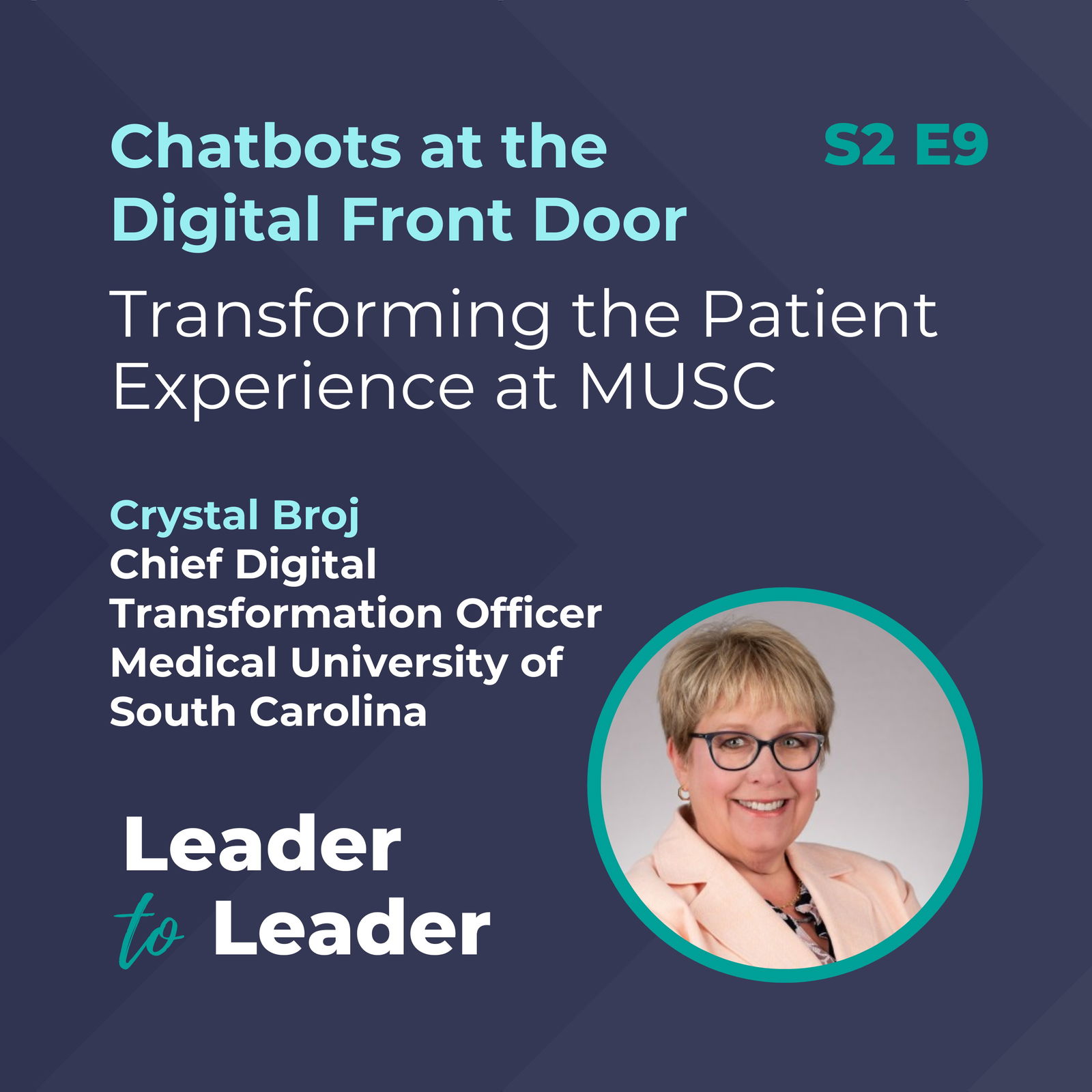
Healthcare is evolving at an unprecedented pace, driven by cutting-edge digital innovations that promise to transform patient care and operational efficiency alike.In this episode, Crystal Broj, Enterprise Chief Digital Transformation Officer at the Medical University of South Carolina, shares how MUSC is pioneering innovations in healthcare delivery. From pushing AI and its capabilities for tools such as voice bots to streamlining patient access to care to implementing robotic process automation to optimize workflow, Crystal has tons of insight into how MUSC is improving its services. Learn more about Healthcare IT Leaders.In this episode, you’ll learn:How MUSC uses AI tools and voice bots like “Emily” to streamline patient scheduling and reduce clinician burnout.Why starting small with pilot programs can drive successful large-scale digital transformation projects.The role of automation in closing care gaps and improving operational efficiency, from mammogram reminders to prior authorization approvals.Jump into the conversation:(00:00) Introducing to Crystal Broj(02:23) Enhancing patient care with seamless access and AI-driven tools(04:27) Early successes and lessons from launching a voice bot(09:17) Reducing provider after-hours work through ambient scribing technology(16:53) Leveraging robotic process automation for operational efficiency(20:21) Exploring future trends in AI and healthcare innovation

When healthcare meets cutting-edge technology, the possibilities for smarter systems and better patient outcomes are seemingly endless. In this episode, Chris Mate, Chief Information Officer at Elara Caring, shares how technology solutions are reshaping everyday healthcare delivery, as well as enhancing patient care in home settings. From the power of AI to reduce administrative work for healthcare providers to strategies for integrating data across systems, Chris discusses the innovations that are transforming the industry. He also sheds light on the challenges of cybersecurity and managing a vast network of devices in the field.Learn more about Healthcare IT Leaders.In this episode, you’ll learn:How Chris integrates AI to reduce administrative tasks and allow providers to spend more time on patient care.The importance of seamless data integration in home healthcare, where sharing patient information across providers can improve outcomes. Why cybersecurity in healthcare is a top priority and how Chris and his team are using technology to safeguard patient information. Jump into the conversation:(00:00) Introducing Chris Mate(05:25) How AI is reducing administrative burdens and improving nursing efficiency(11:48) Cybersecurity in healthcare and strategies to safeguard patient data(16:33) Chris’s previous experiences in healthcare and its impact on his current role(21:34) The future of AI in healthcare and creating operational capacity

True leaders can transform setbacks into success. In this episode, Dr. Robert Adamson, Executive Vice President and Chief Information Officer at RWJBarnabas Health, shares his remarkable journey of leading one of the largest program rollouts across multiple hospitals and healthcare locations amidst the chaos of the COVID-19 pandemic.For healthcare technology executives, this episode is a goldmine of practical advice, inspirational stories, and thought-provoking discussions on the future of AI in healthcare. From managing risks during the pandemic to fostering care and collaboration between hospitals, Dr. Adamson’s leadership shines through. Learn more about Healthcare IT Leaders.In this episode, you’ll learn:Dr. Robert Adamson's bold decision to proceed with a major deployment during the COVID-19 pandemic showcased effective leadership, transforming a potential setback into significant success.The responsible and safe use of AI in healthcare requires a strong foundation in governance and ethics.Dr. Robert Adamson’s concept of "ASPIRE" serves as a guiding principle, helping teams stay focused on their goals.Jump into the conversation:(00:00) Introducing Dr. Robert Adamson(07:16) Improving information sharing across digital platforms (14:47) Dr. Adamson’s guiding principles for teamwork(18:30) How Dr. Robert Adamson’s transition from a clinician to Chief Pharmacy Officer(19:59) The importance of kindness, empathy, and poise as a leader(23:29) Dr. Robert Adamson’s thoughts on using AI ethically

Healthcare technology is advancing quickly, and those who innovate will lead the way.In this episode, Scott Arnold, Executive Vice President and Chief Digital and Innovation Officer at Tampa General Hospital, shares how his team leverages cloud technology, cybersecurity, and artificial intelligence to improve patient care and streamline operations. Scott offers insights into how these tools are transforming healthcare while staying focused on delivering better outcomes for both patients and providers.Scott also discusses strategies for Healthcare IT leaders aiming to lead digital change while keeping patient needs front and center.Learn more about Healthcare IT Leaders.Key takeaways from this episode:Scott Arnold and the team at Tampa General Hospital are transforming healthcare operations by using AI to enhance patient care and simplify administrative tasks.By adopting cloud technology, they’re improving system flexibility and reducing costs, allowing the hospital to scale while maintaining secure data management. This shift ensures a more efficient and adaptable infrastructure.With a strong focus on cybersecurity, Tampa General regularly brings in external auditors to assess and strengthen its security measures. This proactive approach helps protect patient data and builds confidence among both staff and patients.Jump into the conversation:(00:00) Introducing Scott Arnold(03:13) Fostering a culture of psychological safety to encourage innovation(05:23) The challenges of healthcare scheduling and financial navigation(06:13) Results from Tampa General's experience improvement initiatives(07:24) The role of AI in Tampa General's operations and governance(09:36) Tampa General's partnership with Nuance for AI-powered ambient listening technology(12:29) Tampa General's partnership with Palantir for analytics and care coordination(16:53) Cybersecurity strategies and proactive threat hunting at Tampa General(18:44) Tampa General's growth and expansion plans for the next 3–5 years(20:14) Insights from the recent Epic UGM conference on AI and innovation

Healthcare delivery is evolving—those who innovate will shape the future.In this episode, Chief Growth Officer Chelsea Glenn of Northwell Direct discusses how her team is redefining healthcare by bringing clinical services directly to the workplace. Chelsea shares how Northwell Direct is cutting out the middleman to offer employers cost-effective healthcare solutions while improving access and care for employees.But that’s not all—Chelsea also dives into practical strategies for healthcare executives looking to enhance employee wellness and streamline care delivery.Learn more about Healthcare IT Leaders.Key takeaways from this episode:Chelsea and the team at Northwell Direct are revolutionizing workplace healthcare by bringing essential services directly to employees and making healthcare more accessible from right where people spend most of their time—at work.Northwell Direct is cutting out the middleman to make healthcare more affordable.By partnering directly with employers, they’re delivering high-quality care at lower costs, ensuring that both businesses and employees benefit from a streamlined, cost-effective healthcare model.The future of healthcare is personalized and digital. Northwell Direct is embracing digital tools and telehealth to offer more convenient, user-friendly healthcare experiences that meet employees where they are, whenever they need it.Jump into the conversation:(00:00) Introducing Chelsea Glenn(03:33) The inherent challenges of traditional healthcare insurance models.(05:37) The benefits of on-site healthcare and care management for employers and their employees.(13:44) How to manage healthcare costs through pre-sale analytics and care management.(15:46) A better way of tracking patient care and ensuring compliance with care protocols.(18:29) How Northwell Direct is expanding partnerships with other health systems.
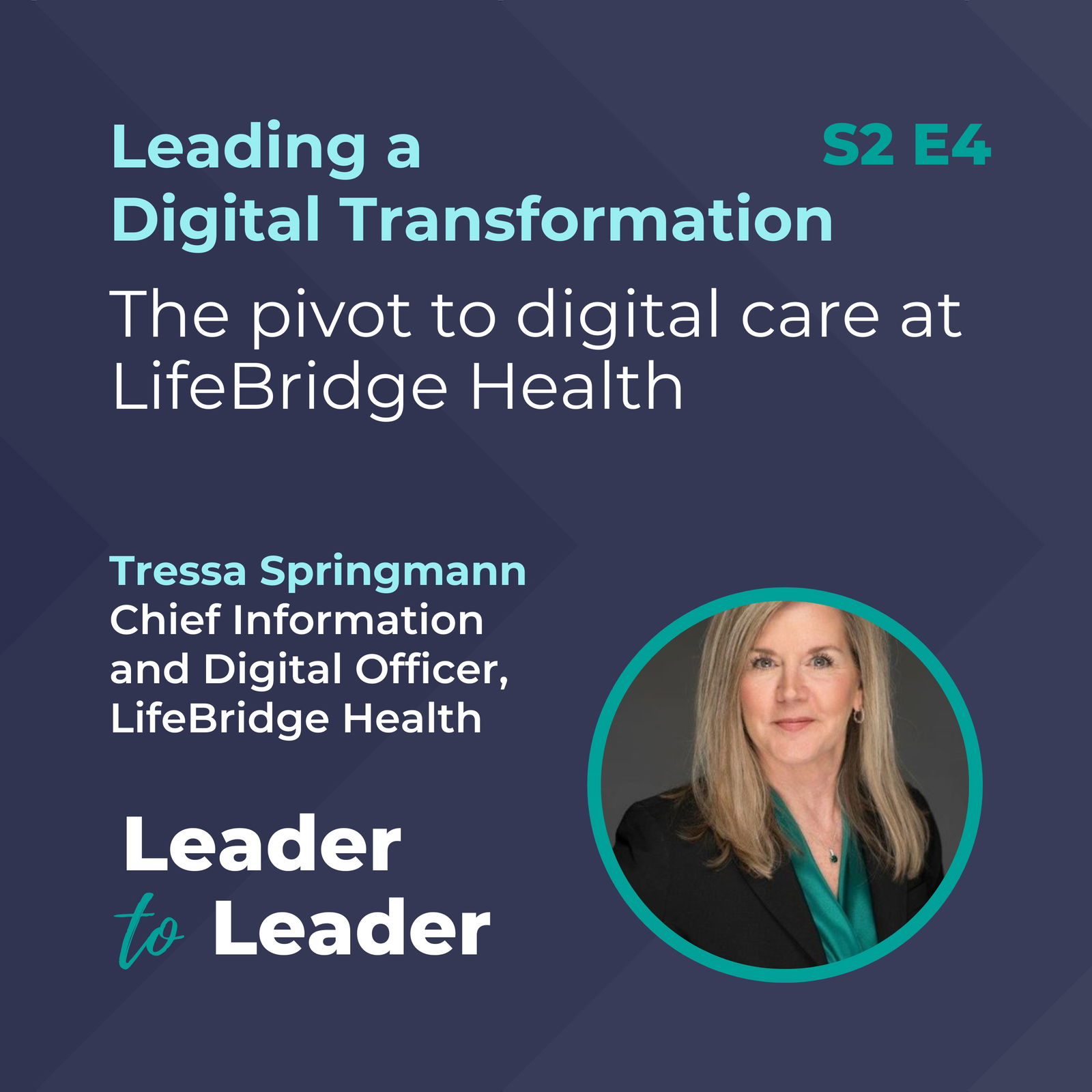
Digital healthcare is here to stay—either we adapt, or we risk being left behind. In this episode, Chief Information and Digital Officer Tressa Springmann, shares how LifeBridge Health is leading the charge with their digital initiatives. She highlights real-world examples of how strategic IT alignment can drive better patient outcomes and streamline hospital operations.But the conversation doesn't stop there, Tressa also offers actionable strategies for healthcare executives and how they can better lead at their organizations. Learn more about Healthcare IT Leaders.In this episode, you’ll learn:Tressa and the team at LifeBridge are committed to caring bravely. They differentiate themselves by putting patients before profits and by doing the hard work of keeping people healthy. The future of healthcare is digital. That means getting comfortable with data and measurement, expanding access to virtual care, and providing user friendly technology to providers and patients.Leaders don't just see problems, they own them and they fix them. Jump into the conversation:[00:00] LifeBridge Health’s digital pivot.[02:52] The “care bravely” culture at LifeBridge Health.[06:02] Investing in digital transformation for better patient care.[19:01] The story behind LifeBridge Health’s partnership with Oracle.[25:10] Making a difference as a leader in healthcare tech.
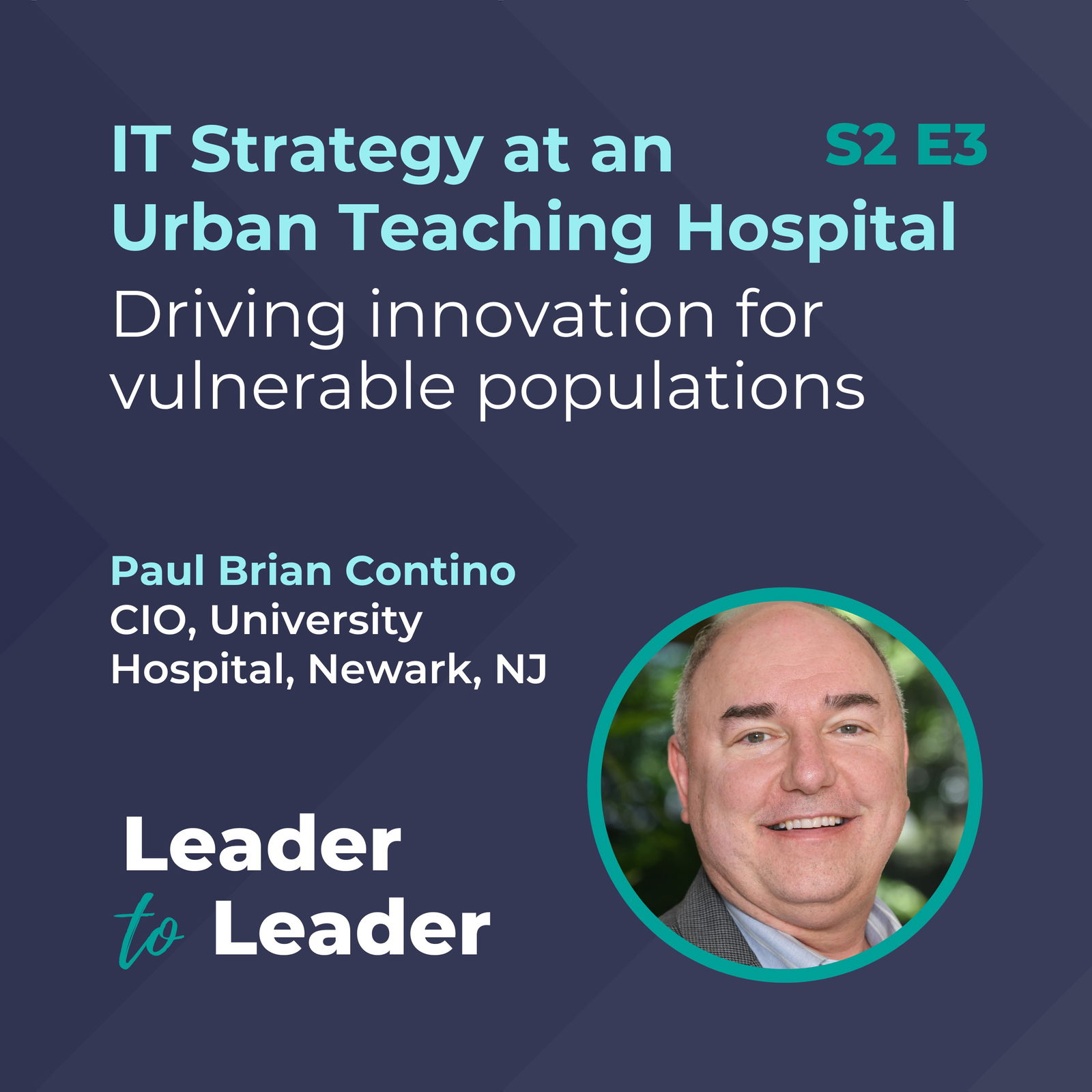
As healthcare technology improves, how might innovation make a significant impact for our most vulnerable populations? With this question in mind, we sat down with Paul Contino, the Chief Information Officer at University Hospital in Newark, New Jersey for his unique perspective on bridging the gap between business and technology to enhance patient care. Throughout our conversation, Paul shared a wealth of information around the implementation of advanced IT infrastructure, overcoming challenges in vulnerable patient populations, and leveraging AI in clinical and business operations.Our conversation with Paul ran the gamut from his early days as a biochemist to becoming a leading CIO. The lessons he’s learned along the way have much to teach us about leadership, change management, and the complexities of modern healthcare technology. Learn more about Healthcare IT Leaders.In this episode, you’ll learn:Juggling technology and business isn't easy, but Paul speaks candidly about overcoming this obstacle. By immersing himself in the business of healthcare, Paul broadened his skill set beyond mere technical expertise. Telehealth skyrocketed during the pandemic, but maintaining its momentum comes with its own set of challenges. Paul’s team is meeting those challenges head on with innovative solutions like leveraging smartphone technology to bridge digital divides. AI isn't just a buzzword; it's becoming a game-changer in healthcare. From image analysis to medical record summarizations, the practical applications are numerous. Jump into the conversation:05:45 The challenge of tech adoption and how it impacts vulnerable patients. 08:39 Telehealth created a new set of challenges both during and after the COVID-19 pandemic.16:02 AI can be used to streamline medical information.25:13 How a positive mindset focused on servant leadership drives Paul’s success.

Make no mistake, Health Systems are going all in on cloud ERP solutions. To understand this shift, we sat down with Workday GVP for Healthcare, Shannon McGovern, a seasoned expert in the healthcare technology space. Shannon shares the transformational potential of cloud ERP solutions in healthcare, emphasizing agility, profitability, and risk mitigation. She reveals insightful case studies and real-world applications from top healthcare systems like Banner Health and Nebraska Medicine, showcasing how innovative tech solutions can enhance operational efficiency and improve patient outcomes.And the technology shifts don’t stop there! Shannon also highlights the critical role of AI in reshaping healthcare operations and dives into the complexities of workforce management and supply chain optimization, providing actionable insights for healthcare executives aiming to drive meaningful transformation in their organizations.Learn more about Healthcare IT Leaders.In this episode, you’ll learn:ERP investments are on the rise, a trend driven by organizations seeking greater agility, profitability, and risk mitigation. Before investing in a new system, stakeholders should define what they are trying to accomplish.How Shannon is using her position to do something about the gender gap at tech companies. She actively mentors other women at Workday to increase their opportunities for leadership roles. Jump into the conversation:05:17 How to simplify complex organization management and technology transformation.07:13 Choosing a tech partner is a lot like getting married.14:20 The value of ERP in the pandemic supply chain.20:01 How to use AI to optimize business challenges.24:42 Shannon’s passion for diversity and women in leadership.

Are office visits a thing of the past? In this future-looking episode, Dr. Eve Cunningham, Chief of Virtual Care and Digital Health at Providence, shares how Providence is addressing clinician shortages through innovative telemedicine programs. Dr. Cunningham is excited about the potential for AI to enhance the physician-patient relationship while alleviating administrative burdens. In addition to the tech talk, Dr. Cunningham touches on the unique challenges women face in healthcare leadership and the growing importance of mentorship. Learn more about Healthcare IT Leaders. In this episode, you’ll learn:Telemedicine and remote patient monitoring continue to offer major upsides for large health systems like Providence. Embracing tele-health means reducing overall cost of care and improving patient outcomes.It’s difficult to get clinicians to adopt new technologies. You need executive sponsorship from the top and clinical sponsorship from the bottom in order to be successful. Mentorship is vital in healthcare IT, particularly for women. Dr. Cunningham purposefully uses her platforms to help mentor and cultivate the leaders of tomorrow.Jump into the conversation:03:51 How to leverage partnerships for innovation.07:51 New care models are needed to address chronic diseases.09:56 Virtual nurses and digital products help address staffing shortages.23:29 How Dr. Cunningham transitioned from a physician to a healthcare technology leader. 33:46 Persistence, confidence, and mentorship are necessary for career advancement

In this episode of Leader to Leader, we discuss best practices for creating a culture of purpose from Northeast Georgia Health System’s Chris Paravate. With a focus on building trusted relationships and leveraging technology to enhance operations, Chris discusses how he helped transform Northeast Georgia Health System into one of the largest providers in the states. His approach starts with hiring professionals who fit the overall culture and ends with his dedication to the core values that drive purpose and teamwork throughout the organization.Learn more about Healthcare IT Leaders.

Comments

Download from Google Play

Download from App Store
 United States