


 Claim Ownership
Economist Podcasts
Subscribed: 283,404Played: 20,642,240
Subscribe


Copyright © The Economist Newspaper Limited 2023. All rights reserved.
Description
Every weekday our global network of correspondents makes sense of the stories beneath the headlines. We bring you surprising trends and tales from around the world, current affairs, business and finance — as well as science and technology.
Hosted on Acast. See acast.com/privacy for more information.
1881 Episodes
Reverse

 2
2The picturesque town of Corning in upstate New York doesn’t look like the site of bleeding-edge innovation. But inventions by a 174-year-old glass company there have changed the modern world, thanks in part to some blunt advice from Steve Jobs. To listen to the full series, subscribe to Economist Podcasts+. https://subscribenow.economist.com/podcasts-plusIf you’re already a subscriber to The Economist, you have full access to all our shows as part of your subscription. For more information about how to access Economist Podcasts+, please visit our FAQs page or watch our video explaining how to link your account. Hosted on Acast. See acast.com/privacy for more information.

For Season 2, we’re releasing an extended interview alongside each episode. This week: Who needs search engines when chatbots can answer every query for you? That’s the question confronting the head of Search at the world’s most popular website.To listen to the full series, subscribe to Economist Podcasts+. https://subscribenow.economist.com/podcasts-plusIf you’re already a subscriber to The Economist, you have full access to all our shows as part of your subscription. For more information about how to access Economist Podcasts+, please visit our FAQs page or watch our video explaining how to link your account. Hosted on Acast. See acast.com/privacy for more information.

Forget the hammocks and ping-pong tables. Creativity takes work. Managers at Google, Lego and a pair of AI startups share advice on breaking through.To listen to the full series, subscribe to Economist Podcasts+. https://subscribenow.economist.com/podcasts-plusIf you’re already a subscriber to The Economist, you have full access to all our shows as part of your subscription. For more information about how to access Economist Podcasts+, please visit our FAQs page or watch our video explaining how to link your account. Hosted on Acast. See acast.com/privacy for more information.

Good bosses are rare. They don’t have to be. The skills of management can be learned.The Economist’s management columnist, Andrew Palmer, is here to help. The second season of Boss Class features leaders at some of the world’s best performing companies, from Levi’s to Novo Nordisk to Google. New episodes are out weekly starting May 12th. To listen to the full series, subscribe to Economist Podcasts+.https://subscribenow.economist.com/podcasts-plusIf you’re already a subscriber to The Economist, you have full access to all our shows as part of your subscription. For more information about how to access Economist Podcasts+, please visit our FAQs page or watch our video explaining how to link your account. Hosted on Acast. See acast.com/privacy for more information.

The generation born in the 1940s grew up in a land of endless growth and possibility, ruled by a confident, moderate elite. But just as they were embarking on adult life, all that started to come apart. The economy faltered, and the post-war consensus came under pressure from two sides: from the radical right, who hated government moves on civil rights – and from the ‘New Left’, as boomers rebelled against their parents' generation and its war in Vietnam.To listen to the full series, subscribe to Economist Podcasts+. If you’re already a subscriber to The Economist, you have full access to all our shows as part of your subscription. For more information about how to access Economist Podcasts+, please visit our FAQs page or watch our video explaining how to link your account. Hosted on Acast. See acast.com/privacy for more information.

To manage a workforce divided between the home and office, bosses should ask the five basic questions of journalism: who, what, where, when and why. Jamie Dimon, the CEO of JPMorgan Chase, Jane Sun, the CEO of Trip.com Group, and Lidiane Jones, the CEO of Slack, give their divergent views. To hear the full series, subscribe to Economist Podcasts+.https://subscribenow.economist.com/podcasts-plusIf you’re already a subscriber to The Economist, you have full access to all our shows as part of your subscription. For more information about how to access Economist Podcasts+, please visit our FAQs page or watch our video explaining how to link your account. Hosted on Acast. See acast.com/privacy for more information.
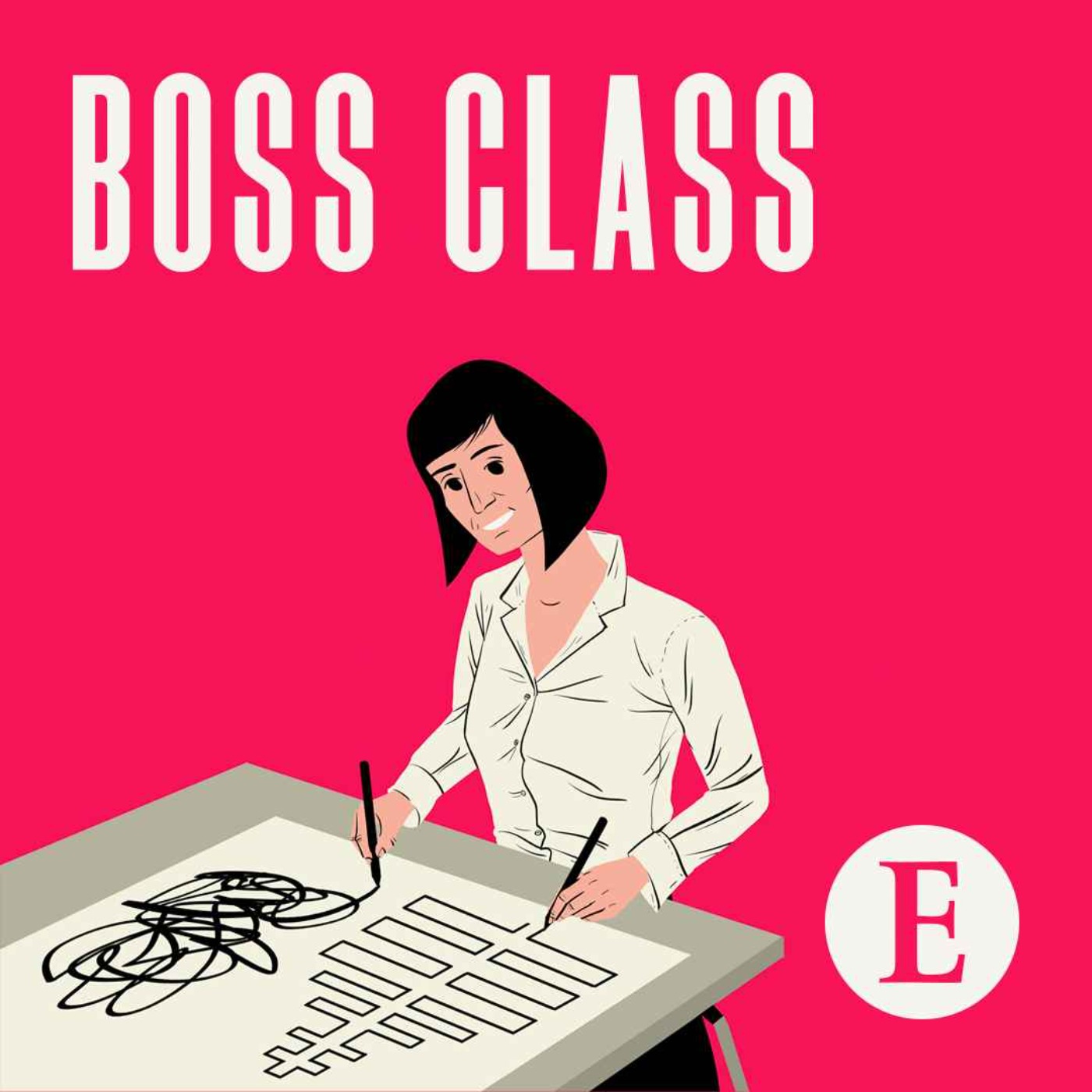
Andrew Palmer, The Economist's Bartleby columnist, learns lessons in management on a Norwegian mountainside. He hears from Emma Walmsley, the CEO of GSK; Daniel Kahneman, a Nobel prize-winning psychologist; and Claire Hughes-Johnson, the one-time COO of Stripe. To hear the full series, subscribe to Economist Podcasts+.https://subscribenow.economist.com/podcasts-plusIf you’re already a subscriber to The Economist, you have full access to all our shows as part of your subscription. For more information about how to access Economist Podcasts+, please visit our FAQs page or watch our video explaining how to link your account. Hosted on Acast. See acast.com/privacy for more information.

The workplace keeps changing and managers have to keep up. The best bosses create systems for solving problems old and new—from navigating working-from-home demands to hiring the right people, from running good meetings to managing themselves. Andrew Palmer, author of the Bartleby column, looks for advice on how to be a better boss by talking to people who have actually done the job. Listen to The Economist's seven-episode guide for managers.Boss Class season one is free for a limited time. Season two will appear weekly starting May 12th. To hear new episodes, subscribe to Economist Podcasts+. https://subscribenow.economist.com/podcasts-plusIf you’re already a subscriber to The Economist, you have full access to all our shows as part of your subscription. For more information about how to access Economist Podcasts+, please visit our FAQs page or watch our video explaining how to link your account. Hosted on Acast. See acast.com/privacy for more information.
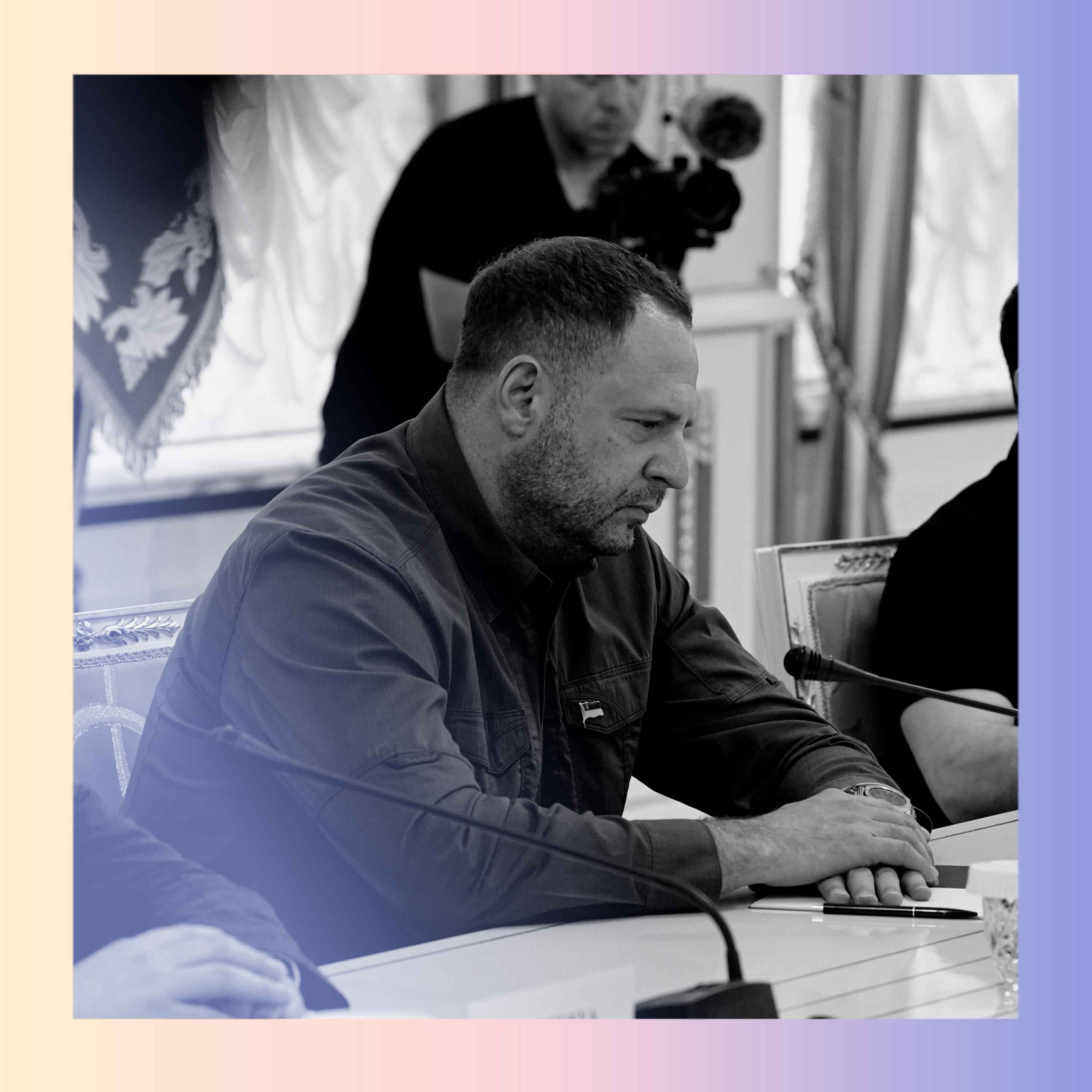
Ukraine has been hit by a corruption scandal. One that strikes at the core of the political establishment in a way never before seen—and this in a country with a long and turbulent history of corruption. It has toppled President Zelensky’s right-hand man. It could mean the President himself won’t survive re-election when the war is over. And the timing couldn’t be worse—right in the middle of a peace deal Ukraine has had little part in composing.The Economist’s Ukraine correspondent, Ollie Carroll, has been following the scandal and the investigation that brought it crashing to the surface for months. On The Weekend Intelligence he takes us deep inside "Operation Midas”.Listen to what matters most, from global politics and business to science and technology—Subscribe to Economist Podcasts+For more information about how to access Economist Podcasts+, please visit our FAQs page or watch our video explaining how to link your account.Music by Blue dot and EpidemicThis podcast transcript is generated by third-party AI. It has not been reviewed prior to publication. We make no representations or warranties in relation to the transcript, its accuracy or its completeness, and we disclaim all liability regarding its receipt, content and use. If you have any concerns about the transcript, please email us at podcasts@economist.com.Read more about how we are using AI. Hosted on Acast. See acast.com/privacy for more information.

The Economist’s editor-in-chief Zanny Minton Beddoes met Sir Keir Starmer for “The Insider”, our new video offering. We bring you the analysis. Why executions in America are surging, despite declining support for the death penalty. And Tom Stoppard, one of Britain’s most challenging playwrights, is remembered by his Russian translator.Listen to what matters most, from global politics and business to science and technology—Subscribe to Economist Podcasts+For more information about how to access Economist Podcasts+, please visit our FAQs page or watch our video explaining how to link your account. Hosted on Acast. See acast.com/privacy for more information.
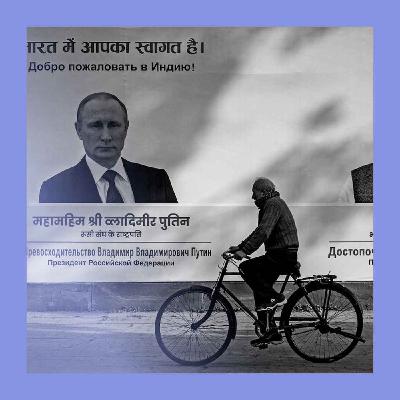
As Vladimir Putin begins a two-day visit to India, our correspondent explains why Donald Trump’s policies have pushed India and Russia closer together. How AI models could learn to take shortcuts––and accidentally become evil. And the curious case of the newly-Malaysian footballers.Listen to what matters most, from global politics and business to science and technology—Subscribe to Economist Podcasts+For more information about how to access Economist Podcasts+, please visit our FAQs page or watch our video explaining how to link your account. Hosted on Acast. See acast.com/privacy for more information.

America’s attacks on possible drug boats in the Caribbean is already controversial. Now critics are questioning the legality of one particular strike in September. What does this mean for the US secretary of war, Pete Hegseth? Why American firms are raising funding to explore gene-editing babies. And women in Japan face a long fight to play the national sport: sumo. In “Babbage” earlier this year we interviewed Chinese scientist He Jiankui, whose use of gene-editing technology on babies landed him a three-year prison sentence.Listen to what matters most, from global politics and business to science and technology—Subscribe to Economist Podcasts+For more information about how to access Economist Podcasts+, please visit our FAQs page or watch our video explaining how to link your account. Hosted on Acast. See acast.com/privacy for more information.

Once derided as a copycat nation, China is now leading the world in innovation, from driverless cars to pharmaceuticals. Our correspondent explains what others can learn from it. Britain looks abroad for policy ideas, but which country is most like it? And why the capybara is a creature of comfort for our troubled age. Listen to what matters most, from global politics and business to science and technology—Subscribe to Economist Podcasts+For more information about how to access Economist Podcasts+, please visit our FAQs page or watch our video explaining how to link your account. Hosted on Acast. See acast.com/privacy for more information.

Our correspondents get a feel for today’s Tehran: no morality police but still much fear of speaking out. And the foreign minister indicates a desire to return to nuclear dealmaking. Who has bought into whom in AI makes the whole industry look pretty circular; we ask what that means for competition. And the first European country to scrap letter delivery.Get a world of insights by subscribing to Economist Podcasts+. For more information about how to access Economist Podcasts+, please visit our FAQs page or watch our video explaining how to link your account. Hosted on Acast. See acast.com/privacy for more information.

Chef Gary Thomas has a lot on his plate. That’s because he’s in the business of feeding thousands of people a day on a ship in the middle of the ocean. Not just any ship – the Star of the Seas, the largest cruise ship in the world. The Weekend Intelligence’s senior producer Barclay Bram braved a trip to the Bahamas to try to figure out the secret behind one of the most impressive food operations in the world. Listen to what matters most, from global politics and business to science and technology—Subscribe to Economist Podcasts+For more information about how to access Economist Podcasts+, please visit our FAQs page or watch our video explaining how to link your account.Music by Blue dot and EpidemicThis podcast transcript is generated by third-party AI. It has not been reviewed prior to publication. We make no representations or warranties in relation to the transcript, its accuracy or its completeness, and we disclaim all liability regarding its receipt, content and use. If you have any concerns about the transcript, please email us at podcasts@economist.com.Read more about how we are using AI. Hosted on Acast. See acast.com/privacy for more information.

The dead are still being found; the displaced huddle in public spaces. Who or what will be blamed, and what policies will change after the tragedy? We visit Georgia, where protests have now lasted a year, probing the differences between popular uprisings that succeed and those that fail. And remembering He Yanxin, last natural inheritor of China’s ancient women-only language. Additional audio courtesy of Zhao Ke'er from the documentary "Heart of Gold".Get a world of insights by subscribing to Economist Podcasts+. For more information about how to access Economist Podcasts+, please visit our FAQs page or watch our video explaining how to link your account. Hosted on Acast. See acast.com/privacy for more information.
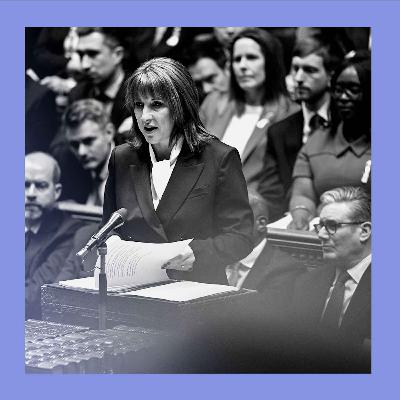
The tax-and-spend plan was fine-tuned to avoid immediate political jeopardy. But it will do little to help Britain’s chronic growth problem, and is likely to erode further the political centre. We meet with Yogi Adityanath, the leader of India’s most populous state and a harbinger of the country’s possible political future. And readers’ best—or most discombobulating—job-interview questions.Get a world of insights by subscribing to Economist Podcasts+. For more information about how to access Economist Podcasts+, please visit our FAQs page or watch our video explaining how to link your account. Hosted on Acast. See acast.com/privacy for more information.

The country’s Communist Party leadership continues to cling to old ideals amid on-again, off-again diplomacy with America—and the people’s suffering only deepens. Britain is making the most of its advantages in the burgeoning industry of quantum technology. And why conservationists’ concern about a wood beloved of classical musicians may be misplaced. Get a world of insights by subscribing to Economist Podcasts+. For more information about how to access Economist Podcasts+, please visit our FAQs page or watch our video explaining how to link your account. Hosted on Acast. See acast.com/privacy for more information.
Gain a deeper understanding of China with Jeremy Page and Sarah Wu. The Economist’s China correspondents report from across the country and the places it influences beyond its borders. Jiehao Chen joins the discussion from London. This award-winning podcast takes on everything from the CCP to EVs and from ageing to AI. Published every Tuesday. Hosted on Acast. See acast.com/privacy for more information.

For decades governments have found minimum-wage rises a politically expedient means of redistribution. But the onward economic distortions have at last become clear. Of course AI can write a faster cover letter — perhaps even a better one. But there are knock-on costs when everyone is doing it. And a look at Florida’s bold experiment in the free choice of unbundled education.Get a world of insights by subscribing to Economist Podcasts+. For more information about how to access Economist Podcasts+, please visit our FAQs page or watch our video explaining how to link your account. Hosted on Acast. See acast.com/privacy for more information.


Download from Google Play

Download from App Store
 United States
I dont undrestant i am persion
It is actually crazy how much impact a country as small as Rwanda has over a country as huge as the DRC. It shows you how unstable and basically ungoverned the DRC really is.
miss information giving to world about Iran by demokratic platforms!
الله اکبر
how many people have israel killed in attack to Iran?
negotiagion with trump was scam for cover the israeil attack to Iran.
how can i find the trascript of each podcast?
what a revelation!!
I as an migrant survived in sweden one year, without any support from sweden government!
Someone should remind those in the government where their forefathers came from when they're bashing Europeans, because in extension they bash themselves, but we all know that a lot of folks up there like to pretend that they're native American or something.
Silver will hit $40.60..
Elvira NabiUlina (the head of Russian Central Bank) not Nabulina
Fertility is not just a factor of choice but also ,well, a question of male fertility. Since the male sperm count has halved in the last 30 years due to the effects of phalates derived from plastics (Dr. Swan et al.) no amount of nudging will restore fertility. Say no more!
Today's The Intelligence "US Policy in Middle East" had some troubling words & undertones... words mean something + lay foundations for other things! Choosing the words "Israel is laying waste to Gaza & Lebanon" there's no reference to why.... such as following October 7th or In its war or even in it's attempt to find and capture terrorists .... NO context, so Israel is BAD or the rest "flirting in escalation with Iran" again lack of context such as 200 ballistic missiles, unprovoked attack
a leftist who supports Putin is not a leftist.
it'd sickening and disgusting to hear the host say in the same breath : the worst massacre in Israeli history and disastrous war in Gaza....madam, it was the worst massacre in gaza too. perpetuated by Israeli war criminals
Love this coverage on Ukraine! The florist interview reminds me this young democracy wants to remain a democracy!
awesome
Boomers are tight because, we've had years added to our pension dates, we've been through many changes to the pension systems, we've seen our money crash too many times and we don't trust the politicians not to screw us over with taxes, or even to move the pension goalposts further and further away. Add to that we expect to live longer and need more care, so what we do have needs to stretch till we're 90
Or a real peace of work?