


 Claim Ownership
Life After Ministry
Subscribed: 1Played: 46
Subscribe

© Copyright 2023 All rights reserved.
Description
Many of us have experienced the sting of losing a job. But there’s something uniquely challenging about leaving a position in full-time vocational ministry. Whether you’re stepping down from a church or leaving a kingdom nonprofit, it’s not as simple as just changing jobs.
Suddenly, everything changes. You’re left navigating not just a career transition, but also a profound shift in identity, community, and daily routines. It feels like stepping into an unknown, filled with questions like, ”What’s next? How do I redefine myself outside the ministry? How do I maintain my faith amidst this transition?”
We’ve been there, navigating the complex journey from vocational ministry to a new chapter in our lives. We’ll explore stories of transformation, hear from those who’ve walked this path before, and provide practical strategies to turn your transition into a season of growth. Remember, every ending is a new beginning.
Suddenly, everything changes. You’re left navigating not just a career transition, but also a profound shift in identity, community, and daily routines. It feels like stepping into an unknown, filled with questions like, ”What’s next? How do I redefine myself outside the ministry? How do I maintain my faith amidst this transition?”
We’ve been there, navigating the complex journey from vocational ministry to a new chapter in our lives. We’ll explore stories of transformation, hear from those who’ve walked this path before, and provide practical strategies to turn your transition into a season of growth. Remember, every ending is a new beginning.
81 Episodes
Reverse

What happens when a pastor steps away after decades of leading a church?
Many leaders imagine retirement will bring peace and freedom.
But for pastors, the transition often carries unexpected weight. The loss of identity, the quiet grief of leaving a community, and the challenge of rediscovering purpose can make the next season far more complicated than anticipated.
After serving the same church for 35 years, Doug Bullock faced this reality firsthand. What began as a thoughtful transition into retirement turned into a deeper journey through loss, identity, and calling.
In the process, he discovered that many pastors are unprepared for the emotional and spiritual questions that follow the end of pastoral leadership.
In this conversation, Doug shares what surprised him most after stepping away from ministry and why retiring pastors still have a crucial role in strengthening the church.
Together they explore how pastors can process loss, redeem past pain, and find renewed purpose beyond the pulpit.
Key Takeaways
Retirement from ministry often includes unexpected grief and identity loss
• Many pastors are unprepared for the emotional impact of stepping away
• Feelings of obscurity after decades of leadership can be surprisingly difficult
• Retired pastors still carry valuable wisdom that can benefit younger leaders
• Churches rarely have a clear vision for how retired pastors can remain involved
• Processing pain and past failures is essential for healthy transition
• Flourishing after ministry means continuing to walk with Christ and serve faithfully in new ways
Chapter Markers
00:00 – Meeting Doug Bullock and his book New Dawn
01:05 – Recognizing when it was time to step away from pastoral leadership
03:59 – Transitioning out of ministry and returning to school
06:00 – Discovering the deeper questions of pastoral retirement
08:07 – The emotional struggles pastors face after stepping down
11:03 – The experience of becoming unknown after years of leadership
13:41 – The key questions pastors must wrestle with in retirement
23:26 – Why many retired pastors struggle attending church
28:13 – The tension between older and younger pastoral generations
32:28 – The coming wave of pastoral retirements
34:03 – What it means to truly flourish in retirement
36:04 – Advice for pastors preparing to step away from ministry
38:37 – Redeeming past pain and helping the next generation
If you’re navigating a ministry transition or preparing for what comes next, visit ministrytransitions.com to find guidance, resources, or schedule a confidential conversation.
You can also explore Doug Bullock’s book New Dawn: Helping Pastors Flourish in Retirement on Amazon or connect with him directly at DTS844@gmail.com.

What happens when the calling that once defined you no longer feels sustainable? When the work you love begins to cost you more than you can carry?
For many ministry leaders, the hardest battles are not theological. They are personal. Emotional. Quiet. And often fought alone.
In this episode, Matt Davis sits down with Don Ross, former pastor and founder of Manhood Tribes, to talk about why so many men struggle in silence, especially during seasons of ministry transition.
After two decades in large evangelical church leadership, Don stepped away - not because he stopped loving Jesus, but because the system was breaking him.
What followed was a difficult transition marked by uncertainty, financial pressure, and identity questions that many ministry leaders quietly face. This conversation pulls back the curtain on isolation, addiction, shame, and the deep need for brotherhood.
If you are navigating transition, questioning your direction, or responsible for leading others through change, this episode offers both clarity and hope.
No man should have to walk alone.
Key Takeaways
Ministry leadership can be both deeply fulfilling and profoundly exhausting at the same time.
Many church systems unintentionally isolate pastors rather than care for them.
Churches often struggle to reach men because they build connection models that don’t align with how men bond.
Pornography addiction thrives in isolation and shame, even among pastors.
Bringing struggle into the light is the first step toward freedom.
Transition seasons destabilize identity, especially around provision and purpose.
Intentional, challenge-based brotherhood can anchor men during seasons of uncertainty.
Chapter Markers
00:00 – Introduction and framing the conversation about men
01:00 – Don’s ministry journey and transition
06:00 – The celebrity pastor model and systemic pressure
08:00 – Why churches struggle to reach men
16:00 – The five marks of manhood
19:00 – Pornography, shame, and isolation
24:00 – How tribes work differently than typical men’s groups
31:00 – Financial pressure and identity in transition
37:00 – Fulfillment after leaving vocational ministry
Ready to take your next step?
Visit MinistryTransitions.com to book a confidential call about an upcoming transition, termination, or succession.
Explore Don’s resources at ManhoodTribes.com and take the quiz at HowManlyAreYou.com.
If this episode helped you, consider donating to support leaders navigating transition.

Is there really a difference between ministry and the marketplace? Or have we created a divide that Scripture never intended?
In this episode, Curt Swindoll shares insights from 40 years of leadership across nonprofit, church, and for-profit environments.
Having transitioned multiple times - sometimes with a plan, sometimes without - Curt challenges the assumption that ministry is something we leave behind.
Instead, he invites leaders to rethink their posture toward God, especially during seasons of uncertainty.
For leaders navigating burnout, succession, or vocational transition, this conversation reframes the journey.
The issue is not whether you are in ministry or business. The deeper issue is whether you are living for God or with Him.
And that distinction changes everything.
Key Takeaways
There is no sacred-secular divide. God is as present in the marketplace as in the church.
Burnout often reveals a “for God” posture that has replaced a “with God” relationship.
Transitions are rarely clean; God’s presence is not dependent on clarity.
Work is one of the primary places of spiritual formation.
Discernment is not about finding one perfect path but learning to journey wisely with God.
Succession is less about ending ministry and more about shifting where and how ministry happens.
Peace and freedom are often the deeper invitation beneath vocational change.
Chapter Markers
00:00 – Is There Really Life After Ministry?
02:30 – Sacred vs. Secular: A False Divide
07:00 – Transitioning Without a Plan
10:00 – Life With God vs. Life For God
15:00 – Burnout and Identity in Ministry
21:00 – The Role of Spiritual Formation and Marriage
24:00 – Moving Between Ministry and Marketplace
29:00 – God at the Door in Seasons of Anxiety
33:00 – Lessons from a Lifetime of Ministry Transitions
43:00 – Succession, Discernment, and “Never Say Never”
50:00 – Practical Resources and Final Encouragement
If this conversation stirred something in you - whether you're navigating a leadership transition, discerning succession, or simply longing to experience more of a life with God - there are a few trusted next steps.
For confidential support and guidance through ministry transitions, visit https://ministrytransitions.com.
To explore spiritual formation resources and connect with trained spiritual directors, go to https://graftedlife.org.
And if you're leading an organization and want clarity, traction, and a healthier operating rhythm, learn more about EOS at https://www.eosworldwide.com or connect directly with Curt at https://www.eosworldwide.com/curt-swindoll. Wherever you are in your journey, you don’t have to walk it alone.

What if the biggest lie Christian leaders believe is that ministry only happens inside church walls?
When pastors and nonprofit leaders transition into the marketplace, many feel like they’ve stepped out of calling and into something lesser. But that assumption may be the very thing limiting the Church’s influence.
In this episode, we talk with Chuck Proudfit about faith at work, succession challenges, leadership continuity, and why Christians must rethink the sacred-secular divide.
This conversation reframes work as worship and challenges leaders to build legacy that outlives them.
Key Takeaways
Work is not secular space. It is strategic deployment.
The sacred-secular divide quietly undermines Christian leadership.
Most succession failures begin long before the transition announcement.
Boards must proactively ask leaders about their 10-year vision.
Continuity requires infrastructure, not just inspiration.
Community shapes faith at work more effectively than content alone.
Leadership legacy must include both personal and organizational clarity.
Chapter Markers
00:00 – Introduction and Chuck’s faith journey
03:15 – Work as worship and the sacred-secular divide
06:44 – Faith in consulting and marketplace leadership
07:33 – Why church transitions struggle
10:13 – Organic ministry in the workplace
13:30 – The birth of At Work On Purpose
16:44 – Spiritual formation through work
19:05 – The Faith at Work Summit and future frontiers
20:43 – Continuity, succession, and leadership legacy
25:15 – Invitation to the Summit
If you are navigating a leadership transition, preparing for succession, or reimagining how faith integrates with your everyday work, take your next step today. Visit https://ministrytransitions.com to schedule a confidential conversation about your transition, explore how faith and work come together at https://atworkonpurpose.org/, and learn more about the global Faith at Work Summit at https://faithatworksummit2026.com/. Whether you are leaving vocational ministry, leading through change, or building what comes next, you do not have to do it alone.

Most ministry leaders expect relief after stepping away.
What they don’t expect is the wilderness to begin after the resignation.
In this honest conversation, Dustin Kleinschmidt shares how years of crisis leadership, misaligned values, and unresolved grief led to burnout, anxiety, and a deep reckoning with faith.
Rather than rushing toward resolution, Dustin invites leaders to reconsider what the wilderness is actually for.
This episode reframes suffering, challenges Christian shortcuts around pain, and offers language for leaders who feel stuck between obedience and disappointment.
If you’ve ever wondered whether you missed God or why healing is taking so long, this conversation meets you right where you are.
Key Takeaways
Burnout is often the result of long-term erosion, not one failure
Healthy systems can’t sustain you in an unhealthy environment
The wilderness often begins after the role ends
Spiritual bypassing keeps leaders disconnected from their real pain
Value misalignment creates invisible but constant friction
Healing doesn’t mean closure or clarity
God’s presence in the wilderness matters more than getting out of it
Chapter Markers
00:00 – Dustin’s ministry journey and early formation
03:30 – Crisis leadership and long-term erosion
06:20 – When sustainability quietly disappears
09:30 – Why good systems still fail in toxic environments
11:20 – Entering the wilderness after resignation
15:20 – Spiritual bypassing and emotional honesty
18:30 – The Exodus, expectations, and disappointment with God
24:00 – Living faithfully without resolution
28:15 – The Wilderness Way: book, workbook, and music
If you’re in the wilderness and looking for faithful companions along the way, explore The Wilderness Way and Ministry Transitions. Together, they offer resources to help you live honestly with God in hard seasons and engage Scripture with deeper historical and spiritual clarity.
Learn more at https://www.dustinkleinschmidt.com and https://thejewishroad.com.

Stepping away from leadership is rarely just a strategic decision. It’s personal. Emotional. Spiritual. Especially for founders and long-term leaders who have poured their lives into a ministry.
In this episode, Jim West reflects on what it meant to hand off leadership of the Barnabas Group, a ministry he helped build and lead for over two decades.
Just weeks after that transition, Jim was diagnosed with cancer, forcing him into a season of surrender he never planned.
This conversation explores succession, identity, grief, and trust. It’s an honest look at what happens when God asks you to release what you love, and how unexpected seasons can become some of the most formative and meaningful of your life.
Key Takeaways
Succession is not an emergency plan. It’s a discipleship issue.
Founders often grieve more than they expect when they step away.
A ministry continuing without you can be a sign of health, not failure.
Forced stillness can protect both leaders and organizations.
Identity untethered from role allows for deeper trust in God.
Life after ministry can be fuller, not smaller.
Transitions require guides, not just decisions.
Chapter Markers
00:00 – Jim’s path into the Barnabas Group
03:30 – Recognizing the need for succession
05:20 – Passing the baton and receiving a cancer diagnosis
07:40 – Watching the ministry grow without him
11:50 – Faith, cancer, and spiritual clarity
16:00 – Discovering life and ministry after leadership
27:10 – Advice for leaders facing transition
If you or your organization are facing a leadership transition, visit ministrytransitions.com to book a confidential conversation and get support that protects people, preserves purpose, and plans wisely for what’s next.

Most ministry transitions don’t happen suddenly. They happen slowly, quietly, and later than they should.
In this season-ending episode, we reflect on the patterns Ministry Transitions has seen over the past year while walking with pastors, boards, nonprofits, and faith-driven organizations.
From delayed conversations to the quiet crisis of succession, this episode names the realities leaders often feel but rarely say out loud.
It’s an honest look at why transitions feel so heavy, why waiting makes them harder, and how support can change the outcome entirely.
This is not a forecast for what’s next. It’s a grounded invitation to name what’s already here and walk through it with wisdom, care, and courage.
Key Takeaways
Most transitions happen later than they should, not because of neglect but misplaced protection
Waiting does not make transitions easier. It makes them more expensive
Succession planning is about stewardship, not replacement
Ministry transitions extend far beyond the church into nonprofits and faith-driven organizations
Many leaders engage support only after the ending has already occurred
Leaders are often relieved, not resistant, when care is offered
Support consistently changes outcomes for leaders and organizations
Chapter Markers
00:00 – When transition feels unfinished
05:20 – Why transitions are happening too late
11:10 – Succession as a silent crisis
17:30 – Ministry beyond the church walls
23:45 – Why people listen quietly
29:10 – What happens when leaders are offered support
35:40 – Why support changes outcomes
If you’re in a transition, leading others through one, or want to help someone who didn’t see this coming, visit MinistryTransitions.com to book a confidential call, explore resources, or give toward supporting a leader in transition. You don’t have to walk this alone.

At some point in ministry, we start confusing busyness for faithfulness. We tell ourselves that exhaustion is just the cost of obedience - that being needed, stretched thin, and constantly available somehow means we’re doing it right.
But deep down, we know something’s wrong.
In this episode of Life After Ministry, Matt Davis sits down with his longtime friend Andrew Hartman to talk about what happens when time becomes our boss. Andrew shares how his own burnout - marked by real physical breakdown - became the turning point that changed his relationship with time and work forever.
This isn’t a conversation about calendars or to-do lists. It’s about trust, limits, and the grace of learning how to stop before it’s too late. For anyone in ministry who’s running on empty, this one might be preventative - so you never have to live life after ministry.
Key Takeaways
Being busy for God is not the same as being faithful to Him.
Stress isn’t proof of calling; it’s often a signal of fear or misplaced trust.
Burnout is your body’s declaration of bankruptcy - an invitation to reorganize your life.
Ministry culture often rewards overwork, but Jesus modeled a rhythm of rest and presence.
True stewardship includes managing time as a sacred resource, not an endless debt.
Building trust with time begins by creating small, consistent commitment plans.
You don’t have to burn out to be fruitful. The work of God is sustained by the peace of God.
Chapter Markers
00:00 – Matt and Andrew reconnect after 20 years
01:43 – When “busy for God” became burnout
05:18 – The body declares bankruptcy on stress
07:03 – Solving the time problem
09:21 – Is burnout a failure or a signal?
13:52 – Fear, faith, and our emotional relationship with time
17:24 – How “commitment plans” build peace
19:10 – Leading others in stewardship of time
23:48 – What life looks like on the other side of burnout
26:33 – Teams that heal their pace together
Learn more, donate, or schedule a confidential transition call at MinistryTransitions.com
Explore Andrew Hartman’s resources - free masterclass, coaching, and tools - at TimeBoss.us
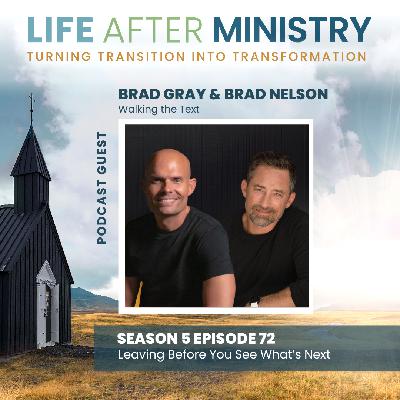
Most pastors imagine ministry as a lifelong calling, until something shifts - slowly, painfully, or all at once.
In this episode, Brad Gray and Brad Nelson share their unfiltered stories of leaving pastoral ministry, wrestling through uncertainty, and discovering the faithful presence of God in seasons where nothing made sense.
Their journeys reveal how transitions can expose hidden wounds, force honest discernment, and ultimately reshape our understanding of calling.
From uprooting a thriving teaching pastor role with no job on the other side, to the quiet unraveling that nearly cost a marriage, both men walk through the tension, grief, and surprising grace that comes when God invites you into a future you can’t yet see.
And at the center of their healing is a rediscovery of the Lord’s Prayer - not as a childhood memory, but as a daily blueprint for partnering with God.
This conversation is hope for the discouraged, a mirror for the exhausted, and a companion for anyone wondering whether there is life after ministry. There is. And it might be more expansive than you expect.
Key Takeaways
How God can initiate a transition long before you understand it.
Why community and spiritual friends are essential during vocational upheaval.
What happens when the pain of staying becomes greater than the fear of leaving.
How unaddressed wounds from ministry begin to surface during transitions.
Why the Lord’s Prayer is a daily blueprint for grounding, clarity, and direction.
The difference between assignment and calling in a leader’s life.
How God works slowly, quietly, and faithfully in seasons that feel stalled.
Chapter Markers
00:00 – Introductions and the two Brads
01:10 – Brad Gray’s unexpected call away from a thriving church
03:45 – Moving to Nashville without a plan
07:00 – Brad Nelson’s painful exit from church planting
09:35 – How ministries unravel marriages and identities
12:30 – Discernment, tension, and the pivot point
14:30 – When pain forces change
20:00 – The Lord’s Prayer as a blueprint for life
25:43 – Kingdom, calling, and partnering with God
29:09 – The making of the film and book
33:06 – How churches can use the new resources
38:30 – What they would say to their former selves
42:49 – Is there life after ministry?
43:40 – Final thoughts and blessing
Your story is not over. In fact, this may be the first time in years that God finally has the space to show you who you are beyond what you do.
If you’re navigating a transition, facing a forced resignation, preparing for succession, or simply unraveling quietly under the weight of ministry, reach out. You don’t have to make these decisions alone.
Visit https://ministrytransitions.com to schedule a confidential conversation or to give toward a leader who is carrying more than they can name.
And if you want to explore the formative power of the Lord’s Prayer as a companion in this season, engage the resources at https://thelordsprayer.com. They offer a film, a forthcoming episodic series, and a new book designed to walk with you as God leads you into what’s next.
There is life after ministry. And God is already in the future preparing it for you.

Dr. Nathan Baxter loved ten hours of his job.
Those one-on-ones with staff fueled him. The rest slowly emptied him. Naming that truth started a two-year journey out of a role he’d held for decades. He didn’t abandon ministry. He changed vehicles so his calling could breathe again.
In this conversation Nathan walks through a practical runway. He set a modest income target, built a small savings cushion, and launched a coaching practice with a pastor’s heart. He also shares the moment his elders asked him to leave sooner than planned and chose surprising generosity, a gift that humbled him more than any pain.
Now coaching CEOs and pastors alike, Nathan talks finishing well, clarifying a “particular purpose,” and the three anchors every leader over 50 needs: margin, influence, and hyper-intentional living.
If transition feels like free fall, this episode will help you steady your soul and take the next right step.
Key Takeaways
Honest work audits can reveal misaligned roles without shaming your calling.
A two-year discernment window can hold fear, finances, and family well.
Build a simple runway: clear income target and small savings cushion.
Generosity in transition can reframe pain and deepen humility.
You can keep a pastoral identity while changing employers.
Finishing well rests on margin, influence, and intentional living.
Purpose is discovered over time. Let the desert do its work.
Chapter Markers
00:00 Welcome and background
02:20 When the job isn’t the joy anymore
04:55 Two-year wrestle and first paid coaching moment
08:24 Elders, early exit, unexpected generosity
10:14 Building a practical runway and budget targets
12:16 Why “Lead Self, Lead Others”
16:02 Defining finishing well in the fourth quarter
18:18 Retiring the fee, keeping the call at 68
20:07 Purpose unfolds slowly, not suddenly
24:42 Margin, influence, and hyper-intentional life
27:30 Why pastors make great coaches
30:01 CEOs and pastors face the same pressures
31:38 Wisdom to a next-gen pastor son
34:03 Where to find Nathan’s work
Before you make the next move, make the wise one. Visit ministrytransitions.com to schedule a confidential call, get transition tools for your board or staff, or give to help another leader walk through theirs with dignity.
To learn more about how pastors can become powerful leadership coaches, visit leadselfleadothers.com or realcoachingsuccess.com. You’ll find tools to help you clarify calling, build a coaching rhythm, and multiply your impact beyond the church walls.

When the role that once fit like a second skin begins to suffocate, what do you do? For Duncan Robinson, it meant stepping away. No scandal. No collapse. Just honesty and courage to say, “I need to sit down and be fed.”
That decision took him from church staff to radio hosting, from the pulpit to row three, and eventually back into ministry with a new clarity.
Along the way, he discovered how to face failure without fear, how to detach identity from role, and why bi-vocational rhythms might be the healthiest way forward for pastors.
If you’re navigating transition - or helping someone who is - this conversation offers language and hope for what comes next.
Key Takeaways
Identity is received in Christ, not earned by a role
Failure roars like a lion but shrinks when faced
Grace isn’t tidy - it meets you in real time
Bi-vocational ministry mirrors the lives of congregants
Pastoral skills translate beyond the pulpit
Churches can pilot one day of outside work for healthier staff
The wilderness is where God grows clarity and love
Chapter Markers
00:00 Welcome and setup
05:15 From Phoenix growth to Australian valley
08:30 Radio hosting and a father’s death
10:56 Untangling identity from role
15:45 A year of silence and being fed
21:05 What “pastor” really means
24:50 Transferable skills pastors overlook
29:20 Why bi-vocational makes sense
40:10 Real-time grace at the speed of Jesus
45:10 Closing
If you’re a pastor or ministry leader facing transition - or walking with someone who is - you don’t have to do it alone. Visit ministrytransitions.com to explore coaching, confidential conversations, and resources designed to help you protect people, preserve purpose, and plan what’s next with wisdom and grace.
To connect with Duncan Robinson, visit DuncanRobinson.net for links to his projects, speaking, and his book Full Phoenix Rising: Real-Time Grace at the Speed of Jesus - a raw and redemptive look at failure, faith, and finding your way back when everything falls apart. You can also find Full Phoenix Rising on Amazon, Target, Walmart, and other major retailers.
If this conversation encouraged you, share the episode with a friend who might need to hear that stepping out of ministry doesn’t mean stepping out of God’s calling - it might just mean walking it out differently.

Ministry employment isn’t just HR. It’s covenant community, stewardship, and public witness.
In this episode, attorney and former ministry leader John Melcon explains how churches and nonprofits can handle staff transitions without abandoning their values or ignoring real risks.
John shares his own sudden exit from a director role in Christian higher education and how that season led him to serve ministries as legal counsel.
He outlines why U.S. courts often take a hands-off approach to religious leadership disputes, what that means for pastors and boards, and how to prepare before conflict ever arises.
From “talk about your last day on your first day” to using Christian conciliation instead of civil court, this conversation offers a road map: clarity in writing, compassion in tone, and a process that keeps the mission central.
Key Takeaways
Mission and values - not fear - should drive personnel policy and decisions.
U.S. law generally avoids entangling courts in religious leadership disputes; plan accordingly.
Written agreements can be precise and pastoral when drafted with mutual dignity in mind.
Succession planning is discipleship: normalize timelines and transitions early.
Consider mutual confidentiality/non-disparagement; avoid clauses that suppress lawful reporting.
Use Christian conciliation for disputes when both parties voluntarily opt in.
Involve counsel early - clarity at formation prevents costly confusion at separation.
Chapter Markers
00:00 — Welcome, the tension of boss and brother
02:54 — John’s ministry background and unexpected termination
08:55 — Discernment, law school, and a new calling
12:51 — “Lawyers aren’t the enemy” and the advisor model
16:07 — How religious liberty shapes ministry employment
23:43 — Loyalty, performance, and ending well
28:49 — Clarity at the start: contracts, bylaws, expectations
32:56 — Christian conciliation vs. civil court
37:36 — NDAs, confidentiality, and what’s wise now
41:43 — Culture signals: how we say goodbye
When ministry transitions go wrong, the fallout isn’t just legal - it’s spiritual.
Ministry Transitions walks with pastors and ministry leaders through seasons of loss and change with clarity, care, and purpose. Start your next chapter at ministrytransitions.com.
And when wise legal counsel is needed, John Melcon brings both legal expertise and a ministry heart.
Learn more about his work serving churches and nonprofits at taftlaw.com/people/john-terry-melcon/.

Quiet fatigue rarely announces itself. It hums under the surface until a crisis forces a decision.
In this conversation, Marine veteran and Forte co-founder Vineet Rajan reframes care for leaders as mental fitness - a proactive, daily practice that keeps pastors and nonprofit teams clear-headed, resilient, and ready.
We contrast mental fitness with therapy, name the everyday pressures leaders face, and offer accessible rhythms that fit real life.
You’ll hear why churches are becoming early adopters, how to reduce noise so you can notice what God is saying, and why outcomes - not just usage - should drive board decisions.
If you lead people, steward budgets, or carry a call that feels heavier than it used to, this episode gives you language, guardrails, and next steps to strengthen your team without adding shame or hype.
Key Takeaways
Mental fitness is proactive training; therapy is reactive care for acute needs. Both matter.
Leaders fight three constants: entropy, the enemy, and evil - training helps us endure them.
Preventative care beats crisis management; reduce interior noise to increase signal.
Ministries love the model because it separates staff care from supervisory entanglements.
Outcomes matter: increased productivity and well-being translate to real ROI.
Accessibility drives adoption: mobile scheduling, short sessions, and confidentiality.
Chapter Markers
00:00 Welcome and setup
01:00 Vineet’s backstory: immigrant kid to Marine officer
04:00 What is Forte and who they serve
05:45 Mental fitness vs mental health - clear differences
09:20 Preventative maintenance and the “office vent” analogy
11:45 The three E’s: entropy, enemy, evil
15:00 Why churches became early adopters
19:30 EAPs, engagement, and outcomes that matter
22:05 The secret sauce: accessibility and aspiration
25:40 From interrogation training to loving people well
29:00 Vision: organizations solving big problems, people known and whole
31:15 Next steps for leaders and teams
33:30 Closing and partnership
When leaders hit quiet fatigue, care starts with community. Ministry Transitions walks with pastors and ministry leaders through seasons of loss, burnout, and change - helping them rediscover clarity and calling. Visit ministrytransitions.com.
For mental fitness solutions, Forte serves both sides of the mission field. Explore getforte.com/faith for Christian organizations, businesses, and nonprofits, or getforte.com for teams in the broader marketplace looking to build resilience and clarity.

When termination happens behind a closed door, the impact lands in the kitchen, the car line, and the kids’ bedrooms.
In this episode, pastor’s wife Kristen Joy Humiston tells the story of being shut out of the room, hearing “you’re done here,” and driving home past the houses of those who voted yes.
Matt and Marilee name what many spouses carry in silence: rejection before termination, the isolation that follows, and how trauma forms when you have no voice, no choice, and no people.
They also get practical. What to do on day one. How to breathe, pack, and protect your children. How boards can reduce harm and how churches can care for the whole family, not just the titleholder.
There is life after ministry. It may look different than you imagined. Yet dignity, honest community, and thoughtful planning can close a wound and leave a healed scar.
This conversation offers language, tools, and hope for spouses, leaders, and boards who want to do hard things better.
Key Takeaways
Forced termination becomes traumatic when people lose voice, choice, and community.
Boards can reduce harm through clear policy, generous severance, and family-wide care.
Day one priorities: safety, breathing space, housing plan, immediate financial triage.
Spouses often sense red flags early; their intuition should be invited and honored.
Community mitigates trauma; isolation cements it. Build a small circle fast.
Identity untangling takes time for both pastor and spouse; purpose is bigger than a role.
Support groups for ministry wives provide consistent, safe spaces for real healing.
Chapter Markers
00:00 Cold open and setup
03:22 Introductions; why this conversation matters
05:49 “You’re done here”: the termination moment
09:29 Red flags and the slow drift toward decision
11:29 Rejection before the firing; betrayal and shock
16:32 The body keeps the score: words fail, pain speaks
20:06 Day zero logistics: kids, school, where to go
26:51 Finding footing: packing, jobs, housing
31:24 When the church orbits the pastor and forgets the spouse
35:29 How boards can reduce harm and do this better
40:11 Healing in community: support groups for ministry wives
50:17 Life after ministry: new work, real purpose
53:18 Preparing for a high-risk profession: finances and wisdom
55:24 Resources, next steps, and hope
Connect with Matt and the team at MinistryTransitions.com for guidance through terminations, transitions, or succession planning. Explore Kristen’s support groups and coaching at KristenJoyCoaching.com for pastors’ wives and women navigating ministry fallout.

When a beloved role ends, identity gets loud.
In this candid conversation, Joshua Gordon traces his journey from ministry-adjacent entrepreneur to a surprising new assignment after his business collapsed in COVID. A trusted friend’s hard words, deep prayer, and patient community became “spiritual physio” that restored his sense of self in Christ.
We talk about the gap between intention and impact in church transitions, why being “driven” can hide quiet desperation, and how to hear God’s still small voice before things are literally on fire.
Josh shares the practical and pastoral moves that protected his marriage, his kids, and his future calling.
If you are a leader facing an ending, a board guiding one, or a pastor recovering from one, this episode offers language, wisdom, and hope. Faithfulness isn’t empire building. It’s walking with Jesus in ordinary choices that shape a lifetime.
Key takeaways
Intention without action creates collateral damage in transitions.
“Driven” can be desperation in disguise; identity must relocate from role to Christ.
God often speaks through memory, community, and quiet checks in the soul.
Invite truth-telling friends. Love risks being misunderstood to protect you.
Over-preparation can be control; trust requires limits on our need to manage outcomes.
Measure success by faithfulness to Jesus and people, not by platform.
Healthy endings open a window for deep heart work and future freedom.
Chapter markers
00:00 Cold open, Canadians and calling
03:20 Intention vs impact in church transitions
07:30 PK expectations and disillusionment
10:20 Building a ministry-minded business
12:40 COVID collapse and costly layoffs
16:20 Untangling identity from role
18:45 A memory from God that exposed motive
28:55 “Physio” for the soul and daily trust
38:00 Friendship that told the hard truth
47:50 Closing one work, starting another
52:15 Learning to follow quiet discernment
59:30 Wealth redefined: family, faith, and freedom
1:04:15 Kingdom over empire, final blessing
If you’re facing a ministry transition - or helping someone through one - visit MinistryTransitions.com to find confidential guidance, resources, and hope for what’s next.
For more from Joshua Gordon and The Lead Pastor, visit here: https://theleadpastor.com/

When the New York Times ran with allegations surrounding Willow Creek’s founding pastor, Steve Carter had a choice: keep the machine running or protect the trust of the people in the room. He chose integrity - and walked away from the stage that had defined his career.
In this conversation, Steve names the real costs: the silence inside the institution, the “values higher than the chaos” that guided him, and the morning-after reality that there was no job, no safety net, and no way to control the narrative.
He talks about the anger he absorbed, the outside leaders who showed up, and the therapist’s hard question that kept him from repeating patterns.
But the story doesn’t end in exile. It moves through a real wilderness - grief, breathing, waiting - and into a humbler, healthier life: moving back to the Midwest, choosing place over platform, and becoming the lead pastor at Christ Church. What emerges is a field guide for anyone facing a crisis of integrity in Christian leadership.
Key Takeaways
Integrity over institutional preservation: Trust is sacred; don’t trade it for optics.
Name “values higher than the chaos”: Decide in advance what you won’t violate when pressure comes.
Healing is not transferable: There’s first-hand wounding and first-hand healing; your family needs its own path.
Interrogate attraction to unhealthy systems: Ask why certain leaders and cultures feel “safe.”
Grief takes the time it takes: Practice a Holy Saturday rhythm - don’t rush from Friday to Sunday.
Choose place over platform: Calling is often geographic and relational, not positional.
Lead from scars, not spin: Wounds can become witness when truth is told and humility is practiced.
Chapter Markers
00:00 — Cold open: Why transitions are never just “staff changes”
04:53 — “These are my people”: the early joy at Willow
06:47 — Crisis emerges; what repentance would have required
09:14 — The headlines drop; “I won’t play with people’s trust”
11:52 — Who can you trust when the room is spinning?
17:22 — Six options, and why pastoring again wasn’t one of them
19:26 — Therapist’s jolt: “Why are you drawn to narcissists?”
22:16 — Outside support vs. inside backlash; the binder of messages
25:34 — Reframing the anger; learning what people were really saying
27:59 — Starbucks incident; a son’s question about “reward”
33:25 — Grieve, Breathe, Receive: the Holy Weekend framework
36:53 — Wilderness theology: disorientation to reorientation
39:36 — Reentry: discerning a safe, healthy church
41:33 — “Steve of Chicagoland”: called to a place, not a position
43:50 — Inner Hybels and inner Ortberg: action and formation
47:20 — Staying in touch; practicing faithfulness, not fame
If you’re walking through a ministry transition or facing hard decisions about leadership, you don’t have to do it alone. Visit MinistryTransitions.com to explore resources, donate to support a leader in the thick of change, or book a confidential call.
You can also learn more about Steve Carter’s ministry and resources through Christ Church of Oak Brook and by picking up his book Grieve, Breathe, Receive at stevecarter.org/book.

Many pastors find themselves at the end of their ministry career unable to retire - not because they lack calling, but because they lack financial security. Churches often avoid the money conversation, leaving leaders stuck in the pulpit longer than they should be.
In this episode, financial strategist Gabe Pelphrey opens the curtain on why retirement planning for ministry leaders so often gets ignored. He explains the unique challenges pastors face, the role boards must play, and the courageous conversations that make succession possible.
This isn’t just about money - it’s about stewardship, legacy, and ensuring both leaders and churches are prepared for what’s next.
Key Takeaways
Why many pastors cannot financially afford to retire
The board’s role in annual compensation and planning reviews
How rabbi trusts and deferred compensation plans protect leaders and churches
The danger of assuming “God will provide” without planning
Why courageous conversations about money and succession matter
How retrospective compensation studies address past underpayment
Why planning early ensures dignity, security, and peace in transitions
Chapter Markers
00:00 – Welcome & Introductions
01:20 – The hidden financial crisis in pastoral transitions
03:45 – Who holds responsibility: pastor or board?
06:15 – When pastors retire into poverty
08:00 – Unique financial tools for churches (rabbi trusts, 403b9s)
10:13 – Stewardship and courageous conversations
13:27 – Strongholds around money in ministry
16:40 – Poverty mindset vs. extravagant misconceptions
20:06 – Retrospective compensation studies explained
22:53 – Gabe’s background and calling into this work
25:06 – How Stewarded serves churches and nonprofits
27:00 – Why Ministry Transitions + Stewarded work hand-in-hand
32:29 – Preview of joint webinar
Retirement should not punish calling. Visit stewarded.io to schedule a strategy session. Build a clear roadmap with your board using tools like 403(b)(9) plans, rabbi trusts, deferred compensation, and retrospective compensation studies so your pastor can finish with dignity and your church stays strong.
If succession or a financial crunch is on the horizon, do not walk it alone. Go to ministrytransitions.com to book a confidential call. We help pastors and boards craft integrity-first transition plans that protect people, steward resources, and prepare your church for what’s next.

Behind every thriving ministry is a foundation you can’t always see - standards, accountability, and trust. Without them, the most passionate vision can unravel overnight.
In this episode of Life After Ministry, ECFA’s Jake Lapp explains why accountability matters not just for auditors and boards but for pastors, leaders, and anyone entrusted with Kingdom resources.
He shares how ECFA’s standards were designed to serve ministries, not stifle them, and how transparency is one of the clearest ways leaders reflect Christ’s call to integrity.
If you’ve ever wondered whether accountability hinders or helps ministry, Jake’s perspective reframes the conversation. This episode offers a framework for leaders who want to guard the mission, protect their people, and leave behind a legacy of trust.
Key Takeaways
Accountability is not bureaucracy - it’s discipleship.
Transparency builds trust faster than vision statements.
Financial integrity protects both leaders and the people they serve.
ECFA standards are guardrails, not red tape.
Trust is earned in drops but lost in buckets.
Healthy structures create freedom, not restriction.
Integrity in hidden details sustains visible ministry.
Chapter Markers
00:00 – Introduction to ECFA and Jake Lapp
02:05 – Why Accountability Matters in Ministry
05:20 – The Role of ECFA Standards
09:45 – How Transparency Builds Trust
13:10 – Common Pitfalls Leaders Face
17:25 – Trust, Integrity, and Long-Term Sustainability
21:40 – Encouragement for Leaders in Transition
Strengthen the foundation you cannot see. Visit ECFA.org to review the Seven Standards, explore practical tools, and begin a clear pathway toward accreditation. Build transparency that protects people, guards the mission, and reflects Christ’s call to integrity.
If a transition is on the horizon, do not carry it alone. Go to MinistryTransitions.com to book a confidential call and build an integrity-first plan that safeguards your people and purpose. If you’re able, give to make this support possible for another leader.

What happens when the very act of caring for others leaves you depleted?
Laura Howe, founder of Hope Made Strong, knows firsthand the toll of compassion fatigue. From her own season of burnout came a global movement equipping churches to address mental health with wisdom and grace.
In this conversation, Laura shares her personal journey from exhaustion to renewed purpose. She reminds us that burnout is not a moral failure, but a workplace hazard for anyone serving in caregiving roles.
With honesty and clarity, she explains what resilience truly looks like, how to know when you’ve moved from “yellow” into “red,” and why churches must begin addressing mental health as part of whole-life discipleship.
For leaders in transition, this episode offers a lifeline. You’ll hear not only practical wisdom but also the hope that God redeems what feels wasted.
Whether you’re a pastor, a board member, or someone carrying unseen weight, Laura’s insights offer courage to pause, refuel, and continue faithfully.
Key Takeaways
Burnout and compassion fatigue are hazards of caregiving, not signs of weakness or sin.
Resilience is less about powering through and more about bouncing back.
Ministry leaders must learn to recognize their “zone” on the green-yellow-orange-red scale.
Sustainable care in churches means creating belonging, purpose, and hope - not acting as clinics.
The Church has a unique capacity to support mental health across every stage of life.
Global interest in integrating faith and mental health is rising rapidly.
Hope Made Strong and the Church Mental Health Summit provide free, practical resources.
Chapter Markers
00:00 – Introduction to Laura Howe and Hope Made Strong
01:10 – Laura’s Burnout Story and Birth of Hope Made Strong
03:13 – Understanding Compassion Fatigue and Resilience
06:12 – How Do You Know It’s Time for a Change?
09:17 – From Red Zone to Hope Made Strong
12:15 – Sustainability and the Church’s Responsibility
16:04 – Why the Church Must Embrace Mental Health
19:50 – Launching the Church Mental Health Summit
23:25 – Personal Reflection and Final Encouragement
If this episode stirred something in you, take a next step: visit MinistryTransitions.com to book a confidential call about an upcoming transition, termination, or succession - or give to help another leader get timely support. Then head to HopeMadeStrong.org to equip your team for sustainable care by registering for the Church Mental Health Summit and accessing practical tools for your church.

What if the missing piece in your leadership is not more strategy but more empathy?
Bill and Kristi Gaultiere say empathy is oxygen for the soul, and many leaders are gasping without realizing it.
They join Matt to unpack how Jesus models secure attachment with the Father and how we can receive and reflect that love in daily life.
Bill and Kristi name the empathy deserts many of us grew up in, why ministry culture often rewards self-neglect, and how receiving care is not a luxury. It is discipleship.
The conversation lands with the Four A’s of Empathy. Ask. Attune. Acknowledge. Affirm. Practice these, and watch connection and courage return.
If you are ending a role, beginning again, or preparing for a hard meeting, this episode offers biblical wisdom and field-tested tools to do hard things with Jesus’ easy yoke.
Key Takeaways
Empathy is not sentimentality. It is the way love becomes believable and actionable. “We love because He first loved us.”
Many leaders grew up in empathy deserts. Naming this breaks shame and opens us to care.
Jesus models secure attachment with the Father. Presence before performance. Prayer before platform.
The Four A’s of Empathy help in any conversation. Ask. Attune. Acknowledge significance. Affirm strengths.
Receiving empathy enlarges capacity for compassion at home and work.
Empathy transforms hard transitions. It dignifies layoffs, fuels grief work, and softens the ground for forgiveness.
Leaders need safe people and slow practices that rebuild attachment to God and others.
Chapter Markers
00:00 Welcome and name pronunciation fun
01:38 What is Soul Shepherding and the easy yoke of Jesus
04:10 Release day for Deeply Loved and why empathy matters
04:43 Empathy deserts and early stories that shape leaders
07:45 Why Christian leaders struggle to receive love
11:06 Empathy is oxygen for the soul
14:48 “Is empathy soft?” Gender, strength, and honesty
20:38 Attachment, secure bonds, and practical tools
26:30 Theology plus psychology in Deeply Loved
27:03 The Four A’s of Empathy explained
38:22 Empathy in layoffs, burnout, and hard meetings
43:53 Where to find the book and Soul Shepherding retreats
45:08 Close and gratitude
Explore More Resources:
Dive deeper into the themes of this episode by visiting soulshepherding.org/deeplylovedbook for Bill and Kristi Gaultier’s Deeply Loved, and find confidential guidance and support for ministry transitions at ministrytransitions.com.

Comments

Download from Google Play

Download from App Store
 United States