


 Claim Ownership
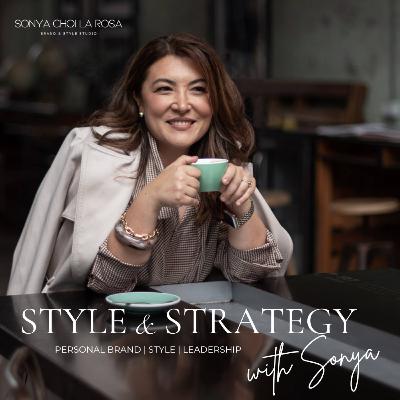
STYLE & STRATEGY WITH SONYA
Subscribed: 12Played: 98
Subscribe

© 2026 2026
Description
Style & Strategy: The Leadership Presence Podcast for senior women in corporate who are respected for what they deliver and ready to be remembered for who they are.
I'm Sonya Choi La Rosa. After 25 years leading in corporate financial services across Technology, Operations, and Transformation, I know what it takes to be experienced at the level you've earned.
I've never believed presence is something you either have or you don't. It's built. From the inside out.
Through my 3D Impact Method™, I integrate what most approaches fragment: leadership identity, strategic positioning, and style strategy. Because these don't live in separate boxes. They intersect. This is strategic presence for women stepping into bigger rooms.
97 Episodes
Reverse
Every senior woman I work with says some version of the same thing: "I know I need to work on this, but I'm so busy." The busyness is real. The workload is real. But what most women don't realise is that busyness isn't a neutral holding pattern. Every week you show up without strategic intent, the perception people have of you is hardening. The "safe pair of hands" label, the "reliable executor" reputation, those calcify into how people read you.
In this episode, I name the busyness pattern for what it is, share the research on why perception doesn't wait, and give you a five-minute starting point that breaks the cycle. This episode is for the senior woman who rates her capability at eight or nine and her presence at three or four, and keeps telling herself she'll get to it when things calm down.
KEY TAKEAWAYS
The gap between capability and presence widens while you wait. Perception isn't static. First impressions and early labels shape how people interpret everything that follows (Asch, 1946; Sullivan, 2019).
Delivering is safe. Positioning is vulnerable. For women who've built careers on output, claiming space through presence instead of performance feels like a risk. Busyness becomes the acceptable reason to avoid it.
Unintentional signals are still signals. Research on the Red Sneakers Effect (Bellezza, Gino & Keinan, 2014) shows that deliberate nonconformity signals status and competence, but only when it's perceived as intentional. Showing up without strategic thought sends the opposite signal.
The "safe pair of hands" perception calcifies over time. The primacy effect means early impressions carry disproportionate weight. The longer the "reliable executor" label sits, the harder it is to shift.
Working on your presence doesn't require a sabbatical. The first step is diagnostic: naming where the gap between capability and how you're experienced is actually showing up. That takes five minutes.
Clarity comes before the wardrobe. The first thing that changes isn't what you wear or how you speak. It's your ability to articulate who you are as a leader and how you want to be experienced.
TIMESTAMPS
0:00 - Opening: Strategic Presence
0:28 - Welcome & Introduction
1:24 - The Capability vs. Presence Gap
2:20 - When Busyness Becomes the Problem
4:04 - Three Women, One Pattern
5:53 - The Primacy Effect
7:56 - Deliberate vs. Unintentional Presence
9:04 - Breaking the Cycle
10:21 - Identifying Your Gap
12:11 - Take the Leadership Presence Profile
12:19 - Final Thoughts
RESEARCH REFERENCED
Asch, S.E. (1946). Forming impressions of personality. The Journal of Abnormal and Social Psychology, 41(3), 258-290.
Sullivan, J. (2019). The primacy effect in impression formation: Some replications and extensions. Social Psychological and Personality Science, 10(4), 432-439.
Bellezza, S., Gino, F. & Keinan, A. (2014). The red sneakers effect: Inferring status and competence from signals of nonconformity. Journal of Consumer Research, 41(1), 35-54.
LINKS AND RESOURCES
➡ Find out what is creating the gap between your capability and how your experience is in under 5 mins. Complete the Leadership Presence Gap Assessment here: Assessment
➡ Download the Wardrobe Guide for women in leadership – Get a curated list of must-have wardrobe staples that blend versatility, style, and impact: Guide
➡ Book Your Strategy Call
➡ Find out more about programs and services
CONNECT WITH SONYA
➡ Connect with me on social media
Instagram
LinkedIn
YouTube
Facebook
Substack
A charisma expert recently advised women not to dress in ways that make them stand out for the wrong reasons. The advice isn't wrong. It's just not finished. It tells you what to avoid but gives you nothing to do instead.
In this episode, I unpack why the "stay safe" strategy that helped you belong early in your career is the same strategy that's making you invisible at senior levels. I walk through the research on how visual signals shape perception in under 100 milliseconds, why what you wear changes how you think and perform (not just how others see you), and the three questions I use with every client to move from default dressing to strategic presence.
If you've been fitting in so successfully that you're not being read at all, this episode is for you.
KEY TAKEAWAYS
The advice to "not stand out for the wrong reasons" is protective, but it leaves a gap. It tells you what to avoid without giving you a framework for what works instead. For senior women, the real risk isn't standing out wrong. It's not being read at all.
Willis and Todorov's research at Princeton found that competence judgments form within 100 milliseconds. If your visual signal is neutral, you're not getting a negative read. You're not getting a read at all. At Director level and above, that's a problem.
Enclothed cognition research by Adam and Galinsky showed that what you wear changes how you think and perform, not just how others see you. Defaulting to safe reinforces a neutral signal internally, costing you cognitive energy even when you can't name it.
The Dartmouth scar study (Kleck and Strenta, 1980) demonstrated expectation bias: participants who believed they had a visible scar reported being judged by strangers, even after the scar had been secretly removed. When you feel like you don't look the part, you read the room through that filter.
Three questions to move from default to strategic: What does this room need from me? Does what I'm wearing reflect the level I'm operating at or the level I came from? Am I making a choice, or am I avoiding one?
Visual friction doesn't just affect how others see you. It affects how you see the room seeing you. The longer it sits, the more it reinforces how people already read you.
TIMESTAMPS
0:00 - Opening: Visual Friction & First Impressions
0:37 - Welcome & Podcast Introduction
1:24 - The "Don't Stand Out" Advice Problem
2:39 - When Safe Strategies Stop Working
4:45 - What is Visual Friction?
5:56 - The 100 Millisecond Judgment Research
7:04 - Client Example: Marketing Executive
8:09 - How Self-Doubt Shifts with Seniority
9:17 - Strategic Presence Framework
11:14 - Three Key Questions for Any Outfit
14:36 - The Dartmouth Scar Study
15:35 - How Visual Friction Compounds
16:37 - Leadership Presence Impact Profile
17:42 - Closing: Creating the Right Attention
RESEARCH REFERENCED
Willis, J. & Todorov, A. (2006). First Impressions: Making Up Your Mind After a 100-Ms Exposure to a Face. Psychological Science, 17(7), 592-598.
Adam, H. & Galinsky, A.D. (2012). Enclothed Cognition. Journal of Experimental Social Psychology, 48(4), 918-925.
Kleck, R.E. & Strenta, A. (1980). Perceptions of the impact of negatively valued physical characteristics on social interaction. Journal of Personality and Social Psychology, 39(5), 861-873.
LINKS AND RESOURCES
➡ Find out what is creating the gap between your capability and how your experience is in under 5 mins. Complete the Leadership Presence Gap Assessment here: Assessment
➡ Download the Wardrobe Guide for women in leadership – Get a curated list of must-have wardrobe staples that blend versatility, style, and impact: Guide
➡ Book Your Strategy Call
➡ Find out more about programs and services
CONNECT WITH SONYA
➡ Connect with me on social media
Instagram
LinkedIn
YouTube
Facebook
Substack
Last week I broke down what's broken about the traditional executive presence model. This week, I'm walking you through what replaces it.
Leadership presence is a dynamic interplay of three components: Presence, Positioning, and Perception. I call it the Visibility Equation. When the three are working together, people experience you at the level you lead. When one is off, something feels wrong, even if you can't name it.
In this episode, I unpack each component, the research behind it, and what it actually looks like in practice. If you listened to Part 1, this is where it gets practical.
KEY TAKEAWAYS
Presence is internal clarity: understanding who you actually are, not who you think you should be. Princeton research shows we form first impressions in one tenth of a second. If there's a disconnect between who you are internally and how you're projecting, people sense it.
What you wear changes how you think, not just how others see you. The enclothed cognition study (Adam & Galinsky, 2012) found that participants wearing a lab coat they believed was a doctor's made fewer errors on attention tasks than those told it was a painter's coat. Your external expression shapes your own cognitive performance.
Positioning is what you're known for, the rooms you're in, and the conversations you're part of. Strategic visibility means being remembered for what matters, not being visible everywhere. It requires reading the room and choosing which aspects of your leadership to amplify depending on the context.
You have multiple facets to your leadership: strategic thinking, warmth, analytical precision, collaboration. Not every context requires all of them at full volume. Choosing which to amplify based on what the moment requires is sophisticated leadership presence.
Perception is how others experience you. Appearance is only 5% of Hewlett's executive presence framework, but it's the first 5%. If your visual expression doesn't match who you actually are, people may never experience your gravitas or your communication.
Visual friction happens when your internal identity and external expression are off. You're wearing something that looks right but feels wrong, and that drains cognitive energy when you need it most. Embodied cognition research shows that physical discomfort from misaligned clothing directly impacts cognitive function.
Leadership presence requires all three components working together: internal clarity (Presence), strategic visibility (Positioning), and external alignment (Perception). When one is off, something feels wrong. That gap is the work.
TIMESTAMPS
0:00 - Welcome & Introduction
0:25 - Leadership Presence Formula
0:40 - Internal Clarity
1:42 - Leadership Philosophy
2:10 - First Impressions
4:00 - Research Study
5:28 - Positioning
8:54 - Perception
11:04 - Visual Friction
13:50 - Free Assessment
14:40 - Communication by Design
16:23 - Closing
RESEARCH REFERENCED
Willis, J., & Todorov, A. (2006). First Impressions: Making Up Your Mind After a 100-ms Exposure to a Face. Psychological Science, 17(7), 592–598. Princeton University.
Adam, H., & Galinsky, A. D. (2012). Enclothed Cognition. Journal of Experimental Social Psychology, 48(4), 918–925.
Hewlett, S. A. (2014). Executive Presence: The Missing Link Between Merit and Success. HarperBusiness.
Embodied Cognition:Barsalou, L. W. (2008). Grounded Cognition. Annual Review of Psychology, 59, 617–645.
CONNECT WITH SONYA:
➡ Find out what is creating the gap between your capability and how your experience is in under 5 mins. Complete the Leadership Presence Gap Assessment here: Assessment
➡ Download the Wardrobe Guide for women in leadership – Get a curated list of must-have wardrobe staples that blend versatility, style, and impact: Guide
➡ Book Your Strategy Call
➡ Find out more about programs and services
➡ Connect with me on social media
Instagram
LinkedIn
YouTube
Facebook
Substack
RELATED EPISODES
If you enjoyed this episode, start with Part 1 (Episode 93), where I break down what's broken about the traditional executive presence model and why the shift to leadership presence is happening now.
Executive presence has been the gold standard for decades. Project authority. Dominate the room. Wear the power suit. That model was built for command-and-control hierarchies, and it's costing leaders innovation, talent, and trust.
In this episode, I break down what's broken about the traditional executive presence model, why the shift to leadership presence is happening now, and what research says about leading through performance versus leading from identity. Part 1 of a two-part series. Next week, I walk you through the three components of leadership presence and what it looks like in practice.
If you've been told to "work on your executive presence" and the advice felt generic or exhausting, this one is for you.
KEY TAKEAWAYS
The traditional executive presence model was built for a different era. It centres on projecting authority, dominating rooms, hiding emotion, and looking the part. That worked for command-and-control hierarchies but it is no longer serving the leaders expected to operate through them.
Sylvia Ann Hewlett's framework identified three pillars: gravitas (67%), communication (28%), and appearance (5%). These elements still matter, but the model focuses on projection and performance rather than identity and alignment.
Women face a double bind the old model doesn't account for. Expected to exhibit both warmth and assertiveness, women who lean into assertiveness are perceived as abrasive. Those who prioritise warmth are dismissed. The executive presence playbook was never designed for this reality.
Current executive presence programs teach tactics without foundation. Persuasion, communication, networking, and visual articulation are important skills, but learning them without understanding how you naturally influence turns presence into performance.
Three forces are driving the shift to leadership presence. AI is making human skills (critical thinking, empathy, emotional regulation) more valuable. Hybrid work requires trust over control. Constant change demands resilience built on internal steadiness, not external projection.
Leaders with high emotional intelligence outperform earning goals by 20% (McClelland, cited in Goleman 1998). This is profitability, not soft skills.
Leadership presence is a dynamic interplay of three components: Presence + Positioning + Perception. If one of these three is off, something feels wrong even if you can't name it. Part 2 goes deeper into each.
The traditional executive presence model was built for a different era. It centres on projecting authority, dominating rooms, hiding emotion, and looking the part. That worked for command-and-control hierarchies but it is no longer serving the leaders expected to operate through them.
Sylvia Ann Hewlett's framework identified three pillars: gravitas (67%), communication (28%), and appearance (5%). These elements still matter, but the model focuses on projection and performance rather than identity and alignment.
Women face a double bind the old model doesn't account for. Expected to exhibit both warmth and assertiveness, women who lean into assertiveness are perceived as abrasive. Those who prioritise warmth are dismissed. The executive presence playbook was never designed for this reality.
Current executive presence programs teach tactics without foundation. Persuasion, communication, networking, and visual articulation are important skills, but learning them without understanding how you naturally influence turns presence into performance.
Three forces are driving the shift to leadership presence. AI is making human skills (critical thinking, empathy, emotional regulation) more valuable. Hybrid work requires trust over control. Constant change demands resilience built on internal steadiness, not external projection.
Leaders with high emotional intelligence outperform earning goals by 20% (McClelland, cited in Goleman 1998). This is profitability, not soft skills.
Leadership presence is a dynamic interplay of three components: Presence + Positioning + Perception. If one of these three is off, something feels wrong even if you can't name it. Part 2 goes deeper into each.
TIMESTAMPS
0:00 - Introduction: Executive presence is dead
1:00 - Podcast intro
1:30 - Why this conversation matters now
2:30 - The old executive presence model (projection, performance, polish)
3:45 - The three pillars: Gravitas, Communication, Appearance
4:30 - The problem: You can't sustain performance
5:00 - The cost of command-and-control (40% creativity suppression, 25% higher turnover)
6:15 - The double bind for women leaders
7:00 - What traditional programs are still teaching (and what's missing)
8:30 - Why 2026 requires something different
9:00 - The 2026 landscape (AI, hybrid work, constant change)
10:30 - The empathy dividend (research-backed data)
11:45 - Introducing The Visibility Equation™
12:30 - Leadership Presence = Presence + Positioning + Perception
13:00 - Teaser for Part 2 + closing
RESEARCH REFERENCED
Hewlett, S. A. (2014). Executive Presence: The Missing Link Between Merit and Success.HarperBusiness. McClelland, D. (1996). Competency assessment methods, cited in Goleman, D. (1998). What Makes a Leader? Harvard Business Review. Double bind research: Catalyst and HBR studies on gender expectations in leadership.
CONNECT WITH SONYA:
➡ Find out what is creating the gap between your capability and how your experience is in under 5 mins. Complete the Leadership Presence Gap Assessment here: Assessment
➡ Download the Wardrobe Guide for women in leadership – Get a curated list of must-have wardrobe staples that blend versatility, style, and impact: Guide
➡ Book Your Strategy Call
➡ Find out more about programs and services
➡ Connect with me on social media
Instagram
LinkedIn
YouTube
Facebook
The autumn/winter collections are dropping. And my inbox this week? Full of the same question: "Sonya, what should I be buying for next season?"
Here's what I tell my clients: Don't start with what's trending or what's on the rack. Start with what's on your calendar.
Smart leaders don't buy reactively. They plan based on what's ahead.
In this episode, I'm walking you through strategic wardrobe planning, the process I use with my clients to map their calendar to their closet so their wardrobe works FOR them instead of against them.
You'll learn:
→ Why decision fatigue reduces cognitive function by 24% (and what that means for your leadership)
→ How visual friction impacts your performance in high-stakes moments
→ The 3-step framework: Map your calendar, Identify gaps, Refresh strategically
→ How to distinguish "everyday meetings" from "high-stakes moments"
→ What strategic refresh actually means (it's not buying everything new)
The research-backed truth:
Every morning you spend deciding what to wear is mental energy you're NOT spending on strategic decisions
What you wear changes YOUR cognitive performance by up to 50%
We form first impressions in 1/10th of a second based on visual cues
This is for you if you're tired of scrambling the night before important presentations, spending 20 minutes in your closet every morning, or feeling like your wardrobe creates visual friction instead of supporting your leadership.
KEY TAKEAWAYS
THE PROBLEM: REACTIVE BUYING + DECISION FATIGUE
Most leaders buy reactively (wait until they need something, scramble the night before)
Or they buy based on trends (what's new, what everyone else is wearing)
Neither approach is strategic
Decision fatigue research: 24% reduction in cognitive function after making consumer choices
Judge study: Parole decisions drop from 65% (start of day) to nearly 0% (end of day) due to decision fatigue
Every morning spent deciding what to wear = depleted mental energy for strategic decisions
THE INTERNAL COST: VISUAL FRICTION
Visual friction = wearing something that doesn't feel right (even if it looks professional)
You spend mental energy managing what you're wearing instead of focusing on the room
Enclothed cognition research: What you wear changes YOUR cognitive performance by 50%
When external expression aligns with internal identity = you perform better, make sharper decisions
When misaligned = cognitive load reduces performance
THE FRAMEWORK: MAP → IDENTIFY → REFRESH
Step 1: MAP YOUR CALENDAR (3-6 months ahead)
Look for high-stakes moments (not everyday meetings)
What qualifies: work travel, conferences, board meetings, client presentations, speaking opportunities
Ask: "Do I need to be remembered or just present?"
Note: context, formality level, what you want to communicate
We form first impressions in 1/10th of a second—your wardrobe speaks before you do
Step 2: IDENTIFY GAPS
What's working? (pieces that make you feel grounded and confident)
What's creating visual friction? (looks fine but feels wrong, physically uncomfortable)
Where are your gaps? (missing pieces for high-stakes moments)
By the end: clear list of what's working, what's not, what's missing
Step 3: REFRESH STRATEGICALLY
Fill the gaps (buy for your calendar, not trends)
Quality over volume (one great blazer for 5 board meetings > 5 okay blazers)
Inject color (one new accent color refreshes entire wardrobe)
Edit ruthlessly (if it didn't make the "keep" list, let it go)
Result: fewer pieces that work harder for you
THE OUTCOME: When you plan strategically, your wardrobe stops being a source of decision fatigue and becomes a strategic asset. You free up mental energy to focus on what actually matters.
TIMESTAMPS
0:00 - Introduction: AW collections dropping
0:30 - Podcast intro
1:00 - Don't start with trends, start with your calendar
1:30 - The problem: reactive buying
2:30 - Decision fatigue research (24% reduction in cognitive function)
3:30 - Judge study (parole decisions drop throughout day)
4:00 - Visual friction: internal cost
5:00 - Enclothed cognition research (50% performance change)
6:00 - The framework introduction: Map, Identify, Refresh
6:30 - STEP 1: Map your calendar (high-stakes moments)
8:00 - What qualifies as high-stakes? Examples
8:45 - "Be remembered or just present?"
9:30 - First impressions formed in 1/10th of a second
10:00 - STEP 2: Identify gaps (what's working, what's friction, what's missing)
11:30 - Client example: 15 blazers but none worked for new role
12:15 - STEP 3: Refresh strategically
13:00 - Fill gaps (quality over volume)
13:45 - Inject color (refresh without starting over)
14:15 - Edit ruthlessly (strategic wardrobe = less that works better)
15:00 - The Leadership Capsule Intensive (Feb 22)
16:00 - How to join + closing
RESEARCH REFERENCED
Decision Fatigue:
Kathleen Vohs et al., "Making Choices Impairs Subsequent Self-Control" (2008)
Finding: 24% reduction in cognitive function after making consumer choices
Application: Every morning spent deciding what to wear depletes mental energy for strategic decisions
Judge Decision Quality:
Shai Danziger, "Extraneous factors in judicial decisions" (2011)
Finding: Parole granted 65% at start of day, drops to nearly 0% by end of day
Application: If judges make life-changing decisions differently based on decision fatigue, what decisions are YOU making differently after 20 minutes in your closet?
Enclothed Cognition:
Hajo Adam & Adam Galinsky, "Enclothed Cognition" (2012)
Finding: Wearing "doctor's coat" vs "painter's coat" (same coat, different label) = 50% fewer errors on attention-demanding tasks
Application: What you wear doesn't just signal to others—it changes how YOU show up cognitively and behaviorally
Visual Processing Speed:
Princeton University researchers (2006)
Finding: We form first impressions in 1/10th of a second based on visual cues
Application: Your wardrobe speaks before you do
Full Research Citations:
Vohs, K. D., et al. (2008). "Making Choices Impairs Subsequent Self-Control: A Limited-Resource Account of Decision Making, Self-Regulation, and Active Initiative." Journal of Personality and Social Psychology, 94(5), 883-898.
Danziger, S., Levav, J., & Avnaim-Pesso, L. (2011). "Extraneous factors in judicial decisions." Proceedings of the National Academy of Sciences, 108(17), 6889-6892.
Adam, H., & Galinsky, A. D. (2012). "Enclothed cognition." Journal of Experimental Social Psychology, 48(4), 918-925.
Willis, J., & Todorov, A. (2006). "First Impressions: Making Up Your Mind After a 100-Ms Exposure to a Face." Psychological Science, 17(7), 592-598.
LINKS & RESOURCES
THE LEADERSHIP CAPSULE INTENSIVE
Date: February 22, 2026
Format: Virtual group intensive
Investment: $397
What you get:
Map YOUR calendar (actual high-stakes moments for next 3-6 months)
Identify YOUR gaps (using your real closet, real calendar)
Build your 10-piece strategic wardrobe (foundation pieces for YOUR leadership identity)
Clear plan (not just ideas—actionable plan)
Know what to keep, what to let go, what to add
How to combine 10 pieces into multiple outfits
How to refresh seasonally without starting over
Who it's for:
You have high-stakes moments coming up and your wardrobe isn't ready
You're tired of scrambling the night before important presentations
You want to reduce decision fatigue and show up more grounded
You're ready to think strategically about your wardrobe instead of reactively
How to join:
Reply to newsletter with "CAPSULE"
DM on Instagram or LinkedIn with "CAPSULE"
Limited spots (small group for personalised attention)
CONNECT WITH SONYA:
➡ Find out what is creating the gap between your capability and how your experience is in under 5 mins. Complete the Leadership Presence Gap Assessment here: Assessment
➡ Download the Wardrobe Guide for women in leadership – Get a curated list of must-have wardrobe staples that blend versatility, style, and impact: Guide
➡ Book Your Strategy Call
➡ Find out more about programs and services
➡ Connect with me on social media
Instagram
LinkedIn
YouTube
Facebook
Welcome back! In this first episode of 2026, I'm sharing my annual wardrobe audit process and how I successfully sold 70% of my pre-loved clothing pieces.
But this isn't just about decluttering, it's about maintaining alignment between who you're becoming as a leader and how you're showing up. I walk through my strategic approach to keeping a curated wardrobe that reduces decision fatigue and reflects your leadership identity.
You'll hear about my experience testing two resale methods (Airrobe online consignment and Venla physical rack rental), plus practical tips on pricing strategy and maximising your return on investment when editing your wardrobe.
Key Takeaways
Regular wardrobe audits are essential for leadership alignment. Conduct wardrobe reviews multiple times per year to ensure your closet reflects your current leadership identity, lifestyle, and brand direction, not who you were three years ago.
Maintenance over replacement. The goal isn't to buy new things constantly. It's to maintain what you have and strategically remove what no longer serves you or aligns with where you're going.
Create a boutique experience to reduce decision fatigue. Organize your wardrobe like a clean, curated store. When your closet feels like a boutique, getting dressed becomes effortless instead of exhausting.
Use a strategic dual reselling approach. Combine online platforms (like Airrobe) for convenience with physical rack rentals (like Venla) for higher-value pieces to maximise your success rate.
Know your selling environment. Research the store demographic and popular items before selecting pieces for rack rental. Understanding your buyer helps you choose what will actually sell.
Price strategically for ROI. When rack rentals cost ~$280 AUD, focus on quality pieces that will help you break even quickly rather than filling the rack with volume-based items.
Leverage rotation opportunities. When items sell from your rented rack, bring in backup pieces to maximise the rental period and keep fresh inventory available.
Approach it as an experiment. Test different methods to discover what works best for your situation. Wardrobe decluttering isn't one-size-fits-all.
Timestamps
0:00 - Introduction: Annual wardrobe audit process
0:30 - Podcast intro
1:15 - Welcome back for 2026
2:00 - Why audit your wardrobe regularly (alignment with leadership identity)
3:10 - Maintenance vs. buying new: strategic approach
4:00 - Creating a boutique wardrobe feel to reduce decision fatigue
6:00 - Organizing by color and type for visual clarity
7:00 - Deciding what to keep vs. what to sell
7:40 - Two resale options: Airrobe online consignment & Venla rack rental
8:20 - Top selling tips for maximizing success
10:00 - Understanding store demographics before selecting pieces
10:20 - ROI strategy for $280 rack rental investment
11:30 - Results: Successfully sold 70% of selected pieces
12:00 - Rotating pieces as items sell to maximize rental period
14:00 - Break-even achieved in two days
14:20 - Q&A and audience engagement
15:20 - Closing thoughts
Links and Resources:
➡ Airrobe - Online consignment platform for pre-loved clothing
➡ Venla - Physical rack rental for reselling clothing
➡ Find out what is creating the gap between your capability and how your experience is in under 5 mins. Complete the Leadership Presence Gap Assessment here: Assessment
➡ Download the Wardrobe Guide for women in leadership – Get a curated list of must-have wardrobe staples that blend versatility, style, and impact: Guide
➡ Book Your Strategy Call
➡ Find out more about programs and services
➡ Connect with me on social media
Instagram
LinkedIn
YouTube
Facebook
In this episode of the Style and Strategy Podcast, Sonya, a personal brand and style coach, shares the secrets behind maintaining a grounded presence when speaking in public or on video. Addressing a common question, Sonya explains her framework consisting of physical grounding, vocal grounding, and energetic grounding. She discusses her personal rituals and tactics, such as lighting a candle, using a power pose, and pacing her speech. Drawing from her corporate leadership and presentation coaching experiences, Sonya offers valuable advice for amplifying one's presence and leading with confidence. Listeners are encouraged to practice these techniques and reach out for personalized coaching. The episode wraps up with holiday wishes and a preview of what to expect in 2026.
Key Takeaways:
Grounded presence is built through practice, not natural confidence.
Use three pillars:
Physical grounding: Pre-speaking rituals and strong posture.
Vocal grounding: Slow down, pause for impact, and speak from your chest.
Energetic grounding: Focus on one clear message and be authentic.
The more you practice, the more comfortable and powerful you’ll become as a speaker.
Timestamps:
00:00 Introduction to the Style and Strategy Podcast00:46 Staying Grounded: The Honest Truth01:54 The Three Non-Negotiables for Grounded Presence06:32 Physical Grounding Techniques09:58 Vocal Grounding Strategies13:36 Energetic Grounding: The Internal Work17:28 Final Thoughts and Holiday Wishes
Links and Resources:
➡ Find out what is creating the gap between your capability and how your experience in under 5 mins. Complete the Leadership Presence Gap Assessment here: Assessment
➡ Download the Wardrobe Guide for women in leadership – Get a curated list of must-have wardrobe staples that blend versatility, style, and impact: Guide
➡ Book Your Strategy Call
➡ Find out more about programs and services
➡ Connect with me on social media
Instagram
LinkedIn
YouTube
Facebook
In this episode of the Style and Strategy Podcast, Sonya, a personal brand and style coach, emphasizes the importance of planning for personal growth and leadership presence before the New Year chaos begins. She discusses the tendency to prioritize others' needs over personal evolution and shares two diagnostic exercises to help listeners align their brand and style with their future goals. Sonya's exercises aim to identify key areas for improvement and establish a clear vision for 2026. The episode encourages listeners to take proactive steps in December to start the new year with a solid, personalized plan for success.
Key Takeaways:
Don’t try to overhaul everything, focus on strategic refinement in the areas that matter most.
Identify your two to three lowest-scoring areas and make them your focus for 2026.
Define three to five words that describe the leadership presence you want to embody in 2026.
Choose one concrete action you can take in the next seven days to align your style and brand with your vision.
Take time to plan now, before the new year and holiday rush, so you enter 2026 with clarity and momentum.
Your brand, style, and leadership identity should evolve with you, intentional planning and action are key to meaningful change.
Timestamps:
00:00 Introduction and December Reflections00:34 The Importance of Personal Planning02:09 Welcome to the Style and Strategy Podcast02:56 Why January Planning Fails04:07 Diagnostic Exercises for 202606:43 The Brand and Style Life Wheel13:19 Vision Exercise for 202616:53 Final Thoughts and Call to Action
Links and Resources:
➡ A 4 part private podcast to help you reconnect with how you want to be seen, so your leadership presence reflects who you are, not just what you do.
Own The Room
➡ Download the Wardrobe Checklist for Professional Career Women – Get a curated list of must-have wardrobe staples that blend versatility, style, and impact:Checklist
➡ Book Your Strategy Call
➡ Find out more about programs and services
➡ Connect with me on social media
Instagram
LinkedIn
YouTube
Facebook
Episode Summary:
In this episode of the Style and Strategy Podcast, personal brand and style coach Sonya explores how leadership and personal evolution demand not just career proficiency, but also an aligned personal style. Sonya introduces her concept of the 'Ladder of Elevation' to make small yet impactful wardrobe refinements that reflect your current leadership presence. From understanding why your go-to outfit might feel 'off' to making targeted adjustments without overhauling your closet, learn how to ensure your style aligns with who you are now and the rooms you want to lead. Discover strategies for tailoring, upgrading finishing touches, and embodying your signature style to amplify your presence and impact.
Key Takeaways:
Your wardrobe reflects your personal and leadership evolution - when it feels "off," it's a sign you've grown beyond your old self.
You don't need a complete overhaul; small, strategic refinements can make a big impact.
Focus on tailoring, upgraded accessories, and intentional finishing touches to elevate your style.
These 3% changes help align your appearance with who you are becoming, boosting confidence and presence.
The right style choices ensure you're experienced as the leader you are in the rooms that matter most.
Timestamps:
00:00 Introduction to the Style and Strategy Podcast00:46 The Power of Your Go-To Outfit02:15 Understanding the Wardrobe Shift02:40 The 3% Change: Small Refinements, Big Impact05:25 The Ladder of Elevation Framework09:20 Foundation Fit: Ensuring Your Clothes Fit Today10:27 Finishing Touches: The 3% Upgrades12:14 Signature Style Embodiment14:00 Practical Steps to Elevate Your Wardrobe17:16 Conclusion and Next Steps
Links and Resources:
➡ A 4 part private podcast to help you reconnect with how you want to be seen, so your leadership presence reflects who you are, not just what you do.
Own The Room
➡ Download the Wardrobe Checklist for Professional Career Women – Get a curated list of must-have wardrobe staples that blend versatility, style, and impact:Checklist
➡ Book Your Strategy Call
➡ Find out more about programs and services
➡ Connect with me on social media
Instagram
LinkedIn
YouTube
Facebook
If you’ve ever walked out of a meeting thinking, “I literally said that 20 minutes ago… why did it only land when someone else repeated it?”, this episode is for you.
In today’s conversation, Sonya breaks down one of the most overlooked elements of leadership presence: communication design — the bridge between how you naturally express yourself and how your audience actually processes information.
You’ll learn why capability isn’t your barrier, why confidence isn’t the real gap, and why even highly experienced leaders still feel unheard despite delivering results. Sonya explains the four primary communication processing channels (visual, auditory, kinesthetic, auditory-digital), how they influence perception in high-stakes rooms, and how to translate your message so it lands every time — without changing who you are.
This episode is essential listening for leaders transitioning from expert to executive, from execution to strategy, or anyone tired of feeling overlooked in meetings, boardrooms, and strategic presentations.
Key Takeaways
The real gap isn’t your capability — it’s how you're being experienced. Leaders often get dismissed because their delivery doesn’t match the way their audience processes information.
People absorb information through four channels:
Visual: needs structure, mental imagery, “picture this”
Auditory: tuned to tone, pacing, resonance
Kinesthetic: needs to feel, notice, experience
Auditory-Digital: needs logic, sequence, step-by-step reasoning
You have a natural communication blueprint. It can be precision, storytelling, emotional resonance, vision, simplicity, or real-time insight — and forcing yourself into someone else’s pattern creates disconnect.
The goal isn’t to change who you are. It’s to translate your natural design into the channel your audience is prioritizing — especially in high-stakes moments.
When you don’t translate your message, you risk:
being labeled too in the weeds
being seen as not strategic enough
getting overlooked in critical conversations
walking out feeling unheard
Timestamps
00:00 — Why capability isn’t the gap 01:00 — The experience vs. delivery problem 02:00 — Visual communication vs. verbal communication 03:00 — The 4 communication processing channels 06:00 — Why mismatches cause brilliant ideas to fall flat 09:00 — Why “be more concise” advice fails 10:00 — Your natural communication blueprint 13:00 — Why the expert → executive transition feels uncomfortable 14:00 — How to translate your design into your audience’s channel 17:00 — What happens when the gap is unaddressed 18:00 — Why you’re making yourself smaller in meetings 19:00 — The real definition of leadership presence 20:00 — How to work with Sonya to map your communication design
Links & Resources
➡ A 4 part private podcast to help you reconnect with how you want to be seen—so your leadership presence reflects who you are, not just what you do.
Own The Room
➡ Download the Wardrobe Checklist for Professional Career Women – Get a curated list of must-have wardrobe staples that blend versatility, style, and impact:Checklist
➡ Book Your Strategy Call
➡ Find out more about programs and services
➡ Connect with me on social media
Instagram
LinkedIn
YouTube
Facebook
This isn’t a teaching episode—it’s a coaching session. Sonya guides you through a live inquiry to surface the hidden patterns that make high-achieving women feel invisible in high-stakes rooms. You’ll identify your dominant pattern, see where it once served you, quantify what it’s costing you now, and choose one concrete action to shift it this week.
You’ll learn
The five most common leadership patterns behind “I felt invisible”:
Strategic restraint (waiting for the perfect moment)
Room calibration (shapeshifting your energy)
Invisible influence (doing the work, missing the visibility)
Preparation as protection (over-prepping, under-trusting)
The recognition gap (excellent work, under-positioned)
Why these patterns worked earlier in your career—and why they stall you now
The specific costs: missed influence, diluted presence, and stalled advancement
A simple, one-step assignment to break the loop this week
Coaching prompts from the episode
“What story did you tell yourself in that moment?”
“When did this pattern serve you?”
“What is this pattern costing you now—specifically?”
“If you weren’t running this pattern, what would you do instead?”
Action menu (pick one this week)
Speak once in the first 10 minutes of a meeting (end the “perfect timing” myth)
Decide your baseline energy before 3 meetings and bring that energy
When praised, don’t deflect: “Thank you—here’s what I focused on.”
Prepare enough, then trust yourself to navigate live
Make one win visible (DM/email/post walking through your thinking)
Who this is for Senior female leaders and founders who are deeply capable, yet feel under-seen in high-stakes rooms—and are ready to align identity, expression, and positioning.
LINKS & RESOURCES
➡ A 4 part private podcast to help you reconnect with how you want to be seen—so your leadership presence reflects who you are, not just what you do.
Own The Room
➡ Download the Wardrobe Checklist for Professional Career Women – Get a curated list of must-have wardrobe staples that blend versatility, style, and impact:Checklist
➡ Book Your Strategy Call
➡ Find out more about programs and services
➡ Connect with me on social media
Instagram
LinkedIn
YouTube
Facebook
What if the secret to powerful brand imagery isn’t about posing perfectly—but about being seen truthfully?
In this episode of the Style and Strategy Podcast, Sonya Choi La Rosa sits down with Jen from Vividity Photography, a brand and portrait photographer who helps women rediscover their confidence through the lens. Jen shares her 80/20 approach to brand photography, why “perfect” images don’t build connection, and how to prepare for a photoshoot that feels authentic—not staged.
You’ll learn:
Why powerful brand photography begins with authenticity, not aesthetics.
The 80/20 rule Jen uses to create images that capture your true essence.
How to prepare mentally and emotionally for your next brand shoot.
The rise of AI imagery—and why it can’t replace genuine connection.
How a single photoshoot can transform how you see yourself and your leadership presence.
If you’ve ever felt uncomfortable in front of the camera or wondered how to create imagery that reflects your brand and evolution, this episode is your permission slip to show up as your real self.
LINKS & RESOURCES
➡ Find out more about Jennifer Taylor Vivididty Photography here: Website: https://vividity.com.au/ Instagram: https://www.instagram.com/vividity_photography/ or https://www.instagram.com/vividity_personal_brand_photos/
➡ A 4 part private podcast to help you reconnect with how you want to be seen—so your leadership presence reflects who you are, not just what you do.
Own The Room
➡ Download the Wardrobe Checklist for Professional Career Women – Get a curated list of must-have wardrobe staples that blend versatility, style, and impact:Checklist
➡ Book Your Strategy Call
➡ Find out more about programs and services
➡ Connect with me on social media
Instagram
LinkedIn
YouTube
Facebook
In this episode, Sonya breaks down new global leadership research and reveals how senior women can close the gap between what they’re capable of and how they’re perceived.
You’ll learn why traits like hope, trust, and compassion now define strong leadership—and how to communicate your expertise with authentic power.
Timestamps:00:00 – Have you ever watched your moment pass in a meeting?02:00 – The new Gallup global leadership study (2025 findings)04:30 – What employees really want: hope, trust, compassion, stability06:45 – Why women’s leadership style is a strategic advantage09:00 – The competence gap and McKinsey’s 2024 findings11:00 – Why your capability isn’t always being experienced13:00 – The 3D Impact Method™ explained17:00 – Redefining executive presence for modern leadership21:00 – Brene Brown & Adam Grant on “Pocket Presence”23:00 – The truth about imposter syndrome and self-awareness25:00 – How to close your experience gap and lead with intention
#WomenInLeadership #ExecutivePresence #LeadershipDevelopment #StyleAndStrategyPodcast #PersonalBrand #AuthenticLeadership #SonyaChoiLaRosa #WomenInBusiness #leadershippresence
LINKS & RESOURCES
➡ A 4 part private podcast to help you reconnect with how you want to be seen—so your leadership presence reflects who you are, not just what you do.
Own The Room
➡ Download the Wardrobe Checklist for Professional Career Women – Get a curated list of must-have wardrobe staples that blend versatility, style, and impact:Checklist
➡ Book Your Strategy Call
➡ Find out more about programs and services
➡ Connect with me on social media
Instagram
LinkedIn
YouTube
Facebook
In this transformative episode of the Style and Strategy Podcast, Sonya speaks with Jolee Mougey—a former medical researcher turned Reiki master and psychic healer—about the link between energy, intuition, and leadership.
After decades in science, Jolee made an unexpected pivot into energy healing. She shares how physical pain, chronic migraines, and burnout led her to explore intuitive modalities that science couldn’t explain—yet profoundly transformed her life.
Together, Sonya and Jolee unpack:
How suppressed emotions can show up as physical tension and fatigue.
What it means to “heal in layers” instead of chasing instant transformation.
How intuition can help women in leadership release self-doubt and lead from authenticity.
Why guilt, fear, and overthinking block ambition—and how to clear those energetic patterns.
Simple practices to reconnect with your body, intuition, and emotional wisdom.
If you’ve ever felt “stuck” in your growth or leadership journey despite doing all the right things, this conversation will help you tap into the one power source that never runs out—your inner energy.
LINKS & RESOURCES
joleemougey.com
IG @jolee.mougey
Psychic Sidekick ChatGPT Freebie
➡ A 4 part private podcast to help you reconnect with how you want to be seen—so your leadership presence reflects who you are, not just what you do.
Own The Room
➡ Download the Wardrobe Checklist for Professional Career Women – Get a curated list of must-have wardrobe staples that blend versatility, style, and impact:Checklist
➡ Book Your Strategy Call
➡ Find out more about programs and services
➡ Connect with me on social media
Instagram
LinkedIn
YouTube
Facebook
Have you ever stood in front of your wardrobe and thought, “Nothing feels right anymore”? Maybe your body has changed after motherhood, perimenopause, or years behind a desk — and suddenly the pieces that once felt like “you” just don’t land the same.
In this episode of the Style and Strategy Podcast, Sonya introduces Shape Strategy™—a framework to help women realign their wardrobe with their evolving bodies, identities, and leadership presence.
She shares her own story of struggling with “piles of potential” in her closet and how understanding shape, proportions, and identity can shift the way you show up. You’ll learn:
Why style struggles are actually strategy problems (not a lack of taste).
How body shape and proportions influence presence and perception.
The confidence boost that comes from dressing in alignment with your current self.
Why reframing your wardrobe through strategy, not shame, helps remove decision fatigue.
Practical steps to begin curating a wardrobe that supports who you are today and where you’re going.
If your body has changed but your style hasn’t caught up, this episode will give you the tools to stop second-guessing and start showing up with unshakeable clarity.
LINKS & RESOURCES
➡ A 4 part private podcast to help you reconnect with how you want to be seen—so your leadership presence reflects who you are, not just what you do.
Own The Room
➡ Download the Wardrobe Checklist for Professional Career Women – Get a curated list of must-have wardrobe staples that blend versatility, style, and impact:Checklist
➡ Book Your Strategy Call
➡ Find out more about programs and services
➡ Connect with me on social media
Instagram
LinkedIn
YouTube
Facebook
"I just wanna get dressed without the mental gymnastics”
If that’s you, this episode breaks down Sonya’s Leadership Wardrobe System—a brand-first, body-aware, lifestyle-aligned framework that turns a collection of clothes into a high-functioning system. Learn why overthinking isn’t a styling problem (it’s a systems problem), what to do before you build a capsule, and how to anchor pieces that work from work to weekend without draining your decision-making energy.
Key Takeaways:
It’s not style—it’s systems: Most leaders get dressed from a collection, not a system.
Do this first (before any capsule): Identity work → shape strategy → strategic color identity.
System pillars:
Role & setting anchors (work ↔ weekend versatility)
Visual clarity (see what works at a glance)
Seasonal refinement (evolve—don’t overhaul)
Outcome: Fewer micro-decisions, more presence. You stop asking “Does this look right?” and start asking “What impact do I want to create today?”
LINKS & RESOURCES
➡ A 4 part private podcast to help you reconnect with how you want to be seen—so your leadership presence reflects who you are, not just what you do.
Own The Room
➡ Download the Wardrobe Checklist for Professional Career Women – Get a curated list of must-have wardrobe staples that blend versatility, style, and impact:Checklist
➡ Book Your Strategy Call
➡ Find out more about programs and services
➡ Connect with me on social media
Instagram
LinkedIn
YouTube
Facebook
In this episode, I'll be sharing a personal before-and-after of “trying every colour” to landing on a brand-aligned palette—and how the right hues can make you look alive, feel confident, and be experienced as the leader you are. Learn the 3-layer colour strategy (Capsule colour Signature, Psychological colour Alignment, High-Impact Palette) so your wardrobe stops second-guessing and starts speaking for you—on camera, in meetings, and IRL.
Key Takeaways:
colour is strategy, not just preference: It communicates before you speak.
3-Layer Framework:
Capsule colour Signature—core hues that flatter skin, hair, eyes and mix easily.
Psychological colour Alignment—map colours to how you want to be experienced (calm, creative, authoritative).
High-Impact Palette—authority hues for keynotes, boardrooms, media.
Consistency builds presence: A repeatable palette reduces decision fatigue and strengthens personal brand recognition.
Evolve on purpose: Re-evaluate colours as your role, goals, or hair/skin tone shift.
Which 3 colours make you feel most like “you” today—and where you’re heading? Try them near your face this week and note the difference on camera.
LINKS & RESOURCES
➡ A 4 part private podcast to help you reconnect with how you want to be seen—so your leadership presence reflects who you are, not just what you do.
Own The Room
➡ Download the Wardrobe Checklist for Professional Career Women – Get a curated list of must-have wardrobe staples that blend versatility, style, and impact:Checklist
➡ Book Your Strategy Call
➡ Find out more about programs and services
➡ Connect with me on social media
Instagram
LinkedIn
YouTube
Facebook
That quiet inner chatter—“Is this too much? Too safe? Too dated?”—chips away at your confidence and your energy. In this episode, Sonya breaks down how second-guessing shows up in three places (wardrobe, leadership micro-moments, identity) and shares a practical, brand-first approach to replace doubt with conviction. Learn a simple 3-question Clarity Check and two moves—build the skill and install the system—to make confident choices on what to wear, what to say, and how to show up.
Key Takeaways:
The cost of doubt: Micro second-guesses drain focus and mute presence.
Where it hides: Wardrobe choices, leadership moments, and your evolving identity.
Clarity is a skill: You can train it—like any instrument.
Systems beat willpower: Create routines and guardrails that remove daily guesswork.
3-Question Clarity Check:
Is this how I want to be experienced?
Does it reflect what I stand for (not just what I do)?
Will I back this—even if it’s unexpected?
LINKS & RESOURCES
➡ A 4 part private podcast to help you reconnect with how you want to be seen—so your leadership presence reflects who you are, not just what you do.
Own The Room
➡ Download the Wardrobe Checklist for Professional Career Women – Get a curated list of must-have wardrobe staples that blend versatility, style, and impact:Checklist
➡ Book Your Strategy Call
➡ Find out more about programs and services
➡ Connect with me on social media
Instagram
LinkedIn
YouTube
Facebook
When was the last time an outfit looked great and felt like your brand? In this episode, Sonya shares her Spring/Summer ’25–’26 trend edit for Australia—and shows you how to decode trends through a brand-first filter. Expect a mix of strength + soft femininity, blurred dress codes, romantic details, sport-luxe/preppy touches, and smart updates to prints, textures, silhouettes, and shoes. Plus: a simple four-question test to decide what deserves a place in your wardrobe.
Key Takeaways:
Brand-first > trend-first: No trend list can give you “that feels like me” without your brand filter.
Big themes: Strength + soft femininity; utility meets fluidity; sport-luxe/preppy continues; double denim becomes a mainstay.
Texture & fabric shift: Sheer and crepe blouses, soft silks, tactile natural knits; romantic sleeve and bow details.
Prints & patterns: Polka dots persist; gingham and stripes rise; florals remain but share space with checks.
Silhouettes to try: Slip dresses (’90s/’00s nod), barrel-leg pants, cropped jackets, tailored side-stripe trousers (petite-friendly vertical line).
Footwear refresh: Elevated “flip-flop” (heeled thong), airy Mary Janes, delicate peep-toe styles.
Colour strategy: If gelato pastels wash you out, pull face-flattering tones into prints or layer near the face.
4-Question Brand Filter:
Is this how I want to be experienced?
Does it reflect what I stand for (not just what I do)?
Does it feel like me in this season (right now)?
Can it support my next move?
LINKS & RESOURCES
➡ A 4 part private podcast to help you reconnect with how you want to be seen—so your leadership presence reflects who you are, not just what you do.
Own The Room
➡ Download the Wardrobe Checklist for Professional Career Women – Get a curated list of must-have wardrobe staples that blend versatility, style, and impact:Checklist
➡ Book Your Strategy Call
➡ Find out more about programs and services
➡ Connect with me on social media
Instagram
LinkedIn
YouTube
Facebook
Sonya carves out a rare solo morning and walks into a store “as a civilian”—no stylist hat, no agenda. What unfolds is a masterclass in clarity: when you don’t hold your own, well-meaning people offer their best guess. In this episode, learn how to shop (and lead) with conviction using a simple 3-question alignment check that saves time, reduces decision fatigue, and strengthens your personal brand presence.
Key Takeaways:
Clarity beats options: Too many choices create confusion; your clarity creates momentum.
Pre-shop like a pro: Validate fabric, fit, and proportions (e.g., model height vs. inseam) before you go.
Brief your helper: If you don’t state your criteria, others will guess—kindly, but misaligned.
3-Question Alignment Check:
Is this how I want to be experienced?
Does it reflect what I stand for (not just what I do)?
Will I back this—even if it’s unexpected?
Presence first, words second: When you’re clear, you explain less and influence more.
LINKS & RESOURCES
➡ A 4 part private podcast to help you reconnect with how you want to be seen—so your leadership presence reflects who you are, not just what you do.
Own The Room
➡ Download the Wardrobe Checklist for Professional Career Women – Get a curated list of must-have wardrobe staples that blend versatility, style, and impact:Checklist
➡ Book Your Strategy Call
➡ Find out more about programs and services
➡ Connect with me on social media
Instagram
LinkedIn
YouTube
Facebook

Comments

Download from Google Play

Download from App Store
 United States