


 Claim Ownership
Byline Times Audio Articles
Subscribed: 50Played: 4,595
Subscribe
Description
The latest articles from Byline Times converted to audio for easy listening
1404 Episodes
Reverse

Read our Digital & Print Editions
And support our mission to provide fearless stories about and outside the media system
SUBSCRIBE TODAY
Prime Minister Keir Starmer is reportedly planning to launch a major Government reset, next year, starting with a King's speech in May.
Few would dispute the need. Under current polling the party is on course for a historic routing at next year's local elections.
So far, Labour's response to the threat posed by Reform has been to harden its language and policy on migration, to frame human rights as impediments to tackling the issue, and to signal "toughness" at almost any cost.
The overwhelming logic behind this strategy has been the idea that Labour needs to chase Reform voters in order to survive.
However, new polling suggests the opposite could be true.
Research carried out by Survation for Compassion in Politics, and shared exclusively with Byline Times, shows that if Keir Starmer leaned into his stated values of compassion, tolerance and care, Labour could achieve a net gain of as many as 3.2 million votes at the next election. That is roughly one sixth of the turnout at the last general election and, on similar turnout next time, could be enough to overturn Reform's projected majority.
An electoral drubbing, in other words, is not inevitable. The votes are there. Labour is simply looking for them in the wrong direction.
EXCLUSIVE
'They've Ruined Christmas': Nigerian Student Blocked By Home Office From Visiting UK Family for Holidays
British academic and his Nigerian wife repeatedly stopped from hosting family members, including at their own wedding, due to visa restrictions brought in by Keir Starmer's Government
Nicola Kelly
The biggest gains from this approach would not be from Reform, but from the progressive voters Labour is currently haemorrhaging. According to the polling, an estimated net 1.5 million voters say they would be more likely to switch from the Greens and 1.1 million from the Liberal Democrats were Starmer to be more clearly guided by compassion.
Labour is sitting on a vast pool of voters who broadly share its historic values but who no longer trust its leadership to stand up for them. That erosion of trust matters. Of respondents who currently expect to vote Labour, 50% say they would be more likely to do so if Starmer showed greater compassion. A further 1.5 million voters say they would consider switching to Labour if Keir Starmer came across as more sincere.
This is not just about rhetoric. It is about congruence.
What the polling exposes is something many Westminster commentators have missed. Despite the noise around Reform, Britain remains a predominantly progressive country. Using Survation's segmentation, developed with 38 Degrees, 54% of the electorate falls into what is described as the progressive majority.
These voters are diverse, but they are not incoherent. They include what are known as "open hearted collectivists", "guarded localists", "pragmatic youth", "rooted traditionalists" and "cosmopolitan optimists". They differ on tone and emphasis, but they share core commitments to fairness, dignity, decency and social responsibility.
Crucially, across the whole of this progressive majority, 44% say they would be more likely to vote Labour if Starmer backed more compassionate policies. Just 11% say they would be less likely.
This directly challenges the fatalism that has taken hold in Westminster, the idea that voters are inexorably moving rightwards, and that the only way to defeat the far right is to mimic its language or legitimise its framing. The evidence tells a different story.
As CEO of Compassion in Politics, I have spent years arguing that compassion is not an add on to politics, but a governing principle grounded in evidence, effectiveness and trust.
This polling makes that case in electoral terms. Failing to heed it does not just damage Labour's electoral prospects but also feeds the forces that would undermine democracy.
Adopting the rhetoric...
Read our Digital & Print Editions
And support our mission to provide fearless stories about and outside the media system
SUBSCRIBE TODAY
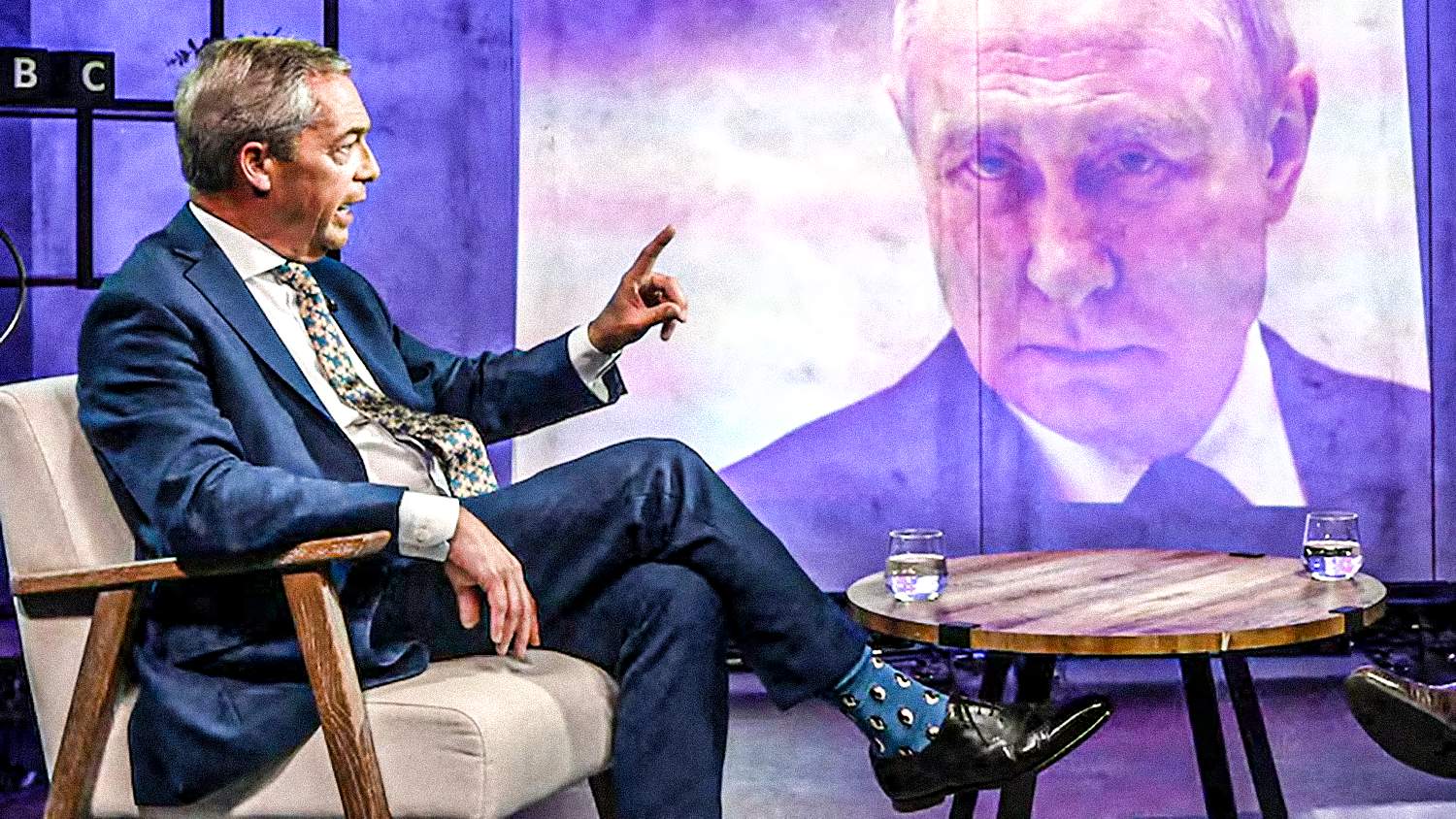
When the Nathan Gill bribery story fist hit the headlines, Keir Starmer and his ministers dodged calls from MPs to launch a full enquiry into Russian interference in British politics. So, when the Government this week ordered an urgent review into foreign financial political interference, it came as a surprise to many.
However, there was one big snag: while aiming to consider "recent cases", it will not "consider previous allegations over interference in the Brexit referendum".
Perhaps to ensure that the review does not go anywhere near Brexit, it is being led by Philp Rycroft, one of the handful of senior civil servants who spearheaded "getting Brexit done", with little regard to questions around its legitimacy.
Needless to say, he does not happen to have any relevant experience in either covert finance operations, nor national security. Having defended his Doctorate of Philosophy (DPhil) on the ever-pressing topic of church and community in XVIII-XIX century Yorkshire, he served as Permanent Secretary at the Department for Exiting the European Union (DExEU) between October 2017 and March 2019.
Keir Starmer Is Setting a Trap for Nigel Farage With Foreign Interference Inquiry
As Reform opens the door to crypto donations, the Government is finally starting to take action against the threat of foreign financial interference in our politics, reports Adam Bienkov
Adam Bienkov
The excuse which a Labour Government minister used to justify staying away from the Russian covert operation around Brexit, echoed Boris Johnson's: Russian interference had no material impact on elections. However, that assumption is unproven.
According to US intelligence, the Kremlin spent over USD 300 million since 2014 to influence European politics via front companies and think tanks. For comparison, the total Brexit campaign spending was about £30 million. Carnegie adds that non-state actors may play a predominant role in such campaigns even when a government is ultimately behind them.
Foreign interference has a material impact on elections when the society is divided and voters are split on an issue around 50:50. In cases where the margins of voting counts are wide, it may not alter outcomes but it can still damage democratic integrity.
US intelligence and congressional inquiries showed that Russian interference in 2016 plausibly shifted sentiment in swing states because they were decided by tens of thousands of votes. The Hillary Clinton campaign is adamant that, according to their poll data, it was the Russian operation to disclose emails on 22 July 2016 which was the single factor that moved the election in Trump's favour.
In Romania and Moldova, courts and authorities explicitly concluded that Russian financial and cyber interference compromised electoral integrity to the point that outcomes were annulled or required extraordinary counter-measures.
Similarly in the UK, the Brexit referendum's two-point margin combined with unresolved questions of opaque funding, data-driven targeting and disinformation makes material impact plausible but untested because the Government refused to investigate.
For the past 15 years or more, the British electoral system has witnessed what some in the intelligence community called "the most successful Russian active measures operation against the UK". It comprised sustained and systematic Russian political interference through donations to political parties, via shell companies and foreign-born British passport holders, and other Putin proxies. I myself became an unwitting witness of this when, in 2010, a senior Russian diplomat in London looked for ways to channel funds into the Conservative Party.
In addition, Russian oligarchs based in the UK funded political thinktanks propagating specific narratives, employed relatives of politicians, and influenced influential politicians tho...
Read our Digital & Print Editions
And support our mission to provide fearless stories about and outside the media system
SUBSCRIBE TODAY
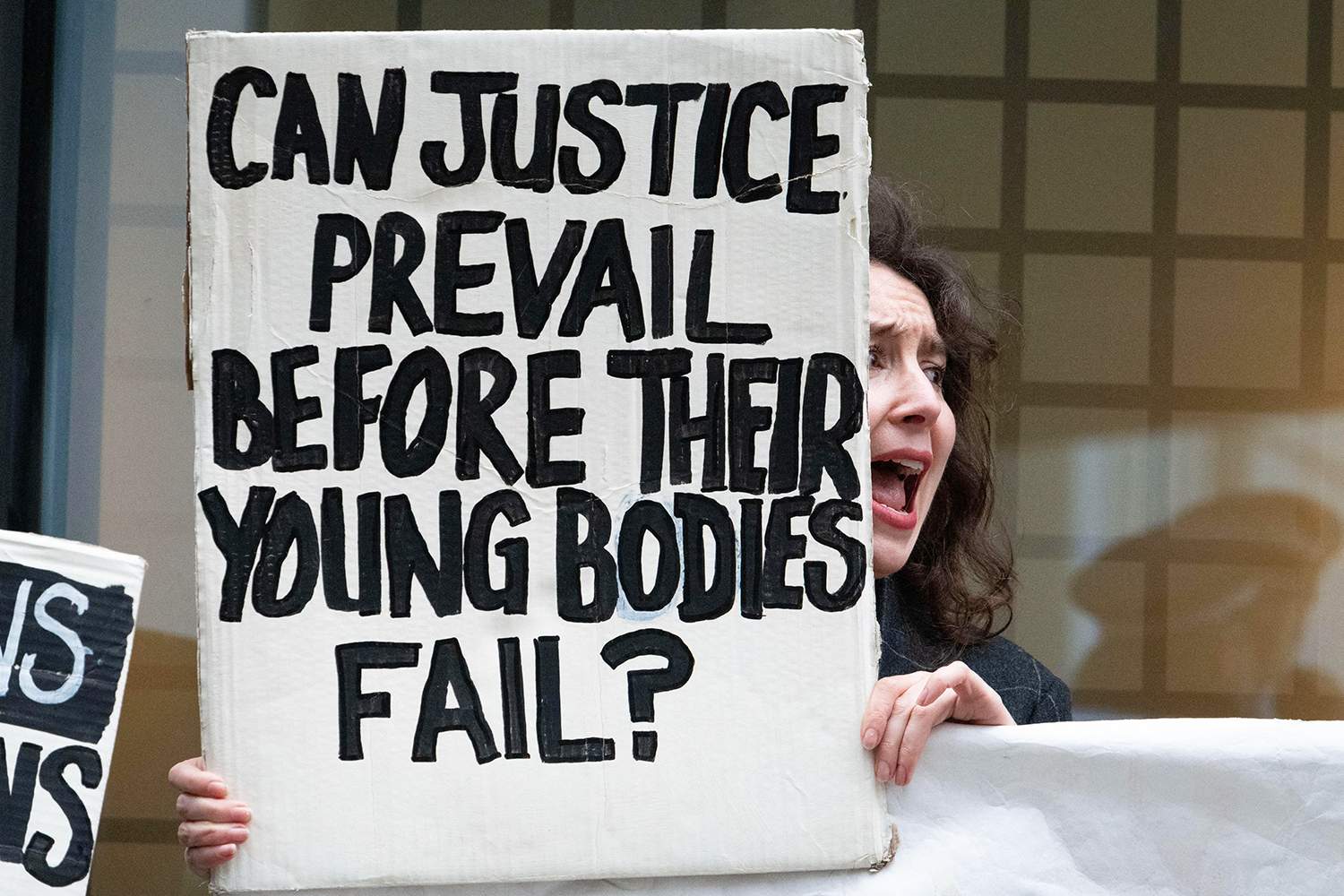
Family members of the Palestine Action-affiliated hunger strikers have called on Justice Secretary David Lammy to meet with the strikers before any of them die.
Speaking at a press conference in Vauxhall on Thursday, the sisters of hunger strikers Kamran Ahmed and Teuta Hoxha and the next of kin of Qesser Zuhrah alleged ill treatment of their relatives by prison staff, and pleaded with the Government to agree to a meeting to negotiate over the hunger strikers' terms so that they can put an end to the strike.
29 Palestine Action-affiliated individuals are currently being held on remand for their alleged involvement in break-ins at a facility outside Bristol owned by the Israeli arms firm Elbit Systems and at RAF Brize Norton where military planes were sprayed with red paint.
Of these 29, seven are on hunger strike in five different prisons. Demands from the strikers include immediate bail,a lifting of the ban on Palestine Action, the closure of Elbit Systems on UK soil and the ability to communicate freely with family and supporters outside the prisons. Ministers have so far refused to meet with the strikers or their representatives to discuss their demands.
EXCLUSIVE
Palestine Action Arrests Condemned as 'Deeply Alarming' While British Press Remains Silent
The Liberal Democrats described the arrests of campaigners against the ban on the group as a "dangerous precedent" for free speech, yet the British press remains largely silent about it
Josiah Mortimer
Shahmina Alam, sister of Kamran Ahmed, a 28-year-old prisoner currently on day 39 of his hunger strike, stated that her brother: "saw the outpouring of videos from Gaza and the Palestinians being slaughtered; he couldn't look away […] it drove him to stand for humanity".
She said that her brother is committed to "the liberation of Palestine" and to "our rights in this country as a British citizen" as well as the rights to a fair trial and to not be censored. She claimed that because these had been denied he had taken the "most difficult decision to starve his body of nutrients".
Alam told the press conference that while her brother's ketone levels had previously stabilised, they are now rising rapidly to dangerous levels. She also said that his heart is giving in and that he is losing 0.5 kilograms in body weight each day.
She called on David Lammy to "please have this meeting" saying: "we haven't asked for much. Stop declining the meetings from MPs. If you don't want to speak to us, then at least speak to your colleagues. This is not about your politics, it is about the lives of eight individuals".
Medical professionals believe that all of the strikers are in imminent danger of death, or permanent, life-altering injuries including irreversible brain damage, as a result of the advanced stage of their strike.
Six of the strikers - Qesser Zuhrah, Amu Gib, Heba Muraisi, Jon Cink, Teuta Hoxha and Kamran Ahmed - have refused food for at least 39 days.
Three of the strikers, Heba Muraisi, Amu Gib and Qesser Zuhrah are on days 46 or 47 of their strike.
Martin Hurson, one of the IRA hunger strikers in the H-Block of Long Kesh prison, to whom the Palestine Action-affiliated strikers are increasingly being compared, died after 46 days of his hunger strike in 1981.
Ella Moulsdale, 21, the next of kin of Qesser Zuhrah - who has been held on remand in HMP Bronzefield since November 2024, and who is on day 47 of her hunger strike - told journalists of the "excruciating pain" Zuhrah is in.
Zuhrah was taken to hospital last night. Her supporters who protested outside HMP Bronzefield, including Coventry South MP Zarah Sultana, claim that she was denied access to emergency medical care for several hours.
Moulsdale told journalists: "[Qesser Zuhrah] was 19 when she was taken from us. She was just starting at university and she had her whole life ahead of her...

Read our Digital & Print Editions
And support our mission to provide fearless stories about and outside the media system
SUBSCRIBE TODAY
A British academic and his Nigerian wife say the Home Office has "ruined Christmas" after refusing a visa for their cousin, a student of prosthetics and orthotics at a top-ranking university.
Dr James Pickering and his wife Chioma had booked a return flight for their eighteen-year-old cousin and had stated that they could financially sponsor her visit.
However, the Home Office denied the visa, saying that their cousin Chizaram had not provided evidence of an "ongoing and genuine relationship" with Pickering and his wife, which "damages the credibility of [your] application".
They added: "I am not satisfied that you will leave the UK at the end of the visit."
"Chizaram has never left Nigeria and never been on a plane, so we were really hoping she could have her first 'white Christmas' in the UK," said Pickering.
"We sent all the evidence we could - WhatsApp messages, call logs, bank statements, photos - really belts and braces - but they still refused the visa. My wife has spent days in tears. They've really ruined Christmas for us."
Shabana Mahmood's Asylum Seeker Military 'Warehousing' Plans Delayed Amid Opposition by Labour MPs
Home Office sources tell Byline Times that local Labour MPs are opposing plans by the Home Secretary to use barracks and army bases to house asylum seekers amid rising community tensions
Nicola Kelly
In May the Home Office launched a crackdown on student visas from countries it deems "high-risk".
Whitehall officials claimed that students from Nigeria, Pakistan and Sri Lanka were more likely to overstay their visas and claim asylum. Official data at that time showed that people from those countries were the most likely to enter the UK on a work or study visa and then switch to the asylum system.
The cuts to international student visas were announced as part of a package of measures in the gGovernment's immigration white paper, which followed a series of losses to Reform in the local elections in May. Labour vowed to reduce overall immigration figures and tackle what former Home Secretary Yvette Cooper described as "abuses in the system".
Pickering and his wife have applied for five visas in the last year for members of their family in Nigeria to visit them in Britain for short stays. All of the visas have been denied. Each time their family members have reapplied, having addressed the original concerns set out in their decision letters, the department has raised new concerns which had not been addressed originally.
Last year a large number of family members were unable to attend the couple's wedding following repeated rejections. The family have only once managed to have a "particularly egregious refusal" overturned following intervention from their local MP Neil O'Brien.
"My wife Chioma is completely cut off from her family here," said Pickering. "It's difficult for her to maintain a relationship with those she loves, especially when the power and connection goes down. We just want to be able to spend time with her family."
Pickering believes that the recent increase in the use of AI to assess visa applications could be the cause of the repeated visa rejections.
ENJOYING THIS ARTICLE? HELP US TO PRODUCE MORE
Receive the monthly Byline Times newspaper and help to support fearless, independent journalism that breaks stories, shapes the agenda and holds power to account.
PAY ANNUALLY - £39.50 A YEAR
PAY MONTHLY - £3.75 A MONTH
MORE OPTIONS
We're not funded by a billionaire oligarch or an offshore hedge-fund. We rely on our readers to fund our journalism. If you like what we do, please subscribe.
"I believe they approach applications looking to refuse them rather than trying to assess them fairly," said Pickering. "We sent through a hundred pages of evidence. At no point did they ask for more information and we have no right to appeal. It feels like they just bank on ...

Read our Digital & Print Editions
And support our mission to provide fearless stories about and outside the media system
SUBSCRIBE TODAY
I was in a car with charity workers somewhere between Calais and Dunkirk. We were on our way to a women's centre: a small sports pavilion that offers women in the camps a chance to shower, do their hair, put on make-up, have a gossip, a brief moment of normality in a hostile place.
My companions were chatting in French, which I struggled to follow. So, when they exclaimed, "Huit." I had to ask, "Eight what?".
Pregnant women, they said.
My heart sank. I asked whether they would cross in the small boats. They told me the women hope so. It is safer to cross before the babies are born. Some, though, are forced to take babes in arms.
At the centre we met women from all over the world. I spoke with another Rachel (Raheli), a physics teacher from Afghanistan, fleeing the Taliban with her daughter, a midwife. She squeezed my hand tightly as she described the fear of the journey. Another woman spoke of her longing to return to Eritrea, to work and support her family back home. There were two mothers with babies already born.
EXCLUSIVE
Nigel Farage-Backed 'Raise the Colours' Campaign Pivots to Racially Abusing Migrants and Harassing Aid Workers on French Beaches
Far-right activists were seen stabbing dinghies and releasing dogs to intimidate migrants and aid workers
Nicola Kelly and Olly Haynes
Women on the move. Pregnancies shaped by danger and displacement. A search for safety in a world that insists there is "no room". Standing there, listening, it struck me that this is, at its heart, a Christmas story.
Migration and asylum are not modern anomalies. They are as old as humanity itself. Yet we have allowed our politics to strip them of their humanity, turning people into numbers, threats, slogans.
These women in Calais are in crisis, but they are not a crisis. Each is a person. And how we treat them tells us everything about the kind of country we are choosing to be.
Our Government has poured £476m into making the border as hostile as possible: aggressive policing, tents ripped away, water stations destroyed, and the horrific use of military-grade tear gas on children as young as two months old. Still, people cross, only now they do so more dangerously, with greater suffering.
Humanitarian organisations, including those working with Calais Appeal, do everything they can to counter this violence with scant resources. Their work is lifesaving.
As 2025 draws to a close, it is impossible not to reflect on how sharply our political language has hardened. Cruelty has been rebranded as "toughness". Indifference as "pragmatism". Moral abdication as "realism". That showing basic humanity to pregnant women living in appalling conditions is now considered "radical" should alarm us all.
Too often, policies are justified not by whether they work, but by whether they sound punitive enough to satisfy an increasingly volatile media ecosystem. People seeking safety are framed as a problem to be managed, rather than lives to be protected.
That is also why earlier this year, I opposed the policy of housing people seeking asylum in army camps.
The 'Pink Ladies' Laundering Anti-Migrant Views Into the Mainstream
An anti-migrant movement backed by Reform and Conservative politicians and regularly invited onto news channels is funded by a far-right group and has platformed a Neo-Nazi activist
Nicola Kelly
I believe in dignity. Placing traumatised people, including pregnant women, children and survivors of torture, in isolated, militarised settings without proper support is neither humane nor effective. It entrenches fear, worsens mental health, and makes integration harder, not easier.
Worse still, this cruelty is profitable. Clearsprings and just two other providers have made a combined £383m from Home Office asylum contracts, while delivering what has been described as "miserable" conditions. How did we end up paying c...
Read our Digital & Print Editions
And support our mission to provide fearless stories about and outside the media system
SUBSCRIBE TODAY
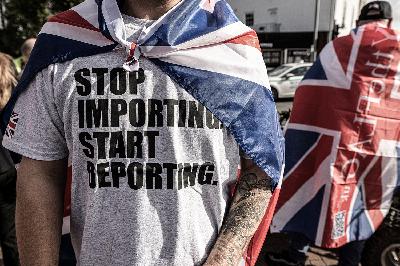
The 'Raise the Colours' flag-raising campaign, which claims to be a "grassroots" campaign for "unity" and has drawn the support of mainstream political parties and widespread coverage in the British media, has pivoted to stabbing through dinghies and harassing and racially abusing migrants and aid workers in the camps of Northern France, an investigation for Byline Times has found.
The campaign, which coordinated the raising of British and English flags across the country, was praised by Reform leader Nigel Farage as "extraordinary", suggesting in the Sun newspaper that it was a "patriotic… grassroots movement driven by ordinary people".
However, charities working in the camps of Calais and Dunkirk report that the anti-migrant, vigilante group, whose members include Danny Thomas, who was jailed for two years for an attempted kidnap, have made five visits to Calais since the beginning of November, where they have been filmed racially abusing migrants, calling them "criminals" and "invaders" and harassing aid workers.
Lachlan Macrae from Calais Food Collective said: "They [Raise the Colours activists] came up and asked me if I was ashamed of myself, and said they would 'report my face' to the British government. They're unpredictable; we don't know what they will do, but there is a clear criminal intent. We have filmed them damaging equipment and stealing lifejackets, which will have dangerous consequences."
The 'Pink Ladies' Laundering Anti-Migrant Views Into the Mainstream
An anti-migrant movement backed by Reform and Conservative politicians and regularly invited onto news channels is funded by a far-right group and has platformed a Neo-Nazi activist
Nicola Kelly
Raise the Colour's website states that it is a "grassroots movement for unity and patriotism" which is "determined to show their pride by flying the flag from one neighbourhood to the next ."
The movement has drawn the support of leading politicians, including Farage and Conservative leader Kemi Badenoch, who wrote in the Daily Mail that the campaign should be "welcomed" and described attempts to take down their flags as "shameful".
However, evidence sent to Byline Times shows far right supporters of the campaign in France releasing dogs to intimidate migrants and aid workers. Earlier this year Calais Food Collective say a dog attack on one of their staff members making meals for people in the migrant camps, left them hospitalised
The group has already caught the attention of the French police.
Danny Thomas and two other members of Raise the Colours say they were arrested and had their passports seized by the French authorities two weeks ago. They were later released without charge.
Raise the Colour's mission, codenamed 'Operation Overlord', is funded by supporter donations with over 5,500 people on their Facebook page claiming that they are willing to travel to France to "stop the boats". The group says that donations are used for stab-proof vests, torches, cameras, drones and radios.
Activists from Utopia 56 have seen Thomas and his Raise the Colours associates on the beaches around Gravelines, close to Dunkirk. "Last month, eight of them arrived in the camp during the daytime waving a huge flag," said a spokesperson for the charity. "They went around asking people if they were planning to cross and told them they didn't want them in their country."
"They came up to our volunteers on the beach," another source from Utopia 56 said. "We told them to stay in the van, don't interact and film them. They are so aggressive, we fear they could become physically violent if things don't go their way."
Activists said that Raise the Colours members have also been seen waking up migrants at a bus stop in Dunkirk, attempting to take a man's bag and becoming verbally abusive when the person refused to give it to them. The source added that Ut...

Read our Digital & Print Editions
And support our mission to provide fearless stories about and outside the media system
SUBSCRIBE TODAY
The announcement that Keir Starmer's Government is launching a review of "foreign financial interference" in British politics didn't make much of a splash in today's paper, but it may turn out to have been one of the most significant political for moments in this Parliament.
For years the Labour party has been under pressure to take the issues of foreign interference, and dark money in our politics, more seriously.
However, a nervousness inside Downing Street about being seen to question the Brexit result, as well as a resistance to take any steps that might also harm Labour's own funding streams, has meant that little so far has been done.
Even after reports spread last year that the far-right US billionaire Elon Musk was considering bankrolling Reform UK, via his UK companies, Downing Street hesitated to do anything about it.
That now finally appears to be changing. Labour sources who are close to Number 10 say that the conviction of Reform's former Welsh leader for taking pro-Russian bribes, and the record breaking £9 million Reform donation from a Thailand-based crypto investor have combined to "galvanise" Starmer into taking action.
Crypto Investor Donates £9 Million to Reform UK as Nigel Farage Plugs His Company and Tells Industry 'I Am Your Champion'
The Reform leader recently used media interviews to back Christopher Harborne's company while promising to cut taxes and regulations on crypto firms
Adam Bienkov
The realisation, as one Labour MP put it to Byline Times, that foreign financial interference could pose both an "existential threat to democracy" and an "existential threat to their jobs" has finally spurred Number 10 into action.
The review, which will be led by the Former Permanent Secretary at the Brexit department, Philip Rycroft, is just the first step in what is likely to see the Government taking significant action to close at least some of the glaring loopholes allowing foreign interference in our politics.
As things stand it is remarkably easy, and cheap, for hostile foreign actors to interfere in our politics. As a recent sting operation by Democracy for Sale exposed, it only takes a little bit of money and a little bit of access to gain real influence over our politics.
Unlike in the corporate world, where there are strictly-enforced protocols against corruption, there are only a few very weak guardrails preventing malicious actors gaining influence.
One good example of this is the All Party Parliamentary Group system, whereby foreign governments are effectively able to buy significant influence among elected parliamentarians for relatively small amounts of money. By hosting events inside Parliament and paying for MPs to visit their host countries, foreign governments and corporations can buy huge amounts of access with very little scrutiny.
Similar access is also gained through the world of opaquely funded think tanks, which have become a hugely prominent force inside Westminster and at party conferences, despite there being little obligation on these groups to disclose where their funding ultimately comes from.
The checks and balances are only slightly better when it comes to the direct funding of our politics. Under current rules, only British citizens and entities can donate to a political party. Yet in reality this rule can be easily bypassed by funnelling money through a UK company, as Musk was reportedly considering. These restrictions were even further loosened under the last Conservative government, which allowed people who had been living abroad for more than 15 years to continue donating to UK political parties. The political funding watchdog, the Electoral Commission, an already fairly toothless body, was further enfeebled under the last Govenrment.
However, it has been the onset of crypto donations that poses perhaps the most significant new threat to o...

Read our Digital & Print Editions
And support our mission to provide fearless stories about and outside the media system
SUBSCRIBE TODAY
Nigel Farage's record-beating election war chest is being bankrolled by a donor whose fortune is entangled with a major video platform which has hosted Russian state broadcasters supporting Vladimir Putin's war in Ukraine and an influence operation hatched by Russian intelligence.
Christopher Harborne - the Thailand-based billionaire who has given Reform UK £9 million in cash, making him Britain's single largest political donor - is already known as a cryptocurrency investor and long-time Farage backer. He is also a major shareholder in the stablecoin company Tether and the British defence firm QinetiQ, which supplies the Ministry of Defence and allied militaries.
What has not been scrutinised until now is how Harborne's stake in Tether ties his profits to Rumble: a "free speech" video platform that refused to ban Russian state media after the invasion, and has since hosted a Kremlin-backed influence operation exposed by the US Department of Justice.
Byline Times has examined company filings, market disclosures and previous reporting to map the investment chain running from Tether into Rumble. The picture that emerges is of a donor whose financial interests straddle Britain's defence interests and a platform projecting Russian state propaganda.
The £9 Million Man
In early December, Electoral Commission data confirmed that Harborne had donated £9 million to Reform UK - the largest single political donation in recent British history, eclipsing recent gifts to the Conservative and Labour parties.
Harborne is no stranger to Farage's projects. Based on Thailand where he is known under his Thai name Chakrit Sakunkrit, he previously bankrolled the Brexit Party with nearly £10 million and also wrote substantial cheques to the Conservatives under Boris Johnson.
Behind that largesse sits a sprawling portfolio. As well as aviation fuel, technology ventures and property, Harborne holds a substantial stake in Tether - the company behind the world's largest "stablecoin", a type of cryptocurrency pegged to the US dollar.
According to multiple reports drawing on leaked corporate documents, he acquired around a 12% share in Tether's parent group in the mid-2010s, making him one of its largest private investors. Harborne is not understood to be in any way involved in Tether's management or operations
Tether has itself been scrutinised by regulators and law enforcement agencies for the way its tokens have been used in money laundering, sanctions evasion and other illicit finance, including schemes said to benefit Russia's war economy - although there is no suggestion of wrongdoing by Harborne.
The World Upside Down: How a Top Official at Trump's FBI Laundered Far-Right Disinformation
The United States' entire security apparatus is now being used to spread far-right propaganda rather than tackle genuine threats, reports Caroline Orr Bueno
Caroline Orr Bueno
Let's Get Ready to Rumble
Rumble began life in 2013 as an obscure video-sharing site. For most of the decade it barely registered outside niche online communities. Then came the 2020 US election.
As Donald Trump and senior Republicans railed against "censorship" by Silicon Valley, thousands of MAGA influencers, far-right commentators and pro-Trump media outlets decamped en masse to a platform that promised them something YouTube would not: a home with no gatekeepers.
In 2021, billionaire Peter Thiel and JD Vance's Narya Capital poured money into that promise, hailing Rumble as the backbone of a "parallel tech ecosystem" for the American right.
Then, in February 2022, Russia invaded Ukraine - and Rumble made a decision that set it apart from nearly every major platform in the democratic world.
As the EU, YouTube, Facebook and Twitter moved to block RT and Sputnik, Rumble refused. The company announced it would only act if a court forced its hand.
When Franc...
Read our Digital & Print Editions
And support our mission to provide fearless stories about and outside the media system
SUBSCRIBE TODAY
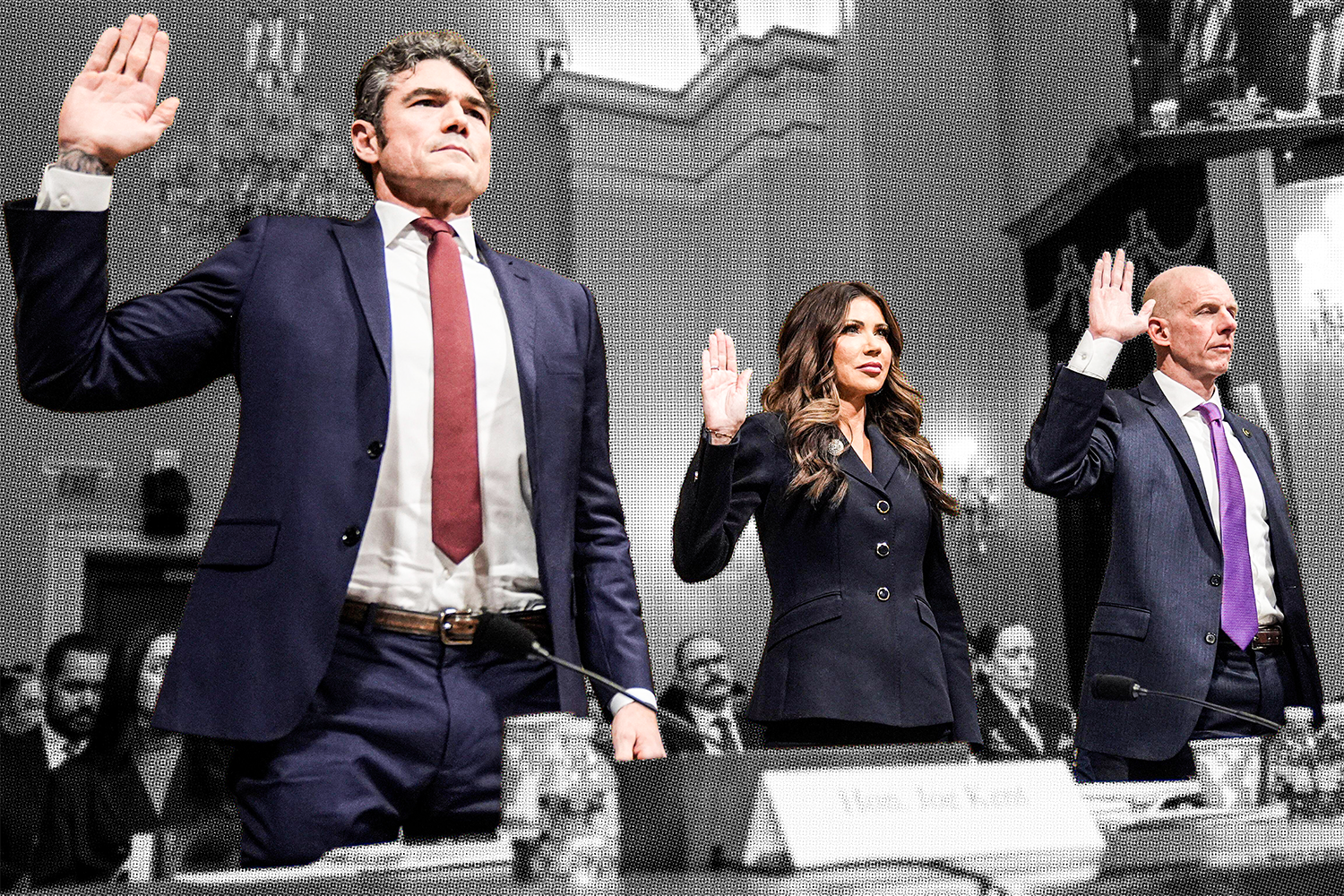
In the past week a top official at Trump's FBI helped to launder a right-wing disinformation narrative, claiming at a congressional hearing that the antifascist movement known as "antifa" is the biggest domestic terrorism threat in the United States.
Michael Glasheen, the director of operations in the FBI's National Security Branch, told lawmakers that antifa is the agency's "primary concern" and "the most immediate violent threat that we're facing." However, when questioned, Glasheen was unable to provide any evidence to back up his claim and could not answer lawmakers' inquiries when they pressed for more information.
To those who study extremism and disinformation, what happened was immediately clear: the FBI, under Donald Trump's renewed political influence, is now publicly endorsing a narrative born not out of genuine threat assessments but from right-wing propaganda.
In fact, Glasheen's statement can be traced directly to a years-long disinformation campaign - one cultivated by Trump officials and Republican lawmakers, as well as right-wing media - that has aggressively portrayed "antifa" as a nationwide organised terror network despite the lack of any real evidence supporting such an assertion.
The claims made by Glasheen offer a striking reminder of how the dominant disinformation narrative surrounding antifa continues to infiltrate and distort US national security priorities by legitimising far-right extremist propaganda while suppressing and even criminalising legitimate dissent.
Glasheen's testimony echoes previous statements made by Trump and his allies, who for years have coordinated with right-wing outlets like Fox News and a long list of pro-Trump social media influencers to launder and propagate a false narrative aimed at portraying antifa as a leading terrorist threat in the US, even though the evidence flatly contradicts this.
Nigel Farage's Russian Influence Advent Calendar
Byline Times has compiled a festive offering of the prize moments when the Reform leader has gifted the political agenda to Vladimir Putin and Russia
Byline Times Team
Distorting Reality
The facts are clear: right-wing extremists are by far the greatest domestic terror threat facing the US, and it's been this way for quite some time. Over the past decade, right-wing extremists were responsible for 76% of all extremist-related killings, compared to 4% attributable to left-wing extremists.
Going even further back, in an analysis of 900 politically motivated attacks and plots in the US since 1994, the Center for Strategic and International Studies (CSIS) found just one deadly attack attributable to antifascists - and the single fatality was the perpetrator himself. During the same time period, right-wing extremists carried out attacks that left 329 people dead. In multiple recent years, including 2022 and 2024, right-wing extremists were responsible for every single recorded extremist murder in the country.
Looking at those statistics, it's pretty clear where the threat is coming from - and it's not antifa. But that clarity has been muddied in recent years thanks to a coordinated and persistent disinformation campaign propagated by the Trump administration, right-wing media, far-right social media influencers, and even Russia. This disinformation campaign dates back to at least 2016 and has accelerated significantly since then.
Over the years, antifa has been falsely blamed for starting wildfires, busing in violent protesters, looting, making bomb threats towards politicians, coordinating nationwide riots, carrying out mass shootings, and more. On repeated occasions, conspiracy theories about antifa have even duped law enforcement agencies, resulting in everything from unnecessary shutdowns of major highways and panic among the public, to armed vigilantes showing up to defend their towns from a threat th...

Read our Digital & Print Editions
And support our mission to provide fearless stories about and outside the media system
SUBSCRIBE TODAY
Talks about negotiations over Ukraine have now become a daily fixture in the public sphere - not only among experts, but also in the media and in official statements. Dozens of analysts discuss diplomatic moves by Russia, the United States, Ukraine, and European leaders every day, closely tracking new meetings between special envoys, official drafts of peace plans, and the responses to them.
At the same time, frustration has been voiced repeatedly in the White House over the length and complexity of the negotiating process. Donald Trump himself has stated that the endless discussions are exhausting him. Meanwhile, the Ukrainian side has delivered to Washington its response and proposals regarding the latest draft peace plan developed jointly with European leaders. In Moscow, that response was evaluated instantly - even before it had been read. Vladimir Putin's foreign policy aide and one of Moscow's chief negotiators, Yuri Ushakov, commented that he was confident the document would contain no constructive proposals.
However, before even discussing the substance of a possible end to the war, it is essential to state a simple but uncomfortable reality upfront: Vladimir Putin is not negotiating in order to end the war. For him, negotiations have become a tool to lock in the results of his aggression, buy time, and restore a degree of international legitimacy - without abandoning his core objectives.
EXCLUSIVE
Trump Envoy Has Financial Ties With Former Adviser to Putin's 'Money Man' Now Leading Kremlin Peace Talks
Steve Witkoff's real-estate empire is bankrolled by a former adviser to Kirill Dmitriev, head of Russia's sovereign wealth fund and a key architect of Moscow's Ukraine negotiations
Philip Haworth
There is another equally simple reality that must be acknowledged: from the Kremlin's perspective, negotiations are not a search for compromise, but a literal continuation of the war by other means, with diplomacy embedded directly into the military backdrop.
Not long ago, Vladimir Putin openly admitted that he is satisfied with the current state of affairs - referring to the war and all the consequences associated with it. I see no reason to doubt his sincerity here. The American administration appears increasingly willing to pursue compromises with the Kremlin in the hope of halting active hostilities in Ukraine.
This became even clearer after the publication of a leaked recording of conversations between Trump's representative, Steve Witkoff, and Putin's aide Yuri Ushakov. That recording offered a more explicit picture of Washington's current approach to the process - one in which the U.S. representative appears prepared to accept virtually any compromise with the Kremlin in order to reach some form of outcome.
And today, against the backdrop of the bombardment of Ukrainian cities, missile and drone strikes on both sides of the front line, and bloody battles for populated areas, we hear less about any concrete progress and more about the fact that the parties continue contacts, working meetings, and diplomatic consultations. These are then presented as "results of negotiations" in and of themselves - even though they are not.
So What Does Putin Actually Want?
Putin's primary objective is the recognition of a new status quo - which can be described as his minimum plan. This does not necessarily imply the formal, legal recognition of the occupied territories. The Kremlin likely understands all too well how toxic such recognition would be for Western governments. What matters far more is de facto acceptance of a frozen front line and the transfer of the remaining part of Donetsk region under Russian control without armed resistance.
Any ceasefire that locks in the current situation works in Russia's favor. It allows Moscow to consolidate control over occupied territories, restore logistics, ...
Read our Digital & Print Editions
And support our mission to provide fearless stories about and outside the media system
SUBSCRIBE TODAY
Members of the Trump administration are guilty of making the same mistake as backers of Brexit in the UK, in assuming other people share their own prejudices about the European Union. This perception bias has led the administration to conclude that Europeans are yearning to be "free" from the "shackles" of the EU, and that the US has a crucial role to play in achieving this.
In its recent National Security Strategy, the administration blames what it calls Europe's decline on the supposedly malign "activities" of the European Union, which it accuses of undermining political liberty and sovereignty, and imposing stifling over-regulation. It hints at its desire to break the bloc apart, in order to restore European nations' "individual character and history."
According to the defense analysis organization, Defense One, this aspiration is made even more explicit in a longer unpublished version of the NSS which it claims to have seen, which lists Austria, Hungary, Italy and Poland as countries the US should "work more with…with the goal of pulling them away from the [European Union]"
However, recent opinion polls confirm that across the EU, a majority of people still have a broadly positive view towards it, even in countries like those above targeted by the US.
An opinion poll conducted by the Pew Research Center in September revealed that among the nine member countries surveyed, seven-in-ten or more in Sweden, Germany and the Netherlands, and over half in Spain, Italy, Poland, France and Hungary, have a favourable view of the EU. The only country where views were more negative than negative was Greece.
Nigel Farage Accepts Another £135,000 From Gold Bullion Firm for Just 12 Hours Work
The Reform UK leader has pocketed £415,500 so far this year to act as the company's "Brand Ambassador"
Russell Scott
The same poll revealed that even in countries outside the EU many held a broadly positive attitude towards the bloc. In Canada, Nigeria, South Korea and Australia, roughly three-quarters had a favorable opinion of the EU. Six-in-ten or more agreed in five other nonmember countries, including the United Kingdom, and even the United States itself.
Views were more finely balanced in Argentina, Brazil, Israel, Mexico, Turkey and South Africa.
A similar poll conducted EU-wide earlier this year by the EU's in-house surveyor, Eurobarometer, revealed that over 74% of respondents think that their country benefits from EU membership - the best result ever recorded since this question was first asked in 1983. Figures ranged from a staggering 92% in Malta, over 90% in Ireland, Lithuania, Estonia and Denmark, to the lowest percentage in Bulgaria, at a still solid 61%.
In the same survey, 89% said they believed that more unity was crucial to tackle global challenges, with 75% or more citizens agreeing with this in every Member State.
Another poll conducted by the same organization this year found that over 70% of respondents in the 20 euro member states also believed that the euro was a good thing both for the EU and for their own country.
In a third poll, a majority of correspondents in nearly every EU member state supported further EU enlargement, with Ukraine the most favoured country for accession, provided it can meet the membership criteria.
Amongst those more sceptical about enlargement, concerns included uncontrolled migration (40%), corruption, organized crime, terrorism (39%) and the cost to European taxpayers (37%).
This suggests that the US administration may be onto something, when it highlights concerns in its NSS about Europe's stagnating economy, migration policies, and loss of self-confidence. But, just as Brexit was never the right solution to the UK's genuine domestic problems in 2016, when the Brexit referendum took place, so, breaking apart the EU would not resolve Europe's current ills.
Emp...
Read our Digital & Print Editions
And support our mission to provide fearless stories about and outside the media system
SUBSCRIBE TODAY
Nigel Farage has accepted another £135,000 from a firm selling gold bullion, for working just four hours per week over a three month period.
The latest register of interests published by the House of Parliament shows that the Reform UK leader continues to earn huge sums of money from second jobs outside his role as the MP for Clacton.
Farage, who acts as the companies "Brand Ambassador" is pocketing an eye-watering £11,250 per hour to push "tax-free gold".
This isn't the first time payment Farage has accepted from the Mayfair registered Gold merchants, Byline Times previously reported on two previous payments. £91,200 was paid to Farage in February 2025, which followed a a £189,300 payment from the same company in December 2024 - again for working a "maximum" of four hours per month, with some of the fee paying for some work "undertaken prior" to his election to Parliament.
In total the Reform UK leader has declared payments totalling £415,500 from Direct Bullion, a Mayfair-registered firm, which claims to be "the UK's No.1" Gold bullion dealer. The firm also had a large stand in a very prominent position inside Reform UK's recent party conference held in September and the Reform UK's logo has been affixed to the firm's website.
It comes on top of hundreds of thousands of pounds in payments for Farage's role as GB News presenter, revenue sharing payments from Elon Musk's X platform and earnings from his profile on the Cameo personalised video message platform.
The latest available accounts published on Companies House in October 2025 for DB London Ltd ,which trades under the name Direct Bullion shows the firm had just five employees as of 31 January 2025 and operates out of a shared office space in London, where over 100 other companies are also registered.
In June this year, DB London informed Companies House that the firm was now majority controlled by another company called Eleven Intl Ltd.
The registered address of Eleven Intl Ltd is in Ilford, and appears to be an accountancy company based above a supermarket. According to accounts filed in September 2025, Eleven Intl Ltd has no employees and only £96 cash in the bank as of 31 January 2025.
'If Nigel Farage's Racism Is Forgotten It Will Give Him Permission for Far Worse'
When someone tells you who they are, over and over again, it is wise to listen, argues Clive Lewis MP
Clive Lewis MP
In a recent interview with The Observer, Paul Withers the Co-founder of Bullion Direct said:
"I like Reform because I believe in what Nigel stands for. I worked bloody hard, and see a lot of what I worked hard for go to waste. The majority [of people are] seeing this - it's nationwide, and when I look at the proper alternatives, there's nothing there."
Withers told the paper that Farage was "a real goldbug" and "bringing the customers to us," claiming "It's done better than I ever anticipated."
Online customer reviews appear to support this claim, with some suggesting Farage's endorsement of Bullion Direct was the reason for them investing in gold. However, some customer reviews appear to be duplications despite being posted under different names and on different dates.
The Bullion Directory, which provides online reviews of Gold and Silver dealers in the UK currently lists Direct Bullion as the "top rated" seller in the country, however in some instances these reviews also appear to be duplicates. Two separate entries from April 2025 both use identical sentences to boast about their investments increasing by 50% in value and both repeat the same spelling mistakes.
Both Nigel Farage and Direct Bullion were approached for comment.
ENJOYING THIS ARTICLE? HELP US TO PRODUCE MORE
Receive the monthly Byline Times newspaper and help to support fearless, independent journalism that breaks stories, shapes the agenda and holds power to account.
PAY ANNUALLY - £3...

Read our Digital & Print Editions
And support our mission to provide fearless stories about and outside the media system
SUBSCRIBE TODAY
Up to a million people are still living in UK tower blocks covered in dangerous flammable cladding, some eight years after the Grenfell Tower fire, a damning report by peers reveals today.
The failure to resolve the issue, almost a decade on from the tragedy that killed 72 people in the tower block in West London, is partly blamed on failures by the new Building Safety Regulator (BSR) to speedily approve renovations.
The new agency was set up following the inquiry into the fire by Dame Judith Hackitt in 2018. However, instead of taking eight to twelve weeks to approve renovations to tower blocks, many cases take nine months and in one case 62 weeks -highlighted by lawyers Irwin Mitchell in written evidence to peers.
The Lords report also blames the building industry for the huge delays, saying there has been a shortage of newly trained skilled housing inspectors.
The peers say: "We heard consistent and repeated complaints that the BSR could take more than nine months to make decisions on whether construction projects should be allowed to go ahead, significantly longer than the statutory target of twelve weeks for these decisions.
"In many cases, this has delayed or disincentivised refurbishments, safety upgrades and the remediation of dangerous cladding in high-rise buildings, leaving residents in unsafe buildings for longer and increasing costs for leaseholders."
Keir Starmer's Government Is Funding 'Violence and Death' on the French Border, Say Human Rights Groups
Billions of pounds is being spent on anti-migrant measures which campaigners warn are contributing to dozens of deaths of vulnerable people seeking to come to the UK
Nicola Kelly
"Many applications are being rejected or delayed due to basic errors and applicants' inability to evidence how they are considering elements of fire and structural safety, which reflects poorly on the construction industry."
The campaign group Grenfell United told peers that up to one million flat dwellers are impacted by these delays and still living in unsafe conditions.
Labour Chair of the Industry and Regulators Committee, Baroness Taylor of Bolton said: "The tragic loss of 72 lives at the Grenfell Tower fire laid bare the urgent need to reform building safety regulation in England, particularly for high-rise buildings. The introduction of the Building Safety Regulator was a necessary and welcome step.
"However, the scale of the delays caused by the BSR has stretched far beyond the regulator's statutory timelines for building control decisions. This is unacceptable. We welcome that the Government and the BSR are now acting to try and make practical improvements, but this will not address the anxiety and frustration that residents and companies have experienced.
"It does not improve safety to delay vital remediation and refurbishments, nor to deter the delivery of new housing in high-rise buildings. We expect to see further action from the Government and the BSR to ensure that construction projects in high-rise buildings can be brought forward more quickly, without compromising on vital safety improvements."
The delays are bad news for the Government's plans to build 1.5 million homes by 2029, particularly in big cities where there are a large number of tower blocks.,
Peers were told The Greater London Authority's statistics on housing found that residential starts in London dropped from 48,745 new homes in 2022-23 to 27,543 in 2023-24. Residential starts in London fell further in 2024-25 to 21,026 - just 43% of the 2022-23 figure.
Some of the blame for these figures falls on the safety regulator.
Matt Voyce, Executive Director of Construction at Quintain, which is developing an 85-acre estate in Wembley Park, said that his experience of the BSR had been "challenging, frustrating and costly".
ENJOYING THIS ARTICLE? HELP US TO PRODUCE MORE
Receive th...

Advent Calendar
25 Times Nigel Farage Has Been a Gift to Vladimir Putin (chronological). Click a door to flip it.
1
2013
Byline Times: Farage lies about "meeting the Russian ambassador" Open story
2
31 Mar 2014
Guardian: relationship with Russian media comes under scrutiny Open story
3
1 May 2014
GQ (archived): Putin is the leader Farage most admires Open story
4
21 May 2014
HuffPost: Prince Charles Shouldn't Criticise Putin Open story
5
2014 (archived)
The EU provoked Russia's invasion of Ukraine Open story
6
16 Sep 2014
Farage sticks up for Putin in the EU Parliament Open story
7
Jun 2016
Politico: Obama "behaved disgracefully" by intervening in Brexit Open story
8
8 Sep 2016
Independent: RT offers Farage his own TV show Open story
9
1 Jun 2017
Politico: Farage calls Trump-Russia probe reports "fake news" Open story
10
1 Nov 2017
Newsweek: "Jews should concern Americans more than Russian influence…" Open story
11
12 Dec 2018
Byline Times: Farage's Lieutenant bribed by "Putin's man in Ukraine" Open story
12
12 Mar 2018
LBC: Farage on Salisbury/Novichok - UK "jumped the gun" Open story
13
6 May 2019
Guardian: Farage claims Russian intervention a "hoax" Open story
14
17 May 2019
Newsweek: Farage plays down Arron Banks' visits to the Russian Embassy Open story
15
10 Oct 2019
Guardian: Farage's MEPs vote against EU anti-Russian disinformation measures Open story
16
15 Feb 2022
Telegraph: "should not entertain NATO membership for Ukraine" Open story
17
24 Feb 2022
Independent: Russian invasion a consequence of EU/NATO "provoking" Putin Open story
18
21 Jun 2024
BBC: Farage says West "provoked" Ukraine war Open story
19
3 Jul 2024
Byline Times: Farage, bots and the 2024 election Open story
20
23 Mar 2025
Big Issue: Farage record on Ukraine Open story
21
March 2025
The Times: Zelensky should take Trump's minerals deal Open story
22
YouTube clip
TalkTV "Ukraine is corrupt" Open story
23
Oct 2025
Putin is a "bad dude" but Ukraine is corrupt Open story
24
16 Oct 2025
Bloomberg: It's still the fault of NATO and the EU Open story
25
Oct 2025
POLITICO Europe: "Putin is a very bad dude" Open story
Thanks to all our supporters who made suggestions for this. And those who, after it was published, suggested it should be called a Griftmas Card, with Russian oligarchs falling out of each window as they open.
Out of the Doom Loop
As well as bringing you the bad news, Byline Times is committed to bringing you the good, and looking for rays of hope in the New Year.
So subscribe for the new edition, hitting the doormats and shops next week.
Last Minute Christmas Gift
From Lady Mone, as told to Otto English*
*Lady Mone's opinions are her own, and are also in this case entirely fictional
Giftcards are 15% off with code: TISTHESEASON
Read our Digital & Print Editions
And support our mission to provide fearless stories about and outside the media system
SUBSCRIBE TODAY
I've held back from commenting on the revelations about Nigel Farage's past racism. Not because the story shocked me. For many in this country, it merely confirms what we've suspected for years. But some will be hearing these allegations for the first time, and it's to you that I want to speak.
Over the past weeks we've seen a steady stream of former classmates and teachers describe Farage's behaviour at Dulwich College: Nazi salutes, chants, anti-semitic slurs aimed at Jewish pupils, racist taunts at anyone who was not white. Some recall him saying "Hitler was right" or making jokes about gas chambers. Others simply describe a pattern of targeted, persistent abuse.
These are not new concerns. A teacher's letter from the early 1980s warned school authorities that the teenage Farage should not be made a prefect because of what she called his "racism" and "fascism". What is new is the political context. Farage is no longer just a fringe protest figure. He leads a party riding high in the polls, and he openly talks about expecting to walk into Downing Street.
The Government's 'Integrity Gap' Is Leaving the Door Open for Nigel Farage
By offering watered down Faragist rhetoric combined with a programme of managed decline, Keir Starmer's Government has left a political vacuum which the Reform leader is now stepping into, argues Labour MP Clive Lewis
Clive Lewis MP
Most of us have said or done things when we were young that we look back on with regret. That is part of growing up. We make mistakes, we cringe at our former selves, we learn, we change. Some of those early attitudes fall away. Others become the foundations of who we later become.
What is now emerging about Nigel Farage is not a single stupid comment or one heated moment. Former classmates are describing a pattern of behaviour. Not just a bully, but a racist bully of the ugliest kind, directing hatred at black and Jewish pupils as a kind of sport.
That does not automatically mean he holds every one of those views today. People can change. But when someone tells you who they are, over and over again, it is wise to listen. So look at his politics. Look at his rhetoric. Look at the company he keeps and the division he trades in.
For decades Farage has built his career on singling out migrants and minorities, from the infamous "Breaking Point" poster that depicted desperate refugees as a threat, to repeated claims that we are being "overrun" or that parts of Britain are no longer recognisably British. Look at Reform's immigration policy, which even the Prime Minister has felt compelled to call "racist" and "immoral". Consider his willingness to stand alongside and give cover to people in his own party who make openly racist comments, only distancing himself when public outrage forces his hand.
Taken together, it paints a picture of a man whose worldview did not grow out of those teenage foundations, but from them.
So, what does that mean now?
If you already oppose Farage, these stories will only harden your resolve. If you adore him, nothing I say will shift you. But there is a group of people I do want to reach: those considering voting for Reform.
I am not going to patronise you. I understand why many are thinking about it. If you have watched your pay stall, your bills rise, your community decline and your politicians shrug for years, you might well think: what have I got to lose? Why not give the system a kick? Why not try something different?
You may feel the country has taken a wrong turn. That we have lost something precious and need to put it right. You may feel that people like you have been talked down to, ignored, or written off.
Those instincts are not wicked. They are not inherently racist. They come from frustration, disappointment and a desire for dignity and control in your own life. I meet people every week who feel that ...
Read our Digital & Print Editions
And support our mission to provide fearless stories about and outside the media system
SUBSCRIBE TODAY
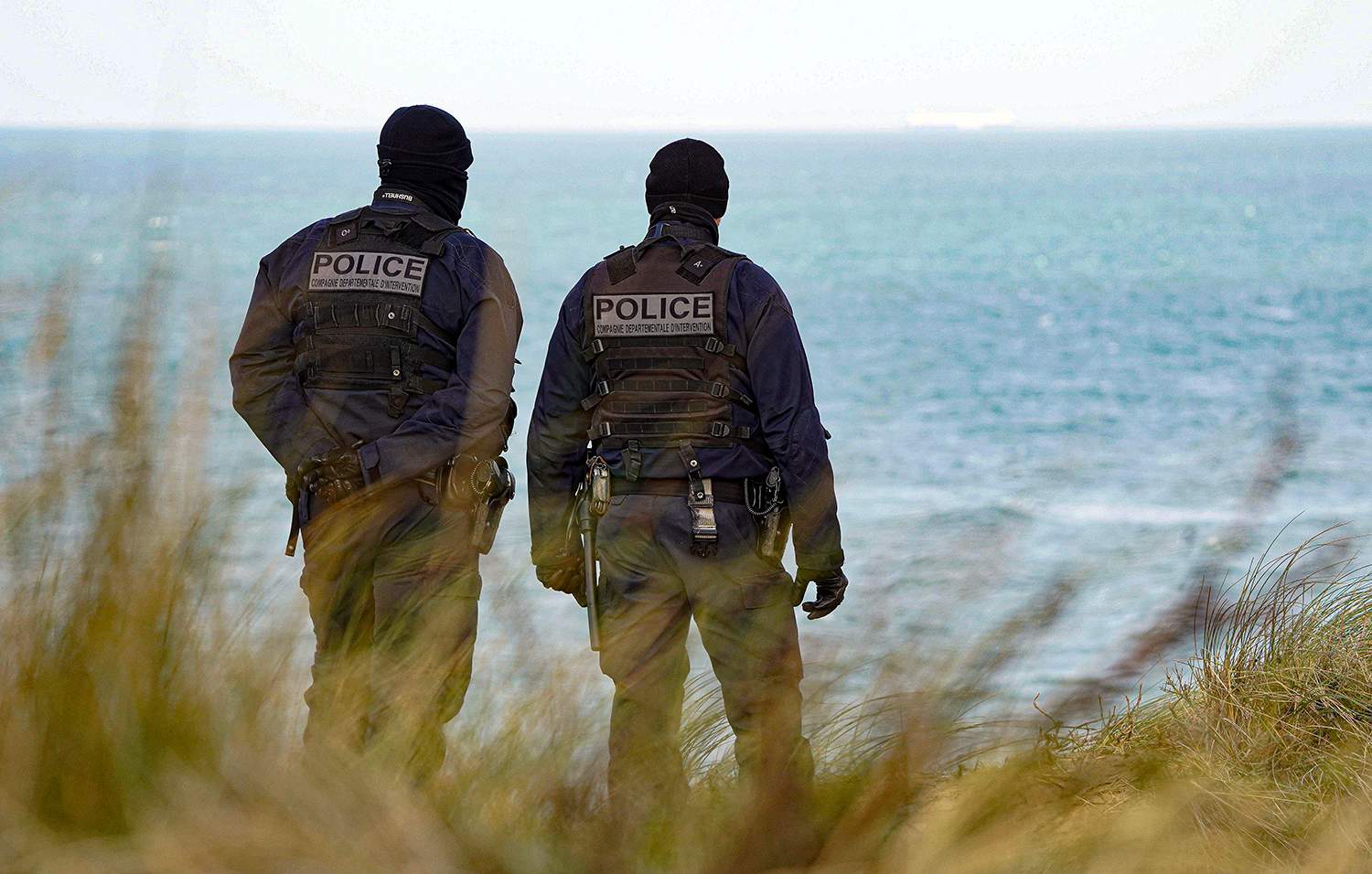
The UK Government's attempts to prevent migrants from crossing the Channel by small boat is leading to increased violence and death on the border, according to a new report published on Monday.
Humanitarian organisation Humans for Rights Network and charities working in the camps of northern France said that more than £650 million of British taxpayers' money is being used to fund police patrols and purchase surveillance equipment. This is then used to "instigate violent policies" on the UK's border with France, they said.
Last year was the deadliest on record, with at least 73 people dying on the border - more than in all other years put together.
NGOs working on both sides of the Channel say the French police routinely use flashballs, tear gas, including against children, and unleash police dogs to prevent migrants from boarding.
Chaos at the point of embarkation has been known to lead to people being crushed to death. Last year Sara, a 7-year-old girl, suffocated beneath a group of bodies while trying to board a dinghy bound for Britain. Campaigners say the UK is responsible for deaths like these because it is funding violence perpetrated by the French riot police.
The 'Pink Ladies' Laundering Anti-Migrant Views Into the Mainstream
An anti-migrant movement backed by Reform and Conservative politicians and regularly invited onto news channels is funded by a far-right group and has platformed a Neo-Nazi activist
Nicola Kelly
Since 2018, Britain has spent more than £3.5 billion on private sector company contracts designed to 'secure' the border with France. A further £476 million was pledged in 2023, to provide surveillance equipment and personnel, including drones, helicopters and patrol officers. More than £100 million has already been given to France for the 'one in, one out' scheme to return migrants there, and to bring those who have been accepted to Britain.
Earlier this year, French Interior Minister Bruno Retailleau said that of 1,200 law enforcement officers at the border each day, 730 are paid for by the UK government.
Alongside the perils faced while boarding boats, the French Government's policy of arresting those in the camps on 'no fixed abode' charges also leads to widespread violence, the report states. One group, Human Rights Observers documented over 800 evictions at the border in 2024, affecting at least 16,365 people. Belongings confiscated during these operations include medication, prescriptions and asylum claim documents.
Organisations working in northern France say police brutality is commonplace, with one, Utopia 56, recording 680 incidents of violence outside of crossing attempts between March and September 2025.
Moussa, who lived in the camps of Calais until recently, said: "The police there are like soldiers but without guns - it's like a war."
Charities say migrants rarely report police brutality due to lengthy and unworkable processes.
"It's not right what the police did. But we're not going to complain. Who are we going to complain to?" said Jamal, who witnessed violence on the northern France coastline.
This year has seen the closure of several safe routes to the UK, including refugee family reunion and some resettlement schemes. Campaigners and charities argue that the lack of alternative routes makes it more difficult for those on the move to seek asylum, risking increased police violence. It also allows smuggling networks to proliferate.
At least four people are known to have been shot dead in and around Dunkirk so far this year. In one documented incident, an autistic 16-year-old boy had a gun held to his head by smugglers.
"What's complicated in Dunkirk is that the mafia is very present," said an employee of Medecins du Monde working in the camps. A climate of tension and violence has really been accentuated over the past two or three years. We regularly...
Read our Digital & Print Editions
And support our mission to provide fearless stories about and outside the media system
SUBSCRIBE TODAY
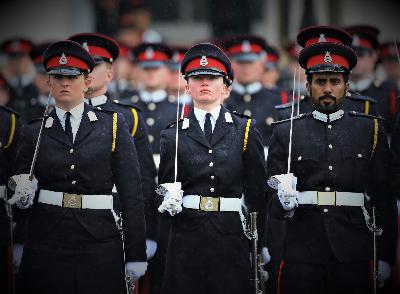
Britain's Army is shrinking to its smallest size since the Napoleonic wars, struggling to recruit and unable to modernise at the pace its own commanders say is required. Yet despite this contraction, new Ministry of Defence (MoD) figures obtained by Byline Times suggest that the UK is quietly extending its global reach by sending military reservists into more countries than at any point in recent history.
The FOI disclosure reveals that 612 reservists were deployed overseas last year, entering what the MoD classifies as a "deployment theatre" for more than 24 hours in 51 countries and territories. It is an unusually broad global footprint for the modern Army Reserve - particularly for a force shrinking to its smallest size in two centuries - and one the Government has offered no public explanation for.
The MoD will not say what these part-time soldiers were doing, under whose authority they were sent, or why some missions took place in states that have no publicly declared UK military interest. When asked whether reservists had also been deployed to other, undisclosed countries, the department issued a "neither confirm nor deny" response - the phrasing normally reserved for sensitive or clandestine operations.
In a previous FOI disclosure, the MoD listed Iran as a deployment location before withdrawing the claim once Byline Times asked for clarification.
EXCLUSIVE
How Epstein Channelled Race Science and 'Climate Culling' Into Silicon Valley's AI Elite
The Epstein files expose how racial hierarchy, genetic "optimisation" and even climate-driven population culling circulated inside Big Tech circles
Nafeez Ahmed
It leaves a striking contradiction at the heart of British defence: as the Army contracts, its overseas activity appears to be quietly expanding, pushed into opaque theatres with little democratic scrutiny and few safeguards for accountability.
These revelations come at a moment when the military is facing scrutiny over a murder-rape case in Kenya and allegations that UK Special Forces carried out unlawful killings in Afghanistan - abuses senior officers stand accused of concealing.
This month, Kenya's parliament delivered a very clear warning of what happens when overseas deployments drift beyond scrutiny. A sweeping year-long inquiry into the British Army Training Unit Kenya (BATUK) has accused troops of decades of abuses, from sexual violence and fatal accidents to environmental damage and the negligent handling of unexploded ordnance. All of this seems to be shielded by a veil of diplomatic and military immunity that allowed grievances to fester for generations.
Kenyan lawmakers described BATUK's refusal to give evidence as showing an entrenched culture of impunity. This echoes patterns seen elsewhere in Britain's military footprint from Iraq to Afghanistan: allegations initially dismissed, investigations obstructed, civilian harm minimised, and accountability delayed and denied until the political cost becomes impossible to ignore.
Where They Went
The MoD's list spans NATO allies, conflict zones and several states where the UK has no obvious strategic interest. A handful of deployments follow familiar patterns of deterrence or alliance maintenance. Others sit far less comfortably, resembling the routines of a vanished Empire that persist more through inertia than declared strategy. The Gulf features prominently - unsurprising given long-standing security partnerships and the region's role as a major purchaser of British defence equipment. Eastern Europe also appears heavily on the list, consistent with the UK's efforts to signal resolve against Russia following the invasion of Ukraine.
Yet interspersed among these are countries where the UK's interests feel, at best, opaque.
Cape Verde, Djibouti, Lebanon, the Maldives: each appears on the MoD's ledger with no accompanying explana...
Read our Digital & Print Editions
And support our mission to provide fearless stories about and outside the media system
SUBSCRIBE TODAY
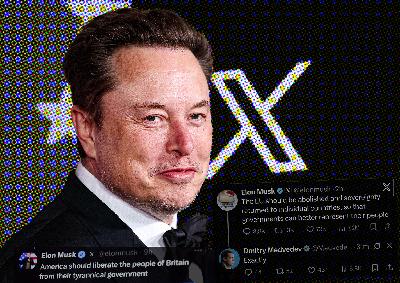
In December 2025, the European Commission fined X €120 million under its new Digital Services Act (DSA) - the EU's flagship online safety law, which requires the biggest platforms to be transparent about how they amplify, advertise and police content. It was the first ever non-compliance ruling under the DSA, and it focused on three design choices at the heart of Elon Musk's version of X: a deceptive paid blue-check system, an opaque advertising archive, and the platform's decision to shut out researchers.
Those are not abstract compliance failures. They are exactly the structural weaknesses that covert foreign influence operations have been exploiting on X.
The recent exposure of covert foreign influence via imposter accounts on X is jarring enough as it is, but a closer look reveals an even more concerning reality: these accounts did not flourish in spite of the platform's policies, but because of them.
When Elon Musk bought Twitter in 2022, he promised a new era of "free speech," an end to bots, and a more transparent information ecosystem. Instead, the platform he renamed "X" has become a near-perfect environment for foreign-run political influence operations.
While these problems predate Musk, the architecture he built - notably the monetisation of engagement, the destruction of identity verification, aggressive cuts to trust and safety, and a recommendation system that amplifies right-wing outrage - has turned X into one of the most permissive, profitable, and low-risk environments in the world for foreign operators seeking to infiltrate US political discourse.
With the recent revelations about foreign-run MAGA and "patriot" accounts, we now have the clearest evidence yet that Musk's policy changes are facilitating - and in some cases, even monetising - foreign influence and disinformation.
EXCLUSIVE
How Epstein Channelled Race Science and 'Climate Culling' Into Silicon Valley's AI Elite
The Epstein files expose how racial hierarchy, genetic "optimisation" and even climate-driven population culling circulated inside Big Tech circles
Nafeez Ahmed
From Verification to Monetisation
Suddenly, the perception of legitimacy associated with the checkmark was available to anyone willing to pay a small amount of money. Among the recently-exposed fake MAGA accounts, many were willing to do just that. In a sample of 22 of the most influential foreign-run fake MAGA accounts, nearly all (19 accounts, or 86%) have a blue checkmark, indicating that they are paying to be Premium users and therefore are eligible to apply to participate in X's content monetisation program, which allows influencer accounts to earn money from their content based on the levels of engagement they receive from other Premium users.
Accounts with Premium subscriptions also get algorithmic priority, which in practice means their posts have greater reach and higher engagement than non-Premium users - so more people see their posts and more money can be made based on their greater reach.
The engagement-based monetisation system introduced by Musk incentivises outrage bait, disinformation, and other problematic content that large numbers of people react to and engage with. Under this unprecedented scheme, anyone, anywhere in the world, can profit from divisive or false content designed to drive wedges between Americans and Europeans, with no regard for things like quality or truthfulness. It's no coincidence that the fake MAGA accounts posted frequently about hot-button topics like immigration, isolationism, and culture war issues.
These same design choices are now at the centre of the EU's €120 million penalty, which found that X's paid blue-check system misleads users about who is "verified", exposes people to impersonation and scams, and undermines transparency around political and issue-based advertising.
Dismantling Trust an...

Read our Digital & Print Editions
And support our mission to provide fearless stories about and outside the media system
SUBSCRIBE TODAY
Downing Street's electoral strategy is no longer a mystery. Labour's leadership has decided the safest route to power is to narrow politics to the smallest possible space: mimic just enough of Reform UK's rhetoric to neutralise them, reassure the bond markets, and run out the clock.
This is not a strategy of renewal. It is crisis management masquerading as competence. And the public can already see through it.
The latest polling from More in Common makes that unmistakably clear. When voters were asked which party they are most likely to vote against, Labour came first. For a governing party at the start of a term, this should set every alarm bell ringing. Voters are not rejecting bold reform or ideological ambition. They are rejecting the absence of it. They see a party that promised a decade of national renewal, but is offering a programme indistinguishable from managed decline.
The Autumn Budget only confirmed the problem.
In Parliament, I welcomed the necessary steps: ending the two-child limit, modest moves towards taxing wealth, a rise in the minimum wage. But these are tactical concessions, not a governing strategy. They do not confront the structural drivers of Britain's crises: monopoly extraction, climate-driven inflation, a decade of stagnant wages, and an economic model where unelected financial markets hold more authority over national policy than Parliament itself.
As I said in the Commons, repainting the wallpaper does not fix the walls. And this Budget did not even acknowledge the foundations.
The Integrity Gap: How We Built the Authoritarian Future We Fear
Labour MP Clive Lewis argues that the collapse of public trust in Government is the product of corporate power being wired into the architecture of the state
Clive Lewis MP
Meanwhile, the political landscape is shifting beneath Labour's feet. For the first time in years, Nigel Farage's carefully crafted public image is cracking. Former classmates describe not a momentary lapse in judgement, but a pattern of racist bullying so severe it shaped the culture of their school. Indeed, these accounts reveal a man whose teenage cruelty seems less like a phase and more like a blueprint for his future-self.
This should be an open goal. A moment to expose the gulf between Farage's performative plain-speaking and the worldview beneath. A chance to persuade those Reform-curious voters who feel abandoned by an economic system that extracts from them while political elites swap places and call it change.
But Labour's leadership cannot seize this moment - because it cannot credibly speak to the failures it has chosen to imitate.
You cannot call out Farage's divisive politics while borrowing his language on migration and asylum.
You cannot promise economic dignity while refusing to challenge the extractive model that keeps millions in insecurity.
You cannot build trust with disillusioned voters while clinging to the very managerialism they believe has failed them.
This is Labour's integrity gap - and it is now a structural weakness.
People feel something deep is wrong in Britain. They feel their wages stagnating while prices surge; their rent climbing while housing becomes ever more precarious; their energy bills rising while privatised monopolies post record profits. They watch water companies pollute rivers with impunity. They watch their children's futures shrink. They watch politicians change, but the model that fails them stay exactly the same.
These instincts are not ignorant or extreme. They are rooted in a decade of lived reality. And if Labour does not offer a coherent alternative, others will fill the void.
Because Britain's renewal depends on recognising who actually keeps the economy alive. SMEs, sole traders, co-operatives, family farms, local manufacturers and community enterprises have been crushed between rising costs and ...
Read our Digital & Print Editions
And support our mission to provide fearless stories about and outside the media system
SUBSCRIBE TODAY
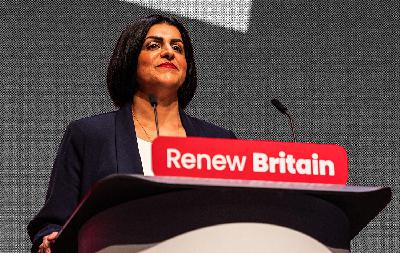
With her appointment in September as Home Secretary, Shabana Mahmood has become one of the country's most senior politicians, responsible for tackling migration, refugees and policing, core challenges for the Starmer Government.
A self-declared social conservative - "If you were trying to put me in a box you would say social, small-c conservative," Mahmood admits to a "natural affinity for the faith, family and flag element of Blue Labour." Her appointment was seen as another triumph for Starmer's Chief of Staff and behind-the-scenes kingmaker Morgan McSweeney.
Unsurprisingly, her appointment was met with acclaim by the Blue Labour leadership. Maurice Glasman called the move "fantastic", compared Mahmood to Elizabeth I and declared, "she's now clearly the leader of our part of the party" while Jonathan Rutherford with hyperbolic exaggeration hailed her as "perhaps the most astute and able politician of her generation". Yet, until now, she had remained unknown to most Labour supporters and the wider public. So what do we know about her politics?
What is Her Background?
Mahmood's grandparents came to Birmingham for work from Azad Kashmir in the 1960s. Her father was a civil engineer who worked in Saudi Arabia where Mahmood lived for the first seven years of her life. She then lived and went to school in Birmingham before gaining a place at Oxford University, where she took a degree in law. She then worked as a barrister until her election as Labour MP for the safe seat of Ladywood in inner-city Birmingham in 2010. She had no discernible track record of political activity prior to her selection but her dad was the chair of the Birmingham Labour Party. In the words of one long-standing, local councillor, "she was manoeuvred into the seat."
In her maiden speech she proudly promoted the diversity of her constituency and gave a clear, positive definition of multi-culturalism. "…..while the people of my constituency might have come from different places, the destination they seek is the same - a place of greater opportunity and the same chance as everyone else to succeed."
She recalled how "My grandfather came to this country from Pakistan in the 1960s. He worked long hours on a low wage and made sacrifices so that his family could access greater opportunity." She paid tribute "…to the successes of the Labour party and the Labour Government, who created the opportunities that made my family's journey and that of so many ordinary hard-working families possible. I believe that opportunity and the chance to fulfil one's aspirations is the birth-right of every one of our citizens."
The 'Pink Ladies' Laundering Anti-Migrant Views Into the Mainstream
An anti-migrant movement backed by Reform and Conservative politicians and regularly invited onto news channels is funded by a far-right group and has platformed a Neo-Nazi activist
Nicola Kelly
The Hostile Environment Revisited
As Home Secretary Mahmood had an opportunity to make her grandparents' aspirations come true for successor generations of migrants. Instead, she is aping recent Tory predecessors in her role - Theresa May, Priti Patel, Suella Braverman - by instituting a "hostile environment" for them. On 29th September as Home Secretary she announced a new contribution-based settlement model to reduce net migration, boost integration and reduce pressure on public services.
This stated that "To ensure people contribute to the economy and society before being able to settle in the UK, under the new model they will have to be lawfully resident in the UK for the minimum of 10 years, double the current period." Furthermore she set out tough new criteria for gaining indefinite leave to remain in the UK, including learning English to a high standard - defined in other briefings as equivalent to A level - not having taken any state benefits, and giving bac...

Comments

Download from Google Play

Download from App Store
 United States