


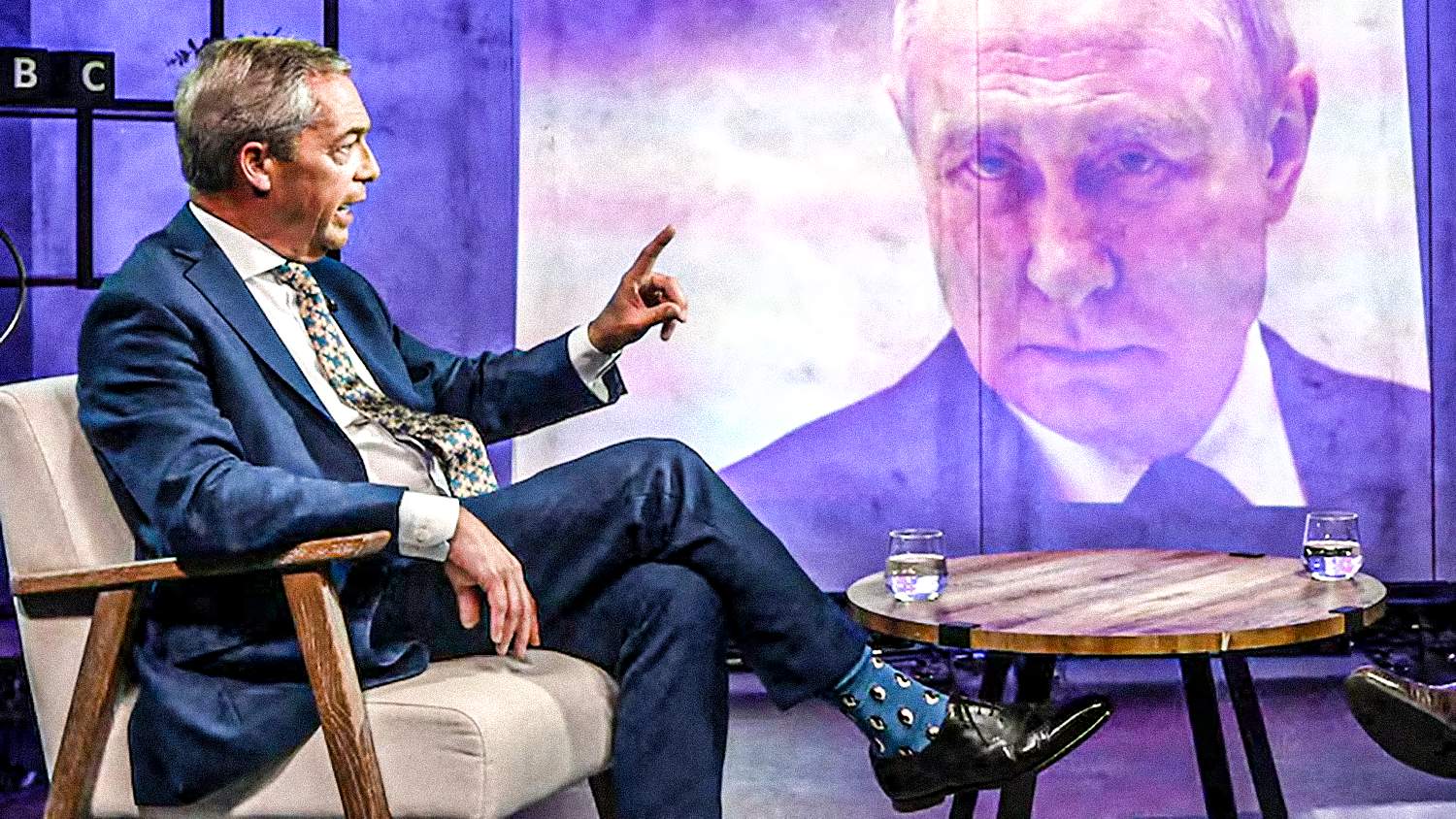
Why Is the Government Really Refusing to Investigate Russian Interference in Brexit?
Update: 2025-12-19
Description
Read our Digital & Print Editions
And support our mission to provide fearless stories about and outside the media system
SUBSCRIBE TODAY
When the Nathan Gill bribery story fist hit the headlines, Keir Starmer and his ministers dodged calls from MPs to launch a full enquiry into Russian interference in British politics. So, when the Government this week ordered an urgent review into foreign financial political interference, it came as a surprise to many.
However, there was one big snag: while aiming to consider "recent cases", it will not "consider previous allegations over interference in the Brexit referendum".
Perhaps to ensure that the review does not go anywhere near Brexit, it is being led by Philp Rycroft, one of the handful of senior civil servants who spearheaded "getting Brexit done", with little regard to questions around its legitimacy.
Needless to say, he does not happen to have any relevant experience in either covert finance operations, nor national security. Having defended his Doctorate of Philosophy (DPhil) on the ever-pressing topic of church and community in XVIII-XIX century Yorkshire, he served as Permanent Secretary at the Department for Exiting the European Union (DExEU) between October 2017 and March 2019.
Keir Starmer Is Setting a Trap for Nigel Farage With Foreign Interference Inquiry
As Reform opens the door to crypto donations, the Government is finally starting to take action against the threat of foreign financial interference in our politics, reports Adam Bienkov
Adam Bienkov
The excuse which a Labour Government minister used to justify staying away from the Russian covert operation around Brexit, echoed Boris Johnson's: Russian interference had no material impact on elections. However, that assumption is unproven.
According to US intelligence, the Kremlin spent over USD 300 million since 2014 to influence European politics via front companies and think tanks. For comparison, the total Brexit campaign spending was about £30 million. Carnegie adds that non-state actors may play a predominant role in such campaigns even when a government is ultimately behind them.
Foreign interference has a material impact on elections when the society is divided and voters are split on an issue around 50:50 . In cases where the margins of voting counts are wide, it may not alter outcomes but it can still damage democratic integrity.
US intelligence and congressional inquiries showed that Russian interference in 2016 plausibly shifted sentiment in swing states because they were decided by tens of thousands of votes. The Hillary Clinton campaign is adamant that, according to their poll data, it was the Russian operation to disclose emails on 22 July 2016 which was the single factor that moved the election in Trump's favour.
In Romania and Moldova, courts and authorities explicitly concluded that Russian financial and cyber interference compromised electoral integrity to the point that outcomes were annulled or required extraordinary counter-measures.
Similarly in the UK, the Brexit referendum's two-point margin combined with unresolved questions of opaque funding, data-driven targeting and disinformation makes material impact plausible but untested because the Government refused to investigate.
For the past 15 years or more, the British electoral system has witnessed what some in the intelligence community called "the most successful Russian active measures operation against the UK". It comprised sustained and systematic Russian political interference through donations to political parties, via shell companies and foreign-born British passport holders, and other Putin proxies. I myself became an unwitting witness of this when, in 2010, a senior Russian diplomat in London looked for ways to channel funds into the Conservative Party.
In addition, Russian oligarchs based in the UK funded political thinktanks propagating specific narratives, employed relatives of politicians, and influenced influential politicians tho...
And support our mission to provide fearless stories about and outside the media system
SUBSCRIBE TODAY
When the Nathan Gill bribery story fist hit the headlines, Keir Starmer and his ministers dodged calls from MPs to launch a full enquiry into Russian interference in British politics. So, when the Government this week ordered an urgent review into foreign financial political interference, it came as a surprise to many.
However, there was one big snag: while aiming to consider "recent cases", it will not "consider previous allegations over interference in the Brexit referendum".
Perhaps to ensure that the review does not go anywhere near Brexit, it is being led by Philp Rycroft, one of the handful of senior civil servants who spearheaded "getting Brexit done", with little regard to questions around its legitimacy.
Needless to say, he does not happen to have any relevant experience in either covert finance operations, nor national security. Having defended his Doctorate of Philosophy (DPhil) on the ever-pressing topic of church and community in XVIII-XIX century Yorkshire, he served as Permanent Secretary at the Department for Exiting the European Union (DExEU) between October 2017 and March 2019.
Keir Starmer Is Setting a Trap for Nigel Farage With Foreign Interference Inquiry
As Reform opens the door to crypto donations, the Government is finally starting to take action against the threat of foreign financial interference in our politics, reports Adam Bienkov
Adam Bienkov
The excuse which a Labour Government minister used to justify staying away from the Russian covert operation around Brexit, echoed Boris Johnson's: Russian interference had no material impact on elections. However, that assumption is unproven.
According to US intelligence, the Kremlin spent over USD 300 million since 2014 to influence European politics via front companies and think tanks. For comparison, the total Brexit campaign spending was about £30 million. Carnegie adds that non-state actors may play a predominant role in such campaigns even when a government is ultimately behind them.
Foreign interference has a material impact on elections when the society is divided and voters are split on an issue around 50:50 . In cases where the margins of voting counts are wide, it may not alter outcomes but it can still damage democratic integrity.
US intelligence and congressional inquiries showed that Russian interference in 2016 plausibly shifted sentiment in swing states because they were decided by tens of thousands of votes. The Hillary Clinton campaign is adamant that, according to their poll data, it was the Russian operation to disclose emails on 22 July 2016 which was the single factor that moved the election in Trump's favour.
In Romania and Moldova, courts and authorities explicitly concluded that Russian financial and cyber interference compromised electoral integrity to the point that outcomes were annulled or required extraordinary counter-measures.
Similarly in the UK, the Brexit referendum's two-point margin combined with unresolved questions of opaque funding, data-driven targeting and disinformation makes material impact plausible but untested because the Government refused to investigate.
For the past 15 years or more, the British electoral system has witnessed what some in the intelligence community called "the most successful Russian active measures operation against the UK". It comprised sustained and systematic Russian political interference through donations to political parties, via shell companies and foreign-born British passport holders, and other Putin proxies. I myself became an unwitting witness of this when, in 2010, a senior Russian diplomat in London looked for ways to channel funds into the Conservative Party.
In addition, Russian oligarchs based in the UK funded political thinktanks propagating specific narratives, employed relatives of politicians, and influenced influential politicians tho...

Comments
In Channel











Download from Google Play

Download from App Store
 United States
00:00
00:00
x

