


 Claim Ownership
Science From the Fringe
Subscribed: 11Played: 367
Subscribe

© Science From The Fringe
Description
Conversations with fearless scientists, policy experts, and journalists who are defying dogma and defending discovery.
sciencefromthefringe.substack.com
sciencefromthefringe.substack.com
40 Episodes
Reverse
In the sixth episode of In Defense of Virology, Rutgers professor and Science From the Fringe host Bryce Nickels speaks with distinguished virologist Simon Wain-Hobson about a potentially catastrophic biosafety issue: the human H2N2 influenza virus is not classified as a federal select agent, yet live samples remain stored in laboratory freezers around the world. The discussion is prompted by Simon’s recent essay, “The virus not on the Select Agent list.”The discussion centers on a concerning exchange between NIH Director Jay Bhattacharya and NIAID Acting Director Jeffrey Taubenberger on an August 2025 episode of The Director’s Desk podcast. During that conversation, Taubenberger—a prominent influenza researcher best known for his role in the highly controversial resurrection of the deadly 1918 “Spanish flu” virus—said that the virus responsible for the 1957 pandemic, H2N2, poses a serious concern. He noted that since 1968, no one has been exposed to this virus, even though it was fully adapted to humans. Despite this, H2N2 is not a select agent. Taubenberger explained that his lab voluntarily handles it under the same conditions as the 1918 virus, though such precautions are not required, and acknowledged that H2N2 likely remains in clinical, diagnostic, and basic virology laboratory freezers around the world. He admitted that this situation “really scares” him, since most of the global population born after 1968 lacks immunity to H2N2—a virus known to have already caused a pandemic.Simon highlights Taubenberger’s striking acknowledgment that live H2N2 stocks persist in numerous laboratories without select agent designation or enhanced biosafety requirements. This stands in sharp contrast to the 1918 influenza virus—reconstructed by Taubenberger himself—which is designated as a Tier 1 select agent and subject to the highest level of regulatory control. Given the well-documented record of laboratory accidents, Simon argues that keeping H2N2 stocks under minimal oversight poses an unacceptable risk of a lab-acquired pandemic.The episode questions why, if Taubenberger himself is “really scared” by the existence of H2N2 stocks in laboratories worldwide, neither he nor the NIH Director has taken concrete action since their podcast discussion. Simon maintains that H2N2 is uniquely dangerous: it is fully adapted to humans, highly transmissible, and capable of causing millions of deaths in today’s densely populated, interconnected world—potentially matching or exceeding the impact of COVID-19. In his view, any speculative scientific value in retaining live H2N2 virus stocks is vastly outweighed by their global hazard.Emphasizing that pandemic potential depends primarily on transmissibility rather than case fatality—unlike pathogens such as Ebola—Simon calls for urgent corrective measures. He advocates adding human H2N2 to the Federal Select Agent List as a Tier 1 agent, destroying all unnecessary laboratory stocks under U.S. jurisdiction, retaining only genomic sequences for possible future reconstruction if ever justified, and encouraging equivalent actions internationally.The conversation places these recommendations within the broader “Do No Harm” ethos of the series, arguing that responsible virology sometimes requires restraint, remediation, and the deliberate elimination of nonessential risks.(recorded January 9, 2026) Get full access to Science From the Fringe at sciencefromthefringe.substack.com/subscribe
In Episode 5 of In Defense of Virology, Bryce Nickels and Simon Wain-Hobson have a sobering conversation about the emerging risks of applying artificial intelligence to virus design.The discussion centers on a recent Stanford preprint in which researchers trained AI models on bacteriophage genomes and used those models to generate entirely new viral sequences. From hundreds of AI-generated designs, the team synthesized 16 fully functional viruses. One replicated faster than its natural reference phage, while six displayed striking genetic stability, accumulating no detectable mutations at all. Even for Simon, whose career spans decades of studying viral evolution, the results were genuinely surprising.Although bacteriophages are often framed as promising therapeutic tools, particularly for treating antibiotic-resistant infections, Simon cautions that the implications of this work extend far beyond phage biology. Applying similar AI-driven approaches to animal or human viruses could unintentionally generate pathogens that are more transmissible or more virulent—effectively producing gain-of-function outcomes without any traditional laboratory manipulation.The episode places these findings within a broader and increasingly urgent context. Leaders in the AI community have begun sounding alarms about AI-enabled biology. Most notably, Yoshua Bengio warned in a New York Times op-ed that the implications of this technology are “terrifying.” Similar concerns were echoed at the September Red Lines AI meeting, where pandemic genesis was identified as the foremost global risk.Simon and Bryce argue that this moment demands restraint rather than curiosity. They urge scientists to refrain from applying AI-based viral design to human-relevant pathogens and call on research funders, including the National Institutes of Health, philanthropies, and private foundations, to withhold support for work that could escalate existential risk. (Such restraint would align with recent U.S. executive orders aimed at preventing the enhancement of dangerous pathogens.)The episode closes with Simon making a broader appeal for scientists to stop prioritizing technical novelty and high-risk experimentation, but for a renewed commitment to the principle of do no harm. Biology, he contends, should focus its energy on urgent human challenges (e.g., cancer, neurodegenerative disease, and mental health) where progress can be transformative without carrying the risk of catastrophic consequences.(recorded December 7, 2025) Get full access to Science From the Fringe at sciencefromthefringe.substack.com/subscribe
In this episode of Science From the Fringe, host Bryce Nickels speaks with Dana Parish—an award-winning songwriter, patient-rights advocate, advisory board member of the Bay Area Lyme Foundation, co-author of Chronic, and host of The Dana Parish Podcast—about her personal experience with Lyme disease, the broader scientific, medical, and political controversies surrounding tick-borne illness, and the historical significance of the Lyme Disease Roundtable hosted by the U.S. Department of Health and Human Services (HHS) on Monday, December 15, 2025.The conversation begins with Dana’s personal Lyme story: a tick bite that abruptly derailed her music career and led to severe multisystem illness, including heart failure, after early treatment failed. She describes a long and difficult journey to diagnosis, the discovery of co-infections such as Bartonella, and her eventual recovery through extended antibiotic treatment under Dr. Steven Phillips. That experience ultimately led her to co-author Chronic, a project shaped by striking parallels between Lyme disease politics and the public response to COVID-19.Dana discusses her advocacy work with organizations such as the Bay Area Lyme Foundation and the Lyme Disease Biobank, emphasizing the urgent need for improved diagnostics, increased research funding, insurance coverage, and formal recognition of chronic Lyme disease. The episode also explores the recent HHS Chronic Lyme Disease Roundtable, featuring figures such as RFK Jr., Dr. Oz, Dr. Steven Phillips, and Dr. Bob Bransfield. The discussion highlights growing acknowledgment of chronic Lyme’s reality, the severe neuropsychiatric consequences many patients face—including rage, psychosis, and suicide risk—and calls for systemic reforms in testing, treatment, and coverage.Interwoven with humor and banter—including jokes about exterminating ticks, “limited hangouts,” and mutual suspicions of being “spooks”—the episode confronts deeper issues: institutional denial, media bias, insurance barriers, failed vaccine efforts, and the enormous personal and economic toll of untreated chronic illness. Dana and Bryce also explore links between Lyme disease, toxic mold exposure, reactivated infections, and long COVID, underscoring the complexity of chronic inflammatory conditions.The episode closes with cautious optimism about potential reforms under new HHS leadership, stressing both the urgency of alleviating patient suffering and the need for skepticism and follow-through to ensure that recent developments amount to real change rather than symbolic optics.(recorded December 19, 2025) Get full access to Science From the Fringe at sciencefromthefringe.substack.com/subscribe
In this episode of Science From the Fringe, host Bryce Nickels speaks with documentary filmmaker Jenner Furst, the Director of Thank You, Dr. Fauci, which examines the career and controversies surrounding Dr. Anthony Fauci.The conversation explores Jenner’s motivation for making the film, which began when independent financiers approached him to investigate Fauci’s record during the COVID-19 pandemic. Jenner describes his deep dive into Fauci’s involvement in gain-of-function research, the lab-origin hypothesis for SARS-CoV-2, and what he characterizes as a vast scientific cover-up, reconstructed through emails, publications, and whistleblower testimony.They discuss interviews featured in the film with figures such as Fauci’s long time nemesis Richard Ebright, former CDC Director Dr. Robert Redfield, and current FDA Commissioner Dr. Marty Makary, while critically examining institutional incentives, possible intelligence-community entanglements, and how crises can be leveraged for power, profit, and political advantage.Interspersed with humor—ranging from bad Christmas songs and Ghostbusters metaphors to behind-the-scenes filming anecdotes—the discussion also confronts darker themes: suppressed dissent, fraud in science, failures of transparency, and the structural weaknesses of modern biosafety and public-health oversight.The episode asks how ambition, distorted incentives, and institutional corruption may have contributed to a global catastrophe—and whether meaningful accountability or reform is possible under new leadership. Listeners are encouraged to watch the film for a fuller reckoning.(Recorded December 13, 2025) Get full access to Science From the Fringe at sciencefromthefringe.substack.com/subscribe
In the fourth episode of In Defense of Virology, Rutgers Professor and Science From the Fringe host Bryce Nickels and distinguished virologist Simon Wain-Hobson argue that labs should destroy frozen stocks of dangerous, nonessential pathogens produced through gain-of-function research or historical resurrection—simple to do, high-impact for reducing global risk.Simon highlights precedent—from post-eradication smallpox and rinderpest—and cites a recent Newcastle disease virus re-emergence in China strongly suggestive of a freezer escape. Given that even top labs leak, he argues, destruction of unnecessary stocks is common-sense risk reduction.The episode concludes with an overlooked puzzle: despite SARS-CoV-2’s devastating impact, fewer than 100 related genomes have been disclosed, compared to more than 240 for SARS-1. Whether due to undersampling or undisclosed sequences, Simon contends the gap is a public-health failure—surveillance is essential, but must not be confused with the risky manipulation that helped create today’s biosafety crisis. Virology must decide between continued high-risk work and responsibly “cleaning house.”(recorded November 22, 2025) Get full access to Science From the Fringe at sciencefromthefringe.substack.com/subscribe
In this episode of Science from the Fringe, host Bryce Nickels speaks with Dr. Meryl Nass—medical adviser to Robert F. Kennedy Jr., biological warfare expert, publisher of Meryl’s CHAOS letter, and founder of DoorToFreedom.org—about the urgent need to strengthen the 1972 Biological Weapons Convention (BWC).The conversation examines the escalating risks posed by bioweapons research, and why the current political moment—with HHS Secretary Robert F. Kennedy Jr. and President Trump openly calling for an end to bioweapons development—may offer the strongest opportunity in decades to close the gaps in the Biological Weapons Convention.Dr. Nass recounts that President Nixon’s 1969–70 decision to renounce U.S. offensive bioweapons work led to the 1972 Biological Weapons Convention—now joined by nearly 200 nations—but one deliberately drafted without verification, inspections, or penalties in order to secure rapid international agreement. She explains that in 2001 the Bush administration abruptly dismantled a nearly completed verification protocol, fracturing international trust and leaving the treaty effectively unenforceable.Dr. Nass further notes that, since 2001, the surge in biodefense and “pandemic preparedness” funding has actively encouraged dangerous gain-of-function research—and that this research enterprise has itself become a significant source of global public-safety risk.Still, she sees a historic opportunity to reduce this danger by finally fixing the BWC. President Trump’s May 2025 executive order restricting gain-of-function research, his September 23, 2025 UN speech urging all nations to end biological weapons development, and RFK Jr.’s continued focus on the issue at HHS together create an unprecedented chance to add the verification, inspection, and enforcement mechanisms the treaty has lacked for more than fifty years.The episode offers a stark warning: today’s gravest biological threat is not nature but dangerous gain-of-function research. Dr. Nass argues that this moment must be seized—before the next accident or deliberate release makes COVID-19 look modest by comparison.(Recorded November 24, 2025)Timestamps00:30 — Introduction of Dr. Meryl Nass02:37 — Discovering Pentagon-funded bioweapons work at UMass (1989)07:43 — Joining the Council for Responsible Genetics; early BWC history09:50 — Nixon’s renunciation and the intentional omission of verification11:49 — Failures of five-year review conferences; Bush’s 2001 sabotage14:10 — Context of the 2001 walkout: 9/11 and the anthrax attacks15:20 — Why the U.S. abruptly killed the verification protocol17:35 — Trump’s 2025 UN speech and executive order on GOF19:55 — The global boom in “pandemic preparedness” funding22:23 — USAID’s $44B budget and dangerous research abroad24:15 — Why narrow GOF definitions are misleading26:56 — The number of lab incidents that occur each year30:37 — Risks of basic research on natural Ebola-level pathogens31:24 — The 2018–19 Ebola vaccine rollout: unresolved issues35:06 — Rand Paul’s oversight bill vs. the broader Trump/RFK Jr. strategy36:03 — Financial incentives behind the global biodefense system40:45 — Rebuilding trust and addressing entrenched interests41:45 — The opportunity created by RFK Jr. at HHS46:22 — Concrete steps that signal real progress48:55 — AI, synthetic biology, and the future of bioweapons oversight52:33 — Why public understanding of biowarfare risks remains limited01:00:14 — Closing remarksintro and outro by Tess Parks Get full access to Science From the Fringe at sciencefromthefringe.substack.com/subscribe
In this episode of Science From the Fringe, host Bryce Nickels, speaks with David Zweig—a New York City–based journalist, author, and contributor to The Atlantic, The New York Times, and The Free Press—about his new book, An Abundance of Caution: American Schools, the Virus, and the Story of Bad Decisions.Their conversation traces David’s motivation for writing the book, beginning with his early recognition of the devastating effects of remote learning on children during the COVID-19 pandemic. David explains how a mix of action bias, politicization, and institutional inertia led to catastrophic decisions on school closures and mitigation measures such as masking, distancing, and barriers.David critiques the reliance on flawed models, the role of teachers’ unions, and the class divides that deepened the harms, while highlighting how real-time evidence from Europe and elsewhere was ignored. The discussion also explores the erosion of public trust, the suppression of dissent, and the moral grandstanding that replaced evidence-based reasoning.At its core, this episode examines how “good” intentions and systemic dysfunction combined to produce policies that harmed children with little to no public health benefit, and what it will take to ensure more intellectually honest, transparent, and evidence-driven decision-making in future crises.(recorded November 10, 2025) Get full access to Science From the Fringe at sciencefromthefringe.substack.com/subscribe
In this episode of Science from the Fringe, host Bryce Nickels, Professor of Genetics at Rutgers University, speaks with Aaron Siri—civil rights attorney, managing partner at Siri & Glimstad LLP, and author of Vaccines Amen: The Religion of Vaccines. Together, they discuss the corrupting influence of commercial interests on scientific integrity and public policy, and how, in the case of vaccines, appeals to authority are sold to the public as unassailable fact.The conversation begins with the historical inflection point of the little known 1986 National Childhood Vaccine Injury Act, which established legal immunity for vaccine manufacturers and reshaped the incentives that underpin vaccine development and public health policy. The discussion then turns to how this unprecedented legal structure has contributed to shortcuts in scientific oversight, particularly in “placebo” trial design, post-licensure safety evaluation, and mechanisms for compensating vaccine injuries.Aaron argues that many vaccine claims are rooted in dogma rather than evidence, critiques the role of figures like Dr. Stanley Plotkin in shaping vaccine policy, and highlights cases of coercion, censorship, and inadequate safety oversight. He emphasizes the importance of informed consent, individual rights, and persuading the public on merits rather than mandates, while touching on potential unintended consequences of vaccination programs, including the potential disruption of humanity’s ecological relationship with certain pathogens.At its core, this “scientist meets lawyer” conversation probes how scientific integrity can be distorted by profit-driven systems, what happens when healthy skepticism becomes verboten, and the human cost of trading transparency for expedience.(Recorded October 29th, 2025)Timestamps00:30 — Introduction of Aaron Siri01:17 — Aaron’s definition of a vaccine03:03 — Aaron shares his personal opinion on vaccine policy08:32 — Dr. Stanley Plotkin: a central figure in vaccinology12:04 — Aaron’s 2018 deposition of Plotkin in a custody case15:28 — The 1986 National Childhood Vaccine Injury Act19:57 — How the 1986 Act inverted market incentives for vaccine safety22:24 — Design defect claims and the Supreme Court’s ruling on vaccine liability 26:19 — Lucrativeness of vaccines for pharmaceutical companies28:26 — The Mandate for Safer Childhood Vaccines and HHS’s failure to fulfill it32:36 — Potential for HHS under RFK Jr. to enforce vaccine safety mandates35:55 — Mistreatment of vaccine injured: the case of Maddie de Garay42:20 — Broader societal treatment of vaccine-injured and unvaccinated44:14 — GSK’s 2017 pertussis vaccine ad and litigation over misleading claims48:19 — Exchange with Dr. Paul Offit on placebo trials57:26 — Humanity’s ecological relationship with infectious diseases01:08:35 — Measles mortality decline pre-vaccine and potential long-term effects of eradication01:11:50 — Aaron describes his vision for a world without mandatesintro and outro by Tess Parks Get full access to Science From the Fringe at sciencefromthefringe.substack.com/subscribe
In the third episode of In Defense of Virology, Rutgers Professor and Science From the Fringe host Bryce Nickels and distinguished virologist Simon Wain-Hobson discuss two striking examples of reckless virology research—one well known and the other largely forgotten—and issue a call to change the culture of modern science.The first example revisits the controversial resurrection of the 1918 Spanish flu, a virus that killed tens of millions worldwide. Simon explains how NIH-funded researchers extracted genetic fragments from frozen cadavers, used PCR to reconstruct the viral genome, and then revived the virus in 2005, publishing the full sequence in Science. Despite claims that the work would aid vaccine development, he argues that no public-health benefit ever materialized, while the potential for misuse dramatically increased.The second example, less known but equally concerning, involves retroviruses resurrected from fragments within the human genome. In work published in 2006 and 2007, researchers in France and New York chemically synthesized what they believed to be defunct human viruses—naming one “Phoenix.” Although performed with NIH and national-science-foundation support, there was no transparency about biosafety levels or prior ethical review. Simon argues that such experiments, however clever, violate the moral boundary between curiosity and recklessness.From these examples, Simon and Bryce turn to solutions—chief among them a Hippocratic Oath for scientists. Just as physicians swear to “do no harm,” they propose that life-science researchers and funding agencies adopt a similar pledge to avoid work that makes the world more dangerous. Simon envisions a three-part reform: NIH and major foundations embedding the principle into grants, universities incorporating it into graduation ceremonies, and scientific culture embracing it as a moral baseline.The conversation closes with a call to action for listeners: write to local universities or newspapers to support a research culture grounded in humility, safety, and moral responsibility.(recorded October 23, 2025) Get full access to Science From the Fringe at sciencefromthefringe.substack.com/subscribe
In the second episode of In Defense of Virology, Genetics Professor and Science From the Fringe host Bryce Nickels engages virologist Simon Wain-Hobson in a nuanced discussion on how recent advances in biotechnology have amplified both the promise and the perils of modern virology research.Building on Episode 1, Simon delves deeper into the dangers of gain-of-function (GOF) research, this time focusing on how today’s biotechnology makes it possible to build entire viruses from digital genetic sequences—blueprints that can be transmitted and replicated worldwide in seconds.Simon is blunt in his assessment: there are no redeeming benefits to dangerous gain-of-function experiments. To better describe the risk, he introduces the concept of “single-use research of concern” (SURC), a term for studies that generate genuine hazards without any plausible public good. This contrasts with the more familiar idea of “dual-use research of concern” (DURC), which acknowledges that some experiments carry risks but may also advance valuable scientific or medical progress.Reflecting on his career during the HIV/AIDS era, Simon recounts helping organize a landmark 2000 Royal Society meeting that addressed verboten questions about whether the oral polio vaccine played a role in HIV’s origins. That experience, he says, underscored the value of humility, transparency, and open communication between scientists and the public. From past vaccine mishaps to the careless publication of viral genome data, Simon warns that the real threat to virology isn’t skepticism from outside—it’s hubris and secrecy from within.(recorded October 20, 2025) Get full access to Science From the Fringe at sciencefromthefringe.substack.com/subscribe
In this episode of Science from the Fringe, host Bryce Nickels speaks with Sigrid Bratlie, Norwegian molecular biologist and science communicator, about her comprehensive new book The Wuhan Mystery: The Hunt for the Origins of COVID.The conversation delves into the evidence supporting a lab-related origin of COVID-19, the politicization of science, and the personal backlash Bratlie has faced from prominent scientists. She describes how public debate and media coverage of COVID origins in Europe trail behind the U.S., as well as how trust in science and transparency have been eroded across the pond, as well. Bratlie walks listeners down her path from reflexive skeptic to one of Norway’s leading advocates for an open, evidence-based discussion of the lab leak hypothesis. She candidly describes the personal and professional costs associated with her advocacy, including harassment and intimidation within the scientific community, and underscores the importance of courage, accountability, and intellectual openness in the face of institutional pressure.(Recorded October 16, 2025)Timestamps 00:31 — Introduction of Sigrid Bratlie 01:48 — Sigrid discusses her new book: The Wuhan Mystery: The Hunt for the Origins of COVID03:13 — Conclusions on lab leak evidence and the scientific cover-up06:45 — Reception the book has received in Norway08:34 — Bratlie’s role as one of Norway’s leading voice on lab-origin discussions10:36 — How Europe trails behind the U.S. in the origins debate12:07 — Strongest evidence for a lab origin13:27 — Kristian Andersen’s involvement in shaping the origins narrative 22:29 — Bratlie discusses Andersen’s trip to Norway last year and possible motives28:52 — Other critics of Bratlie34:28 — Scientific intimidation and silencing tactics 39:52 — Bratlie discusses Ralph Baric’s role44:45 — Lessons learned: misplaced priorities, risks ignored, and the erosion of public trust intro and outro by Tess Parks Get full access to Science From the Fringe at sciencefromthefringe.substack.com/subscribe
In the inaugural episode of In Defense of Virology, Rutgers Professor and Science From the Fringe host, Bryce Nickels joins forces with distinguished virologist Simon Wain-Hobson for a new series that aims to defend virology from bad actors within.Introducing this new segment, Wain-Hobson explains that the real threat to virology isn’t public skepticism, but the recklessness of insiders who promote dangerous gain-of-function (GOF) research and attempt to silence debate.Drawing from his popular series of essays written for the Biosafety Now Substack newsletter, Simon dissects how flawed GOF studies, perverse incentives, and bureaucratic groupthink have compromised public support for virology, and by extension, science itself.Bryce and Simon call for virology to reclaim its integrity—returning to an open, truth-driven discipline centered on understanding viral biology and advancing modern medicine.(recorded October 14, 2025) Get full access to Science From the Fringe at sciencefromthefringe.substack.com/subscribe
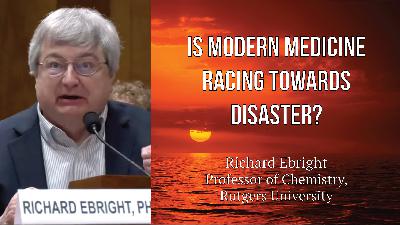
On this episode of the Science From the Fringe podcast, Bryce Nickels speaks with his Rutgers colleague and long-time collaborator Richard Ebright (Professor of Chemistry and Chemical Biology, Rutgers University) about the emerging threat of antibiotic-resistant bacteria.Ebright discusses how his research on bacterial RNA polymerase led him to uncover new compounds with therapeutic potential. He shares why the Waksman Institute of Microbiology at Rutgers is referred to as the “birthplace of antibiotics,” reflects on what ended the “golden era” of antibiotic discovery, and explains how modern medicine could collapse if society doesn’t address the emerging threat of antibiotic resistance.Ebright also describes how market failures and policy neglect have stalled innovation—and why he believes policymakers continue to fail the public writ large.Other topics include the potential use of engineered, multi-drug-resistant bacteria as bioweapons, the limits of phage therapy as an alternative to antibiotics, and the ethical parameters of animal testing in drug research.(Recorded October 12, 2025)Timestamps00:38 – Introduction of Richard Ebright02:16 – Research on RNA synthesis and antibiotic discovery10:52 – The global threat of antimicrobial resistance (AMR)16:57 – How AMR evolves through natural selection19:55 – Why new antibiotics are urgently needed22:12 – Top bacteria causing 11% of global disease burden23:30 – Drivers of AMR: human, livestock, and crop use25:35 – Biodefense funding after 9/11 and its impact on AMR27:29 – Market failures and underfunding of antibiotic R&D29:47 – Rutgers’ antibiotic legacy and Selman Waksman’s role33:12 – End of the “golden era” of discovery35:59 – Why Big Pharma abandoned antibiotic research41:33 – Ebright’s policy solution – delinking revenue from sales45:49 – The Pasteur Act – goals and reasons it failed48:33 – Limitations of phage therapy for bacterial infections53:36 – Dual-use risks – engineered resistant bacteria and bioweapons56:32 – Animal testing and ethics in drug development01:06:17 – APY Therapeutics – Ebright’s new antibiotic startup01:16:36 – Closing thoughts – preserving modern medicine with new antibioticsintro and outro by Tess ParksScience from the Fringe is a reader-supported publication. To receive new posts and support our work, consider becoming a subscriber. Get full access to Science From the Fringe at sciencefromthefringe.substack.com/subscribe
After a thought-provoking Science From the Fringe interview —“Conversations with Bryce Nickels: Kevin McKernan (Biotech Entrepreneur)”, recorded on September 29, 2025 — Bryce Nickels invited Kevin McKernan back for a live X Space on October 9 to continue the conversation.Science from the Fringe is a reader-supported publication. To receive new posts and support our work, consider becoming a subscriber.The conversation offered listeners a candid look into McKernan’s journey — from early breakthroughs in genome sequencing to founding Medicinal Genomics, where he advanced cannabis research, pushing back against significant legal and regulatory pressures.Kevin and Bryce then pivoted to the validly of the COVID-19 PCR tests used to drive case counts and death tolls, and raised his many concerns about mRNA vaccines. He explained the crux of the issues including frame-shifting, RNA degradation, DNA contamination, and the discovery of SV40 sequences associated with manufacturing changes — all of which he breaks down for benefit of the non-scientist. This segued into Bryce issuing a public mea culpa for the ultimately incorrect and harmful stances taken during the viral panic. They also touched on regulatory failures, liability protections, and potential health risks from unvetted vaccine production processes, including inflammation and cancer. The conversation emphasized the importance of scientific transparency over institutional dogma and featured contributions from Kevin’s collaborator Jessica Rose.Timestamps00:00:31 — Welcome and host introduction00:01:00 — Introducing Kevin McKernan and his career background00:01:40 — Early career in pharma marketing before the Human Genome Project00:02:07 — Founding Agincourt Biosciences; acquisition and spin-offs00:03:40 — Evolution from Sanger to next-gen sequencing; cost breakthroughs00:06:49 — Launching Medicinal Genomics inspired by cancer patients and cannabinoids00:09:06 — Personalized medicine vs. pandemic-era management00:11:25 — Legal and logistical challenges sequencing cannabis00:12:19 — Sequencing the first cannabis genome (2011) and later improvements00:13:45 — Entering COVID debates via flawed PCR testing00:15:03 — Using crypto to fund peer review, ensuring independence00:17:05 — How prohibition stunted cannabis breeding and diversity00:21:01 — Professional backlash from vaccine research00:24:23 — Discovering vaccine DNA contamination while troubleshooting RNA-seq00:25:02 — “PCR Gate”: Corman-Drosten paper flaws and case inflation00:29:31 — PCR amplification, CT thresholds, and false positives00:32:40 — Infectiousness cutoff at CT 32 and misinterpretation of results00:35:57 — Lessons from pandemic missteps and calls for accountability00:40:47 — Frame-shifting in mRNA vaccines creating unintended proteins00:46:06 — Regulatory neglect around aberrant protein products00:49:21 — RNA integrity issues and template switching00:54:21 — Codon optimization leading to chimeras; later Moderna fix00:59:30 — From trials to mass production: PCR-to-plasmid transitions01:02:09 — Manufacturing changes violating “process is the product” principle01:08:24 — Independent confirmations of excess DNA, including FDA interns01:09:39 — Outdated FDA limits for DNA in lipid nanoparticles01:12:26 — Hidden SV40 sequences; parallels to early polio vaccines01:15:09 — DNA presence undisputed, but effects underexplored01:18:03 — DNA-induced cGAS-STING activation and cancer concerns01:19:26 — Call to sequence all vaccines; outdated contamination limits01:22:02 — How liability shields enable unsafe practices01:26:50 — Fraud case efforts to revoke manufacturer immunity01:37:50 — Future of mRNA tech: potential if transparency restoredintro and outro by Tess Parks Get full access to Science From the Fringe at sciencefromthefringe.substack.com/subscribe
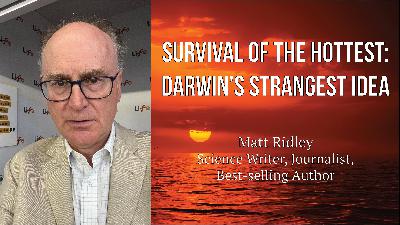
In this episode of Science From the Fringe, Bryce Nickels speaks with acclaimed science writer and best-selling author, Matt Ridley. Topics include who is “winning” the debate over COVID-19’s origins, the state of modern science, the ethics of de-extinction efforts, and the fascinating premise of Ridley’s latest book, Birds, Sex and Beauty.Science from the Fringe is a reader-supported publication. To receive new posts and support our work, consider becoming a subscriber.The conversation begins with Ridley’s perspective on the origins of COVID-19, where he argues that a lab leak in Wuhan remains the most plausible explanation. He cites the institutional bias, centralized funding, and fear of reputational harm inherent to academic science as barriers to legitimate inquiry. Ridley contrasts science as an institution, which he views as increasingly corrupt and conformist, with science as a philosophy, which thrives on skepticism and decentralized exploration. He calls for reforms that would empower independent thinkers and “maverick ideas” rather than enforcing consensus through funding monopolies.The conversation then turns to de-extinction efforts, particularly those led by Colossal Biosciences. Ridley argues for the revival of extinct species such as the great auk and woolly mammoth, stating that humanity has a moral responsibility to restore what it has destroyed. This leads to a deeper discussion with Bryce about the ethical complexities of animal suffering, genetic experimentation, and the potential erosion of public trust following the COVID-19 pandemic.In the third and final segment, Ridley outlines the premise of his new book, Birds, Sex and Beauty. Bryce and Matt discuss Darwin’s theory of sexual selection, female mate choice, and the evolution of beauty in birds — from the peacock’s tail to the bowerbird’s colorful displays. Ridley explains how these traits reflect aesthetic preference rather than pure survival advantage and draws intriguing parallels to human evolution, elevating the importance of sexual selection — vs. Darwin’s theory of natural selection, a.k.a. “survival of the fittest” — in how creativity, humor, and intelligence may have been shaped in humans. As a unifying concept, Ridley emphasizes the importance of honesty in science as a foundation for restoring public trust. He cautions against “just-so stories” in evolutionary biology — narratives that sound plausible but lack testable evidence — and urges scientists to embrace uncertainty and intellectual humility.Timestamps00:31 – Introducing Matt Ridley02:50 – Lab leak theory gaining public traction despite resistance from scientific elites03:49 – Comparison of a lab accident to industrial disasters; the moral duty to investigate05:10 – Preference for natural origin but insistence on scientific honesty and transparency07:15 – Analogy to plane crashes: avoiding investigation to protect reputations is unacceptable09:23 – Distinguishing science as a philosophy of inquiry vs. a corrupted institution10:55 – How decentralized science historically fostered breakthroughs and dissent12:16 – Warning against scientific monopolies and parallels to Lysenkoism17:38 – Discussion of censorship and stigma surrounding lab leak proponents19:29 – Attacks on Ridley’s climate reporting used to discredit his COVID origins work26:25 – Introduction to de-extinction and Ridley’s involvement with Revive and Restore32:09 – Balancing hype and credibility in Colossal’s projects35:16 – Ethical issues in genetic experimentation and animal welfare42:52 – Darwin’s struggle with sexual selection and aesthetic beauty45:25 – Female choice and the “sexy sons” hypothesis47:27 – Bowerbirds’ artistic displays as evidence of aesthetic evolution50:42 – Why most birds lost penises: female control and evolutionary trade-offs53:06 – “Just-so stories” and the limits of evolutionary storytelling56:23 – Human parallels: sexual selection and the evolution of art, humor, and intelligenceintro and outro by Tess Parks Get full access to Science From the Fringe at sciencefromthefringe.substack.com/subscribe
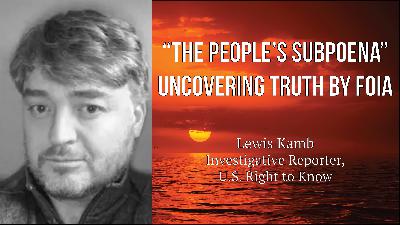
In this episode of Science From the Fringe, Bryce Nickels talks with Pulitzer Prize–winning reporter, Lewis Kamb, of public health research group, U.S. Right to Know. Science from the Fringe is a reader-supported publication. To receive new posts and support our work, consider becoming a subscriber.Kamb discusses his investigative reporting—from exposing Boeing’s 737 MAX failures at The Seattle Times to serving as NBC News’ first national FOIA reporter. He explains how the Freedom of Information Act—“the people’s subpoena”— has been used to expose the secrets of some of our country’s most powerful institutions.Kamb’s recent investigative work on COVID-19 origins includes uncovering a classified 2020 Defense Intelligence Agency analysis suggesting SARS-CoV-2 could have originated from the Wuhan Institute of Virology, as well unearthing several NIH emails from 2016 that show semantic side-stepping of gain-of-function classification in order to approve EcoHealth’s chimeric virus experiments.The conversation concludes with thought-provoking discussion of the pitfalls of FOIA and whether the process, in practice, lives up to the intent.Timestamps00:00:37 – Introduction of Lewis Kamb.00:01:12 – Kamb discusses the Boeing 737 MAX investigation.00:03:11 – Nickels asks about Kamb’s FOIA expertise.00:03:41 – Kamb explains FOIA as the “people’s subpoena.”00:05:58 – Tips for effective FOIA requests.00:06:29 – Overview of U.S. Right to Know.00:08:39 – Kamb on USRTK’s FOIA litigation strategy.00:10:07 – FOIA delays and agency differences.00:15:10 – Transparency promises left unfulfilled.00:19:01 – Shift to COVID origins and the DIA report.00:20:14 – DIA’s early lab-origin assessment.00:28:21 – 2014 gain-of-function moratorium.00:30:37 – NIH deliberations on EcoHealth proposal.00:33:10 – Links to pandemic origins.00:36:43 – NIH oversight vs. FAA-Boeing failures.00:39:29 – Daszak’s “typo” in progress report.00:42:17 – Discussion of the DEFUSE proposal.00:45:00 – NIH’s delayed moratorium defense.00:50:55 – Future investigations into labs and intelligence agencies.00:52:03 – FOIA’s flaws and need for reform.00:58:04 – Closing remarks.intro and outro music by Tess Parks Get full access to Science From the Fringe at sciencefromthefringe.substack.com/subscribe
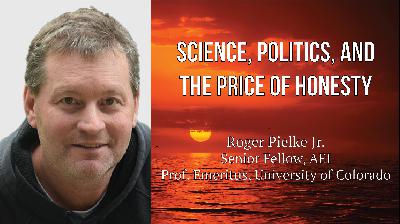
In this episode of Science From the Fringe, Bryce Nickels interviews Roger Pielke Jr., Professor Emeritus from the University of Colorado Boulder and Senior Fellow at the American Enterprise Institute. Pielke is a political scientist specializing in science and technology policy, with a focus on climate, energy, and the politicization of science.The conversation explores Pielke’s academic journey, the creation of his Substack The Honest Broker, and the challenges he faced with academic marginalization at the University of Colorado. They also draw parallels between weather modification/geoengineering and gain-of-function virology research, emphasizing the need for transparency, risk awareness, and international regulation. Additional themes include congressional testimonies, the politics of scientific publishing, cancel culture in academia, and the importance of honest brokering at the intersection of science and policy.Timestamps00:00:31 - 00:01:13: Introducing Roger Pielke Jr.00:01:14 - 00:05:45: Roger explains the name “The Honest Broker”00:05:45 - 00:13:16: Academic career and his role in the climate debate.00:13:16 - 00:17:16: Roger discusses the sports governance center he started.00:17:16 - 00:21:47: Decision to leave academia.00:21:47 - 00:26:06: How he was marginalized at University of Colorado00:26:06 - 00:30:33: Do universities elevate mediocrity?00:30:33 - 00:33:22: Cultural clash in policy research at Colorado.00:33:22 - 00:39:05: Recent congressional hearing on weather modification and geoengineering00:39:05 - 00:43:31: Chemtrails conspiracy and government transparency issues.00:43:31 - 00:52:57: Parallels between geoengineering and gain-of-function virology.00:52:57 - 01:09:58: Journals, peer review, hearings, and closing remarks.intro and outro music by Tess Parks Get full access to Science From the Fringe at sciencefromthefringe.substack.com/subscribe
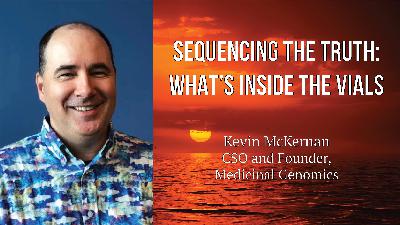
In this episode of Science From the Fringe, Bryce Nickels speaks with biotech pioneer Kevin McKernan, tracing his career from the Human Genome Project and DNA sequencing innovations (via companies like Agencourt, acquired by Beckman and ABI) to “fringe” pursuits like sequencing cannabis and psilocybin genomes for their therapeutic potential.Science from the Fringe is a reader-supported publication. To receive new posts and support my work, consider becoming a free or paid subscriber.Kevin discusses his early work building genomic tools, before turning to the controversies that have defined his recent research.McKernan explains why the misuse of PCR tests during COVID (“PCR-gate”) created misleading data about the spread of the virus, how he uncovered plasmid DNA contamination in mRNA vaccine vials—including SV40 sequences that were never disclosed to regulators—and what it all means. Bryce and Kevin also discuss the broader implications of faulty vaccine production: the unacknowledged regulatory failures, conflicts of interest, weaponized retraction campaigns against whistle blowers, and the personal cost of challenging the profit-driven scientific status quo.Beyond vaccines, McKernan speaks to overlooked biosafety risks in labs and offers a nuanced take on mRNA as a platform—useful in some contexts but warped by subsidies and liability shields.The conversation is both deeply technical and unflinchingly candid and delves into how competing incentives in biotech impact trust, safety, and accountability in science. Get full access to Science From the Fringe at sciencefromthefringe.substack.com/subscribe
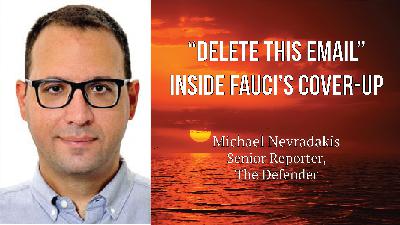
In his first interview since returning from a 10-month hiatus, Bryce Nickels of Science From the Fringe, speaks with Michael Nevradakis, senior reporter at the Defender, Children’s Health Defense’s online news platform. Science from the Fringe is a reader-supported publication. To receive new posts and support my work, consider becoming a free or paid subscriber.From his home in Greece, Nevradakis recounts his early doubts in March 2020 about Anthony Fauci and the emerging COVID-19 policies. Spotting parallels to the manipulative tactics he saw during Greece’s financial crisis, he accurately predicted extended lockdowns, vaccine mandates, and the rise of digital identification. Nevradakis also discusses Senator Rand Paul’s scrutiny of Fauci’s communications, the Fauci-backed “Proximal Origin” paper which pushed a natural spillover theory despite virologists’ private skepticism, and damning emails revealing Fauci’s orders to delete official government communications—which could amount to criminal offenses such as perjury and violations of The Federal Records Act.Nevradakis also discusses his recent article on the surprising appointment of a dangerous gain-of-function advocate as the new acting director of the National Institute of Allergy and Infectious Diseases (NIAID). The conversation ends with sobering thoughts on holding public health leaders accountable, whether the will exists to follow through on the former, and a preview of Nevradakis’s upcoming reports on these developing stories.Timestamps00:00:32 - 00:01:08: Introduction to Michael Nevradakis00:01:09 - 00:05:17: Transition from PhD lecturer to journalist00:06:09 - 00:12:36: Early skepticism toward Anthony Fauci and COVID measures00:13:37 - 00:15:44: Discussion of Senator Rand Paul’s probe into Fauci’s communications and COVID origins00:15:52 - 00:18:10: The Proximal Origin paper and Fauci’s influence00:20:02 - 00:23:39: Biden’s preemptive pardon for Fauci00:25:50 - 00:27:23: Fauci’s instructions to colleagues to destroy public records00:29:39 - 00:34:32: Should Fauci be held accountable?00:34:32 - 00:40:48: Concerns over the appointment of a proponent of dangerous gain-of-function research as acting director of NIAID00:40:52 - 00:43:39: Closing thoughtsfeatures music by Tess Parks Get full access to Science From the Fringe at sciencefromthefringe.substack.com/subscribe
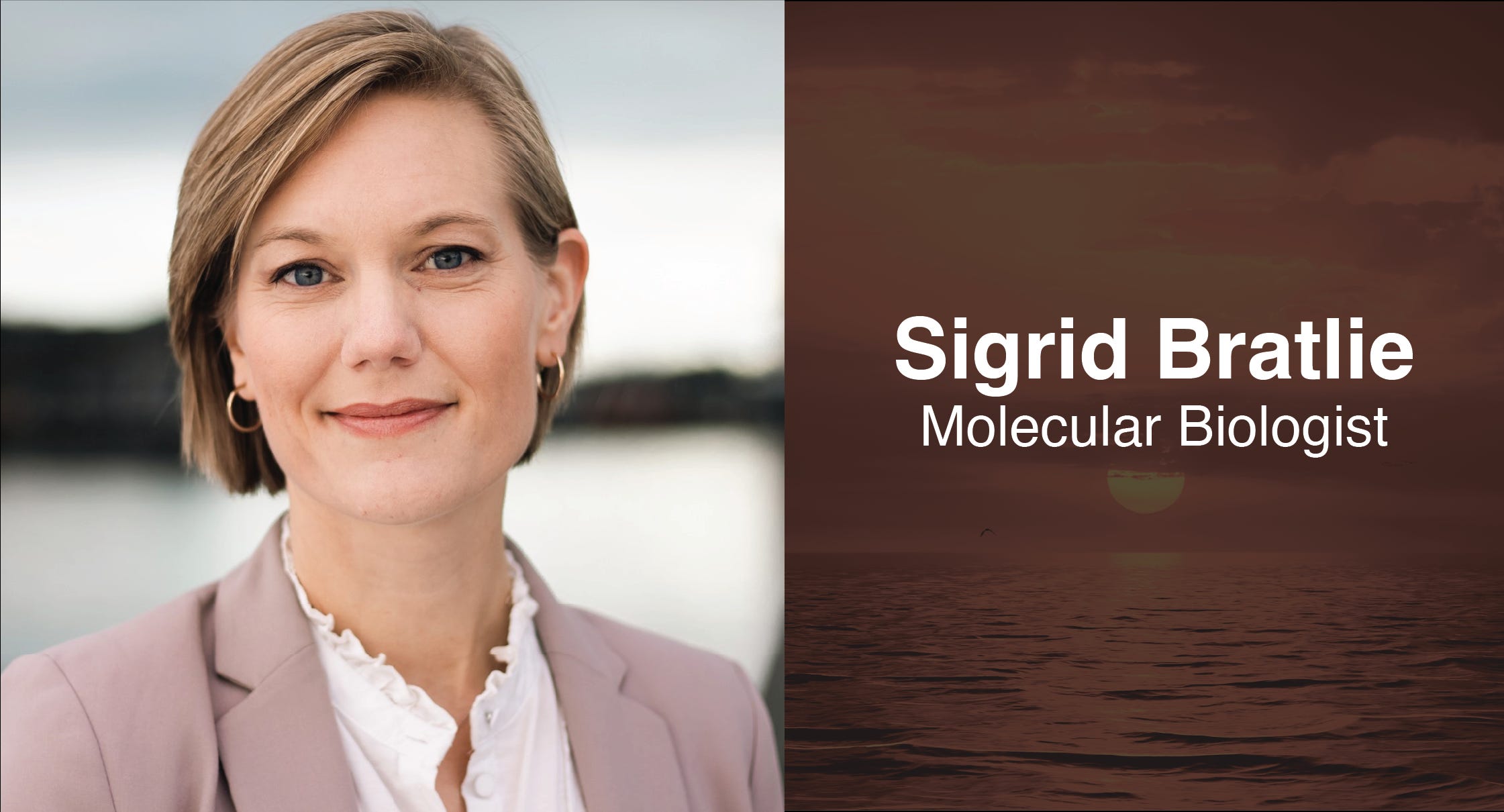
Bryce Nickels speaks with Sigrid Bratlie, a molecular biologist and strategic advisor on biotechnology for the Norwegian think tank, Langsikt, who has become a prominent voice in Norway in the debate surrounding the origins of COVID-19. Sigrid describes her involvement in the COVID origins discussion, and the conflicts that arose with established virologists. The conversation covers scientific integrity, the intersection of science and politics, the challenges of communicating complex scientific issues to the public, and the implications of emerging technologies like AI. features music by Tess Parks Get full access to Science From the Fringe at sciencefromthefringe.substack.com/subscribe

Comments

Download from Google Play

Download from App Store
 United States