


 Claim Ownership
The Unscripted SEO Interview Podcast
Subscribed: 6Played: 169
Subscribe

© 2025 The Unscripted SEO Interview Podcast
Description
Hosted by Jeremy Rivera: A 17 year career expert in the SEO industry and his cohost Keith Bresee. Get insights, action items and anecdotes from experts like Lilyray, Kevin Indig, Rand Fishkin, Matt Mellinger and more in the SEO industry, who are not only well-respected, but have really interesting stories to share. 100% unscripted, 100% unrehearsed, 100% unedited, and 100% real. Guaranteed to provide those golden nugget lightbulb moments.
178 Episodes
Reverse
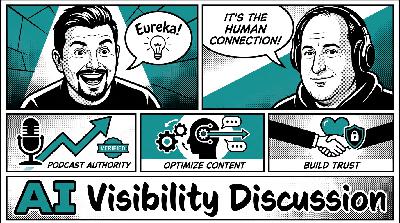
What if the biggest SEO opportunity for most businesses isn't a new tool, a new tactic, or a new algorithm hack — it's simply showing up consistently and claiming your authority?
In this episode of the Unscripted SEO Podcast, Jeremy Rivera sits down with Jason Wade, founder of Ninja AI and an expert in AI visibility architecture, GEO, and AEO. They go deep on what it actually means to engineer your entity, why most SEOs are still running 2015 playbooks, and why one podcast episode can outperform a year of blogging.
Here's Jason's recap of this Unscripted SEO episode
What We Cover in This Episode
What 'AI visibility' means and why GEO/AEO is really just visibility engineering
Entity optimization: how AI systems recognize authority — and how you train them
The content multiplication math: one podcast → 50 assets
Why most businesses have never actually said what they do on their website
How Google's core algorithm updates have punished hacking and rewarded authenticity
The Office Space test: 'What would you say you do here?' — applied to your homepage
Why Reddit and podcasts rank instantly compared to traditional SEO timelines
E-E-A-T in practice: showing up, speaking up, and having others verify it
Best Quotes from This Episode
“If a company can take that friction away and do the stuff they won't do — that's where the magic is.” — Jason Wade
“One podcast could become 50 assets. One podcast.” — Jason Wade
“You're training the system in the easiest way possible — by simply showing up.” — Jason Wade
“Your content gap analysis should be: what are all the competitors missing that you can provide?” — Jeremy Rivera
Resources & Links Mentioned
Guest: Jason Wade —
ninjaai.com | jasonwade.com | LinkedIn
Services: AI Visibility | GEO | AEO | AI SEO Strategies
Article: 25 Local SEO Tips — AI Upgrade
Host: Jeremy Rivera | SEO Arcade | Unscripted SEO Podcast
More from SEO Arcade: Podcast-Based Link Building Service | Entity Optimization with Jason Barnard
Like what you heard? Subscribe, leave a review, and share with an SEO who needs to hear this. And if you want to explore how podcast-based SEO services could multiply your content and backlinks — schedule a call at SEOArcade.com.
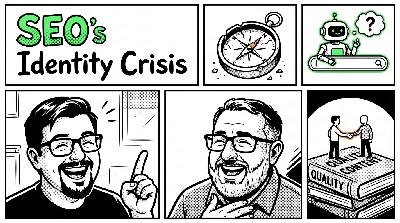
Stephan Bajaio — CEO and co-founder of Vibe Logic, former co-founder of Conductor, and ex-CMO — joins Jeremy Rivera on the Unscripted SEO Podcast for one of the most candid conversations we've had about why the SEO industry keeps losing the narrative about itself — and what practitioners can actually do about it.
Stephan built his career from the dot-com era through to co-founding one of the largest enterprise SEO platforms ever built. He's seen the industry from every angle — agency, platform, C-suite — and he doesn't pull punches about where we've gone wrong or how to fix it.
What We Cover in This Episode
Why the GEO / AIO naming debate is a symptom of a bigger identity problem — and why fixing it starts with SEOs, not executives
What SEO actually is when you strip away the jargon: connecting organizational wisdom to the audience that needs it
The lonely island problem — why even great SEOs fail when the content team, dev team, and CMO aren't aligned
How conflicting KPIs create internal friction and a practical approach to working with — not against — the people who control execution
Why the best keyword research is a conversation — Jeremy's concrete-wall installer example and how to build content from real expert interviews
Content value beyond organic traffic — why reporting only on organic is leaving most of the story untold
Vibe Logic's 'web presence intelligence' framework and the concept of being where decisions are formed, not just where they're made
Why passion is the one trait in great SEOs you simply cannot teach
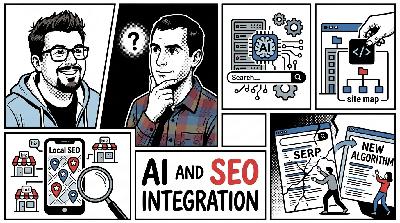
In this episode of the Unscripted SEO Podcast, host Jeremy Rivera sits down with Brandon Leibowitz, founder of SEO Optimizers — a full-service digital marketing agency based in Los Angeles. With nearly two decades of experience in SEO, paid ads, social media, and coaching, Brandon shares his grounded, practitioner-level take on the AI search landscape and what actually moves the needle.
Topics Covered
How AI-powered search surfaces (ChatGPT, Perplexity, Gemini, Copilot) are — and aren’t — changing SEO workflow
Why schema markup is the highest-leverage technical tactic for AI visibility
The difference between informational and transactional AI search behavior
A page-by-page schema architecture strategy for e-commerce and service sites
How to use competitor schema analysis as a gap-finding tactic
Why content + backlinks + technical SEO must all work together
Key Quotes
“The AI overview is just a featured snippet — just a new way to rebrand it for Google. The old tactics, the old strategies already worked.” — Brandon Leibowitz
“The more touch points you have and more places people find you, the more likely they are to want your product or service in the future.” — Brandon Leibowitz
Resources Mentioned
SEO Optimizers — Brandon’s agency
Free Gift + Classes from Brandon
Free Website SEO Analysis
Google Search Console
Ahrefs
Brandon on LinkedIn
Unscripted SEO Podcast
Jeremy Rivera – About
Connect With Brandon Leibowitz
Website: seooptimizers.com
Free Gift: seooptimizers.com/gift
LinkedIn: linkedin.com/in/brandonleibowitz
About The Unscripted SEO Podcast
The Unscripted SEO Podcast is hosted by Jeremy Rivera, SEO consultant and founder of SEO Arcade. Each episode features candid, unscripted conversations with leading SEO practitioners, agency founders, and digital marketing veterans.

Greg Merrilees is the founder of Studio1 Design — a conversion-focused website agency that has designed for over 2,000 businesses worldwide, including Hollywood A-listers like Sylvester Stallone. He’s the author of Next Level Website Design and has been building websites since 2009.
In this episode, Jeremy Rivera sits down with Greg to tackle whether websites are still relevant, how to build for searcher intent, why copywriting beats design every time, and what the rise of AI vibe coding actually means for your brand.
Episode Highlights
Do you really need a website in 2025? Greg’s nuanced take on social media vs. owned assets
The cold / warm / hot traffic model and how to match your CTA to intent
Why Microsoft Clarity should be on every website (and how it compares to Hotjar)
Website design trends to avoid in 2026 — and what converts instead
How to find your unique positioning in a commoditized niche
Interactive lead magnets vs. PDF downloads — what actually converts today
The AI sameness problem: why vibe-coded websites all look the same
Key Resources Mentioned
Studio1 Design — Greg’s agency
Next Level Website Design (Book)
Free Resources — Custom GPT + book companion
Microsoft Clarity — Free heatmaps & session recording
Enterprise Fitness (macro calculator example)
Yoshua Law (case study)
Greg’s email: greg@studio1design.com
Connect with Jeremy Rivera
SEO Arcade — Podcast-based content marketing & link building
Studio1 Design Blog — Related Reading
Don’t Chase Website Design Trends in 2026
The Hidden Cost of Fancy Website Effects: Lost Conversions
How We Turned a Law Firm Redesign Into 60% More Conversions
How We Boosted a Fitness Business’ Bookings By 64%
AI Killed Your Website Strategy: Here’s What Works Now
How to Create a Personal Brand That Attracts Dream Clients
Hosted by Jeremy Rivera
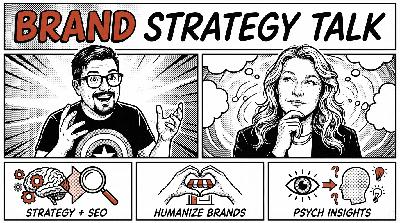
In this episode of the Unscripted SEO Podcast, Jeremy Rivera sits down with Charlie Birch, Founder and Creative Director of Humaniz Collective, to explore the collision between brand strategy and modern SEO — and why treating them as separate disciplines is costing founders real revenue.
What You'll Learn in This Episode
Why Charlie's background in performance, psychology, and crisis intervention makes her uniquely equipped to navigate brand identity
How brand strategy and SEO have more in common than most agencies admit
The danger of only measuring attraction — and why conversion and retention are the real metrics that matter
Why copying your competitors' strategy only makes you more like them — not better than them
How Charlie's Brand IdQ Framework turns founder instinct into a shared decision-making lens for the entire team
A real-world example of how interviewing the installer — not just doing keyword research — uncovered an angle nobody was targeting
How to evaluate whether a campaign is the right fit for your brand before you invest
Guest Resources
Humaniz Collective Website
Brand IdQ — Take the Free Integrity Snapshot
The Inner Circle — Apply for Free Monthly Networking (2nd Thursday each month, 1:30 PM ET — mention Unscripted SEO Podcast to get prioritized!)
On Raising Brands Newsletter
Breaking the Bottleneck — Founder Interviews
Charlie on LinkedIn
Humaniz Collective on Instagram
Referenced in This Episode
Spacebar Collective (Chris Tweeten) — 'Publishing more won't fix a weak SEO game. It's about leverage.'
Permacast Walls — The precast concrete walls example that revealed the "anti-dig" keyword opportunity
SEO Arcade — Content Gap Analysis & Forecasting Tools
About Your Host
Jeremy Rivera is an SEO strategist with 19+ years of experience and founder of SEO Arcade. He specializes in connecting SEO tactics to real business outcomes, helping brands turn podcast conversations into high-leverage content strategies.
Subscribe, leave a review, and share this episode with a founder who needs to hear it.
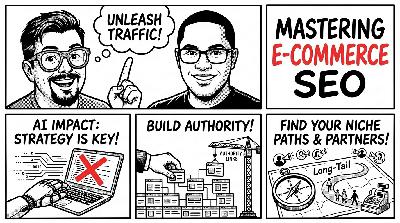
In this episode of the Unscripted SEO Podcast, Jeremy Rivera sits down with Paul Baterina, Senior SEO Manager at REVOLVE — a publicly traded fashion e-commerce brand with over 260,000 products. Paul has been at REVOLVE for 13 years, making him one of the rarest SEOs in the industry: a specialist who went deep on one brand instead of bouncing across industries.
What We Cover
Why long-tail category pages became REVOLVE's most provable SEO strategy — and how Paul sold it to C-suite
The 3-product rule for deciding when a category page is worth creating vs. when to kill it
Why luxury fashion brands resist text-heavy SEO content — and how to work with that, not against it
The honest state of AI/LLM visibility for a major e-commerce brand: $58K/month in LLM-driven revenue and what that actually means
How to reverse-engineer LLM citations to find the best places to get your brand mentioned
Link context signals — why what's around a link matters as much as the link itself
Bill Slawski's patent analysis work and how it connects to Koray Tugberk's topical authority framework
A live SEO test showing a 25% lift in organic traffic from adding content to long-tail pages
Resources & Links
REVOLVE (revolve.com) — Paul's employer and the e-commerce brand discussed throughout
Unscripted SEO Podcast — Subscribe for more unscripted SEO conversations
Jeremy Rivera — Host — About your host
Keyword Clusters Based on SERP Data — SEO Arcade — Understanding how Google groups related queries
Opportunity Sizing in SEO — SEO Arcade — How to quantify SEO wins for C-suite
White-Label Link Building Services — SEO Arcade — Community-based and podcast-based link building
Podcast-Based Content & Link Building — SEO Arcade — The full PAASS service
SEO By The Sea — Bill Slawski's Google patent research (search "Bill Slawski SEO By The Sea")
Find Paul Baterina
LinkedIn: https://www.linkedin.com/in/paul-baterina-079ab629/
Twitter: https://x.com/paulbaterina
Slack: SEO Community & Asians In Search (run by George Nguyen)
Conferences: SearchLove San Diego
Unscripted SEO Podcast
️ Listen: unscriptedseo.com Guest: Timothy Malmros on LinkedIn
Full Episode dialog with Timothy Malmros exposing blackhat SEO on SEO Arcade
Guest Bio
Timothy Malmros is a former gambling affiliate SEO with nearly two decades in the industry. After retiring from active affiliation, he turned his focus to investigating and documenting black hat SEO techniques — particularly in the gambling and sweepstakes space — through detailed posts on LinkedIn. His work offers a rare, transparent look at how spam tactics actually function, why they succeed, and why Google takes so long to stop them.In his own words: "Finished 12th grade. Got fired from Mcdonalds. Moved to Israel back in 2005. Applied to 20 jobs, got one reply and started working as a ”live person” human chatbot in an online casino. Promoted to affiliate manager 10 months later, did that for a bit over a year.
Decided, lets try to become an affiliate, if I after a year can earn 3000 euro a month I wont go back to school. Sold my company in 2016 to gaming innovation group, joined as director of seo as employee nr 6 for gig media. Gig media grew to 200+ people and became a bit to pc for me, quit in 2018, rebuilt going hard on grey hat SEO then decided to take a break from the stress of SEO in November 2024 and basically retire but quickly got bored and started writing articles instead."
Follow Timothy's ongoing research: linkedin.com/in/timothy-m-59a216b/
Episode Summary
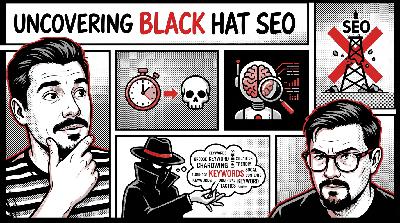
In this episode, Jeremy Rivera sits down with Timothy Malmros — a former gambling affiliate SEO turned black hat investigator — for a wide-ranging, candid conversation about how spam evolves, why Google keeps losing the spam war, and what the rise of AI really means for the internet's content ecosystem.
Timothy shares his hands-on research into drop domains and the canonical trick, a modern black hat method that combines expired high-authority domains with spam link bombardment and canonical redirects to game Google's rankings in the gambling and sweepstakes space. The conversation expands into Trust Rank theory, click metric manipulation, the collapse of the anti-spam team, and the disturbing implications of AI-generated content replacing original human publishing.
A refreshingly honest, technically deep episode for anyone who wants to understand what's actually happening beneath the surface of modern search.
Key Topics Covered
How black hat SEO evolved from hidden white-text links and site counter injection to the sophisticated drop domain / canonical trick
What the canonical trick is and how it creates an infinite $10 ranking loop using expired high-authority domains
Why gambling markets reveal emerging black hat techniques before any other niche
Trust Rank theory and the Medic update — distance from seed sites and why Healthline beat Dr. Josh Axe overnight
Why some drop domains work and others don't — the mixed signals Timothy is still investigating
The dismantling of Google's anti-spam team and its connection to the ChatGPT competitive threat
HCU as the reintroduction of Panda/Penguin — and whether it's algorithmic or hybrid
Google creating then killing its own monsters — from recipe sites to AI overviews
Click metric manipulation: Android bot farms with VPN rotation and what fake branding actually looks like
Rank tracker visits inflating GSC impressions — and why Google finally cut off 100-page results
Reddit as a...
Benas Leonavicius Freelance SEO Consultant & Agency Builder Website | LinkedIn | Substack
Benas Leonavicius has spent 10 years in the SEO trenches—from working with large e-commerce sites to navigating the bureaucratic nightmare of enterprise SaaS SEO. Now he's building an agency focused on keynote speakers, authors, and coaches, where basic SEO fundamentals deliver outsized results.
In this conversation, we dive deep into:
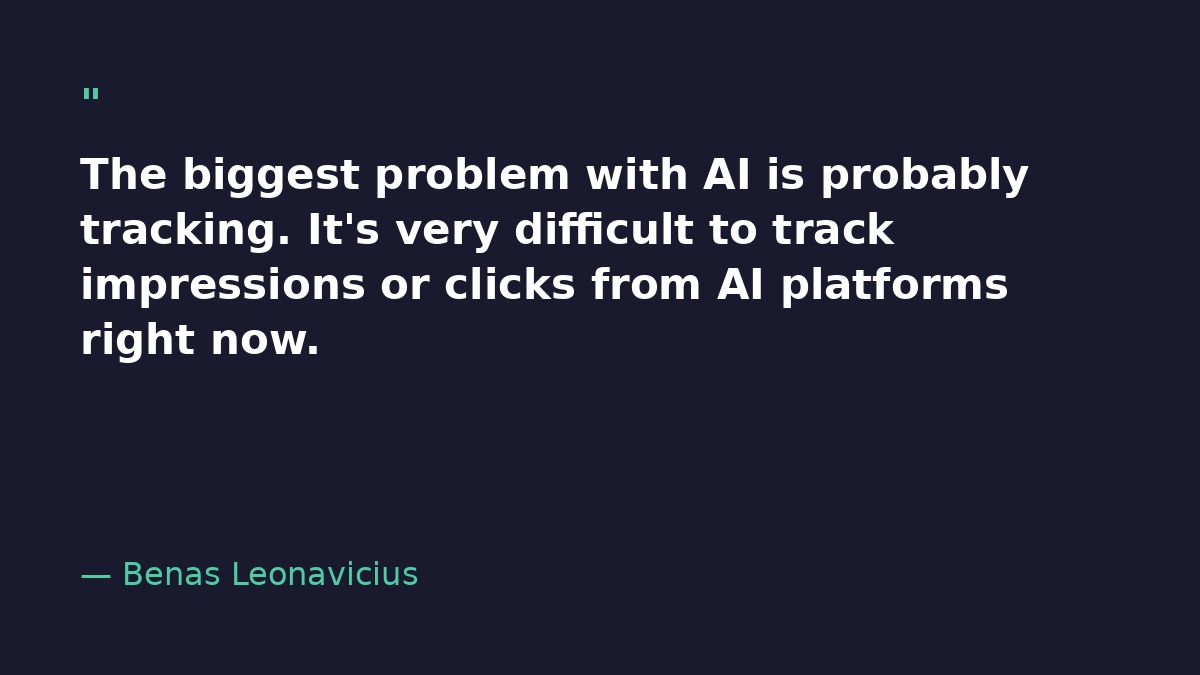
Why AI search optimization is the new frontier (and why tracking is nearly impossible)
How to actually appear in ChatGPT and AI overviews
The shift from website-centric to entity-centric SEO
Why SaaS companies are terrible clients for freelance SEO scalability
The #1 thing keynote speakers get wrong (hint: they don't mention their keywords)
Whether new people should enter SEO in 2025
If you're a freelancer trying to scale, a speaker trying to get found, or anyone wondering how AI is changing search—this episode is for you.
Key Topics Discussed
AI Search Optimization (11:11 - 21:03)
The biggest challenge with AI search: tracking is nearly impossible
How ChatGPT and Perplexity source their answers (training data + tiered Google searches)
Why speaker bureaus and listicles dominate AI search results for keynote speakers
The 25% consistency problem: AI gives different answers to different users
Backlinks, PR, mentions, and social media as the foundation of AI visibility
How to reverse-engineer AI sources by simply asking ChatGPT what it referenced
The SaaS SEO Nightmare (03:47 - 07:34)
Why SaaS companies limit freelancer scalability (1-2 clients max per month)
The JIRA ticket trap: submitting tickets just to edit meta descriptions
Managing multiple stakeholders with competing priorities
How product changes constantly disrupt long-term SEO strategy
Why Benas stopped taking SaaS clients despite their lucrative budgets
Keynote Speaker SEO Opportunities (02:14 - 03:47, 25:19 - 28:10)
Why 90% of speakers have zero SEO optimization
The differentiation trap: avoiding keywords to sound unique
The highest ROI fix: adding proper meta titles with target keywords
Why speakers already have strong websites—they just don't know it
Talk Thrive Agency: Benas's keynote speaker SEO service
Content vs. Links vs. Technical SEO (07:34 - 09:07)
Why Benas focuses on on-page content optimization
Link building feels "solved" and basic in 2025
Technical SEO's limitations for most businesses
Finding the middle ground between all three domains
AI Content Creation Reality Check (09:07 - 11:11)
ChatGPT as "your most popular but least trained customer support rep" (Matt Brooks, SEOteric)
Why Benas doesn't jump on new AI tools immediately
Using AI as a brainstorming and first draft tool, not a final solution
The hallucination and authenticity problem with over-reliance
Entity SEO vs. Website SEO (15:21 - 20:08)
How LLMs use training databases and tiered search results
Getting third-party content ranked, even when it's not on your site
Why digital visibility is shifting from website-centric to entity-centric
Direct traffic increasing as people find brands through AI, not clicks
Impressions mattering more than clicks (the Instagram-ification of search)
Should You Freelance in SEO Today? (21:03 - 23:24)
Why...
In this episode, Jeremy Rivera sits down with Jeremy Yang, founder of Digital Goliath, to explore the often-siloed world of paid advertising and how it intersects with SEO. Managing over $450,000 in monthly ad spend, Jeremy Yang shares brutal truths about Google Ads setup mistakes, the death of exact match keywords, and why most businesses fail at Meta advertising before they even start.
From offshore Google support nightmares to the "bullets in the chamber" framework for platform selection, this conversation reveals what seven years of hands-on PPC experience teaches you about digital marketing that no certification ever will.
Guest
Jeremy Yang Founder, Digital Goliath Website | LinkedIn
Jeremy founded Digital Goliath seven years ago and currently manages about $450,000 per month in ad spend across Google Ads and Meta platforms. Based in Sydney, Australia, he works with small to mid-sized businesses and white labels for larger agencies, specializing in high-accountability, hands-on campaign management.
Key Topics Discussed
The SEO-SEM Divide (00:00 - 05:00)
Why paid ads and SEO teams rarely communicate
Operational intensity differences between channels
Knowledge-sharing culture in PPC vs. SEO communities
Why Google gives advertisers more data than SEOs get
Google Ads Setup Nightmares (05:00 - 10:00)
The fox guarding the henhouse: letting Google set up your campaigns
Offshore vs. onshore Google support experiences
Most common setup errors (cramming everything into one campaign)
Why following scripts doesn't work in modern PPC
The Death of Exact Match (10:00 - 15:00)
How Google Ads has shifted to theme-based campaigns
Everything is "broad-ish" now regardless of match type settings
Competitor brands sneaking into your keyword auctions
Performance Max and the return of negative lists
ROAS-based campaign structuring for e-commerce
Display Ads: Remarketing Only (15:00 - 20:00)
Why display should only be used for remarketing
The spammy site problem and how to exclude them
Diminishing returns on display, YouTube, and discovery feeds
Strategic use of minimal display budgets ($10-20) for brand presence
Platform Selection Framework (20:00 - 30:00)
"How many bullets you got in the chamber?" - the content asset question
Meta is about burnout: why you need consistent creative production
When to go 80% Google, 20% Bing (service businesses without video)
When Meta makes sense (businesses with UGC and video capabilities)
Real-world example: Bubble.com Casting (children's modeling agency)
Cost Realities Nobody Discusses (30:00 - 35:00)
High-CPC industries: $200/click for tow trucks, $150/click for credit cards
Why $30/click for lawyers isn't unusual
Budget requirements for competitive industries
When to rely on Performance Max vs. traditional search campaigns
SEO Value Proposition for Small Business (35:00 - 45:00)
If you run out of ad budget, your campaign's over
SEO builds appreciable assets that compound over time
The upscale effect vs. the burn rate of paid ads
Working with ads teams to target expensive keywords organically
Client filtering: not every client is worth acquiring
AI Overviews and the Future of Search (45:00 - 55:00)
ChatGPT ads platform: $60-80 CPMs for businesses spending $1M+
The "charge and forget" model vs. nuanced ad platforms
AI overview impact: 25-40% traffic loss for publisher sites
The mea...
Summary
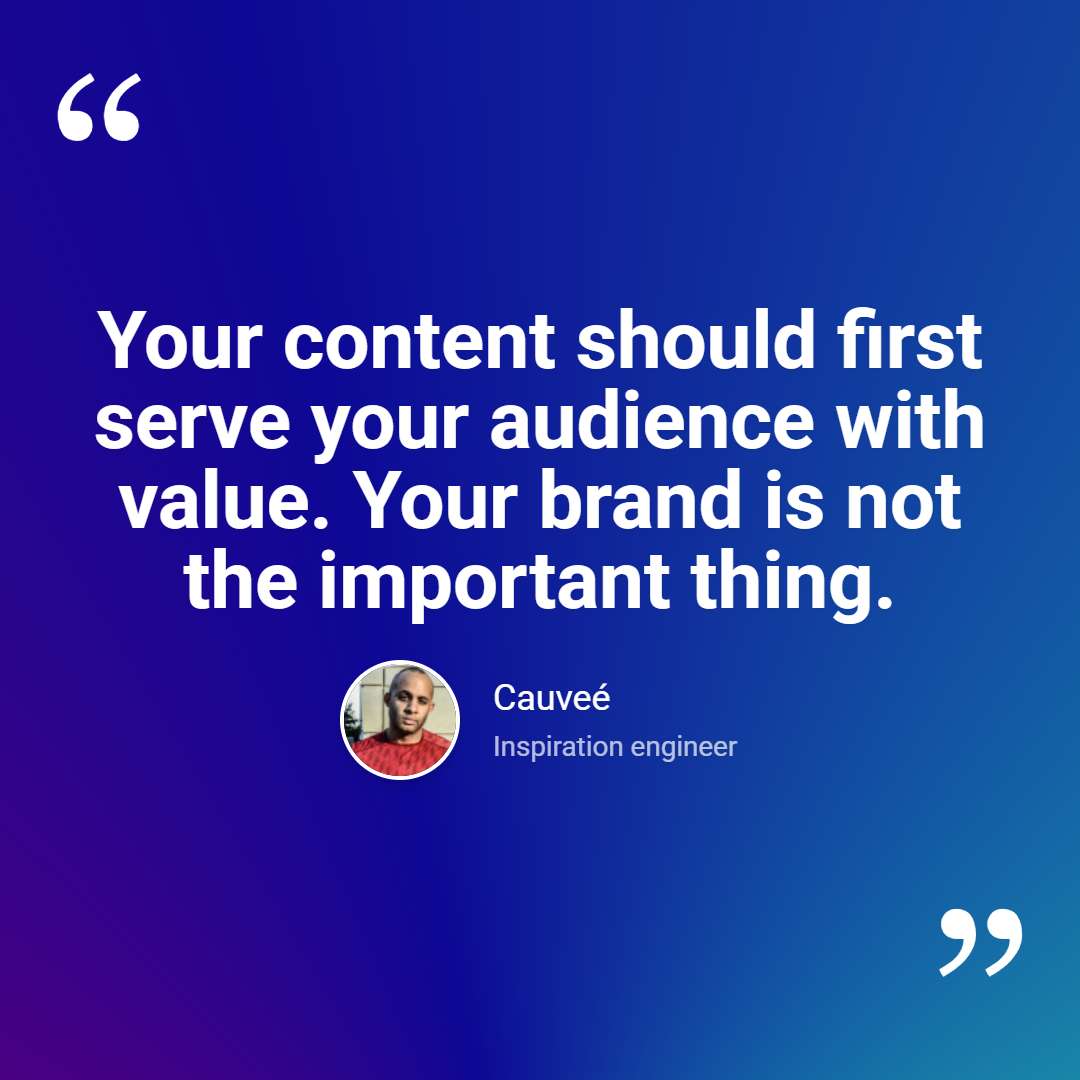
In this episode of the Unscripted SEO podcast, Keith Breseé and Cauveé, the inspiration engineer, delve into the intricacies of content marketing. They discuss the importance of platforms like Substack and Beehive for community building, the necessity of finding one's niche, and the long-term strategies required for effective content creation. The conversation also covers the significance of understanding market gaps, leveraging influencer marketing, and the role of paid advertising. Additionally, they emphasize the importance of crafting effective hooks, storytelling, and utilizing AI tools for content creation. The episode concludes with insights on building relationships and the long game in personal branding.
Takeaways
Substack is a powerful tool for building a community.
Decide whether to follow trends or focus on your passion.
Always provide value in your content to generate leads.
Content creation is a long-term commitment.
Reverse engineer your content strategy from your goals.
Understand your market and conduct competitor analysis.
Influencer marketing can significantly boost visibility.
Paid advertising can help in gaining traction.
Mastering hooks and storytelling is crucial for engagement.
Building relationships is key to long-term success.
What happens when a marketing coach who's also an actor sits down to talk about authenticity in business? You get one of the most unfiltered conversations about trust, AI, and human connection in marketing that we've had on this show.
Kyle Merrick doesn't pull punches. As the founder of Anarchy For A Day and a marketing veteran with nearly a decade of agency experience, he's seen it all—and he's not afraid to call BS on what's broken in modern marketing.
In this episode, we dive deep into the tension between performance and authenticity, why AI-generated content is killing trust, and how businesses can differentiate themselves in commodified markets. Kyle brings a unique perspective as both a marketer and an actor, understanding how to build believability while staying within boundaries.
This conversation gets heated, philosophical, and practical all at once. If you're tired of the same sanitized marketing advice, this episode is for you.
Key Topics Discussed
Trust & Authenticity in Marketing (00:00-10:02)
Why marketers have a trust problem
The challenge of discerning real vs. fake in the digital age
How social media has groomed us to accept mixed messages
The importance of delivery over content
AI vs. Human Connection (10:02-22:31)
Why AI-generated marketing content fails to build trust
The role of podcasting as a "safe space" for authentic conversation
How LLM tools confidently lie (and why that's dangerous)
The laziness trap: when efficiency kills effectiveness
The Coloring Book Analogy (22:31-27:39)
Finding authenticity within corporate boundaries
How to differentiate without going "cray-cray"
Showing customer pain points authentically
The golden rule applied to business communication
Market Understanding & Differentiation (27:39-37:23)
Why most businesses don't truly understand their marketplace
How to differentiate in commodified industries
The importance of speaking your customer's language
Interviewing clients as a core marketing strategy
Consistency & Long-Term Thinking (37:23-40:15)
Why consistency beats overnight success
How search engines and humans reward sustained effort
Understanding where your audience actually spends time
Building trust through reliable, authentic communication
Notable Quotes
"No marketer is really trustworthy until you actually get to know them. So I'm not even going to try to pitch myself on that."
"I don't give a shit about anything your business has to say if you're using AI. Let me see the people behind it, even if they're paid actors."
"Human to human podcast. This is the very important bit."
"Having been in business for myself for a decade now, it's like, this is the only kind of conversation I actually value because I know it's real, because you can sense the pain behind my words."
"People don't truly understand their marketplace. Go talk to the people that you're trying to serve or provide solutions to or sell a product to, whatever. Get to know them, their world."
"I always think about it like a coloring book. The lines are really what is within bound and reason for what is going to be believable."
"If you want real conversation, dish it out. Maybe that's the best answer to how can we get more genuine conversation in corporate marketing. Fucking do it. It ain't that hard."
"Business is still human. And if we're not accounting for that human factor, I wish you the best."
"Consistency is key. You need to be doing it a while for these different robotic entities to deem, 'All right, well, you're human and you do this.'"...
Charlie Sells brings 15 years of experience in brand messaging and positioning to discuss how small businesses can cut through complexity and build authentic brands that show up in search.
Key Topics Covered
Service Business Branding Charlie explains why service-based businesses should "stay hyper local" rather than trying to compete regionally. His advice for finding your competitive advantage? "Don't try to be bigger. Don't try to be flashier. Don't try to be anything other than who you are."
Working with a Florida event staffing company, Charlie discovered their retention rate was in the 80-90% range. "They're the most trusted name in conference and event staff"—that became their differentiator, not trying to be the biggest.
The Two-Part Brand Audit Framework Charlie always looks for two things: "Are we being really consistent? Every touchpoint of our brand—does it look the same, does it sound the same, does it feel the same on a sales call, social media, website, emails, in-person interactions?"
Second: "Are you really leaning into your unique competitive advantage?"
Branded vs. Non-Branded Search From his time at Dave Ramsey's Ramsey Solutions, Charlie learned a crucial lesson: "If they will get their branded terms right, then you can focus on the non-branded terms." He warns that "shiny object syndrome is rampant amongst entrepreneurs" who chase non-branded traffic while neglecting the basics.
His blunt take: "Search engines are the yellow pages today. You want to make it easy for somebody to just find you like that."
The Website Problem Charlie's most surprising piece of advice for clients: "If the weight of your business lands on your website, you have a problem."
Why? Your website is just one piece of your ecosystem. "If everything in your ecosystem is speaking the same language, then it's going to work." But when there's "no cohesive experience, no ecosystem," that's when brands struggle.
Technical SEO Still Matters Charlie shares a story about his staffing client who had keywords "in the graphic at the top of our page. In a designed graphic that can't be crawled, that had no alt text. I'm like, 'Nobody cares about that and Google's not recognizing it.'"
The lesson? "You have to plant a flag in the ground and say, here I am, and make it easy for people to find you."
Is SEO Dead? Charlie's take on the AI/LLM disruption: "I don't think traditional SEO is dead still. I think it still matters." While LLMs are changing search, "somebody is still looking for what you have" and "it still matters that you match intent more than anything else."
His strategy for the AI era? "I'm pushing folks to go way more grassroots and find ways to get on podcasts with niche audiences that are actually in their ICP."
Charlie's Two Essential Switches When onboarding clients, Charlie always starts with:
Mindset of Curiosity: "You've got to have a mindset of curiosity. If you are certain, if you are dead set, if you are rigid in your thinking about your brand, then this is not going to go well." His favorite question: "What is it like to be on the receiving end of your brand?"
Hold It With an Open Hand: "We've got to zoom out and not just think end of the month, end of the quarter. We've got to think about if where we want to be a year from now is our goal. What has to be true between now and then?"
Redirecting Good Ideas One of Charlie's most valuable skills is helping clients understand placement: "Just because it doesn't belong here doesn't mean it doesn't belong somewhere." A direct-to-camera video might be perfect for an email sequence but wrong for the homepage.
Resources Mentioned
Wyatt Bonicelli of Evolve Agency shares practical local SEO tactics for home service businesses—from Google Business Profile optimization and location page strategy to creative link building through local sponsorships and a clever gift card referral system that turns every customer into a lead generator.
Episode Summary
In this episode, Jeremy Rivera on the Unscripted SEO podcast by Be Sharp Digital Marketing sits down with Wyatt Bonicelli, founder of Evolve Agency in Edmond, Oklahoma, to discuss the unique challenges and opportunities in marketing home service contractors. An engineer turned marketer, Wyatt has carved out a niche helping window cleaners, roofers, and other service professionals transition from relying solely on word-of-mouth to building a sustainable online presence that generates leads on autopilot.
The conversation covers the full spectrum of local SEO—from the critical importance of Google Business Profile verification to the age-old question of "how many location pages are too many?" Wyatt shares his approach to building local authority through sponsorship link building, Chamber of Commerce memberships, and creative tactics like using ChatGPT to find partnership opportunities.
Perhaps most valuable are the practical, low-cost marketing wins Wyatt recommends: car magnets, A-frame signs, door hangers with neighbor referrals, and a brilliant gift card system that creates a built-in affiliate program for service businesses. He also drops a Google Maps "driving directions hack" that sends trust signals to Google daily.
The episode wraps with a candid discussion about lead follow-up—why 90% of service calls go unanswered and how the Harvard study showing 400% better conversion within five minutes should change how contractors approach their phones.
Key Topics Covered
Why home service contractors struggle to invest in marketing (and how to meet them where they are)
Google Business Profile optimization for service-area businesses without a physical address
The location page debate: How many is too many in 2024?
Hub-and-spoke internal linking strategy for multi-location businesses
Creative link building through local sponsorships and advanced Google queries
The noindex mistake that cost one client years of branded search visibility
Steve Hunziker's gift card referral system explained
Why LLMs haven't disrupted local SEO (yet)
Combining Meta ads with SEO for short-term and long-term growth
The $10/day Meta ad strategy that pre-sells door-to-door visits
Lead follow-up statistics that should terrify every service business owner
Low-hanging fruit: Car magnets, A-frames, and door hangers
The Chamber of Commerce SEO bump
Google Maps driving directions hack for daily trust signals
Quotable Moments
"Any page on your website that doesn't have a link internally, externally, it's probably not going to get indexed."
"You're 400% more likely to convert if you call within the first five minutes."
"Let's turn one lead into more. Let's try to get three or four out of every one. And that pyramid will just continue to grow."
"We're kind of in a bubble a lot of times and think that everybody else is using the tools the same way that we are."
"If they don't have any web presence at all, no online reviews or a website talking about what they do and where—it's a little harder to trust them with a big check."
Guest Bio
Wyatt Bonicelli is the founder of Evolve Agency, a digital marketing firm based in Edmond, Oklahoma specializing in web development and SEO for home service contractors. With a background in engineering, Wyatt brings a systematic, results-driven approach to helping small businesses—particularly window cleaners, roofers, and renova...
In this deep-dive conversation, Alejandro Meyerhans shares his journey from Spanish waiter to CEO of a successful link building agency, revealing the mathematical foundations and strategic frameworks that make link building work. We explore the science behind PageRank, the evolving role of links in LLM optimization, Google's HCU updates, and the hard truths about operating within platform ecosystems.
Guest Bio
Alejandro Meyerhans is the CEO of GetMeLinks, a strategic link building agency serving agencies and CMOs. Since 2016, Alejandro has built his SEO expertise from the ground up—starting with affiliate sites, becoming a forensic SEO auditor, and eventually leading one of the industry's most respected link building operations. He's known for his data-driven approach, combining mathematics, game theory, and rigorous testing to demystify what actually works in modern link building.
Connect with Alejandro:
LinkedIn: linkedin.com/in/alejandro-meyerhans
YouTube: Alejandro Meyerhans SEO
Company: GetMeLinks.com
Key Topics Discussed
From Waiter to SEO Expert (00:00 - 04:03)
How Alejandro discovered SEO in 2016 while trying to escape waiting tables in Spain
Working with Dominic Wells at Onfolio (now NASDAQ-listed)
The transition from building affiliate sites to becoming a forensic SEO auditor
How he became CEO of GetMeLinks after being a client first
The intersection of math, statistics, game theory, and SEO
The Science of Link Building (04:03 - 10:28)
Why link building has intentional opacity and FUD (fear, uncertainty, doubt)
Key influencers: Charles Floate, Matt Diggity, and the TEDSEO testing community
Understanding what's working versus understanding why it works
The importance of analyzing competitive backlink profiles
How to read the link graph and replicate winning strategies
Core Link Signals Beyond PageRank (10:28 - 14:35)
PageRank: The foundational "link juice" model and how it divides authority
Anchor text ratios: Why exact match anchors no longer work (0% in most winning profiles)
Reasonable Surfer: Link placement matters—body links above the fold carry more weight
Passage rank: Surrounding text relevance amplifies or diminishes link value
Link velocity: Must be proportional to traffic, brand search volume, and referral sources
Container authority: The power of both the linking page AND the linking domain
Sequential timing: Why you can't start a new site with 100 digital PR links
Related Resource: How to Start a Link Building Campaign
Distance to Seed and Verticality (14:35 - 22:03)
Understanding Google's seed list: .gov, .edu, and tier one authorities
How topical authority spreads from hub sites in each vertical
Why locksmith SEO is different from e-commerce which is different from YMYL
The completion game: You only need to match top 3 competitors plus a bit more
SEO as a jigsaw puzzle—technical foundation, content, user signals, brand signals
The logarithmic nature of PageRank (getting from DR 80 to 90 costs exponentially more)
Related Resource: Link Building for New Websites
Link Gap Analysis Methodology (22:03 - 29:33)...
How a Psychology Degree, Blog Writing, and Storytelling Built a $75K Content Marketing Success
About This Episode
In this episode of the Unscripted SEO Podcast, host Jeremy Rivera sits down with Alison Ver Halen, founder of AV Writing Services and author of Content Marketing Made Easy. Alison shares how she accidentally fell into content marketing after graduating during the 2009 recession, and how writing blog posts for a law firm led to $75,000 in new business within just six months.
The conversation covers the evolving landscape of SEO and content marketing, including E-E-A-T principles, the Helpful Content Update, the "robot sandwich" of AI-driven search, and why storytelling remains the most powerful tool in a content marketer's arsenal.
Guest Bio
Alison Ver Halen is the founder of AV Writing Services and a content marketing strategist with nearly a decade of experience. With degrees in English and Psychology from Lawrence University, Alison helps professional service providers attract, engage, and convert high-quality leads through strategic blog content, landing pages, and brand storytelling. She is also the author of Content Marketing Made Easy.
Key Takeaways
The $75K Blog Post Discovery: Alison's first content marketing client saw $75,000 in new business within six months—just from blog posts she was writing for his law firm
Information Gain is Everything: The key to standing out isn't just creating content—it's adding your unique perspective, experience, and stories that ChatGPT can't replicate
E-E-A-T is About How You Write: Rather than technical markup and author schemas, E-E-A-T signals come from first-person experience and professional perspective woven into your content
Don't Propose on the First Date: Match your calls-to-action to where prospects are in the buyer journey—a newsletter signup beats a sales call request for top-of-funnel visitors
The Robot Sandwich: With AI tools searching other AI outputs based on human-created content, writing for humans remains the winning strategy
It's Still SEO, People: Despite the hype around GEO, AIEO, and AEO, the fundamentals of search engine optimization haven't changed—just the platforms
Guest Everything: Podcasts, blogs, newsletters—earned media builds the Know-Like-Trust factor that drives real business results
Topics Discussed
[00:00] Introduction and Alison's background
[02:34] The $75,000 aha moment in content marketing
[04:02] Methodology for researching and developing unique content
[05:54] E-E-A-T: What it really means for content creators
[10:22] The "robot sandwich" of AI-driven search
[14:05] Understanding the buyer journey and sales funnel
[15:51] Lead magnets and CTAs in the post-ChatGPT era
[19:42] The Helpful Content Update and brand identity
[26:08] GEO, AIEO, AEO—why it's still just SEO
[27:02] Link building in the age of LLMs
[36:49] Best practices for content quality and distribution
[41:08] Where to find Alison Ver Halen
Notable Quotes
"After six months, he came back and told me that I had brought in $75,000 worth of business to his law firm just through the blog posts I was writing for him."
"We are primed to connect with stories, we are primed to remember stories. So that is critical for getting your point across and for being memorable."
"I refer to it as proposing on the first date. Like, well we just met, dude. That is way too much way too soon. And you're gonna scare them off."
"AI does not generate anything. It just regurgitates what humans have already created."
"It's still SEO, people. Just becau...
Will Wang of Black Belt Consulting joins Jeremy Rivera to discuss his journey from corporate IT analyst to accidentally building a seven-figure marketing agency. In this candid conversation, Will shares the expensive lessons he learned about hiring (including a $500,000 mistake), how he's leveraging AI for market research while keeping humans in the loop, and why he's betting big on YouTube and Instagram while going bearish on LinkedIn for 2025.
This episode is packed with practical insights for agency owners, consultants, and entrepreneurs who are scaling their businesses and want to avoid the costly mistakes that come with rapid growth.
Listen to the full episode: Unscripted SEO Podcast
Guest Information
Will Wang
Company: Black Belt Consulting
Instagram: @blackbeltconsultant
LinkedIn: Will Wang
Email: will@blackbeltconsulting.co
About Will: Will grew up in Sydney, Australia, worked in corporate IT making $130-150K/year before taking the leap into entrepreneurship. After two years of struggles and making every mistake possible, he built a seven-figure marketing agency which he sold 12 months ago. He's also a Brazilian Jiu-Jitsu black belt (earned 4 years ago) and now runs Black Belt Consulting, helping businesses scale from $25K to $250K per month with strategic marketing consulting.
Key Topics & Timestamps
The Corporate Escape
Growing up as an immigrant in Sydney, Australia
The soul-crushing reality of corporate IT ($130-150K salary trap)
The difficult decision: when to make the leap with a family to support
Two years of stumbling through every possible business mistake
The $500K Hiring Mistake
Why he hired a general manager when the business wasn't ready
The account manager who created an unnecessary layer between clients and strategy
The remote copywriter problem: why proximity matters for creative roles
Key lesson: "We weren't big enough for a GM. We just needed me to spend less time working in a few of the things on the business"
Taking full ownership: "It was all my fault... their abilities were hampered by how I supported them"
Building Lean, AI-Enabled Teams
The shift to small core teams of highly competent people
His new hiring framework: creativity vs. process-driven roles
When to hire locally vs. when to leverage cost arbitrage with virtual teams
Using online jobs.ph and Upwork strategically
"Give people a goal, give people a vision, and then hire people who are competent and disciplined enough to do what they need to do"
SOPs and Systems for Non-Operations People
Using Loom videos to document processes instead of writing SOPs yourself
Having your VA or operations person create the documentation by following your recordings
Why being the "big picture creative" doesn't mean you can't systematize
AI for Market Research (Not Delivery)
How customer research went from weeks to minutes
Using ChatGPT and Claude to build detailed customer avatars
The critical rule: "Nothing that gets delivered to clients is actually AI done"
AI for research, humans for delivery—that's the framework
Building AI-enabled teams in 2025
Content Strategy & Platform Bets for 2025
Going all-in on YouTube: "YouTube is the big one for me. I'm investing a lot into that this year"
The Instagram surpri...
Jeremy Rivera interviews Kyle Bailey, founder of Front Burner Marketing, about local SEO strategies specifically designed for home service businesses. Kyle brings a unique perspective as one of the few SEO professionals who has actually worked in the trades—framing, roofing, drywall, and kitchen/bathroom remodeling.
Kyle Bailey
Founder, Front Burner Marketing
15 years in home service digital marketing
Former tradesman turned SEO specialist
Author of upcoming book: What's Your Story? The Path to Connection with a Homeowner
Connect with Kyle:
LinkedIn: The Kyle Bailey
Website: FrontBurnerMarketing.net
Twitter/X: @FrontBurnerMarketing
Key Topics Discussed
The Unique Challenges of Home Service Marketing (02:00)
The attention gap problem: business owners are firefighters and babysitters
Why before-and-after photography is critical but difficult to execute
Kyle's hands-on approach: driving to clients in Texas to handle photography personally
The urgent need to adapt to AI-driven search changes
Your Story as Your Superpower (04:00)
Every home service business has a unique story that competitors lack
How to identify and articulate your core values
The difference between shotgun vs. rifle messaging (broad vs. focused)
Employee, friend, and customer audits to discover hidden core values
Why story-based differentiation creates genuine connection with ideal customers
Key Resource: What's Your Story? - Front Burner Marketing
The Franchise Limitation (06:30)
Why only 3 out of 100 franchises can effectively compete in local SEO
Corporate restrictions on messaging, location pages, and customization
The Quiznos cautionary tale
Due diligence steps before buying a pizza franchise or any franchise
Free discovery calls available to assess franchise SEO viability
Community Co-Marketing: Driving Past Free Money (10:00)
The "barrel of $100 bills at every red light" concept
Neighborhood signage opportunities: 30-second content goldmine
Co-marketing with complementary trades (painters, siders, window companies)
How to create video content on job sites with partners
Transcribing videos into blog posts for multiple websites
The professional advantage: extracting marketing value from daily activities
Related Article: Matt Brooks of SEOteric on nexus-based link building
Example Businesses:
Permacast Walls (precast concrete walls)
Newton Crouch (renovations)
Community Cleanups and Local Link Building (21:00)
Why community cleanups work on Reddit (when normal promotion fails)
Keep America Beautiful: National nonprofit with county-level support
Community Clean Links - organizing community cleanup initiatives
SEO benefits: event directories, national aggregators, Google event SERP
Brand mentions directly in search results
Documentation strategy: branded team, photos, no pitching
The AI Search Reality (24:00)
Michael McDougald's quote: "Your least trained but most popula...
Lisa Corwood, founder of Fuelled Agency, joins Jeremy to discuss how she transformed creative marketing experiments at a UK car dealership into a full-service agency philosophy. From the viral "Where's Wally" campaign that sparked it all to navigating Search Everywhere Optimization in 2026, this conversation covers authentic community engagement, why no industry is truly "boring," and the looming question of AI-generated content quality.
Guest
Lisa Corwood Founder, Fuelled Agency
LinkedIn
Instagram
YouTube
Topics Covered
(00:01) Introduction and Lisa's background
(00:18) The origin story: From UK car dealership to agency
(02:15) Creative community engagement vs. traditional advertising
(04:13) Facebook Groups and providing genuine value
(06:01) The "spray and pray" problem on Reddit and social platforms
(07:05) Ad blindness and brand values alignment
(08:51) Building content ecosystems that connect
(10:59) Why "boring" industries have the most passionate audiences
(13:14) Showing your team and humanizing your brand
(15:06) The "20 leads" question: Testing your funnel
(16:54) Co-marketing with complementary businesses
(18:44) Search Everywhere Optimization: The multi-platform customer journey
(21:20) The accelerating pace of change in digital marketing
(23:24) AI content, "slop," and the trust problem
(25:22) Gen Alpha's skepticism toward AI-generated content
(27:57) What's next for Fuelled Agency in 2026
Key Quotes
"If you're going to go in there, don't just walk in a room and shout what you're saying and go out. Treat it as if it's a group of people—not a place to just spray and pray."
"No matter what business it is—if it's selling a product, if it's shiny, if it's Lamborghinis or diamond rings—behind all of that is a team that makes that happen. Tell everybody about it!"
"If you got 20 leads right now into your business, where would they go and what would happen with them? If you don't have an answer to that, there's something you need to look at."
"Customers will hop from one platform to the other to get what they are looking for. They won't just take a five-star review as gospel."
"I'm not against AI—but use it in collaboration, in conjunction. You can't solely rely on it."
Resources & Links Mentioned
Lisa's Agency & Socials
Fuelled Agency
Fuelled Agency Services
Creators Club
Lisa on LinkedIn
Lisa on Instagram
Lisa on YouTube
Industry Resources
Search Everywhere Optimization Guide – Single Grain
Search Everywhere Optimization – Backli...
Guest: Tianna Mamalick, SMB Marketing School
Episode Overview
Tianna Mamalick shares her 12-year journey in SEO and why she's passionate about working with small businesses. With honest insights on managing client expectations, pairing SEO with paid ads, and the current state of AI-generated content, this conversation reveals what's actually working for service-based businesses right now.
Key Discussion Points
Why Small Businesses? For small businesses, a 10K monthly revenue increase is life-changing. Tianna shares how clients email her about hiring their first employee or taking their first vacation—results that go far beyond vanity metrics.
Managing Expectations Brutally honest approach: clients sign for three months minimum, must have budget they can afford to lose, and receive realistic assessments of whether their business model fits the proven formula.
SEO + Ads Strategy When done strategically, pairing ads with SEO helps prime new location pages and service pages through engagement, even though ads don't directly impact SEO rankings.
The AI Content Reality After extensive testing: AI-generated content isn't ranking. Tianna's agency went 100% back to human-written content, using AI only for outlines based on top-ranking articles.
Content Strategy Shifts
Focus on service pages over blog posts
Every service needs its own detailed page
Mine customer support logs and sales calls for real language
Create collaboration posts featuring complementary businesses
AI Search Adoption Despite the hype, less than 10% of traffic comes from ChatGPT for most small businesses. Prepare by enriching About pages and author bios, but don't panic about immediate massive shifts.
Resources Mentioned
Andy Crestodina & Content Chemistry
SEOteric - Matt Brooks
Get Me Links - Alejandro Marinas
Gus Pelogia interview on SEO's universal superpower
Michael McDougald, Right Thing Agency
Precast Walls - service business example
Best Quote
"People want to work with people they like, know and trust. It's not just about the backlink. We're really looking at conversions—how can we get SEO to convert for you?" — Tianna Mamalick
Connect with Tianna
Website: smbmarketingschool.com
Instagram: @smbmarketingschool
Funnel Summit - January 28th
Key Takeaways
✓ Service pages first: Make product and service pages comprehensive before worrying about blog content
✓ Human content wins: AI-generated articles aren't ranking—use AI for outlines, humans for writing
✓ Record everything: Mine sales calls, customer support logs, and front-line staff conversations for gold
✓ Every service gets a page: Stop using men...
In this episode of the Unscripted SEO Podcast by Be Sharp Digital Marketing, Jeremy Rivera sits down with Matt Bailey, a digital marketing veteran with nearly 30 years of experience spanning from the pre-Google AltaVista era to today's AI-driven landscape. Matt shares his journey from building real estate websites with journalism principles in 1995 to founding SiteLogic and helping shape the SEO industry through his work with the OMCP (Online Marketing Certified Professional Organization).
This conversation explores the evergreen principles that have survived every "SEO is dead" cycle, the critical gaps in SEO education, and why AI is both a productivity tool and a source of strategic confusion for businesses. Matt and Jeremy discuss the importance of conversion optimization, the holistic webmaster approach that got lost in the 2010-2020 era of easy Google traffic, and why understanding content, context, and community remains fundamental to digital marketing success.
Key Topics Covered:
Why newspaper layout principles from 1995 still drive SEO success today
The 18-24 month shelf life of SEO educational content
Enterprise red tape horror stories (drug tests for editing 10 pages!)
Why LLMs are "like pre-Google search" and the shiny object syndrome around AI
The seven strategic questions every business needs to answer before tactics
How to remove friction down the funnel and leverage your website correctly
Why social traffic behavior differs dramatically from search and blog referrals
Guest
Matt Bailey
Founder & CEO, SiteLogic Marketing
30+ years in digital marketing (since 1995)
OMCP contributor and instructional design expert
Former Microsoft Worldwide Education consultant
Website: sitelogic.com
Learning Platform: learn.sitelogic.com
LinkedIn: linkedin.com/in/mattbaileysitelogic
Extended Recap
The Origin Story: From Journalism to Pre-Google SEO
Matt Bailey's journey into digital marketing began in an unexpected place—journalism school. While he quickly realized journalism wasn't his calling, the education gave him something invaluable: an understanding of how to lay out content for quick consumption. Headlines, subheadings, bullet points—these newspaper design principles became the foundation of his website development approach in 1995-96.
Working in real estate at the time, Matt started building websites as electronic versions of printed pages. What he didn't realize initially was that the markup he was using for visual layout was exactly what early search engines needed. This was the AltaVista era, where SEOs would spend entire nights resubmitting pages to chase rankings.
When Google arrived, Matt's content-first approach paid immediate dividends. Pages structured with clear hierarchy and reader-focused design performed well naturally. This early lesson—that optimizing for visitors and optimizing for search engines aren't separate goals—would become a through-line in his entire career.
The Analytics Awakening
A pivotal moment came when Matt was working on real estate websites and asked himself: "What can I do on the website that will have the biggest impact?" He didn't have an answer. That question forced h...

Comments

Download from Google Play

Download from App Store
 United States