


 Claim Ownership
The Energy Show
Subscribed: 579Played: 6,526
Subscribe

© Copyright 2025 - Barry Cinnamon - The Energy Show
Description
Every week Barry hosts The Energy Show, a 30 minute informative talk show that covers a broad variety of energy related topics spanning technology, economics, policy, and politics that are shaping the future of how we generate and consume electricity, along with practical money-saving tips on ways to reduce your home and business energy consumption.
102 Episodes
Reverse
Since our worldwide economy depends on a steady supply of fossil fuels — oil, gasoline, natural gas, LNG, jet fuel — even the mere threat of disruption can cause a large and long-term increase in energy costs. Especially energy that is generated from burning hydrocarbon molecules, which have to be physically transported in pipelines and tankers. But not so much for energy that is generated from photons (I bet you know where I’m going with this).During the first two weeks in March, 2026, Iranian drones set ablaze four oil tankers with a combined total of about 750,000 barrels of petroleum products. That’s less than 1% of the world’s daily petroleum consumption. Nevertheless, the price of oil went up by 40%. Not because of a real supply shock, but because of the new uncertainty about future oil supplies and prices.No one really knows how long Iran will be able to threaten shipping and energy production throughout the Persian Gulf. Until there is peace in that region there will be uncertainty about fossil fuel energy prices. But there are ways to reduce this uncertainty and avoid energy price spikes.In this episode:• Why U.S. fuel prices rise in the U.S. even when we are the biggest oil producer in the world. Hint: the solar and battery tax credits (still available) were a quid pro quo for fossil fuel exports.• How global oil and natural gas markets determine prices — not political jawboning.• How rising natural gas prices affect electricity and food costs.• Why solar, batteries, and electric vehicles reduce exposure to fossil fuel volatility.To cap it all off, we’ll explain what you can do to isolate your home and business from skyrocketing energy costs.
In this week’s episode of The Energy Show, Barry Cinnamon talks with Sean Gallagher (Senior VP of Policy, SEIA) about the new market reality after recent federal changes. As well as the financing tools, state policies, and grid programs that can help homeowners and installers move forward.In this episode:• How installers are adapting to the end of the residential tax credit with leases, PPAs, and newer financing structures• What to ask a financing provider before you sign (risk, Fair Market Value, payment timing, working capital, Approved Vendors List)• Why state-level policies are now the biggest lever: permitting automation, interconnection streamlining, and VPP/DPP programs• The real promise of plug-in / balcony solar — and the UL standards challenge• Data centers + electrification: why local solar + storage is the fastest and cheapest way to meet data center power demandsLike, Comment & Subscribe Today!Like, Comment & Subscribe Today!
After more than four decades in the solar industry, Barry Cinnamon breaks down the most common mistakes made by solar installers and homeowners and how to avoid them to ensure long-term performance, savings, and peace of mind. In this episode of The Energy Show, you’ll learn: • The installation mistakes that can cause leaks or system failures • Why some systems are oversized or undersized • How shading, roof orientation, and design affect performance • The truth about solar loans, leases, and payment escalators • How to compare quotes using price per watt • What to look for in a reliable solar installer • How to avoid high-pressure sales tactics If you want solar that delivers maximum savings and reliability for 25+ years, this episode is essential. Like, Comment & Subscribe Today!
In this episode of The Energy Show, Barry Cinnamon breaks down the science, economics, and practicality behind the proposed Trillion Trees Act — and asks the big question: Will it actually make a meaningful difference?Trees absolutely help remove carbon from the atmosphere through natural carbon sequestration. But when you look at the numbers — global CO₂ emissions, land requirements, cost, and timing — the reality becomes clear: planting trees alone won’t solve the climate crisis.• How trees absorb and store carbon (carbon sequestration explained)• How much CO₂ a trillion trees would actually remove• How much land and money the plan would require• Why the timeline (decades) matters for climate action• The unintended risks, including increased logging and land-use conflicts• The solutions that make the biggest impact right nowThe bottom line: Trees are valuable — but the fastest, most effective climate solution is reducing fossil fuel use and accelerating clean energy.Like, Comment & Subscribe Today!
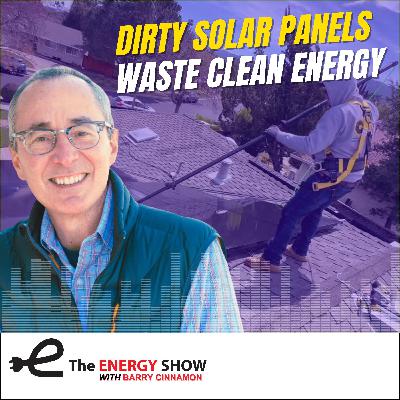
Consider the poor photons! If your panels are dirty you are causing trillions of premature photonic deaths when they collide with dirt molecules. Please give those photons the chance to knock an electron loose from an eager semi-conductor. Instead of being converted to heat and banished to quantum hell.Save The Photons. Clean Your Solar PanelsAfter just a week, your panels might look slightly dusty. But a light coating of dust doesn't significantly block sunlight. However, severe grime, especially on low-tilt panels, can slash your output by over 25%!You can’t save all the photons all the time, but by watching your solar monitoring system you can tell mathematically -- as well as visually -- when your panels should be cleaned. If you have a larger system in an area with high electric rates and a dry climate, the economics of cleaning become more favorable.When it comes to cleaning solar panels there’s lots of bad advice on the internet…and even from manufacturers. On this week’s podcast we address WHEN you should clean your solar panels, as well as HOW. Please tune into the full “Save The Photons” podcast at www.energyshow.biz. And keep these three things in mind: safety, the type of water, and the best cleaning agents.Like, Comment & Subscribe Today!
Unfortunately, there are a few "quick buck" solar companies that take advantage of unsuspecting homeowners. These ten tips will help you avoid these scam artists -- and get the best solar and battery installation for your home or business.1. Beware of the word “Free”2. Beware of TGTBT pricing and financing3. Don’t sign up on the spot4. Do not trust quotes generated completely online5. Beware of “free maintenance and cleaning” commitments6. Beware of optimistic system savings7. Research the company that manufacturers the solar panels you will install8. Research the company that manufactures battery SYSTEM you will install9. Understand your backup power strategy10. Do your own research on applicable incentives, credits and financing optionsDon’t let a bad deal or poor installation quality ruin your solar investment. Tune into this week's podcast at www.energyshow.biz
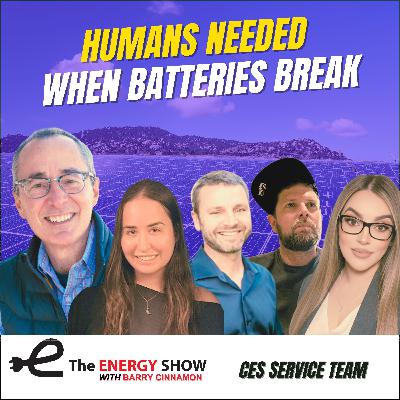
This week on The Energy Show, we’re talking about solar + battery systems not just the equipment, but the customer service and troubleshooting that keeps these systems performing year after year.Traditional “solar-only” systems can be wonderfully simple and reliable. But when you add batteries (plus transfer switches, CTs, load management, apps, and firmware), you also add more moving parts and that means it’s helpful to know what’s normal, what’s fixable, and what’s worth upgrading.Barry is joined by the Cinnamon Energy Systems service team Frank Teague, Lucas Cordero, Lily Cinnamon, and Yvette Res for a practical, real-world conversation on what we see in the field and what homeowners can do to stay ahead of issues.In this episode:• Why batteries add complexity (hardware + software + communication)• The truth about warranties (what’s covered and what usually isn’t)• The most common “no production” scenario: it’s often monitoring/communication• Why we often recommend waiting 48-72 hours before assuming the worst• Firmware updates: why they matter and why they can be tricky• Roof leaks, critters, and prevention tips • When older systems (15+ years) may be better replaced than “patched”• Cleaning + shade + winter production: what “normal” looks like seasonally• VPPs + battery calibration cycles: why batteries sometimes discharge unexpectedlyLike, Comment & Subscribe Today!
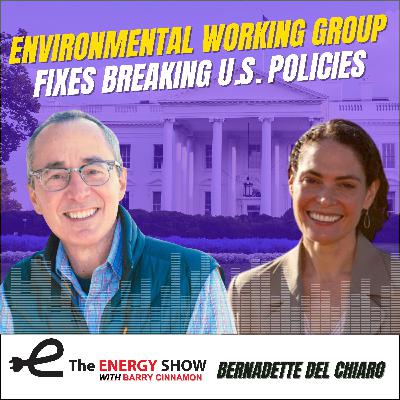
Rooftop solar, net metering, and clean energy policies are being dismantled across the U.S. From the effective cancellation of the Inflation Reduction Act to broken contracts and financial clawbacks, fossil-fuel interests are pushing hard to regain control of our energy system.This week on The Energy Show, Barry Cinnamon is joined by Bernadette Del Chiaro, Senior Vice President at the Environmental Working Group (EWG) and former Executive Director of CALSSA, for a powerful, no-nonsense conversation about what’s really happening—and how consumers can push back.• Why utilities are attacking rooftop solar and net metering• The truth behind the “cost-shift” myth• EWG’s landmark lawsuit against the California Public Utilities Commission• How bad utility policy drove 17,000+ solar job losses• The rise of balcony solar / plug-in solar and why utilities fear it• Why decentralized energy = cheaper, safer, more reliable power• What California (and the rest of the country) must do nextLike, Comment & Subscribe Today!
On this week’s episode of The Energy Show, Barry Cinnamon is joined by Carl Guardino, a longtime leader in government affairs and public policy, to explain how smart advocacy, trust, and relationships shape the laws and regulations that impact our energy future.Carl has helped guide policy from every angle — from leading the Silicon Valley Leadership Group, to expanding clean-energy markets at Bloom Energy, to bringing high-speed broadband to underserved communities at Tarana Wireless.Barry and Carl explore:• Why good policy takes more than great technology• How businesses can effectively advocate without “pay-to-play” politics• The biggest mistakes companies make when dealing with policymakers• Why broadband is now as essential as electricity and water• How clean energy and telecom can win in challenging political environmentsLike, Comment & Subscribe Today!
Nietzsche must have been referring to clean energy. Not even Nostradamus could have predicted this much turmoil in the energy sector in 2025. Nevertheless, Barry predicts steady clean energy progress due to lower solar, battery and heat pump costs.1) Bad news - expect a record number of clean energy bankruptcies in 20262) AC2HP reach codes for homes will take off3) Utilities will lie every time they say that the data center buildout will not cause electric rates to skyrocket4) Battery storage costs will continue to decline rapidly5) Cheap batteries + solar will threaten all other grid energy sources6) Top tier battery system manufacturers will gain share7) More rooftop solar MCIs, fewer MLPEs8) Residential solar financing demand will exceed supply of compliant modules and batteries9) Plug-in solar hype will eventually crack the utility interconnection monopoly10) Automakers will fail with V2G but succeed with V2HTune into this week’s Energy Show for details on these predictions, as well as a translation of this new slew of clean energy acronyms (AC2HP, MCI, MLPE, V2G, V2H, ETC).
AI and data centers are driving unprecedented demand for power. At the same time, federal clean-energy support is being rolled back, leaving households and businesses exposed to higher costs and grid instability.So where does that leave us?In this episode of The Energy Show, Barry Cinnamon is joined by Sachu Constantine, Executive Director of Vote Solar, to break down what’s really happening behind the scenes — and why state-level solar and storage policy may be the most powerful lever left to protect affordability, reliability, and clean energy growth. Sachu breaks down:• The growing federal backlash against solar and clean energy• Why electricity prices are rising — and why it’s not going to stop• How AI and data centers are pushing the grid to its breaking point• Why solar + batteries are now the fastest, cheapest grid solutionPlease tune in to this week’s Energy Show at www.energyshow.biz to understand how the fight for clean energy has moved to the states as the federal government returns to the expensive and polluting policies of the past. Like, Comment & Subscribe Today!
In this week’s Energy Show, Barry talks with Panama Bartholomy, Founder and Executive Director of the Building Decarbonization Coalition, about how heat pumps, induction cooktops, better incentive programs, and smart building codes are transforming homes and businesses across the U.S.• Heat pumps are 400% efficient, yes that's thermodynamically possible.• Learn about the new heat pump water heaters that plug into the wall• Home cooks love induction cooktops• Why many contractors love electrification but hate rebate paperwork• What happens to gas utilities, pipelines, and workers as we electrifyPolicy changes, tax credits, and rebate programs that actually workIf you’ve been wondering whether now is the time to upgrade to a heat pump HVAC, heat pump water heater, or induction cooktop, this episode is a great place to start.Like, Comment & Subscribe Today!#HeatPumps #BuildingDecarbonization #ElectrifyEverything #InductionCooking #AllElectricHome #CleanEnergy #SolarAndHeatPumps #BuildingElectrification #ClimateSolutions #EnergyEfficiency #TheEnergyShow
On this week's Energy Show we’re tackling one of the biggest challenges in America’s energy future: powering the exploding growth of AI data centers without causing electric rates to skyrocket even more. And without waiting 5-10 years for utilities to build new power plants and long distance transmission lines.Here’s how: instead of building giant power plants hundreds of miles away, we can install new power capacity much closer to the data centers themselves — on the rooftops of homes, businesses, warehouses, and public buildings.Think about it:Thousands of rooftop and battery power plants can be deployed around every data center in 1-2 years, not the 10+ years it takes to build a utility power plant and long distance transmission lines.These rooftop power plants connect to the same local distribution grid that the data centers use. No need to keep old coal power plants running, re-incarnate old nuclear plants, or build new natural gas and nuclear power plantsData center owners are willing to pay big bucks for power, and are more than willing to get clean power quickly from local rooftopsHomes and businesses with these new rooftop power plants will see their electricity bills decline.It’s a win-win for everyone, except maybe your local utility — who will fight to their last lawyer to defend their archaic monopoly.This data center power needs to be on the grid fast. PJM, the Mid-Atlantic grid operator recently announced that "No more large data centers can be constructed unless they can be reliably served."Tune in to this week’s Energy Show for a simple, fast and cost-effective way to meet data center energy needs while at the same time reducing electricity rates.
Barry exposes political, corporate, and global climate failures — and explains why solar, wind, and batteries remain our only practical way forward.Episode Highlights:• How Donald Trump’s policies are gutting clean-energy investments and reversing progress on solar and wind.• Why corporate giants are abandoning their sustainability promises.• Why the UN Climate Conferences have become dominated by fossil-fuel interests.• Why even Bill Gates’ new climate stance misses the mark.The EnRoads Climate Model shows the world is still headed for a 3.3°C rise in global temperatures — and the excuses keep piling up.Barry explains what real leadership looks like: supporting proven, cost-effective clean-energy solutions like solar, wind, and batteries — not vague pledges and science projects.#ClimateCrisis #COP30 #CleanEnergy #SolarPower #FossilFuels #GlobalWarming #ClimateAction #TheEnergyShow #BarryCinnamon #RenewableEnergy
This week Barry sits down with Gary Lam, CEO of Franklin WH. A New Jersey native who’s now buildingbatteries in Santa Clara, California, Gary has led Franklin from startup to one of the top-selling whole-home batteries in the U.S.In this episode:• OBBB explained: Why 2026 pricing changes andfinancing shifts.• Franklin’s edge: The A Power 2 battery, new A Power S (battery + inverter), the Hub load-shedding controller, and meter-collar installs• Installer Advantage: Fewer callbacks, faster installs, true whole-home solutionsHomeowner Checklist: Reliability, warranty, app experience, and future-proof features (generator support, EV-to-home, VPP readiness)Like, Comment & Subscribe Today!
Barry dives into what real “action” means. Using the En-Roads global climate simulator, he breaks down which solutions actually move the needle on global warming and which are just feel-good distractions.Episode Highlights: • How the En-Roads climate simulator models global warming and why we’re still on track for 3.3°C by 2100 • Why expensive “solutions” like fusion, trillion trees, and carbon capture barely move the dial • The one proven fix: putting a real price on carbon • How electrifying transport, buildings, and industry can cut global warming by nearly 1°C • Simple personal actions — and the political choices — that matter mostClimate Action Day is tomorrow, November 6th. Join the educational event produced by the Take Action Global Network that brings together world leaders, scientists, and youth activists. Register for tomorrow’s FREE live Online Event https://climateactionday.net/
The OBBB is now law in the U.S. It eliminates the 30% residential solar credit and adds restrictions for commercial systems—including many residential leases/PPAs. That means cash/loan projects effectively get ~30% pricier, while leases/PPAs face domestic content, safe harbor, and FEOC rules that affect equipment and pricing.This week, Barry sits down with Mark (CEO at a top solar + storage performance-assurance company) to unpack what contractors and homeowners should do—this year and in 2026.In this episode:• Installers: how to shift to lease/PPA workflows, manage cash flow, use approved vendor lists, avoid CT/mapping pitfalls, and budget for real O&M• Homeowners: when buying now still makes sense, how to pick bankable gear and a service-capable installer, and what to expect from lease/PPA in 2026 • Maintenance truths: why batteries raise the bar, how cleaning/soiling impact output, and what reliable fleets do differently#Solar #EnergyStorage #OBBB #CleanEnergy #LeaseVsPPA #HomeBatteries #SolarInstallers #DomesticContent #FEOC #SafeHarbor #TheEnergyShow
The 30% residential solar credit ends on Jan 1, 2026 but performance still wins. Barry talks with Brian Ghiglia about how REC’s Alpha Pure-RX (HJT, G12, half-cut) squeezes more energy from tight roofs, why hair-thin wiring (no hot-spot solder points) improves longevity, and how installers/homeowners can navigate 2026 with smarter financing and ops.Episode Highlights• REC tech explained: HJT + G12 (210mm) + half-cut architecture; cooler operation & yield• Degradation: ~0.24%/yr → ~92% output at 25 years (long-tail production matters)• Installer tactics: distributor partnerships, CAC reduction, credit-union loans, prepaid leases, AI in lead-to-install• Homeowner checklist: vet tech, warranties, installer health, and supply-chain exposureLike, Comment & Subscribe Today!

The 30% residential tax credit is ending in 2026—and the rules around commercial credits, domestic content, and safe harbor are tightening. What now? Aurora Solar’s CEO & Co-founder Chris Hopper joins Barry to lay out a practical plan for installers and homeowners: cut soft costs with software, speed up project cycles, and choose financing that fits the new reality.What you’ll learnWhy lease/PPA will surge in 2026—and how to prepareHow project velocity (lead→cash) beats panel price cutsAurora’s latest: instant plan sets, financing integrations, and smarter battery modelingThe new homeowner decision tree: buy now vs. lease laterHow to sell on accuracy & trust (not just lowest price)Like, Comment & Subscribe Today!
RE+ (formerly Solar Power International) brought together over 40,000 energy enthusiasts in Las Vegas this year. From cutting-edge home batteries to balcony and plug-in solar systems, the industry is buzzing with products that are practical, reliable, and ready for homeowners now.On this week’s Energy Show, Barry Cinnamon shares his Top Product Picks from RE+ 2025 — technologies that check all the boxes: affordability, reliability, ease of installation, and real benefits for your home or business.You’ll learn:• Why solar panel costs have dropped by 150x over the past 25 years• The truth about solar panel quality, warranties, and manufacturer stability• Which home battery systems (Tesla, Enphase, Franklin) are market leaders in reliability• The rise of balcony & plug-in solar systems — and why they’re booming in Europe and coming soon to U.S. homes• Practical advice on how to choose solar and battery systems that will last decadesIf you couldn’t attend RE+ 2025 in Vegas, this episode brings the show floor straight to your ears.Don’t miss Barry’s expert take on the products that matter most for today’s homeowners and tomorrow’s clean-energy future.

Comments

Download from Google Play

Download from App Store
 United States