


 Claim Ownership
Fuelled with Dr Gemma Sampson
Subscribed: 9Played: 269
Subscribe

© 2026 All rights reserved
Description
Dr Gemma Sampson is an Australian Advanced Sports Dietitian and Sports Nutrition expert fuelling peak performance for amateur and elite cyclists.
Find Gemma at www.gemmasampson.com
117 Episodes
Reverse
In this episode of Fuelled, I sit down with Liz Nelson to talk about one of the biggest conversations I keep hearing from women in their thirties, forties and fifties: why training, body composition, muscle building and performance can suddenly feel harder than they used to. Liz brings a rare mix of experience to this conversation. She has a background in pharmacy, sports science, health communication and endurance coaching, and she works closely with athletes who want to keep doing big, ambitious things as they get older.
We talk about the confusing and often conflicting information women are exposed to around perimenopause, menopause, strength training, hormones, cortisol, carbohydrates and endurance sport. One of the biggest themes in this episode is that the conversation is often far too extreme. On one side, there is fear-based messaging that tells women they need a completely different protocol, that carbs are bad, that endurance sport is harmful, or that they need a special menopause formula to train properly. On the other side, there is a pushback that can be so clinical and blunt that women who are genuinely struggling can feel dismissed. In this conversation, I wanted to create space for more nuance, more reassurance and more practical guidance.
Liz shares her own personal experience of going through the menopause transition and being shocked by a DEXA scan that showed she had lost 10% of her muscle and bone mass in just 12 months, despite still riding regularly and using hormone replacement therapy. That result became a turning point for her. Instead of giving up or assuming decline was inevitable, she made a deliberate decision to take strength training seriously, learn about powerlifting, and build her body back. A year later, a repeat DEXA scan showed she had regained the muscle and bone mass she had lost, and even added a little more. That story is such a powerful reminder that it is not too late to build strength, regain muscle, improve bone health and get fitter, even if things feel like they have changed dramatically.
Another major theme in this episode is that strength training needs to meet the athlete where they are. Lifting heavy does matter, but that phrase can be unhelpful if it makes people think they need to jump straight into barbells, big numbers or a gym environment that feels intimidating. For one person, “heavy” might mean bodyweight. For another, it might mean bands, dumbbells or a gradual progression into more structured strength work. We talk about how the right strength and conditioning program can improve not only bone density and muscle mass, but also confidence, longevity, enjoyment and performance on the bike.
I also share where I am personally right now with training. After a long period of illness, travel and inconsistent routine, I feel like I am rebuilding from a very low fitness base. That can be frustrating, especially when your brain remembers what you used to be able to do, but your body is not there yet. Liz and I talk about the emotional side of starting again, the value of beginner energy, and how motivating it can be to see those small improvements return. We talk about the importance of finding joy in the process, rather than only measuring success by numbers, pace or power.
This episode is for any woman who has wondered why things feel different now, whether she can still build muscle, whether it is too late to start, how to think about strength training alongside endurance training, and how to stop feeling broken when her body is asking for a different approach. It is also for any endurance athlete who needs the reminder that progress is still possible, that strength matters, and that enjoyment is not optional if we want to keep doing this for the long term.
--
BECOME A FUELLED CYCLIST
🧰 Get your free Nutrition Assessment: https://www.gemmasampson.com/ceacq
⛽️ Join The Fuelled Team: https://www.gemmasampson.com/join
CONNECT WITH GEMMA
🌐 Website: https://www.gemmasampson.com
🎥 Youtube: www.youtube.com/@drgemmasampson
📸 Instagram: https://instagram.com/drgemmasampson
🎤 Podcast: https://www.gemmasampson.com/podcast/117
🚴 Strava: https://www.strava.com/athletes/5723475
In this episode of Fuelled, I sit down with Matilda Raynolds to talk about one of the biggest endurance cycling goals in Australia: completing Peaks Challenge Falls Creek in under eight hours. Matilda recently became the first female sub-eight-hour ride leader for the event, and this conversation goes far beyond the headline result. We unpack what it actually took to get there, from training and mindset to race-day fuelling, body composition, and the long-term evolution of her relationship with food and performance.
Matilda shares how ambitious the goal really was, especially because she does not see herself as a natural climber. She explains that her background is much more suited to sprinting and classics-style racing, which made the idea of targeting one of the hardest gran fondos in the world feel both exciting and audacious. We also talk about how different her journey has been compared to the women who have previously gone under eight hours, and why that matters when it comes to representation, performance, and body diversity in cycling.
A major theme in this episode is endurance fuelling and how much the culture has changed over the last decade. We reflect on the advice many female athletes were given years ago - low carb, under-fuelling, trying to stay as light as possible, and pushing through long sessions on next to nothing. Matilda speaks candidly about how sad she feels for that younger version of herself, who was training incredibly hard while under-fuelling, compromising both performance and wellbeing in the process. I also share examples from the data I collected with her years ago, and how dramatically different her race fuelling looks now compared to 2019.
We talk through exactly how Matilda fuelled for her sub-eight-hour Peaks Challenge ride, including how she approached carbo-loading, breakfast, race-day gels, bottles, caffeine, and fluid strategy. She explains why she kept things deliberately simple, why she practised not stopping in training, and why learning to fuel consistently every 30 minutes made such a difference. We also cover how training the gut, trialling products in training rather than only on race day, and learning what works for your own body is a huge part of performing well in long endurance events.
Another key conversation in this episode is the complex relationship between body composition and performance in cycling, especially for women. We discuss why weight does matter in some events, but why the conversation becomes harmful when it is oversimplified or turned into the only thing people focus on. We reflect on how quickly women’s performances get reduced to weight loss, while men’s performances are far more often discussed in terms of power, tactics and physiology. We also speak honestly about how different body types can still perform exceptionally in endurance cycling, and why comparing yourself to another athlete’s build, fuelling strategy or physiology rarely leads anywhere helpful.
We also explore how periodisation, fuelling around the event in front of you, protein intake, menstrual cycle changes, and meal satisfaction all play into performance. This is a practical and honest conversation about what endurance performance really looks like when you zoom out from the numbers and look at the whole athlete.
If you’re training for Peaks Challenge, a gran fondo, a long cycling event, or you simply want to understand how to fuel endurance rides better, this episode will help you think differently about carbohydrates, recovery, body composition, and what sustainable high performance actually looks like.
--
BECOME A FUELLED CYCLIST
🧰 Get your free Nutrition Assessment: https://www.gemmasampson.com/ceacq
⛽️ Join The Fuelled Team: https://www.gemmasampson.com/join
CONNECT WITH GEMMA
🌐 Website: https://www.gemmasampson.com
🎥 Youtube: www.youtube.com/@drgemmasampson
📸 Instagram: https://instagram.com/drgemmasampson
🎤 Podcast: https://www.gemmasampson.com/podcast/116
🚴 Strava: https://www.strava.com/athletes/5723475
In this episode of Ask a Sports Dietitian, I answer a really important question from a recreational cyclist training around 10 to 12 hours a week who is struggling with RED-S and low energy availability, despite being at a healthy body weight and eating what looks like a good diet on paper. It’s a question I hear in different forms all the time, especially from women in endurance sport who are trying to support performance, protect their health, and avoid cutting back on the training they love.
I unpack the difference between overall energy availability and carbohydrate availability, and why the answer is often not either/or — it’s both. I explain why having enough total energy across the day matters just as much as how that energy is timed and distributed around training, and why so many athletes are unknowingly under-fuelling even when they think they’re eating enough.
I also talk about the role of continuous glucose monitors (CGMs) in endurance sport, what they can and can’t tell us, and why context is everything when it comes to blood sugar responses. I explain why the same food eaten while sitting at a desk can create a completely different glucose response than when it’s taken on the bike during a hard ride, and why that matters when athletes start interpreting data without understanding the bigger picture.
I also address one of the biggest myths I see around RED-S: the belief that if you’re not extremely lean, then you can’t possibly be under-fuelled. I explain why body size alone is not a reliable measure of energy availability, how muscle loss can happen much faster than fat loss, and why missing periods are such a significant red flag in female athletes.
This episode is a deep dive into how I think about recovery, hormone health, fuelling around training, and sustainable performance nutrition for cyclists and endurance athletes. It’s practical, evidence-based, and designed to help you understand what to focus on if you’re worried about low energy availability, RED-S, and how to support your body without automatically slashing training.
--
BECOME A FUELLED CYCLIST
🧰 Get your free Nutrition Assessment: https://www.gemmasampson.com/ceacq
⛽️ Join The Fuelled Team: https://www.gemmasampson.com/join
CONNECT WITH GEMMA
🌐 Website: https://www.gemmasampson.com
🎥 Youtube: www.youtube.com/@drgemmasampson
📸 Instagram: https://instagram.com/drgemmasampson
🎤 Podcast: https://www.gemmasampson.com/podcast/115
🚴 Strava: https://www.strava.com/athletes/5723475
Something needs to change. I can’t keep living like this. That’s the sentence I’m opening with today, because I know how familiar it can feel - whether it’s about your weight, your fitness, your sleep, your training, or just the way you’ve been living on autopilot. In this episode, I’m sharing what’s been going on behind the scenes for me over the last few months, why I intentionally stepped back from the podcast and social media, and what’s shifted since late November.
At the end of 2025, the life lesson that kept showing up for me on repeat was rest. I could see it, I wrote it down, I even knew what I needed… and then I ignored it. I kept pushing, kept delaying proper time off, and eventually my body forced the issue. I got sick with shingles, and then it didn’t stop there - I had the flu, COVID, then the flu again. These weren’t minor inconveniences. These were full stop moments where I had no choice but to rest, let go, and accept that no one can look after me if I don’t look after myself first.
In the middle of that chaos, something unexpected happened: an opportunity came up to work with a pro cycling team. I’d been craving more in-person connection - the kind you don’t get when you’re always remote - and in a very “timing is funny like that” moment, I found myself back in the pro peloton. I’m now the lead nutritionist for UAE Team ADQ. It’s been exciting, grounding, and honestly a little surreal… and it’s also added a whole new layer of travel, logistics, and constant movement to my schedule.
That’s where I shift into the bigger theme of this episode: how do you create any kind of routine when you don’t have a routine? How do you build consistency when your life is week home, week away, two weeks here, one week there - and everything feels fragmented? I’m talking about this from the perspective of my own fitness right now, because after months of illness, I’m at a low base I haven’t experienced in more than a decade. My brain still thinks I should be able to ride like I used to, but my body is very clearly telling me: this is your capacity today. Start with baby steps.
And that’s the part I want you to take with you - whether your goal is fitness, health, weight, performance, or just feeling more like yourself again. If you keep waiting for the perfect block of time to begin, the gap gets wider. But if you keep taking small steps - even imperfect ones - you stay connected to the version of you you’re trying to rebuild.
I also talk about the role of accountability, because I know myself: cold weather makes me moody, unmotivated, and dramatic about leaving the house. So I need structures that help me get moving anyway - friends, simple check-ins, micro goals, and events that give me that spark of excitement. I share why I signed up for Mallorca 312 as a way to create a forward anchor in my year. I’m not doing it to be race fit. I’m doing it to enjoy the day, feel the buzz, and give myself a reason to keep showing up consistently between now and then.
Finally, I’m sharing what’s coming next - I’m back, I’m excited, and I’ve got some really special interviews planned with athletes I’ve known for years, where we’ll talk honestly about their fueling journeys. And I invite you to send your questions in, because I want this podcast to support you in real life, not just in theory.
--
BECOME A FUELLED CYCLIST
🧰 Get your free Nutrition Assessment: https://www.gemmasampson.com/ceacq
⛽️ Join The Fuelled Team: https://www.gemmasampson.com/join
CONNECT WITH GEMMA
🌐 Website: https://www.gemmasampson.com
🎥 Youtube: www.youtube.com/@drgemmasampson
📸 Instagram: https://instagram.com/drgemmasampson
🎤 Podcast: https://www.gemmasampson.com/podcast/114
🚴 Strava: https://www.strava.com/athletes/5723475
n this episode, I explore one of the most powerful yet overlooked parts of performance nutrition: understanding your why. After years of working with cyclists and endurance athletes, I’ve learned that the biggest breakthroughs rarely come from the perfect training plan or the newest gear. They come from learning how to fuel properly, consistently, and intentionally — and understanding the motivation behind your choices.
I share stories from the athletes I work with, including the rider who waited nine days to try one simple piece of homework that ended up transforming his performance within a week. I talk about carb loading, pre-race fueling, simple daily habits, and how taking imperfect action builds confidence far more effectively than waiting for the perfect moment.
I also dive into my own journey with language learning and how it mirrors the mindset shifts needed in nutrition. Whether you want to improve performance, prepare for a big event, support long-term health, or simply feel stronger on the bike, this episode is about finding the internal motivation that keeps you progressing — even when things aren’t perfect.
If you’ve ever struggled to take action, doubted whether a recommendation would actually work, or waited for the right moment to “finally start,” this episode will show you how powerful small daily steps can be.
--
BECOME A FUELLED CYCLIST
🧰 Get your free Nutrition Assessment: https://www.gemmasampson.com/ceacq
⛽️ Join The Fuelled Team: https://www.gemmasampson.com/join
CONNECT WITH GEMMA
🌐 Website: https://www.gemmasampson.com
🎥 Youtube: www.youtube.com/@drgemmasampson
📸 Instagram: https://instagram.com/drgemmasampson
🎤 Podcast: https://www.gemmasampson.com/podcast/113
🚴 Strava: https://www.strava.com/athletes/5723475
I’ve seen it so many times — athletes, especially cyclists, pushing themselves hard while running on empty. They think eating less or staying in a calorie deficit will help them get leaner or perform better, but it often does the opposite. Nutrition isn’t just about calories in and calories out; it’s a science and an art.
In this episode, I reflect on how my own experience with illness (hello, shingles!) reminded me of the body’s limits and why recovery, fueling, and balance matter more than restriction. I talk about the real motivators behind behaviour change — how we often don’t act until we’re in pain — and how to start taking action before things break down.
From elite cyclists preparing for major races like Three Peaks or Ironman to everyday riders wanting to feel strong and energetic, the key is sustainable, realistic nutrition. I share insights into body composition, why eating more can sometimes mean performing better, and how fueling properly can completely transform training outcomes.
Key themes include:
How pain and setbacks motivate us to change
Why fueling is the most overlooked performance enhancer
The truth about deficits, metabolism, and body composition
How under-fueling affects hormones, bone health, and longevity
Building a sustainable nutrition framework for cycling success
--
BECOME A FUELLED CYCLIST
🧰 Get your free Nutrition Assessment: https://www.gemmasampson.com/ceacq
⛽️ Join The Fuelled Team: https://www.gemmasampson.com/join
CONNECT WITH GEMMA
🌐 Website: https://www.gemmasampson.com
🎥 Youtube: www.youtube.com/@drgemmasampson
📸 Instagram: https://instagram.com/drgemmasampson
🎤 Podcast: https://www.gemmasampson.com/podcast/112
🚴 Strava: https://www.strava.com/athletes/5723475
What happens to my eating habits, mindset, and relationship with food when I get sick and have to stop exercising? I’ve been unwell for nearly a month and couldn’t tolerate any training—and it reminded me how important it is to have a baseline nutrition framework I can fall back on when life forces a pause. I also ran into a viral clip (possibly AI/fake) of a well-known trainer saying he’d “get fat” if he couldn’t train and that he’d micro-dose GLP-1s to avoid it. Whether that video was real or not, the fear behind it is—especially for cyclists and endurance athletes who quietly rely on training to manage body weight.
In this episode, I share how I navigate time off the bike without spiralling into restriction or panic. I unpack the difference between my baseline “stay-alive” nutrition and the training add-ons (before/during/after), why eating the same tiny number of calories every day backfires, and what changes when training volume drops to zero. I also talk through the myth of “I’ll gain weight instantly if I stop,” the Christmas/winter slump, and why picking a practitioner who truly understands endurance physiology matters. I even share a real example: someone trying to live on 1,400 calories while training 15 hours/week—and why that guarantees hunger, exhaustion, and rebound eating.
Key themes I cover: I explain how I keep my body composition stable when I’m not training by eating my normal baseline meals (breakfast, lunch, dinner, plus a snack or two) and simply removing the training fuel. I talk about responding to real hunger, recognising the “cookie-monster” appetite that comes from under-fuelling endurance sessions, and how smart fuelling reduces sugar cravings and weekend blow-outs. I also get real about winter, illness and rest: performance nutrition isn’t meant to be rigid—it’s meant to adapt.
--
BECOME A FUELLED CYCLIST
🧰 Get your free Nutrition Assessment: https://www.gemmasampson.com/ceacq
⛽️ Join The Fuelled Team: https://www.gemmasampson.com/join
CONNECT WITH GEMMA
🌐 Website: https://www.gemmasampson.com
🎥 Youtube: www.youtube.com/@drgemmasampson
📸 Instagram: https://instagram.com/drgemmasampson
🎤 Podcast: https://www.gemmasampson.com/podcast/111
🚴 Strava: https://www.strava.com/athletes/5723475
I used to wait for the perfect time to start making changes — whether it was improving my nutrition, getting back into strength training, or simply adding more balance to my routine. I told myself I’d start next week, or after a trip, or when life slowed down. But the truth is, the perfect moment never comes.
In this episode, I talk about how that mindset holds us back from real progress. I share my personal journey with strength training — how I kept putting it off because I didn’t want to be sore before big rides, and how that avoidance led to back pain and frustration.
I also explore how this same mindset shows up in nutrition. Many people wait until January to make changes, but I’ve found that starting during the messy, busy months like November can actually set you up for lasting success.
Through my own experience, I’ve learned that progress doesn’t come from perfection — it comes from taking the first imperfect step, then showing up again and again.
Key themes:
Why waiting for the “perfect time” stops progress
How pain and discomfort often become our biggest motivators
Why taking imperfect action builds consistency
How to identify what really drives your goals
Creating change that lasts through everyday life
--
BECOME A FUELLED CYCLIST
🧰 Get your free Nutrition Assessment: https://www.gemmasampson.com/ceacq
⛽️ Join The Fuelled Team: https://www.gemmasampson.com/join
CONNECT WITH GEMMA
🌐 Website: https://www.gemmasampson.com
🎥 Youtube: www.youtube.com/@drgemmasampson
📸 Instagram: https://instagram.com/drgemmasampson
🎤 Podcast: https://www.gemmasampson.com/podcast/110
🚴 Strava: https://www.strava.com/athletes/5723475
What happens when you perfectly carb load for a big event… and then it gets cancelled halfway through?
In this episode, I dive into one of the most common fears cyclists face — “Have I eaten too much?” — and explain why one day, or one meal, won’t make you gain fat overnight. Using my own experience in Majorca, I share what happened when I prepped for a 320km ride, only to pull the pin after 100km due to storms and torrential rain.
We explore what happens inside your body when you carb load, why your weight might fluctuate, and how that’s often just water and glycogen — not body fat. I also break down what I actually ate before and during the ride, what I burned, and how the numbers show it’s almost impossible to “overeat” when you’re fuelling properly for performance.
This episode is all about understanding the difference between fuel and fear, and learning how to work with your body instead of against it. Because when you start viewing nutrition as strategy rather than punishment, that’s when you become a truly well-fuelled cyclist.
Key themes:
Why carb loading increases weight (and why that’s a good thing)
The difference between glycogen, water, and body fat
How to mentally handle unexpected race day changes
The role of fuel timing before, during and after training
Why using exercise as punishment never works
The importance of course correction, not restriction
--
BECOME A FUELLED CYCLIST
🧰 Get your free Nutrition Assessment: https://www.gemmasampson.com/ceacq
⛽️ Join The Fuelled Team: https://www.gemmasampson.com/join
CONNECT WITH GEMMA
🌐 Website: https://www.gemmasampson.com
🎥 Youtube: www.youtube.com/@drgemmasampson
📸 Instagram: https://instagram.com/drgemmasampson
🎤 Podcast:https://www.gemmasampson.com/podcast/109
🚴 Strava: https://www.strava.com/athletes/5723475
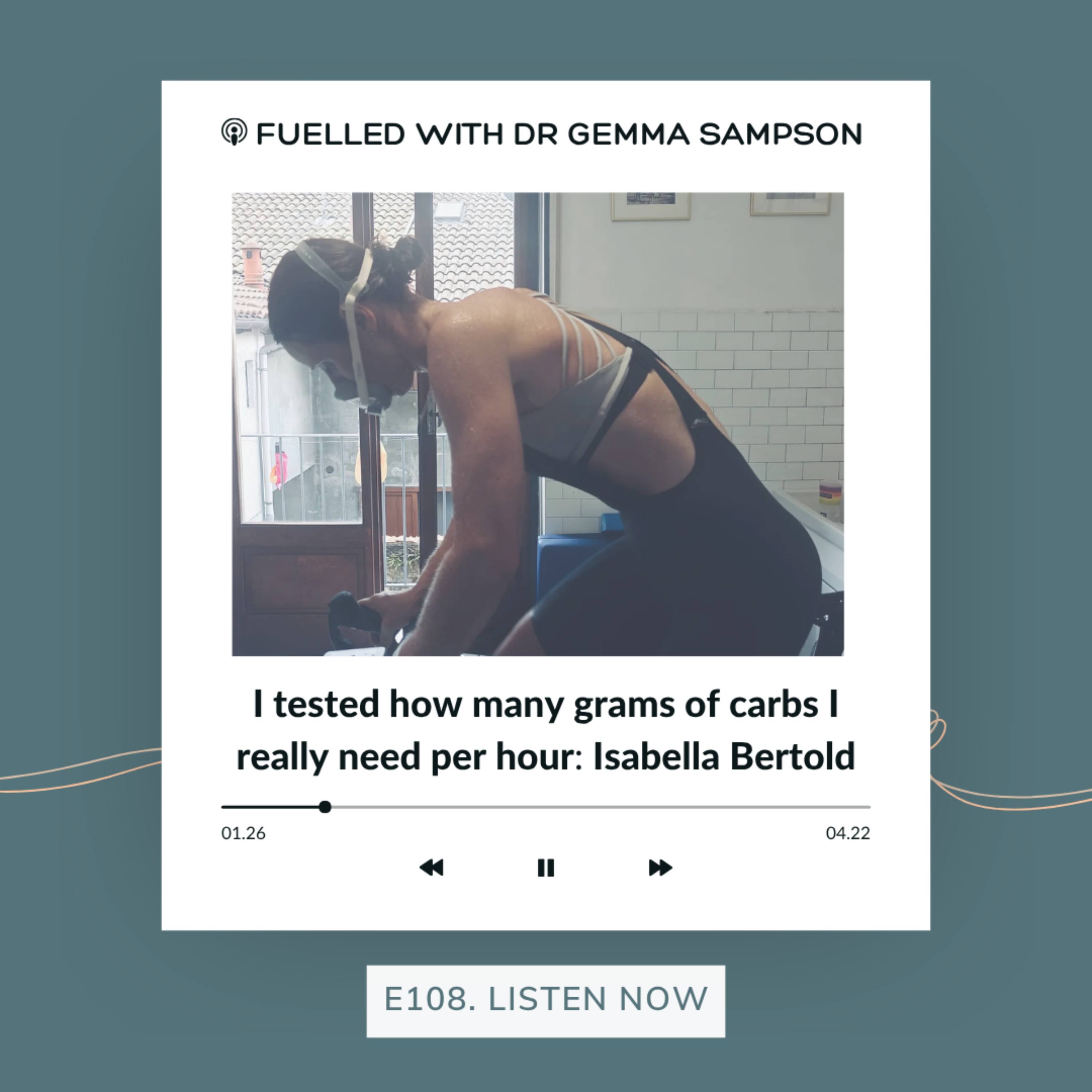
In this episode, I’m joined by Isabella Bertold, a professional cyclist and former world-class sailor, to talk about what happened when she took a test to find out exactly how much carbohydrate her body needed to fuel her cycling - and the results surprised her.
Like many endurance athletes, Isabella assumed she was fuelling well enough. But after taking a metabolic fuel test using XO Analytics, she discovered she’d been significantly underestimating her carbohydrate needs. The test revealed she could absorb between 110–128 grams of carbs per hour, far more than the 75 grams she thought was her limit.
We discuss what that means in practice - how she’s adjusted her fuelling strategy, what she’s learned from trialling different products and ratios, and why individual testing can change everything about how you train, race, and recover.
Isabella also talks about her past experience with under-fuelling, her fascination with health tech, and how she now uses tools like Hexis and skinfold tracking to monitor performance and energy balance without obsession.
We dive into the ongoing misconceptions about fuelling in women’s cycling, why proper carbohydrate intake is crucial for performance, and how a data-driven approach can replace guesswork and fear with confidence and strength on the bike.
--
BECOME A FUELLED CYCLIST
🧰 Get your free Nutrition Assessment: https://www.gemmasampson.com/ceacq
⛽️ Join The Fuelled Team: https://www.gemmasampson.com/join
CONNECT WITH GEMMA
🌐 Website: https://www.gemmasampson.com
🎥 Youtube: www.youtube.com/@drgemmasampson
📸 Instagram: https://instagram.com/drgemmasampson
🎤 Podcast: https://www.gemmasampson.com/podcast/108
🚴 Strava: https://www.strava.com/athletes/5723475
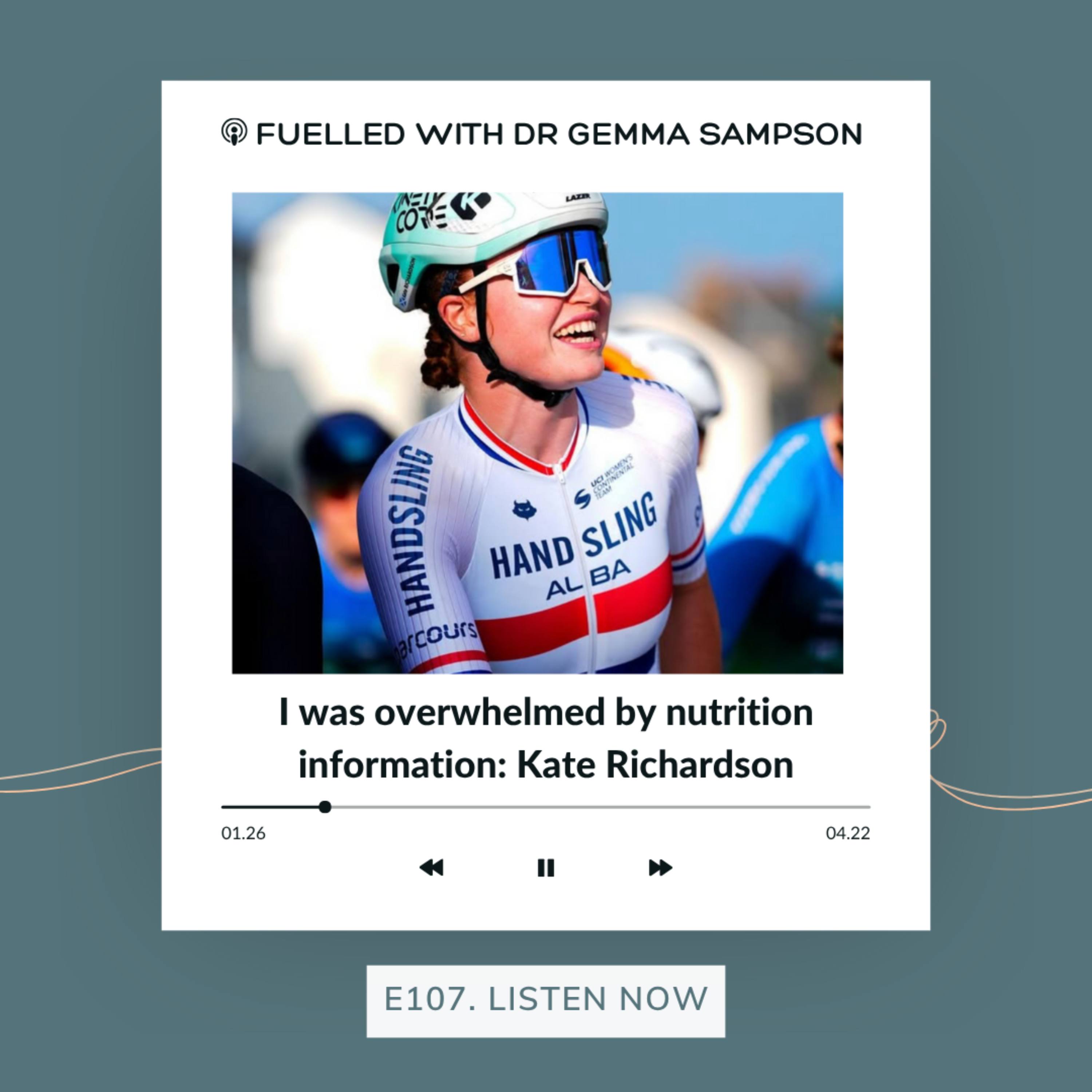
In this episode, I’m joined by GB track and road rider Kate Richardson, who shares how learning to fuel properly has transformed her performance and her enjoyment of racing. Kate recently won the National Elite Women’s Crit Race in the UK, just months after we started working together, and her progress has been nothing short of inspiring.
Kate opens up about the confusion she felt around nutrition before seeking support—being overwhelmed by conflicting advice online and within the sport, unsure how to balance performance goals with health, and wrestling with the taboo that still exists around food and body composition in cycling. Together, we discuss how small but strategic changes have helped her train harder, recover faster, and race with more confidence.
From simple swaps like choosing Rice Krispies over oats before a stage race, to understanding how carb-loading really works, Kate explains how she’s learned to fuel smarter, not harder. We dive into her “lightbulb moments” around on-bike fuelling, the importance of planning ahead, and why food is never “good” or “bad”—it’s always context specific.
Kate also reflects on how her choices have had a ripple effect within her team, inspiring younger riders to fuel more and perform better. Her story is a brilliant reminder that eating enough is not just about surviving training—it’s about thriving in sport and life.
Key themes:
Fuelling for track and road cycling
The taboo of weight and power-to-weight conversations in sport
Simple nutrition swaps that improve performance
Carb-loading strategies that actually work
The psychology of fuelling and food confidence
How positive change in one athlete influences a whole team
BECOME A FUELLED CYCLIST
🧰 Get your free Nutrition Assessment: https://www.gemmasampson.com/ceacq
⛽️ Join The Fuelled Team: https://www.gemmasampson.com/join
CONNECT WITH GEMMA
🌐 Website: https://www.gemmasampson.com
🎥 Youtube: www.youtube.com/@drgemmasampson
📸 Instagram: https://instagram.com/drgemmasampson
🎤 Podcast: https://www.gemmasampson.com/podcast/107
🚴 Strava: https://www.strava.com/athletes/5723475
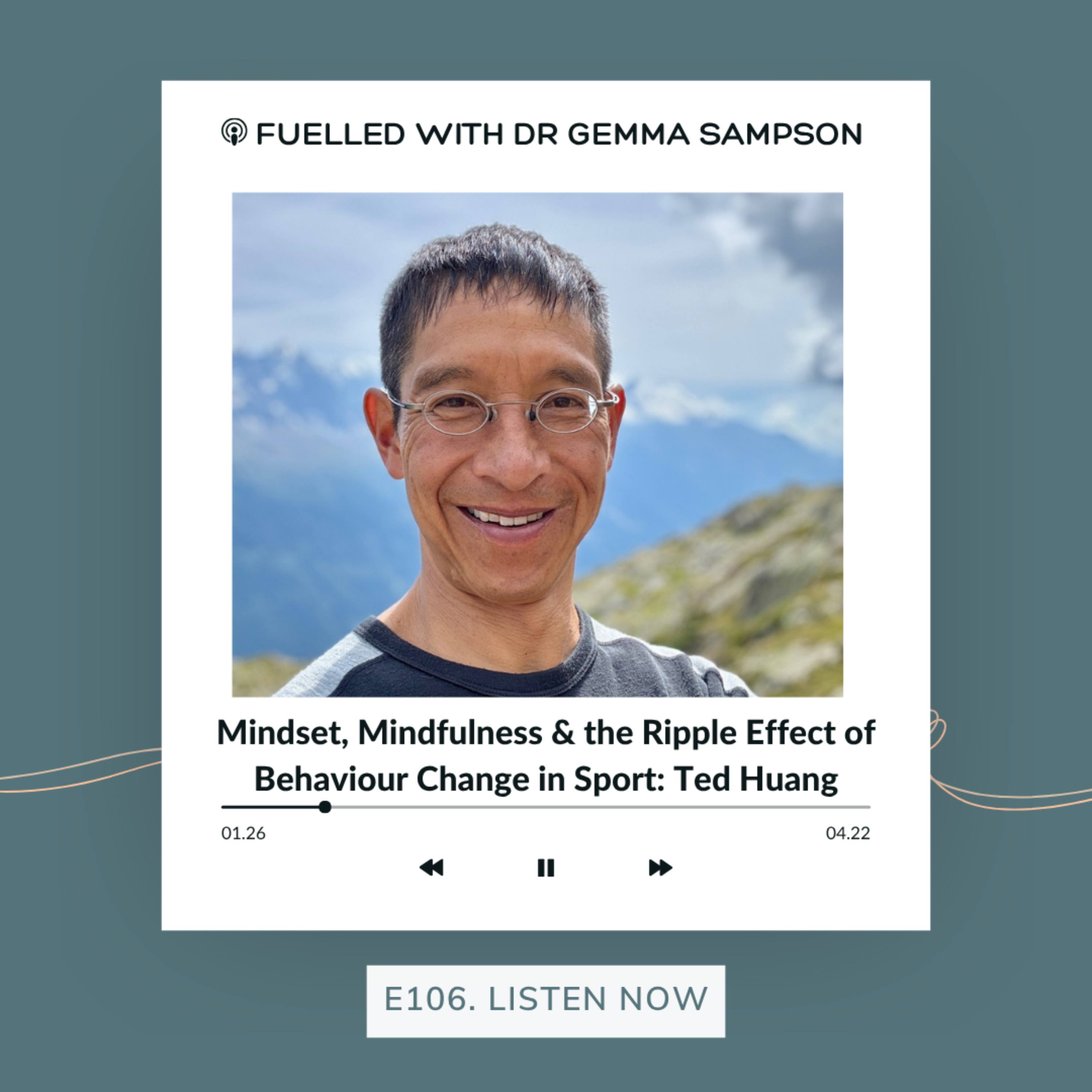
In this episode, I sit down with two-time Olympic windsurfer and sports psychology graduate Ted Huang to explore one of my favourite topics: behaviour change and mindset. Ted and I recently met on a cycling trip in Italy, and our conversations quickly turned to performance, fuelling, and how psychology underpins so much of what we do in sport and life.
Ted shares his fascinating journey from discovering windsurfing as a teenager, to competing at the Olympic level, and later transitioning into road cycling. He explains how running professional cycling teams and studying organisational behaviour helped him see that athletic performance isn’t just about physical strength- it’s also about headspace, coping mechanisms, and mindset under pressure.
We dive into why so many athletes still struggle with fuelling properly, the fears that hold them back, and the ripple effect that positive changes can have beyond sport. From overcoming the “I don’t need it” mentality, to learning to fuel training better, to understanding how curiosity and self-awareness drive behaviour change - this conversation covers the mental and physical strategies that help athletes (and everyday people) feel and perform at their best.
Whether you’re an elite competitor, a keen weekend rider, or someone curious about how psychology and nutrition intersect, you’ll take away practical insights on how to eat, think, and approach training more effectively - without fear, guilt, or restriction.
Key themes:
Why mindset is the missing link in performance
The role of self-awareness in lasting behaviour change
Fuelling strategies for endurance cycling and multi-day events
Fear, food, and why restriction rarely works
--
BECOME A FUELLED CYCLIST
🧰 Get your free Nutrition Assessment: https://www.gemmasampson.com/ceacq
⛽️ Join The Fuelled Team: https://www.gemmasampson.com/join
CONNECT WITH GEMMA
🌐 Website: https://www.gemmasampson.com
🎥 Youtube: www.youtube.com/@drgemmasampson
📸 Instagram: https://instagram.com/drgemmasampson
🎤 Podcast: https://www.gemmasampson.com/podcast/106
🚴 Strava: https://www.strava.com/athletes/5723475
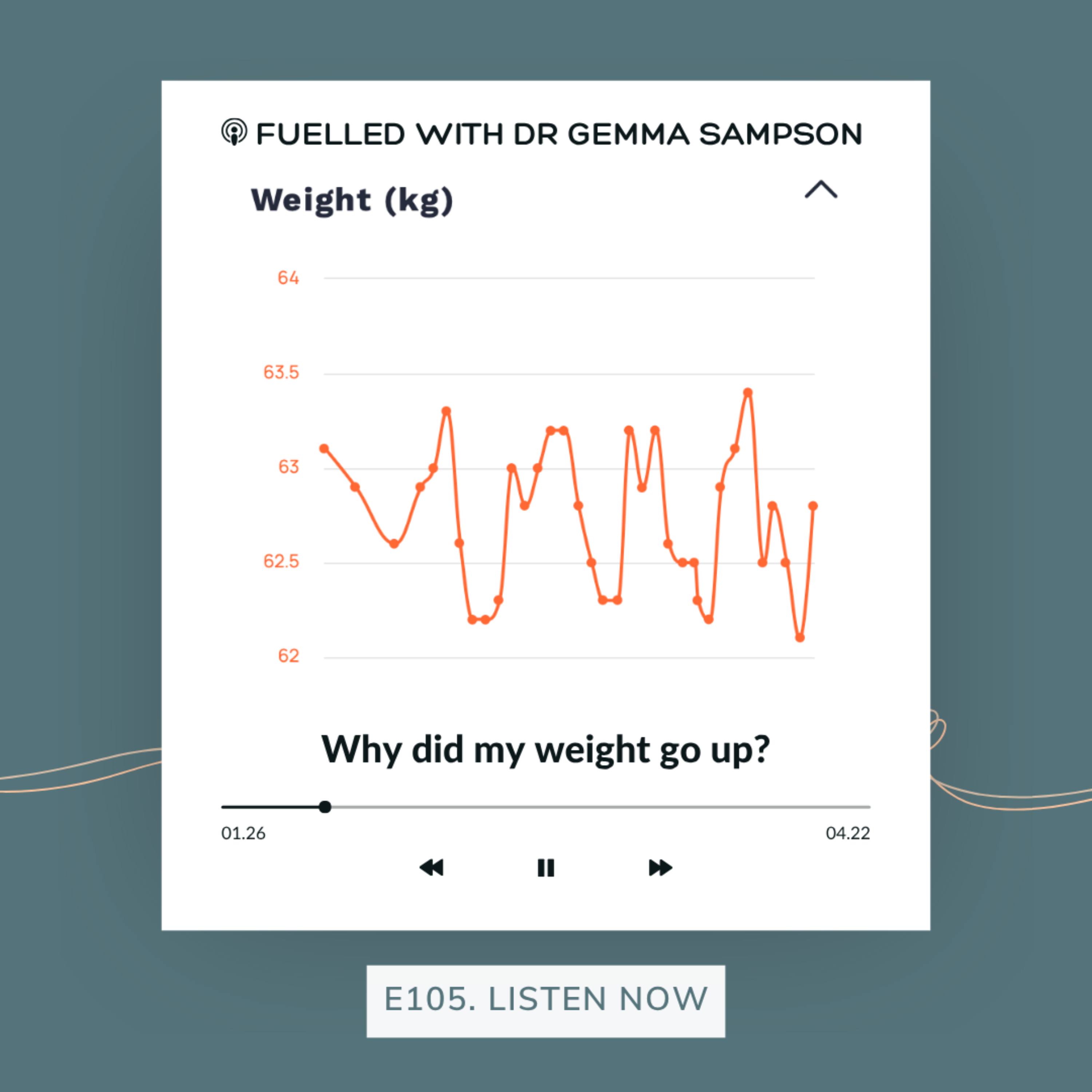
In this conversation, I talk about the complexities of weight management and how fluctuations are often linked to things like water retention, hormonal changes, and dietary habits. I encourage you to look at weight as data rather than something to panic over, and I highlight the importance of building sustainable practices instead of chasing quick fixes. I also touch on the psychological side of how we perceive weight and why maintaining a healthy relationship with food and body image matters so much.
--
BECOME A FUELLED CYCLIST
🧰 Get your free Nutrition Assessment: https://www.gemmasampson.com/ceacq
⛽️ Join The Fuelled Team: https://www.gemmasampson.com/join
CONNECT WITH GEMMA
🌐 Website: https://www.gemmasampson.com
🎥 Youtube: www.youtube.com/@drgemmasampson
📸 Instagram: https://instagram.com/drgemmasampson
🎤 Podcast: https://www.gemmasampson.com/podcast/105
🚴 Strava: https://www.strava.com/athletes/5723475
In this conversation, I share my practical tips for maintaining weight while traveling. I talk about the importance of making intentional food choices and focusing on weight maintenance rather than weight loss. I also highlight how to balance indulgence with good nutrition, prioritise protein intake, be mindful with alcohol, and keep active during trips. My goal is to help you enjoy your travel experiences without stressing about gaining weight.
------
BECOME A FUELLED CYCLIST
🧰 Get your free Nutrition Assessment: https://www.gemmasampson.com/ceacq
⛽️ Join The Fuelled Team: https://www.gemmasampson.com/join
CONNECT WITH GEMMA
🌐 Website: https://www.gemmasampson.com
🎥 Youtube: www.youtube.com/@drgemmasampson
📸 Instagram: https://instagram.com/drgemmasampson
🎤 Podcast: https://www.gemmasampson.com/podcast/104
🚴 Strava: https://www.strava.com/athletes/5723475
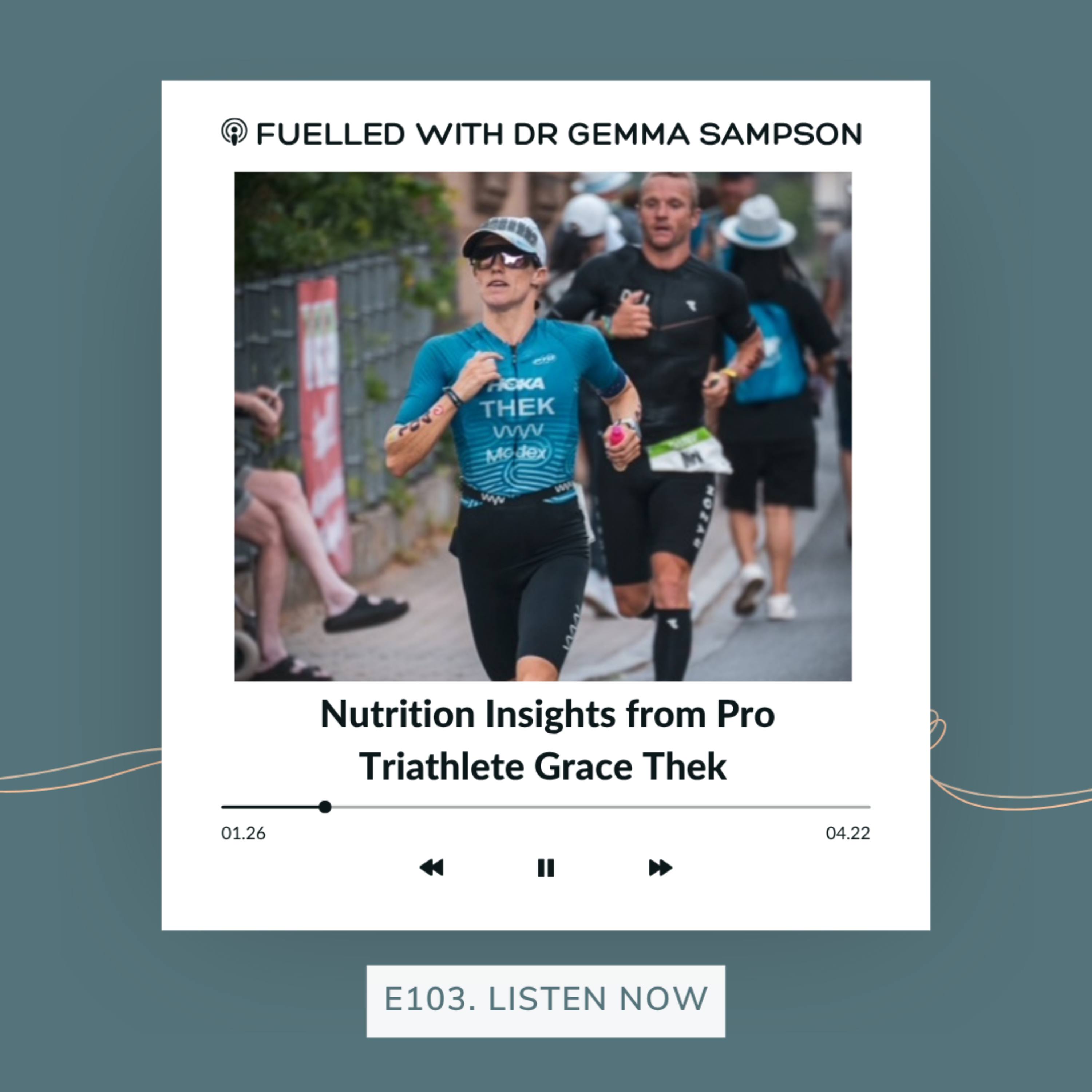
In this episode, I sit down with Australian pro triathlete Grace Thek to talk about her transition from middle distance to full distance triathlon. Grace recently made her debut at Challenge Roth, and she opens up about how her training and nutrition had to shift to meet the demands of racing long distance. She shares what it was like overcoming injuries, how she gradually built up her fueling strategy to hit 94 grams of carbs per hour, and why consistency was key to maintaining energy right through to the finish. We also chat about the lessons she’s learned along the way, the importance of practicing nutrition in training, and her advice for new triathletes — from enjoying the journey to being well-prepared on race day.
------
BECOME A FUELLED CYCLIST
🧰 Get your free Nutrition Assessment: https://www.gemmasampson.com/ceacq
⛽️ Join The Fuelled Team: https://www.gemmasampson.com/join
CONNECT WITH GEMMA
🌐 Website: https://www.gemmasampson.com
🎥 Youtube: www.youtube.com/@drgemmasampson
📸 Instagram: https://instagram.com/drgemmasampson
🎤 Podcast: https://www.gemmasampson.com/podcast/103
🚴 Strava: https://www.strava.com/athletes/5723475

In this episode, I unpack one of the most common phrases I hear from athletes and active individuals: “I don’t need it.” Whether it’s a short ride, an easy session, or a busy day, the assumption that fuelling isn’t necessary can come at a significant cost.
I share insights from years of working with clients who underfuel - not intentionally, but because they believe it’s the ‘right’ thing to do. From sugar cravings and poor sleep to stalled progress and mid-ride energy crashes, this episode explores the very real consequences of skimping on training nutrition.
You'll learn why eating less doesn’t always mean weight loss, how poor fuelling habits can sabotage your results, and why performance nutrition isn’t reserved for elite athletes. I also touch on the mental side of nutrition - the thought patterns and beliefs that often hold us back - and offer practical strategies for identifying and shifting them.
If you’ve ever skipped fuelling a ride thinking “I’ll be fine” or tried to save calories for later, this episode is for you. It’s a call to get curious, test different strategies, and understand what it’s really costing you when you say, “I don’t need it.”
Key Themes:
The hidden cost of underfuelling rides and training sessions
How fuelling habits affect energy, sleep, cravings and weight
Mindset myths that sabotage athletic performance
Real-world examples from client transformations
Why more food (not less) is often the key to progress
Strategies to test, track and rewire your fuelling approach
--
BECOME A FUELLED CYCLIST
🧰 Get your free Nutrition Assessment: https://www.gemmasampson.com/ceacq
⛽️ Join The Fuelled Team: https://www.gemmasampson.com/join
CONNECT WITH GEMMA
🌐 Website: https://www.gemmasampson.com
🎥 Youtube: www.youtube.com/@drgemmasampson
📸 Instagram: https://instagram.com/drgemmasampson
🎤 Podcast: https://www.gemmasampson.com/podcast/102
🚴 Strava: https://www.strava.com/athletes/5723475
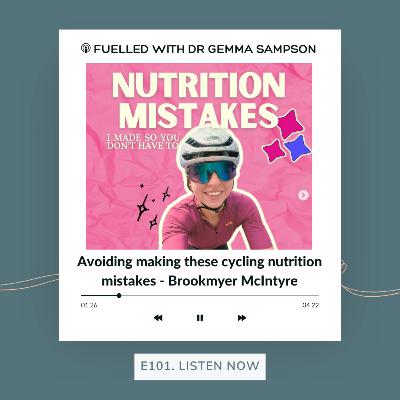
In this episode, I sit down with Brookmyer McIntyre, a dedicated cyclist and social media strategist, to delve into her experiences and learnings in the world of cycling and nutrition.
Brookmyer shares her journey from university rowing to cycling, discussing the pivotal moments and challenges she faced along the way. We explore her nutritional mistakes, the importance of proper fuelling, and the psychological aspects influencing diet and performance. Brookmyer sheds light on the transformation in her performance once she started to properly fuel her training, highlighting the significance of a balanced approach to food.
--
BECOME A FUELLED CYCLIST
🧰 Get your free Nutrition Assessment: https://www.gemmasampson.com/ceacq
⛽️ Join The Fuelled Team: https://www.gemmasampson.com/join
CONNECT WITH GEMMA
🌐 Website: https://www.gemmasampson.com
🎥 Youtube: www.youtube.com/@drgemmasampson
📸 Instagram: https://instagram.com/drgemmasampson
🎤 Podcast: https://www.gemmasampson.com/podcast/101
🚴 Strava: https://www.strava.com/athletes/5723475
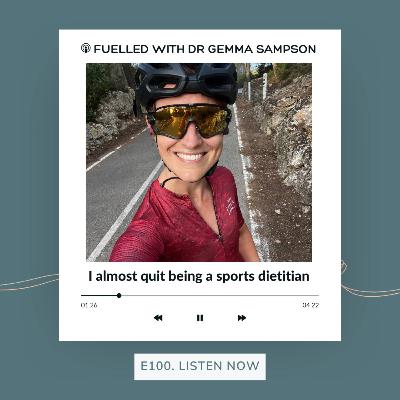
In this special 100th episode, I open up about a deeply personal moment — the time I nearly walked away from being a sports dietitian. It's easy to see success from the outside, but behind the scenes, we all face self-doubt, criticism, and burnout. I share the emotional rollercoaster of feeling like a failure, dealing with online negativity, and why I ultimately chose not to give up.
You'll also hear the honest truth about how much pressure we can put on ourselves when we tie our identity to our work, and how stepping back — even temporarily — can help us realign with our purpose.
I talk about managing ADHD, setting personal and professional boundaries, and the critical role of small, consistent actions over time — both in fuelling and in life. I reflect on the importance of vision, faith, and living in alignment with your values. Whether you're an athlete, health professional, or simply someone trying to keep moving forward when life feels overwhelming, this episode is a raw and real reminder that progress isn’t always linear.
Key Themes:
Burnout and navigating career doubt
The importance of small, sustainable changes
Setting boundaries with time and energy
The impact of ADHD on planning and productivity
Letting go of perfectionism and embracing vision
Fuelling for life, not just sport
Owning your values and showing up authentically
--
BECOME A FUELLED CYCLIST
🧰 Get your free Nutrition Assessment: https://www.gemmasampson.com/ceacq
⛽️ Join The Fuelled Team: https://www.gemmasampson.com/join
CONNECT WITH GEMMA
🌐 Website: https://www.gemmasampson.com
🎥 Youtube: www.youtube.com/@drgemmasampson
📸 Instagram: https://instagram.com/drgemmasampson
🎤 Podcast: https://www.gemmasampson.com/podcast/100
🚴 Strava: https://www.strava.com/athletes/5723475
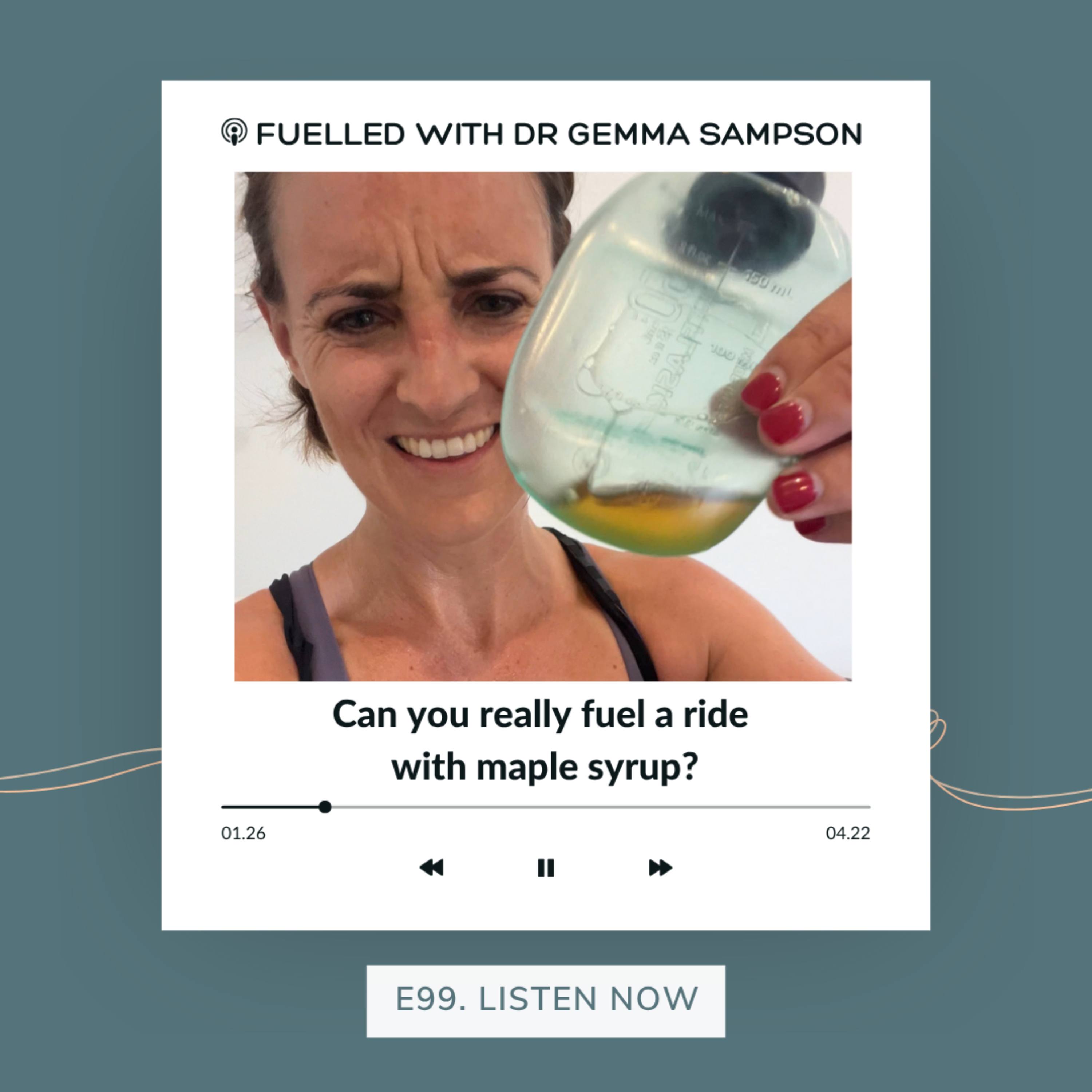
In this episode of Fuelled, I explore a surprisingly common question: can you use maple syrup to fuel your bike rides? While it may sound unorthodox, many cyclists are turning to whole food alternatives like maple syrup for quick, digestible carbohydrates during training or racing. I break down the numbers, look at serving sizes using soft flasks, and compare the carb content to energy gels.
You'll hear me walk through how to measure and transport maple syrup using sports flasks, what 90 grams of maple syrup looks like in millilitres, and how many carbs that translates to. I also delve into the practicality, cost, and taste factors that might make or break maple syrup as a fuelling strategy. Plus, I share my own plans to road-test this sticky fuel source on an upcoming ride.
If you're looking for alternative fuelling ideas that go beyond commercial gels and sports nutrition products, or you just want to geek out over fuelling strategies, you’ll enjoy this practical, no-nonsense deep dive. This episode also offers insights for anyone curious about managing fuelling costs and finding real-food options that fit your training and gut.
--
BECOME A FUELLED CYCLIST
🧰 Get your free Nutrition Assessment: https://www.gemmasampson.com/ceacq
⛽️ Join The Fuelled Team: https://www.gemmasampson.com/join
CONNECT WITH GEMMA
🌐 Website: https://www.gemmasampson.com
🎥 Youtube: www.youtube.com/@drgemmasampson
📸 Instagram: https://instagram.com/drgemmasampson
🎤 Podcast: https://www.gemmasampson.com/podcast/99
🚴 Strava: https://www.strava.com/athletes/5723475
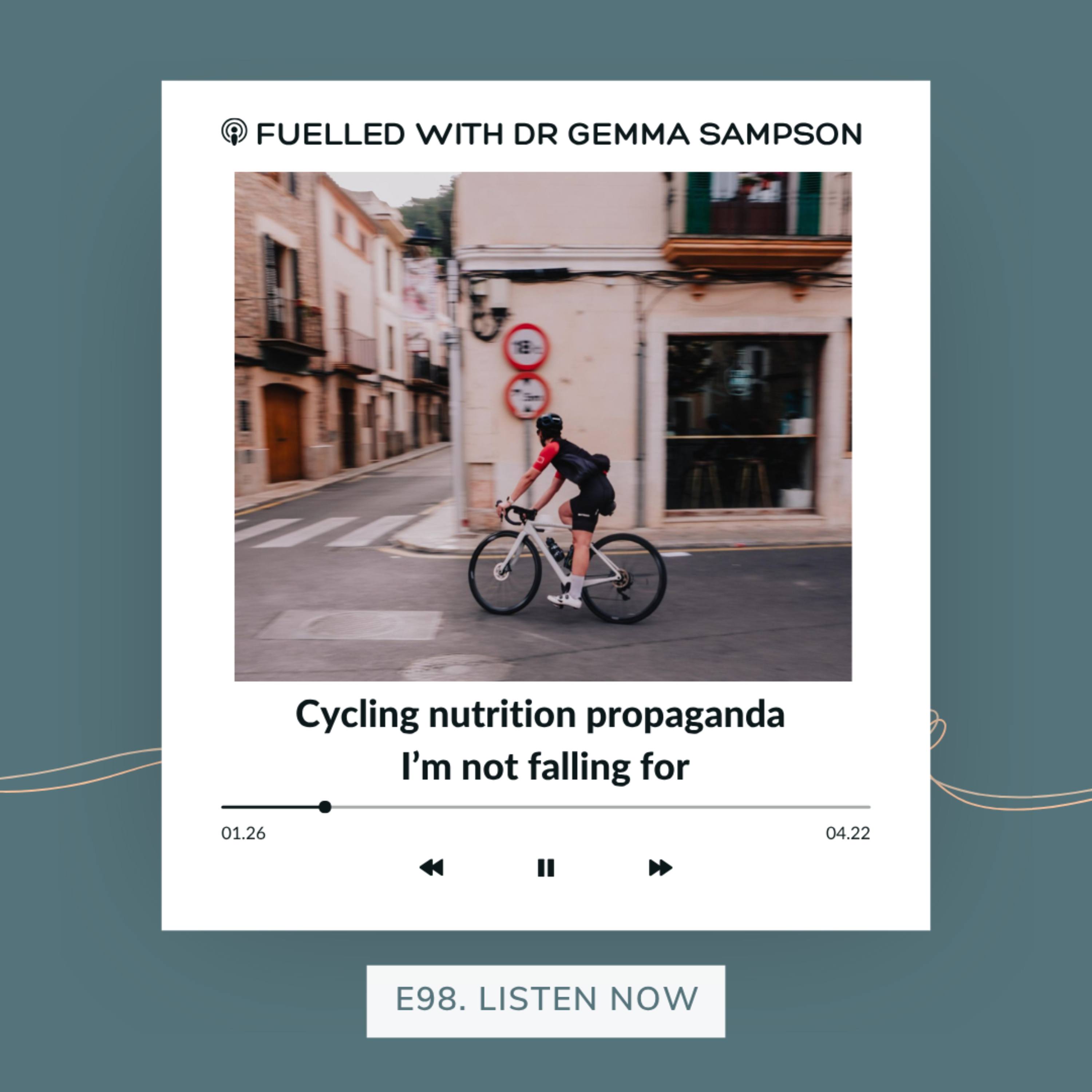
In this episode, I discuss the pivotal role of nutrition in cycling performance. I debunk common myths around cycling nutrition such as the necessity of extreme dieting, the demonization of sugar, and the misconception that weight loss always leads to better performance. I emphasize the importance of context-specific fuelling, the benefits of real food during slower rides, and the high costs of under-fuelling. I also highlight how appropriate nutrition can improve power output, body composition, health, and overall performance. The episode concludes with an invitation for you to join my cycling nutrition team for personalised guidance and resources.
---
BECOME A FUELLED CYCLIST
🧰 Get your free Nutrition Assessment: https://www.gemmasampson.com/ceacq
⛽️ Join The Fuelled Team: https://www.gemmasampson.com/join
CONNECT WITH GEMMA
🌐 Website: https://www.gemmasampson.com
🎥 Youtube: www.youtube.com/@drgemmasampson
📸 Instagram: https://instagram.com/drgemmasampson
🎤 Podcast: https://www.gemmasampson.com/podcast/98
🚴 Strava: https://www.strava.com/athletes/5723475

Comments

Download from Google Play

Download from App Store
 United States