


 Claim Ownership
Everyday Ayurveda with Kate
Subscribed: 24Played: 773
Subscribe

© Copyright 2025 Kate O’Donnell
Description
Welcome to Everyday Ayurveda, a podcast by Kate O’Donnell, renowned Ayurvedic practitioner, bestselling author, and founder of the Ayurvedic Living Institute. Join Kate as she demystifies the ancient wisdom of Ayurveda and translates it into practical, everyday practices for modern living.
In each episode, Kate shares her deep knowledge and personal experiences from over two decades of studying Ayurveda in India. Whether you’re new to Ayurveda or a seasoned practitioner, you’ll discover valuable insights on diet, lifestyle, self-care, and holistic health.
Everyday Ayurveda is your go-to resource for integrating the timeless principles of Ayurveda into your daily routine, fostering a life of balance, health, and happiness. Subscribe now and start your journey towards radiant well-being with Kate O’Donnell.
Listen, learn, and transform with Everyday Ayurveda – because true health begins with the choices we make every day.
In each episode, Kate shares her deep knowledge and personal experiences from over two decades of studying Ayurveda in India. Whether you’re new to Ayurveda or a seasoned practitioner, you’ll discover valuable insights on diet, lifestyle, self-care, and holistic health.
Everyday Ayurveda is your go-to resource for integrating the timeless principles of Ayurveda into your daily routine, fostering a life of balance, health, and happiness. Subscribe now and start your journey towards radiant well-being with Kate O’Donnell.
Listen, learn, and transform with Everyday Ayurveda – because true health begins with the choices we make every day.
77 Episodes
Reverse

If spring feels heavier than it should — slow digestion, morning congestion, low appetite, a persistent heaviness you can’t quite name — Ayurveda has a precise and practical explanation for what’s happening.
In Episode 77, Kate O’Donnell goes deep on Kapha season: the Ayurvedic name for the late-winter-into-spring transition when excess moisture in the body starts moving, filling the cavities of the stomach, throat, lungs, and sinuses. This is not a malfunction. It’s biology. And once you understand it, you have real tools to work with.
This solo episode covers:
The Ayurvedic science of spring: how cold and dry winter conditions create excess mucus, and why the seasonal thaw causes it to move through the body
The primary seats of Kapha Dosha — stomach, mouth, throat, lungs, sinuses — and how each signals imbalance in spring
The ginger-cumin water remedy: how to make it, why it works, and how to sip it throughout the day
Ginger, lemon, and honey: the spring tonic Kate returns to every year and why Ayurveda insists on raw honey
Nasya oil: how to use it in spring, when to skip it, and what to do instead if sinuses are congested
Movement practices that mobilize lymph, with specific attention to the armpits and upper body
Spring grains to favor: barley, millet, corn, buckwheat — and why oats and wheat tend to compound the problem
Legumes as detox allies: mung beans, black beans, white beans, and why Kate reaches for them consistently this time of year
What to reduce: cold drinks, heavy oils, daytime napping, wheat, dairy, meat, fried food, and sweets
Pungent, bitter, and astringent foods — what they are, why they help, and easy ways to include them
The most important single spring habit: not eating when you’re not hungry
Kate also offers an important note of nuance: these recommendations are seasonal medicine for those experiencing seasonal imbalance. If you feel great, that means your constitution is managing the transition beautifully. These tools are remedies, not obligations.
Resources mentioned:
Everyday Ayurveda Cookbook by Kate O’Donnell
Everyday Ayurveda Cooking for a Calm, Clear Mind by Kate O’Donnell
Nasya oil: link in show notes
healwithkate.org for personalized seasonal support
Health Disclaimer: The information shared on Everyday Ayurveda with Kate is for educational purposes only and is not a substitute for medical advice, diagnosis, or treatment. Always consult a qualified healthcare provider before making changes to your diet, supplements, or wellness routine.
Spring Cleanse: https://ayurvedicliving.institute/kitchari-cleanse-ayurveda-spring
Connect with Kate: https://www.healwithkate.org
Ayurvedic Living Institute Membership: https://ayurvedicliving.institute/membership
Women's Health Collection: https://courses.ayurvedicliving.institute/collections/womens-healthhttps://courses.ayurvedicliving.institute/products/courses/copy-of-fall-community-cleanse-2024
Thanks to our Sponsor: Banyan Botanicals
Banyan Botanicals: https://glnk.io/kovw3/kate
Bitter and Bold: https://glnk.io/kovw3/kate1x5
Chyavanprash Herbal Jam: https://glnk.io/kovw3/kate5xi
Save 15% with code WINTERWITHKATE

This week, Kate welcomes Vedic astrologer Kaya Mindlin for a one-of-a-kind episode: a full tour of the Vedic solar year, month by month, through the lens of health and Ayurveda. Kaya has spent 25 years studying the Vedic wisdom traditions — Jyotisha (the “eye of the Vedas”), yoga therapy, Vedic scripture, and Ayurveda — and brings a rare combination of depth and practical accessibility to everything she teaches.
In Jyotisha, the sun rules health and vitality. As it moves through the 12 signs of the zodiac, it illuminates a different region of the body — from the head in Aries all the way down to the feet in Pisces. Each solar month offers specific guidance on what to cultivate, what to protect, and how to live in alignment with the patterns already built into the cosmos.
Kate brings her deep Ayurvedic knowledge to each month, layering in herbs, body care practices, and seasonal wisdom at every turn. This is a conversation that rewards taking notes — and one you will return to throughout the year.
What We Cover
The Vedic New Year and why it begins in mid-April, not January 1st
How the sun’s movement through the zodiac maps the human body from head to feet
Aries season: courage, initiation, and the best time to start new health habits
Taurus season: beauty, food, family, and reverence for the earth
Gemini season: healing hands, communication, ear care, and sexuality
Cancer season: home, heart, emotional health, and gut healing
Leo season: vitality, heart health, creativity, and brain-supporting herbs
Virgo season: digestion, daily habits, simplicity, and fall cleansing
Libra season: balance, hormones, the kidneys, and not too much or too little
Scorpio season: secrets, release, the colon, and deep inner work
Sagittarius season: aiming before leaping, wise counsel, and why January resolutions fail
Capricorn season: structure, strategy, and patiently implementing good habits
Aquarius season: healing innovations, hair and nail care, and community healing
Pisces season: purification, rest, ritual, foot care, and the end of the solar year
Take-Home Practices
Note which solar month you are currently in and focus your self-care accordingly
Use the first half of January for contemplation and vision before acting on your resolutions
Try ear oiling during Gemini season (mid-June to mid-July)
Tend to the chest and emotional health during Cancer season (mid-July to mid-August)
Simplify your diet and daily habits during Virgo season (mid-September to mid-October)
Oil your feet nightly during Pisces season (mid-March to mid-April) and reflect on the year
Guest Links
Website: https://yogawithkaya.com/
Nectar of Time Program - monthly Vedic Astrology Forecasts, Rituals and Sacred Stories: https://yogawithkaya.com/nectar-of-time-membership/
***10% Off Any Program with Kaya for Listeners with the coupon code: everydayayurveda10***
Private Vedic Astrology Consults: https://www.jyotishresolution.com/
Call to Action
If this episode reframes how you move through the year, subscribe to Everyday Ayurveda with Kate and share it with someone who needs a new framework for seasonal health. For deeper support, visit healwithkate.org.
Spring Cleanse: https://ayurvedicliving.institute/kitchari-cleanse-ayurveda-spring
Connect with Kate: https://www.healwithkate.org
Ayurvedic Living Institute Membership: https://ayurvedicliving.institute/membership
Women's Health Collection: https://courses.ayurvedicliving.institute/collections/womens-healthhttps://courses.ayurvedicliving.institute/products/courses/copy-of-fall-community-cleanse-2024
Thanks to our Sponsor: Banyan Botanicals
Banyan Botanicals: https://glnk.io/kovw3/kate
Bitter and Bold: https://glnk.io/kovw3/kate1x5
Chyavanprash Herbal Jam: https://glnk.io/kovw3/kate5xi
Save 15% with code WINTERWITHKATE

One of the most common questions Kate hears no matter where she’s teaching in the world: How much food should I eat? Her answer is deeply Ayurvedic — it depends on your body, your season, your activity, and the density of what’s on your plate. In this solo episode, Kate delivers a practical, body-based framework grounded in ancient Ayurvedic nutrition principles.
What You’ll Learn:
The cupped-hands (anjali) portion guide from the ancient texts
How body type, season, and daily activity affect how much you need
Dense vs. light foods — and why the balance determines satisfaction
How the six tastes of Ayurveda create true, lasting fullness
The burp signal: your stomach’s built-in fullness cue
The four-hour meal experiment to calibrate your natural hunger
Why multitasking while eating makes it harder to know when you’re full
How density needs shift during perimenopause and as we age
Take-Home Practices:
Cup your hands together and use that bowl as a rough portion reference
Build each meal around dense foods, then balance with lighter elements
Aim for all six tastes: sweet, sour, salty, pungent, bitter, astringent
After a natural burp during a meal, pause and check in with your body
Run the four-hour experiment — track how long each meal sustains you
RESOURCES
healwithkate.org
HEALTH DISCLAIMER
The information shared on Everyday Ayurveda with Kate is for educational purposes only and is not a substitute for medical advice, diagnosis, or treatment. Always consult a qualified healthcare provider before making changes to your diet or wellness routine.
Spring Cleanse: https://ayurvedicliving.institute/kitchari-cleanse-ayurveda-spring
Connect with Kate: https://www.healwithkate.org
Ayurvedic Living Institute Membership: https://ayurvedicliving.institute/membership
Women's Health Collection: https://courses.ayurvedicliving.institute/collections/womens-healthhttps://courses.ayurvedicliving.institute/products/courses/copy-of-fall-community-cleanse-2024
Thanks to our Sponsor: Banyan Botanicals
Banyan Botanicals: https://glnk.io/kovw3/kate
Bitter and Bold: https://glnk.io/kovw3/kate1x5
Chyavanprash Herbal Jam: https://glnk.io/kovw3/kate5xi
Save 15% with code WINTERWITHKATE
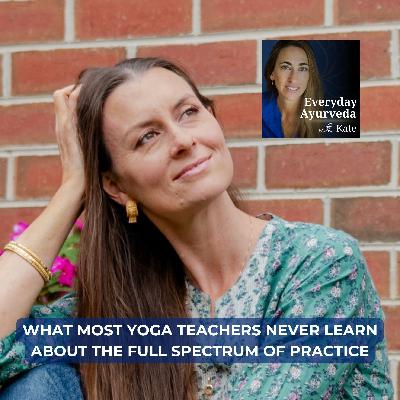
What happens when yoga becomes more than postures? In this conversation, Kate O'Donnell is joined by Amy Landry, Australian yoga teacher, classical Odissi dancer, Ayurveda practitioner, and author of the forthcoming book The Ocean of Yoga. Together they explore what it means to walk yoga as a full spiritual path rather than a fitness practice.
Amy shares her rare journey through India's sacred arts, studying Odissi classical dance in Orissa, deepening in Ayurveda, and eventually channeling years of study and teaching into a book designed to give practitioners the broad, cohesive foundation most yoga trainings don't provide.
What We Cover
How Odissi classical dance and yoga are expressions of the same liberatory practice
Why Amy believes the yoga industry leaves practitioners craving more depth
The dissolution of self as the highest aim in both dance and yoga
How to find spiritual depth without a formal teacher
Why your yoga practice should change with the seasons of your life
Reading traditional yoga texts alongside multiple translations
Setting sunrise, midday, and sunset alarms as a simple spiritual practice
How Amy wrote her book while breastfeeding and adapting to motherhood
Ayurvedic morning and evening rhythms Amy weaves into daily life
What the Ocean of Yoga offers practitioners and teachers beyond asana
About Amy Landry
Amy Landry is an Australian yoga teacher, classical Odissi dancer, Ayurveda practitioner, and the author of The Ocean of Yoga, published by Shambhala Publications (March 31). She has spent decades studying in India across multiple traditions, including Odissi dance at a traditional school in Orissa, and holds a diploma in Ayurveda. She currently teaches yoga and leads an online 300-hour teacher training in Melbourne.
Website: https://amyelandry.com/oceanofyoga/
Podcast: https://open.spotify.com/show/00uecEGOZwCLAs9V9q6Gfp?si=d26499131bc74b1f
Book: The Ocean of Yoga — available March 31
Take-Home Practices
Set alarms for sunrise, midday, and sunset — use each moment to pause and return to presence
Begin reading a traditional yoga text alongside two or three different translations
Lie on your left side for one to two minutes before rising to stimulate digestion
Allow your yoga practice to shift with your season of life rather than forcing consistency
Weave ritual into daily life rather than keeping spiritual practice confined to the mat
Relevant Links
The Ocean of Yoga by Amy Landry — Shambhala Publications, March 31
Pre-order bonus: Free mini course with all pre-orders before March 31
Kate O'Donnell: healwithkate.org
Everyday Ayurveda with Kate: available on all major podcast platforms
Call to Action
If this conversation sparked something in your practice, subscribe to Everyday Ayurveda with Kate and share it with a yoga teacher or student in your life. To explore Ayurveda support, visit healwithkate.org.
Health Disclaimer
The information shared on Everyday Ayurveda with Kate is for educational purposes only and is not a substitute for medical advice, diagnosis, or treatment. Always consult a qualified healthcare provider before making changes to your diet, supplements, or wellness routine.
Spring Cleanse: https://ayurvedicliving.institute/kitchari-cleanse-ayurveda-spring
Connect with Kate: https://www.healwithkate.org
Ayurvedic Living Institute Membership: https://ayurvedicliving.institute/membership
Women's Health Collection: https://courses.ayurvedicliving.institute/collections/womens-healthhttps://courses.ayurvedicliving.institute/products/courses/copy-of-fall-community-cleanse-2024
Thanks to our Sponsor: Banyan Botanicals
Banyan Botanicals: https://glnk.io/kovw3/kate
Bitter and Bold: https://glnk.io/kovw3/kate1x5
Chyavanprash Herbal Jam: https://glnk.io/kovw3/kate5xi
Save 15% with code WINTERWITHKATE

Every week, a new wellness trend goes viral. Every month, someone tells you what to eat, when to exercise, and which supplements you're missing. And somehow, after all that information, you feel less certain about your health than ever.
In this solo episode, Kate O'Donnell names what's happening — and she calls it the hive mind. It's the way social media algorithms, trending health content, and urgency-driven information push us away from our own bodies rather than toward them.
Drawing on 25 years of Ayurvedic practice, Kate offers a grounding alternative: the ancient, individualized framework that asks not "what does everyone say?" but "what does this body need, right now, in this season of life?"
What We Cover:
How social media algorithms build a wellness hive mind — and why it's designed to make you anxious
Why trending health advice (cold plunges, protein loading, perimenopause supplements) may not be right for your specific body
The Ayurvedic framework of four lenses: time of life, time of day, time of year, and habituation
Why "shoulding" yourself is the enemy of real, lasting wellness
The 15-minute morning awareness practice that costs nothing and changes everything
How Ayurveda's 20 qualities give you a personal language for understanding your own body
A preview of an upcoming episode on blood work: do we actually need it?
Health Disclaimer: The information shared on Everyday Ayurveda with Kate is for educational purposes only and is not a substitute for medical advice, diagnosis, or treatment. Always consult a qualified healthcare provider before making changes to your diet, supplements, or wellness routine.
Spring Cleanse: https://ayurvedicliving.institute/kitchari-cleanse-ayurveda-spring
Connect with Kate: https://www.healwithkate.org
Ayurvedic Living Institute Membership: https://ayurvedicliving.institute/membership
Women's Health Collection: https://courses.ayurvedicliving.institute/collections/womens-healthhttps://courses.ayurvedicliving.institute/products/courses/copy-of-fall-community-cleanse-2024
Thanks to our Sponsor: Banyan Botanicals
Banyan Botanicals: https://glnk.io/kovw3/kate
Bitter and Bold: https://glnk.io/kovw3/kate1x5
Chyavanprash Herbal Jam: https://glnk.io/kovw3/kate5xi
Save 15% with code WINTERWITHKATE

Is your makeup toxic? Beauty industry insider Laura Olson—who spent decades writing product labels for major luxury brands—reveals what clean beauty actually means, why "fragrance" is the biggest red flag, and how to navigate greenwashing and health-washing. Learn which apps help you shop safer (Yuka, EWG Skin Deep), which stores you can trust (Credo), and which ingredients to avoid (parabens, sulfates, nano zinc). Laura shares her honest approach: she still uses conventional hair gel because no clean version works, but prioritizes clean products for eyes, lips, and daily use. Discover how to balance effectiveness with safety, why beauty regulations are stuck in 1938, and how to enjoy products for fun without falling for industry manipulation.
Key Timestamps
[00:00] - Introduction: Questions about clean beauty
[03:00] - Laura's background as beauty editor and copywriter
[06:00] - How yoga changed everything
[09:00] - What "clean beauty" actually means (unregulated)
[12:00] - Major ingredient offenders: sulfates, parabens, fragrance
[18:00] - Why "fragrance" is the biggest red flag
[21:00] - Apps and resources: Yuka, EWG Skin Deep
[27:00] - Trusted stores and brands: Credo, Beautycounter
[33:00] - The effectiveness problem: when clean products don't work
[38:00] - Beauty regulations stuck in 1938
[42:00] - How copywriters use language to mislead
[45:00] - Nail polish and acetone
[48:00] - Where products touch your body matters
[50:00] - Treats versus daily rituals
[53:00] - Industry manipulation and women's insecurities
[55:00] - Rapid fire questions
Find Laura on IG: https://www.instagram.com/lauraannolson/
Spring Cleanse: https://ayurvedicliving.institute/kitchari-cleanse-ayurveda-spring
Connect with Kate: https://www.healwithkate.org
Ayurvedic Living Institute Membership: https://ayurvedicliving.institute/membership
Women's Health Collection: https://courses.ayurvedicliving.institute/collections/womens-healthhttps://courses.ayurvedicliving.institute/products/courses/copy-of-fall-community-cleanse-2024
Thanks to our Sponsor: Banyan Botanicals
Banyan Botanicals: https://glnk.io/kovw3/kate
Bitter and Bold: https://glnk.io/kovw3/kate1x5
Chyavanprash Herbal Jam: https://glnk.io/kovw3/kate5xi
Save 15% with code WINTERWITHKATE

 1
1Broadcasting from South India, Kate talks with her partner Rich Ray about the hidden pitfalls of learning Eastern spiritual traditions. They explore why so many of us turn spiritual teachings into self-judgment, how to recognize karmic conditioning without shame, and what Buddhist practice actually looks like when you stop chasing spiritual highs. This is an honest, grounded conversation about duality, ego, Maya, and the surprisingly simple path toward acceptance. If you've ever felt like you're doing spirituality wrong, this episode offers a compassionate reset.
What We Cover
Why we use spiritual teachings against ourselves
The concept of Maya and how it creates confusion for Western seekers
Rich's journey from spiritual highs to four years in silent Zen practice
How ego conditioning keeps us feeling like we're doing it wrong
The trap of believing you need to fix yourself before you can practice
Cultural context and why Eastern philosophy feels disorienting for Westerners
What it means to start where you are without changing anything
How Ayurveda becomes an awareness practice that carves out spiritual relationship
The first real step: being with yourself instead of judging yourself
Guest Bio: Rich Ray
Rich Ray is a longtime Zen Buddhist practitioner who spent four years living in silence at a meditation center. He is trained in awareness practice, karmic conditioning, and contemplative psychology. Rich has studied with Cheri Huber and continues to support practitioners in recognizing and working with ego patterns, duality, and suffering. He lives with Kate in the Berkshires and co-leads retreats integrating Ayurvedic and Buddhist wisdom.
Take Home Practices
Pause throughout your day and notice how you feel without judging it
Practice observing your karmic patterns with kindness instead of criticism
Don't try to fix yourself—just be with yourself
Read Start Where You Are by Pema Chödrön
Notice when you're using busyness to avoid awareness
Use simple Ayurvedic practices as a gateway to self-awareness
Relevant Links
Pema Chödrön: Start Where You Are
Cheri Huber and Living Compassion
Kate O'Donnell: healwithkate.org
Call to Action
If this conversation resonates, subscribe to Everyday Ayurveda with Kate and share it with someone navigating their own spiritual questions. To explore deeper support for integrating Ayurvedic awareness into daily life, visit healwithkate.org.
Health Disclaimer
The information shared on Everyday Ayurveda with Kate is for educational purposes only and is not a substitute for medical advice, diagnosis, or treatment. Always consult a qualified healthcare provider before making changes to your diet, supplements, or wellness routine.
Spring Cleanse: https://ayurvedicliving.institute/kitchari-cleanse-ayurveda-spring
Connect with Kate: https://www.healwithkate.org
Ayurvedic Living Institute Membership: https://ayurvedicliving.institute/membership
Women's Health Collection: https://courses.ayurvedicliving.institute/collections/womens-healthhttps://courses.ayurvedicliving.institute/products/courses/copy-of-fall-community-cleanse-2024
Thanks to our Sponsor: Banyan Botanicals
Banyan Botanicals: https://glnk.io/kovw3/kate
Bitter and Bold: https://glnk.io/kovw3/kate1x5
Chyavanprash Herbal Jam: https://glnk.io/kovw3/kate5xi
Save 15% with code WINTERWITHKATE

Feeling bloated, constipated, or constantly cold this winter? Your body is telling you it needs different foods. In this solo episode, Kate breaks down the Ayurvedic approach to winter eating—what to embrace, what to avoid, and why seasonal nutrition matters more than you think.
You'll Learn:
Why cold, dry weather changes your digestion
Signs your body needs warming, moistening foods
The best grains, oils, and spices for winter (and what to skip)
How to fix winter bloating and constipation through food
Why fermented foods and citrus are winter game-changers
The truth about wheat, sourdough, and gluten in Vata season
Quick Wins:
✓ Swap salads for steamed vegetables with ghee
✓ Add tahini to your morning toast
✓ Try baked grapefruit with honey
✓ Cook with warming spices (ginger, cumin, turmeric)
✓ Drink licorice tea for dry lungs and intestines
Resources:
Kate's cookbooks available at healwithkate.org
Subscribe for weekly Ayurvedic wisdom and share with someone who needs winter food guidance.
Health Disclaimer
The information shared on Everyday Ayurveda with Kate is for educational purposes only and is not a substitute for medical advice, diagnosis, or treatment. Always consult a qualified healthcare provider before making changes to your diet, supplements, or wellness routine.
Spring Cleanse: https://ayurvedicliving.institute/kitchari-cleanse-ayurveda-spring
Connect with Kate: https://www.healwithkate.org
Ayurvedic Living Institute Membership: https://ayurvedicliving.institute/membership
Women's Health Collection: https://courses.ayurvedicliving.institute/collections/womens-healthhttps://courses.ayurvedicliving.institute/products/courses/copy-of-fall-community-cleanse-2024
Thanks to our Sponsor: Banyan Botanicals
Banyan Botanicals: https://glnk.io/kovw3/kate
Bitter and Bold: https://glnk.io/kovw3/kate1x5
Chyavanprash Herbal Jam: https://glnk.io/kovw3/kate5xi
Save 15% with code WINTERWITHKATE

Have you ever wondered what your dosha is? You're not alone—but that question might be keeping you stuck.
In this groundbreaking conversation, Kate sits down with Arjita Sethi—serial entrepreneur, TEDx speaker, and founder of Shanti, an AI-powered wellness platform that's revolutionizing how we access Ayurvedic wisdom. Arjita shares her remarkable journey from childhood illness to Silicon Valley burnout to postpartum healing, and how each crisis brought her back to the Ayurvedic roots planted by her grandmother.
This episode tackles one of Ayurveda's stickiest problems: our obsession with finding our dosha. Arjita explains why understanding your vikriti (current state of imbalance) matters far more than your prakriti (constitutional type), and how this shift in perspective makes Ayurveda accessible to everyone—no certification required.
She walks us through her incredible 90-day postpartum recovery protocol (which brought her hemoglobin from 4 to 11.5 in one week), explains how she's training an AI brain on Ayurvedic knowledge, and shares why Ayurveda isn't about being a purist—it's about meeting yourself where you are and taking one step closer to your center.
If you've ever felt confused by dosha quizzes, overwhelmed by Ayurveda's complexity, or curious about how AI might make ancient wisdom more accessible, this conversation will change everything.
What We Cover
Arjita's childhood healing journey from a tapeworm in her brain and wrong medications
How her grandmother practiced Ayurveda without clocks—reading the sky for circadian rhythm
The Silicon Valley burnout that happened despite running half marathons and doing 'all the right things'
Why the same green smoothie works for her Pitta husband but not for her Vata constitution
The difference between prakriti (your constitution) and vikriti (your current imbalance)
Why we've become martyrs to our dosha—and why that's the wrong approach
The complete 90-day postpartum recovery protocol that healed Arjita after traumatic birth
What her mother fed her to bring hemoglobin from 4 to 11.5 in one week
The importance of jaggery, ginger, and warming foods for postpartum healing
Why asking for help isn't weakness—it's essential for healing
How Shaanti's AI platform works: training a brain on Ayurvedic studies
Why you don't need to know your dosha to start practicing Ayurveda
The three essentials: breath, sleep, eat—start here
How to assess your vikriti every three months or when life changes
Why Ayurveda can include modern practices like Pilates and Lion's Mane
How epigenetics proves we're not bound by hereditary fate
The power of documenting grandmother wisdom before it's lost
Morning mantra practices tied to days of the week
How AI can give us time back for what matters—sun, family, rest
Guest Bio: Arjita Sethi
Arjita Sethi is a serial entrepreneur, TEDx speaker, and recognized leader at the intersection of AI and wellness. Originally from India and now based in San Francisco, Arjita has spent over a decade in the AI space, starting before machine learning became mainstream.
Raised by a grandmother deeply versed in Vedic and Ayurvedic studies, Arjita grew up immersed in practices like meditation, yoga, and circadian living—though she didn't realize this wasn't 'normal' until much later. After recovering from childhood illness through Ayurveda, co-founding a successful vocational school with her mother, and experiencing Silicon Valley burnout, she returned to her roots during the pandemic.
Arjita founded Shaanti, an AI-powered wellness platform that makes Ayurvedic wisdom accessible without overwhelming complexity. By training an AI brain on Ayurvedic studies and combining it with personalized vikriti assessments, she's helping people make wellness decisions aligned with their current season of life—not just their dosha.
She holds certifications in Ayurvedic health practice, is a certified manual therapist with a background in physical therapy, and practices Kundalini yoga. Arjita is also an advocate for women in technology and runs a virtual school teaching AI skills to entrepreneurs.
Website: findshaanti.com
Instagram: @arjitasethico
Key Concepts Explained
Prakriti: Your natural constitution or body type—essentially your elemental DNA. This is what most people think of when they hear 'dosha,' but it's only part of the picture.
Vikriti: Your current state of imbalance—where you are TODAY based on life circumstances, stress, season, age, and health. This is what you actually need to address for healing.
Season of Life: The concept that your body changes based on what you're going through—whether you're fundraising versus post-funding, child sick at school versus family vacation, perimenopause versus postpartum. Same person, different needs.
AI Brain Training: The process of feeding publicly available Ayurvedic studies and traditional knowledge into an artificial intelligence system so it can provide personalized recommendations based on your prakriti and vikriti.
Take Home Practices
Stop obsessing over your dosha—focus on where you are TODAY (your vikriti)
Start with the three essentials: breath, sleep, eat
Breathe from your diaphragm, not just chest breathing (fight or flight indicator)
Eat the most colorful, fresh food you can—better than any takeout regardless of dosha
Assess your vikriti every three months or when life circumstances change
Ask yourself: How far am I from my center? Then take one step closer
Don't try to turn your life around overnight—small changes stick
Build a tribe and community—asking for help is strength, not weakness
Try warm water with salt, turmeric, and black pepper first thing in the morning
Create evening wind-down rituals with mantras, soft lighting, family time
Remember: Ayurveda has no rigid rules—it meets you where you are
You don't need to be a purist—Pilates, Lion's Mane, modern life can integrate
Document wisdom from elders before it's lost (interview your grandmother!)
Use AI to handle busy work so you can sit in the sun with your baby
Postpartum Recovery Protocol (Highlights)
Arjita shares her mother's 90-day postpartum healing plan that brought her hemoglobin from 4 to 11.5 in one week:
First 40 Days - Focus: Healing
Daily massage with sesame and coconut oil for grounding high Vata
Warming, grounding, easily digestible foods
Leafy vegetable pancakes, fiber-rich foods
Peanut chutney and other warming chutneys
No non-vegetarian foods (hard to digest protein)
Focus on sweet, salty, sour tastes—avoid astringent and bitter
JAGGERY in everything (restored iron levels)
Lots of GINGER
Nutmeg for sleep and anxiety
No garlic, no onion, no rajasic foods
Quinoa, dal, warm cooked foods (no raw or sprouted)
Next 1.5-2 Months - Focus: Restoring Nutrition
Building back vitamins and minerals given to baby
Continued focus on warming, nourishing foods
Lots of different types of peppers for warmth and digestion
Pelvic floor therapy alongside Ayurvedic protocol
Western medicine continued (painkillers, vitamins, therapy)—not either/or
Resources & Links Mentioned
Shaanti Platform: findshaanti.com
Take the prakriti and vikriti quiz
Get AI-powered personalized recommendations
Access daily 5-minute practices (real videos, not AI-generated)
Vikriti assessment every 3 months or as needed
Kripalu Center - Where Arjita took her health practitioner certification
Kundalini Yoga programs (mentioned as part of her healing journey)
Call to Action
If this conversation helped you stop obsessing over dosha quizzes and start focusing on where you are TODAY, please subscribe to Everyday Ayurveda with Kate and share this episode. To explore Arjita's AI-powered Ayurveda platform, visit findshanti.com. For more support with Ayurvedic living, visit healwithkate.org.
Health Disclaimer
The information shared on Everyday Ayurveda with Kate is for educational purposes only and is not a substitute for medical advice, diagnosis, or treatment. Always consult a qualified healthcare provider before making changes to your diet, supplements, or wellness routine.
Spring Cleanse: https://ayurvedicliving.institute/kitchari-cleanse-ayurveda-spring
Connect with Kate: https://www.healwithkate.org
Ayurvedic Living Institute Membership: https://ayurvedicliving.institute/membership
Women's Health Collection: https://courses.ayurvedicliving.institute/collections/womens-healthhttps://courses.ayurvedicliving.institute/products/courses/copy-of-fall-community-cleanse-2024
Thanks to our Sponsor: Banyan Botanicals
Banyan Botanicals: https://glnk.io/kovw3/kate
Bitter and Bold: https://glnk.io/kovw3/kate1x5
Chyavanprash Herbal Jam: https://glnk.io/kovw3/kate5xi
Save 15% with code WINTERWITHKATE

Where does your ashwagandha really come from? Tyler Wauters, VP of Herbal Affairs at Banyan Botanicals and Director of Banyan Farm, shares the truth about ethical herb sourcing, sustainable farming, and what happens when wellness trends commodify plants. Learn what organic, fair trade, and regenerative certifications actually mean, discover bioregional Ayurveda and analog herbs, and get practical steps for becoming a conscious consumer who knows the story of what's in their medicine cabinet.
Key Timestamps
[00:00] - Introduction: The problem with trending herbs
[04:00] - Tyler's journey from fish farmer to wildcrafter to Banyan
[09:00] - What is bioregional Ayurveda?
[12:00] - Analog herbs and criteria for substitution
[18:00] - Chemical ecology: How plants change based on environment
[23:00] - Banyan Farm as research facility
[27:00] - 30 years of relationships with Indian suppliers
[32:00] - Organic vs. Regenerative Organic vs. Fair Trade
[38:00] - What happens when ashwagandha trends
[43:00] - How to be a conscious consumer
[49:00] - Action steps: research, relationships, local + global
[54:00] - The Living Ayurveda internship
[56:00] - Rapid fire questions
Tyler is the VP of Herbal Affairs at Banyan Botanicals, Director at Banyan Farm, a place-based herbalist, Ayurvedic practitioner, and founder of Hawthorn Institute.
He grew up amongst the weeping willows and cattails. A lifelong naturalist and plant enthusiast, Tyler has dedicated his life to the practices of bioregional Ayurveda and place-based herbalism. Tyler began teaching in 2008 and brings his passion and knowledge into everything he shares. His intention is to ignite deeper connections to place, people, and plants through the lens of stewardship and reciprocity.Tyler has studied with Vasant Lad, MASc, Dr. Claudia Welch, Sonia Masocco, Isla Burgess, 7song, and Frank Cook. He thanks all of his mentors for sharing life's wisdom.
Related Episodes
Episode 67: The Ayurvedic Guide To Building Immunity And Staying Healthy This Winter
Episode 62: How To Rewild Your Daily Life And Feel More Grounded This Winter with Micah Mortali
Any episodes on digestion, seasonal eating, or Ayurvedic lifestyle
Spring Cleanse: https://ayurvedicliving.institute/kitchari-cleanse-ayurveda-spring
Connect with Kate: https://www.healwithkate.org
Ayurvedic Living Institute Membership: https://ayurvedicliving.institute/membership
Women's Health Collection: https://courses.ayurvedicliving.institute/collections/womens-healthhttps://courses.ayurvedicliving.institute/products/courses/copy-of-fall-community-cleanse-2024
Thanks to our Sponsor: Banyan Botanicals
Banyan Botanicals: https://glnk.io/kovw3/kate
Bitter and Bold: https://glnk.io/kovw3/kate1x5
Chyavanprash Herbal Jam: https://glnk.io/kovw3/kate5xi
Save 15% with code WINTERWITHKATE

Did you notice how many people got sick over the holidays this year? In this solo episode, Kate breaks down the Ayurvedic perspective on immunity—and it might surprise you.
Instead of focusing on antibodies and white blood cell counts, Ayurveda teaches us about Ojas—the "nutrient cream of the body" that creates resilience and protects tissues against pathogens. Kate explains why moisture is the foundation of immunity, especially in dry winter months, and why conventional approaches like green juices and cold smoothies might actually be working against you during this season.
This episode is packed with practical, actionable tools you can implement immediately: from nasal oiling and warm milk tonics to turmeric honey and skin massage protocols. Kate walks you through exactly how to create a protective barrier—both internally and externally—that keeps you robust, refreshed, and resilient all winter long.
If you're tired of getting sick every season, or if you're looking for a deeper understanding of what true immunity means, this episode offers ancient wisdom with modern application.
What We Cover
What Ojas is and why it's the foundation of immunity in Ayurveda
The critical role of moisture in creating resilience
Why dry environments destroy your immune system
How to protect your nasal passages with oil
Licorice tea for lung health and mucosal lining protection
The power of skin oiling as an immune barrier
How to move lymph and support detox pathways
Foods that build Ojas: nuts, seeds, dates, and warm milks
The Ojas milk recipe with almonds, dates, and warming spices
Turmeric honey for throat protection and immune response
Why bone broth and meat soups strengthen winter immunity
The importance of quality, spiced, warm foods over cold juices
Sleep as the ultimate immune protector
How to adapt these practices based on your constitution
Key Concepts Explained
Ojas: The "nutrient cream of the body"—a milky, protective substance that results from properly digested food and creates resilience against pathogens. It's what keeps living beings refreshed, robust, and resistant to disease.
Resilience vs. Immunity: Ayurveda focuses on making the patient stronger than the disease, rather than just fighting specific pathogens. It's about building overall robustness.
The Moisture Principle: Moisture anywhere is moisture everywhere. Keeping the body moist—especially nasal passages, lungs, skin, and digestive tract—is essential for maintaining the protective barriers that prevent illness.
Take Home Practices
Apply oil (nasya or sesame oil) to nasal passages daily, especially before going out or to gatherings
Drink licorice tea to moisturize lungs and mucosal linings
Oil your skin 1-3 times per week with warm oil massage, moving upward to support lymph
Keep your neck and chest warm with turtlenecks and scarves
Make Ojas milk: blend soaked almonds (skins removed), dates, milk of choice, and warming spices like cinnamon, cardamom, nutmeg, and dried ginger
Prepare turmeric honey (equal parts turmeric powder and honey) and take a teaspoon at first sign of sore throat
Eat warm, moist foods: soups, stews, bone broths, and spiced meals
Include Ojas-building foods: nuts, seeds, dates, warm spiced milk
Add turmeric to your cooking and drink turmeric milk or tea
Prioritize sleep above all else—it's the special sauce for immunity
Use steam, saunas, or hot showers to keep respiratory passages moist
Dry brush before oil massage to move lymph
Recipes Mentioned
Ojas Milk:
1 cup milk (dairy or plant-based—ensure plant milks are nut/seed-rich, not mostly water)
1-2 fresh Medjool dates (or other moist dates)
6-8 almonds, soaked 6-8 hours and skins removed
Warming spices: cinnamon, cardamom, nutmeg, dried ginger (any or all)
Warm milk in pot, add dates and almonds, blend with immersion blender, add spices, drink warm
Turmeric Milk:
8 oz warm milk of choice
1/2 - 1 teaspoon turmeric powder
Dried ginger and other warming spices
Sweeten with date or small amount of honey
Whisk and drink warm
Turmeric Honey:
Equal parts turmeric powder and raw honey
Mix into paste
Take 1 teaspoon at first sign of sore throat or immune challenge
Products & Resources Mentioned
Nasya oil (available at Ayurvedic Living Institute favorites page)
Sesame oil for nasal and skin application
Natural bristle dry brush
Licorice tea
Turmeric powder
Raw honey
Quality dairy or plant-based milks
Warming spices: cinnamon, cardamom, nutmeg, dried ginger
Call to Action
If this episode helped you understand immunity from a new perspective, please subscribe to Everyday Ayurveda with Kate and share it with someone who keeps getting sick. For more Ayurvedic wisdom and support, visit healwithkate.org.
Health Disclaimer
The information shared on Everyday Ayurveda with Kate is for educational purposes only and is not a substitute for medical advice, diagnosis, or treatment. Always consult a qualified healthcare provider before making changes to your diet, supplements, or wellness routine.
Spring Cleanse: https://ayurvedicliving.institute/kitchari-cleanse-ayurveda-spring
Connect with Kate: https://www.healwithkate.org
Ayurvedic Living Institute Membership: https://ayurvedicliving.institute/membership
Women's Health Collection: https://courses.ayurvedicliving.institute/collections/womens-healthhttps://courses.ayurvedicliving.institute/products/courses/copy-of-fall-community-cleanse-2024
Thanks to our Sponsor: Banyan Botanicals
Banyan Botanicals: https://glnk.io/kovw3/kate
Bitter and Bold: https://glnk.io/kovw3/kate1x5
Chyavanprash Herbal Jam: https://glnk.io/kovw3/kate5xi
Save 15% with code WINTERWITHKATE

This week, Kate sits down with Mel Cunningham, founder of Yogi Fuel and the Integrative Ayurveda Practitioner Certification, for a groundbreaking conversation about nervous system regulation through the lens of Ayurveda.
Mel shares her remarkable journey from professional rugby player who sustained over 10 concussions to becoming a leading expert in nervous system health. Her personal experience with anxiety, panic attacks, and dysregulation led her on a healing journey that ultimately brought her to Ayurveda—the system that finally connected all the dots.
This episode demystifies nervous system regulation, moving beyond the buzzwords to offer practical, accessible tools rooted in ancient wisdom and modern neuroscience. Mel explains why so many of us yo-yo between anxious, overwhelmed states and complete shutdown, and how understanding the doshas can help us recognize our unique patterns of dysregulation.
The conversation covers everything from the surprising connection between blood sugar and false anxiety, to why protein at breakfast matters (or doesn't), to the simple act of wiggling your fingers as a powerful mobilization tool. This is Ayurveda at its most practical and accessible.
What We Cover
How brain injuries affect emotional regulation and nervous system function
The gas pedal and brake analogy for understanding sympathetic and parasympathetic states
Why we yo-yo between anxiety (Vata/Pitta) and shutdown (Kapha) states
The bidirectional relationship between digestion (Agni) and nervous system regulation
Blood sugar dysregulation as "false anxiety"
Simple morning rituals that support nervous system health
The debate about breakfast protein and exercising on an empty stomach
Why familiarity equals safety to the nervous system (and how this affects habit change)
Micro-actions like finger movements that activate the brain
How to work with clients who have the "emergency brake" on
The importance of bioindividuality in nervous system regulation
Mel's personal morning routine and wind-down practices
Guest Bio: Mel Cunningham
Mel Cunningham is the founder of Yogi Fuel and creator of the Integrative Ayurveda Practitioner Certification. A former rugby player who sustained over 10 concussions, Mel's personal journey with nervous system dysregulation led her to specialize in the intersection of Ayurveda, polyvagal theory, and neuroscience.
Mel holds a background in kinesiology and exercise physiology, and studied at Goddard College. She combines her understanding of Western nervous system science with traditional Ayurvedic wisdom to help people regulate their nervous systems and restore balance. Originally from Canada, Mel now lives in Goa, India, where she moved in 2020 and has built a thriving online practice.
Her approach emphasizes practical, accessible tools that meet people where they are, recognizing that regulation is multidimensional and deeply individual.
Website: www.yogifuel.com
Instagram: @yogifuel
Podcast: Yogi Fuel Podcast
Take Home Practices
Start your morning with tongue scraping and warm water (add lemon if it feels good)
If you feel stuck or shutdown, try wiggling your fingers or toes to gently mobilize
Notice if you're yo-yoing between anxious/overwhelmed and collapsed/exhausted states
Stabilize blood sugar to reduce "false anxiety"—ensure balanced meals with protein
Create a simple evening wind-down: calming tea and reading fiction before bed
Try an eye mask at night to block out light and improve sleep quality
If changing habits feels threatening, start with one micro-action and build slowly
Get sunlight exposure (or sit by an open window) for at least 30 minutes daily
Listen to your body about eating before exercise—honor your satmya (habitation)
Check out Kate's book: Everyday Ayurveda Cooking for a Calm, Clear Mind: https://bookshop.org/p/books/everyday-ayurveda-cooking-for-a-calm-clear-mind-100-simple-sattvic-recipes-kate-o-donnell/f3e2a5b3ba324d64?ean=9781611804478&next=t&next=t&affiliate=109887
Call to Action
If this episode helped you understand your own nervous system patterns, please subscribe to Everyday Ayurveda with Kate and share it with someone who needs to hear this message. For deeper support with nervous system regulation and Ayurvedic living, visit healwithkate.org.
Health Disclaimer
The information shared on Everyday Ayurveda with Kate is for educational purposes only and is not a substitute for medical advice, diagnosis, or treatment. Always consult a qualified healthcare provider before making changes to your diet, supplements, or wellness routine.
Spring Cleanse: https://ayurvedicliving.institute/kitchari-cleanse-ayurveda-spring
Connect with Kate: https://www.healwithkate.org
Ayurvedic Living Institute Membership: https://ayurvedicliving.institute/membership
Women's Health Collection: https://courses.ayurvedicliving.institute/collections/womens-healthhttps://courses.ayurvedicliving.institute/products/courses/copy-of-fall-community-cleanse-2024
Thanks to our Sponsor: Banyan Botanicals
Banyan Botanicals: https://glnk.io/kovw3/kate
Bitter and Bold: https://glnk.io/kovw3/kate1x5
Chyavanprash Herbal Jam: https://glnk.io/kovw3/kate5xi
Save 15% with code WINTERWITHKATE
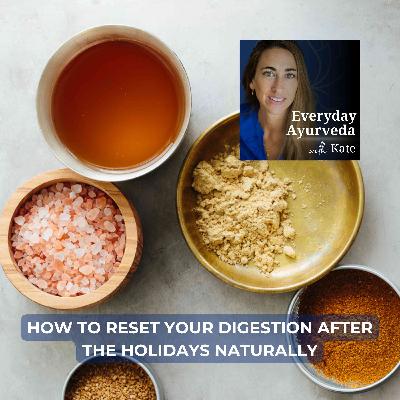
This week, Kate delivers a solo episode packed with practical Ayurvedic tools to help you reset after the holiday season—without the restrictive yo-yo dieting that disrupts your system. She breaks down why extreme cleanses don't work in winter, shares simple warming practices that actually support digestion, and offers a compassionate approach to turning the ship around in the new year.
Kate covers warm herbal waters, the magic of kanji and kitchari, how to work with cravings instead of against them, why cold juices don't belong in winter resets, the role of ghee and licorice for winter dryness, and daily oiling as a nervous system reset.
This is a grounding, realistic episode for anyone who wants to feel better without punishing themselves in January.
What We Cover
Why yo-yo cleansing disrupts the nervous system and digestion
How to make kanji (rice gruel) and kitchari for gentle winter resets
Herbal waters that rekindle digestion: CCF tea, ginger-cumin, and licorice
Why cold juices and raw foods don't work in winter
How to work with cravings when your body is still asking for cookies
The importance of warm, cooked foods during cold weather
Oiling the skin as a tool to come back to yourself
Green soups and vegetables as seasonal cleansers
Why restriction in winter can backfire
Host Bio: Kate O'Donnell
Kate O'Donnell is an Ayurvedic practitioner, teacher, and author of four bestselling books on bringing Ayurvedic practices into modern life. She has been living and teaching Ayurveda for over 25 years and studied extensively in India. Kate is known for translating complex Ayurvedic principles into accessible, practical tools that work for real people in real kitchens.
She hosts the Everyday Ayurveda with Kate podcast and teaches online programs through healwithkate.org. Kate lives in New England and brings a grounded, honest approach to wellness that balances tradition with modern life.
Website: https://www.healwithkate.org
Instagram: @everydayayurvedawithkate
Take Home Practices
Make fresh herbal water daily: CCF tea, ginger-cumin, or licorice tea
Replace dinner with kanji or kitchari for a few nights
Oil your skin before showering to nourish the nervous system
Eat warm, cooked greens and mung bean soups
Move sweets to a weekly rotation instead of daily
Skip the cold juice fast and stick with warm foods all week
Use ghee generously to counter winter dryness
Relevant Links
Heal with Kate: https://www.healwithkate.org
Everyday Ayurveda Book Series: available on Kate's website
Book mentioned: Everyday Ayurveda Guide to Self-Care (includes herbal directory and spiced water recipes)
Call to Action
If this episode helped you rethink your New Year reset, subscribe to Everyday Ayurveda with Kate and share it with someone who needs a kinder approach to January. For personalized Ayurvedic support and seasonal programs, visit healwithkate.org.
Health Disclaimer
The information shared on Everyday Ayurveda with Kate is for educational purposes only and is not a substitute for medical advice, diagnosis, or treatment. Always consult a qualified healthcare provider before making changes to your diet, supplements, or wellness routine.
Spring Cleanse: https://ayurvedicliving.institute/kitchari-cleanse-ayurveda-spring
Connect with Kate: https://www.healwithkate.org
Ayurvedic Living Institute Membership: https://ayurvedicliving.institute/membership
Women's Health Collection: https://courses.ayurvedicliving.institute/collections/womens-healthhttps://courses.ayurvedicliving.institute/products/courses/copy-of-fall-community-cleanse-2024
Thanks to our Sponsor: Banyan Botanicals
Banyan Botanicals: https://glnk.io/kovw3/kate
Bitter and Bold: https://glnk.io/kovw3/kate1x5
Chyavanprash Herbal Jam: https://glnk.io/kovw3/kate5xi
Save 15% with code WINTERWITHKATE

What if the key to meaningful New Year's intentions isn't more goal-setting, but preparing your body as sacred ground?
Kate walks listeners through her annual practice of a mono diet—eating simple, nourishing foods like kitchari, congee, or oatmeal for 1-3 days around the New Year. This isn't about deprivation or typical "cleansing." It's about creating sacred relationship with food, transforming meals into offerings, and preparing the soil before planting seeds.
In this special replay episode, Kate O'Donnell joins Harmony Slater on the Finding Harmony Podcast to share her personal approach to New Year's rituals—one that honors the body as the vessel through which all transformation happens. Rather than jumping straight to resolutions, Kate explains how Ayurveda teaches us to strengthen and purify the physical form first, creating the ideal conditions for intentions to take root.
SPECIAL NOTE: This episode features a segment originally from the Finding Harmony Podcast, repurposed for the Everyday Ayurveda audience. Both podcasts are part of the Awkward Sage Media network.
Why New Year's resolutions often fail (they're all idea, no embodiment)
How to prepare the body as a temple for your intentions
The ritual of mono diet and why it works
Practical recipes: kitchari, congee, oatmeal variations
How to infuse food preparation with intention and prayer
The importance of cooked vs raw foods in winter
Why the "how" of eating matters more than the "what"
Creating sacred space around meals through mantra and awareness
The ancient practice of offering food to the inner fire (agni)
Alternative oils for those avoiding ghee
This episode is perfect for anyone tired of resolutions that fizzle out, anyone drawn to ritual and ceremony, or anyone seeking a more embodied approach to personal transformation. Kate's wisdom offers a refreshing alternative to typical New Year's advice—one rooted in thousands of years of Ayurvedic wisdom and surprisingly practical for modern life.
Recipes & Resources
Basic Kitchari Recipe:
1 cup split mung beans
1 cup white basmati rice
6-8 cups water
1 tbsp ghee or olive oil
1 tsp each: cumin, coriander, turmeric
Fresh ginger (1-inch piece, minced)
Salt to taste
Garnish: cilantro or parsley
Find full recipe at healwithkate.org/blog
Congee (Rice Porridge):
1 cup rice
8 cups water
Cook low and slow until creamy
Sweet version: dates, raisins, cinnamon
Savory version: ginger, turmeric, seaweed, greens
Always include ginger and turmeric
Simple Oatmeal:
Cook with extra water for softer texture
Morning: cinnamon, a touch of sweetness
Evening: savory with greens and spices
Top with ghee or quality oil
Oil Hierarchy for Cooking:
Ghee (traditional, most beneficial)
Small-batch olive oil (high quality)
Coconut oil (especially in tropical climates)
Sesame oil (strong flavor, use sparingly)
Avoid: nut/seed oils (go rancid quickly)
Relevant Links
Finding Harmony Podcast: https://www.awkwardsagemedia.com/show/finding-harmony-podcast/
Awkward Sage Media Network: www.awkwardsagemedia.com
Call to Action
If this episode resonates with you, please share it with someone who's feeling overwhelmed by typical New Year's pressure. Subscribe to Everyday Ayurveda with Kate and help us reach more people seeking embodied, ritual-based approaches to transformation.
Health Disclaimer
The information shared on Everyday Ayurveda with Kate is for educational purposes only and is not a substitute for medical advice, diagnosis, or treatment. Always consult a qualified healthcare provider before making significant changes to your diet or wellness routine, especially if you have existing health conditions.
Spring Cleanse: https://ayurvedicliving.institute/kitchari-cleanse-ayurveda-spring
Connect with Kate: https://www.healwithkate.org
Ayurvedic Living Institute Membership: https://ayurvedicliving.institute/membership
Women's Health Collection: https://courses.ayurvedicliving.institute/collections/womens-healthhttps://courses.ayurvedicliving.institute/products/courses/copy-of-fall-community-cleanse-2024
Thanks to our Sponsor: Banyan Botanicals
Banyan Botanicals: https://glnk.io/kovw3/kate
Bitter and Bold: https://glnk.io/kovw3/kate1x5
Chyavanprash Herbal Jam: https://glnk.io/kovw3/kate5xi
Save 15% with code WINTERWITHKATE

In this solo episode, Kate addresses one of the most frequently asked questions: should you eat breakfast or not? Drawing from Ayurvedic wisdom, she explores why the answer depends on your individual constitution, life stage, exercise routine, and digestive capacity.
Kate shares her personal journey from decades of yoga practice on an empty stomach to discovering she needed breakfast when she started weightlifting. She breaks down the relationship between cortisol, hormones, protein needs, and morning routines, while introducing the crucial concept of prana as an alternative source of life energy beyond food.
This episode offers practical guidance on reading your body's signals, understanding Kapha time, managing morning cortisol spikes through breathwork, and finding the breakfast routine that actually serves your unique needs.
What We Cover
Why Ayurveda says it depends when it comes to breakfast
How cortisol spikes in the morning and what that means for your appetite
The difference between yoga practice and weightlifting for morning food needs
Why coffee on an empty stomach is problematic for most people
Understanding Kapha time of day and morning mucus
How menopause and aging change your breakfast needs
Prana as primary nutrition beyond food
Alternate nostril breathing for hormone balance
Why timing of breakfast matters more than what you eat
When to skip dinner instead of breakfast for better results
Take Home Practices
Notice how your stomach feels when you wake up - heavy or hungry?
Start your day with hot water and 5-10 minutes of conscious breathing
If you exercise in the morning, try a small protein-rich snack beforehand
Add fat to your coffee (ghee or milk) if you drink it in the morning
Eat your largest meal between 10 AM and 2 PM during peak digestive fire
Create a consistent breakfast time to support hormone balance
If you're tweaking out or anxious, try breathwork before reaching for food
Relevant Links
Episode 23: Ayurvedic Perspective on Protein
Everyday Ayurveda for Women's Health by Kate O'Donnell (breathing practices for hormone balance)
healwithkate.org
Call to Action
If this episode helped you understand your breakfast needs better, subscribe to Everyday Ayurveda with Kate and share it with someone who's been confused about morning routines. To dive deeper into personalized Ayurvedic guidance, visit healwithkate.org.
Health Disclaimer
The information shared on Everyday Ayurveda with Kate is for educational purposes only and is not a substitute for medical advice, diagnosis, or treatment. Always consult a qualified healthcare provider before making changes to your diet, supplements, or wellness routine.
Spring Cleanse: https://ayurvedicliving.institute/kitchari-cleanse-ayurveda-spring
Connect with Kate: https://www.healwithkate.org
Ayurvedic Living Institute Membership: https://ayurvedicliving.institute/membership
Women's Health Collection: https://courses.ayurvedicliving.institute/collections/womens-healthhttps://courses.ayurvedicliving.institute/products/courses/copy-of-fall-community-cleanse-2024
Thanks to our Sponsor: Banyan Botanicals
Banyan Botanicals: https://glnk.io/kovw3/kate
Bitter and Bold: https://glnk.io/kovw3/kate1x5
Chyavanprash Herbal Jam: https://glnk.io/kovw3/kate5xi
Save 15% with code WINTERWITHKATE

This week, Kate talks with Micah Mortali, author of Rewilding and founding director of the Kripalu School of Mindful Outdoor Leadership. Together they explore what it means to reconnect with nature in a culture shaped by screens, artificial light, and constant productivity.
Micah shares simple, realistic practices to reintroduce natural rhythms into daily life, especially during winter. The conversation covers candle rituals, light hygiene, the physiology of rest, the lost rhythm of second sleep, nesting, outdoor rituals, seasonal awareness, and the restorative impact of what Micah calls the green mirror.
This is a deeply grounding conversation for anyone feeling scattered, overstimulated, or out of sync with seasonal changes.
What We Cover
How blue light and red light affect mood, hormones, and sleep
Why winter naturally invites more rest and what it looks like to honor that
The art of nesting as a biological and seasonal instinct
Why screen centered living disrupts the nervous system
Slow TV and other practices that regulate attention
Why a sit spot is transformative and how to start one
Marking solstice and seasonal thresholds as part of daily health
How winter walking supports circadian rhythm and mood
Nature connection as a remedy for overwhelm
How rewilding intersects with Ayurveda, digestion, and daily routine
Guest Bio: Micah Mortali
Micah Mortali is an author, public speaker, and leader in the fields of mindfulness, rewilding, traditional archery, and nature connection. He is the author of Rewilding: Meditations, Practices, and Skills for Awakening in Nature, a guide that blends yoga, contemplative practice, ancestral skills, and earth based wisdom.
Micah is the founding director of the Kripalu School of Mindful Outdoor Leadership, where he designed one of the first training programs to certify mindful outdoor guides. His teaching centers on restoring human relationships with the natural world through presence, awareness, and direct experience.
He is also the creator of the online School of Rewilding, an ongoing community for people looking to live more nature centered lives. Micah holds a Masters degree in Health Arts and Sciences from Goddard College and lives in the Berkshires with his family.
Website: https://www.micahmortali.com
Instagram: @micah_rewilding
Take Home Practices
Keep lights low one evening a week to let your natural bedtime emerge
Use a candle or warm light for evening reflection
Visit the same outdoor spot regularly as a sit spot
Walk outside between 11 and 1 for nourishment from natural light
Observe what is moving outside your window as a form of slow TV
Create a winter nest at home as a seasonal ritual
Mark the solstice or mid winter with a simple gathering or fire ritual
Relevant Links
Micah Mortali: https://www.micahmortali.com
School of Rewilding: via his website
Kripalu School of Mindful Outdoor Leadership: https://kripalu.org
If this episode leaves you craving more rhythm and rest, subscribe to Everyday Ayurveda with Kate and share it with someone who has been feeling winter fatigue. To explore deeper support for seasonal routines, visit healwithkate.org.
Health Disclaimer
The information shared on Everyday Ayurveda with Kate is for educational purposes only and is not a substitute for medical advice, diagnosis, or treatment. Always consult a qualified healthcare provider before making changes to your diet, supplements, or wellness routine.
Spring Cleanse: https://ayurvedicliving.institute/kitchari-cleanse-ayurveda-spring
Connect with Kate: https://www.healwithkate.org
Ayurvedic Living Institute Membership: https://ayurvedicliving.institute/membership
Women's Health Collection: https://courses.ayurvedicliving.institute/collections/womens-healthhttps://courses.ayurvedicliving.institute/products/courses/copy-of-fall-community-cleanse-2024
Thanks to our Sponsor: Banyan Botanicals
Banyan Botanicals: https://glnk.io/kovw3/kate
Bitter and Bold: https://glnk.io/kovw3/kate1x5
Chyavanprash Herbal Jam: https://glnk.io/kovw3/kate5xi
Save 15% with code WINTERWITHKATE

How is it that stress seems to run the show in our lives? In this solo episode of Everyday Ayurveda with Kate, Kate O’Donnell takes us beyond the usual “stress management” advice and introduces a more empowering approach: stress shifting.
Instead of treating stress like an unchangeable force that we just have to “handle,” Kate breaks it down into clear categories, reveals how much of it is actually self-generated, and explains why so many of us are living in a constant stress reflex. From an Ayurvedic perspective, she connects this to Vata imbalance, nervous system agitation, and the feeling that “everything is not okay” even when nothing is actively wrong.
Kate shares practical ways to reconnect with nature’s rhythms, anchor the mind in something larger than the to-do list, and use simple daily routines to change your internal relationship with stress. You’ll learn how to stop overscheduling, how to say yes less, why morning and afternoon “sense breaks” matter, and why rest is not a luxury but the direct antidote to stress.
If you’ve ever felt like stress is calling the shots in your digestion, sleep, mood, or hormones, this episode will help you see it more clearly, soften its grip, and choose a different way of living inside your life.
What You’ll Learn
In this episode, Kate explores:
Three types of stress
The stress reflex
Ayurveda, Vata, and the anxious mind
Reconnecting to nature’s rhythms
Daily rhythms that shift stress, not just manage it
Overscheduling, productivity, and self-worth
Time-specific practices for the nervous system
Kate’s top four stress-shifting habits
The bigger picture
Key Takeaways
Stress is not just about what’s happening in your life. It is also an internal reflex that you can retrain.
From an Ayurvedic lens, chronic stress often points to Vata imbalance in the mind and nervous system.
Reconnecting with nature’s rhythms – morning light, lunar cycles, daily Dinacharya – gives your mind a bigger frame than your inbox.
Overscheduling quietly keeps you in a constant state of activation. Leaving white space on your calendar is a powerful practice.
Ten minutes of phone-free morning time, an afternoon sense break, and earlier, screen-light-free evenings all help shift your stress baseline.
You do not have to earn rest. Rest is the opposite of stress, and it is okay to lie on the floor for five minutes and do nothing.
Mentioned in this Episode
Ayurvedic concepts: Vata imbalance, Dinacharya (daily routine), Ayurvedic daily clock
Practices: Morning quiet time, tongue scraping, warm water, sense breaks, tracking the moon, saying yes less, planned rest
Book: Everyday Ayurveda for Women’s Health by Kate O’Donnell
For more on daily routines, lunar rhythms, and women’s health, explore Kate’s books and resources at healwithkate.org.
If this conversation helped you see your stress patterns in a new light:
Subscribe to Everyday Ayurveda with Kate so you never miss an episode.
Share this episode with a friend who is always “managing stress” but never really getting relief.
Take one small step today: choose a single daily touchstone from this episode – a 10-minute morning pause, an afternoon sense break, or a five-minute rest on the floor – and commit to it for the next three weeks.
Ready to shift your relationship with stress, rather than just survive it? Join Kate and the community at healwithkate.org for more Ayurvedic tools, courses, and seasonal support.
Spring Cleanse: https://ayurvedicliving.institute/kitchari-cleanse-ayurveda-spring
Connect with Kate: https://www.healwithkate.org
Ayurvedic Living Institute Membership: https://ayurvedicliving.institute/membership
Women's Health Collection: https://courses.ayurvedicliving.institute/collections/womens-healthhttps://courses.ayurvedicliving.institute/products/courses/copy-of-fall-community-cleanse-2024
Thanks to our Sponsor: Banyan Botanicals
Banyan Botanicals: https://glnk.io/kovw3/kate
Bitter and Bold: https://glnk.io/kovw3/kate1x5
Chyavanprash Herbal Jam: https://glnk.io/kovw3/kate5xi
Save 15% with code WINTERWITHKATE

In this warm and practical conversation, Kate sits down with her longtime friend and colleague Emilie Reid, co-owner of the beloved Ayurvedic lifestyle brand Farmtrue. Emilie shares the full-circle story of discovering Ayurveda through cracked knuckles and toasted sesame oil, building a thriving yoga studio, navigating its closing during COVID, and ultimately finding her dharma in reviving Farmtrue with her husband.
Emilie walks listeners through the process of making thousands of pounds of ghee each year, the subtle differences in butter quality, why Farmtrue’s ghee is casein-free, and why ghee behaves differently than other fats inside the body and on the skin. She also breaks down the skincare line, the philosophy behind their dosha-specific body oils, why ghee makes an effective nasal oil, and how slow medicine has reshaped her life and routines.
If you love ghee, natural skincare, seasonal routines, or small-business stories rooted in purpose, this episode will be a favorite.
Episode Breakdown
The story of how cracked knuckles and a frozen Boston bus ride led Emilie to Ayurveda
The rise, relocation, and closure of Borealis Yoga Studio
How Emilie and her husband came to purchase Farmtrue
What makes ghee unique from a Western and Ayurvedic perspective
The process of making 100–200 pounds of ghee a week
Why Farmtrue’s nasya oil works differently
Ayurvedic skincare: why simple really is better
A DIY face mask for winter skin
How Emilie uses ghee daily in cooking and rituals
Introducing the new Cardamom Limeade Fix Stick collaboration
Emilie’s daily routines
Guest Bio: Emilie Reid
Emilie is co-owner of Farmtrue, a modern ayurvedic lifestyle brand. Together with her husband, she handcrafts face care, body care, teas and spices using ayurvedic herbs and ghee. Emilie is also Faculty at Kripalu Center for Yoga and Health in Stockbridge, Ma. She leads workshops, retreats and yoga classes online and in-person. Emilie’s superpower is sharing meditation, Ayurveda and Yoga in a way that is practical, useful and fun.
Emilie leads retreats, teaches Ayurveda, creates handcrafted herbal products, and brings her love of slow medicine into every batch she makes.
Kate's Cardamom limeade Fix Stick: https://shopfarmtrue.com/products/fix-stick-ghee-based-balm-cardamom-limeade
Skin mask Recipe from Emilie:
1 tsp Triphala powder
1 tsp Neem powder
1 tsp peppermint powder*
1 tsp coconut oil
Mix into a paste with a spoon or your fingers.
Massage all over your face, avoiding the eyes. Then let sit for 5 minutes.
Wash thoroughly with warm water and pat skin dry.
Relevant Links
Farmtrue Products
Farmtrue Website: https://farmtrue.com
Call to Action
If this conversation inspired you to rethink how you use ghee in your kitchen or your skincare routine, explore the full Farmtrue line at farmtrue.com.
For more Ayurvedic wisdom, seasonal routines, and practical tools, follow Kate at @kateodonnell.yoga and visit healwithkate.org for programs, books, retreats, and resources.
Spring Cleanse: https://ayurvedicliving.institute/kitchari-cleanse-ayurveda-spring
Connect with Kate: https://www.healwithkate.org
Ayurvedic Living Institute Membership: https://ayurvedicliving.institute/membership
Women's Health Collection: https://courses.ayurvedicliving.institute/collections/womens-healthhttps://courses.ayurvedicliving.institute/products/courses/copy-of-fall-community-cleanse-2024
Thanks to our Sponsor: Banyan Botanicals
Banyan Botanicals: https://glnk.io/kovw3/kate
Bitter and Bold: https://glnk.io/kovw3/kate1x5
Chyavanprash Herbal Jam: https://glnk.io/kovw3/kate5xi
Save 15% with code WINTERWITHKATE

Kate is a self-described holiday dork who loves parties, cookies, cocktails and a good stuffing situation. She also remembers what it felt like to stagger out of Thanksgiving week bloated, gassy, constipated and anxious for days. In this solo episode, she downloads her personal Holiday Health Guide, honed over two decades of living Ayurveda, healing her gut from parasites, and still saying yes to celebration.
You will learn the one shift that made the biggest difference in her digestion during feast season, how she navigates appetizers, cocktails and desserts without deprivation, and the simple kitchen and travel tools she never shows up to a party without. From meal spacing and spritzers, to CCFT in a thermos and fennel seeds in a mint tin, this is a realistic Ayurvedic survival guide for Thanksgiving and the winter holidays.
If you want to enjoy the cheese board and the pumpkin pie and still feel like yourself the next day, this episode is for you.
In this episode, you’ll learn:
Why feasting in winter actually makes sense from an Ayurvedic and seasonal perspective
The number one way people disrupt their digestion during the holidays
How to use meal spacing as your secret weapon, even on a feast day
How to handle appetizers, cheese boards and snack tables without going into a sugar spiral
Ways to enjoy wine and cocktails while respecting your inflammation and sleep
How to work with CCFT, ginger, fennel and hot water before, during and after big meals
Movement and “run about” strategies that help your body metabolize richer foods
How to bring your own dishes so you feel included and supported at every table
Gentle post holiday reset ideas so you can come back to balance without a crash diet
Key topics and practices Kate covers
Why we feast in winter
Kate explains why heavier, fattier, sweeter foods make sense in colder seasons from an Ayurvedic lens. Root vegetables, meats, fats and harvest feasts can be supportive when digestion is strong and timing is thoughtful.
The biggest holiday digestion mistake
The main problem is not necessarily eating “too much” but eating too often. Constant grazing on treats, candies and cookies between meals means the previous meal never fully digests, building ama and weakening agni.
Kate’s simple focus:
Aim for a 3 to 4 hour window with no food between meals
Prioritize at least one 4 hour food free stretch on feast days
Use hot water or tea during that window to support peristalsis and enzymatic activity
How Kate handles appetizer tables
Appetizers used to be a major trigger. Now she:
Goes light on cheese, nuts, crackers and crostini
Treats appetizers as a bridge, not the main event
Waits until her 3 to 4 hour window has passed before nibbling
Keeps a thermos of hot water or CCFT nearby to sip regularly
CCFT and fennel: simple herbal support
Kate shares her go to supportive blend: equal parts cumin, coriander and fennel seeds simmered in water, then strained into a thermos.
She uses it to:
Sip in small amounts throughout parties
Support digestion between meals
Bring warmth and all six tastes to help her body feel satisfied
She also chews fennel seeds after meals to calm indigestion, gas and heaviness, often carrying them in a small mint tin.
Alcohol, spritzers and savoring
Kate still enjoys a party and usually has around two drinks across an event. She:
Mixes wine with bubbly water in a spritzer so three glasses equal roughly two drinks
Adds a single piece of fruit or an ice cube to stretch the experience
Avoids martinis and very strong drinks, or nurses one with extra ice all night
Tries to enjoy cocktails earlier with a little food, then focuses on dinner later
A big part of her success is presence. She closes her eyes for a sip, or quietly steps aside to savor a favorite cheese or dessert so her senses register the pleasure. That presence helps her feel satisfied with less.
Savoring as a nervous system tool
One of the biggest shifts Kate names is learning to savor. When there is a lot of stimulation, conversation and family dynamics, it is easy to eat and drink on autopilot. She now:
Slows down during intense conversations instead of stress eating
Steals a quiet moment with a bite of cake or a sip of wine
Shows up “101 percent” for the foods and drinks she chooses
Lets that satisfaction signal her to stop before she crosses her limit
Ginger digestives and when not to use them
To kindle agni before a big meal or when she feels heavy, Kate uses:
A slice of fresh ginger
Plus lemon or lime
Plus a pinch of salt
She eats this about 20 minutes before a meal to wake up digestive fire or first thing the next morning if she feels sluggish.
Important nuance: she avoids this ginger shot right before alcohol on an empty stomach because that much fire plus alcohol can create acidity. In that case, she may switch to a gentler ginger tea or skip the ginger altogether.
Movement and “run about” after sweets
Kate’s Ayurvedic doctor once told her to “run about” after sweets to help her body metabolize sugar. She now:
Prioritizes a brisk walk on feast days, no matter the weather
Invites others to join her or walks the dog
Will even do a quick 5 to 10 minute walk with a flashlight at night
Builds in casual movement by helping clean up or organizing a dance moment
Bringing your own dishes so you feel supported
Rather than hoping a holiday table magically matches her digestion, Kate brings what she wants to eat and share, such as:
A wild rice and sourdough stuffing made with good quality sourdough, wild rice, herbs, ghee and fruit
Crudités like mini cucumbers and carrot sticks so there is a fresh, hydrating option in the appetizer spread
Cookies and sweets from her own recipes made with oat or almond flour, better oils and without white sugar
This lets her fully participate in the feast while lowering the burden of poor quality ingredients.
Boundaries around “cookie season”
Instead of letting holiday cookies creep into a multi week sugar marathon, Kate:
Preps several cookie doughs in advance and freezes them
Bakes closer to the actual holiday so the cookie window stays short
Uses Ayurvedic style recipes from her books so she feels satisfied without the crash
Gentle post holiday reset
When feast days are done, she balances heavy, sweet and salty foods with:
Simple green soups made from blended greens, veggie broth and ghee
Light, normal breakfasts instead of restricting to the point of depletion
Time to observe what did or did not feel good in her body and adjust for next time
About Kate O’Donnell
Kate O’Donnell is a nationally certified Ayurvedic practitioner, longtime yoga teacher and the founder of the Ayurvedic Living Institute. She is the bestselling author of the Everyday Ayurveda series, including The Everyday Ayurveda Cookbook, Everyday Ayurveda Cooking for a Calm, Clear Mind, The Everyday Ayurveda Guide to Self Care and Everyday Ayurveda for Women’s Health.
Through her books, online courses and live teachings, Kate is known for translating traditional Ayurvedic wisdom into simple, doable practices for modern life.
Call to action
If this episode helped you rethink your holiday habits, share it with a friend or family member who wants to feel better this season too.
Subscribe to Everyday Ayurveda with Kate in your favorite podcast app so you never miss a new episode. To go deeper with these practices, explore Kate’s books and online courses, or join the Ayurvedic Living Membership community for ongoing seasonal support.
Health disclaimer
Health Disclaimer:
The information shared on Everyday Ayurveda with Kate is for educational purposes only and is not a substitute for medical advice, diagnosis, or treatment. Always consult a qualified healthcare provider before making changes to your diet, supplements, or wellness routine.
Spring Cleanse: https://ayurvedicliving.institute/kitchari-cleanse-ayurveda-spring
Connect with Kate: https://www.healwithkate.org
Ayurvedic Living Institute Membership: https://ayurvedicliving.institute/membership
Women's Health Collection: https://courses.ayurvedicliving.institute/collections/womens-healthhttps://courses.ayurvedicliving.institute/products/courses/copy-of-fall-community-cleanse-2024
Thanks to our Sponsor: Banyan Botanicals
Banyan Botanicals: https://glnk.io/kovw3/kate
Bitter and Bold: https://glnk.io/kovw3/kate1x5
Chyavanprash Herbal Jam: https://glnk.io/kovw3/kate5xi
Save 15% with code WINTERWITHKATE

Kate sits down with Ashley Turner to explore midlife as a true rite of passage. Yes, hormones matter. But Ashley makes a compelling case that what many of us feel in our 40s and 50s is also a psychospiritual reorganization. We cover what’s actually happening with progesterone, estrogen, and testosterone; why anger and irritability spike; how Ayurveda explains the energy shift after menstruation; and where tools like sisterhood, sleep, nutrition, and thoughtfully facilitated psychedelic therapy may fit. You’ll walk away with a saner map for midlife and simple places to start.
What we cover
Defining midlife in practice, not just by age
Biological changes: how progesterone drops first, then estrogen and testosterone
Why mood changes are not “just hormones”
The anger question: what “the tide is out” really means
Menstrual seasons and why winter is powerful
Ayurveda’s lens on apana vayu post-menopause
Capacity vs tolerance, burnout, and sustainable habit shifts
Psychedelic therapy basics: set, setting, safety, and integration
Building your team: medical, functional, psychological, and social support
Simple daily anchors: cold plunge ranges for women, tea, evening yoga, Yoga Nidra
Guest bio
Ashley Turner, LMFT, is a licensed psychotherapist, longtime yoga teacher, and facilitator in the modern psychedelic therapy space. She works at the intersection of depth psychology, yoga philosophy, and evidence-based psychedelic care. Ashley offers a monthly community called Haven, a six-week mentorship called Metamorphosis, individual and couples therapy, and small-group intensives.
Relevant links mentioned
Ashley on Instagram: @ashleyturner1
Email Ashley: ashley@ashleyturner.co
SHOP → https://yoga-psychology.co/shop
Psychedelic Therapy Application → https://forms.gle/Jg2rLWL9UfNFWCdy7
Haven 2wk Free Trial → https://ashleyturner.thrivecart.com/haven-membership-love/
Call to action
If this episode helped you see midlife differently, share it with a friend and leave a rating so more women can find it. Send Kate your takeaways by email or DM and tell Ashley you came from the show.
Health Disclaimer
The information shared on Everyday Ayurveda with Kate is for educational purposes only and is not a substitute for medical advice, diagnosis, or treatment. Always consult a qualified healthcare provider before making changes to your diet, supplements, or wellness routine.
Spring Cleanse: https://ayurvedicliving.institute/kitchari-cleanse-ayurveda-spring
Connect with Kate: https://www.healwithkate.org
Ayurvedic Living Institute Membership: https://ayurvedicliving.institute/membership
Women's Health Collection: https://courses.ayurvedicliving.institute/collections/womens-healthhttps://courses.ayurvedicliving.institute/products/courses/copy-of-fall-community-cleanse-2024
Thanks to our Sponsor: Banyan Botanicals
Banyan Botanicals: https://glnk.io/kovw3/kate
Bitter and Bold: https://glnk.io/kovw3/kate1x5
Chyavanprash Herbal Jam: https://glnk.io/kovw3/kate5xi
Save 15% with code WINTERWITHKATE


Download from Google Play

Download from App Store
 United States
I am wso happy I came across this podcast! I am relatively new to Ayurveda, and since I started listening to Kate, I have been sipired by her and her guests to learn ayurveda in a comprehensive course. Her kind, non preaching style is just what most of us need, and the wealth of her knowledge makes me wait for each new episode with excitement (and a notebook!). If I had to pick one source to learn from (fortunately I do not have to :)) , Id pick Kates podcast. Thank you for your inspiration and for sharing all you know!
Helpful 👌