DiscoverA Kiwi Perspective
A Kiwi Perspective
Claim Ownership

A Kiwi Perspective

Author: Graham Dewhirst

Subscribed: 0Played: 0
Share

Description

A Kiwi Perspective is a thought-provoking and uniquely New Zealand take on global and local issues. Hosted by Graham Dewhirst, a proud Kiwi, it blends sharp analysis, historical context and cultural insight to explore topics that shape our world, from the global mental health crisis to international politics, climate change and more. Each episode invites viewers to look beyond mainstream headlines, challenging assumptions and encouraging critical thought through a distinctly Aotearoa lens. With a respectful and grounded approach, A Kiwi Perspective amplifies the voice of New Zealand in global conversations, highlighting how our values, indigenous perspectives and Pacific location contribute to a broader understanding of humanity’s shared challenges. Whether you’re a fellow New Zealander or a curious global citizen, this channel offers fresh insights with clarity, balance and heart. Subscribe to join the conversation and see the world from a Kiwi point of view.

21 Episodes
Reverse
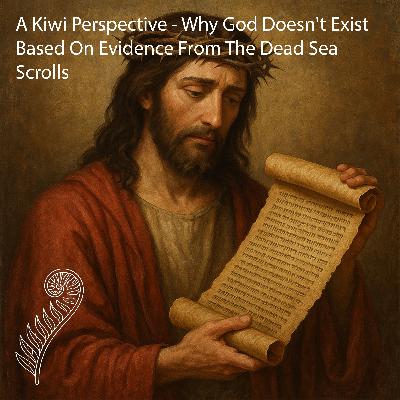
Kia ora, I’m your host Graham and welcome back to A Kiwi Perspective, the podcast where we dive deep into issues that matter to everyday New Zealanders and our global audience.Today’s kaupapa is one of the big ones, originating from a conversation with a couple of good mates Alan and Peter, a conversation many dodge, and not without reason.We’re asking: Can we disprove the existence of God... using the Dead Sea Scrolls?Now that’s a challenge. One that stirs up all sorts of reaction—from quiet discomfort to full-throated defense. And I get it. In Aotearoa, belief and spirituality come in many forms. Some of us were raised with the Bible on the kitchen table. Others with karakia and kōrero that stretch back to the stars of Te Korekore—the realm of potential.So, this isn’t about mocking faith. It’s about questioning power. Who holds it. Who claims it. And who writes it down in ink and says it came from heaven.Because here’s the thing: when scripture becomes law, and belief becomes statecraft, we’re no longer talking about spirituality—we’re talking about control.And the Dead Sea Scrolls? They reveal just how manufactured, how mutable, and how politically charged that control really is.
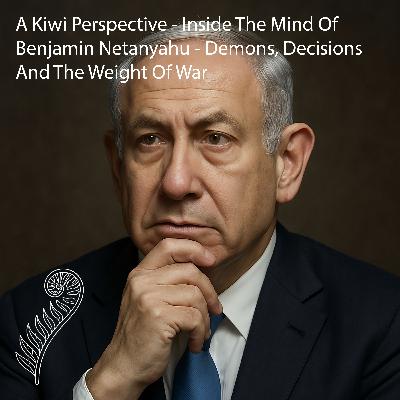
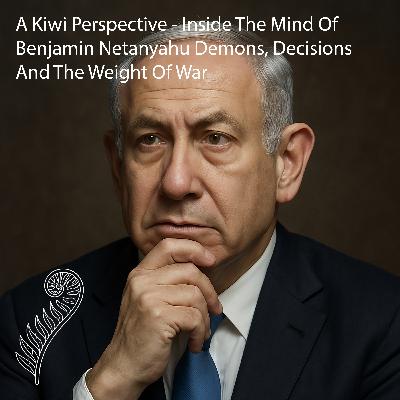
Kia ora, I'm you host Graham and welcome back to A Kiwi Perspective, the podcast where we dive deep into issues that matter to everyday New Zealanders and our global audience.In times of war, we hear about weapons… treaties… death tolls. We see maps, military briefings, breaking headlines. But how often… do we stop to ask: What kind of mind makes the decisions that lead us to war?Today, we step into the psychological chambers of one of the most enduring and divisive political figures of our time — Benjamin Netanyahu. A man shaped by history… haunted by legacy… and now, leading Israel through one of the deadliest wars in a generation.This isn’t about taking sides. This is about going inside. Inside a mind burdened by survival, power, and the unrelenting weight of war.
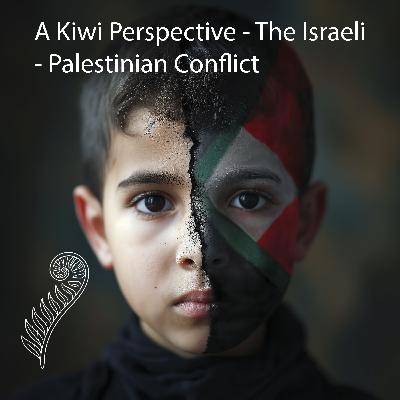
Kia ora and welcome to A Kiwi Perspective, the podcast where we dive into some of the world’s most complex and contentious issues — through the lens of Aotearoa New Zealand. Today, we’re going to wade into territory that’s long been a lightning rod for global politics, fierce opinion, and human suffering: the Israeli-Palestinian conflict.This is not an easy episode. It’s not meant to be. But in an age where silence can equal complicity and over-simplification fuels division, I believe it’s vital that we, as Kiwis, engage honestly, critically, and compassionately.What does this conflict mean for us in New Zealand? How should we understand it in our unique geopolitical and cultural context? What moral, legal, and diplomatic responsibilities do we carry as citizens of a small but principled nation? Let’s explore these questions.
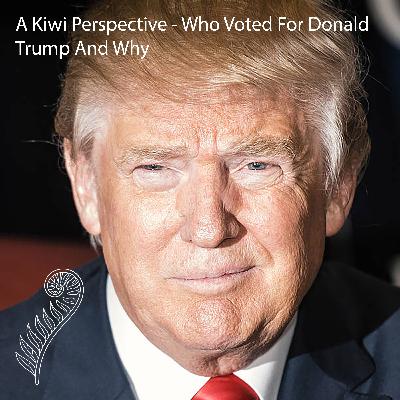
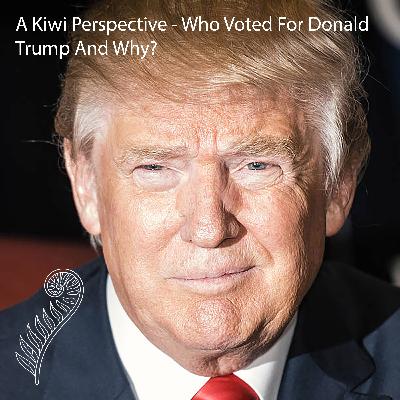
Welcome back to A Kiwi Perspective, the podcast where we dive deep into issues that matter to everyday New Zealanders. Today’s episode is Who Voted For Donald Trump And WhyThe election of Donald Trump as President of the United States in 2016, and his re-election bid in 2020, sent shockwaves through the world, including New Zealand. As a global superpower, U.S. politics inevitably influence international economies, foreign policies, and cultural trends. For those of us in New Zealand, geographically distant but intricately connected through trade, foreign policy, and even social media, the election of Donald Trump had profound consequences. The question of who voted for Donald Trump and why? becomes an essential one to answer, not just for understanding the U.S. but for understanding the broader trends affecting the international landscape.In this podcast, we explore a central question: Who voted for Donald Trump, and why? From a New Zealand perspective, understanding this is crucial—not only to grasp the domestic dynamics of American politics but also to assess how these dynamics have broader implications globally. Trump’s rise to power has been viewed in starkly different ways across the world. To many in New Zealand, his political persona, policies, and rhetoric were perplexing, yet undeniably impactful. The motivations of his supporters—a diverse coalition of voters spanning economic, cultural, and ideological lines—offer important lessons in contemporary politics, many of which resonate far beyond the U.S.This podcast episode will delve into the social, economic, and political factors behind Trump’s appeal. It will explore the role of populism, cultural identity, economic hardships, misinformation, and the role of social media in shaping voters’ decisions. It will also examine how Trump’s presidency, and the populist wave he rode, affected global politics and, by extension, New Zealand’s political landscape. Finally, we will look at how populism, nationalism, and anti-establishment sentiments are global forces, not just American ones, and how Kiwis should reflect on the lessons learned from Trump’s supporters.This conversation is not just about analyzing an American phenomenon but about understanding a shared global experience. As we see populist movements in different countries, it’s important to reflect on the global interconnections and how domestic decisions in one part of the world affect the broader international community. Through understanding the rise of Trump’s popularity and the motivations of his voters, we can gain insights into the wider forces that shape political climates everywhere.
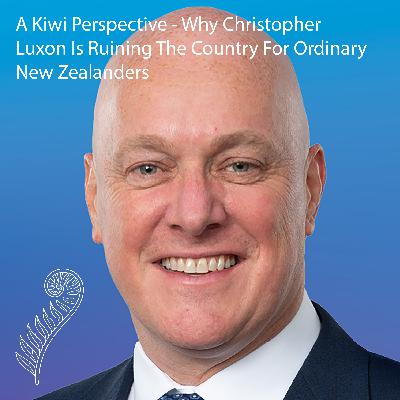
Welcome back to A Kiwi Perspective, the podcast where we dive deep into issues that matter to everyday New Zealanders. Today’s episode is a critical look at why Christopher Luxon is ruining the country for ordinary New Zealanders?Christopher Luxon’s entry into New Zealand politics came as a surprise to many. A former CEO of Air New Zealand, Luxon’s background in business initially made him a figure of intrigue—someone who was seen as an outsider with a pragmatic, results-driven approach. He entered the National Party with promises of bringing corporate efficiency to government, touting his experience managing large organizations and running successful enterprises.However, this business-centric mindset raises significant concerns for New Zealanders. Luxon’s approach often resembles that of a corporate CEO rather than a politician who understands the social complexities of governance. His leadership thus far reflects a vision that seems focused on profit-driven policies, with little regard for the people who are struggling to make ends meet.New Zealand, today, finds itself facing numerous crises. Housing is unaffordable for the majority of Kiwis, the cost of living continues to climb, and essential public services are under strain. Yet, Christopher Luxon’s policies seem to do little more than exacerbate these problems, favoring the interests of the wealthy and large corporations while leaving ordinary New Zealanders behind.
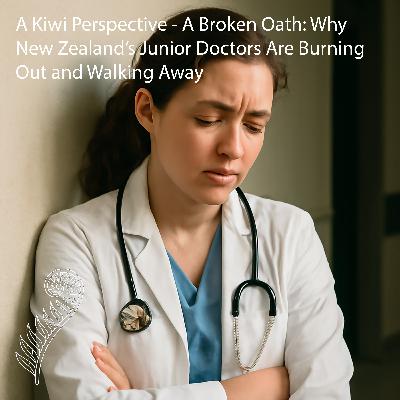
Welcome back to A Kiwi Perspective, the podcast where we dive deep into issues that matter to everyday New Zealanders and a global audience. I'm your host Graham and today's episode is a critical look at A Broken Oath - Why New Zealand's Junior Doctors Are Burning Out and Walking Away. We journey into the hidden corridors of our healthcare system, not the ones you see on glossy brochures or government websites, but the real ones, fluorescent-lit, emotionally charged, often understaffed. We step into the lives of junior doctors across Aotearoa and we ask why is a career meant to save lives slowly draining the life out of our own?Let's begin with a confession, for many of us average Kiwis the health system is like the plumbing in the walls, we know it's there, we hope it works, but we rarely think about it until it bursts.And right now the pipes are not just groaning, they're cracking under pressure.Emergency departments are overwhelmed, waitlists are growing and amid all this, at the very frontline are our junior doctors. Fresh out of university, armed with knowledge and eager to help, yet within months many are already burning out!This isn't just a workplace issue.This is a national health crisis in slow motion.
Kia ora and welcome to A Kiwi Perspective, the podcast where we explore global challenges through the lens of Aotearoa New Zealand. Today, we tackle a complex and deeply personal issue: the global mental health crisis. This isn't just a story about other countries. It's our story, too. It’s the story of our tamariki, our whānau, our kaumatua. It’s about the pressures we face, the systems we’ve built or failed to build, and the future we want to shape.In this episode, I want to offer not just facts, but context. Not just solutions, but questions. From the alarming statistics to the cultural considerations unique to our Pacific corner of the world, let’s unpack what it means to live — and struggle — with mental health in 2025.
Kia ora and welcome to A Kiwi Perspective. I’m Graham and today we turn our gaze across the Tasman to Australia — a country that carries a heavy burden of history, cultural erasure and the ongoing fight for justice by its First Nations people. While our shared history in the Pacific Ocean has brought similarities between New Zealand and Australia, there is one glaring difference: Australia has never had a treaty with its Indigenous people. And the implications of this absence are felt in every facet of Aboriginal life.Aotearoa, by contrast, at least has the Treaty of Waitangi — signed in 1840 — which is both a legal and moral foundation for Māori as tangata whenua, the people of the land. This treaty has not been without its flaws, and the relationship it facilitates is still an ongoing negotiation, but it remains a symbol of acknowledgment and a framework for dialogue. Australia, however, has yet to reckon with its past to the same extent. For Aboriginal Australians, their relationship with the state is often defined by silence, dispossession, and the lack of recognition.Today, we’re diving deep into this issue, looking at the state of Aboriginal affairs through a Kiwi perspective — one that is shaped by both the successes and the ongoing struggles of Māori in New Zealand. I’ll also turn to one of the most eloquent and controversial figures in the debate on Aboriginal affairs: Stan Grant.Stan Grant is not just a journalist or an academic; he is a voice that is often at the intersection of historical reckoning, cultural identity, and the painful reality of systemic racism. A Wiradjuri man, Grant’s experiences and his reflections have shaped much of the current discourse on Aboriginal rights. He has become one of the most vocal critics of Australia’s treatment of its Indigenous population, and his words demand our attention. His message is not just about remembering the past, but also about confronting the prejudices of the present.This episode will explore Grant’s thoughts on Aboriginal affairs, dissecting both the societal issues and the possibilities for change, all through the lens of someone living in Aotearoa. We’ll compare the Māori experience with that of Aboriginal Australians, learn from both successes and failures, and reflect on where we go from here.
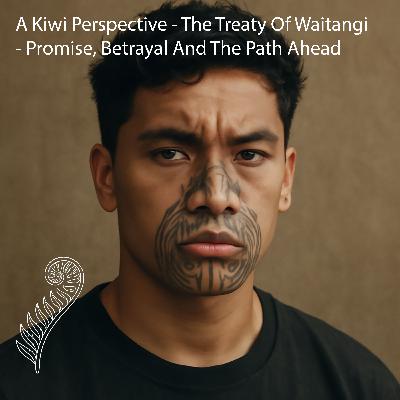
Kia ora and welcome to A Kiwi Perspective, the podcast where we unpack big ideas and national debates from our uniquely Aotearoa vantage point. Today’s topic is arguably the most foundational — and the most fiercely contested — document in New Zealand’s history: the Treaty of Waitangi.The Treaty is everywhere. It’s in our political debates, our education system, our courts, our protests. It’s cited as both a sacred covenant and a colonial tool. Some see it as the basis for genuine partnership and nation-building. Others view it as a legal fiction or a historical burden. So today, let’s confront the controversy head-on: What is the Treaty of Waitangi, really? How has it shaped — and warped — our country? And where do we go from here?
Kia ora, I’m your host Graham and welcome back to A Kiwi Perspective, the podcast where we dive deep into issues that matter to everyday New Zealanders and our global audience.Today’s kaupapa is one of the big ones, originating from a conversation with a couple of good mates Alan and Peter, a conversation many dodge, and not without reason. We’re asking: Can we disprove the existence of God... using the Dead Sea Scrolls? Now that’s a challenge. One that stirs up all sorts of reaction—from quiet discomfort to full-throated defense. And I get it. In Aotearoa, belief and spirituality come in many forms. Some of us were raised with the Bible on the kitchen table. Others with karakia and kōrero that stretch back to the stars of Te Korekore—the realm of potential. So, this isn’t about mocking faith. It’s about questioning power. Who holds it. Who claims it. And who writes it down in ink and says it came from heaven. Because here’s the thing: when scripture becomes law, and belief becomes statecraft, we’re no longer talking about spirituality—we’re talking about control. And the Dead Sea Scrolls? They reveal just how manufactured, how mutable, and how politically charged that control really is.
Benjamin Netanyahu was born in 1949, just a year after the State of Israel declared its independence — a country carved out from the ashes of the Holocaust, and deeply contested from the moment of its conception. His birth wasn’t just personal, it was political. Every street, every institution, every conversation was charged with the weight of survival, of territory, of memory. The land he grew up on was soaked in both hope and blood. His father, Benzion Netanyahu, was a fierce ideological Zionist and a renowned historian. But Benzion wasn’t just academic; he was emotionally militant in his belief that the Jewish people were always one step away from annihilation. To him, the world had abandoned the Jews in their hour of need — and might do so again. Benzion’s version of history wasn’t about cycles of peace and conflict; it was about eternal vigilance. That shaped everything. Imagine growing up in that household. Conversations over dinner weren’t idle. They were sharp, focused, intense — often about the Spanish Inquisition, the pogroms, the Holocaust, and Arab nationalism. For Benjamin, strength was not a luxury. It was existential. The idea of compromise wasn’t noble — it was dangerous. Even as he moved to the United States during his teen years — attending high school in Pennsylvania, then later studying at MIT and Harvard — Netanyahu never softened. America taught him technique, sure. Presentation. Strategy. But not empathy. Not diplomacy. Those traits — the ones that build bridges — were not part of his core software. In Israel, there’s a saying: “Ein breira” — there is no choice. Netanyahu absorbed that mindset early. His world was binary — strong or weak, safe or doomed. And then, Yonatan. His older brother. Brilliant, idealistic, brave — and killed in the 1976 Entebbe raid. That death broke something open in Benjamin. It wasn’t just grief. It was canonisation. Yonatan became a symbol — not just of what Israel had lost, but of what Netanyahu must now become: the embodiment of heroic sacrifice. So it’s not surprising that the young man who returned to Israel from the U.S. didn’t become a professor or a philosopher. He became a soldier. Then a diplomat. Then a prime minister. And every step he took, he took with his father’s voice in one ear… and his brother’s ghost in the other. This is the psychological blueprint of Benjamin Netanyahu: forged in grief, fuelled by fear, and fixated on survival. He had no Palestinian friends growing up. He didn’t share classrooms, cafes, or futures with Arabs. They were not part of his social fabric — they were framed as part of the threat.
Welcome back to A Kiwi Perspective, the podcast where we dive deep into issues that matter to everyday New Zealanders and global listeners. Today's episode is a critical look at A Broken Oath: Why New Zealand's Junior Doctors Are Burning Out and Walking Away. We journey into the hidden corridors of our healthcare system, not the ones you see on glossy brochures or government websites, but the real ones, fluorescent-lit, emotionally charged, often understaffed. We step into the lives of junior doctors across Aotearoa and we ask why is a career meant to save lives slowly draining the life out of our own?Let's begin with a confession, for many of us average Kiwis the health system is like the plumbing in the walls, we know it's there, we hope it works, but we rarely think about it until it bursts.And right now the pipes are not just groaning, they're cracking under pressure.Emergency departments are overwhelmed, waitlists are growing and amid all this, at the very frontline are our junior doctors. Fresh out of university, armed with knowledge and eager to help, yet within months many are already burning out!This isn't just a workplace issue.This is a national health crisis in slow motion.
Welcome back to A Kiwi Perspective, the podcast where we dive deep into issues that matter to everyday New Zealanders. Today’s episode is Who Voted For Donald Trump And WhyThe election of Donald Trump as President of the United States in 2016, and his re-election bid in 2020, sent shockwaves through the world, including New Zealand. As a global superpower, U.S. politics inevitably influence international economies, foreign policies, and cultural trends. For those of us in New Zealand, geographically distant but intricately connected through trade, foreign policy, and even social media, the election of Donald Trump had profound consequences. The question of who voted for Donald Trump and why? becomes an essential one to answer, not just for understanding the U.S. but for understanding the broader trends affecting the international landscape.In this podcast, we explore a central question: Who voted for Donald Trump, and why? From a New Zealand perspective, understanding this is crucial—not only to grasp the domestic dynamics of American politics but also to assess how these dynamics have broader implications globally. Trump’s rise to power has been viewed in starkly different ways across the world. To many in New Zealand, his political persona, policies, and rhetoric were perplexing, yet undeniably impactful. The motivations of his supporters—a diverse coalition of voters spanning economic, cultural, and ideological lines—offer important lessons in contemporary politics, many of which resonate far beyond the U.S.This podcast episode will delve into the social, economic, and political factors behind Trump’s appeal. It will explore the role of populism, cultural identity, economic hardships, misinformation, and the role of social media in shaping voters’ decisions. It will also examine how Trump’s presidency, and the populist wave he rode, affected global politics and, by extension, New Zealand’s political landscape. Finally, we will look at how populism, nationalism, and anti-establishment sentiments are global forces, not just American ones, and how Kiwis should reflect on the lessons learned from Trump’s supporters.This conversation is not just about analyzing an American phenomenon but about understanding a shared global experience. As we see populist movements in different countries, it’s important to reflect on the global interconnections and how domestic decisions in one part of the world affect the broader international community. Through understanding the rise of Trump’s popularity and the motivations of his voters, we can gain insights into the wider forces that shape political climates everywhere.
Welcome back to A Kiwi Perspective, the podcast where we dive deep into issues that matter to everyday New Zealanders. Today’s episode is a critical look at why Christopher Luxon is ruining the country for ordinary New Zealanders?Christopher Luxon’s entry into New Zealand politics came as a surprise to many. A former CEO of Air New Zealand, Luxon’s background in business initially made him a figure of intrigue—someone who was seen as an outsider with a pragmatic, results-driven approach. He entered the National Party with promises of bringing corporate efficiency to government, touting his experience managing large organizations and running successful enterprises.However, this business-centric mindset raises significant concerns for New Zealanders. Luxon’s approach often resembles that of a corporate CEO rather than a politician who understands the social complexities of governance. His leadership thus far reflects a vision that seems focused on profit-driven policies, with little regard for the people who are struggling to make ends meet.New Zealand, today, finds itself facing numerous crises. Housing is unaffordable for the majority of Kiwis, the cost of living continues to climb, and essential public services are under strain. Yet, Christopher Luxon’s policies seem to do little more than exacerbate these problems, favoring the interests of the wealthy and large corporations while leaving ordinary New Zealanders behind.
Kia ora and welcome to A Kiwi Perspective. I’m Graham and today we turn our gaze across the Tasman to Australia — a country that carries a heavy burden of history, cultural erasure and the ongoing fight for justice by its First Nations people. While our shared history in the Pacific Ocean has brought similarities between New Zealand and Australia, there is one glaring difference: Australia has never had a treaty with its Indigenous people. And the implications of this absence are felt in every facet of Aboriginal life.Aotearoa, by contrast, at least has the Treaty of Waitangi — signed in 1840 — which is both a legal and moral foundation for Māori as tangata whenua, the people of the land. This treaty has not been without its flaws, and the relationship it facilitates is still an ongoing negotiation, but it remains a symbol of acknowledgment and a framework for dialogue. Australia, however, has yet to reckon with its past to the same extent. For Aboriginal Australians, their relationship with the state is often defined by silence, dispossession, and the lack of recognition.Today, we’re diving deep into this issue, looking at the state of Aboriginal affairs through a Kiwi perspective — one that is shaped by both the successes and the ongoing struggles of Māori in New Zealand. I’ll also turn to one of the most eloquent and controversial figures in the debate on Aboriginal affairs: Stan Grant.
Donald Trump's political rise remains one of the most significant and controversial moments in U.S. history. His election in 2016 disrupted the political establishment, with ramifications not only in the United States but across the globe. His rhetoric, policies, and political strategies were unlike those of any previous U.S. president. To understand the complexities of his voter base, it is necessary to analyze the diverse reasons behind why millions of Americans rallied behind him. In this discussion, we will break down the various demographic, cultural, economic, and political forces that shaped the electorate's decision, particularly focusing on the broader context of nationalism, populism, and the deep divides that have characterized American politics in the 21st century.From a New Zealand perspective, this analysis is particularly important as populist movements have reverberated globally, influencing politics in Europe, Latin America, and even here in New Zealand. Trump's rise was not just an American phenomenon; it was part of a broader trend of populist movements challenging established political norms. As such, understanding why people voted for Trump provides valuable insights into the direction of politics worldwide.
Welcome back to A Kiwi Perspective, the podcast where we dive deep into issues that matter to everyday New Zealanders. Today’s episode is a critical look at the leadership of Christopher Luxon, the current leader of the National Party, and the impact of his policies on the average Kiwi.Now, we’ve seen Luxon’s rise from the boardroom to the political stage, and while his business success is well known, his policies and leadership style are sparking controversy. For many, it seems his approach to governance is less about connecting with ordinary New Zealanders and more about preserving the status quo for the wealthy and privileged.Let’s break down why Christopher Luxon, as the leader of the National Party, might be ruining the country for ordinary New Zealanders.
Welcome back to A Kiwi Perspective, the podcast where we dive deep into issues that matter to everyday New Zealanders. Today’s episode is a critical look at Aboriginal affairs in Australia, including the thoughts of Stan Grant.The state of Aboriginal affairs in Australia has long been a contentious and emotional issue, one that cannot be understood without acknowledging the historical context that continues to shape Indigenous lives today. The arrival of European settlers in 1788 marked the beginning of a profound and traumatic period for Aboriginal peoples. Over the course of the past two centuries, Australia’s Indigenous population has been subjected to colonization, dispossession, violence, and policies that sought to undermine their culture, autonomy, and rights.For Aboriginal Australians, the struggle is not just about addressing the inequalities that exist today but also about confronting the deep emotional and historical wounds that have been inflicted. The call for justice is multifaceted, involving demands for land rights, recognition, reconciliation, and reparations.A central figure in these conversations today is Stan Grant, an Aboriginal journalist, author, and advocate whose voice has been instrumental in challenging Australia's national narrative. As someone who has been outspoken about the country's history and its ongoing legacy of racism and inequality, Grant’s perspectives offer a profound and necessary counterpoint to dominant narratives that often marginalize or ignore Aboriginal voices.This episode of A Kiwi Perspective will delve into the history, present conditions, and future hopes for Aboriginal affairs in Australia, with particular attention to the role that figures like Stan Grant play in shaping the conversation. We will examine the ongoing struggles of Aboriginal communities, the calls for constitutional recognition and a treaty, and the ways in which Aboriginal identity is forged amidst a legacy of dispossession and marginalization.
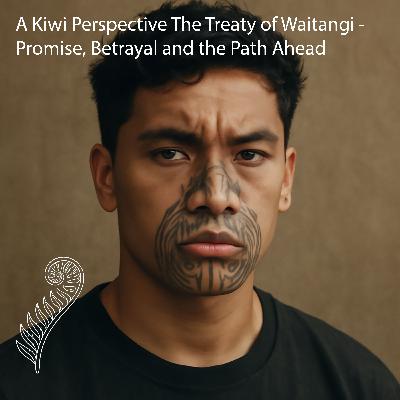
A Kiwi Perspective The Treaty of Waitangi - Promise, Betrayal and the Path Ahead explores New Zealand’s founding document through a uniquely local lens. It traces the Treaty’s 1840 signing, where Māori chiefs and the British Crown forged a partnership - albeit under differing interpretations. This work examines historical breaches, growing demands for justice, and ongoing Treaty settlements. It addresses the controversies surrounding sovereignty, cultural identity, and biculturalism, highlighting diverse Māori and Pākehā perspectives. Looking ahead, it considers the Treaty’s evolving role in shaping New Zealand’s legal and political landscape, offering a thoughtful reflection on reconciliation, partnership, and the nation’s shared future.
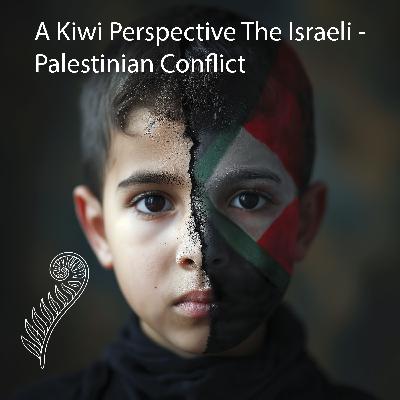
A Kiwi Perspective The Israeli - Palestinian Conflict explores the enduring toll of violence, displacement, and division in one of the world's most intractable conflicts. Framed through New Zealand’s values of peace, justice, and humanitarian concern, this perspective highlights the personal stories too often lost amid political narratives. It reflects on New Zealand’s diplomatic stance, public sentiment, and potential role as a voice for balanced engagement. This analysis urges empathy and understanding, emphasizing that at the heart of the conflict are ordinary people—families, children, communities—caught in cycles of suffering with no easy end.
loading
Comments