


 Claim Ownership
Beyond The Pilot: Enterprise AI in Action
Subscribed: 4Played: 39
Subscribe
© 2025 VentureBeat. All rights reserved.
Description
AI gets real here. On “Beyond the Pilot,” top business execs share what actually happens after the AI proof of concept — from infrastructure and org design to wins, failures, and ROI. Not theory, but deep dives into how they scaled AI that works.
25 Episodes
Reverse
Major SaaS companies including Salesforce, Intuit, and ServiceNow saw stock drops of 45-50% as enterprises shift from bloated software suites to personalized AI agents that users can control directly. Microsoft just capitulated this week, opening Copilot to allow Claude Cowork-style functionality — a clear signal that the "build vs. buy" calculus for enterprise software has fundamentally changed.
Matt Marshall and Sam Witteveen break down why personalization is no longer optional for enterprise products. Companies like Zoom now offer personalized workflows that access your conversation history and profile context. Infrastructure decisions are moving fast: token budgets must account for per-user context, identity management has become the biggest technical challenge for agent deployments, and "skills" (not just MCP) are emerging as the key abstraction layer.
Zoom's Li Juan explains how their AI Companion moved beyond generic templates to user-controlled personalization: tracking opinion divergence in meetings, generating follow-up emails with specific context controls, and giving users explicit prompt examples instead of "good luck with your prompt." This is the new standard. If your product can't reason over which tools to use, which skills to apply, and which context to pull — all personalized to the individual user — you're competing with something that can be built in 10 days (Cowork's timeline).
The agents-are-taking-over reality is here: multi-user agent architectures require thinking about context contamination, security postures for computer-use capabilities, and whether you're building internal agents or buying SaaS that will adapt. Sam's take: "AGI is agentic, and we're well along that continuum now."
🎙️ HOSTS: Matt Marshall | CEO, VentureBeat & Sam Witteveen | VentureBeat
📺 CHAPTERS:
00:00 Intro — The SaaS Apocalypse
00:01:00 The Personalization Imperative
00:02:00 Microsoft Copilot Capitulates to Cowork
00:03:00 From Template Selection to Skill Generation
00:04:00 The Land Grab for User Context
00:05:00 Zoom's Li Juan on Personalized Meeting Intelligence
00:06:00 Why Context = Magic in Enterprise AI
00:07:00 Product-Market Fit in the Agent Era
00:08:00 Metrics That Matter: JP Morgan's 30,000 Agents
00:09:00 Build vs. Buy: The New Calculus
00:10:00 Why Slack Might Win on Agent Identity Management
00:11:00 Zoom's AI Companion: Control Over Randomness
00:13:00 Li Juan on Purposeful Prompts and Reference Control
00:15:00 Multi-Agent vs. Multi-User: The Critical Distinction
00:16:00 LinkedIn's GPU Optimization Strategy
00:17:00 AGI Is Agentic: Where
Presented by Outshift by Cisco Outshift is Cisco’s emerging tech incubation engine and driver of Agentic AI, quantum, and next-gen infrastructure. Learn more at outshift.cisco.com.
About VentureBeat: VentureBeat equips enterprise technology leaders with the clearest, expert guidance on AI – and on the data and security foundations that turn it into working reality.
🔗 CONNECT WITH US
Subscribe to our Newsletters for technical breakdowns: https://venturebeat.com/newsletters
Visit VentureBeat: Venturebeat.com
.
.
.
Subscribe to VentureBeat:
/ @VentureBeat
.
.
Subscribe to the full podcast here:
Apple: https://podcasts.apple.com/us/podcast/venturebeat/id1839285239
Spotify: https://open.spotify.com/show/4Zti73yb4hmiTNa7pEYls4
YouTube: https://www.youtube.com/VentureBeat
Learn more about your ad choices. Visit megaphone.fm/adchoices
LangChain told employees they cannot install OpenClaw on company laptops due to "massive security risk" — yet this unhinged approach is exactly what makes it work. Harrison Chase unpacks why OpenClaw succeeds where AutoGPT failed, and why context engineering, not just smarter models, separates demo agents from production-ready systems.
The shift is architectural: Modern agent harnesses like Claude Code now dump 40,000-token API responses to file systems instead of cramming them into message history. LangChain's Deep Agents framework emerged from reverse-engineering Claude Code, Codex, and Deep Research — discovering they all use planning via to-do lists, subagents for focused work, file systems for context control, and 2000-line system prompts. Harrison explains why coding agents make surprisingly good general-purpose agents, how prompt caching creates accuracy trade-offs, and why "context engineering" — bringing the right information in the right format to the LLM at the right time — matters more than framework choice.
For enterprise teams: Harrison breaks down LangGraph (agent runtime with durable execution), LangChain (unopinionated agent framework), and Deep Agents (batteries-included harness). The conversation covers when to use graphs vs. loops, how skills differ from tools and subagents, and why nine months ago marked the inflection point where models could finally run reliably in autonomous loops.
🎙️ GUEST: Harrison Chase | Co-founder & CEO, LangChain
🎙️ HOSTS: Matt Marshall | CEO, VentureBeat | Sam Witteveen | VentureBeat
**CHAPTERS:**
00:00 Intro — OpenClaw security warning
01:00 LangChain's origin story: From open source library to company
03:00 Early LLM patterns: RAG and SQL agents before ChatGPT
05:00 Why OpenClaw works where AutoGPT failed
08:00 Step change in agent capability: The summer 2024 inflection
11:00 Deep Agents unpacked: Planning, subagents, file systems, prompting
14:00 Skills vs tools vs subagents
16:00 LangGraph, LangChain, and Deep Agents architecture
19:00 Context engineering: What the LLM sees vs what developers see
21:00 File systems for context management vs AutoGPT's approach
**LINKS:**
Subscribe to VentureBeat: https://www.youtube.com/@VentureBeat
Apple Podcasts: https://podcasts.apple.com/us/podcast/venturebeat/id1839285239
Spotify: https://open.spotify.com/show/4Zti73yb4hmiTNa7pEYls4
Website: https://venturebeat.com
LinkedIn: https://www.linkedin.com/company/venturebeat
Newsletter: https://venturebeat.com/newsletters
#EnterpriseAI #AIAgents #LangChain #AgenticAI #LLMInfrastructure
Learn more about your ad choices. Visit megaphone.fm/adchoices
On February 2nd, a single plugin wiped nearly $800 billion off the enterprise software market. Wall Street is terrified that AI agents are about to eat the legal industry's lunch. But LexisNexis isn't scared—they're building the moat.
In this episode of Beyond the Pilot, Min Chen (Chief AI Officer, LexisNexis) reveals the sophisticated architecture they built to counter the "LLM wrapper" revolution. Moving beyond standard RAG, Min breaks down their move to "GraphRAG", their deployment of Agentic workflows (using Planner and Reflection agents), and why they created a proprietary "Usefulness Score" because standard accuracy metrics weren't good enough for lawyers.
AI Gets Real Here. No theory, just the execution roadmap for deploying AI in a zero-error environment.
In this episode, we cover:
The "Dangerous RAG" Problem: Why semantic search fails in professional domains (retrieving "relevant" but overruled cases) and how "Point of Law" knowledge graphs fix it.
The "Usefulness" Metric: The 8 sub-metrics LexisNexis uses (including Authority, Comprehensiveness, and Fluency) to grade AI quality.
Agentic ROI: How deploying a "Planner Agent" to break down complex questions increased answer usefulness by 20%.
The "Reflection Agent": Using a secondary agent to critique and refine drafts in real-time.
Hallucination Detection: Why you should never rely on an LLM to judge its own hallucinations (and the deterministic code they use instead).
⏱️ TIMESTAMPS
00:00 - Intro: The $800 Billion AI Threat to Legal Tech
02:18 - Min Chen’s Journey: From Feature Engineering to Chief AI Officer
05:55 - Why Standard RAG Fails in Law (and How GraphRAG Fixes It)
10:40 - "Accuracy" is a Vanity Metric: The 8-Point Usefulness Score
14:20 - The "Auto-Eval" Framework: Human-in-the-Loop at Scale
16:40 - The Secret Sauce: Don't Use LLMs to Detect Hallucinations
21:15 - Agentic AI: How "Planner Agents" Drove a 20% Gain
22:00 - The "Reflection Agent": Self-Critique Loops for Drafting
30:30 - Distillation: Balancing Cost, Speed, and Quality
32:45 - Min’s Advice: Don't Build the Product First (Build the Metrics)
Presented by Outshift by Cisco Outshift is Cisco’s emerging tech incubation engine and driver of Agentic AI, quantum, and next-gen infrastructure. Learn more at outshift.cisco.com.
About VentureBeat: VentureBeat equips enterprise technology leaders with the clearest, expert guidance on AI – and on the data and security foundations that turn it into working reality.
🔗 CONNECT WITH US
Subscribe to our Newsletters for technical breakdowns: https://venturebeat.com/newsletters
Visit VentureBeat: Venturebeat.com
.
.
.
Subscribe to VentureBeat:
/ @VentureBeat
.
.
Subscribe to the full podcast here:
Apple: https://podcasts.apple.com/us/podcast/venturebeat/id1839285239
Spotify: https://open.spotify.com/show/4Zti73yb4hmiTNa7pEYls4
YouTube: https://www.youtube.com/VentureBeat
Learn more about your ad choices. Visit megaphone.fm/adchoices
While most of the world is still running GenAI pilots, Mastercard is running AI inference on 160 billion transactions a year—with a hard latency limit of 50 milliseconds per score.
In this episode of Beyond the Pilot, Johan Gerber (EVP of Security Solutions) and Chris Merz (SVP of Data Science) open the hood on one of the world's largest production AI systems: Decision Intelligence Pro. They reveal how they moved beyond legacy rules engines to build Recurrent Neural Networks (RNNs) that act as "inverse recommenders"—predicting legitimate behavior faster than the blink of an eye.
AI Gets Real Here. This isn't just about defense. Johan and Chris detail how they are taking the fight to criminals by leveraging Generative AI to engage scammers with "honeypots," expose mule accounts, and map fraud networks globally.
In this episode, we cover:
The 50ms Inference Challenge: How Mastercard optimized their RNNs to score transactions at a peak rate of 70,000 per second.
"Scamming the Scammers": How GenAI agents are being used to automate honeypot conversations and extract mule account data.
The "Inverse Recommender" Architecture: Why Mastercard treats fraud detection as a recommendation problem (predicting the next likely merchant).
Org Design for Scale: The "Data Science Engineering Requirements Document" (DSERD) Chris used to align four separate engineering teams.
The Hybrid Infrastructure: Why moving to Databricks and the cloud was necessary to cut innovation cycles from months to hours.
🚀 CHAPTERS
00:00 - Intro: 160 Billion Transactions & 50ms Decisions
02:08 - Thinking Like a Criminal: Johan’s Law Enforcement Background
06:22 - Org Design: Why AI is the "Middle Lane" of Engineering
11:00 - The Scale: 70k Transactions Per Second
15:47 - Decision Intelligence Pro: The "Inverse Recommender" RNN
23:00 - The "Lego Block" Strategy: Aligning Data Science & Engineering
33:00 - Infrastructure: Why Cloud/Databricks was Non-Negotiable
37:00 - GenAI Offensive: Threat Hunting & "Scamming the Scammers"
46:40 - "Honeypots" and Detecting Mule Accounts
52:00 - Advice for Technical Leaders: Talent & Prioritization
Presented by Outshift by Cisco Outshift is Cisco’s emerging tech incubation engine and driver of Agentic AI, quantum, and next-gen infrastructure. Learn more at outshift.cisco.com.
About VentureBeat: VentureBeat equips enterprise technology leaders with the clearest, expert guidance on AI – and on the data and security foundations that turn it into working reality.
🔗 CONNECT WITH US
Subscribe to our Newsletters for technical breakdowns: https://venturebeat.com/newsletters
Visit VentureBeat: Venturebeat.com
.
.
.
Subscribe to VentureBeat:
/ @VentureBeat
.
.
Subscribe to the full podcast here:
Apple: https://podcasts.apple.com/us/podcast/venturebeat/id1839285239
Spotify: https://open.spotify.com/show/4Zti73yb4hmiTNa7pEYls4
YouTube: https://www.youtube.com/VentureBeat
Learn more about your ad choices. Visit megaphone.fm/adchoices
While the rest of the industry chases massive models, LinkedIn quietly achieved a major engineering breakthrough by going small.
In this episode of Beyond the Pilot, Erran Berger (VP of Product Engineering, LinkedIn) opens the "cookbook" on how they distilled massive 7B parameter models down to ultra-efficient 600M parameter "student" models—scaling AI to 1.2 billion users without breaking the bank.
AI Gets Real Here. This isn't theory. Erran details the exact architecture, the "Multi-Teacher" distillation process, and the organizational shift that forced Product Managers to write evals instead of specs.
In this episode, we cover:
The Distillation Pipeline: How to train a 7B "Teacher" and distill it to a 1.7B intermediate and 0.6B "Student" for production.
Synthetic Data Strategy: Using GPT-4 to generate the "Golden Dataset" for training.
Multi-Teacher Architecture: Why they separated "Product Policy" and "Click Prediction" into different teacher models to solve alignment issues.
10x Efficiency Hacks: Specific techniques (Pruning, Quantization, Context Compression) that slashed latency.
Org Design: Why the "Eval First" culture is the new requirement for AI engineering teams.
🚀 CHAPTERS
00:00 - Intro: LinkedIn's Massive "Small Model" Feat
04:00 - Why Commercial Models Failed at LinkedIn Scale
08:00 - The "Product Policy" Funnel & Synthetic Data Generation
12:00 - The Pipeline: 7B → 1.7B → 600M Parameters
19:00 - The "Multi-Teacher" Breakthrough (Relevance vs. Clicks)
23:00 - How They Achieved 10x Latency Reduction (Pruning/Compression)
31:00 - Changing the Culture: Why PMs Must Write Evals
35:00 - The "Bright Green Matrix": Measuring Success & Future Roadmap
Presented by Outshift by Cisco Outshift is Cisco’s emerging tech incubation engine and driver of Agentic AI, quantum, and next-gen infrastructure. Learn more at outshift.cisco.com.
About VentureBeat: VentureBeat equips enterprise technology leaders with the clearest, expert guidance on AI – and on the data and security foundations that turn it into working reality.
🔗 CONNECT WITH US
Subscribe to our Newsletters for technical breakdowns: https://venturebeat.com/newsletters
Visit VentureBeat: Venturebeat.com
.
.
.
Subscribe to VentureBeat:
/ @VentureBeat
.
.
Subscribe to the full podcast here:
Apple: https://podcasts.apple.com/us/podcast/venturebeat/id1839285239
Spotify: https://open.spotify.com/show/4Zti73yb4hmiTNa7pEYls4
YouTube: https://www.youtube.com/VentureBeat
#EnterpriseAI #LLMDistillation #LinkedInEngineering #SmallLanguageModels #AIArchitecture #TechLeadership
Learn more about your ad choices. Visit megaphone.fm/adchoices
The "TAM" for AI Agents isn't software. And there is a $10 Trillion opportunity.
In this episode, Replit CEO Amjad Masad reveals why 99% of today's enterprise AI agents are just "Slop"—unreliable, generic toys that fail in production. We dive deep into the engineering reality of building autonomous agents that actually work, moving beyond simple chatbots to systems that can navigate the messy reality of enterprise infrastructure.
Amjad breaks down Replit’s "Computer Use" hack that makes agents 10x cheaper than generic models, explains why "Vibe Coding" is the future of the C-Suite, and issues a warning to technical leaders: If you want to ship fast in the AI era, you need to kill your product roadmap.
In this episode, we cover:
The "Slop" Problem: Why most LLM outputs are generic and how to inject "taste" back into software.
The Computer Use "Hack": How Replit built a programmatic verifier loop that outperforms vision-based models.
Vibe Coding: Why non-technical domain experts (HR, Sales, Marketing) will build the next generation of enterprise software.
The $10T Market: Why the Junior Developer role is disappearing and being replaced by the "Manager of Agents."
🚀 CHAPTERS
0:00 - Intro: Why most AI Agents are "Toys"
03:02 - The only 2 AI use cases making money right now
06:00 - The "Crappy Product" Strategy (Shipping fast)
10:00 - What is "AI Slop"? (And how to fix it)
14:30 - The "Deleted Database" Incident: Solving Reliability
18:00 - The "Squishy" Divide: Why Marketing Agents fail
21:45 - Vibe Coding in the Enterprise
26:00 - Model Wars: Claude Opus vs. Gemini vs. OpenAI
28:10 - The "Computer Use" Hack (10x Cheaper, 3x Faster)
36:00 - Why Product Roadmaps are Dead
43:00 - Replit is the #1 Software Vendor (Ramp Data)
49:00 - The Unit Economics of Agents (Token Costs vs. Value)
53:00 - Open Source vs. Closed: The "Cathedral of Bazaars"
59:00 - The $10 Trillion Opportunity: Replacing Labor
🔗 CONNECT WITH US
Subscribe to our Newsletters for technical breakdowns: https://venturebeat.com/newsletters
Visit VentureBeat: Venturebeat.com
#AgenticAI #Replit #VibeCoding #EnterpriseAI #LLM #SoftwareEngineering #FutureOfWork #AmjadMasad #ArtificialIntelligence #DevOps
.
.
.
Subscribe to VentureBeat:
/ @VentureBeat
.
.
Subscribe to the full podcast here:
Apple: https://podcasts.apple.com/us/podcast/venturebeat/id1839285239
Spotify: https://open.spotify.com/show/4Zti73yb4hmiTNa7pEYls4
YouTube: https://www.youtube.com/VentureBeat
Learn more about your ad choices. Visit megaphone.fm/adchoices

Inside the 'Agent Economy': How 30,000 AI Assistants Took Over JPMorgan
While most enterprises were scrambling after ChatGPT launched, JPMorgan Chase was already two years ahead. 🚀
In this episode of Beyond the Pilot, we sit down with Derek Waldron, Chief Analytics Officer at JPMorgan Chase, to reveal how the world’s largest bank built an internal AI platform that is now used by 1 in 2 employees daily.
Derek shares the contrarian insight that drove their strategy: AI models are commodities; the real moat is connectivity.
Learn how they scaled from zero to 250,000+ users, why they empowered employees to build 30,000+ of their own "Personal Agents," and how they are solving the data privacy challenge at an enterprise scale.
🔥 IN THIS EPISODE:
The "Super Intelligence" Thought Experiment: Why raw intelligence is useless without enterprise connectivity.
The Agent Economy: How JPM enabled non-technical staff to build 30,000 custom AI assistants.
The Adoption Playbook: How to break through the "30% wall" and get the majority of your workforce using AI.
Build vs. Buy: Why JPM built their own "LLM Suite" instead of waiting for vendors.
⏳ CHAPTERS:
00:00 - Introduction: The JPMorgan AI Story
01:45 - The 3 Core Principles Behind JPM’s Strategy
03:25 - The "Super Intelligence" Thought Experiment
05:00 - Data Privacy: Why JPM Doesn't Train Public Models
06:00 - Viral Adoption: From 0 to 250k Users
09:20 - Evolution of LLM Suite: From RAG to Ecosystem
14:00 - The "Moat" is Connectivity, Not the Model
23:00 - The Agent Economy: 30,000 Employee-Built Assistants
31:00 - Governance & Guardrails for AI Agents
33:00 - Crossing the Chasm: Getting to 60% Adoption
40:00 - The "Product" Mindset: Solving Business Problems First
42:30 - The Future: End-to-End Process Transformation
46:25 - The "Unsolved" Problem Derek Wants to Fix
🙏 SPECIAL THANKS TO OUR SPONSOR:
This episode is presented by Outshift by Cisco.
Learn more about their work on the Internet of Agents and the open-source Linux Foundation project:
🔗 https://www.agentcy.org
🎙️ GUEST:
Derek Waldron | Chief Analytics Officer, JPMorgan Chase
HOSTS:
Matt Marshall | VentureBeat
Sam Witteveen | VentureBeat
#EnterpriseAI #JPMorgan #GenerativeAI #AgenticAI #FinTech #ArtificialIntelligence #Innovation #BeyondThePilot
.
.
.
Subscribe to VentureBeat:
/ @VentureBeat
.
.
Subscribe to the full podcast here:
Apple: https://podcasts.apple.com/us/podcast/venturebeat/id1839285239
Spotify: https://open.spotify.com/show/4Zti73yb4hmiTNa7pEYls4
YouTube: https://www.youtube.com/VentureBeat
https://www.youtube.com/playlist?list=PLMQoSwszBxm5dCv2bdqGnJ0QAL9n7Ds4_
🔗 CONNECT WITH VENTUREBEAT:
Website: https://venturebeat.com
LinkedIn: https://www.linkedin.com/company/venturebeat
X (Twitter): https://twitter.com/VentureBeat
Newsletter: https://venturebeat.com/newsletters
Learn more about your ad choices. Visit megaphone.fm/adchoices

We built AI agents by accident... and it worked. 🤯
In this episode of VentureBeat’s Beyond the Pilot, we go inside the engineering brain of Booking.com with Pranav Pathak (Director of Product Machine Learning). Pranav reveals how they "stumbled" into agentic architectures before the term even existed, how a simple text box revealed a massive missed revenue opportunity (the "Hot Tub" story), and exactly how they stack LLMs, RAG, and Orchestrators to handle millions of travelers without breaking the bank.
If you are building Enterprise AI, this is the blueprint for moving from "cool demo" to production scale.
🚀 In this episode, we cover:
The "Hot Tub" Revelation: How free-text AI search exposed features customers desperately wanted but couldn't find.
Real ROI Metrics: How LLMs drove a 2x increase in topic detection accuracy and freed up 1.5x of agent bandwidth.
The Booking.com AI Stack: A full breakdown of their Orchestrator → Moderation → Agent → RAG architecture.
Latency vs. Intelligence: Why they don't use GPT-5 for everything and how they decide between small models and big brains.
The Memory Problem: How to build AI that remembers user preferences without being "creepy”.
00:00 Introduction to Agentic Architectures
00:30 Meet Pranav Pathak from Booking.com
01:24 Evolution of Travel Recommendations
03:41 Impact of Gen AI on Customer Service
07:29 Building an Effective AI Stack
10:32 Agentic Systems and Best Practices
13:45 Choosing Between Building and Buying AI Solutions
18:51 Evaluating AI Models for Business Use
24:10 Challenges in Human Evaluation
25:06 Recommendation System and Data Utilization
27:26 Innovations in Travel Search
29:04 Journey and Challenges in ML Integration
32:08 Managing Memory and User Data
38:07 Future of Travel Assistance
41:33 Advice for New AI Integrations
43:57 Final Thoughts and Farewell
🔗 LINKS & RESOURCES:
OutShift by Cisco (Sponsor): outshift.cisco.com
VentureBeat: www.venturebeat.com
#ArtificialIntelligence #GenAI #Bookingcom #MachineLearning #AgenticAI #LLM #TechPodcast #EnterpriseAI
.
.
.
Subscribe to VentureBeat:
/ @VentureBeat
.
.
Subscribe to the full podcast here:
Apple: https://podcasts.apple.com/us/podcast/venturebeat/id1839285239
Spotify: https://open.spotify.com/show/4Zti73yb4hmiTNa7pEYls4
YouTube: https://www.youtube.com/VentureBeat
Learn more about your ad choices. Visit megaphone.fm/adchoices

In our inaugural episode, we sit down with Ryan Nystrom, leader of the AI team at Notion, to pull back the curtain on Notion 3.0. Ryan reveals the journey of integrating powerful AI agents into the productivity platform and draws fascinating parallels between the current AI era and the mobile revolution he witnessed at Instagram. He shares exclusive insights into the development challenges, the critical role of tools, context, and curation, and how custom agents are poised to reshape work. Plus, Ryan offers essential advice for any company diving into the AI space.
Learn more about your ad choices. Visit megaphone.fm/adchoices
Lift-and-shift isn’t enough. MongoDB’s Vinod Bagal breaks down how to modernize your data for AI — and why waiting could cost you your competitive edge.
Host: Sean Michael Kerner
Guest: Vinod Bagal
For more stories visit venturebeat.com
Learn more about your ad choices. Visit megaphone.fm/adchoices
AI is accelerating the cyber arms race — and former FBI agents Paul Bingham and Mike Morris say most enterprises aren’t ready. In this VB in Conversation, they break down the real-world threats targeting critical infrastructure, how AI is changing the attack surface, and why smart, layered defense starts with training the next-gen cyber workforce.
Learn more about your ad choices. Visit megaphone.fm/adchoices
Key Insights and Takeaways from VentureBeat Transform Event: AI and Enterprise Innovation
In this episode, Matt and Sam recount their experiences and insights from the recent VentureBeat Transform event, an annual gathering focused on enterprise AI. They discuss the significant takeaways, including the increasing adoption of AI agents in production, the lack of dominance by any single hyperscaler in the AI model space, the focus on practical AI solutions over super-intelligence hype, and the evolving structure of teams in the AI-driven workplace. Highlights include insights from speakers at major companies like American Express, Google, IBM, and Zoom, as well as discussions on AI safety and the changing management dynamics with AI agents. Tune in to get a comprehensive overview of the current state and future of AI in enterprise settings.
00:00 Introduction and Event Overview
00:51 Key Takeaways from VentureBeat Transform
02:46 AI Deployment in Enterprises
04:37 Insights from Industry Leaders
08:48 Hyperscalers and Model Dominance
12:12 Real-World AI Applications
14:04 Focus on Practical AI Solutions
24:08 The Future of AI Teams
30:37 Conclusion and Final Thoughts
Learn more about your ad choices. Visit megaphone.fm/adchoices
Visa’s SVP of Data & AI, Sam Hamilton, joins VentureBeat to break down the hidden costs, trade-offs, and infrastructure realities behind running over 400 AI solutions incorporating 300 AI models at global scale.
Learn more about your ad choices. Visit megaphone.fm/adchoices
Google Cloud Next: In-Depth Discussion with Chief Evangelist Richard Seroter
Join us for an exclusive interview with Richard Seroter, Chief Evangelist of Google Cloud, as he discusses the latest developments and insights from Google Cloud Next. Dive into conversations about AI advancements, the new agent development kit, and the multi-agent protocol, and how they are reshaping the future of cloud services and enterprise solutions. Learn about the balance between pre-built and custom agents, and Google's commitment to open-source and multi-cloud flexibility. Don't miss out on this insider look at the cutting edge of AI and cloud technology.
00:00 Introduction and Recap of Google Cloud Next
02:17 Interview with Richard Seroter Begins
02:51 Discussing the Developer Keynote and Agent Technology
03:31 The Evolution and Readiness of AI Agents
05:19 Google's Approach to AI and Agent Development
07:20 Comparing Google with Competitors in AI
09:02 Agent Development Kit and Industry Adoption
10:51 The Future of Multi-Agent Systems
16:04 Google's Open Source Strategy and Cloud Integration
21:11 Exploring Google's Interest in Agent Technology
21:45 The Future of Agent Marketplaces
22:27 Google's Role in Payment Processing for Agents
23:17 Community Adoption of Agent Protocols
26:20 Enterprise Applications of Agents
28:43 The Evolution of Agent Space
33:48 The Rise of Personal Agents
36:04 Balancing Innovation Across Google Cloud and Labs
38:00 The Impact of Pre-Built Agents
40:18 Conclusion and Final Thoughts
Learn more about your ad choices. Visit megaphone.fm/adchoices
Cisco’s Anurag Dhingra joins VentureBeat’s Matt Marshall to unpack what it means to build a truly AI-ready network. From smart switching to agentic operations, Dhingra explains how enterprises must stay ahead of surging network demands — and why network intelligence is now foundational to scaling AI.
Learn more about your ad choices. Visit megaphone.fm/adchoices
Exploring Napkin.ai: Revolutionizing Graphic Design with AI Agents
Join Matt Marshall, founder and CEO of VentureBeat, and Sam Witteveen as they interview Pramod Sharma, CEO of Napkin.ai, and co-founder Jerome Scholler, about their innovative AI-powered graphic design tool. Discover how Napkin.ai has rapidly grown to 2 million beta users with its unique ability to transform text into compelling graphics effortlessly. Learn about the sophisticated backend structure involving multiple specialized AI agents and the recently introduced custom styles feature that allows users and companies to define and perfect their graphic outputs. Perfect for anyone interested in the future of AI in graphic design.
00:00 Introduction to Napkin AI
00:24 Interview with Pramod Sharma
00:44 How Napkin AI Works
00:59 The AI Agency Model
01:56 Deep Dive into Napkin AI's Features
04:34 User Experience and Customization
08:00 Future Plans and Innovations
15:11 Technical Insights and Agent Structure
28:09 Conclusion and Final Thoughts
Learn more about your ad choices. Visit megaphone.fm/adchoices
Part 1: Inside the Cybersecurity-First AI Model
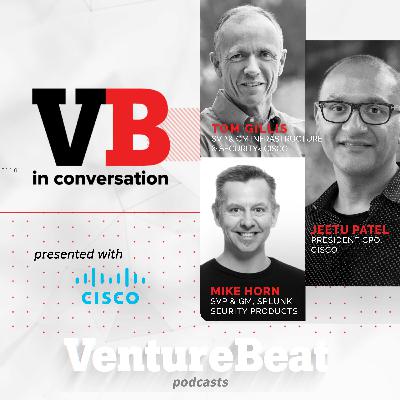
LLMs are inherently non-deterministic — but more data isn’t always better. As Cisco’s Jeetu Patel explains, Cisco Foundation AI distilled 900 billion tokens down to the most relevant 5 billion to create the industry’s first AI model purpose-built for security.
Part 2: AI Security: Built-in, Always-On
Cisco’s Tom Gillis and Splunk’s Mike Horn reveal how distributed enforcement, self-upgrading firewalls, and AI-powered infrastructure are redefining security architecture and transforming what a SOC can do in the AI era.
Learn more about your ad choices. Visit megaphone.fm/adchoices
Originally published in September 2024
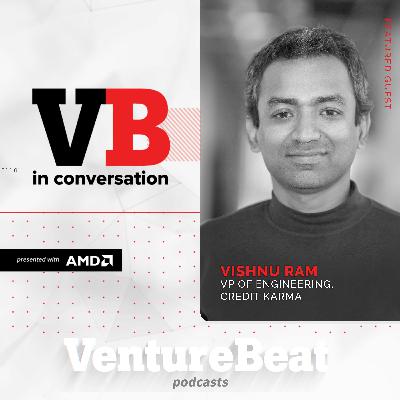
As orgs race to progress from proof-of concept to full, scalable production in AI, there are many lessons and resets. Key to these are choices made around infrastructure. Intuit’s Credit Karma, with over 100 million users, has been one of AI’s success stories. Vishnu Ram, Credit Karma’s VP of Engineering, spoke with VB about those lessons – and how the learning will continue.
Learn more about your ad choices. Visit megaphone.fm/adchoices
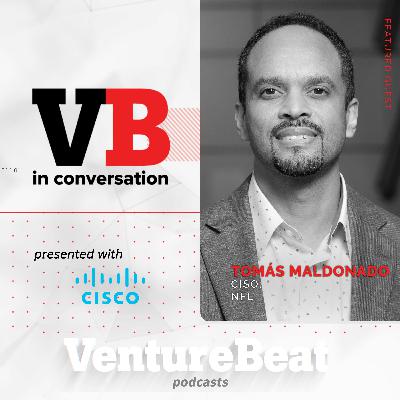
NFL CISO Tomás Maldonado speaks with VentureBeat about defending Super Bowl LIX from adversarial attacks that potentially include weaponized AI, endpoint attacks, deepfakes, and finely tuned social engineering – and require collaboration with the FBI and Secret Service.
Learn more about your ad choices. Visit megaphone.fm/adchoices
Originally Released in February 2024
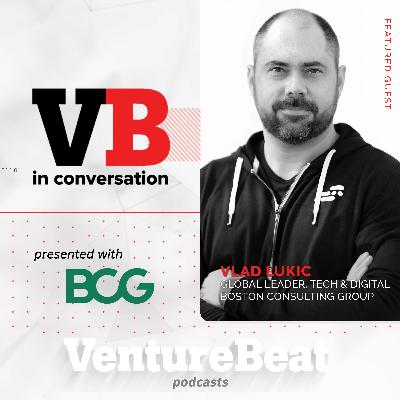
In his role as Global Leader for Tech and Digital Advantage at the Boston Consulting Group, Vlad Lukic has overseen hundreds of AI deployments. Now working with scores of enterprise companies racing to embrace gen AI, he finds that critical considerations are often overlooked, such as readiness of data and pivotal financial factors. Missteps such as deploying AI where it’s not really needed and neglecting the essential task of managing organizational change for seamless AI adoption can also tank the best intentions to capitalize on gen AI. He also has lots of advice on how to do it right.
Learn more about your ad choices. Visit megaphone.fm/adchoices

Comments

Download from Google Play

Download from App Store
 United States