


 Claim Ownership
Classics Read Aloud
Subscribed: 9Played: 78
Subscribe

© Ruby Love
Description
35 Episodes
Reverse
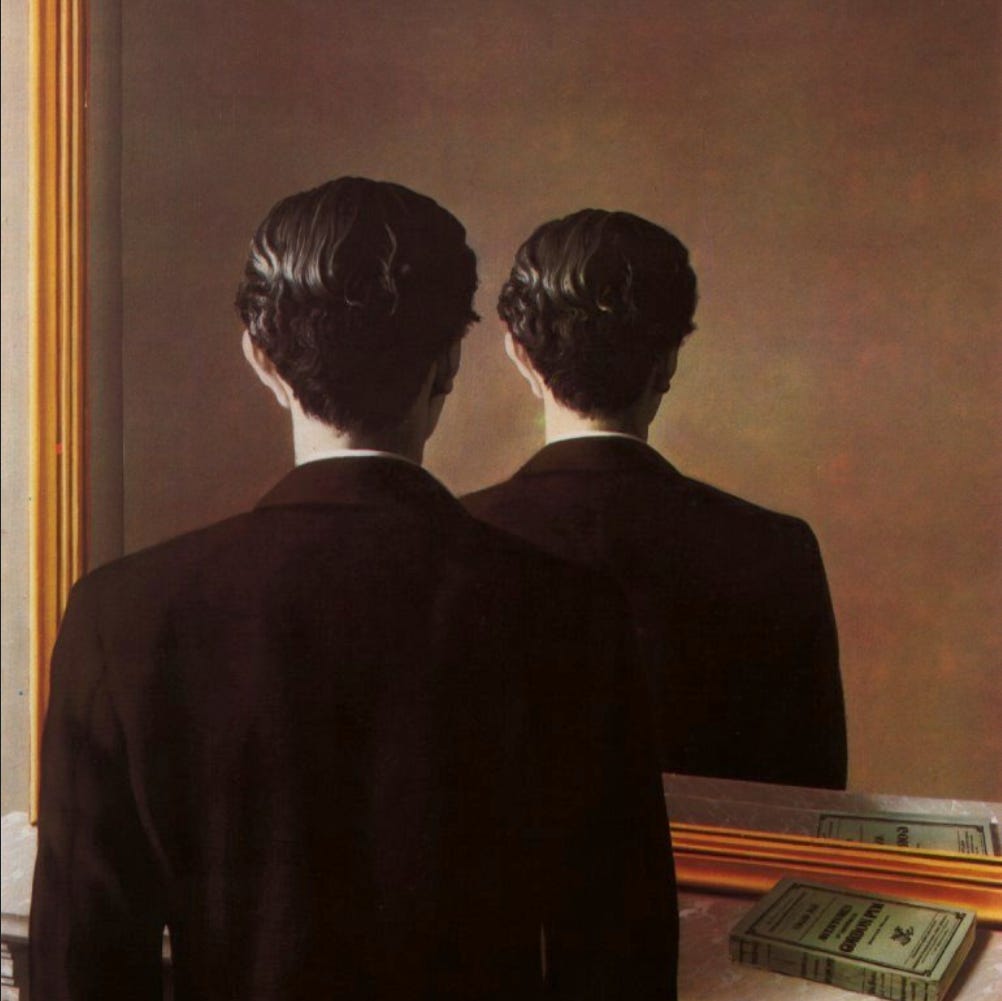
“I would prefer not to.”Today, Moby-Dick is regarded as one of the greatest novels in American history and a towering achievement for its author, Herman Melville. Not so when it was first published: Sales were poor, and those who read it mostly had no idea what to do with it. His subsequent novel, Pierre, fared no better.“Bartleby the Scrivener: A Story of Wall-Street” was an attempt to turn the tide on a disappointing run. Seeking commercial justification for his writing and needing to claw himself out of debt to his publishers, Melville geared the tale for magazine publication in two parts. Perhaps contrary to purpose, Melville’s perspective on Wall Street was hardly full of the type of speculative intrigue that might entice the attention—and dollars—of fly-by-night audiences. Only much later did the work emerge as a masterpiece, appreciated for its allegorical subtlety, its engaging absurdity, and that oh-so-confounding five-word phrase that one never forgets.[Insert Not to be Reproduced | René Magritte, 1937]Amid the hustle and bustle of Wall Street, the titular character stands out for his apparent apathy—he is the antithesis of ambition and industry, “one of those beings of whom nothing is ascertainable.” The attention he draws to himself is far from positive, and the reactions of those who have to deal with his infuriating indifference are both comic and painful. What is one to do?In the end, “Bartleby the Scrivener” was unable to deliver Melville from hardship or contemporary irrelevancy. How could it? After all, the story reflects Melville’s pointed rejection of lowering himself to the sensationalism he believed necessary for commercial acclaim. He would, it seems, have preferred not to.Please enjoy…Subscribe to Classics Read Aloud to receive future readings, including commentary and interesting “et cetera” tangent links, right to your inbox: https://classicsreadaloud.substack.com/subscribe This is a public episode. If you would like to discuss this with other subscribers or get access to bonus episodes, visit classicsreadaloud.substack.com
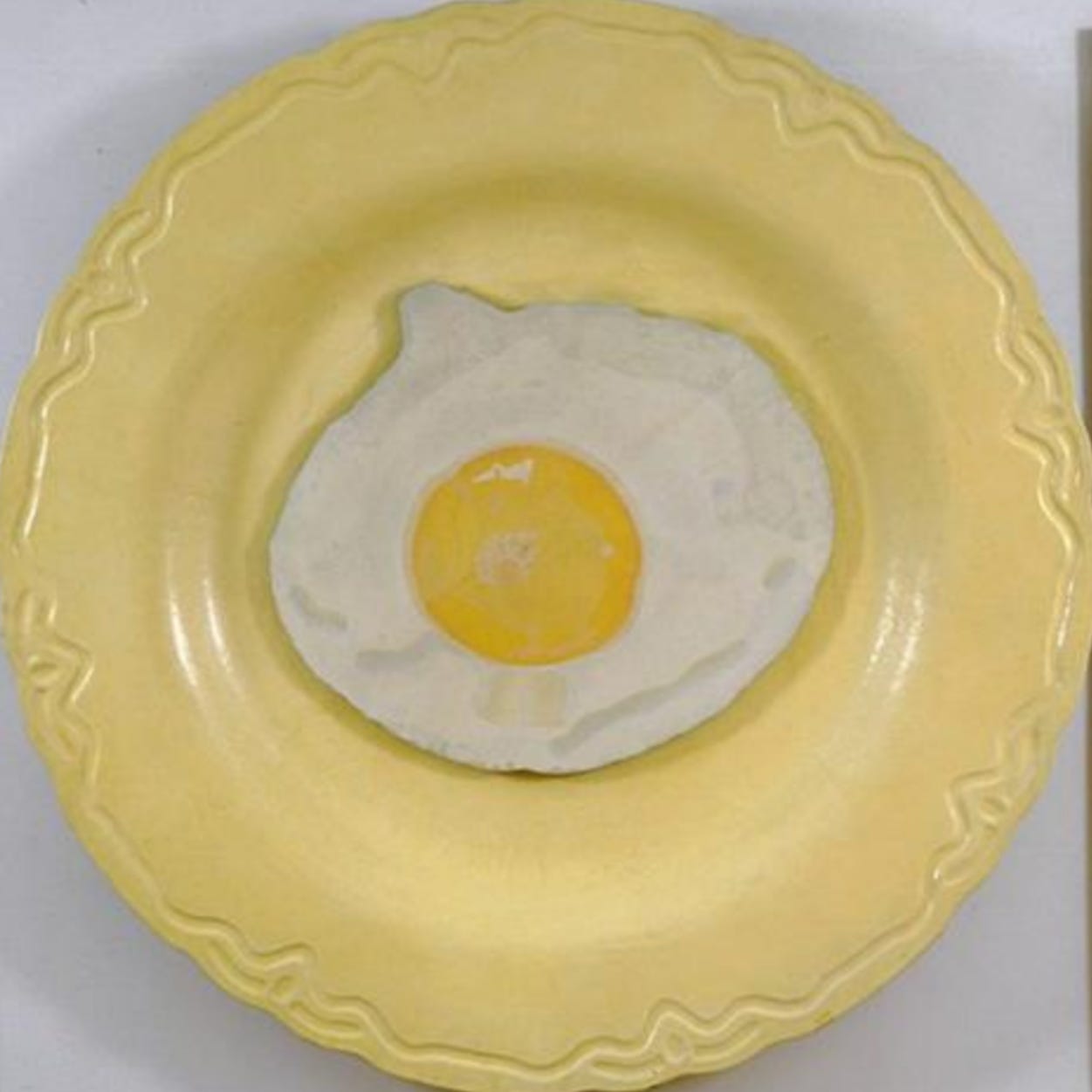
“Most philosophers must have been raised on chicken farms.”Depending on who you ask, Sherwood Anderson is either a genius who ushered in a new era of American storytelling or the unfortunate progenitor of utterly forgettable prose. It’s a little like the age-old chicken-and-egg question… it probably can’t be both.Perhaps the divide rests on what one expects from a story. Anderson’s work was born of a life spent in the American Midwest watching small towns fail and family hopes turn into humiliation. But that doesn’t mean his stories were just a drag. The brevity of his perspective and many years in advertising lend a dry humor to his writing that keeps us from getting sucked into the mire. His stories could very well be considered character studies rather than plot-driven escapades.As Anderson himself stated in 1921, “Perhaps because of a native laziness, I found myself unable to think up plots. To try to do so bored me unspeakably. On the other hand, there were all about me human beings living their lives, and in the process of doing so creating drama… I have tried to clutch at it and reproduce in writing some of that drama…”Human beings, living their lives; we are endlessly fascinating creatures, especially in the hands of a writer who sees both sides of those everyday dramas: the up and the down, the tragic and the comic, the chicken and the egg.Anderson’s story “The Egg” gives us a concentrated dose of three such humans, a mother, a father, and their son, as they try, earnestly and often, to pursue “the American passion for getting up in the world.”Please enjoy…Before you float off to enjoy the story, please help me reach my goal of 10,000 listeners by “♡ Liking” this post and sending it to friends, family, book club, wine club, golf foursome, and stitching group—word of mouth is more powerful than any algorithm. Thank you!Listening: “Where would we be without wishful thinking?...“ croons Jeff Tweedy on Wilco’s 2004 album, A Ghost is Born. Based in Chicago, Wilco, like Anderson, specialized in recording the lives unfolding in the US Midwest. Described as an ambitious album full of self-indulgent contrasts, A Ghost is Born is home to a number of memorable titles, particularly on the back half. Tune it to track five, “Hummingbird,” and let it run.Scrambling: My youngest has long held a penchant for the “What’s your favorite…” style of question. What’s your favorite song? What’s your favorite place to visit? And, my favorite of the favorite game: What’s your favorite food?The egg, of course. Is there anything more perfectly versatile?Last week, I shared one of my favorite eggs-for-dinner recipes, so today, I thought I’d catalogue my growing list of practical ways to handle the almighty egg. I welcome your additions.* Buy unwashed farm eggs. The flavor and nutritional profile are far superior to anything in the big grocery coolers, and they’ll last months in the fridge.* The most reliable way to crack an egg is to give it a solid thunk against the counter.* Check if an egg is still good by gently submerging it in a glass of water. If it stays at the bottom, even if it stands up a bit, you’re all good.* Whether frying, scrambling, or omelette-ing, the most common source of frustration stems from not letting the pan get hot enough. A seriously satisfactory preheat makes a world of difference and all but eliminates the need to clean the pan with anything more intensive than wiping it out with a paper towel.* A tablespoon of white vinegar added to a pan of simmering water aids a perfect poach. Simply swirl the water with a soup spoon, round and round, then drop in a raw egg.* Emulsify a yolk into a soup base for a supreme richness.* The easiest way to separate the yolk from the whites is to use your hands. Turn out a cracked egg into your fingers and let the whites naturally drip off into one bowl, leaving a clean yolk to put in another.* Separated egg whites last forever in the fridge. What to do with them? Skip the egg-white omelette and learn the simple Italian meringue for a showstopper dessert topping.* Skip the egg wash on pastry crust. A thin layer of heavy cream brushed on the raw dough is quicker and yields a prettier result.“Bartleby the Scrivener” by Herman Melville, 1853Little Women, An Excerpt, by Louisa May Alcott, 1868“A Doctor’s Visit” by Anton Chekhov, 1898 This is a public episode. If you would like to discuss this with other subscribers or get access to bonus episodes, visit classicsreadaloud.substack.com
“He was not really disappointed to find Paris was so empty. But the stillness in the Ritz bar was strange and portentous. It was not an American bar any more—he felt polite in it, and not as if he owned it. It had gone back to France.”Every so often, youthful American audiences are treated to a “voice of their generation,” and in the Jazz Age, that voice was F. Scott Fitzgerald’s. In 1918, Fitzgerald wrote in a letter, “I know I’ll wake up some morning and find the debutantes have made me famous overnight.” Two years later, with the publication of his novel This Side of Paradise, his expectations became reality.Rather instantly, Fitzgerald was showered with money and attention—all the trappings of celebrity and success enjoyed by those who so perfectly capture the zeitgeist of their time. The last writer I recall being heralded as the voice of the generation was Lena Dunham… fifteen years ago, perhaps? Time flies, and she wasn’t my generation, so I didn’t recognize the voice. I have since stopped paying attention, and I wonder if today’s generation can possibly contain a voice true enough to resonate over the devouring hum of rapid-fire TikTok videos.I digress.Fitzgerald had his glorious days in the sun—too many, and he eventually let himself get burned. This was the roaring twenties. Having spent ghastly sums on a fast-and-loose lifestyle of booze and high society, Fitzgerald eventually found himself a debt-laden alcoholic. His time as Icarus was hardly unique; many were left gasping for second chances.“Babylon Revisited” is the story of Charlie Wales, one of the poor gasping souls. We find him returning to Paris after the dust of his debauchery has settled, looking to rebuild a life on solid footing. The city has changed, he has changed, but as we all well know, change alone often isn’t enough to erase the damage of the past.Please enjoy…Before you float off to enjoy the story, please help Classics Read Aloud grow by “♡ Liking” this post and sending it to a friend—word of mouth is more powerful than any algorithm. Thank you!Savoring: A story like this demands a repast with a hint of repentance. M. F. K. Fisher wrote How to Cook a Wolf in 1942 to inspire home cooks limited by the wartime shortages imposed on their pantries. Fisher is irreverent and indulgent; the book is a treat for anyone who enjoys the art of the practical, fortifying family meal. Her dish “Eggs in Hell” is simmering, rich, economical, and far more delicious than anyone repenting has any right to deserve.Listening: Life is full of transitions, some smooth, some, like Charlie’s, jarring. February is a month that begs for transition. Tired of winter, tired of grey, I’m all too aware that the hints of spring remain quite out of grasp. I’m gravitating towards the instrumental albums in my collection that offer their own hints of life; something a little jazzy, something with a provocative, ambient vocal pleasantly interjecting here and there. Transit, the 2019 album from FloFilz has been in steady rotation, breathing a bit of life into this purgatorial season.“The Egg” by Sherwood Anderson, 1921“Bartleby the Scrivener” by Herman Melville, 1853Little Women, An Excerpt, by Louisa May Alcott, 186 This is a public episode. If you would like to discuss this with other subscribers or get access to bonus episodes, visit classicsreadaloud.substack.com
“Through the wide doors of the sheds she caught a glimpse of the black mass of the boat, lying in beside the quay wall, with illumined portholes. She answered nothing. She felt her cheek pale and cold and, out of a maze of distress, she prayed to God to direct her, to show her what was her duty.”In the early 1900s, James Joyce set out to capture Irish life as he saw it, which wasn’t a particularly encouraging view. The resulting collection of short stories, Dubliners, was published in 1904, overcoming initial protests over its publication due to the indecency of its controversial tone. Comprising fifteen stories grouped into four stages—childhood (I published a reading of “Araby” from this grouping September of 2025), adolescence, maturity, and finally public life—Dubliners delivers powerful glimpses into the frictions of everyday life,. The final story, and his most famous of the set, “The Dead,” is a culmination of all these themes.Joyce began writing these stories as he was attending medical school in Dublin, and his studies greatly affected the tone and purpose of Dubliners. At the time, he spoke often of the tepid lifeforce of his countrymen in specifically medical terms. As scholar Florence L. Walzl observed, Joyce “concluded that Ireland was sick, and diagnosed its psychological malady as hemiplegia, a partial, unilateral paralysis. He told his brother, ‘What’s the matter with you is that you’re afraid to live. You and people like you. This city is suffering from hemiplegia of the will.’”Today’s story, “Eveline,” is from the adolescence phase. In it, a young woman is on the precipice of a life-altering move away from her dour life of servitude under an abusive father and towards open possibility in another country with a man who loves her. One gets the sense that, while Joyce conjures up the reader’s deep sympathy with Eveline’s ultimate impotence, he doesn’t care to join us in it but would rather rebel against the suspension of will that inspired it—a masterful achievement in so few words.Please enjoy…Subscribe to Classics Read Aloud to receive future readings, including commentary and interesting “et cetera” tangent links, right to your inbox: https://classicsreadaloud.substack.com/subscribe This is a public episode. If you would like to discuss this with other subscribers or get access to bonus episodes, visit classicsreadaloud.substack.com
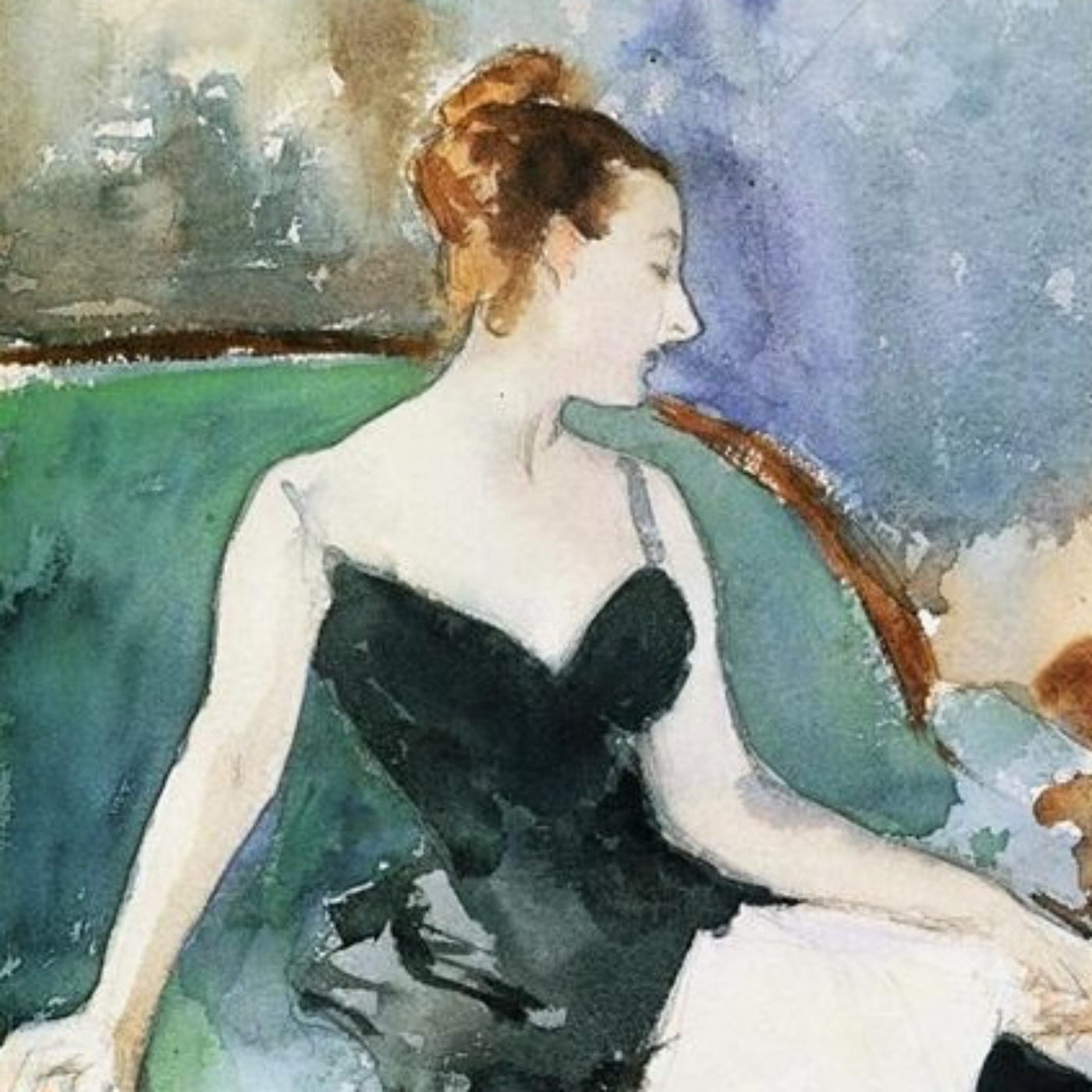
“Mathilde suffered ceaselessly, feeling herself born to enjoy all delicacies and all luxuries.”Guy de Maupassant was like a flash of lightening on the literary scene. He had a short life and a shorter writing career that left a slowly fading echo of light in the night sky. As Maupassant himself acknowledged, “I entered the literary life like a meteor and I will come out like a love at first sight.”Love at first sight, in Maupassant’s world, comes to a lonely, regrettable end.In his ten intense years of writing, the author created over 300 short stories and six novels, among a number of other creative pursuits. Maupassant called himself a naturalist and pressed beauty right up against pain and suffering in stories that quickly won the fawning attention of readers who were ready for a radical departure from the romanticism that reigned in the first half of the 19th-century.Friend and fellow naturalist Emile Zola called Maupassant “the happiest and unhappiest of men.” It is easy to see this deportment take shape in a story like “The Necklace,” in which a beautiful woman, desperate for a beautiful life, is served a slice of her soul’s desire only for it to digest into years of penance and misery.“The Necklace” remains one of Maupassant’s best-known works, and we can surely appreciate why once we experience the painful twist of his ending.Please enjoy…Subscribe to Classics Read Aloud to receive future readings, including commentary and interesting “et cetera” tangent links, right to your inbox: https://classicsreadaloud.substack.com/subscribe This is a public episode. If you would like to discuss this with other subscribers or get access to bonus episodes, visit classicsreadaloud.substack.com
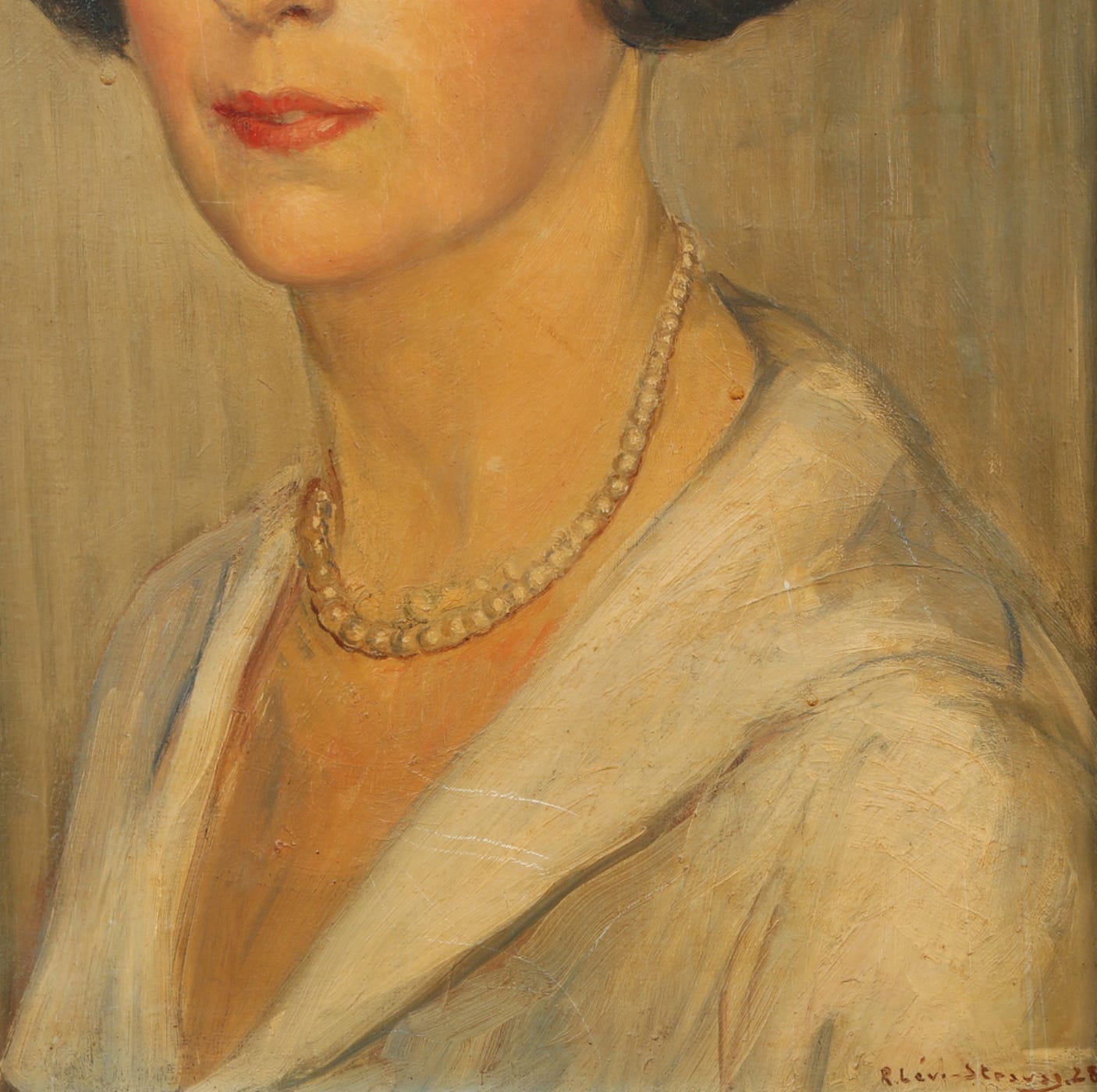
Paste by Henry James“She had laid the pearls on his table, where, without his having at first put so much as a finger to them, they met his hard, cold stare.”There is something about the writing style of Henry James that can leave one with the impression that his work exists in the service of the hoi polloi; that his work is snobbish and unrelatable. Respected biographer Carl Van Doren once referred to him as the “laureate of leisure,” and there is surely something rather gilded about many of the narrative backdrops he creates.Alas, if such a notion has prevented you from delving into James’ work, allow me to open the door to a different view with a reading of “Paste,” a short story published in 1899. Modeled after Guy de Maupassant’s story “The Necklace,” James complimented the younger author by adopting a similar theme, albeit turned upside down. In “Paste,” a woman of modest means is gifted a necklace from the estate of her recently deceased aunt. The aunt was the wife of a pastor, living a rather humble life, and the stepson who gives the necklace expresses his belief that it is “worthless paste” but that some sentimental value may be appreciated from its possession.As the story unfolds, the origin and value of the necklace are called into question, and the stakes rise. With “Paste,” James creates a tension directly from the characters’ lack of leisure—there is no one in the story for whom resolution is immaterial. In an incredible efficiency of plot development, he puts the psychology of the situation front and center.I’ll be publishing a reading of de Maupassant’s “The Necklace” next week, so stay tuned for that release and decide for yourself if James’ reinterpretation is an improvement on the original.Please enjoy…Subscribe to Classics Read Aloud to receive future readings, including commentary and interesting “et cetera” tangent links, right to your inbox: https://classicsreadaloud.substack.com/subscribe This is a public episode. If you would like to discuss this with other subscribers or get access to bonus episodes, visit classicsreadaloud.substack.com

The Hounds of Fate by Saki (H. H. Munro)“Three pounds goes but a little way in the world when there is nothing behind it, but to a man who has counted his exchequer in pennies it seems a good starting-point.”Hector Hugh Munro had an eye for irony and the humbling tricks that the universe is inclined to play upon its fallible occupants. One gets the sense in reading “The Hounds of Fate” that the story is less about the circumstances that befall this particular man, but rather that there are a million inevitabilities unfolding at any given time, and we’ve simply been handed a microscope to observe this one.Born in British-ruled Burma (now Myanmar) in 1870 and left motherless at the age of two, Munro was sent back to England to be raised by two “strict and puritanical aunts.” This twist of fate is one he never fully recovered from and continued to include snarled, grim, loveless aunts as characters in many of his stories.Writing short stories that hone in on life’s absurdities and cruelties, Munro adopted the pen name Saki, allegedly borrowed from a 12th-century Persian poem, Rubáiyát of Omar Khayyám. In it, “The Eternal Saki” is the cup-bearer or Minister of Wine that fills the cups of existence, comparing all of humanity to the “millions of bubbles” unceasingly poured:‘Tis but a Tent where takes his one day’s restA Sultan to the realm of Death addrest;The Sultan rises, and the dark FerrashStrikes, and prepares it for another Guest.And fear not lest Existence closing yourAccount, and mine, should know the like no more;The Eternal Saki from that Bowl has pour’dMillions of Bubbles like us, and will pour.Was this a signal from Munro that the reader should not take his stories too tragically—that the universe is infinite in its creation and destruction? Is he aligning with the poem’s thrust that life is precious, but none particularly so? Is his stance one of acceptance or rejection? Or, is here merely entertaining, himself as much as us?These are fascinating questions to consider as you listen to this poignant story unfold.Please enjoy…Subscribe to Classics Read Aloud to receive future readings, including commentary and interesting “et cetera” tangent links, right to your inbox: https://classicsreadaloud.substack.com/subscribe This is a public episode. If you would like to discuss this with other subscribers or get access to bonus episodes, visit classicsreadaloud.substack.com
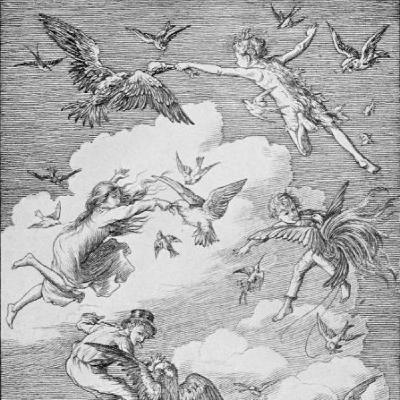
Peter Pan, An Excerpt, by J. M. BarrieI was inspired to pick up Peter Pan after reading “What I Learned from Reading Peter Pan to my Children” last year, a most excellent essay from Henry Oliver at The Common Reader. Oliver does a brilliant job reminding us that, beyond the familiar nostalgia associated with the story of “the boy that never grows up,” Peter Pan is a tale that cherishes the intricate temporality of childhood and the nourishing inevitability of motherhood: “What wins out in this story is not the pleasure of Neverland, but the certainty of a mother’s love. The true, original title is Peter and Wendy, and she is our real hero.”What mother wouldn’t be called to reread such a tribute?Truth be told, I’m not sure that this wasn’t my first reading of J. M. Barrie’s masterful tale. It is quite possible that I only saw plays and, of course, the Disney animated version, in my youth. Even more unfortunate, I never read it to my own children…ah, to go back in time!As with my rereading last year of Alice’s Adventures in Wonderland, I enjoyed this dive back into “children’s” literature immensely. There is such a dearth of wholesome imagination in contemporary children’s entertainment that it is a great pleasure to examine some of the weightier topics (existence, duty, and our place in the world) with writers like Barrie and Carroll, who respectfully traverse that blurry space between the real and the imaginary.I have plucked an excerpt from early in the book—Chapter 4, The Flight—which picks up just as the Darling children have launched into the night air, destined for the beckoning Neverland (“…the island was looking for them. It is only thus that any one may sight those magic shores”). It is in this chapter that Wendy digests the limitations of Peter’s character and the risks it presents to her brood, initiating a motherly care, both charming in its naiveté and earnest in its delivery, that develops throughout the rest of the book.I hope this chapter inspires you to revisit the original, cover to cover.Please enjoy…Subscribe to Classics Read Aloud to receive future readings, including commentary and interesting “et cetera” tangent links, right to your inbox: https://classicsreadaloud.substack.com/subscribe This is a public episode. If you would like to discuss this with other subscribers or get access to bonus episodes, visit classicsreadaloud.substack.com
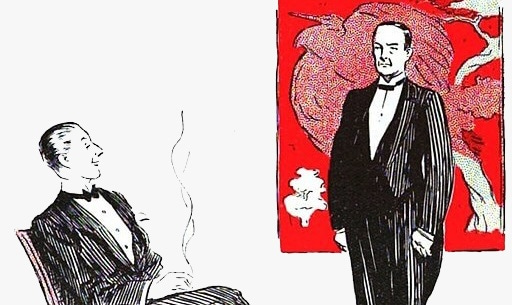
"Leave It to Jeeves" by P. G. Wodehouse“’Sir?’ said Jeeves, kind of manifesting himself. One of the rummy things about Jeeves is that, unless you watch like a hawk, you very seldom see him come into a room. He’s like one of those weird chappies in India who dissolve themselves into thin air and nip through space in a sort of disembodied way and assemble the parts again just where they want them.”If you have never experienced a Bertie & Jeeves story firsthand, you are in for a treat. This is comedy, pure and simple. Pelham Grenville (P. G.) Wodehouse did not set out to make satire or social commentary, nor was he concerned with wisdom or subversion. Wodehouse was an entertainer, and he conducted himself in the elevation of this artform with such finesse that we can hardly appreciate the difficulty as we consume it. As he humbly confessed in a 1961 interview, “I haven’t got any violent feelings about anything, I just love writing.”And, oh, to be loved by Wodehouse, what decadence is bestowed. The author churned out stories of this yin-and-yang pair over nearly 60 years, bringing together the sensibilities of both his inherited English culture and his adopted American one. Bertie, the English gentleman through whose eyes we see the world, is a sort of vapid, bumbling man-about-town. His style of speech is “a blend of [English] clichés, public schoolboys’ tags, and upper-class slang, curiously enriched by a good deal of postwar American slang.” A swell chappie with a social life that is positively brimming and a Rolodex of calls that are always answered.Meanwhile, Jeeves, Bertie’s butler, is the very picture of refined deportment; judicious in taste, behavior, and intellect. He is a reliable foil to poor Bertie, and the pair are simply topping. While Bertie’s idiocy gives necessary credence to the ridiculous situations introduced by the cast of characters parading in and out of each episode, it is Jeeves that eventually stole the show—Wodehouse called upon him for more and more stage time as the years progressed.Today’s reading is of “Leave It to Jeeves,” the very first fully developed Bertie & Jeeves story published. Wodehouse hits right off the bat with Jeeves advising Bertie, in his own insistent way, against the error of donning a checkered suit in the modern style (“Injudicious, sir.”). With wardrobe decided, Bertie and Jeeves are thrown into helping Bertie’s pal Corky, a destitute would-be portrait painter, convince Corky’s uncle (and importantly, his only source of income) to accept his marriage to a chorus girl, the aptly named Miss Singer. (“Muriel Singer was one of those very quiet, appealing girls who have a way of looking at you with their big eyes as if they thought you were the greatest thing on earth and wondered that you hadn’t got on to it yet yourself…. What I mean is, she made me feel alert and dashing, like a jolly old knight-errant or something of that kind. I felt that I was with her in this thing to the limit.”)It’s jolly good fun.Whether you’re having a bad day, are stuck in bed with the flu, or are in a literary rut, some time in Wodehouse’s world may be just the ticket. His characters are winningly simple, the stereotypes hysterically on-point, and the plotlines unapologetically frothy. It takes great talent to have created such an effect and maintained it over so many years; the result of true love, clearly.Please enjoy…Subscribe to Classics Read Aloud to receive future readings, including commentary and interesting “et cetera” tangent links, right to your inbox: https://classicsreadaloud.substack.com/subscribe This is a public episode. If you would like to discuss this with other subscribers or get access to bonus episodes, visit classicsreadaloud.substack.com
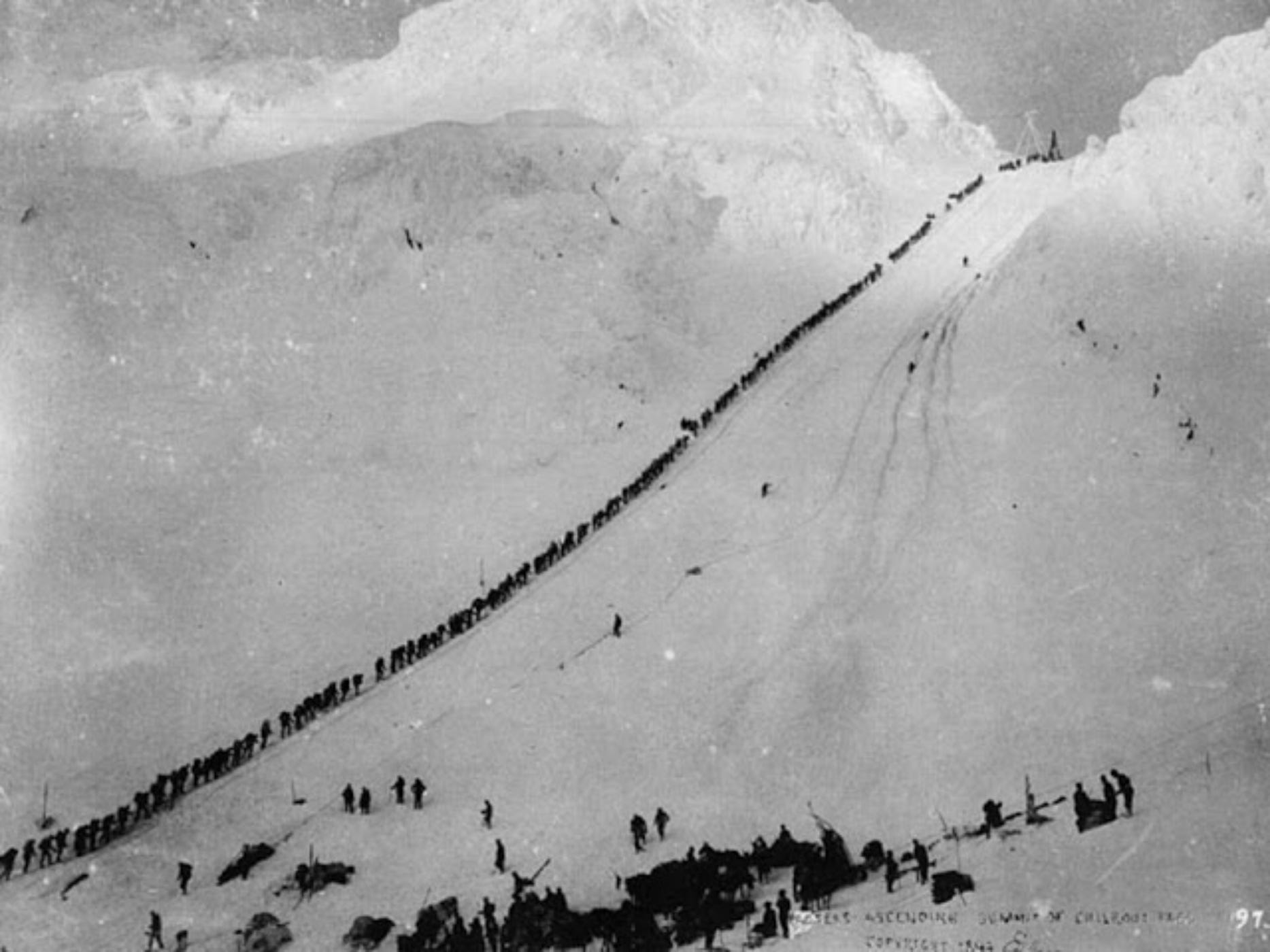
To Build a Fire by Jack London“At the man’s heels trotted a dog...The animal was depressed by the tremendous cold. It knew that it was no time for travelling. Its instinct told it a truer tale than was told to the man by the man’s judgment.”Over at Doomberg, where we write about energy as the lynchpin to humanity’s ability to not only survive but thrive (“Energy is Life”), we have often highlighted the concept of “thermal comfort”—the narrow band of temperature conditions in which human life can sustain. It is easy to take such a concept for granted in a world where even the most basic of new cars includes a heated steering wheel and a pair of heated seats. Nonetheless, while human beings are quite hearty in many respects, temperature matters, and exposure to extreme cold has been the death knell to many fingers, toes, and lives.Enter Jack London. London is famous for his narrative work exploring the great north and was an experienced outdoorsman himself, having joined the 100,000 prospectors heading into the frigid wilderness during the Gold Rush of the late 1800s. It was here that he battled the most extreme elements that Mother Nature had to offer, hauling a year’s worth of food and equipment up the viciously steep Chilkoot Pass, into the Yukon, on his way to Dawson City. Temperatures in the region could reach as low as 70 degrees below zero Fahrenheit, and a man’s spittle would freeze midair. Only a fraction of those attempting the journey, all desperate to mine their way to fortune, survived. London’s stories strike so powerfully because he lived them.“To Build a Fire” follows an unnamed prospector making his way on a similar path. He has separated from the rest of his group, taking a circuitous route to scope out some logging potential for the coming spring. On this simple, quick trip—“he would certainly be with the boys by six”—he is accompanied by his dog, a beast driven by the strong signals flaring in its instinctual core, unclouded by mankind’s hubris.This is a visceral anthem to the supremacy of Mother Nature that you won’t soon forget.Please enjoy…Subscribe to Classics Read Aloud to receive future readings, including commentary and interesting “et cetera” tangent links, right to your inbox: https://classicsreadaloud.substack.com/subscribe This is a public episode. If you would like to discuss this with other subscribers or get access to bonus episodes, visit classicsreadaloud.substack.com

The Snow Queen by Hans Christian AndersenWith today’s reading, I’d like to focus your attention on Andersen’s dazzling imagery. This adventurous tale is a treat for our senses and creative instincts.Andersen, naturally, opens by setting the stage with an enchanted challenge that must be overcome. One day, devilish sprites create a mirror whose every reflection is a twisted and frightful distortion. They revel in their mischievous creation, flying up into the air with delight. “The higher they flew with the mirror, the more terribly it grinned.”The sprite’s antics end with a crash as the mirror slips from their control and is dashed into “a hundred million and more pieces” that wreak havoc far and wide.Two splinters of mirror find their way into the heart and eye of a little boy named Kay. He and his dear friend, Gerda, live beside each other—“They were not brother and sister; but they cared for each other as if they were”—and meet often on the roof between the two garrets where “the tendrils of the peas hung down over the boxes; and the rose-trees shot up long branches, twined round the windows, and then bent toward each other; it was almost like a triumphant arch of foliage and flowers.”With two sharp pains, the lodged shards afflict Kay. He rejects all that is good and pure, including Gerda, and is soon taken captive by the powerful Snow Queen, whose kiss “was colder than ice; it penetrated to his very heart.” In his mirror-twisted vision, it is she who becomes beautiful and clever to him.“On they flew over woods and lakes, over seas, and many lands; and beneath them the chilling storm rushed fast, the wolves howled, the snow crackled; above them flew large screaming crows, but higher up appeared the moon, quite large and bright; and it was on it that Kay gazed during the long long winter’s night; while by day he slept at the feet of the Snow Queen.”Little Gerda, full of innocence and determined dedication to her friend, strikes out to find him amidst the vast unknown, leaving behind everything she knows. All manner of fauna and flora awakens to her goodness—“…when her warm tears watered the ground, the tree shot up suddenly as fresh and blooming as when it had been swallowed up”—and royal chambers open to her solicitation—“The ceiling of the room resembled a large palm-tree with leaves of glass, of costly glass; and in the middle, from a thick golden stem, hung two beds, each of which resembled a lily. One was white, and in this lay the Princess; the other was red, and it was here that Gerda was to look for little Kay.”The fearless Gerda makes her way, mile by mile, from the cherished gardens of her hometown through the frozen great North to rescue Kay, buoyed always by her earnestness and purpose—“’I can give her no more power than what she has already. Don’t you see how great it is? Don’t you see how men and animals are forced to serve her; how well she gets through the world barefooted?’”This is just a small taste of the banquet laid on Andersen’s narrative table. Surely, Andersen’s story has influenced many a modern cinematic tale, but none capture the glory of that which exists in our mind’s eye, as guided by his words. His expressive scenes breathe life into the many dichotomies suggested in this tale that pits good against evil and logic against faith.Subscribe to Classics Read Aloud to receive future readings, including commentary and interesting "et cetera" tangent links, right to your inbox: https://classicsreadaloud.substack.com/subscribe This is a public episode. If you would like to discuss this with other subscribers or get access to bonus episodes, visit classicsreadaloud.substack.com
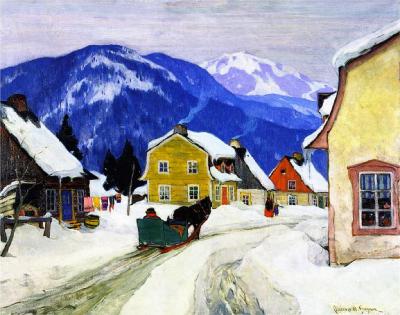
Christmas on the Roof of the World by Ernest Hemingway“Chink knocked at the door.“‘Merry Christmas, mes enfants,’ he grinned. He wore the early morning garb of big, woolly dressing-robe and thick socks that made us all look like some monastic order.”It is Christmas morning, and, as this reading arrives in your inbox, I will be gathered in the family room with my brood, each in our robes and thick socks, performing the time-honored ritual of gift-giving and hug-receiving. The coffee is brewed, the fireplace is roaring, and the tree is casting an other-worldly glow that will shine forever in our memories.Should you have 11 minutes for a charming diversion today, perhaps as the egg casserole bakes or while getting spruced up for dinner, I have something well off the beaten path from a familiar name. In “Christmas on the Roof of the World,” Ernest Hemingway shares his diary of a Christmas spent skiing in the Swiss Alps. It beautifully captures the ephemeral freshness—the comfort and joy—of this special day.Please enjoy…Subscribe to Classics Read Aloud to receive future readings, including commentary and interesting “et cetera” tangent links, right to your inbox: https://classicsreadaloud.substack.com/subscribe This is a public episode. If you would like to discuss this with other subscribers or get access to bonus episodes, visit classicsreadaloud.substack.com
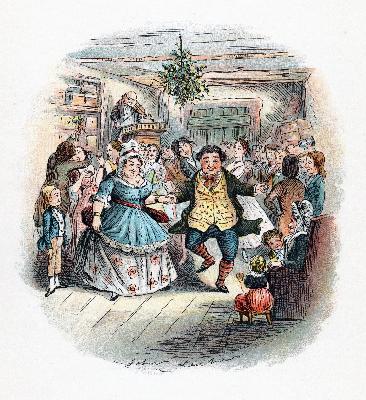
A Christmas Carol by Charles Dickens, 1843In December of 1843, Charles Dickens gave fresh life and tradition to the celebration of Christmas. The first print of his cherished novel, A Christmas Carol, sold out in a mere five days, and its popularity has continued at a fevered pitch for nearly two centuries.While there are interpretations and adaptations of his work at every turn, there is no substitute for soaking in the words of the original: the mouthwatering foodstuffs, the magical bells, the mirthful Fezziwigs, the inimitable Scrooge, and the many humble scenes awakening Scrooge’s humanity down to his very marrow.Of all the entertainments bombarding you this holiday, there isn’t a more worthy one on offer to delight, nourish, and bind your family to the spirit of the season. To borrow a turn of the author’s, if that’s not high praise, tell me higher, and I’ll use it.I relish in reading this story aloud, just as Dickens himself did, giving hundreds of performances across Britain and America over several decades. The whole endeavor exhausted him, but he took immense pleasure in bringing his characters to life for packed auditoriums, continually revising the text to maximum impact in such settings.I am grateful to have had two of my loved ones joining me “on stage” to bring this cast of characters to life and can understand what must have drawn Dickens to the art of live readings…suffice it to say we are already excited to sharpen our characters for another go at it next year!Please enjoy…Subscribe to Classics Read Aloud to receive future readings, including commentary and interesting "et cetera" tangent links, right to your inbox: https://classicsreadaloud.substack.com/subscribe This is a public episode. If you would like to discuss this with other subscribers or get access to bonus episodes, visit classicsreadaloud.substack.com

The Gift of the Magi by O. Henry“And here I have lamely related to you the uneventful chronicle of two foolish children in a flat who most unwisely sacrificed for each other the greatest treasures of their house...Everywhere they are the wisest. They are the magi.”Humans are complex beings. We contain multitudes, as Walt Whitman wisely said; some, indeed, more than others.O. Henry was born William Sydney Porter in September of 1862. His pen name is a familiar one to this day, attributable to his enviable flourish with the pen and imagination. But it is, ironically, because his real name was so well-known that he adopted the pseudonym in the first place.In 1894, Porter launched The Rolling Stone, a weekly humor publication that gained robust public interest, circulating to nearly 10% of residents in its hometown of Austin, Texas. Publishing turned out to be too tough a business, and The Rolling Stone was shuttered after only a year in print.Meanwhile, Porter made ends meet by working as a teller at the First National Bank of Austin. Far from developing a hum-drum career there, Porter was arrested in February of 1896 for embezzlement. It is reported that this was perhaps the result of some technical error; however, Porter foolishly fled the state, eventually ending up in Honduras. Compelled to return to the US to support his wife during a terminal illness, he was arrested, convicted, and spent 3 years in an Ohio jail.Suffice it to say, “imprisoned for fraud” doesn’t serve as a winning backdrop for an author publishing stories as sweetly sentimental as “The Gift of the Magi.” And thus, O. Henry was born (in jail, no less!).This jail baby made great use of his grey matter, churning out volumes of entertaining short stories. It turns out that Porter possessed one of the most valuable tools for any author: an unending fascination with people. “The Gift of the Magi” was first published in 1905 in The New York Sunday World, and was later included in his 1906 collection Four Million Stories. Why four million? That was the population of New York at the time, where Porter whiled away his days writing and drinking at the long, rosewood bar of Healy’s Café, perched at the corner of East 18th Street and Irving Place. He believed each one of those New Yorkers carried a story worth telling.Today’s reading, the story of a young married couple struggling to demonstrate their adoration at Christmas despite their meager means, is one such worthy glimpse. It has become one of the most beloved tales of the Christmas season.Please enjoy…Subscribe to Classics Read Aloud to receive future readings, including commentary and interesting "et cetera" tangent links, right to your inbox: https://classicsreadaloud.substack.com/subscribe This is a public episode. If you would like to discuss this with other subscribers or get access to bonus episodes, visit classicsreadaloud.substack.com
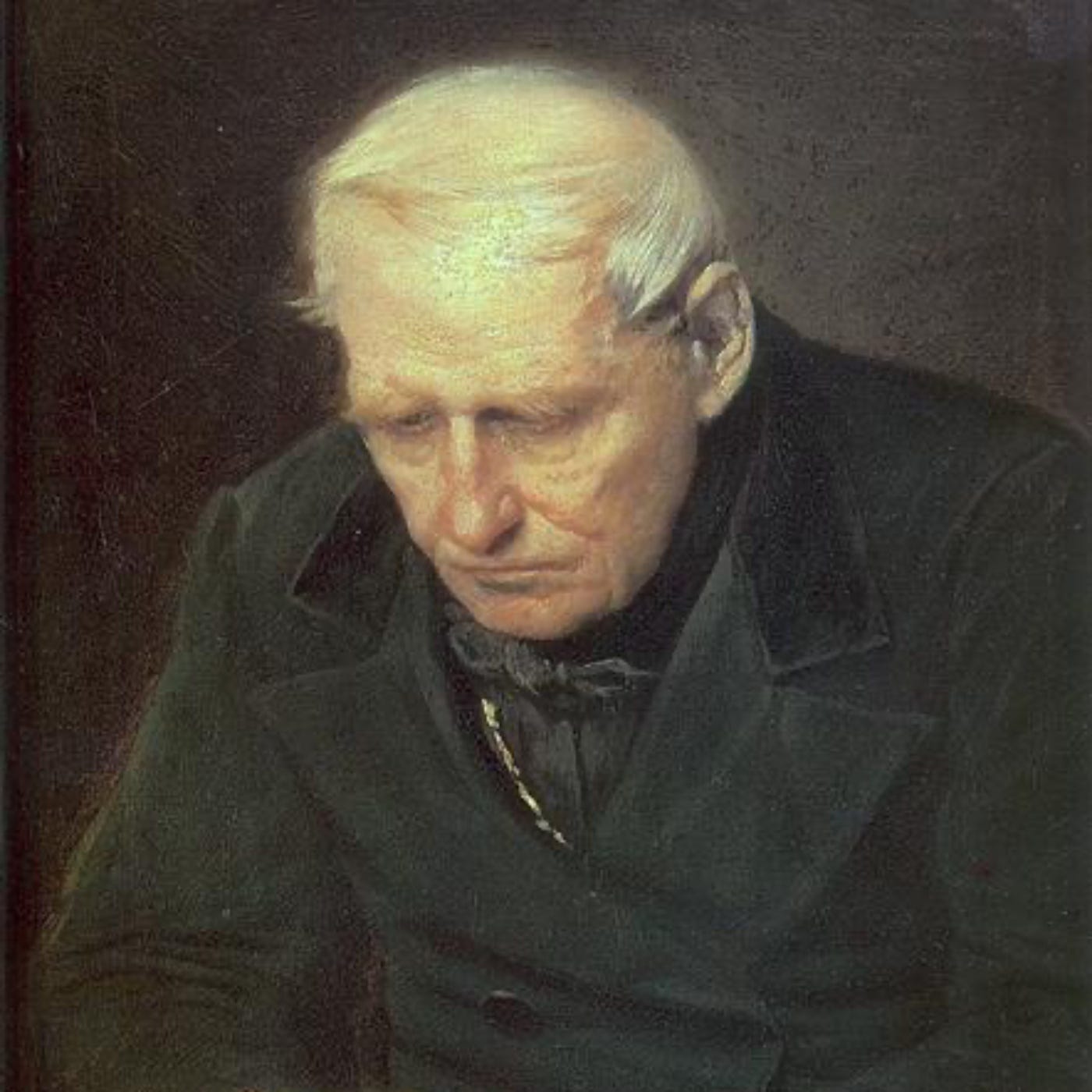
"Quality" by John Galsworthy“Then, placing my foot on a piece of paper, he would two or three times tickle the outer edges with a pencil and pass his nervous fingers over my toes, feeling himself into the heart of my requirements.”One hesitates to draw too many conclusions about the personality of an author based solely on his or her written work. That said, I was hardly surprised in my research to find John Galsworthy described as a quiet intellectual, somewhat aloof and reserved. It seemed to me only natural that someone inclined to introspection would write a story like “Quality,” which patiently burrows into the modest but artful industriousness of a cobbler’s shop, like a mouse burrowing into the toe of a shoe.John Galsworthy began writing in the 1890s after meeting Joseph Conrad, with whom he developed a long and mutually supportive friendship. Having been in the midst of a budding legal career, this allowed him to continue working pen-to-paper and simply alter the objective of the output. He nonetheless wrote under a pseudonym initially—John Sinjohn—to avoid disappointing his family with the shift. By 1904, Galsworthy was writing under his own name and in 1906 published The Man of Property, the first book of what became the renowned The Forsyte Saga series, later popularized with a BBC episodic in 1967 (and more recently with the excellent remake starring Damien Lewis in 2002).Much of Galsworthy’s work circulates around the struggle between the individual and society during a period of rapid industrial upheaval. In “Quality,” originally presented as a play and subsequently published as a short story, we are exposed to the effect of this change on the business of a high-end bootmaker, through the eyes of a lifelong customer. The plight of the hard-working Gessler brothers asks the reader to acknowledge the hypocrisy and trade-offs inherent in “progress.” Galsworthy doesn’t bemoan the progress, per se, simply the associated casualty of quality and the respect its craftspeople once commanded.Please enjoy…Subscribe to Classics Read Aloud to receive future readings, including commentary and interesting "et cetera" tangent links, right to your inbox: https://classicsreadaloud.substack.com/subscribe This is a public episode. If you would like to discuss this with other subscribers or get access to bonus episodes, visit classicsreadaloud.substack.com

The Man Who Was Thursday (Part 5) by G.K. Chesterton This is a public episode. If you would like to discuss this with other subscribers or get access to bonus episodes, visit classicsreadaloud.substack.com

The Man Who Was Thursday (Part 3) by G. K. Chesterton This is a public episode. If you would like to discuss this with other subscribers or get access to bonus episodes, visit classicsreadaloud.substack.com

The Man Who Was Thursday by G. K. Chesterton This is a public episode. If you would like to discuss this with other subscribers or get access to bonus episodes, visit classicsreadaloud.substack.com

The Man Who Was Thursday (Part 4) by G.K. Chesterton This is a public episode. If you would like to discuss this with other subscribers or get access to bonus episodes, visit classicsreadaloud.substack.com

The Man Who Was Thursday (Part 2) by G. K. Chesterton This is a public episode. If you would like to discuss this with other subscribers or get access to bonus episodes, visit classicsreadaloud.substack.com

Comments

Download from Google Play

Download from App Store
 United States