


 Claim Ownership
Inspired Nonprofit Leadership
Subscribed: 50Played: 1,666
Subscribe

© Copyright 2025 Olivieri's Inc.
Description
This podcast is a place for nonprofit leaders to gain insights, tips, inspiration, and encouragement to unleash their potential.
404 Episodes
Reverse

In this episode, Mary discusses ten characteristics you want to consider when you're looking for a mentor. Mary has over 40 years experience in the nonprofit sector: 26 as an executive and 18 as a board member. She knows your day-to-day challenges first hand and brings experience and expertise to help you have the greatest possible impact. Be sure to follow Inspired Nonprofit Leadership so that you don't miss a single episode, and while you're at it, won't you take a moment to write a short review and rate our show? It would be greatly appreciated! You can get your free guide: How to Engage Your Board in Fundraising by going to https://hilandconsulting.org/boardfundraising Mary's book is available on Amazon or wherever books are sold: Love Your Board! The Executive Directors' Guide to Discovering the Sources of Nonprofit Board Troubles and What to Do About Them. Let us know the topics or questions you would like to hear about in a future episode. You can do that, and follow us, on Facebook. To learn more about our previous guests, listen to past episodes, and get to know your host, go to: Hiland Consulting Connect with Mary! LinkedIn: https://www.linkedin.com/in/maryhiland Inspired Nonprofit Leadership Facebook Group: https://tinyurl.com/inspirednonprofitleadership Website: https://www.hilandconsulting.org/ Company Facebook: https://www.facebook.com/hilandconsulting
In this solo episode of Inspired Nonprofit Leadership, Sarah Olivieri explores a powerful but often overlooked concept: your true capacity isn't determined by time—it's determined by energy. Most leaders are trained to optimize time. We manage calendars, improve systems, and try to squeeze more into each day. And while that matters, time is finite. There is always a limit. Energy, on the other hand, is renewable—and expandable. Sarah explains why focusing only on time management can actually lead to burnout, especially for leaders who are trying to scale their organizations. When energy is depleted, everything slows down. Decision-making suffers. Leadership weakens. And recovery becomes costly. Using a simple but relatable analogy, she compares burnout to running out of fuel entirely. It's far more expensive—both in time and energy—to recover from being completely depleted than it is to maintain a steady, sustainable energy level. She also introduces a more useful way to think about high performance. Instead of operating in short bursts of intense energy followed by burnout, leaders should aim for a steady, aligned energy state—what she describes as a "grooving and flowing" feeling. This is where work feels natural, sustainable, and effective over the long term. This kind of energy not only increases your personal capacity but also influences the people around you. Energy is contagious. When leaders operate from a grounded, positive state, it lifts the performance and experience of the entire team. If you've been trying to get more done by managing your time more tightly, this episode will help you shift toward a more sustainable and powerful approach. In This Episode, You'll Learn Why time management alone cannot increase your true capacity The difference between finite time and renewable energy How burnout drains more resources than it saves Why leaders should avoid both burnout and unsustainable "high energy sprints" What a sustainable, high-performing energy state feels like How your energy influences your team and overall performance Who This Episode Is For This episode is especially helpful for: Executive directors feeling stretched or fatigued Leaders managing growth while trying to avoid burnout Nonprofit professionals focused on productivity and performance Anyone looking for a more sustainable way to lead and work About Your Host, Sarah Olivieri Bold, strategic, and refreshingly human… Sarah Olivieri is the go-to expert for conversations on aligned leadership, outcome delegation, and sustainable growth.She brings wit, warmth, and real-world wisdom to mission-driven founders, visionary CEOs, and change-makers who want more clarity, more joy, and more results. Most leaders hit a wall when success depends on them holding it all together. Sarah helps them change that by redefining leadership around outcomes instead of activity, empowering teams to own results that scale and freeing leaders to focus on the vision that drives them. A former director of three nonprofits and founder of five businesses, she has a rare ability to spot opportunity where others see chaos, shift stuck patterns, and build organizations that support both legacy and life. Sarah leads with the same mindset that made her an award-winning sailor: iterate on what works, stay focused in the storm, and never forget the joy of the journey. Links Website: saraholivieri.com LinkedIn: linkedin.com/in/sarah-olivieri Be sure to subscribe to Inspired Nonprofit Leadership so that you don't miss a single episode, and while you're at it, won't you take a moment to write a short review and rate our show? It would be greatly appreciated! Let us know the topics or questions you would like to hear about in a future episode. You can do that and follow us on LinkedIn.
In this solo episode of Inspired Nonprofit Leadership, Sarah Olivieri shares practical lessons on one of the most expensive mistakes organizations make: poor hiring. Many leaders struggle to attract the right candidates, evaluate applicants effectively, or avoid hiring people who ultimately aren't the right fit. The result can be costly—both financially and culturally. Sarah explains why a thoughtful hiring process is one of the most valuable investments an organization can make. While hiring well may require time, effort, and even outside help, the cost of a bad hire can be dramatically higher. Beyond the financial cost, bad hires create lost momentum, team disruption, and missed opportunities. In this episode, Sarah highlights several common mistakes that drive strong candidates away. One of the biggest issues is treating job descriptions like simple administrative documents instead of strategic recruiting tools. A job description should function more like an advertisement that attracts the right candidates and filters out poor fits. She also explains why organizations should focus less on credentials and more on team fit, guiding principles, and whether someone demonstrates the characteristics of a high-performing team member. Sarah also walks through what a humane and thoughtful hiring process looks like—from multiple interviews in different settings to strong onboarding and trial periods that set both the organization and the employee up for success. Finally, she shares a powerful shift in thinking: the hiring process actually begins long before a position opens. Great leaders are always building relationships with people they would love to work with someday. If building the right team has been difficult, this episode will give you a clearer and more strategic approach to hiring. In This Episode, You'll Learn Why vague job descriptions attract the wrong candidates How to treat job postings like recruiting advertisements Why hiring for fit matters more than hiring for credentials How strong hiring processes protect organizations from costly mistakes What a respectful and effective hiring process looks like Why onboarding and trial periods are critical to hiring success Why great hiring actually begins before a job opening exists Who This Episode Is For This episode is especially helpful for: Executive directors building or rebuilding teams Nonprofit leaders frustrated with hiring outcomes Organizations trying to attract stronger candidates Leaders who want a more thoughtful and strategic hiring process About Your Host, Sarah Olivieri Bold, strategic, and refreshingly human… Sarah Olivieri is the go-to expert for conversations on aligned leadership, outcome delegation, and sustainable growth.She brings wit, warmth, and real-world wisdom to mission-driven founders, visionary CEOs, and change-makers who want more clarity, more joy, and more results. Most leaders hit a wall when success depends on them holding it all together. Sarah helps them change that by redefining leadership around outcomes instead of activity, empowering teams to own results that scale and freeing leaders to focus on the vision that drives them. A former director of three nonprofits and founder of five businesses, she has a rare ability to spot opportunity where others see chaos, shift stuck patterns, and build organizations that support both legacy and life. Sarah leads with the same mindset that made her an award-winning sailor: iterate on what works, stay focused in the storm, and never forget the joy of the journey. Links Website: saraholivieri.com LinkedIn: linkedin.com/in/sarah-olivieri
Reflections from host Sarah Olivieri ... Relationships Multiply Results I recently had a conversation with Sloane Keen, CEO of Big Brothers Big Sisters in Orange County and the Inland Empire, and it clarified something I've been thinking about for years. The leaders who scale impact understand one very important thing: Relationships are infrastructure. Not a "nice to have." Critical infrastructure. We Run Businesses With a Double Bottom Line Sloane said something simple but important: "We don't function very differently than a CEO of a for-profit company. We run a business — we just run a business with a double bottom line." That framing matters. Because when nonprofit leaders reject business language outright, we accidentally lose access to valuable knowledge and practices already tested and proven in the for-profit space. Marketing. Sales. Talent acquisition. Brand positioning. These aren't corporate buzzwords. They're mechanisms. If you don't breathe life into your brand, you cannot: Attract talent Inspire volunteers Activate donors Connect clients to services And in today's world, where there are more services than ever, effective communication isn't optional. When families can't figure out who to call or where to go, that's not a demand problem. That's a clarity problem. More detail doesn't equal more clarity. Clear positioning does. For for-profit organizations, clear positioning gets paying customers. For nonprofit organizations, clear positioning gets the right clients to your door and increases you capacity to make an impact. Mentorship Is Not Just a Program. It's a Leadership Growth Practice We tend to think mentorship is about the mentee. But Sloane said something that reframed this concept: "You actually get as much as you give." Mentorship creates: Social capital Accountability Pattern recognition Confidence Expanded perspective Those aren't soft benefits. Those are performance multipliers. And here's the part nonprofit leaders need to hear: If you take on the role of mentor as a leader, your team will grow and so will you! Mentorship Is A Relationship Skill, Which Is Also A Fundraising Skill We also talked about fundraising. And here's what I keep observing in my own work: When relationships are strong enough, people give spontaneously. If you have to force the ask, the relationship likely isn't ready. That doesn't mean you avoid asking. It means you sequence properly. First: build a connection Then: create joy. Later: invite investment. This makes sense given the setup. When your brand is alive. When your board is activated. When your communication is clear. When your volunteers are inspired. Money starts to move. Not because you pressured it. Because you positioned for it. If You Only Take One Thing Away Nonprofit leadership is not about heroics. It's about relationship design. Mentor your staff. Be mentored yourself. Curate your board. Communicate clearly. Connect people with purpose. That's the multiplier. That's how impact compounds over time. And that's how you build something that lasts. If this conversation resonates, I encourage you to listen to the full episode of Inspired Nonprofit Leadership with Sloane Keen. And if you want practical frameworks like this delivered weekly, subscribe to the Inspired Nonprofit Leadership Newsletter at: www.inspirednonprofitleadership.com/signup Let's build organizations that scale with clarity, not exhaustion. — Sarah About the Guest Sloane Keane is an advocate for social change through youth mentorship. She joined Big Brothers Big Sisters in 2013 as the director of development, charged with creating new funding strategies that tripled agency revenue and doubled the number of matches supported annually. Since becoming CEO in 2018, Keane has continued the growth trajectory for the network's second-largest agency nationwide. She is committed to strengthening the organization's impact on disconnected youth across Orange, Riverside and San Bernardino Counties. Connect with Sloane: Be sure to subscribe to Inspired Nonprofit Leadership so that you don't miss a single episode, and while you're at it, won't you take a moment to write a short review and rate our show? It would be greatly appreciated! Let us know the topics or questions you would like to hear about in a future episode. You can do that and follow us on LinkedIn.
In this solo episode of Inspired Nonprofit Leadership, Sarah Olivieri shares key lessons from the influential book The Great Game of Business by Jack Stack—and why its principles apply just as powerfully to nonprofits as they do to for-profit companies. At its core, the idea behind the "great game" is simple: organizations perform better when everyone is engaged in the work of improving the business. Not just leadership. Not just managers. Everyone. Too often, only a handful of people in an organization are expected to think strategically and make decisions, while the rest of the team is tasked with executing instructions. But when only a few people are using their brains to solve problems and make improvements, the organization is leaving enormous potential untapped. Sarah explores how leaders can begin unlocking the intelligence of their entire team by creating systems that encourage participation, collaboration, and shared responsibility for results. She also highlights two powerful principles from the book: First, the power of gamification. When people feel like they are playing a game they can win together—whether that means reaching fundraising goals, improving efficiency, or increasing impact—they become more engaged and invested in the outcome. Second, the importance of financial transparency and literacy. When people understand the numbers that drive an organization—cash flow, revenue, expenses, and impact—they are able to make better decisions and contribute more meaningfully to the mission. This approach ultimately leads toward what's known as open-book management, where financial information is shared widely so teams can see how their work contributes to the organization's success. The result? Stronger collaboration. Better decisions. And a team that truly feels ownership over the mission. If you want a smarter, more engaged team, this episode will challenge you to think differently about how you involve your people in the work of running the organization. In This Episode, You'll Learn Why organizations perform better when every team member uses their brain to improve the business How gamification increases engagement and teamwork Why winning as a team is more motivating than internal competition How understanding financial numbers helps teams make better decisions Why transparency often builds trust rather than risk The core idea behind open-book management Who This Episode Is For This episode is especially helpful for: Executive directors leading growing teams Nonprofit leaders who want stronger engagement from staff Organizations working to build a high-performance culture Leaders who want their teams thinking like owners About Your Host, Sarah Olivieri Bold, strategic, and refreshingly human… Sarah Olivieri is the go-to expert for conversations on aligned leadership, outcome delegation, and sustainable growth. She brings wit, warmth, and real-world wisdom to mission-driven founders, visionary CEOs, and change-makers who want more clarity, more joy, and more results. Most leaders hit a wall when success depends on them holding it all together. Sarah helps them change that by redefining leadership around outcomes instead of activity, empowering teams to own results that scale and freeing leaders to focus on the vision that drives them. A former director of three nonprofits and founder of five businesses, she has a rare ability to spot opportunity where others see chaos, shift stuck patterns, and build organizations that support both legacy and life. Sarah leads with the same mindset that made her an award-winning sailor: iterate on what works, stay focused in the storm, and never forget the joy of the journey. Links Website: saraholivieri.com LinkedIn: linkedin.com/in/sarah-olivieri Be sure to subscribe to Inspired Nonprofit Leadership so that you don't miss a single episode, and while you're at it, won't you take a moment to write a short review and rate our show? It would be greatly appreciated! Let us know the topics or questions you would like to hear about in a future episode. You can do that and follow us on LinkedIn.
Reflections from host Sarah Olivieri ... Leadership Is Storytelling There's a pattern I've seen over and over again when it comes to how leaders communicate… They tend to share too much information and end up communicating too little. More information typically leads to less communication. And one skill to work on is to say less, but if you need to communicate something important, you can share more through the power of story. Stories can build trust. Stories can change behavior. Stories get remembered. Our brains are wired to hold information in the form of stories. I recently had a conversation about the power of stories with leadership communication expert Robert Kennedy III, and it pushed me to think more deeply about how we, as nonprofit leaders, can use storytelling every single day to make our work easier and our results better. Stories Can Build Trust Robert said something that stuck with me: "Storytelling is important because it humanizes us. It humanizes every organization." That word—humanizes—is everything. When you humanize, you build trust. Data matters too, but data should be part of the story, not in place of the story. But our brains aren't wired for spreadsheets. They're wired for narrative. When you share a story with context, characters, conflict, and conclusion, something powerful happens. The listener's brain begins filling in gaps. It creates images. It searches memory. It feels something. And once someone feels something, trust becomes possible. Trust is the real currency of communication and leadership. The Four Pillars of Story Robert breaks strong stories into four elements: Context Characters Conflict Conclusion When we lead with conclusions—"Here's the program," "Here's the new process," "Here's the solution"—we skip the human entry point. And that's why people disengage. Instead, strong leaders often start with the conflict. What problem are we facing? Why does it matter? Who is affected? When people recognize themselves in the story, they lean in. In my experience starting with the conflict makes introducing the context and characters easy. The next thing to share is the process that was used to get to the conclusion. And once that is done, the conclusion is the last thing to share, and takes up the least amount of time. So next time you need to communication a conclusion (a.k.a. A decision you have made) try this formulat: Step 1: Share the conflict, context, and characters Step 2: Share the process you used to figure out the conclusion. Include some wrong turns if you took them. For example: "we tried this and it didn't work so we pivoted" or "we considered x,y, and z, but decided they weren't the right approach for us". Step 3: Share the conclusion The Three Stories Every Nonprofit Needs Robert outlined three core types of leadership stories, and I believe every nonprofit should intentionally develop all three. 1. The Personal Story This is the story of you. A moment of failure. A turning point. A hard-earned lesson. When leaders share appropriate vulnerability, they normalize growth. They remind staff that mastery takes time. They lower the emotional temperature of failure. Your team doesn't need a superhero. They need a human. 2. The Origin Story This is the "why." Why did this organization start? What problem existed? What injustice needed solving? Even if your organization is 100 years old, your origin story still matters. And here's the important nuance: origin stories aren't frozen in time. Current-day testimonials are simply modern expressions of the original why. When you show that your founding purpose is still alive in today's work, you build continuity and credibility. You signal: We haven't drifted. 3. The Strategic Story This is where leadership gets interesting. Strategic stories explain: How we solve problems (process stories) Why our solution works (product stories) How collaboration amplifies impact (partnership stories) This is especially important during change. When introducing a new process, you can't just announce it. You have to tell the story of why the change is necessary, what challenge emerged, and how this solution evolved. Otherwise, people experience change as disruption instead of progress. Stories Make Ideas Stick There's research showing that information embedded in story form is significantly more memorable than random facts. We've all experienced this. You can't remember a list of 20 unrelated words. But if those same words are embedded in a narrative—suddenly, you can recall them. Story creates structure. Structure creates memory. Memory creates influence. And influence is leadership. The Daily Practice That Changes Everything One of the most practical tools Robert shared was simple: At the end of each day, write down five things that happened. Then, beside each one, write the lesson or meaning. That's it. It sounds small. But here's what it does: It trains you to notice. It turns mundane moments into meaning. It builds a personal "story vault." Most leaders think they don't have stories. They do. They just haven't trained themselves to capture them. And when you practice assigning meaning to everyday events, two things happen: Life feels more intentional. You become far more interesting. And yes—being interesting matters. Nonprofit leaders don't need to be entertainers. But they do need to avoid being forgettable. Storytelling Is an Asset Here's the final insight I want to leave you with: Your stories are organizational assets. Just like: Your brand Your programs Your donor relationships Your systems They require development. They require refinement. They require practice. The leaders who seem "naturally good" at storytelling have almost always worked at it. They've tested versions. Edited language. Rehearsed delivery. Noticed what lands. Storytelling is not magic. It's muscle. And like any muscle, it strengthens with repetition. About the Guest Storytelling isn't fluff. It's how trust is built, ideas stick, and leaders move people. In this episode, I talk with leadership communication expert Robert Kennedy III about why stories outperform data alone—and how nonprofit leaders can use storytelling to engage staff, boards, donors, and communities. We explore: Why stories humanize leadership The four core elements of every strong story How to use questions to instantly engage your audience Three essential leadership stories every nonprofit needs A simple daily practice to build your "story vault." If you want your message to be remembered—and acted on—this conversation is for you. Connect with Robert: Website: robertkennedythree.me Resources: Subscribe to the Inspired Nonprofit Leadership Newsletter: www.inspirednonprofitleadership.com/signup Learn more about Sarah's work: www.saraholivieri.com

Episode Description In this solo episode of Inspired Nonprofit Leadership, Sarah Olivieri tackles one of the biggest myths about growth: that scaling requires working harder. CEOs are often highly capable people. When growth stalls, the instinct is to push harder, take on more, and stretch personal capacity even further. But that path leads to burnout—not scale. True scale happens when ownership and decision-making get distributed. Sarah explains why scaling requires redesigning outcome ownership across your organization. That means moving beyond basic task delegation and into delegating responsibility for results and decisions. When more people own outcomes, the organization's capacity expands beyond any one individual. She walks through three key elements required for this shift: Moving from a "people-in-charge-of-people" org chart to a functional model built around outcomes Building a team of leaders who are ready (and willing) to own results Installing systems that support coordination, clarity, and interdependent work When these pieces come together, something powerful happens. The organization gains momentum. It attracts stronger team members, more donors, more clients, and greater opportunities. Growth becomes fueled by leverage—not by personal effort alone. If you're feeling like you're constantly feeding the fire of your organization just to keep it going, this episode will show you how to build a structure that creates its own momentum. In This Episode, You'll Learn Why working harder is not scaling The difference between task delegation and outcome delegation How your org chart may be limiting growth What a functional leadership blueprint looks like Why isn't everyone ready to own outcomes (and how to identify who is) How systems create coordinated, high-performance teams Where true leverage in scaling actually comes from Who This Episode Is For This episode is especially helpful for: Nonprofit and business CEOs who feel like their organization depends all on them Founders scaling beyond the early growth phase Leaders rebuilding or restructuring their teams Organizations ready to move from growth to true scale About Your Host, Sarah Olivieri Bold, strategic, and refreshingly human… Sarah Olivieri is the go-to expert for conversations on aligned leadership, outcome delegation, and sustainable growth.She brings wit, warmth, and real-world wisdom to mission-driven founders, visionary CEOs, and change-makers who want more clarity, more joy, and more results. Most leaders hit a wall when success depends on them holding it all together. Sarah helps them change that by redefining leadership around outcomes instead of activity, empowering teams to own results that scale and freeing leaders to focus on the vision that drives them. A former director of three nonprofits and founder of five businesses, she has a rare ability to spot opportunity where others see chaos, shift stuck patterns, and build organizations that support both legacy and life. Sarah leads with the same mindset that made her an award-winning sailor: iterate on what works, stay focused in the storm, and never forget the joy of the journey. Links Website: saraholivieri.com LinkedIn: linkedin.com/in/sarah-olivieri Be sure to subscribe to Inspired Nonprofit Leadership so that you don't miss a single episode, and while you're at it, won't you take a moment to write a short review and rate our show? It would be greatly appreciated! Let us know the topics or questions you would like to hear about in a future episode. You can do that and follow us on LinkedIn.
Reflections from host Sarah Olivieri ... Who Builds the Plan Matters When strategic plans fail to achieve lift-off, it's usually because the process that was used to create them was flawed. I recently had a conversation about this with board and strategy expert Dr. Renee Rubin Ross, author of Inclusive Strategic Planning for Nonprofits, and it pushed me to think more deeply about something I see over and over again. Inclusion isn't a value statement. It's a design decision. And it's not optional if you want a great strategy that actually gets executed. The Real Problem Isn't the Plan Let's ask the real question. When a strategic plan stalls out, what's actually broken? Not because people are bad. Not because staff lack commitment. Not because boards don't care. It's usually because the people who are expected to carry out the work weren't meaningfully included in building the vision. Renee said something in our conversation that I think is the heart of it: "Who is involved in building the vision and building the goals really matters." Without the right people in the room, motivation drops. When motivation drops, capacity drops. When capacity drops, implementation stalls. It's not a personality problem. It's a systems problem. And, systems create behavior. Deciders, Builders, and Sharers One of the most useful frameworks Renee shared is her concentric circle model: Deciders – the group ultimately responsible for final decisions Builders – the group that helps create the vision and goals Sharers – stakeholders who provide input and perspective This framing adds clarity. Inclusion does not mean 40 people wordsmithing a sentence. It means being intentional about who participates at each stage AND making that visible. More detail doesn't equal more clarity. Clarity comes from defining roles. And when people understand their role in the process, something powerful happens. They lean in. Process Builds Motivation One of my favorite moments in our conversation was when we talked about why inclusive planning increases energy. Renee said: "If you feel like, wow, someone consulted me on this, I got to weigh in, so I feel more motivated." That's the mechanism. Motivation is not a personality trait. It's a byproduct of meaningful participation. When someone is handed a finished plan, they feel managed. When someone helps build the plan, they feel responsible. That shift alone can change your return per dollar invested in strategic planning. Because here's the truth: You don't need to convince people. Let the process do the convincing! Tell the Story of How You Decided This is the biggest mistake I see. Leaders announce decisions. They rarely explain the process behind the decision. But boards, staff, and stakeholders are not evaluating the decision itself. They're evaluating whether the decision-making process was any good. When people understand: What information was gathered Who was consulted What trade-offs were considered How capacity was evaluated They relax. Even if they disagree with the final outcome. Confidence in process builds trust in results. Three-Year Vision: Bold, Not Delusional I loved Renee's approach to visioning. Not 10 years. Not 20 years. Three years. Enough time to be meaningful. Short enough to be real. Her guided question during retreats: It's three years from now and you're celebrating. What are you celebrating? That question does something subtle but powerful. It moves people from anxiety to ownership. Nonprofit leaders often operate at capacity. Sometimes beyond it. If you ask, "Where do you see yourself in 10 years?" You'll get exhaustion. If you ask, "What are we celebrating three years from now?" You'll get direction. Skin in the Game I often think about the idea of skin in the game. The people who experience the consequences of decisions make better decisions. When staff who will execute the plan help build it, they bring constraints, creativity, and operational reality into the room. When new team members sit next to veterans in a facilitated discussion, something happens: Experience meets fresh eyes Caution meets creativity History meets possibility That's how alignment forms. And alignment unlocks capacity. Final Thought Inclusion is not consensus. Inclusion is clarity about participation. When people are clear on their role in shaping the future, motivation rises. When motivation rises, execution improves. When execution improves, opportunity expands. And that's why who builds the plan matters. About the Guest Dr. Renee Rubin Ross is a recognized leader on board and organizational development and strategy and the founder of The Ross Collective, a consulting firm that designs and leads inclusive, participatory processes for social sector boards and staff. Committed to racial equity in the nonprofit sector, Dr. Ross guides leaders and organizations in strategic plans and governance processes that deepen social change, racial justice, stakeholder engagement, and community strength. In addition to her consulting work, Dr. Ross is the Director of the Cal State University East Bay Nonprofit Management Certificate program and teaches Strategic Planning and Board Development for the program. Dr. Ross lives in Northern California. She is a past Board member of the Alliance for Nonprofit Management and a member of the Technology of Participation facilitator's network. Her Doctorate in Education and Jewish Studies from New York University explored parent participation in schools. Connect with Renee: Website- https://www.therosscollective.com/ Subscribe to our e-list- https://www.therosscollective.com/subscribe LinkedIN - https://www.linkedin.com/in/reneerubinross/ Be sure to subscribe to Inspired Nonprofit Leadership so that you don't miss a single episode, and while you're at it, won't you take a moment to write a short review and rate our show? It would be greatly appreciated! Let us know the topics or questions you would like to hear about in a future episode. You can do that and follow us on LinkedIn.
Episode Description In this solo episode of Inspired Nonprofit Leadership, Sarah Olivieri addresses a feeling many nonprofit leaders know well: being completely maxed out on time. You've optimized your calendar. You've improved systems. Maybe you've tweaked your morning routine, managed your energy, or even experimented with productivity hacks. And yet, you still feel stretched. Here's the hard truth: there is a human limit to time and energy. If you are building something bigger than yourself—whether a nonprofit or a business—you cannot scale by simply optimizing your own performance. Eventually, your capacity becomes the bottleneck. Sarah explains why scaling requires a shift away from personal productivity and toward delegated outcomes. Instead of trying to do more yourself, you must build an architecture of delegation—one where leadership, results, and responsibility are distributed beyond you. Yes, work smarter. Yes, manage your energy. But if your vision is bigger than one person, you must design a structure that is bigger than one person. If you're exhausted from trying to biohack your way to growth, this episode will give you a more sustainable path forward. In This Episode, You'll Learn Why optimizing time and energy has a ceiling The difference between building a job for yourself and building something scalable How your personal capacity becomes the bottleneck in growth Why delegation must focus on outcomes—not tasks What it means to build an "architecture of delegation." The mindset shift required to scale beyond yourself Who This Episode Is For Executive directors feeling overwhelmed by growth Founders scaling beyond the startup phase Leaders who have optimized productivity but still feel stuck Nonprofits trying to expand impact without burning out leadership About Your Host, Sarah Olivieri Bold, strategic, and refreshingly human… Sarah Olivieri is the go-to expert for conversations on aligned leadership, outcome delegation, and sustainable growth.She brings wit, warmth, and real-world wisdom to mission-driven founders, visionary CEOs, and change-makers who want more clarity, more joy, and more results. Most leaders hit a wall when success depends on them holding it all together. Sarah helps them change that by redefining leadership around outcomes instead of activity, empowering teams to own results that scale and freeing leaders to focus on the vision that drives them. A former director of three nonprofits and founder of five businesses, she has a rare ability to spot opportunity where others see chaos, shift stuck patterns, and build organizations that support both legacy and life. Sarah leads with the same mindset that made her an award-winning sailor: iterate on what works, stay focused in the storm, and never forget the joy of the journey. Links Website: saraholivieri.com LinkedIn: linkedin.com/in/sarah-olivieri Be sure to subscribe to Inspired Nonprofit Leadership so that you don't miss a single episode, and while you're at it, won't you take a moment to write a short review and rate our show? It would be greatly appreciated! Let us know the topics or questions you would like to hear about in a future episode. You can do that and follow us on LinkedIn.
Reflections from host Sarah Olivieri ... Fundraising Should Feel Like the Most Enjoyable Thing We Do - But I Bet You Don't Feel That Way😉Section Header I've been thinking about this a lot lately. I recently had a conversation about exactly this with Lisa Stueckemann, who brings a refreshingly direct lens to fundraising. It sharpened something I've long believed: fundraising doesn't get easier when we add more tactics. It gets easier when we remove fear and add JOY! "Donor-Centric" Isn't Deep Enough Fundraising experts have been talking about donor-centricity for years. But that language has flattened something important. Lisa said something that reframes it: "We're never going to get beyond the human touchpoints." That's because these are the real moments when relationships are built. They are the most fundamental, necessary elements. Everything else is gravy. When we start optimizing messaging, segmenting lists, automating follow-ups — none of that is wrong — but if we hide behind these tools and tactics, we avoid the real work of human connection. High-touch relationships require presence. Scaled relationships require clarity. But neither works without trust. Rejection Is Not What You Think One of the most powerful reframes in this conversation was around rejection. Fundraisers are afraid of "no." But most "no's" aren't rejection. They're information. Lisa put it simply: "Rejection brings clarity." If a donor says: "Not now." "Not that amount." "Let me think about it." That is not a door closing. It's just information. When leaders fear rejection, they hedge. They over-soften asks. They avoid specificity. They avoid contact. The Trust Gap Is Self-Inflicted Here's where this gets uncomfortable. There is a trust issue in the nonprofit sector right now. Some of it is narrative. Some of it is a misunderstanding. Some of it is self-inflicted. Lisa asked a question that should stop leaders in their tracks: Why are organizations not telling donors when they miss their goal? If you didn't make your number, say so. If your costs are rising, explain why. If you need to invest in fundraising to grow revenue, articulate the return. When you hide reality, you reinforce suspicion. When you show your math, you build credibility. The "Best Math" Conversation One of the more radical ideas Lisa shared was rethinking how we talk about costs. Instead of transactional math like: "It costs $942 to send a kid to school." What if we said: "This organization costs $X per hour to operate." That shifts the conversation. It includes leadership, infrastructure, insurance, internet, staff development — the full machine. Because here's what most nonprofits get wrong: They try to sell impact without selling the engine. The engines cost money… and donors get that. If you only sell the output and pretend the engine runs on air, you erode trust. The Fundraising ROI Conversation This connects directly to something I've seen repeatedly. Entrepreneurs understand ROI immediately. If I tell them: $10,000 to programming = $10,000 of impact $10,000 to fundraising = $40,000 raised They don't flinch. They lean in. Because they understand compounding. This is not about convincing people. It's about speaking their language. Human-first fundraising means understanding how your donor thinks. If they think in return on investment, talk to them about return per dollar invested. If they think in legacy, talk about permanence. If they think in justice, talk about what's wrong in the world related to your cause. You don't need to convince them. You need to listen first. The Internal Culture Problem Here's the part that matters most to me. Fundraisers are leaving. Not just their jobs. The sector. Why? Because creative, mission-driven people are being told: "Don't try something new." "Let's just run the event again." "Spend less. Raise more." That's not a strategy. That's fear. If you hire creative fundraisers and then deny them permission to experiment, you are quietly crushing them. And when they leave, revenue declines. This is predictable. If you don't allow experimentation inside, you can't expect innovation outside. If You Only Take One Thing Away Fundraising is not about better scripts. It's about courage. Courage to: Ask directly Say the real number Admit you missed a goal Invest in fundraising Try something new Build a real relationship with each and every donor. One where you see them and they see you …. Yup, you have to get vulnerable. The organizations that survive the next decade won't be the most polished. They'll be the most honest. They'll treat donors like humans. They'll treat staff like humans. And they'll stop pretending that fundraising is transactional. Because it isn't. It's relational. AND Relationships with people who care about you, are generous, and want to support you are super fun! About the Guest Lisa Stueckemann has spent over 15 years in nonprofit fundraising across healthcare, social services, and faith-based organizations. Founder of Fundraising Rebel and author of the book by the same name, she brings a creative, human-first lens to fundraising strategy and leadership. Connect with Lisa: Website: FundraisingRebel.org Book: https://a.co/d/7FszdEI LinkedIn: https://www.linkedin.com/in/lisastueckemann/ Be sure to subscribe to Inspired Nonprofit Leadership so that you don't miss a single episode, and while you're at it, won't you take a moment to write a short review and rate our show? It would be greatly appreciated! Let us know the topics or questions you would like to hear about in a future episode. You can do that and follow us on LinkedIn.
In this solo episode of Inspired Nonprofit Leadership, Sarah Olivieri explores the often-overlooked connection between focus and trust inside nonprofit teams. We talk a lot about alignment. We talk about clarity. We talk about strategy. But trust? That often gets treated like something abstract—something that either exists or doesn't. In this episode, Sarah breaks down a simple but powerful chain reaction: Focus → Clarity → Perspective → Confidence → Trust When a team is truly focused on a shared objective—whether that's raising more money, serving more clients, reducing hours, or building something meaningful—noise gets cut away. With focus comes clarity about what we are doing and what we are not doing. That clarity builds perspective. Perspective builds grounded confidence. And that kind of confidence—calm, steady, non-ego confidence—creates real trust. Not just internally. Externally, too. When your team trusts itself and trusts each other, the outside world can feel it. Donors, clients, and potential hires are drawn to organizations that are clear, confident, and aligned. People want to be part of something meaningful. They want to say, "I helped make that happen." Trust fuels high performance. It lowers drama. It increases results. And it all starts with focus. In This Episode, You'll Learn Why lack of trust often stems from a lack of focus How focus reduces hesitation, second-guessing, and friction The connection between clarity and team confidence Why confidence must be grounded—not ego-driven—to build trust How internal trust translates into external credibility Why donors, clients, and staff are drawn to clear, aligned teams Who This Episode Is For Executive Directors and CEOs leading growing teams Nonprofit leaders experiencing friction or hesitation inside their teams Organizations are trying to improve culture and performance Leaders who want stronger donor and stakeholder trust About Your Host, Sarah Olivieri Bold, strategic, and refreshingly human… Sarah Olivieri is the go-to expert for conversations on aligned leadership, outcome delegation, and sustainable growth.She brings wit, warmth, and real-world wisdom to mission-driven founders, visionary CEOs, and change-makers who want more clarity, more joy, and more results. Most leaders hit a wall when success depends on them holding it all together. Sarah helps them change that by redefining leadership around outcomes instead of activity, empowering teams to own results that scale and freeing leaders to focus on the vision that drives them. A former director of three nonprofits and founder of five businesses, she has a rare ability to spot opportunity where others see chaos, shift stuck patterns, and build organizations that support both legacy and life. Sarah leads with the same mindset that made her an award-winning sailor: iterate on what works, stay focused in the storm, and never forget the joy of the journey. Links Website: saraholivieri.com LinkedIn: linkedin.com/in/sarah-olivieri Be sure to subscribe to Inspired Nonprofit Leadership so that you don't miss a single episode, and while you're at it, won't you take a moment to write a short review and rate our show? It would be greatly appreciated! Let us know the topics or questions you would like to hear about in a future episode. You can do that and follow us on LinkedIn.

Reflections from host Sarah Olivieri ... Learning Is Leadership There's a pattern I see in nonprofit organizations that stall. It's not a lack of commitment. It's not a lack of vision. It's not even usually a lack of funding. It's a lack of learning. We build strategic plans. We refine mission statements. We install tools. But if the organization itself is not functioning as a learning system, none of that holds up under pressure. Systems that don't adapt eventually calcify. I've been thinking about this a lot lately. I recently had a conversation about exactly this with David Preston, who has spent decades helping organizations build what he calls high-performing learning networks. It sharpened something I've long believed: organizations are not machines. They are networks of people learning, leading, and achieving together. Schooling Is Not Learning One distinction that matters here is the difference between schooling and learning. Schooling is passive. Learning is active. Schooling is about compliance. Learning is about agency. When teams operate in "school mode," they wait to be told. They execute tasks. They follow instructions. They comply with board directives or funder requirements. These teams often look busy… But "busy" doesn't necessarily translate into results. Learning cultures, by contrast, invite people to think aloud. To test ideas. To refine. To argue constructively. To improve together. This leads to more accountability and better results. The Power of "With" One line from my conversation with David has stayed with me: "If you do something to people—or even for people—it has a low ceiling. If you do something with people, it sustains." — David Preston That's not just philosophical. It's operational. When leaders design strategy alone and then roll it out, ownership is thin. When leaders co-create—even if it's messier at first—agency increases. Agency increases performance. This is why I often say clarity beats control. Control looks efficient. Clarity scales. When people help build the strategy, they internalize it. When they internalize it, execution improves. When execution improves, results compound. Dunbar's Number and Real Relationships We also touched on Dunbar's number—the idea that humans can sustain roughly 150 meaningful relationships. That has direct implications for leadership. You cannot deeply engage everyone. High-touch relationships require energy. They require attention. They require boundaries. In an era where leaders can have thousands of online "connections," it's easy to confuse reach with relationship. They are not the same. If your fundraising strategy relies entirely on scaled communication, you will miss depth and leave a lot of money on the table. I believe we should only focus on scaled methods of communication and relationships once we have mastered building relationships 1-1, high touch, like humans have done for thousands of years. The Basics Are the Advanced Work One of my favorite stories David shared was about legendary UCLA coach John Wooden teaching players how to put on their socks correctly on the first day of practice. Why? Because blisters prevent performance. The more experts I meet, the more one message stands out… Experts aren't better at the complicated, they are better at the basics. The basics of human connection, like story-telling and authenticity. Better at defining goals. Better at being clear in their communication. What This Means for Nonprofit Leaders If you only take one thing away from this: Your organization is a learning network. If people feel safe thinking aloud, progress accelerates. If people feel silenced or over-managed, progress slows. If learning slows, adaptation slows. If adaptation slows, results suffer. You don't need a more complicated strategy. You need a culture where people can think together. That's harder. And it's worth it. About the Guest David Preston helps leaders and organizations build high-performing learning networks. Founder of Open-Source Learning, he draws on experience writing for the Los Angeles Times, teaching at UCLA and California high schools, and building a Los Angeles-based consulting practice. He is the author of the Academy of One. Learn more: https://davidpreston.net/ https://www.linkedin.com/in/david-preston-learning/ Short link: http://bit.ly/4aV47sp Be sure to subscribe to Inspired Nonprofit Leadership so that you don't miss a single episode, and while you're at it, won't you take a moment to write a short review and rate our show? It would be greatly appreciated! Let us know the topics or questions you would like to hear about in a future episode. You can do that and follow us on LinkedIn.
Nonprofit leaders are tired, and it's not because they're doing it wrong. In this conversation, we dig into what it really takes to sustain yourself while leading complex, high-pressure work. From managing urgency and emotional load to setting priorities, building self-trust, and regulating your nervous system, this episode is a grounded, practical reminder that burnout is not a requirement of leadership. Episode Highlights 02:14 Dacia's Journey and Mission 03:31 Challenges of Nonprofit Leadership 04:42 Strategies for Effective Leadership 09:34 Importance of Self-Care for Leaders 15:17 Managing Priorities and Delegation My guest for this episode is Dacia L. Moore Dacia is a transformational speaker, author, and mental health advocate with over 20 years of experience helping people especially women move past barriers and step into purposeful, confident lives. A former nonprofit executive director and award-winning business professional, she blends practical psychological tools with faith-based principles to create real, lasting change. She is the founder of Second Wind Counseling & Consulting and the author of From Stuck to Unstoppable: 5 Strategies for Getting Your Second Wind. Known for her warm, energizing style, Dacia inspires audiences to take action that strengthens individuals, families, and communities. Connect with Dacia: www.secondwindcc.com dmoore@secondwindcc.com Sponsored Resource Join the Inspired Nonprofit Leadership Newsletter for weekly tips and inspiration for leading your nonprofit! Access it here >> Be sure to subscribe to Inspired Nonprofit Leadership so that you don't miss a single episode, and while you're at it, won't you take a moment to write a short review and rate our show? It would be greatly appreciated! Let us know the topics or questions you would like to hear about in a future episode. You can do that and follow us on LinkedIn.
Most leaders don't actually want more money. They want more time. In this short session, I walk through the first (and most overlooked) step to freeing up your time without losing results: delegating outcomes rather than tasks. This small shift moves you out of micromanaging, builds real ownership on your team, and stops you from being the bottleneck. Episode Highlights 00:27 The Importance of Freeing Up Time 01:01 Delegating Outcomes: The First Step 02:06 Shifting Focus from Tasks to Results 03:24 Empowering Your Team 05:18 The Benefits of Delegating Outcomes Resource The Board Clarity Club A monthly membership for boards that provides training and live expert support to help your board have total clarity on how to be the best board possible. Learn More >> About Your Host Have you seen Casino Royale? That moment when Vespa slides in elegantly, opposite James, all charming smile, razor-sharp wit and mighty brainpower, and says, "I'm the money"? Well, your host, Sarah Olivieri has been likened to Vespa by one of her clients – not just because she's charming, beautiful and brainy– but because that bold statement "I'm the money" was, as it turned out, right ON the money. Sarah helps nonprofits transform their organizations from failing to thriving. And she's very, very good at it. She's brought nonprofits back from the brink of insolvency. She's averted major cash-flow crises, solved funding droughts, board conflicts and everything in between… and so she has literally become "the money" for many of the organizations she works with. As the former director of 3 nonprofits and founder of 5 for-profit businesses, she understands, deeply, the challenges and complexities facing organizations and she's created a framework, called The Impact Method®ï¸, which can help you simplify operations, build aligned teams and make a bigger impact without getting overwhelmed or burning out – and Every. Single. One. Of her clients that have implemented her methodologies have achieved the most incredible results. Sarah is also a #1 international bestselling author, holds a BA from the University of Chicago with a focus on globalization and its effect on marginalized cultures, and a master's degree in Humanistic and Multicultural Education from SUNY New Paltz. Access additional training at www.pivotground.com/funding-secrets or apply for the THRiVE Program for personalized support at www.pivotground.com/application Be sure to subscribe to Inspired Nonprofit Leadership so that you don't miss a single episode, and while you're at it, won't you take a moment to write a short review and rate our show? It would be greatly appreciated! Let us know the topics or questions you would like to hear about in a future episode. You can do that and follow us on LinkedIn.
In this episode, we welcome Rebecca Tolbert, a mental health therapist and ADHD coach specializing in ADHD in women. Rebecca shares her expertise on managing ADHD through practical, actionable strategies and philosophical approaches. She discusses the importance of sleep, nutrition, hydration, and sensory grounding techniques to help improve executive functioning and emotional regulation. The episode also dives into how ADHD presents differently in women and provides guidance for adults seeking an ADHD diagnosis. Rebecca emphasizes the value of understanding and supporting team members with ADHD to maximize their potential in a nonprofit setting. Episode Highlights 01:36 Practical strategies for managing ADHD 02:32 Why basic needs matter for ADHD regulation 06:19 How ADHD shows up in women and leaders 19:43 Nervous system, stress, and emotional regulation 24:24 Practical, real-life tools for managing ADHD Meet the Guest My guest for this episode is Rebecca Tolbert. Rebecca Tolbert, LICSW, is a mental health therapist and ADHD Coach who dives into the research and find practical, actionable ways to integrate wellness and healing. She specializes in ADHD in women (because she's a woman with ADHD) and loves to share her insights with everyone from schools to companies. She lives in Washington, DC, with her husband, toddler, and Braque Francais Connect with Rebecca: LinkedIn Website Sponsored Resource Join the Inspired Nonprofit Leadership Newsletter for weekly tips and inspiration for leading your nonprofit! Access it here >> Be sure to subscribe to Inspired Nonprofit Leadership so that you don't miss a single episode, and while you're at it, won't you take a moment to write a short review and rate our show? It would be greatly appreciated! Let us know the topics or questions you would like to hear about in a future episode. You can do that and follow us on LinkedIn.
If your budget feels like a set of handcuffs instead of a helpful tool, this episode is for you. I break down why so many nonprofits get stuck prioritizing the bottom line instead of smart financial decisions—and how to reframe your budget as a living financial plan that helps you invest, adapt, and create more impact as new opportunities emerge. Episode Highlights 00:27 The Importance of Aligning Strategy and Operations 01:13 Common Budgeting Pitfalls 02:18 Reframing Your Budget as a Financial Plan 03:23 Prioritizing Spending for Maximum Impact 07:39 Adapting to New Opportunities Resource The Board Clarity Club A monthly membership for boards that provides training and live expert support to help your board have total clarity on how to be the best board possible. Learn More >> About Your Host Have you seen Casino Royale? That moment when Vespa slides in elegantly, opposite James, all charming smile, razor-sharp wit and mighty brainpower, and says, "I'm the money"? Well, your host, Sarah Olivieri has been likened to Vespa by one of her clients – not just because she's charming, beautiful and brainy– but because that bold statement "I'm the money" was, as it turned out, right ON the money. Sarah helps nonprofits transform their organizations from failing to thriving. And she's very, very good at it. She's brought nonprofits back from the brink of insolvency. She's averted major cash-flow crises, solved funding droughts, board conflicts and everything in between… and so she has literally become "the money" for many of the organizations she works with. As the former director of 3 nonprofits and founder of 5 for-profit businesses, she understands, deeply, the challenges and complexities facing organizations and she's created a framework, called The Impact Method®️, which can help you simplify operations, build aligned teams and make a bigger impact without getting overwhelmed or burning out – and Every. Single. One. Of her clients that have implemented her methodologies have achieved the most incredible results. Sarah is also a #1 international bestselling author, holds a BA from the University of Chicago with a focus on globalization and its effect on marginalized cultures, and a master's degree in Humanistic and Multicultural Education from SUNY New Paltz. Access additional training at www.pivotground.com/funding-secrets or apply for the THRiVE Program for personalized support at www.pivotground.com/application Be sure to subscribe to Inspired Nonprofit Leadership so that you don't miss a single episode, and while you're at it, won't you take a moment to write a short review and rate our show? It would be greatly appreciated! Let us know the topics or questions you would like to hear about in a future episode. You can do that and follow us on LinkedIn.
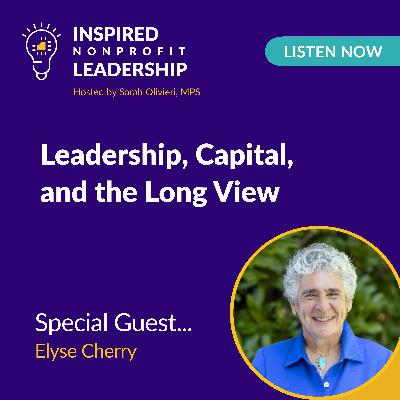
What does it really take to lead a values-driven nonprofit at scale—without losing your mission, your independence, or your sanity? In this episode, I sit down with Elyse Cherry, CEO of BlueHub Capital, to talk about long-term leadership, mission discipline, community-centered finance, and how great leaders keep asking better questions as their organizations grow. Episode Highlights 02:21 – How global travel shaped Elyse's leadership worldview 07:58 – Staying true to mission and values over decades 14:15 – Navigating financial partnerships without losing independence 19:49 – What systems change really looks like in practice 31:15 – Why nonprofit leaders must "look around the corner." My guest for this episode is Elyse Cherry. Elyse Cherry is the CEO of BlueHub Capital, where she has led the organization since 1997. Under her leadership, BlueHub has invested more than $3.2 billion to support affordable housing, health centers, schools, clean energy, foreclosure prevention, and community wealth-building initiatives nationwide. She is also President of Managed Assets at Boston Community Venture Fund, Aura Mortgage Advisors, and NSP Residential. A former partner at WilmerHale, Elyse is an attorney with deep experience in real estate finance and community development. She is an active civic leader, serving on the boards of Wellesley College, Eastern Bank, and The Boston Foundation, and has been widely recognized for her leadership, including honors from the White House, the Boston Business Journal, and the Financial Times. Connect with Elyse: Website: https://bluehubcapital.org/ LinkedIn: https://www.linkedin.com/company/bluehubcapital Instagram: https://www.instagram.com/bluehubcapital/ X: https://twitter.com/BlueHubCapital Sponsored Resource Join the Inspired Nonprofit Leadership Newsletter for weekly tips and inspiration for leading your nonprofit! Access it here >> Be sure to subscribe to Inspired Nonprofit Leadership so that you don't miss a single episode, and while you're at it, won't you take a moment to write a short review and rate our show? It would be greatly appreciated! Let us know the topics or questions you would like to hear about in a future episode. You can do that and follow us on LinkedIn.

Delegating tasks keeps you busy. Delegating outcomes changes everything. In this episode, I break down the real difference between assigning work and asking someone to own a result—and why outcome ownership requires agreement, trust, and the right match between people and responsibility. If scaling still feels heavy, this is why. Episode Highlights 00:00 Introduction: The Managerial Dilemma 00:10 Task Proficiency vs. Leadership Skills 00:21 The Side Benefits 00:24 Common Challenges in Management 00:28 Aspiring Leaders in Organizations Resource The Board Clarity Club A monthly membership for boards that provides training and live expert support to help your board have total clarity on how to be the best board possible. Learn More >> About Your Host Have you seen Casino Royale? That moment when Vespa slides in elegantly, opposite James, all charming smile, razor-sharp wit and mighty brainpower, and says, "I'm the money"? Well, your host, Sarah Olivieri has been likened to Vespa by one of her clients – not just because she's charming, beautiful and brainy– but because that bold statement "I'm the money" was, as it turned out, right ON the money. Sarah helps nonprofits transform their organizations from failing to thriving. And she's very, very good at it. She's brought nonprofits back from the brink of insolvency. She's averted major cash-flow crises, solved funding droughts, board conflicts and everything in between… and so she has literally become "the money" for many of the organizations she works with. As the former director of 3 nonprofits and founder of 5 for-profit businesses, she understands, deeply, the challenges and complexities facing organizations and she's created a framework, called The Impact Method®️, which can help you simplify operations, build aligned teams and make a bigger impact without getting overwhelmed or burning out – and Every. Single. One. Of her clients that have implemented her methodologies have achieved the most incredible results. Sarah is also a #1 international bestselling author, holds a BA from the University of Chicago with a focus on globalization and its effect on marginalized cultures, and a master's degree in Humanistic and Multicultural Education from SUNY New Paltz. Access additional training at www.pivotground.com/funding-secrets or apply for the THRiVE Program for personalized support at www.pivotground.com/application Be sure to subscribe to Inspired Nonprofit Leadership so that you don't miss a single episode, and while you're at it, won't you take a moment to write a short review and rate our show? It would be greatly appreciated! Let us know the topics or questions you would like to hear about in a future episode. You can do that and follow us on LinkedIn.
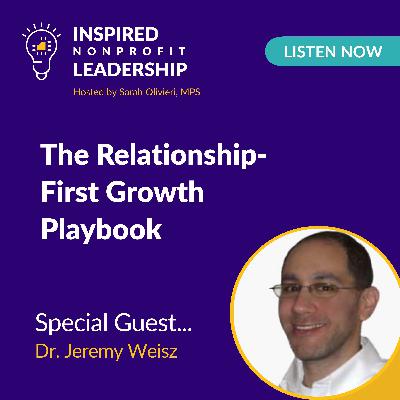
What if your podcast became your most effective relationship-building tool? In this episode, I'm joined by Jeremy Weiss, who breaks down how nonprofits can use podcasting to connect with their Dream 200—donors, referral partners, and champions—by leading with generosity and creating real ROI. Episode Highlights 01:19 Jeremy's background and journey 05:41 The power of podcasting for relationships 11:30 Building relationships through giving 17:12 Asking better, open-ended questions 26:58 Active listening, follow-up, and human connection 35:31 Connecting and engaging meaningfully on LinkedIn Meet the Guest My guest for this episode is Dr. Jeremy Weisz Dr. Jeremy Weisz has been featuring top entrepreneurs with video interviews since 2008. The interviews include founders/CEO's of Pixar, P90X, Atari, Zappier, Einstein Bagels, Mattel, Kettle Chips, RX Bars, Big League Chew, the Orlando Magic, and many more on www.InspiredInsider.com, and he shares the interviews with over 225K social media followers and email subscribers. He runs Rise25, where they help B2B businesses connect to their 'Dream 200' clients and referral partners, and get ROI, using a podcast. They eliminate 99% of the work and make sure you get ROI. Rise25 is an easy button for you to launch and run your podcast. Podcasting has been one of the best things I've done both personally and professionally. It's been an amazing tool for connecting with referral partners, strategic partners, clients, and more. Podcasting is like a "Swiss Army knife" because it is business development, referral marketing, strategic partnerships, lead generation, SEO, content creation, personal & professional development, all in one Connect with Dr. Jeremy: www.Rise25.coAbout - Rise 25m/about/ Sponsored Resource Join the Inspired Nonprofit Leadership Newsletter for weekly tips and inspiration for leading your nonprofit! Access it here >> Be sure to subscribe to Inspired Nonprofit Leadership so that you don't miss a single episode, and while you're at it, won't you take a moment to write a short review and rate our show? It would be greatly appreciated! Let us know the topics or questions you would like to hear about in a future episode. You can do that and follow us on LinkedIn.
Procrastination isn't a character flaw—it's data. In this training, Sarah Olivieri shares how to turn "I can't make myself do it" into a practical clue about what needs to change: your expectations, the size of the task, or whether it even belongs on your plate. You'll learn a simple mindset shift (Wabi-Sabi procrastination), how the Four Tendencies can explain your patterns, and a few quick ways to redesign work so you actually get it done—without forcing yourself to become a different person. Episode Highlights 01:13 Today's Topic: Positive Procrastination 01:32 Personal Procrastination Story 03:21 Understanding Procrastination 06:19 The Four Tendencies Framework 08:38 Breaking Down Tasks 10:43 Delegation and Zone of Genius Resource The Board Clarity Club A monthly membership for boards that provides training and live expert support to help your board have total clarity on how to be the best board possible. Learn More >> About Your Host Have you seen Casino Royale? That moment when Vespa slides in elegantly, opposite James, all charming smile, razor-sharp wit and mighty brainpower, and says, "I'm the money"? Well, your host, Sarah Olivieri has been likened to Vespa by one of her clients – not just because she's charming, beautiful and brainy– but because that bold statement "I'm the money" was, as it turned out, right ON the money. Sarah helps nonprofits transform their organizations from failing to thriving. And she's very, very good at it. She's brought nonprofits back from the brink of insolvency. She's averted major cash-flow crises, solved funding droughts, board conflicts and everything in between… and so she has literally become "the money" for many of the organizations she works with. As the former director of 3 nonprofits and founder of 5 for-profit businesses, she understands, deeply, the challenges and complexities facing organizations and she's created a framework, called The Impact Method®️, which can help you simplify operations, build aligned teams and make a bigger impact without getting overwhelmed or burning out – and Every. Single. One. Of her clients that have implemented her methodologies have achieved the most incredible results. Sarah is also a #1 international bestselling author, holds a BA from the University of Chicago with a focus on globalization and its effect on marginalized cultures, and a master's degree in Humanistic and Multicultural Education from SUNY New Paltz. Access additional training at www.pivotground.com/funding-secrets or apply for the THRiVE Program for personalized support at www.pivotground.com/application Be sure to subscribe to Inspired Nonprofit Leadership so that you don't miss a single episode, and while you're at it, won't you take a moment to write a short review and rate our show? It would be greatly appreciated! Let us know the topics or questions you would like to hear about in a future episode. You can do that and follow us on LinkedIn.

Comments

Download from Google Play

Download from App Store
 United States