


 Claim Ownership
The Business of Meetings
Subscribed: 9Played: 229
Subscribe

Description
If you are an independent business owner in the meeting and event space, this podcast is for you! Your host, Eric Rozenberg has created this show to bring you strategies, tips, and tactics to help your business grow. With more than 20 years in the event industry and planning events for Fortune 100 companies, Eric is prepared to let you in on the insider tactics so you can be successful too!
317 Episodes
Reverse

We are delighted to welcome Ashleigh Cook, the Chief Marketing Officer of RainFocus, as today's guest. In this episode, Ashleigh focuses on strategy, data, AI, and the aspects of events that must change. Stay tuned to learn how, with the right strategy and data foundation, events can truly become impactful drivers of business growth. Ashleigh's Journey Ashleigh began her career in the research and advisory space at companies such as Gartner and Forrester, where she managed marketing programs and consistently tracked events that drove the strongest growth. She joined RainFocus in 2020, during the pandemic, inspired by its focus on data and personalization. There, she saw firsthand how virtual events expanded reach and accessibility, and how hybrid experiences strengthened engagement. Today, she collaborates with leading brands to develop event strategies that enhance business outcomes. Events Ashleigh believes that events are one of the most effective ways to bring teams together around the customer experience. They help attract new customers, deepen relationships, and build loyalty. She points out that conversion rates from events are consistently strong, making them a powerful channel when used intentionally. Formatting Events The format of an event should always reflect its goal—virtual works well for reaching wider audiences and delivering content at scale. In-person is more impactful for connection and relationship-building. Hybrid offers flexibility, while roadshows are becoming more common to meet audiences where they are. Clear Intent A key message from Ashleigh is to avoid running events just because they happen each year. She encourages organizations to be clear about what they are trying to achieve, and then design the event around that goal. Beyond Attendance Ashleigh explains that event registrations and attendance only tell part of the story. What really matters is how people engage at events, the sessions they attend, who they meet, and how actively they participate throughout the event. Data Ashleigh emphasizes the importance of event data after the event ends. Teams should focus on follow-up, understanding attendee interests, and tracking how those interactions turn into opportunities, accelerated deals, and long-term relationships. Data Strategy Data should be intentional. Instead of simply collecting information habitually, organizations should consider how they will use it across the entire customer journey, from registration to post-event engagement. Personalization With the right data, events can become far more personalized. Attendees can be guided toward sessions, content, and experiences that match their interests, making their time more valuable and increasing engagement. AI AI helps teams save time and work more efficiently. It supports recommendations, workflows, and analyzing feedback, allowing teams to focus less on logistics and more on creating better experiences. The Human Element While AI is powerful, Ashleigh is clear that it cannot replace human connection. The real value of events lies in relationship building, trust, and in-person interactions. An Ongoing Journey Ashleigh encourages people to think beyond one single event. Events should connect to a broader journey, where each interaction builds on the last and helps teams engage more meaningfully over time. Events Are Growing More organizations are investing in events because they offer a real connection in an increasingly digital world. Events cut through the noise and create lasting impact. Learning and Staying Relevant Keeping up with new tools and trends does not have to be overwhelming. Ashleigh recommends learning from peers, joining professional communities, and experimenting with new technologies to build confidence and improve results. Authenticity Matters Authenticity matters. As more content becomes automated, people are becoming more adept at spotting what feels real. Lasting connections and strong brands come from genuine, human interaction. BIO: Ashleigh Cook, Chief Marketing Officer at RainFocus Ashleigh is an accomplished marketing executive with deep expertise in sales, marketing, and product best practices and technology. She is driven by a passion for helping high-growth companies establish and scale marketing functions to deliver an exceptional customer experience that aligns with rapidly changing expectations and technology advancements. Before RainFocus, Ashleigh led marketing teams spanning GTM strategy, demand generation, ABM, client marketing, and operations at SiriusDecisions and Forrester. Ashleigh holds her BSBA in Marketing from the University of Richmond. Outside of work, she enjoys spending time with family, golfing with her husband, being active with her dog, and traveling. Connect with Eric Rozenberg LinkedIn Facebook Instagram Website Listen to The Business of Meetings podcast Subscribe to The Business of Meetings newsletter Connect with Ashleigh Cook On LinkedIn RainFocus

We are delighted to welcome Natalie De Fazio, Founder and CEO of Pinnacle Live, as today's guest. Natalie is a seasoned entrepreneur with a strong background in leadership and consulting, including roles at consulting firms such as KPMG. Over the years, she has collaborated with many leading names in AV production within the meetings and events industry and is now focused on building and growing her new brand. Stay tuned to hear Natalie's story and the insights she shares today. Natalie's Journey Natalie began her career in consulting after studying business and economics, working across multiple industries and building expertise in strategy, analysis, and leadership. After working at several firms, including KPMG, she became an independent consultant and soon realized the value of bringing a fresh perspective to organizations. Her work with Freeman introduced her to the events space, where she fell in love with the people and the experiences they offered. She went on to co-found Pinnacle Live in 2021. A Customized Experience Pinnacle Live was created to fill a gap in the audiovisual services space within hotels. They focus on delivering a more customized, higher-touch experience rather than trying to be everything to everyone. This positioning enables the company to serve venues that require a more customized solution, while maintaining a strong emphasis on relationships, service quality, and consistency. An Outside Perspective Pinnacle Live's key advantage comes from not being originally rooted in the events space. Questioning "why" and challenging the way things have always been done opens the door to new ways of thinking. Bringing in ideas from other industries helps avoid an echo chamber and encourages innovation, curiosity, and solutions more closely aligned with customer needs. Innovation Natalie believes that innovation is about trying new things that actually drive value, rather than simply changing for the sake of change. Creating a culture where people are willing to try and fail fast opens the door to better ideas. Maintaining a smaller-company feel while growing allows every voice to be heard and ideas to flow freely, regardless of role or title. Data Data highlights trends, indicators, and direction, but it does not tell the whole story. Combining data with anecdotes and opinions creates a far more complete picture. Clear KPIs across leadership, regular review, and accountability ensure alignment, while avoiding overreaction to short-term fluctuations. Transparency A high level of transparency around financials, performance, and goals helps employees understand the bigger picture and their role within it. Sharing both positive and bad results builds trust, encourages ownership, and creates a more engaged workforce. Natalie applies the same transparent philosophy to her customers. Hiring For Natalie, recruiting is about more than competencies and professional experience. She looks for people who believe in the vision, feel fulfilled by the work, and are excited to be part of building something. It has to be a match because even highly capable people won't perform at their best if they're not genuinely invested in the role and the company's direction. Creating Experiences Events are no longer just about sitting in a room and watching presentations. People want immersion and a sense of belonging. The role of an AV and production partner is to understand the objectives and bring creative ideas to life through sound, light, and visuals, creating a feeling and environment that delivers on those goals. Trust Establishing trust is paramount for Natalie. Communication, proactive planning, and reliability are essential for delivering a seamless experience. The best feedback comes from being easy to work with, dependable, and consistently delivering on expectations, driven entirely by people who are both passionate and well-trained. AI Natalie feels that AI saves time and removes manual work. That gives teams more time to focus on more valuable work, such as working with customers, innovating, and developing better experiences. However, human input remains essential to ensure it is thoughtful, strategic, and correct. In-Person Experiences Still Matter Natalie believes that people still want to connect, collaborate, and share their experiences. Virtual and hybrid events have their place, but they are not quite the same. When people come together, their experience must feel intentional and immersive, and be something they are part of rather than just watching. Maintaining Quality While Scaling Natalie wants to ensure that Pinnacle Live continues to deliver high-touch services, tailored solutions, and real relationships. For her, that means constantly asking how to improve the experience and making sure her team fully understands the required standard. Looking Ahead Natalie wants Pinnacle Live to continue delivering consistently for clients and continue building strong relationships with hotel partners. She also sees growth in the broader production space, expanding beyond hotels into more complex production work. Her goal is to continue building the business while staying true to its founding goals. BIO: Natalie De Fazio Natalie De Fazio is the Chief Executive Officer of Pinnacle Live, a leading provider of premium event technology and production services. A seasoned executive with more than 20 years of experience in strategy consulting, operations, and corporate leadership, Natalie specializes in transforming organizations, building high-performing teams, and driving sustainable growth. Before becoming CEO, Natalie served as Founding President of Pinnacle Live, where she played a central role in shaping the company's strategic direction, expanding capabilities, and strengthening its people-first culture. Prior to founding Pinnacle Live, she served as Vice President of Corporate Strategy at Freeman Company and was a member of the Executive Committee at Encore Event Technologies. Earlier in her career, Natalie held leadership and consulting roles at KPMG, Stax Inc., Aon Hewitt, and Accretive Health, and founded her own consulting firm, NMD Strategy. Known for her pragmatic, data-informed leadership style and passion for innovation, Natalie is committed to elevating live event experiences and advancing an industry built on meaningful human connection. Connect with Eric Rozenberg On LinkedIn Facebook Instagram Website Listen to The Business of Meetings podcast Subscribe to The Business of Meetings newsletter Connect with Natalie De Fazio On LinkedIn Pinnacle Live

Today, we're taking a closer look at what it truly means to build a business that works. We're moving beyond the notion of being busy, booked, and indispensable, and instead focusing on how to create a business that delivers real value. Stay tuned as we explore why so many business owners still operate like highly paid freelancers, and what needs to shift to build something scalable, transferable, and sustainable. Busy and Booked If your business stops when you stop, you own a job, not a business. Being busy and booked does not mean you're successful. Revenue is not the same as business value, and strong client reliance on you could indicate that the business is fragile, as it depends on your direct involvement. The Biggest Industry Lie The industry glorifies and rewards hustle, hero mode, last-minute problem-solving, and being indispensable, even though it often leads to stress and burnout. The more indispensable you are, the less valuable your business becomes to a potential buyer. A business built on dependency is not a company, because you, as the owner, are the system. Transferability The goal is transferability, not performance. A real business can operate without you. If someone else cannot sell, deliver, manage clients, and make decisions, you don't have a business asset. Your focus needs to shift from creating amazing events to making them repeatable without you. The Hero Trap The Hero Trap stems from the belief that nobody can do it better than you. You become the fixer, the closer, the savior. It feels rewarding, but it makes the business entirely dependent on you. The Customization Trap Each client is different. Your offers should be tailored, and your client's needs must be understood, yet there must still be a repeatable process. Without standardization, customization kills scalability and limits growth. The Control Trap Believing that things will not be done right unless you do them yourself keeps you involved in everything. That notion is usually driven by perfectionism and fear of delegating. It leaves you stuck and repeating the same patterns, which prevents business growth. A Real Business A real business has defined offers, not random services. It has a sales process and a clear sales playbook that enable others to sell consistently. It has delivery systems and documented workflows. It also has a team, where people can make decisions within a clear framework without constantly requiring approval. Documentation If something lives in your head, it does not exist. Documentation allows you to train others, delegate effectively, and create consistency. It also creates the highest value for your business. From Operator to Architect Operators solve problems, architects eliminate them. The operator mindset focuses on getting things done, fixing problems, and personally delivering outcomes, whereas the architect mindset focuses on designing systems. So, instead of doing everything themselves, those with the architect mindset assign ownership to others. Practical Steps Start by identifying where the business depends on you. It could be sales, client relationships, delivery, or perhaps even decision-making. Then systemize one area at a time, ideally starting with sales or delivery. Create a sales playbook that includes questions, objections, and answers. Document everything before delegating to avoid chaos. Finally, build ownership by making your team responsible for outcomes. Building A Scalable Business The ultimate goal is a business that can run independently of you. Ask whether the business could operate for 30 days without your involvement. Consider whether someone else can close deals, deliver projects at your standard, and manage clients. If you cannot step away, you cannot scale, and you cannot sell the business. Connect with Eric Rozenberg On LinkedIn Facebook Instagram Website Listen to The Business of Meetings podcast Subscribe to The Business of Meetings newsletter

AI is no longer just a tool. It is changing how we work, how we deliver value, and how we run our businesses. In this episode, Eric discusses a major shift happening in our industry. He breaks down what is really happening and how you, as a business owner, can remain relevant and competitive. Major Change We are in a period of significant change. This shift is not only about technology. It's about the value we bring and who will capture that value moving forward. It brings both opportunities and challenges. Beyond Assistance In the past, AI mainly assisted with small tasks. Now, it is executing. It can complete entire processes, not just support them. This simplifies many activities and dramatically increases their execution speed. Acceleration AI is now helping to build better AI. That creates a cycle of continuous improvement, which is why everything is accelerating so quickly right now. Replicable Tasks Much of the work done in business today, such as proposals, RFP responses, presentations, and client communication, can now be handled by AI. While not perfect, it is fast enough to change expectations and reduce the time required. Changing Expectations Tasks that previously took hours can now be completed in minutes. This is forcing business owners to reconsider their productivity, pricing, and service delivery. Human Value Human connection remains a key part of doing business. AI is not replacing people. Clients continue to buy from people they trust because they value their relationships, judgment calls, and outcomes. A Role Shift The role of professionals is changing. Instead of focusing on execution, they can now focus on defining problems, designing solutions, and coordinating tools. AI supports the execution layer. Levels of Adoption Business owners are responding to AI in different ways. Some ignore it, some use it occasionally, and others fully integrate it into their operations. Those who build systems and use AI strategically will gain the most advantage. Smaller Teams AI enables businesses to scale more efficiently. With the right systems and tools, small teams can now achieve results that previously required much larger organizations. Daily Use Using AI occasionally is not enough. Regular, daily use is required to understand its capabilities and integrate it effectively into your workflow. Overwhelm With many different AI tools available, it is easy to become overwhelmed. The best approach is to focus on a few tools, learn them well, and then apply them to your work. Workflows Instead of focusing on individual tasks, it is important to map out your workflows. That will help you identify where to apply automation and improve your use of AI. Evaluate Business owners should assess their activities and decide what can be automated, what should remain human, and where they add the most value. It is advisable to focus on areas that AI cannot replace. Leadership Although AI is taking over execution, leadership remains human. Decision-making, ownership, and strategic thinking remain the responsibilities of business owners. Practical Steps Start immediately. Set aside time to explore AI, test various tools, and begin automating repetitive tasks. A Unique Opportunity Despite all the uncertainty, this is one of the best times to own a business. Those who can adapt, learn, and take action will benefit the most from all the available opportunities. Connect with Eric Rozenberg On LinkedIn Facebook Instagram Website Listen to The Business of Meetings podcast Subscribe to The Business of Meetings newsletter
Building a successful business can be an exciting, energizing, and deeply rewarding experience. But it often comes with unexpected lessons. In this episode, Eric shares three pivotal moments that profoundly shaped his entrepreneurial journey. If you're an entrepreneur building, growing, or scaling a business, these insights will help you understand why you must stop trying to do everything yourself and, instead, start leading and building structured systems that will allow your business to grow. A Trap In the early years of building a business, success can feel exciting and validating. However, when the business owner tries to do too much personally without delegating or implementing systems, success can quickly become exhausting. Constant pressure, no real time off, and daily operational issues can turn growth into a trap rather than an advantage. The Bottleneck Without structure and delegation, the business owner becomes a bottleneck in the company. The turning point comes when the owner finally realizes that instead of building the business around themselves, they must create a business that can scale, with proper systems, structure, and the right people in place. A Stressful Situation One project nearly put Eric's company out of business when a trusted industry contact claimed to have access to sought-after FIFA World Cup tickets. After Eric's client wired the money and he transferred the funds, it became clear the tickets likely did not exist. After weeks of intense work, Eric ultimately secured the tickets and delivered the project successfully. That experience exposed just how fragile his business was without proper checks, verification, and systems in place. Reality Check A wake-up moment often occurs for business owners when an opportunity arises to sell their business. Many owners believe their company is worth far more than what buyers are actually willing to pay. Passion, creativity, reputation, and great clients feel incredibly valuable to the person who built the business. However, buyers tend to evaluate companies with an entirely different set of criteria. What Buyers Actually Evaluate Buyers tend to focus on recurring revenue, systems, leadership, and consider whether the owner is a bottleneck or if they have a trusted team already in place. They also examine client diversification and the overall structure of the business. Those elements determine how sustainable and scalable the business truly is, which ultimately influences its valuation. Wake-Up Moments Wake-up moments are essential for business owners to become psychologically open to change. Before experiencing wake-up moments, advice about systems, structure, strategy, or leadership tends to feel abstract to most business owners. After a wake-up moment, however, they usually become far more receptive to rebuilding aspects of their company and ensuring the right systems are in place. The Cycle Many Business Owners Experience The entrepreneurial journey often begins with excitement. While building something new, the business grows, clients are happy, and the reputation increases. Over time, however, complications arise, and the business owner becomes overwhelmed. Eventually, they realize that the business model and structure must change for the company to move forward. Evolving The next phase of the business requires a stronger structure, clearer strategy, leadership evolution, and delegation. Most importantly, it requires a change in the owner's mindset. For that to happen, business owners must stop trying to handle everything themselves and start building a structured business that can operate effectively. Mentors and Coaches Investing in personal and professional growth helps entrepreneurs to avoid repeating the same patterns and reach the next stage of their journey. Talking to successful and experienced business owners can make an enormous difference. Mentors and coaches help entrepreneurs see what needs to change in their business and how to move forward. Building a Business The goal of every entrepreneur should be to move from constantly reacting and solving problems to running a structured company with proper systems and leadership in place. When business owners are no longer the bottleneck, they can finally build a business that is stronger, more valuable, and better positioned for long-term success. Connect with Eric Rozenberg On LinkedIn Facebook Instagram Website Listen to The Business of Meetings podcast Subscribe to The Business of Meetings newsletter

Today, Eric addresses the uncertainty we're experiencing in the world. Uncertainty has become the new normal, and our industry has shifted fundamentally with buyers being more cautious, procurement tighter than ever, and AI reshaping how we work. However, that uncertainty also provides opportunities. Our Industry Has Changed Permanently You must be cautious about every buying decision. Procurement teams are asking tougher questions. AI is transforming how work gets done. At the same time, as technology increases, so does the desire for real human connection. With many owners retiring and no clear successors in place, consolidation is creating space for those who are prepared. There is disruption, but there are also real opportunities. A Fragile Business If everything in your business relies on you, the business is vulnerable. Tough markets reveal when revenue is inconsistent, messaging is unclear, or too much income depends on one client. They also show when the owner has become the bottleneck. A business that can perform well only when conditions are easy is not well-structured. It is running on momentum. Building it as if you might sell it one day forces you to delegate, build stronger systems, and create long-term stability. Clarity Clarity is your competitive advantage. Uncertain times expose weak positioning, unclear offers, revenue concentration, and emotional decision-making. If you cannot quickly explain who you serve, the problem you solve, and why you're different, you will struggle when budgets tighten. Emotional Reactions Undermine Growth When pressure rises, it's easy to react. Panic marketing, heavy discounting, agreeing to everything, overworking, or avoiding financial reviews may feel productive, but they erode value. Operating in survival mode replaces strategy with short-term fixes. And hope, no matter how positive, is not a viable financial plan. Five Non-Negotiables Five areas deserve consistent attention: financial clarity, focused positioning, a predictable revenue engine, disciplined time management, and emotional control. Those are leadership fundamentals, and when they are strong, uncertainty becomes manageable. Financial Clarity Know your monthly break-even. Know your six-month runway. Understand your cash flow forecast and your pipeline. Review your KPIs weekly. You don't have to prepare every report yourself, but you must understand the numbers. When you know where you stand, uncertainty loses much of its power. Focused Positioning Generalists struggle in tight markets. Be clear about who you serve, the problems you solve, and why your experience makes you the right choice. If you can explain your positioning confidently in 30 seconds, you're already ahead. Clear positioning attracts the right clients and filters out the wrong ones. A Predictable Revenue Engine Referrals are valuable, but they are not enough for consistent growth. Track your indicators, your calls, meetings, proposals, conversion rates, and follow-ups. Put simple systems in place so the business does not rely solely on your personal energy. The less the day-to-day business operations depend on you, the more valuable and sustainable the business becomes. Blocking Time Block time for revenue-generating work. Block time for strategic thinking. Block time to review your numbers. Block time for team alignment and mentorship. If growth matters, it needs space in your calendar. Calm Is Contagious Your team and clients take their cues from you. When you remain calm and steady, they feel reassured. When you react emotionally, your instability spreads. Entrepreneurship will always have its highs and lows. Calm, steady leadership creates confidence in any situation. A 30-Day Reset Audit your financial runway. Clean your pipeline and assign realistic probabilities. Clarify your core offer in one sentence. Remove at least one low-margin distraction. Schedule weekly CEO time. Small, consistent structure creates meaningful momentum. Conclusion Uncertainty is a reality, and consolidation is accelerating. Those with structure, clarity, and discipline will benefit; those without them will struggle. Whether you run a solo business or lead a large team, processes, financial visibility, and calm leadership are essential. Focus on what you can control, build the structure, and keep moving forward. Connect with Eric Rozenberg On LinkedIn Facebook Instagram Website Listen to The Business of Meetings podcast Subscribe to The Business of Meetings newsletter
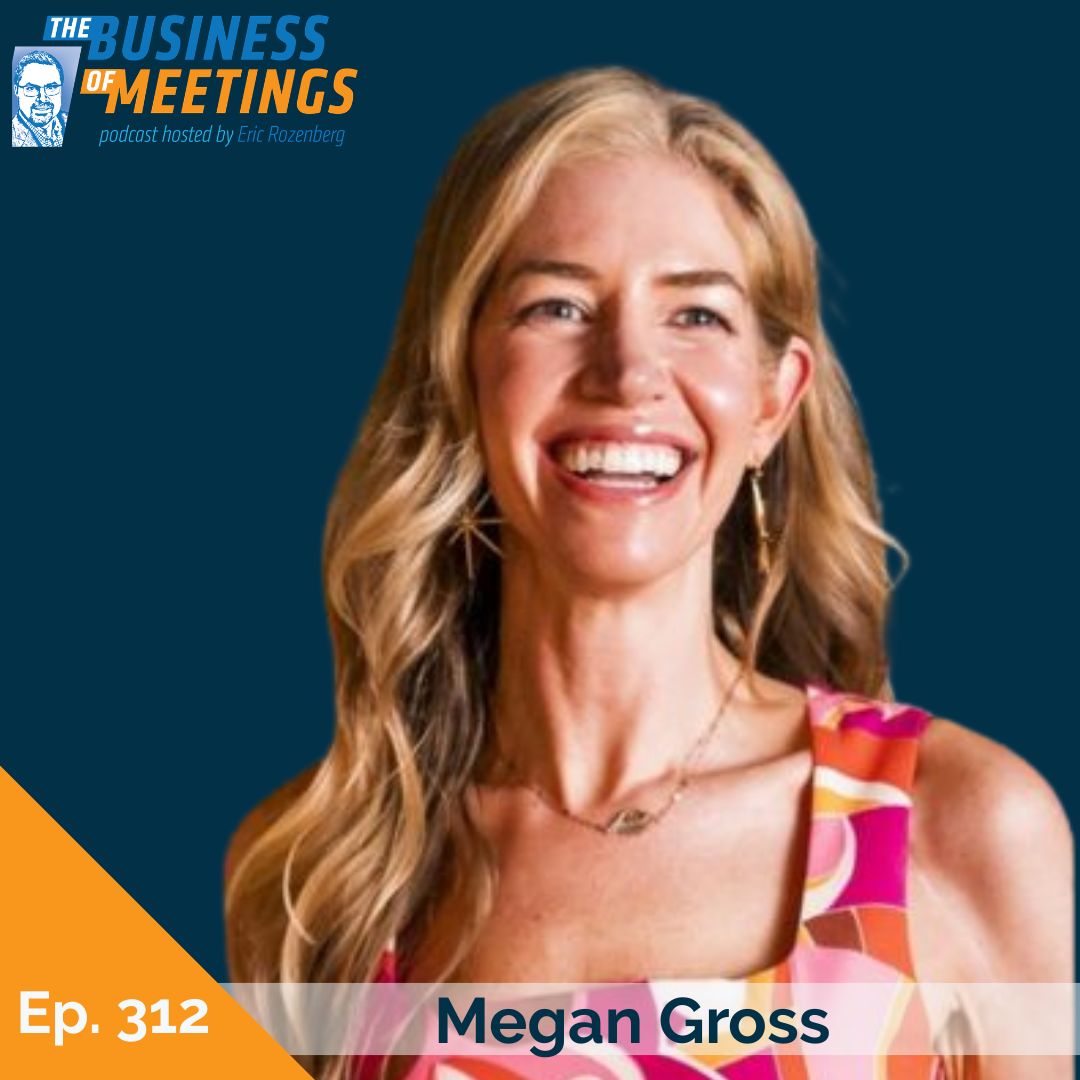
Today, we are excited to welcome entrepreneur Megan Gross, founder of The Bonsoir, a boutique events firm that curates high-touch small events to bring startups and investors together. Megan is currently based in the San Francisco Bay Area and is expanding into South Florida. In this episode, she shares her journey, highlighting small, personalized events as the future of business relationships. Megan's Journey After college, Megan moved to Las Vegas to work for nightclubs, restaurants, and a major pool party. Drawn by a lifelong dream to live in Paris, she worked at the exclusive club Matignon near the Champs-Élysées as a VIP host. Although it failed to unfold as planned, it redirected her to the Bay Area, where she immersed herself in the startup ecosystem. After working on a platform of extraordinary experiences and then at Mastercard, she launched The Bonsoir as a niche, designing intimate gatherings for founders and investors, blending hospitality and bold creativity. Bold Risks Megan believes in trusting her instincts and taking big risks, even without every detail in place. Her move to Paris and then into entrepreneurship were not calculated step-by-step strategies. They were decisions rooted in her conviction. Things did not always work out as expected, but each step redirected her toward something more aligned with her. A Competitive Advantage From the years she spent working at nightclubs, restaurants, and large-scale pool parties, Megan learned relationship skills that corporate settings seldom provide. Reading a room, remembering names, managing personalities, and creating the right energy are all directly applicable to business. As technology and automation grow, these human-centered skills become even more valuable in a digital-first world, where authentic connections truly stand out. Building Without Traditional Frameworks Launching her company without agency or corporate training forced Megan to create her own systems. Although it initially felt like a disadvantage, it allowed her to innovate beyond standard industry templates. She sources vendors from unexpected places, leverages global relationships, and builds unconventional events. The Purpose–People–Process Framework Connection can be engineered when purpose, people, and processes align. Purpose defines the specific goal of the gathering. People determine who must be in the room—and who should not. The process covers every touchpoint, from invitation wording to seating charts to follow-up. When those circles intersect, connections form intentionally rather than by accident. The Gather Method Megan's GATHER method is an acronym for her six event strategy components: Guest List, Atmosphere, Timing, High Touch, End Game, and Relationships. The Guest List is the most critical decision. Atmosphere sets the emotional tone. Timing ensures real interaction, and High Touch keeps her experiences personal and intentional. The End Game clarifies measurable outcomes, and Relationships are Megan's ultimate objective, with the event serving as the vehicle instead of the destination. Why Smaller Is More Powerful Megan believes intimacy drives impact. Her ideal event has fewer than 20 people, as that allows depth of conversation and meaningful follow-ups. Instead of a massive gathering, she recommends smaller, recurring events that build layered relationships over time. Scarcity and selectivity tend to elevate perceived value and strengthen engagement. Scaling a High-Touch Business Scaling micro-events presents unique challenges. Megan addressed this by productizing her dinner format, standardizing structure while keeping personalization intact. She built operational systems and hired leadership support, even when stepping away from production felt difficult. Delegation allowed her to grow without compromising on quality. Why AI Increases the Demand for In-Person Events As AI accelerates digital interaction, in-person gatherings become more valuable. When it becomes increasingly difficult to distinguish what is real online, physical presence can build trust. Technology may automate communication, but it cannot replicate a shared human experience. BIO: Megan Gross is the founder of The Bon Soir, a boutique events firm that brings together investors and startups through smart, high-touch events that build trust and accelerate deal flow. Her training comes from running high-pressure nightclubs in Las Vegas. She later worked at a unicorn startup acquired by Mastercard, helped launch Mastercard's global Priceless Experiences platform, led a global community dining initiative at Airbnb, and built The Bon Soir into a go-to event partner for venture firms. She is based in the San Francisco Bay Area, hosts The Supper Club in San Francisco, curates private dinners for funds, and produces one of the largest events in the VC platform community. Connect with Eric Rozenberg On LinkedIn Facebook Instagram Website Listen to The Business of Meetings podcast Subscribe to The Business of Meetings newsletter Connect with Megan Gross On LinkedIn The Bon Soir

As a business owner, are you feeling overwhelmed? Eric believes that overwhelm is seldom about having too much to do. It happens when business owners fail to structure their time as a CEO should and instead react emotionally rather than lead strategically. Overwhelm Overwhelm often comes from reacting instead of leading. Jumping in to fix problems, answer clients, and put out fires feels productive, but it keeps you stuck working in the business instead of on it. Responsiveness is often mistaken for leadership, but constant firefighting is not a strategic approach to leading a team. Role Confusion As a business owner, you wear multiple hats. Without clearly defining which role you are playing at any given time, your brain never switches off. Constant mental switching is unsustainable. Blocking time for specific responsibilities will reduce mental clutter and restore focus. Decisions Not Made Unmade decisions accumulate over time. Niche, service scope, pricing, team expectations, and client expectations all require clarity. When they are not addressed at the right time, they pile up. Constantly facing all the decisions that need to be made saps your energy and heightens overwhelm. Doubt Amplification Revenue is a rollercoaster, not a straight line. When challenges arise, doubt surfaces. Questions like "Am I good enough?" or "What if this doesn't work?" begin to amplify. Every entrepreneur faces doubt, but it becomes dangerous when it takes over and paralyses you. Priority Integrity The issue is not time management but priority integrity. Without clear priorities, confusion grows. Business owners have three levels of work: survival work for their clients, stability work on their systems and financial clarity, and growth work on their marketing, sales pipelines, team development, and scalability. Most business owners tend to get stuck at the survival level. Building Value and Freedom Long-term value is created by focusing on growth and building a scalable model. The less involved you are in daily activities, the higher the value of your business. A transferable business must be structured and team-based, rather than relying on a single person to manage all the chaos. Time Blocking Decide what truly matters over the next 90 days, choose one objective that will make your revenue more predictable, and focus on it. Then, create some non-negotiable CEO time- at least two 90-minute blocks per week, with no interruptions. Use that time to strategize, review your pipeline, refine your pricing, design systems, and prepare playbooks. And every night, define three meaningful outcomes for the next day. Remember to focus on the outcomes, not the tasks. Creating Clarity Doubt often shows up when you raise prices, invest in support, delegate responsibility, or start saying no. Growth is uncomfortable, and that discomfort can easily be misinterpreted as a sign that something is wrong. The key is to separate emotion from evidence. Instead of relying on how things feel, look at the data: the size of your pipeline, your conversion rate, your margins, client retention, and your key performance indicators. Build a dashboard, review it consistently, and let the facts guide you. Clarity comes from evidence, not emotion. Energy and Leadership Overwhelm is often a sign that your energy is depleted. Sleep, training, learning, and setting aside uninterrupted focus time are essential. Constant accessibility destroys your ability to think strategically. If you do not have time to think, you will not have time to lead. Practical Actions to Reduce Overwhelm Block your time and focus on priorities. Create a list with five activities to eliminate and three to delegate within 30 days. Build systems for predictable revenue across sales and execution. Focus on what you should delegate so that you can focus on representing the business and maintaining client relationships. Create accountability with your peers through coaching or with a structured review. Overwhelm is often the byproduct of avoiding leadership. Always remember that high performers don't do it alone. Connect with Eric Rozenberg On LinkedIn Facebook Instagram Website Listen to The Business of Meetings podcast Subscribe to The Business of Meetings newsletter

Today, we're talking about ways to structure your business to be sold, even if you're not actively thinking of selling. In this episode, Eric breaks down the five critical elements you need to consider to make a business sellable. Stay tuned for five game-changing elements that will help you build a valuable and scalable business that runs successfully, with or without you. Can It Be Sold? If your business cannot be sold, you don't own a business — you own a job. The real test is simple: what happens if you disappear for 90 days? A true business will survive your absence. That standard forces you to build something transferable, stable, and valuable. Predictable Revenue Creates Stability You need clear visibility into where your future income will come from. Contracted recurring revenue is the gold standard, and repeat clients follow closely behind that. Revenue predictability allows you to plan investments, manage your cash flow, and reduce risk. Diverse Client Base Avoid over-relying on any single client. Overreliance on a single client erodes a business's value and increases its vulnerability. It's best to diversify your client base so that no single client accounts for more than 20% of your profit. Documenting Processes Document everything. If your systems are not documented, the company has little transferable value. A sales playbook defines your positioning, messaging, objections, and communication style. Standard operating procedures outline your service delivery. Onboarding systems create consistency for clients and vendors. Financial dashboards track KPIs, leading indicators, and lagging indicators. Strong Leadership A business that depends entirely on you is fragile, whereas a business supported by capable people is resilient. Delegation increases your business's scalability and protects you from burnout. If no one else can run your sales, operations, or administration, you become a bottleneck. Strong leadership involves building a team that can take on the business's responsibilities. Clean Financials Buyers look for clarity, transparency, and realistic compensation structures. Messy books reduce confidence and valuation. Always separate your personal expenses from your professional expenses. Maintain a clean profit and loss for the last three years, at least. Understand your margins per project. Create cash flow plans for every confirmed project and consolidate them into a company-wide forecast. Strategic Positioning Know your niche. Be clear on how you differentiate yourself. A "me too" business competes on price, and a strategically positioned business competes on value. Brand equity, specialization, and a clear point of difference will increase your profitability and make your business more attractive to buyers. Freedom The less the business depends on you, the more valuable it becomes, and the more leverage you gain to shape your future. A sellable business gives you the freedom to focus on what you do best. It reduces stress, allowing you to work on the business instead of constantly working in it. Connect with Eric Rozenberg On LinkedIn Facebook Instagram Website Listen to The Business of Meetings podcast Subscribe to The Business of Meetings newsletter
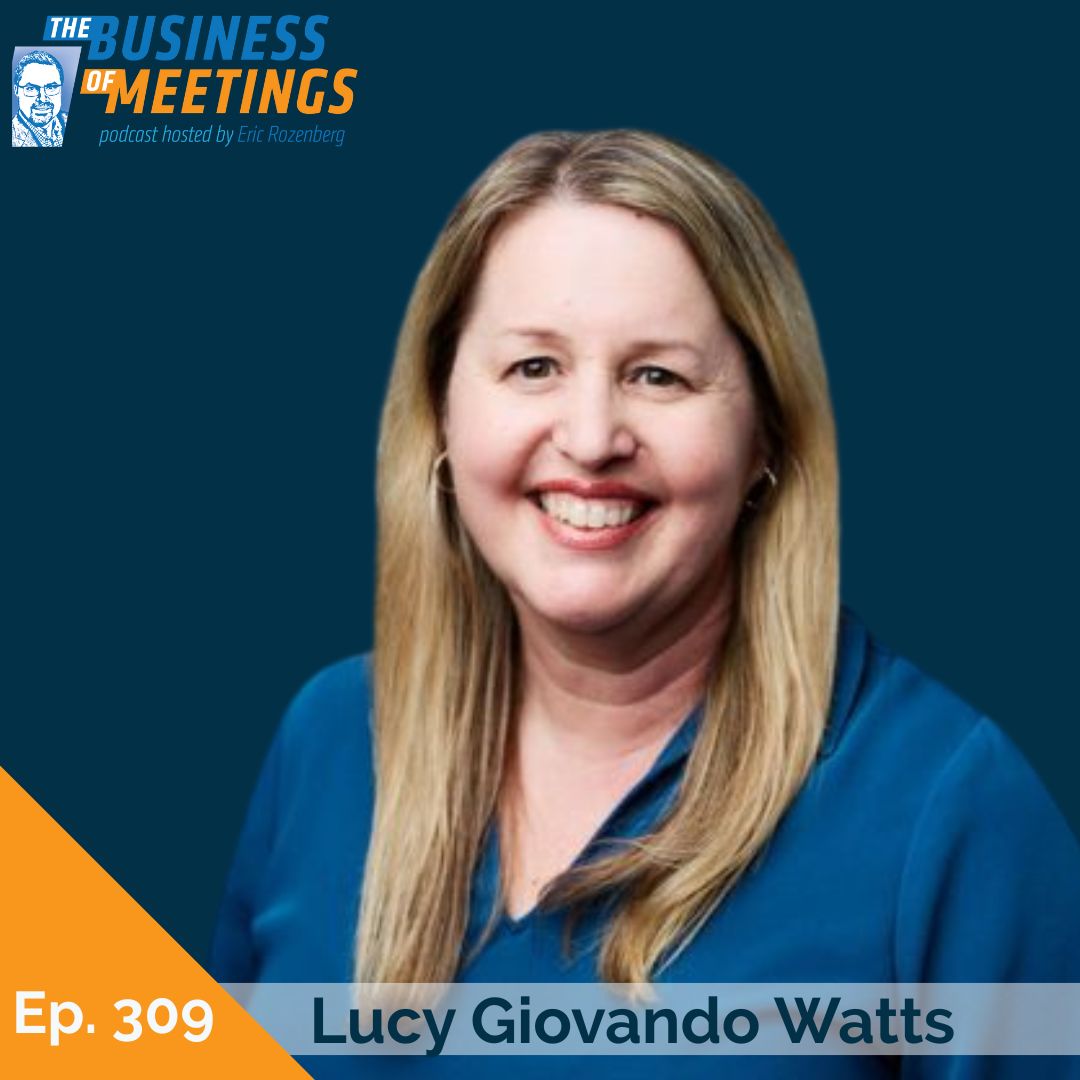
We are absolutely thrilled to welcome the remarkable Lucy Giovando Watts, Vice President of Sales and Marketing at Streamlinevents, as today's guest. Stay tuned as Lucy shares her journey, offers insights from her work at Streamlinevents, and tells us why serendipity often matters more than we realize. Streamlinevents Streamlinevents is a full-service corporate event agency in Emeryville, California, with over 24 years of industry experience. The team partners with corporate clients on sales kickoffs, incentive programs, user conferences, and complex meetings. The company is powered by the best-of-the-best event managers, technologists, creatives, and sourcing experts who thrive in an industry defined by constant motion. Lucy's Journey Lucy began her career in politics, working for a member of Congress and supporting political events, where she discovered her passion for live experiences. She then joined the tech sector in Silicon Valley, rising from event manager to Global Events Director, where she produced worldwide events. After that, she founded her own boutique event management company, which she ran for over 13 years, and later co-founded an event technology startup. Lucy briefly worked in association management before joining Streamline Events as Vice President of Sales and Marketing. Entrepreneurship and Getting Comfortable With Discomfort Building businesses taught Lucy that growth occurs outside of our comfort zones. For her, launching a startup meant daily exposure to sales, pitching, demos, and investors, along with the risk of failure. Over time, discomfort became normal, and fear was no longer a signal to stop. Instead, it became proof of forward motion. The Power of Saying Yes Lucy's decision to attend a reception she considered missing set off a chain reaction that led to pitch competitions, partnerships, press coverage, integrations, and ultimately an acquisition offer for her startup. That experience reinforced the value of openness and action, even when confidence lags behind opportunity, proving that even small yeses can unlock outcomes no amount of planning could ever predict. Serendipity Openness to chance encounters, conversations, and unplanned moments can play a role in one's career and in a company's growth. Serendipity does not replace preparation, but it rewards those who show up, engage, and are willing to act before they feel fully ready. Imposter Syndrome Lucy highlights how the perfectionistic mindset and people-pleasing culture in the hospitality industry can amplify imposter syndrome, particularly for women. Experience taught her that waiting to feel "ready enough" can become a barrier. Momentum comes from acting before you're certain and recognizing that doubt does not disqualify your capability. Creativity Lucy reframed her identity by finding areas of creativity in problem-solving, strategy, leadership, and idea synthesis. Creativity blossoms when people allow time for mental space, pull inspiration from unexpected sources, and disconnect from constant digital noise. Human Connection in an AI-Driven World Technology and AI can enhance efficiency, but they cannot replace in-person connection. Conferences, incentives, and live events fulfill a fundamental human need for belonging, trust, and spontaneous interaction. As digital tools expand, the value of face-to-face experiences continues to strengthen rather than diminish. Leadership, Safety Nets, and Being Bold Strong leadership creates safety nets that empower teams to take risks. When people know their leaders have their backs, they are more willing to experiment, speak up, and innovate. At Streamline Events, leaders encourage bold thinking, creative exploration, and professional visibility through speaking, writing, and idea-sharing, while modeling that same courage themselves. Bio: Lucy Giovando Watts Lucy Giovando Watts is Vice President of Sales & Marketing at Streamlinevents, a woman-and minority-owned events agency delivering innovative, sustainable, and inclusive events worldwide. With over 20 years of experience leading global teams, managing event companies, and founding her own event tech startup, Lucy brings deep expertise in strategy, operations, and financial management. Connect with Eric Rozenberg On LinkedIn Facebook Instagram Website Listen to The Business of Meetings podcast Subscribe to The Business of Meetings newsletter Connect with Lucy Giovando Watts On LinkedIn Streamlinevents Email Lucy: Lucy.gw@streamlinevents.com
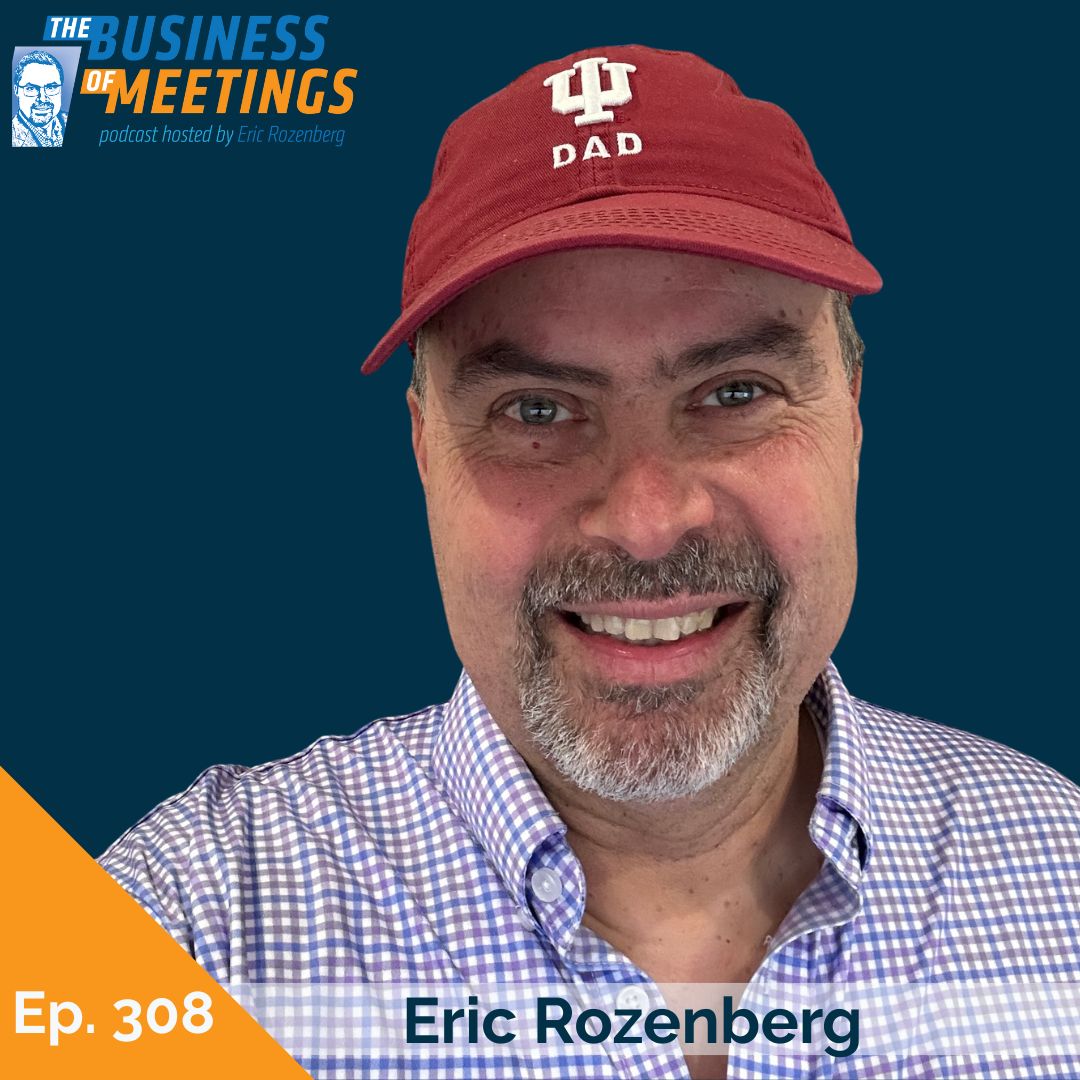
Two years ago, the Hoosiers of Indiana University were losing every game. Then, in January this year, something remarkable happened - they became the 2025–26 College Football Playoff National Champions! Eric has been inspired by this incredible transformation, guided by Coach Cignetti's leadership. What stood out for him was the total absence of hype, excuses, or a victim mentality. Instead, Coach Cignetti relies on three pillars: standards, preparation, and accountability—the very principles that drive success for any business owner, and yet, they are often the things we neglect. So, inspired by the Hoosiers' journey, Eric shares five ideas today- not to challenge you, but to inspire you and get you thinking. The Anti-Excuse Philosophy Winners don't explain—they execute. Slow markets, price-sensitive clients, societal shifts, and global events will always exist and cannot be controlled. What you can control is how you react to them. When finding excuses becomes a habit, the excuse itself starts to function as the business model. So, instead, focus on moving forward, facing reality, and finding new opportunities. Standards Are Not Aspirations Standards are practical, not theoretical. They are evident in the business's day-to-day operations. They define what "good" means, how fast you respond, what quality looks like, which clients you accept, and how disciplined you are financially. Values only matter if they are lived and enforced. So, if you're tolerating average behavior, you are actively training your business to lose. Preparation Beats Motivation Preparation matters more than motivation. High performers rely on repetition, fundamentals, and systems rather than waiting for inspiration. Reviewing the basics, using checklists, and showing up consistently will reduce stress and improve your ability to react when the unexpected happens. Readiness comes from preparation, not from waiting for perfect conditions. Confidence is built through daily repetition, not excitement. Culture Is What You Allow A business's culture is defined by what you allow, who you promote, and the behavior you either allow or ignore. Allowing toxic behavior, even once, sets a standard. Culture is also reflected in boundaries, pricing, calendars, and the willingness to say no. If a business feels chaotic, it is because chaos is being allowed and rewarded. The Scoreboard Never Lies Results tell the truth. Your revenue and margins matter, but so does your energy, health, client quality, and sanity. Being busy is not the same as winning. The market does not reward effort. It rewards outcomes. So, if the scoreboard says you're losing, it is time to change how you're playing the game. Bio: Eric Rozenberg Eric Rozenberg is a business coach and the founder of Event Business Formula, the only platform exclusively designed to help business owners in the meetings and events industry grow and scale sustainably. He has guided thousands of entrepreneurs to improve operations, gain clarity, and achieve lasting results. Before launching his coaching business, Eric spent over 20 years producing award-winning events—sales meetings, incentive trips, and conferences—for Fortune 500 companies in more than 50 countries. He hosts The Business of Meetings, the industry's first and largest podcast focused on business ownership, featuring over 250 episodes with top leaders and experts. Eric made history as the first European to serve as Chairman of the International Board of MPI (Meetings Professionals International). He is also the author of two books: Meeting at C-Level, endorsed by 20 influential industry leaders, and Before It's Too Late, a powerful memoir about grit, family, and his journey to America. Eric lives in South Florida and enjoys pickleball, tennis, and Krav Maga. Connect with Eric Rozenberg On LinkedIn Facebook Instagram Website Listen to The Business of Meetings podcast Subscribe to The Business of Meetings newsletter
Today, we're exploring the resilience entrepreneurs need to navigate the uncertainty we're all experiencing right now. In this episode, Eric explains that navigating uncertainty requires resilience, which is strengthened by taking action, embracing continuous learning, and serving others. He shares personal stories to illustrate that every business or career inevitably faces doubt, setbacks, and challenges. Tune in to discover how you can keep moving forward, even when everything feels unpredictable. Starting a Business Requires Action, Not Certainty When launching a business, there are no guarantees. Belief matters, but execution matters more. Progress comes from putting your head down, working consistently, and surrounding yourself with people who are honest, supportive, and willing to challenge you rather than flatter you. Complacency Growth stops the moment complacency begins. Staying slightly uncomfortable keeps you alert, curious, and engaged. Continuous effort and self-reflection are essential for staying sharp and avoiding stagnation. Crisis Exposes Character Coming close to losing everything during a significant event because of someone else's dishonesty was a hard lesson for Eric. What saved the situation wasn't luck or wishful thinking, but taking responsibility, being honest with his clients, and moving fast. Problem-Solving No major project ever goes exactly as planned. The ability to respond, adapt, and find solutions is not an exception in this industry. It is the job. Those who enjoy action under pressure are the ones who last. Economic Crises During downturns, survival depends on protecting top talent, staying visible, and actively maintaining relationships. Retreating increases risk. Engagement builds resilience even when timelines and recovery remain uncertain. Adaptation Is a Strategic Skill Every crisis requires assessing the environment, forming hypotheses, taking action, and adjusting along the way. Waiting for perfect information only prolongs uncertainty. Decisions create clarity. Learning Growth requires deliberate, consistent learning. Times like COVID revealed how little time most professionals dedicate to learning. Skill development, deep thinking, and education matter more than passive exposure to occasional industry content. Focus on What You Can Control We cannot control geopolitics, tariffs, and global instability. Action, learning, and contribution can. Progress comes from directing your energy toward improvement, simplification, and making a meaningful impact rather than speculation. Technology as a Tool for Growth, Not Fear AI and automation create uncertainty, but also opportunity. The goal is not to resist change, but to allow technology to simplify your processes, operate more effectively, and serve people better. The Three Anchors in Uncertainty Taking action, learning continuously, and helping others will create stability even when the world remains unpredictable. Those habits don't remove uncertainty, but they will make it more manageable. A Growth Mindset Changes Everything A growth mindset turns challenges into fuel rather than barriers. Stress, change, and disruption always bring opportunities for those willing to adapt and stay curious. Connect with Eric Rozenberg On LinkedIn Facebook Instagram On Website Listen to The Business of Meetings podcast Subscribe to The Business of Meetings newsletter
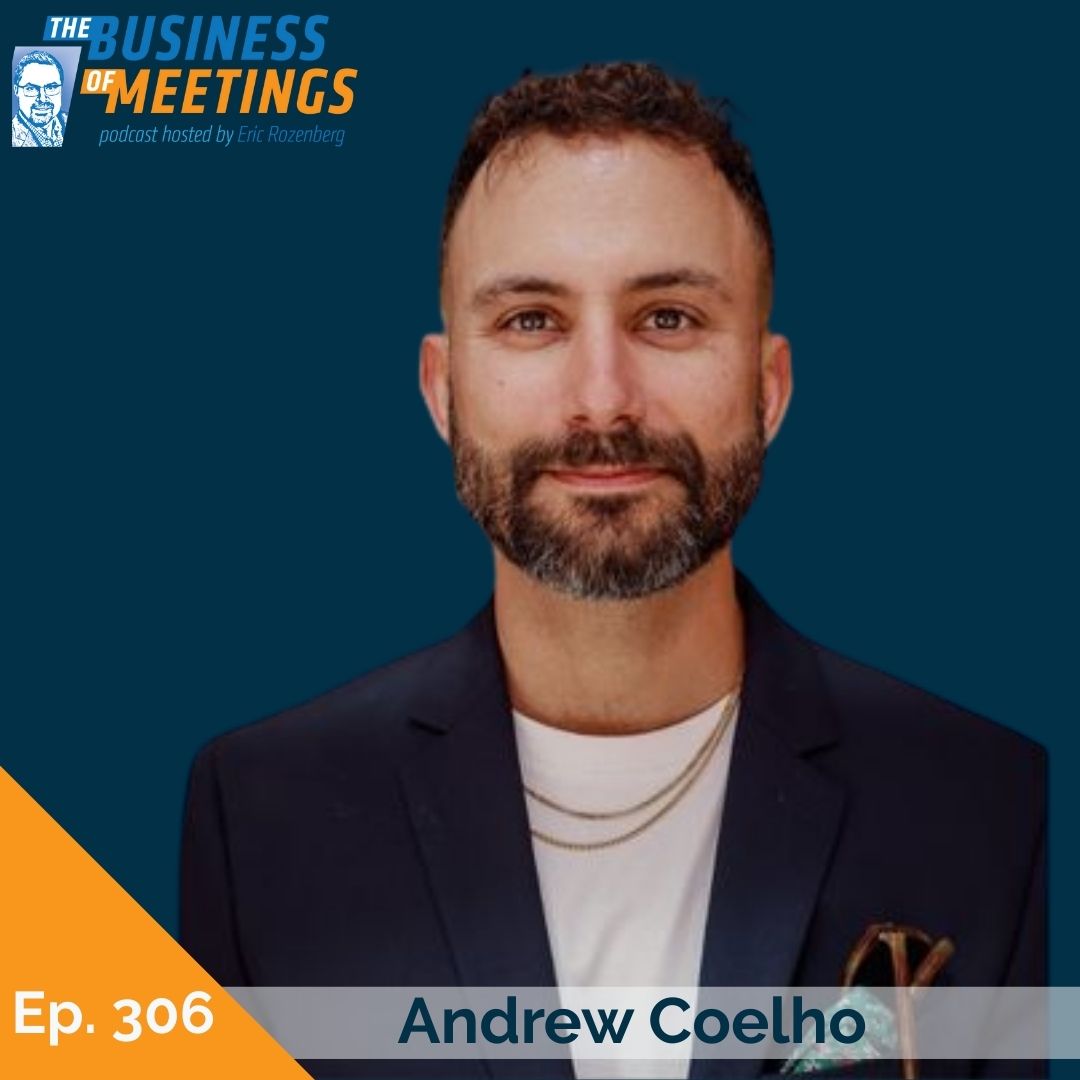
We are delighted to welcome another incredible entrepreneur from our industry today. Andrew Coehlo, co-founder of Monte & Coe, joins us to share the fantastic story of his journey into corporate gifting. Stay tuned to hear about Andrew's entrepreneurial journey, his experiences, and the insight he has to share. Andrew's Journey into Entrepreneurship After beginning his career in corporate finance, Andrew realized the environment did not suit his creative nature. Bureaucracy, resistance to change, and working in isolation drained his energy. And then, a confidence issue with an unattractive gym bag sparked the idea that eventually became Monty & Coe. With his wife's support and inspired by entrepreneurs around him, Andrew left the corporate world at 30 to focus on his business. High-quality Corporate Products The brand began with the singular purpose of creating products that make people feel confident and proud. Early designs were rough, but the intent was genuine. They committed to excellent craftsmanship, using only high-quality, authentic, natural, and sustainable materials. Crowdfunding In 2015, the company launched a crowdfunding campaign, raising $80,000 while Andrew was still employed. The campaign validated both the product and people's willingness to buy premium goods online. It also taught their team how to market, sell, and distribute directly to customers. Shifting to Corporate Gifting Corporate interest emerged organically as companies began requesting gifts for executives and teams. Although he was initially hesitant, Andrew recognized how impersonal, generic, and disconnected from effort or achievement most corporate gifting felt. So his brand pivoted toward elevating corporate gifting into something meaningful and memorable. Turning Gifting Into an Experience The business evolved from selling products to selling experiences, focusing on personalization, choice, and emotional impact. They made gifting less about logos and more about how recipients felt, aligning perfectly with the brand's original mission of confidence and appreciation. Taking the Leap Andrew eventually left his corporate job. His decision was not impulsive as it was backed by savings, planning, and lifestyle adjustments. Entrepreneurship Entrepreneurship brought constant pressure for Andrew, even during the company's strongest years. Cash flow scares, late payments, and the responsibility of supporting a growing team created intense stress. His role as a founder became more about solving new problems every single day. Why Cash Flow and Margins Matter More Than Revenue Revenue alone does not sustain a business. Cash flow determines whether you survive, and margins determine how sustainably you can grow. Examining businesses across various industries, Andrew saw that smaller, higher-margin companies often outperform larger, volume-driven ones. Adopting systems like Profit First brought structure and discipline to his money management. Community and Long-Term Perspective The events and incentives industry proved far more supportive and relationship-driven than Andrew expected. Rather than being cutthroat, people were open, generous, and willing to collaborate. The company's long-term success was built on a foundation of trust, consistent service, and a commitment to delivering quality rather than chasing quick wins. Bio: Andrew Coelho is the co-founder of Monte & Coe, a luxury accessories brand redefining what corporate gifting can be. After years in the corporate world receiving forgettable, logo-first gifts, Andrew began questioning why gifting at scale felt so impersonal, wasteful, and disconnected from the people it was meant to recognize. What started as a side hustle became a full-time pursuit after Andrew famously resigned from his corporate role on his honeymoon in Tokyo. Since then, he has focused on applying direct-to-consumer standards, craftsmanship, and intentional design to an industry that often prioritizes convenience and budget over meaning. Andrew believes that gifting is not about products, but about moments, memories, and respect. His work challenges leaders to rethink how appreciation shows up in their organizations, shifting gifting from a transactional expense to a strategic signal of values. Through Monte & Coe, Andrew helps companies move beyond generic swag and toward gifting experiences that people actually keep, use, and remember. His perspective sits at the intersection of brand, leadership, and human connection, making him a sought-after voice on modern workplace culture, thoughtful design, and the hidden impact of well-executed small decisions. Connect with Eric Rozenberg On LinkedIn Facebook Instagram Website Listen to The Business of Meetings podcast Subscribe to The Business of Meetings newsletter Connect with Andrew Coehlo On LinkedIn Monte & Coe Corporate Gifting
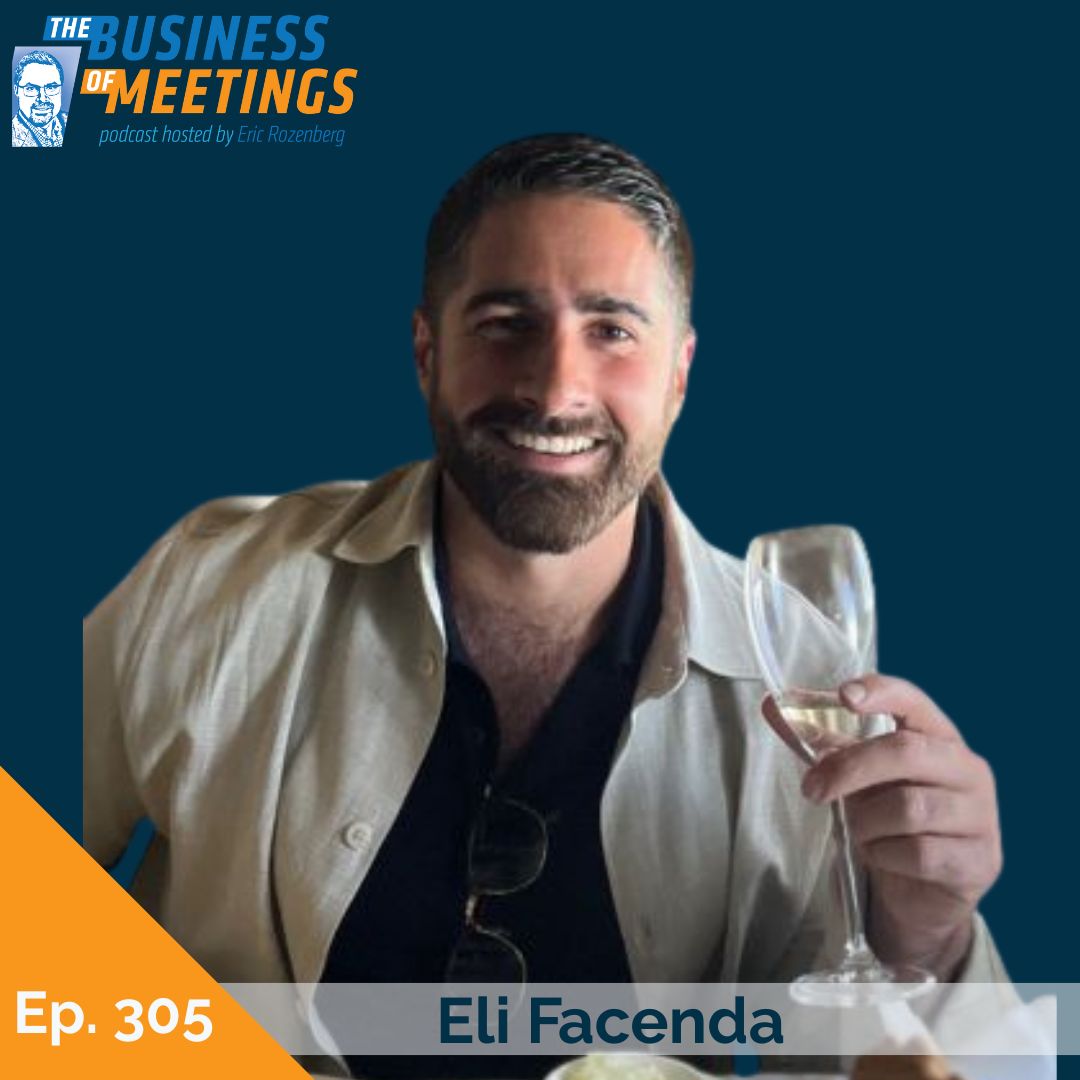
Today, we're thrilled to welcome Eli Facenda, founder and CEO of Freedom Travel Systems. Known as The Travel Guy, Eli helps entrepreneurs turn everyday spending into first-class travel experiences. Join us as Eli breaks down what to do with the points you earn, how upgrades really work, and how first-class flights and luxury suites around the world are far more attainable than most people think. Eli's Journey Eli's career began in 2015 after graduating with a degree in finance and joining the travel industry through an international sports tour company. A trip to the Dominican Republic when he was 16 sparked his passion for travel and shaped his desire to build a life driven by curiosity rather than convention. Over time, he developed skills in group travel, logistics, and credit card points. That eventually evolved into a business helping entrepreneurs travel better by leveraging the systems they already have in place. Why Uncertainty Matters Eli believes uncertainty is essential for passion and fulfillment. Playing it safe may feel comfortable, but it often limits growth and experience. The willingness to take risks, follow curiosity, and act before everything feels certain has been a consistent driver in both his life and business. Turning Crisis into Opportunity When COVID disrupted the travel industry, it forced Eli's tour business into survival mode. Rather than freezing, he pivoted by launching a points-based consulting business that offered more control and scalability. How Points Unlock Disproportionate Value Eli discovered the power of points when he flew business class on a ticket worth thousands of dollars for only a few dollars in taxes. That experience revealed how strategic point redemptions could create massive leverage, turning ordinary spending into extraordinary travel experiences. Why Loyalty Isn't Always Logical Airline loyalty and elite status often come with high opportunity costs. Transferable bank points typically provide more flexibility, higher redemption value, and better travel outcomes than committing to a single airline, especially for globally mobile travelers. Experience vs. Redemption Strategy The best airline experience does not always align with the best points value. Some airlines offer superior products but poor redemption efficiency. Understanding alliances, partner transfers, and award availability allows travelers to optimize both comfort and value. Redeeming Points the Right Way The biggest mistake most people make is redeeming points through bank travel portals. Transferring points to airline partners can multiply their value several times over, but availability must always be confirmed before transferring, as transfers are irreversible. Cards, Hotels, and Priorities For business owners, Eli recommends prioritizing international premium flights for personal and family travel due to the quality and tax advantages. Hotel points usually offer lower value than airline redemptions, but elite hotel status can still deliver meaningful perks when earned strategically. Base your card selection on spending patterns, travel goals, and location—not card prestige. Experiential Wealth Eli frames success around "experiential wealth"—the memories, relationships, and moments that create fulfillment. Business growth matters, but experiences, not just achievements measure a well-lived life. Eli Facenda: Speaker Bio Eli "The Travel Guy" Facenda is the Founder and CEO of Freedom Travel Systems. He and his team help entrepreneurs maximize the money they are already spending so they can unlock bucket-list travel experiences and an upgraded first-class travel lifestyle entirely on points. Almost every entrepreneur spends money and travels, yet very few know how to do so efficiently. Eli has spent nine years in the travel industry, has traveled to 42 countries, and averages over $100,000 per year in free travel using points. His biggest passion is helping others come alive through travel and adventure while sharing strategies that make first-class travel easily attainable at a fraction of the cost. His team works with hundreds of entrepreneurs across all industries, including world-renowned business leaders such as Dan Martell, Cameron Herold, Karlton Dennis, Amber Spears, Tai Lopez, and others. Eli brings a unique perspective to business speaking engagements and podcasts. As an industry leader in a blue-ocean market, his talks, workshops, and interviews are highly engaging and actionable for entrepreneurial audiences. Connect with Eric Rozenberg On LinkedIn Facebook Instagram Website Listen to The Business of Meetings podcast Subscribe to The Business of Meetings newsletter Connect with Eli Facenda Freedom Travel Systems On Instagram (@ELITRAVELGUY)
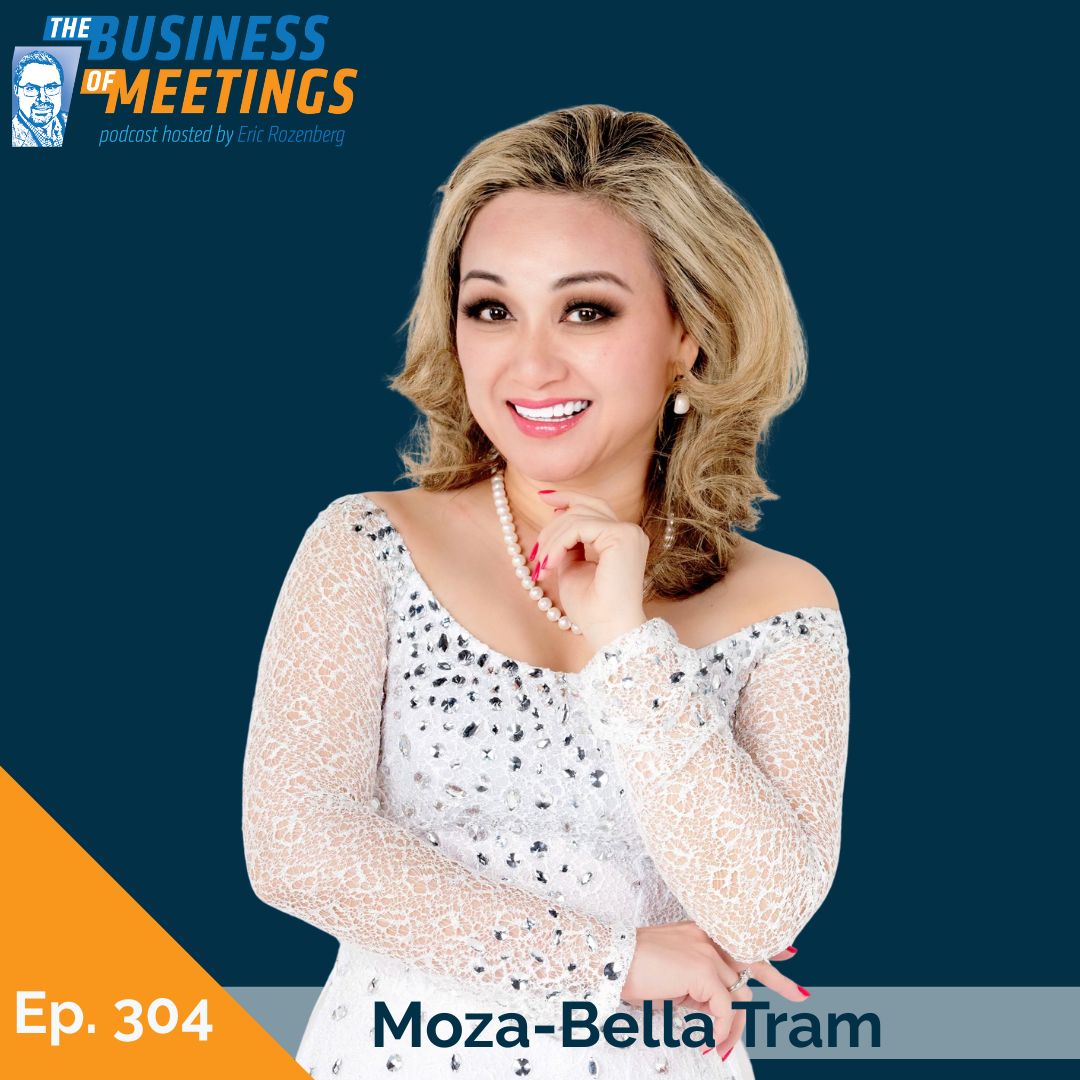
Today, we're delighted to speak with entrepreneur Moza-Bella Tram, CEO and founder of Moza-Bella LLC. Moza-Bella is an immigrant with a remarkable entrepreneurial journey. She is a TEDx speaker, a mentor, a business consultant, and has written several books, including the bestseller Powerful Female Immigrants, which she co-authored. She is also the host of the digital TV show Lessons from Failures. Stay tuned as we explore Moza-Bella's fascinating journey and the experiences that have shaped her work. Moza-Bella's Journey Moz-Bella was born in Vietnam shortly after the Vietnam War. She came to the U.S. as an adult immigrant 25 years ago, leaving behind family, familiarity, and certainty. Her experience was similar to that of many immigrants- the unknown, limited support, and the pressure to succeed, for herself, and for her family. She was told she was too old to learn English fluently, but she pushed forward anyway, focusing on clear communication rather than perfection, and using frustration as motivation to grow. Early Career and Foundations in Hospitality Before immigrating, Moza-Bella worked in Vietnam's hospitality industry at Omni Saigon and later Sofitel Saigon, where she developed an appreciation for professionalism, service, and strategic promotions. Working in public relations exposed her to branding, credibility, and global perspectives, and hospitality became her first window into the world beyond Vietnam's borders. Education, Resistance, and Choosing Her Own Path After arriving in the U.S., Moza-Bella encountered skepticism and prejudice and was discouraged from pursuing higher education. Despite that, she earned her MBA in Marketing from the University of Hartford, driven by her parents' sacrifices and her belief in the right to choose her own future. Her early ambition was to build a global hospitality career, but over time, new opportunities and realities reshaped her direction. Adaptation, Grit, and Multiple Careers Moza-Bella supported herself through school and beyond by working in nail salons, restaurants, interpretation services, construction-related marketing, network marketing, real estate, and, eventually, nursing after the 2008 financial crisis. Each role added to her skills, perspective, and resilience. Redefining Success and Time Freedom Moza-Bella wanted the flexibility to care for her parents and shape her own life, so she chose to become an entrepreneur. She invested heavily in personal development and coaching, believing that free information offers knowledge, but paid learning creates transformation. Building a Consulting Business with Purpose Over the last five years, Moza-Bella built Moza-Bella LLC into a business consulting company with a growing team. Her mission is to help strong entrepreneurs become well-known in their industries, allowing them to create meaningful impact. She believes that change happens one person at a time, through a ripple effect of shared growth and visibility. Lessons from Failures and Shared Wisdom Through her digital TV show, Lessons from Failures, Moza-Bella highlights the realities behind success stories. Entrepreneurs, doctors, and professionals from many fields share how hardship shaped their decisions, often after years of trial and error. She emphasizes the value of learning lessons sooner, challenging entrenched systems, and prioritizing growth while time is still on your side. Meaning Behind the Name Moza-Bella The name "Moza" means mother of pearl, representing an oyster that transforms pain into something valuable by embracing it rather than resisting it. For Moza-Bella, that symbolizes human potential, cultivating adversity into wisdom, then opening oneself to share it with others. Bio: Moza-Bella Tram Founder and CEO, TEDx Speaker, Author, Mentor, Business Consultant Moza-Bella is an international speaker, author, and CEO dedicated to helping professionals find authentic fulfillment and success. She has over 15 years of experience in healthcare and more than 20 years in business development. She produces and hosts the digital TV show "Lessons from Failures," airing on FOX5 and PIX11 New York. She has been featured in Forbes and Yahoo Finance and is the author of "Luxury in YOU." She partners with Grant Cardone in the 10X movement in Vietnam. Connect with Eric Rozenberg On LinkedIn Facebook Instagram Website Listen to The Business of Meetings podcast Subscribe to The Business of Meetings newsletter Connect with Moza-Bella Tram On her website LinkedIn
Today, we are thrilled to welcome another entrepreneur from our industry. Nataly Horan is the founder and CEO of Authentic Meetings and Incentives. With experience across several ventures, she joins us to share her journey, the challenges she has faced within the industry, and her hopes and dreams for what lies ahead. Nataly's Journey Nataly entered the meetings and incentives industry quite unexpectedly. She trained as an interior designer at the University of Florida, then moved into the space after helping with graphic design, quickly connecting with the people and energy of live events. She eventually stepped away from interior design, moving entirely into conference planning and developing a unique perspective by working closely with both suppliers and buyers. Building Authentic Meetings and Incentives Authentic Meetings and Incentives focuses on sourcing and supplier visibility. Nataly supports planners with cruise and venue sourcing while helping suppliers, particularly cruise lines, reach North American planners through social media and email. Her growing online presence bridges the gap between limited in-person events and complete year-round visibility. Choosing Entrepreneurship Nataly reached a point where her growth within someone else's company felt capped. Buyers were already coming to her for sourcing support, making the transition to her own business a natural step rather than a risky leap. Early Focus and Mindset In the early months, Nataly avoided long-term pressure by setting short-term, achievable goals. Focusing on weekly progress kept the business manageable and prevented overwhelm. Vision and Personal Goals Rather than focusing on rigid industry forecasts, Nataly prioritizes her personal goals, such as living in Italy and potentially pursuing a full-time career as an artist. With AI rapidly transforming the industry, staying adaptable is more important for her than long-term predictions. LinkedIn Nataly built her LinkedIn following organically by sharing what she was learning as a newcomer. Her honest, behind-the-scenes insights resonated, turning LinkedIn into a powerful marketing tool with strong ROI. Sourcing, Relationships, and Cruises Nataly's sourcing work emphasizes fit, reliability, and simplicity, particularly through cruise programs and charters. Nataly explains that in-person relationships remain critical for large-group events, where trust and quick problem-solving can make or break the experience. AI, Delegation, and Sustainability Nataly strongly believes in delegation, using a virtual assistant and systems like Canva to scale sustainably while avoiding burnout. AI acts as an assistant, streamlining RFPs and marketing content without replacing human judgment. Creativity Beyond Business Alongside running her company and raising two children, Nataly enjoys painting. Her personal goal for the year is to exhibit her art in a gallery, something she values as much as professional success. Bio: Nataly Horan Nataly Horan leads AUTHENTIC Meetings & Incentives® as its Founder and CEO, steering cruise lines and destinations toward the audiences that shape the North American MICE market. Her background from the University of Florida and her work across sourcing and brand storytelling inform AUTHENTIC's signature point of view, seen in series such as MICE Bites® and In Good Company. She also serves as Vice President of SITE Florida & Caribbean. Away from the office, Nataly is a visual artist, creating work that echoes the themes she champions in travel: intention, culture, and human connection. Connect with Eric Rozenberg On LinkedIn Facebook Instagram Website Listen to The Business of Meetings podcast Subscribe to The Business of Meetings newsletter Connect with Nataly Horan On her website LinkedIn Email Nataly: Nataly@authenticmice.com

We are absolutely delighted to welcome Richard Bliss, the founder and CEO of BlissPoint Consulting, as today's guest. Richard has focused his entire career on helping people with their social selling behavior. He is well-known both inside and outside of our industry as a LinkedIn Top Voices Influencer and an experienced executive communications leader. Stay tuned as Richard shares his story and offers practical insights on social selling, executive communication, and what truly builds influence on LinkedIn. Richard's Journey Richard began his career with 14 years in the National Guard, earning the rank of Captain, before moving into early enterprise technology in the late 1900s. He became a global evangelist during the rise of email as a business platform, emerging as a leading voice in email security when internet-based threats first appeared. He has spoken in 22 countries, hosted international technology conferences, and built a reputation for helping individuals and organizations understand how fast-moving technologies affect both work and life. Reinvention After Richard served as Chief Marketing Officer and helped the startup grow from under $1 million in revenue to more than $10 million, the company abruptly let him go. That forced him to rebuild from scratch, relying on his personal brand rather than a company title. He launched a long-running podcast, self-published a book, taught himself about social media, and reframed LinkedIn as a business media platform rather than a social one. A pivotal $800-a-month consulting role with a senior NetApp executive reopened doors that ultimately led to Richard founding his own company. Creating Opportunity Richard believes opportunity comes from deliberately placing yourself where it can find you. What others might view as setbacks, he sees as sequences that lead to better outcomes. Modern Credibility In today's digital-first world, people build credibility online long before they meet in person. Audiences constantly evaluate LinkedIn profiles, even when owners remain inactive. They judge professionalism, expertise, and trustworthiness based on what they see, which makes visibility unavoidable rather than optional. Small Businesses Have an Advantage Small business owners often outperform large organizations online because they speak in their own authentic voice. Without layers of corporate filtering, they can tell clear, personal stories and connect directly with their audience. With LinkedIn and generative AI, they can reach customers without gatekeepers, large budgets, or traditional media exposure. LinkedIn LinkedIn works best when treated as an ongoing conversation rather than a static profile or sales funnel. Profiles and posts should focus on the audience's problems and opportunities, rather than one's personal history. Forming Relationships Cold outreach and instant pitching undermine trust. Relationships form when value is given initially through attention, insight, and engagement. Comments, referrals, and thoughtful interaction create a natural sense of reciprocity, opening the door to future business conversations. Building Real Engagement Artificial engagement pods violate LinkedIn's rules, so they are increasingly penalized. Genuine collaboration comes from consistent, meaningful interaction with customers, partners, and peers. Thoughtful comments on others' posts help establish topic authority and increase visibility organically. Using AI Generative AI is most effective as a support tool, not a replacement for a human voice. While AI can help shape ideas and drafts, comments and conversations must remain personal. LinkedIn prioritizes authentic, real-time engagement and increasingly suppresses purely AI-generated content. Practical LinkedIn Rhythm That Actually Works Sustainable success on LinkedIn requires modest, consistent effort. A small number of meaningful comments each day and one to three posts per week outperform high-volume posting. Conversations should be allowed to develop fully before starting new ones, aligning with how LinkedIn distributes content. Events, AI, and the Power of In-Person Connection Despite advances in AI, live events remain irreplaceable. Shared physical experiences, eye contact, and informal conversations build trust in ways digital tools cannot. Competent professionals prepare for events by engaging attendees online beforehand, without pitching, so that in-person meetings feel like natural continuations of existing relationships. Connect with Eric Rozenberg LinkedIn Facebook Instagram Website Listen to The Business of Meetings podcast Subscribe to The Business of Meetings newsletter Connect with Richard Bliss BlissPoint On LinkedIn Email Richard: rbliss@blisscorp.com
Today, we are thrilled to welcome Ethan King as our guest. Ethan is an entrepreneur and author who coaches individuals on AI through the Entrepreneurs' Organization (EO). He joins us today to share insights on entrepreneurship, books, and life. He also explains how small business owners can implement AI. Stay tuned as Ethan breaks down practical AI strategies that any entrepreneur can start using today. Ethan's Journey Ethan has been an entrepreneur for 25 years. He began with a passion for art and a pivot into graphic design. While in college, a class project evolved into a real e-commerce business supplying fraternity and sorority gear. Over time, he expanded into Zeus Closet, a retail and custom apparel business serving entertainment, corporate, and educational markets. Starting with only $700 alongside his future wife and business partner, Ethan emphasizes creative problem-solving and simplicity in business. His focus on automation began in 2011 and eventually evolved into AI, which he has been teaching and applying in practical ways across his businesses for the past three years. Entrepreneurs' Organization (EO) and Accelerator Ethan considers EO and its Accelerator program his practical MBA. After joining EO in 2014, he applied systems and frameworks to scale his businesses, focusing on people, cash, strategy, and execution. Since then, he has coached other entrepreneurs through the Accelerator program, helping them reach the million-dollar revenue milestone. He highlights the value of peer learning, mentorship, and surrounding oneself with a like-minded community as essential elements for business growth. Wealth Beyond Money In his book Wealth Beyond Money, Ethan introduces his six dimensions of success: spirituality, intellect, money, physical presence, love, and entertainment, spelling SIMPLE. He recommends constant calibration across those areas, rather than balance. The book, inspired by a TEDx-style talk in 2014, became a bestseller in multiple categories. The AI Evolution After his wife introduced him to ChatGPT in 2022, Ethan immediately implemented it in his businesses and demonstrated its power to other EO marketing chairs. Recognizing the demand, he began teaching AI strategies to business owners and wrote ChatGPT to Double Your Business in 90 Days. He updates the book continuously, providing readers with fresh content and practical tools for implementing AI efficiently. Implementing AI in Business Ethan used AI in his own business as a testing ground before he began teaching others, applying tools like voice agents, social media automation, and custom AI solutions to improve efficiency and scale operations with minimal resources. His approach focuses on practicality, so he only teaches methods that genuinely benefit everyday business owners in B2B and B2C contexts. Perspective on AI Adoption Ethan has noticed that most entrepreneurs are aware of AI but are barely scratching the surface. Experts using AI are rare, while some people remain resistant. He highlights proactive learning, noting that AI will replace jobs for those who ignore it, but can create opportunities for those who embrace it. He draws parallels to past technological shifts to illustrate the transformative potential of AI. Work-Life Integration and Partnership Ethan explains that working with his wife in business has strengthened their relationship. She handles operational responsibilities while he focuses on vision and creativity. He stresses the importance of shared goals and complementary roles, describing their partnership as a battlefield collaboration that builds resilience and alignment. Year-End Advice for Small Business Owners Ethan recommends three key actions: invest in AI learning and team training, upgrade necessary equipment and software, and intentionally reflect and plan for the upcoming year. He encourages people to create vision movies as a tool to emotionally engage with people's personal and business goals, integrating reflection and planning into a meaningful process that drives results. Connect with Eric Rozenberg On LinkedIn Facebook Instagram Website Listen to The Business of Meetings podcast Subscribe to The Business of Meetings newsletter Connect with Ethan King On his Website LinkedIn
We are absolutely delighted to welcome Rashmi Airan as our guest today! Rashmi is an extraordinary human being with remarkable depth of character, and as an ex-felon and former lawyer turned keynote speaker, her journey has been truly unique. She is an unapologetic truth-teller, prison chocolatier, and a champion of growth through struggle. She's also a Bollywood dance aficionado, a singer, a corporate change leader, and an endurance athlete. Tune in to hear Rashmi's powerful story about ethics, accountability, and leadership forged through adversity. Rashmi's Early Journey and Identity Growing up in South Florida as the daughter of Indian immigrants, Rashmi internalized the pressure to be the perfect little girl. Her identity became tied to her achievements, as she believed success meant making others proud through grades, elite schools, and financial stability. She built a strong academic and professional foundation, eventually opening her own real estate law practice while raising two young children. Career Success, Overwork, and a Critical Decision As the real estate market boomed in 2007, Rashmi hustled nonstop, juggling motherhood, a struggling marriage, and a solo legal practice. In that stressed state, she met a developer who presented "creative" buyer incentive deals. Although her gut signaled something was wrong, she convinced herself it would be fine because so many others were doing it. She moved forward without digging deeper, worked with the client for 15 months, and then moved on. The FBI Investigation and Legal Fallout Four years later, the FBI appeared at her door. Believing she had done nothing wrong, she spoke to them without legal counsel, answering aggressively from memory. Two years after that, she received a grand jury subpoena and was soon after indicted for conspiracy to commit bank fraud and 24 counts of bank fraud tied to transactions she handled. Seven years after she met the client, she faced the collapse of the entire identity she had built around perfection and achievement. Owning Responsibility and Choosing Accountability Rashmi's attorney revealed the truth she had been avoiding, that she had a duty to ask herself hard questions, listen to her inner voice, and walk away when things felt wrong. Even though she had not intended to do anything wrong, she had failed to uphold that fiduciary responsibility. Pleading guilty was the hardest decision of her life, but she chose radical accountability, calling 200 people in her community to tell them personally before anything appeared publicly. Instead of rejection, she received compassion and forgiveness, which began her healing process. Prison, Fear, and Inner Strength Rashmi surrendered on August 17, 2015. Terrified of the unknown and heartbroken to leave her children, she walked into prison with no control over safety, environment, or routine. Processing, strip searches, and entering a floor of strangers amplified her fear. Yet she was sustained by her faith and the story of how her grandfather got imprisoned as a revolutionary alongside Gandhi in India. Remembering his strength reminded her that she could endure her own trial. Healing, Forgiveness, and Spiritual Growth While serving her sentence, Rashmi confronted her shame, fear, and anger. After forgiving herself, she eventually forgave the developer, who never got indicted. She realized that harboring anger was harming her more than the injustice itself, and she came to believe her experience served a larger spiritual purpose- to evolve into someone capable of helping others through struggle and uncertainty. Emerging as a Speaker and Guide After her release, people encouraged Rashmi to share her story due to the grace and integrity with which she had navigated her ordeal. She began speaking, hoping to help others avoid similar mistakes. Over time, her message expanded into resilience, values, integrity, and navigating uncertainty. Her work now focuses on keynotes, workshops, coaching, and leadership retreats that teach her methodology for moving through adversity. A Framework for Navigating Uncertainty Rashmi points out that everyone faces struggles, whether legal, medical, financial, emotional, or spiritual. Her core message is that you cannot rise above hardship by pushing harder. Growth comes from feeling the pain, reframing it, grounding yourself in values, surrendering ego and control, and evolving into a better version of yourself. This framework especially applies to solopreneurs and small business owners who juggle endless decisions and pressure. Connect with Eric Rozenberg On LinkedIn Facebook Instagram Website Listen to The Business of Meetings podcast Subscribe to The Business of Meetings newsletter Connect with Rashmi Airan On her website LinkedIn, Instagram, and TikTok Email: Rashmi@rashmiairan.com
Today, we are excited to welcome Beth Lawrence as our guest. Over the past 20 years, Beth has seen the highs and lows of building and growing a business. Join us as she shares her entrepreneurial journey and the lessons she has learned along the way. Beth's Journey Beth began college aiming to become a writer or professor, but she quickly realized the academic path was not for her, and pivoted. When she discovered event planning, it clicked instantly. She graduated during the 2008–2009 recession and built her career step by step, seizing each available stable opportunity, from property management to luxury catering, restaurants, startups, and volunteer roles. She created her own non-linear education, intentionally collecting skills from every job she did, no matter how small. That combination of creative, logistical, operational, and strategic strengths now defines her. Grit and Curiosity Beth treated every role as an opportunity to learn and grow. Administrative jobs, car dealerships, part-time shifts, internships, event operations, and volunteer work all became training grounds. That mindset, coupled with an overachieving work ethic, shaped her as a multidimensional strategist rather than a single-lane planner. Discovering Her Entrepreneurial Drive Beth always felt pulled toward entrepreneurship. After years of gaining experience across various organizations, she found a startup role that excited her. When she was unexpectedly laid off, her husband's encouragement motivated her to launch her own business. Her family and friends supported her decision, recognizing her determination and her ability to succeed. Uncertainty and Early Mistakes Beth acknowledges the uncertainty of entrepreneurship and explains how companies often use that as a lever to keep employees in place. She made plenty of mistakes in her early years but reframes them as essential lessons, embracing the mindset that every failure provides data and every misstep informs the next decision. She still relies on her career mementos file, which contains cards, testimonials, and small wins, to recalibrate during moments of self-doubt. Imposter Syndrome and Growth Even though imposter syndrome still surfaces at unexpected moments, she has overcome much of it by recognizing that rooms full of accomplished people include her for the unique value she brings. Her Niche: Event Logistics and Stakeholder Experience Beth specializes in strategy-driven events for nonprofits, associations, and foundations. Her work spans the entire United States and extends into Canada. She builds long-term partnerships, guiding organizations from pre-event strategy to post-event analysis and year-over-year improvement. Her philosophy is that events must both inspire and deliver measurable results because inspiration without outcomes means the event did not achieve its purpose. How She Advises Clients and Protects Their Vision Beth enjoys creative ideation but also brings realism to her work. She helps clients distinguish between dreams and feasibility and is not afraid to say when plans, timelines, resources, or goals do not align well. Her guidance prevents budget issues, poor attendance, sponsor shortages, and rushed events that fail to achieve their intended impact. She sees her role as equal parts strategist, realist, and protector of long-term outcomes. Connect with Eric Rozenberg On LinkedIn Facebook Instagram Website Listen to The Business of Meetings podcast Subscribe to The Business of Meetings newsletter Connect with Beth Lawrence On her website LinkedIn

Comments

Download from Google Play

Download from App Store
 United States