


 Claim Ownership
Cut Through!
Subscribed: 1Played: 3
Subscribe

© Simon Baugh
Description
23 Episodes
Reverse

Where do Members of Parliament get their news? Which social media, news sites, and podcasts do they consume? And which AI tools do they use? A new report reveals all. Get full access to Cut Through! at simonbaugh.substack.com/subscribe

Most communications teams do risk management in ways that suppress candour, reward optimism and miss the things that actually bring a project down.The pre-mortem takes a different approach. Instead of asking “What could go wrong?”, it asks: “Imagine it is 12 months from today. The project has failed badly. Why?”This small shift in framing has a big effect on the conversation. Get full access to Cut Through! at simonbaugh.substack.com/subscribe

The Harness Distrust strategy doesn’t see a lack of trust as a problem to solve, but a fuel to burn.For insurgents and challenger brands, tapping into grievance against the status quo is becoming the archetypal communications strategy. Rather than seeking to win over the establishment, they are promoting their own agenda by railing against it.Any challenger brand should be thinking about whether they can use it to their advantage. And any legacy brand should be war-gaming how it might be used against them. Get full access to Cut Through! at simonbaugh.substack.com/subscribe
Is it the job of a communications professional to ‘persuade’ people, or is it to ‘inform’ people?In a low-trust environment, where even the appearance of self-interested persuasion can be counterproductive, this has become a false choice.When trust in politics, the media and business has declined rapidly, the winning strategy may be to be disarmingly, demonstrably and visibly trustworthy. This is the Transparency Playbook. Get full access to Cut Through! at simonbaugh.substack.com/subscribe

Co-creating trust is not about convincing people you are right, but about giving them a seat at the table.The principle is simple. People are more likely to trust something they have helped to create, and they’re less likely to attack something shaped by their participation.Done well, it creates not just a more informed audience, but advocates who will defend, promote and trust your organisation. Get full access to Cut Through! at simonbaugh.substack.com/subscribe

The Borrow Trust strategy. If you want reach and credibility, then work with those who already have it. Build partnerships with credible voices who share your goals and values and command your audience’s attention and trust.The same media fragmentation that makes it difficult to cut through with traditional channels, has also created an opening: thousands of micro-communities with trusted messengers.By partnering with those messengers you can create great content for them, relevant messages for their audience, and increased trust, reach and attention for your brand. And that is our second Winning Strategy. Get full access to Cut Through! at simonbaugh.substack.com/subscribe

In this series, I’m looking at five ways organisations are responding to our changed information environment and modernising their communications operations to build trust.This first episode is the Delivery Playbook.It is a strategy built on the insight that in a world of abundant content and fragmented attention trust can be built, through local, relevant, and useful experiences.It is transforming how UK Government is thinking about communicating with a sceptical public. Get full access to Cut Through! at simonbaugh.substack.com/subscribe

When you aren’t trusted, even your best decisions won’t cut through.This episode looks at why trust matters, why it is eroding across government, business and media, and what the evidence tells us about how trust is built.It also sets up a harder question: how do you build trust when almost every feature of today’s information environment works against you? Get full access to Cut Through! at simonbaugh.substack.com/subscribe

This episode looks at five practical AI actions communications leaders should focus on this year: How to understand what AI is saying about you, train an AI model, use AI for dialogue not output, scale AI tools successfully, and prepare for an AI deepfake crisis. Get full access to Cut Through! at simonbaugh.substack.com/subscribe

Dario Amodei is the CEO and founder of the AI company Anthropic. When I was in Government Communications we chose Anthropic’s Claude large language model as our AI tool of choice, partly because we felt Anthropic took AI safety and security seriously.So I was interested to read an essay Dario has just published on confronting AI safety and risks.And having done so I want to strongly recommend it to you too. It is long, and knowing that people are time poor, I thought it might be helpful to share two short excerpts in full here. I hope they illustrate why I found the full article unsettling, even hair-raising, at times. Get full access to Cut Through! at simonbaugh.substack.com/subscribe

In this, the last of my series on how our media and information environment has changed, I look at AI and what it means for the future of communications.Thanks for listening to Cut Through! please subscribe for free to receive new episodes and support my work. Get full access to Cut Through! at simonbaugh.substack.com/subscribe

The central argument of Cut Through! is that our information environment has changed more quickly than our communications practice. To catch up, we need to understand what has changed and why. In this series I have argued that our information environment has become more: Democratised, Fragmented, Abundant, Corroded, and Concentrated.Episode 3 looks at a change that was hardly noticed by social media users when it was introduced back in 2010, but which would fundamentally alter how we consume information, perhaps even how we perceive reality. Get full access to Cut Through! at simonbaugh.substack.com/subscribe
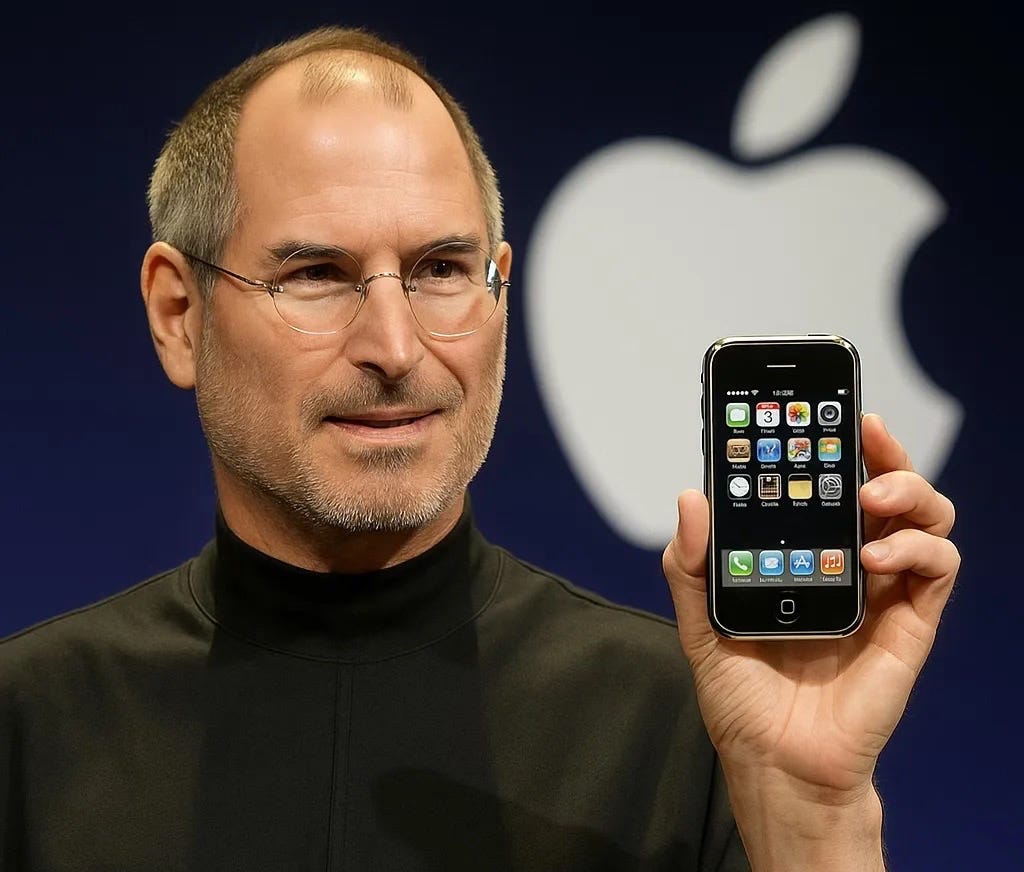
The central argument of Cut Through! is that our information environment has changed more quickly than our communications practice. To catch up, we need to understand what has changed and why.Our information environment has become more democratised, fragmented, abundant, corroded and concentrated.In this episode we look at two product launches from the 2000s - Facebook and the iPhone - and the consequences for communicators today. Get full access to Cut Through! at simonbaugh.substack.com/subscribe
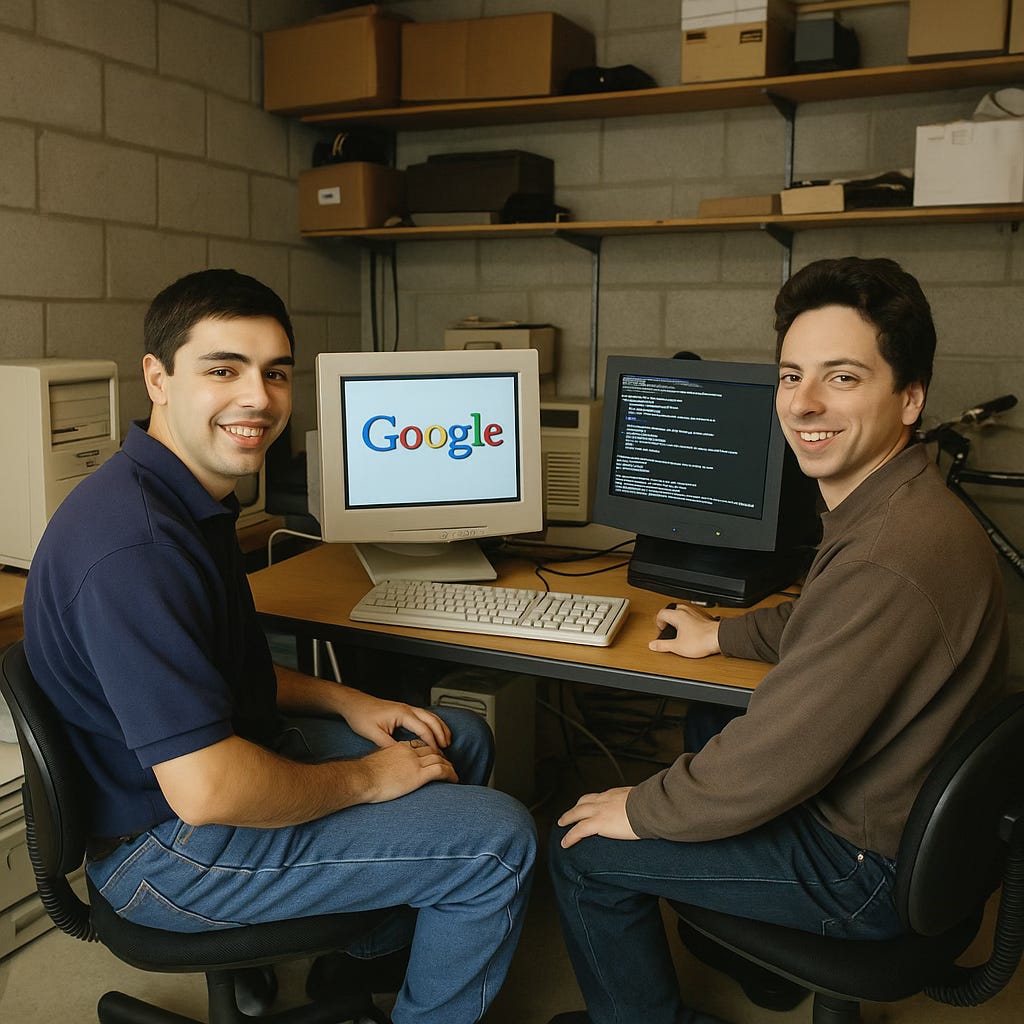
Why does communication feel so difficult today? Our information environment has changed more quickly than our communications practice. To catch up, we need to explore what has changed and why. Over the next four weeks, Cut Through! explores how communications has changed through the stories of four technological breakthroughs that reshaped our world: Google Search; the iPhone; the Facebook News Feed; and AI.This is Part 1: The Wizards of Menlo Park Get full access to Cut Through! at simonbaugh.substack.com/subscribe

Christmas isn’t Christmas until you’ve listened to at least one version of Charles Dickens' A Christmas Carol.Here is my humble contribution to the genre…and a cautionary tale for communicators. Get full access to Cut Through! at simonbaugh.substack.com/subscribe

In my final months leading UK Government Communications, people often asked me whether Keir Starmer’s communication should be more like Donald Trump’s.So what are the lessons for government and communicators from how Donald Trump deals with the media and communicates with the American public? Get full access to Cut Through! at simonbaugh.substack.com/subscribe
An important skill for any communications leader is presenting ideas with confidence. Yet most of us feel nervous when doing so. Maybe we even have a voice in our head telling us the audience is going to see through us.In this episode of Cut Through!, I explore what a Spanish chicken farmer who fooled the Nazi High Command can teach us about presenting with confidence and I explain why you should be more confident than you feel. Get full access to Cut Through! at simonbaugh.substack.com/subscribe

The number one rule of great communications is: know your audience. Yet most communicators still design messages for how they wish people thought, not how they actually do.Decades of behavioural science research reveal that most human decisions are fast, emotional and unconscious - so why are so many communications campaigns still written for the slow, logical brain?Here are ten behavioural science principles every communicator should know. Get full access to Cut Through! at simonbaugh.substack.com/subscribe

We like to think of ourselves as rational beings. Being "emotional" can even be a term of abuse, but the truth is human beings do not make decisions by weighing up the pros and cons of each option. We rely on mental shortcuts known as heuristics which let us make decisions quickly but also introduce predictable biases. In a high-speed media market, the competition for attention is being won by communicators who know how to harness these dynamics. Get full access to Cut Through! at simonbaugh.substack.com/subscribe
How prepared are you for a crisis? I have led the communications response to plane crashes, terrorist attacks, bankruptcies, riots and wars. Yet every time a crisis hits, I still get a sinking feeling in my stomach and a taste of adrenaline in my mouth. However prepared you think you are, you know that this is the moment when communication matters most and your skills are going to be tested to the limit.In this episode, I explore five steps for an off-the-shelf crisis plan. Get full access to Cut Through! at simonbaugh.substack.com/subscribe

Comments

Download from Google Play

Download from App Store
 United States