DiscoverLiving the Tao-A Spiritual Podcast
Living the Tao-A Spiritual Podcast

Living the Tao-A Spiritual Podcast

Author: Mikel Steenrod

Subscribed: 14Played: 316
Share

Description

Living the Tao with Taoist Master Mikel Steenrod.  
Discover how ancient Taoist training can improve modern life. Living the Tao blends real doctrine, practical instruction, and clear explanation—helping you reduce stress, develop emotional resilience, and cultivate a mind that sees the world as it truly is.


Each episode explores the core practices of Taoism, including meditation, qi cultivation, self-awareness, intuitive clarity, and the philosophy behind living skillfully. Master Steenrod combines classical teachings with modern psychology, everyday examples, and the calm precision that long-time listeners love.


🎧 New full episodes release on the first Friday of each month.
Living the Tao Shorts arrive biweekly—fast, focused insights to help you reset your mind.


🌐 Deepen your practice with articles, Taoist explanations, and study materials:
https://www.the-taoism-for-modern-world.com


🥋 Explore Qi Gong training, videos, and wellness resources:
https://www.watermountainvirtual.com


If you want the complete feed, please put our public RSS in your player or directly use podbean.


The public feed: https://podcast.the-taoism-for-modern-world.com/feed.xml


Want captions?  Use the podbean player.  All new episodes are captioned and the back catalog is being updated.

66 Episodes
Reverse
Is Daoism something you’re supposed to feel rather than understand? Does talking about it ruin the experience? In this Living the Tao Short (2-12), Master Steenrod examines a common modern belief—that authentic Daoism requires no study, no method, and no examination. He explains where this idea comes from, why it doesn’t hold up historically, and how Daoist development has always depended on effort, method, and choice. Nature can teach—but it isn’t the Dao. And walking away from method comes with consequences.   🌐 Explore more Taoist teachings: https://www.the-taoism-for-modern-world.com 🎧 Listen to more Living the Tao Shorts & full episodes: https://podcast.the-taoism-for-modern-world.com Access the video form of the episode here: https://youtu.be/DM4Bo0tX_Xo   Intro music: “Finding Movement” by Kevin MacLeod — licensed under a Creative Commons Attribution 4.0 International License. Source: incompetech.com
Why do Taoist masters fly in legends—but not in real life today? In this Living the Tao Short, Master Mikel Steenrod explores the idea that some extraordinary abilities once attributed to Taoist practitioners depended on conditions that no longer exist. Rather than fantasy, the discussion focuses on history, training, and the Daoist principle of time and place. This short episode separates cinematic myth from classical Daoist understanding, offering a thoughtful look at why certain abilities faded—and what Taoism actually teaches instead. 🌐 Explore more Taoist teachings: https://www.the-taoism-for-modern-world.com 🎧 Listen to more Living the Tao Shorts & full episodes: https://podcast.the-taoism-for-modern-world.com   Intro music: “Finding Movement” by Kevin MacLeod — licensed under a Creative Commons Attribution 4.0 International License. Source: incompetech.com
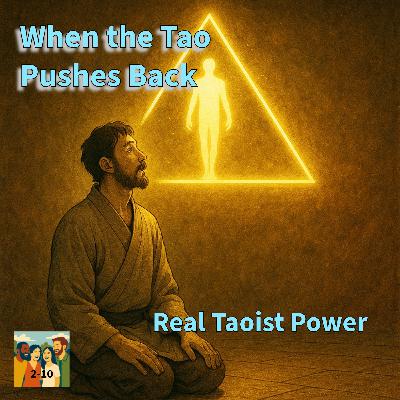
What is Taoist power really—and how do you recognize it in your own life? In this episode of Living the Tao Shorts (2-10), Taoist Master Mikel Steenrod explores De, the form of spiritual power described in the Daodejing. Instead of treating De as serendipity or good luck, Master Steenrod explains how true Taoist practice produces alignment, insight, and direct Dao interaction. Inside this episode: What De actually means in classical Taoism How Taoist “sagecraft” shapes your life and decisions The Four Ascendant triangle of Dao → Teacher → Student Why tiny “signs” aren’t reliable indicators of spiritual growth What creates Dao intrusions—and what they mean for your path Why the Dao responds as if you already know the rules This short episode is ideal for listeners exploring Taoist spirituality, personal transformation, inner alignment, or the deeper teachings behind the Daodejing. The video version of this episode can be found on youtube: https://youtu.be/oI-7InGpQs4 🌐 Explore more Taoist teachings: https://www.the-taoism-for-modern-world.com 🎧 Listen to more Living the Tao Shorts & full episodes: https://podcast.the-taoism-for-modern-world.com   Intro music: “Finding Movement” by Kevin MacLeod — licensed under a Creative Commons Attribution 4.0 International License. Source: incompetech.com --- Show Notes In this lecture, we explore the concept of 'de' or power in Taoism, as presented in the Tao Te Ching. The discussion centers on what precisely this power signifies and how it manifests in the lives of those who align themselves with the Tao. The lecture delves into the idea of sagecraft, where a sage represents the epitome of being in perfect harmony with the Tao, allowing for both effortless movement within the world and the ability to influence its course. This concept bridges the connection between individual agency and the fundamental laws of the universe, illustrating how actions taken in accord with the Tao can yield significant changes in one's reality. The expansion into serendipity as a minor form of 'de' provides an intriguing framework for understanding how individuals can gauge their alignment with the Tao. Questions arise surrounding the desire for tangible feedback on one's spiritual path, probing whether an increase in serendipitous events could indicate a person’s attunement to the Tao. The discussion acknowledges the human inclination for clear indicators of progress in one’s spiritual journey and how these can manifest in a more tangible understanding of Taoist power. The lecture also touches on the historical evolution of Taoist practice, particularly with the emergence of sectarian movements around 200 AD. During this time, various Taoist sects introduced standardized hierarchies to assess an individual's progress in accumulating 'de'. While this brought structure to the practice, it also limited the possibilities for reaching higher realms of Taoist power, illustrating the trade-off between systematization and spiritual potential. The relationship between personal growth, mentorship, and the Tao itself is graphically depicted through a triangular model, where the interplay between the individual, the mentor, and the Tao is analyzed over time. As the student develops and grows in their practice, the relationship dynamics shift, ultimately leading to a reduced necessity for the teacher as the student’s own understanding becomes more aligned with the Tao. This progression indicates not only personal evolution but also a deepening connection with the universal truths represented by the Tao. The discussion reflects on the normalcy of doubt during this journey, suggesting that overcoming such doubt is an inherent part of the path to spiritual maturity. Furthermore, the lecture addresses the complexities of aspiration and the nature of requests made to the Tao. It emphasizes the importance of not just seeking small affirmations but rather being bold in one's desires for greater spiritual experiences and deeper insights. However, this ambition must be tempered with an understanding that the manifestation of such requests may not align with human expectations and can come in forms unexpected or challenging. The speaker concludes with a reflection on the limitless opportunities the Tao presents for spiritual advancement, urging individuals to understand the mechanisms put in place for their growth. The audience is encouraged to harness their innate capacity to engage with the Tao meaningfully, recognizing that the journey to spiritual elevation is a personal and transformative experience. Through this exploration, the lecture provides not only insight into Taoist power but also a roadmap for individuals seeking to deepen their connection with the Tao and their own spiritual paths.
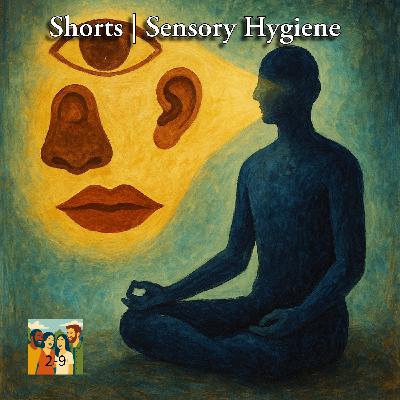
Sensory hygiene is one of the least understood but most powerful tools on the Taoist path. In this short conversation (2-9), Master Steenrod explains how half of self-management comes from managing your inputs — what you see, hear, and absorb from the world around you. You’ll learn how negative events stack to distort perception, why modern life overloads us with emotional variation, and how the Four Ascendant Tradition reframes all of this as conscious crafting of the self. If you’ve ever felt thrown off by your environment, this short will help you understand why — and what to do about it. Watch this episode on Youtube: https://youtu.be/tohqJIrgVNs 🎧 Subscribe for full archives and bonus content: https://living-the-tao.supercast.com Intro music: “Finding Movement” by Kevin MacLeod — licensed under a Creative Commons Attribution 4.0 International License. Source: incompetech.com
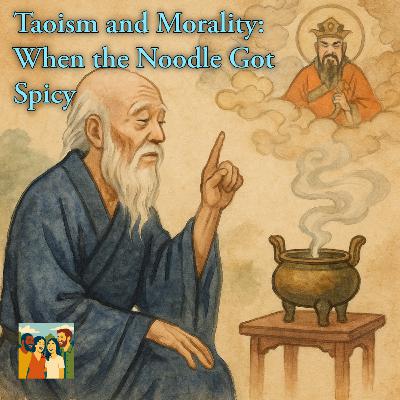
In this short (2-8), Master Steenrod unpacks Taoism’s elusive stance on morality. What happens when a tradition without heaven or hell meets the moral hierarchies of Confucianism and the rituals of Buddhism? Discover how early Taoism resisted becoming a system of control, how politics turned ritual into power, and why “the noodle got spicy” when belief met bureaucracy. It’s a journey through ancient temples, statecraft, and the human need to define right and wrong—told with humor, insight, and unmistakable Taoist calm. 🎥 Watch this episode on YouTube:  https://youtu.be/eITdXiWz5n8 🎧 Subscribe for full archives and bonus content: https://living-the-tao.supercast.com Intro music: “Finding Movement” by Kevin MacLeod — licensed under a Creative Commons Attribution 4.0 International License. Source: incompetech.com
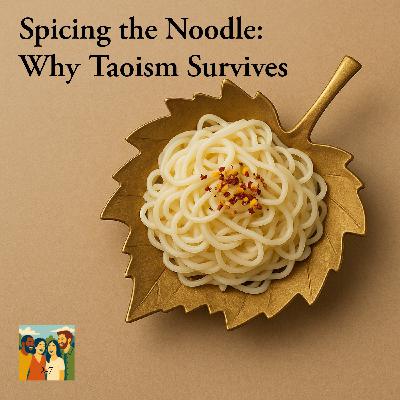
Taoism isn’t evangelical — it’s adaptable. In this short, Master Steenrod explains how the tradition has endured for thousands of years by “spicing the noodle”: blending with Buddhism, Confucianism, and even modern science without losing its flavor. Discover why Taoism calls itself a human method, not a divine truth — and how that flexibility keeps it alive in every age. 🎙️ Topics include syncretism, tolerance, resilience, and the enduring Taoist view that real growth begins with personal choice. Watch now on Youtube: https://youtu.be/_vvIRIPv6bM Intro music: “Finding Movement” by Kevin MacLeod, used under CC BY 4.0 License (https://creativecommons.org/licenses/by/4.0/). Source: incompetech.com
Ever wonder if you’re already a Daoist at heart? In this reflective short (Ep 2-6), Taoist Master Mikel Steenrod explores the quiet signs that the path has already found you. From the way pain, fear, and desire shape our search for peace, to the strange resonance some feel when reading the Dao De Jing, this episode looks at why Daoism speaks so deeply—or not at all. Mikel reminds listeners that the journey doesn’t have to be grand. Whether your practice is light and grounding or a deep quest for truth, what matters is creating a life you actually want to live. No comparisons. No afterlife scoreboard. Just presence, contentment, and honesty with yourself. Living the Tao Shorts are bite-sized reflections designed to help you return to balance, insight, and calm in under ten minutes. Finding Movement by Kevin MacLeod is licensed under a Creative Commons Attribution 4.0 license. https://creativecommons.org/licenses/by/4.0/ Source: http://incompetech.com/music/royalty-free/index.html?isrc=USUAN1100693 Artist: http://incompetech.com/
In this Shorts episode (2-5), Taoist Master Steenrod lifts the veil on what Taoist practice really demands of a student. Beyond simple exercises, it’s a path that asks for endurance, openness, and the courage to face both inner and outer obstacles. A compact but powerful guide for those walking the Taoist road. Intro music: “Finding Movement” by Kevin MacLeod — licensed under a Creative Commons Attribution 4.0 International License (https://creativecommons.org/licenses/by/4.0/). Source: incompetech.com
What if the most powerful talisman wasn’t on paper, metal, or wood—but within you? In this Shorts episode (2-4), Master Steenrod explores how Daoist talismans work, why external charms are only reflections of the true source, and how recognizing yourself as a living talisman unlocks a deeper strength. Intro music: “Finding Movement” by Kevin MacLeod — licensed under a Creative Commons Attribution 4.0 International License (https://creativecommons.org/licenses/by/4.0/). Source: incompetech.com
Daoist Magic and the Art of Living ✨ Was Daoism really built on “magic”? In this free Living the Tao Short (2-3), Taoist Master Mikel Steenrod explores the origins of Daoist spiritual power — from ancient ritual combat and the Daozang’s magical practices to the moral responsibility of the true sage. Discover: 🔹 How “wizard” and “sage” describe the same spiritual path 🔹 What ling (靈) means in Daoist practice and how it relates to energy and reality 🔹 Why Daoism evolved from high temple rituals into a guide for daily life A concise, thought-provoking look at how Daoism bridges mystical power and everyday living. View the video episode on youtube: https://youtu.be/FJnSmUZxHc0 Intro music: “Finding Movement” by Kevin MacLeod — licensed under a Creative Commons Attribution 4.0 International License (https://creativecommons.org/licenses/by/4.0/). Source: incompetech.com --- Show Notes This lecture explores the concept of Daoism and its intrinsic link to Daoist magic, challenging common perceptions and enriching understanding for those new to the practice. The discussion begins by addressing how Daoist magic, often portrayed in popular culture such as Kung Fu movies, is not a mere figment of fiction but rather a foundational element of Daoist philosophy. The inherent power of the Dao, or the universe, is highlighted as a source for supernatural abilities, indicating that the training within Daoism leads to profound personal transformation and heightened capabilities. The speaker emphasizes that the legendary aspects often dismissed by skeptics serve as underpinnings for actual Daoist practice. Referencing the esteemed text, the Tao Te Ching, the discussion suggests a more nuanced interpretation of key terms with an emphasis on the translation to 'wizard' as opposed to 'sage.' This recontextualization invites a deeper appreciation for the origins of Daoist practices tied to supernatural combat and personal empowerment, which, upon further reflection, translates to a broader understanding of reality as energy. The lecture then delves into the accumulation of spiritual and karmic force known as 'Ling,' which empowers practitioners to influence perceptions of reality. Here, the discussion synchronizes ancient teachings with modern understandings of physics, reinforcing the notion that humans can interact with fundamental energies of the universe. This connection to the Dao is integral, suggesting that a harmonious relationship with the Tao enables practitioners to harness these energies wisely and responsibly. Transitioning into the practical implications of Daoism, the lecture examines how it evolved from esoteric practices reserved for advanced practitioners to a guide for everyday living. The speaker articulates the dual approaches within Daoism: high temple practices focused on elite development and low temple practices aimed at enhancing the lives of ordinary individuals. This distinction underlines the Daoist commitment to societal betterment, positing that those with greater capabilities carry a moral responsibility toward the collective well-being. Against a backdrop of critical societal constructs, the conversation reflects on the often exploitative dynamics present in modern society. The Daoist perspective implores a responsibility to uplift others rather than undermine them, contrasting sharply with Western paradigms of power. The speaker asserts that this moral imperative is rooted in the essence of being part of a community; thus, the goal of Daoist practices ultimately culminates in the 'art of living,' whereby practitioners are equipped to foster happiness and success for themselves and those around them. The dialogue concludes by reiterating the importance of self-driven spirituality and the significance of providing accessible tools for individuals to enhance their lives within the framework of Daoism. By drawing parallels between historical wisdom and contemporary societal challenges, the lecture offers a comprehensive view of how Daoism serves as a transformative force, from personal empowerment through magical practices to a far-reaching societal mandate. This exploration of Daoist philosophy invites deeper inquiry and provides practical insights for integrating these ancient teachings into modern life for holistic improvement.
In this episode, 2-2, of LTT Shorts, Taoist Master Mikel Steenrod explores why most live by “rules of thumb” while a few chase divine truth—and why only an inner calling makes the journey worth it. Master Steenrod contrasts the everyday “rules of thumb” that guide most people through life with the Daoist pursuit of divine truth—an alignment with reality as it truly is. He explains why such a quest demands refining the whole self, not just thinking harder, and why only those with a deep, inner compulsion should undertake it. For the rare few, truth is more than knowledge—it is power, offering options and freedom beyond ordinary living.  🎧 Subscribe for full archives and bonus content: https://living-the-tao.supercast.com Intro music: “Finding Movement” by Kevin MacLeod — licensed under a Creative Commons Attribution 4.0 International License (https://creativecommons.org/licenses/by/4.0/). Source: incompetech.com
Welcome to the premiere episode of Living the Tao Shorts, the newest addition to the Living the Tao family! Taoism isn’t about waiting for the afterlife—it’s about mastering life, right here, right now. In this kickoff short, we explore how Taoism stands apart from systems built on judgment or salvation. Instead of telling you what to believe, it gives you tools—methods—for living well, staying healthy, and creating a life that fits you. Drawing contrasts with ancient Egyptian death rituals and Western systems that don’t always serve the individual, this episode reframes Taoism as a grounded, observation-based approach to human well-being. Whether you’re looking for peace, clarity, or just a better way to live—this is a place to begin. Intro music: “Finding Movement” by Kevin MacLeod — licensed under a Creative Commons Attribution 4.0 International License (https://creativecommons.org/licenses/by/4.0/). Source: incompetech.com
What does positive power actually mean in Taoism? In this episode (1-160), Taoist Master Mikel Steenrod explains why positivity is not about denying reality or forcing optimism. Instead, it’s about where you place your attention, how you process experience, and how much failure you can tolerate without giving up. Topics include: Why negativity often feels justified—but limits your life The difference between motivation and long-term damage How childhood conditioning shapes what you focus on The Taoist idea of fail tolerance and endurance Why most people set goals that guarantee failure A practical, no-nonsense discussion of positivity as a trainable skill, not a personality trait.   🌐 Explore more Taoist teachings: https://www.the-taoism-for-modern-world.com 🎧 Listen to more Living the Tao Shorts & full episodes: https://podcast.the-taoism-for-modern-world.com Access the video form of the episode here: https://youtu.be/0oLwJE07uXY   Intro music: “Finding Movement” by Kevin MacLeod — licensed under a Creative Commons Attribution 4.0 International License. Source: incompetech.com
Why do some people seem to catch every break while others struggle no matter how hard they try? In this free episode (1-156) of Living the Tao, Master Steenrod explains the Taoist view of luck, prosperity, and synchronicity—and why “good fortune” is far more structured than most people realize. You’ll learn: • Why luck isn’t random or a moral reward • How prosperity and abundance actually behave in the world • Why luck “pools” in certain places and around certain people • The difference between luck, karma, and synchronicity (Shi) • How environment shapes your chances more than intention • What Taoism calls the “arts of living” and how they stabilize your life • Why even people with bad behavior can appear intensely lucky This episode blends practical living with classical Taoist insight, offering a grounded, realistic way to understand the “hidden mechanics” shaping everyday life. If you’ve ever wondered why luck feels unfair—or how to position yourself where prosperity naturally gathers—this conversation offers a clear, Taoist-informed answer. The video version of this episode is also available on Youtube: https://youtu.be/Ue1_VvpHmZQ 🎧 Subscribe for full archives and bonus content: https://living-the-tao.supercast.com Intro music: “Finding Movement” by Kevin MacLeod — licensed under a Creative Commons Attribution 4.0 International License (https://creativecommons.org/licenses/by/4.0/). Source: Incompetech.com
The Secret Power of Qi

The Secret Power of Qi

2025-11-0934:37

What if the power to change your life didn’t come from force—but from energy, timing, and awareness? In this episode (1-152) of Living the Tao, Master Steenrod unpacks the true meaning of Qi as the bridge between the human and the universal. He explains the Four Spheres of Taoism—Social, Martial, Qi, and Tao—and how each reveals a new level of perception and power. You’ll discover how Qi can dissolve conflict without fighting, why the I Ching teaches the art of timing, and how ancient shamanic dances evolved into the Qigong practices of today. The result is a conversation that blends philosophy, energy, and practical wisdom—showing how to live longer, feel better, and act in harmony with the flow of life. Watch this episode on youtube: https://youtu.be/VQ0S4GxZA7Y Explore our full Qi Gong archive — videos, articles, and training resources: https://www.watermountainvirtual.com/blog-for-online-courses/?utm_source=podbean&utm_medium=podcastdescription&utm_campaign=qi_gong_cluster 🎧 Subscribe for full archives and bonus content: https://living-the-tao.supercast.com Intro music: “Finding Movement” by Kevin MacLeod — licensed under a Creative Commons Attribution 4.0 International License (https://creativecommons.org/licenses/by/4.0/). Source: Incompetech.com
Long before Daoism became philosophy, it was survival. In this episode (1-148), Taoist Master Steenrod traces the ancient, shamanic roots of Daoism — a time when humanity faced energetic predators and learned to fight back. Through humor and history, he reveals how early “supernatural combat” shaped the Daoist path: a tradition built on observation, proof, and endurance. What began as the defense of life became a way to understand it — and to walk in balance with forces far beyond the human world. 🎥 Watch this episode on YouTube:  https://youtu.be/ECJj9bIXo4Q 🎧 Subscribe for full archives and bonus content: https://living-the-tao.supercast.com   Intro music: “Finding Movement” by Kevin MacLeod — licensed under a Creative Commons Attribution 4.0 International License (https://creativecommons.org/licenses/by/4.0/). Source: incompetech.com
Most people think of the I Ching as a fortune-telling book. In this episode, we explore the Taoist view that time itself is non-linear — past, present, and future already coexist. That perspective explains why divination is possible and why Shi (the Sage’s alignment with time and place) matters. Taoist Master Mikel Steenrod and Morgan Boatman look at how coins, sticks, and bones act as tools to bypass bias, and how the I Ching historically guided generals, nobles, and spiritual adepts. Finally, we share a simple framework — Circumstance, Action, Outcome (CAO) — that makes the I Ching practical for modern decisions about health, love, and life direction. If you’re curious about Taoism, divination, or the deeper meaning of “being in the right place at the right time,” this conversation offers both history and usable insight. Watch this episode on youtube now: https://youtu.be/dcKAMCIitU8 🎧 Subscribe for full archives and bonus content: https://living-the-tao.supercast.com The full episode guide and commentary is here: https://www.the-taoism-for-modern-world.com/taoism-destiny-i-ching-ltt-episode-143/ Intro music: “Finding Movement” by Kevin MacLeod — licensed under a Creative Commons Attribution 4.0 International License (https://creativecommons.org/licenses/by/4.0/). Source: incompetech.com
Episode 1-138 — Nature, Illusion, and Truth What if your search for truth started with the forest—not the feed? In this quietly provocative episode, Master Steenrod examines nature as a Daoist testing ground for reality, and contrasts it with the illusion cycles of modern social media. From ancient practices like Biguan to the digital age’s disorienting effects, this conversation weaves timeless Daoist insights with present-day relevance. We explore: Why nature is considered a manifestation of the Dao How illusion thrives where truth has no feedback loop Daoist views on death—and why they still chase immortality The emotional damage of living in purely social constructs Whether modern minds are even capable of using technology wisely A vital episode for those feeling disoriented in today’s noise—this one’s about finding clarity in the unchanging rhythm of the natural world. Intro music: “Finding Movement” by Kevin MacLeod — licensed under a Creative Commons Attribution 4.0 International License (https://creativecommons.org/licenses/by/4.0/). Source: incompetech.com
In episode 1-134 of Living the Tao, Taoist Master Mikel Steenrod explains what truly defines Taoism—not as a rigid religion of unchanging texts and gods, but as a dynamic human method that evolves with time. Discover how Taoism rejects absolute divine authority in favor of adaptable practice, why texts are only partial references, and how personal integration is the goal—not obedience to rules. From shamanistic roots in supernatural combat to modern Qi Gong, this episode is an accessible yet deep look at Taoist history, philosophy, and the journey to becoming your whole self.  Intro music: “Finding Movement” by Kevin MacLeod — licensed under a Creative Commons Attribution 4.0 International License (https://creativecommons.org/licenses/by/4.0/). Source: incompetech.com
In Episode 1-130, we explore the two core paths Taoism offers, why most people are drawn to one over the other, and how your everyday life may be the key to unlocking deeper power. Plus: why Taoism doesn’t promise an afterlife—and why that matters. This episode features a walk and talk video, for those preferring that format. Intro music: “Finding Movement” by Kevin MacLeod — licensed under a Creative Commons Attribution 4.0 International License (https://creativecommons.org/licenses/by/4.0/). Source: incompetech.com
loading
Comments