


 Claim Ownership
The Science of Creativity
Subscribed: 15Played: 291
Subscribe

© 2025
Description
Welcome to THE SCIENCE OF CREATIVITY, your home for insights and inspiration about art, design, and invention. Your host is Dr. Keith Sawyer, one of the world's leading experts on creativity, art, and design. Dr. Sawyer is a tenured university professor who has published 20 books about the science of creativity, including his new book LEARNING TO SEE: INSIDE THE WORLD'S LEADING ART AND DESIGN SCHOOLS. Our goal is to inspire you with stories of brilliant creators and world-changing inventions. You'll learn about the latest psychological research and gain insights about creativity that will help you reach your full creative potential.
In addition to LEARNING TO SEE, Dr. Sawyer is the author of the award-winning books GROUP GENIUS and ZIG ZAG. He is the author of EXPLAINING CREATIVITY, known as "the creativity bible." His books have been translated into Chinese, Japanese, and Korean, and he gives keynote talks about creativity around the world. He even has his own creativity card deck, the ZIG ZAG Creativity Cards (available on Amazon).
THE SCIENCE OF CREATIVITY is published every other Tuesday.
In addition to LEARNING TO SEE, Dr. Sawyer is the author of the award-winning books GROUP GENIUS and ZIG ZAG. He is the author of EXPLAINING CREATIVITY, known as "the creativity bible." His books have been translated into Chinese, Japanese, and Korean, and he gives keynote talks about creativity around the world. He even has his own creativity card deck, the ZIG ZAG Creativity Cards (available on Amazon).
THE SCIENCE OF CREATIVITY is published every other Tuesday.
48 Episodes
Reverse
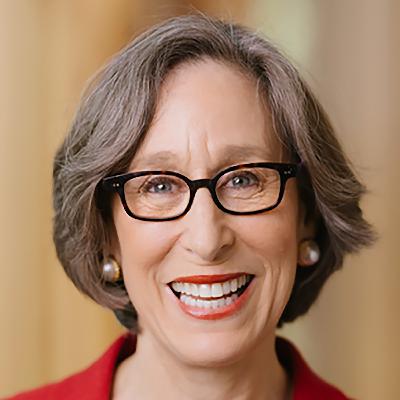
Luck seems random and unpredictable, but Tina Seelig's message is that luck is something you can control and improve. And when you improve your luck, it will increase your creative potential. In this episode, we talk about Seelig's new book, What I Wish I Knew About Luck, and the mindsets and daily practices associated with luck and creativity. Winning the lottery is pure chance, but that's not the kind of luck we're talking about. This episode doesn't tell you how to pick the winning number. Seelig's book is about how to live a life where luck consistently comes to you. We've often hear the cliche, "luck is when preparation meets opportunity." But what does it mean to prepare for luck? That's where Seelig's book comes in. She goes beyond the cliches to give you actionable advice. Takeaways Luck is not just chance; it can be cultivated. Building relationships is key to creating opportunities. Creativity and problem-solving are essential for luck. Mindset and resilience play a significant role in luck. Engaging with the world increases your chances of luck. Luck is a long-term game; it requires patience. For additional information Tina's web site Tina's book: What I Wish I Knew About Luck Music by license from SoundStripe: "Uptown Lovers Instrumental" by AFTERNOONZ "Miss Missy" by AFTERNOONZ "What's the Big Deal" by Ryan Saranich Copyright (c) 2026 Keith Sawyer
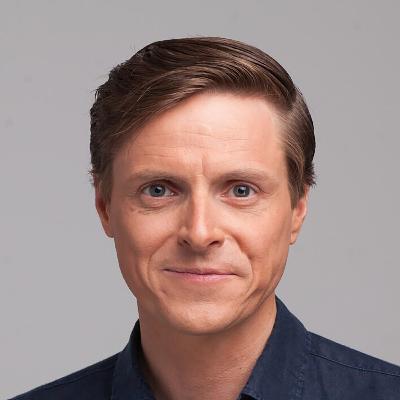
How can you succeed creatively in an age of generative artificial intelligence? In this episode of The Science of Creativity, Keith Sawyer speaks with creativity keynote speaker and author James Taylor about his new book SuperCreativity. His guiding metaphor is the music concert. Sitting in the audience, we naturally focus on the stars playing on stage. Taylor played a critical role that remained invisible to the audience. He working backstage, managing internationally successful artists. Along with teams of roadies, lighting experts, and sound engineers, he helped keep things running backstage at venues like the Royal Albert Hall. That experience shaped a central insight of his book: creativity is rarely the product of a lone genius. Instead, it emerges from collaboration and group dynamics, whether in jazz ensembles or business teams, or live concert tours. The conversation ranges widely, touching on creative pairs, improvisation, flow, wellbeing, sustainability, and human-AI collaboration. Taylor is bullish on AI and creativity. He argues that AI should be viewed as a creative collaborator. He provides some suggestions about how to use AI to increase your creative potential, such as identifying your cognitive blind spots and helping you see your own work in different ways. Key Takeaways Creativity happens backstage. Much of the creativity we see, consume, and love, is dependent on invisible collaborators. People like editors, coaches, producers, and managers. Creativity is a social system, not a solo act. Creative pairs matter more than lone geniuses. From musicians and editors to CEOs and CFOs, sustained creative excellence often emerges from trusted partnerships where ideas are challenged, refined, and strengthened. Psychological safety fuels innovation. The best creative teams encourage dissent, questioning, and constructive pushback—not polite agreement or deference to authority. Constraints don't limit creativity—they enable it. Whether in jazz improvisation or organizational innovation, well-designed constraints create the structure that allows originality to flourish. Creative flow requires protected time. Deep creative work can't happen in 15-minute calendar fragments. Leaders and individuals need to intentionally carve out longer blocks of "maker time" to enter flow states. Creativity and wellbeing are deeply connected. Engaging in creative activities enhances mental health and personal growth. AI works best as a creative collaborator, not a creator. Don't ask AI to do the creative work for you. You're still the creative agent, but use AI as a thoughtful peer. Use it to come up with new questions, to offer alternative viewpoints, and to help get you out of cognitive ruts. Humans still rule at taste, judgment, and imagination. For further information: James Taylor's web site: https://www.jamestaylor.me/ SuperCreativity book web site: https://www.jamestaylor.me/supercreativity/ Music by license from SoundStripe: "Uptown Lovers Instrumental" by AFTERNOONZ "Miss Missy" by AFTERNOONZ "What's the Big Deal" by Ryan Saranich Copyright (c) 2026 Keith Sawyer
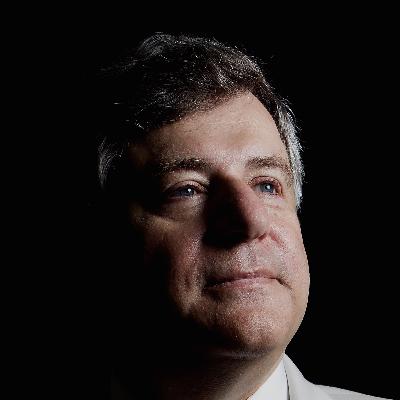
In this episode of The Science of Creativity, Dr. Keith Sawyer interviews cognitive neuroscientist Dr. John Kounios, one of the world's leading researchers on insight, the "aha moment," and the neuroscience of creativity. Kounios—coauthor of The Eureka Factor—has spent decades studying how sudden breakthroughs emerge, what's happening in the brain when insight strikes, and how we can increase the odds of having more creative ideas. Together, Keith and John unpack the mysteries of insight, from Archimedes' bathtub to shower thoughts, jazz improvisation, and why some kinds of creativity flourish only when we're relaxed, a little fuzzy, and not trying too hard. You'll learn what brain areas activate during an aha moment, how EEG and fMRI reveal the timing and location of insight, and why creativity requires both hard analytical work and moments of letting go. This wide-ranging conversation covers the neuroscience of insight, the psychology of mind-wandering, the power of sleep, the secrets of flow states, improvisation, ADHD and creativity, and practical techniques anyone can use to boost creative thinking. In This Episode What the "Eureka effect" really is—and what makes an insight different from everyday thinking Why most people have many small insights they never notice How researchers trigger and measure insights in the lab The brain signature of an aha moment (and why it's like a sudden electrical "pop") Why insight and analytical thinking rely on different brain systems How positive mood, low pressure, and "psychological safety" expand thought Why we get ideas in the shower—and why Thomas Edison napped with steel balls How sleep reorganizes memory and produces breakthrough ideas Why creativity is a "strong spice"—powerful, but only useful at the right moment The surprising connection between ADHD symptoms and insight-based problem solving The neuroscience of flow and why expertise makes effortless creativity possible What jazz improvisation teaches us about creative brain states Practical steps for becoming more creative this week Five Key Takeaways Insight is sudden, non-obvious, and comes with a burst of neural activity. It's a different cognitive process than deliberate problem-solving, and each mode has strengths. Positive mood, reduced pressure, and mind-wandering increase insight. Psychological safety and relaxation widen the scope of thought, allowing remote associations to surface. You can't have insights without preparation. Expertise and hard work load the mind with the building blocks that insights rearrange in new ways. Sleep is one of the most powerful creativity boosters. It consolidates memory, breaks fixation, and often produces solutions you couldn't find the day before. Flow emerges from expertise and reduced frontal-lobe control. In high-skill improvisation (like jazz), creativity becomes automatic, effortless, and deeply absorbing. Practical Advice from John Kounios Get more sleep. It improves mood, reorganizes memory, removes fixation, and dramatically increases insight. Make time for creativity. Insights won't happen if you never give yourself space to think, wander, or play. Music by license from SoundStripe: "Uptown Lovers Instrumental" by AFTERNOONZ "Miss Missy" by AFTERNOONZ "What's the Big Deal" by Ryan Saranich Copyright (c) 2026 Keith Sawyer

In this episode, Keith Sawyer speaks with cognitive scientist Liane Gabora. Her work spans creativity research, artificial intelligence, cultural evolution, and complex systems. Dr. Gabora has spent decades developing computational and mathematical models to understand how ideas emerge, evolve, and spread—both within individual minds and across societies. The conversation centers on Gabora's research showing that creativity is a self-organizing process in the mind that reshapes a person's entire worldview. Rather than seeing creativity as confined to specific domains, her "honing theory" explains how creative thinking draws on experiences across a person's life. When you're thinking creatively, you are transforming ideas, and your mindset is one of openness and potentiality. She also talks about why creativity is deeply therapeutic, how cultural change depends on a balance between novelty and continuity, and what recent advances in AI reveal about the human mind. Five Key Takeaways 1. Creativity reorganizes the mind. It's not just about having ideas. Creative work helps resolve internal tensions and brings greater coherence to how we understand ourselves and the world. 2. Creative inspiration is cross-domain. The sources that fuel creative ideas usually come from many areas of life, even when the final output appears in a single domain. 3. Creative thinking depends on potentiality. Creativity involves holding ideas in flexible, unfinished states where meanings can shift depending on context. 4. Cultural evolution mirrors creative processes. Human culture advances through cycles of invention and imitation, with the same process as individual creativity. 5. Transformational creativity is "problem finding." The most powerful creative ideas come from stepping outside the choices we're given and redefining the problem itself. For additional information Web site: https://gabora-psych.ok.ubc.ca/ Her research group is called "Art and Science of Creative Change" Music by license from SoundStripe: "Uptown Lovers Instrumental" by AFTERNOONZ "Miss Missy" by AFTERNOONZ "What's the Big Deal" by Ryan Saranich Copyright (c) 2026 Keith Sawyer
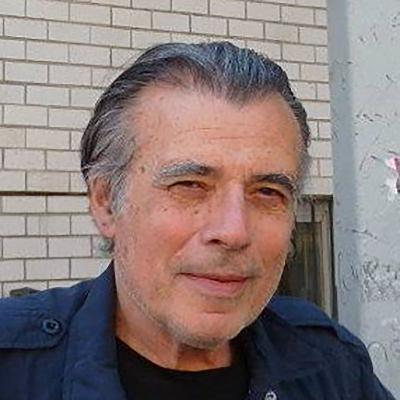
In this conversation, Professor Arthur I. Miller discusses artificial intelligence and creativity, including his book The Artist in the Machine. We discuss the essence of creativity, exploring its interdisciplinary nature and the connections between art and science. Dr. Miller emphasizes the importance of visual imagery in both science and art, and he identifies the key characteristics of highly creative individuals. We talk about the role of AI in creativity, the future of human-machine collaboration, and we end with practical advice for enhancing your own creativity. Takeaways Breakthrough creativity comes from interdisciplinary connections. Visual imagery underlies creativity in both art and science. The future of creativity will be in the collaboration between humans and machines. Creativity can be cultivated through practice and new experiences. For further information: Arthur I. Miller's web site Professor Miller's book The Artist in the Machine: The World of AI-Powered Creativity Music by license from SoundStripe: "Uptown Lovers Instrumental" by AFTERNOONZ "Miss Missy" by AFTERNOONZ "What's the Big Deal" by Ryan Saranich Copyright (c) 2026 Keith Sawyer
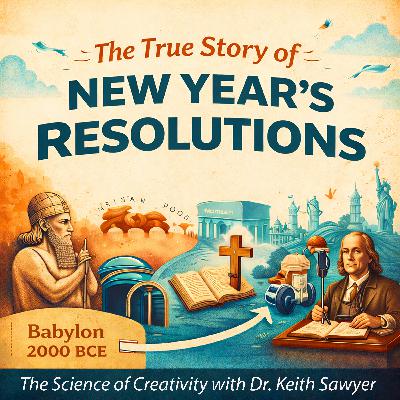
Every January, millions of people make New Year's resolutions—and just as many abandon them weeks later. But where did this ritual come from? In this episode, Dr. Keith Sawyer traces the surprising 4,000-year history of New Year's resolutions, from ancient Babylonian vows to Roman civic promises, Christian moral reflection, early American self-engineering, and modern consumer culture. Along the way, he shows that resolutions were never inevitable or instinctive. They're a powerful example of collective creativity: a social tradition that slowly emerged as each generation added something new. Even when resolutions fail, we still grow from reflecting on our past and thinking about the future. Five Key Takeaways New Year's resolutions are a tradition that emerged over thousands of years. The earliest resolutions were about social trust, not self-improvement. In ancient Babylon, people made public vows to repay debts and keep promises to maintain social order. Christianity turned resolutions inward. Over time, public civic vows evolved into private moral commitments focused on personal character and self-examination. Modern resolutions were shaped by early American self-tracking--a science of the self. Figures like Jonathan Edwards and Benjamin Franklin treated the self as something that could be systematically improved through intention and measurement. Failure doesn't mean resolutions are pointless. Even when resolutions aren't fully kept, the act of reflection helps people clarify values, imagine future selves, and move toward personal growth. Chapters Intro Why do we make resolutions? Reflection and self-improvement. The First Resolutions: Babylon, 2000 BCE. Vows to the gods as public tools for social trust and stability. Rome Invents January 1. How Julius Caesar, Janus, and Roman vota reshaped the calendar and the meaning of promises. Christianity Turns Resolutions Inward. From public ritual to private moral self-examination. Jonathan Edwards Invents the Modern Resolution. Seventy intense resolutions and the birth of systematic self-engineering. Benjamin Franklin Tracks His Failures. Virtue charts, black dots, and the idea that character can be optimized. Newspapers Start Making Fun of Resolutions. By the 1800s, some people were already making fun of how often they failed. Radio and Psychology Take Over. How 20th-century media transformed resolutions into intimate self-help. Advertising Discovers Resolutions. When self-improvement became a January sales strategy for gym memberships and Weight Watchers. How to Make Resolutions that Stick. Research on resolutions: when they fail and what you can do to be more likely to succeed. Collective Creativity. Resolutions are a social innovation that emerged over the centuries. Outro Closer Music by license from SoundStripe: "Sparkling Eyes" by AFTERNOONZ "Uptown Lovers Instrumental" by AFTERNOONZ "Velvet" by AFTERNOONZ "Miss Missy" by AFTERNOONZ "Blue Molasses" by Renderings "Corner Trio" by Renderings "What's the Big Deal" by Ryan Saranich Copyright (c) 2025 Keith Sawyer
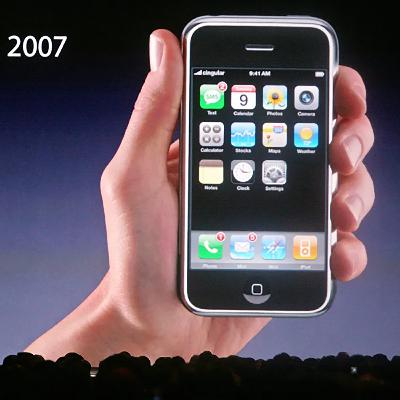
You've heard about Steve Jobs, the Wizard of Cupertino. They say he invented the iPhone. Some people called him the iGod. But the iPhone was not created by a single genius, not Jobs and not anyone else. The real story is more surprising, and more interesting, than a myth about a single man. In this episode, Dr. Keith Sawyer reveals the true history behind Apple's groundbreaking invention. It was years of secret teams, failed prototypes, competing visions, and the collective creativity of hundreds of people. Before the iPhone, cutting-edge techies carried all sorts of devices--phones, PDAs, and music players. If your device had a screen, it was tiny. If you could touch that screen, you had to use a plastic pointer. Touching on glass with your finger seemed impossible. Top executives in the business thought that a phone without a keyboard was a ridiculous idea. In 2007, Apple introduced a device that changed everything. It was more than a technological innovation; it changed entertainment, travel, and social life. Steve Jobs stood on stage at MacWorld, and said "We are calling it iPhone," but he wasn't the inventor. You'll hear that clip in this episode--he didn't say the iPhone, he said simply "iPhone." This is the creation story of the iPhone. Not the myth, but what really happened. It's a wonderful example of group genius. Five Key Takeaways The iPhone wasn't invented by one person—its creation emerged from years of ideas, prototypes, failures, and contributions from thousands of people. The breakthrough wasn't the hardware—it was the ecosystem: multitouch, iTunes, the App Store, cloud services, and developers all working together. Apple's first attempt at a phone, the Motorola ROKR, was a failure—and that failure was essential fuel for the true iPhone project. Cultural impact matters as much as technological innovation—smartphones fundamentally changed how humans navigate, create, communicate, and even remember. The iPhone is one of the most powerful examples of social innovation: a collective, emergent creation shaped by engineers, designers, users, markets, and culture. Music by license from SoundStripe: "Uptown Lovers Instrumental" by AFTERNOONZ "Miss Missy" by AFTERNOONZ "What's the Big Deal" by Ryan Saranich Copyright (c) 2025 Keith Sawyer
This is a special Christmas episode of The Science of Creativity. The creation of Christmas is an example of social innovation, a kind of collective creativity where everyone plays a role. Five hundred years ago, Christmas was a wild party, where young men got drunk and roamed in packs around town. Children didn't start getting gifts until about 200 years ago. The Santa Claus myth was invented, along with the elves and the workshop at the North Pole, in the late 1800s. This episode gives you the history of the secular, non-religious traditions that we celebrate at Christmas. It started two thousand years ago, in Ancient Rome, it picked up steam in the 1800s, and we're still creating new Christmas traditions today. The creation of Christmas is a story of social innovation and group genius. This is a special encore of one of my favorite episodes, originally published as season 1, episode 15, on December 1, 2024 Chapters Intro Traditions and Change Wassailing and Twelfth Night Toys and Gift-Giving Santa Claus and the Elves The War on Christmas The Holiday for Everyone Outro Music by license from Soundstripe Blues for Oliver - Cast of Characters Christmas Tree Jazz Trio Silent Night – Cast of Characters Just Walkin' – Ryan Saranich Uptown Lovers - What's the Big Deal References The Pagan Origins of Christmas: Saturnalia, Yule, and Other Pre-Christian Traditions | History Cooperative Wikipedia on "The war on Christmas" and "Wassailing" and "Syncretism" - ChatGPT Copyright (c) 2025 Keith Sawyer

In this episode of The Science of Creativity, Keith Sawyer talks with Dr. Hansika Kapoor about the psychology of dark creativity — how the same cognitive processes that generate brilliant ideas can also lead to deception, manipulation, or harm. Kapoor explains that creativity itself is amoral: it can be directed toward good or bad outcomes depending on intent and context. Their conversation spans the neuroscience of lying, the overlap between moral and creative cognition, and the role of cultural factors in shaping creative expression. They also discuss recent findings on the "art bias," on using creativity tests in college admissions, and about the cultural practice of jugard in Indian culture. Dr. Kapoor has been a Research Author at the Department of Psychology, Monk Prayogshala, Mumbai since July 2011. Monk Prayogshala is an independent not-for-profit academic research institute, striving to improve the academic research environment in India, starting with the social sciences. She is also an Affiliate at the Neag School of Education at the University of Connecticut. Her work has been published in several international peer-reviewed academic journals, such as Creativity Research Journal, Thinking Skills and Creativity, and Personality and Individual Differences (here's her CV). She also regularly contribute to popular media publications, including Psychology Today, Mint, and The Wire (complete list). Key topics include: • The concept of dark creativity and its ethical implications • Creativity, deception, and moral reasoning in the brain • Cultural perspectives on creativity in India and the idea of jugard • Creativity as a predictor of educational success • The "art bias" and everyday creativity For additional information: Dr. Kapoor's web site Dr. Kapoor's Psychology Today blog Music by license from SoundStripe: "Uptown Lovers Instrumental" by AFTERNOONZ "Miss Missy" by AFTERNOONZ "What's the Big Deal" by Ryan Saranich Copyright (c) 2025 Keith Sawyer
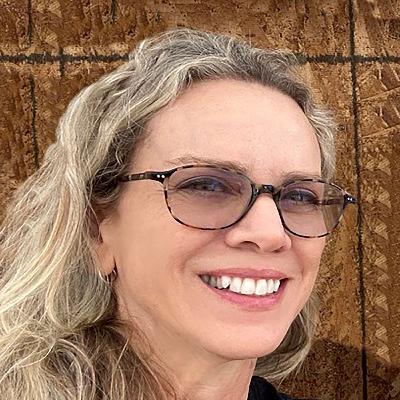
Based in New York City, Carol prefers to leave the studio and seek out the immediacy of city life, whether sidewalks, parks, boxing studios, or Coney Island. In this conversation, Carol Fabricatore shares her extensive experience as a professional illustrator and how she teaches advanced MFA students to advance on their creative journey. She talks about the mystery of capturing motion and energy in drawing, the role of fearlessness in artistic practice, and the transformative journey of students in MFA programs. She emphasizes the value of leaving the computer and drawing by hand, the necessity of experimenting and taking risks, and the significance of narrative and storytelling in art. Carol encourages even experienced artists to explore beyond their comfort zones, leave their existing style behind, and pursue a creative journey toward new ways of seeing and working. Carol began her career in editorial and book illustration, with work appearing in The New York Times, The Wall Street Journal, and The Chicago Tribune. Over the years, her practice has expanded into fine art, where she combines acrylic and gouache to capture both the complexity and vulnerability of human experience. With a BFA from Parsons School of Design and an MFA from the School of Visual Arts, Carol has spent more than two decades teaching narrative drawing. For additional information: Carol's web site Music by license from SoundStripe: "Uptown Lovers Instrumental" by AFTERNOONZ "Miss Missy" by AFTERNOONZ "What's the Big Deal" by Ryan Saranich Copyright (c) 2026 Keith Sawyer
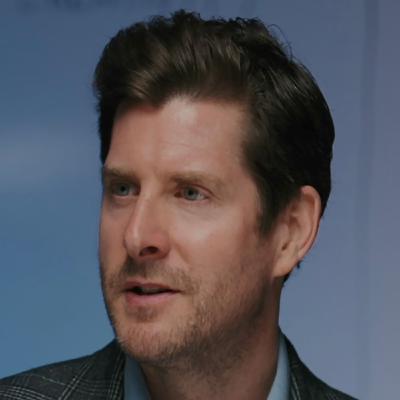
Matthew Worwood is a full-time Digital Media Design faculty member at the University of Connecticut. He has research interests in Creativity, Design Thinking, and Co-Creativity using Generative AI tools and Digital Media. Outside of his research, Matthew is an experienced learning experience designer who works closely with K-12 educators on professional growth and teacher creativity. He is co-host of the Fueling Creativity in Education Podcast and has produced two low-budget documentary films that explore topics related to creativity in education. For further information: Teacher Roundtables: Teacher Roundtables – Voices in Education Worwood Classroom web site: Worwood Classroom - Worwood Classroom Learning to think inside the box with Teacher Creativity: Teacher Creativity - Worwood Classroom with online tutorial videos Music by license from SoundStripe: "Uptown Lovers Instrumental" by AFTERNOONZ "Miss Missy" by AFTERNOONZ "What's the Big Deal" by Ryan Saranich Copyright (c) 2025 Keith Sawyer
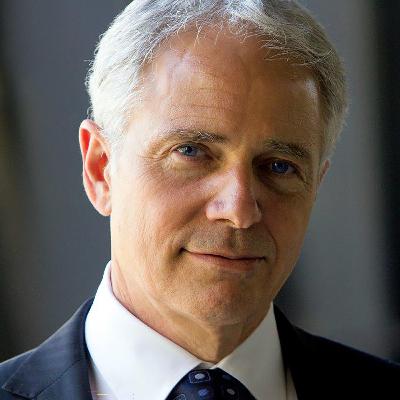
In this conversation, Lorne Buchman discusses his book Make to Know: From Spaces of Uncertainty to Creative Discovery. It's based on interviews he did with creators in a range of fields. These interviews connect with the same themes in my book Learning to See--powerful features of creativity like iteration, uncertainty, engaging with materials, and an improvisational dialogue with the unfolding work. He shares his personal journey in discovering creativity, emphasizing the importance of engaging with uncertainty and the role of improvisation in art and life. Buchman highlights how constraints can stimulate creativity, and the significance of fostering a dialogue with materials in the creative process. For 13 years, Lorne Buchman was the president of one of the top art and design schools, ArtCenter College of Design, and he's now the President Emeritus. He's been a theater director, a dramatic literature professor, and the author of a book on filmic adaptations of Shakespeare's plays. He hosts the podcast Change Lab. For more information: Lorne Buchman's web site: Lorne Buchman - ikar Music by license from SoundStripe: "Uptown Lovers Instrumental" by AFTERNOONZ "Miss Missy" by AFTERNOONZ "What's the Big Deal" by Ryan Saranich Copyright (c) 2025 Keith Sawyer
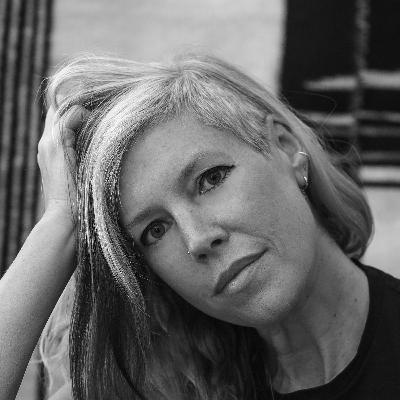
Kara Rooney is a successful New York multidisciplinary artist who creates installation performances and videos, as well as sculpture, painting, and photography. She's had numerous solo and group shows and performances, with many in New York City but also in Mexico, Italy, and Czechoslovakia. She's a published critic with articles in the New York Times and catalog essays, and she's curated many exhibitions. In this conversation, we talk about the complexities of being an artist. Kara talks about the challenge of finding one's voice and the importance of discipline and studio time. With her experience teaching at the School of Visual Arts, she tells us how she designs assignments in studio classes, and in particular, the value of constraints in fostering creativity. For further information: Kara's web site: Kara L. Rooney | Home The book Learning to See, about art and design education: www.learningtosee.net Music by license from SoundStripe: "Uptown Lovers Instrumental" by AFTERNOONZ "Miss Missy" by AFTERNOONZ "What's the Big Deal" by Ryan Saranich Copyright (c) 2025 Keith Sawyer

Steve DeFrank is a top New York painter with numerous one-person exhibitions and group exhibitions. His solo exhibitions include Clementine Gallery in New York, and the Clifford Smith Gallery in Boston. His group shows include the Smithsonian Institute's National Portrait Gallery and The National Arts Club in New York, and many others. His work has been reviewed in The New York Times, in The New Yorker, and many others. He's been a Visiting Artist at Cornell University, the Massachusetts College of Art, and he currently teaches at the School of Visual Arts in New York City, where he's taught sculpture, new media art, painting, drawing, and other courses. In this conversation, DeFrank shares his insights on teaching creativity and the artistic process. He emphasizes the importance of focusing on the journey of creativity rather than the end product, encouraging students to embrace uncertainty and anxiety as part of their artistic growth. DeFrank discusses the significance of developing an "artistic eye" and the challenges students face in learning to see and interpret the world around them. He reflects on the transformative experience of the foundation year for art students and the ongoing dialogue between the artist's hand and eye. This is a brilliant inside view of a process-oriented approach to art that values exploration and personal expression. For additional information: Steve's web site: https://www.stevedefrank.com/ The book Learning to See, with many quotations from Steve and from other SVA artists and designers: www.learningtosee.net Music by license from SoundStripe: "Uptown Lovers Instrumental" by AFTERNOONZ "Miss Missy" by AFTERNOONZ "What's the Big Deal" by Ryan Saranich Copyright (c) 2025 Keith Sawyer
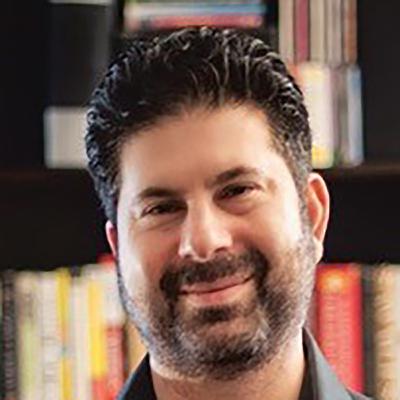
Scott Barry Kaufman is an influential psychologist, creativity researcher, podcaster, and best-selling book author. In this episode, we explore themes such as the messy nature of creative minds, the importance of incubation, and the role of daydreaming. We discuss the brain's imagination network and the balance between conscious and unconscious processes in fostering creativity. Scott emphasizes the significance of psychological flexibility and the ability to embrace uncertainty, while also highlighting the value of sensitivity in the creative process. Our discussion culminates in practical advice for enhancing creativity through openness to experience and reflective practices. For more information: Scott's web site Scott's book Wired to Create: Unraveling the Mysteries of the Creative Mind Scott's new book Rise Above Music by license from SoundStripe: "Uptown Lovers Instrumental" by AFTERNOONZ "Miss Missy" by AFTERNOONZ "What's the Big Deal" by Ryan Saranich Copyright (c) 2025 Keith Sawyer

Kelly Leonard has been involved with improv comedy for almost 40 years. He's worked with actors and comedians including Stephen Colbert, Tina Fey, Keegan Michael Key, Seth Meyers and Amy Poehler. He started working at the Second City Theater in Chicago in 1988, eventually becoming producer in 1992, and later, taking on roles and titles including Executive Director, Executive Vice President, and Creative Adviser. Since 2016, he's been Vice President of Creative Strategy, Innovation, and Business Development. He's produced hundreds of original revues. His 2015 book Yes, And received rave reviews in Vanity Fair and the Washington Post. He co-leads a new partnership with Booth School at the University of Chicago that studies behavioral science through the lens of improvisation. He is a popular speaker, appearing at Aspen Ideas Festival, Chicago Ideas Week and TEDxBroadway and hosts the Second City Works/WGN Podcast "Getting to Yes, And." For additional information: Kelly's web site The book Yes, And Music by license from SoundStripe: "Uptown Lovers Instrumental" by AFTERNOONZ "Miss Missy" by AFTERNOONZ "What's the Big Deal" by Ryan Saranich Copyright (c) 2025 Keith Sawyer
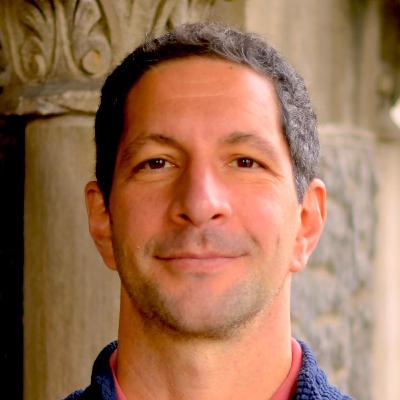
Dr. Adam Green is an expert in brain research and neurostimulation of creativity. He also studies how the use of AI influences creativity in the user. Spoiler alert: Using AI often reduces creativity. He's the Director of the Laboratory for Relational Cognition at Georgetown University, a founder and former president of The Society for the Neuroscience of Creativity, and Editor-In-Chief at the Creativity Research Journal. His main interest is in human creative intelligence and especially in understanding how neural processes constitute our best ideas. Adam's work includes research into endogenous neural mechanisms and exogenous neurostimulation that support creative relational reasoning, as well as research on the neuroscience of teaching and learning in real-world educational contexts. His research has been reported on NBC, CNN, BBC, NPR, and in print in the Times of London, Scientific American, Wired, Fast Company, and many others. For More Information: Keith's book Learning to See: Inside the World's Leading Art and Design Schools Dr. Adam Green at The Laboratory for Relational Cognition at Georgetown University Music by license from SoundStripe: "Uptown Lovers Instrumental" by AFTERNOONZ "Miss Missy" by AFTERNOONZ "What's the Big Deal" by Ryan Saranich Copyright (c) 2025 Keith Sawyer

Scott Thorp is an artist, writer and educator specializing in creativity. He's a professor at Augusta University, and is the Chair of the Department of Art and Design and the Associate Vice President for Interdisciplinary Research. Scott earned his MFA in multi-disciplinary art from the Maryland Institute College of Art. In addition to his artistic practice, he was a regular contributor to the international art magazine, ArtPulse, where he wrote about technology-based, contemporary artists. Before Augusta University, he was a professor at Savannah College of Art and Design (SCAD) from 2005 to 2015, where he was the Design Coordinator and he designed and taught the course "Creative Thinking Strategies." Music by license from SoundStripe: "Uptown Lovers Instrumental" by AFTERNOONZ "Miss Missy" by AFTERNOONZ "What's the Big Deal" by Ryan Saranich Copyright (c) 2025 Keith Sawyer

Dr. Zorana Ivcevic Pringle is a Senior Research Scientist at the Yale Center for Emotional Intelligence. Her work has been featured in the Harvard Business Review, US News, Science Daily, and others, and she is a regular contributor to Psychology Today and Creativity Post. Zorana studies many aspects of the creative process, including idea generation but also creative mindsets, creative self-efficacy, and the role of emotions in creativity. Her new book is called The Creativity Choice: The Science of Making Decisions to Turn Ideas into Action. She argues that creativity is a choice--not only choosing in some abstract general way, but she gives advice about how to make creative choices throughout the creative process, from the first idea to the development of the idea. In this interview, she talks about creative mindsets, creative self-efficacy, and harnessing and managing your emotions to maximize creativity. For more information: Zorana Ivcevic Pringle's web site Music by license from SoundStripe: "Uptown Lovers Instrumental" by AFTERNOONZ "Miss Missy" by AFTERNOONZ "What's the Big Deal" by Ryan Saranich Copyright (c) 2024 Keith Sawyer

 1
1Dr. Jonathan Feinstein, a professor at Yale University, studies the developmental paths of creative individuals, including entrepreneurs, inventors, artists and scientists. His book Creativity in Large-Scale Contexts was published in 2023. He is also the author of The Nature of Creative Development (2006). His current work focuses on models of creative engagement, centering on guidance, learning, opportunities, and paths of development. What do we choose to learn and explore as we develop our creative interests and passions? What opportunities arise, which projects do we pursue? His approach emphasizes the rich diverse patterns of development, unfolding over a few years or a lifetime. On top of all this, he is an expert in the field of tax compliance and the analysis of audit and detection processes. At Yale, he teaches core statistics and runs the math book camp. For more information: Dr. Feinstein's web site at Yale University Creativity in Large-Scale Contexts: Guiding Creative Engagement and Exploration, from Stanford University Press. The Nature of Creative Development, from Stanford University Press. Music by license from SoundStripe: "Uptown Lovers Instrumental" by AFTERNOONZ "Miss Missy" by AFTERNOONZ "What's the Big Deal" by Ryan Saranich Copyright (c) 2024 Keith Sawyer

Comments

Download from Google Play

Download from App Store
 United States