



 Claim Ownership
Brownstone Journal
Subscribed: 48Played: 2,703
Subscribe

Description
Daily readings from Brownstone Institute authors, contributors, and researchers on public health, philosophy, science, and economics.
256 Episodes
Reverse

By Peter C. Gøtzsche at Brownstone dot org.
People familiar with respiratory viruses know that it is impossible to lock out such viruses by locking down the society. Yet, in virtually all countries, the politicians panicked to such an extent that, two months into the Covid-19 pandemic, I dubbed it the Covid-19 panic.
The lockdowns were foolish and illogical. Denmark closed its borders with Germany and Sweden when we had more coronavirus cases than they did. Golf was forbidden, which led to the absurdity that you were allowed to walk on the fairways if you didn't look like a golfer. Tennis courts were closed, although gatherings of four people were not forbidden. Even outdoor running clubs closed. Life as we knew it stopped, on government orders.
There were early warnings, but they were not heeded. After India introduced a lockdown three months into the pandemic, migrant labourers feared that hunger would kill them before the coronavirus did. Ten months into the pandemic, the World Bank estimated that it had caused an increase of about 100 million people living in extreme poverty, and poverty kills.
The pandemic saw a new breed of people who had become experts overnight but knew very little about the issues. They constantly appeared on TV with sinister messages about the need for lockdowns and many other interventions, including dressing whole populations as bank robbers with face masks, although they don't work.
Curiously, governments all over the world preferred to listen to the false gurus rather than to the real experts. I think it was because they supported the official narratives, ideas and dogma, which were flimsily created on the spot by politicians eager to be seen as powerful people who didn't sit on their hands but did something.
The pseudo-experts were also loved by the media. I wrote in a newspaper that after a year with the same Danish "expert" on TV, Allan Randrup Thomsen, a laboratory researcher, who was always worried and uttered trifles virtually every day about the pandemic anyone could have said, I needed a new remote control because I had used the mute button so much that it had stopped working. When I asked a TV journalist why they always interviewed Thomsen, he said it was because Thomsen was well prepared as he read what some journalists had written!
Only Sweden had a real expert whom the politicians listened to and respected, even after a public outrage when mortality figures became rather high in early 2020 compared with the other Nordic countries, which was because Sweden had failed to protect the elderly in the beginning. State epidemiologist Anders Tegnell stood his ground and advised that Sweden should not change its policy, which was to keep the society open and not mandate face masks, which were rarely seen in Sweden.
Sweden was a lone star in the darkness. I think it was the only country that didn't panic and did the right things, and it had the lowest excess mortality in the whole Western world during the pandemic (excess mortality is the increase in all-cause mortality during the pandemic compared with prepandemic levels).
The Panickers
The most harmful panickers were researchers from the Centre for Global Infectious Disease Analysis at Imperial College London. The modeling exercises of Neil Ferguson and his team played a preeminent role in shutting down most of the world in early 2020, a couple of months into the pandemic. A year later, historian Phillip Magness wrote that the exaggerated forecasts of this modeling team "may well constitute one of the greatest scientific failures in modern human history."
I agree, and 2020 became the most surreal and shocking year in my whole professional life. The Danish Board of Health claimed it was documented that face masks were effective, which wasn't true, and our government decided to kill all our 17 million mink only because a mutation had been found that might make future vaccines less effective, which was also wrong. In Denmark, we have four pig...

By Brownstone Institute at Brownstone dot org.
Now Is the Time to Act
A free society has what kind of government?
The classic American answer: one bound down by law, checked by courts and juries of ordinary citizens, and answerable to the people through their elected representatives. That vision used to be America's great gift to mankind. We called it freedom.
What almost no one imagined is what we have now: a government that recognizes no limits to its power, run by an axis of corporate power and unaccountable bureaucrats lodged in 444 federal agencies that no election can touch.
The Covid years ripped the mask off. Thanks to Brownstone Institute, millions finally saw the beast clearly.
Locked in our homes. Forbidden to worship or throw a birthday party. Children barred from the schools we paid for. Millions of small businesses crushed - while the connected got richer. All to force an industrial injection on the world.
The fallout: shattered health, broken spirits, and a frantic new push for an AI-driven surveillance state that grows more powerful by the hour. Daily, the studies appear proving how policies of this period wrecked the lives of children, the elderly, and the working classes - everyone not in power.
DONATE NOW
Even today the regime's house organs - led by the New York Times and amplified by all official media - mock anyone who still dares to doubt the official story.
They are still banging the drums for lockdowns. This is daily!
The realities of the last five years are even now hard to fathom. As with many nightmares, the desire today is simply to shake it off as an aberration.
We cannot sweep it under the rug. Remember that 194 countries in the world followed the same path. These same countries forcibly injected their populations with a potion that did not control the disease and instead inflicted vast pain and death.
One of these countries, the United Kingdom, just released a report promising more of the same next time, much sooner. Anthony Fauci has reemerged again, avoiding jail and instead promising another pandemic.
Friends, our beloved country is in trouble. So is the rest of the world.
We've seen the beast. What are we going to do about it?
Early on in the crisis, Brownstone Institute was founded with a serious plan to push back. With a small staff and budget, Brownstone has:
Published more than 3,000 fearless articles in our journal that have reached millions per month the world over;
Supported many of the best scientists, journalists, economists, and other intellectuals who were cancelled by their institutions but have emerged as great leaders;
Created and supported a community of expert dissidents who are pushing back on despotism and the emerging technocracy;
Established a nationwide network of supper clubs to bring people together even as authorities warned against it;
Inspired new sister organizations in Europe and all over the US;
Hosted retreats of top thinkers to share ideas for understanding and the next steps;
Printed and promoted 20 books that deal with the core of current issues;
Supported the best research working groups on medical issues, economics, censorship, the law, and other topics.
Profoundly affected public life to the point that Brownstone has been targeted for destruction by mainstream corporate media (it's not working).
Take that, New York Times!
DONATE NOW
In other words, Brownstone Institute has established itself and its voice as the credible venue in these new times, thanks only to your faith in this work and your financial support.
Today, we are asking for your help again, as an investment in the kind of country and world that protects freedom and individual rights against all attacks and under any excuse.
You are the only reason this work is possible. Your commitment extends from a strong belief that change is possible and happens only through pushback on elite depredations and a new vision for freedom.
Sure enough, not everyone is happy. Powerful interests are plotting t...

By Bret Swanson at Brownstone dot org.
The experts have not been quick to assess, let alone apologize for, their performance during Covid. I took note, therefore, when two elite institutions that led the pandemic response co-hosted a retrospective event on Thursday, November 6.
Johns Hopkins University is home to a world-renowned medical center and the Bloomberg School of Public Health. The American Enterprise Institute is one of Washington, D.C.'s oldest and largest public policy think tanks. Both helped shape pandemic policy and perception from its earliest days.
The two organizations have been collaborating for the past year, and they framed their first event on November 6 around the book In Covid's Wake: How Our Politics Failed Us, a critique of lockdowns written by two Princeton political scientists, Frances Lee and Stephen Macedo.
Given their vocal insistence on maximal Covid impositions, Hopkins and AEI deserve credit for finally highlighting an opposing view.
Let's recall how central the two organizations were in the early days, and even before. In October of 2019, Hopkins had, with the Bill & Melinda Gates Foundation and World Economic Forum, co-hosted Event 201, a tabletop pandemic planning exercise. Participants from the CIA, the Chinese CDC, and various public relations firms discussed how they would manage a future novel coronavirus outbreak, focusing especially on how to combat "misinformation" and shape public behavior. Just two months later, Covid hit.
Then, in the spring of 2020, AEI fellow and former commissioner of the Food and Drug Administration Scott Gottlieb co-authored with Johns Hopkins infectious disease specialists a major lockdown blueprint. Gottlieb was a key Republican demanding lockdowns. Meanwhile, millions of people were hitting refresh on Johns Hopkins' Internet dashboard map, which counted Covid "cases" and helped drive panic across the globe.
There are still giant holes in AEI and Hopkins' understanding - especially on the Covid vaccines - and I'll address those in the second half of this article. But first, the good stuff.
The Good
"A wartime mentality took hold," Frances Lee explained at the November 6 event. The message was, "'We all have to pull together, we've chosen a strategy.' We didn't get a servicing of the necessary questions."
"Educated elite institutions," Macedo followed, "were pushing a point of view that seemed to be worth questioning, and was to a remarkable extent not questioned adequately."
"There's not enough dissent in public health," Macedo charged. They suffer from "tunnel vision and groupthink," Lee followed up.
Macedo briefly criticized social media censorship, noting that "Not a single law school conference that we know of has been held to discuss the First Amendment issues with regard to speech."
The authors emphasized a central defect of Covid policy interventions - the failure to weigh not just supposed benefits but also costs. Science advisors and policymakers simply denied any potential trade-offs.
Macedo and Lee found that lockdowns radically departed from pre-pandemic recommendations and were not effective in slowing virus spread or reducing mortality. Benefits were elusive. Lockdowns did, however, impose gigantic economic and social costs.
AEI's Roger Piekle, Jr., seemed to approve of some "shadow science advice" efforts, such as the Great Barrington Declaration, though he didn't elaborate.
Macedo and Lee especially condemned extended school closures, noting that most European schools had reopened in spring 2020, to no harmful effect. The US media was loath to report this fact, Macedo highlighted.
I myself had advised former Indiana governor Mitch Daniels, who in the spring of 2020 was president of Purdue University. He wanted to open the campus in the fall of 2020 and asked for empirical support. We assembled the data showing young people were at near-zero risk, which he relied on in May 2020 to courageously announce, first among all major US colleges, t...

By Steven Kritz at Brownstone dot org.
With the reorganized and restaffed agencies of the Dept of Health and Human Services (DHHS) firmly in place, and the release of the UK Covid-19 Inquiry, now's a good time to look at the state of play with regard to all things Covid, and the public health establishment, in general, in the United States.
Almost two years ago, I had written in Brownstone Journal that the entire country (including healthcare providers) could be placed into one of three scenarios regarding the Covid response:
Scenario 1: We handled the pandemic as best we could, given the information we had at the time. The results were less than desired due to the nature of the virus.
Scenario 2: Things didn't go well because the mitigation modalities put in place (lockdowns, masking, social distancing, and multiple mRNA jabs) were not sufficiently followed and/or enforced. Of note, the UK Covid-19 Inquiry findings are most consistent with this scenario.
Scenario 3: Everything that was done was wrong, and was known to be wrong (and contrary to more than a century of public health policy and practice) when implemented. However, due to geopolitical, economic, and power considerations, it was done anyway.
Back then, I placed the percentage of the population that supported each scenario at 75%, 5%, and 20%, respectively. Sadly, despite overwhelming and irrefutable evidence that Scenario 3 is correct, and DHHS now has the expertise in place to move this evidence forward, as of today, the percentages have not budged from two years ago.
While in my mind, it is way past time that the walls of Jericho came tumbling down, the Empire (consisting of the medical-pharmaceutical-government complex) continues to strike back with as much ferocity as ever, and appears to still be holding court. The Empire has been strengthened by the fact that healthcare providers, particularly physicians, are now overwhelmingly employees of the health systems establishment (an unstated, but key outcome goal of the Affordable Care Act), and with the loss of autonomy (and concurrent loss of their souls), healthcare providers' state of denial reigns supreme.
Six months ago, I had provided evidence of this entrenchment by citing three Commentary articles from the same issue of the American Journal of Medicine (AKA: The Green Journal), which has been an important resource for internists for almost 80 years. It indicated that Scenario 1 was still controlling the agenda more than five years after the start of the pandemic.
In the December 2025 issue of the American Journal of Medicine, there are three more Commentary articles (1, 2, 3) that track in exactly the same direction. In each case, there is recognition that there are significant problems with the healthcare delivery system in this country and globally.
However, there appears to be absolutely no self-awareness that the problem is staring right back at them in the mirror. This has occurred, despite the fact that DHHS has been in the spotlight much more frequently during the past six months, although the pace of information release has been frustratingly slow.
Frankly, I can relate to the tendency towards denial. For decades, I resisted the notion that there could be any link between vaccines and autism. I justified my resistance on the fact that I had been taught (and firmly believed) that no vaccine was released for public consumption before it had been studied for 5 to 10 years in order to reveal potential longer term issues. It turns out that this dogma is actually dog-doo!
Given the violation of every tenet of good patient care that we saw during the Covid response, to not extrapolate these same types of violations to other aspects of patient care is naïve and dangerously foolish. Maybe it partially explains the fact that life expectancy in this country over the past 10-12 years has been flat-to-down, and the prospects going forward are not looking good. This should not be surprising, given that the de...

By Brownstone Institute at Brownstone dot org.
Over the last November weekend of 2025, a memo circulated throughout the Federal Food and Drug Administration that might well trigger the entire unraveling of the US vaccine program with a focus on the mandated Covid shot in particular. The author is Dr. Vinay Prasad, who was a moderate critic during the Covid but has become ferocious since his appointment as the head of the Center for Biologics Evaluation and Research of the FDA.
Of this memo, ACIP member and scientist Robert Malone has written: "I am stunned, gobsmacked by his letter below. The significance and importance of this letter in the context of US and global vaccine policy cannot be overestimated. This is a revolution, the likes of which I never expected to see in my lifetime."
It is reprinted in full below.
Dear Team CBER,
I am writing to report that OBPV (The Office of Biostatistics and Pharmacovigilance) career staff have found that at least 10 children have died after and because of receiving COVID-19 vaccination. These deaths are related to vaccination (likely/probable/possible attribution made by staff). That number is certainly an underestimate due to underreporting, and inherent bias in attribution. This safety signal has far reaching implications for Americans, the US pandemic response, and the agency itself, which I wish to discuss here. I also want to address some frequent objections.
Prior to joining the US FDA, the FDA Commissioner closely followed reports of vaccine-induced myocarditis. Unlike the COVID virus, which has a steep age gradient- being at least 1000 times more likely to kill an 80 year old than an 8 year old- myocarditis appeared to have the opposite pattern. Young, healthy boys and men- those least likely to experience bad covid outcomes- bore the greatest risk. The risk was as high as ~200-330 per million doses given in the highest risk demographic groups. Notably, the US FDA and CDC were not the first to recognize the safety signal- instead the Israelis were- and worse in May of 2021, then CDC director Rochelle Walensky stated, "We have not seen a signal and we've actually looked intentionally for the signal in the over 200 million doses we've given," Many felt this statement was dishonest and manipulative.
The Commissioner, senior advisor Tracy Beth Hoeg MD PhD, myself and colleagues demonstrated that COVID-19 boosters, and the accompanying mandates by colleges, were on balance harmful to young men in a widely discussed, peer reviewed paper in 2022. Like many academic physicians, we felt the FDA and CDC abdicated their duty to the American people. These agencies did not quickly attempt mitigation strategies such as spacing doses apart, lowering doses, omitting doses among those with prior COVID-19.
Worse, the FDA delayed acknowledgement of the safety signal until after it could extend marketing authorization to younger boys 12-15. This is described by the Commissioner and I in JAMA. Had the acknowledgement come early, these younger boys, who likely did not require COVID-19 vaccination, may have chosen to avoid the products.
In the summer of 2025, Dr. Hoeg began investigating VAERS reports of children who had died after administration of the COVID-19 vaccine. By late summer, she had concluded that there were in fact deaths- a fact this agency had never publicly admitted.
Dr. Hoeg organized a small meeting to discuss these deaths with (Office of Vaccines Research and Review) OVRR and OBPV stakeholders. The slides she presented, emails she sent, and distorted firsthand reports was shared with media outlets. The general narrative was that OVRR staff disagreed with Dr. Hoeg's assessment that the deaths were due to vaccine receipt. Some staff present who leaked portrayed the incident as Dr. Hoeg attempting to create a false fear regarding vaccines.
I then asked OBPV to perform a detailed analysis of deaths voluntarily reported to the VAERS system- in full interest of balance. Causality is eas...

By Ramesh Thakur at Brownstone dot org.
On 20 November 2025, the Hallett inquiry into the UK Covid experience published its 800-page Module 2 report. An inquiry of, by, and for lawyers, it is a carefully curated political whitewash with no forensic exploration of the truth and no hope of any accountability.
It collapses the most consequential public policy decisions in British history into a problem of mere timing caused by process failures. Far from revealing what happened, it is a testament to the refusal of the state to admit error. Many leaders are happy to engage in serial apologies and consider reparations in the name of the state they represent for incidents of alleged wrongdoings deep in the past well before their time, especially if these demonstrate their progressive pieties. But they seem incapable of acknowledging, saying sorry for, and offering compensation for instances of states behaving badly during their own time in office.
Far from mollifying critics looking for acknowledgement and accountability, the report will bring back the anger and rage associated with governments' Covid excesses. It reveals the chair, former Court of Appeal Judge Baroness Heather Hallett, to be science- and numeracy-illiterate, with an inability to grasp complex facts and little capacity for logical reasoning. 'Had a mandatory lockdown been imposed' one week earlier, the report concluded, 'modelling has established that the number of deaths in England in the first wave up until 1 July 2020 would have been reduced by 48% - equating to approximately 23,000 fewer deaths' (Vol. I, p. 5).
This is a truly astonishing assertion. It demonstrates a complete lack of understanding of modelling. They do not 'establish' any conclusions. Rather, they are built on assumptions and their outputs are speculative and often contentious forecasts - guesstimates - dressed in pretend mathematical precision.
Professor Neil Ferguson, whose modelling is relied on for the assertion, is widely discredited for a history of predictions on other diseases that proved to be excessively alarmist by orders of magnitude. Every time his Covid modeling was able to be measured against reality, it came up short. Sweden falsified the modeling which predicted the loss of 35,000 lives in the first wave without immediate lockdown; the actual figure was 6,000. It saved more lives than the UK. Rather than an exception that proved the rule, Sweden was the control case that falsified the narrative by sticking to the pre-pandemic script and therefore must never be mentioned.
Besides, Ferguson's paper on which Hallett relies also conceded that an earlier lockdown could have resulted in a larger second wave by deferring and not averting further infections. There is another way of showing that inconvenient truth. On 5 May 2021, in an article on the Pearls and Irritations site in Australia, I wrote that Figure 1 is 'graphic evidence of the policy-invariance of Covid-19 with regard to non-pharmaceutical interventions, where the infection, hospitalisation, and mortality curves have followed their own logic and remarkably similar trajectories.'
A second interesting feature about the graph is the broad convergence of the end of the first curve by the end of summer in 2020. Czechia had instituted lockdowns early, and its performance until that date, enthusiastically lauded in the MSM, appears to justify Hallett's claim that more lives could have been saved had the UK gone into strict lockdown a week earlier. But the explosion of Czechia's mortality toll in autumn 2020 is the truer picture, decisively invalidating Hallett's assertion of the net difference in mortality. As David Livermore, a retired Professor of Medical Microbiology at the University of East Anglia, comments in the Daily Sceptic in his article on the Hallett report: 'At best [Czechia's] early lockdown delayed deaths; at worst it displaced the pandemic into the winter when people, with less sunlight and lower vitamin D levels...
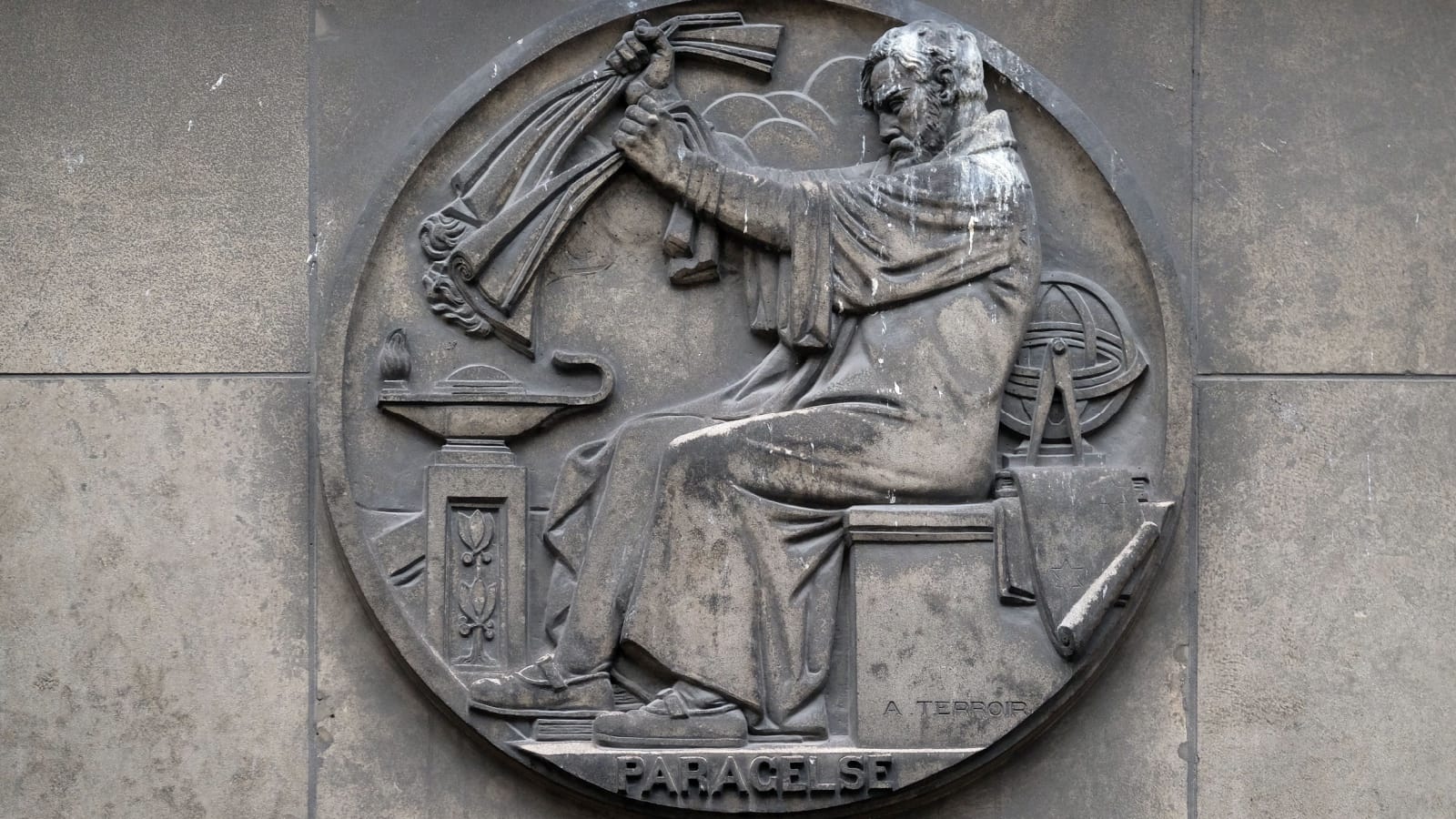
By Joseph Varon at Brownstone dot org.
Medicine, at its core, is born from observation. Long before clinical trials, randomized studies, or regulatory agencies existed, physicians treated patients by watching carefully - seeing, touching, listening, and synthesizing what reality presented. It was a craft grounded in sensory perception and human experience.
Few historical figures embody this foundational ethos more than Philippus Aureolus Paracelsus (1493-1541), an extraordinary man whose abilities, insight, and fearless rejection of dogma helped modernize medicine centuries before the scientific method took formal shape. He famously declared that "medicine can only be learned from that which the eyes can see and the fingers touch…practice should not be based on speculative theory; theory should be derived from practice."(1)
That statement is not merely historical commentary. It is a warning. And today, that warning is being ignored.
A profound gap has emerged between what frontline clinicians witness and what biomedical institutions insist upon. In my own practice - high-acuity internal and critical care - more than half of new patients now present with injuries temporally associated with biomedical products, especially the mRNA vaccines. This does not assert causality for any individual case. It simply acknowledges pattern recognition - something medicine has relied upon for thousands of years.
Yet many of these observations are dismissed, ignored, or aggressively censored. The biomedical system, once celebrated for cautious rigor, has shifted into a defensive posture that protects institutions at the expense of patients. This paper examines how we arrived at this moment: a convergence of regulatory opacity, ethical erosion, political distortion, and the abandonment of the Paracelsian principles that once anchored the profession.
If medicine is to restore trust, it must reclaim its moral center - starting with the courage to see what is directly in front of us.
The Age of Accelerated Biomedical Deployment
The Covid-19 era introduced a new paradigm in biomedical development - one defined not by meticulous study or long-term follow-up, but by speed. Under immense political pressure, multiple products were released under emergency frameworks that allowed:
reduced testing periods,
shortened follow-up windows,
incomplete long-term data,
unprecedented reliance on manufacturer-generated analyses.
What would normally take years unfolded over months. The rationale was understandable - respond quickly to save lives. But the consequences were predictable.
Velocity Replaced Rigor
Safety data were incomplete.
Post-marketing surveillance became the primary safety mechanism.
Adverse event signals were filtered through political lenses rather than scientific analysis.
The safety infrastructure was never designed for a rapid global deployment of novel gene-encoded biomedical technologies with no long-term human safety history. And instead of acknowledging uncertainty, institutions projected certainty.
What Clinicians Are Seeing: Patterns of Injury
Across specialties - including neurology, cardiology, rheumatology, internal medicine, and critical care - clinicians are now encountering:
autonomic instability, including POTS-like syndromes;
sensory neuropathies, paresthesias, dysesthesias;
myocarditis-like chest pain and arrhythmias;
coagulation disorders and microvascular abnormalities;
persistent inflammatory states;
new-onset autoimmune disorders;
hormonal and menstrual disruption;
long-duration fatigue and decreased exercise tolerance;
cognitive impairment ("brain fog");
dermatologic inflammatory eruptions.
These patterns commonly appear days to weeks following exposure to biomedical products.
No single case defines truth.
Patterns define truth.
Medicine has always functioned this way - until now.
Clinicians who raise concerns face threats to licensure, credentialing, institutional standing, and reputation. Rather than being encouraged to...

By Trish Dennis at Brownstone dot org.
After four years, hundreds of witnesses, and nearly £200 million in costs, the UK Covid Inquiry has reached the one conclusion many expected: a carefully footnoted act of self-exoneration. It assiduously avoids asking the only question that truly matters: were lockdowns ever justified, did they even work, and at what overall cost to society?
The Inquiry outlines failure in the abstract but never in the human. It catalogues errors, weak decision-making structures, muddled communications, and damaged trust, but only permits examination of those failings that do not disturb the central orthodoxy.
It repeats the familiar refrain of "Too little, too late," yet anyone paying attention knows the opposite was true. It was too much, too soon, and with no concern for the collateral damage. The government liked to speak of an "abundance of caution," but no such caution was exercised to prevent catastrophic societal harm. There was no attempt to undertake even a basic assessment of proportionality or foreseeable impact.
Even those who approached the Inquiry with modest expectations have been startled by how far it fell below them. As former Leader of the UK House of Commons, Jacob Rees-Mogg recently observed, "I never had very high hopes for the Covid Inquiry…but I didn't think it would be this bad." Nearly £192 million has already been spent, largely enriching lawyers and consultants, to produce 17 recommendations that amount, in his words, to "statements of the obvious or utter banality."
Two of those recommendations relate to Northern Ireland: one proposing the appointment of a Chief Medical Officer, the other an amendment to the ministerial code to "ensure confidentiality." Neither insight required hundreds of witnesses or years of hearings. Another recommendation, that devolved administrations should have a seat at COBRA, reveals, he argues, "a naiveté of the judiciary that doesn't understand how this country is governed."
Rees-Mogg's wider criticism goes to the heart of the Inquiry's failures, as it confuses activity with accountability. Its hundreds of pages record bureaucratic process while ignoring substance. The same modeling errors that drove early panic are recycled without reflection; the Swedish experience is dismissed, and the Great Barrington Declaration receives a single passing mention, as if it were an eccentric sideshow. The report's underlying message never wavers: lockdowns were right, dissent was wrong, and next time the government should act faster and with fewer restraints.
He also highlights its constitutional incoherence. It laments the lack of "democratic oversight," yet condemns political hesitation as weakness. It complains that ministers acted too slowly, while elsewhere chastising them for bowing to public pressure. The result, he says, is "schizophrenic in its approach to accountability." Behind the legal polish lies an authoritarian instinct, the belief that bureaucrats and scientists know best, and that ordinary citizens cannot be trusted with their own judgment.
The conclusions could have been drafted before the first witness entered the room:
Lockdowns were necessary.
Modelling was solid.
Critics misunderstood.
The establishment acted wisely.
It is the kind of verdict that only the British establishment could deliver about the British establishment.
The Inquiry treats the question of whether lockdowns worked as if the very question were indecent. It leans heavily on modeling to claim that thousands of deaths could have been avoided with earlier restrictions, modeling that is now widely recognised as inflated, brittle, and detached from real-world outcomes. It repeats that easing restrictions happened "despite high risk," yet fails to note that infection curves were already bending before the first lockdown began.
Here Baroness Hallett makes her headline claim that "23,000 lives could have been saved" if lockdowns had been imposed earlier. That number does not c...

By Roger Bate at Brownstone dot org.
Every two years, the 183 Parties to the WHO Framework Convention on Tobacco Control (FCTC) meet for the Conference of the Parties (COP). This is the treaty's governing body: a closed-door diplomatic forum where decisions are made on global tobacco policy, regulatory guidelines, technical documents, and the political direction of the treaty system.
Civil society is largely excluded. Journalists are barely tolerated. Outsiders appear only in tightly controlled "public sessions," while all substantive negotiations occur behind locked doors. These meetings are dominated by the FCTC Secretariat and a small constellation of Bloomberg-funded NGOs that orbit it. What they endorse becomes the agenda; what they oppose is often treated as illegitimate. That structure is an essential backdrop to the story of COP11.
The most revealing episode from COP11 was not about taxes or liability. It was the campaign against a small group of countries - Saint Kitts & Nevis, Dominica, New Zealand, the Philippines, and others - that dared to raise an uncomfortable but obvious point: safer nicotine products exist, millions use them, and the treaty should look honestly at the evidence. For this, they were attacked, shamed, and accused of serving tobacco interests. The charge is not only false, but a calculated lie designed to protect the ideological authority of the FCTC machine.
The insiders - the Bloomberg-funded NGOs, Secretariat technocrats, and a few entrenched academics - know harm reduction works. They know adult smokers switch when safer products are available. And they know acknowledging this would expose the limits of the FCTC's own strategies. Rather than confront that reality, they target the nations that speak it out loud.
A Simple Request: "Can We Look at the Evidence?"
Saint Kitts & Nevis put forward a reasonable proposal at COP10: create a working group on tobacco harm reduction, grounded in Article 1(d) of the treaty, which explicitly defines tobacco control as including harm reduction. It was bureaucratic rather than revolutionary - essentially a request for evidence review. By COP11, the same states, joined by Dominica and quietly supported by others, backed language recognizing the difference between combustible and non-combustible products. New Zealand came not with theory but with results. Smoking there has collapsed faster than almost anywhere else, driven by vaping and other safer products regulated within a robust national framework. The Philippines brought its new law on vapes and heated tobacco, debated and passed domestically, reflecting local science and consumer realities.
None of these countries is a tobacco industry hub. None were asking for smoking deregulation. They were asking for proportionate regulation based on risk. Their positions reflected either data, national policy, or both.
The FCTC Ecosystem's Response: Smear, Distract, Invent "Interference"
Before delegates even arrived, the Secretariat set the trap. The COP11 agenda omitted Article 1(d)'s harm-reduction clause and instead framed the discussion under Article 5.3 - the anti-industry article. This reframing transformed a scientific question into a suspicion of misconduct. The message was unmistakable: any mention of relative risk would be treated as potential interference.
Bloomberg-funded Campaign for Tobacco-Free Kids then launched a public campaign accusing small Caribbean governments of being targeted by tobacco companies - an allegation made without evidence. The Global Alliance for Tobacco Control piled on by giving Saint Kitts & Nevis and Dominica its "Dirty Ashtray Award," a childish ritual meant to shame any delegation that challenges anti-THR orthodoxy. Meanwhile, the University of Bath's Tobacco Tactics platform produced another round of insinuations, asserting that THR positions are inherently industry-aligned, regardless of their origin.
This was not policy analysis. It was ideological enforcement: delegatio...
By Brownstone Institute at Brownstone dot org.
For years, people have been calling for a reckoning, some decisive way in which an official voice speaks to the outrages society experienced over the Covid years, the consequences of which are all around us.
What precisely would that look like? An official commission like the one unfolding in the UK seems like nothing but a template for establishment gaslighting. Anything short of total condemnation will forever fall short of dealing with empirical reality.
Several people associated with prominent organizations such as Health Freedom Defense Fund, Children's Health Defense, MAHA Action, and Autism Action Network, Stand for Health Freedom, Global Wellness Forum, Feds for Freedom, along with Brownstone Institute, have been workshopping a possible Senate resolution. That at least would be a good start. The vote might be on party lines or not; there is no way to know.
The version below reflects a stable version for which Brownstone takes responsibility, while offering credit to people associated with the other groups. It can be considered a work in progress. Is it possible? We can dream.
A RESOLUTION
To affirm the permanent lessons of the Covid-19 response, to repudiate certain emergency measures as incompatible with constitutional liberty, and to establish binding principles for any future public-health emergency.
Whereas the Covid-19 pandemic of 2020-2023 occasioned the most widespread and prolonged suspension of civil liberties in American history;
Whereas many measures taken in the name of public health, at both the federal level and most states, lacked sufficient evidence of efficacy, in some cases were arbitrary, imposed disproportionate harm on the poor and working classes, and violated foundational principles of limited government;
Whereas the Senate now judges, with the benefit of hindsight and exhaustive subsequent reflection, that certain categories of intervention must never be repeated;
Now, therefore, be it
Resolved, That the Senate
(1) Declares that the following actions, however well-intentioned at the time, represented grave mistakes that shall not be repeated in any future public-health emergency:
(a) Prolonged closure of elementary, secondary schools, and colleges/universities for in-person instruction, which caused measurable and lasting harm to children's educational attainment, mental health, and social development while producing no demonstrable reduction in community transmission beyond what targeted protections for vulnerable adults would have achieved;
(b) Indefinite closure or capacity restriction of private businesses deemed "non-essential" by executive fiat, including but not limited to restaurants, gyms, hair salons, places of worship, and small retail establishments;
(c) Universal population-wide mask mandates imposed by state, local, or federal authority without individualized medical exception processes that respect bodily autonomy;
(d) Stay-at-home orders that confined healthy citizens to their residences for weeks or months at a time, criminalizing ordinary outdoor activity, in addition to the brutal division of the workforce between those deemed "essential" and those deemed "nonessential;"
(e) Restrictions on routine access of nursing homes, hospitals and other medical services, including dentistry, that fell outside emergency demands, resulting in missed diagnostics and medical disruptions for millions of people;
(f) Agency-led dismissal, deprecation, and even removal from access to known therapeutics for respiratory viruses, which were made unavailable even with a physician prescription;
(g) The eviction moratoriums issued by the Centers for Disease Control and Prevention that exceeded statutory authority and disrupted the contractual foundations of property rights;
(h) Vaccine mandates imposed directly or indirectly (through OSHA, CMS, Department of Defense, or federal contractor rules) upon private employees, healthcare workers, members of th...

By David Bell at Brownstone dot org.
One advantage of growing up in Australia is being unencumbered by intellectual pursuits. Seminal works such as Henry Lawson's The Loaded Dog defined my literary development, and that was only because I was taught to read. Grammar was essentially full stops and commas, and there were three tenses in English (until a Russian told me there were 16). So, in discussing the Enlightenment here, I will stick to basics and let more learned people who grew up with the advantages of being foreign correct as they will.
Further, being a country founded (refounded) by convicts and guards through the purloining of others' land-forced displacement or killing, Australia does not have much of a classic enlightened era to reflect on, just harsh realities of humanness, interspersed nonetheless with some good melancholy art and poetry. But reflecting on that reveals that someone from elsewhere did the colonizing, exhibiting all the trappings of one group abusing another. So, they were not having much of an Enlightenment either, even though the 18th century, when this happened, was supposedly the Enlightenment's peak.
When you follow this path further, the whole concept of a historic period more noble than now starts to look thin. Is there really a basis for claims that a previous period centuries ago was the high point of intellectual achievement and something of a lost paradise, that we should mourn and strive to resurrect? We are now, the narrative goes, re-entering a Dark Age, and things have perhaps 'never been worse in history,' as I read recently. Some perhaps have not suffered enough.
There was indeed a period in Europe a few hundred years ago when thought-based stuff seemed to take off. Visual art flourished through the likes of Rembrandt and Vermeer. John Harrison built clocks that revolutionized long-haul navigation, while Thomas Smith figured out how the ground was laid down. Handel wrote his Water Music, and Beethoven rounded things off with some pretty good symphonies. Thomas Paine wrote books about building more decent societies, and Jean-Jacques Rousseau opined, "I prefer liberty with danger than peace with slavery." They were, indeed, like many others of their time, inspired.
These enlightened people lived and worked in societies that owned slaves and routinely used torture as a way of establishing truth. Much of the population was illiterate and lived short lives of hard labor under the yoke of others, living in hovels and washing in cesspools. Those gaining wealth from such practices frequently enabled the talented to pursue their dreams. They worked in an environment built through theft from, and oppression of, others.
In turn, they romanticized the 'enlightened' times of their own past, such as the flourishing of the Venetian Republic with its art and palaces. The Venetians had built their wealth and their magical city on a particularly brutal industry of mutilating and trading in Slavic slaves, when not sacking the equally beautiful cities of their trading rivals. This is not underplaying the worth of what was produced, just recognizing the context within which things are created, and the shallowness that the human conscience often exhibits.
The average person of the Enlightenment era, it seems to me, was not sitting around in salons sharing the free flow of ideas, but being oppressed and kicked around by their enlightened compatriots or invaders. There were some good ideas and far better art and music than much of the soulless fare of today- but this arose not from a flourishing paradise but closer to, for many, a living hell. Perhaps it was poverty and harsh reality that opened Handel's mind and inspired Rembrandt's brush, and we now miss something that this makes us see. But this better be by choice.
Looking back to former times is a good way to learn and understand, and a person ignorant of history is like a scrap of paper blown in the wind. But history was written by the literate el...

By Ramesh Thakur at Brownstone dot org.
Lawfare, when weaponised, can pose a double threat to democracies. Domestically, the rule of law is an integral component of the theory of liberal democracy, and it underpins the institutions and practices of democratic governance. The expansion of the role of the state in regulating an increasing range of individuals' and private entities' behaviour has led to a proliferation of lawfare that can frustrate the ability of governments to govern and, in turn, lessen their legitimacy.
In its international dimension, the rule of law should tame the exercise of power by states and mediate relations between the strong and the weak and the rich and the poor. However, illiberal states have no scope for activists using law to rein in their excesses, and no effective checks can be exercised on the strong behaving badly. The danger is that absent international law completely, we risk a descent into the world of Thucydides, where the strong do what they can and the weak suffer as they must.
Lawfare as a Threat to National Decision-Making
On 11 November (Remembrance Day), no fewer than nine former British military chiefs, all of four-star rank, penned an open letter to Prime Minister Keir Starmer and Attorney General Lord Hermer in the Times, warning that 'lawfare' was destroying the effectiveness of the military forces. Consequently lawfare - 'the use of legal processes to fight political or ideological battles' - has become a 'direct threat to national security.' They wrote:
Today every deployed member of the British armed forces must consider not only the enemy in front but the lawyer behind.
The soldiers' fear that orders they faithfully carried out in the belief that it was lawful could subsequently be judged to be unlawful and criminal, 'will paralyse decision-making' and 'distort rules of engagement,' and is already affecting recruitment and retention, especially in the elite special forces, the former chiefs cautioned. General Sir Peter Wall, a former chief of the general staff, subsequently added that elite special forces soldiers were quitting the army amidst fears that they could be hauled into courts decades down the line for missions executed under the orders of the lawful government of the day.
The same caution was the theme of an article in the Spectator UK by Mary Wakefield, also on the same day. Her thesis, based on interviews with former special forces soldiers, was that 'lawfare is killing the SAS' (the famed Special Air Services formed during the Second World War). 'Who'd sign up, knowing that simply following orders' and carrying out 'actions that once won them medals for bravery,' she asked, might some day 'land them in prison?'
Meanwhile the Home Secretary, Shabana Mahmood, says she will introduce new statutory rules that will direct judges to prioritise public interest and safety over migrants' human rights when assessing asylum claims. She intends to tighten immigration controls because the existing scale of migrants, asylum seekers, and illegal migrants no longer has the people's consent and any policy that lacks consent of the governed is not just unsustainable, it will also fracture social cohesion.
As part of the tightening-up process, additional limitations will be placed on lawfare by restricting the grounds for and number of appeals. Articles 3 and 8 of the European Convention on Human Rights (ECHR), which deal with degrading and inhumane treatment and the right to family life, have been broadened by continual judicial interpretation well beyond the limits of torture and immediate family that they originally covered.
Consider the case of one Sahayb Abu, who was convicted of a terrorism-related offence in 2021. Based on reports that he was sharing his extremist ideology with other inmates, he was placed in isolation in a separation unit. His lawyers launched action against the Ministry of Justice under ECHR Articles 3 and 8. On 18 November, a court ruled that segregat...

By Roger Bate at Brownstone dot org.
The UK Covid-19 Inquiry has finally released the core political chapters of its long-awaited report. After nearly three years of hearings, millions of documents, and tens of millions of pounds spent on legal fees, the conclusion is now unmistakably clear.
They've learned nothing, as I detail in my latest research.
Worse, they may not want to learn. The Inquiry's structure, its analytical frame, even its carefully curated narrative all point in the same direction: away from the possibility that Britain's pandemic response was fundamentally misguided, and toward the politically safer claim that ministers simply "acted too late."
On November 20, 2025, Jay Bhattacharya captured this perfectly in a single sentence on X: "Fact check; not locking down at all (like Sweden) would have saved lives in UK. Hard to believe how much money the UK spent on its sham covid inquiry." That tweet was provocative - but it was also accurate in its diagnosis of the Inquiry's deeper pathologies.
The Inquiry's Central Mistake: Asking the Wrong Question
From the outset, the Inquiry has framed Britain's pandemic response as a timing problem. Lockdowns were assumed to be necessary and effective; the only question was whether politicians implemented them quickly enough. The result is a dry recitation of process failures and personality clashes inside Downing Street, all of which are said to have delayed the inevitable "stay-at-home" order.
But that framing was never neutral. It was baked into the Inquiry's analytical choices - especially its uncritical reliance on the same family of models that drove the UK into lockdown in March 2020.
The centerpiece of that modeling tradition is Imperial College London's Report 9, the document that forecast hundreds of thousands of UK deaths absent stringent lockdowns. That report assumed near-homogeneous mixing, limited voluntary behavior change, and high fatality rates across the population. Under those assumptions, lockdown becomes not a political choice but a mathematical necessity.
The Inquiry has now rerun the same machinery and, unsurprisingly, produced the same conclusion.
Its headline claim - that delaying lockdown by a week caused roughly 23,000 additional deaths - is not a historical finding. It is not based on observational data. It is simply the output of an Imperial-style model with a different start date.
The Inquiry has restated the model, not tested it.
The Evidence They Chose Not to See
The Inquiry's blindness becomes fully apparent when we ask the obvious comparative question: if the lockdown paradigm were correct, what would we expect to see among countries that refused to lock down?
We would expect chaos. We would expect mass hospital collapse. We would expect mortality catastrophes to dwarf the UK.
We would expect, in short, to see Sweden in ruins.
Instead, we see the opposite.
Sweden kept primary schools open, avoided stay-at-home orders, relied heavily on voluntary behavior, and preserved civil liberties throughout the pandemic. After correcting early care-home errors, Sweden recorded one of the lowest age-adjusted excess mortality rates in Europe.
The Swedish experience is not a footnote. It is not an "exception." It is the control case - the real-world test of the lockdown paradigm.
And it falsifies it.
A serious Inquiry would have begun with Sweden. It would have asked why a country that rejected lockdowns achieved better mortality outcomes than Britain while preserving education, normal life, and basic freedoms. It would have integrated that evidence into every chapter. It would have examined whether voluntary behavior changes, targeted protection, and risk-based messaging can substitute for mass coercion.
Instead, Sweden is barely mentioned. When it appears at all, it is described as an anomaly. The Inquiry behaves as though Sweden is politically inconvenient - not analytically essential.
Because it is.
The Modeling Was Wrong. The Inquiry Can't Admit It...

By David Stockman at Brownstone dot org.
Once in a blue moon even a blind squirrel finds an acorn, or so the saying goes. But, boy, did the occupant of the office of presidency find a MOAPA (Mother Of All Policy Acorns):
THE ONLY HEALTHCARE I WILL SUPPORT OR APPROVE IS SENDING THE MONEY DIRECTLY BACK TO THE PEOPLE, WITH NOTHING GOING TO THE BIG, FAT, RICH INSURANCE COMPANIES, WHO HAVE MADE $TRILLIONS, AND RIPPED OFF AMERICA LONG ENOUGH.
THE PEOPLE WILL BE ALLOWED TO NEGOTIATE AND BUY THEIR OWN, MUCH BETTER, INSURANCE. POWER TO THE PEOPLE!
Congress, do not waste your time and energy on anything else.
This is the only way to have great Healthcare in America!!!
GET IT DONE, NOW.
President DJT
Trump hit the nail squarely on the head. Above all other factors, the reason we have runaway health costs is that the fundamental payment mechanism for health care in the US is ass-backwards.
The third-party payment system for the $5 trillion US health care sector is totally opaque when it should be blindingly transparent. It is also radically collectivized when it should be thoroughly individualized; and is completely bureaucratized and cartelized when competitive free market economics are of the essence.
That is to say, individual consumers should see charges hit their credit card or other payment accounts each and every time medical care services are utilized or premiums for an honest form of health insurance are paid. Likewise, providers should always be looking over their shoulders - like in all other economic markets - at the prices, practices, and value propositions of their competitors.
But what we have, instead, is a clunky, pooled, opaque, pre-payment system that is the very opposite of transparent risk-based insurance. This perverse system utterly euthanizes both consumers and providers when it comes to any knowledge of, and incentives for, economizing on the use of medical services.
Indeed, if automobile purchases were on this kind of homogenized, pooled pre-payment system everyone would be driving a Lamborghini, Rolls-Royce, Mercedes, or even a Cadillac or two. You'd be a sucker to drive a Korean-branded, Mexico-assembled econobox - of which there are actually millions on the US roads today.
Of course, they are pleased to call this pooled, homogenized method of health care pricing "community-rated" underwriting. But there is nothing that resembles insurance "underwriting" about it. It's just a case of adding up all the costs for an accounting period and dividing by the number of "insured" units in the pool. After this primitive math exercise, every insured unit gets tagged with the same price, save for family-size differentials and, under ObamaCare, a virtue-signaling discount for not smoking.
To get to the heart of the matter, therefore, the only real appropriate word for what passes for "health insurance" in America today is "socialism." That is, essentially a one-size-fits-all pricing algorithm that is inherently an engine of inflation, excess, and waste like few other economic arrangements in America or communist China, for that matter.
Accordingly, it doesn't really matter whether we are talking about Medicare, Medicaid, ObamaCare Exchange plans, employer group plans, or the odds and sods of individual commercial insurance plans that still hang around the basket. The common characteristic of all of these plans is that they radically homogenize beneficiary payment rates by wholesale elimination of risk-based pricing to the individual consumer/beneficiary, which by definition, of course, includes an ixnay on pricing for "pre-existing conditions."
Moreover, when push came to shove, that was always the end game of the decades-long drive in Washington for "national health insurance," which finally ended in the 2010 hybrid called ObamaCare. The core proposition of the latter, which finally gave it enough political traction to pass, was the elimination of pre-existing conditions in health insurance underwriting and thereby almo...

By Peter C. Gøtzsche at Brownstone dot org.
In a fascinating book released in September,Vaccines, Amen: The Religion of Vaccines, lawyer Aaron Siri explains how the American public was systematically misled by the very institutions they are supposed to trust.
Via numerous lawsuits, Aaron brought many deeply buried, politically inconvenient facts to light, and he is very factual, which is uncommon for vaccine books. They are usually emotional and far too critical of vaccines, or far too positive, with little in-between, which is where the truth is.
The value of lawyers cannot be overestimated. Nothing hurts like the truth about healthcare, which is why we badly need lawyers to dig it out. When drug policy researcher Alan Cassels reviewed my 2025 book, How Merck and Drug Regulators Hid Serious Harms of the HPV Vaccines, he concluded that "If you want the real truth about drugs, don't ask doctors - ask lawyers."
Another quote on my book cover is from Martin Kulldorff, the current chair of the Advisory Committee on Immunization Practices (ACIP) at the US Centers for Disease Control and Prevention (CDC): "Drugs and vaccines can heal and save lives, but also harm. That puts our lives in the hands of pharmaceutical companies. Can we trust them? In this well-documented book, the clear answer is: NO."
It is essential to understand this. We know very little about the harms of vaccines because most of the data come from substandard and flawed trials performed by drug companies, which leave out important adverse events from their publications and avoid, with virtually no exceptions, to compare their vaccines with a placebo.
As an expert witness in a lawsuit against Merck, I read 112,452 pages of confidential study reports and uncovered multiple instances of scientific misconduct in which the drug agencies were complicit. It turned out that Gardasil, an HPV vaccine, causes serious and persistent neurological harms, which drug regulators have denied.
Aaron explains right from the start why vaccines are sacrosanct. People never say they believe in cars but many say they believe in vaccines, without having the data needed to provide an informed opinion. I found the same when I analysed BMJ articles about Kennedy's much-needed vaccine reforms; it was all about faith, not about science.
Aaron has used lawsuits to demonstrate that vaccinologists have a self-reinforcing belief system whose dogmas do not stand up to scrutiny in court. His takedown of Stanley Plotkin, the "high priest" of vaccines, during a deposition is a masterpiece in exposing that the emperor has no clothes when claiming that childhood vaccines are safe and have been carefully tested.
Plotkin was unable to understand why his earnings of hundreds of millions of dollars from royalties and his close alignment with the interests of the industry could influence his views on vaccines. He didn't know that safety monitoring in certain trials only lasted 4-5 days after vaccination, which is way too short to capture autoimmune adverse events. Worst of all, Plotkin stated that certain vaccines don't cause certain harms, or he stated that they were rare, without having any evidence in support of his wishful thinking.
In 1986, manufacturers were granted almost complete immunity from liability for injuries caused by vaccines. This meant they had no incentive to ensure that vaccines are safe before they brought them onto the market. People can file claims against the Department of Health and Human Services (HHS), which is therefore not interested in having any of its agencies, including the CDC and the Food and Drug Agency (FDA), publish studies demonstrating vaccine harms - a perfect set-up for the industry.
HHS was required to submit to Congress biennial vaccine safety reports but a lawsuit revealed that it had not sent a single report in 30 years.
HHS was also required to make recommendations to improve vaccine safety, but after a single report decades ago, the only thing it did was dis...

By Sonia Elijah at Brownstone dot org.
SHARE | PRINT | EMAIL
"Big Brother is watching you." These chilling words from George Orwell's dystopian masterpiece, 1984, no longer read as fiction but are becoming a bleak reality in the UK and Canada - where digital dystopian measures are unravelling the fabric of freedom in two of the West's oldest democracies.
Under the guise of safety and innovation, the UK and Canada are deploying invasive tools that undermine privacy, stifle free expression, and foster a culture of self-censorship. Both nations are exporting their digital control frameworks through the Five Eyes alliance, a covert intelligence-sharing network uniting the UK, Canada, US, Australia, and New Zealand, established during the Cold War.
Simultaneously, their alignment with the United Nations' Agenda 2030, particularly Sustainable Development Goal (SDG) 16.9 - which mandates universal legal identity by 2030 - supports a global policy for digital IDs, such as the UK's proposed Brit Card and Canada's Digital Identity Program, which funnel personal data into centralized systems under the pretext of "efficiency and inclusion." By championing expansive digital regulations, such as the UK's Online Safety Act and Canada's pending Bill C-8, which prioritize state-defined "safety" over individual liberties, both nations are not just embracing digital authoritarianism - they're accelerating the West's descent into it.
The UK's Digital Dragnet
The United Kingdom has long positioned itself as a global leader in surveillance. The British spy agency, Government Communications Headquarters (GCHQ), runs the formerly secret mass surveillance programme, code-named Tempora, operational since 2011, which intercepts and stores vast amounts of global internet and phone traffic by tapping into transatlantic fibre-optic cables. Knowledge of its existence only came about in 2013, thanks to the bombshell documents leaked by the former National Security Agency (NSA) intelligence contractor and whistleblower, Edward Snowden. "It's not just a US problem. The UK has a huge dog in this fight," Snowden told the Guardian in a June 2013 report. "They [GCHQ] are worse than the US."
Following that is the Investigatory Powers Act (IPA) 2016, also dubbed the "Snooper's Charter," which mandates that internet service providers store users' browsing histories, emails, texts, and phone calls for up to a year. Government agencies, including police and intelligence services (like MI5, MI6, and GCHQ) can access this data without a warrant in many cases, enabling bulk collection of communications metadata. This has been criticized for enabling mass surveillance on a scale that invades everyday privacy.
Recent expansions under the Online Safety Act (OSA) further empower authorities to demand backdoors to encrypted apps like WhatsApp, potentially scanning private messages for vaguely defined "harmful" content - a move critics like Big Brother Watch, a privacy advocacy group, decry as a gateway to mass surveillance. The OSA, which received Royal Assent on October 26, 2023, represents a sprawling piece of legislation by the UK government to regulate online content and "protect" users, particularly children, from "illegal and harmful material."
Implemented in phases by Ofcom, the UK's communications watchdog, it imposes duties on a vast array of internet services, including social media, search engines, messaging apps, gaming platforms, and sites with user-generated content, forcing compliance through risk assessments and hefty fines. By July 2025, the OSA was considered "fully in force" for most major provisions. This sweeping regime, aligned with global surveillance trends via Agenda 2030's push for digital control, threatens to entrench a state-sanctioned digital dragnet, prioritizing "safety" over fundamental freedoms.
Elon Musk's platform X has warned that the act risks "seriously infringing" on free speech, with the threat of fines up to £18 million or 10% of gl...

By Toby Rogers at Brownstone dot org.
For the last several decades, the official autism narrative was that 'autism is genetic, a GIFT, and anyone who says otherwise is a NUTTER who must be banned from polite society.' The mainstream media pounded this message into the public consciousness every chance they got, and this narrative was enforced through censorship and blacklisting of anyone who proposed other theories of the case.
Then this past weekend, a curious thing happened. On Saturday (October 18, 2025), the New York Times published "A Furious Debate Over Autism's Causes Leaves Parents Grasping for Answers."
The story follows two families dealing with autism, interspersed with quotes from various mainstream autism "experts." It conforms to the standard paint-by-numbers script - 'autism a mystery; it couldn't possibly be caused by vaccines, Tylenol, or food dyes; Robert Kennedy Jr. is terrible;' etc. And then, out of nowhere, the NY Times reporters (Gina Kolata and Azeen Ghorayshi) demolished the official genetic narrative:
But genetic mutations still only explain about 30 percent of cases, typically those with the most severe forms of the disorder.
So, not 100%, not half, not even a third of autism cases are genetic. That's a MASSIVE paradigm shift. Next:
Dr. Audrey Brumback, a pediatric neurologist at the University of Texas at Austin, said she offers genetic testing to most of the patients she diagnoses with autism even though, as she cautions the parents, a relevant genetic mutation will be found in only one out of four cases.
One out of four is 25%, so they're already backing away from the 30% claim. And THEN:
A landmark publication in 2007 showed that children with autism were much more likely to have so-called de novo mutations, spontaneous mutations that were not present in their mother's or father's genome.
Oh, so these children are NOT inheriting these genes from their parents (heritability is always what's been implied by the multibillion-dollar search for the mythical 'genes for autism'). Instead, these are de novo genetic mutations that are only found in the child with autism.
Do you know what else causes de novo genetic mutations? TOXICANTS.
That narrows the possibilities down considerably. Autism is not genetic - that's not me talking now, that's the NY Times. The most likely toxic exposures are from vaccines, SSRIs, Tylenol, pesticides/herbicides/fungicides, fire retardants, chemicals in plastics, EMF/RFR, and pollutants in our air, water, soil, and food - all the toxicants that I reviewed in my 2019 doctoral thesis.
So I figured out and published the definitive systematic review of the autism causation literature six years ago. My reward was to be hunted, censored, and economically blacklisted. The Washington Post, Guardian, BMJ, Springer/Nature, USA Today, Reuters, AP, Vice, and Politico have all published hit pieces on me. They never engage with my actual work, they never present contrary data, and all are engaged in racketeering on behalf of the pharmaceutical industry. I stood my ground and fought back by telling the truth and citing the relevant data. Now the paper of record has abandoned the genetic narrative, which opens the door for a thorough examination of the role of toxicants in autism causation.
We are winning this debate. The official narrative is crumbling before our eyes.
I doubt the NY Times reporters even realize what they've done. When a paradigm shifts, it's not even necessarily a conscious choice; people just feel the overwhelming gravitational pull of the new narrative.
The people at the Simons Foundation, even though they are quoted favorably in the article, will be none too happy with this development. They won't be able to win the Nobel Prize in Medicine once everyone realizes that autism is not genetic. Presumably, their staff are on the phone right now calling for the retraction of all of the evidence that reveals the multibillion-dollar autism genetics research grift.
And the...

By Maryanne Demasi at Brownstone dot org.
Yesterday, I took part in a panel discussion in Washington, D.C., on the weaponisation of science - specifically, how conflicts of interest, industry influence, and scientific deception have reshaped modern medicine.
It was an important conversation about how the scientific process has been hollowed out by financial incentives, regulatory capture, and institutional cowardice.
For me, this is not an abstract debate. I've spent much of my career investigating how science becomes distorted - not by a few rogue actors, but through an entire system built on commercial dependence.
Once you start pulling the threads of how evidence is produced, who funds it, who controls the data, and who polices the outcomes, you quickly realise that the corruption of science is structural and systemic.
The Statin Wars: A Case Study in Deception
I first saw this clearly while investigating cholesterol-lowering drugs. My 2013 Catalyst documentary questioned whether statins were being overprescribed, and it unleashed a media firestorm.
The episode was pulled after industry outrage, and I was publicly attacked. None of the critics engaged with the evidence - they simply sought to silence it.
In 2018, I published a narrative review, "Statin wars: have we been misled by the evidence?"
The piece revealed that the raw data underpinning statin trials were held exclusively by the Oxford-based Cholesterol Treatment Trialists (CTT) Collaboration and had never been released.
The CTT group had signed confidentiality agreements with pharmaceutical sponsors, blocking independent access to the raw data and preventing verification.
Yet those same meta-analyses have shaped prescribing guidelines around the world - produced by a group that sits under Oxford's Clinical Trial Service Unit, which receives millions in funding from statin manufacturers.
In my public talks, I've described the statin story as a case study in bias and censorship. The trials used well-worn techniques to amplify benefits and minimise harms.
For example, they use 'run-in' periods before the trial to weed out people who couldn't tolerate the drug, thereby artificially lowering the adverse events detected during the trial.
Often the outcomes were reported in relative, not absolute, terms - effectively exaggerating benefits that were, in reality, minuscule to the individual patient.
The vast majority of statin trials are funded by the manufacturers, and almost all show benefit - except for one publicly funded study that showed the opposite.
So, who funds the trial matters. The system is captured, plain and simple.
Regulatory Capture and the Illusion of Oversight
The same dynamics pervade drug regulation. In a 2022 BMJ investigation, I showed how drug regulators rely heavily on funding from the very industries they oversee.
In Australia, the Therapeutic Goods Administration derives 96% of its operating budget from industry fees.
In the US, the same conflict exists through the Prescription Drug User Fee Act (PDUFA), which allows the FDA to collect billions from drug companies.
Those "user fees" now fund roughly two-thirds of the agency's drug-review budget - a structural conflict of interest described by one scholar as "institutional corruption."
And it's true.
Industry money drives the demand for faster approvals through "expedited pathways," which often means weaker evidence, shorter trials, and looser post-marketing obligations.
Regulators defend this as "innovation," yet the drugs approved under these pathways are far more likely to later receive black-box warnings or be withdrawn from the market due to safety issues.
The result is a system that rewards speed and sales over safety and substance.
The illusion of effective drugs has become even clearer thanks to a landmark investigation this year by Jeanne Lenzer and Shannon Brownlee.
They reviewed more than 400 FDA drug approvals between 2013 and 2022, and found that 73% of the drugs failed to meet fo...

By Eyal Shahar at Brownstone dot org.
SHARE | PRINT | EMAIL
Preamble
The natural home for this work is a biomedical journal. There is zero chance, however, that a paper would be accepted by any conventional journal. Why? Because the results are earthshaking, as stated in the title.
This post is technical, but the preamble is not. For the non-academic reader, the preamble will serve two purposes: 1) to share an interesting story about the evolution of this work; 2) to give a simple summary of what I found.
So, stay with me at least through this section.
Although I have over 200 scientific publications, only a few were truly innovative in the sense of a creative idea that led to an interesting discovery. Most were uninspiring, "normal" science. I often wondered how those rare cases were born, and in retrospect, it was never prolonged thinking. Rather, it was an unexplained spark, a moment when an idea came into my mind out of the blue, or some loose ends got connected. This work had something of both.
I never trusted the results of the Pfizer trial. That 95% effectiveness against a respiratory virus was too good to be true - unprecedented in the context of a viral respiratory infection. I could not tell, however, what might have gone wrong.
Working on a recent post, I concluded that the culprit must have been the ascertainment of cases. For whatever reason, many cases have been missed in the vaccine arm, and therefore, the original results cannot be trusted. Is there any other way to estimate the true effectiveness against symptomatic infection from the trial's data? "Probably not" is the expected answer.
Coincidentally, I discovered another document on the Pfizer trial, titled "Final Full Clinical Study Report." In that lengthy document, Pfizer included estimates of the effectiveness against asymptomatic infection, which were based on a blood test in all participants (anti-N antibodies).
Is there a way to estimate the effectiveness against symptomatic infection from the effectiveness against asymptomatic infection?
That was the spark: posing a question that linked two loose ends. Answering it was not too difficult. Simple computational work.
Every analysis is based on some premises or assumptions. Here, I needed two:
First, I assumed that the vaccine does not prevent an infection. It may only prevent symptoms when infected. This premise is widely accepted now, and I was able to demonstrate it indirectly in the trial's data.
My second assumption had to do with the split of infections between asymptomatic and symptomatic. There are data on the topic, including data I was able to extract from the trial.
The rest of the work was no more than a simple equation I borrowed from an old paper and a few rows on an Excel file, which I will show at the end.
I promised a spoiler:
Of over half a dozen different computations, one resulted in zero effectiveness, one in 50%, and all others - up to 25%. We should follow the majority: it was no more than 25%. And that's before waning…
Sources of Data
To combine data on asymptomatic infections and symptomatic infections, I needed to find a relevant time window in which both types of data were available. It was between dose 2 (administered 21 days after dose 1) and one month later, a period for which the reported effectiveness was between 90.5% and 94.8%.
There were two sources for the data: the famous paper in the New England Journal of Medicine and the Pfizer document I mentioned in the preamble, which was presumably submitted to the FDA. Below you will find screenshots of the data I used. Red rectangles were added.
Preliminary Analysis
The starting table is simple: the number of cases of symptomatic infection and asymptomatic infection in the two arms of the trial within one month after the second dose.
The numbers in the right column were transcribed from table 36 above. The number 4 is based on the graph, and the number 90 was estimated from the table below the graph: 21 cases in 7 days ...
By Michael Walters at Brownstone dot org.
SHARE | PRINT | EMAIL
Fundamentally, it had a flawed design. Its architects meant to appeal to the public, promising what the old system could not fully deliver - guaranteed access to affordable health cover and coverage for pre-existing conditions (PECs). But they were wrong about being able to keep your doctor or your old policy if you wanted.
Previously individual policies had to exclude PEC coverage to be financially viable. Yet employer group policies often covered it after a waiting period, but the extra costs were spread over their fellow workers - a real burden on medium- and small-sized companies. Under ObamaCare, the very high PEC costs are still spread too narrowly - on each of the very few insurers who have agreed to stay as exchange insurers.
Need a Very Broad Base to Bear PEC Risk
In the most successful European healthcare systems, e.g., Germany and Switzerland, the federal government handles the PEC risk, via national pools and government subsidies, sparing the burden on individual insurers. Those costs are spread through the national tax base, not borne by an individual insurer who is prohibited from rejecting insureds with a high-cost PEC.
Not Designed to Last
Skeptics believe that ObamaCare designers knew of this potential death spiral of increasing costs among fewer and fewer insurers, ultimately causing it to fail. To appeal to the public, they made expensive PECs free for exchange insurers. Also, other costly sweeteners were made free: lifetime unlimited benefits and coverage for children until age 26.
This meant that the few insurers left in the exchange would continuously have to raise rates substantially, as lower-risk and younger people would opt out. Higher-risk insureds would stay and force still higher premiums to avoid insurer collapse. That spiral of continually more adverse selection would mean the demise of the system. The exchange insurers could simply pull out. The federal law establishing ObamaCare did not have the authority to impose mandatory insurer participation, like state laws can on assigned risk participation.
The likely strategy of ObamaCare's architects was for it to be a stopgap measure before converting it to "single-payer" socialized medicine. Major group insurers initially supported ObamaCare passage because, after conversion to single payer, those insurers would become third-party administrators (TPAs). When servicing the future single-payer market, TPAs would be paid a guaranteed fee (e.g., 3 or 4%), with no chance of a loss, to process premiums and pay claims on behalf of the federal government. This strategy ignores failed past experiments with TPAs, where no stake in the outcome, just tended to drive up overall claim costs.
Another clue that ObamaCare was not designed to last was that it never addressed the competitive disadvantage of individual policies having no tax deduction. In contrast, employer-based coverage enjoyed the longstanding tax exemption for group insurance. This was installed in World War II to get around wage and price controls, but was not rescinded, partially because the public liked the tax deduction.
In his landmark 2001 essay, "How to Cure Healthcare," Nobel Economics Laureate Milton Friedman decried this feature because it drives up overall costs due to defensive medicine, when the individual is insulated from the price/value decision. "Who cares about that extra unneeded procedure? You are not paying for it."
Doctors are incentivized to order extra, paid-for tests, as "defensive medicine," to mitigate a litigious US tort environment. Some estimates are that this drives up overall costs by 10% to 15%.
Also, because the public liked the tax deduction, to compete better, the individual policy option may have to give some tax relief.
ObamaCare Not Very Effective in Getting to Universal Healthcare - Many Still Uninsured
ObamaCare proponents originally cited a goal to target the 49 million uninsured Americans i...

Comments

Download from Google Play

Download from App Store
 United States