


 Claim Ownership
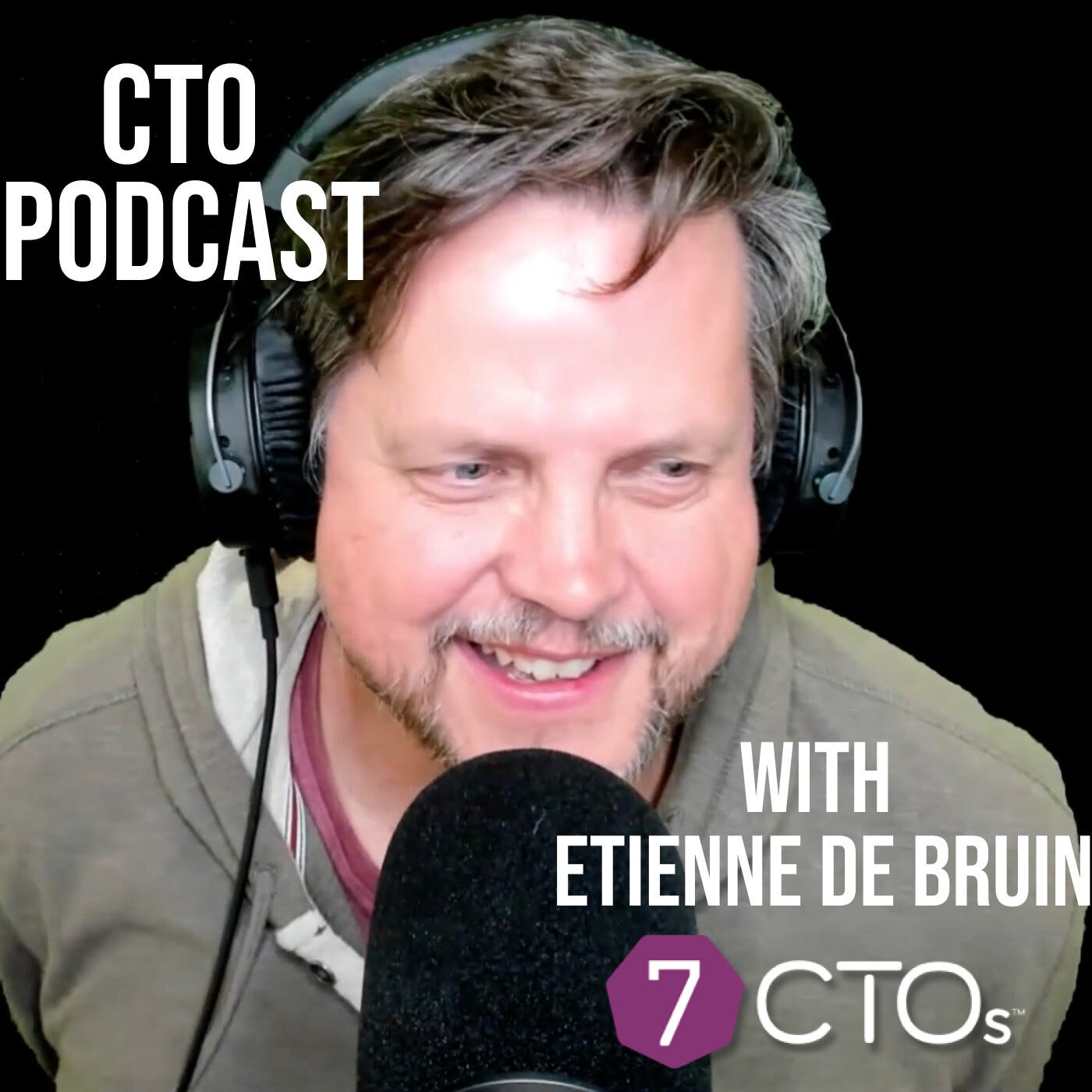
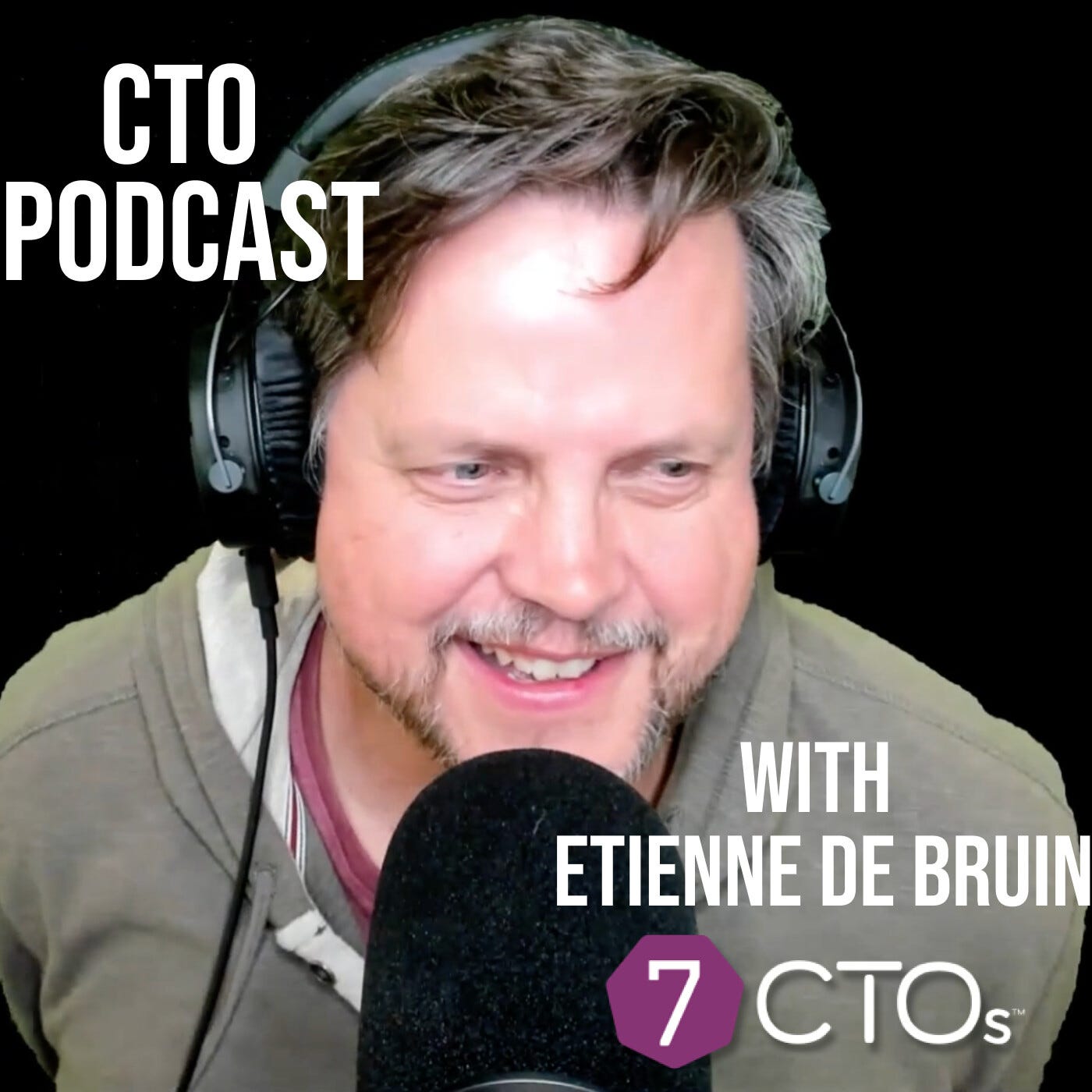
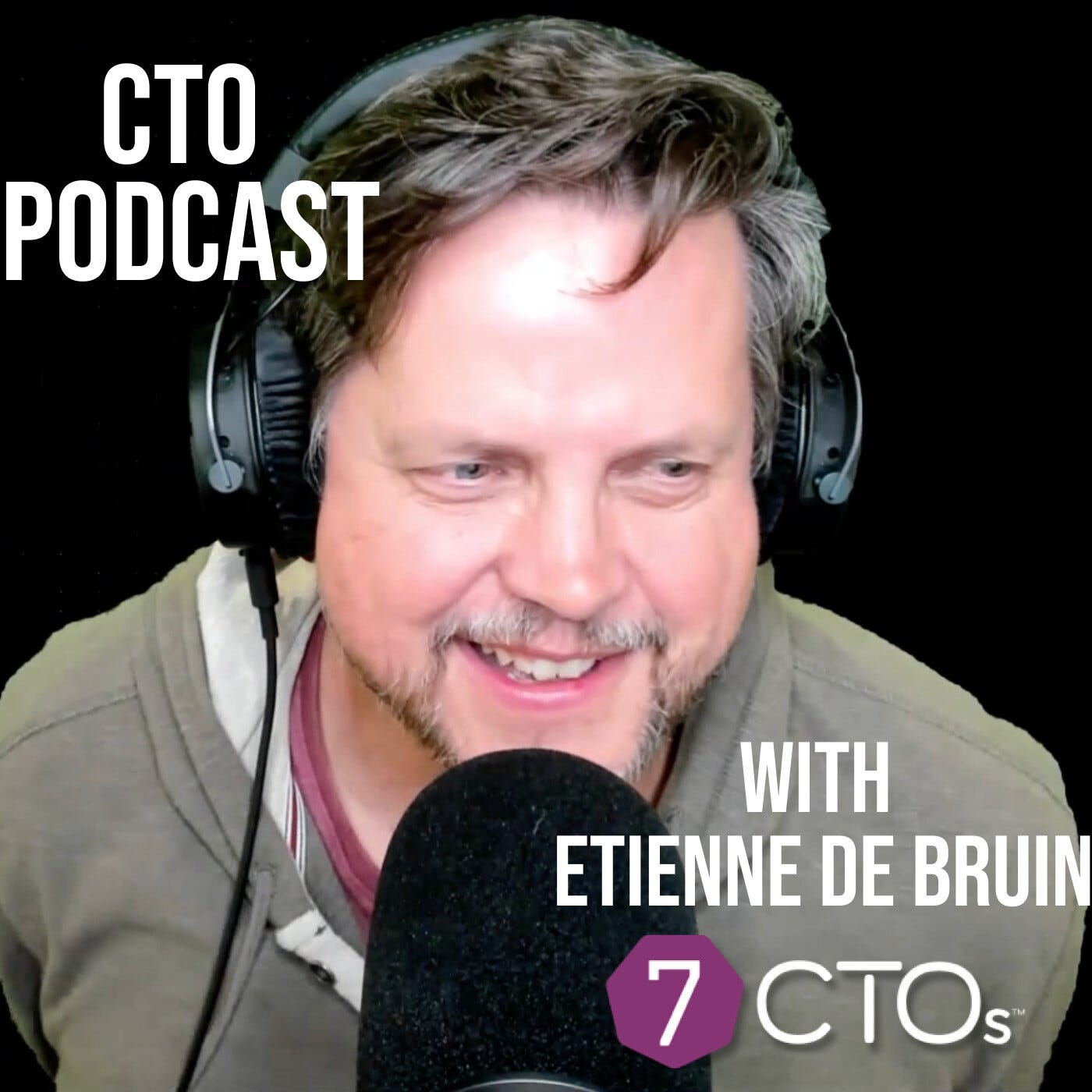
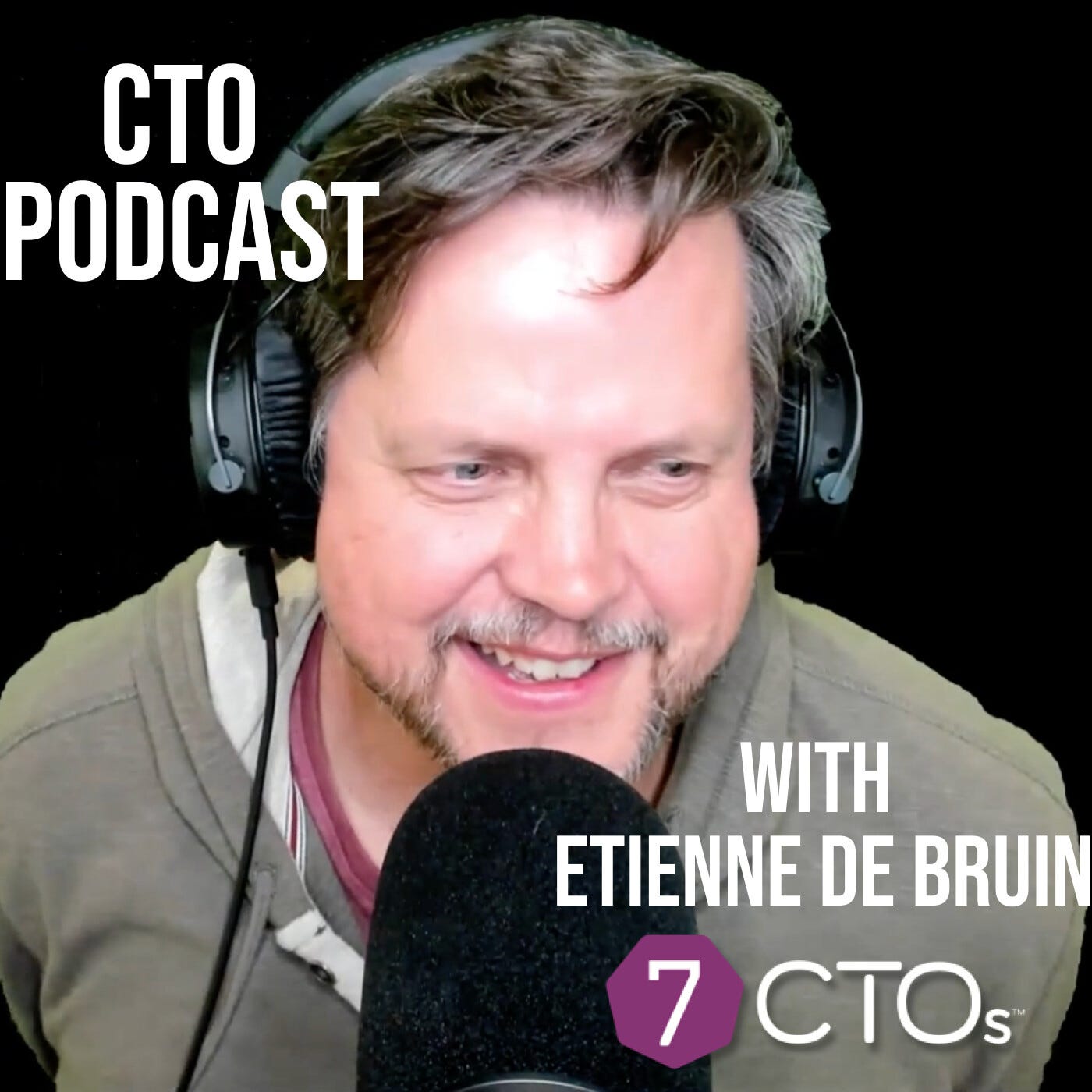
The CTO Podcast
Subscribed: 297Played: 4,198
Subscribe

© Etienne De Bruin
Description
The CTO Podcast explores the worlds of Chief Technical officers as they manage the trials, tribulations, and triumphs of technologists in the C-suite. Hosted by Etienne de Bruin, founder of 7CTOs and author of CTO Excellence in 100 Days: Becoming the leader your company deserves.
www.ctopod.com
www.ctopod.com
234 Episodes
Reverse
“We’re not doing software development anymore. We’re engineering a factory.”That single line from Matt Ferguson captures a fundamental shift happening in technology leadership. As CTO of Roof Maxx—a nationwide roofing brand with 385 dealerships—Ferguson has spent the past year transforming how his team builds software. The methodology he’s championing isn’t new, but its implications in the age of AI are profound.It’s called Document-Driven Development. And if you’re still measuring your engineering team by lines of code, you may be optimizing for the wrong century.The Cost of Software Is CollapsingFerguson opens with a provocative claim: “The cost of software goes to zero.”He’s quick to acknowledge this is a euphemism—a deliberate exaggeration meant to spark conversation. But the directional truth is harder to dispute. When a team that once needed 100 engineers can now accomplish the same work with 10, or when the same team can produce 10x the output, the economics of software fundamentally change.“If they’re not taking into consideration the risk of their business when the cost of software goes to zero,” Ferguson says of potential vendor partners, “then they’re not gonna be a partner in two years because they’re gonna be out of business.”The data on AI-assisted coding tells a more nuanced story. A recent randomized controlled trial from METR found that experienced developers were actually 19% slower when using AI tools—despite believing they were 20% faster. Meanwhile, studies from GitHub and Microsoft show gains of 20-55%, with the strongest improvements among junior developers tackling well-defined tasks.The takeaway isn’t that AI doesn’t help. It’s that how you use it matters enormously. And that’s where Document-Driven Development enters the picture.What Is Document-Driven Development?At its core, Document-Driven Development flips the traditional software process. Instead of diving into code and documenting later (or never), teams invest heavily upfront in requirements, specifications, and architectural documentation—then use AI to generate code from those artifacts.“Our document-driven development is the concept of writing down what you want to do, what your problem is that you want to solve, in a descriptive enough way that the AI can interpret and plan the work, and through that plan can execute the code,” Ferguson explains.The approach has been championed by Ryan Vice, CEO of Vice Software, through his DocDD.ai methodology. GitHub recently validated the concept with their “Spec-Driven Development” toolkit, and AWS published their “AI-Driven Development Lifecycle” framework—both emphasizing documentation as the critical input to AI-assisted coding.Ferguson’s team has taken this further than most. His developers now spend roughly 90% of their time writing and refining requirements, and only 10% reviewing code.“Documents are your new code,” he says. “Treat them like code, put them in your GitHub repository as code, and iterate on them as your source code.”The Goal: One-Shot Code GenerationThe ambition behind Document-Driven Development is what Ferguson calls “one-shotting” the code—generating production-ready software on the first attempt.“We’re not here to pull the old slot machine and see what we get,” he explains. “Oh, all jacks. That’s wonderful. Oh, we didn’t win that one. Try again. Until AI gives us the right answer. That’s not what we’re after.”This stands in stark contrast to “vibe coding”—the practice of giving AI a rough prompt and iteratively debugging whatever emerges. Ferguson sees this as a recipe for unreproducible results and mounting technical debt.“If you’re not putting time into governance and you’re giving everybody free reign to do whatever they want,” he warns, “you’re gonna get different results. And when you try to build that piece of software six months from now, you might get a different result—which is not acceptable.”The key insight is that the “one shot” doesn’t mean one interaction with AI. It means extensive iteration on the documents—using AI to stress-test requirements, identify edge cases, and refine specifications—before any code is written.“We probably did a lot of interactions with AI, conversations with a highly intelligent, highly well-reasoning system,” Ferguson clarifies. “Just so that we’re getting to that point where we think a one shot is possible.”Systems Thinking: The Intellectual FoundationUnderneath Ferguson’s methodology lies a deeper framework: systems thinking, particularly as articulated by Donella Meadows in her seminal work “Thinking in Systems: A Primer.”Meadows identified 12 leverage points for intervening in complex systems, ranked from least to most powerful. At the bottom are parameters and numbers—the metrics most organizations obsess over. At the top are paradigm shifts—fundamental changes in how we think about a problem.“I tell people, the first thing you should do is read the last chapter about the 12 leverage points,” Ferguson says. “Understand that your leverage point needs to start around the middle—the six or the seven—where we’re changing paradigms, where we’re actually changing how these systems impact each other.”This systems lens explains why Ferguson believes SDLC transformation is more valuable than any individual technology choice.“When I come into a company, I’m constantly thinking about the systems I’m observing,” he says. “That’s where I find I can have the greatest impact. I want to operate to make sure we’re making the right operational decisions and process decisions.”The Factory MetaphorPerhaps Ferguson’s most useful reframe is viewing software development as factory engineering rather than craft production.“We’re creating a software factory. The engine in our factory is AI. You have inputs to the system. You have feedback loops to the inputs. You can either impact the feedback loops and get reoccurring results that are virtuous, or you can just fix the toys at the end of the line and never fix the feedback loop.”In this model, software engineers become process engineers. Their job isn’t primarily to write code—it’s to design, optimize, and govern the system that produces code.“Software engineers are the process engineers of a factory,” Ferguson says. “I understand how this factory works. I understand the inputs. I understand the outputs. I understand how I can impact the inputs. If you’re gonna build a factory, you better have a systems thinking approach.”This has significant implications for hiring and team development. Ferguson is actively retraining his developers to think more like product managers—to write excellent requirements, to understand stakeholder needs, to communicate abstractions clearly.“Writing software’s not the hard part anymore,” he observes. “The value is writing great requirements, great user stories, the use cases, and making sure you’re writing those initial documents correctly.”Implications for SaaS SelectionFerguson applies the same thinking to vendor relationships. His first question to potential partners: “How are you writing software?”“If they’re not using document-driven development and can’t describe that process, they go pretty far down the list,” he says.His reasoning is economic. As AI capabilities accelerate, vendors with undisciplined development processes will struggle to compete against AI-native startups with fraction-sized teams and radically lower cost structures.“A startup is gonna run circles around you,” Ferguson warns established players. “And all it is, is marketing at that point. And it’s a price point.”The implication for CTOs evaluating SaaS purchases: due diligence on a vendor’s development methodology may be as important as feature comparisons. Partners who can’t articulate how they’re adapting to AI-assisted development may face existential pressure in the coming years.Beyond Software: Enterprise-Wide AIFerguson is careful to note that Document-Driven Development is only part of a broader transformation. For CTOs, the mandate extends across the entire organization.“You can’t just be improving the software side of the shop,” he says. “What are you doing about ordering and marketing and all these other processes?”His framework for enterprise AI adoption centers on business process mapping—identifying where humans currently insert themselves to make processes work, then asking whether those decision points could be automated.“Where’s the human inserting themselves to make this process work? Why does that need grease from a human all the time? Do we have the right inputs that an AI could make the same decision?”The metric Ferguson uses to evaluate progress: how many agents is each team member managing?“The measurement of the people in your company needs to be, how many agents am I managing? I shouldn’t be doing work. I should be managing my agents that are doing my work for me.”Getting Started: A Practical PathFor CTOs looking to adopt these approaches, Ferguson offers a straightforward sequence:First, solve the product-requirements interface. Wherever product specifications are authored in your organization, that’s your entry point. Ensure requirements are structured for AI consumption, with clear acceptance criteria and well-defined boundaries.Second, prototype and enforce a process. Document-driven development only works if it’s actually used. Model the approach yourself, build governance around it, and resist the temptation to let individual developers freelance.“Everybody can’t be doing their own thing,” Ferguson emphasizes. “We’re not building ET’s software factory and Matt’s software factory and John’s software factory. We’re building a software factory. Everybody’s following the same process.”Third, extend the thinking beyond engineering. Look for high-value business processes where AI agents could replace human decision-making. Invest in frameworks that allow non-programmers to build and manage their own agents.The Energy QuestionWhen pushed to imagine the far futur
In this conversation, Nishant interviews Kathy Keating, Etienne de Bruin, and Scott Graves, co-authors of LIQUID: How CEOs and CTOs Unlock Flow and Momentum in Complex Systems. They discuss how the idea for the book was born, the challenges of co-authoring as three CTOs, and how they shaped the narrative through the fictional characters Alice (CEO) and Theo (CTO). The authors share how their distinct voices and strengths fused together: Scott’s deep knowledge of complex adaptive systems, Kathy’s operational lens, and Etienne’s ability to simplify and communicate concepts. Together, they created a framework that blends philosophy, practice, and story.The conversation highlights the importance of seeing organizations as complex adaptive systems and the risks of companies becoming either “boiling” (chaotic) or “frozen” (rigid). The authors emphasize that true leadership comes from navigating toward liquidity, the state where flow and adaptability are preserved. They reflect on the critical role of CEO-CTO partnership, the necessity of boundaries, and the difficulty of shifting culture once it stagnates. They also explore why the timing of LIQUID is especially relevant today. As technology accelerates, craft alone is not enough. Leaders must become sense-makers and problem-solvers at the systems level.About the BookLIQUID takes readers inside the hidden systems that drive every organization. Using the fictional journey of Alice, a founder-CEO, and Theo, her engineer-turned-CTO, the book shows how teams often slide into boiling chaos or frozen rigidity without realizing it. By illustrating the patterns of complexity through story, the authors make abstract concepts tangible and immediately useful.At its core, LIQUID argues that the most important role of the CTO is not simply delivering technology but stewarding the entire system so that people and processes remain in flow. The book introduces accessible frameworks, practical language, and vivid scenarios that help leaders spot when their organizations are shifting out of balance and how to guide them back to a liquid state.Whether you are a CEO, CTO, or executive navigating rapid change, LIQUID is a blueprint for unlocking resilience, adaptability, and momentum in your company. It bridges systems thinking with real-world leadership and equips you to see and influence the invisible dynamics that make or break technology organizations.Time Stamps00:00: Introduction: Why LIQUID matters now02:00: Behind the authors: creativity, systems, and personal lenses07:00: Discovering each other’s strengths during the writing process13:00: Pivoting the book: from frameworks to storytelling17:00: The origin story: from CTO failures to systemic insights23:00: Defining the role of the CTO in complex systems28:00: Why now: AI, accelerated change, and systems thinking33:00: The 7CTOs connection and levels of complexity40:00: Why Alice and Theo: storytelling as a teaching tool46:00: Subjective perspectives in complex systems52:00: The hidden world of complexity and CTO boundaries59:00: CEOs and CTOs as co-sensemakers1:04:00: Simple versus complex language in leadership communication1:12:00: Culture as the hardest complexity to shift1:20:00: Coaching example: boiling versus frozen organizations1:28:00: The CEO’s challenge: orchestrating boundaries1:31:00: Partnership, empathy, and trust at the executive level1:33:00: If LIQUID had a soundtrackLIQUID: LinkedIn / WebsiteContact Nishant: LinkedInContact Etienne: Website / YouTube / LinkedIn / X / Instagram / The CTO Podcast WebsiteContact Kathy: Website /LinkedInContact Scott: Website / LinkedIn This is a public episode. If you would like to discuss this with other subscribers or get access to bonus episodes, visit www.ctopod.com

RSVP to the 13th CTO Colloquium on 4/17/25In this episode, Steven Zgaljic, CTO of Jahnel Group, joins host Etienne de Bruin to share a personal story about his daughter’s health challenges. Faced with the need to meticulously track symptoms and daily activities, Steven leveraged his technical expertise to create a custom AI-powered solution using tools like N8N and Superbase. The conversation highlights how AI can transform complex problems into actionable insights, even in personal contexts.Steven discusses the challenges of using traditional methods like pen and paper for symptom tracking, leading him to build an automated workflow integrated with Slack. By applying AI for data validation and pattern recognition, he gains real-time insights into potential triggers and patterns in his daughter's symptoms. Beyond his personal use case, Steven reflects on the broader applications of AI in problem-solving and the necessity of human oversight in AI-driven systems.This conversation explores the intersection of personal challenges, technological innovation, and the potential of AI to improve lives.Timestamps00:00 Introduction and Overview 01:00 Steven Zgaljic's Background and Family Story 03:00 Challenges with Tracking Medical Symptoms for His Daughter 05:00 Using Slack for Family Communication 07:00 Applying AI to Track and Analyze Symptoms 09:00 Exploring N8N, Superbase, and AI for Automation 11:00 Creating Validation Models for AI Accuracy 13:00 Building a Custom AI System for Health Tracking 15:00 AI Insights and Pattern Recognition in Health Data 17:00 Future Plans for AI Health Analysis 18:00 Reflections on AI in Problem SolvingWe have 200+ CTOs in peer groups: Quick Testimonials VideoContact Etienne: Website / YouTube / LinkedIn / X / Instagram / The CTO Podcast WebsiteContact Steven: Website /LinkedInGreat news! The CTO Podcast has been featured on Feedspot's list of Top CTO Podcasts. Huge thanks to our amazing guests and listeners for being part of these conversations. Check out the full list here: Feedspot’s Top CTO Podcasts. This is a public episode. If you would like to discuss this with other subscribers or get access to bonus episodes, visit www.ctopod.com
In this episode of the CTO Podcast, host Etienne speaks with image strategist Zayna Rose about the importance of personal branding and leadership presence for technology leaders. They discuss how visual identity, color psychology, and intentional self-expression can enhance a leader's credibility and connection with others. Zayna emphasizes the need for tech leaders to be mindful of their appearance and how it impacts their professional image, while also encouraging them to embrace their authentic selves. The conversation highlights practical tips for improving one's image and the significance of digital presence in today's world.Time Stamps00:00 Introduction to the CTO Podcast and Guest Zaina Rose03:06 Understanding Leadership Presence05:29 The Importance of Visual Identity09:55 Casual Power Looks for Tech Leaders12:18 Strategic Wardrobe Levels16:30 Choosing Colors That Work for You21:17 Tailored vs. Standard Looks23:38 Experimenting with Self-Expression30:14 Leveraging Digital Assets for First Impressions34:33 Practical Steps for Improving Personal Branding38:42 Enhancing Stage Presence and Communication42:45 Closing Thoughts and Call to ActionWe have 200+ CTOs in peer groups: Quick Testimonials VideoContact Etienne: Website / YouTube / LinkedIn / X / Instagram / The CTO Podcast WebsiteContact Zayna: Website /LinkedIn This is a public episode. If you would like to discuss this with other subscribers or get access to bonus episodes, visit www.ctopod.com
In this episode of the CTO Podcast, host Etienne de Bruin speaks with Lena Skliarova-Mordvinova, CTO and Co-Founder of the Good Face Project. They discuss the origins of the Good Face Project, which aims to educate consumers about the ingredients in personal care products and promote safer alternatives. The conversation delves into the role of generative AI in analyzing ingredient safety, the challenges of navigating the venture capital landscape, and the importance of parenting in the digital age. Lena shares her insights on balancing technology and family life, as well as cultural perspectives on parenting from her experiences in Ukraine. In this conversation, Lena shares her experiences navigating the challenges of leading a tech team in Ukraine during the ongoing war, highlighting the resilience and determination of her team. She discusses the importance of maintaining a sense of normalcy and connection amidst chaos, the innovative tech stack they are using in AI, and the complexities of regulatory environments in the personal care industry. Additionally, she reflects on her passion for space research and the evolution of data mining technologies.Time Stamps00:00 Introduction to the CTO Podcast and Guest03:01 The Good Face Project: Origins and Mission06:01 Understanding Ingredients: The Science Behind Personal Care08:53 Generative AI in Personal Care: Innovations and Challenges12:12 Venture Capital Landscape: Navigating the Hype15:07 Parenting in the Digital Age: Balancing Technology and Family21:04 Reflections on Parenting: Learning and Growing Together26:56 Cultural Perspectives on Parenting: A Global View34:03 The Power of Connection in Uncertain Times39:14 Resilience Amidst Chaos: The Ukrainian Experience45:09 Innovations in AI: Tech Stack and Models53:39 Navigating Regulations in Personal Care and Supplements01:02:22 Passion for Space: A Journey Through ResearchWe have 200+ CTOs in peer groups: Quick Testimonials VideoContact Etienne: Website / YouTube / LinkedIn / X / Instagram / The CTO Podcast WebsiteContact Lena: Website /LinkedIn This is a public episode. If you would like to discuss this with other subscribers or get access to bonus episodes, visit www.ctopod.com
In this episode of The CTO Podcast, Dr. Aadeel Akhtar CEO and founder of PSYONIC, discusses the evolution of bionic hands and the advancements in robotics and AI that have made them possible. He shares his personal journey and motivation for creating prosthetics that can change lives, as well as the entrepreneurial challenges faced in bringing this technology to market. The conversation explores the design considerations of bionic hands, the integration of AI, and the future of prosthetics. In this conversation, Aadeel discusses the journey of developing innovative bionic hands through customer discovery, design constraints, and a unique funding approach. He emphasizes the importance of durability and functionality in prosthetics, the role of human users in robotics, and the challenges of navigating crowdfunding and institutional investment. The conversation also touches on the competitive landscape in prosthetic technology and the growth dynamics of his company.Time Stamps00:00 Introduction PSYONIC and bionic hands02:53 The Evolution of Robotics and Human-like Design05:46 The Journey of Creating the Ability Hand09:07 Advancements in Robotics and AI Integration12:00 Personal Story and Motivation Behind PSYONIC15:08 The Future of Bionic Limbs and Technology17:51 Entrepreneurial Challenges in Bionic Technology31:26 Customer Discovery and Design Constraints34:46 Innovative Approaches to Bionic Hands37:52 The Role of Human Users in Robotics40:40 Funding Journey and Shark Tank Experience52:06 Navigating Crowdfunding and Institutional Investment56:15 Competitive Landscape in Prosthetic Technology59:00 Company Structure and Growth DynamicsWe have 200+ CTOs in peer groups: Quick Testimonials VideoContact Etienne: Website / YouTube / LinkedIn / X / Instagram / The CTO Podcast WebsiteContact Dr. Aadeel Akhtar: Website /LinkedIn This is a public episode. If you would like to discuss this with other subscribers or get access to bonus episodes, visit www.ctopod.com
In this episode of The CTO Podcast, Etienne engages with AI experts, Ksenia Palke (Director AI: Airspace), Lena Skliarova-Mordvinova (Co-Founder & CTO: Good Face Project) and Sharon Zhang (Co-Founder & CTO: Personal AI) to discuss the current state and future of AI in technology organizations. The conversation covers the different AI stacks being used, the evolution of AI technologies, the societal impact of AI, and the challenges faced by CTOs in implementing AI solutions. The guests share their personal journeys in AI, highlight the importance of human oversight, and provide valuable advice for CTOs looking to leverage AI effectively in their organizations.Time Stamps00:00 - Introduction to AI in Production02:58 - AI Stacks and Tools in Use05:50 - AI’s Evolution and Its Impact11:50 - The Rise of Large Language Models (LLMs)17:59 - Challenges in AI Development24:09 - AI’s Philosophical and Ethical Implications30:13 - Building AI for Business: Practical Advice35:38 - Final Thoughts on AI Development40:20 - The Future of AGI and Its Potential Dangers47:04 - Impact of AI on Language and Communication53:46 - The Role of AI in Education and Child Development58:21 - AI in the Workplace: Communication and Productivity1:04:54 - Human Evolution in the Age of AIWe have 200+ CTOs in peer groups: Quick Testimonials VideoContact Etienne: Website / YouTube / LinkedIn / X / Instagram / The CTO Podcast WebsiteContact Lena: Website /LinkedInContact Ksenia: Website /LinkedInContact Sharon: Website /LinkedIn This is a public episode. If you would like to discuss this with other subscribers or get access to bonus episodes, visit www.ctopod.com
In this episode of The CTO Podcast, Etienne interviews Ryan Kari, CTO of MagCanica, a company in the torque sensor space. They discuss the role of torque sensors in Formula One racing and other motorsports, as well as their use in hybrid engines. They also touch on the challenges of delegating invention in a hardware company and the importance of communication between software and hardware teams. Ryan also shares his approach to CTOing the organization, which involves exploring new ideas and shining a light on different areas of the business.00:00 Introduction and Sponsor Message00:40 Interview with Ryan Kari, CTO of MagCanica03:06 The Role of Torque Sensors in Motorsports08:42 Sending Torque and Other Data Digitally12:48 Balance of Performance in Racing18:01 Formula One as a Technology Testing Ground29:08 CTOing the Organization and Delegating Invention39:21 Exploring New Ideas and Using AI Tools46:28 Conclusion and Closing RemarksWe have 200+ CTOs in peer groups: Quick Testimonials VideoContact Etienne: Website / YouTube / LinkedIn / X / Instagram / The CTO Podcast WebsiteContact Ryan: Website /LinkedIn This is a public episode. If you would like to discuss this with other subscribers or get access to bonus episodes, visit www.ctopod.com
In this conversation, Etienne interviews Kathy Keating, a fractional CTO and executive coach. They discuss topics such as finding joy in work, dealing with disagreement and rejection, and the importance of operationalizing processes in growing companies. Kathy emphasizes the need for alignment on the problems worth solving and the value of creating a consistent operational cadence. They also touch on the importance of being a systems thinker and the benefits of writing and documenting ideas and processes. Etienne and Kathy discuss the importance of documentation, decision-making, and operationalizing processes in the role of a CTO. They emphasize the need for clear communication, alignment, and trust within an organization. They also highlight the value of incremental changes and continuous improvement in addressing complex problems. The conversation touches on the relevance of CTO Levels in understanding common challenges faced by CTOs at different levels of experience. Overall, the discussion emphasizes the importance of effective leadership and the role of processes in driving growth and success.Time Stamps00:00 - Introduction and Finding Joy in Work06:27 - Dealing with Disagreement and Rejection09:15 - Operationalizing Processes for Growing Companies13:00 - The Importance of Alignment and Systems Thinking19:10 - The Benefits of Writing and Documenting29:56 - Introduction and the Importance of Documentation35:37 - Operationalizing Processes for Business Growth42:51 - The Value of Incremental Changes and Continuous Improvement50:58 - Understanding Common Challenges with CTO Levels53:20 - Effective Leadership: Communication, Alignment, and Decision-MakingWe have 200+ CTOs in peer groups: Quick Testimonials VideoContact Etienne: Website / YouTube / LinkedIn / X / Instagram / The CTO Podcast WebsiteContact Kathy: Website /LinkedIn This is a public episode. If you would like to discuss this with other subscribers or get access to bonus episodes, visit www.ctopod.com
Aliza Carpio (Director of Product Management Data Platform at JLL Technologies) discusses with Etienne open source communities, codes of conduct, and the relationship between product management and engineering. She emphasizes the importance of open source as a team sport and the benefits of collaboration and problem-solving in the open source community.Aliza also highlights the value of open source for businesses, including cost savings and access to tried and true solutions. She emphasizes the need for clear communication and inclusive documentation in open source projects, as well as the importance of psychological safety in remote work environments. In this conversation, Aliza and Etienne discuss the importance of communication and collaboration between product managers and engineers as well as emphasizing the need for product managers to understand the 'why' behind their products and for engineers to understand the customer problem.They also highlight the value of experimentation and failure in the product development process. The conversation concludes with a discussion on the potential impact of language models like ChatGPT on communication and trust.Time Stamps00:00 - Introduction and Overview00:40 - Aliza’s Background and Role in Product Management06:47 - The Value of Open Source for Businesses13:31 - Creating Safety and Inclusivity in Open Source Communities25:11 - The Importance of Reflection and Intentional Connection29:38 - Invitation to Join 7CTOs Growth Program31:20 - The Importance of Understanding the 'Why' in Product Management36:08 - The Role of Engineers in Understanding the Customer Problem39:46 - The Value of Experimentation and Failure in Product Development44:32 - Creating a Culture of Experimentation and Discovery51:53 - The Potential Impact of Language Models on Communication and Trust58:55 - Effective Communication and Collaboration in Product DevelopmentWe have 200+ CTOs in peer groups: Quick Testimonials VideoContact Etienne: Website / YouTube / LinkedIn / X / Instagram / The CTO Podcast WebsiteContact Aliza: Website /LinkedIn This is a public episode. If you would like to discuss this with other subscribers or get access to bonus episodes, visit www.ctopod.com
In this conversation, Etienne interviews Maria Flynn, the Founder and CEO of AmbioLogix, about her new book Make Opportunity Happen. They discuss the importance of carving your own path as an entrepreneur, the challenges faced by early-stage entrepreneurs, and the methods and templates outlined in the book to help entrepreneurs navigate their journey. They also touch on topics such as team dynamics, perseverance, and the role of mindset in entrepreneurship. Maria, the author of Make Opportunity Happen: How to Build a Culture of Innovation in Your Organization, discusses her experience as the CEO of Orbis Biosciences and shares insights on leadership and building successful teams. She emphasizes the importance of staying the course and not getting caught up in frenzy pivots. Maria also highlights the significance of having a clear vision and setting goals to drive progress. She discusses the role of the CEO and CTO in a tech company and the importance of mutual respect and communication between the two. Maria provides valuable advice for founders and shares her thoughts on accountability and appreciation in a team.Time Stamps00:00 - Introduction and Background03:06 - Carving Your Own Path as an Entrepreneur09:40 - Methods and Templates for Success13:59 - The Importance of Team Dynamics, Perseverance, and Mindset37:31 - The Role of the CEO and CTO38:25 - Knowing Where You Want to Go46:29 - The People and Business Aspect of the CTO Role47:56 - The Importance of Different Skill Sets and Personalities53:47 - Accountability and Appreciation in Building a Strong TeamWe have 200+ CTOs in peer groups: Quick Testimonials VideoContact Etienne: Website / YouTube / LinkedIn / X / Instagram / The CTO Podcast WebsiteContact Maria: Website /LinkedInMaria's Book: Make Opportunity Happen: How to Build a Culture of Innovation in Your Organization This is a public episode. If you would like to discuss this with other subscribers or get access to bonus episodes, visit www.ctopod.com
In this conversation, Etienne and Dave reminisce about their early experiences with computers and programming. They discuss the different computer models they had, the challenges of typing in code from magazines, and the evolution of technology. They then shift the conversation to their roles as VP of Engineering and CTO, and the differences between the two positions. They talk about the importance of product management and design in software development, and the value of delivering in small batches. They also discuss the concept of lean software development and the economic mindset behind it. The conversation explores the conundrum of developers being resistant to working on new features and instead over-engineering existing ones. The fear of the unknown and the comfort of familiarity play a role in this resistance. The conversation also delves into the importance of prototyping and experimentation in the development process. The concept of failure and its relationship to learning and psychological safety is discussed. The impact of different communication mediums, such as texting and video calls, on team culture and effectiveness is explored. The conversation concludes with a discussion on measuring team productivity and effectiveness through inputs, outputs, outcomes, and impact.Time Stamps00:00 - Reminiscing about Early Computers and Programming13:16 - The Differences Between VP of Engineering and CTO24:23 - Delivering in Small Batches for Faster Feedback26:47 - Embracing the Economic Mindset in Lean Software Development 35:50 - Developers' Resistance to New Features38:10 - Prototyping and Experimentation44:33 - Failure and Learning51:20 - Impact of Communication Mediums01:04:53 - Measuring Team Productivity and EffectivenessThe CTO Podcast is honored to be featured among Feedspot's top 45 C-suite podcasts.We have 200+ CTOs in peer groups: Quick Testimonials VideoContact Etienne: Website / YouTube / LinkedIn / X / Instagram / The CTO Podcast WebsiteContact Dave: LinkedIn / Website This is a public episode. If you would like to discuss this with other subscribers or get access to bonus episodes, visit www.ctopod.com
Ksenia Palke, Director of AI at Airspace, discusses the use of AI in time-critical shipments. Airspace builds tech for fast automated solutions in shipping critical items such as organs, medical devices, and industrial parts. The goal is to remove unnecessary manual steps and optimize the delivery process. Ksenia explains how AI is used to predict delivery times, optimize routes, and automate interactions with drivers and customers. She also discusses the use of large language models (LLMs) in their AI initiatives and the importance of prompt engineering and ragging. Ksenia emphasizes the need for context-specific training and the ongoing comparison of different LLMs. In this conversation, Etienne and Ksenia discuss the implementation of language models (LLMs) in business and the importance of being specific and intentional in their use. They emphasize the need for a clear strategy and goals when using LLMs, rather than chasing the latest and greatest technology. They also highlight the importance of having a human in the loop to validate and manage LLM outputs. The conversation explores the limitations of LLMs and the potential for future advancements. Overall, the conversation provides practical advice for founders and CTOs on how to approach AI projects and make the most of LLMs.Time Stamps00:00 Introduction and Overview02:12 Automation and Optimization in Time-Critical Shipments09:22 Using LLMs to Automate Interactions14:05 The Importance of Prompt Engineering and Ragging in LLM Training24:14 Bottlenecks and Challenges in LLM Development29:29 Being Specific and Intentional with LLMs35:04 The Importance of Performance over Novelty39:18 The Role of Human Validation44:29 Avoiding the Hype and Focusing on Practical Applications53:26 Understanding the Limitations of LLMs57:47 Embracing Advancements in LLM TechnologyWe have 200+ CTOs in peer groups: Quick Testimonials VideoContact Etienne: Website / YouTube / LinkedIn / X / Instagram / The CTO Podcast WebsiteContact Ksenia: LinkedIn / Website This is a public episode. If you would like to discuss this with other subscribers or get access to bonus episodes, visit www.ctopod.com
Etienne sits down with Adam Bahret, whose unique journey has fueled his passion for creating robust product designs that can outperform the competition. The conversation reveals how prioritizing reliability can significantly impact a product's success and why reliability often trumps marketing.Tune is as Adam introduces his innovative R-Three blueprint which balances cost, features, and risk to ensure successful product launches without regrets. He also discusses the often overlooked issue of technical debt in software development, emphasizing the importance of early risk assessment.With his insights being drawn from his book Devastate the Competition: How to Take Market Share through Robust Design, he aims to connect product development with achieving business objectives, and he and Etienne engage in insightful dialogue about the challenges and solutions in reliability engineering. They discuss Adam's experiences living in Denmark and the cultural differences that shaped his approach to learning and working in engineering. Their conversation also touches on the differences between reliability and quality, illustrating how these concepts play important roles in the design and manufacturing processes.Adam also highlights the importance of using proper methods for early risk assessment, ensuring a more dependable final product. He shares his creative approach to making reliability concepts accessible to everyone through comic book guides, aimed at simplifying complex tools and techniques.Listen in to gain valuable insights into how robust product design can lead to dominating the market, the significance of balancing multiple factors in product development, and practical tips for incorporating reliability engineering principles across various industries!Time Stamps:[1:29] - Adam, born in New York, now lives in Boston after working in Denmark for two years.[3:54] - Adam shares how he pretended not to understand Danish so that a homeless person switched to English for spare change.[5:00] - Learn where the title of Devastate the Competition comes from.[6:17] - Adam explains the concept of reliability engineering.[8:48] - Quality ensures consistency in manufacturing, while reliability creates robust designs for durable, useful technology.[10:00] - Adam touches upon why he wrote Reliability Culture and why he wrote Devastate the Competition.[13:07] - Adam aims to prevent regrets in product development by establishing processes for wise, efficient decisions.[14:46] - Adam explains his R-Three blueprint.[16:50] - Adam emphasizes the importance of product ratio factors in decision-making.[18:24] - Adam suggests prioritizing robust design for proactive decision-making and smoother processes.[21:29] - It’s important to align individual goals with overall business objectives for success.[24:00] - Etienne discusses how individuals in different roles prioritize their incentives, possibly leading to deviations from the intended path.[25:10] - Adam advocates for measuring "time to reliability" for better decision-making.[28:54] - Adam explains the sawtooth pattern in software reliability curves.[31:00] - Reduce software bugs by identifying and eliminating infrequently used code through script scanning.[32:02] - Hear how Adam simplifies reliability concepts via comic books, aiming to make fundamental tools more accessible.[35:20] - Adam explains why he finds the term HALT (Highly Accelerated Life Test) misleading.[37:26] - Adam compares reliability tools to car controls, advocating for their accessibility and understanding.[39:13] - Etienne discusses technical debt, emphasizing the trade-offs made in software development for faster time to market.[41:21] - Where can listeners reach Adam?We have 200+ CTOs in peer groups: Quick Testimonials VideoContact Etienne: Website / YouTube / LinkedIn / X / Instagram / The CTO Podcast WebsiteContact Adam: Website / Instagram / LinkedInAdam's Books: Devastate the Competition / How Reliable Is Your Product? / Reliability CultureAdam’s Podcast This is a public episode. If you would like to discuss this with other subscribers or get access to bonus episodes, visit www.ctopod.com
Etienne is joined in this episode by Nell Derick Debevoise, the founder of Inspiring Capital which helps leaders grow their business with purpose and build impactful legacies. Nell has advised leaders at American Express, Cisco, Google and more, and she focuses on expanding impact, growing businesses and building legacies that are inclusive, anti-racist and sustainable. Etienne and Nell discuss East Coast vs. West Coast cultures, with Nell reflecting on her experiences in New England and California, and how these cultural differences shape leadership styles and priorities. They also discuss the importance of purposeful leadership to overcoming the paralysis of overthinking, with Nell offering practical advice drawn from her book, Going First: Finding the Courage to Lead Purposefully and Inspire Action.Etienne and Nell also candidly dive into the challenges and rewards of purpose-driven work, sharing personal anecdotes and reflections on their journeys. From navigating the complexities of international service work to empowering local communities, they discuss strategies for maximizing impact within one's sphere of influence.Listen in to gain valuable insights into aligning your personal values with your professional endeavors, overcoming self-doubt and insecurity, and fostering collaboration within purpose-driven organizations. Whether you're a seasoned leader seeking to reignite your passion or you’re a newcomer navigating the intersection of purpose and profit, this episode offers actionable tips and insight for making a meaningful impact in today's world!Time Stamps:[1:52] - Etienne discusses having walked the East Coast before settling in California.[4:09] - Nell, influenced by New England, values a blend of progressive and traditional ideals, particularly regarding nature.[5:49] - Etienne misses seasons and makes note of his children's unfamiliarity with weather changes.[8:03] - Nell reflects on what stood out to her the most from her last dinner meeting with Etienne.[11:19] - Nell highlights the superficiality of American identity, contrasting it with the authenticity observed in European culture.[13:16] - Hear how Nell's international work in human development emphasized holistic, purpose-driven development.[15:43] - The essence of "teaching the right people" is leading purposefully and inspiring action through everyday courage.[17:12] - What motivated Nell to write her book?[20:22] - Etienne contemplates bridging the gap between massive enterprises and individual humanity, especially in education.[22:34] - Nell addresses the challenge of maintaining purpose amid complexity, urging acknowledgment and focused persistence.[24:25] - Nell advocates for Seth Godin's idea of "niching up," making a localized impact within one's sphere of influence.[27:06] - Etienne reflects on the desire to address grand challenges all at once, advocating for steady but meaningful impact.[28:26] - Aligning actions with purpose, whether asking for donations or engaging directly with communities, is crucial.[31:10] - Etienne expresses frustration with inaction despite ample support and opportunity to make a difference.[33:05] - Hear Etienne share an inspiring story of community transformation sparked by a small investment as he laments his own inaction.[35:15] - Nell discusses how insecurity can hinder bold action and impact, emphasizing the need to be confident in one's goals.[38:42] - Nell suggests framing the past five years positively, emphasizing meaningful change and exciting progress.[39:36] - Stephen Covey's concept differentiates between our concerns and what we can influence, highlighting impactful actions.[42:25] - Recognizing the scope of influence involves not just identifying issues but also effective solution delivery.[44:22] - Nell plans to leverage her upcoming trip to San Diego for revenue-generating opportunities.[47:18] - Learn about a key tool that Nell uses to assess individuals' energy for team or project contributions which enhances collaboration.We have 200+ CTOs in peer groups: Quick Testimonials VideoContact Etienne: Website / YouTube / LinkedIn / X / Instagram / The CTO Podcast WebsiteContact Nell: LinkedIn / PurposeFusedNell’s Book This is a public episode. If you would like to discuss this with other subscribers or get access to bonus episodes, visit www.ctopod.com
Etienne is so happy to be sitting down with his good friend Joel Beasley for this episode. Joel is the mastermind behind the Modern CTO Podcast and founder of Pro Series Media, and he is here for an enlightening conversation on the ins and outs of podcasting. With years of experience under his belt, Joel shares invaluable insights on starting, cultivating, managing, and scaling a successful podcast.From the importance of in-person interviews to the art of crafting compelling questions, Joel breaks down the key elements that make a podcast stand out, emphasizing the significance of building genuine connections with guests and providing valuable content to listeners and stressing that quality engagement is more important than quantity.Joel's approach to podcasting is refreshingly authentic, focusing on human relationships and meaningful conversations rather than gimmicks or marketing tactics. He shares his journey from focusing solely on technical leaders to exploring groundbreaking ideas shaping humanity, inspired by visionaries like Jordan Peterson.Listen as Joel offers practical advice for aspiring podcasters, from niche selection and guest outreach to effective interviewing techniques. He emphasizes the value of preparation, genuine curiosity, and caring for both guests and audience members.Joel also unveils his plans for the upcoming Joel Beasley Show, where he aims to dive deeper into transformative ideas and continue fostering meaningful connections. With Joel's expertise and passion for podcasting, listeners are in for a treat as they embark on their own podcasting journey or simply tune in to enjoy engaging conversations with fascinating individuals!Time Stamps:[2:31] - Joel feels that in-person interactions foster deeper connections compared to remote ones, enhancing relationships and responsiveness.[4:39] - Exploring diverse perspectives and groundbreaking ideas drives Joel's new show, inspired by transformative encounters.[7:35] - Joel argues that human connections hinge on shared values and content quality, reflected in his authentic podcast approach.[10:12] - Prioritize genuine connections over high conversion rates; quality relationships yield long-term podcast success.[13:18] - Invites based on episode performance prioritize engaging guests.[15:59] - Etienne and Joel met seven years ago when Etienne launched 7CTOs.[17:08] - Joel reveals that he plans to offer free, high-quality podcast creation content to build trust with businesses.[19:27] - Joel outlines a B2B podcast course focusing on niche identification and audience value delivery.[22:23] - Etienne admires marketing instincts, recognizing simplicity and potential in targeting conference audiences.[23:43] - Joel delegated conference research after obtaining options from a hired research analyst.[26:34] - Joel shares how he discovered a passion for sales, emphasizing value and dedication in podcast production.[29:04] - Joel emphasizes the core of podcasting: serving listeners by aligning audience needs with valuable content.[33:17] - Joel aims to assist creators transitioning to professional podcasting, stressing value, guest validation, and collaboration.[36:55] - Joel finds coaching the host to be rewarding due to their innate curiosity and care, key success traits.[38:31] - Consider turning coaching expertise into a podcast, offering recorded sessions to address common challenges.[40:05] - Joel advocates for hiring a local videographer for professional setup, maximizing quality without breaking the bank.[43:12] - Joel prioritizes audience value in conversations, subtly promoting podcast services and achieving 10% client conversion.[45:02] - Joel reflects on having sent 250 emails nightly, refining the process, highlighting problem-solving abilities.[47:47] - Joel bases his prices on team size, offering packages or individual options.[48:31] - Joel is planning to launch The Joel Beasley Show in early fall.We have 200+ CTOs in peer groups: Quick Testimonials VideoContact Etienne: Website / YouTube / LinkedIn / X / Instagram / The CTO Podcast WebsiteContact Joel: LinkedIn / Modern CTO Podcast / ProSeries Media This is a public episode. If you would like to discuss this with other subscribers or get access to bonus episodes, visit www.ctopod.com
Etienne sits down this episode with Alex Balazs, the CTO of Intuit, for an eye-opening discussion on vulnerability, leadership, and the cutting-edge realm of generative AI. Alex shares insights from his journey, from TurboTax's chief architect to leading technology at Intuit. He delves into the pivotal role vulnerability plays in effective leadership, emphasizing the importance of authenticity and humanity in fostering collaboration and innovation.Alex sheds light on the transformative potential of generative AI and its applications in revolutionizing customer experiences. From enhancing email marketing with MailChimp to reimagining tax preparation with TurboTax, Alex reveals how Intuit is leveraging AI to deliver tangible benefits to users.Alex and Etienne also navigate the challenges of staying ahead in a rapidly evolving technological landscape. Alex emphasizes the need for CTOs to dream big, experiment boldly, and prioritize customer impact, and he underscores the power of community and collaboration in driving positive change, urging technologists to harness their skills for the greater good.Through anecdotes and insights, Alex inspires listeners to embrace vulnerability, seize opportunities, and leverage technology for transformative impact. Join Etienne and Alex in this enlightening conversation about the intersections of leadership, technology, and human connection.Time Stamps:[1:09] - Alex discusses how he progressed from Turbotax's chief architect to Intuit's chief technology officer.[3:23] - Vulnerability, often overlooked in leadership, fosters connection and strength, a crucial lesson in leadership.[5:09] - Alex argues that shifting from having answers to asking questions fosters growth and leadership.[8:23] - Being a CTO can feel lonely, but community support humanizes and strengthens leadership.[10:29] - Etienne discusses how the accessibility and humility of influential leaders contrast with those of smaller companies.[12:00] - Mastering scale is crucial for large company CTOs, balancing priorities and fostering efficiency.[15:15] - The rapid progress of generative AI and cutting-edge hardware designs signal groundbreaking technological advancements.[18:32] - Alex points out how the rapid evolution of technology has made home automation mainstream.[19:45] - Alex shares a story of how during a loud event like the Super Bowl halftime show, noise-canceling earbuds offered a safer, clearer experience.[22:03] - Etienne argues that navigating disruptions and commitments as a CTO demands staying informed and strategic.[24:21] - According to Alex, to truly shake things up with tech, it's not about being just slightly better but rather ten times superior.[26:26] - Intuit prioritizes customer impact, aiming for tenfold improvement with AI innovations.[29:19] - Alex discusses how generative AI shifts tech to prioritizing accuracy over human fallibility, which requires education.[31:48] - Tech innovation now surpasses predictions; building adaptable organizations is key to embracing disruption.[34:08] - Alex points out that we should be embracing both practical and groundbreaking cases for innovation.[36:49] - Alex closes by encouraging community support, networking, and dreaming big to leverage technology for positive change.We have 200+ CTOs in peer groups: Quick Testimonials VideoContact Etienne: Website / YouTube / LinkedIn / X / Instagram / The CTO Podcast WebsiteContact Alex: LinkedInSchedule a meeting with Etienne on Calendly This is a public episode. If you would like to discuss this with other subscribers or get access to bonus episodes, visit www.ctopod.com
Join Etienne on the latest episode of the CTO Podcast as he dives into the world of RF communication, encryption, and AI with Dell Kronewitter, Director of Technology at Fuze Integration!Dell provides insights into encryption concepts like red and black sides and how they relate to secure communication. He and Etienne explore the fascinating world of satellite communications and the role of AI in a hybrid, highly regulated environment. From discussing the challenges of maintaining communication integrity amidst atmospheric interference to the intricacies of managing a hybrid engineering team, Dell shares valuable perspectives on navigating complex technological landscapes. Also discover how Fuze Integration leverages innovative solutions like the Virtual Network Testbed and the Tannen's Tactile Airborne Network Simulator to drive advancements in communication technology.With insights into the evolving role of AI and machine learning in optimizing network performance, this episode offers a captivating glimpse into the future of communication technology. Tune in for an engaging discussion that blends technical expertise with real-world insights, providing a comprehensive overview of the cutting-edge developments shaping the world of RF communication and beyond!Time Stamps:[2:05] - Using a whiteboard as a crutch can complicate explanations and lose audience focus.[4:38] - At Fuze, Dell strengthens engineering processes, focusing on user-centric design.[5:54] - Dell explains how, in secure communication, Alice and Bob encrypt messages to keep Eve from intercepting.[8:25] - Dell’s work blends commercial and military tech, ensuring secure communication with patented innovations.[11:44] - The Encryptor, certified by the NSA, requires careful key handling for secure communication.[14:26] - Dell reveals that Satcom connections are often commercial; military radios include encryption for secure communication.[16:41] - Dell monitors for jamming and stores cross-layer information for analysis.[19:17] - The Blue Angels' close formations are achieved manually, showcasing remarkable piloting skills and coordination.[20:22] - Does Dell’s technology expand to satellites?[22:46] - Satellites use laser communication for cross-linking, benefiting from space's optimal conditions.[25:19] - Dell reveals how, after a prototype satellite launch, he left the company; Orbcomm launched eight satellites, landing boosters successfully.[28:07] - Dell manages standard configuration processes, integrating new tech and gathering customer input for product enhancement.[29:53] - Dell touches upon how integrating diverse teams presents challenges in product development.[31:23] - Dell employs Virtual Network Testbed for government projects, simulating RF channels for software refinement.[34:03] - Achieving fidelity in flight simulations requires control of multiple variables and data acquisition.[37:52] - Dell reflects on how navigating challenges in team dynamics and processes reveals evolving perspectives and improvements.[39:44] - Dell optimizes networks with machine learning, facing challenges in high-dimensional problems.We have 200+ CTOs in peer groups: Quick Testimonials VideoContact Etienne: Website / YouTube / LinkedIn / X / Instagram / The CTO Podcast WebsiteContact Dell: LinkedInSchedule a meeting with Etienne on Calendly This is a public episode. If you would like to discuss this with other subscribers or get access to bonus episodes, visit www.ctopod.com
Join Etienne in this episode as he interviews Allan Stewart, the lead engineer at SynkedUP, a groundbreaking startup focused on bridging the technological gaps in today’s digital world. Together, they unravel the threads of storytelling in The Lord of the Rings, explore the implications of Conway’s Law on organizational design and software development, and discuss coding challenges that leave even seasoned developers hesitant.Allan touches upon his lifelong journey with Tolkien's work, showcasing how the tales have influenced his personal and professional life, and his unique perspective illuminates the profound impact of literature on technological creativity and problem-solving. The conversation also dissects Conway's Law and its profound influence on the architecture of software systems, mirroring the communication patterns within organizations.Etienne and Allan also delve into a common dilemma in the tech world: the fear of modifying legacy code. Allan recounts tales from the trenches, revealing strategies to address the untouchable parts of a codebase that developers dread to alter. Their discussion serves as a critical reminder of the importance of fostering a culture that encourages innovation, transparency, and resilience in the face of technological challenges.Allan’s insights offer a fresh perspective on the relationship between team dynamics and code quality, shedding light on how team structure can shape the final product, for better or worse. Whether you're a fan of Middle Earth, an aspiring engineer, and/or a seasoned CTO, this episode promises a treasure trove of wisdom and intriguing discussions that run the gamut of software development and beyond.Time Stamps:[1:43] - Allan discusses his love for The Lord of the Rings.[3:45] - Allan explores Middle-earth's history through Christopher Tolkien's posthumous works, finding it rewarding.[6:34] - Allan's reading habits are sporadic, recently focusing on the fifth volume of The History of Middle Earth.[8:45] - Conway's Law suggests team dynamics shape software, stressing the importance of communication in development.[10:58] - Software mirrors its development context, with team practices and incentives affecting the codebase's quality.[12:22] - Etienne argues that hasty incentives can lead to poor coding practices and duplicated work to meet deadlines.[14:07] - Financial motives of offshore teams often overlook comprehensive codebase care, highlighting the importance of aligning team incentives with quality goals.[16:58] - Allan values trust in software audits and reiterates the importance of aligning developer incentives with principal goals.[18:44] - Allan highlights how attitudes towards automated testing mirror Conway's Law, impacting developer confidence and code quality.[20:50] - Allan critiques the dynamics between QA and developers, leading to defensive coding and diminished collaboration.[24:39] - Understanding software complexity is challenging; relying on trusted opinions and monitoring development are important.[27:12] - Etienne observes prolonged development times, suggesting collaborative code reading sessions for improved quality.[29:14] - Allan emphasizes collaboration through pair and mob programming, involving all teams for active participation.[31:42] - Hear why Allan prioritizes principles such as collaboration and automated testing over vague "best practices."[33:46] - In large developer meetings, Allan points out, some may not speak up due to overcrowding, hindering valuable input.[35:50] - Effective collaboration doesn't require everyone to do the same tasks simultaneously but involves coordination and acknowledgment of specialties.[39:04] - Addressing fear and context changes requires transparency, incentives, and adaptable code structures.[42:02] - Etienne shares how his hackathon competition helped alleviate his developers’ fears around touching code.We have 200+ CTOs in peer groups: Quick Testimonials VideoContact Etienne: Website / YouTube / LinkedIn / X / Instagram / The CTO Podcast WebsiteContact Allan: LinkedInSchedule a meeting with Etienne on CalendlySee Privacy Policy at https://art19.com/privacy and California Privacy Notice at https://art19.com/privacy#do-not-sell-my-info. This is a public episode. If you would like to discuss this with other subscribers or get access to bonus episodes, visit www.ctopod.com
Etienne is very excited to welcome Jennifer Cwagenberg, Head of Engineering at Protopia AI, to the podcast for an engaging discussion spanning technology, farming, and even the intersection of the two. Jennifer shares insights into her unique lifestyle as a technologist and baroness of Texas, where she navigates the balance between rural tranquility and technological challenges.Their conversation delves into Jennifer's engineering journey, from her telecom beginnings to her diverse roles at companies like Match.com and Toyota, ultimately leading to her current role at Protopia AI. Jennifer provides a fascinating glimpse into Protopia's innovative approach to data protection for AI models, showcasing how their technology enables businesses to retain ownership of their data while still leveraging AI capabilities.Beyond technology, Jennifer sheds light on the parallels between farming practices and engineering principles, highlighting the importance of efficiency, adaptability, and continuous improvement in both areas. Drawing parallels between optimizing soil health and streamlining code, Jennifer emphasizes the value of making the right practices easy for engineers, thus fostering a culture of excellence and innovation.The conversation also touches on team dynamics, tool preferences, and the importance of enforcing coding standards to ensure maintainability and scalability of projects. Jennifer's dedication to creating unified developer experiences truly highlights her commitment to streamlining processes and maximizing productivity within her team.Join Etienne and Jennifer as they explore the fascinating intersection of technology, agriculture, and engineering philosophy, offering valuable insights for both seasoned professionals and aspiring technologists alike.Time Stamps:[2:07] - Jennifer points out how living in the countryside brings peace but lacks local community and good internet.[3:35] - Jennifer shares that she transitioned from telecom to startups, experiencing acquisitions and now focuses on AI data protection.[6:32] - Jennifer highlights the power and satisfaction of technology's immediate impact on society and individuals.[9:10] - Jennifer thrives on challenges across various domains, including farming, showcasing adaptability and passion for problem-solving in engineering.[12:48] - For her farm, adhering to no-till practices is crucial due to regulatory requirements and land conditions.[13:47] - How does Jennifer put her engineering prowess to good use on her farm?[16:19] - Both technology and farming require balancing effort - investing time wisely for impactful, achievable solutions.[18:57] - As VP of Engineering, Jennifer manages teams, contributes individually, and fills business needs.[20:23] - Protopia AI aims to unify developer experiences, leveraging VSCode for powerful collaboration and shared settings.[22:33] - Reading the book Clean Code impacted Jennifer profoundly, emphasizing best practices for writing maintainable, readable code.[25:30] - Jennifer points out that, as an engineer, managing various tasks from coding to security is challenging, but setting standards helps.[28:05] - Jennifer explains that enforcing pre-commit practices improves feedback speed, though it's not universal; CI/CD rules ensure code quality.Resources and Links Mentioned:Robert C. Martin - Clean Code: A Handbook of Agile Software CraftmanshipWe have 200+ CTOs in peer groups: Quick Testimonials VideoContact Etienne: Website / YouTube / LinkedIn / X / Instagram / The CTO Podcast WebsiteContact Jennifer: LinkedIn / Protopia AI WebsiteSchedule a meeting with Etienne on CalendlySee Privacy Policy at https://art19.com/privacy and California Privacy Notice at https://art19.com/privacy#do-not-sell-my-info. This is a public episode. If you would like to discuss this with other subscribers or get access to bonus episodes, visit www.ctopod.com

Comments

Download from Google Play

Download from App Store
 United States