


 Claim Ownership
Conditioned Food Sensitivity
Subscribed: 14Played: 395
Subscribe

© Wendy Busse Consulting Ltd.
Description
Welcome to the Conditioned Food Sensitivity Podcast. My name is Wendy Busse, I am a Registered Dietitian and director of the FAST Freedom Program. FAST stands for the Food Avoidance & Sensitivity Trap. We help people rebuild their body and food trust, so they can break out of the trap, soften their conditioned food sensitivities and expand their diet.
Conditioned food sensitivity is an unconsciously learned, physical reaction to food. Each podcast episode explores practical strategies that will help you look at your food sensitivities from a different perspective and find a better quality of life.
If you would like a written summary of the practical strategies after each episode, you can subscribe on our FAST Freedom Program website.
63 Episodes
Reverse

In Episode 63 — Bringing Connection and Joy Back intoYour Life — I’m joined by registered dietitian Cristel Moubarak for a thoughtful conversation about the importance of joy, connection, and flexibility in our overall wellbeing. Restrictive diets and food sensitivity fear can slowly take the pleasure out of eating and leave people feeling disconnected from themselves and others. In this episode, we discuss how thishappens, why it matters, and practical ways to reconnect with your body and joyful eating experiences!Cristel Moubarak is a registered dietitian with a non-diet, weight-inclusive, and trauma-informed approach. She believes that food is meant to be a source of joy and nourishment, not stress, fear, or judgment. Through one-to-one coaching, group workshops, and an active social media presence, she helps people heal through food, joy, and connection. You can contact Cristel through her website (cristelmoubarak.ca) or Instagram - @itsmecristelm.

Dr. Ric Arseneau shares practical tools that are good for everyone but are especially helpful for those living with chronic conditions such as mast cell disease, fibromyalgia, Myalgic Encephalomyelitis/Chronic Fatigue Syndrome (ME/CFS), long COVID, and others. While stress does not cause these conditions, the body’s stress response can significantly amplify symptoms. Dr. Arseneau explains how this process happens and offers techniques to soften the stress response and support healing.Ric Arseneau, MD FRCPC MA(Ed) MBA FACP CGP, is an academic general internist working out of St. Paul’s Hospital and private practice. He is a Clinical Professor at the University of British Columbia. He has a special interest in medical education and has a master’s degree in Adult Education. Inaddition, he holds an MBA and is certified as a group psychotherapist. Dr. Arseneau is the medical director of the BC Centre for Long COVID, ME/CFS, & Fibromyalgia (BC-CLMF).You can learn more about the BC Centre for Long COVID, ME/CFS, & Fibromyalgia here and reach Dr. Arseneau through his receptionist ([email protected]).

In this episode, Susan Watson and I explore the challengespeople face when certain foods feel uncomfortable due to their sensory characteristics — such as smell, taste, or texture. Susan shares both her personal experience with sensory differences and the valuable insights she’s gained through her work in nutrition counselling, helping clients navigate foodrestrictions with understanding and self-compassion.Susan Watson is a registered dietitian and eating disorderspecialist, and the founder of A Little Nutrition and Therapy Services Winnipeg—a multidisciplinary practices that help individuals heal their relationship with food and body through a compassionate, weight-inclusive approach. With over 15 years of experience in nutrition counselling and mental health, Susan is passionate about bridging the gap between nutrition care and mental well-being.You can reach her at www.alittlenutrition.com or [email protected].
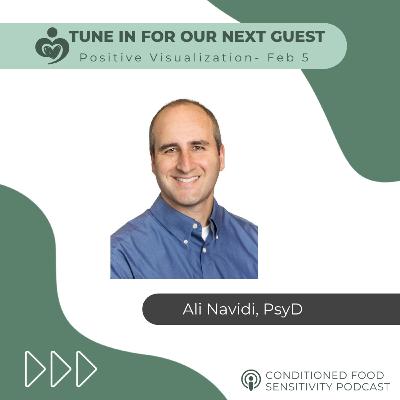
Positive visualization can help us reshape the beliefs andpatterns that hold us back — yet creating personal audio recordings isn’t always easy. In this episode, we break down the process step by step, exploring how to write your own visualization script, record it with confidence, andweave it into a meaningful daily practice.Dr. Navidi is a licensed clinical psychologist andco-founder of GI Psychology, a multi-state center specializing in the treatment of GI disorders and chronic pain. He oversees training and outreach for the practice and is also a founder and past president of the Northern Virginia Society of Clinical Hypnosis, as well as a hypnosis trainer for ISSTD. Dr.Navidi has given talks about GI disorders and chronic pain to organizations around the country and has appeared on multiple podcasts, spreading awareness ofevidence-based psychological approaches to GI care.You can reach Dr. Navidi through his email: [email protected]
In this year-end episode, Wendy looks back onsome of the most powerful insights shared by her 2025 podcast guests—especiallyaround the theme of acceptance. Drawing from conversations with her guests, sheexplores how acceptance of symptoms, emotions, and lived experience can reducesuffering and support healing. Wendy also introduces a simple dailyvisualization practice to help listeners soften resistance and make space formeaningful change.

Comments

Download from Google Play

Download from App Store
 United States